Transcripts
1. Introduction ♡: Hi, everyone. Thank you
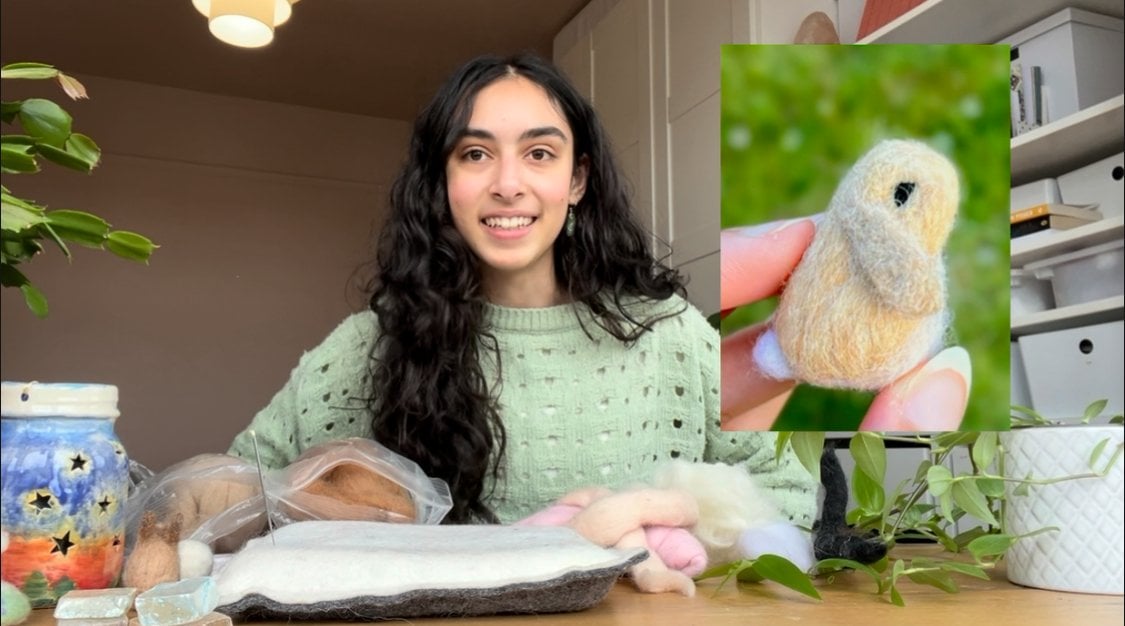
so much for clicking on my course to be your intro into needle felting. I'm India. I've been needle felting
for over a decade now, which is quite something
considering I'm 18. I'm beyond excited to take you through
your first project, which is going to
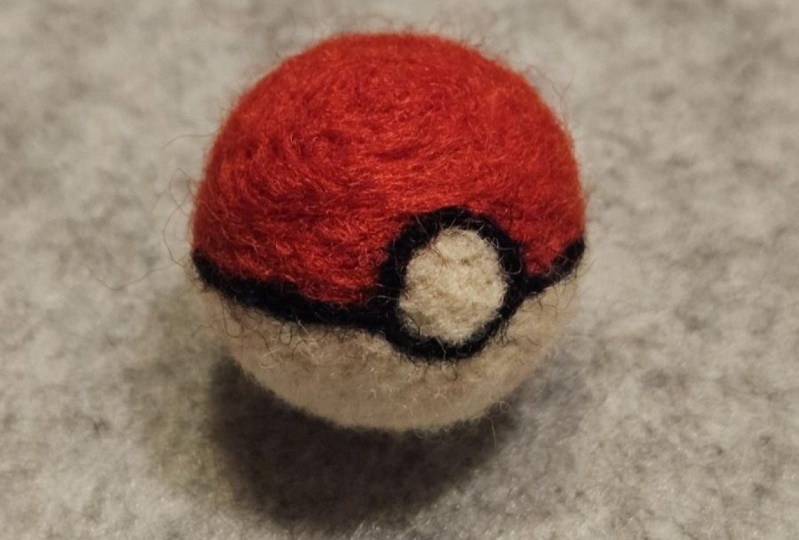
be a little ball. We're going to add some
color, add some design. You could string it up
as a garland in the end, make lots of little colorful
balls, string it up. It also would be great as
a Christmas ball ball. But most of all, it's just a
really nice starter project. I'm going to be telling you all of the basics,
everything I know, the techniques that I use
every day when I need or felt, and by the end, you'll be completely confident
in need or felting. Let's get in to some of the materials that we're
going to be using. Excited to take you through your first projects.
I'm going to be showing
2. Materials: Wool and Mats ⟡: Let's get into some of the materials that we're
going to be using. This is coral, two different types of
wool, This is coral. This is roving wool right here. You can see this one's
obviously a lot more polished. This one is stuffing, basically. That's
how I think of it. When I'm making my
little bunnies, underneath this
color, I use this. It only comes in this
color. It's very cheap. That's why I use it
for what you won't see underneath all of
the pretty colors. We're going to be sculpting our ball with this
really fluffy corbol. So once we've made
our cute little ball, you can absolutely make
it bigger than this. This is actually the first
thing that I ever made. And we're going to go from this. This is pure cool. We're going to slap on some
color like so and voila. You'll have at the end any. You're going to get roving wool in whatever color you
want your ball to be. I've added some little decor
spirals as you can see, if you want to add
anything to your circle, I will absolutely take
you through that. You can get multiple colors
of roving wool if you want. But for now, we just need, roving wool, two walls. Then sorry, I'm getting excited. You're going to
need a felting map. As for mats, I use this one. It's been a really,
really good investment. But as a beginner, I use these kind of polystyrene I'm going to put some information about
them wherever I can. Maybe if there's a
place I can put links, I will, but they're
on screen now.
3. Materials: Needles and More ⟡: Let's get into some of the materials that we're
going to be using. The gauge of a needle
refers to how thick it is. I've only ever used needles
from around 32 to 40 gauge. That's the range that
most needles are. The smaller the number,
the thicker the needle. This needle is a 36 gauge, so it's a little bit
on the thicker side, whereas this one is a 38 gauge. Ticker needles are
better for bulkier work and thinner needles are
better for details. We're going to use
a thicker needle to sculpt the cor wall. I'm not going to
get into the shape of needles on this course, but if you need to
know what to buy, this is a 38 spiral, and this is a 36
triangular needle. I get my needles
from Heidi feathers. I really like their
needle guide. So if you buy your
needles from them too, these are the only
two needles that I'm going to be using throughout
the whole project. As for using the needles, I just like to use
them as they are, I just hold them like
this and start stabbing. You can also put a little bit of tape on them to give you
something more to grip. Now, as a beginner, I really liked this pen. You unscrew it and slot up
to three needles in there, and then I used to
hold it like a pencil. I find it's way easier to grip. Similar to it is this. You can take this
wooden bit out, slot the needle in this
way and there's your pen. There are countless other
tools that you can use. Some people even
tie their needles together with a bit of tape and use that as a way to use
multiple needles at once. But we're just going to be
using one needle at a time, starting with the 36 gauge. Lastly, we have finger
pads for obvious reasons. If you really don't feel
confident that you can have your fingers anywhere
near your project while stabbing, highly
recommend these. I personally don't use them just because I like to be
able to feel my project, and that way I can
feel if there's any dips in it or if something
needs smoothing out, but it's completely up to you. Hi. I wanted to add a
few things that you could add to your bauble that you need
more materials for. So this is like the
finished result. I mean, you can put
anything on the bauble that you want, really. I did. This was my first project
ever, some spirals on it. But anyway, if you want to
make yours into a bouble, this is what you'll
need to do so. You can see I've added this lovely gold ribbon
and a sorry a bead. Those two are optional. You can absolutely string up your
bauble with just some thread. And then you can hang
that wherever you want. Then optionally, you can
do it with a ribbon. I have two separate
videos for those. One, if you want to use a ribbon and one if you
just want to use thread. I think in the ribbon one, I show how to add this cute little bauble. That's what
you'll need for that. Then I also thought
these just make such cute little
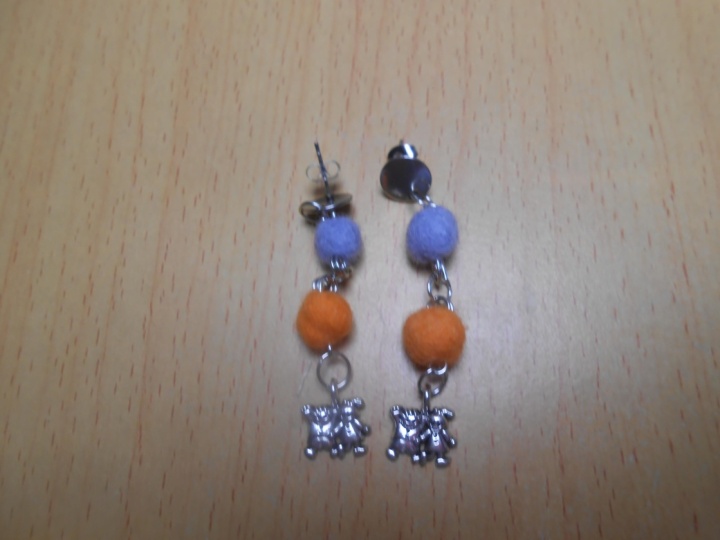
decorations, charms. You can even put
it on a key ring. The options are endless. Garland includes this decoration, whatever
you want to call it. I was also thinking you
could do some bunting, which I also show how to do. So for this, if you're
doing, obviously, bunting across a wall,
you're going to need more. They don't have to
be close together. But yeah, just think
about how many little balls you might need. In my case, I just
wanted to make something simple, so
I only did three. So yeah, this is everything
you would need for this. Okay, I hope that was helpful. I'll see you in
the next episode.
4. Starting Out: Right, I'm so glad
you could make it for our very
first needle felt. This is what we're aiming for. I have about this
much core wool. How we get from this to this is the more you poke at
it with your needle, the more the fibers get
matted and knotted together, and the more the
wool just shrinks and as it's getting
smaller and smaller, it's getting firmer and firmer until you're left with
something that's more solid. I like my bunnies to be
really firm because I find that it's easier to put on the color the firmer
your project is. Some people like their finished projects to be a lot looser. Obviously, if you pinch
it, it's very squishy. It's all just a spectrum from
this to this and you get to decide when to stop.
We have our needle. If we get stabbing like this, you can see each
fiber is very far apart because of how area it is. We're not getting as many of the fibers at once as we could. This is why I like to roll
up my projects at the start, making it as firm as possible. I started by just laying out. It doesn't have to be too flat. You start at one end and you start pinching it
and turning it. Pinching it and turning it. Now we're going to fold
over the edges like this. Then we have a very
tight bit of cor wool. The tighter it is, the
faster it's going to be as you need or help because
as you're stabbing, you'll be catching more of the fibers and getting your
job done more efficiently. Any way that you get
your core wool to be really tight is good. I just fold mine as many
times as I possibly can. Because it's really
firm right now, this gives you an idea of how big it will be
in the final project. It looks like we're
going to have to add more cool on top. Now to actually start
stabbing our project. You can see I'm gripping
it very hard with my fingers because otherwise
it's going to bounce up, but if you want it, you can
pin it down with a needle like that just to keep your
fingers out of the way. But we're going to take
our 36 gauge needle. And just start
poking it like this. I have two pieces of advice to share with you
that I learned the hard way. Number one is you don't want to put your needle in
and then twist it. Let's say I jerked
my needle that way, it would probably break. You want to be going in and then out the
same way you came. In other words, don't change the angle when you're
in your project. That is how you break needles, and I've been doing
this for years. It still happens, but you can
still minimize that risk. Advice number two is
that the way needle felting works is you can see these dips in the needle,
they're called barbs. When you actually needle felt, the barbs are what are going to catch the fibers and
push them inwards. That's what makes
them different from normal needles and that's
why needle felting works. You don't need to be
pushing your needle like all the way here
through your project. I only go about
maybe 2 centimeters into it because once
I'm past this point, I just need to push the fibers in a bit and then
I can bring my needle out. Quite lightly, really,
stabbing the wall like this. I can see mines
popped back up again. I'm just going to
k fold it over. And now I'm going to stab it and I'll have to hold it less and less because the wool is
going to hold itself soon. We are just stabbing
and stabbing. I'm going in around to where the barbs end and I just
push it a tiny bit more. Then that force into it. If I went anymore,
I think it would be quite easy and I wouldn't
be getting anywhere. That's when I just take my
needle out and stab again. I do my best to
keep it rolled up, but even if it's
completely bounced up, it'll just take a bit
longer and that's fine. Poking and poking away at it and it's going to be
getting firmer and firmer. I've been poking a lot in the middle and
that's why this is very loose and you can see the holes there
where I've poked it, this is getting a bit
firmer, just the middle. That's why I'm just going
to pull in the sides a bit. Here, I'm just going to
pin it with my finger. Maybe I'll pin it
with the needle, actually keep my fingers safe. Now, I'm just going to pick it up and see
what shape it is. This is quite flat right now. I'm just going to
fold this chunk over and if I need or felt it into the main the
main load of it, you can see it stayed
down and that's made my project more circular. I'm just looking at the
shape and thinking, how can I make this
more of a sphere? I think if this bit was cut
off, life would be better. If I stab it a lot, it's going to shrink down and that's exactly what's going
to make the shape better. Be careful when you're
doing things like this that you're poking and it's not going to hit your finger or
something like that. Advice number three
that relates to this is that the wool will go
where you felt it. Let's say I took this bit here and I was felting
it upwards like this, I would get more
wool around here. Whereas if I filtered
it down like that, you can see all of that
wool is just going inwards. Basically, the wool will go in the direction or the angle
that your needle is pointing, which is quite intuitive, but you can definitely use
that to your advantage because I've spotted a dip here and I'm going
as I'm felting this, I'm going to be
pointing into that dip. That means that
more wool will go there and it'll get patched up. The way I rolled it, there's still a dip there, and I think I need more
co wool anyway. I'm just going to
take a tiny bit, roll it in between
my fingers and put it right there and
just start attaching it. That's the beauty
of needle felting. You can always grab more wool, put it where you want it to be, and then as you stab into it, it'll attach itself
into your project. I'm not just poking
it here for too long, I'm going to change
my angle and start poking here and then
go the other way. It just helps to even it out. I have been ignoring
this very loose bit, so I'm going to start
to do that now. The bigger the needle,
the more force you're going to need to push it
through your project. But that's why we use it when our project is just a cloud
of loose cow basically because you don't
need force to go through this because although
the needle is really big, the fact that this is
mostly it's not very firm yet means it's not that difficult to push
your needle through.
5. Finishing the Base Sphere: Awesome. This does not
look smooth at all, and I'm okay with that. Your project absolutely
doesn't need to be a perfect sphere yet. I'm just looking at
it and thinking, maybe it's a little
bit too small, by the way, you can
make your sphere as big as as big as you want it to be. So for me personally, I'm just going to take
a load more cool. I think maybe this
is a bit of a mess, so I'm just going to yank a bit off and I tease it a
little bit with my fingers just to find a bit
that is pure corol because I don't want
to be attaching this tiny bit onto my project. I want quite a solid bit of cool to just lay on top of my project and then I'll
start attaching it. So this bit is fully
attached already. I can always pull it off. You can see where
it's attached here, but I can literally just yank it off if I wanted
to, which I have. Let me reattach that now. You can see all of
that new stuff and, you know, my OG project. I'm not going to
felt this on its own because I find
it's a lot harder to attach two firm things
together than it is to just layer on new wool
that's very loose. I'm just going to
bring that round here. I know that this
is not attached, so I'm just going to go here. And it only takes a few stabs for it to
not be bouncing up. That bits done in my mind. I'm just going to go
on to the next area. Once again, if I were to
start poking at this, you can see I'm not
really getting much of the fibers and it has
nothing to attach to yet. Whereas if I just grab a load of it and I sometimes
twist it as well. That really helps to get it
all really close together, and then I'm just going
to bring it over here and you can see that it's now a
lot closer to our project, so it's going to be
attached a lot easier. You can even hear the
difference in sounds between that and this. This is just doing more. This bits quite loose, so I'm just going to
smooth that down. I'm going to think about if there's any dips
in the sphere, which I think there
are others here just because I don't
think you'll be able to see where the dips are, but this bit is very squishy
compared to this bit. I just know that by feeling it. I'm just going to
put that over here, which will help to even it out. This is my sphere so far. This is what we're going for. You can definitely stop here. I'm going to stab it
a bit more because I think this one has a bit
of a cleaner finish, which you get by just
stabbing it more.
6. Adding Colour: Hi, welcome. I'm so proud of you
for getting this far. This is our ball right now. This is the one I
originally made. You can see it's a
little bit less fluffy. That's because I stabbed
this one a lot more. So it's a little bit
firmer on the outside. I find that that gives it a bit more grip when
you add your color. I so let's add our color. All right. You have your
roving wool color of choice. Maybe you have two, even three. This is the base. We're going to be covering all of the ball in this one color. Maybe you have two colors. The second one being the
one that you're going to put a pattern on top with. My second color is going
to be green because I'm going to do a tiny little
Christmas tree on it. So let's get started. If you pull it off really hard, it doesn't work very well as opposed to just
going a bit looser. It's really hard to yank off. I will just split it apart
this way just to loosen it a bit and then it
should come off in chunks quite easily that start with about
this much for now. We're going to layer it on top. It doesn't need to be
super thick like that. Basically just so that you can't see the core wool underneath. This, I've spread it
out a little bit. It's quite thin but not so thin that you
can see underneath. I'm just going to
layer it on top, get our 38 gauge needle and just start lightly
stabbing it like that. It's very simple. We're just going to go round
the whole thing. We'll need a bit
more wool than this, stabbing it evenly around. I've done this circle here. I'm just going to
move on to below it. The great thing is
that you can see where you've done because
there's some holes there. Right now, there's
really no point in pushing our needle
the whole way through. I am going to about here
and then backing out. Because if I really push
it all the way through, that almost creates a clump of wool going inwards,
which is not what we want. We just want it to
sit nicely on top. We don't want it to all get pushed inwards
because that's just going to lose our pretty wool. And it's going to reveal
more of the coal underneath. We just want to be
quite light with it, still attaching it so you can see these holes where I've
stabbed my needle through, but it doesn't need
to be super forceful. I could also use my 36
gauge needle for this. It seems to work. But I think you can just
see the holes a bit more. I prefer using a finer
needle for this. This is what it's looking like right now. Obviously, I need
to do a bit more. I'm just going to
bring that over here, bring that this way, and then I'll fill in this
bit and this bit. Obviously, the amount of wool that I pulled
off wasn't enough. I do always like to start with less rather than having
these bits hanging around. But now I've got this, so
I'm going to attach it. I've got this bit which
I could put here, but I've already
done this patch, so I'm just going to
guide it back around. I have a gap here, so I've just rolled up this little piece of red wool and I'm
going to poke that down. Rather than just
stabbing it like that because although it works, it still jumps up a bit. It is just faster
to smooth it over. I'll be holding onto a
tiny bit of this fiber. Now it's really quite fast
to attach when I poke at it. Then I'll just get those fibers that I'm
holding onto there. I feel like the shape as a
whole could be a lot smoother. I'm going to find the
bits that are sticking out a bit and just stab them more because that will make them sit down a little bit more, which will even out
the circle as a whole. If your sphere is
uneven like mine, it's likely that you
just need to do a bit of an all rounder because some bits won't have been felted
as much as others. So if you go round
the whole thing, you can see where
the loose bits are, maybe poke them a bit more, and then it'll start
to look more smooth.
7. Adding Decor: Dots .°⋆.: So let's add whatever pattern you want to add
onto your bubble. I'm really excited for this. I've gone with the
classic Christmas colors, so I'm just going to get
some of this straight away. I'm going to cover some
of the classic patterns, and I'll share with
you a bunch of techniques that I've
used in the past. So hopefully that gives you a framework to do whatever
your heart desires, whether it's a smiley face or, you know, your pet,
whatever you want. You could wind it round
to make a circle, but I just like to roll it in between my
fingers like that. It doesn't have to
be a perfect circle, make it a little
bit more compact. If you have any tiny pins, you can use that or you
can use a big needle, I suppose, and just put
that in there so that your hands your fingers
don't get so involved. Now we're just going to
start cementing it in. Obviously, we want
it to be a circle. Like with this bit poking out, I'm just going to take it
with the end of my needle. And it'll follow it
as I pull it inwards. I'm going to keep
using that technique. I'm taking the flyaways and
just tucking them in with my needle and then
poking them inwards. That will give these little
circles that are going to be dotted everywhere a bit of a
cleaner finish. There we go. There is our dot. If you want it to lay flat with the
rest of the babel, you can see it's a little
bit got a bit of a ridge. I think you just need
to felt it even more. I am really happy with that. I think it sits nicely on top, but if you wanted to
make it sit even nicer, I would recommend an
even thinner needle, especially a crown needle. So I think I mentioned that
needles have barbs in them that catch the wall and push them wherever
your needle is going. On a crown needle, the barbs are only at the
tip of the needle. It's very fine work, very detail oriented
these needles. I wouldn't say you need a
crown needle for this project, but for the really polished
look at the end, it's great. That is now lying flat. You can add way more
all around the bauble. I'm going to pull this off. To explore some
different patterns. Just a note about attaching
things and removing them. Quite often, it will create
a dip in your project. That's because if I
stabbed it like this, the wool naturally
will go down a bit. That's why it works to smooth out the circle because if
there's any bit poking out, you'll just push it
down into the project. While I'm attaching things, I'm poking into the project and the same thing is happening all around what I'm attaching is just going to dip down a bit. That's why sometimes if I were to yank this out
having attached it, there might be a little
dip in the project. To add another layer. If your project is really
firm like this one, this is the firmer
version of the bauble. I won't create as much of a dip. The bauble that
had a looser base, if I attach something,
then ripped it out, there would be a bigger
dip than if I did the same with the firmable. Oh
8. Adding Decor: Stripes .°⋆.: Let's add some stripes. I'm going to obviously
leave it like a strip here, lay it on top. I think that's already
a very clean line, so I'm just going to start
poking it in right away. I want it to go all
the way around, so I'm still bringing
this around, but I'm noticing that
it's thinning out here. You can see it was
very thick here. This bit of wool
is going that way, that bit of wool is
going to go that way. I'm just going to
do one at a time. I'm just going to
attach this one. It only takes a few stabs
to attach something, something thin like this. Then I layer the other one. Get that. Sometimes if there's
a bunch of flyaways here, what I'll do is I'll
just wrap around my needle until it's
in one thin line. I'm not sure if
you can see that, but it was a whole bundle of fluff there as
I'm doing that, takes a few seconds, but then it starts to twist itself around my needle and I can use that to just stab it
in. No more flyways. There is our stripe.
It's very uneven. In fact, I think this
bit is a bit too thick, so I'm actually going to
take a little bit off and I'm going to put it at
the thinner end, so. There's a little
bit of a dip there, so I'm just going
to push that in to patch it up because I don't often get
things perfect the first try, but that's what I like
about needle felting. You can always just add. It's sometimes a little
bit tricky to take away. For example, if I wanted
to change the shape of this bunny, Oh my gosh. It's very firm right now, it would be quite hard
to pull out the call, but I can always add things. I'm just tucking in
all that excess stuff. There we go. I'm going
to add some more, but just to show you
how you would do some thinner ones,
I'll do that as well. I have my thin
little strip here. Because it's quite curved, I can't really pin it down like that if I want it
to wrap around. The first thing I'm going to do is just attach it right here. I want it to be
thinner than this one. It's going to get thinner
and thinner as it goes up. So we have this bit attached. Although if I pin it down,
it strains out a bit. I have this bit here and I think I'm just going to
twisting the wool like this. Then I hold it down
and stab it like this. If I were to just
start stabbing it, it might go up a bit. That's just its natural tendency because I'm working on a sphere. As I stab, I'm just going
to make sure I catch this bit in the tip of my needle
and go down a little bit. That's just how I
keep it on track. I'm just going to start
twisting the wool. Like so. Then it's quite hard to hold
it all down at once. So if you have at least
one point in place, just put a few stabs there
and it should stay and then I can start moving it
around like that. I just need the tiny
bit of wool to go here. Okay. I'm just going
to roll up this bit. I know I want it to wrap around
in a tiny little circle, so I'm going to pin that down
here and then drag it over. Things like this can
get very fiddly. I'm just going to wrap that
up to make it more straight. Even though this
is really fuzzy, when you poke it down like this, it really does straighten out, which also makes it hard to do a circle because you can
imagine if I straighten it, it's just going to go going to be in the straightest
line it can be. That's why I have to poke it at every turning point, like that. That went very straight across, but I want it to be curved. I'm just going to
bring that out right here and poke it down. That looks a bit
more like a circle. Tu up. I don't think it would be right without a tiny
little.in the middle. If you poke something
this hard, sorry, if I were to jab right in
the center of this circle, it would probably go
right into the center of the project never
to be seen again. I'm very careful with little details that
are as small as this. I'll even use my crown needle. I think that would be better. I don't jab my needle
hard in the center of it. I just I make sure to bring
it out a little bit like this and then I poke
it at the side. So that it has multiple I
almost think of it like it has multiple grips in the
project around the sides of the dot because if you make
one really big hole in it, it's going to fall
through that hole. I hope that makes sense. This is my Christmas themed bauble. I think I'm going
to leave this side, but if you wanted, you could
do the other side as well. I think it's a really
lovely striker curtain.
9. Adding Decor: Smiley Face .°⋆.: Okay, for this one, I'm
going to add a smiley face. I'm just going to
roll this up straight off the back because
I don't want to deal with all the frizz. I'm just twisting it one way. Obviously, if you go like that with both your hands,
it's not going to work, you want to put some resistance by twisting that way on your left hand and the other way
on your right hand. Then obviously it's a circle, doesn't matter where I put it. This is going to be the smile. The more you tighten it, the thinner the line
will be and I've just loosened it a little bit so
that it's a bit thicker. I'm going to start carving out I think I'm just starting
off with a nice big curve. I think maybe if it was like
that, that would be awesome. I'm going to finish it there and I'm going to go up
with the other side. I'll just start
by securing it in the final position and
then I know that I've got my smile just needs
adjusting along the way. Like that. It's wonky, so I'm going to push
that bit about that way. Because like I said before, where you're
pointing your needle matters, if I was pointing it, obviously I was
pointing it that way, it would go that way and even
if I'm pointing it down, it's not going to
move it anywhere. Especially, you can see
a bit of coral poking out because I went
out like that. I'm actually just going
to push that back in. Nobody wants to see that. Okay, I want my
smiles to end here. Unless I needed more
thickness along here, I would bring it back down
and around, but I don't. I think I'm just going
to cut these off. Some normal craft scissors. I'm snipping it right
at the base like that. If there's noticeable wool
there that's been cut off, it might be a little
bit hard to catch it, but you just have to poke at it. Especially a tip
for that is putting your hook and angle
when stabbing it. Instead of going like
that, going like this or this will catch
more of the fibers. Right. Let's put in the eyes. Maybe I should get some black. Oh, my God, that looks creepy. Looks like the Grinch actually. I've got some
brown. Hopefully it will look more like eyes. And I might just put them. I just pick it up
like that so that I'm not fiddling around and then
my fingers are in the way. If I have it on my hook, it will usually and I
take it around like that, I can put it in exactly
the place I want it and just stab
it there and then. I think that's good. Because
there's a lot of it, I can just stab into the middle and I don't
think it will fall through. It creates that
nice circle shape. Again, you can roll
it in your fingers. You don't want too much,
especially with two D things. I usually don't think about
how much it'll shrink. I just think what is the exact amount that
it looks like I will need? If I wanted to make a
two D circle out of this, would I have enough? The answer is yes, I think
this is about right. But you can always add more. I'm just going to push
piece that on there. Take my needle. And
poke that in there. If your eye looks like that, you can see there's
a lot coming up. You just want to poke it a
bit more and as you are, this is a great
opportunity to shape it. This bits just sticking up ever so slightly so that
it would look odd. I'm just taking it and just
ever so slightly bringing it inwards closer to
the center of this dot. Awesome. And there you
have it your smiley face. I actually think this
looks really creepy, so I'm going to rip it out, ripping out its eyes. There's a little bit of
a fluff there leftover. You can either poke it back
in because that's coral, so I'm just going to
poke that back in. But if there was a
bit of black left, I might pick it out. But yeah, there was your smile. I hope yours looks less
creepy if you're keeping it.
10. Adding Decor: Christmas Tree .°⋆.: I want to put a
Christmas tree on there, little triangular thing. Maybe I'll put some yellow
right at the top as a star. So I have two options when
putting on a pattern. Do I want it to sit on the
same level as the base coat? Because I would get loose wool just like
we've been doing, and start poking it on there. Loose wool is moldable, easy to attach, and
easy to integrate in. I I saw that this bit
had a bit of a dip, I might add more red wool
as I'm attaching it, you can see that you can
barely even tell it was new, if I stab it even a little more, you can barely even tell
that it was placed on there. Contrasted too, if
I were to take this loose red roving wool and
I molded it separately. It doesn't sit as
well, essentially. The firmer the wool, the
harder it is to attach, the less moldable it is and the less it
will be integrated. I stabbed it less
than the other thing, but you can tell it's always going to be sticking
up a little bit. If I stabbed it more, that might create more of a
dent in my project as well. Having said that
background information, I want my Christmas
tree to really just be integrated into my project, you can see it's very flat here, or if I want it to sit on
top and have some bulk. So this goes for anything. If you wanted the eyes
on your smiley face to really pop and to be not to D, you wanted them to be raised. You can use the technique
I'm about to share. But let's say that I want
my Christmas tree to just be flat with the pattern. You get some loose wool, might put that closer
to the project, so I can see what I'm doing. I'm going to bring that
out here for a spike. This is your chance
to really mold it. Say I wanted this
wall to be here, a few stabs, and that is done. Say I wanted to really create
a spike coming out there. I would hold this down with my finger so that it
doesn't all go over there. I'm holding it,
I'm pinning it in some places that I
also wanted it to be. I take this and I really
just drag it that way, poke. I could take some more, drag it and poke it down and you can see I've made
that spike there. Which actually,
I'm going to do in a very miniature way just to shape out the Christmas tree. I want these lower what do they call pines to be sticking out either
side a lot more. Something I do is
I just I gently pull at it with my
needle like that and that brings more wool
out that way that I can then use to extend
my two D project. I think I've shaped that
to my heart's content. You can see this
side is a little bit flatter and that's making these bits look like they're
sticking out a bit more. Just to compensate for that, I'm going to needle felt around the project just as much as I've been needle felting
the project itself. Then I'm just going to take the smallest amount of yellow. I've got a little bit more yellow than I want
to show up on there because if I did it
about half this size, I think it might
disappear a little bit. Whereas with this amount, I can just product to my heart's content and it
probably won't slip through. I'm going in with
my thinner needle because I feel like
now's the time. I'm just dragging in these
bits in a cross formation. I would take this bit and
just go inward like that. Then for these bits,
I'd be going outward. And that has made it into
somewhat of a cross, and there is my two
D Christmas tree. Now let's say I wanted it to be sitting above the surface, even like this thick
on top of the bauble. I'm going to go to
the other side. Just a tip to think
about where if you want it to be a buble or even you want to string
it up in some way. Think about where you want
the string to be going in. I know the top is
going to be here, so I know that I need to make the other Christmas tree
along this line somewhere. I've just marked that
with this needle. Like I said, the
firmer, the wool, the less it's going to integrate itself into the
project or the bauble. That's what we
want. I want to put my Christmas tree on
it around here and I don't want it to sink in.
I want it to stand out. I've got quite a lot and I'm going to make
this green wool really firm into the shape of the Christmas tree
before I've put it on. That's why I'm on this
different color just so I don't have this bright green showing up
on my light side. Because as you're felting, just like when you're attaching, as I'm felting
straight onto the mat, it works the same as when
I'm attaching things. You can see it's gone in the direction of the needle
which is into the mat. If we want our Christmas
tree to be firm, when we put it on the bauble, we're not going to
be able to shape it after that. That's it. I need to make this green wool into the shape of
a Christmas tree. Now, you can see
I've just pinned it down and I've
started stabbing it. A little bit here already. I'm just thinking,
how can I make this into the shape
I want to make it? For me, what I need to do, if this is the base of it, then this will need to
just go upward a bit. I'm really firming it up and it won't really
attach to the mat, I can just pull it out. I'm just getting whatever
loose wall there is and you can push it straight into the mat and
that will make it firm. You can push it
into the project. Let's say I wanted
to tuck in this bit, I would just take it
and stab it that way. I think this Christmas
tree is a little bit too tall for my liking. So I wouldn't do this when your project is
really foamed up, but because it's still
in the creation stage, I'm just going to flip
that over on here. When I'm making new
things from scratch, I'll usually use corbll but
because this is so thin, it's basically just the top layer like I
don't really need to. I've made this into a triangle
just by holding this down, stabbing this, then
I can bring it up, stab there, bring it back down. If you do that over about 10
minutes, you will get this. I think mine is a little bit
frayed at the edges though. Actually, I'm just
going to go on to the light side so
that you can see. I think it's a bit frayed at the edges and I'm just going to get a little bit of wool
and put it onto the edge. Even if I'm partly
stabbing it into the mat, it's still going
to catch some of the project and attach itself. If you have finger
pads on right now, I would encourage you
to just take them off for a second and just
feel how thick it is. There's a huge dip in the middle and this side and I can feel that
just from holding it. Then I know where to pick up some green wool and lay
it on top of there. Since we were starting from
the roving wool as it is, I started with the 36
gauge, so the thicker one. But now that it's
a little bit more formed and I'm more
refining it now, I'm going to move
on to the 38 gauge. Part of the reason there are so many dips is
because this one, it will clump the wool
up together really fast, which is good if you're
starting from scratch. But now I'm more looking
to make it smooth, so I'm going to use
the thinner one. If you're not happy
with your edges, let's say they're lacking a
bit like there's a dip here, what I would do is again, just attach more wool to that. Because I feel like
they could do with being shaven down a
little bit at the sides. I'm going to take my
thicker needle and just poke into that
side a little bit. Obviously, I was very close
with my fingers there. That takes a lot of practice, I wouldn't recommend
it straight away. You can hold it at the
end and jab it like that. Just to give it a
little bit more shape, I'm just going to go
in on certain parts of the side and create that in and out Christmas
tree zigzag shape. That's okay. I think I'm happy with that so far. It's my little Christmas tree. I just kept a note of where I wanted to put
it with this needle. Anyway, enough of me yapping. I'm going to just make sure it's lined up and get attaching. Obviously, the thicker it is, the thicker it will lie on your bubble and it's
going to just go in a little bit anyway just because you're
stabbing it so much. I feel like this
bit is dipping out, so as I attach this bit, I'm not going
to go straight down. I'm just going to go
that way a little bit. I feel like the top is
really thin and could do it just going
down a bit anyway. I'm just going to push my needle straight
into the project. That will help both go downwards a bit because
that's the way my needles pointing and also because the wool is going to be clumped together a bit more,
it's going to be thicker. I'm always thinking, what will
that do to it as a whole? It's going to make it
firmer? Do I want that? Do I want any of the
proportions to change? Make any edits to
the shape of it? Because it's quite hard
to undo how firm it is. Before it gets really hard, that's your chance to mold it. That's my Christmas tree. This is the flat one and
this is the bulky one. I think it's going to look great once I add the tree trunk, the star, and I think I'm going to add some
baubles as well. I'm just going to roll this up. I'm just going to shape this
tree trunk a little bit. I don't think it really
matters the shape. That's why I'm just
stabbing it like a crazy person because then you can take this random bit of
matted wool and fold it over. If it's a shape
like a tree trunk, you can just fold it
and get that effect. I'm going to attach
it partly into the tree and then the rest of it obviously straight
onto the bauble. I made it half firm
on the mat and then the other half
I'm going to use to really change the shape
as I'm attaching it. It's a little bit too
thick for my liking, rather than attaching
it like that, I'm going to go in at
the sides and not really point it sideways because I
don't think that will help. I'm just going to point it sideways and a little bit down. It's also being attached. There's my little tree trunk. I'm just rolling up a
tiny bit of colored wool. I think this one has been
stabbed a few times. But you can put it in if it's
completely loose or even if you've made a tiny
little circle as it is, away from your project
and then you stick it on, I think it'll work either way. Know that if it's very
hard to begin with, it will need a few more stabs
to really attach itself. I was going to do multicolor, but I really like the
look of this light blue. I'm just adding more and
more on varying sizes. If I wanted, that's
disappeared a little bit. If it half sinks in so much that you can't
see it, if you can, just grab it and pull it
out a tiny bit and then poke that stuffing that you got a tiny distance away from
where it fell through. It's a bit like sewing. You
don't want to go back through that same hole that you just
pulled your thread through. You want to go a
small distance away. Now I have my yellow wool. I'm thinking do I want to do it just a ball or do I
want it to have shape? I think it might be a little bit too small to do five points. Tried to do a cross like
I did on this side, but it hasn't worked. I'm going to try it again. Hopefully I can let you
know what went wrong if I can make it successfully
into a star this time. Okay, so I've made my cross, but I think the reason
why it didn't work before is because I had to do it half on
the tree, half off. Okay. Here is my
tiny little star. I think it's quite adorable, although it does have a few
other colors mixed into it. I think because it's so tiny, it's just going to pick
up the smallest fibers that are already on
my mats. All right. This is my finished
Christmas tree. You can see it's a lot
bulkier than this one. I also think this one has lost a little bit of its
color just because it's really being merged in with the red that the
red is showing through. I'd have to add a little bit more green on top if I was
very passionate about that. But I'm really happy
about this for now. I think in the future, I would
make the bubble bigger so that the tree isn't
sewing like that on it. But yeah, let's string it up. I hope that answered all your questions
about adding color to the ball and adding some patterns to it,
some decorations. It's really fun
to do, especially if you want to give it
as a gift to someone. If I didn't cover
anything that you really wanted to make or you just need some
guidance on something, feel free to go into
the comments of this course and ask away. I'll be more than happy to.
11. Stringing It Up as a Bauble ౨ৎ: Hi people. Apologies
for the low lighting, but let's get started. I have my small needle
here and I thought that this silver thread would be great as something to just
string up this bauble. I think I'm going to
put it right here. I think my end is a bit frayed and I need to get
it through my needle, so I'm just going
to snip that off. Just to say, I have woven embroidery thread through
my filter projects. It really does handle any
kind of thread, really. But if your thread
is something like this and maybe it's
not going through, then I encourage
you to just treat it like it's a ribbon and go ahead and
watch the next video. Very fiddly. I'm just going to thread that
through my needle. At this end here, I'm going
to make it relatively short. So what I'm going to be
doing is securing my thread, then leaving a lot of space for the loop and then going
back in and securing it. It doesn't really matter
where you secure it. I'm going to just do it
very close to the middle. I'm going to go in and out. I want to use quite a lot of this thread because my loop is going to be relatively big. I've just tugged a
lot of that out. It's going in here out here, same again in and out. I can just pull that tight. I like to do it three times
just to be sure in and out. This time when you go out, think about where your
loop is going to start. Go out in the exact place that
your loop is going to be. I'm pulling it out here. We don't want any loop just yet. When we cut our end now, I think that will be
nicely secured in there. Now I'm just going
to go right back in it doesn't really matter
where your needle comes out. Now before pulling
it all the way back, just size up what is
going to be your loop. See, it does get a little bit twisted, but
it does the job. I'm going to have
mine be a tiny bit shorter around like this,
I'm very happy with that. Now I'm going to do my last
three securing stitches. I'm going to go in and and back through. I've tried to do it someplace where you can't really
see the thread. I'm just going to do an
extra one for good luck. I have to say I'm very
proud of my little loop. If I tug it, there's not
really much movement. Actually, I think that dot might have not been
the best placement, so I'm just going
to felt that down. But the ends aren't
slipping away. There's no more thread
coming through if I pull it. That tells me that
I can cut my ends. So you can see one
coming out here. Just cut that and I can
see one right here. If there's anything poking out that you don't
want to poke out, I usually grab my needle and just try and
poke it back in. I'm just going to go in at an angle and poke
that back down.
12. Adding a Ribbon ౨ৎ: So if you are here to attach your lovely ribbon to your lovely ball,
let's get into it. Hi, everyone. I hope you like this flower head starting to
get its first flowers ever. It's blooming. Very
excited about that. Anyway, if you want to attach
a ribbon to your bauble, we are going to
need scissors, ale, any needle will do an
embroidery needle, anything as long as it fits your most unnoticeable thread. Then we have our ribbon. So what we're going to
do is we're going to attach our thin thread, and then we're going to
create a little loop with it, and then we're going to attach
it again and cut our ends. Then you're going to take the
ribbon and just thread it through that little loop that you made with
the white thread. You want yours to
be longer than this because you're going
to thread it through, and then you can
maybe tie a bow on the top or just
an ordinary knot, which I'll also show you how
to do if you don't know. Let's start with the
first things first. Take your mini thread. And oh, my God, first, try it out.
Okay, never mind. You can cut it with your
scissors to get a cleaner end, which will help you
to slot it through. Just an extra note. If you don't think that
you're going to like the look of making a knot to secure your ribbon or even
putting a bow on the knot. If you just don't think
that's going to look good, then what you can do
is you can either put some sewing there to secure it or you can use
that sewing there, and then bring it
onto your bauble and just secure it with some stitches straight
onto the bauble. In my opinion, this way is
the easiest and I didn't want to make it confusing with a bunch
of different options, we are just going to create a tiny little loop
with our white thread. You've threaded your needle. Make sure the other end is coming out about this
much so that you don't think it will fall out so that you don't just have two bits of string the whole way through. We're going to find
somewhere close to the center and just go
in and out a few times. Now, you don't have to pull obviously don't pull the end of the string all the way out. Just do it, damn it. But yeah, just do it so there's about as much string as
you think you'll need. A really good way that
I sometimes use to attach the string
and really make sure it's not going to slip out is it's quite difficult
with a smaller needle. But if you just go the whole way through the bauble or actually because this
needles quite small, I'm just going to go
diagonally a bit. Pull it through. This is a really
good way to make sure that the string
isn't going to fall out. I'm going to try
and make this bit as invisible as
possible by going back in as close to the original where the
string came out. Around here. And you can barely see where the string
was attached there. So this one is my end. I don't have to worry about
that for now because I think that my thread is fully secured
because if I pull this, this isn't slipping through.
So that's how I tell. Now we want to go over and up and then secure
it around here. I'm just going to go straight in here and I'll poke
it out one side. If your needle is a little bit smaller than the object itself, you can squish it and then
that helps to get it out. But if you can't get
your needle out, then you can always
pull on your thread. Great. So I'm going to pull until
this tiny loop is around. I want it to be very
small, honestly. I think that's the
top on this side, but not the top on this side, so I probably should have
thought about where I was placing my Christmas
trees, but oh, well, I'm going to it
really only needs to be about this tall. In fact, I might just tighten it while the ribbon is over it. If I pull this needle,
that tightens, which tells me that I need
to secure it a little bit more now that I've
got the right size. As long as you go back in very close to where you came
out, it really doesn't show. Again, I'm just going
to go right in there. I know it looks a
little bit confusing. This is the end of my string that I don't
have to worry about. I'm just going to cut it off. This is my ribbon that I'm
going to secure at the top. Now this is my last end and I can see that
I've secured it because if I tug on this string, it doesn't really
affect it up here. I've secured it enough and
I just thought I'd bring the string to the bottom just to show how you
would attach a bead. I'm just going to
slop my bead over the needle but it's
sitting right there. I could put my needle
right back through the bulb and it would
hang like that, but I think it looks
even nicer if I just create a simple knot so we're just going to
create a normal knot. Make a cross formation. I've brought my loose end over the string like that so you
can see the cross there. Then because it went over, I'm now going to go
underneath and then I can grab it from
underneath like that. As I'm tightening my knot, I'm just making
sure that the bead is around as close as I want it to be in the end,
which is about here. Actually, I should
have kept my needle on and I've just tightened it so that it's around that far
away from my bauble, and then I'm going to go
right back in the way I came and secure this. I'll go anywhere
else in the bauble trying not to pick up
any red roving wool. But if it does fray out, you can always le
felt it back in. I just tightened it around that much so that it sits
underneath the ball. Because this string could slip back through which
would affect this, I'm just going to go do
one more stroke anywhere. Actually, I might
just do another for good luck and then I
can cut my string. Then I'm just going to
find the first end, cut that as well. Awesome. That was how to attach
your bead to the bottom. Now let's just do the very
last step of the ribbon. I'm going to do the cross. The loose end is on top, then that means that if I bring
it under, creates a knot. Just making a knot. Making another knot. It might look a bit confusing, but that is my first knot, and then I've got my
second knot right here, and I'm just going to
pull it right down, pulling on all four,
and there you have it. This is where I'm at right now. I've made 2 knots up here and this will
keep it very secure. This is going to keep it really secure and if you just
want to end it here, then that is great. If you want to tie a bow, we're just going to
make a loop like that, wrap the other string
round it there, and then poke this
string through here. Then if you take
both sides and both of the ribbon or bow ends, and just pull Then there is your bow. I think it'll look a lot
cuter if it's a smaller bow, so I'm just going to pull
on the ends like that. And I'm going to leave these to fall maybe about halfway down, nip that around there. And there I have my beautiful bauble ready to be hung
on a Christmas tree. Next, I'm just going to
briefly show car stores.
13. Turning it into a Garland ౨ৎ: So let's make a garland. Sure garland the
word, maybe bunting. Basically, we're going
to be stringing up. We're going to make a
string of felted balls that could hang from one corner
of your room to another, or I was thinking with this, I might just put a
loop on this end and have it hanging somewhere
just as a little decoration. Obviously, if you want to
stretch it across a room, they don't need to be
right close together, but just think about how
many balls you might need. I've only got two
because this is just for demonstration purposes. So let's make the kind
of thing that you could hang from one place in
your room to another. I've got some lovely
green embroidery thread right here and an
embroidery needle. So I'm just bringing it through, and I'm not going
to cut it just yet. I'm just going to go right in. It's so easy with needle felting to add embroidery thread, even though it's quite thick, it really just glides through. And then, I mean, I want it to be I want it to be on
the exact opposite side, but I can only
eyeball it really. I'm just going to if I don't think I've got
it right the first time, I'll just bring it in and
then poke it back out or I'll bring it in and then twist it whichever way it needs to go. I think it needs to go that way, so I'm just going to
push it there and up. Then you can just push on the end and tug it
all the way through. We're not going to be
doubling up the thread, just leave the end
about that long. And you are just doing this
for every single ball. I think you could knock
them either side, but they're so easy to just move around and they really do
stay where you've put them. So I've never found
that necessary. I'm going to do them a
little closer together. Then obviously, you
might have more balls, but it just goes on
like that really. We've got the whole
roll at the back and then I'm going to finish
our garland right here. You can. Maybe if you have washi tape, I sometimes would just
take a little bit and tape that string to the wall on one end and do
the same on the other end. But actually, another
thing you can do because I want to leave you guys with as
many options as possible. You're just going to
bring the end back down. You have you've doubled
it up at this point. I'm just going to get myself
a bit more space there. I've doubled this up
and then I'm going to make a ordinary knot while I've got two
pieces of string here. So I just think this would look so pretty
if you had pink orange, just some candy rainbow colors, the whole way along and
you can hang it wherever. Obviously, left of course, if you left more room
with this string, you could make the
loop a lot bigger. I'm taking this end and
I'm crossing it over and then bringing it through here. That just gives you a nice
loop to hook your garland on. You could also snip
this really close to the knot so that you
can't really see it. There you have it. Then if you need two loops, you can cut this end and
do the exact same thing. I really want to make
a little decoration to hang this way up and I'm
going to just add this to it. I think this is a little
bit longer than my needle. I might have to work
out a way to do this. I'm going to go in right at the top and then just
push it through. It's come out here and I want it to be right at the
top, the other side. I'm actually not sure if
I can get it the whole way through because my
needles are not long enough. I'm just going to
pull it out here. And then I'm going to go
back in exactly where I came and poke it out at the top. If I was bothered about
that little hole there, I would just put more wool on top and needle felt it down. I want it to be this way up. Instead of making a
loop at this end, I'm actually just going to knot it, and then you just pull. I don't think that's
enough to hold it, so I'm just going
to do one more. You could also thread
in a little bead onto this one and then knot it after the bead
has gone through. I've made a knot right
there. I'll just test it. It doesn't really slip through, then I'm going to
snip the other side. Oh, my gosh so many options, but inspiration has
struck again and I just realized that you can add a little tassel
at the bottom. Basically, if you grab the end right here and
you wrap it around, I'm going to do three
fingers down with your thumb and just start
winding this around. I'm going to take
it off my fingers. I've got this end here, not the one that's going into the bulble I'm just wrapping it around about two thirds of the way up the
embroidery thread. Now I've got it on my needle and just so I know
it's secure in place, I'm going to go directly through the centers like that and I don't mind that it's
sticking out for now. Then I'm going to cut right through the middle
of all of this string. This is the little tassel.
It's quite far down. I'm actually just going to cut in between the
tassel and the bauble. I'm just going to
secure this back in. I'm just going to go
round with this thread a few times to make sure
it's super secure. Then I'll just cut that off. Now I'm going in with this
thread and I am going to attach it to my tassel. I've just used the needle to thread it through
and now I can take it out and do a
lovely little knot on top. I'm going to double knot it so that it doesn't come undone. You can sharpen up the
edges if you want. And here is my gorgeous tassel. I didn't know if it
would work at all, but I mean, I think it's
good for my first try. I just wanted to share
the idea mainly. This is my finished
hanging decoration. I think this would look so
good with some pastel colors. I will see you in the tro.
14. Thank You! ღ: I want to say such a
huge congratulations on completing this course. I'm so happy for you that
you've completed it, and I hope you're incredibly
happy with your project. Maybe this one's my
personal favorite with a little bead on it, and at the end, I also made this one. Maybe you have a garland, a little charm, or maybe
you went freestyle. In any case, if you're
super happy with it, definitely tag me on Instagram. I would genuinely
really love to see anything that you create
this is my app right here. Definitely leave a
comment. Have a question. If you're stuck on something,
if something went wrong, I will get you back
on track in no time. I'd love to just see what
you thought of the course anyway because this is my
first Skillshare course. If there's any suggestions
that you have, I'm thinking I might
make a tutorial on how to make needle feltered bunnies because if you
don't know by now, I love bunnies so much. These are some of the
things I've made. I don't know if I can This one's like this one, I
really like this one. I was thinking I might make a course on how to make bunnies, but as a beginner YouTuber, what would you like to see? What's the next thing
that you'd like to make? Because I do think N
felting can be very simple and I'm sure that you can do anything that you want. Whether you think it's
more on the advanced scale or another beginner
starter project, I would just love to
hear any suggestions. All right. I think
that's it for me. Yeah, thank you so much for
watching this course. Bye.
 India Green, Needle Felt Business | Custom Orders