Transcripts
1. Introduction: Well one, go to all these sketchbook
flips of these artists. You admire coffee house. So I have always
wondered about it. Every time I have taught about
just one single question. What's the purpose of keeping? My answer is, a
sketchbook is basically, you'll see your creativity chin up and you put a
lot more filament. Siam, math and not instructor on my other
Skillshare teacher. Muscles from many of you might be wanting me to my
previous classes, they tell us, shared by everyone who is
joining me for the first time, I will bind any watercolor
illustrations on Instagram, most of my artwork displayed or you didn't like
initially when I was talking about as an
honest and I want to paint on a schedule, intimidate
blank pages. Like I cannot take on things. But who wasn't yours. I have realized they're
not an easy way. Which can really help. You can see very easily. This class is majorly divided into four different, no, false. All about finding that
whatever you have at home, you want to paint something
that is how to work it out. On. The second box is about your stories
to your sketchbook. My initial experience
off these pages. Finally, we don't have an exercise where
we're going to pick up Newport subjects in an Enron that two-part to complete
five shapes or first sketch. I hope this is really
interesting for you as well as it has been
really interesting for me to share my
journey with you guys. Can't wait to shift everything
to the next lesson.
2. Finding your own inspiration: When you start finding
your inspiration, finding what they want to pay on those two blind pages of my
sketchbook is really yes. I have been there. I have gone through
just so I can tell you that inspiration
is lying in them. Whether it be both,
whether it be flowers, whether it be even at home. You really love stock
with a very small, small aspects of each one. Like painting and
painting the plots. The way some few trees,
branches, etcetera. If you agree with Troy, go ahead and throw. If you agree with sketchy, do append sketch, for instance, get whatever you
want to try out, some shading in
case you weren't. Just a bit. I want
to explore schedule. Go ahead and try a new
set of columns that you have tried different
sheets together. What are the money mixes, how you can get so
Brian needs to get the second piece and
many other sheets. Second one to see all
this experience to help you understand how each and everything can be
used even in your field. Off the sketch
book is why I have already told you a lot about the kind of inspiration
you can find. But let's go ahead and have
a look at my sketchbook. See what other spaces
which we can also explore. Like you can find
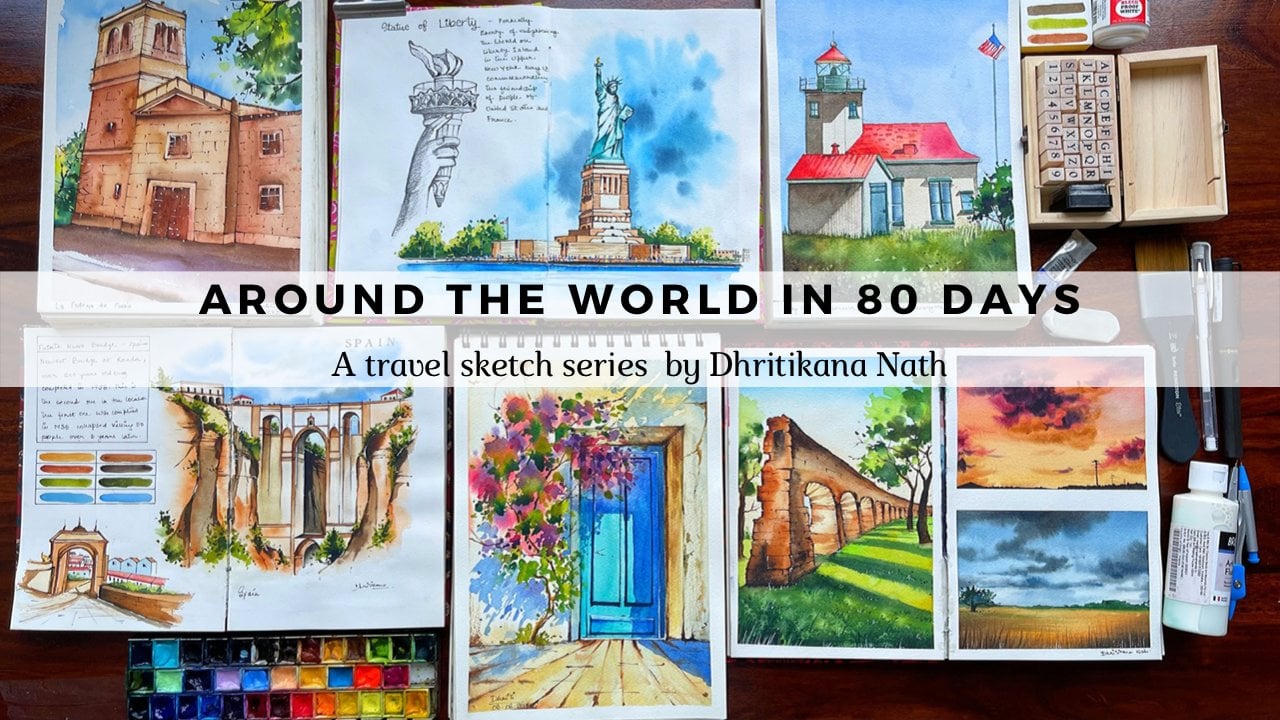
inspiration in travel. Witness anything beautiful while traveling to various places. You can put it down
on your sketchbook. Human as inspiration. India is a very typically
populate country where I live and we meet a lot of
people on a regular basis, it becomes easier for me to
be inspired by and Anthony of human beings walk posture as costume expressions, et cetera. Every human has their own
story and that can be captured by anyone who does your inspiration, head
around the world. Wherever you go, you will find
different kinds of people, their eating habits, style
of cooking, cuisines, etc. Try to capture that to whatever extent possible
on your sketch book. You can even be inspired by so many seasons that we have summer, autumn,
winter, spring. Pick up any of the season and
start painting your heart. Lastly, you can always draw
various shapes and sizes, as well as play with something
on a more abstract basis.
3. Telling your stories through sketchbook: How can we tell our stories
through the sketchbook? Create your sketch book
like your best friend with whom you want to share your thoughts and
part of your life. Workshop teaching
business as a part of my profession as an artist, but my sketchbook
knows everything. Before I even plan anything
for my students and lines, I tried to paint and
express myself on it. So when you open my sketchbook, you will understand my
planning and thought process. Hence, I shared a major part of my life on the sketchbook. Like to give you a
very small example. You are travelling
to put all my yoga. Maybe you are in
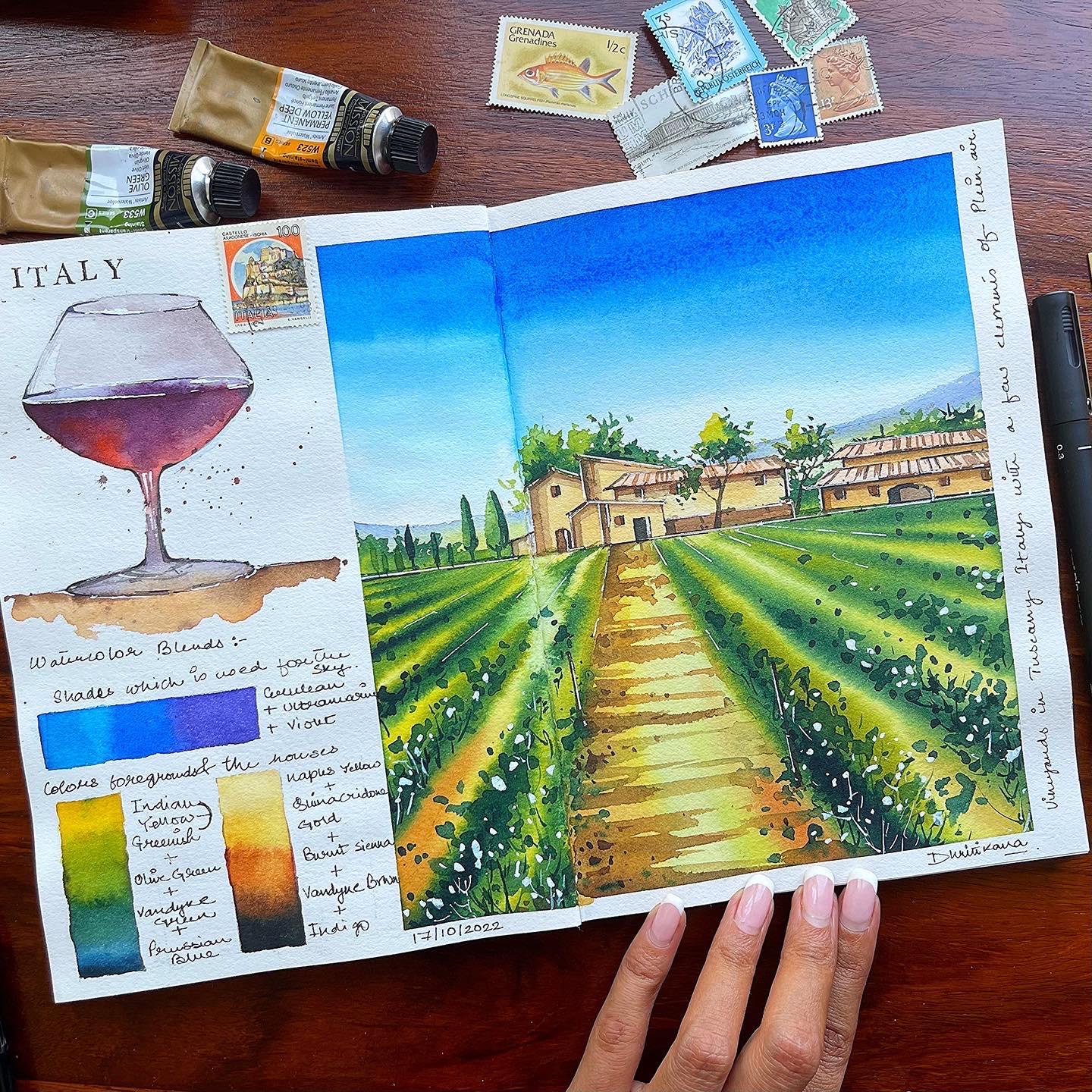
Tuscany or nightly or else you are even in nasa candy. You would like to visit the sooner you want to
pay too with that, what can be the
associated stories? You have tasted the wine if you must do to the
white and just add that glass of wine into
your travel sketchbook. And some tickets that you
have collected on the way. Audience given some stamps from the particular concrete
that you have visited. These are small, small
aspects that you can pull these into
EarSketch, asthma. Let's try to write some
wonderful experiences. Pop the place that would really help you to connect
your life to your sketchbook. And then you do a flipped
or maybe in a few years, you will get to understand how beautiful your memories rather than clicking pictures. I'd say tell your stories
through the sketchbook pages.
4. Initial Experience on Sketchbook: My initial days of schedule, all my ****, it used
to be a nightmare. I used to keep on thinking, how can someone plays so beautifully and how am
I struggling so much? Yes, that's what it is. During the initial taste. Frankly, telling you, I used
to only add some swatches, so I do some easy
paintings of night skies. So for some sunsets, anything factory used to
inspire me during those states. That's what I used to hide. And now when I flipped
through those, yours and I see my sketchbook, I think the progress takes away. No one can predict how much
time you're going to take. A series you get is going to be long or short or whatever. Your journey is your own. It's an individual journey and you have to move to
where to explain it. All I can say is a
sketch for kicks. So steady means you can progress and progress will
only make improvement. This is one of my
sketchbook from 2019, and the ones that you've
seen now is in 2022. There's a stark difference that you'll see in terms
of the painting, as well as how I
place my subjects, how I add my stories. It was all about
Swatches and then drawing or painting In a rounded whereas now it's more
about if I am painting something like a pod or
anything like a flower, I like to add things
on that flower, or I like to divide
the flower into its anatomy so that I can
add a few important aspects. And you can see very loose florals to get a sketch book,
anything and everything. I used to practice
a few of the areas. I can even leave it empty
door when you go through my current flip through
of the sketchbook is pretty much changed one. And hence, I guess, as I always say, practice only will make a lot of improvement
for each one of us.
5. Choose your Sketchbook: Initially choosing
the right kind of sketch book was
very important for me. And a few years back
I was looking for that perfect sketch
book made out of Arches paper 300 shares, some hundred percent cotton has my style was more
of heavy washes, mostly I started making my own sketchbook that has nothing was available
in the market. Watercolor paper is
pretty heavy and binding it is not
easy by machine, So usually you have to
bind it by your hands. There are many
bespoke sketchbooks, small business
companies available. So you can either choose from any auto
sketchbook companies, orals, you can even choose your sketchbooks from
vitamin parcels. My style of painting has evolved
a lot over the years and now I have moved to more of
placing and more of letting. Because of which I
am only using 180, 5% quadrant two maximum 200
years and 1% cotton paper, colored pencil sketch booking, as well as lot of
pencil shaving, pen. And all of this mixed
media has come into play. Hence, I have trying to innovate and create as well
as break my own rules, which I had a few years back. This something that you
should always know. Go for the change. Nothing is absolutely constant. Your style should also
evolved a lot over time. And it can only happen
when you give yourself an opportunity to look beyond what you have
been doing till date.
6. Everything you need: Hi guys. Let's discuss everything that we need for completing
with this painting. I need a roll of tissue, basically not the
road altogether, but yeah, one or two
tissues from it. The next is the sketchbook. Now sketchbook is very, very important for the
sketchbook exercise or else you can even do it
on an A4 size paper. I would leave that
decision up to you. Now this sketch book is
from vibrant parcels. I have always get the
sketchbooks from vibrant parcels because I think I can make
us for my needs and wants. We are going to use a 185 GSM hundred percent
cotton acid free arches paper that is there for
the sketchbook. The brushes. Brushes are very
limited in this case, I am using other Vinci brush, which is three by
zero or z cosine or brush size one, size two brush. These are all the
four brushes that you need for completing
the painting. Permanent yellow deep, not
permanent yellow deep. Most you other colors are
from Magellan Mission Gold. I will let you know this, this BY 65 cerium
blues surrealism. Blue is AB 15 is 23. Then we have Naples, yellow, Naples yellow is VBR 24, olive green. Olive green. You need PG 36 P1, and P R11. Greenish yellow is your drum. By E15 TTG three-sixths
and E minus X5. So in case you want to purchase
the colors in this range, you can look out for
the pigments like this. And it would give zack shade. What I am using. This one as BY E14 then
is ultramarine deep. Ultramarine deep
SPB 26 P before. The last one is burnt sienna. Burnt sienna is majorly
my BBR 2,512 and p y 150. Okay, so these are
the colors that I am going to use for
completing my painting. I'm happy with the Naples
yellow from mom scenario. That's why one of the
reasons I've been using this for many years. You need to do jars
of water as well. You will need this campus. You can also use any
kind of footplate, et cetera, to draw the soccer. We even need one pencil
and eraser. Hand. Fever, even need of washi tape. Washi tape is important
to tape down your paper for the last part
of the painting. That's it from this
requirement side.
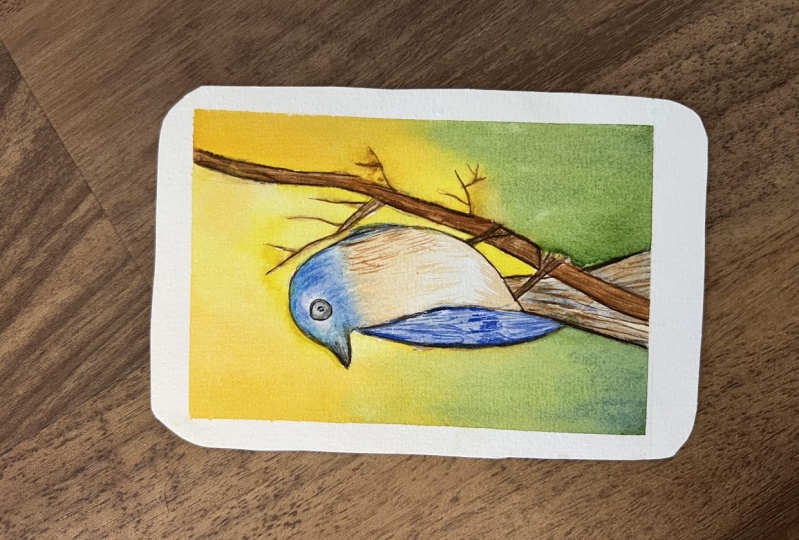
7. Sketchbook Exercise Part 1: Today's story on the sketch book is all about the Blue Bird, which we are going to pay. Now, blue is usually a very
small book that you find him. Parts of Canada as
well as America. Many people have already
painted blue bird. Though. You might have
seen amazing paintings. So with your today
we're not going to go ahead and try to make something
which is really amazing. What I'm trying to
do over here is get a hang of how to use your sketchbook to the
best possible advantage. For me placing my first subject, which is the center of the attraction for the
sketchbook, is most important. Though there are many layouts which you can follow
in a sketch book. For me, this was the
main so-called where I plan to paint the board in it, as well as add some bar graphs. I am using a compass
to add the so-called, it's a bit smaller than
A5 size sketchbook. And it's from biosynthesis, which I'm using right now. Once I have had it
this so-called, there are a few basic
steps which are falling. How to practically break your subject into very simple
and easy shapes and sizes. Now, many of you
might think that, yeah, I have been painting
like this forever. But believe me, this is my second but painting and
I'm not thinking much before this in terms of birds or painting dogs or
any any animals, any birds, I'm not done much. I am not of more
of a bird, human. I mean, this kind of a painter, I'm more into urban sketching, or you can say into play, as well as your landscapes. So this is something very
new for me to explore. But after I have done this
urban sketching part, clear natural places which
we travel and then paint it. I think one important
thing that has struck in my mind is breaking a subject into few
basic shapes and sizes. First, dice, just add a small branch and on top of the branch I'm
going to placement, but this is a very simple
and easy technique. It's just that you have to decide how you want
to place your book. I'm not going to
complicate as much. Just going ahead and trying to see in which tango I would
like to place my board. And how I would like to add a few lines to make
it look more organic. I will go with all will
kind of a semicircle. On top. I did add a small line
towards the left. You can, of course see I
have added a diagonal line, which is practically
defining my ring. So this is one of the
wings of the birds, and the other wing is
on the other side, which is hardly visible. And then I'm going ahead with the legs as well as
with the bacteria. The head is yet to be done. So this is how I am
breaking up the subject, not complicating it at all. We are from over here. I am looking at this plot
just like a big note, how I have to approach it. And practically
whenever you think yourself as a beginner and
you approach something, you have to understand
that it has to be broken into simple
shapes and sizes. We cannot complicated too much. If you keep complicating
the subject more, we will never get the main
idea of how to paint or how to practically put that photo or that particular bird
which we have seen outside on our sketch books. I have been keeping sketchbook for many years as I've told you, I think more than four years I have been
feeding on sketchbook. And during the initial viewers which you have
already seen how I was painting on
my sketchbook and now how to paint
on my sketch book. There has been a lot of change. So our style of painting
also changes a lot. Hence, what I would always recommend us that
keep experimenting. Sometimes you will paint, sometimes you will draw, sometimes you will sketch. You always do not need
to stick with one style. I have practically
absorbed it throughout these so many years of painting that we have to keep one thing, one thing in actual place, which is now change
is real for sure. Sometimes we do like to work on. Good paper or it is 300
years and heavy washes, which I was doing initially. And from there I have
turned out to more of a lighter washes or I love to get into more of
larynx as heavy washes. And that brings me to
the point where I want to only use 185 to 200 years. Some people, these
are a few aspects which you will understand once you progress in your journey, that you practically need to
sit and just start painting. There were days, there will be days where you will
be highly motivated, lot of stress, etc. And what I can always
suggest you do is just clean up the space where you sit and want to paint or jar of water handy and
have a fresh paper on your table or
have a sketchbook on your table during the morning when you are having
the coffee or tea. I think it's a great time to just sit and scribble
anything of your choice. Whether it be a drawing plot, whether it be oh, painting part, whether it be some
abstract painting, whether it be some journaling, anything of your choice. But it really helps you to
get through the entire day. And we'll get that
particular meantime. Form yourself. Every one of us have
been keeping very busy. The world has completely
opened up and we have returned back
to our normal lives. As we return back to
our normal lives, we will again start forgetting the fact that it is
important for us to breathe, to understand our own nature, to give time to our own important aspects
like having a great hobby, having spending time on something that we
really want to do. So here is one of that. Going ahead, you have seen how I have added the top
layer of the head. It is nothing but again, a small oval you can draw hands, start adding that small
see towards the top, you can say it's a convex mirror where the broader
part is towards the top and it will get
thinner towards the beak. And when you touch
the body, though, not completely resembling
a convex mirror, it's somewhat like that. Hence do not go why my
literal sense altogether? We are now going ahead and
adding some important aspects, like someone details, etcetera. It practically, it doesn't
take much of a time. Over here. It is
completed your time. What we did in terms
of the sketchy, what you see right now
is more of painting, and here it is, so to speak. You can go ahead and of course, adjust the speed if you want
to watch it at your time. That would be absolutely up to you going ahead and
adding a layer of water on top of where
I'm painting the handle. It's all clean water
that I've added. So this one is just adding some amount of your crown
along with Naples yellow, as well as some amount
of ultramarine. Ultramarine is a very
beautiful color and it looks amazing on so particular, but domain is a color which is itself something
very different. And when you start
playing with it, you will get to understand
that it has so much to offer. It has a particular type
of granulation also in it. So using it on various, so what larger areas might give you more
granulating colors. So you have to be
very vigilant of how exactly and to what
extent you should use it. Once my paper is dry, I will go ahead with
some burnt sienna. Burnt sienna is nothing but a simple color that you get either some incident
Newton or else you can use. So been CNL, which is even can
be Magellan mission board, whatever is available on it. My first layer is
completely fine, as I've told you this case, the second year or
more on tracing technique that I'm
using in this case, I will extend this
technique towards the bottom while I go
adding some small, small feathers on the bird. It's majorly or small way has plus I am blending the
colors, getting regularly. Now, blending really plays a very important
role throughout. Many off by sketching as
well as painting techniques. You can find it come in really handy whenever you are
doing heavy washes. And even if you were
doing lighter washes, this is great news. If you haven't gotten
a few are trying to encounter or you want to
try out this technique, I would surely ask you to keep
a blending brush with you, which is clean and damp. And have another brush
like this with you, which come in which can
help you to add the colors. Now, as I'm more
experienced gender, what it is easier for me to
keep even one single brush and pull the paints while
I go towards the bottom. Now pulling the paint is a very important
technique and it is nothing but you
apply the paint slowly. Take it towards the
bottom or toward the, towards those areas where you think that it is important
to add the highlights. I'm going to add the
panes everywhere. It's just only in a few
places you will find me adding these paints as
less one small lines. I'm using my Da Vinci brush. And it is frankly one of the most amazing brushes
that I have encountered. Along with it, I will keep for two more brushes
that is size two. Brush, as well as size one
is caught up for lab brush. As I've told you as a beginner, I think it's important to keep
two brushes really handy. One has a blending brush, crime, another one as the brush, which will help you
to add the colors, the blending brushes, Devon see gasoline or size zero brush. Again, this is
fantastic brush case. You plan to actually
invest on good brushes. These are a few brushes
which can really help you to have a great outcome. Even if you were
painting florals, humans, you are painting
goods, animals. So anything you want to paint, please be free to use
these kinds of brushes. Adding some more
lines over here. And frankly, I go with the flow. I do not think much while
I keep adding these lines, while I keep adding
these smaller feathers. It's all about just understanding that I have
to create a structure for, but it doesn't need
to be realistic. Sometimes the blue that
you see on the paper is not exactly the blue in
which you will find the bug. That's absolutely fine. We are just trying to have a similar palette that the board has in terms
of the color on it. And similarly, you
can also choose the colors of your choice
if whatever is available. As I always say, that intent is to
understand how you should use this particular page. Copy your sketchbook,
rather than going ahead and understanding how we are going to paint each and
every subject on it. While we are painting on foot, like to tell you a
bit about the sport, the blue points are on automatic and drop-off
medium-sized, most insect herbivores
and omnivores boats. There you get it on majorly
in three different varieties. One is the mountain
bluebird, Western. Mostly what we're painting
is called Western dopa. So Leo was introduced by the
English naturalists toe, which is William John
a Swanson in 18, 27 but the Eastern Cuba. So there are three
types of blue birds, etc, which I have told you. Let's just understand a
bit about their behavior. Blue birds are territorial and prefer open grasslands with
a few scattered trees. Now the meal, so identify
the potential nesting sites where they want to attract the females made signed
during the nesting season. They usually seen flap their
wings and then they play some material in
those nesting boxes so that the female accepts it. And then they can have or the nest all together and incubate
the eggs that they have. So this is the basic
nature of blue birds and there are many predictors of these young lovers including
snakes, Cats, two cones. So, so, yeah, that's normal behavior which
we see in blue. Good. Every time I draw paint any particular subject
on my schedule, It's not important to only
focus on that painting. What I have always
tried to connect to it. Connecting means knowing more
than what I usually see. Like first, I always want to know about that particular bird. Is it a small board because
it are insectivorous bird? Or what is the basic nature
where this usually found? Something might
always attractive. But when you know
more about that, when you know more about
their habits, behavior, etc. I think everything
comes to life, knowing about the anatomy of it that we would
be doing next. We are going to
draw the blue part and then having some important
aspects of the head. Towards the right,
I will show you how I actually draw the anatomy. Now, this is how
I like to always put together any painting
on my sketchbook. Once that part is done, I would go to the particular area where you usually find
these eastern low, but that's how I connect
the whole thing. So it's a forest and I will connect the forest
to the blue part, which is found in those forests. And then I will even divide, divide this particular job but into various
shapes, sizes, etc. You can even have smaller
aspects of books. Like you are drawing
only the claws of birds or you are drawing
only the eye of the bird. You're drawing only
the beak of the bird. Everything makes so much sense. When you start doing
these smaller size, not only you become more thoughtful and the whole
process of how to progress, but also understand
that each and every aspect of
drawing, painting, sketching, or using your pen, putting anything on the
paper, becomes so grateful. Time there is a whole
world opens up for you. I have realized it
over a few years, but I want to share all
the secrets with you over this particular section. Only. See, even if
I try and tell you about what I usually do every time my style keeps
changing every time. The way I see a particular
painting also changes every time what I
want to put down on the paper for painting, etcetera changes
to a great extent. So yes, though my style, etc, will keep changing. But how I associate
to my subjects are, I write about these subjects. What I see in them, how I usually think of
a particular place, their history,
connecting with it, keeping some tickets from
there are stamps, etc. That really has so
much of feeling. Supposedly you going ahead and visiting a particular place
where you want to draw paint, who have a particular
ticket soccer, you have stamps from that, put it on your sketchbook
to your memories. They are your memories. You should have it
on your sketchbook. You should let it
fly completely. The more you let it fly, the more understanding will
happen in terms of how you can actually keep the
sketchbook as your best friend. How you can share your
thoughts on a sketchbook. How you actually share a major part of your
life, the sketchbook. So maybe we should write, we should write
diaries or we should have more of journaling
part, et cetera. But for me, you know, FED is all about sharing
my thoughts, sharing my life to an
extent, and the sketchbook. That's what makes me more
complete as a person. Painting is a major
part of my work. I don't leave my work. It really helps me as a
person to not stressed, to be more open as well as keeping myself
calm and patients. What one thing that
I've understood through all these sessions or
to all the paintings, etcetera, which I
have done thin now. My sketchbook sessions has
been the best out of it. Sessions biases
that they are like a particular time which is
spent with my sketch book. So they are like sessions to me. Each of them teach me something
or the other. I have. Sometimes if I'm spending time like light and shadows
and teaching myself, it's a session because
I'm teaching myself life and light and shadows on that particular sketch book. And do it might look
like a blank page, but it does teach me a lot. So yes, I think this is how I am when I go head and the like to
paint on my sketchbook, going ahead with
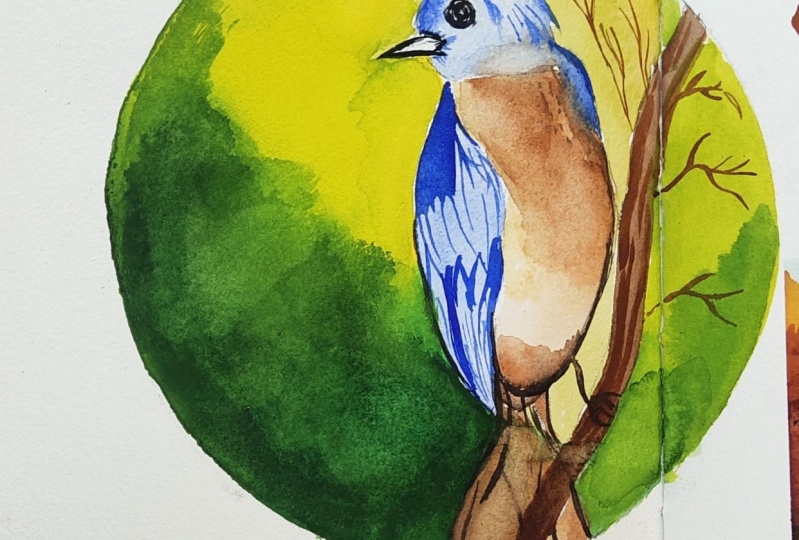
the yellow color. Now, this is the
Indian yellow, orange. You can even take
permanent yellow deep. These are the two
beautiful shapes which can be used
for the background. I would go head
with some greenish, yellow or yellow, green, whatever is available with you, as well as adding some
amount of olive green hand. The ultramarine that we
already have pilot Toto. Good. I might have explained in terms of how we have
to paint a bird. But this session is more
about how you should approach the subject on a
sketchbook rather than being intimidated
of what you should pay, how you should pay,
whether it be, should be the classic painting
that you get out of it. There's so many failed attempts
which I had third date, practically, I still
have failed attempts. You know, there are days
for five days where I'm not painting on when I pick up
my brush and start painting, of course, it's a disaster. And it happens to everyone, every artist, every Theta
goes through the space. There are days where we are not in the best off our mood and we are not in the Greek
sense to paint, etc. Just opening up a sketchbook, doing a quick scheduling,
something very rough. Even failing does
help me to realize that I need to bend more regularly or I have
to get better at it. Or knowing something like, here are my mistakes and I do not want to
repeat these mistakes. Pen and go forward. I have three small, small details or every
time that I spend on a particular painting or on a particular shape, size, etc. Helps me to learn a lot. Whatever you are spending
time on is never a waste. It is going to get back to you. And that's what
matters the most. I always say this, that whenever you are painting, do take it as something that
you are giving back to, either to yourself or else you are learning
a lot through it. Nothing in life. For me, everything, teachers or something or
the other view over here. This thought, and let's just
keep our painting going on. Now. Once we complete this part, we will move on
to the next part, the other side of the
sketchbook now you can see is completely empty
and it's again white. I have to think what
I have to paint that, but really have to take
That's what I would like you guys to know that we never have to think much when drunk. In all sketchbook, painting
kind of exercise here, everything goes with the flow. But making it flow is something
that you have to decide. Like over here, I have connected
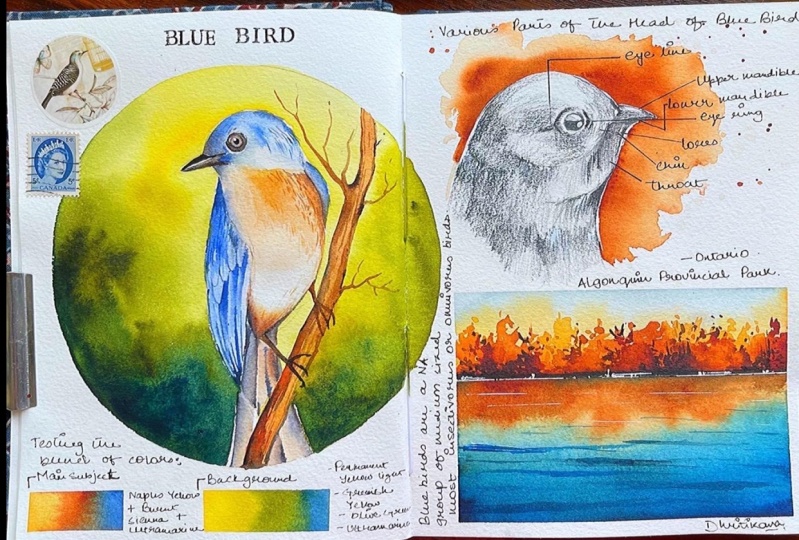
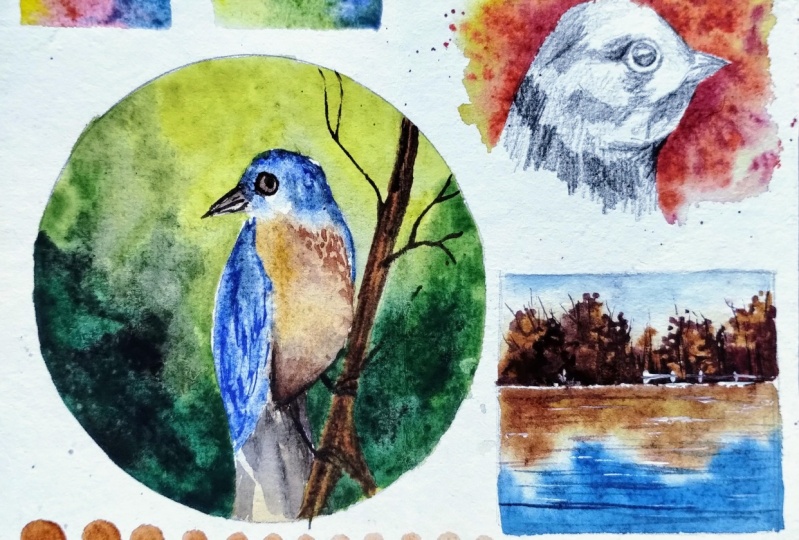
the way I want to do it. I had this major watercolor
painting of the board. On the left side. I have added a
small sketching off a painting of the head of
the bird on the right side. And towards the bottom, I handed the natural park where
the sport is usually far. So this is how I am
connecting my stories. Now you can have any
other way to connect to. You can have two or
three books going on in as on a single page
that I would leave it up to you or you can actually draw the sketch for the full board
detail towards the right. So that there is a left side which has all the painting part, which is majorly in watercolors. Onto the right side
has all the sketching. That way. What I, for insert you are
creating a contrast, non contrast of having a sketch on the right side and having a full-blown
painting on the left side. Now, this is how I see
many people doing it. Sometimes, it's also about ten. Now you can also go ahead
with your pen directly. Start sketching with it. Part, I think that's Towards the experience part
when you want more of an endolymph intermediate
level artist or you are more
experienced artists, that becomes more
easier for you. Though, I will not say
that you should not try. Go ahead and please
give it a try. Because every time, whenever you give it a
try and you'll get to understand that you will be
in a position to do it now, or maybe a few months later
or whenever. It's the time. You will try, you will never understand that this
is what you can do. Finally, let's paint a
branch of the tree and finish this painting off than my p orbital box where I want to touch
back for the board. Though, I'm not going
to make it more detailed for the bird because I just feel that this is a soft subtle
outcome which I had. And if I try to touch it a lot, it would just mean
the whole painting. We'll go for a toss. This is something
that I've understood that even less is always more. You do not need to have a lot to make it good or to
make it work for you. Whatever you feel
is working for you, please paint all that much. I'm going put my white wash, or you can say this is the
opaque white watercolor, whatever you have to draw some
part of white on the time. Once the bunches trimester, we will go ahead with. This next layer is practically
nothing like going with a darker shade of brown and this extending some lines on it. Now, this is that apps go to
random one bark of the tree. Now, this is not
exactly the bulk of Pittsburgh, practically
the branch, and the branch is always in two or three different
colors that you can see. Some parts are worn out, some parts are coming new. So all of that we need
to put together and just adding nature
is very random. And because of that randomness, we have to even add it
into our paintings. And that's what I'm
doing over here. Going with the Morton lines, a few more lines and the whole of the painting would
be done by them. Guys if you are still having problems developing
your subject, I think it's important to go head with a very
simple approach that is taking the size
of a rough paper off the sketch book page
that you want to paint on. Quick thumbnail sketch,
thumbnail sketches. So somewhere south to develop or come to a point
where we can really understand how to please a
subject and how to place things on how to work
with our basic shapes, criterias, et cetera, which we want to add onto this page. That way, you
exactly know how you want to arrange each and
every aspect on this page, as well as in case there are any changes
that you want to make. This is the correct
time to do it. Of course, of bit more tedious. Now, this particular
thing You can always to work night and keep it for
yourself in the morning, then you are having that tea coffee break
or for yourself, I think that's the time where
you have to put your paints and your drawing onto the paper. So yes, this can be another
expense which can really help you to actually is
through your painting. I have used to during my initial days a lot
compared to what I do. Now. As I simply know that this
is how I want to play. So this is how I
want to play with my subjects for this
particular sketch book. And secondly, sketchbook
is my safe place. If I can't make mistakes
on got my sketchbook, where am I going to
make my mistake? So that's one of the
reasons I do not think much when I have to place my subjects, how
I have to do what? Not to not do it. I experiment with. I guess. Now it's time to move
on to the next spot.
8. Sketchbook Exercise Part 2: This is going to be part
of eastern blue part. Now, many of you might think, what are we going to do with this white page that
you see on the right? Yes. We do get intimidated even
when I was starting out, I was very intimidated. But these white
pages where I never wanted to see these
white pages there. But it is a reality that they are there and we have to
draw something on it. How do you connect stories? That's something which I
really always look forward to. I like to create contrast. Now, one part of it
is that you make one of this as a colorful
painting and another, any kind of light
and shadows that you'd like to add on for me. I wanted to paint
or draw the head. Now, I have already drawn and painted the
bird on the left. I did not want to get
into so much of hassle. On the right hand side, went ahead with the
head part of the bird, which I did not want
to complicate much. You can even go ahead
with the beak or flaws, or even the feathers of
the bird, how they look, how you want to add
the details, you know, each and every part is
very important when you are going ahead
and working it out. I always feel it that smaller details do keep
a lot of insights. So I do give a lot of insights about even smaller
prospects and a painting. I like to add more details
into the bird parts and that's one of the things
that I'm going to detail out the head of
the bird along with it. I am going to combine
watercolors, my pencil drawing. Now how do you combine it? I will go ahead with the
pencil drawing, shaving. Seriously, I'm not into, I'm not much into this pencil drawing
shading all the while. It's not that I do it
on a regular basis. But having said that, I tried to add it into my
paintings so that I get, are hanging off the sketching. I get better at the
sketching hand. I can go ahead with
sketching as and when it is required going with the bird. Now, I have taken or two
before B6, B pencils out. Once that I'm using, I'm not keeping a track of all the pencils that you
are going to use over here. Practically, that's
not the intent. Creating the contrast
and the intent and how do you create
the contrast is majorly going ahead with
something black and white and having something which is more
colorful on the left. This is, I mean, this is the way we go about it, but you can use various
mediums also to do it. You can do a
charcoal pencil mix, or you can do a
pen and wash mix. You can do whatever
it is possible. Over here, I am doing a watercolor wash along
with pencil drawing. This is usually not how
people like to go about it, but I like combining various mediums and that's
one of the reasons I always tell you that covert mixed media sketchbook
mediascape folks really opens up a lot more. I would say, a variety of
options for you as well as the sketchbook exploration becomes way more
interesting that way, you can seriously create
so much more magic into your sketch books that when you go toward later
on in your life, it will become more and more interesting and you're not
have grid is a progress. I've already shown you
how I started off with my first sketch
book and how it has landed me to this kind of
a sketchbook practice. Now, it takes a while. I will not say that the
magic just happens, but knowing the tips and
tricks really helps you to get through it in a easier way
compared to anyone else. I guess that's the
whole intent of me going ahead and teaching
you how to do these things. Okay? I'm adding
some darker values and the eyes of the bird. And then once it's done, you know, the whole of the
bird's head comes to life. So you should always focus a lot on the eyes and the Beast. I mean, whatever you
are trying to draw, if it is related to both
these two paths becomes most even in any other animal that ice is practically
they express. And the better you
can express the eyes, the better would be
your final outcome. That I have seen
it on the faculty. I think it is also
going to help you. Again. I have already told you that this
set to wake speed, whatever we are
drawing right now. And you can either
decrease the speech from the top right-hand corner or from the bottom
left-hand corner, depending on which
particular area, which particular device
you're watching. This. Going ahead though,
with some colors now, I think this looks
amazing altogether. Just a few darker
values here and there. I like to use the brown. Now why I say Brown? I have already used warm
colors on the left side. And the right side is more
on the contrasting part. When the right side is more
on the contrasting part, burnt sienna goes well
as an Audi color. It's not very light as
well as it's non-stop. It glows, yet it has subtle look which I really wanted to be
there for this painting. I'm going with simple lines
just to add the darker areas. Contrasting really helps to
add on so much for the bird. When I see myself as an artist, I always feel that the growth of an artist is an overall growth. The more you experiment
with various mediums, the better you grow. Because you can not only have a knowledge with
all the mediums, but you even have the idea how to add it into various
cell paintings, etcetera. Having said that,
there is always a dominating medium
for all of us. For me, it is watercolors. I will never deny that that watercolors is not
my go-to medium. Of course it's my go-to medium. But with that, I really want to even understand
about charcoal, pen and ink washes, about other mediums,
watercolor, pencils, etc. So that once I have a hangup, all of this, I can use it alternatively wherever
it is needed. Going ahead with
somewhat darker values, you see slowly, I have started Artists so much of
contrast to this board. Initially, I just
went ahead and added a simple area where you
just have the IB guide, the head of the bird. With that, we keep adding smaller, smaller,
darker patches, which starts showing up better once you
have a final look. I have kept the right
side intentionally more, more spacious as I want to just add the anatomy of
the board over here. It's majorly defining the
area like the eyeline, then upper mandible or Monday, but I think Loria, chin, etc. Now this board is also
found in Ontario, and I have taken the
example of algorithm queen, provincial park over there. I have added that park towards the bottom
part of the painting. And we will see once we have
completed this sketch area, how we go about bottom part. While you're sketching, just always make sure that you do not much Kenny area with your hand in case you're smudging
any of the areas, but your time, please go
ahead with tracing paper. It would really help you to
not match any of the areas. I'm going a bit faster over here with the darker and the lighter values
that I want to add. You can go ahead too much, can few of the areas where
you think it is necessary. But for me, I don't
like to smudge on more of my pencil shading,
so I keep it. As you see. I knew that I wanted to use some
other color handcuffs. One of the reasons I have gone ahead with my poems, sienna. I'm using this burnt sienna in and around the bird to make it look a bit different and nice compared to what
I could have done. It would have been like
a watercolor painting. I went ahead with the whiter white
parts because it was just too much of white
which was shining through. And if you have
something like this, you can always to these kinds
of various experimentation. I've told you, the
more you experiment, the more you understand
about mediums, the more you understand
how you should go about working with
various meetings. I guess. Now it's time when we move from our this particular
painting to the next part, where we are going ahead
and adding the Algonquin, how Provincial Park,
this is in Canada. We will add the fall
season over there. Hi, can tell you
once you complete the full page for this
particular sketch book part, you will understand how beautifully each and everything
can be put in place. Once you have a quick
idea of how to do it. Now, how to do it, of course, is a
big, big sentence. I feel how to do it as well. All of us are stuck. And that's where there are lot of things
which can help you. Whether it be photos, whether it be stories, whether it be any kind of
research that you have done. Everything can come together and help you to work through it. This is just a simple example of one of the pages
of the sketchbook. I have many pages of
sketchbooks where I have went ahead and I did have some more. The other thing, sometimes
I have failed terribly, sometimes I have risen above what I thought I could
have done with that page. So yes, there are mix of
emotions which we have once we are done with the particular CDs or a particular sketch book. But I think this was one of
the most interesting parts. This is one of the most
interesting sketchbook. Things which I wanted
to share with you, all the major hidden secrets
behind the sketchbook. How you paint on a
sketch of what you do, how the major
shapes, sizes, etc. Sometimes you do not need to
even tape down your paper. It's just going
ahead very randomly. Anything brand, I would say that randomness is the main idea
of a sketchbook painting. Always go ahead and keep
your randomness into.
9. Sketchbook Exercise Part 3: The last part of our
storytelling sketchbook. And frankly speaking,
still you can see a lot of parts which park
empty and then white. But right now we should
concentrate on this aspect. Baiting, where we are
going to just drop in a very quick area, has you can see that I
have added some water on the top and then I
will add some glue. This is all mixed in there, as well as some sort of helium then I'm
adding on the top. Of course, it's a very
simple painting and I do not even want to complicate
it to a great extent. That's one of the reasons
that I'm going ahead with. The simplest of the colors and it's the fall that I want to show here as we are
into the fall season. And in case you want to paint
fall season than I do have a class where you can take seven days of fall
season around the world. You can go ahead
and try that out. But if you are a
sketchbook laughable, if you want to walk
through sketchbook, then this part is, what I should say is
the easiest of all. Yes, I do always the easiest
part for the last thing, because I just feel like this is not war where we
have to think much. We are just going ahead with the simple flow of watercolors. And I have taken the Cloud, it has dried off completely going ahead with some
permanent yellow deep and long with it mixing
some more brown and then adding some random dots
which will look like trees. You can seriously
say that this is not how you paint on a sketchbook. But for me, a sketchbook is the area where I have to
print out everything. And if I have to paint on nature that I think got
nothing better than painting. Fall during the
fall season aren't associated with bark where this particular species
of bird you can find. Okay, I guess that's it. What I have to in
totality explain you. But still the painting, war to sketch book doesn't
seem to be complete. I will go ahead with
my stamp pad and just add the name
blue part on the top, which I will show you later on. Secondly, I would even
go head with some of my stickers and standards
that belong to Canada. So I have a lattice
top of Canada, highlighted sticker of a
bird on the left side. I will write about glue toward and then complete
the soul of the big day. Along with that, I
always like to show the kind of colors which I
have used for the painting. And hence, the blending of
the colors is very important. If you can blend
your colors well, then they will not
give you muddy mixes. So all these shades, which I have used, I have earlier used in
some of the other spaces. That's one of the
reasons it's easier for me to go ahead and use it now, but in case you are
starting it out, I guess a small space
where you should try out these colors and then only go ahead with
the final painting. I did use some
amount of civilian blue as well as kinda
go for the bottom area. And now I am adding some more towards the top just to
make it look more organic. And there are trees
here and there. That's it, I guess. Dennis know leukocytes and this part of the
painting to be flat. But still I struggled a lot. I am not great with the sketches as well
as the painting part. But now what I see myself
getting into words, I am not doing well
with the landscapes. What you practise
less core howsoever, if you are practicing
something really less, then it becomes stuck. So do not do not just leave it. Do not leave anything,
whatever you like, keep painting that
that's something which I always say and I always
suggest to everyone, if you are a landscape artist
to paint landscapes and few areas and few of the
locations that's very important. This is the darkest value which I'm running along with it. I will use my blending brush to blend it a bit so that you can see the contrast
of the colors as well as the trees
are more visible. Over here we are trying to
show structure of crazy. It's not that you will see
individually all the trees, as well as the reflection of the trees will exactly
fall into the water. Which is one or another
reason for you to just concentrate more on each end and the structure of the
tree to a great extent. There is nothing much
over here to explain. To be frank, it's
only a few dots and some amount of darker values that I'm adding to
this final part, I am mixing some of my blue into the darker
areas or else you can even mix you are in your brown and then get
the darkest chapter value. Once you have added
the darkest value, make it more darker when
there is the horizon line. Initially, whenever you
are making a landscape, it's important to define
the horizon line. Horizon line really sets
the mood of the painting. And I hope you already
know the rule of thirds. If you are unaware of
the rule of thirds Pi's, go ahead and watch my
audio class about bottom, where I have taught in
detail the rule of thirds. I think that's one of the important points that you guys should always understand how to focus
on the main subject. I never go ahead and place
my subject in the middle. I always like to
place my subject cater towards the top area, towards the bottom area. I guess. You can
always go back to these smaller things and
this part I hope you have enjoyed completely because we have gone through a
lot of discussions are a lot of various kinds of
aspects of Schedule K. Now, sketch booking is something
which comes with time. And every one of us have
a unique way of adding our real self into
our sketch books. You will also find
a style of your own as you progress in
your sketchbook journey. It takes a while. It doesn't
come all of a sudden, but there are some
tips and tricks. I have already told you. I think those will be really helpful in
your poll showing. I guess that's it, what I have to expand
and I have really smashed a few areas,
it's perfectly fine. This is something that I
always say that even if you smarter fewer alias
to not think much, because you're working on sketchbook if it
doesn't even come out, well, it's absolutely fine. I never went with the
idea that this is going to be my final painting that
I would like to teach kids. Just that it came as an
idea to me and I wanted to take it down and
understand if it can work. And I just saw locked how the token of thing
came together. Let this dry off. Once it dries off, either you can add some lines to show that there is
ripples in the water. Now, ripples in the water
shows the movements. Now, when there are movements, you will not get the
exact reflection of the trees into
the water area. This is something which I
always say when I'm teaching any kind of water
related classes, that there are different
stages of water. Sometimes the water is calm, sometimes the water
is ferocious, sometimes the water
is in-between, which is having the
ripple effect or having cripples in it where there
was a slow movement, but you do not. The exact reflection falling
into the water body. Like small, small
aspects which you can always keep in mind while
you are doing this. As well as whatever you see
on the top is a mirror image. It's not that if you see
the trees on the top, it would come does
tie will come towards the top area of the water and then towards the bottom area
you will get the bushes. That's not how it works. It is actually omitted effect
that you'll usually see. Okay, going with the
final few touches that is majorly with the
white and the black pen. And once I have added this, Only a few things that I have to add back that as
a bit of writing. And once we are done
with the writing part, the whole of the
sketchbook pages ready? It is not a very long process, just that you need
to sit and paint. Setting and painting, yes. Sometimes becomes a bit
with our daily routine. It is one-off. I'm saying that every one of
us do like to walk through, but given the fact that you guys are tackling so many
things for them their day, it becomes very, very tough
to come back and paint. Though. I would like to motivate you and tell you guys to
something for yourself. It's all life and
you should always go ahead and have a beautiful
hobby like painting. I think that when I was not sure of where
my life was headed, this came as a real
rescue to me here. Then the whole thing
came to light. That is the hard business. Nothing stopped. So yes, this is really
empowering medium. This is really hard as a whole, is very empowering
for many of us. And we really don't know how art is going to
touch each one of us. Once it touches us, Can you will get to know
that how beautiful it is. Finally guys, let's
have a look at the whole of this book. I am right now going ahead
and just blending the colors. I told you that I would be
hiding a blend of colors, what I have used for the word, as well as what I have
used for the background. Those are the two
major areas which I do like to blend and see
that there are no meetings. Muddy mixes will not happen till you have more experience
with these colors. I have used these talents and very intensely during
the last few years, I have been painting
almost everyday, so yes, I know the mixes better, but if you want to try it on a rough paper and then use
it on the final painting. Or you can even try it on your sketchbook and then use
it if you do not like it, go ahead with the
other colors where you find they do not produce
any muddy mixes. Just adjusting the taper
bit so that I can go ahead and add because value
of the green into it. Then. So great, I guess I hope you have enjoyed
this lesson completely. It is something that I
don't share very often. And this is one of the lessons which I really wanted
to share with you guys, my journey towards
the sketchbook. I wanted to share with you a few tips that you
can really take. And I would like to see all your paintings
and the final project, this is going to be
the final project. You can do. One painting out of a tree, out of it, what Kevin you like, choose and just upload it. I will get my valuable
feedback over there.
10. Conclusion: In my guns due date, but I would really like
to tell you how to progress to the sketch
from only give it to dry. If you are struggling right now, go for abstract art more. If you are more than what the intermediate
level office on the subjects that you'd like to on this particular
sketch book. Lastly, do not forget to upload your class projects
in the project gallery. Eagerly waiting to
see each one of them would really like to
give my valuable feedback on. In case you have like this class is not only a source of motivation
for any teacher, but it also helps me to understand where the
gaps and how can I can't wait to see you in the next
lesson. See you there.
 Dhritikana Nath, Watercolor Artist and Instructor