Transcripts
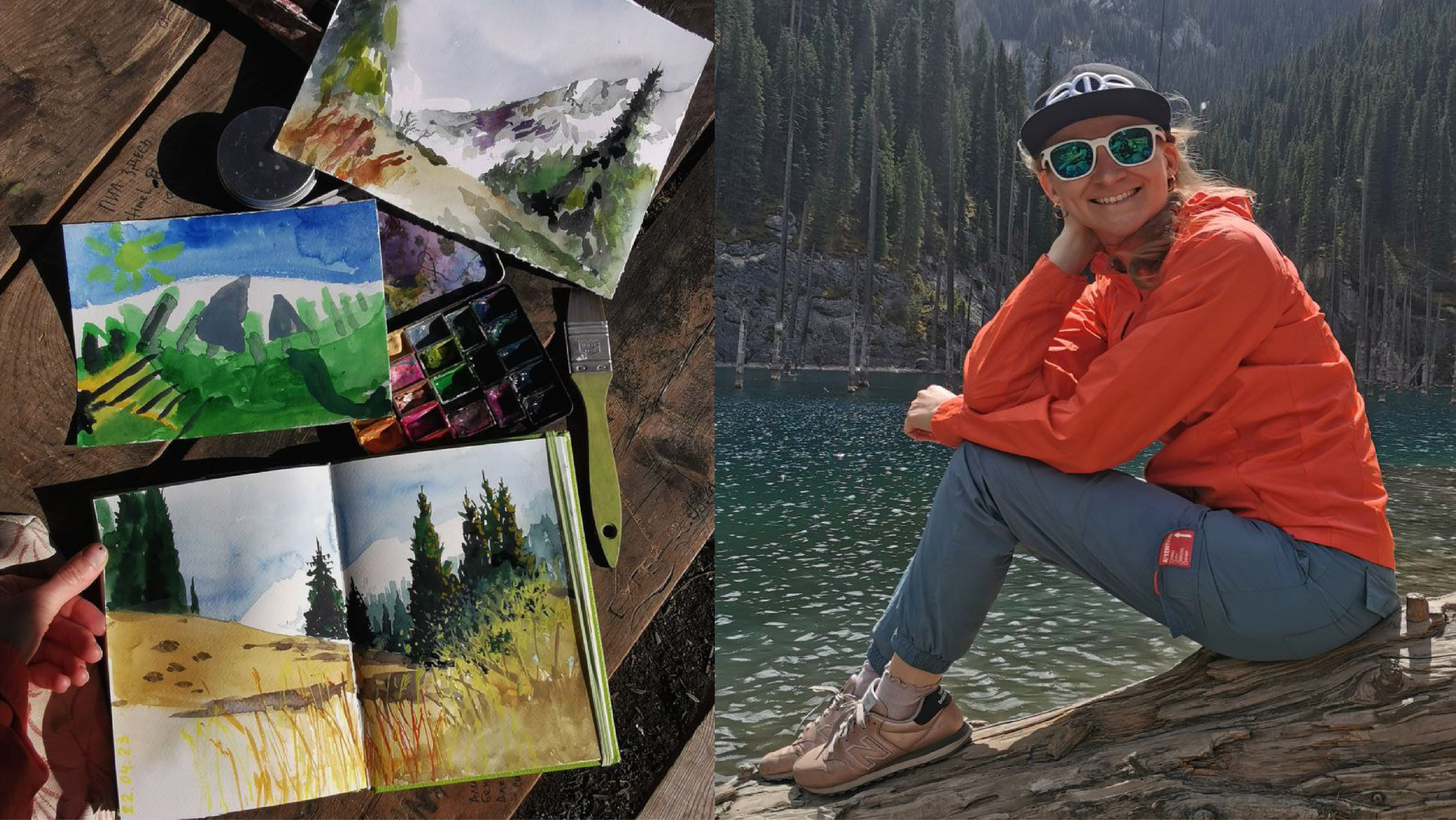
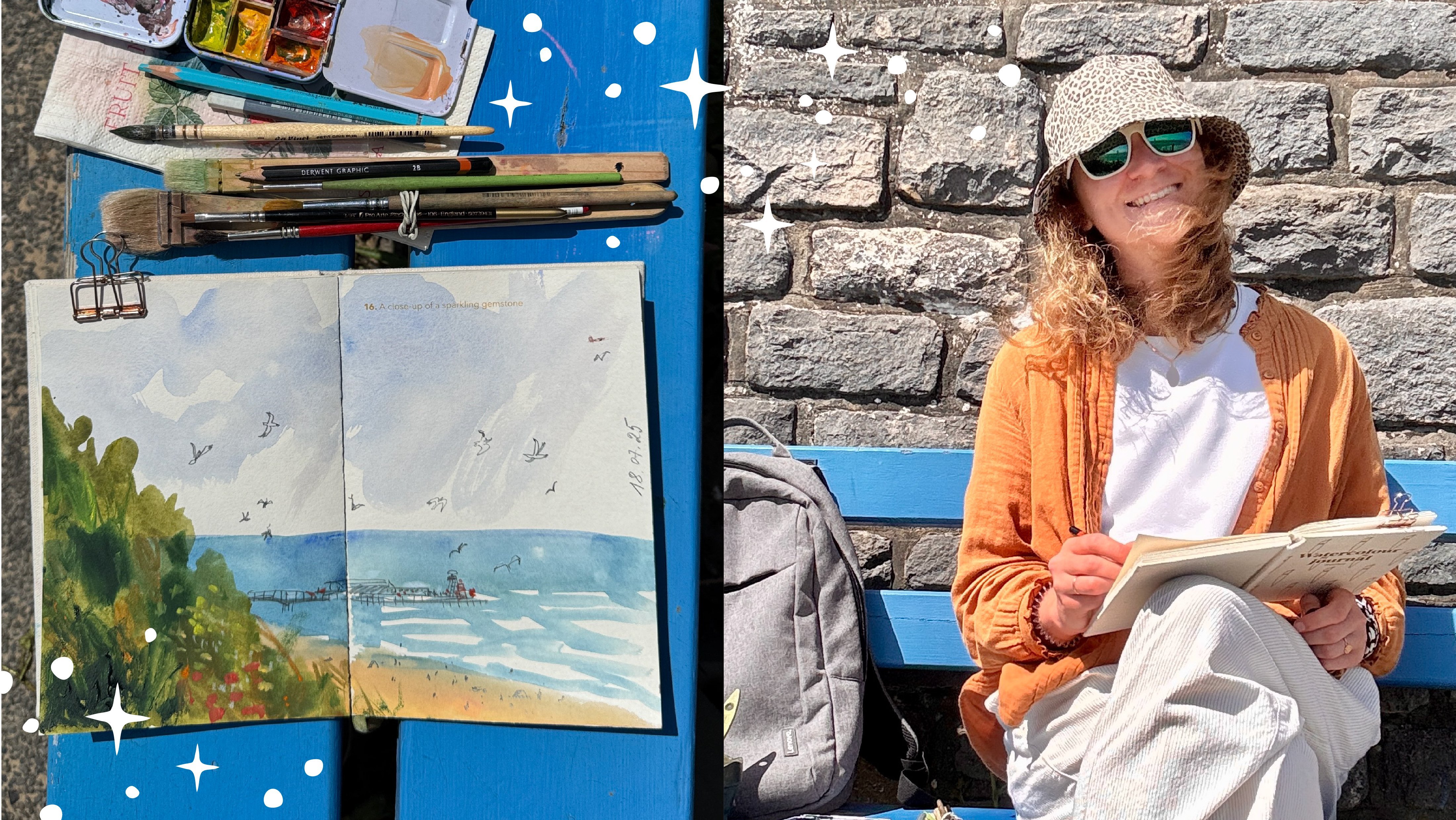
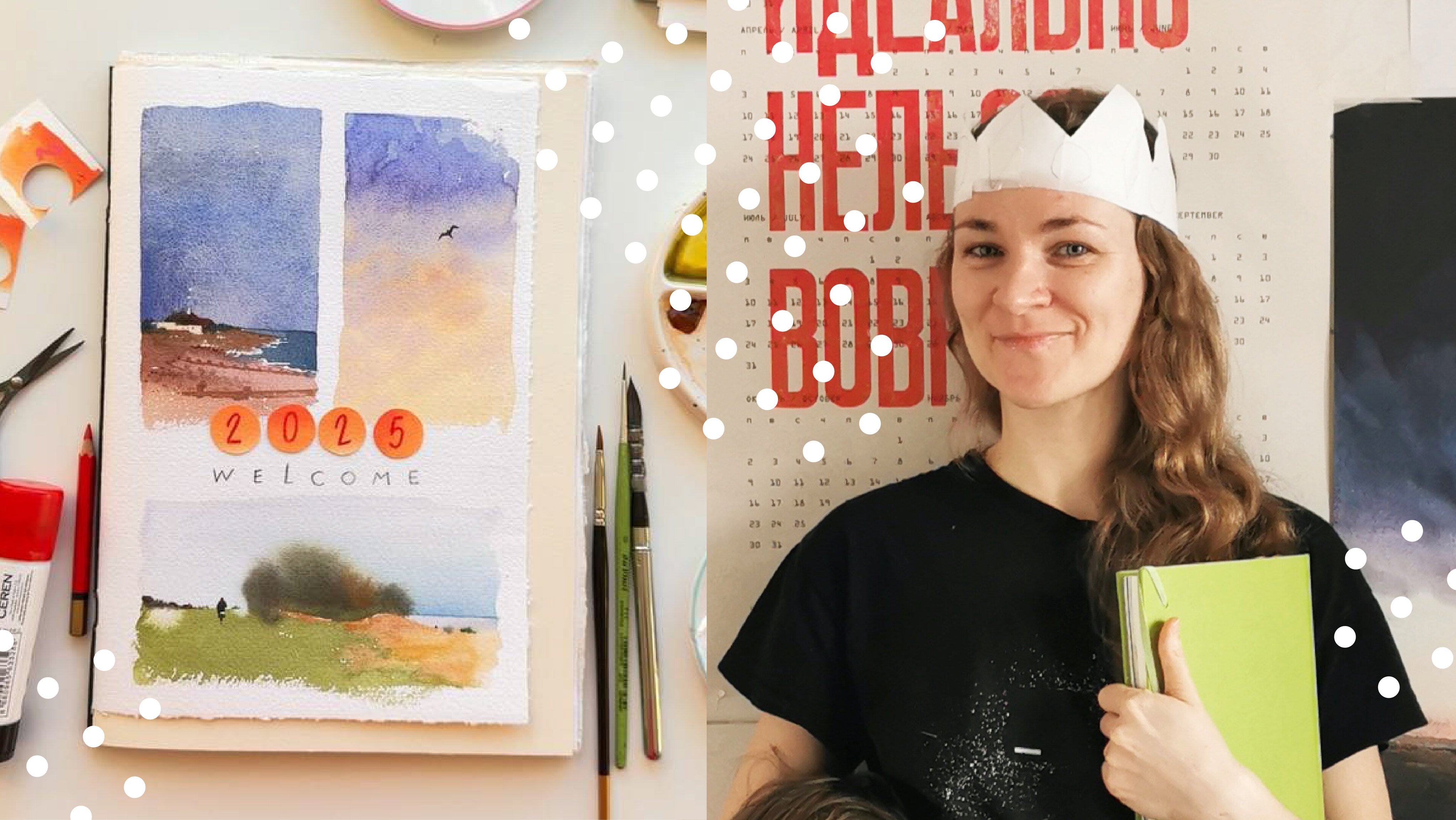
1. Intro: Hey, I'm Olga Banitas
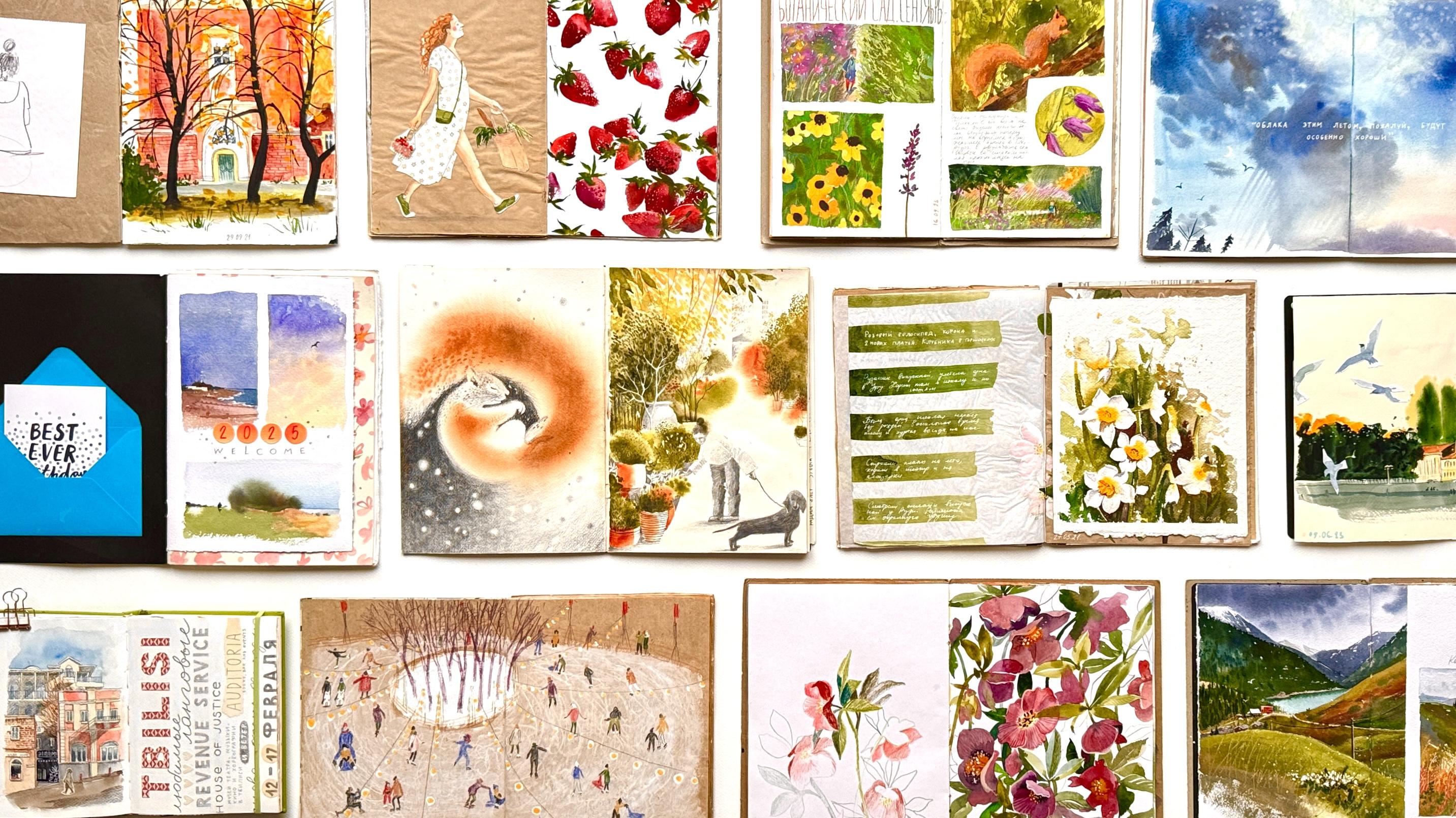
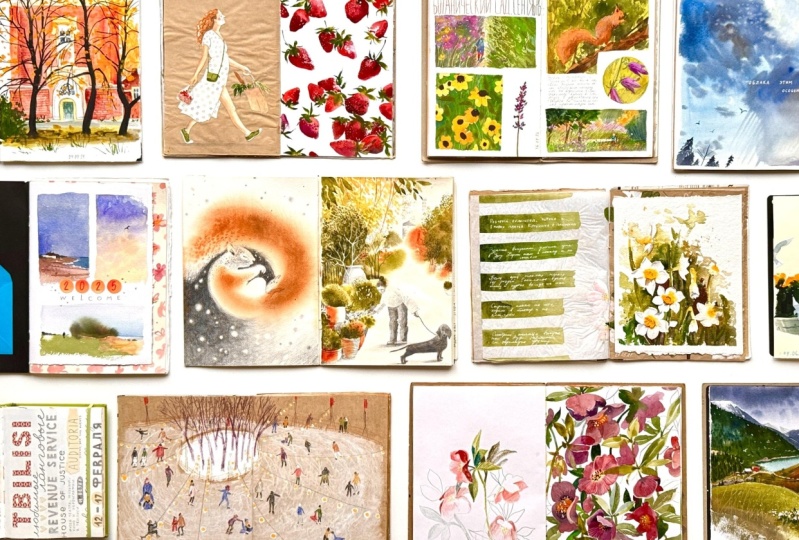
and I've been keeping an art journal
for over ten years now. When I started, I was
abiotic engineer with no art experience and a m to a little girl dreaming
of having a second baby. Today, I'm a full time artist, but my path here hasn't
been a straight line. Over the years, I moved between seven homes in three countries. I worked, raised kids, juggled family responsibilities, and managed the stress
of immigration. Through it all, my
art journal became my place where I
could express myself, reflect, and preserve
precious memories. And you know what?
There is no one secret to stay consistent with
your artistic practice. Different approach work in different situation and
for different people. But what I know for sure is
that to stay consistent, you need to enjoy it. Focus on joy, satisfaction
and fulfillment, the joy of creating
something just for yourself. In this class, I'm sharing my ten year sketchbook
journey complete with ups, downs and lessons I've
learned along the way. We'll explore how to start
your own art journal, even if you are
completely new to art, how to find joy in
the creative process, even when life
feels overwhelming. And most importantly,
how to stay consistent, motivate yourself, and make art a lasting
part of your life. This class is all about finding your way to create and
enjoy a sketchbook. So let's get started. Do.
2. My Journey. Start: Okay, this is me
and my little girl, and here we are
drawing together. Yes, I was a bite
engineer back then, but like many of you, I've always felt that creativity
was a part of who I am. As a child, I loved drawing
and painting so much. These are my very
first drawings when I started getting back into art,
reinvent creative myself. I think this might be the first time I'm sharing
them publicly since then. And as you can see, I was a complete beginner. There is something truly
amazing about parenting. It gives us the chance to relive childhood
through our kids. That's when I rediscovered
how much I love to draw. I didn't have any
fancy materials, just the supplies I
shared with my daughter. But as I started painting more, I realized I loved painting
even more than drawing. So I bought my very
first watercolors, which, of course, I also had
to share with my little one. I became deeply fascinated with watercolor
and painted a lot. Relying mostly on intuition. Then one day I
painted this bicycle. It was a Wow. I thought, Wow, is it me? Who creates this? I was really proud of myself. That gave me a boost
of confidence, and I became bold. Eventually, I decided
to take a class. We painted flowers,
architect, and the sea. That's when I realized how incredible it is
to have a teacher, someone who can guide
you and inspire. From this experience, I
learned two important lessons. So the first one is how important it is to
celebrate your Wow. I did that moments. They are incredibly motivating and will inspire
you to keep going. And lesson number two, if you have a chance, take a class, especially
in the very beginning. Learning from a teacher
is far more effective and allows you to improve
your skills very quickly. Me 2015 and early 2016 became a period of significant growth in
my watercolor journey. Then in the autumn of 2015, I bought my very
first sketchbook. It was a thick one with high
quality watercolor paper, and I painted in it
for nearly two years. At the time, I
didn't realize it, but now I see that I instinctively filled
that sketchbook with deeply personal stories. The content mattered
more than the technique. As I continued to learn and
develop my watercolor skills, I started taking on illustration commissions
and organizing workshops. I kept my practice separate, working on technical exercises, commissioned pieces,
and class project planning on an individual
sheets of vertical paper. But my sketchbook
remained a space for personal and emotionally
significant sketches. Every spread in that first
journal tells a story. Looking back, I see it as the true beginning of my journey with
illustrated journals. In fact, I'm still struggle
how to call them correctly. Art journals, sketchbooks,
illustrated journal, art books, something like that. Very personal, keeping
precious moments of my life. So there is Lesson number three. Your art journal is a unique and personal space that holds moments
meaningful to you. That's why all my classes on sketchbooking and
art journaling focus on flexible ideas
and techniques, allowing you to adapt them to suit your own creative needs. Around that time, my friend and I started a
little tradition. Typically during
the summer season, we'd grab a cup of coffee, find a charming
spot in the back, and spend a few hours
painting while chatting. It was such a wonderful
time, two, three, sometimes 4 hours of creative exploration and
meaningful conversation. The main idea was to discover beautiful locations and enjoy drawing or painting
from observation. It was truly magical. So there is lesson number four. It's amazing to find
someone who shares your love for art and creativity
to support each other. Since you are here
on skill share, you already have the supportive community
to connect with. But if you are lucky enough to find like minded
people in real life, it can be a great source
of encouragement. For me, that person was a friend and surprisingly,
also my daughter, the key aspect of those
sketching sessions was that we treated
them as special events. They required preparation,
the right mood, good weather. At the time, I used
to believe that I needed a lot of time
to create a sketch, paint, or draw
something meaningful. And it's wonderful if you do have the opportunity
to spend two, three or even 4 hours creating a spread
in your sketchbook. It is such a delightful
experience, such a joy. I had that luxury
when I first started my art journal and I'm fortunate
to have it now as well, but I've also experienced
a very different reality. At the end of 2016, I had my second baby, and my free time disappeared. Those long creative sessions
were no longer possible. I had to continue
working part time. Illustrating a book and
painting commissions, but I had neither the time nor more
importantly the desire to draw for myself. I was simply too
tired, too exhausted. And we came to the
lesson number five. If you find yourself in
a similar situation, feeling like you don't
have the resources, whether it's time, energy, or inspiration, it's absolutely
okay to take a break. Don't put unnecessary
pressure on yourself. You'll start again
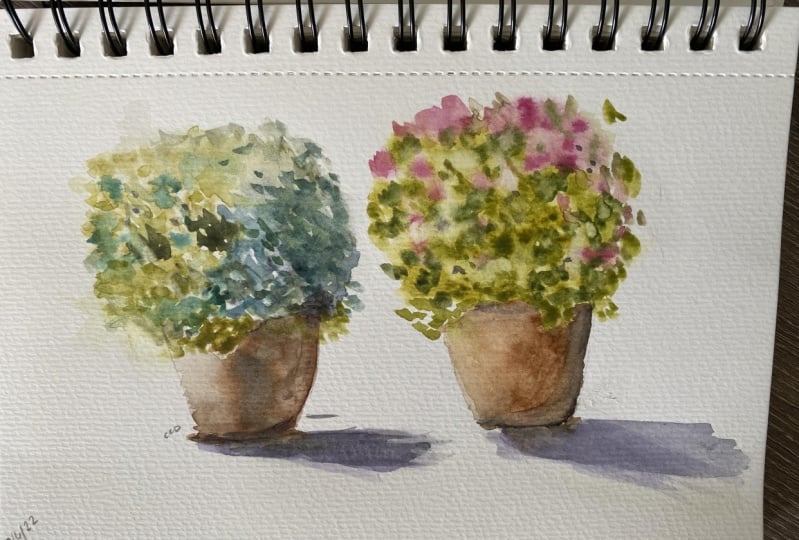
when you are ready, when your passion returns. My first attempt at drawing something from observation
looked like this. I had a few more, but they were even worse. So there is lesson number six. It's absolutely fine. Feel like you've lost your
skills after a long break. The good news is that they come back quickly with
a bit of practice. The summer of 2017, I managed to organize just a
couple of playeer sessions, and I was so happy that I could. But in the end, I sort of gave up. My work as an artist
kept me busy. I illustrated in UBk, worked on a big
educational project, and created skill share classes. There simply wasn't any space
left for our journaling. In fact, I think there simply wasn't much space for
myself. During that time. And so this marks the end of the first part
of my sketchbook journey. Now, welcome to
the next chapter.
3. My Journey. Developing: The autumn of 2018, I started a new sketchbook. Little by little, I began
illustrating my life again. Sometimes, very often.
It looked like this. I'd give my kids paints, plenty of paper and protected
table with a cover. This is what worked for me, but I don't think it
will work for everyone, but maybe somehow you'll find it interesting or even inspiring for you for your own practice. So lesson number seven. If you are ready to start or restart your art
journaling journey, you'll find a way
and the time for it. But please be kind to yourself. It took me two years
to start drawing for myself again after my
second baby was born. But let's admit it, I am
a bit obsessed with art, and it's also my job, something I needed to
feel myself fulfilled. So let it take as much
time as it needs. You can see how my pictures
have changed over time. They become simpler
and designed in a way that allowed me to easily step away
and return later. One day, I realized
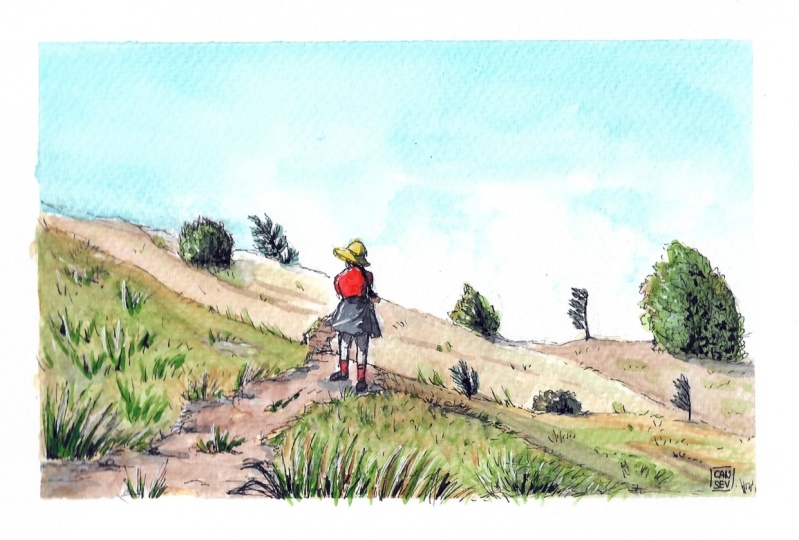
that I lacked confidence in drawing people for my professional projects. So I decided to sketch people at playgrounds and anywhere
outdoors while my boy played. Which meant drawing very fast. I bought a small
size sketchbook, a couple of black liners, and some colored markers. This kid came with me every time I went for a
walk with my son. I drew a lot and fast. Some sketches were worth finishing at home to
make them look nicer. I also added my impressions from a work or moments I
wanted to remember. This helped me capture many lovely memories in the
pages of my sketchbook. So there is lesson number eight, if you are extremely
short on time, but still eager to draw, use a small portable sketchbook
and limit your materials. Sometimes just a graphite
pencil or pen is enough. Oh, believe me, I created
tons of really bad sketches. But this experience helped me realize that I don't need
a lot of time to draw. I can do it anywhere
and almost anytime. That was a crucial moment
in my sketching practice, a real game changer for me. Fact that sketchbook had all sorts of different types
of paper tinted paper, black and brown recycled paper. It was the very first time I tried sketching on tinted paper, and I absolutely fell
in love with it. In fact, I even have a
skill share class on how to draw and paint on
brown recycled paper. Feel free to check it out. It's easy to follow and
perfect for beginners. Since then, I've started
to draw much more freely, frequently and
effortlessly, treating it as enjoyable and very
pleasant moments. One day, I even sewed my own sketchbook from
Brown recycled paper. Oh, that was my space
for experiments. And yes, I have a skill
share class about it. Do check it out. There is lots of information there
on how to draw free. Over time, I found
myself with more time to illustrate my life and do art journaling
for my well being. Be completely honest with you, I must admit that
there are still periods when I don't
draw or paint at all. And that's perfectly
okay, I think. Typically, it happens
when I'm stressed, overloaded with commitments
or shortened time. After such times, it takes
me a little while to warm up and get back into my regular
art journaling practice. The last three years have been incredibly complicated and
turbulent for my family. We've gone through
two immigrations. Sometimes I felt that my creative practice was one of the very few
constants in my life, and it gave me a
sense of stability, helping me manage stress. At the start of 2023, I organized my first
life sketchbook group. We met every week,
drew together, visited museums, and
went on player sessions. Many people mentioned how supportive and important
it was for them. From my own experience and
that from my students, I've learned that keeping a sketchbook is a
form of self care. It helps you feel good, stay calm, and reconnect
with you in a child. Now you know my journey from someone who dreamed of mastering watercolor to becoming an artist and illustrator with an
international reach. Keeping a sketchbook has played a huge role in my
growth as an artist. In the next video, let's explore the key points
that I believe might help you to develop and maintain a consistent
art practice.
4. Find Your Motivation: You know, as I was
writing out my story, I realized that I simply can't give you a clear cut instruction on how to stay motivated and continue your
creative practice. We are so unique. Our life situations and
backgrounds vary so much. So the best I can do is to
share some thoughts that might resonate with you in
your own way. So let's begin. I believe that for most people, stay motivating means
seeing results. Remember, I mentioned those watercolor bicycle
that surprised me. Wow, did I really paint this? And it made me believe in
myself and keep going. So what you can do
to increase chances to have this wow moment. Of course, create
a lot of stuff, art, paint, draw a lot. And eventually you find that you create something
you are really proud of. But also good idea to find a teacher or teachers
online or in person, it doesn't matter as well as the teaching style suits
you and you feel good, fulfilled after the lesson. So it will help you to
progress very much, be proud of yourself, and feel eager to continue. It is also incredibly
helpful to look back from time to time
to celebrate progress. And that's exactly what I want to suggest to you
as a class project. Find your very first work and look at them and compare
with what you create now. And if you've been
practicing for years, um, maybe you can turn it
to a chronological line. And if you are
just starting out, just publish a picture you are most proud of and you
are happy to look at. And it will be so delightful if you publish
it as your class project, so we can celebrate
your progress together. You'll get a great support from me and from your
fellow students. Disclaim at time,
don't get me wrong. I firmly believe that
during creative session, we should focus on
process, not the result. Your feeling, your joy, are the truly matter, not the finished piece. But there is amazing thing about a regular
artistic practice. You will grow as an artist, even if you don't care about the result every single
time you create. In fact, the less you
care about the outcome, the faster you grow
because it allows you to create freely and don't
be afraid of mistakes. If I will continue thinking
about what could be the result of regular
artistic practice, I would mention developing one topic for a specific
period of time. Remember, I set myself
the goal to draw people. That's exactly what
I'm talking about. For example, you
could set the goal to paint flowers every
week this spring. First, it gives you an
exciting anticipation of your art sessions, as you'll be
actively looking for beautiful flowers every
time you are outdoors. And second, you can write down your thoughts
next to the flowers. To remember those
specific weeks or days. By the end of the spring, you'll have a
collection of artworks. There are 12 weeks in spring, so even if you miss a couple, you'll still have a
solid collections and pieces you're proud of. Oh, maybe you'd like to participate in a
drawing challenge. There are plenty of them on
Instagram or other platform. I'll be including a few
of them in the PDF, along with a short summary of my thoughts from this class. Feel free to grab it from the
project and resources step. I must say, social
media challenges don't work for everyone. Personally, they don't
work well for me, but I know a lot of people
who are highly motivated and grow significantly by
embracing art challenges. So give it a try if
you haven't yet. To sum up, I suggest
you to think about an achievable goal
that works for you in one, three months. I'm only ask you to be
realistic and kind to yourself. And if it is not too personal, feel free to share your
goal in your class project. I think it would be
really interesting to see what everyone
comes up with.
5. Find Your Joy: The second essential part of maintaining a lasting
artistic practice, a part of seeing result is to find joy and pleasure in
your artistic session. Nothing else matter if you don't enjoy doing art
or art journaling, as the main purpose is
to make you feel good. Help yourself to minimize
the effort to start. Remember, when I bought a small size sketchbook
and a couple of flyers to be ready to
draw everywhere at anytime. I might sound like a
bit crazy example, but the idea is to
organize your process in such a way so it becomes easy for you to start
drawing or painting. Still keep a limited set of
tools for art journaling, a sketchbook, a small
watercolor set, a pencil case with
a few brushes, graffit and colored pencils, a glue stick, small scissors, a sharpener, and a
floppy water container. It is so much easier
to keep it all on my desk or take it with
me for outdoor sessions. Of course, I have many
more art materials, but this kid is enough to create almost any
art journal spread. Another idea to consider is
to create pleasant rituals. For example, light a
candle every time you draw or listen to your favorite
podcasts or book. You will eager to
continue listen to the book or listen to the next episode of
the podcast and draw. So it works for me very well. What else could I
suggest to bring more joy in your art practice? Buy a good quality
art materials, but not from the very
beginning to start a very basic stuff from the supermarket is
absolutely okay. But when you're
ready to progress, visit an art shop
and treat yourself. Professional art materials,
paints, colored pencils, good quality paper for
your handmade sketch book, or whatever materials you want. Although the price of professional art materials
can be quite high, the pleasure of working
with them is truly special. And you don't need
to buy a full set of paints or full set
of colored pencils. It is absolutely okay and affordable to buy
just single item. I do it quite often go
to this art shop and buy three colored pencil just
suit my mood right now this season or couple of
new colors of watercolor. It is such a joy to pick
colors or materials that match my mood on this
particular season or mood. You also might find inspiration in creative
blogs or on interest. In the attached PDF, I've listed some of my favorite sketchbook
artists. Check it out. Also, a good idea is to find
a partner to draw with. It could be a great
way to stay motivated. You can meet online via Zoom or FaceTime or in person cafe and chat and create something
beautiful together. Make it an event that you
both are looking forward to or explore your local
in person drawing events. The urban Sketchers
global community has chapters all over the world. Their meetings are
free to attend and open to everyone regardless
of the skill level. Another helpful
resource is metab.com. Simply enter your
city or postcode, and you might discover some
interesting events near you. I'll include all relevant
links in the PDF. Live drawing session
often hosted by museums, local libraries, or community
centers. Check it out. Be part of a creative
community could be really motivating
and inspiring. In general, think how to make your creative session as enjoyable and
fulfilling as possible. Do it for yourself. And if you have any
ideas that work for you, please share them
as a class project. Your insight may help
others may be very useful. For me, for other students, please share your ideas. So in the next video, let's sum up your class project.
6. Your Class Project: For your class project, I would like you to
focus on three things. First of all, celebrate
your progress. Take a moment to look
back at your journey, find artworks or art journal entries you created
when you first started. Compare them to what
you create now. How does it make you feel? What thoughts come to mind? If you're comfortable,
please share your progress as part
of your class project. It would be amazing to
celebrate your growth together. You'll receive encouragement
from fellow students, and, of course, I'll be
cheering for you, too. If you are at the very beginning of your journey, welcome. I'm so happy you are here. Feel free to share
your recent work or even materials you
plan to start with. Second, set an achievable goal. Think about a realistic goal for your art practice over the
next one, three months. What feels manageable
and exciting for you. Be kind to yourself
when setting this goal. And if it's not too personal, I'd love you to share
it in your project. It's always inspiring
to see what others are working on and your goal might resonate
with someone else. And the third one, share
what works for you. What has helped you
maintain your art practice. We are all unique and your tips, advice or story could be incredibly valuable
for someone else. If you feel comfortable, please share what's
been helpful for you. It might be exactly what
someone needs to hear. And please don't forget
to support each other. Little encouragement
goes a long way. We all know how great it feels to hear something
good about your art. So let's keep this place fun, positive and full of good vibes, so we can all grow together.
7. Final Thoughs: Well, as you've learned
from this class, I started my creative
journey as an adult, so I completely understand struggles and fears
that can come with it. And I want you to
know you've got this, and I'm here to support
you every step of the way. I've already created
several skill share classes dedicated to sketchbooking
and art journaling, and I have more planned
for this year. So Satan if you found this class helpful, please consider
leaving a review. It means a world
for me personally and help this class to
reach even more people. Thank you so much for joining me and take care. See you soon.
 Olga Bonitas, Watercolour girl