Mastering Dynamic Poses: The Ultimate Guide for Artists, Photographers, and Models | Giulia Martinelli | Skillshare

Playback Speed


1.0x


  • 0.5x
  • 0.75x
  • 1x (Normal)
  • 1.25x
  • 1.5x
  • 1.75x
  • 2x

Mastering Dynamic Poses: The Ultimate Guide for Artists, Photographers, and Models

teacher avatar Giulia Martinelli, Animation Director / Illustrator

Watch this class and thousands more

Get unlimited access to every class
Taught by industry leaders & working professionals
Topics include illustration, design, photography, and more

Watch this class and thousands more

Get unlimited access to every class
Taught by industry leaders & working professionals
Topics include illustration, design, photography, and more

Lessons in This Class

    • 1.

      Mastering Dynamic Poses

      2:10

    • 2.

      Welcome: Project & Tools

      1:53

    • 3.

      Line of Action

      2:47

    • 4.

      Negative Space & Silhouette

      3:09

    • 5.

      Asymmetry

      2:17

    • 6.

      Push It!

      2:37

    • 7.

      Recap

      1:40

  • --
  • Beginner level
  • Intermediate level
  • Advanced level
  • All levels

Community Generated

The level is determined by a majority opinion of students who have reviewed this class. The teacher's recommendation is shown until at least 5 student responses are collected.

406

Students

7

Projects

About This Class

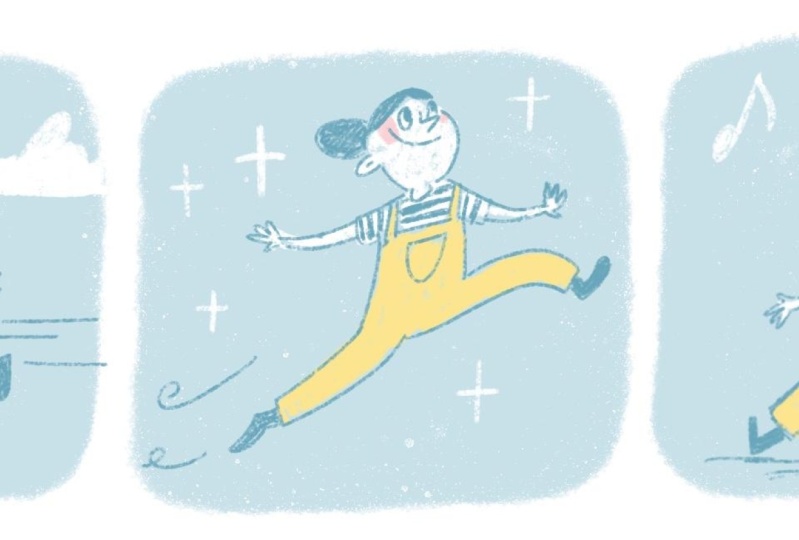
Are you tired of stiff and boring characters in your artwork or photography? Do you want to learn how to create dynamic and original poses that bring your subjects to life and improve your storytelling? This class on mastering dynamic poses might be the perfect fit for you.

In this class I merge my experience as an animator, illustrator, and model, to bring you the top tips and secrets for creating poses that are both dynamic and authentic.


Who this Class is For:
Whether you're an artist looking to improve your character poses, a photographer searching for more interesting compositions, or a model wanting to nail your next photo shoot or life-drawing session, this class is for you!


Tools:
No special materials are required to follow along – simply use your preferred tool, whether it's a pencil and paper, or a camera. Through a combination of step-by-step instructions, practical examples, and insider tips, you'll gain the skills and confidence needed to create dynamic poses that are unique and original.

About your Teacher:
My name is Giulia: I am a professional animator and illustrator. I have also been working also as a model - both for photography and for life-drawing classes -  for many years, and in this class, I am combining the experiences I collected as an artist and as a model.

Through this unique perspective, I have discovered how these seemingly distinct fields interconnect, allowing me to develop a deep understanding of the nuances and subtleties that make a pose truly dynamic and captivating.

This class is not just about mastering the human body but also about creating harmonic compositions. I'll break down the class into easy-to-follow tips that will help you create poses that are both dynamic and authentic.
This is not a class about anatomy or a particular technique, but we will analyze poses that work and are aesthetically pleasing.

Resources:
Together with the class, you will get a Recap .pdf with the most important concepts and takeaways, and some extra sketches and slides.

What You'll Learn:
At the end of this class, you'll be able to apply my tips to your illustration, animation, or photos.

You'll learn how to convey emotions and expressions through body language and how to create poses that are unique and original. No matter what your preferred tool is, whether it's a pen or a camera, this class is for you.
Join me in this class and take your posing skills to the next level!

Meet Your Teacher

Teacher Profile Image

Giulia Martinelli

Animation Director / Illustrator

Teacher


Hello, I'm Giulia, a full-time freelance animator, and illustrator.
After graduating from in Animation (Turin, Italy) with my animated film MERLOT, I started my journey as a freelance artist and I hopped around Europe for a while, before settling down in Zurich, Switzerland.

In my daily practice, I juggle client commissions, teaching, and personal projects.

If you want to stay in touch and receive a monthly newsletter from me, Creative Crave is the place where I share some behind-the-scenes and updates from my desk. You will also find me on Instagram and on YouTube.
See you in class :)

Giulia

Here are some of my favorite students' reviews:

See full profile

Level: Intermediate

Class Ratings

Expectations Met?
    Exceeded!
  • 0%
  • Yes
  • 0%
  • Somewhat
  • 0%
  • Not really
  • 0%

Why Join Skillshare?

Take award-winning Skillshare Original Classes

Each class has short lessons, hands-on projects

Your membership supports Skillshare teachers

Learn From Anywhere

Take classes on the go with the Skillshare app. Stream or download to watch on the plane, the subway, or wherever you learn best.

Transcripts

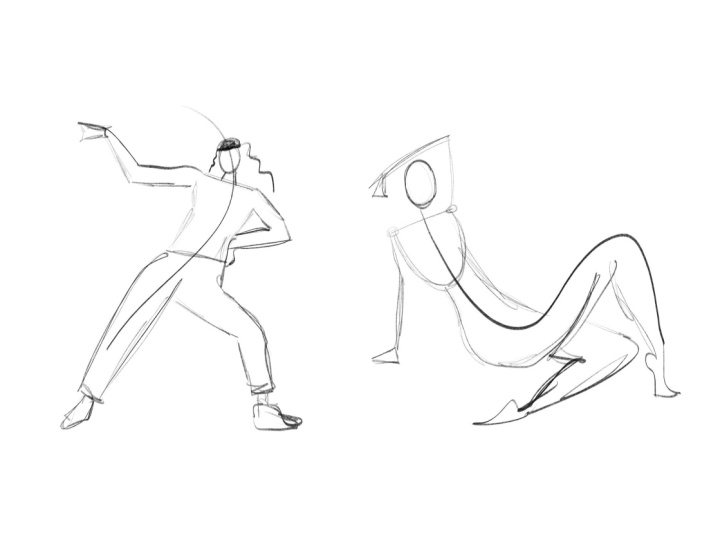
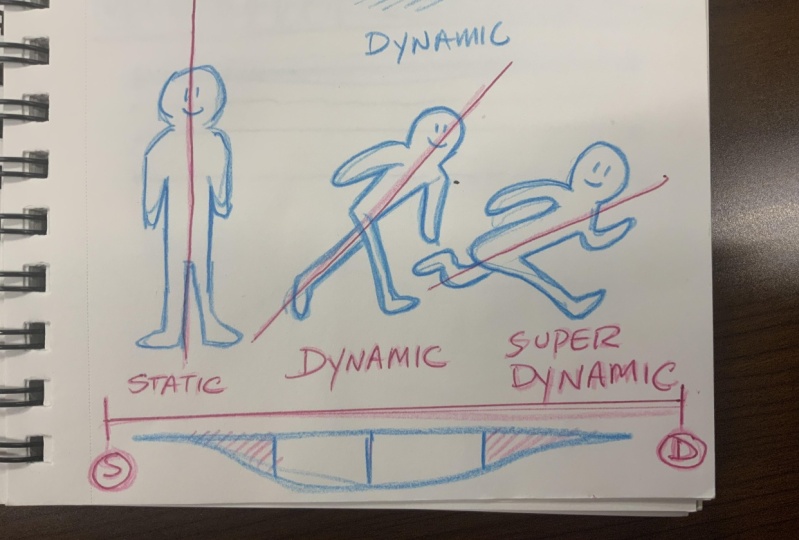
1. Mastering Dynamic Poses: Are you tired of stiff and boring characters in your artwork or photography? Do you want to learn how to create dynamic and original poses that bring your subject to life and improve your storytelling? This class on Mastering Dynamic Poses might be the perfect fit for you. In this class, I merged my expertise as an animator, illustrator, and model to bring you the top tips and secrets for creating poses that are both dynamic and authentic. Hi, my name is Giulia, and I'm an animator, illustrator, and also model. It is crucial for storytelling to master the human body and create harmonic compositions. In my work, I noticed how I profit from both perspectives, the model and the artists. Whether you are an artist looking to improve your character poses, a photographer, searching for more interesting compositions, or a model, wanting to nail your next photoshoot or live drawing sessions, this class is designed to help you take your poses to the next level. No special materials are required to follow along. Simply use your preferred tool, whether it's a pencil and paper, or a camera. There is no need for fancy drawing skills. Stick figures will do just fine. Through a combination of step-by-step instructions, practical examples, and insider tips, you'll gain the skills and confidence needed to create dynamic poses that are unique and original. I'll break down the class into easy-to-follow tips that will help you create poses that are both expressive and lively. This is not a class about anatomy or a particular technique, but we will analyze poses that work, and are aesthetically pleasing. At the end of this class, you'll be able to apply my tips to your Illustrator, animation, or photos. We'll talk about line of action, negative space, and asymmetry and we'll see how variety is a key ingredient to make your figure pop. Join me in this class and strike some poses. 2. Welcome: Project & Tools: [MUSIC] Welcome to this exciting class about dynamic poses. In this class we'll be covering the basics of posing, so you can avoid stiff, unnatural poses and create more original and expressive ones. I divided the class into easy-to-follow lessons, highlighting the most important concept for posing and sharing tips along the way. Our projects for this class is to apply the tips I give you and create your own dynamic poses. Don't worry about making a final, perfect finished illustration or polished photo. I'll be sharing my own sketches and pictures to inspire you. You can upload your sketches, photos or both, and even show your before and after shots. Now, I want to make it clear that in this class, we're focusing on the basics of posing, such as line of action, silhouette, etc. I'll be sharing my top tips. But we won't be covering lighting, anatomy, specific drawing techniques, clothing or body type. However, I will provide additional resources at the end of the class to help you take your skills to the next level. All bodies are beautiful and I will be using my own body to demonstrate the tips and tricks that can help you pose any character, even an anthropomorphic animal character. Grab your tool of choice, pen, paper, or camera, even a mirror or a friend can be useful, and let's get started. [MUSIC] 3. Line of Action: [MUSIC] In this lesson, we'll be diving deeper into the concept of movement within poses. When we think about dynamic poses, we need to think about movement and in particular, movement within the pose. A curved line creates movement, while a straight line creates stiffness. To move away from static and still poses, we need to look for a curve line of movement, which is called the Line of Action. The line of action is the first thing you would sketch when doing a gesture drawing during a figure drawing session. It gives the idea of the general movement of the body. Even in poses there are apparently still or that are not portraying a clear action, there is a dynamic line in them. For example, when observing references, let's try to understand what we like about them and define their line of action. Let's take a closer look and understand what makes them appealing. As an exercise, you can try to draw some curved line of action and imagine how the body could be posed. Do some life drawing and try to sketch as the very first thing, the line of action. It does not have to be precise. Just follow the energy of the pose. You can ask a friend to post for you. Observe people around you, go observe some statues or look online or in a book for some models posing for life drawings. The book or online search should be your last option though since it's much better if the model is real with perspective and in three dimensions in front of you. It helps if you use a soft pencil to draw the line of action even better if it's a light-colored one. It's good not to be too precious or worried about those first messy and sketchy lines. A light-colored pencil can help start making the page dirty and then later you can go over it with a darker one to actually start drawing the pose. You can even use yourself as a reference by experimenting with different line of actions in front of a mirror. By mastering the concept of line of action, you will be well on your way to creating captivating and dynamic poses. [MUSIC] In the next lesson, we will be talking about negative space and silhouette. 4. Negative Space & Silhouette: When creating dynamic poses, it's important to consider negative space and silhouette. When we talk about negative space and silhouette, we're referring to the area around and between the subject of a drawing or image. Negative space is the space around the subject, while the silhouette is the outline or shape of the subject. In terms of dynamic poses, negative space and silhouette are important because they can help create a sense of movement and flow. A well-designed silhouette can communicate the energy and direction of the pose, even without any details or shading. Give your poses room to breathe. A strong silhouette requires ample space. Don't be afraid to open up and avoid creating a closed pose. Remember to use all the joints we have, such as the ankles, knees, neck, wrists, and so on. Silhouette is particularly important for animation as it helps to create clear and identifiable shapes. Animators need to create poses that can be easily read and understood by viewers, even when they're moving quickly on screen. By designing poses that work well as silhouettes, animators can ensure that their characters are recognizable and clear even in fast-paced action scenes. A helpful tip for life drawing illustrators is to focus on drawing the negative space around the model instead of the model itself. This can be a helpful tool for checking proportions and ensuring that the figure is balanced and accurate. By focusing on the negative space around the figure rather than the figure itself, artists can more easily identify areas where there may have made mistakes in their drawing. Overall, negative space and silhouette are important concepts to keep in mind when creating dynamic poses. By paying attention to the space around the figure and designing poses that work well as silhouettes, artists can create more impactful and visually interesting work. As an exercise in the mirror, try to create as many negative spaces as possible, or just try to draw them. The next lesson is all about asymmetry. 5. Asymmetry: [MUSIC] When it comes to creating dynamic poses, it's important to avoid symmetry and instead aim for asymmetry. One way to achieve this is through the use of chiasmo or contrapposto. These are techniques where the weight of the body is shifted to one side, creating a natural-looking and interesting pose. [MUSIC] Another technique that can add interests to a pose is the use of twists. By rotating the body or certain body parts, you can create a sense of movement and tension in the pose. This is especially useful for models who are posing for a crowd and need to maintain interests from all angles. [MUSIC] A symmetrical pose can look stiff and boring. We can give it more tension and dynamism through a curved line of action and a chiasmus. In this example, note that we change the pose and now the legs and arms are asymmetrical now. For an extra pop of asymmetry and dynamism, try turning the head in the opposite direction of the torso. As with the previous lessons, remember to prioritize curves over straight lines in your poses. These tips will help you create more dynamic and natural looking poses and add interest and energy to your illustrations [MUSIC] In the next and final lesson, I'm going to give you some extra inputs to push your pose and skills and bring your characters or subject to the next level [MUSIC] 6. Push It!: [MUSIC] Finally, let's explore how to push our poses to the next level with some final tips and tricks. In this lesson, we're going to talk about how to push your poses to make them more lively and engaging. I hope to give you some inputs to keep exploring the art of posing. One way of doing this is by playing around with different positions, such as sitting, lying down, or standing, and finding ways to mix and match them in unexpected ways. Remember, variety is the key to dynamism, so don't be afraid to experiment with different combinations. Another way to push your poses is by exaggerating certain aspects of them. This could mean changing the camera angle, adding props, or even just making the pose more dramatic. If you're an animator or a cartoonists, this is especially important as you want to create poses that are not necessarily realistic, but are effective in conveying emotion and movement. Dynamic poses that catch the eye are often the ones that push beyond comfort and realism, utilizing tension in the muscles for added impact. Details are also important in creating dynamic poses. Pay attention to the position of the head, hands, fingers, and even tiptoes as they can make a big difference in the overall feeling of the pose. Additionally, playing around with perspective, composition and multiple subjects can add depth and interest to your work. Stiffness can be a deliberate and artistic choice, but it's important to know the rules before you break them. You can try to take a sketch you did earlier and exaggerate some aspects of it. You can accentuate a line of action, elongate some body parts, play with perspective, etc. By understanding the principles of dynamic posing, you can make more informed choices about when to stick to the convention and when to push the boundaries. As always, feel free to share your progress with the class. [MUSIC] Strike your poses. [MUSIC] 7. Recap: [MUSIC] Congratulations. With these tips, you now have the tools to create dynamic and captivating poses. So let your creativity run wild and have fun experimenting with different combinations. Whether you're drawing from life or imagination, always keep in mind the importance of movement, negative space, asymmetry, twisting and pushing the boundaries. [MUSIC] I can't wait to see what you create. Don't be afraid to share your progress and creations with others. We can all learn from each other and inspire one another. So whether it's a rough sketch or a finished masterpiece, don't hesitate to share it with the class. Let's support and encourage each other in our artistic journeys. Thank you for joining me for this class on dynamic poses. I hope you found it helpful and enjoyable. It will mean a lot if you could let me know your thoughts by leaving a review. Your feedback with not only help me improve, but also make the class more visible for others to benefit from. Please don't hesitate to get in touch with me through social media or my website. Thank you again for joining me and have fun striking your poses. [MUSIC]