Transcripts
1. Welcome! Let's Talk Cinematic B-Roll: Have you ever tried
filming some B-roll, and suddenly felt like there
is absolutely nothing, nothing interesting around you? You look at the street Yeah, it's just a street Boring. Your apartment? Well, nothing special. Even your morning coffee
somehow looks boring. And you are thinking, Do I need to go somewhere
more interesting? Buy a better camera, probably. Maybe I should book
a trip to Greece to take some
outstanding B-roll there? But here's the funny thing! You can take the exact same
ordinary place and make it look completely different
and really cinematic. Just by changing the
way you film it. And that's what I want to
show you today because beautiful and engaging B-roll can make such a difference
in your videos. Whether you are making
YouTube videos, Instagram Reels or just
documenting your everyday life, it will help you tell stories, create a mood and make your content so much
more enjoyable to watch! We are going to do five
day filmmaking challenge where I will show you how to find and film more
interesting B-roll in the places you already know very well. So you can follow along
with your phone or camera, whatever you already have. You really don't need a
more interesting life to make interesting films. You just need to look at
the one you already have a little differently.
Let me show you.
2. Class Project, Your Filmmaking Homework & B-Roll Challenge: Class project. Okay, before we jump into our
five day challenge, let me quickly explain
what we are going to create together,
because that's exciting. Your homework is
to make a short. It can be 20 or 32nd
cinematic video about something completely
ordinary in your life. And when I say ordinary, I really mean it because it
could be all morning coffee, a walk around your
favorite neighborhood. Your favorite little
spot in your city or just a quiet
afternoon at home. So, no, you don't need to plan some incredible adventure
or flight to Greece. Although, if you are
going to Greece, first of all, I'm jealous. Second, Can I come with you
is my favorite country. That's why I mention
it so often. Anyway, for this challenge, I'd actually love you to
find something interesting in the place you already
know really well, okay? Because throughout the
next five lessons, I will give you a little
filming challenge each day. Five days and each day,
new filming challenge. And as you go through
these challenges, try to collect some of your favorite shots
because by the end, I want you to pick around five, eight clips and put
them together into one little film using at least three of the
techniques practice. And you can edit them in whatever app you like on
your phone or on computer. It can be Copcot. The free version of it works
very well for this project. It can be Final Cut Pro, and yes, there's a free
trial version of it, so you can use it or any other editing
software you prefer. And please don't worry
about fancy transitions or complicated editing
because that's not what this
challenge is about. It's about learning to notice
more and learning to notice interesting moments and finding really creative ways
to capture them. That's the most important
thing. Filmmaking for me. And of course, if your life is busy and I know how busy
it can get sometimes, you don't have to complete everything in exactly five days. Take your time, experiment, and most importantly,
have fun with it. And once your film is ready, share it in the project gallery in the class project section. How you can upload
a few screenshots from your video and include
a link to the finished. I'd also love to hear which of the techniques you enjoyed
experimenting with the most. And if you are not quite ready
to share a finish video, you can start by
posting a few of your favorite frames because
I'd love to see those too. Okay, now you know what
we are working towards. So let's grab our
cameras or our phone, and let's get started.
3. Your Camera Doesn't Matter (As Much As You Think) + iPhone 13 B-Roll Examples: Today, your camera doesn't
matter as much as you think. So before we start, I need to get one
thing out of the way. I want to talk about
equipment just for a moment. If you are anything
like I used to be, maybe you are waiting for
that perfect moment to start filling better viral and
making better videos. You know, the magical, perfect moment in the future somewhere when you finally watch 100 tutorials and bot yourself
a more expensive camera. But unfortunately, waiting doesn't make us better filmmakers or
better content creators. And look, I'm not saying
better gear isn't exciting. Of course, it's exciting, yeah. But buying a more expensive
camera won't magically teach you to notice
beautiful things happening around
you all the time. So yeah, today, you will see me using a pretty good camera
throughout this class, because I also make
YouTube videos and some professional
video work, but please don't mistake
that for a requirement. Because you can do
every single challenge in this class with your phone. And now I want to show you why. Just watch for a moment. And guess what? Every single one of those shots was
filmed on an iPhone. And here is another
little surprise, not even the latest one. Not at all. An
iPhone 13, not pro. And the thing is
having a better camera can definitely give you more
control over your image. I'm not going to pretend it
doesn't make a difference, but it doesn't
automatically give you a better shot because your camera doesn't
decide where to stand, what to include in your frame or which moment is with capturing. You do. That's your role. And I think you will
be super surprised by how beautiful your roll can look even when you are
filming with your phone. Yes, even one that some people would probably
call outdated by now, like the iPhone 13
I just shown you. So if you already have a camera and you want
to use it, amazing. If you are filming with
your phone, also amazing. We are not going to
spend this class talking about expensive lenses you need to put on
your wish list, complicated camera settings or which camera you
should buy next. Today, I want you to focus
on what you are filming, not what you are filming with.
4. Chase the Light: Natural Light & Shadows: The first day chase the light. The funny thing is we can all walk down the exact same street. With the exact same camera and somehow come back home with
completely different footage. And I have a little
example of that for you. This shot was filmed
by my boyfriend, Justin, who's also a YouTuber. And this one that's mine. We have the exact
same camera model. We were in the same
place at the same time, and somehow our eyes
and our cameras went in completely different
directions and focused on completely
different things. And I bet if you and I went for a walk
down the same street, we would notice completely
different things too. And to be honest, that's what makes your
roll interesting because, yeah, pretty much everything
has been filmed before. Yeah, everything,
but not by you, not through your eyes. So let's start with one of my absolute favorite things to look for when I'm filming light. Now I know this sounds
ridiculously obvious. Yeah, like, oh, come. Of course, we need light to
film something, nothing new. Something more exciting. But I don't just mean making sure your
shot isn't too dark. I mean paying attention to
what the light is doing, because so many times you can take the most
ordinary location. Change absolutely nothing about it except the lighting,
and suddenly, it looks like something out
of a movie. Let me show you. Do you see what I mean? The fun part is you don't always have to create
that light yourself. Sometimes you just have to
look for it and find it. For example, when you are
walking around your city, look at the way sunlight
falls between buildings. Maybe there's this tiny patch of light on an otherwise
dark street. Or someone's walking
past a wall and their shadow creates a
really interesting shape. There are exactly the kind of things I want you
to start noticing. And here's a little trick. Instead of looking for
beautiful objects to film, try looking for
beautiful light first. Then see what's
happening inside it. Maybe it's someone walking
through a beam of sunlight or t shadows moving across the pavement or light
reflecting in the window. Even wait for something
interesting to enter the frame rather than constantly moving your camera around
trying to find a shot. Another thing worth
experimenting with is the direction of the light because when light
comes from the side, it can reveal textures and
create interesting shadows. Yeah. Yeah, I love shadows. When it comes from
behind your subject, you might get a
beautiful silhouette or a glowing outline. So no, you don't
have to wait for Golden Hour to make
something cinematic, although I love golden hours. I mean, who doesn't I really
want you to experiment with different kind of
light because they can all make your footage
feel so different. Sometimes the shadow is actually more interesting
than the thing creating it. I love this approach because
it forces you to look at something familiar in a completely different
or completely new way. So here's your day
one challenge. Here is what I want
you to do today. Wrap your phone or
your camera and find free interesting
examples of light around you. It can be sunlight coming
through your window, reflections on buildings
or even the light from a little lamp in your bedroom if you are
watching this very light. Try to make three
short clips where the light itself is what
makes the shot interesting. And don't just record
the first thing you see. Move around a little. Try different angle. Get closer. See if you
can turn something completely ordinary into
a shot you actually love. And remember, we are collecting footage for our
final little film. So keep this clips. Okay. And yeah, I'm keeping my fingers crossed for
you. That's day one. Let's move on to something
that can completely change how your footage looks
even when you are filming the exact same thing.
5. Change Your Perspective: Creative Camera Angles: To change your perspective. Yesterday, we were looking
for interesting light. Today, I want you to look at the exact same wild but from a completely
different angle. And I mean that quite literally. Have you ever seen something
beautiful in real life, pulled out your
camera, start filming, and then look at your
screen and thought, why does this look so much more boring than it ditch
2 seconds ago? Well, sometimes it's not
about what you are filming. It's about where
you are standing. Let me show you something. Nothing particularly
interesting, right? But watch what happens
when I change my position. Same place, but somehow
a different feeling. Do you see that? And this is something I really want you to
experiment with because I think we tend to film everything from the same
perspective very often. That's perspective,
that common perspective is our own eye level. Which, of course,
makes so much sense. That's how we normally
see the world. But your camera doesn't
have to stay there. Try getting really
low to the ground. Suddenly, a tiny puddle can become a giant
reflection of a building or someone's feet walking past can become the most
interesting part of your shot. Or the opposite. Try filming something
from above. Maybe you are sitting
at the cafe and instead of filming your
coffee from the side, you move your camera
over the table. And here is another thing I absolutely love playing
with foreground. It's basically something
you place between your camera and whatever
you are filming. For example, Imagine you are feeling someone
walking down the street. You could just point
your camera at them. Or you could step behind
some leaves, a window frame, or even another object and let it partially
cover the image. For example, in this shot, see how that immediately
creates a little more depth. Like, it makes the story
more interesting and the shots suddenly looks so much more intriguing
and unusual. So instead of everything
feeling flat, we suddenly have different
layers in the shots, something close to us, something further away, and maybe something happening
in the background, too. But please don't
think you need to find the perfect composition
immediately today. No, sometimes I
will move my camera just a few centimeters
to the left or right and suddenly two objects line up in a much more
interesting way than before. That's why I really need you to start experimenting
before you hit the record. Move around your subject,
look through things, get closer to the ground, try a few positions that might feel a little
ridiculous at first. But honestly, the best angle isn't always the most
comfortable one to film from. So your day two challenge, here is your
challenge for today. You already know. Yeah, find one completely ordinary subject. It could be a bench, a building, a coffee
cup, a bicycle, anything, anything you like, and film it from three
different perspectives. For example, you can start
with a normal eye level shot. Then try filming
it from somewhere unexpected really low or
from above or from the side. And finally, try
adding something in the foreground to give
your shot more depth. Then compare your three
clips and look for a minute. Which one feels the most
interesting? And why? And, of course, keep your favorite shots
for our final film. And a little spoiler
alert tomorrow, we are going to add
something that can make even a really super simple
shot feel so much more alive. Are you excited?
Because, well, h.
6. Find the Movement: Stay free, find the movement. Before you start swinging your camera in every
possible direction, I want to show you something.
Do you notice anything? The camera isn't moving at all. And yet, the shot
doesn't feel static. There's something
happening inside it. And I think this is one of
the easiest things you can start doing to make your viral more interesting
and more engaging. Instead of moving your camera, look for movement that's
already happening around you. It could be someone walking
through a frame, a dog also. A train passing in the distance or a car
passing in the distance. Maybe something moving because
the window is open and there is wind or
even a reflection changing as people walk past it. And here is a little
exercise. You can try today. Find an interesting composition, keep your camera
still, and just wait. Yeah, then that's also an exercise for
practicing your patients. That's true. I know. Very exciting filmmaking
technique, right? Standing around doing
absolutely nothing. But sometimes the difference
between an okay shot and a really unique and engaging one is just waiting
for the right moment. Maybe someone on the
bike crosses your frame. You don't always have
to chase the action. Sometimes you can
let it come to you. You can also follow
movement, of course. For example, imagine someone
walking down the street. Rather than making
random camera movements, try gently following
them as they walk. And don't worry if your footage isn't
perfectly stabilized. A little natural
handheld movement can feel really nice and make
the shot more interesting. Can make the viewer feel like they are right
there with you. The important thing is that your movement feels
intentional, okay? So your day three challenge, here's what we are doing today. I want you to capture three
different kinds of movements. First, find something
moving naturally and film it with a
completely still camera. Then the second shot, try following a moving subject. And finally,
experiment with moving your camera to reveal
something interesting. And don't worry about making everything super
smooth or complicated. No, that's not what this
day is about, okay? Just experiment and
pay attention to how different movements change the feelings of your shots. And when you are done, choose your favorite clips and, of course, keep them
for our final project. And do you want a
little spoiler? Tomorrow, we are going to put some of these shots
together because, yeah, beautiful individual
clips and shots are great. But what happens when we actually make them
tell a little story?
7. Tell a Tiny Story With B-Roll: The form. Film a tiny story. So far, we've been
learning how to make our individual shots
more interesting. We played with light, changed our perspective,
experimented with the movement. And now we have a bunch
of really cool clips, and we can be so proud
of ourselves, right? Right. But here's the thing. Having beautiful footage doesn't automatically mean you
have an interesting video. You can put ten amazing shots
together, add some music. And W, sometimes it's still
just ten amazing shots. So today, I want
to show you how to make your tell a little story, so we need to dive a little bit into storytelling.
And don't worry. We're not making a Hollywood
movie here, not yet. We are going to start with
something ridiculously simple like making a cup of coffee
or going for a morning walk, something you do every day. Yeah, it could also be a tea if you're not a coffee
person, are you? So let's imagine you are filming a little walk around
your neighborhood. You could just take
out your camera and record yourself
walking down the street or just record
people passing you by or the shadows on the wall. And that's fine. Those
shots will be amazing. But what if we wanted to make this movement a little
more interesting? Instead of showing
everything in one shot, we could break it down
into smaller pieces. And here's a really simple
technique you can use. Wide medium and close up shots. So let's start with
a white shot because a white shot shows us the
environment. Where are we? What's this place like? Is it a busy street
or a quiet park or maybe an empty city very
early in the morning? It gives the viewer a little bit of context that very
often is much needed. So now let's move closer. A medium shot brings our attention to the
person or in action. We are not just looking at
the whole street animal. We are focusing on something
happening inside it. And finally, my personal
favorite close ups. These are the little
details that we often don't pay so much attention to in real life because
we are too busy. But in a film, they can make a moment
feel much more personal and almost like a personal
visual poetry, you know. And when you put these shots
together, Do you see it? Instead of watching
one long clip, we are discovering this movement through different perspectives. Yeah, of course,
there is nothing particularly dramatic
happening here, but the shots belong together. They create atmosphere
and a movement. And part of the story feels
somehow more complete, and that's what I want you
to start thinking about now. Not just Okay,
wow, look at this. This looks pretty.
Let me record it. But also, what other shots
could I capture to make this moment and
this little story feel more complete to a viewer. So here's your day
four challenge. I want you to film one tiny moment from
your everyday life. You'd be making breakfast, walking to your favorite cafe, making coffee or tea at home, opening a book, are just getting ready
to leave the house. Nothing too complicated. Okay. But this time, I want you to capture at least four or five different
shots of that moment. So include a white shot, a medium shot and
a few close ups. Then try putting
them together into a little sequence around
ten or 15 seconds long. And, yeah, that's already a
tiny story. Can you see that? And remember, we
are not trying to make everyday life look
like something is not. No, we are just finding more interesting ways to
show what's already there, what you are already
doing every day. We don't have to fake anything. We don't have to look for
something extraordinary. That's the point. And tomorrow is our final challenge day. And we are going to
make our footage a little more personal by
adding one more element. Do you have any idea
what it will be?
8. Put Yourself in the Frame: Solo Filmmaking: Five. Put yourself in the frame. Okay, that's super exciting because today we are
going to do something a little different because so far we've been filming
the world around us. Streets, maybe buildings,
beautiful light, little everyday moments like
making your favorite coffee. But what if you want to be part of the world
you are filming? And there is nobody around
to hold the camera. Well, welcome to the wonderful, but sometimes also quite demanding world of
filming yourself. I actually film a lot
of my shots alone, and one thing I've learned is
that you don't always need another person behind the camera to make something
look cinematic. You just need to get
a little creative and you need to be yeah. And that's very
important because I bet that's the question you
want to ask some of you. No, you don't have
to show your face. First of all, let's
get it out of the way. Being in your film in your own
film doesn't mean you have to stare in the
camera like this. Like this or show your face. Sometimes just a tiny
part of you is enough. For example, imagine making a little film about
your morning. Instead of feeling yourself
sitting at the table, you could simply
film your hands, for example, opening a journal, a notebook, or a book or
your feet walking across the room or your shadow
moving along the wall. These shots might seem
really simple, but trust me, they can make your video feel so much more creative
and most of all, more personal because suddenly, it's not just a pretty
place or a pretty frame. There is someone experiencing
something, and that's you. Okay, let the camera watch you. Now here is something
I do all the time. Instead of trying to move the camera while I'm
doing something, I just put it down
somewhere on a tripod or sometimes
a shelf, a table. Whatever works and keeps it
safe and secure and steady. That's super important. Then I press record, walk into the frame, and I do whatever
I wanted to film. Maybe I'm sitting by a window, or maybe I'm just
entering a room, putting something on the table, and then leaving again. And I know it might feel a little strange or funny or even embarrassing to walk
into an empty frame and pretend you are not the person who literally just
set up the camera. But yeah, that's soft
making, basically. One little tip that makes
this so much easier, check your framing
before you start. You can also record
a quick test, walk into the position
and see how it looks. And if your camera
or phone allows it, lock your focus and exposure so they don't keep changing
while you are moving. And don't worry about
pressing the record and then walking into
your position slowly. You will catch that
part out later. Try filming yourself
from behind. This is another
technique I really love. And, yeah, it's just filming
yourself from behind. I think there is something so aesthetically pleasant
about these kind of shots. You can show someone
exploring a city, looking out of the
window or walking into the distance without ever showing their face or your face. Sometimes it's more
interesting to show just a little glimpse of
yourself rather than everything. Remember what we
practice on day four, white, medium and
close up shots. Well, you can use exactly
the same technique here. A white shot of yourself
walking through a room. A medium shot of
you sitting down. And then a close up of your
hands picking up a book. So your day five challenge. Yes, that's the exciting part for our final challenge day. I want you to become part
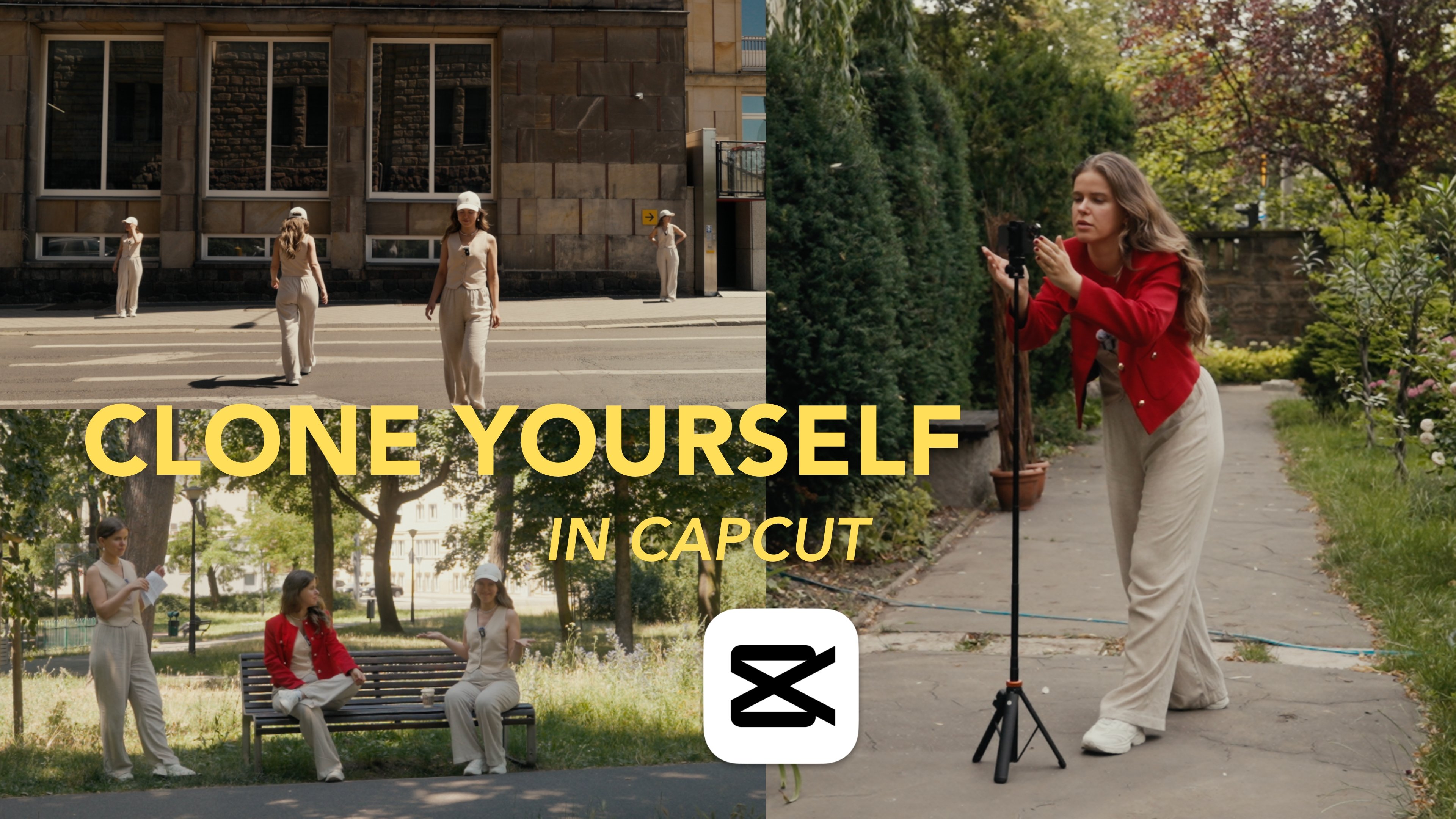
of your own footage. So try filming three
different shots of yourself. One showing a small detail
like your hands or feet, one where you place
your camera somewhere and move through the frame,
for example, like this. And one, when you experiment
with a silhouette, reflection of filming
yourself from behind. And like I said before, but this is just a
friendly reminder. Don't feel like you
have to show your face. You absolutely don't
can make the shot more mysterious and
intriguing if you like, the goal is simply to
add a little bit of your own presence to the
world you've been filming. I'm so excited, say, let's grab a camera on a
phone, and let's do it.
9. Final Words. We Made It! Keep Filming!: Words and my question to you. Okay. We made it. Five days of filming
and hopefully, looking at the world
a little differently. I'm super, super curious which
technique was your favorite. And, of course, I
can't wait to see a project and the
moments you've captured. Yeah, I'm super
excited to see them. Also, if you have a minute, I'd be super grateful if
you could leave a review, even a very short one. Because I read them all and they really
help me understand. What do you enjoy the most? What I could improve. Yeah, I'm really
open to feedback. And honestly, they
always give me that extra motivation to go and create another
class for you. That's the biggest boost
of motivation for me. And please tell me what
you love to learn next. Is there anything about filmmaking or content creation you are particularly
curious about? I need to know, so let me know. And I really hope you have a
good time experimenting with all these little
techniques and end up creating something.
You are super proud of. So please
share what you created. Okay. And promise me one thing. Okay. Thank you promise. Don't put your camera away and forget about
all this tomorrow. Keep looking around, keep
noticing the little things, and the most important
thing, please keep filming. Even if it's just
for 5 minutes on your way home or early in
the morning before you work. I can't wait to see
what you create. See?
 Kasia Pilch, Online Strategist & Marketing Specialist