Transcripts
1. Introduction: Hello everyone, welcome to the very important
class of networks. That name is IP addressing and practical implementation
of Local Area Network. And extend this to wide-area
network if you belong to networking field or you want to start your career
in networking field, than it is very important
for you to learn the code and basic
concepts of IP addressing. Ip addressing is off two types. Ipv4 address, an IPV6 address. So we will discuss
it in this class, how IP addresses are invented. Who assigned IP address
to all over the world? What is the basic concepts
of network ID and host ID? What is subnet mask? How to create Local Area
Network and Wide Area Network, and how it is
implemented in the labs, in the companies
and in the offices. I'm sure after this session
and after this class, you will understand the core
concepts of IP addressing. And IP addressing will
be a cake walk for you. So let's get started.
2. What is IP Address: Hello everyone, Welcome
to our first class. In this class, we will
understand what does IP address? Ip address, Internet
Protocol address. Internet Protocol address is our unique identity of
our network device. For example, you have a PC
or a computer or laptop. So you want to give that unique
identity to your device. Then you need to understand
about IP address. Ip address is a 32 bit address. Now between 01, we are not able to
understand 32-bit number. For example, I have a 100 PC, so I'm not able to
understand in my mind that 32-bit number of
each and every device. So that's why they have divided
it into decimal address. That similar address means like you can use 0 to nine number. So if you want to convert
binary to decimal, then you need to
understand the concept of two raised to power
one tourist board 23, we will discuss about it. So in decimal format, these 32 bits are
divided into four parts. A dot, dot, dot, one part of IP address
known as network ID, and one part is
known as host ID. Network ID is used to
create land and Duan. And host ID represents how many pieces you are
using in your network. So my last point is it
is a logical address. Logical address
means you can change the IP address accordingly
to your network. So let me take one example. Like for example, you are
working in a company, then your company issues
employee ID that is unique ID. If you are a student, then you have roll
number in your class. That is your roll number, that is your logical entity. But then you grading up to next class,
then you are wrong. Number can be changed. Similarly, if you
are in same network, you are IP addresses is one. And another network IP
address can be two. So this is my IPV4 address. So now the question is how to divide the network
ID and host ID. So to understand the concept
of network ID and host ID, you need to understand
subnet mask. So in my next lecture, I'm going to explain
you about subnet mask. Thank you.
3. Subnet Mask and Binary to Decimal Concepts: Hello everyone, Welcome
to our second lecture. In this class, we
will discuss about subnet mask and how
to convert binary, binary address
into decimal part. So just, I just wanted
to let you know that subnet mask is used to divide network
ID and host ID, because in IP address
we have some classes. And for each class we have
different subnet mask. But before subnet mask, we need to understand the
concept of binary to decimal. So as I told you that IP
address is a 32-bit address. So all it can be 0, All bit can be one. So if I have to write 32 zeros,
123456781234567812345678. And again, 12345678,
like 32 bits, are divided into four octet. 80 has one group. Similarly, 111111111 group is done like one octet is done. 123456781234567812345678. So the question is,
how do you convert this binary value into,
into decimal part? So first I will
take zeros 0000000, like how to convert it. So we have one formula
in electronics. We have to start
from the right side, 0 multiplied to
raise to power 0, tourist power of one over two, pi over 32, rest fo 4567. But if we multiply
0 in any number, then the output will be 0. So if my eta 0 and binary
convert into single 0, so in a decimal, I have IP address like this. It is my first IP address. Okay? And if I will use this
concept for 111 also, again, tourist
power 0 to respond, one tourist power to, to restore our 34567. Now, if I will multiply one into two
raised to power seven. Now two raised to
power seven is 128. Tourist, former six
is 64, tourist, well five is 32, 16842. And important thing is
to respond 0 is one. So same value will be
reflected if we total the value of these desserts
than 255 bill with them. So my lowest type p is 0000 and my highest
IP addresses this. So this is the binary
to decimal conversion. So you can take any IP
address from this range. You can take any IP address. Okay? So what does
subnet mask right now? Subnet mask is used to divide
a network ID and host ID. Then we write subnet mask. Then you can check. We have some classes, a class B, class, C. Class a class has 255000 subnet mask B
class as two times 25500, and C classes three
times 255 is 0. So when we check
the value of to 55, then we know that in binary it is eight bits in the class. It has 16 beds. And C class it has 24 words. So if we write any IP address from the
range from 0 to 255, then if it belongs
to a class B, class, C class than to 55 represent
the network ID and zeros, zeros 0 represent its host ID. So too deep understanding
the concept of IP address, we need to understand
that IP classes. So in my next video,
I will understand, I will let you know about that, what our IP address classes. Thank you.
4. IP Address Class Concept: Hello everyone,
Welcome to the lecture of IP addressing classes. So my last videos we have discussed about IP
addresses and the subnet mask. Ip address is your logical
identity and subnet mask is used to divide network
ID and host ID. But subnet mask is based
on IP address classes. So in our network, we
have taught five classes from which we are using only three classes for
network and telecom sector. And D and E classes
are reserved. So we have some range. In my last video, we have discussed
about the range of IP address that is 0 to 255. After binary to
decimal conversion, we can see that zeros 00 is my lowest IP and
25555 to 55 to 55, it is my highest IP. So there is one company named in the net Assigned
Numbers Authority. This is the company who assigned IP To all
over the world. So I convert IP addresses into IP address classes and
given us one range, like one-to-one
twenty-six belongs to a class 1282191, D class, 192 to 223, C class, to 24 to 239 D class, and to 42 to 54. Ie class. B class is a reserved
for multicasting, like it will be used in
routing process to understand the dynamic membership
II class is reserved for scientific
research and recovery. So in networking part, we will use only a, B, and C class. And now we know that if any
IP address starts with one dot 000 and end with
126 to 55 to 55 to 55. Then it belongs to a class. If you are using
1282191000255255, it belongs to be class 192 zeros 002223 to 55 to 55 to 55, then it belongs to C class. These three class
used in networking, same as in my last video, I had told you that each class
has its own subnet mask. So if you are using a class, then automatically
subnet mask is this. If you are using B class I p, then automatically this
is your subnet mask for C class to 55 to 55 to 550. The meaning of this is 255
represents network ID, zeros, 0 represents host ID. So in a class, eight bits belongs to network ID and total
24 bits belongs to host ID to 55 to 55 NB class 16 bit represents network ID is 16 bits represent host ID. In C class we have
three times 255. So 24 bits network ID, eight bit host ID. And I just want to let
you know about the host. In a class. We will have two raised
to power 24 host. In the class we will
have to respond 16. And in C class we will
have two over eight. In C class, we will have 256 IP. In the class, we
will have 65536 IP. And in a class 16,777
thousand to 16. So eight class has a
lot of IP addresses. Okay? So this is that
concept of what is IP address subnet
mask and how network.
5. LAN and WAN Concept: Hello everyone. In this class we will
understand that concept of Local Area Network
and Wide Area Network, as in our previous lecture, now we understand
what is IP address, what is subnet mask, and what are the
classes of IP address? We also understand the
concepts of binary to decimal. So now the important
thing is how these IP addresses are
used to create lamb. So practically I just
want to explain you. Land is a local area network and the van is a
Wide Area Network. What does the land
like practically how it is implemented when two or more than two devices are connected with each
other with the help of any shared media
like switch or hub. When they are connected
with each other. And each device has
same network ID. You can say, when two or
more than two devices are connected with each
other with same network ID, then it is called
local area network. And when is. Now understand the difference. When two or more than
two network ids in land, what we have discussed, same network ID species are connected with each
other and create land. In Van. Understand my wife, when two or more than two
different networks are connected with each other. Why our router, router
is the important device. For example, I have this land
here and this line here. Now they both have
different network ID. Now in my last lecture, you understand the concept of
IP address and subnet mask. So in land, I will
explain, for example, I'm using C class
IP 1921681 dot one. So the subnet mask is 255552550. Now in C class, 255 represents my network ID. So in this class, I have network ID
192168 dot one. If all the four PC's
have same network ID, 1921681212168131921681 dot for if that network ID of each piece
is same, then it is land. What is when, when two different lens are
connected, for example, this is 10001, subnet
mask is 255000. So this time ten
is my network ID. So second PC also should
have ten network ID. Third BC also should
have ten network ID. This is a land one. But on the other hand, in my next network, this PC is assigned
with the 200011. That classes of 2010 is same, but 1020 now working
as a network ID. So 200012000220003. Inside this is a
land number two, but if you want to
connect to lands, different lands with each
other with the help of router. Then it is represents
as wide area network. And you can extend your wide-area network
up to any level. Because we have routers, we have switches, we have
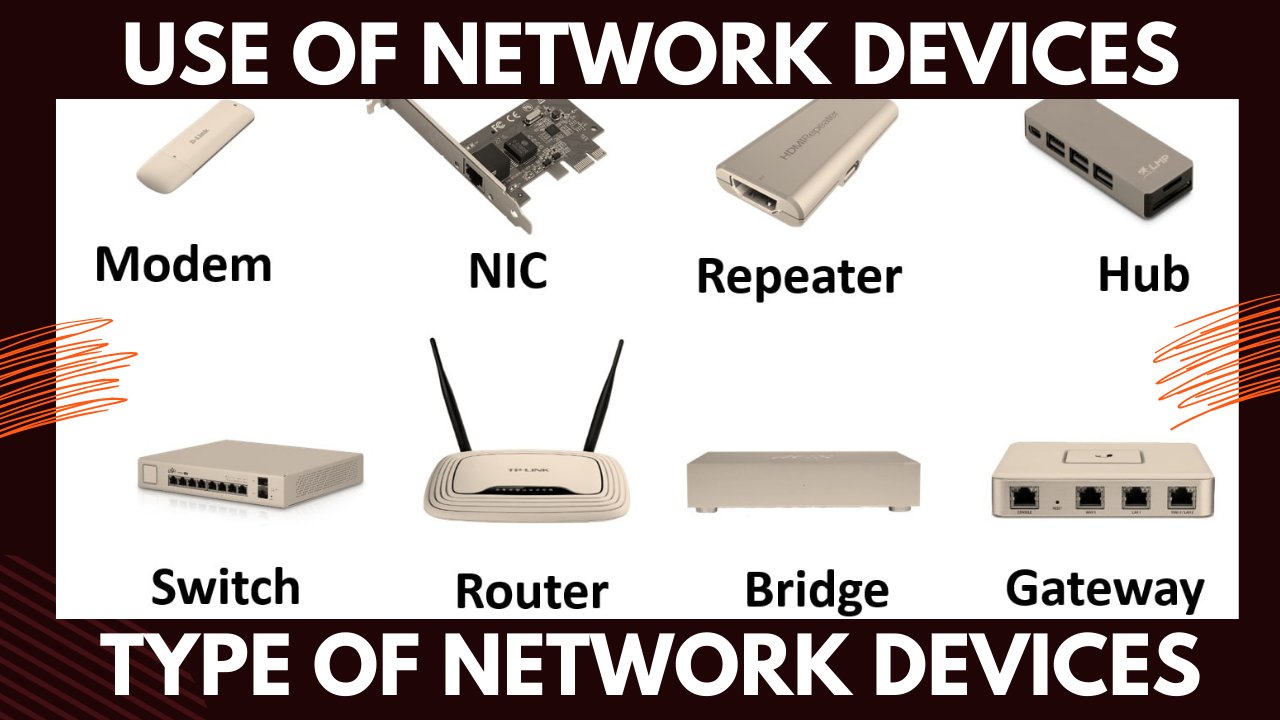
repeaters that we have modeled. This is all about IP addresses, subnet mask I not
co-processor classes of IP address and the practical implementation
of land and Van. Thank you so much.
 Balvir Singh Chahal