Transcripts
1. Introduction: [MUSIC] These intuitive
painting sessions where we're just painting to
relax, and have fun, and experiment, and
play have become some of my very favorite
moments up here in my studio. I'm Denise Love and I'm an
artist and photographer. Today, I want you to
come and play with me in your studio and just
paint to have fun, and experiment, and explore, these are the best ways
that we learn how to work our supplies and how to extend
the things that they do, and push past the
boundaries that we've put around ourselves
in our art-making. It's how we discover new things, it's how you get on the path
to your next collection. I can't wait to see what
intuitively practice play, having fun pieces that
you create today. We're going to create
a set of four, all taped together, and paint on it like
it's a great big sheet, that's the way I love to
do these the best because then I always end up with
a couple that I love, and perhaps something
that I want to cut up. All my favorite ways to create, I love to peel tape
and reveal stuff, I love to cut stuff up and re-imagine it into a new piece. I can guarantee you every
piece that I cut up and re-imagine it into
a junk art collage, I have loved every piece. Even if you don't like your initial pieces
that you paint, don't be scared to just cut those up into something
else and make some stripe collages out of it because those end up amazing. We're rearranging the colors, we're giving some differences
to the stripe sizes, and the pieces are crazy good
when you're done because it adds another element into all the layers that we painted, and it just gives it
that much more interest. I hope you have fun
painting with me today, we're going to do a
little collection. I stuck to some bright colors, I was playing in some
watercolor powders. I like to try out new stuff
and see what does it do? How do they blend? What happens if I
squirt water on it? Which that was a favorite
little aha moment because now I'm, next project, here's
what I need to do. [LAUGHTER] I want you to have some of these fun
discoveries with me. I want you to come up
to your art table, create a whole
collection with me, tell me your color palettes and what you end up
experimenting with, and I can't wait to
see your projects. Come back and share
what we do in class, and I will see you
in class. [MUSIC]
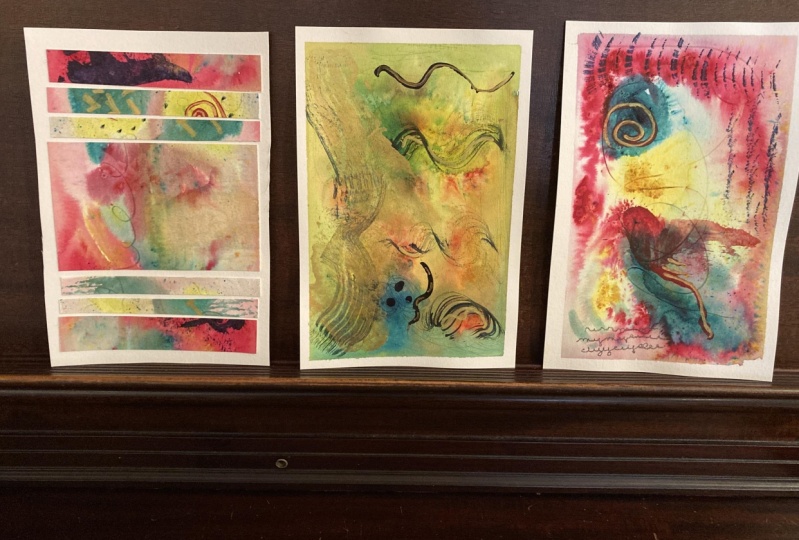
2. Class Project: [MUSIC] Your class project is to come back and share some of the yummy intuitive abstracts you created with
me in class today. I'd love to know if
you were trying out the watercolor powders
and how you ended up playing with those if you wet
the whole paper down or if you spray the powders down
and then spray it with water. What did you think
about this technique, did you love playing with this, did you try different
color palette? I'm always interested in seeing the color palettes that
you experiment with. I can't wait to see
what you're creating, so come back and
share those with me and I'll see you
in class. [MUSIC]
3. Supplies: [MUSIC] Let's check out the supplies I will be
playing with today. I definitely recommend you play with things
you have on hand. Some of the reason I do these
intuitive painting sessions is to introduce you to some new stuff maybe
you didn't see before, but it's also just to get you excited to come up here
and paint with me. Today I'm playing in
some watercolor powders. I've got some of these
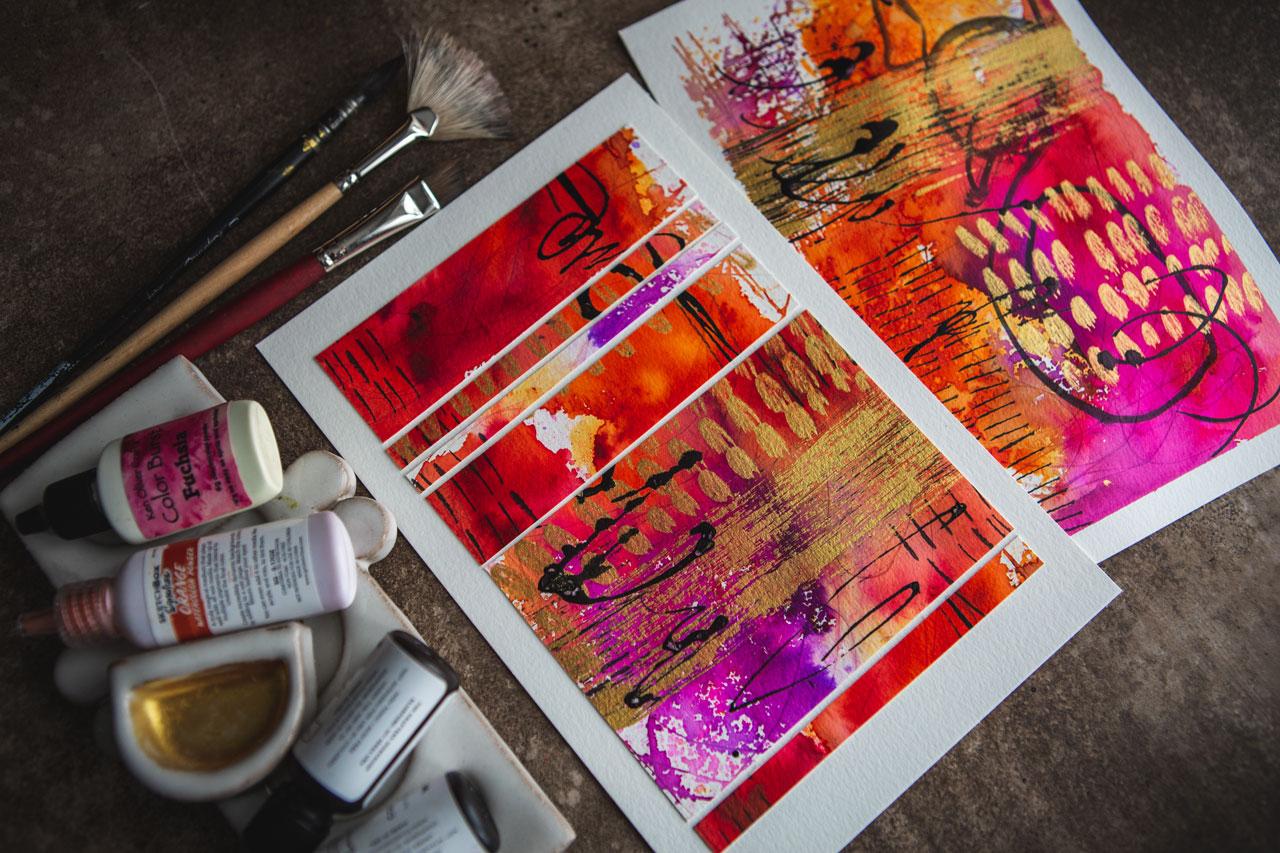
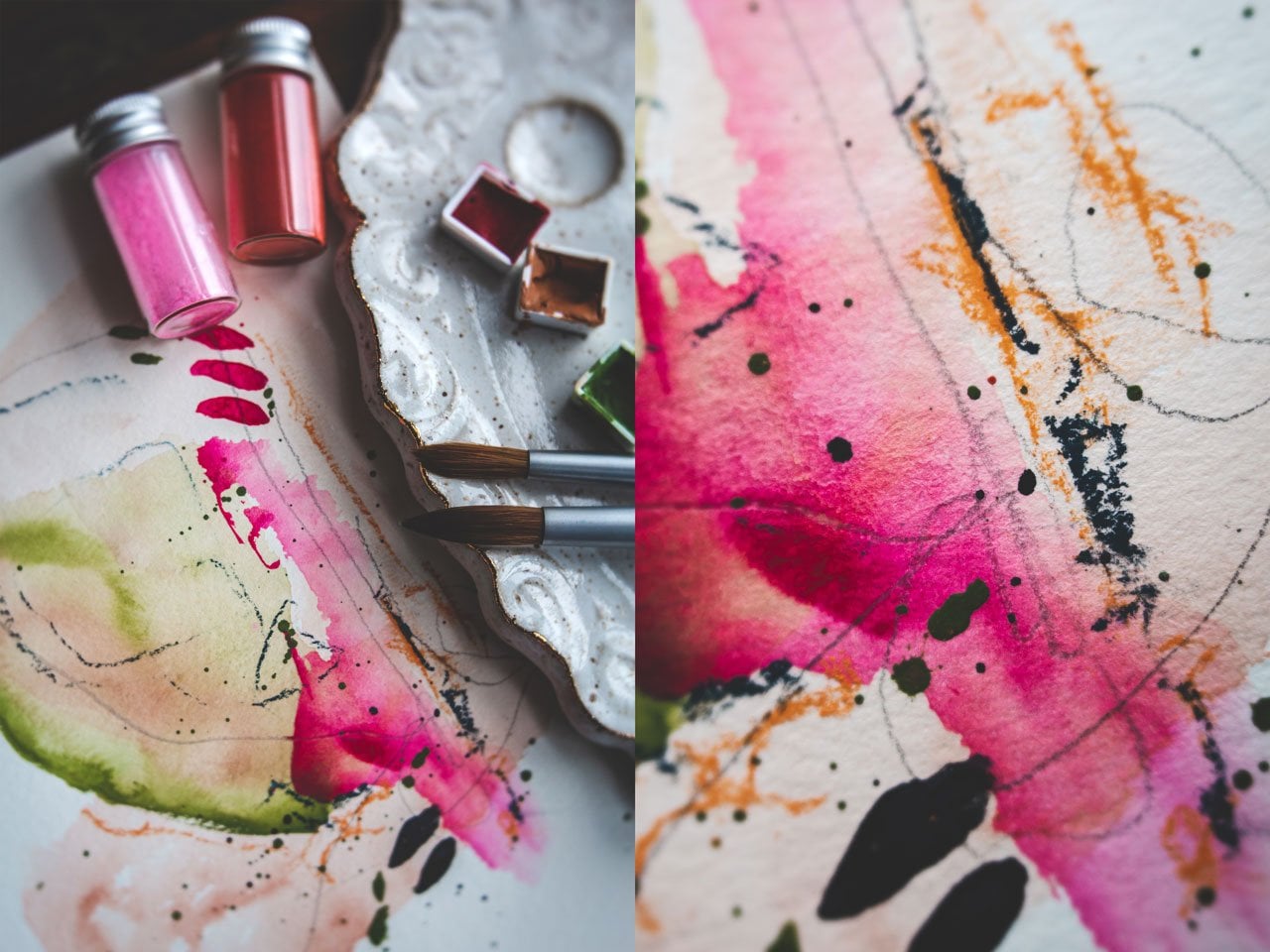
Ken Oliver Crafts; color burst watercolor powders. Those are really pretty
and fun to play in. You get a whole set of several colors
when you find these. You might even just Google
watercolor powders because there could be brands
out there that have come out that
I haven't seen yet. Who knows? But these are fun color
burst. I'm using fuchsia. I also have a couple of
watercolor powders that came from the sketch
box that I get. I have the orange
watercolor powder, and this is my favorite color. It is the most vibrant,
beautiful orange. Then I also have some of
these from TCWstencils.com, but these also came in my
sketch box subscription. I have wisteria and bougainvillea that
I'm playing in today. Those are a red, a purple, a fuchsia, and an orange is basically
the colors those are. I also ended up playing
a little bit with my daily roundy acrylic
ink in Payne's gray. I love this because
it's not quite black, it's not quite blue, it's just a real deep
color to add contrast, and I was mark-making with that. I'm also playing in a variety of paint brushes because part
of these intuitive sessions is to get your supplies out and test them in different
ways and just see what can we create. I've got a big mop brush. This is my Princeton
Neptune number 8. I've got my smaller mop brush. That's my Raphael SoftAqua zero. I'm using my old trick 208 fan. I liked the stiff fan when
I'm doing these because it gives great lines
and mark-making. Then I've also got my Princeton velvettouched
half inch angle shader. I'm using that to do
some mark-making today. I just pulled out a variety from the paint brushes I've gotten in front of me. I'm also using just one of my palette knives to
spread a little bit of paint and to spread my glue on the piece that
I decided to cut up. My preferred glue
today is my Yes! Paste. What I like
about this is it's like a glue stick in a
container. It's thick. I'm working with thick
140 pound papers. It's just really easy
to swap some of this on the back of my piece
with my palette knife. It sticks down really nicely. I've got just a little tiny bit of working time where I can adjust a little bit and
then we're good to go. On the real thick
papers like this, I like using the thick paste. If I were using a real thin
paper to layer and stuff, I'd be using a matte medium. I'm using a glue appropriate
to the thickness of my papers is what
that comes down to. I'm also using my Canson XL 140 pound cold press
watercolor paper today because it is my favorite paper to
just experiment on. It's a nice paper for practice and I get a whole big
pads of it so I don't feel like I'm spending any money on my supplies and I'm not
wasting my good paper. I do feel like you should practice on the good
paper when you're doing arts that
you're going to want to maybe save or frame
or sell or whatever. But when you're
doing like intuitive painting sessions and you're exploring and playing and you don't want to
waste your good paper, this is a great alternative. I ended up with some
beautiful pieces. I can't wait to play in
the watercolor powder again because today
I'm spreading water on here and putting the powder in the water and letting
it stream around. But then my favorite thing was to put the dry
powder on the paper, spritz it with a water bottle, so I do have a water bottle
also that I'm using today. That made the most
beautiful combinations. I don't know, it's so beautiful on the places that I did that, that I'm like, next project, that's what I need
to do with those. [LAUGHTER] I hope you
had fun painting with me in class today. I'm so glad to have you here. This was a lot of fun. These colors are a lot of fun. I feel like these are almost
like urban graffiti art feel with the colors and the
look that we ended up with. I had a whole bunch of
fun painting today. Of course, I almost forgot, playing in my gold
Micah ink by Kuretake. That is the very shiny
part in my pieces. Any gold that you
want to play in, I love that extra
bit of bling that it gives your pieces, but
you don't have to. This just happens to be
my favorite art supplies, so I tend to work
it into everything. I do have that in
these pieces also. I'll see you back
in class. [MUSIC]
4. Painting Big: [MUSIC] I feel like I want
to play and experiment today and do an
intuitive painting using some of my
watercolor powders. A couple of these
came from SketchBox. I've got orange
watercolor powder, which is one of my favorite. Then I've also got some color burst
watercolor powders , which I really like. Those are fun and you can get a whole little set
of different colors. I've got the Fuchsia, so I'm thinking orange and
pink right up my alley. [LAUGHTER] I also pulled out
Bougainvillea and Wisteria. Wisteria I'm thinking
as a purple, the Bougainvillea, I think
it's a red. It's a red. [LAUGHTER] Let's just see what
we can create with these. You can do them a couple
of different ways. We can put the powder on our palette and mix
it with some water. Or we can put water on our paper and sprinkle a powder in and
just let it do its thing. I really feel like to
start, let's do that. Let's wet the paper and let
the powders do their thing. Almost wondering, if we
do a water wash on here, and sprinkle the powders and let that do its thing and
dry and then come back on top of it and mark make and do anything
extra that we want to do. That's my thinking. I'm almost feeling like
maybe we should take a hockey brush or any big
brush and just wet this down. Remember on these
intuitive paintings, you're just going with the
flow. What do you think? I want you to think, what if I did this
and then do that and experiment and see what
is this going to do? Is it going to be
a total disaster? Is it going to be
the next new thing that we love more than anything? This is the time
for discovery and every single time I
discover amazing things. Treat these, I have
taped down four pieces of paper and all that is is my Canson 140 pound
cold press paper, two sheets, 9 by 12. I've just cut them in half. I have two sheets of paper here, and we're going to
treat it like it's one big page and then peel apart when we're
done to reveal these. I've just got some water back here that I thought we could
just dip this brush in. Let's just wet the page. You can wet the pages
differently, like we could do. We're treating it
as one big page. But another project, you could do is we could do strategic water like here
and there and just see. Now these powders are
insanely vibrant, and we're just going
to go ahead and put these out and let them
start doing their thing. Because they're powder, we
could always come back and dip some more water around on these because I don't want
them to sit still either. I want to be like
what can this do? Let's move some of these around if they're
just sitting there, and I've just got a
gigantic mop brush. This is my Princeton
Neptune number 8. These look a little
different when they dry, they dry really matte
the colors so pretty. I just want to see,
what can we get? What can we do today? What pretty things
can we create? I'm not worried about
where I'm putting stuff. I love this orange,
this right here. Amazing. We could come back
and do some more orange. We could switch up the colors. I could have put the orange on my color palette
and did it there. See I'm liking where we
get this yummy darkness. Let's switch colors
here. We've got Fuchsia. [LAUGHTER] We'll just
see what we get. Look at that Fuchsia. Some of my papers
already drying, like right over here. We can come back and put
more water we need to. That water was dirty. I don't know if we got a
lot of orange in there or what does, it spreads out and does
something funky here. You can add a little more water. Definitely going to have
to put some of these on here and let
them dry for a bit. This one's stopped. Let's do some clean
water and see if I can. Well, it's clean. [LAUGHTER] This water gets dirty super-fast because this
powder is super vibrant. Let's try this Wisteria. No, let's try the Bougainvillea. Maybe some over here and we're going to have to come
back with some more. Oh, you know what we could do? [LAUGHTER] Wait a minute. Let's get some more of
this powder out there. This is a pretty color. We could wait for it. Take a spray bottle
and spray some water instead of putting the water
on with dirty water brush, which is you're going to be
hard to avoid doing that because [LAUGHTER] this
paper dries pretty fast. I'm not working fast
enough to avoid that. Look at that. Just
doing what feels good. We're obviously
going to end up with some yummy craziness
going today. Check this out. Look at that. [LAUGHTER] Look at that. See now that is some yumminess. That's what I'm hoping.
Look at that right there. Let's pull up this Wisteria. The Wisteria is a purple. Look at that. It's
a pretty purple. We'll come back with
the spray bottle and do a little squirt, squirt too, hang on. [LAUGHTER] It'd be
really interesting to see how some of
these colors blend. I'm looking forward
to that as they dry. We'll see what we get. Let's see, a little
bit of spray. See that right there. Look how gorgeous
that right there is. Maybe we should have just did this little spray
with all colors. That would have been
fun. Let's just to see, what do we get? I'm spraying down
in this middle too. Now we're going to
have to definitely, before we do anything past this, we're going to have
to let this do some drying and then
decide what did we get? Do we like it? What do we
want to put on top of it? Is it terrible, do
they just don't need to be backgrounds
for something else? We could too at this
point, do some drawing, like we could force the
colors to move around some. I just have my pencil here, but let's say I wanted to get some line work while
these paints are wet and see if I can get just a little bit of
mark-making showing up in here. Look at that right
there. Just like that. [LAUGHTER] Oh my goodness, I have so much fun with
you guys when I do these. I know you think I'm a
total nut, but that's okay. If it gets you excited
to go to your art table, I will take the laughter. Look at that, oh my goodness. Let's go, let's do some
big somethings in here. I can feel this is going to be another layer in our chaos. Because this does
feel a little bit more like a chaotic drawing. Sometimes my arts
nice and minimal. Some things I do is
definitely chaotic. Sometimes that chaos
is really my favorite. Maybe I'm just a
little bit of chaos. [LAUGHTER] You
didn't even know it. [LAUGHTER] I'm undercover chaos. [LAUGHTER] I love these circles. We may not see them, but man, I love the circles. [LAUGHTER] With just a pencil, I'm just shoving this paint around to see what
we can get it to do. We're definitely just
going to have to let this dry for a bit. Then let's see what
mark-making or maybe I want to come back on top
with something or maybe we love it like
it is, I don't know. This is what the intuitive
painting is about. It's about going with the flow, doing something,
taking a look at it, and thinking, oh, okay, what else do I want to do? What feels good? What
is this asking for? I don't know what
it's asking for. Let's let it dry and do its thing and I'll check
back in in a minute. [MUSIC]
5. Adding Layers: [MUSIC] Let this
dry for a while. I'm looking at it thinking, what do I want to
do on top of this? We've got a lot of choices. If you like to draw botanicals, perfect backgrounds to draw botanicals, that's one option. Another option is we
could come on top of this with any materials that
we feel inspired by. We could mark make on top
of this with acrylic inks, acrylic paints, pastels,
neo color crayons. We could really go on top of this with any of our
favorite supplies. I like the gold paste, so I might take
the gold paste or maybe the gold ink
because it's already liquidy and do some lines
and marks with that. That's an option. We could come back
on top of here with white ink and Posca pen and do dots and stuff like that in addition to some
of these things. I'm almost thinking we could do liquid acrylics like
high flow acrylics too. I've got a bunch of colors
of those to paint on top. I feel I liked the thought
of the acrylic inks, I liked the thought of the gold. Back here, I've got
the Payne's gray. I like Payne's gray because it's almost black without
being black. There's a lot of things
that we could do here, so why don't we do some ink marks and just
see, what can we get? I've got some paper
here and I think I'm going to do some mark
making with my fan brush, which is one my favorite
things to play in lately. I'm going get that out. I've got a little
pallet paper over here. [NOISE] Just moving some of
my supplies out of my way. Let's put some of this on our palette paper
and then come back. I'm going to do the fan brush. [LAUGHTER] Then try
not to get too much on the fan brush because I actually
want to have some marks. Look at that. That's what I want right there. I love it when it does
that right there. Look at that. Feeling that. I'm feeling that. How good did that just feel? We could have done that
with any color of ink. Like we could have
picked a red or an orange or something
fun like that. Check that out. That made me feel
pretty good. Let's see. What else do I want to do?
You know what we could do? We could also take our little just moppy brush
and now we can come back in here and just do some inspired line work with a brush or we could
do that with the dabber, which I like to do that. Let's see. Maybe a
little bit in here. I'm just holding the brush at the end and just letting
it do its thing. I could also come
in with some gold. Choices. Seeing, if I mark in
here with the dabber, they're going to be so thick, I'm going to have to let some
of these dry. Let's see. What do I want to do? I can also come in here with a
shape or something like that and we could mark
make with fine line. Maybe we can come over here. See, check that out. This could be doing
this too with a Posca pen or Mica pen. You could do some of those too. We can just start mark making and making some
things interesting. But my goal on these intuitive paintings
a lot of times is to experiment and play with
things I don't normally do, and you don't
normally see me doing fine mark-making like this
with the tip of a paintbrush. You normally see
me doing it with something like a marker. In the spirit of let's do things differently
than we always do, I want to see you get out a paintbrush and use it in a way that you don't
normally do it. Let's see, I really want to be over there. Let me
think for a moment. Might have to turn this
around, but we'll see. What else do I want to do? I really liked that right there. Some feeling like maybe we
could do some going up this way. See, I like that. That's pretty. Let's see. Maybe I don't want
dot lines over there. Maybe I want
something different. Let's think about
this for a moment. You know what we could
do? We could take a palette knife and we
can pick up some of this ink and then
we can spread with a palette knife in a way that we don't normally do the ink. Look at that. That's fun. Now this stuff's not very thick, so it's definitely not giving me some easily mark making
like I might normally see with a thicker
paint, but that's okay. Still fun. [NOISE] Might not
be my favorite, but it was fun. Now I could take the paste. I do like my paste. Go paste. We could take the ink. I could do some gold inky stuff. Let's see, Let's get that
fan brush back out here, we dry it off a little bit, and maybe grab some of the
gold just out of the lid. Like I've got some
gold in the lid. Let's just come back right on top of some of this
that we did in the black, because why not? That's what I want you to
tell yourself, why not? [LAUGHTER] It's just about play. It's not about perfection. That's super fun. I'm going to do that on all of them. I like that. That's fun.
What else do I want to do? I might want to take my brush. We'll dip this in the ink. We could do our pins, our different as
I throw it down. Hang on. I got paint
everywhere now. [NOISE] But we could do like
ink on this. Check it out. Now I could come back and
mark make with the ink , could do some dots, some lines, doing it with the brush
because now I get this funky brush shape rather than a true circle or anything like that like
what I'm trying to do. Dots, look how cool that is. It's fun doing it with a brush in a way that you've
never done it before. Let me move this on the other side and I can
get my hand right here. Sometimes the things
that make these so interesting is all the layers and colors that you
get underneath. If you think, I don't
know if I like it yet, you have not added enough stuff. [LAUGHTER] But I feel like I could be
getting there because I'm feeling some of this. See, now I'm liking that. I like the hat. Super fun. That was some fun
stuff right there. Let's see. What else
do we want to do? We could come back
on the top with some heavy ink
lines and then let everything dry and
then evaluate it, because a lot of times I like to see [NOISE] scratches and mark making and stuff like that. See like that right there? I'm feeling that. [NOISE] [LAUGHTER] Look at that, that's super fun. I'm not really paying
hard attention to composition at this
point because I always create the knowledge that we can cut this up
into something cool. We're going to see
how we like this. I'm going to let
this ink dry and then we'll peel the tape
and then we'll decide, do we like any pieces
like they are? Do we need to cut something up. We can always make a
junk art collage piece. That's always on the table. Let's go ahead and let this
dry and I'll be back. [MUSIC]
6. Mark Making & Evaluating: [MUSIC] I'll let this
sit for a while, but I'm getting impatient
when I'm filming because I want to move
on to the next part. [LAUGHTER] If I were just
painting this for myself, I'd leave these and come
back to it the next day, but I want to finish
filming this today. The only thing that's wet is like really super
thick areas of ink. Keep that in mind
when you're painting. If you're impatient, you want to see what
some of these look like and what I want to do is
peel the tape and evaluate. Then I can decide, does it need any
other mark making? Does it need to be cut up and
made into something else? Do we want to add some dots
and some other colors? How do we want to
finish this off? At this point, I feel
like I need to look at the pieces and I'm going to go ahead and peel the
tape very carefully. I peel at a corner at
a consistent rate. I have pretty good luck with
it not tearing my paper. If you have terrible
paper tearing, take your heat gun and
heat the tape up a little bit and that will
help it release for you. It could be paper content of wood pulp versus
cotton that's peeling. But if you have a paper that
peels really bad with tape, maybe switch to a
different paper if you're just not getting good
results with that. The reveal is always
my favorite part. The reason I love tape so much, it's because I feel like
when you peel the tape, you reveal a piece of
art because anything you stick a white border around
just gets so much better, [LAUGHTER] when you
get the tape build. It just turns into
a finished piece, which is why a lot of times
I don't paint edge to edge. I will paint with
the tape to peel because I want to
reveal the final thing and I just feel
like it definitely looks like a beautiful piece
of art when I'm doing that. I'm talking and not
paying attention. I didn't go at an angle and
I did tear some of my paper. Definitely helps if you go at the angle because you'll see, I'm not tearing any other
bits of paper there. That's what I get for
talking [LAUGHTER] too much. Let's just see pull at the
angle really does seem to be the magic touch
there. Look at that. We could have kept
adding other supplies. Do what feels good, whatever inspires you when
you're creating these. My goal is to try other color
palettes, other techniques. I'll see what this
one looks like. Look at that, I love
the way the gold shines when I tilt the paper. That one's pretty fun. Let's see what
this one is doing. Let's see maybe this way. That way, I'm feeling it, I can see the gold shine. Let's see what we got next. I'm digging these. Let's see. See I like
that right there. For some reason I like
this stripe on this side. Now it looks good
over there too, but I like this ink right here
to be, well I don't know. Like you're right
there actually. Because when I flipped it,
I'm like, yeah, I like that. But when I do it
like this, I'm like, oh yeah I love that. Let's just leave
that one like that. I totally lied to you when I
said I like it on that side. [LAUGHTER] Look at that. Super fun. Now I don't
think there's enough going on up here or maybe there it is. Let's flip it around. See now that might
even be better. I need a vote button. I
need you to vote with me. Which one worked better? Look here, I'm actually
loving these three, just like they are. I think they make a really
beautiful little trio. I'm feeling like
this one I like, but maybe I don't
love, so I don't know. I can be like, okay, what
else does this need? What else do any of these need? We could come back
real quick and do some mark-making
and then make a decision on piece number 4. I'm feeling doing maybe POSCA pen and we
could do black dots. I'm not feeling like
a white dot just because there's
no white in this, but maybe, let me just dig in my little pin box
that's over here. Let's see what this
one is. There we go. That's what I need. Yes, so I've got a black pen. I'm going to put these right
here behind us for a second. I love what these variations and blends of colors are doing. Look how beautiful that is. Let's look at this one.
I'm feeling like it could use some yummy black dots. Where do we want to
put those black dots? We can put some over here. We've put them over here. We could put some down here. I'm feeling like right up
here, what do you think? Are you voting that
went in with me? Let's just do it. Just be brave. [LAUGHTER] I want you to be brave on your
intuitive paintings. Do what feels good. Do what drives you
in that moment. The goal here is
not to end up with some masterpiece,
but weirdly enough, I'm always pleasantly surprised with two or three of the
pieces, which is, again, why I do a set of four instead of just
one intuitive painting, I want to do a whole little
collection of them and peel them apart and
revealing because the revealing is part
of my favorite part. It's like getting a little
present and I like presence. [LAUGHTER] I feel
like if you do four, you got at least a
really good chance of loving one if not two or three. I typically love 2-3 of
them. I love those three. Those are all like some good urban contemporary
abstracts. I'm gigging them. Now I don't even know
which one is the one I thought might need
something else, but that's okay because sometimes the longer you look at it, the better they look. [LAUGHTER] Don't ever judge it from the first
peeling of the tape. I want you to look at them
later and come back and say, wow, look what I did create, if you're initially thinking, I don't know about this. Look at that, fun dots.
The dots are fun. Let's see. Do we want
any dots on this one? This is another one that
I really truly love. I feel like we've got a lot of dot action going in here with the way I
splattered that paint. Now, I might do another intuitive collage
collection like this, where I'm sprinkling a
whole lot of powder on the paper and then
coming back with my spray bottle and
spraying and spritzing, because this right here, insanely beautiful the way that color blended
when I spritzed it, so much cooler even than
the paper being wet. Now I'm like, whole page
is being this stuff and that would make
great backgrounds for collages and stuff. That's something to think about. I don't feel like that
one needs anything. I almost feel like
this one's got plenty too because I love all
this action right up here. Now this one I'm still
thinking, let's cut it up. You know what?
Let's just do this. Let's just cut this up. Let's go get our YES paste, which is my favorite adhesive. Let's create a fourth piece
of art while we're creating. Then we'll just see
what we end up with. I'm going to cut another
piece of this paper, which I don't think I have a clean sheet over
here already cut. I'm going to take a piece of my Canson Watercolor
paper and I'm going to cut that in half because
I'm going to make a strike collage out of
this with half a sheet. They're in the same size as
the pieces I started with. I will be right back. [MUSIC]
7. Junk Art Collage: I have my Yes paste, I have my piece that
I'm going to cut up, got my paper cutter, got my half sheet of paper. I'm looking at this
and I'm thinking, is there a larger
piece that I love? Because sometimes when
I do these stripes, I do thin stripes, sometimes I do a
real thick stripe and then thin stripes around it. Almost feeling like
this right in here, it looks super cool. What if we go ahead and
accentuate the part that we love. I'm going to cut the white
borders off real quick, hopefully, I don't have any wet ink that's going
to stick to the bottom. There's a little tiny
patch of wetting, but I think it's dry enough. Let's just go ahead with a really thick piece
ink I did on there. [LAUGHTER] Look at
that, we can even cut the slides off and then say, "Do we like that better?" I'm feeling like, thinking out loud here? What if we cut right there and think about
this for a second? Because we could even cut off
a little piece right here, because maybe you don't
want that white down there in this particular piece. Look at that, now that can be a
gigantic stripe. We can start moving
these other pieces around as different
sized stripes. Let's just see. Do some thin, do some thick, you can definitely cut
these with scissors. But man, look how fast and
easy this thing makes it. Now and a lot of times too, especially with the
junk art collages, I use two pieces of art to re-imagine a
bigger piece of art. Man, look at this
orange, that sketchbook, sketch Box, watercolor, orange powder is my
absolute favorite. That color is just
insane in a good way. Maybe this at the top, maybe some little
pieces in-between, maybe an orange at the bottom. Let's just see what we get here, I love this one with
the gold in it. Because I'm leaving some
spaces in between those, I might have a piece leftover. Let's just see, because I want the divisions. I want you to be able to see
a little space in there. I'm thinking, do I almost
want to even do this, have a bigger set of
spaces and then I have enough for a
border around it? [LAUGHTER] What are you thinking
about that right there. These can be collage
pieces for something else. I'm filling that right there. I got my Yes paste, which is my favorite glue, but you can use
whatever glue you want. This is a glue stick
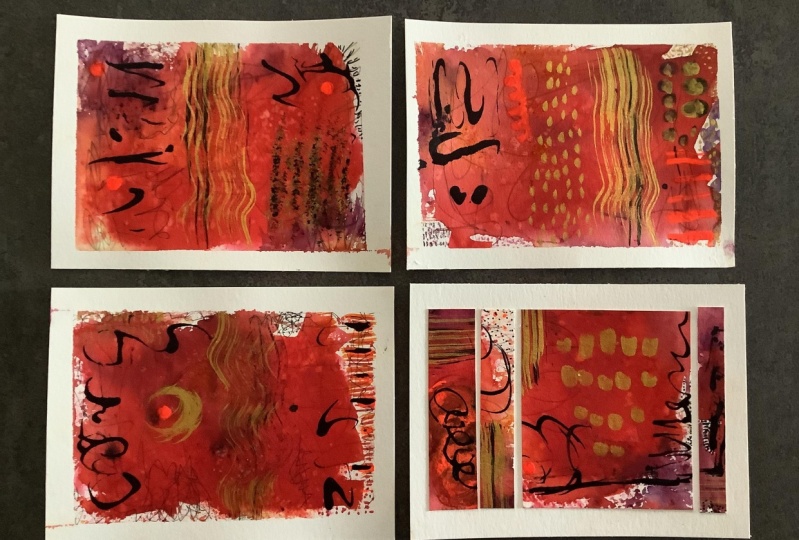
in a container. It's basically what that is. So let me glue these down, [MUSIC] checkout how gorgeous
that is now. I love re-arranging the pieces and having the white stripes. It turns the mundane
into the amazing. I love every stripe piece
I've ever done so amazing. I actually had to go
back and add a little tiny stripe right in here
after I was gluing them down, I could see that I
was going to have a bigger gap at the top instead of even all
the way around. So you did see me
cut a tiny piece out of the one with the
gold stripes because I liked the variation and the difference in the strips
it was sitting next to. I like when I shine
this in the light, how beautiful that is. Now my fourth piece is amazing. Now I got three
pieces that I loved, painted just as they were. One, two, three and a stripe, look how amazing those look. I hope you have fun, I hope you enjoyed seeing how to experiment here
with these powders. I would definitely
go back and play. I may do another one with
the powders on the paper. Just have dry paper spritz
the powders on the paper, and then come back with your spray bottle and
spritz water on it. Because all of those added such amazing elements to
the pieces that I'm like, I wish I'd thought
of that first. [LAUGHTER] I hope
you have fun playing in some watercolor powders
or some type of art powder, or just intuitively
painting with me today. I'll see you next time. [MUSIC]
8. Final Thoughts: Did you have as much fun
creating today as I did? These are my favorite
paint sessions. That's why I've started
doing a collection of these because I
can just come up, I can play, I can record
it while I'm playing, and you can come play with me. It's like we're all having
a little art date here, just creating some fun stuff
and exploring new supplies. I hope you have fun
painting today. I can't wait to see
what you come up with. Did you try the
watercolor powders? What color palettes did you use? Did you wet the paper or
did you put the powder down and then squirt water
on top of the powder? What techniques did you like? Then show me what you end up
doing with your four sheets. Did you cut any up? Did you like them how they were? I can't wait to see yours. So come back and
share those with me and I'll see you
next time. [MUSIC]
 DENISE LOVE, Artist & Creative Educator