Transcripts
1. Introduction: Hello and welcome
to my new class. Improve your well being
by Sketchbook journaling. My name is ImRan. I'm a graphic
designer and illustrator. And I've been sketch book
journaling for many years now, and it's a fantastic way to just get away from the day to day of life and the stresses that
build up along with it and to really just have a nice
little retreat a window. Express yourself in your
thoughts where you can focus purely on yourself
without any distractions. And I found that by doing this, I've managed to really enhance my overall well being and improve my mental well
being at the same time. And it's just given me
that opportunity to reset, relax, and going
again the other day. And I really want to share
this process with you, and I want to kind of open up this world to
sketchbook Journaling. And that's the reason and
purpose of this class. So we're going to
start the class off by the benefits of sketch
book journaling, how they'll help you with
your overall well being. And then we're going
to jump straight into the exciting part of looking at the various
sketchbooks that are available. And yes, I bought many
sketchbooks over the years. So I finished. So I haven't. So I'm going to go through and review the best ones that
I think you should start off with in order for
you to quickly get started in this wonderful world
of sketchbook journaling. We will also look at the different mediums
and tools that will help you along the way to make this journey as
easy as possible. And then once you've got your
mind completely focused on which sketch book you
want to start off with and your mediums
ready and set. Then you can start fixing in that time
into your time table, and we will look at how we
can inspire ourselves to do so and how this will fit
around your daily routine. And I will also provide you with some lovely templates that
you can use and review the ones that I've used in my sketch books
when I go through and flip through some of the sketch books that I've
used over the past few years, just as an inspiration
for you all. And that's it. You'll
be ready to start this wonderful journey into the world of sketch
book journaling, to improve your well
being by just focusing on yourself and have
that lovely getaway to just escape away from the hard and stressful life that you're going through
and have this lovely little element window where you can just express
yourself and focus on yourself on your thoughts and enjoy a bit of
therapeutic doodles, drawings, watercolors,
whatever you like so. I know you're excited as
I am because I'm gonna go ahead and start doing some
skeptic journaling right away. And I want you to
join me on this, grab yourself a nice drink, get yourself an ice
cake, sit back, get into a relaxed mood, and let's get started
with the class.
2. Benefits of Sketchbook Journaling: Ok, welcome back. Let's
now start off by going through the benefits of
Sketchbook journaling. Why Sketchbook Journal? One of the main aspects of Sketchbook journaling is that it provides a stress relief. Engaging in artistic
activities can be calming and meditative helping to
reduce stress and anxiety. And I found this to
be absolutely 100%. That's one of the main
reasons that I do it. I've got a very busy
lifestyle where I work as a graphic designer
as my day job, and I also work on the
weekends, freelance work, and I've got to deal with a lot of things because I've got kids, and I'm an active dad, so stress levels
are usually quite high throughout the day,
dealing with deadlines. Again, you may or
may not be able to relate this depending
on your lifestyle, but generally, stress is something that we
can't get away from. We've got to face it, and the best way
to face it is to have an escape to
counter stress. So stress relief via the tool of sketchbook journaling is
just absolutely brilliant, and it can be done
not just once a day, but it can be done two or three times a day
and sometimes I have actually gone ahead and done it two to three
times per day, and it's just a fantastic
little getaway. Number two, emotional
expression provides a safe outlet for expressing and processing
emotions visually, which can be therapeutic. Sketchbook journaling, I myself find that the entire process is therapeutic and I can express my emotions in
the writings that I do, whereas, instead of having to fight your emotions or fight
the thoughts that are in your head in the spiraling way that usually goes in
swings and roundabouts. It's just such an easy way just to get it all down on paper and then follow it up with a doodle or you could do
it the other way around. Either way, it just works as such a great little mechanism to just let it all out on paper, and it's just
absolutely fantastic. Number three, mindfulness. Courages, mindfulness
by focusing attention on the present moment
and the act of creating. That's another key of
sketchbook journaling, this idea of mindfulness, of having that focusing
on the present moment. In addition to that, I would say that the best way
to do that is to get away from all the noise and distractions and that's
one thing that I do. I sketchbook journal, I make sure that I'm not doing it in the same place where
I'm dealing with all the stresses and hustle and bustles of my daily routine. I make sure that I get away
and have a different place, even if it's in another
room in my house, or even if it's just going out and sitting in the
car or the garden. It's just that little escape where I can focus
on the present and really encapsulate my thoughts and just get them down on paper, and it works as a
brilliant tool. Number four, enhanced
mood can elevate mood and increase feelings of happiness through
creative expression. Now, happiness and elevating your mood from not so good to a more better mood is the absolute objective of
sketchbook journaling. Might have a time where
you're really down and your moods really down.
I get it all the time. I might be dealing with a
deadline at work or one of your kids might be
having a tantrum or I might have spilled
copy all over the table, and my mood's just gone really down because I'm juggling
with so many things. This idea of really enhancing your mood by just getting away and
doing a little bit of doodling and
writing away from the noise and the drama
of your day to day life. That's what this open window
to expression is all about. I find it absolutely brilliant,
improving your mood, which will overall improve your well being because
it'll make you happy. A happy mood, good mood generally means that you're
going to feel a bit happier. Let's get happy by
sketchbook journals. And number five,
self reflection, promotes self awareness
and personal insight by reflecting on thoughts and feelings through
art and writing. Self reflection is so important, reflecting on your thoughts and your emotions and
what's going on in your head is vital for stress relief and
for general well being. That window to writing your
thoughts and doodling in that therapeutic meditative
way is just brilliant, and it gives that access to the escape that we're
all looking for Now, remember, this ain't going to solve your day to day
problems in life. This is just an escape away, momentarily escape
from the reality of stress and the hardness
of what you're going through into just a little world of your own where you can either put your thoughts down and create something
from imagination, or you can just write down your objectives that
you haven't been able to achieve to help do
that self reflection process, or whatever you're
going through in life, just put it down on paper to just really get
that weight off your shoulder You'll find that once you do this and
once you've done your doodle, you can just take this nice
deep breath and you just remove that element of stress
in that present moment. It's not going to solve
your problems, but again, it's just that
escape and allowing that time for you just
to focus on yourself, and I absolutely love it. It's something I've really
been doing every single day. For many years now. I I don't do it, I
have this like itch, where you get an itch
and you need to itch it. I've got the Sketchbook
journal itch. So I have to do my sketchbook journal
in order for me to just remain nice and relaxed and to overall improve
my well being. So those were the five
main points that I would say are the benefits of
sketch book journaling. Now that we've gone through
these and you can think about these in a little
bit more detail personally for yourself. We can now move on to the exciting stuff and start looking at
yes, you guessed it. Lovely Sketchy books. Let's move on to that. Next.
3. Small Sketchbooks: Okay, DK, welcome back. Let's now talk about
the wonderful world of sketch books because
you're going to need a sketch book to start
sketchbook journaling. Of course, you are, so let's go through some of the
ones that I've used, and I'll go through whether
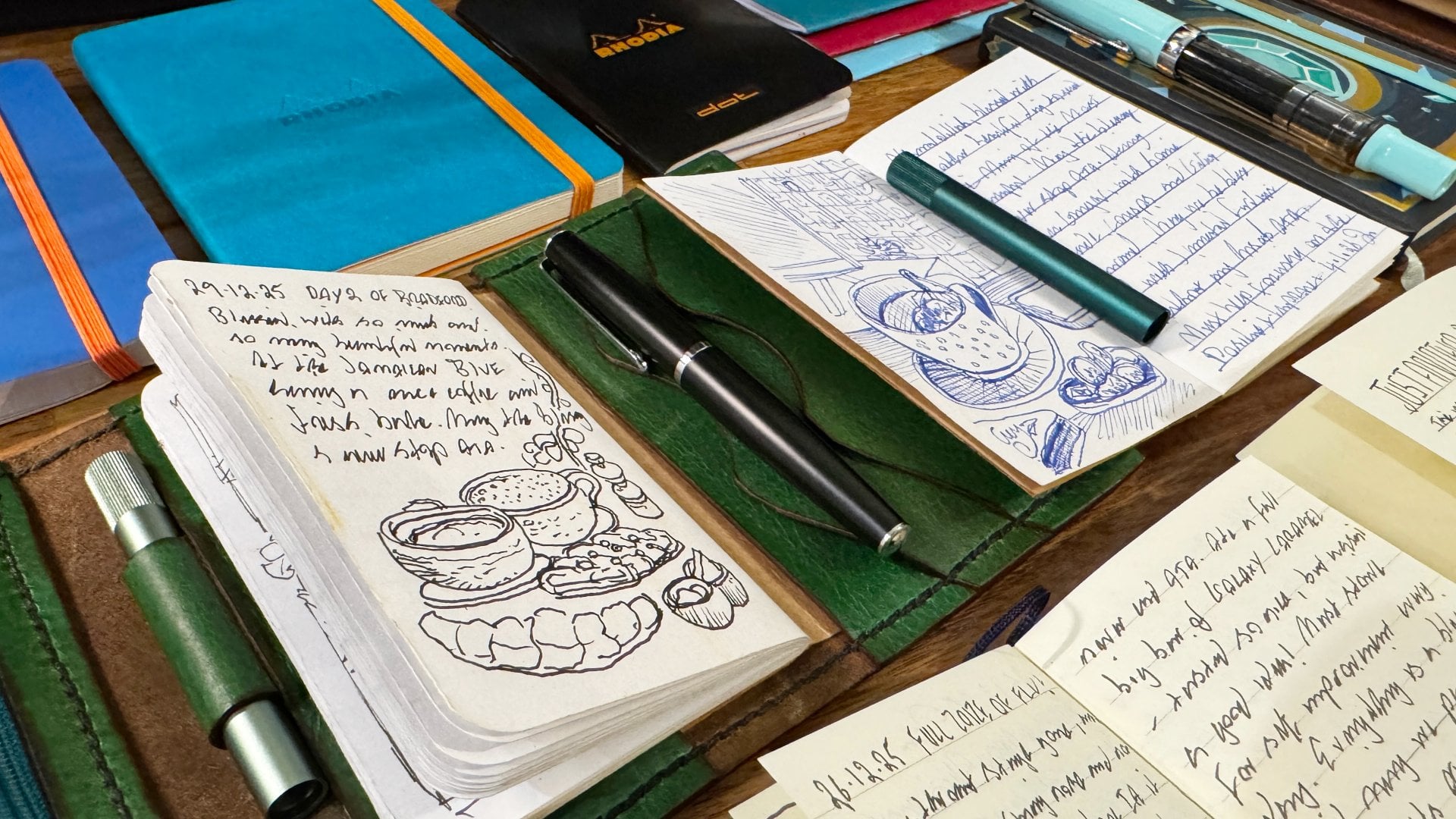
they're good or not so good. So let's jump straight into it. On the screen over here, you'll be able to see I've got three smaller size sketch books. Now, I would say that if you're starting off in
Sketchbook journaling, then it's probably best to start off with a small sketchbook. The advantage of that will
be that you'll be able to quickly access it because
it's really nice and mobile. You don't have to
have this huge thing that you've got to carry
with you everywhere. Secondly, because these are really nice and
small sketchbooks. They can actually be
very cost effective, and I'll just quickly
go through these three that I have used and I'll tell you which one I'm
currently using. The one on the left here, which I've got a nice little label on, it says Daily
reflections, book three. This is my go to daily sketchbook that I use
for my sketchbook journaling. This is an A six size book. This is made with just
standard cartridge paper. You can get this
from any art store, you can get these online. All the links to
all the materials and sketchbooks and
supplies that I go through in this class will
be available on the class resource sheet.
Do check that out. This one is the A six
cartridge paper book. If I just quickly
flick through this, you can see, I've got some
nice little writing here. Again, I've kept to
this nice format where I've got writing on the left and then a bit of a
doodle on the right, and that's what I've
pretty much done throughout this book.
I've managed to fill quite a few of these over
the last few months. Again, it's a current
book that I'm using, so I use this book
on a daily basis. I've actually got loads of them. I'll just show you here,
I've got loads here, a whole bundle of them, and then I've got even more
in my bookshelf as well, which is somewhere down
there in my studio, but a fantastic book that you can start
using straight away, nothing fancy, simple
cartridge paper inside. And it's really cheap to buy. The only issue with this type of a sketch book is that
it's cartridge paper. So you can't really use
many mediums on it. It can take up to, I would say fountain pen ink, maybe some water based
markers, but that's about it. If you're thinking that you
just want to have something nice and simple and you just
want to start off with ink, then this is a fantastic option. Let's move this one to the side. The one that I've got in
the middle over here now, this one is a nice A six book
made by a company called pith, and they produce
absolute fantastic stuff. A lot of this is
recycled material, so very good for
the environment. The binding on this is
really nice as well, so you can open this book flat. With this book, you can
see what I've got here is, I'll just move the other
two out of the way. You can just open it up
completely flat and you can see, I've got a nice bit of doodling over here with some
colors on here as well. On this one, I've used a little
bit of light watercolor. The paper in this book
can take watercolor, however, it doesn't have
watercolor paper in it. Do bear that in mind. I only use very
light watercolor, so I wouldn't say if you're
going to use watercolor, then go for this book because
it's not 100% suitable, but you can get away with it. It does tend to walk the
paper when you use it, so do bear that in mind. The actual paper quality itself in this book
is just fantastic. Again, I've used this quite
a lot for my journaling, but to be totally
honest with you, it's more of a start and
stop type book for me. It's not one that
I would regularly buy and it's quite expensive. If you have this,
maybe start doing a little bit of sketchal
journaling in it. If you don't, I wouldn't go out and buy this because again very expensive compared
to this one over here. I think this is probably
ten times the cost of one of these or even
more. Do bear that in mind. But it is a good
book, nevertheless, and it's the same A six size. Then we've got more of a
watercolor based book. This one is one that
I used from a company called adi made in India. Very nice book, very thick. And very absorbent of
watercolor and ink. So again, with this one, it's probably not the
best for writing, which is why I have not
done much writing in it. So for journaling, I
wouldn't say it's the best, but I thought I'll
just show it you just to see what type
of results you can get, and it might be something
that you really like to use. But again, for me, this is more of daily sketching rather than daily journaling. But again, it's a nice one to have or test out if
you've already got it. So they were the
three options that I've currently got
and I have used. The one in the middle, this one, this is the one that I
use on a daily basis, and it's the one that
I highly recommend.
4. A5 Sketchbooks: Doke, let's now look at
Sketchbook number two. Firstly, we looked at
the A six sketchbooks. Now we're going to be looking at the A five size sketchbooks, and this is where things start to become a bit
more interesting. Let's have a look on the
screen where I've got three lovely little
A five sketchbooks. On the left hand side over here, I've got one by
Stillman and Burns. This is the Epsilon Sir series. I think that's
what it is Epsilon series, whatever that means. But this has really
nice paper in this. It opens up flat and I think it is a
very nice sketch book. But again, it's not a
watercolor sketch book, so do bear that in mind. Stillman and Burns do have
a watercolor sketch book, but I personally
haven't used it. This is just one of their decent quality
paper sketch books, and it does do a great job
for sketchbook journaling, especially if you're
going to use ink and maybe fountain pen or
just normal fine liners. It works great. The
paper feels really nice. The only thing
about this type of a sketchbook is
the binding on it. I think that the binding can maybe get a little bit loose because of the threading
that goes through it. However, the more
factor that affects it more is the actual cover itself because this
is a soft cover. With sce book
journaling, generally, I would say it's
something that you're going to be doing
on a daily basis. Well, I hope you do
it on a daily basis, and you want a kind of book
that is a bit more sturdy, so a hard cover, in my opinion, would work best. However, if this
is something that you like with this soft cover, Then maybe if you've got one, go ahead and start
using that for this project of
Sketchbook journaling, or if you're interested
in getting one, it would be a good option, but they are very pricey. So that was the
Stillman and Burns. It's one that I don't
use that often, but I have used it in the past. Then maybe I'll go
through this one next, so I'll move this to the end. This one is just a cheap
hardcover sketchbook from Kenji, was just a store in our
local shopping area. So if I just show you this, these are beautiful books. And they have this
really nice kind of like diary feature in it where they've got templates
that are made, and it's kind of
a dot grid page, so it helps with alignment. And you can see over here, I started doing my sketchbook
journaling over here with a little bit of creative work and then kind of did
a bit of writing. But I didn't really feel this paper to be very
good in terms of whether it can handle
decent ink or not. This is more of just
rough sheets of paper to do ideation concept
working, just like doodles. I wouldn't really
recommend this. I just thought I'll
show it you because I did fall into the
trap when I started sketchbook journaling
by buying loads and loads of sketchbooks that
just looked beautiful, but they were expensive and they just didn't
work out for me. That was the Kenji
one that I used. It's moved that to the side. Now for the main star, and that is the Mlskin book. This is my go to sketchbook. I've used this for
many years now. This is one that I
highly recommend. This is one that I use for
my sketchbook journaling, and you can see it's
watercolor this one. They do do non
watercolor versions. If you do want to
check this book out, then make sure you get
the watercolor book, not the standard one because the watercolor one
is way more durable, and again, you've got the
advantage of doing watercolor. Although I tend to
do a lot of ink in these books.
You can see here. I'll just do a flick through. This is what I call my coffee shop book sketchbook journal where I go to coffee shops, every week or twice a week with my wife when we go out doing the shopping or just
for meetings at work. And I always end up doing my
sketchbook journaling there. I think it's just
a fantastic place, a coffee shop or a cafe
where you go to eat, have a meeting, sit down, just spend 15, 20 minutes, half an hour or even longer
if you've got the time to just do a quick little
sketch of what you see. And then a nice little doodle to accompany what you were going through in that particular day. I just think it's fantastic. What a great book this is. Again, very durable. The paper quality is great. If you do come to doing
some watercolor in them, it can hold
watercolor very well. No brilliant, but I
would say very well. It's not the best
watercolor book, but for light water color, I would say it's just excellent, and I absolutely love this book. Again, it comes with that like string that goes around it as a little flappy
thing at the end to put some important documents
or receipts or whatever, and it just works great, nice and durable, very compact, easily goes in your bag. And you can use a lot of
different mediums on it. That is my number
one recommendation, and I'll just show you the pile of these
books that I've got, I've got so many of them. These are the ones
that I've got. They do come in the landscape
orientation as well, which I have used in the past. I'll just quickly flick through
this one with this one. I did do a little bit of
sketchbook journaling in this, a bit of urban sketching
and creative work. So just like that, I don't actually think I did
any writing in this one. Maybe I did, maybe
I didn't. I did. I did actually do
some writing in this, so I did use it for
sketchbook journaling. I'm not just making it
up, so there you go. And a little bit of
watercolor with this one in a coffee shop style that I'm used to doing on
a regular basis. So this is a fantastic book, if you like this orientation. So With this, mole skin, you've got so many nice
options, landscape, portrait, but do get the
watercolor version because with the
watercolor version, then you've got that
option to use watercolor and even markers that
are water based. So fantastic book that one, highly recommend it for
sketch book journal.
5. Bigger Sketchbooks: Okay, k you, welcome back. Let's look now at the
final Sketchbook, and that is the medium
sized sketchbooks, which are slightly
bigger than the A five. Let's have a look on the screen. These are the three sketch
books that I've used. I'll start off with
this one first. This is the one that
I probably used the least or not really for
sketchbook journaling, more for sketchbooks, but I
really like the feel of it, and I think the
quality is great. This one is by Stillman
and Burns again, if you remember, we have
the Stillman and Burns, the gray one that we
showed previously, I'll just quickly
grab hold of that and make sure the books
fall on the floor. So that was the
Stillman and Burns. A five, let's just get a
Zoom Zoom back on this, so we can see this
better. There we go. That was the A five book
of Stillman and Burns. This is effectively a
bigger size than that. It's not a four in size. They have their own
different sizes in this. If I just go this way, it's probably about two lots of So with this one, this
one is the Beta series. This one is the Beta series
of Stillman and Burn, and that is basically the watercolor one that's
suitable for watercolor. I has some decent
watercolor paper in it. You can see over
here, this is more of my whimsical
style of drawing. And again, I actually did intend to buy this for
sketchbook journaling, but I just liked the paper so much that it worked so nice with watercolor that I just
ended up leaving it at that and not doing any
journaling in it at all so. I wouldn't recommend this
for Sketchbook journaling, but if Stillman and Burns ta series is something that
you really like using, then go for it, maybe get it in the
smaller size and have it more compact because
it's got the soft cover on it and it does tend to warp quite a lot with watercolor if you're going to
use watercolor in it. But again, just wanted
to show you that in the Stillman and Burns range.
Moving that to the side. Then now I'm coming to a new brand of sketchbook that I've only recently
started using. I would say maybe the
last maybe a year or so. And I absolutely love this one. This one is the one by
the company called Etch, and this is the B
five size sketchbook. This is the watercolor
sketch book, B five, and it comes in this really
nice canvas material, that's cotton canvas
that's around the binding, the binding is really nice. It's a hard cover,
so it's very sturdy. It's got a nice bit
of elastic to it. The only downside of this is, it's this off white color, which does tend to
get really dirty, but you can actually go ahead and draw on it
as well if you want. But it's absolutely fantastic.
I'll show you this. This is my sketchbook journal, and this is the one that I
spent quite a bit of time in. I wouldn't say this is one for daily sketchbook journaling. I would say this one is for maybe daily writing and spending a bit more time on the
drawing side of things. But if you have maybe
a couple of hours a day to do sketchbook journaling,
then that's fantastic. Maybe go for a book like
this where you can go ahead. And start doing some really
nice therapeutic designs, come up with your
thoughts, write them down, jot them down on a daily basis, and it just works great. You can see over here, I've got a complete
different layout scheme. Every page has a slight
different layout to it. I've used various mediums, I've used markers, gel pens, inks with brush, and
I've used watercolor, done abstract work on it, and it's just fantastic. On this page here,
I've got pencil work, watercolor, I've got a nice green fountain
pen ink over there. I just love the results that you get on this
book and the paper, the quality of this
spread is just fantastic. I'll just quickly flick
through some more of these. You can see different layouts
of sketch book journaling. I actually did spend
quite a bit of time on the sketchbook
journaling when I got this sketch book because I
was so excited about it. I really wanted to test it out. Because the results
were so good, and I'm so happy
with the results, I just got into the groove of doing this on a daily basis. But the thing is, like I
said, with the writing, I would have done the writing
within maybe 5 minutes, and then I would have spent
more time on the sketching. Of drawing with pencil
first, then ink, then watercolor, and I stretch that out over a couple of days. It was like more of a sketchbook journaling that lasted for a few days rather than a
daily sketchbook journal. Again, that's the
advantage of maybe having a couple of sketchbook journals where you have one like this, the small one, where you use this for your daily
sketchbook journal, where you're doing
your thought and a quick little doodle. Then maybe you have
a bigger one like this where you can
do your doodles of your thoughts and
then go ahead and do that nice drawing if you really
want to express yourself, With your art materials, that's a fantastic way, but again, it depends on how much time you
have in the day. If you have the time, I
would suggest definitely go for one of these books and use your watercolor
and your mediums, because this book can really
take it. It's fantastic. I can't take alcohol markers, so don't use alcohol
markers on this. Again, I have a whole class on alcohol markers and ink and what books are
suitable for that. So do check that out
if you're interested, but avoid alcohol markers or
alcohol inks in this book. But everything else in
terms of mixed media works fantastic on
this. Brilliant one of my go to books, and I've actually
completed this one. With this one over here, y, I did a little
note at the end, and this one was complete
and I'm actually probably on my third
book right now of this. I liked it so much.
The only thing about this is this is quite
a pricey book to buy. They usually have offers on them once a year in the
seasonal type of period. Do a pack of three
for a certain amount, and that's what I usually do. I buy them in packs of threes. This is the cold press. I always prefer cold press where it comes to
watercolor paper, but they do do a hot press. If you like smooth paper, then go for the hot press
if you're interested. That was the etch book and
the size of this is B five. I think B five is a
really great book. I actually keep this in
my bag where I go to do my coffee shop sketching
or whenever I'm going out. I tend to have one of these, I'll have my small
book in there, and I'll also have one of these, my mole skin book, I won't have this one because
this is the long one. It's the landscape one, I'll usually have my
coffee shop book. I'll just grab hold of
that. Usually in my bag, I usually have these
three with me. All the time. Again, that's a great tip for
Sketchbook journaling. Have a few options in your
bag or with you all the time, so you can use whichever
one you feel like, whichever one you're in the mood of being in that particular day. Use that and that
will really open up the pathway for you not to
get bored of repetitiveness, and you don't want to end up
getting bored of something. Because I tend to get a bit fed up of using the same
medium on a daily basis. Sometimes I like to
switch to watercolor. Then again, if I'm using this
book, then I can't do that. I tend to have my moleskin
book or I have this one where I can just
go ahead and use my mediums as and when I please, and it just be a
fantastic channel to really give you that
beautiful window to expressing your
thoughts and feelings. And getting it all out on paper. So they were the three
books that I used, but I do have a
sneaky one over here, and I'm going to
quickly show you that next those and move
them out of the way. So this one over here. Again, this is the
same company Etch, and this is the same size
book as the previous one, but it has a more
premium cover on it. It's kind of this
fake leather cover, but it feels really nice. It's called the perfect
sketchbook by ECA, and it's a limited edition. I really wanted to try this. But the only thing
about this one was this was even more
expensive than this. Yes, it was. It was more
expensive than this, and I couldn't
justify getting it, but then I just gave in to
my kind of art to nature. Let's call it that,
my art nature, my love of art, my kind
of crazy love of art. So I just went ahead
and bought it, and the paper is
absolutely fantastic. It's got this kind of nice, kind of rippled
edge to the paper, beautiful edge to the paper, and the paper is different in this book than it
is in this one. This one actually has
fabriano watercolor paper, so very high quality
watercolor paper. It's really nice and
heavy and thick. You can see, I've started doing some sketchbook journaling in this and I really
really enjoyed it. I love how the
colors turned out. I've got some template
designs here, and again, some unfinished work moving on to some more creative
things like this. Then again, just some
doodle work over here, that's unfinished, and then
just some abstract work. It can handle all the materials and
mediums that this one could, and it's just a fantastic book. If you have this lying around or if it's something
that you want to get, then try it out with
Sketchbook journaling. It works great. So there we have it. I've gone through all the different types of
sketch books that I've used in my journey of
sketch book journaling, just to open up the options
and make you start thinking about which books you would like to use for this
fantastic adventure. All of the books that
I've gone through will be available as links in
the resource sheet, if you want to read up on them or have a look at
them again again. These are not just
the only books that you can use for
sketch book journaling. There are so many
different books out there. I've personally bought so many different
beautiful looking journals and books that I've
started using, but then I didn't
like the paper. Again, it's just one
of those things. It's a personal preference. You might not like
watercolor books, you might like just
cartridge paper books or those planner style books that they have in the shop and that there's no
problem in using that. Just get whichever
book you like. Just make sure that you're
using the right medium. So let's now move on to quickly do a coverage of
the different types of mediums you can use
for your sketchbook journaling before we start
talking about the templates. I think I might need
a coffee break, but I don't have
enough time to go to the coffee shop and do
a bit of journaling. Now, I'll just make myself a nice coffee and might even treat myself to a nice
little cakey cake. I'm going to have a break. You have a break.
Think about what we've talked about with the
sketchbooks and the inspiration, and I'll see you
on the next one.
6. Mediums: Kiki, welcome back. That was a really
nice coffee and cake. I'm sure you had a nice
little treat also. Let's now start talking about the mediums to use in our
sketchbook journaling. As I said, it's super important
that you make sure that you get the right sketchbook to accompany the
mediums that you use. It's vital that if you're
going to use watercolor, the sketchbook that you get
is a watercolor sketchbook. And if you're going to
use alcohol markers, then you would
need a sketch book that can take alcohol markers, but I highly
recommend that you do not go down the
alcohol marker route. Instead, if you really want
to use markers or brush pens, then go for water based bonds, and you can get some fantastic
water based markers. I personally use water
based markers myself. They can be used on
cartridge paper, sketch books, on
watercolor sketch books, they work fantastic. So watercolor markers
are a great option. But initially, I
would say all you need is a pen any
type of ink pen, even a biro will do, especially if you're going to be using small sketchbooks like these ones where you can just go ahead and do your writing
in any style you want, do your doodling in
any style you want, but just keep it nice and
simple in terms of the pen. You want it to be accessible. You don't want to have mediums or tools that are
really expensive, that you don't want to
take anywhere with you. It's always best to have a
few mediums with you handy. Your pencil case, that
you can easily pop away in your bag with
your sketchbook nicely. You can just go ahead and do
little doodles like this, and that's what it's all about. It's all about accessible
portable mediums that you can take and
watercolor is another one. Fine liners, inks, any type of pen and then any type
of coloring medium, whether it would be
brush pen or watercolor, will work fantastic
and you can get watercolors in nice
portable sets. But again, just have a think
about when you start this, you want to really be
consistent in it and you don't want to overwhelm
yourself with mediums. Maybe have a watercolor
sketchbook for watercolor sketch
book journaling like this one or
the molskin one. Then maybe just have a small
sketch book like this for just in standard ink
sketching and journaling. That way you have both options
and you won't get stuck. And it's just so easy to
just carry them around. Let's have a look
at what I have as my daily tools for my
sketch book journaling. Okay, Dokey, so this
is my pencil case. This is just a nice hard shell
pencil case that I have, that's easy to hold. I don't have to
think about carrying loads and loads and mediums
or materials with me. It just goes into my bag
with my sketch books. Let's have a quick look,
what we've got inside. It's got a nice zippy zip on it. Again, let's just move
this in the middle. You can see I don't have too many different tools
and mediums here. We'll start off on the left. Ve got some fountain pens here, so this is just my
standard fountain pen, and this has a nice
fine tip on it, absolutely beautiful filled with just waterproof black ink. So fountain pen
over there with a nice thin, fine tip on it, and then I've got
another fountain pen, which is again, another fountain pen
with a broad tip on it. I like to keep a broad tip and a fine tip fountain
pen just to change the variation of my
doodling and writing. So if I'm writing in
my watercolor book, then I would go for the
thicker tip which works well if I'm using my
maybe cartridge paper, sketchbook, then
I would just use my fine tip works
absolutely great. The only thing
that you've got to remember with fountain pens are, make sure they stay filled. Therefore, just in case I've run out of ink
on my fountain pen, I always have a nice
ballpoint biro. Just a standard black bi
barro just to save the day, if need be, so I always
have one of them. Then on the right hand side, I've got my fine liner
here, my standard micron, not 0.8 fine liner, fantastic tool that, again, waterproof ink just
in case I want to start doing some
watercolor on my sketches. Then I've got my
micron brush liner. So this is just a nice
fine brush tip pen. Again, it has the same
waterproof ink in it, fantastic little tool for
kind of nice, loose strokes. And then I've got
another fine liner. This is the UNIPen fine line. This is a 0.5 with a kind
thinner tip then the 0.8. So again, waterproof
ink in that one. A nice three set of fine liners. Then most importantly,
I've got a pencil with a little rubber at the
back and I've got a ruler. It's really important
that you have a little ruler and
a pencil with you. And the reason for that is
I'll show you because with me, I like to do a lot of like sketching alongside my doodles. Actually, that's
not a good example. I'll show you another
example over here. With this one, this is my sketch coffee shop
Sketchbook journal, and I've done so many of these. I'm in the routine of actually doing the doodle
on the top of the page, accompanied by the
writing at the bottom. Then what I tend to do is, firstly, before I start, I just go ahead
and I just draw in the lines that I want to put in for the writing as a guide. That just helps me plan my page and I can work quickly while I'm at the coffee shop, while I'm doing these
sketches of what I can see. That's another thing. It all depends on what you
like to sketch. When I'm out in coffee shops, when I'm out and
about, I just like to at what's in front of me and just do a quick
doodle of it. But when I'm at home, I tend to do a lot of doodles on creative
stuff that I come up with like my weird and wonderful creative landscapes
and things like that. So it's whatever
interest you have on the drawing side, go
ahead and draw it. And if you're
struggling to come up with ideas of what to draw, then it's just a good
idea to just draw where you are. If you sat
down in your living room, just draw a little corner
of your living room, or draw a coffee mug that's on the table if you're
having a coffee or a tea, or just draw the tell
that you're watching, or draw some other lamps or lights or shades that
you have in your room. I tend to do that when I
don't have any inspiration, just to get that
memory muscle working and you're actually
getting some doodles down, some form of drawing, that therapeutic mark
making on paper. That just helps that bridge the gap between
your thoughts and the thinking to the
more artistic free flow of lovely medium to paper. That's it for my lovely
little pencil case, and you can see, I'm just going to quickly drop them back in. Otherwise, I'm going
to lose all the bits, and they're going to fall
all over the place and I'm going to be like,
where are my pens? I'll just leave
that on the side. Again, with the lovely
watercolor world, I usually have a nice
small watercolor set that I take with me, but I tend not to do my
watercolor when I'm out. I tend to do my watercolor
when I come back home. With my sketch books again, with a coffee shop sketchbooks, my aim is that when I
finish a sketchbook, completely with the inking, then I like to come
in and start doing a little bit of
therapeutic watercolor. Again, there's no right or
wrong way of doing this. If you like to just
go straight in with watercolor, then
go ahead and do that, or if you like to do ink
sketches first like me, then you can do it that way. But that's it for the medium. Grab yourself, whichever
medium you're comfortable with in terms of
the drawing part, and for the writing, if you like to write with fountain
pens like me, then go ahead and get
your fountain pens ready. Whatever mediums you want to use get them ready, get
them put away in your pencil case because next, we're going to
talk about some of the funky layouts that I've
used and I've provided you with a nice resource in the resource sheet of
different layouts and templates for you to use in your lovely
sketchbook journaling. Let's quickly look
at that one next.
7. Layouts: Dk you, welcome back. Let's
now quickly go through the resource sheet that's
in the resource pack. Have a look at what's
on the screen. I've got a nice printout of the layout designs
for portrait spreads. Again, this is available in the resource pack for
you to print out. This one is for portrait
books like I've got, like my Echa book that I've
got or the Moleskin ones, I tend to use the portrait books for Sketchbook journaling. That's just a preference. If you like to use the landscape ones, then print out the
landscape version of this. Both are attached. Or if you like to
use square books, then print out that one. This is just a good little
tool to have that you can fold away and actually
put in your sketchbooks. I tend to do that. I tend
to keep it at the back of my sketchbooks like this or in the little
pocket that I have. Just to keep it as
a reference for when I need a little
bit of inspiration, so I can just quickly access it and then think
about the spread and the layout design of the
spread that I'm going to do for that particular day
of my sketchbook journal. I'm just going to
quickly show you some of these layouts that I've
actually gone ahead and So maybe go to the first page and see
which layout it refers to. So with this first
layout that I've got, you can see, I've got
the writing on the left. Then I've got the picture
going through the spread, and that is this one
here, that's number one. And then if I just
flick through the book, maybe have a look at
this one over here. Let's see if we can find this, I've got writing going all
the way across the page here, and a nice scene over here. This one on my template
sheet is number ten. So I've got that
one on number ten. Then let's maybe have
another look over here. For this one, this
is more of like a raw organic type of layout. I've just got a drawing here, and then wherever the white
spaces I've put the text. I've actually got that
somewhere over here. I think on the spread so yes, it's number 14 over here, you can see, I'll bring it up on the screen, these
spread examples. Number 14 is what
I've got down here. Again, that's what I've done
throughout this journal. I've gone ahead and
done different layouts. You might not like to
do different layouts on every part of your
spread in your journal, and that's absolutely fine. This is just to give
you some inspiration. You when you start this. If you're getting a bit bored
of using the same layout, maybe you can switch it up and make things a
bit more exciting. That was it for the templates, try try it out in maybe the smaller sketchbooks,
if you've got them again, with me for the smaller ones, I tend to just have
the writing on the left and the drawing on the right or the
other way around. So if you want to play
around in a smaller size, you can go ahead and do that. That's absolutely fine. Do whatever you're comfortable with and whichever options, work with you best. So that's it for the
templates and the layouts. Let's now gather our
thoughts and have some final thoughts on
your class project.
8. Class Project & Final Thoughts: Okay, Dk, welcome back. Hopefully, you will watch all
the lessons of this class. This was a short class compared
to my regular classes, and it's just really a
inspiration class for you to get started and be motivated in this wonderful world of
sketchbook journaling. For your class project, all you need to do is go through the
lessons in the class, get your sketchbook ready for this process and start sketching and getting your
thoughts down on a daily basis as and when you find time
throughout the day. The best time will be
different for all of us. I personally go and do my sketch book journaling usually in the middle
part of the day, when I'm having my
lunch at work and then usually at night
before I go to sleep. On the weekends, maybe when I have a little
bit more time, I tend to use my watercolor book for my sketch book journaling, spend a little bit more time
on it with the layouts. But I make sure that I do
something every single day, whether it be in my
small sketchbook or in the bigger one. That's the key to start. That's all you need to do for your class project is get
your sketchbook ready, maybe draw in a
couple of templates from the template
sheet that we had. With the templates,
maybe just draw in three or five spread
templates with a pencil. That way, you'll
have some direction for you to start filling in, or maybe do it for a
week for seven spreads, or if you have a
small book like this, maybe just do every single
spread laid out already. That it's ready for you to
start writing and drawing in. With me, all I tend to do
with these small books is I just go ahead and draw
in my lines in advance, so I have the full
book complete with the lines so that I'm just
ready to start writing. I don't have to draw the
lines every single time, I start a new spread every day. Another important
thing to note is when you start your
sketchbook journaling, you don't have to finish a spread every single
day if it's too much, especially if you're
using a bigger book and A five or like a B five size
book like the eta ones, just do as much as you can, but be consistent in it, maybe spend 15
minutes a day on it or maybe 20 or 30 or
whatever time you can spend, just make it into a
consistent habit, and that's what it's all about. Your class project
is basically to just start your sketch
book journal adventure. Then once you've got a
couple of spreads done, and do take a
picture of them and upload them to the
class project gallery. Now, don't show your writings because your writings are
going to be personal to you. The best way to do that is if you've got a
sketch book like me, where you've got the
writing on one side, picture on the other, then just cover up that writing with maybe a sheet of paper. If you've just got
a sheet of paper, just cover up that
writing like that, and then you know that
people are not going to read your personal thoughts because they are
personal to you, cover up the writing bit, take a picture of it, or just take a picture
of the book itself. It's absolutely fine. Whatever you're comfortable
with But do take a picture of your progress and
share it with us all because that motivates
us all to do it. That's what it is.
It's just getting you started on this
wonderful journey. Now, I know what
you're thinking. You're really excited and you want to start straight away. But I would say,
take a step back, watch the class and
just have a bit of a think about it
before you start. You don't want to jump
into something straight away and then think that
you've made mistakes. Because that's what tends to
happen when you're excited. Maybe take a day
just to sit back and reflect in your day and
think about your thoughts, collect your thoughts, and then start looking at sketchbooks, maybe go to your art store or online and have a look at
some sketchbooks or just get them out of the cupboard or the closet where
they've been hiding for so many years and get
your mediums ready, get yourself into this mode
of sketchbook journaling, get that excitement ready, and then The next following
day or next couple of days, start doing the
journaling part and the drawing part and see how
it goes on a daily basis. If you feel that it's too overwhelming or you
don't have the time, then just start litter
just get yourself a pack of these small books
and just start like this. Don't go ahead and spend
a lot of money and get yourself an expensive
book like this that you might end up only doing a couple of pages
on and then you get demotivated because the key
really is to stay motivated. How do you stay motivated? Keep it nice and simple
steps and keep it small. Then once you're into
the groove of things, then maybe jump onto a bigger book and start
bringing in watercolor, but just make a start. A nice slow and steady start. That will be the vehicle for you to be consistent in
this beautiful journey where it will help improve your lovely well being and
get you in a better mood. Hopefully, I'll be able to see the lovely work that you
produce and that way we can motivate each other
and help each other in this wonderful
journey of life itself. Thank you so much for your time. Thank you so much
for your patience. I know you're excited
because I'm excited, but just grab yourself
a nice cup of tea, or a biscuit or a cake, or a nice little treat, sit back and have a nice think about things and just relax. I want you to relax. Life is stressful, but there's always way to
counter that stress. This is just one window to
help you get to that level. Sit back, relax, take care
of yourself. Don't stress. Let's remove the
stress from our life and enjoy this world as it is, take care of yourself,
and I'll see you on the next one. Peace.
 Imran Mughal, Graphic Designer & Illustrator