Transcripts
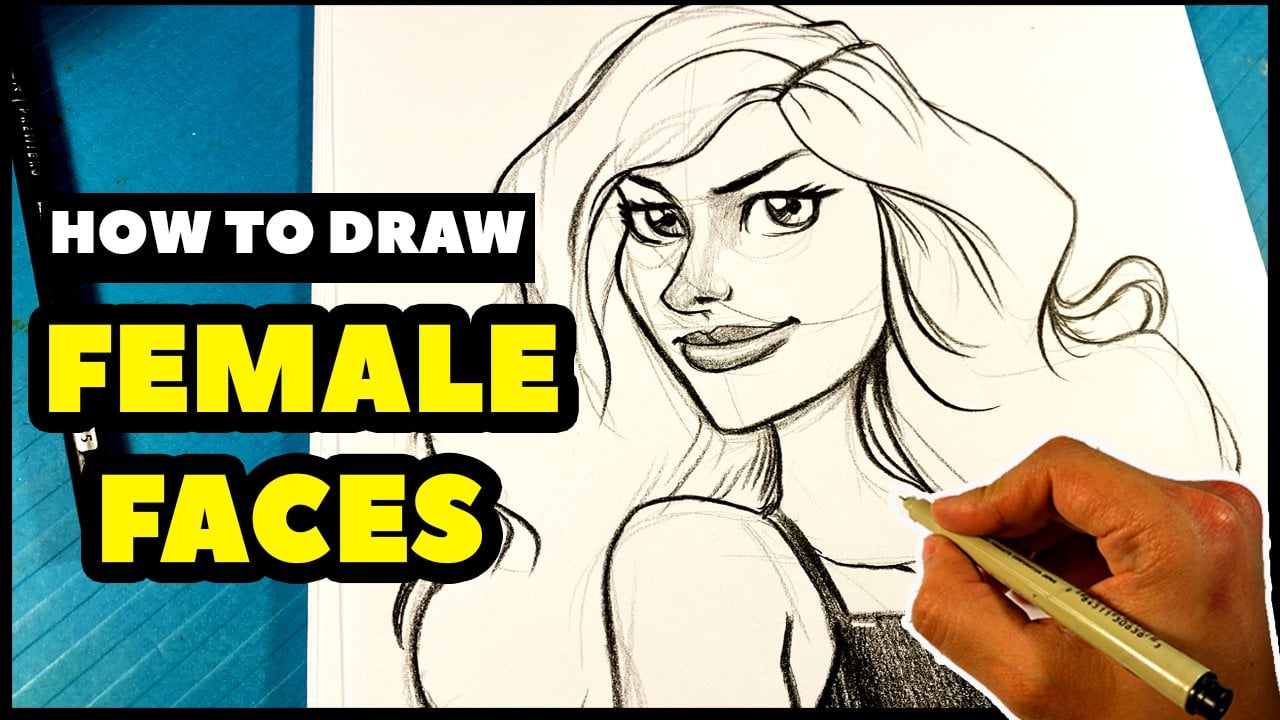
1. How to Draw FACES from your Mind: Hey, how's it going? Have you ever want to
draw faces from memory, like completely from your mind? I'm going to teach you
that in this short course. I'm going to take you for
the point as a beginner and take you step by step
all the way to the point. Were you able to draw
any face you want completely from your mind? I'm Enrique. I've been a professional
illustrator for 16 years. I worked on movies
like Transformers, Dark of the Moon, and
the Smurfs movie. So how am I going to break
up this course for you? Basically what we're gonna
do is we're gonna go through and start
with the basics. We're gonna go over
and go over the eye. And kinda some ways I learned
how to memorize the eye, then the nose, then the
mouth, then the ear. And after that, what I'm gonna do is I'm
actually going to go through the measurements of how you kind of form
those together. There's some very basic
measurements that you can follow and it's going to make
it a lot easier for you. Other than that, I'm
gonna do a video entirely on how I personally memorize basically every feature and how to put them
out every single time. And that's pretty much it. So what I want you to do is I want you to stick around
for the whole lesson. I want you to watch everything. And every single lesson in
this course is very important. At the very end, we're going to talk
about homework. That's pretty much it. So let's hop right
into the lesson right now if that sounds
like a great idea to you, if you want to be to draw
faces by this afternoon, Let's jump in right now.
2. Draw Eyes from Your Mind: Okay, So it's all about
memorization, right? And so because of that,
we're going to go over the basics of a face, not even the whole head. Just kind of a face and how they interact with each other. So right off the bat, we're gonna go through each
individual facial feature. I think it's gonna
make it a lot easier, okay, and I'm going to do
some memorization truths. Let's start with this video
can be about the eye. Alright? So right now, off the bat, the I in general, right? When you kinda look
at a general AI, there's complex wrapping of skin that I think
people forget a lot, especially beginners, which is why I'm talking to hopefully. And there's that wrapping form. What's the first kind
of AI that you always see people do, right? You always see the, that's the way I
would draw an eye, but the general public would draw the eye
something like this. Right? You always kinda see
that when people do it, they it looks like
a peanut, right? Looks like a peanut shape. Very even on both sides. And the eyeballs like right
in the center, right. So we know, right. This is like No, I'm going to make sure you
guys remember not to do that. This is a no. This
is a yes. Okay. So really just take a good
look at the differences here, right? Peanut scared, right? Like it looks scared because the iris and pupil just kinda
floating in the middle. There were a real
eye right here, wraps and it's also, um, because the eyelid goes
down a little bit, It's almost always see
the iris and the pupil. It's almost always hidden
a little bit below the top lid or bottom right,
depending on who you are. But almost always like it
hangs down this kinda stuff, this inflection, its skin
wrapped around the eye. And so we're gonna, and I'm gonna show you
what I mean by that. We could throw like an like
a lid right here if we want top of that. An extra lid. So let's go over really fast. What I'm talking about
as far as what it is when you look at an I and I is literally an eyeball. I'm sure you've seen movies and Mortal Combat were
just like anatomy. It's literally a ball put inside of a socket of like if we look at it
from the right side here, put inside showed in
an eye socket, right. Of your skull? Right. Let's draw
a quick little. I don't know, like quick
representation of a skull here. Real fast. I'll be here re, let's say over here. So we've got our skull shape. You don't like like think of it more like an
anatomy chart, right? Kind of like this is the
the skull of your head. This ball right there is. Let's put like the part inside. This part is literally shoved in there into this eye socket. It's not floating above. And I think once you get that, once you kind of
understand that concept, things become already a little bit easier
when that happens. You're like, Oh, okay. It's not just a floating
surface on a paper, right? It's not flat. There's literally some depth to that
Chevette eyeball. And around this, if we were to zoom in on
like that eyeball, zoom in on this eyeball, right? Let's create a bowl
shape right here. If you zoom in on that eyeball. What's occurring is while
it's in there, right? Like part of it is
in there, right? It's part of it's actually
inside the skull. There's actual skin
wrapped around it, right? So literally over here
you literally have the eyelid going around
the corner. Right. Wrapping around that. I almost like when you
look at if you go to the grocery store and you have like oranges or
something, I don't know. I can't really think
of a metaphor, but just think of
like a grapefruit or something wrapped
around it, right? Like you're wrapping
like tape around. You're wrapping
literally the top lid right around that corner. Right. Let's do that
like more clear. You're wrapping it
around that corner. And same thing goes for
the bottom part as well. You have this scan. It's almost like
a torn open skin. Like not not gruesome, but that's kinda what it's
open. It's an opening. Then you have stuff
like this, like the brow and things
of that, so on. But that's going to make it, I'm going to draw this on the kind of floating over there. Just to kinda, I mean,
this is just kinda show a diagram of
what's going on. Right? You have the iris and the pupil in there and
you have the iris over here. But that's a good representation
of what's going on. Right there. That alone is going to carry you more than 95% of people that do this because beginners
don't even know that. Okay? So that would be the I,
how do I go about drawing? And I generally write like this. So it's gonna be,
there's gonna be one on two sides, right? So let's just say
this an eyeball on flew over here on this side. But let's just say we're this
is the nasal area, right? Like the nose front view. And you have the I on
this side of the eye. On this side. You'd like to think about it a little bit
more than a peanut, right? You don't want think about it. You wanna think of it
in a geometric form. So what I like to do and
what everybody does. If you think about it as
a geometric form first. And there's a peak on the top part of the
eye on this side. There's a little one
right there too. And then there's a peak, pretty big peak over here
on the bottom right. If you were to have
the eye on this, I remember this is the nose. This is our imaginary nose here. But this i is a little bit of a peak here and a little
bit of peak here. Same thing if you look
at this right here, peak right here, right? Little peak there. And then there's like a very, very subtle, if anything, peak right there, but it's
curving a little bit. You want to make
those peaks organic. This is just a way to look
at it as if it was a robot. I, and I might even
make it more like this. I'm going to take
that part out of it. But that's the way I
look at it. Excuse me. That's why I look at it
as a geometric shape. But you make it organic like that because
that's what we are. We're rounded skin
and things like that, but giving it some
structure really, really, really, really
helps out massively. Okay? So that's what I
think about in my eye. And it's the opposite
on this side, right? I think of the
geometric, you know, the peak is on this one right here and the peak is over here. Does that make sense? The other side.
So knowing that I drew and I just like that peak. And so on. Let's go over really quick. Okay, so when we draw another eye over here,
Let's go in this area. Hopefully change the camera. I'm going to, when I think
about stuff like that, I'm thinking with
the ball of the eye, the skin wrapping around it. I'm literally thinking
this stuff like subtly. The top lid, let's
just say, like I said, that's that extra wrapping around the eyeball almost
like you're wrapping up present or something curving down that i and then
the bottom wrapping, which would be the bottom lid. And you don't want to
draw the bottom lid too crazy on some of that. Let's just say
somebody who ought to make someone look younger, that's not the best thing
to draw that much of a lid. Maybe control a little
bit of a lid here. If someone's younger,
but if someone's got like wild back into their
eye, you can totally do that. But same thing. See how subtle. It's like a little,
if anything, peak. Sometimes you don't
have to do it, but I would always
draw this peak. So there's like a subtle, very subtle curvature
right there. And you're like,
Oh, what is that? It's a little bit of that extra thing going
on right there, that extra opaque, but this one is usually
more prominent. And again, different eyes
have different looks. So you have to kinda
look at the eye, but this is how to draw
stuff from your head. And I would say you're
always safe without peak on this side and that
peak on the bottom. If there's even any peak. And this is called the sclera. Sclera is the white of the eye. We're gonna go over here and curve into the iris right there, which is the colored
portion of the eye. There's almost
always a highlight. And then curving right here. You got the dark part, which is the pupil. And that pupil tends
to blend in right here into the, into the highlight. It just looks better. It looks more natural when you put that dark and it carries in. Right? Makes it look more real.
Right here there's a tear duct which is
a little tiny circle. You don't have to do
that unless you're really zoomed in on that little tiny
circle through ducts. And then you have
this kind of a, because this is,
I'm drawing this, I write essentially when it
leads into the nasal cavity, there is a dark point right
here from And like I said, you have that little
crevice right there. Things you can add on. Things you can add on would be things like eyelashes, right? For more feminine type. You can absolutely add extra eyelashes and much as you want, you can add to the
bottom or the top. The way I like to
do that as like to thicken the line
just a bit here, right here on the lid. And then as I thicken it, I kind of pull out some of
those separate strands. You can do the same
thing on the bottom. Experiment with that. How many you want to do? I like throwing out lines
right here in the the iris. That's also helpful as well. I believe that's all you need to know as far
as the eye goes. Oh yeah, let's take
care of the eye and the left view as well. If you're, if you're
looking in this direction, since it's wrapping
around like that, it's gonna look kinda like this. Think of like a Pac-Man symbol. Curved line right here,
a little bit of a layer. Remember that there's
a layer wrapped around that same thing goes here
for the underwriter. Curved line here. And you're going to do
the exact same thing, but you're barely going
to see it right there. So the eye is looking
out that direction. It's really, really simple. But I would always
have that eyelid. I would always tuck
unless it's like a scared face or they're looking similar direction
in a weird way. I would always talk
that iris under the eyelid because it makes it look much more
natural because that's mostly what it is. But other than that, if it
looks the eye looks upward, there is maybe a
slight difference and angled normally just kinda
does this sort of thing. If you're looking at,
like if you're looking up at someone, right, you're going to see
it a little bit thinner. But for the most part it's
like almost exactly the same. That's why I only
teach really like side view and front view. And you're going to have
most of it right there. And there's very weird angles where you're going to
need to draw it that way. But that's what I would do. Okay, so let's move on
to the next feature, and that's everything you
need to learn about an eye.
3. Draw a Nose from Your Mind: Alright, let's get into
the nose in general. I think there's a lot easier. Okay. We're gonna go with a male
and a female real quick knows wise on average, right? Because things change. Okay. So looking at the
notes really quick, when I think of like the nose, I think of like the side view, which is something like this, like looking at it completely
from the right side. Underneath the nostrils here. Then you have the
wing of the nostrils. A general nose like
that curve here. And so let's, let's kinda rewind and go
over what that is. So the nose is not
a bone, right? At least part of it
is bone like right here up to this point as bone. Then over here is
cartilage, right? And you're going to find
that cartilage is much more malleable from
person to person. And because of that, you have
these very large varieties of noses right from
upturn to down. So like realistically you have, let's say the inner
skeleton right here. Let's draw the inner skeleton. Right? About this point. That was like kind of framing from the skeletal portion of it. And that kinda
helps me understand kind of what I'm looking at. So maybe this is a
skeletal portion and then the nose again, this is the cartilage
part right here in this area from here
to here at cartilage. And that's going
to vary so much. And like I said, so let's think of like different
noses, right? So you go like right here, it pulls down the
university people with those really big hooked noses where it hangs down
almost over the mouth. Almost right. Then you have something like you have
something like that. And then in comparison you
have maybe an upturned, almost like those animated type knows is that on people though. And you have
everything in between. So that's really something
to keep in mind, is how much variety there is. And this is just the
side view, right? Real quick, just to go over
the parts from the front. When I'm drawing
something, for example, like this and the front, I'm thinking I'm only
a couple of parts. And it's cool because I think this is a relatively
easy feature despite all the variety
because there's not a lot of movement going on because
it's bone and cartilage. It's a little bit different
that wrapped into the muscle yanking it. I mean, of course there's
expressions to it, but I could change this
like a front view. Okay, let's go over
the parts real quick. If I was to throw this
into a geometric form, which is the way I like
thinking about everything. I'll do something like this, maybe the top base, I don't remember what it's
called exactly, but that's the kind of geometric short
form I'd like to take. Then I go over here to
the bridge of the nose. Right? That bridge is essentially
the long portion of it. And then over here pull out, pull out and have the
wings of the nostrils. Wings of the nostrils. And that's the way I'd like
to think about it from the front view,
completely front of you. When you think
about it like that, you can draw it like this by excluding information, right? I'm taking out, I
don't draw every line. Right? You don't want to draw
every line would you normally want to do
is kinda draw like usually the bottom part because sunlight and
artificial light comes from above, some outside. So we're almost always kind
of having this upward, a little bit dark right here, which really helps
under the nostril area. Okay. So that'll be like
from the front, right, this would
be from the side. I was going to say you can kinda look like looking
up the nostrils. So let's like even break it down even
simpler when I draw nose, I like to think about it even more like a geometric
shape like this, like this triangle, right? Let's say this is an eyeball
over here, I over here. And then this is like
the bottom of the shape. And this is a top. I like to think
about it like that. And you're kind of working
with that wedge, right? And then you can break it
up into nostril bridge. So I'm always thinking
about it from that side. So saying that, let's look
at that bottom wedge. Let's say we're
looking at a write up some of the nostrils. Right here. We can write
up somebody's nostrils. It's gonna look
something like this. Let's fill that in. All right guys now so here, if you want, you can
draw the bridge out over here somewhere,
you can barely see it. Then maybe I can
draw the philtrum, which is the top
of the mountain, but we'll get to that later. So if I'm looking
right up the nostrils, it will make this
sort of shape, right? The ball of the nose, which I haven't talked about
yet, but I will in a minute. Right down here you
see the septum. You see the wings of
the nostrils from the, from the bottom side and
a curve in like a heart. And then you have the holes on the nostril right
alongside there. Let's label these front, I guess, underneath,
under and then side. It's kinda make sense
of these notes, geometric form right here. And so we start with that. So let's just, let's just kinda
put it all in a row here. Okay? If we're going on
this side over here, we're going to start
with a geometric shape, which to be honest and straight
up looks like a triangle. Right there. Let's
just draw lines here, and this is underneath
geometric form right there. Okay, let's add more
detail to that. Curvature over here. There's a ball of a nose
which is essentially obvious like these kind of muscle at the front of the nose. Some of them are bigger
than others, right? How much you can see
somebody you can just split, see a split on it. We're gonna go over here, curve right there a
little bit to see that the whole the nostrils kind of aiming downward
curve to the back. Right. You're breaking
it down like that. You can even leave it like this. By the way, this can be
the final version of it. And then you have
something like this, right? The geometric form. And then right
here you can throw a little bit of like let's just draw the
same thing right now. Right? You can always add
more information like curved line underneath
the show that there's a change in plane right
here from the ball of the nose to the nostril area. Curve underneath them. Maybe really fill out the
whole of the nostril here. Can even draw like the
last line right there. You can draw the
ridge right here, like the bridge of the
nostrils ridge area. That's going to give it
even more information which is kinda what
you want, right? So this would be one. And this is my way
of thought process. You don't have to draw
a straight triangle like that, especially
if it's an MI. That's kind of thought process one geometric to kind
of break it down. Three more information. If you want to break
this down, even, even more geometric shapes
like this guy, you could do. Let's go, let's
go to front view. You could do the
same thing and then add the ball of the nose right
here, which is like a big, literally what it is
like a bell-shaped curve over here for the wings of the nostrils of line over here. And then kinda adding that fall on the front of that nose there. So let's recap really quick. I'm going to show you through
these notes really fast. Like I said, as far as
male and female goes, this is enough
explanatory, by the way, and by the way, guys and
girls have both types. But we're talking
about like generally what shape it takes, what in cartoons, right? You tend to draw, it will
move a smaller nose, generally not always animate everyone has a small
nose, usually. Big noses tend to make you look older because as you grow older, the cartilage in your nose grows a little bit
as you get older. So your ears get a little bit longer and your nose gets
a little bit longer. You an old person? Like I mean, like like an elderly person. That's why that tends to
like signify more age. And so when you draw
stuff like all petite, you want to draw
them more like that. Not always does. Everything is never. Just general is let's go
back through all this, okay, just to kind of
run through it, I start with a geometric shape. We're going to return side view. Right? This is the nose is made up mostly I think it's mostly I can say that
word of cartilage. And that's why you
have a variety of different nose shapes
that bumping the nose is bone usually usually depends. Like I said, this variety from
little nose is like this, upturned to downward noses
and everything in between. It varies so much. Over here in the front view, breaking it down to
a geometric shape and just kinda
understanding it that way. You don't have to
draw that and every time you just kinda
have this in your mind and then you take out the
information you need, right? And that's why
we're only putting certain lines down the bottom here and the curvature of the edge of the
ball of the nose, a little bit of a ridge as
well on the nose itself. I use a thicker line
at the bottom here. That's just what I liked
because it catches shadow. And right here this area
is not catching shadow. And that's personally why? And then drawing, if you
look up someone's nose, this is the ball of
the nose, like that. Ball of the nose going
on this symptom, that middle part that separates. And then you have the need to make it look
like peanut shapes, I guess the nostrils. And this is the wings
of the nostrils. Same thing, just different angle that's looking
under, looking up. So I start one with
a geometric form. In my mind too. You're putting down just
kinda general construction of it in three. You're putting in these
little things right here, which show? They show form. They show exactly
what the shape of things are you just did on
these thin lines to show information which probably you wouldn't obviously aligns don't exist in nature, so you
wouldn't have that. Anyways, I hope they'll
self-explanatory. Let's move on to
the next lesson.
4. Draw Lips from Your Mind: So let's go over the mouth now. Okay? So the mouth in general is a little more complicated
because the expressions, but let's go through
them real quick, okay, as far as the basic
mouth, right off the bat, thinking about it,
the way I like to draw mouse is I find the
corners of the mouth first. Almost always. Find the parting of the mouth. Find the top part
of the lip there. I think he's called
the philtrum. Curve down over here than
over here, excuse me. Then find the lower lip. That can vary based on what? If it's a guy or girl? Usually when you do like guys, wherever you can
omit that top part, it makes it look a little
too feminine over here. Like so. We don't like to kinda
draw the mouth here. And then just kinda
lower-left that sometimes you can shine a little bit of that and then you do just
the top part over here, that philtrum area.
And that's it. This can make it
look like lipstick and you don't want to make
it look like that too often, because it'll just make
it look like a girl. But alright, so really quick,
Let's break this down. Okay? That's the way I
like to draw that stuff. If you think about it as
a geometric form, right? Which is a great way
to think about it as you're going through it in
your mind as a geometric form. I like to think of it as these two mountains
stuck together. And then the bottom is more or less just kinda
boat or something. Because they're thinking
about it in a geometric way. Some, another thing to think
about is there is going to be this peaking down, then happens is peaking
down in the center. And another thing you can
possibly think about, if you want to think
about a different way and you want to break it
down differently, is you can think about
it like those two peaks. Peak down here in the middle and the bottom lip
is usually separate, not always, but can be separated into these two pillow shapes. All right. There. Right. So there's two kind
of below shapes, this fat pads, usually
it's drawn as one. But like some people, you can
see the actual split in it. And that's something
that you got, have to figure that out, but that's the general
way I like to draw lips. So if we're going over
here on this side, let's just say we're drawing it on the left leg is slight. Let's say the lips are
slightly turning away. I still find the edges first. I tend to find a center
that v curl over here. Or over here for the
parting of the lips. That U-shape at the top. And let's say I draw
the bottom lip. And I might do that as well. We're a little bit overlapping. They're not much different. Not much different. If you go into the
side version, like it, let's say completely they're either side of me
there like an profile, something like that,
like a Pac-Man symbol. Find part of the mouth. And I find the lower lip, and I find the upper lid. And depending on the
types that you wanna do. And then right here,
unlike the mouth itself, onto the chin,
here, the philtrum. So this would be the lips
are facing that direction. So a couple of things
to think about. Does the person have an
under bite like I do, or an overbite that
you can kinda play with that in profile. So for example, maybe their
top lip really sticks way. More outlet the
symptom character. Or about their top. You see some people like that. Again, they're facing that way. Or it's the reverse or they have a pretty small lip
and they have like my mouth where the lower
jaw sticks out more, pushing the lip type out,
something like that. Again, I'm going
to draw the arrow that way to make sure you
know what is facing that way. So these are the variations
on the side view. I don't see too much more. Obviously there's
thickness thin. You want to play with types. So for example, from
the front view, they can have a very, very thin upper lip, right? And then they kind of
like this huge lower lip or the reverse, right? You can draw a very
large upper lip and a very small lower lip. And that's the kind of stuff you want to play around with, like what the variations, but it always, always starts, right? Let's go back to kind of
go over here on this side. It always starts with me. I start with edges of the mouth. The middle usually like
to find that middle. It's arching down. Sometimes it doesn't, sometimes it's just a straight line. So it's up to you.
Line, line, straight. Then I go over here. I can either go to the upper
level of the lower leg. I'm gonna start
with the lower lip. Find this center portion
that philtrum at the top, and then curve that line over, curve that line over. It's not going to run
right into the mouth, is going to run right next
to the corners of the mouth. And that's pretty much it. If you want to draw, again, you can shrink the upper lip. And if you're looking
up at the lip type, it's more or less
exact same thing. So I won't really go over
that. It's really simple. That's pretty much
it for the lip. As far as the lip opening
up and expressions go. That's another
lesson to be honest. But you can always do this thing where really you're
opening up the lip there. It's not quite like the
eye because the art, it's more complicated
than the eye. Right? And you can feel like the
teeth here with the eye. That's a whole different
lesson honestly. But with the eye, the eye is complicated, but I would say
the lips are more complicated because it
can be so much more. And they, they, they, but anyways, different lesson. Anyways, you don't need
to know that right now. Let's move on to the
next lesson, okay.
5. Draw Ears from your Mind: I mean, it's it's relevant that I think you
have to know this is kind of an area where
people treat it like a chore because no one really cares about
ears right there. Like I think their organs as well right there
now features. But we're gonna go over it because I think
there's a part of it. So I'm going to be the easiest,
easiest way to do this. Okay? Think of a question mark. Question mark with the
letter y shoved into it. That can give you a good
base of an ear, right? So let's say we have
something like that. At that lobe down there
hanging out over here. And then you have the Y
shape in it right there. You try to make it
look more organic, but then it doesn't really account for the
tragus right there. I think there's a trace,
right? Am I got that wrong? Forgot this part is called
part of the cartilage there. But thinking about
it like that, like, you know, again, question
mark with a Y inside of it. It can really, really, really make things easy. It'll get you almost
all the way there. Again. You're going to just
add a little parts like this part to it. But I would, I
would say that the easiest way to do the ear. And I would say also, if you look at it from behind, It's kinda like a circle. Kinda you were you were
seated behind your ear. A lot of you don't
care about that. It's kinda like,
like let's just say this person is facing away. It's kinda like
this bizarre shape. You know. It's I don't
know what you call it. Like the canal starts to kind of show the canal
doesn't make sense. The cows on the inside. But it's, this, is this part in the back of the ear that
attaches to the head. Forgive me, I can't think
of the name right now. Really, really simple. That's part of the shortest one. But practice your ears okay, For Reals because you'd be
surprised I see a lot of beautiful portraits
and sometimes you'll look at their ear and it's like you like what? Like it's not, it's funny, it's not the focus, but it
will affect your drawing. So you have to
practice this, okay? Be able to draw an
ear from your mind, then you can kinda like
angle it out as well, right? You can, it doesn't
have to be like a complete round shape. You're, you're the
one that's going to, you know, kind of affect
how you draw it, right? You're gonna have
your style of beer and you can kind of make
it any way you want. Well, that's kind of all I
have to say about the ear. Honestly, that's
the shortest thing. Let's put all these
features together. Okay, Let's go over
some measurements.
6. Measurements of the Face: Okay, really quick. Let's go over a couple of
measurements right here. So you have like let's say
two features as if the eye, the eye and the nose are here
at my little simple face, you want to focus on
this triangle here. This area between
the space between the eyes as far as how the spacing space between
the eyes and the nose, more so than even
the mouth, right? Within reason. Right. You don't want to make the
mouth all the way down here. Something like that. Whenever I tried to
get someone's type. And obviously this is all about memory and
kinda stuff like that. Whenever you want to
make it look human, don't let the nose float away. And definitely if people
can have longer noses, but sometimes people let it
float away and you know, maybe too much the left. You want to think about
this triangle area. Just kind of basically focus
on it a bit and kind of nailing this area that the space between that and you're
gonna be really successful, I think drawing faces. So anytime you do
any sort of face, I'm always conscious of the spacing between that
stuff because people will let that stuff go a lot and I think it's to
the detriment of their arts. So let's say that the face is turned a little bit to the left. The nose there, line over here, curve there a little bit. Eyelids. And now what I'm just doing
very, very quickly, right? Going over here,
philtrum, mouth. Start usually with edge
to the mouth here. Right? Very tired looking
face or an eyebrow. And here I will
get the eyebrows. Eyebrows are messed up
a little. There we go. Anyways. That's a quick face there. I'm always cognizant
of this triangle here. Even if a nose, obviously, as it turns out within
the front of the nose, is going to stick out
a little bit more. But that's kinda what
I'm thinking about. What to focus on this
little triangular area. But let me do some more demonstrations as
far as that goes. That's part of the
biggest measurements. Remember? If you want to remember, Here's
another general number. Measurements, I would say. And again, since we're
doing mostly only faces, but I'm gonna go to
the head as well. So when you go like this, let's say you have
the eyeball over here and the eyeball over here. Remember I talked about
how the eyeballs in the eye socket between the two eyes is usually
another eyeball shape. The distance, it's
about an eyeball shape. And then on the outside, like all the way to
the edge of the ear. It's another eyeball shape. This is just a
general measurement to give you a ballpark range. Obviously, a lot of people's
eyes will vary, right? How far away and
how close they are. A varies. But generally, it's
about an eyeballs, the length in the middle there. And I don't mean like the
eye itself, like eyeball. Right. So that's something
to keep keep charge of. As far as the spacing
goes on the front ahead, you want to like let's just
say the front of the head right here where
the forehead turns. That's a very, very top. That's where the hairline is and I don't mean like
where the actual hair is. I just knew where the
head starts to go from forehead and it's turning
into the top of the head. Mark that area, mark
the bottom of the chin, and then divide
that into thirds. And you will get the brow and the bottom of the nose here. Let me go over that more
explicitly over here. Okay? So again, you wanna do, Let's just say you
have a head here. Draw a line down the center. You know, kinda center line
keeps things balanced, right? And the other chart,
remember that? Let's say I mark the top of the forehead way at the top of the forehead
where it starts turning into the hairline right there starts to turn
to the top of the head. So you have the hairline
down to the chin, this area right here. And divide it by three. Bom, bom, right? Just ballpark it by
three right there. And then what this normally is. And again, this changes
per person in-person, but this gives you
a ballpark idea, which is about creation. You will get the
top of the brow. Brow, you know, not, not the eyebrow for
stable like the brow. And then right here
you'll get the bottom of the nose right there. And I don't mean like the
bottom poking part of the nose. I mean like where the nose
comes back into the face. And it's like that and
every view as well. Obviously, I guess, right? So like if you turn your head, it's going to be the exact
same thing over here. You're gonna have the AI
bottom of the nose here. Generally. Remember that. Generally, when you
draw from memory, you're drawing from generally write that in there. I just drew myself. I'm a big nose like that. But those are the most important measurements
to remember. Let's go back and review this. Okay? Number one, when
you're drunk from the front, focus on that triangle and I mean, visually, mentally, right? You're thinking about
it a little bit. You don't have to like draw a triangle and trace
it, nothing like that. You're just consciously aware
of it as you do it like, oh my my eyeballs floating away, you
know, stuff like that. You have to kinda
be aware of that two eyeballs lengths in general with a head right here is
let's just say you have the two eyeballs right
in the eye socket. Between them. There is roughly one eyeball
length between them. Roughly same thing on the outside of the head all the way to the edge of the ear. Again, that depends
on the type of ears, but we're just giving, you know, ballpark measurements
over here as well. He split the head up into
thirds from the chin to the top of the hairline, to the hairline again, has nothing to do. The
hair that can be bald. It's where the
forehead starts to turn it to the top of the head. Right. That area where
you're like, oh cool, it's not cool but you
know, it is cool. But you're kinda like, Whoa, okay, this is changing now. That area divided into thirds, 1 third right here is
the top of the brow and right here is the
bottom of the nose. Those are the most important
measurements I think about when I'm drawing any sort
of face from my mind. And I will draw several
phases right now for you in the next video so I can go over my entire thought process. Let's jump into that.
7. Demonstration of Process: Okay, cool, Let's have fun. Alright, let's go over some
faces as we talked about. So right now, I'm gonna go over, I'm going to draw
the center area of the two eyes right there. I'm going to pull
out same thing. Trying to find the
top of the eye. Over here. Curve underneath. I'm drawing an ink by the way, I normally in pencil is
much more forgiving a lot, a lot of ink, ink stuff, I find it really fun. Curl we're here for, we're here for the pupil, the pupil and iris here. Highlight, highlight. You can either, I tend to make my highlights
square just to kind of make it different than
the pupil on the inside. We're here, up line down here. Let's do that upper fold
of that upper eyelid here. Underneath curve
underneath the I would say there's if it's too thick of a line right
here on the right. So I'm going to even
it out by making the line on that
side of the nose. I'm kinda nose and
my thinking, again, thinking about that
triangle in my head, draw the nostrils
in there first. I wanted to have like a smaller dainty your nose maybe nothing too small but right there. Curve right here. Can you guys see the
Volcanoes really small? And the line over
here for the side, you could draw a line on both
sides but not too heavy. Let's go over here to the brow. Here, the philtrum
than over here. And I actually started
with a center that's titled lifts that I don't
normally do that. No. I start with B side ellipse. We're here at the top
panel underneath there. I can go for more
feminine right here. So I'm going to give a thicker, thicker eyelashes right
there on that one. Big eyes too, on
this one, honestly. Almost too big. All right, there's one
face, just for fun. Let's try to do a
drastically different phase. Draw the top of the
upper eyelids here. I'm trying to think of
more square, more angular. And I spaced out the
eyes of a tad more. Line here, line here. Down. Underneath the eye. Underneath the eye there. Alright. Let's do the iris right here. Iris right here. Circle dots. Now on is going to be a little
more circular. Alright. See line right here for the bag and VI is
on one side by side. All right. Bottom
of the nose start with the center nostrils. Nostril, giving a pretty
big wings of the nostrils. If I'm thinking about too,
is also a lightweight stuff. Either don't have to think
about if you do it in pencil. Has for the most part,
curve right here, curve underneath, you
know, very round. I've seen this. My sister, my sister has
its kinda knows Around nostrils and see how
different this is a little more angular
nostril to more round. I'm going to go over here to, well, I'm going to actually
start with the eyebrow. Pretty gone one direction. The center there as well. Pretty big eyebrows
made up of lines. Their career right
here for the bridge. Start with the
center of this time. Again. Pulling out the mouth, pulling out almost to four,
almost caricature life. But to make it an example, groove underneath the lip. Philtrum right there. And it'll get darker
line here. Right on. That's a really weird face. It looks almost too
cartoony, to be honest. That's debatable line here from the nose for the kinda
cheaper than the laugh line. Okay. Let's go over here to the
bottom. Do another one. This one's gonna be
more three-quarter. Draw animals that fly their eyelid. Right there, the
eyelids pretty big. Sorry, I tried to
make it darker. I don't know why this one's
like so I drew it smaller. Curve, curve. I'm gonna go with some
eyebrows right there, but then I draw another
direction over here. So a lot of this is like you're toying with different types. Right now. You're saying like, how
much can I stretch this? How many different
curve right there? How many different bottom
and knows their nostril. How many different base
types can I come up with? Line, line, line over here
for the philtrum, pull down. And this starts to
become the exercises. How many various heads
could you, could you do? It's pretty, it's
pretty infinite. It really is. We can
just kinda keep going. So for example, we
have our head there. I could maybe throw more
lines underneath the iser, which agent is the
person a little bit. And also I can throw more lines right here are the lifeline which
also ages a person. Right? It's just, it's this one. Maybe I could fill it in and start doing a
dot right there. I can fill in the entire eyes because that's usually shortcut before somebody has
really dark brown eyes. And actually kinda helps
the image right there. Some bond and do another one over here.
So I'm gonna go here. And the cool part is when
you're doing this stuff. I like books. The
reason I like focus, this is a great exercise, right? Obviously you can do
this with heads as well, like full-blown heads, but
that's a different lesson. But right now I think
it's very valuable to focus on just the face
to kinda nail that down. Because if you can
nail that, I mean, that's really the focus
of any head would be any base right here. He just kinda do this
and you can do this like every day for a month. And you're going to just start playing around and it's
gonna become fine. I understand initially though it might be tough but
don't worry about it. Let me see. I'll talk more about
that in the next video. Curve right here. Wind Dan. Dan. See you right there. I feel like I need more
information to show so I might throw the
longer line, right. The, the the the bridge
of the nose there. Looking at that, I feel
like the mouth is too high. How would normally
have moved it down? But that's kinda
what practice is. Right? Curve over here. So
those are five heads. And like I said, you can
kinda make them extreme. Let's do a really extreme one. Let's do a curved line
here, curved line here. And let's draw a really large like his eyes are like basically
half-closed, right? We're here. Line underneath.
Line underneath. I don't want it to be is
to squint. Fill that in. I fill that in now. Okay. Line down here. He's going to have my face
is very tired person. I don't sleep that
well, so I mean, I just sleep pretty well but he's like permanent
bags in mind. Let's do the nose
bumping the nose. Basically, given this
guy my nose now. Pretty wing of the nostril. Pretty flattened mouth. That's pretty much a
cartoon right there. So you can kinda toy around
with this stuff and kind of see like what direction
you want to go in and kinda changing the volume, knobs and stuff like that. It's really going to
get you incredibly good at drawing this
stuff from your mind. But yeah, let's just
focus on the face. Alright, let's move
on to the next. I'm gonna give you some
tips on how to practice.
8. Memorize: Okay, so let me get a
couple of things on like memorization
and how you can do that and how you get
distance from your mind. Try to cope with a template, come up with your typical, this is obviously
experimentation, but try to come up with a face that you draw all the time and you probably gonna
do it naturally, right? Couple of the face,
male or female. Just come with a face
that you have and drill it over and over and over
and over and over again. Get a sketchbook that
you don t value. Don't get like or you
can just have a stack of papers like this and do
the whole page of them. And it's not even so much the
amount you do in one day. I would say just do it
on a regular basis. So for example, if you want to practice
like ten hours a day, once a week, or do you do you practice like
one hour a day? Every single day? Do the one hour a day?
Every single day. I don't know what it is,
but it's just a lot better. It puts you in a routine. You're kinda set in
this kind of like neutral to like turning on
that part of your brain. Part that is a lot better. So I would say absolutely
practice every day. That's a huge thing, right? You hear that all
the time, right? Almost like it's homework,
but it's true that really will get you to memorize things. I would say cup
with your template, cup with a like a
regular eye shape, nose shape, mouth shape that
you tend to do all the time. And make sure you got that. Makes sure it's readable
and it's repeatable, right? Make sure you can repeat it. And that's kinda what
we're trying to do. Massive, like now that
you have all this stuff is you can practice
properly, right? And if you don't know,
go back to some videos. Maybe Lee was elliptic like
that or how was the lips? If you wanna do that, go back
and look at those videos. But this is all you really need. And then you can also
experiment as well. But I would try to come up with at least one head you can do over and over and
over and over again. And you build off that. You have your repertoire, you have your one thing. And then repetition is so
unbelievably important. Even if you don't think it is. Even if you're like,
Oh, what's the point? I already did this, this way. You'd be surprised. It starts
to build up over time. And the thing is, when you do any skill, you just become more and
more proficient at it. And it's vitally important that you do it over
and over again. And it's kinda hard to explain that unless you've
actually done it. But once you do it,
you'll, you'll, you'll see the very
clear benefit to it. Because other thing you just
do it, you'd be like, Oh, I should like, turn
it this way this time or all of a sudden
you're like, You know what? I'll add a little bit of wiggle, a little bit the eyelid here. You'll just start doing this stuff after repeating it over and over and over again. And it's gonna get easier
and easier, easier. Because it's gonna,
it's gonna be ingrained in your hand as well, even just muscularly to the Muslim your hand. You're
going to get it in there. You're going to turn your
wrist a certain way. So keep that in mind. Repeat it over and over again. The other thing is, and this
is going to sound corny, very corny. So prepare yourself. You have to know
that it's possible. You have to be like,
okay, you know, I made that mistake and that's what it's
all about mistakes. This whole thing is I'm
making 1000 mistakes. But you'll get it, you'll get it down
eventually, okay, cool. You just knowing
it will happen is probably the one thing that changed my drawing
more than anything. I prayed improved more. Just that doing that like
really believing like, Oh yeah, I know I can do this. O being truthful like, oh, that didn't work out but I'll get the next time or
I'll get it eventually. Thinking that way is
going to save you. Honestly, it saved
me and allow me to have a career in art and hopefully that's what
you want, do it to. Hopefully, you had an okay
time hanging out with me here if you stay till this
point and you are amazing. And I thank you from
the bottom of my heart. Checkup, my soma, other
programs on here, and I will see you next time. Okay. Message or artwork. Basically put it out
there for me and I will absolutely let you
know how that works. And yeah, definitely
post your art. That's gonna make a huge difference and I
will critique it. Talk to you later guys.
9. Final Thoughts: All right, You are amazing
you completed the course. I want to thank you very
much for getting this far. You are awesome. Now comes the part where
you take over, okay? You should practice
as much as you can, make, as many faces as you can. And I want you to
post them to me. I'm going to critique
each one and let you know maybe some
thoughts I have. That is pretty much it. Like I said, what I
want you to do is I want you to stay
positive as well. Keep practicing, and I hope to see you in
another program. And if you also want to request
a program for me to make, I will totally do that. Thank you so much and
I'll see you next time. I'm very humbled. See you later.
 Enrique Plazola, Learn to Draw the Easy Way