Transcripts
1. Introduction to this Class: Hello, everyone. My name
is Robert Marzullo, and welcome to my class
on Drawing Expressions. Expressions can be tricky
to do with a lot of variations and different
decisions to make along the way. It's my goal in this class to simplify it for you and
show you that there's a lot of basic shapes that you can utilize to make the
process much easier. After we cover the
primary expressions, I'm going to get into a
project file with you where we start with a
structure based approach, talk about the simple shapes
and patterns to look for, and then show you
how that structure makes the rest of the
process much easier to accomplish and how
it allows us to see and edit the work
more effectively. By the end of this, you'll
have a completed project file that you can share
with the class. I would love to see it. And please let me know
what you think of the content so I can
improve it for everyone. So thank you very much
for considering my class. Good luck with the
art, and bye for now.
2. Basic Expressions Practice: Alright, welcome back. So the first thing
I want to get into is the idea that you can
really simplify expressions. So expressions, there's
so much to cover, right? There's the way that the
face pulls on certain areas, the different muscle groups. I mean, you get into it.
It gets super complex. But we have to also remember that it all starts kind of here. Right? That conveys an
expression all by itself. And this is where cartooning
is so powerful, right? So I love paying
attention to cartoons. I love watching them
with my son and really seeing how they
convey expression and storytelling through the various simplified and sometimes
more complex versions of three D characters
and things like that. But it's all interesting stuff, and a lot of times, it can be related down to
very simple steps. So what we're going to do for
this particular exercise is just practice drawing some
very simple mannequins. So we're going right for shape
based drawing of the head, mainly because this
will allow us to just zero in and focus
on just the expression. So it doesn't need to
be some perfect shape. You see, mine's not. I've
got an ear there in place. I've got a center line. I've got a spherical like
shape for the top of the head and elongated head
and a pointed chin down here. And again, whatever
style you want to do we want to hurry up and get to the actual expression
so that we can convey this in simplistic terms. So with this one, I'm just going to go for a
neutral position. So draw a cross section
where the brow will go. Again, position
isn't a big deal. It's entire lap to you here. And then I'm going to put a little upside down triangle
for the bottom of the nose, and then for a neutral look, I'm just going to put a line across and a line below that, which will sort of or almost
a little mini pocket shadow, which will sort of
convey a bottom lip. Then for this area,
I like to drop in circles most of
the time, not always. But what's kind of
funny about this is if you just drop in two circles and two lines
like this, I love doing it. It's like this really
blank expression. In fact, a lot of times,
what you'll see in a lot of cartooning is
they'll purposely go, pretty heavy eyebrow
and two little dots. And it's almost funnier
like that, right? It's very blank expression. And they'll do that sometimes in juxtaposition or contrast. To having normally their
eyes might be like this, and then all of a
sudden they blank out and they just
put the pupils. And I think that's
just a really kind of comedic approach to it. But anyways, that might just
be my interpretation of it. So essentially, again,
just focus on drawing, and they don't have
to be spherical, you know, some eyestyles
are more like this, right? But just keep in
mind that if you typically narrow the eyes, it can almost look a little
bit like they're squinting. So we'll get into some of
that expressiveness, as well. There's a lot that goes on
with the eyes, obviously. But for this one, we'll
just go like this. So here and here. And so a very neutral
expression. And that's it. Like, essentially, we
want to get in, get out. I shouldn't even
refine it so that you can see that a lot of this works in a very
simplified manner, and that's sort of
the beauty of it. And what's great is that
you can jump over these and render and stylize and do
all your fun stuff on top. And it just works
because you did the groundwork of a
basic expression. So play around with head shapes. You don't need to make
them all look like the same character unless, you know, it's a goal of yours. And so now for the next one, let's also tilt the head back because I'm going to
do a surprised expression. And so when you do this, you might also want to generally want to show it
with body language as well. There's a lot of gesture and just the orientation of the head and relationship
to the body. That's actually why I
want to go and place. Next in here just
because, again, the relationship of the head to neck will sort of reinforce
that gesture, right? So with this one, we're
going to tilt it back. Again, simple head shape. We don't have to
get into the full Andrew loumus method for these. And then for the brow line, so this is something to consider
is that the brow line is typically halfway
down from the top of the head to the bottom
of the chin, right? But in a more caricaturized
or cartoon state or a more expressive state, you tend to want to
stretch this a little bit. I do anyways. I'm going to
bring that brow line up pretty high because for
one, the head is tilted up. Now, you see there's a lot of distance here from
that brow line to the chin, much more than
normal, if you again, study the Andre Lums method or some of the stuff I've
taught on drawing heads. But the reason being is we're actually sort of getting ready to add more space
for the open mouth. I'm just going to
draw this sort of lamp shade kind of shape, very simplified, obviously,
bottom of the nose, again, that upside
down triangle. And so, and for the eyes, again, I'm going to drop in
some circles, the eyeballs. But, you know, you got to think that every time you
go to draw around these, you're changing the skin
around them, right? The eyes are always the same, the eyeball shapes
are always the same. But you're going to do very different versions
of so open expression, you're going to bring
that eyelid way up on the top portion
of that sphere. Bottom eyelids, I don't think move a whole lot,
but, you know, again, in cartooning and drawing, you can definitely do
whatever you want. Generally, you're going to
show the iris in full view. But again, I'm just pointing out that when you go to
draw the eyelids, you're going to maneuver
those accordingly. Now, for the expression here, if this is surprised or
even somewhat fearful, we just put those
eyebrows you know, I like to put a couple
little quick angles there, but you see how simple they
are and just like that. And so, again, as I
draw around this, I would actually leave most of these eye shapes in plain view. And you can even do tiny
little pupils, right? There's all sorts of things you can do there to add to this. I'll stop right about there
because it's you start to see so much is conveyed
with just a few simple lines, it sort of encourages you
to do the rest of it. Like, it feels like just
the right approach. And generally when you're on the right approach,
it gets easier, almost like you start feeling
like you're working in a downhill forward motion that's kind of hard
to walk away from. So just like when you get a
really good thumbnail sketch, you just immediately
feel energized, right? You want to do more to it. For the next one,
we'll do a little bit more of an angry kind of look So we'll tilt
the head down. You can start the cross
section of the face. You see, I'm just sort of grabbing whatever area
and building out from it, because I'm not so awfully
critical right now of the initial head shape. So I know they're not
perfect, but then, again, is anything
ever truly perfect? I don't think so. So,
something like that. And so now if we're going for
that sort of sinister look, we know that immediately the eyebrows are
pointed downward. Lots of expressiveness
to the eyebrows. Here, we will do something a little bit more sort of squinted for the eyes. So I'm just going to do,
like, a straight top eyelid, a little roundedness to
the bottom, and that's it. Again, there's that
bottom of that nose. And then, you know, lots
of things you can do here. So if you really push those eyebrows down in
the middle like that, really compress them down, then you already got anger, right? But then if you put a smile, it's almost like maniacal
or somebody like the joker who's, you
know, kind of crazy. Like a lot of times when you
have a mixed expressions, they come across
as crazy, right? Like, if you have something that's angry eyes with a smile, sort of a psycho kind of look, or maybe a bad
joke, I don't know. I guess it depends on the story. But then if you have them
grinting or grimacing, I never know how to
really explain that one. But, you know, this kind of
gnashing teeth kind of look. And they're just,
like, you know, mad and showing
anger and disgust. So there's different ways to
really think about this one. I'll go and place a smile one for now. It's kind of more fun. But that's another thing. We'll get into that a little
bit in more detail of where mixing them up
really, you know, gives you a bit of
a lot more variety, really, to your characters,
a lot better storytelling. There's so many subtleties
in the expressions, but for this one, we'll just
do the mad, crazy look. Not not real happy with
that particular drawing, but it gets the job done. Alright, so for the next one, and I'll try a little bit more
of a feminine head shape. So for this one, I'll
go more rounded, a little bit of a pointed chin, that kind of oval, a
tapered oval kind of look. Almost looks like I'm just
drawing a balloon, right? If I go like this,
I got a balloon. And then drop the ears in, even though there's no real
expressiveness to the ears, but they're great placeholders
for the rest of it. So eyebrows up here. Start with some big kind
of cartoon like eyes, tiny little tiny little nose, and we'll get that
smile in first, since it's really the
most important part of a happy expression. And obviously, you've
got variations here. It can be open mouth, top teeth. It can be all teeth. It can be bottom teeth, top, there's just a few
different variations. Everybody smiles a
little different. You've got the ear to ear grin, and then you've
got just a smirk. So lots of subtleties that
you can get into there. And then the eyebrows back, you know, without doing that extra little
thing like this, as soon as you add that, it almost feels
like they're like, smiling, but it's more
like unsure of something. But if you just tilt
them back like this, it generally is a more
welcoming appearance. And you can't put the eyes
totally in the middle. I guess you can, but I
generally don't usually balance it out with a
somewhat relaxed expression. So, for instance,
if the top eyelid covers the iris
just a little bit, it's usually a relaxed position. As soon as we start seeing white on both sides of the iris, like, we can do that over here
with the fear expression. That's generally what it
shows is that they're in such an extreme
alarmed kind of eye opening experience
that they're trying to take in all the surrounding
fear. And danger. So we don't want that something
a little more relaxed. I think there's a
little bit to be said for the size of the pupils. I think typically bigger
pupils look more relaxed, but I think that just varies
certain people, you know, as far as pupil size, and then obviously,
light, you know, there's a connection to
the way that we take in light through the eyes and our people's dilate,
things like that. But generally, I go for a
little bit bigger peopleils. And actually, that didn't quite come out like
I thought either. But again, this is a little
bit of just messing around. I really feel like
just the nose is too close to the mouth, so
be careful of that. But yeah, you can
play around with all sorts of variables
after the fact. So that gives us a few to start with. I'm
going to stop here. I don't want the lessons
to get too awfully long, and hopefully it'll
give you a chant in between lessons to practice, what we're talking about here, draw a few variations of each, whatever makes you feel
comfortable with this approach. And you can let me know if
you have any questions at any particular instance
of this class, and I'll do my best
to help you out. Thanks so much.
Let's continue on to the next lesson and see
what we come up with.
3. More Basic Expressions: And welcome back. So
for the next one, we're going to go ahead and do something like on an angle, draw spherical shape,
whatever jaw line you like. And we're going to make this guy really angry,
kind of yelling. So something to consider here is the upper part of
the head, right? Is a simplified skeleton,
you can't tell. And so you get your
ocular cavities there, but you got your
top of your skull. This is going to
stay stationary, but the more we have
the character yell, we need to consider that that
bottom jaw drops, right? Slants a little bit. In the
big heroesque tough guys, you know, you can
still get away with a more squared off approach to the jaw line for
something like this. But it's just
something to consider. And see, this is where
it gets tricky, too, because some of this
overlaps or it all overlaps really dramatically on
knowing facial anatomy. So we'll get into a little
bit of that, as well, but Again, I don't want to
overcomplicate it too much. I want to try to
simplify it for you. Just consider that there's a pivot point right
here under the ear. So wherever you place that ear, remember what I
said about the ear being a great placeholder? Well, this is
another one for you. That pivot point is
right there, right? And so when it drops
down like that, it doesn't drop down like this. It drops down and back.
You know, hinges. It's a hinging point.
So just consider that, and the rest just sort of stretches away
from that, really. So, you know, your top
skull is stationary. So knowing that, again, hopefully that didn't
confuse you too much, we'll drop in the downward
area to the brows. And then for the forehead,
you actually have the corrugator muscle which
compresses the eyebrows and will give you these
vertical wrinkles that you'll see with anger right through the middle of
the forehead there. So you don't necessarily have
to learn the anatomy terms, but I find it to be a little
bit helpful here and there. But then you have depressor ones which make your frown on
the side of your face. So it is helpful to look at those anatomical
breakdowns here and there. Don't expect to get
it all at once. I think that's a bit
cumbersome of an approach, but it is kind of neat to start picking up on little ones
here and there as you go. There's a lot of
relationships that are that make sense based on other things you
might have already studied, like the zygomatic bone
goes up over the ear, while the muscles there
are in relation to that. I think they're
called zygomatic, something major and minor. But again, some of it will
start to make sense just based upon previous relations you might have made from
drawing the skull, and I explained some of that
in the head drawing course. So if you haven't taken that, check it out if you need to. Ah, so again, with
the expression here, mouth open, you know, eyes compressed downwards,
squinting of the eyes. See, I drew those in like little slivers and
maybe some wrinkles, you know, radiating from
that compression area right there, and
that's really it. So it's not as expressive
as we could really make it. We could take this and break up all this kind of skeletal
structure stuff. But yeah, we could definitely take this a lot further, right? So you can draw the tongue too. That kind of adds a little bit of expressiveness to
something like this, I think. But we could definitely
take that a lot further. So we could really
stretch that expression. I need to fix that
chin right there. It came off the the right point there, something like that. And again, pretty crude, but hopefully it gets the
point across and gets you rolling with the concepts. So let's go ahead and
bring that guy over. I know we're going to
get into ones where we draw some of these in more
detail so that I can, you know, explain some
of the minutia in the process for refinement and, you know, getting
into something. That you can utilize
more effectively. So now, another one with happy is sort of like over
the top happiness, laughter, extreme laughter,
things like that. So let's draw the
head tilting back. So again, that expressiveness
that you get from just the relationship
of the head to the neck or the head
to the viewer, really. Like, so the head
is rotated back, or laughing up in the
air hysterically. And so, again, just that
orientation of the head can sort of reinforce the expression that
we're going for. Just a big open mouth
smile, so I'll start there, mainly because two, I don't know if I alluded
to this before, but when you have the expression
that's most dominant, it's almost like anything
else that you draw, where if something's
the most dominant or a strong focal point
or closer to the viewer, things like that, it almost makes sense to kind
of start with it. And I think with expressions, it really matters because, again, what are you
trying to convey in this? What's the most important
piece of the puzzle? Well, to me, I want the
attention to be there, and I can work out from there. So that's my thought
process, anyways. Not sure if that
applies to everybody, but we'll say it does. And so the bottom of the nose, I'm actually going to
take that same shape, and I'm just going to rotate it. I say that we're looking
up at the character. You're seeing some of the bottom plane change of the nose. And then for the eyes, you know, you can start with a curvature for the feeling that we're
looking up at the eyes. They're now rounding
back instead of, you know, if you
look at this guy, they're rounding down, right? So head tilted back, you know, we have to
sort of reverse that. They're rounding down. And then if you go
with open eyes, it's, you know, it's
one way to do it. And then, you know,
eyebrows tilted back. And then if they're
really pretty, you know, hysterical or
whatever, you know, laughing pretty heavily, they're probably going to
squint their eyes. You'll see that in a lot
of cartooning, right? So their eyes are closed, they're laughing so hard.
A little bit of squinting. And the same thing, I
would say the eyebrows tilted back. Well,
let's test it. So if we take those eyebrows
and we point them down, now now it's a mixed
emotions and, again, sort of kind of a crazy look, maybe a mean laugh. But I don't picture
you squint your eyes and laugh and eyebrows down. I just feel like this makes a lot more sense.
So let's try that. Now, obviously, you could put wrinkles on top
of the brow, as well. We'll get into that
later. But again, we want to keep
this pretty simple. But that right there,
to me, does the trick. And again, less is more. So we'll just stop right there, even though it's
again, forgive me. I know these are rough,
but hopefully they're conveying the information
they need to. So the next one, let's do sort of depression
or sadness, what do we got? We've got, I guess
we don't have that. So let's do that. So we'll draw this
cross character. You know, the head
could be pointed down. Now, obviously a lot of
body language with this, when you get into the
full gesture of the body, slumped shoulders, right, just you can bring
the body inward, so the arms, everything. I know it's deviating
from the face here, but just something that I can throw in while I'm
getting this head shape is that you can really convey sadness all
throughout the body, the way that the arms
would be maybe wrapped inward and more, you know, nestled into one's self versus generally with
confidence and excitement, you'll see arms open, a nice wide body posture. So just things to consider
when you get to that part. But for this part, going to downslope the eyebrows,
something like that. Uh, is some expressiveness to the nose, the
nostrils, basically. But we'll get into that later when we're doing
more refinement, because I think that goes
more into the facial anatomy, the superficial skin folds and all that. But there
is some of that. And it's a lot more noticeable in the eyes
and mouth, obviously. So the mouth, you
know, depressor, depressed kind of look, I think it's kind of crazy, too, that the muscle in
here somewhere, and I'll point it out
later is the depressor. And I just never realized that's in relationship to the depressed expression,
makes total sense, right? So you also get pull or fold to the
skin, not on everybody. You know, kids are
obviously going to be a little bit less likely to
have this as noticeable. Elderly people, you're going
to see it very noticeable. But it sort of happens in the
more extreme poses anyways, because if you really
pull down on this area, it tends to pull
away from the nose, which is more stationary. So it's just kind of good to
get that in there, I think. And then eyebrows
slope downward. Again, you can put a little bit of, like, pinching up here. Because they're pulling
down, and there's, again, that stationary
point where the skin just sort of folds because
that's all it can do. And so for the eyes, you know, you can do a wide
eyed expression, but then just slope
down the sides of them. You know, there's a
lot you can get away with with the eyes here
for this type of look. And then you can reinforce this. I mean, it really doesn't
matter at this point, I guess, but if you have the
eyes looking up, you get one kind of look to it. You know, maybe they're
looking up at somebody. And so this is kind
of neat, I think, because what happens
is it sort of shows when somebody's depressed or they're being reprimanded
or something or whatever, typically will turn their body, their head away, and look
back with their eyes. It's almost like a
physical gesture of, I don't really want to be here. I'm trying to get I'm trying
to turn away as it is. So you can show that
looks like that. Another thing is just to make no eye contact at all.
I just look down. Or they're looking
down and going, Oh, I just dropped my car
keys in that storm drain. That's a really bad
day. Who knows? But all sorts of
narrative you can come up with that helps
you draw, hopefully. I like to always
make up stories as I draw. So there's that. So there's the really sad and
you can get into wrinkles around the eyes, all
sorts of stuff there. But, again, we're gonna get
into that a little bit later. Okay, so enough depressive
sadness. Goodness. I end up with the
blues after this one. So I also want you to practice mixing a lot of this stuff up. So again, that's
really where you're going to get variety. Pinchers is a great place. Go and pull, like, a bunch
of different images of different expressions
and practice these simplified
breakdowns of them. Again, keep the shape simple. Don't get too caught up
in fixing everything. Volume, I think, is better
in this particular instance. And then, so what you
want to also practice is you get a little bit
more storytelling out of this or probably a lot
more storytelling out of this when you start to mash
them up a little bit more, and you get a little
more versatility. So it's like instead of, like, the real major ones of mad, sad, everybody's mad or
sad and every shot, it really drains the potential
of the story, right? But if you take and you say,
Okay, well, this guy's, like, got that kind
of calm, you know, slick demeanor or maybe
he's up to no good, and it's, like, a sly
little look back. You know, it's getting
in these mix of emotions that I think makes the characters look a lot
more believable and alive. So with this one,
I'm going to put one eyebrow down, one up. The smart Alec kind of look. And then I'll have them looking back but I'm just going to
put the more narrow eyes, a little bit of a
squint going on there. And then a nose is a nose. And then a smirk so that, you know, just to
one side as well. Like, again, you play around
with say, Oh, you know, maybe I want a full on
grind with this type of eyebrow look or
eye expression. And again, over and over, you just mix up all the
different possibilities, the eye placement, and
maneuver that around. You know, remember,
some of these wrinkles and lines serve the expression, but if you add too many, you're gonna change the age
of the character. So you got to sort of be
a strategic with those, I guess. But just
something like that. See it just looks like
it's kind of smirking and its it just gives you more range of
storytelling, I think. So we'll go ahead and stop here, practices, really, you know, get a nice variety of them, play around with
different head shapes, keep things nice and simple. I'll give you some
samples to work with. I'll clean this up or, you know, make more examples if need be, and let me know if you
have any questions. So with that, let's move
on to our next lesson.
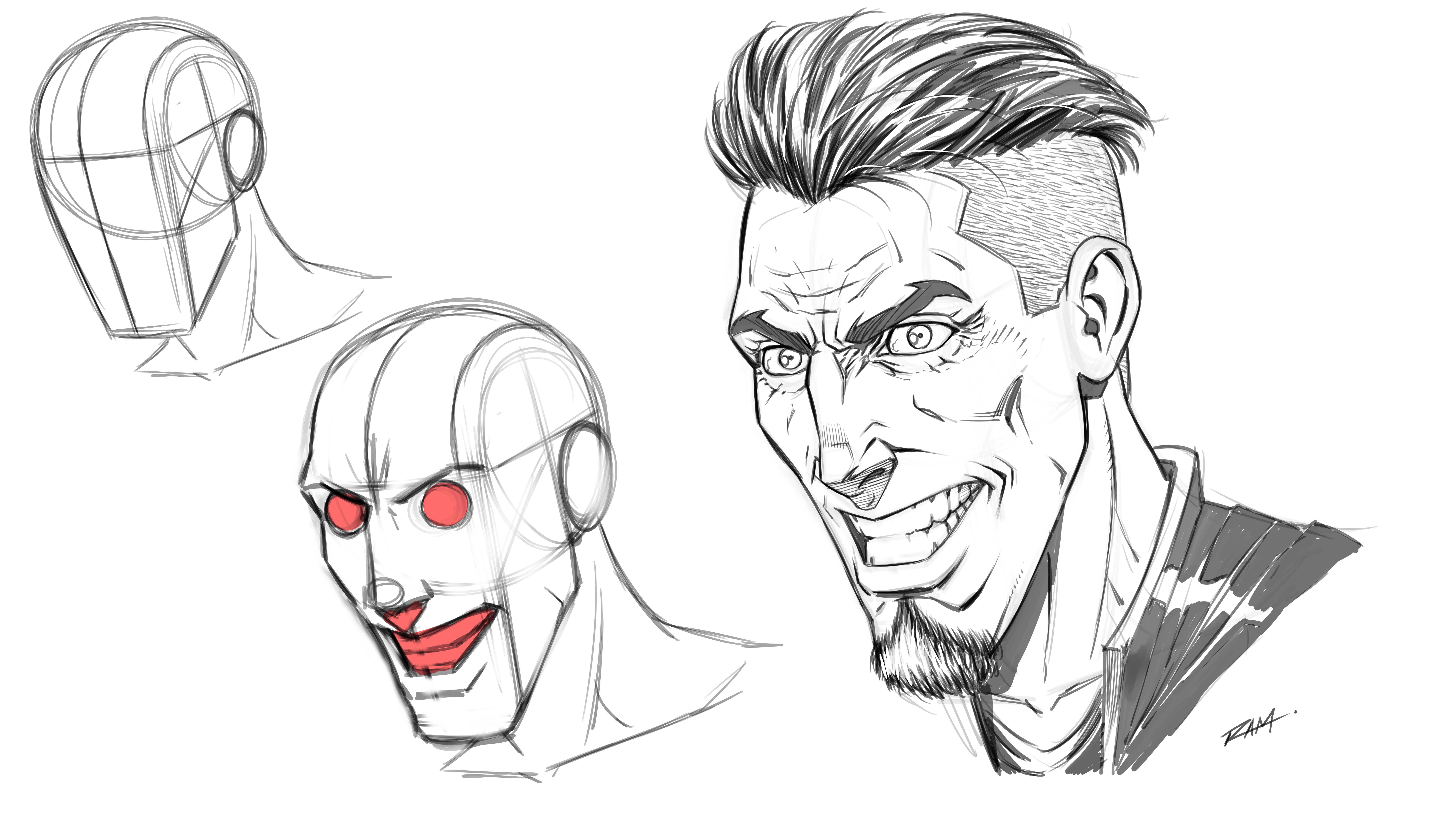
4. Basic Structure of the Head: Okay, so now I'm
going to break one of these down for you step by step, and hopefully this will
give you more examples of how to draw the facial anatomy in relationship to
the expression. So with this one, we're going to start with a
downward tilt to the head. You start more
spherical up here. Slice off the sides and
get this vertical line. I know it's at an angle,
but that's vertical, then horizontal, and then bring that over
for the brow line. And then for the
front of the face, I'm just going to draw in a
big plane shift like this. If you thought of the face
as one big rectangle. And so, really, you
have this temporal ridge which you generally will draw another oval around this oval and then sort of
relate that so it's not so, you know, flat to the side,
then flat to the face. You need a transition, right? So this sort of gives you that transition along
with the zygomatic bone. But again, we want to keep this super
simple for the most part. So even though the
Androumus method is very repeatable and very
structurally sound, it's just a great series of tasks there to get
to what you need, we want something
relatively simple here for this exercise today. So it tends to lead to a little bit more caricaturized drawing if you do this anyway. And this is even pretty
structured, really. I mean, you can definitely use less than this if you want. And then the ever
important center line, I find that to be important and almost if not almost
everything, everything I draw. So we're also going to do a little bit of relationship
to the neck just because it gives us that sort
of foundational or relationship to what the head is actually doing versus a
blank bit of canvas there. No, just something like
that. Doesn't need to be much. So there we go. So there's our base structure. Yours doesn't have
to look like this. You can try very
different proportions if you want. It's
totally up to you. I just, you know, sort of fits what I'm getting
ready to go for. So my goal for this
one is to show you sort of a villainous, maniacal smile, sort of
the madman type character. Okay, so now to quickly drop
in a bit of this expression. And so for this, I want
to get the eyebrows, in a downward compressed
motion or expression, I don't know about a motion, I guess if you got
really quick eyebrows. And so some of those wrinkles there for the eyes, as
I mentioned before, I generally like to
start with spherical, you know, circles,
spherical circles. Just place the eyeballs. Always helps me to
feel out that area. And then I'm going to give
this dastardly character, like, the bigger hook nose. Remember, you can, a lot
of time just start with that shape at the bottom and
then build out from there. I usually find that to be
easier. So maybe try that. Uh, but there's also
a lot to be said for getting the mouth
in rather quickly, as well, because a lot's going to sort of happen from this. So remember what I said
about the biggest part of an expression being kind of
paramount in the design. Well, if they've got, like,
a big joker like smile, then it makes sense
that you want to get that in pretty early on. I mean, there's
always a relationship of the nose and the top lip. Like, the distance
is pretty important. As soon as you get that wrong, it generally will look odd. But it's more or less, I think that the relationship
of, in this case, that structure will need to
be adjusted because, again, if we talk about that pivot or that hinge beneath the ear
and this lower jaw dropping, it generally isn't
going to drop like this unless you've got
a serious underbite. Some characters will. I guess that's going to look
pretty cool, right? Or to consider that most of the time it's going to do a little bit more of that, which means this
bottom chin area, I'll just represent
it with an oval here. Isn't probably going to
line up to the center line. It's probably going
to need to tuck back at least a little bit. So you'll see as we refine that, that's something that
has to happen there. So I'm going to draw a little bit of the face
because what it does, it allows me to check sort of
where I'm going with this. So again, if I went off just
that previous structure, I would continue
with this sort of rectangular straight
alignment going downward, sort of like legos,
like one piece, another piece, another piece. And I would end up with
a chin way out to here. So that's not what I want. I have to remember
to push this back. So again, thinking
about the mouth as you do this is
part of that process. Like, you just have to
kind of build it all out. And something I always tell people is if you can think of all of this, like clay, it sort of opens up your mind to this being a
malleable surface, something that you can push and pull and poke and prod
and play around with. And because of that, there's all sorts of cool possibilities. But if you go into with too much of a
rigid way of thinking, then, you know, less
options, right? Less potential possibilities and too much right and
wrong thinking can slow up your creativity. So I'm going to bring
that chan back. I probably need to bring
it back a little bit more, but now you can see
that center line. You should end up with, I guess, especially at an
angle view like this, there should be more
of a narrow space on one side and more
distance on the other to show that we are at an angle to the
view of this character. So I think that's
starting to work. I think that once
we place the eyes, you know, the eyelids,
it'll make more sense. So I think this is going
in the right direction. I like to put a little oval
for the tip of the nose. And I'll probably even
keep pushing this back because you
can probably notice I'm trying to do is find out how far I can
really push this back. And sometimes it's
a matter, too, of shifting even what you started on one side of
past the center line. Kind of like what I just
mentioned with the chin, but I'm seeing it right here. So I'm going to edit that just because I want you to know, I want this to come out nice so that you understand that you can really zero in on certain elements of a face
and get more out of it. So I think that part of the
problem here is that I have that circle too
much in plain view. In fact, a lot of times we might need to move these circles around just a little bit.
So let me show you that. Makes a big difference on the overall expression because eyes are we're used
to looking at eyes. And so it can look odd
if you put an eye. So on an angle view, if you put an eye way out here, and then you show the full
encompassing area of the eye, the eyelids, it looks
kind of odd, right? Something almost
tells us, Won't that be nestled into that eye
cavity a little more? So I think that's
where I went wrong. And so, again, I just want to
correct that as we go here. So hopefully, see what I mean? I don't want to give
you bad examples. And likewise, we take all this
cheekbone and everything. We kind of push that
back in further. Even if it is a person that has pretty defined cheekbones. So, again, a lot of times
it's being aware of how much you see from the
point of the center, the medial line of
the head outward. I think that's going to
work a little bit better. I don't know if you can
see the difference there, but I feel like I
can see it there. So let's try that. Because a lot of
times it's getting the right start to these
basic concepts and shapes, and then all the other
details work out better. And I think that's why it
takes a lot of practice, a lot of trial and error before you really start
to pick up on this. And that's why certain artists, it just looks like
their characters look so much more believable, but it's actually small
little shifts like that that can make a pretty
significant difference. So there we go. So
now we have a bit more the base shapes in place. And again, I could
keep maneuvering this. I feel like I can
nudge the shape of the teeth back just
a little bit more. You see, I'm constantly
playing with just the spot or not just spot, this basic setup right here. And as I get more and
more confident with it, I can get rid of some of these construction lines that sort of aren't as necessary
at this point. Also, you got this
masseter muscle, so you can bring out that and the jaw right there if you want. And you also get well, I'll show you in
the next part where we draw the actual skin folds and more of the facial anatomy
as it relates to this. So the main part of this one
is just really zero in on the use of these basic
shapes as building blocks. So again, circles for the eyes, and then really kind of
pinpoint the placement of them, I would go for the shadow under the nose versus
the nose shape. I mean, you can think
of the nose shape as a big triangle, but I think it's easier
just to do the shadow underneath and then
the overall shape of the opening of the mouth. Not even the teeth. You know, the teeth is the next stage. And there's lots of
variation there. You can do upper teeth,
just lower teeth. We're going to do a
closed teeth grin, but there's, obviously a
lot of variation there. But just it shapes like
that is sort of something that you can simplify in
your mind and really, you know, really zero
in on, basically. So we're going to stop
here, get this right, play around with
your adjustments, take your time with it.
Again, any questions? Let me know. And then let's
head over to the next lesson, and I'll show you how to
refine the anatomy of this space over top of the structure that
we've built thus far. So with that, let's move
on to the next lesson.
5. Refining the Expression: And welcome back. So
now we're going to do is focus on redrawing
through this. So all the structure
is in place. We've got lots of
building blocks, initial layout to work with. And so I can soft eraser this. I'm just using a
big soft airbrush to lightly push back those lines just like I would with a
needed eraser on paper. And so now I want to
draw through this, and I'm going to think more about things like, rope drawing. I guess it could
almost be thought of connecting the
dots a little bit. But you really want to get used to looking through and
past the structure. So I talk about this one a lot. I think it's really
important that structure serves
a lot of purpose, and it can help us fix things symmetrically across
the center line of the face. It can help us develop
proportions and really ease our process
for drawing by, again, doing a lot of
the preliminary work. Just like if you were
going to build a house, you would have to get all
your structure right, and then you can put
over the nice facade and the detail work
and all that stuff. But that being said with art, you have to look through it
as well because you're trying to hopefully capture something
that is interesting, alive, unique, all these things. And so it's not just
tracing a previous step. If you get too much in
that way of thinking, you'll sort of stifle I
think the creativity. At least I feel that way. So I'm looking for wrinkles
and organic folds. Now, I want to also
think about what I call anchor points or in my
mind, I call anchor points. So the side of the nose
and the side of the mouth, for instance, the nostrils
can move a little bit. The side of the mouth can
definitely pull back with, you know, that big
wide ear to ear grin. Well, but the skin in
between those two points is sort of just being strung along, right? So it's being pulled. So to me, the anchor points, and again, that's my own term. I don't know if that's the way you'd really refer to it as, but it's the way I think about it's the side of the nose,
the side of the mouth, and then I just drape the skin and the wrinkle
from those two points, and then I play around
with variations of that. And so more wrinkles, more tension to those areas for somebody doing a
more extreme smile. And also, if I want
to incorporate more of a stylistic
version of that, I might add more
wrinkles based on that. I generally add more wrinkles in these areas and more shadows. Or villainous characters, I think it sort of
adds to the flavor. And so more detail to me
in the face can you know, for one, it can signify
age, obviously, but it can also be a really
neat way to zero in on certain elements of evil gran or, you know, villainous face. So you'll see I'll try to
really push that as I go. And so now for the
eyes, and with this, I'm basically thinking
about wrapping the eyelids around that sphere that I've already established. But the other thing to consider here is we've got
the expression. So how wide eyed
is the expression. But we also need to
consider that most of the expression comes
from the top eyelid. So it's about 80 to 90% of the movement comes
from the top eyelid, but we still have ten to 20%
of the bottom eyelid that adds to things like squinting,
droopy, tired expressions. So there is some range of motion there that we
still need to consider. Again, in cartooning, or comic
work or any storytelling, I feel like I can take creative liberties with those concepts. So I think of, like, animated
series when I was a kid, and then I still watch
it with my son today. But, you know, they really
animate the eyes, right. Sometimes they'll even change the entire shape of the eyes. Now, I know that's a bit much
for what we're doing here, especially if you're
gravitating towards, like, 90 style comics. But I think it's important to say that you can play around
with any of these variables. You know, it's up to you. You know, you're the
creative genius here. You can play around
with all these things. But there are certain concepts where if you
take them too far, you might look at it and go, Oh, that just doesn't feel right, doesn't look believable, even though we're drawing
things that are just not real, you know, believable,
ultimately. But yeah, so just, you
know, keep that in mind. But again, I typically don't move the bottom
eyelid nearly as much. Uh, that being said, too,
you can see that I put the irises where
they were right in the middle to add to that
kind of crazy expression. And if you wanted to
push that further, you could just raise
the top eyelids even more or shrink down the irises. A lot of styles will do that
and then make sure to have a nice amount of white
above and below the iris. That just reinforces that
bit of crazy expression. And likewise, the
fear expression. That's really, I think,
what conveys a sense of a madness or craziness that they have a look
of fear in their eyes, but they're smiling and
their eyebrows are down. So it's usually the
mix of emotions, and that's why we
look at it like, Wow, this person's hard to read, and they might just be
a little bit psychotic. Why are they showing
these various emotions versus the very easily
discernible ones of, like, a pleasant smile
and a happy grin. So anyways, that's at least
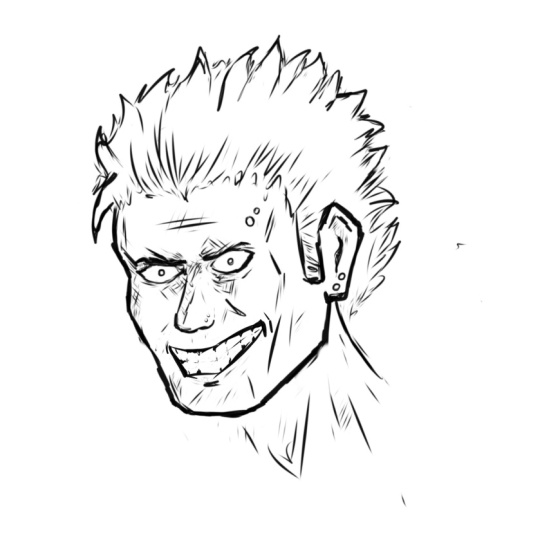
my interpretation of it. So here I'm drawing
some spiky hair. I actually don't
go with this one, and I'll pull the camera back
here in a second for you. But I was testing out this
particular hairstyle. I was trying to reinforce this kind of crazy look
with a messy hairstyle. So that's another thing that
you can sort of think about. Like, what if the clothes? What if the hair matches the
emotion and expression of, you know, bit psychotic. So maybe they don't brush their hair as much or, you know, they've been up all night
devising their evil plan, so they have messy
hair. I don't know. You could think of any
number of narratives there, but I ultimately don't end up going with
this particular one, but I like to play around with
the different hairstyles, but I do like to think about the character's narrative
as I do this. So, you know, it's
just like if you're thinking of the joker
as you draw him, then you're going to
have a very distinct set of ideas to work with. Well, since we're drawing
our own character, which can be joker like or, you know, villainous
characters of a certain type. So I mean, I imagine
if you say the skinny, psychotic villain, you could apply that to so many
different stories, right, not just the joker, obviously, but And then from there, though, you can spin that and say, Okay, do I want my character to look more like something
out of arcane? Do I want it to have this
particular style or, you know, come from
this type of narrative? And so it just gives you that
sort of base to work with. And then you pull it and stretch it a
bit further and say, Okay, but my version of this guy or something
similar is this. And when you start to
do that, it's like you get a point of reference, which is super important. But then you take it in your own direction and you come up with something
that's a little more unique. And that's really what
leads you to be more creative so that you start to see all these ideas around you, which are really just
rehashed ideas anyways. It's just some are more
popular than others. So we tend to look around us and go, Well, I can't use that. That's a really
iconic popular thing. But if you look far enough
back, you know, historically, you'll see that
they're just ideas that have been
sort of, you know, reutilized and revamped and uh, modified, things like that. But even the messy hair,
you know, back to that, I tried to make it a
little bit spiky to go with the sharp angles of
villainous character. And here I'm just sort of reiterating or showing you that, hey, you got the
downward push in between the eyebrows
for that angry look. You got the pinch points or anchor points of the side
of the nose, the mouth. I even relates down to the chin, and then the positioning of
the irises in relationship to the big whites of the
eyes. That's really it. So hopefully this one shows you how to refine the character. We'll move on to the
next lesson where I will basically show
you how to add one more level of refinement and hopefully like
the end result. So with that, let's
move forward.
6. Refining the Line Work: And so now we're going
to refine this guy. And so at this
stage of the work, I'm just thinking about
things like line weight. Here I'm going to
start fixing things. I kind of pointing out
that eye is a little too big and a little too
forward in the eye cavity. Now, I got to admit that when you're drawing
somebody that looks crazy, that's another thing you
can play around with. You could intentionally
make them less symmetrical. So we typically associate
symmetry with beauty. Kind of sad when
you think about it. It's not really fair
that that means beauty. You know, if you're an
unsymmetrical person, and we all really are. So don't feel bad. I'm
definitely very asymmetrical. And so you do want to fix
things, though, that stand out. Like, you don't want it
to be a bad focal point. But that means that, again, you can use it as an
intentional focal point. Uh, for kind of the
crazy scientists, the mad scientists, I think, then one big eye might
actually kind of work, you know, especially if
you put what is that? The monocular molecule, I
don't know how you say it, the single eyeglass
piece and the other eye, then it makes even more sense. But, you know, you do
fix certain things. That's why I flipped
the work here, and that's why I wanted
to show you that. Uh, you got to be careful of not getting too hyper
focused on that, though. I think that sometimes
that can also negatively impact the creativity.
So be careful of that. It's like you want
to fix things, but nothing perfect nothing's perfect, including real humans. You know, you just
kind of have to find where that level
and limit is for you. But you generally know if it's constantly pulling you
out of your creative zone. Like, just sometimes
it's almost, I think, preferable not to fix too much at that point
and just keep creating. You can always go back and
analyze it later, I guess. So, the other thing I
tend to think about here, hopefully see it in the
eyes is I'm also trying to incorporate a variation
of big lines, shapes of shadows,
thicker lines, and smaller tiny details so that essentially I get
this feeling of contrast. That's really what
I'm looking for. So it may look like
I'm just, you know, adding wrinkles for the
sake of adding wrinkles. But if you notice
with the teeth, even how I leave less details
in the front of the teeth, almost, you know,
no, no details. I'm purposely really doing that. I mean, I don't know if it's implemented in just
the right way, but there is intention there. I do that throughout the piece, where to me, it does a couple
of things, one of which, again, back to focal points, it draws your eye to areas
I'm trying to point out. Also, by the contrast or
detail here but not here, you're sort of emulating
where light would be. So a good colorist will go back through and really
take advantage of that. And it's a sense of scale. So if I draw too many lines that are just all the same
thickness everywhere, the artwork sort of
flattens out a bit more. But if I add some thicker
lines and a bunch of tinier lines here and some that fade off and some
that are connected, I'm essentially controlling few different
things as I render. And I like that sense of
variation in the work. So, likewise, just applying
different textures. So one of the things that
I was looking forward to doing with the hair
of this character is sort of getting in some of those wavy strands in
the top bit of hair, which I can do a
lot of those little back and forth zig zag patterns and see like
patterns for the highlights. But then also when I do
the side of the head, you'll see I just use a
little bit of stippling. And then I use even a little bit different texture for
the scruff on the chin. So to me, all those
areas are options to stylize and change it up a bit so that when somebody
looks at the piece, there's more than one
thing to appreciate. And there's a sort of delineation that you
do by doing that, and it's something
that you look for when you go to ink
somebody else's work is you look for those
opportunities to delineate things because
what it ultimately does, it allows the viewer
to see it and read things independently with
all of it, you know, not just kind of
blobbing together and, you know, not being
distinguishable from one particular
aspect to another. So I know that's a bit off
from actual expressions, but since we're talking
about rendering this particular expression, I figured I would
throw that in there. And so just adding
a little bit of the clothing design just to,
you know, again, I guess, back to the delineation, just to give a little
bit more separation and add a little bit more, you know, character
element to this piece. But that's really it. And so
what I would like to do is, you know, obviously
see your work. If you got any
questions, let me know. And also, you know, what other expressions and character concepts would
you like to cover? Was this informative for you in a way that hopefully
my goal is always to help you push the
barriers of where you're at and create something new, hopefully inspire you, motivate
you, all that good stuff? Uh, but, you know, let me know. Like, are there certain archetypes that
you'd like to see? Should I cover all
the main archetypes? I kind of think I should.
I think it would be fun to do and something
we can do ongoing. But let me know. So, as always, I appreciate your continued
support of my lessons. Good luck with art,
and bye for now.
 Robert Marzullo, Online instructor of Figure Drawing and Comic Art