Transcripts
1. Introduction: This class is for anyone
who feels insecure, has self-doubt, struggles
to believe in themselves, has a tendency to feel
shy all the time. Awesome times is
anxious at times, it's socially awkward, is embarrassed of parts
of themselves. For people who want to feel more confident in life and
comfortable with who they are. Hello, my name is
Emma Jane points out, and I'm a self-esteem mentor. In the past three years, I've been on a huge
self-discovery journey about my self-esteem. I used to be somebody who
was filled with jealousy. I was very angry. I was always in a mood. I was always unhappy. And it was only when I
realized that actually, it wasn't the things that were around me that would
make me unhappy. I was making myself unhappy. I've been on an
absolutely huge mission, reading all the books there
is to know and self-esteem. And I've used this expertise to build a brand called
the girl you need, which focuses on supporting people's self-esteem and helping you feel more
comfortable being you. I've got a blog,
I've got a podcast, I have a YouTube channel
and a mainland list. I do public speaking events. I've done workshops for charities on International
Women's Day. I think you're going to really appreciate and
value what I've got to share with you to help you
improve your self-esteem. I am living proof, literally live in
proof that this can be improved and I know how to do it and I'm going to
share that with you. This class is the
first introduction to improving your self-esteem. So we're going to cover where to self-esteem come from because it's very important
for you to know where it comes from and
where it's developed, and where does yours come from and where does your
husband to valid, we're going to explore your own personal story
to understand what you struggle with where
those situations are that you've got
heightened low self-esteem. You're going to understand what your deep rooted belief
is because that's very, very important to
understand what the core low self-esteem
belief that you have is an, I'm gonna give you a tool to get into that core belief and start challenging
those situations that you feel insecure about. Change your thought process and change that roots of belief and ultimately change who you are and make you feel
better being yourself. We've got a great project
at the end of it, and I'm gonna give you your own, you can go get your own
personal growth journey that you can start ticking off and facing your fears and getting to be the person
that you want to bake. This is a great class
for some deep work. And at the end you're going to feel lighter
and brighter and you're going to feel much more
confident and know what you actually need to do to
grow your self-esteem. So look forward to having you there and see you in the class.
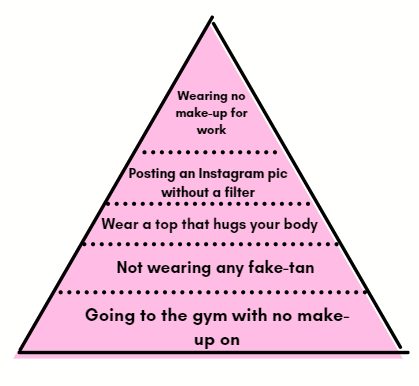
2. Creating Your Self-Esteem Tool: So in this class, you will be creating a self-esteem pyramids
for your project. It's a tool that you can draw to include the difficult areas
that you want to overcome to improve your low self-esteem
or the way it works is you have the easiest
things at the bottom and then go up to the
more difficult things that you're going
to struggle with to overcome the
self-esteem pyramids is something that I have used in
my own self-esteem journey. And it's made a massive
difference in me focus in on the
areas that I really struggle with when it comes
to my low self-esteem. Every self-esteem pyramids is
unique to that individual. So it's something
completely unique to you. And once you've got the tools, I want you to know work
throughout this class. You'll be able to go
through the areas that you should go ahead
and start taking them off. The best way to overcome
your fears is to face them. You've got to do these things. You've got to push
through them and you will get a real sense
of achievement by taking each milestone
off the triangle as you go through your growth
and personal development. And you'll grow your self-esteem because you'll show itself. Actually, I can do that
after you've done it, I want you to send your picture onto the
project work, resource. Share in our community
of women and men who are overcoming or low self-esteem of the triangles
that we don't like. Sharing is caring. And once we start to see
each other's triangles, we will be able to
see that actually, we've all got these things. We've all got these will reason. We've all got these
little Nichols. And I want you to see you
achieving your triangle. You get into the top if you
milestones and your boss in your self-esteem and growing into the
best version of you, feeling comfortable
in who you are. That is what this is all about. Feeling comfortable
in here you also, you can make the tool as
creative and flowery and lovely as possible as you want it to be really, really helpful tool. You are going to love it. And as I say, you can make
it as creative as you want. It's yours, it's
private, it's personal. You can share it, you can do
whatever you want with it. But it's going to
take you through your self-esteem journey.
3. What is Low Self-Esteem: Welcome to Lesson one of your improving
self-esteem class. In this lesson we are
going to talk about what is low self-esteem. Because it's really
important that you have an
understanding of what it actually is in order to then improve and where
can it for yourself? So hopefully by now you
will have done your y. So this is page one
of your workbook and this is why do
you want to improve your self-esteem if you haven't done it yet and
not to worry because you could maybe do it after
less than one once you have a deeper understanding of
what low self-esteem is. So self-esteem is essentially how much you like your self, if the opinion, the opinion that you have of
your overall self. So it's not
necessarily if you're confident person or not because
that could be confidence, can be quite aligned
to specific things. So you might be a confident, well now, you might be
a competent speaker. You might be confident
in lots of areas of your life, but overall,
fundamentally, you're quite a shy person
underneath it all because actually you have a low
opinion of yourself. Don't be fooled
because just because somebody seems
really confident and high flyer and really doing
well in their career doesn't necessarily mean
that they've got high self-esteem as well. What you might find is
that somebody like that is that coping
mechanism to boost their self-esteem
is by achieving good life because it makes them feel better about themselves. Self-esteem is something that comes from our early childhood. So most of the time, it's something that we
develop through our youth. Why, either in school or through our friends and family or situations that have
happened to us. And that's where it comes from. And then we develop a rooted belief which we
touch upon in a later class that we then reaffirm
and confirmed to ourselves throughout
our adult life. And in order to survive. With our self-esteem, we will
develop coping mechanisms to be able to survive if
we have low self-esteem. So what does low
self-esteem look like? So low self-esteem can look like something different
to different people. So low self-esteem could be someone who doesn't
look after themselves, who doesn't really make
much of an effort, who doesn't really
care too much. Or it could be somebody who is the life and
soul of the party, drinks alcohol, loves going out to cover up the fact that actually
they're quite sharing on the inside. Someone who has low
self-esteem would speak to themselves in
quite a negative self-talk. Whereas somebody who has high self-esteem is quite
content with themselves, doesn't really care too much what other people
think about them. Doesn't really need approval
from anybody else and doesn't need to achieve in order to feel good
about themselves. They're quite content
and where they are. And then language that they
use to talk to themselves is a very positive self-belief and self-talk where
there's low self-esteem, you'd find that you've probably got quite a lot of self-doubt. It might develop it. You might have anxiety. And you could have, you will have probably
quite a negative self-talk. In your workbook. You will have on page three, there will be a
scale of one to ten. And on this task, what I want you to do is going
off what I've just said. What I've just said, just
circle where you think you are on the
self-esteem scale. Ten, being, I am
super confident, I never feel uncomfortable
around anybody. I don't really need
assurance from one and I'm quite secure in yourself
and don't get jealous. I don't have negative
feelings when I'm around other people or one being, I am very insecure,
I am very shy. I'm highly anxious,
and I am always, always mindful of what
other people say. If me and I don't
speak up a lot out of fear of what people might think. So take some time, take some time to
think about that. Give yourself a score, then write down
what your score is. Then the next part of that
workbook is for you to use in the box that you need to decide
on whether you are never, sometimes, often, or always. So I've just given a couple of examples there in your workbook. And now I get jealous
of other women. If you're a man watching
this, that could be man. Do you never, sometimes,
often or always. Remember, nobody is
going to see this. This is purely your workbook. This is all about you
doing the deep work required to build on
your self-esteem. I feel conscious, self-conscious
and social settings. This could be when you're
out having a meal. If people talked, if you're the conversation is on you and you're
talking about you, do you feel self-conscious? Do you have different
body emotions? Do you want to change
the subject so you're talking about and reflect
it onto other people. Do you like to speak up? Do you mind presenting how do you feel in
social settings? Excluding alcohol? I'm afraid to speak up in work or class depends
on how old you are. I make fun of other people. So that might be in a jokey way. So do you make, make fun of other people
because you're just so that when you've got low self-esteem is
quite a common trait. You're make jokes for the
people in adjusts the way to deflect the attention from you because you don't want the
attention to be on you. You judge other people, and that's fine if you do, because we all do, but how much do you judge other people? You put yourself down? And be honest. I will not go out with my
house without makeup on. That's specifically for females. And I spent a lot of time worrying about what I look like. Then once you've done that, I want you to answer. How's your answer surprised you? And why in your
workbook on page three? I'll leave you to do
that and then I will see you in the next lesson.
4. Your Background and Environment: Welcome to lesson two off you're improving your
self-esteem class. In today's lesson, we
are gonna be talking about your background
and joy environments because it's really important to understand where your low
self-esteem has come from, and that is what this
class aims to do. So we're going to break it off. We're going to talk about your early childhood
experience first, and then we're gonna go
through the environment. We're going to really
get into it for you so that you can start
to understand it. What happens is we develop our low self-esteem from
our childhood experiences. We are all so very different. Every single one of us has a completely different
upbringing family. We live in a different area. Some of us have siblings, some of us have a bigger
family, a smaller families. Some of us have more money. Some of us are speaking
a different language. We're all very different. And with that comes a different way in which
we fit into society. So between the ages of 315, we will develop our self-esteem. If you develop low self-esteem, you will carry that through with you until your adulthood. And you will develop coping mechanisms in order
to be able to survive. So let me give you my example. My example is that I moved from Liverpool to a small
village in Russia. At the time, I was very,
very broad skulls. And this impacted
on me and my high school years because I was very different to
everybody else. I sounded very different. I was treated differently
by some of the classes, my colleagues and my teachers, and that impacted on
my low self-esteem. I became really, really quiet and I didn't want
to speak on that, then made me into being a joker. So I was loud, I was cocky, I was a joker because I knew
that if I didn't do that, then I wouldn't have
been able to survive. And I took those survival
techniques through to my adult hoards until
I realized that I had low self-esteem
once I was there. So these are some examples to just give you a little
bit of a flavor of some ideas of young kids and the type of backgrounds
that they have had. So have a think and see if you can relate
to any of these. Meet Eddie. Eddie has a strict family who
believes that you have to have the highest grades in
order for them to feel proud. His brother was a star pupil, and so Eddie has to
follow or meet Sarah. Sarah is slightly on the plus side compared
to her classmates. Hey, mom is always calling
a choppy and talents. She needs to go on a diet. She always talks the fridge
or with Weight Watchers food, especially for Sarah to
help her lose her weight. Or meet Jane. Jane is moved to
the UK from Germany and is struggling to
fit in at school. Jane doesn't understand the
jokes or the slung from the other kids and feels a
bit of an outcast in school. Jane gets called
German nicknames from the other
kids in her class. Meet Kirsty case, it
goes to a good school, but her family has no money. People sometimes come
to work and feet designer gear and her
friends laugh at their case. He doesn't get to go on school trips because if
family can afford it, so she misses out
all of the time. To any of these kids relate
to your childhood story. Spend a couple of minutes using your workbook on page four and write down any
memories you have of your youth and how
this has impacted you. So now let's talk about
your environment. Your early child create
your internal belief of self-esteem and
your environment, create your external
belief of self-esteem. Self-esteem is an internal force and this is built
up from childhood. You develop your self-esteem and then you carry
this with you. And then you have all
the external forces, which is your environment as you grow up and
as you get older, that also impacts on
your self-esteem. So the main external forces you have will be social media, friends and family, materialistic
pressure and your job. Let's just talk a little
bit about social media. So social media is a
huge part of our lives. That is just something
that is never going away. It's possible this
is where we are. Social media is
something that we spend our time following all
sorts of different people. And we naturally, naturally compare
ourselves to other people. And if you have low self-esteem, you will have a warped
view of what you look like because you've got
a low value of yourself. When you're scrolling
through social media, I say Instagram, for example. You will be comparing yourself with people
on social media. And against a warped view that you might have
about yourself. So I will think I'm very ugly. So I could pick scrolling
through Instagram and all the people that I follow,
follow Kim Kardashian. For example, I will look
in Kardashian and compare myself subconsciously
without realizing it and say to myself, I wish I looked like
that, God, I'm so ugly. God, I wish I had a body that's constantly reinforcing
that negative self-talk. And it's confirming
the low self-esteem that I've already
got about myself. Our brains are wired
to think negatively. So we think negatively
quite a lot of the time. So we have what's called
unhelpful mental habits. And one of the unhelpful
mental habits out of the seven is compared and
despair in comparing the spirit is when
you constantly compare yourself
to other people. It's a common trait of somebody with low self-esteem
and it's something that you probably
do with everybody that you meet if you
have low self-esteem and social media highlights that help unhelpful mental habit and it's something that will reinforce your low self-esteem. Your friends and
family will impact on your self-esteem if
they make fun of you, if they don't support you, if they put you down. If when you try to do something
that is more of yourself, if you've got low self-esteem, if always hidden hero, and then you try
to be self like, for example, grow a blog. And my friends and family might laugh at me
and think that that's a silly idea and that can impact on my self-esteem
and confidence. Materialistic pressures. We live in a flax society. Nowadays, everybody cares
about what they look like, what car they drive, what
the house looks like. And it's called a flex society. And that can have
a real pressure on your self-esteem
and self-worth. If you're not in a
position to match up to the standards of society that is putting honors at the moment. Then finally your job. Again, there's
pressure for us to have a six-figure business, a million trillion
dollar pound business. Bse, only work for
hours in the day. And that can cause pressure
on your self-esteem if you are working like
a normal person, 40-hour weeks just to get by, which is probably 95%
of the population. Yet that is not
something that we see on social media that can impact
on your low self-esteem. If what you see externally is
a constant feed of what we should be doing with
our life compared to what you are doing
that will put you down. So what I want you to do is on your page four
of your workbook, if you write down the five people that you
spend your time with. Because the people that you
spend your most time with you because you are, They say that you're
an average of the five people that you
spend your most time, we'd see me write down
the five people and just write down whether
they bring you up or whether they
bring you down. And just have a little bit
of a reflection on that. People that you work with might, might be in your circle, but might not necessarily be the kind of people
that boost you up. They might not be
where you want to be, so you need to have
a think about that. Family could be the same. Your friends, we outgrow people. And as you go through a
personal growth journey, what you find is
that you do want to shed some people
because they're not aligned to where you want to be and they're not
helping you or supporting you to get to
the best version of you. So take some time to do that. And then there's a takeaway task that I've put in the workbook, which is when you're scrolling
through social media right down the feelings and the thoughts that
you're having when you, the people that
you follow in and see if they're good or bad, are they, do they
make you feel good? You feel positive? Or do they make you
feel negative and just have a think about that
and reflect on that. So there's a couple of
takeaway tasks there. And if you've not had
time whilst I've been talking to go through
the workbook properly, then make sure you do that. It's really important
to the Deep Work. Put some nice music on and just have some time journaling. And I will see you back
in lesson three where we're going to
talk about what is your rooted belief
about yourself. See you there. Bye.
5. Your Deep Rooted Beliefs: Hello and welcome to lesson three of your improving
or self-esteem class. In this lesson, we're
going to find out what is your deep rooted belief and how that is impacting
on your low self-esteem. So you deep rooted
belief is essentially a core belief and a core phrases statement that
you have about yourself. That is probably a
negative statement if you've got low self-esteem. And that is the whole essence of your personality is
the middle of year. It is the essence
of who you are. If you think about an onion, you might have heard
this analogy before. But if you think about an onion, all the different layers
of an onion is u. So on the outside, you might be confident
and happy and bubbly. And if you peel
back another layer, the next layer might be you were loads of makeup and your chatty, but you do have to put
makeup in order to feel competent and peel
back on another layer. And sometimes you might
get a little bit shy. And when you speak up in
meetings and actually work, if you feel a little bit shy, peel back another layer. And actually when you go
to social situations, you do need alcohol in
order to feel confident. But you are competent and you are the life and
soul of the party. Peel back another layer. Right in the center is
your deep rooted belief. And this could, this is a
very unique statement to you. It's not something that anybody could tell you and it's
something that you have developed through
everything that we spoke about in the
previous lessons. So what I'm gonna do is
I'm gonna go back to the, back to the examples that we gave earlier on in lesson two. And I'm going to just expand on those children and explain what they are deep-rooted
belief would be. And then whilst I'm doing that, I want you to have a think
about what yours is for me to get to my
deep rooted belief taught me a little bit of time. So don't worry, don't stress. If you don't know what it is, it will it will come
as we do the work and as you begin to do your personal growth
around your self-esteem, you will realize what
your deep rooted belief. So it's important to note that you can have more
than one negative belief. So in my mind, where I am ugly
and I am unworthy, I'm ugly, and I'm on
where they were mine. Eddie. So because Eddie had
to have high grades, he became a perfectionist to ensure that everything
he did was perfect. This pushed him to achieve his grades and he's
rooted belief became, I am aware of if
I don't do well, Sarah, because Sarah was
made to feel overweight. How rooted belief was that
she was fat and ugly. Way to cope with this would
be to wear makeup Dress nice, and always wear nice clothes. Because without this,
people would see the truth that Sarah
is fat and ugly. Jane, because Jane was
left out for being German. Jane became the life
and soul of the party and made jokes
everywhere she went. This was a cover-up hair believe belief that she is a loser
and no one likes that. Kirsty because
Kirsty had no money. She became a high achiever, always working hard to get a successful job
because she didn't want people to say that she
was unlovable without it. There's a couple
of examples from the examples that I gave before. So now I want you to think about your own rooted belief and you need to
finish the statement. I am. I am. Now what you'll find is, and as I've just
mentioned there as well, that you'll have developed
coping mechanisms to cover up your deep rooted
belief because you don't want people to
realize what it is. And that is why it is
a deep-rooted belief. And that is why you've
got low self-esteem. We cover it up because we avoid situations and we
don't want people to realize that we have that rooted belief because we genuinely believe it to be true. We absolutely want
a 100% believe it. And we just can't, we just do not want anyone to
realize that that's true. We don't want people to realize
that what fat and ugly. So we cover ourselves
up with makeup. We don't want people
to think loser. So we are perfectionist and
make sure everything's right. We don't want people to think that we've got no
money and that will pour where a high achiever
and we get loads of money. So take some time, think about your rooted belief and finished the statement. I am that is on page
five of your workbook, and I will see you back
in less than four, where we will talk about what life experiences make your
rooted belief become visible.
6. What makes your Rooted Belief Visible: Welcome to lesson four of your improving your
self-esteem class. In this lesson, we are
going to dive into what life experiences make your
rooted belief become visible. So it's really important, and don't worry if you don't
quite know what you're rooted belief is
yet, it will come. And it's really important
that we start to become self-aware of ourselves
in our everyday life. Because that is when
you're going to start to understand that you've
got low self-esteem. And it's a little bit
scary because actually, when you start to do
what we're going to talk about now in this lesson. When you start to do this, you might start to think, actually, I have got
low self-esteem. And that can be a little
bit like unsettling, but do not worry because we are, the whole point of this is to
bring it up to the surface. Understand what your
self-esteem is. I'm picking to change it. Okay. So when you've
got low self-esteem, you cover it up. So like we said in
the previous lessons, you will cover up
your low self-esteem because you do not
want people to now, because the router belief
that you have is a pretty harsh, ridiculous rooted belief. So it could be something like, I am fat and ugly. No one is ugly and
no one is fat. You can't talk to
yourself like that. Or I am a loser. What horrible thing to
say about yourself? There's no such thing as
anyone being a loser. What is a loser? It's
childhood rooted beliefs because that's where
it's come from, where we've been as children. But it's embarrassing. So we actually don't want people to know this because we
are still quite childlike. Underneath all those layers, were still just a child
in the middle of it. And we don't want people
to know this about us. So we cover it up with our coping mechanisms
like we've said. So what I want, what this whole lesson is about, and you need page
six of your workbook is you need to start
writing down and becoming aware of the
situations where you feel negative or embarrassed
about yourself, or shy or self-conscious. And you need to stop picking
those situations out. Now you might already know
what some of those are. So for me it was speaking
up in a meeting and where and if you don't
know, don't worry. The way you find out is when you're out and about
I get everyday life. Just become self-aware. So start to think
about when you feel nervous or suddenly quite anxious or flustered
or hot and sweaty, or red or embarrassed
or shy or ashamed or, you know, a little bit awkward. That is what you want to
start writing down and just journal on page
six of your workbook, what was that situation? So you've gotta deal
with this point and just start to think about where you feel in those negative
feelings about yourself. So because you're scared and anxious about being
around other people, because you don't want people to realize who the true u is. Which is that I am a loser, which also isn't true, which is what we're
going to change. So just write them down. So an example is I used to feel shy in a work meeting because I was scared of speaking up. I didn't wanna be the focus of attention and say
the wrong thing. So I just didn't say
anything at all. I didn't feel good enough to be there even though it
was my job to be there. So my my deep rooted belief
is that I'm not good enough. So that is where I understood that d We typically
from that situation. So I will leave you to it. Now, if you need to come
back to the next lesson, once you understand
those situations and a little bit
better to do that. If you already know
what they all, get them down and then let's
jump into less than five, which is getting rid of your low self-esteem.
See you there.
7. Getting Rid of Your Low Self-Esteem: Welcome to lesson
five of you are improving your
self-esteem class. In this lesson, we are focusing on getting rid of
your self-esteem. How do we get rid of
your low self-esteem? Will find out in this lesson. You need page seven
of your workbook. Okay? And the way we change
your self-esteem is we start to then challenge
you're rooted belief. So this is when we know the situations where
you feel insecure in. We know what your
deep-rooted belief is. And now we're going
to challenge what? That, we're now going to challenge that
deep-rooted belief. And we're going
to say, actually, you know what, that's not
true because it's not true. You deep-rooted belief that you have is just something that you have developed over
time that is not true. And you need to start
realizing that it's not true, that you are an amazing person. You've got every reason to feel confident and you do not need to listen to that inner
negative self-talk that you have built
up over the years. So this is my favorite
lesson because this is where we
start to change it. How do we then change
your roots of belief? We use what's called
a thought record. So this is a tool that they use in cognitive behavioral therapy. And this is a tool where we will challenge what's going
on in the brain. So I want you to go to page
seven of your workbook. And we're going to go through
the columns in detail. So now what you'll find is
that I have port 1234567. I have bought an example of a situation that happened to me in there already as a reminder after the
after the lesson. So it can help you understand what you're actually supposed to put in this, in this situation. So you will do this
when ever you have one of those situations
where you feel nervous, shy, awkward, ashamed, embarrassed, anxious, any
of those negative emotions, you will use this tool
called a thought record. You have to use it as
close to the situation as possible while it's all
fresh in your memory. And it will help you to challenge and get rid
of the low self-esteem. So let's use the example that
I have put in the table. The first column
is your situation. So in your situation, you need to say what happened. Where were you,
what was going on? So my example was I
was in a bar with my boyfriend and he was talking and laughing
with a girl friend. That was the situation. Second column, on
a scale of 100%, what was your emotion? I was 85 per cent jealous
and I was 90% angry. I was filled with
jealousy and angry. Jealousy and anger. You could also put what
your body sensations. Where were you?
Nervous? We use sweaty. Where's your heart? Would
you angry with you? Read write that down. The third column
is your thoughts. So my thoughts
where she's really pretty and I don't want my boyfriend to like a
more than he likes me. I know that's a bit of
a ridiculous thought about is what happens
when you jealous. Number for what was
going on in your body? You're agitated, anxious, angry. Number column number five. What was the belief? So my belief was,
I'm not good enough. I'm not good enough.
She's better than me. I'm not good enough. Rooted belief. There's
your deep rooted belief. If you don't know
what it is yet, you'll find out in this table. Then what we do is
we do number six. So what was the evidence
to support that negative, deep-rooted belief will
actually on reflection, there is no evidence that my boyfriend links
are more than me. There isn't any. There isn't any he's talking
to I that's not evidence. He's just talking
to her. And then the important column
number seven is, what is the evidence to not support the belief that
you're not good enough? Well, actually, my boyfriend
loves me very much, is just being friendly
and he just gets on with people is just how my hand is just whispered
in me that he loves me. He's just bought me
a drink and told me that I look gorgeous. And it changes how you
think about yourself. So what you then do an
insane okay, So actually, I started off with eighty-five percent
jealousy and 90% anger, but actually now on flexion, I'm probably not that hungry. I add a little weird myself. I've challenged the
belief and actually I am good enough and
I am his girlfriend, and he's literally just
talking to someone. That is how that table works. Once you start to practice it, you will realize that
you can do this for any situation that
makes you unhappy. And it will help to understand
your thoughts easier. It helps your concerns
what's happening. It helps you think
about things in a logical way and it will help
you challenge that belief, challenges situation and
think logically and think, actually, I've got no reason
to feel like this here. This is a little bit silly. Not that anything that
you think is silly, but it's about was
challenging it. So that thought record is something that you
can continue to use. So I've given you a little
bit of a table there and obviously you can draw that off. You can make a new one. You can generally in
your journal all of the time and just
keep on using it. That is a very, very good
tool that you can continue to take home with you
after this class. You can take that with you
for the rest of your life to begin to work on
your self-esteem. That is what we do to get
rid of your self-esteem. So I will leave
that table with you and look forward to seeing
you in lesson number six, the final lesson before
we get to your project, which is where you create your new identity.
See you there.
8. Your Identity: Welcome to lesson Number six of your improving your
self-esteem class. In this lesson, we are going
to create your new identity. I love this lesson. This is a great thing
to do and it's really, really important and useful to spend some time
creating your identity. So you will need workbook
pages 89 for this one. Your identity is a
really important part of your self-esteem. So you might have
heard the phrase, what you think you become, the language that you say
to yourself and what you tell yourself who you are
is who you will become. So if you tell yourself
you're shy, you will be shy. If you tell yourself you're
insecure and jealous, you will be insecure
and jealous. It's really important
to understand the words and the
language that you use to describe yourself. If you've got low self-esteem, you will probably have
negative self-talk. You will put
yourself down a lot. You would tell yourself
you can't do this. You will have low self doubt. You will be anxious
a lot of the time because you just don't speak
to yourself in a kind way. You'll be a bully, T-cells. So you could be
someone who could tell yourself the way that
you can't do this. No one wants to listen to you, et cetera, et cetera.
I've been there. I still struggle with this. I completely know how it feels, but it's rarely
important through the thought record that we went through in the
previous lesson. To start to challenge
and turn the way you think about yourself and the way you talk to yourself. So what I want you to do
is create a new identity. So in pages 89, you'll see that you
can create and draw. I want you to spend some
time draw any new self, your alter-ego, celebrity and
really get into alter-ego. Some celebrities all
have alter egos. Be on-site. Sasha Fierce,
M&M, Marshall mothers. There's lots of celebrities have this alter ego that they
step into it as like their presence to
be the person that they need to be in
order to do their, their music business,
for example. But actually, you
can do that as well. So I doesn't have to be
human, doesn't have to be. It can be whatever
you want it to be. So mine, I call mine Ty grass. And she was a red headed, fierce leopard printed,
confident, sassy woman. Sometimes I'll still say to myself when I'm
walking into work, I am tiger yesterday, I've got no time for rubbish basically like I have I'm going to own the day. I'm not doubting myself. I'm going to feel competent
because I'm talking about like, it's so fun. You can literally create
wherever you want to create and just spend some time put some gorgeous meditation music on and just really
spend some time I draw and hair color red. Share with me what you
alter ego looks like. You don't even have to use
a stencil on the workbook. You can do a completely
brand new page. This isn't even your project. This is just an amazing fun
way to create your identity. You can literally change
your identity over night. So prime example, listened to my episode 11 of
the podcast scale. You need Becky alanine. She talks about she is a woman who has got a
visible disability. She moved schools
because she was being bullied and she went to a second school and
she was like Genoa, I am changing overnight. I am not taking normal
grief from anyone. I'm standing up for myself and I'm going to be a boss babe. And that is exactly
what she did. You can literally change
who you are over night. Tony Robbins talks
about all the time. If I gave you a million pounds, could you be a different
person tomorrow? Could you stop being anxious? Yes. Could you be happy? Yes. Like, you can change your emotions and who
you are in a snapshot. And it's really good to get into that habit of doing that. So you don't have to
be the shy person. You don't have to
be no confidence. Yes, it'll be scary if you
find it scary to speak up in a presentation or
to speak up in wag, its gonna be scary to
suddenly start doing that, but you are tigress, so yes, you can do that. If you get nervous and you
got a bit flaky, it's fine. It's absolutely fine because
that is what life is. We're all nervous at
the end of the day, no one is really bothered
about what you sound like if everyone is in
the road heads anyway, so you do not need to worry. Okay? So it's all about creating the new year with who you want to bait and go get it.
9. Recap Lesson: Congratulations,
you have completed your improving your
self-esteem class. I hope you found it a benefit. And here we are going do a recap of what
you have learned. So self-esteem is developed in early childhood through
life situations. And hopefully by now, you have a deep understanding of where your low
self-esteem comes from is the overall opinion
you have of yourself. And if you have low self-esteem, this is a negative
overall opinion. The core essence of you. If you have low self-esteem, you develop coping ways to hide it because you don't
want people to see you. You think you really are. For example, the I'm a loser. You now know what your
deep rooted belief is or have already
started working on overcoming that and
changing that to be a more positive and highly
self-esteem individual. You've now begun to understand
what situations meet. You feel insecure and
have low self-esteem. I need P given a tool to
challenge this belief and begin to change
how you feel about it. You've developed
your new identity, ready to take forward with you. And you've drawn your milestones
triangle of what you're, of what you will face to
increase your self-esteem. And I can't wait to see it. So hopefully that's been a really good class
and it's giving you tools and techniques to start moving forward on
your self-esteem. The biggest thing is
becoming self-aware. I now have the tools to do that, to then challenge that and
improve your rooted belief. So it's been great
teaching you if you've got any questions that you
need to know the answers to, just reach out to me
anytime on Skillshare. And I'll be sure to get back to you and I will see
you very soon. Thank you so much
for taking part. Take care. Bye.
 Emma-Jayne Punter, Helping you to improve your self-esteem