Transcripts
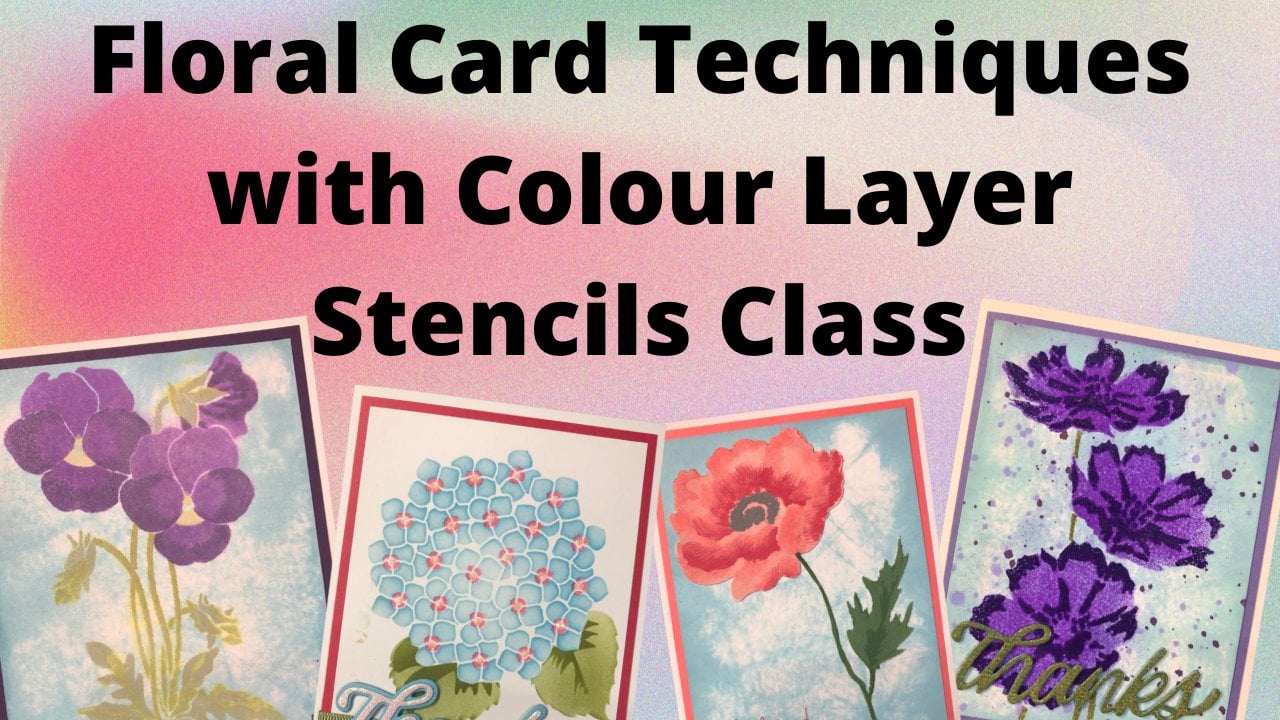
1. Floral Diecut Techniques for Cardmaking Class Introduction: Hello, I'm Cheryl, Welcome to floral die cut techniques
for card making. I absolutely love using different dyes and
die cuts on my cards. And I also love using them
with different techniques. In this class, we're
going to cover four different
techniques that you can use with your die cuts. Let's go take a look. So these are the four cars that were going to be
creating in this class. We're gonna be using
dyes that have a frame and then floral
silhouettes throughout to them. We're going to start
with something very, very simple with a
blended background, do some paper piecing and
then I'm going to show you how to color or how to, how to add glitter
and to color it. And then we're gonna
do some alcohol inks and create a stain glass look. Now, this the pictures of each
of the samples and all of the supplies used around the supply list that
comes with this class. It'll be in a PDF link
that you can download. And all of those supplies are linked to where
you can purchase them. If you know the cars
that we're creating in this class are five by seven, and it's not
necessarily an odd size to be able to find an envelope, but if you're only
doing a few cards, you just want a few envelopes. Making a custom one of your own is a great way to do that. So the last video of this class, I'm going to show
you how to create an envelope to fit your cards. And then you can customize
the paper that you use to coordinate with
whichever one of your cards. You create. Great
way to personalize, be going through each one of
these cards step-by-step. So let's go and start creating.
2. Lily of the Valley Card: Ink Blended Background: So this here is the first card that we're
going to create and we're just gonna do And really nice ink
blend, blended background. I'll show you how to
keep the green kind of within the area of the leaf. So I've got my dy here. I've got a piece of
paper that's just a little bit bigger
than that and I'm going to run it
through my machine. Now most of these cards I've used black outlines
for the silhouette. You could use another
color if you want. You could use white if you want. I find the black is a
little bit more striking, but it doesn't necessarily
have to be black. So the die can get moved. And then we need to take
all of these little bits out of the die cut. Most of them will just fall out. If you have one that's stubborn, you can use a dye
pick or even like a thumbtack will work. Like I said, most of these
just fall right out of there. There we go. All those little bits
that we've taken out can go in the garbage. Same with the dye. Alright, so I want to try keep the green kind of
where the leaves are. The way that I'm going to do it. I'm going to line up my paper. My paper here is just slightly
smaller than the die cut. And I'm just going to
put some pencil marks in here so that I can see where the edges
of this is here. There we go to the side, grab my ink pads, got a bunch of brushes here. Just make sure that I'm
using the right one. I'm just going to quickly blended on some card stock here. So this one here, I'm using quite a small brush
so that I can be a little bit more precise
with how I lay my ink. I'm using oxide ink
for this because they blend a lot easier than
the regular distress ink. But you can absolutely
use the regular distressing or another
dye ink if you prefer. I just like how easy
it is to blend. I typically use my
blending brushes like these that are colored, but I typically use
those for just dye inks. If you were to use those with your oxide and she would
need to make sure that you clean them before using
them back with your distress. Otherwise, you're going to
contaminate your ink pads. And we don't want
that. Right now. I'm going to I'm trying just
to go to where the green is. I'm trying not to
overlap a whole lot. That one's blue, so this
one must be purple. And then when it comes to
blending two colors together, I'm going to go slightly over
the one that I did before, just to get a really nice
blend between the two colors. Because of the pigment
in the oxide ink, it's a little bit more
of a creamy or ink. Hence the reason why it's
easier to get that blend. The last color of it. There we go. Let's just move our heads
off to the side a moment. I'm going to clean this up. Just a wet cloth or a baby
wipe. We'll take that off. I just don't want a
chance getting it in or on my fingers and
onto the front of my car. Make sure you dry
it off afterwards. Alright. So I'm going to use some
distress collage medium. So this glue dries
completely clear, but it also dries matte. So if by chance some
of it squeezes out, you're not going to see it
on the front of the card. I'm just putting a little dot
on each one of the flowers. And then around the perimeter. So I'll have the
measurements for each of these card stock pieces
in the supply list. Just because these ones
are in eighths of an inch, which I typically don't
like to work with, but it was necessary to get
the right measurements there. And even though they are
in eighths of an inch, this white piece is just slightly bigger
than it needs to be. So I'm just going to trim
it with my scissors. Then I'm going to add this
to the coral backing. The nice thing about using
a liquid glue is then if you happen to place it
a little bit wrong, you can move it
over a little bit, shimmy it until it's in
the correct placement. And now we can glue this
to the front of our card. These dyes are around just slightly under six inches by just slightly
under two inches. So they're a bit
too big to do on standard cards or card
size is five by seven. And to place them on
the front of the card, I'm just kinda gauging
how much space I have here and then doing a
similar amount along the side. There. There we go. Alright, and the very last
step is to do a sentiment. Now because we're doing a
sentiment on a finished card. I like to use my
positioning tools so that if by chance it doesn't stamp perfectly
on the first time, I have or I can do it a second time just
to get an exact placement. So I'm going to place
it where I want it. For this one, I chose
to use the color. And sometimes it
place it a second or a stamp it a second time. Even though it did stamp, right? Just because I want it a
little bit more prominent. There we go, that one sandwich
perfectly the first time. And super easy quick card using a really
pretty floral frame die.
3. Daisy Card: Paper Pieced Background: For our second card, we're
gonna do some paper piecing. Now, this one looks very simple because there's
only three colors. I've got my white outline and then two colors that
are inlaid into it. But there's a lot
of pieces here. So to be quite honest, for a new person, I would suggest choosing a design that is a
little bit simpler. Just because all
of those pieces, especially those flower pieces, sometimes if they come out of your die while you're
doing it in the machine, sometimes it's a
little bit harder to see where those
pieces come from. So I've got a piece of
double-sided tape there. I just took one backing off. What I'm going to do is put
my die cut on top of this. And this is to stick all of those pieces too as
we're in laying them. In order to press this down, don't use your fingers
because you're gonna get your
fingerprints on there. And it's sometimes affects
the stickiness of the tape. So best to use the
tape backing for that. I'm just trimming off
that little bit excess. They're trying to get
the tape off my hands. Alright, now I'm going to put the tape backing down there just so it doesn't
touch my surface. I'm going to peel the backing off of this tape and I'm going to stick
it to this black piece, the black pieces the
mat around here. And it's just gonna give me a backing to be able to
see and to work off of. I want to be careful
because I don't want to stretch my tape. Now. I didn't mean to actually
take the whole thing off. So we'll put it back on. So in order to line
your die cut up, and it's probably hard to see the outline of the
black piece right now. But I'm going to lay it down
there until it's lined up, hold it down with
my backing here. And then I'm going to press
this down with my fingers. Once that is down, I'm going to be peeling this up and then use the backing to press it down
as I'm working my way up. There we go. Little bit cricket there. What we can do when
we're completely done is we can trim it
if that bothers you. But right now it's stuck. There's no way to get
this up after this. So what I'm gonna do
first is I'm going to cut my blue piece with my machine. The best-case scenario
is when the dye cuts stays on the plate
or on the die. Because then you
see exactly where each piece goes in the end, it makes it easier. Run it through. Here. Most of it stayed in the die. Some of it is on the plate here. I'm going to bring this
to my surface here. The best tweezers for
this are ones that you need to hold closed, the ones that you
squeeze to open. I find they're a
little bit hard. When you're doing
this to, to maneuver. These ones are easier. So all you're gonna do
is like a puzzle. You're going to
inlay your pieces and then press them down with
the tips of your tweezers. Now, because we have
the tape there, we don't need to use glue, if you would prefer. You could use glue to glue
each one of these pieces in. But that does get a little
bit tedious after a while, having to grab your glue, put glue in and whatnot. So this ends up being easier. The only thing is
you have one shot to get it down because this tape is so sticky
is not removable. And if by chance you don't get it down
straight or whatever, you can't pick it
up and replace it. That is the only
thing I'm gonna do. A couple of pieces at a time, pulling them out of the dye in later in laying
them where they go. So the process itself
is very simple. It just takes some time. It's a great way though
to use up some scraps. Because not all of this has
to be die cut at one time. You could die cut a
few different pieces of scraps just to get all
the pieces that you need. And you can see I'm
using my tweezers to press the piece out and then I'm using my
tweezers to lift him up. Some of these big pieces you
could easily inlay with, just hold them with your hands. But when it comes
to the tiny pieces, it's much easier to
do it with tweezers. Now getting some of these
tiny pieces out of the die, sometimes you need
to use the dipole to just push them out. But by doing a few at a time, It's a little bit easier
to remember where each and every one
of those goes. You can see how the dye cut staying and the dye does
make it a little bit easier. When I did the sample, my flower didn't want
to stay in the die cut. So it was a little bit trickier
sometimes figuring out, especially with
all of these ones that have the little
divot in there, figuring out exactly where
each one of those went. But it's one of
those techniques. It's super easy to do. Say if you're watching
a movie or whatever, just sit there in laying pieces. That one I believe as
a piece of the flower. So I'm just going to
tuck it to the side. Just said, I keep all my pieces. I don't throw anything
out until I'm done in laying completely because I don't want to accidentally
throw away a piece I need. I mean, if you do,
you can always just get a scrap and
die, cut it again. But once again, much easier to not to toss the pieces out
before you need them. So I'm going to continue this
after I'm done the blue, I'm gonna do the same thing with the coral color for the flowers. And I will see you
in the next video to assemble the card. Now, the one thing that I wanted to say before I
ended this video, I did a white outline on
this one and then I did the quarterly color
for the flower. You could do a black outline
and then do a white color or white in late for the flower
and make them daisies. I just wanted to do one
of these cards with a white outline so that
you could see what it would look like
and how it would look a little bit different
from the back, back black background. So I'll see you in the next
video and this will be completely finished and I will show you how it
was somebody your card.
4. Daisy Card: Assembly: Alright, so my
paper PC gets done. If you wanted to make sure
that everything was in really, really well and had good contact with the adhesive on the back. You can use the tape backing
just to rub along it makes sure the one thing that I didn't inlay is the little dots in
the center of the flower, mainly because I wanted to
keep my sanity just so tiny. So what I'm gonna do is just put a little bit of clear
glitter in them. It's just going to add
a touch of sparkle. It's going to remove
any stickiness, although those pieces are so tiny that I highly doubt that if you put
it in an envelope, the card and envelope able
to stick to anything. But just to err on
the side of caution. And after I do glitter, I always use the tape
backing to rub it in, just make sure it's
got some good contact with the backing. So I did go ahead and trim this down just to straighten those
edges out a little bit. So my black outline here is a little bit smaller than my
card sample, but that's okay. The black outline is really
just to make it pop and to give the technique a little bit of a backing wall, I'm doing it. So I'm going to line it up on my card same way as
I did for the last one. I'm just trying to get an even amount on the
bottom and the top there and then same
amount on the side. I'm going to use another
stamp on this one here. Put it in my stamp position
or hold it in place. When you're positioning
your stamps, make sure you've got
clean stamps to do it. Because if you're stamps are dirty from the last
time you use them, you can get a little
bit of a mark on your card and there's
no way to remove that. So there we go.
Stamp totally fine. But if you wanted
to stamp it again, all you would do,
rethink your stamp. Just press it a second time. It does come a little bit
darker when you do it that way. So if you wanted to have a little bit darker
impression or whatever, that is, a great way to do it. There we go. Another card, this one with some
paper piecing inlay.
5. Poppy Card: Glitter & Colour Image: Alright, for our next technique, we're gonna do a glittered
and colored background. So we're going to
color the glitter with some alcohol markers. When this technique
first came out. I was told that you could do it with water-based
markers as well, but I have tried it. And because the glitter
is a synthetic backing, the clutter doesn't
or the ink from the markers doesn't dry unless it is
alcohol-based markers. This piece here is just
some cross-talk with that same double tape that I used last time for
the last technique. But this time I've got it on top of a piece of card
stock because we only need this side and it's
to get the glitter to stick. So I'm lining up my die cut with the edge
of this card stock. I'm going to use my
backing from last time. I'm just taking my backing
off a bit at a time. Then I'm holding it down
with the other backend. If you were to take
the backing off the whole piece and
then try to line it up. Eight, chances are you would be touching it
with your fingers. And B, the other thing
is you would probably, um, have a hard time
getting it flat. So by doing it the
way I just did it, you have an easier time. I happened to have a
piece of the **** has still in there that I didn't notice until afterwards here. So once it's on there, you want to make sure
to press that die cut down so that it is
good and stuck. And now I'm taking some
clear ultra fine glitter and I'm going to pour it
over the whole thing. The finer the
glitter, the better. In my opinion, it just looks prettier with
this technique. You could absolutely use
chunk, chunk of your glitter, but I prefer as
fine as possible. This one here is a microphone, one that I love. After you've got
the glitter down, take your backing and
you're going to rub it on your glitter. You could also use
wax paper if you happen to have thrown
the backing out. But I always keep my backings, even keep an excess of backings
just for this reasons. By rubbing it, you're burnishing and basically
you're giving that glitter some really
good contact with the backing, with the tape. And then you're going to
have less falling off. As we do the coloring
on the glitter. You will have some glitter
come up onto your marker. I'm just going to grab
a scrap piece of paper. But as that happens, what you're going to do is just clean your brush onto a
scrap piece of paper. So I'm going to use my marker. This is just a Copic marker. I'm sure Any alcohol-based
marker would work. I only have kopecks, so
that is what I'm using. I'm using the color
and then I'm using the colorless blender to dilute the color and blend the
color towards the center. So you see that I
used my marker, just a color around
the outside edges. And then the blender pen. I'm using that to blend
it towards the center. So basically where I'm
putting the marker is behind the flowers or buds. And then around the
outside of the frame. I usually do a couple
of sections at a time. Now for this technique, you'll notice that
my outline is black. It has to be black because I'm using my marker
around the edges. So some of it is actually going onto the black card stock, but you don't notice
it because it's black and because the
markers are transparent, if you were to use,
say, a white outline, it wouldn't work the same because you would
see the marker. What you could do if
you wanted to use a white outline is you
could do this technique, say with black and then say put a white overlay
over top of it. You probably still see
the edges of the black. But if you really wanted
to have a white outline, That's how I would do it. The technique is
really quite simple. But I think it just a little bit more effective
and a little bit more interesting looking than
say, solid colored glitter. I always like when
there's a little bit of lights and darks. To me, it's more
interesting to look at. So this one here, just because
there's a larger edge, I'm just going to
feather the glitter, feather the marker out. Just to get a wider area. Get a little bit more
of that color in there. The nice thing about
coloring glitter with alcohol markers is it's
not a one-shot deal. If so, say this. Let me finish the one
I'm doing right now. So if that section beside
the one I'm doing right now, if I thought I want
more color in it, I can absolutely go back and add some more color
in it where I want it to be. And then blend it out. Like I said, you're gonna
get color or you're gonna get glitter
on your markers. That's just going to happen. Just roll them on a scrap piece of paper
to clean them off. Copic tips are
really high-quality. So I have never had glitter doing this technique on glitter, ruin a market tip. If by chance you have a marker
tip ever that gets ruined. Not through this
technique, through other techniques or go heck, it was harder, whatever,
you can buy new tips. So it's nice that if by chance for some reason
you have a marker that goes weird or you have
a tip that gets funny. You just buy new tips and
install them or replace them. And the other thing with
kopecks is they're refillable. So when you run out of ink, you just get them refilled rather than through
a whole Mark wrote. Definitely an investment
to start there, one of my favorite
ways of coloring. You can see I'm doing a
couple of sections at a time. You absolutely can do that. The one thing that I wouldn't
necessarily do though, is say, do all of the coloring, say all of the red
or coral color, and then blend it out just because sometimes I
find that the ink sinks to the card stock and it's a little bit
harder to blend out. So I like to do a few at a
time and then blend it out. Well, that ink is most time it's dry but just slightly damp. I find it's a little bit
easier to blend it that way. So this one here, I'm going to do some of the dark by
the base of the petal, which is what I've
been doing all along. And then some behind where it
goes behind another flower. So when I'm coloring flowers, typically I'll do dark at
the base of the petal and then there's usually a shadow where a pedal goes
behind another. So that's where I'm choosing
to put the dark color here. You could get
creative and say do this quarterly color and
the base and then say the yellow or something around the tip and blend
those two together, that would absolutely
work as well. I was trying to keep
the color or the, yeah, the colors for the
cards for this class in similar color tones. So that the, all the
cards would look pretty together. There we go. Once again, if there's something that you want a
little bit darker, you can easily go back and
just add some ink to it. There we go. Make sure with your blender pen
because it does pick up some of that color and
I did it with my blue, but there wasn't much
on the end of the tip. Anytime I'm done, I scribble
it onto some scrap paper until it runs completely clear so that I know next
time I go to use it, I'm not going to
have contamination. Sometimes you will get a little bit of
staining on the tip, but as long as it runs clear, when you're doing this,
you're good to go. There we go. I will see you in the next video and we'll
put the car together.
6. Poppy Card: Assembly: So for this one,
I ended up doing a double mat because
I really liked the black behind the corollary
Matt background. So I'm just gonna glue
that one down first. This happens to be
colored course, so it's different color
on the other side. It's not going to affect how it looks on the front though. You can see some of the cards. I put the panel on this side. Sometimes I put
them on this side. You can put it in the
center if you want. But I like to keep a little
bit of an area free to put a sentiment a little bit. And then let's put
this guy here. And really any of
these cards could go with any sentiment
like this one here. I turned it into
a thank-you card. You could absolutely do Happy Birthday,
whatever you want. Let's grab the positioner so that we can
stamp it in place. This one and the last
one, I did it in black, but you could absolutely
do one of the colors. From the card image. There we go. Very pretty
poppy card and I just love the way the glitter
glimmers off the with the light.
7. Roses Card: Alcohol Ink Background: For our last card, we're gonna do this roses
stained glass card. You're actually going to need two of your image
dicots for this one, we'll use this second one later. But with the first one, we're going to glue it
down to a piece of UCO. Ufo is a synthetic paper. It's a plastic paper. And it's great for working
with alcohol inks on, which is what we're
going to use to color in the image for this. So I'm putting my glue around the outside
and then I'm going to put layer of it around each one of the Roses and on the
backs of the beliefs. You don't necessarily
need to have it on the back of
every single thing. But I do tend to put it
around the main parts. Then we're going to put
it down onto Ru Po here. My piece of UCO is bigger
than it needs to be. So we're just going
to use a scissors to trim it while the
glue is drying. You could also do this on like a transparency and have
it be see-through. The only thing then
is you would want to cut a window in your
card base so that, that so that you can
see right through, through the front of your card. And I chose not to do
that for this one simply because it's just a slightly easier
version of this technique. But it would also
be pretty that way. There we go. So typically I would wait
for the glue to dry totally, but we're going to carry on. So I've got some
alcohol inks here. I've got them in a little
paint tray and I'm using these little brushes to
paint the alcohol ink on. Now, these brushes are
disposable eyeliner brushes. You could do this
with a paintbrush. But the one thing
with a paintbrush is you want to clean
it between colors, and you would just clean it
with some isopropyl alcohol. But for these, I just keep them. I can tell what color or that it's a light blue or
whatever on there. So I can reuse them over
and over again so they're not being used once
and then disposed of. So I do one layer
of color over that, back, over the whole area. Then you can see I go back and I kinda just bounce up and down. You know, how stained glass has just that interesting
texture to it. That's what I'm trying
to create here. If you wanted it to
be completely smooth, you would just do the one layer and then let it completely dry. But I'm trying to
get that texture, that stained glass house. So you can tell
from this I've got some dotting and just some different texture
in the background there. That's what I'm
trying to create. Just like the glitter technique, this one also needs to
have a black outline because alcohol ink would
color any other color here. Now having said that, we're going to alter
the black outline for the front to create the
stained-glass kinda letting look. When you go put some
alcohol ink in a tray, don't put a ton of it in there. A little goes a long
way and it also starts to evaporate and
dissipate while you're using it. You don't want something
that's going to completely evaporate before
you get to use it all. So just put a couple
of drops in there. You may need to add a drop
or two as you're working. But better to do that
than to waste a bunch. And then once this is
completely dry to I go back and just bounce
up and down again. The texture is just a tiny
little bit different. Once the alcohol ink
layer below it dries. You can add as much or as little texture to
it as you want. I like to have a variety
of the texture in there. I need a little bit more. And obviously you can
use any color for this. I'm just keeping the colors for all the cards very similar. Then same with dicots. It doesn't necessarily need
to be **** this die cut. You just want something
that has some openings to it that you want to
create this look with. You can see I'm not being super, super careful with
this brush either. Because it's a disposable one, you don't need to be
super careful with it. But I do go back
and just add some more of that texture till you
get a look that you like. Any of the areas that
you already like it, you don't need to go
back to those ones. There we go. So I'm going to leave
that with the background. Now let's do the flower. I've got a coral color here. I'm using a little pink tray
that has some dips in it. You could also just
use a piece of recycled plastic that
would work as well. So same as the background. I do one layer solid. When I go back and just
do the pounds texture. And as my ink dries up
in the plate there, it does tend to get a
tiny little bit darker. As it gets like that. I tend to go back and just
try to do the bottom of the flower petals just to get a little bit more lights
and darks in them. It's not gonna be
a huge difference. But I do like to see a little bit of the
darker color there. And same as the background. Just add a few
extra drops as you, as your alcohol ink and
your palette there dries. You'll notice when you get a large amount of alcohol ink on your brush and then
pounce it up and down. Your, your texture is a lot bigger than if your
brushes a little bit dry. So play around with it. Find which texture you'd like to use. Just have fun with it. I like these little brushes
just because they're tiny. So you have a little
bit more control over how much texture there is. If you ever brush
that's too big. The texture yet it tends
to be a little bit on the bigger side and you have a little bit less control over trying to get
small dots there. You could also do this
with the alcohol marker, alcohol ink markers, the Copic markers that were used
for the last technique. The only thing is, is you wouldn't be able to get this extra texture from when I'm bouncing or
pouncing the brush on there. We'd look a little
bit different. But coloring the background, coloring the UPA would also
work with the GoPro markers. Alright, I'm going to
let that completely dry, but we have that totally
covered are colored.
8. Roses Card: Assembly: I'm gonna do this part here. So what I have here
is found your wax. It's a liquid leafing wax. First thing you wanna do
is completely shake it. You want to make sure
it's all mixed up. There is a metal ball in here, but this one here is a lot thicker than the
other foundry waxes. So you don't really
hear the ball. I'm going to squeeze
some on my surface here. You don't need a whole lot. I'm going to just
thicken it up with my fingers and it dries
really quite quick. So what I'm trying
to do here is I'm getting a thin layer. And to clean it up, all you need is some isopropyl alcohol. There we go. Let's
clean this up here. I'll do that a
little bit more in a minute to get the leafing to come out on the foundry
wax, you need a heat gun. Now this is why we're using
two different dye cuts because I would not
be able to do this while this has stuck to the UPA, you Paul hates heat. So if I start using
a heat gun on the pupil is going to
completely melt and warp. It needs to be a separate layer. And then we'll attach it to it. There we go. So we've
got our reaction there. Alright, and our
pieces are ready. Let's assemble or card. Once again, centered the top and the bottom and
then just make the side about the same width. Here we go. And now we're going
to put adhesive on this and lay it right over top. I did it put the
adhesive pretty much the same spots that
I put it below. So around the edges, a little bit on each leaf
and then around the flowers. And you'll notice
that when you look at the silver part that we just
did with the Foundry wax, it's not completely solid. I didn't do a heavy coat. I wanted to see a little
bit of the black showing through it because when you see letting on stained
glass windows, you see a little
bit of the dark. Like it's a little bit
it's not all one color. I just thought the
foundry wax at a beautiful job of getting some of the lights and
the darks in there. Now last step, let's put
our sentiment on here. This would be really
cute for a wedding card. You could do it in the
colors of the wedding. You really pretty for this one. I'm just doing it. Just
believe sentiment. And I'm going to stamp it in the blue, the blue background. There we go. Very pretty stained glass card with the modeled just
like stained glass.
9. Creating an Envelope: Now all of these cars that
we created in this class are five by seven size and it's not an odd size to be able
to find envelopes. But just in case you wanted to have just one card and
just a singular envelope. Or if you want to
customize your envelopes to create with your card. I'm going to show you
an easy way to do that. We're going to use a
will look like for this. So we're going to create
a five by seven card. It tells us rate on here
that the piece of paper we need to do that is 9.5 by 9.5. So let's cut this one down. This is something that I
wouldn't necessarily do for all of my cards just because card stock tends to be more expensive than just
a singular envelope. But if you're doing a
special card for someone, this is a great way to do that and to be able
to personalize it. So the other thing
that this tells me is my very first score line needs to be on the
four inch mark. The great part is all of
these measurements and all of these things right here
are rate on the tool. So you don't need to guess about anything it
tells you right there. So I'm going to put my edge of my paper here to
the four-inch mark. I'm going to punch. And then there's a channel here that I'm running
my tool through. Sometimes it's a little
bit hard to catch. When you can't see
it on this side here I can see
exactly where it is. I'm going to align this tab
up here with my score Mark. Do the little punch. And because I can
see my line on here, I'm just going to go
from the outside in. It just makes it a
little bit easier. Turn it a quarter, turn, line up my score line, punch it. And this one again is the long
side that I can't see it. I find that if you're running it along the long edge
of the tool here, it's a little bit
easier than, say, doing it the tip of the
tool, the tip of the tool, you haven't run a higher chance of gouging into your paper. So we don't wanna do
that for the last one. I always make sure
that I line up here and then I make sure that that lineup go or
that score thing. The channel here goes to this
point of my cart as well. There we go. On the other side
of this tool is another little punch that
you can round those corners. Let's get those pieces off. Score tool fits
right into there. And now it's just a
matter of folding these pieces in and up. Gluing this into place. Should have had my tape
ready ahead of time. So I always put the
tape on this side here just because my corner here
goes a little bit higher. And rather than
guessing where it ends this way or there's
no guessing at all. Press it down really well, take the backing
of the tape off. And there we go. We have a custom envelope
to fit your cart. You could even get even
more creative and add, say, a printed paper that coordinates inside here that would
look really pretty too. And then you fold the other
edge over to seal it. I would put some tape
on the inside here or even just at the bottom there
just to seal that in place. And there we go.
10. Floral Diecut Techniques for Card Making Thank You: You so much for joining me for the floral die cut
techniques for card making. I hope you enjoyed learning
these different techniques. And then it's inspired you to, for working with some of your dye cuts on some
future projects, will see you in the next class.
 Artsy. Island Girl, Teacher