Drawing flowers with pencils: Multicolor Tulips | Cecilia Battaini | Skillshare

Playback Speed


1.0x


  • 0.5x
  • 0.75x
  • 1x (Normal)
  • 1.25x
  • 1.5x
  • 1.75x
  • 2x

Drawing flowers with pencils: Multicolor Tulips

teacher avatar Cecilia Battaini, Illustrator & Surface Designer

Watch this class and thousands more

Get unlimited access to every class
Taught by industry leaders & working professionals
Topics include illustration, design, photography, and more

Watch this class and thousands more

Get unlimited access to every class
Taught by industry leaders & working professionals
Topics include illustration, design, photography, and more

Lessons in This Class

    • 1.

      Intro

      1:36

    • 2.

      Your Project

      0:53

    • 3.

      Sketching Your Tulip

      1:23

    • 4.

      Coloring Your Tulip

      2:55

    • 5.

      Shading Your Tulip

      2:02

    • 6.

      Final Thoughts

      0:39

  • --
  • Beginner level
  • Intermediate level
  • Advanced level
  • All levels

Community Generated

The level is determined by a majority opinion of students who have reviewed this class. The teacher's recommendation is shown until at least 5 student responses are collected.

51

Students

7

Projects

About This Class

Welcome to my first ever Skillshare class, which also will be the first in my series on floral illustration!

If you love flowers and want to learn how to draw them with a hand-drawn technique like colored pencils, this is the class for you.

This class is focused on multicolor tulips and inside you will learn:

  • How to sketch a tulip from a reference photo in pencil
  • How to color your tulip with colored pencils
  • How to add different shades of color to your tulip with colored pencils
  • How to add shadows to your tulip with colored pencils
  • Some botanical (and fun!) facts about tulips

You will be creating:

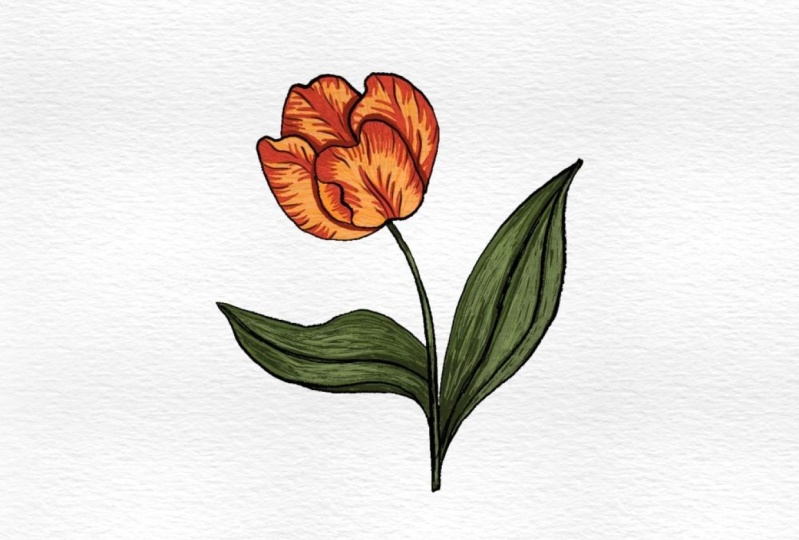
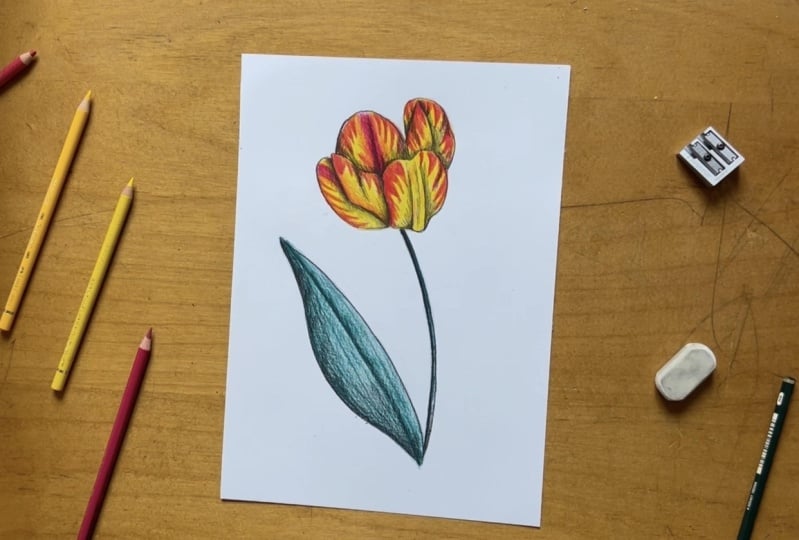
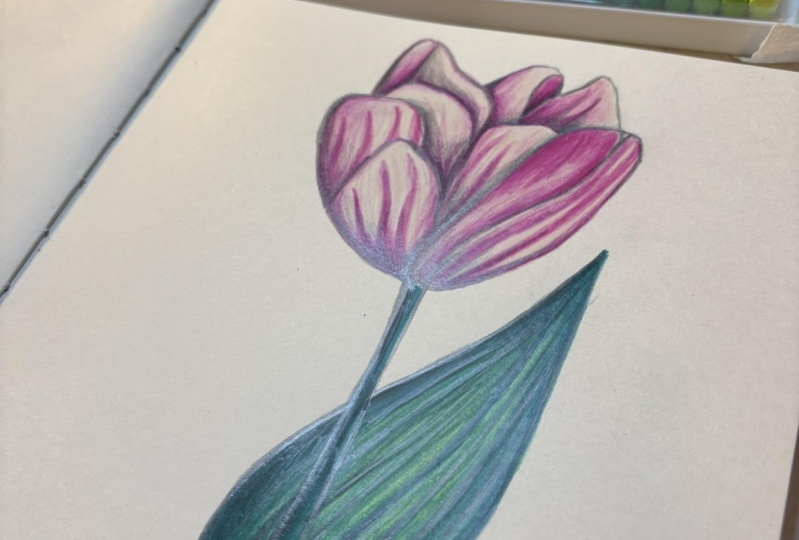
  • A gorgeous multicolor tulip illustration using the techniques and resources from this class. 

This class is for you if:

  • You want to explore the world of botanical illustrations
  • You want to learn more about drawing with colored pencils 
  • You find inspiration in nature, especially in flowers

You don’t need any previous knowledge in pencil drawing or any specific tools. Everyone is welcome!

What you will need:

You can use whatever pencils and paper you have available. I recommend:

  • Colored Pencils
  • HB pencil to sketch
  • 8B pencil to shade
  • Paper
  • Eraser
  • Pencil Sharpener

Meet Your Teacher

Teacher Profile Image

Cecilia Battaini

Illustrator & Surface Designer

Teacher

Hi, I'm Cecilia!

I'm an illustrator, surface designer and art educator from Milan, Italy. When I'm not drawing in my cozy studio, you can find me traveling around the world with my sketchbook and pencils, searching for plants and flowers to use as an inspiration for my nature-inspired illustrations and patterns.

From lush flowers to curious mushrooms, from cute animals to vibrant vegetables, I turn the wonders of the natural world into charming, imaginative artworks ready to bring stories to life. I use colored pencils to create detailed floral drawings and botanical illustrations, that I arrange together into whimsical patterns with Affinity.

Today I work... See full profile

Level: All Levels

Class Ratings

Expectations Met?
    Exceeded!
  • 0%
  • Yes
  • 0%
  • Somewhat
  • 0%
  • Not really
  • 0%

Why Join Skillshare?

Take award-winning Skillshare Original Classes

Each class has short lessons, hands-on projects

Your membership supports Skillshare teachers

Learn From Anywhere

Take classes on the go with the Skillshare app. Stream or download to watch on the plane, the subway, or wherever you learn best.

Transcripts

1. Intro: A Hello friends, and welcome to the botanical illustration class about drawing multicolor tulips with colored pencils. My name is cilia Bateni and I'm a sofa designer and illustrator from Milan Italy. I correct Wismico buttons and standalone illustration inspired by nature, particularly flowers. I find inspiration will traveling, taking pictures of a flora I find and then putting it on paper once back in my studio. I work with independent clients, small business and large brands. My botanical artworks are featured on wallpapers, greeting cards, fabrics, and much more. If you love flowers as much as I do and want to learn how to draw them with an andron technique like colored pencils, this is the class for you. We'll focus on tulips and multicolor petals and I'll guide you through every step of a process to create an illustration of them from sketching to coloring and shedding. You'll also learn some fun facts about these flowers along the way. You don't need any previous knowledge in pencil drawing on any specific tools. Need only white paper. I recommend one with a smooth finish. I rather, a pencil sharpnel and of course, pencils. I recommend using HB for sketching, HB for shedding, and polychroms by fiber Castle, my brand of choice for coloring, but any brand is welcome. Now let's dig into your project for this class. 2. Your Project: Now let's dive into your project for this class. You're about to draw a multicolor tulip with the techniques I show you. While I'll be drawing the tulip you seen discuss, I've asked to provide you pages, full of friends pictures for you to download in the resources. That's my special gift for you. You're more than welcome to use one or more of them and to embark on your own path. I took these pictures while traveling to Netherlands during tulip season. This country is widely associated with these flowers, especially since they became such a trend in the 17th century that people went into debt just to possess one bulb of its plants. Can you believe that? That's why this period was called Tulip fever. I really can't wait to see what you create. 3. Sketching Your Tulip: So now it's time to start our Tulip illustration. I want you to grab your piece of paper and your HB pencil. Make sure to have your eraser and pencil sharpener close by. Also, ensure you have your reference in front of you at this point. Now, let's begin sketching, and let's start very messy. Take a close look at your reference and visualize it on your piece of paper. Begin sketching welt lines. You don't have to be very precise at this point. Just focus on visualizing how much space your illustration will occupy on your paper. Remember to apply very light pressure, is just the foundation of your tulip. By the way, isn't their shape curious? Actually, that's where they got their name. Tulips originated from Persia and their name deriss from the Persian word for turban as their shape resemble the adware. And now let's back to our sketch. Experiment as many times you want until you're satisfied with your messy sketch. Once you're satisfied, you can darken belt lines. Use your eraser to gently remove unneeded sketch lines. Pay close attention to tiles of your outline. As Var will serve as a definitive sketch for our coloring process. 4. Coloring Your Tulip: Ready to bring your tulip to life with colors. I show you two different ways to add colors. One for petas and vie for the lives and the stem. Let's start with petals. Grab your colored pencils now. Just look carefully at your reference to see how many colors you will need for petals. I usually go for two, one light for a background color and V dark to create the multicolor effects. You may have seen many multicolor tulips in the paintings of Flemish painters from the 16th and 17th centuries. The ones that were of a tulip fever, but they are not quite the tulips we can see today. Those tulips were ibrids with color effects opened because of a virus, they were sick plants actually. That's why we don't exist anymore today, even if similar species still exist. Let's start with the light color. My tulipe will be yellow and red. I start with a lighter yellow in my case. I cover the wallflower with a solid yellow layer without shading. Yellow is such a bright color that we create the contrast we need with red. I left some blank spaces to fill with this color because my reference has some red as in its petals. It's time to use velvet color red in my case. I start studying my reference picture because some red as are very vibrant while others have more variation in their shades of red. For the solid red areas, I trace line and then fill it in with a plain layer color. However, for areas with shades of red, I have to shade my red coloring as well. I look where Vt is darker and begin coloring that area, starting ivy and then going always lighter and lighter up until d ends almost in the yellow, proceeding this way until you finish every petal. Also be sure to cover the areas left blank with a plain red layer. Now it's time to get to the stem and the leaves. This technique is very similar to the one used for the shades of red, and you can use it for the lighter layer of color of the petals. It depends from the effet you want to achieve. I usually use only one shade of green for tulip leaves. I create a first layer going very light. Then add more color in as for it's darker because of the shadows. I usually darken a central line and then also one of the sides for more shadowing. It could be right or left at your choice. Make sure to be consistent with the chosen side throughout your illustration. Looking at your reference will really help you achieve this task. Since leaves are always a little bit textured, I added some very tinny stripes following the movement of the leaf. You can use the same system to color the stem. However, since you are talking about a more narrow part of a flower, I like to cover it with a plain green layer. 5. Shading Your Tulip: Your tulip is almost done. Now it's time for a very last step, shedding. It will give depth to your tulip and help it stand out. But before we start, another fun fat about tulips in Persia, where they are native, they were a symbol of love and lovers gifted with flowers each other as a pledge of love. Your eight B pencil and let's start. Just take note that eight B pencil schools much both your paper and your ends. You don't want to ruin your creation. That's why I suggest you to follow an order to shading. To be precise, start from the opposite direction of the end used to draw. For example, I start shedding the elements to a stream left of my piece of paper moving towards the right. That's because I use my right hand to draw. Now, just remember to always look at your reference. Take a notice where the main shadows are and remember to be consistent with the color shading you did before. I mean, if you pick the left side for the lighter side, create the shadows on the right side. I'm starting with the leaf because there on the extreme left of my piece of paper. First of all, trace line with your Atb just to be sure not to get outside the borders. Beginning with a central line, then moving to the side of the leaf where I decided to do the shadows, I start where the shadows are darker, starting ivy and then go always lighter and lighter until the darkness ends mostly in the green of the leaf. It's the same technique used for the color shedding in the previous video. However, this time the process will give a finishing touch to your illustration. The same for Stem and the petals. Just remember when a petal overlaps, it creates a shadowy area, so go even with the shedding. Wsel supplies to the lips and stem. Ad also very light shadows where the petals and least grease. Just look at your reference. But be very light. You don't want your flower to be too dark. Sometimes it's difficult to find the right balance, so I open my suggestions are helpful. 6. Final Thoughts: So that's the end, your tulip is now complete. We have covered every step in creating a multicolor tulip illustration from sketching to coloring all the way through shadding. If you follow it along with all the steps, you should now have a tulip with beautiful multicolor petals and balance and shadows that give it depth. Don't forget to share illustration in the project gallery. I'm really excited to see what you create. If you enjoyed this class, please leave me a review and follow me on Skillshare to be the first to know when the next class will be released. See you soon