Draw Portraits in 15 Minutes: A Practice Series for Beginners | Anagha Sivadas | Skillshare

Playback Speed


1.0x


  • 0.5x
  • 0.75x
  • 1x (Normal)
  • 1.25x
  • 1.5x
  • 1.75x
  • 2x

Draw Portraits in 15 Minutes: A Practice Series for Beginners

teacher avatar Anagha Sivadas, Artist, India

Watch this class and thousands more

Get unlimited access to every class
Taught by industry leaders & working professionals
Topics include illustration, design, photography, and more

Watch this class and thousands more

Get unlimited access to every class
Taught by industry leaders & working professionals
Topics include illustration, design, photography, and more

Lessons in This Class

    • 1.

      Welcome to the Series

      1:17

    • 2.

      Practice - 1

      10:41

  • --
  • Beginner level
  • Intermediate level
  • Advanced level
  • All levels

Community Generated

The level is determined by a majority opinion of students who have reviewed this class. The teacher's recommendation is shown until at least 5 student responses are collected.

124

Students

8

Projects

About This Class

Class Overview

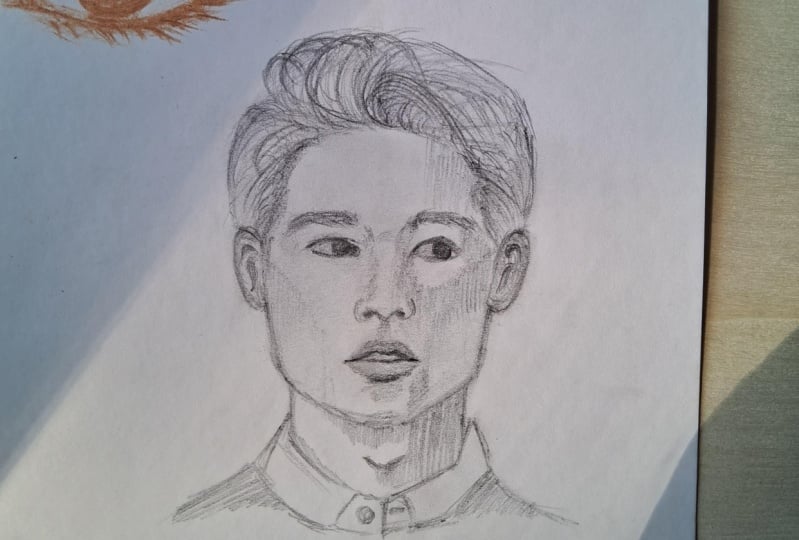
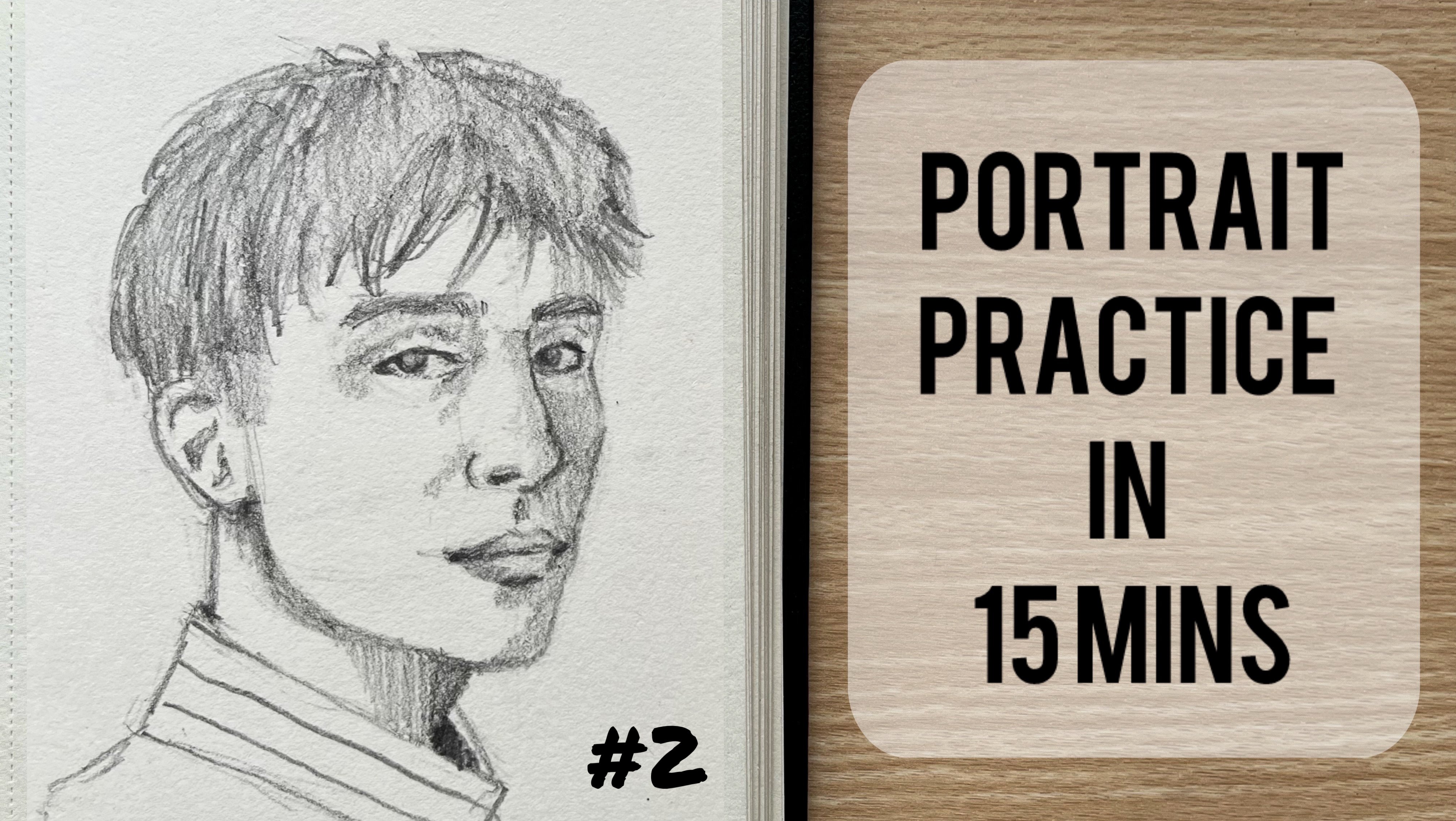
Portrait sketching practice is often skipped in the early stages of learning, but it's essential for real growth. In this weekly series, you'll practice drawing one portrait head per class using the Loomis method, exploring different angles in just 15 minutes. If you are new here, you can check the previous classes on Loomis Method to understand the basics and come back for practice.

What You’ll Learn

  • How to sketch portrait heads quickly and effectively using the Loomis method
  • Practice portraits from different angles: from beginner-friendly to complex views
  • Improve your understanding of facial structure and proportions
  • Build a consistent portrait sketching habit
  • Learn how short practice sessions can boost your overall portrait skills
  • Get more comfortable translating reference images into portraits

Why You Should Take This Class

  • Knowing a method like Loomis isn’t enough, it’s the practice that sharpens your skill
  • This series focuses on doing, not just learning 
  • Regular practice helps you approach portraits with confidence and clarity
  • You’ll gain the ability to apply this method across a variety of references, improving your observation skills

Who This Class Is For

  • Beginners who want to improve their portrait sketching
  • Artists looking to build confidence with facial proportions and structure
  • Anyone who enjoys drawing portraits and wants a simple, consistent way to practice
  • Creatives looking to develop a steady sketching routine with minimal time commitment

Materials You’ll Need

  • A pencil
  • A sketchbook or any drawing paper
  • An eraser

Meet Your Teacher

Teacher Profile Image

Anagha Sivadas

Artist, India

Teacher
Level: Intermediate

Class Ratings

Expectations Met?
    Exceeded!
  • 0%
  • Yes
  • 0%
  • Somewhat
  • 0%
  • Not really
  • 0%

Why Join Skillshare?

Take award-winning Skillshare Original Classes

Each class has short lessons, hands-on projects

Your membership supports Skillshare teachers

Learn From Anywhere

Take classes on the go with the Skillshare app. Stream or download to watch on the plane, the subway, or wherever you learn best.

Transcripts

1. Welcome to the Series: Sketching portrait sounds easy when you know the method, but let's be real. It takes a lot of practice to actually get good at it. Hi, everyone. I'm Anacahvdas, a self taught portrait artist from India. And in this class, we're starting a fun new portrait sketching series focused purely on practice. So this class is a continuation of my earlier more detailed class on Lumi's method. So if you're new to portrait sketching, I would recommend checking that out first. Starting with the series right away might feel a bit confusing without the basics. So you can find a playlist on my page with all the essential classes. So just go through them quickly. And come back here to join the practice sessions. So these are quick 15 minute classes going live every week. So even if you miss a day, I'll be right here to keep you on track. Now, as for the materials, all you need is a pencil which you are comfortable sketching with a piece of paper or a sketchbook and an eraser. So in the first practice session, we'll be starting with the most beginner friendly angle, which is a straight facing one. Now, as the series goes on, we'll slowly increase the difficulty level. So once we have covered all the basic head angles, we'll shift our focus onto the painting part. So stick around and let's fill your portrait skills step by step. 2. Practice - 1: So this is going to be a reference. Now, let's start with a circle. So once the circle is ready, you can identify the center and draw a straight vertical line as it's a straight facing face. Now, to remove the sides, you can identify the two thirds by dividing the upper and bottom halves of the circle into three equal parts. Now using the second point from the center on both the sides, we can start chopping the sides. Now, once that's done, you can drop a vertical line like this on both the sides. Now moving on to the main guidelines, we'll start with the center, which would give us the eyebrow line. I'm slightly curving this line. Similarly, if you connect the top and bottom parts of the chopped sides, you'll get the hair line and the nose line respectively. Now, in order to mark the chin, you can take the exact measurements and drop a line similarly just below the nose for the chin. Next, for the eyes, specifically, if you divide the space between the eyebrows and the nose into three equal parts. The first line from the top would give us the eyeline. Now to shape the face, you'll notice that there is a slight bend somewhere here below the eyeline. You can use this as a reference to start bending the hairline, as well as the jaw line. Now, as we move down the jaw line, you'll see it's not a straight line. It curves slightly towards the chin, and most importantly, it doesn't extend all the way down to the bottom. You can roughly say that around the mouth area, it starts bending more noticeably towards the chin. So you can mark accordingly. Now, once this is done, you can move to the hairline. You can observe the reference carefully while shaping this part. Now, here, as you can see, the ears fall between the eyeline as well as the nose line. Now you can roughly sketch the hairstyle. And most importantly, remember that the entire series is purely based on practice. You don't have to get the sketch accurately as seen in the reference. Try to study the reference, understand the basics, and try to implement the same in your sketch. That's all it matters. So don't be harsh on yourself. Even if the picture isn't 100% the exact replica of the reference, you don't have to worry. Simply give it a try in your own way. Now with that, the overall shape is done. Now let's finish the neck and also the shirt. And also feel free to reshape any part at any point. Now, starting with the details, I usually use simple shapes to place the features first. So for the nose, somewhere between the eyebrow line and the eyeline, you can make a mark like this and then draw a triangle down towards the nose line. Next for the eyes, let's go with an oval shape that would include both the eyebrows as well as the eyes within it and also make sure to leave some space on the sides, as you can see in the reference. Now the mouth is almost midway between the nose and the chin, so let's mark a small oval there. I'm also extending it a little downward since his mouth is slightly open. And now, if you look closely, I find the face a little bit chubby here. I think the initial guidelines were slightly off, but learning through mistakes helps us understand better, right? So anyway, I have reduced both sides a bit. So after correcting that, before adding the final details, I'm rubbing off the unwanted lines and dark strokes. And as for the details, I normally start from the very top. That's the eyebrows. And if you look at the reference, the eyebrows are quite straight, so I'll try to maintain the same in the sketch. Now, next for the eyes, which I'll be placing in this eyeline. So if you remember that the width of the nose is usually the same as width of one eye. So you can keep this in mind while sketching both the eyes. Instead of shaping them directly, I shade to get the right shape. So that's the key here. You basically shape the eyes by shading it. So once you get the shape right, you can always add the details later. You can always add shadows here and there where you find necessary because a few visible shadows always helps us get a better picture. Now, next for the nose, you can set the bottom part. Now, understand the shape of the nostrils from the reference, and you can try to sketch the same onto your sketch. I'm not stopping with a sketch. I'm adding a little bit of shades here and there. Now moving on to the mouth, you can first connect the nose to the mouth. Again, instead of outlining it completely, here's the key thing that is you can always begin with the middle portion of the mouth. Here you can look closely at how the mouth is placed in the reference, and I'm trying to replicate the same. You can roughly sketch the lines of both the upper and bottom part of the open mouth. Now, once you have got the shape ready, you can shade around it slightly like how we did earlier. Once the shape is complete, I darken a little bit at the bottom. And with that, we have completed all the details. Now take some time to make the corrections wherever you feel things are a little bit off. This step is optional. As you can see, I'm not using any hard strokes, and so I'm using very light strokes just to indicate the shadows there. Mm. And with that, we have completed our first project. Once you have done, take a moment to reflect on what could have been improved and where you would like to focus next. Anyway, taking that first step is all that matters. And with that, let's catch up next week for our next practice session.