Beginner's Portrait Series: Practice Drawing 3/4 Angle View | Anagha Sivadas | Skillshare

Playback Speed


1.0x


  • 0.5x
  • 0.75x
  • 1x (Normal)
  • 1.25x
  • 1.5x
  • 1.75x
  • 2x

Beginner's Portrait Series: Practice Drawing 3/4 Angle View

teacher avatar Anagha Sivadas, Artist, India

Watch this class and thousands more

Get unlimited access to every class
Taught by industry leaders & working professionals
Topics include illustration, design, photography, and more

Watch this class and thousands more

Get unlimited access to every class
Taught by industry leaders & working professionals
Topics include illustration, design, photography, and more

Lessons in This Class

    • 1.

      Welcome to the 2nd Class

      1:02

    • 2.

      3/4 View

      11:57

  • --
  • Beginner level
  • Intermediate level
  • Advanced level
  • All levels

Community Generated

The level is determined by a majority opinion of students who have reviewed this class. The teacher's recommendation is shown until at least 5 student responses are collected.

37

Students

1

Project

About This Class

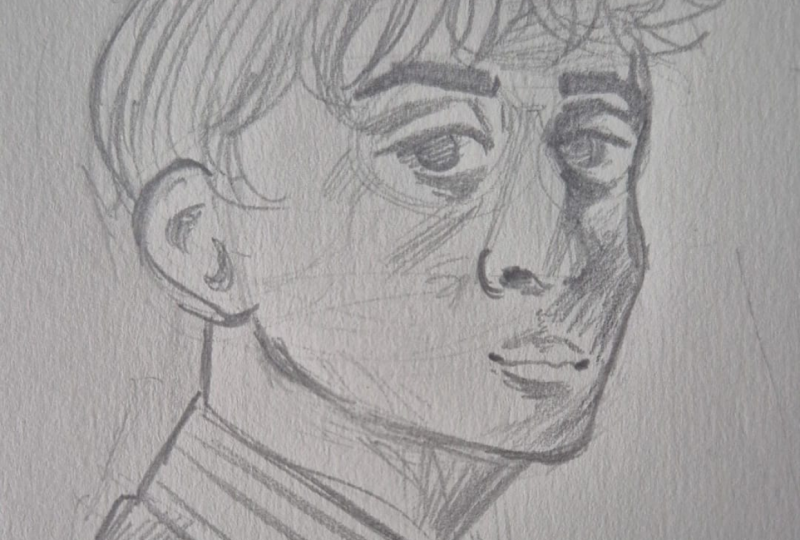
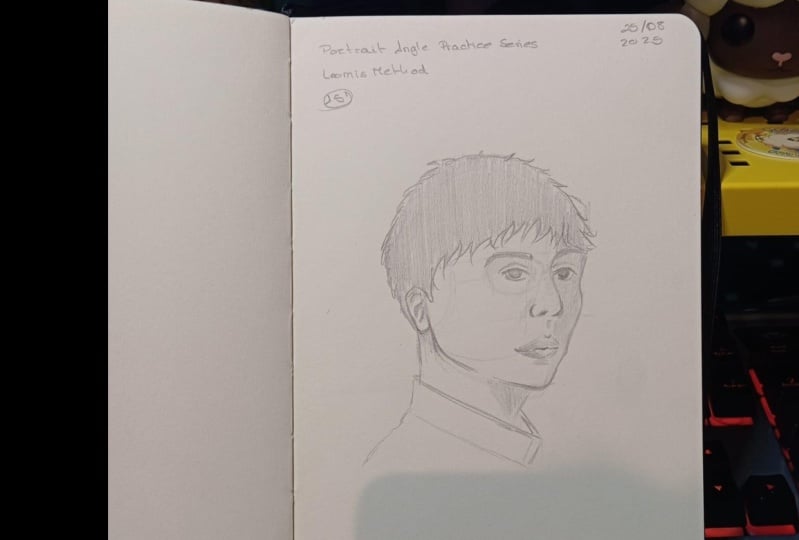
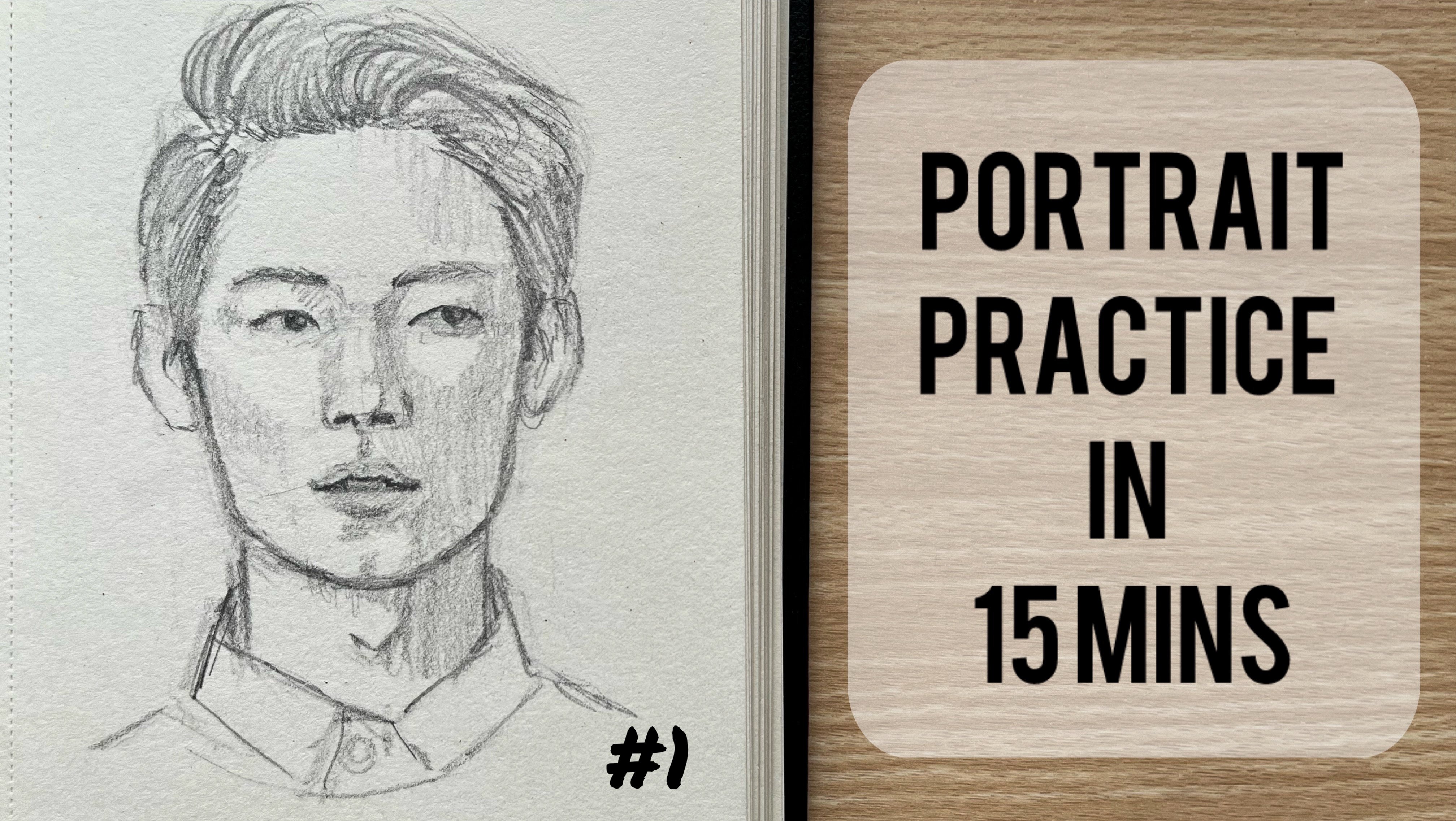
Welcome to the second class in my Portrait Angle Practice Series! In this session, we’ll be practicing the 3/4th view.

This is a practice focused class. If you’re completely new to portrait drawing or haven’t learned the Loomis method yet, I recommend watching my earlier class: How to Sketch Portraits Using the Loomis Method”.  This class breaks down the head structure using Loomis Method in detail, making this practice class easier to follow.

In this class, we’ll focus on:  

  • Sketching the 3/4th angle step by step 
  • Understanding how the facial features shift in this view 
  • A quick practice

 Grab your pencil and sketchbook, and let’s get started!

Meet Your Teacher

Teacher Profile Image

Anagha Sivadas

Artist, India

Teacher
Level: Beginner

Class Ratings

Expectations Met?
    Exceeded!
  • 0%
  • Yes
  • 0%
  • Somewhat
  • 0%
  • Not really
  • 0%

Why Join Skillshare?

Take award-winning Skillshare Original Classes

Each class has short lessons, hands-on projects

Your membership supports Skillshare teachers

Learn From Anywhere

Take classes on the go with the Skillshare app. Stream or download to watch on the plane, the subway, or wherever you learn best.

Transcripts

1. Welcome to the 2nd Class: Come back to part two of our portrait sketching series using Loomis method. Hi, everyone. I'm Anka Shwedas, a self taught portrait artist from India. In the previous class, we had explored how to sketch a straight facing portrait. Now it's time for us to take a step further and dive into the very next angle, which is going to be the three fourth view. So if you're new here, this is actually a continuation of my detailed Loomis method class. You can find it on my profile under the Portrait study playlist, where I have explained the foundational theory behind Lumi's method, along with a few other helpful methods for beginners. In today's class, I'll be using the same key tool which I had introduced in the previous class. Now, before we begin, let's quickly go over the materials. I'm working in a sketchbook, but you can always use any paper or even a rough paper would be completely fine for this practice. Next, would be a pencil that you're comfortable with. And lastly, a kneadable eraser or a regular eraser that you have at home. Now, without any further delay, let's dive into the class. 2. 3/4 View: Using the tool, we'll study the reference. As you can see, it's not a straight facing head. If you angle the tool according to the reference, you'll notice that it's slightly tilted to one side, and you can also observe that the central axis is also shifted in the same direction. Now with this as our base structure, let's start by constructing the Lumie head. As always, let's start off with a circle. You can take your time to actually get the shape right. Once the circle is done, you can place the central axis based on the reference. Notice, I'm not placing it exactly in the center, but slightly off to the sides. Next, we can chop off the sides. Then I'm going to divide this part vertically, and also this can be parallel to the central axis. Now let's mark the eyebrow line. It won't be right in the middle of the circle, but it's going to be slightly above it. Now you can connect the side this way. Now, when you connect the top and bottom parts of the side plane, you'll be getting the hairline as well as the noseline respectively. Now, looking at the chin area, you'll see that this portion is slightly smaller than the middle section. You can measure accordingly if needed and mark the chin. Once all the guidelines are in place, we can begin shaping the face. So pay attention to any bends or any angle changes. Around this mouth area, there was a small curve, which many of you might miss, but make sure you pay attention to each and every details. Now, the same way I have extended the jaw line on the other side. Next moving on to the hair details, you can observe the reference and place the lines accordingly in order to make that hairstyle. So once the outline is done, we'll move on to marking the facial features. So we'll be starting with the mouth which is located roughly halfway through this bottom portion. Now for the eye line, divide the portion into three equal parts. The first line here would give us the eye placement. Once all the guidelines are in place, I'll now erase the heavy strokes. Now let's move on to shaping the features. I normally start with the nose as a triangle. As you can see, I have marked a point somewhere in between the eyebrow line and the eyeline. And from there, I had initiated a triangle down to the nose line. Next for the eye socket, let's mark the ovals. Now for the mouth, remember that the tip of the lips would actually fall on the line that we had drawn earlier. So keep that in mind and sketch the mouth. Now, once the basic features are laid out, I'll erase all the dark strokes once again and begin refining the features. Here, I'll begin with the eyebrows. That is, I'll start from the top and slowly move downward. So you can shape the eyebrows based on the reference. You can simplify any image by converting them into simple lines. Next for the eye, I'll begin by shading its shape first. So try to shade the shape of the eye accordingly based on the reference. So once the shading and everything is done, you can very well go in with the details. Next for the nose, follow the structure as seen in the reference. And finally, for the lips, rather than outlining them directly, I'll shade them in an overall shape and then add the details. Once that's done, I'll mark the corners of the mouth to show where it ends and then connect the shapes based on the reference. With the features now defined, we can correct the overall shape of the face. Oh. Once that's complete, let's elevate the sketch by adding more details. I'm using a simple vertical stroke to darken the shadowed areas. Whenever you have shadows in your reference, use these clean vertical strokes to enhance its depth. So once all the details are in, our second portrait in the portrait sketching series is complete. So whenever you have completed the project, feel free to submit your project in the project discussions below, see you in the next class with another different angle.