Transcripts
1. Start Drawing Fast Without Overthinking: You might be staring
at a blank page, wanting to draw, but
your mind feels stuck. That feeling is very normal, and it can make starting feel
harder than it really is. In this culture class, you're going to try something simple that removes the
pressure right away. By the end of this class, you'll be able to draw
four simple doodles in about 10 minutes and repeat
this anytime you want. This helps you build a daily drawing habit that
feels light and doable. This matters because
starting quickly helps you build a habit that grows
your confidence over time. You'll create one
small page with four tiny doodles that you
can actually finish today. If you've been
feeling unsure, slow, or overwhelmed, that makes
sense, and you're not alone. Everything here is
broken into small, simple actions so you can follow along calmly
without stress. I'm Paul, I enjoy helping beginners get unstuck
and start drawing in a clear and simple way so they can feel confident
moving forward. I've guided many beginners
through this exact method, and I've seen how
quickly it helps people start drawing
without stress. I used to overthink every
line and delay starting, and that's actually why
I like this approach. It's fast, simple, and it
works even on busy days. This is for beginners
who feel stuck, who want to draw but
don't know how to start, or who keep stopping
before they even begin. You'll go through a simple idea, then slowly build
four doodles step by step using one pen and
one sheet of paper. This days focus on
quick practice, not detailed art, so you can
finish without pressure. If you already draw, you can treat this as a relaxed warm up. If it just came from
our previous class, which is draw basic shapes calmly for beginners
without pressure, this continues that same easy
approach into real doodles. In the next few
lesson, you'll see a simple idea that
makes drawing easier. Then you'll build
your page one doodle at a time until everything
comes together. Go step by step from
simple shapes to finish doodles so everything
feels clear and manageable. You only need a pen or a pencil or any paper.
Keep it simple. You're in the right
place to start. You might be surprised how
quickly this starts to feel fun once you begin.
Let's get started.
2. Create One Page with Four Simple Doodles : Mm. Sometimes starting feels
like the hardest part, especially when you don't know
what to draw. That's okay. You don't need a big idea here. You're just going to
make one simple page with four small doodles. By the end, you'll
have finish page with four tiny drawings
placed neatly together. It will look like a
simple collection you can look at and
feel good about. This is helpful
because it gives you a clear finish line
and a quick win, you can repeat anything. You can complete this
in one short sitting, even if you only
have few minutes. Use one pen and one
sheet of paper. If you don't have those,
anything similar will work. You'll build this page slowly. First, you place
the basic shapes, then you'll turn those
shapes into simple objects. Finally, you'll add small
detail to complete everything. You will also try a very
small first drawing early so you can feel
progress right away. Keep it simple and imperfect. This is practice,
not performance. Doing this regularly can quietly build your
confidence over time. You can follow along as
you go or pause anytime. Later, you'll be able to share one photo of your finish page. I'll be able to see your
work and give feedback. To share your project, go to the Projects and Resources Sab, click Submit Project, add
a title and description, upload your image,
then publish it. For now, just get your pen and paper ready and place
it in front of you. We'll begin gently.
3. Use Small Shapes to Start Faster: It might seem like good
drawing needs big ideas, but here's something simple. Most doodles actually starts
from very basic shapes. Once you see that,
drawing becomes easier. If you ever felt stuck because you didn't know what to draw, this is exactly where
that feeling comes from. You don't have a
clear starting point, your brain hesitates. The simple idea here is to
start small and visible. First, place a few basic
shapes on your page. Next, turn each shape
into a simple object. Then add a small detail
to make it feel complete. This works because
your brain can follow a small action faster
than big ideas. For example, if
you draw a circle, you can quickly turn it into a smiling face or
a simple fruit. That small shift
removes pressure. So the flow is simple. Play shapes, turn
them into objects, then finish with small details. This keeps everything
clear and manageable. Here's how to do
it step by step. First, lightly draw four
simple shapes on your page. Next, turn each shape into a
tiny doodle you recognize. Then add one or two small
details to complete each one. This works because it removes the need to think
of ideas first. You just follow what's
already on your paper. You don't need to
be perfect here. You just need to start. In the next lesson, you'll do this slowly so it feels easy.
4. Draw Four Simple Shapes on One Page : You might still feel
unsure where to begin, even with a simple idea. Well, that's okay. You're
just going to take the first small action,
and that's enough. Now, place your paper in front
of you and hold your pen. Start by drawing a small
circle near the top left. For example, draw a
simple round shape about the size of a coin. Next, draw another circle
near the top right. Keep it similar in size. Then draw a square
at the bottom left. Keep the lines simple
and not too straight. After that, draw a triangle
at the bottom right. Now you have four
shapes on your page, a circle, another circle, a square, and a triangle. That's your starting point. If your lines feel shaky or uneven, that's completely fine. This is exactly how most
people start, including me. When I first write
this, my shapes were far from perfect, but
that didn't matter. What matters is that you
have something visible. You're no longer
starting from nothing. That's already a small win. So now your page
has four shapes, places like a simple grid. That's enough to move forward.
5. Turn Each Shape into a Simple Doodle: Sometimes shaves
can feel too plain, and you might not know how to turn that
them into something. Well, that's normal. You're just going to make small changes. Start with the first circle, add two small dots for eyes, and a curve line for a smile. Now, it becomes a
simple smiling face. Move to the second circle. Add a small leaf shape on top and a short line for a stem. Now it looks like
a simple apple. Next, look at the square, add two small windows
and a triangle on top. Now it becomes a simple house. Then look at the triangle, at a small rectangle under it. And a line inside. Now it becomes a simple tree. As you do this, you
might notice it feels easier to continue
once you start. Repeating this kind
of small action can quietly build
momentum over time. Each shape is now something recognizable. That's
the key shift. You didn't need to
think of ideas first. You just followed what
you already drew. You've already made
real progress. Your page now has four simple
doodles forming naturally.
6. Add Small Details to Complete the Page: You might feel like your
drawing are too simple, and that's completely okay. Simple is exactly what
helps you finish. Now, you're going to add small detail to make each
doodle feel complete. Start with the face,
add small lines around it like a tiny raise
to give it a playful look. Move to the apple, add a small curve line to show
a shine on the surface. Next, look at the house at a small door and a tiny
path in front of it. Then go to the tree at a few short lines inside a
triangle to suggest texture. Take your time here. Slow down your hand and let each line feel relaxed.
There's no rush. When I first started doing this, I noticed that adding
just one or two details made everything feel finished without making it complicated. Now your page shows four simple doodles
that feel complete. You started from nothing, and now you have something
real in front of you. You can repeat this anytime. Just draw shapes, turn
them into objects, then add small details. You finish the core process. That's a solid step forward.
7. See Your Finished Four Doodle Page: Your project is one page with four simple doodles
made from basic shapes. You use one pen and
one sheet of paper. You started by
drawing two circles, one square, and one triangle. Then you turn them
into a smiling face, an apple, a house, and a tree. After that, you added small details like lines,
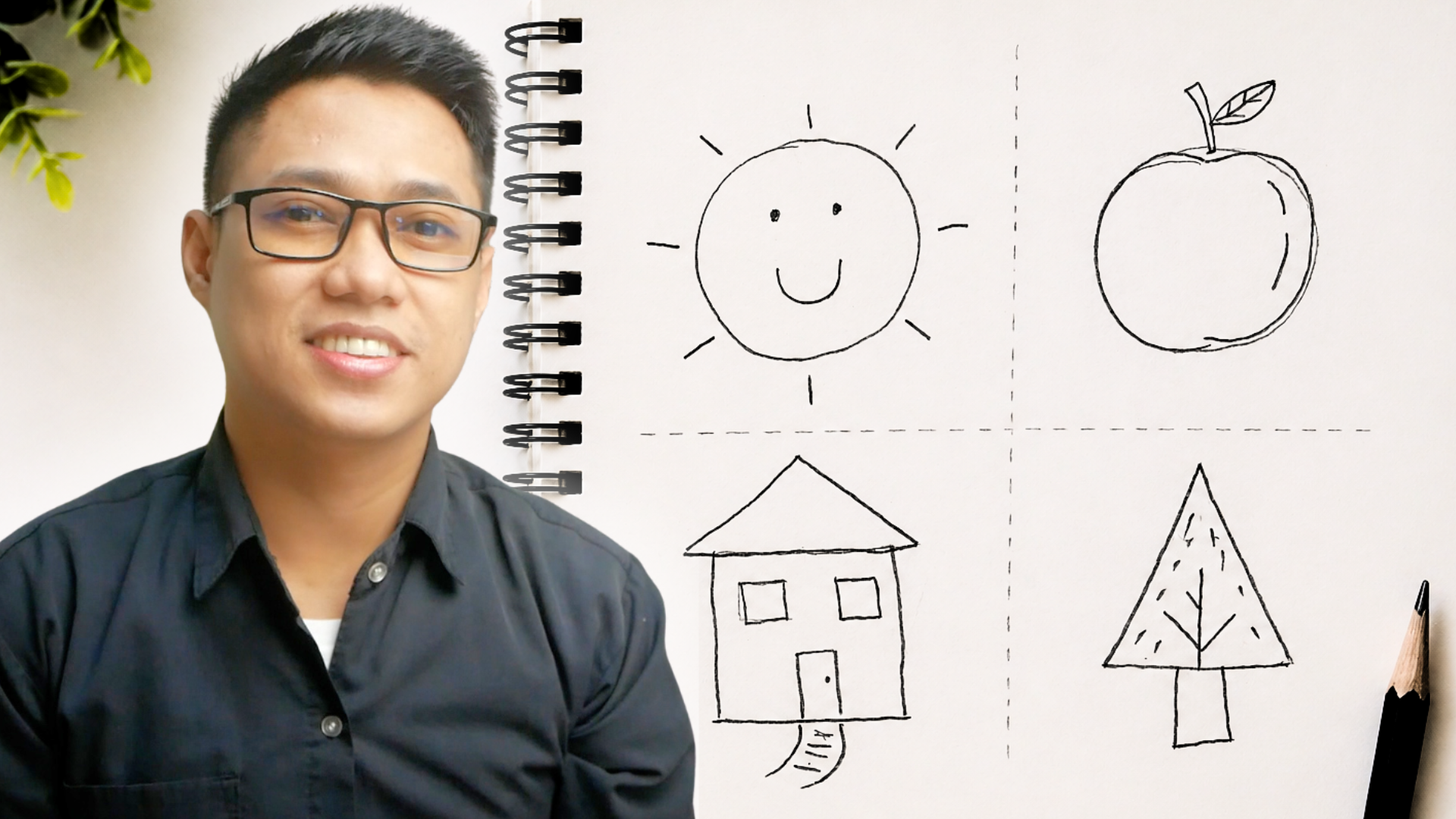
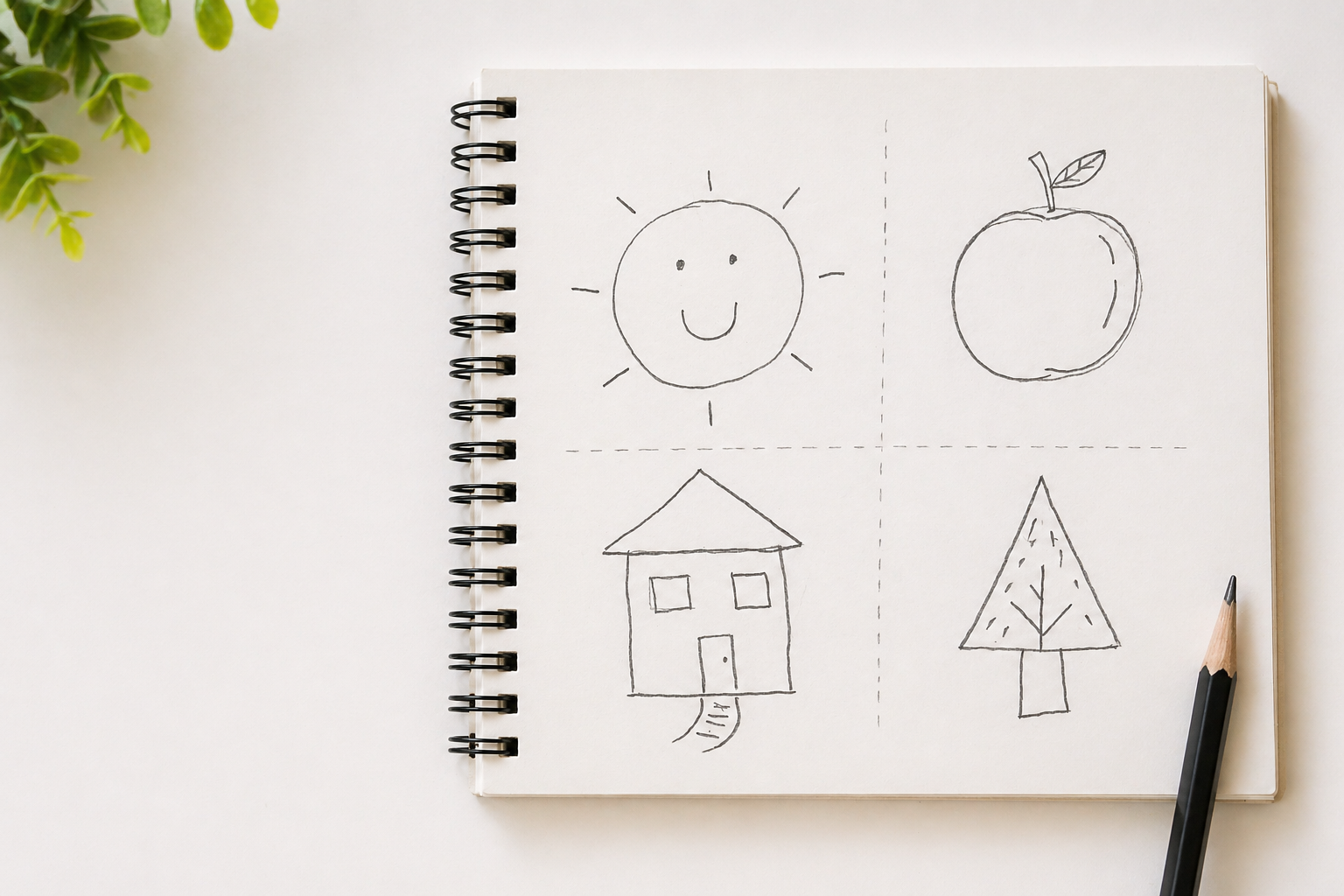
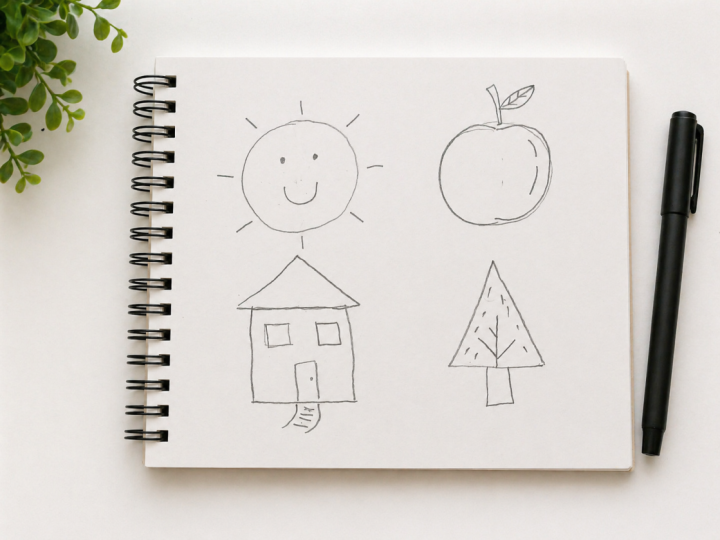
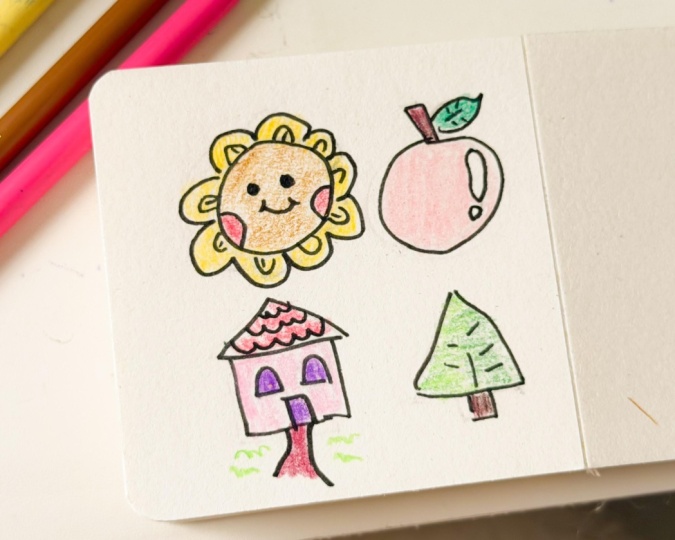
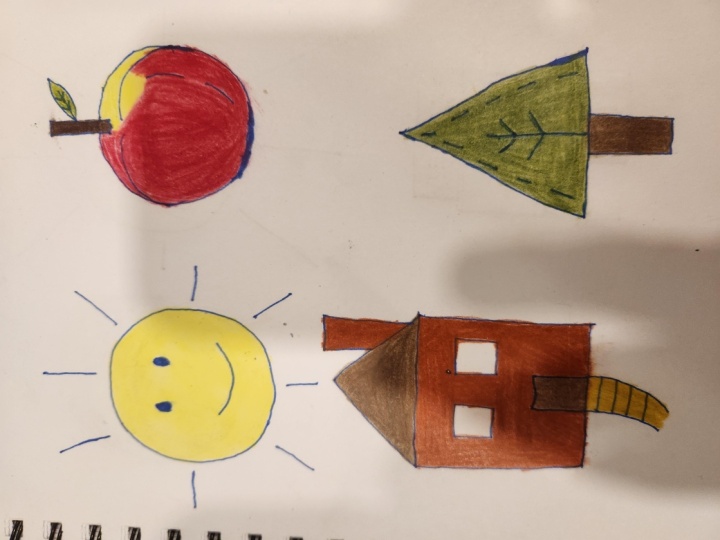
highlights, and texture. Here is the final example. A page with four
sections showing a smiling face with
small lines around it, a simple apple with
a leaf and shine, and a small house with
a window and a door. And a triangle tree with
light texture lines. This works because it gives you a clear beginning,
middle, and end. You don't need to
think too much. You just follow the
flow and finish. Once you're done, take one
clear photo of your page. It's best to do this right after finishing while it
still feels fresh. You can repeat this
anytime as a quick habit. Keep it simple and
don't overthink. Even a quick version is enough. Most people share simple
imperfect drawings, and that's completely okay. This is about showing
up, not being perfect. You've already followed
all the steps. Now, you just need to capture
your page and share it.
8. Feel Clear and Confident Moving Forward: You made it all the way through
and completed your page. That's a real step forward. It's also normal to still have you question.
First question. What if my doodles
looks too messy? If your lines feel
uneven or rush, you can still move forward
because the goal is to finish, not perfect the drawing. Messy lines show
that you started, and that's what builds progress. Second question.
What if I cannot think of what to
turn shapes into? If you feel stuck,
you can look at your shape and pick
the simplest idea, like turning a circle
into a face or fruit because simple
choices keep you moving. Third question. What if I
feel like this is too easy? If it feels easy,
that's actually a good sign because it means
you can repeat it often, and repetition is what
builds confidence. One small tip that helps is
to keep your shapes small. Smaller drawings feels easier to complete because they
take less effort. Another helpful
mindset is to focus on finishing instead
of improving. Finishing small pages builds
a steady habit over time.
9. Finish Your First Quick Drawing Practice: You just created a full page of simple doodles from
start to finish, that's something
many people never get to, and you did it. You started with shapes, turned them into simple objects, and added small details
to complete everything. If there's one thing to keep, it's this simple flow of
starting small and finishing. You're no longer someone
who waits to draw. You're someone who can sit down and create
something in minutes. That shape matters more
than perfect lines. Small, steady practice
works because it removes pressure
and keeps you moving. Each finish page builds
confidence quietly over time. You can remember this as
star, start with shapes, turn them into objects, add small details,
then relax and finish. It's a simple rhythm
that makes drawing feel easy and repeatable. Thank you for being here today. When you finish your next page, take a photo and share it. I'd really love to see it. If you have questions,
that's completely normal. You can ask anytime. If this helped you, you
can leave a review in a review stab and
share your experience. You can also follow me here on Skillshare so you don't
miss the next one. You've already started building
momentum. That matters. Next, you can try drawing
a few more doodles using simple shapes to make your
drawings feel more solid. Thank you again, and I'll
see you in the next lesson.
 Paul Nene, Helping beginners take action