Transcripts
1. Introduction to Crypto & Stock Trading Using RSI: Hey, welcome to crypto
and stock trading with relative strength Index, known as the Horaci. My name is Kandai, and I'm thrilled to be
your instructor on this exciting journey
into the world of crypto and stock trading. Whether you're a seasoned
trader looking to refine your strategies
or a complete beginner, eager to learn the ropes, this class is designed
to equip you with the knowledge and tools
to succeed in the market. Its core, the relative
strength index or RSI is a powerful momentum
osculator that measures the speed and
change of price movements. It's one of the most
popular indicators used by traders
across the globe. In this class, we'll
cover everything you need to master the RSI from understanding its
foundational principles to applying the RSI strategies
in trading scenarios. Here's a glimpse
of what you learn. First, we'll start
with the basics where you learn what the RSI is, how it is calculated, and why it's such a
valuable tool in trading. Next, you'll go through the
significance of RSI levels, overbought and oversold
conditions and how to spot potential
reversal points. Then we'll cover effective
RSI based strategies, including divergence trading
and RSI trend lines. But that's not all, you'll also get hands on practice
by following the instructions within
the class project to ensure that you understand the
concepts by applying them effectively
yourselves within trading. Additionally, make
sure that you follow me on skill share so
that you're able to be notified once I upload additional content
onto the platform. By the end of this course, you will be able to make more informed trading decisions by using the RSI to
analyze market trends, as well as develop strategies that fit your unique
trading style. Whether you aim to day
trade, swing trade, or invest for long term, learning how to use the RSI will give you a
significant edge. So without further ado, let's get right into it. I'll see you on the other side.
2. What is RSI and how can you add RSI to a chart?: Right. So what is RSI? Well, RSI is an abbreviation
for relative strength index, and it is a momentum technical
indicator that is used by traders to evaluate the strength or weakness of any
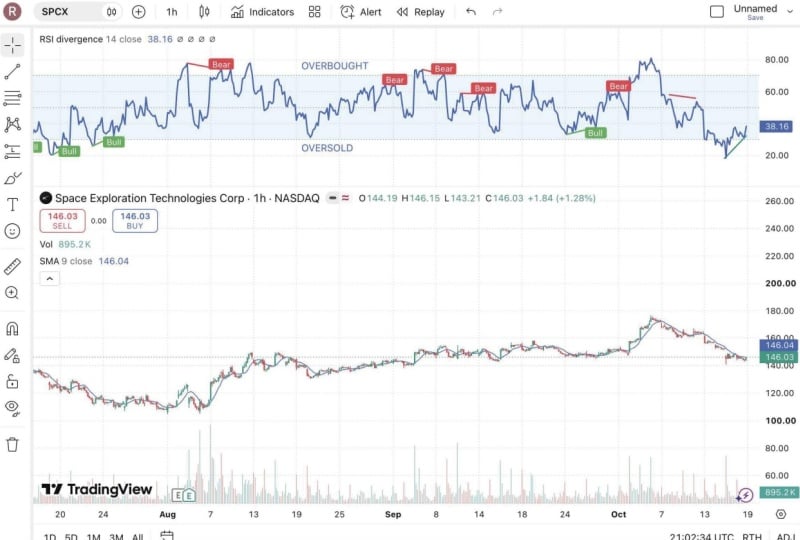
financial market. It identifies overbought and oversold conditions
within the market. And to add the RSI to
your trading view chart, all you have to do is
come over to the top of your chart and
click on Indicators. A pop up will come up. And this indicators
and strategies pop up as a search box that you
can search for the RSI. On my screen right
now, you can see that we're on the favorites tab, and you can see some of
my favorite indicators You guys probably won't have these favorite indicators
on your chart. So if you type in RSI, you will see relative
strength index. And as you can see, Mini start because I've added
it to my favorites, and if you'd like to add the relative strength
index to your favorites, all you have to do is just
click on the Star icon, and that would add it
to your favorites. And to remove it
from your favorites, all you'd have to do is click
on the Star icon again, and that would remove
it from your favorites. So if we select relative strength index
by clicking it once, that would add it
onto our charter. You can see it's popped up
right at the bottom here. So what we can do is we can get out of this pop up right here. And if I move my favorite tools out of the way right here, we are able to
actually see the RSI. Personally, I like keeping my ISI above the
candlestick charts. So what I'm going to
do is I'm going to click on this icon to move my RSI to the top of the candlesticck
chart, as you can see. So this is where I like to keep my RSI right here in the middle, just below the Mac D and just above the
candlesticck charts. So once we've got
our RSI up here What I would do is I would
customize my RSI indicator so that this line
chart ***** out more and is easier
on the eye for me. So what I'll do is I'll
double click into the RSI, and that will enlarge it
so that you can see it. Visually, it'll be easier
to see on the eye. And if I double click
this line right here, we've got some inputs
that we can play around. Usually, when I'm trading, I keep these as default, and these are the
default inputs. So if we select style, this is where I want to
customize how my RSI looks. So undertyle, if I
select this color tab, I'm just going to change
the color to yellow. I prefer mine to be yellow, and I like a thick line. So as you can see, it's now nice and easy to
see on the screen. So you guys can select
whatever color you want. You can select
whatever thickness. That suits your personality, and you can also play
around with the capacity, so you can actually
make it lighter and not very visible depending
on what you prefer. I prefer mine to be at 100%. So once I've done that, I'm just going to click
out of it and select Okay. However, whilst
we're still here, you can see that you can also change the upper band color, the middle band color,
and the lower band. So the upper band is this line right here
where my mouse is. The middle band is this
line right here my mouse, and the lower band is this line right here
where my mouse is. And the background is obviously
the background color. We'll leave that as default because we want our
background to be black. If you want yours to be
white or a different color, please change it, and this is
where you would change it. So if we select, okay, that will save
our current settings, and in the next lesson, we're going to go through how to read the relative
strength index. Thanks for watching guys,
seeing the next one.
3. How to read Reletive Stregnth Index: Right. So the ROSI
is scaled 0-100, and on our chart,
we can see that the scale is on the right
hand side right here. And currently, the
ROSI is 60-62 0.5, as we can see here, and
precisely, I'd say 61.19. I see the figures quite easily. All you could do is you could select this data
window tab right here, and you can see that the
RSI is actually 61.27. So this way, you can actually
see the exact RSI figure. But let's close this window for now and carry on with the
explanation of the RSI. So the RSI is known as
a momentum indicator, which basically means that it is a tool that is used to
determine the strength or weakness of a financial asset such as crypto, stocks or FX. So all that momentum does is
that it measures the rate of the rise or fall of the price of the current
asset being traded. So this means that the
RSI measures the rate of the rise or fall in the
price of a particular asset. And traditionally, there
is an RSI rule that says, typically readings of 30
or lower indicate oversold market conditions and increase the probability of price
strengthening to go up. So anytime that the
RSI comes down to 30, it means that the price of that particular
asset is oversold, which indicates
an opportunity to buy because that means that
the asset is undervalued. So when an asset is undervalued, it is a good time to enter a trade on that asset or
to invest in that asset. Traders generally interpret that an oversold cryptocurrency is an indication that
the falling trend is likely to reverse, which means that it's
an opportunity to buy. And readings above 70 or higher. So if you recall, the upper band was the 70 line right here. So readings of 70 or higher indicate
overbought conditions. Traders generally interpret that an overbought cryptocurrency is an indication that the rising
trend is likely to reverse, which means that it's
an opportunity to sell. And in addition to
the overbought and oversold matrix that
we've just gone through, we've got the center line
crossover. Right here. So with the center
line crossover, generally speaking, a movement from below the center line. So when the RSI is
below the center line, and it moves above or crosses
above the center line, which is this 50 center
line right here, and the RSI is moving
towards the 70 line. This indicates that
the market trend is increasing in
strength and is seen as a bullish signal until RSI approaches the 70 line or
crosses above the 70 line. You can see right here, the RSI crossed this 50 center line, and this would have been an indication that this
is a bullish sign and high probability that the market is going to be trending upwards. This indicates that
the market trend is increasing in strength and is seen as a bullish signal until the RSI
approaches the 70 line. And a movement from
above the center line. So from up here, which is above the
center line to below the center line right here
indicates a falling trend. And a falling center line
crossover occurs when the RSI value crosses below this 50 center line
right here on the scale, moving towards the 30 line. And this indicates that the market trend is weakening
in strength and is seen as a bearing signal until the
RSI approaches the 30 line. So, generally, when the RSI goes above the horizontal
30 RSI level, it is a bullish sign, and when it slides below the
horizontal 70 RSI level, it is a bearish sign, which also means
that an RSI of 30 and below represents
an oversold region, and an RSI of 70 and above represents an
overbought region. When an asset is within
the overbought region, it is a good time to look out
for an opportunity to sell. And when an asset is
within an oversold region, it is a good time to look at a good entry point to
actually buy that asset. So now that we know
a few rules or the general and traditional
rules of the RSI, we are going to look at the chart and see
how we can enter and exit trades using the RSI
strategy in the next lesson. Thanks for watching guys,
seeing the next one.
4. How to enter a trade using RSI - RSI Strategy Part 1: Right. So what we're going to
do now is we're going to go through the RSI
indicator and see how it helps us as
traders to make good decisions on entry and
exit points in our trades. And this is a very vital tool to get under your belt because
it is a very powerful tool. So I'm going to try
and make sure that you properly
understand how to use the RSI because it will definitely help you make
very, very good trades. So I'm just going to go to
a time within the chart. So let's go let's just say maybe January the 17th. If we go to January the 17th, we're just going to go
through the chart and see where we would potentially
enter and exit our trades. So just by looking at
the chart right now, we can see that we've got our
marked points right here. So we've got our
upper band line, which is the 70 line right here, and we have our lower band line, which is the line right here, and we've got our
middle band line or center band line
or center line. Right here. So what we're going
to be looking for is when the relative strength
hits 30 or goes below 30, which will show an oversold
or undervalued situation. As we went through this
in the previous lesson, we said that this would
indicate that there is a high probability of the price going up or
the trend changing. So we will try and
make sure that we take trades when we
see this happen. So we're going to go
through this chart and mark points that we would
enter and exit trades. So just to show you, if I double click on my screen, you can see we've got
our RSI right here, our chart right here, we've
got our moving averages, and we've got our
Mac D right here. At the moment, we'll be using the RSI and obviously the
chart because we need the price action
to determine where the entry is and where
the exit point is. So if we zoom into the RSI, we can see that right here we are in the overbought region. So because we're in the
overbought region around here, we would be expecting
price to start dropping. And we can see
that looking back, the price started
dropping from here, and it was a massive drop, and you'll be able to see
that on the chart right here because price started
dropping right here. So let's carry on and see how we would actually enter
and exit trades and mark the chart
to see where we would be interested in
entering or exiting trades. So if we carry on
moving on the chart, we can see that right now, we seem to have support right around the 50 or the center
line. So this is bullish. If you recall, we did
mention that a rising center line crossover that comes up
going towards the 70 mark. So if the RSI is
above this 50 mark, going up towards the 70 mark is quite bullish. So we can see Yeah, the price has gone
up, hit the 70 mark. It's come down, and it's found some sort of support right
here, and it's going back up. So this is quite bullish. This means that we were in an uptrend because
we didn't break down the 50 center line
going towards the 30 mark, because that would mean that
the trend is looking quite bearish using the RSI
traditional general This doesn't mean that the trend will
definitely be bearish, but it's an indication of
a high probability setup. So right now we can
see that we bounced back and then we
hit the 70 mark. So this area right
here would have been a good entry
point in Hindsight. That's if you're using
the center line. But to start off
with, let's look for setups whereby we're looking for the price
at 30 or below, which is an oversold condition, and the price at 70 or above, which is an overbought
or overvalued situation. So let's carry on with this. So moving forward on the chart, we can see that the RSI is bouncing off the
center line again. And right here, we have broken
through the center line, and this is indicating a
bearish trend about to start. That's if we don't bounce
back to the upside. So, right here, if
we mark this area, we would notice that
this would have been an interesting point
because we would expect the charts to
actually turn bearish or the trend to reverse and
be going to the downside. So as soon as we
see this crossover. So if we look onto the charts and analyze this position first, we can see that the
price did start going back up once the RSI
bounced off the center line. And when it hit the 70 mark
and started coming back down, the price did start
moving downwards. So the market lost strength, and then price started
moving downwards. And it bounced off the center mark again or
just below the center mark, and price gained strength again, and it bounced off the
center mark right here. And the price went
towards the 70 line, and it didn't actually
reach the 70 line, and it reversed, and then right here, we get a cross over on RSI on this candle
stick right here. And once this happened,
as we can see, we are now turning
into a bearish trend. So if we zoom in to the RSI, and we're looking for the RSI to come
towards the 30 mark, whereby we will see that BTC
was oversold or undervalued, and we would be able
to try and capitalize by taking a trade as it'll
be a highly probable trade, and the market will most
likely move to the upside. So right here, you can see that we nearly
touched the 30 mark, and this would have been an interesting point
to be looking at BTC, because we are nearly
at the 30 mark. So this would have
been a good point to start looking
to enter a trade. So you would be
watching BTC very closely around this
area right here. And if we carry moving, we can see that the RSI has
broken the 50 center line, and this would be
a bullish trend. So if we zoom out, can see that the price is
bouncing towards the upside, and it looks like we
are in a rising trend. So let's see what happens. Here, we would have just marked this point as an interest
point of interest. Because at the moment,
we've said that we're using the rule of
if it is above 70, we're going to be selling, and if it is below 30, we're going to be
entering a trade. Because at the
moment, we're only looking to enter long positions using this one rule of
if it is at 30 or below, we will look to
enter a position, and if it is at 70 or above, we will look to exit a position. So, let's carry on and
see how that goes. So we can see the
RSI came back down, and it has actually entered our zone where
we're interested in. One mistake that traders
make is that as soon as the RSI hits the 30
mark or goes below 30, they enter a trade. It is very important
to know that just like the
candlestick charts, you can perform
analysis on the RSI, the same way you perform
analysis on candlestick charts. So the RSI also has
support and resistance, and it also has bullish
and bearish divergence. So once the RSSI hits
30 or is below 30, what we're going to do is
we're going to look for either support or a
bullish divergence. That's when we will
enter our trade. The reason is because
the RSI can stay in the 30 zone or below 30
for a very long time. So we are looking for signs or highly probable signs
for us to enter a trade. So right now, it's
a good sign that we've entered the zone that we're interested
in taking our trade. We're going to look
for a bounce and see when we can
enter that trade, and we will look for
a bullish divergence. So right here, we see a bounce. The RSI has bounced
right here because it's now moving towards
30 to go above 30, we would be looking
to enter a trade. So you would mark this
point and watch the chart very, very closely. So if I zoom out of this chart, we can see that this bounce is just after this
candle right here. So, the following candle
is a green candlestick. And we can see that this is a very nice and
bullish candlesticck. However, I wouldn't suggest to take a trade
instantly because, as I just previously mentioned, we want to take a
trade once we have either seen support or
bullish divergence. So we have marked this point as a point of interest
because it is bouncing within the 30 zone
or the oversold region. So if I just zoom into this RSI, we're going to
carry on and we're looking for a
bullish divergence. And then we're going to
look at the chart and see where we would
enter our trade. So if I move on, we
can see that the RSI has retraced and is actually
bouncing yet again, because we are seeing a
higher low on the RSSI, and this is a
bullish divergence. So if I just zoom
into this, right, you can see that
we bounced right here around the 22 RSI Mc, and we went up to around
32.62 RSI Mc, and then Came down to around
the 28 29 mark, and we are currently slightly bouncing
towards the upside. We are making a higher low. So we can see that we have
a support right here. Let me just make this white just to highlight the support. So we can see that we've
got a support right here because RSI just bounced
right here to the upside. We can see RSI coming downwards, and we want another bounce that looks quite
similar to this one, but as a higher low
because we want this RSI to show us a bullish divergence for
us to enter a trade. So if we watch the
charts closely, during the next couple of days, we should get a signal
that will invite us to either take a trade or not take a trade and keep
watching the charts. So let's carry on
moving forward. We can see that the RSI
is now coming down again, and it is below the 30 mark. And right here, we see a bounce. The RSI has formed another
support right here. And at the same time, we can clearly see that this is a bullish divergence because
we have made a higher low. So just like how you would do analysis on the
candlestick charts, where you're looking for a
higher low to enter a trade. This is a similar situation, but just using the RSI, and we are looking for
a bullish divergence. Is also similar to
how you look for divergence using the Mac D. If you recall the
lesson with the Mac Ds, we were looking for bullish
and Barish divergences to give us some signals on whether
to enter or exit a trade. So as soon as I see this
bullish divergence, right here, I would be
looking to enter a trade. And if you want to take your technical analysis
to the next level, you would use all the tools that you have learned previously because RSI works best when it's combined
with all other tools. Just like with all other tools, they also work best when
they're combined together, depending on the situation. Okay, so let's
backtrack a little bit. With analysis or trading, all these various tools
work great together, and some are better used at
different times than others. And the best way to
use these tools to your advantage is by knowing when to use them
and when not to use them. Right now, we're seeing
a bullish divergence, and I'd be interested
in taking a trade. The next thing that
I want to see is a nice and bullish candlestick, because bullish divergence, this is showing me
that the momentum is now changing to go
towards the upside, and we are in oversold region. That means BTC is undervalued right now and
it's gaining strength. So it's a sign. That's a signal. The next thing that I want
to see is I want to see price action resembling
this right here. So if we go onto the charts, we can see that we have
a bullish candlestick. Even though this is red, do you agree that this is
a bullish candlestick? And the reason why this is a bullish candlestick is because it's a
harmer candlestick. You recall in one of the
lessons that we had earlier, this is exactly how
a hammer looks like. It doesn't matter
what the color is, but this is a
hammer candlestick, and I would enter a trade at the close of this
candlestick right here. So let's say I entered
a trade right here. And I would set my stop loss on the swing
low of the lowest price, which would be below the wick of this candlestick right here. So if I move this chart upwards, just so that you
can see it easily. I would set my stop loss just underneath this
wick right here because will give me enough leeway for the
price to play around. Because I can see that this is the lowest price that
we've hit right now, and the lowest price was 29,563. So I could set my stop
loss at let's just say 28,500 or 28,667 where
it is right now, because it's just below the
width of the candlestick, just so that I don't get
stopped out unnecessarily. And that is what
I'm willing to risk because we are in
over sold region. Because we're going to
be riding this until we get to the over
bought region. That's when we'll be
looking to exit our trade. So we need to make sure that
we give it enough, you know, space to roam around in case the market
goes against us and Also, make sure that you have a stop loss because the RSI can actually remain in
the oversold region for a really long time. It's not guaranteed to just
bounce and go straight up. It could come back down and remain in this oversold region
for a really long time, just the same way how over here, it bounced, and then it came
back towards the downside. However, I am taking this trade because it's
a highly probable trade purely because we have a bullish divergence right
here. We have made a support. We've made another
support right here, and we have a bullish
candlestick right here. So I am seeing signs or reasons why I should
take a trade. And I am willing to take
this highly probable trade, which is the reason why
I'm taking this trade, and I've got a stop loss. And at the moment, this would be a risk of
I'll be risking about 17%. So let's just say 20%. I'm willing to risk 20%. And at the moment, my
target is I'm going to be selling once we hit
the oversold region. So let's see what happens. So if we carry on
looking at the chart and seeing what happens in
the next couple of days, we can see that we had a
push in price the next day, and the price went up from
around 34,673 to 38,845. So if we carry on, we are going to be
watching this RSI. We want the RSI to cross over
this 50 mark and go into a bullish trend and to hit the 70 mark so that we
look to exit our trade. So that's what we
are looking for now. All we will do now is ride this. We would ride this trade. So let's see what happens. It's either one of two
things are going to happen. Either we're going to get
stopped out and take our loss, we took our chance on this
highly probable trade. If we get stopped
out, then that means that it was an
unsuccessful trade, and unfortunately,
nothing is guaranteed, the market can remain irrational longer than
you can remain solvent. So moving on, we can see that the RSI is trending upwards, and it's come down towards
the 30 RSI mark again, and it's bouncing again. So this is a good
sign because we have actually made another
support right here. And we can see that if we extend this bullish divergence line. We are trending upwards, and we are making a
series of higher lows. And at the same time, we're making a series of higher highs. So you could actually take
your technical analysis to the next level by drawing
a channel right here, like so, because this is
where the RSI is trending. It is going in an upward
momentum like that. So let's see what happens
in the next couple of days. We can see that the
RSI carried on going upwards and downwards and upwards and downwards and
upwards and downwards. And this is looking
great so far. We have just crossed this
50 center line right here. Unfortunately, we've crossed
back down underneath it, so this can be bearish,
but we don't know yet. Let's see what happens. If we see some bearish
signs on the RSI, then we would take some
sort of action to make sure that we either break
even or take profit. At the moment, we are
moving in a bullish manner. The reason why we're moving in a bullish manner is because
we are gaining strength. And remember, the RSI is
a momentum indicator, which shows strength
in the market. So this shows me that we
are gaining strength. So let's have a
look at the chart. However, when we
look at the chart, we can see that the chart
is moving sideways. So this is a bit
concerning However, we are covered because we have put our stop
loss right here, and we are just riding the
trend until it breaks out. So just using the RSI indicator and the chart and not using
any other indicators, we would decide to carry on riding the trend until
we reach the 700. However, if you wanted to, you could also use
other tools that are under your belt such
as moving averages. We can clearly see
that this 200 EMA right here has proven to
be a strong resistance. If I Zuma lobe, you can see this is the
200 EMA right here, and we hit it right
here and it rejected the price and the price is moving towards the
downside However, we're just using the
RSI at the moment. So I will go deep into using other indicators along with
the RSI at a later stage. Let's first understand
how the RSI works on its own and
using price action. And then we can develop our understanding
and skill set to combining it with
other indicators because that is when
the RSI works best. When you use the RSI
with other tools, it's phenomenal because
it is a great indicator. So let's carry on
moving forward. So, right now, we can see that the SI has just dropped
below the 50 center line. Let's see what happens. It's come down again and dropped even way
lower than that. However, it seems to have
found support yet again. It's found support right here where another
support has been formed. So because this is now, if I just zoom in, this is now a double bounce. You could call this
a double bounce, because this basically bounced
around the same region. This is another support
closer to another support. So you could call
it a double bounce, and it's a bullish
one because we are seeing bullish divergence. This is bullish divergence right here if we are
to draw this out. This is bullish divergence, because this is a higher low. This is a higher low right here. And that is very bullish. It is bullish because it is
a higher low right here. Okay, so let's carry
on moving forward, and let's see what happens. We can see that the RSI came back down and
bounced off again. And we have another bullish
divergence. Right here. So, things are looking
good right now, and we are just riding it
because we can see that we have gained a lot of
momentum right here. However, because we are still underneath this 50 center line, we are still in the
bearish territory, which explains why when
we looked at the chart, we are seeing sideways movement. And right here, we would have
nearly been stopped out. You can see this candlestick right here. This is a reason. This is the reason why my stock plus is below this
week right here, because Price will come
and test these lows. But you don't want
to get stopped out, because usually when Price
comes and test these lows, it usually bounces off. So this low was at 29,247, and our stop plus is at 28,667. You can see that we were very, very close to
getting stopped out, and the price bounced up, and we can see that we still have strength
within the market. So when we carry on, we can see that RSSI is still
gaining strength, and it's now moving slightly
on a sideways momentum, and it has come back again to bounce off
this support line. And this is very bullish. This is an actual double bounce. We bounced off
support right here. Then we played
around above that. And then now we're bouncing off this support for
the second time. This is a very,
very bullish sign. And if we look at the chart, we can see that the
next candlestick is a bullish candlestick
right here. So let's see what happens next. So if we carry on
moving forward, we can see that R
sign went on to break through this
50 center line. And this is very
bullish because we are now heading
towards that 70 mark, and this resembles
a high probability of the trend changing
to a bullish trend. So let's carry on and
see what happens. So we can see that the RSI
carried on going upwards, and this is a very,
very good sign. This is a very, very
good sign right here. So if we carry on going, Oh, we can see that we
have just entered the 70 range right here. And that is quite interesting. Let's have a look at the charts. And we can see that as we're
entering the 70 range, we are actually crossing
over the 200 EMA. But we're not looking at the moving averages at the moment. We're purely using
RSI as an indicator. So, since we've
entered the 70 mark, another mistake that most
traders make or new traders make is that once they see
the RSI hitting the 70 mark, they automatically see that as a signal to get out of a trade. This is not how to use the RSI, and in the next lesson, I will go through my
recommendation on how to use the RSI when
exiting a trade. Thanks for watching, and I
will see you in the next one.
5. How to exit a trade using RSI - RSI Strategy Part 2: The way to use the RSI
is very similar to how we used it when entering a
trade around the 30 range. So we would mark this
as a point of interest, and we would want to look
for bearish divergence around this area right
here in the 70 zone. So we would want to see bearish divergence
around that area. Then we would exit our trade. We wouldn't instantly
exit our trade. Because if we look at the chart, we can see that we are looking
very bullish right now. There is no need for
us to exit a trade. We're not seeing any
signs to exit a trade. So we would ride this price. We would ride this trend. We are actually in a
bullish trend now. So why would we actually
decide to exit our trade? These are all bullish
candlesticks. These are all green
candlesticks, and we're getting a series of
high low each candlestick, so there is no reason for
us to get out of a trade. So we are going to be watching
this closely, however, because the RSI is now
telling us that we are entering the
over port region. So moving forward, we
can see that the RSI slightly moved sideways
and then shot up again. And let's see what happens next. So we can see that the RSI has actually broken to the downside, and it's broken
below the 70 mark. So, what we would now wait and see is to see if
the RSI bounces, because we are looking
for a bearish divergence. This is a high that we've made, and we're looking for a
bounce or bearish divergence. Worst case scenario, if this RSI comes down to the
center line and breaks it, we would exit our trade. This is the worst case scenario, because once it breaks
this 50 center line mark, it is showing us that we are now entering a bearish trend. So let's see what happens. So, the RSSI carried
on coming down, and we can see we have
a bounce right here. And let's have a
look at the chart. We can see on the chart
that the price came down, and it's now bouncing
back up right here. Well, I would expect it to
bounce because I can see that we are gaining momentum
because of this bounce. The next candlestick, I expected to be a
bullish candlestick. And yes, it is a
bullish candlesticck. It's a nice green candlestick. And we can see that the RSI continues to
bounce towards the upside, which is towards the 70 mark. So we are now looking for
that bearish divergence. So a bearish divergence would
basically be a lower high. If we see a series
of lower highs, we will be looking to
get out of our trade. So at the moment, oh, I just realize that we've
lost our long position tool. So I'm just going
to grab that right here and make sure that
it follows along with us. Right, so now that we
have our long position, we can see that at the moment, we roughly have a, I'd say, 15% gain from
when we entered our trade. So we entered our trade
roughly around here. Let me just make sure. Yeah, so we've got a 14.77%
profit on this trade so far. So because right now, I can see that on the RR side, we have just had a
support right here. I would mark this point. And as soon as we get
support as a smart trader, what I would suggest
is that one moves their stock bloss to
break even point. Because right now,
we are now trending 14% above our entry price. We do not want to be
risking anything. So what I would do is I would change my stop loss from this 28,667.7 mark to a
break even point, which is right here or just over break even point to cover
for the trading fees. You know, it's a preference.
I would definitely make sure that I will not be
trading at risk anymore. I would make sure
that I'm riding the strand risk
free whilst looking for an opportunity to exit the trade at the best
available price. So let's see what happens next. If we zoom into this RSI and
carry on watching the chart, we can see that the RSI went
back above the 70 line. And right here, the RSI
bounced towards the downside. And a lot of traders would have taken their profits as soon as they saw the RSI
moving downward. This is because this is a
bearish divergence right here. We have just seen a lower high. This is a high, and this is a lower high. However, personally, I
wouldn't have exited this trade purely because
we have support right here. I would be looking
for this support to be broken if this
bounce did not happen. Because I am looking
for a series of lower Is. Sometimes this can work
against you, but personally, I've noticed that the more I trade this way using
this strategy, if I'm using the RSI on its own, that is the most profitable
way to trade it. However, you could have taken
your profit here when you see this RSI changing and
looked for another entry point. Is no right or wrong
way of doing it. I just prefer to make the most profit and ride
the trend as long as I can, and other traders prefer to be preservan and take
profits whilst they can. So other traders would have
taken profits right here. So if I just draw a line
right here when the RSI bounced towards the
downside and say that this would have been a
profit taking position. So other traders or
some traders would have made a good 26%
gain in this trade. And this trade went on from
24 May 2021 to 8 August. So this would have been
a good amount of profit. This is a good trade.
You can't not say this is a good trade because it
is a good trade else can you get these sort of
gains with investments or just trading other than cryptocurrencies
at the moment. So this is a great trade. But let's see what happens
if you carried on riding the trend using the strategy
that I am showing you guys. So if we carry on, we
can see that we made another high right here because I'm seeing a
higher high right now. That would be a bullish
sign we haven't actually come towards
this support line yet. So I would now mark
this high right here as an interesting point
to take profit because this high is the highest high that
we've received so far. This is the time high
on this time frame, looking at it from 7 May or
sixth of May, should I say? This is the time h on the
RSI that we've seen so far. So anytime the RSI comes
around this point right here, I'll be very interested
in taking profits if it does not go
above this high. At the moment, because we are
getting a higher high here. I am not interested in selling. And as well, because we
haven't tested this support, I'm not interested in selling. However, if we do reach this high right here and
we're not able to break it, I may take profits, or I may take half of
what I put in as profits. So it just depends
on your strategy, but let's not focus
on that right now. Let's see what happens, and let's focus more on
the actual strategy, not the risk
management strategy. This is more, let's now focus on the actual trading
strategy So moving on, we can see that RS site came
downwards and bounced again. So now we have a
new support line. This is a new support line
that I'll be interested in before I was interested
in this support line, but this is now secondary. This is now a
primary support line because it is at a good range, and I can look to take profits if we break
this support line, especially if we don't go
above this high right here, let alone touch this
high right here. So let's see what happens. So moving forward, we
can see that we have a lower high above the 70 line. This is a bearish divergence. So if we draw our bearish
divergence right here, we can see that this is a
bearish divergence right here. Especially because the
RSI has hit this high. Come down is found
support. It hit this mark. Found support, made a higher high from this mark,
found support. It now hasn't been able
to break this high right here and caused or formed another
bearish divergence. Because if you recall earlier, we first had this bearish
divergence right here. But then we said that we were
not going to exit our trade because the price had not come down towards this support
level right here. And we formed another support which we bounced from and
formed a higher high. So this would have invalidated this lower
high right here. However, we still
wanted the price to either break this
high or bounce off it to the downside as an indication for us to exit our
trade because then there would be a
high probability of the price coming down
what did the price do? The price came down and it broke this support
right here and made us another support
around this 64 RSI range. After this support,
we went up and we could not break through
this trend line right here, this bearish divergence
line right here. And Same time. Another reason
is because we were not able to actually break
this high right here. If you look closely, you can see that we were not
able to break this high. Like, this is a lower
high from this high. So these are two reasons why I would now be worried and be
looking to exit my trade. We're not seeing
a bullish trend. And now, let's
look at the chart. Let's look at what the chart. Let me just take
that off so that the chart is a bit visible. So now let's look at the
actual candlestick chart. We can see that we are getting
a series of higher highs, but then we're getting a series of lower highs on the RSI. And that is one indication that the market is
losing strength. Whenever you see the
market getting lower, highs on the RSI and higher
highs in price action. Be very cautious. And like I explained on the RSI, these are the reasons,
using the RSSI and it's on. These are the reasons
why I am looking to exit my trade right on here because I'm seeing that the RSI is now moving
towards the downside. And that would have happened
in the next candlestick. So straight after
this candlestick, at the close of
this candlestick or at the open of the
next candlestick, I would have exited my trade. So right here, I would
have personally taken my profits on this candlestick or the next one, right here. So let's just move this and see how much we would have made. So we would have made
a 37.97% profit. And let's see what actually happens because this
can actually go up, and it can also come down. But because of these signals that I'm getting right
here or these signs, I think that it's
highly probable that the price is going
to come downwards, and that would have been
my decision making. So instantly, we can see this
is a bearish candlestick. However, if we look at the RSI, we can see it's still trending
towards the downside. So it is actually also bearish. So other traders would have
waited for the formation of this candlestick and then taken their profits on this
candlestick right here. And that is if you
are solely using the RSI and candlestick formation to make
these decisions. Let's see what happens next. If I zoom in here
and carry on moving, we can see that the RSI has come down
towards the support. If this RSI does not
bounce off the support, I would highly
recommend for you to take profits because
catching this top right here could it
does take a bit of experience and understanding
of the market. However, it breaks this
support right here, there is no reason why you
wouldn't take some profit, if not all profits. Because worst case scenario, as soon as this support breaks, you would take half
the profits of, you know, what
you've made so far, and then take the rest once this support has
been broken or when it's crossing over the
50 RSI zone right here, depending on how risk tolerant you are at
the end of the day, it's all about making profits. As long as you're in profit, you're good because the
aim of the game is to make good profit and to always take highly probable
trades that will make you the most amount of
profit that you can make. So moving on, let's
see what happens. So we can see that
the RSI broke this, and I would recommend
that everyone takes the profit as
soon as this breaks. That's what I would
recommend and wait for another opportunity
to take another trade. This trade has already been
for a good amount of days. So I would definitely recommend that people take take
their profits right here. So let me just mark where
I would have taken profit. I would have taken my profit. Right here. And let's
change that to pink. And then I definitely recommend everyone to take their
profits, right here. And let's make this one green. So let's see on the chart
where all these would be. So I would have
taken profits here. Others would have
taken profits here, and that's where I recommend most people to take
their profits. And this would have been a great trade because
if you took profits, the green line is, or at
the end of that trade, that'll be like a 32.34% gain. And this is just using the
RSSI and candlestick analysis. You're not using these
moving averages as yet. You're not even using
the Mac D. However, the best case scenario is when you combine all these together, because that's when your
technical analysis becomes more reliable and more highly probable because you'll find
something called confluence, and confluence is a great
thing for a trader. Will give you very, very
high probable trades. And let's see what
actually happens. I apologize for all the lines. That's why I keep trying to zoom in so that it doesn't
cause confusion. Hopefully, this is easy to
understand or easy to digest. And if you have to, just make sure that you watch
this video a couple of times so that you
can actually fully grasp this because the RSI very, very powerful
indicator, especially when it's used with
other indicators, such as the Mac D and andati analysis and
moving averages. So let's see what happens. So the RSI has bounced back up, and it's broken through
this support line, and it has made a lower high
and another lower high. So this could have also been another exit point
for other traders, those that are patients, and those that have a
high tolerance of risk. They would have waited
and they could have taken their profits Some people would not actually be taking
profits right here. Some people will be waiting
for it to break this 50 line, because we're still
in the bullish zone, because we're above
this 50 line, and the RSI is still moving
towards the 70 line. But because I've been holding this trade for a
good period of time, and I keep saying lower
highs in the momentum, I would be happy with
taking my profits here. However, the reasons to
stay in the trade are also valid because can see right here that we are still making a series of higher
lows right here. So, let me show you
something interesting. So you know how I said that. We can use the RSI. Let me remove these. So you know how I
said that we can use analysis on the RSSI, the same way that we use
analysis on candlestick charts. Watch this. So right here, what we could do is we could
draw support and resistance. And the way we would do this is we would draw this as
a resistance line. Right here, and
we will draw this as a support line right here. So we can see that
this is a triangle. And what happens when
we draw our triangles, it will either break to the
upside or to the downside. Another method that you
could use is you could use this triangle right here to determine when to
take your profits. If it breaks to the downside,
you take your profits. If it breaks to the upside, then you carry on holding until you see
bearish divergence. Or if it hits this high right here and it can't
break above that high. There are multiple
ways that you can use analysis to determine when
to enter and exit a trade. And it all comes down
to preference and personality and how tolerant
to risk you are, et cetera. So don't think that you can only trade using the
RSI in one manner. There are multiple ways that
you can trade using the RSI. And you need to pick the
way that works for you best I am solely showing
you how the RSI works. And hopefully, by you
learning how it works, you can actually start developing strategies
for yourself that are well suited for your personality and how
you would like to trade, because at the end of the day, I can only show you and teach
you how to use these tools. In reality, how you use
them will now be up to you. Just like, for example, if I was to teach you
how to play football, I can teach you how
to kick a ball. However, each and
every single person kicks a ball slightly
differently, depending on how
their body is made, whether they're tall,
short, medium height. It's reference thing. So it's the same thing
with these tools. How you use them will now be dependent on you
as an individual. The basics are the same, or the framework is the same. It's similar. The framework is always
going to be the same. How you use the RSI
will be the same? How you execute it though will be slightly different
to the next person. Just like how, for example, I would take profits here, someone else would take
profits here Sometimes, maybe I might decide, Okay, I'm going to take
profits once it breaks below this
support line right here, or once it breaks out of
this triangle right here. It's a decision making
process that you will make dependent
on your personality, and there is no right
or wrong answer here, which is what is
great about trading. This is why anyone and everyone can trade if they
actually bother to learn how to trade
because anyone can do it just like how
anyone can play football. All you have to do is know
how to kick the ball. You may not kick the ball the way someone else kicks the ball, but then as long
as you're kicking the ball, you can play football. Same thing about trading. As long as you know how to use these indicators, you'll
be able to trade. The whole point of trading is to make good and
profitable trade. If you're making 10% gain and someone else is
making 20% gain, as long as you're
not making a loss, so let's see what happens. Right here, we can see
that the RSI is bouncing. And let's see how
further up it goes. Okay, so it does not
actually go any further. It breaks down
this support line. And if you had used
the strategy of taking profit once it breaks out of
this symmetrical triangle, you would have taken your
profits right around here, and let's make this color blue. So we can see that you'd have taken your profits around here, and you would have
made roughly 35.68%. That's if you took
your profits at the close of this candlestick. If you took your profits at
the open of the candlestick, you'd have made yourself
a nice 41.31% gain. And let's see what actually happens after So we can see that the RSSI actually came back
to test this support line. However, it got rejected. Because if you recall, what was once support becomes resistance once it is broken. So that rule still applies. Even when you're using RSI, make sure that you know these little things
because a lot of traders tend to think that
you can't actually do analysis on the RSI. And that is incorrect. You are missing out on a lot
of opportunities if you're not using RSI to its
maximum potential. And we can see that
it was rejected here. Some traders would wait for this to break out and for
it to come to test the RSI resistance again and
take their profits here. That's another strategy. However, we can see
that it's been rejected here and it's now
moving to the downside, and we can see that clearly by the price action
we're at here. And we can also see that these
candlesticks right here, these would have been
indications to be wary and to start thinking
about taking profit. And let's see what happens next. We're actually up to date. So we can see that this
is where we stand now, and we are waiting to see
which way BTC is going to hit. So I hope that you can see how the RSI is such a
powerful indicator that can give you
good signals on when to enter and exit trades
within the market, and I hope that
you guys will use this indicator to its
maximum potential. So thanks for watching guys, and I'll see you
in the next one.
6. Next Steps: That brings us to the end of our crypto and stock trading with the relative
strength index class. I hope that you've found this
journey into the world of trading as insightful
and thrilling as I did. We navigated through
the essentials from understanding what RSI is and how it's calculated to analyzing overbought and
oversold conditions, spotting potential reversal
points and learning effective RSI based strategies like divergence trading
and RSI trend lines. Also explored real
market scenarios, examine trading examples,
and most importantly, you got the chance to apply these concepts hands on
through our class project on trading V. You ability to
analyze market trends and develop strategies
using RSI has grown, giving you a valuable edge, whether you're day trading or swing trading or making
long term investments. Remember, the skills you've acquired here are tools that you can refine and adopt as you continue your trading journey. Want to thank each
and every one of you for your dedication
and enthusiasm. It has been a pleasure
instructing you, keep practicing, keep learning and continue to
challenge yourself. Be sure to leave this class a review and share
your experiences. The learning does not stop here. Thank you once again,
and I look forward to seeing you in the
next one. Bye for now.
 Kundai Dzawo, Digital Learning, Trading & Investing