Transcripts
1. Prologue: In this class, you'll learn why freewriting is an invaluable
tool for every great writer, no matter what their
experience level. I'll show you how to
go about freewriting, explain the benefits of it, and I'll show you
some ways to use it. This class is for
you if you are just beginning to write and
looking for a way in. It is also for those of you
who are already writing and looking to shake things up a bit and take your
writing further. My name is near Pryor. I'm from Cork on the
south coast of Ireland, and I am a poet and an author. I have been writing, teaching, writing, and studying the graph of writing
for many years, both informally through
books workshops, writers groups, and also
formally through university. When I think about the countless
things that I've learned from books and classes and
throughout my studies, one thing stands out as absolutely foundational
for every writer, and that is learning
to free write. All of the skills,
the techniques, the conventions, all of those
things can come in later. First and foremost, a writer needs to be able
to let loose on the page. Please join me for a
foray into free writing.
2. What is Freewriting?: One way to look at free writing is to think of it in
terms of warming up. If you're an athlete, you know the importance of
doing a few laps of the pitch, stretching your muscles
before you get going. As a musician, you might
practice your scales, tinker around on the piano. You might the guitar,
just for the sake of, or as a visual artist, you might practice making
marks on the page with your pencil or trying out
different brush strokes. All just to get the feel of it, to get into the flow, to get into the zone. That's what free
writing is all about. It's all about getting
into the zone. All you need for free writing is a paper and a
pen or a pencil. For your writing implement, choose something that is comfortable to hold
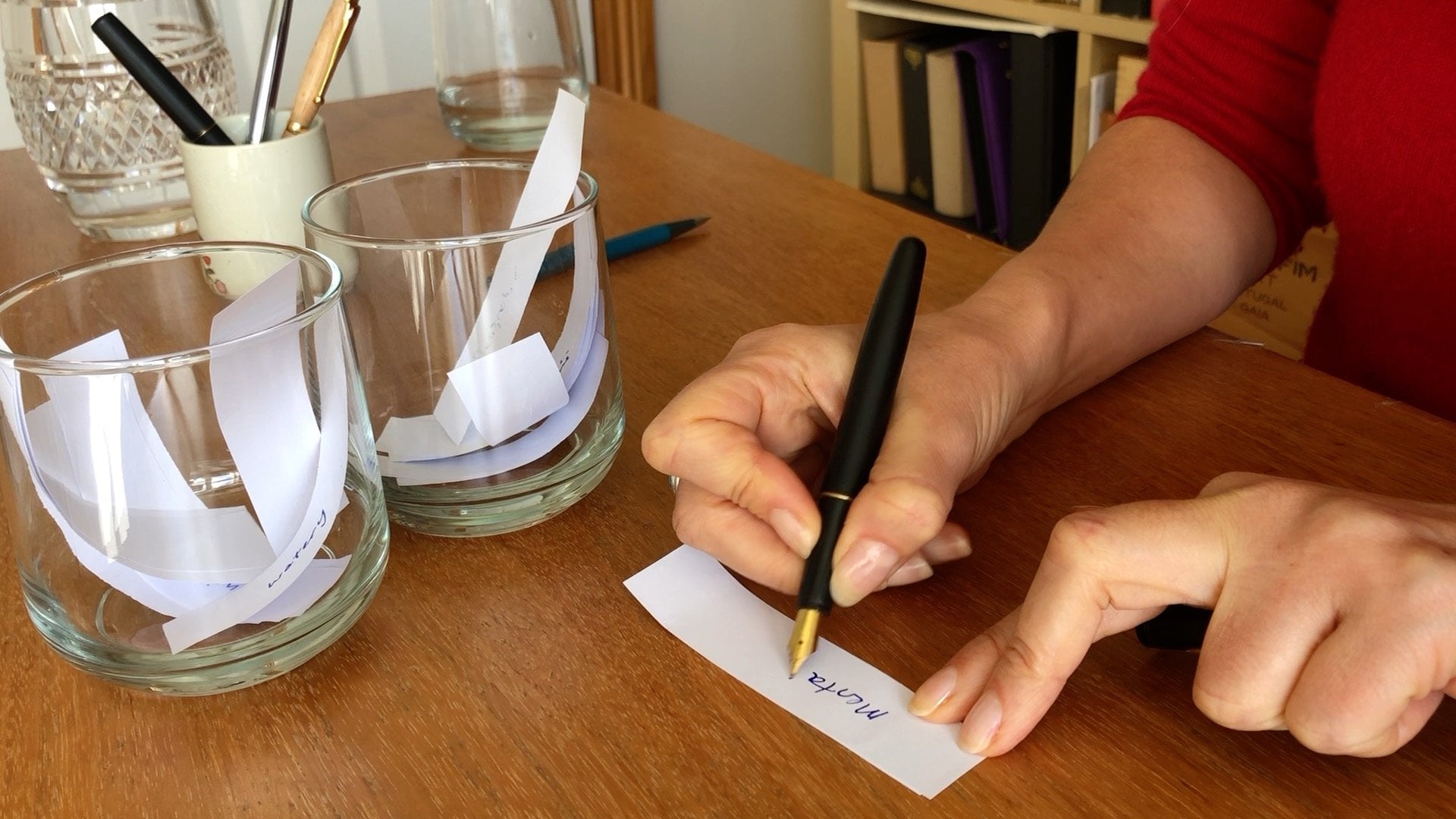
and has good flow. I have this very beautiful
fountain pen here, which I love writing with
in my nice notebooks. However, I tend not to use it
for free writing because it demands that I be somewhat more deliberate and
slower in my writing. For free writing on something
we can write quickly with, I quite often choose a
pencil or a ballpoint pen or perhaps another fountain pen
that has a little bit of a faster flow and that I'm less precious about for your paper, your average every day. Fog, standard four
or foolscap path. Do not use the very beautiful notebook
Aunt Mary gave you for Christmas that you are just dying to fill with
all your genius musings. Because obviously you're going to be too afraid
to make mistakes, mess up the pages. Everything about free
writing is moving us away from thinking
about writing as precious. We're learning to see
words as plentiful, as abundant as malleable. Be willing to write absolute
drivel and lots of it. Even if you are the fastest
typist in your village, do handwrite your pages. There is something
very powerful in the process of the words
coming from the brain to the hand and out onto the page that is lacking when we
push buttons to do so, the act of forming the
letters on the page in ink or graphite seems to have
a more organic flow to it. The most important
thing to know about free writing is that it is for no one's
eyes but your own. There is no
expectation on you to show what you've
written to anyone else. You don't even have to read over yourself if
you don't want to. Once you've written the pages, you can shred them, you can burn them,
you can eat them. What are the rules
of free writing? Well, really there's
just one rule that is that once
you start writing, you keep writing without pause, without hesitation, without
stopping to stare into space to carefully
compose a sentence. You merely start writing
and you keep writing. The pen or the pencil
keeps flowing, that's it. Apart from that,
there are no rules. A page of free writing is a lawless place with zero
regard for authority, for grammar,
punctuation, spelling, for any logical sense. You might be
wondering, what form is this writing
supposed to take? Like an essay, is a journal
entry, is it fiction? Is it supposed to be poetic? You write whatever comes out, literally whatever comes out. If you go blank, then I've gone blah, blah, blah. I have filled lines, if not entire pages with
words like blah, blah, blah. Just to keep the pen moving. As long as the pen
or pencil is moving, whatever comes out is valid. Sometimes something
beautiful comes out. A perfect metaphor
or an idea for a story when this happens, this is byproduct of
free writing. It's not. The aim of, the aim of freewriting is merely to
write without hesitation, without stopping,
without slowing up enough for the logical mind
to catch up with your pen. One way to do your free
writing is to go against the clock or with the clock however you want
to see the clocks roll in. This you pick a certain amount of time that you
want to write for, set your timer and go for it. If it's your first
time for your writing, pick say 6 minutes. Once you realize how
quickly 6 minutes goes, you set up for more
than next time. Anything up to about
20 minutes is good. I say about 20 minutes because I prefer to
pick arbitrary times. By arbitrary I mean 17 minutes, 13 minutes, 4 minutes. We are so used to 3
minutes, 5 minutes, 10 minutes, that our minds are almost immune to them in terms of them giving
us a sense of urgency. Whereas 8 minutes or 4
minutes is something that it feels real and
lights a fire under us. Often you'll find that
when the buzzer goes, you want to keep writing
because you're mid flow. If that happens,
then keep writing. There's no reason to
break your own flow. Finish off whatever sentence or whatever thought or image or
whatever it was you were on.
3. Clearing the Pipeline: Another way to write besides to a certain amount of time is to fill a certain
amount of pages. Some of you might
be familiar with Julia Cameron's
The Artist's Way, which is a 12 week course in
unlocking your creativity. In this course, she uses a
to call the morning pages. For this, you write 34 pages of free writing and you do so first
thing in the morning. Now the use of free writing in the morning pages
is very specific. The best way that I can explain
it is to use an analogy. A friend of mine was
working in a bar. He told me that at the
beginning of the work day, the first half pint or a pint of beer that was poured
from a tap was discarded. The reason for this is because it had been sitting
in the pipe between the keg and the tap
and had gone all foamy and stagnant and
wouldn't taste very nice. Well, I thought when
he told me that story, that is just like
the morning pages because that's what we're doing. We're clearing a layer of scum
from the top of the mind, discarding it onto the page so that we can get
to the good stuff, we can let the rich stuff flow. That is why when you're
doing free writing, whatever comes out is valid. You can complain about
a bad night's sleep. You can envisage
your perfect day. You can spend a paragraph
describing the weird freckle. You just spot it
on your knuckle. It's all the layer of foam from your mind so that we can let
the good stuff flow. At this point, you certainly know enough about free writing to give it a go if you
haven't already done so. It is time to jump off that, set a timer for yourself, for however many minutes
you choose anything up to 20 or choose an
amount of pages to fill, to say 34 fouls, gap pages, and go for it. Just give it a try. Remember, no one else needs
to read this but you. This is for your eyes only. It's purely to get
the words flowing.
4. Silencing the Editor: Most people find that
once they get into it, they can keep writing that
It is surprisingly easy. There are a lot of words to pour onto the page once
we allow ourselves. There was a book
published in the 1920s called Becoming a
Writer by Ra Ta Brando. In it she talks of
harnessing the unconscious. She writes, best way
to do this is to rise half an hour or full
hour earlier than you customarily rise just
as soon as you can. And without talking, without
reading the morning's paper, without picking up the book you laid aside the night before. Begin to write. Write anything that comes into your head last night's dream, if you were able to remember it. The activities of the day
before a conversation, real or imaginary, an
examination of conscience. Write any early morning reverie, rapidly and uncritically, the excellence or ultimate worth of what you write is
of no importance. Yet as writers, we
have two modes. In one, we are an
artist free and happily skipping
around the world of the imagination without
care in the world, our artist doesn't care what our sentences would
look like to somebody else. They don't fret about how their work looks like
in the light of day. They certainly don't worry
about whether what they have written has the potential
to be a bestseller. The artist just writes what it writes for the sake of
writing and enjoys it. The other mode is nit, picky and self conscious. It is the editor. It abhors incorrect
use of apostrophes. It detests rambling. It wants everything
to be in neat, tidy sentences and paragraphs. It cares deeply how our writing looks to
the rest of the world. It wants our writing
to be perfect. The editor has its use, a very necessary use, but only after the artist has been allowed to
have free reign. If the editor were in
charge from the beginning, nothing would ever get written. By practicing free writing, we are finding a way to silence the editor to keep them at bay until their
skills are needed. It is a way of allowing the
artist to outrun the editor. What I'm calling the
artist and the editor, Artha Branda refers to
as the unconscious. And the conscious mind, she writes for the root of
genius is in the unconscious, not the conscious mind. It is not by weighing,
balancing, trimming, expanding with
conscious intention that an excellent
piece of art is born. It takes its shape and has its origin outside the region
of the conscious intellect. She goes on to say,
the unconscious should not be thought
of as a limbo, where vague, cloudy, and amorphous notions
swim hazily about. There is every
reason to believe. On the contrary that it is
the great home of form. That it is quicker to
see types, patterns, purposes, than our
intellect can ever be. By free writing, we are allowing
the good stuff to flow.
5. Going Further: So far we've spoken about
free writing largely in the context of it being
a morning exercise, but it certainly
doesn't need to be. It just so happens
that most writers do their best work or find they can concentrate better
in the morning. Or it's just a time when we carve out some time for
ourselves for writing, to let our genius
unconscious do its thing before the banalities of
everyday life intrude. But free writing can of course, be done any time of
day to different ends. Find that free writing helps
me with going further. What do I mean by that? Say I'm writing a short story, I'm not too sure
where it's going. I've been writing in scene John walked up to the front door
and knocked after that. I'm not too sure
what happens next. I've come to a standstill. I'm looking at the blank space where the next sentence
is supposed to go. Panic starts to creep in. If I can't finish the sentence, then I can't finish
this paragraph. If I can't finish
this paragraph, I can't finish this page. This page. I can't
finish the story. I can't finish the story. I can't finish this book.
My career is in tatters. Instead of going down that road, I grab a few 84 pages and I start to free write
around the story, the story itself, but just
free writing about it, asking, what if John finds a key under the doormat
and lets himself in? John's grandmother returns from the dead and opens
the front door to him if meteorite falls
on the house next door. While he's standing there, I'm exploring where the
story could go, all these different avenues without being precious about it. Usually I find my way back
into the story by doing that. Natalie Goldberg, in her book, Writing Down the Bones, has a chapter called Go further. I say it's a chapter. It's all about five
paragraphs long. It has a very simple message, which is when you think
something is finished, when you think you're done
with what you're writing, go further, write some more. Quite often, when we think we've just finished
writing something, we're actually on the
brink of something else. On the brink of breaking
through into something. When you think you're done, keep pushing or writing further. It just might be on the verge of breaking through into
something deeper, weirder or more surprising
than he thought it could be. A number of years
ago I was taking a workshop with the
poet Matthew Dickman. I remember he told us this story about when he had met one of his poetry idols at a reading or a
conference or something. She had read one of
his poems for him. She handed it back saying, yeah, it's okay,
it's got potential. But write another 100 lines of poetry after that last line. He laughed, obviously
at this funny joke, but she didn't laugh. She just looked straight
at him and she said, what do you want to
be a poet or not? The practice of free
writing is essential to being able to push your
writing into new territory. To going further,
imagine the difference between letting your
editor labor over another hundred
lines of poetry or allowing your artist to pour
out 100 lines of poetry. I know which one sound
more pleasant to me. I think the editor
can wait a while. I'll share an example with
you from my own writing. When I found that free
writing helped me to go further and to break through with a piece that
I was working on. I'm sharing a poem purely because a poem is something that's short and easy to share. But the things that
I'm talking about apply across the board to
every kind of writing, whether it's script writing, poetry fiction, non fiction, whatever it is
you're working on. When I was working on my poem, Artifacts back in 2014, mentor at the time read
an early draft on it, thought that it was okay, but that it had potential
to be a lot more. She advised me to do some free writing on
the topic, which I did. From that free writing, I had a breakthrough and the
end of the poem was born. Now if I had just sat with the first draft of that
or the early draft, I might have had a line
or two here and there. But mostly I would
have just worked with what was
already on the page. There is no harm in going further when you
think you finished something to write another
few pages of free writing. At worst, you'll have wasted a couple of pages of
cheap four pages. At best, you've given yourself a whole chunk of raw
material to work with and you just might break
through what you were writing into something more
than you thought it could be.
6. Panning for Gold: Often in life, it's just when
we take the pressure off, that good stuff happens. It is with free writing, when we allow ourselves
to be ridiculous and senseless and put no importance on the quality of our writing, that what we write might
actually astound us. Now, this isn't always the case, and most of the time
it's not the case. In fact, quite often, when we read over
our free writing, what might go smack is just how much waffle
we're capable of producing. But sometimes in,
amongst all the blah, blah, blah and the ramblings. Something shiny catches
our eye dazzling phrase, metaphor, an idea for a musical. A gorgeous articulation of how the sea felt on our skin last night when we
went for a night swim. Once you've got
into free writing, you'll find that the
pages quickly accumulate. That is, if you haven't
burnt them or eaten them. What do we do with
these notebooks and pages that are piling up? Is there any use for them beyond using them as
a warm up exercise? Is the content of the
pages of any use? Absolutely. Here's something you can do with your pages
of free writing. Take out your favorite
highlighter or a pen ory pencil, and read over your free writing. Sifting for gold, those dazzling little
nuggets that stand out, highlight or underline them. You can gather all
those gold nuggets into a file or write them
out onto another page. You can use them as starting points for
new pieces of writing. Or alternatively, you can
store them as raw material, which you can later mind when you're writing other projects. And suddenly you remember there was that lovely
phrase, I could use that.
7. Using Your Nuggets: Here's an exercise you can
do with your gold nuggets. Say you've filled
your three pages or written for her
for many minutes. You are going to go through your pages with a
highlighter pen and sift for gold nuggets, then take a clean page, Copy out your five
favorite sentences or phrases from your nuggets. Give each one of
those its own line. You've got five
sentences or phrases, each one on its own line
on a new piece of paper. Then with each one of those
five sentences or phrases, distill them down to five words. What you're left with
then is a five line poem with five words in each line that you have harvested
from your free writing. You do not need to think of yourself as a poet to do this. It's just an interesting
and fun exercise that takes your free writing and
pull something out of it in order to create a
finished crafted product. I'll share the first one of
those I ever wrote with you. It was many years ago. In a saner world,
time stands still. Woody Guthrie guards
the Grand Canyon. This is where you are, he says, and what you're looking for. I wrote that poem many years ago and it still
surprises me because there is no way I
could have written that poem from a conscious
mind starting point. I don't even know where
most of it came from. The wood go through
reference I think I get because I was
listening to Bob Dylan that morning on my headphones on the bus on the way to the
city to go to that workshop. The rest of it, not a clue. And of course, the lines were gathered
from different places in, throughout the three pages or however many pages I've
written that morning. I suppose there's an argument
to say that free writing in the middle of the day could even produce more
interesting results. Because we've had
some experiences throughout the day to
pour into the page. Free writing really has different functions
depending on what time of day you do it
and how you use it. Free writing
essentially, is a way of getting anything
onto the page. Writing something is always better than staring
at a blank page. There are different
ways that you can use free writing as well,
different ways to start. You could start with a prompt, say you could pick a color blue and right
from there, or a shape. Or you could look at
what's on your desk. And right from there,
you could take the first line from a
book or an article. Let's say the first
line of a poem. We've already mentioned
Matthew Dickman today, so let's take his, for example. You could start with, I found a white piece of
paper with your name on it. I'm free right from there. I'm hiding from
the stars tonight. I'm free right from there
and see what comes out. You can experiment with free writing in all different ways. I think you're probably
aware at this point though, that free writing
doesn't require any particular prompt
or first line. That really what
freewriting is all about is simply putting the nib or the lead to the paper and letting
the words flow.
8. Epilogue: Recently, I caught the
bus into the city and I ended up sitting next to someone I know who I hadn't
seen for a while. His name is Eric. Eric told
me that he had been going for guitar lessons with a guy who said knows a
gazillion chords. This guy taught Eric three
chords and off he went. What Eric said he loves about guitar is that just
those three chords, he can get to the same
place, the same state, he can get into the same zone
as that really experienced, who knows all the chords. With writing, with just
one tool, free writing, anyone can get to
the same place, that same state, into the
same zone, can experience. The joy of writing
can tap into that creative well that any writer
of any experience does. Now you know how to go
about free writing. It's one and only rule. Keep writing until you've
reached your goal. Let's briefly recap the benefits and uses of free writing. Free writing warms you up, it flexes the writing muscles, it clears the pipeline. It clears that
layer of foam from the top of the mind so that you can get
to the good stuff. It switches off the editor keeps the sensor at
bay until it's needed. It allows you to go further to break through with your writing
into new territory. Also, it gives you gold nuckets. It gives you little shiny pieces of phrases and ideas
that you can use later. One very important benefit of free writing that I
hadn't mentioned until now is that more you
practice free writing, the more that sense
of freedom and liberation spills over
into your other writing. Whether you're script
writing or writing memoir, fiction, poetry, or whatever
it is you're writing. That same sense of freedom and liberation starts to
seep into that writing. That you trust your
artist a little bit more and let them take the reins a little bit in your writing on
a day to day basis. That really makes for
a much more easy, relaxed, and fun writing
experience all around. Remember to post your
projects in the gallery. I am so excited to see what comes out of the
class project for you. It just remains for me to say congratulations and thank you so much for taking this class. I've really enjoyed teaching it. If you have time, please
do. Leave me your review. Your feedback helps me know
what works in my classes. That's it. Thank you
and happy writing.
9. Class Project: Free writing, by its very nature can tend towards the personal, it can also tend towards the writing that you just don't want to share
with the world. I said at the
beginning that there is no expectation for you to show your free writing to
anyone beyond your own eyes. Therefore, the range of ways
in which you can choose to show that you have engaged with the process of
free writing is quite broad. In the class project,
you might share a photograph or a few sentences on the experience of
how it was for you. You might share some gold
nuggets or your five line poem. Or you can choose your
own unique way to share the fact that you engaged with the process of re writing. It's up to you how you do it and I look forward to seeing your
projects in the gallery.
 Niamh Prior, Author & Poet, PhD