Transcripts
1. Introduction: Hi, my name is Mary. I'm excited to introduce
you to one of my passions, acrylic paint skin,
jewelry making. During childhood, I was always
creative and inquisitive. Unfortunately, an art
teacher in high school told me that my art
was not good enough, so I stopped creating it. However, in my adult years, I discovered acrylic paint
pouring and fell in love with the way the paint decides how it will move and it's final look. Once I accepted this process, I really started to
enjoy painting again, and my passion grew. I explored different
surfaces to pour onto using a variety
of techniques. I share this passion with the children I taught
in elementary school. Then I wanted to take it
even further and searched for ways to use the drips
from the runoff paint. That was my journey to
making acrylic skin jewelry. I will show you how to prepare the paint using
multiple mediums. How to put the pieces together, and where you can buy the
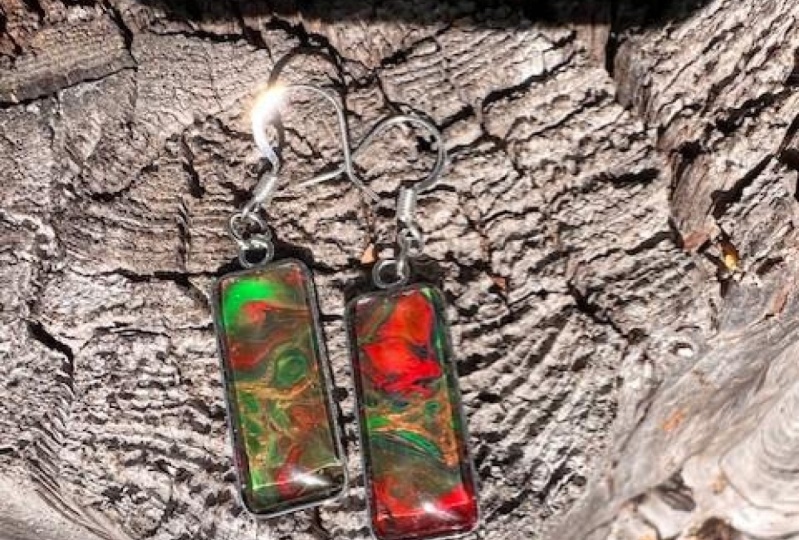
materials and tools from. Your jewelry will
always be unique, as the paint process
takes it's own path. You can make different
types of jewelry such as necklaces,
bracelets, hearings, pins, rings, and even cufflinks to either give
as gifts or to sell. I offer clear, easy instructions
that anyone can follow. Not too fast, not too slow. So come along with
me and give yourself the freedom to create a
one-of-a-kind piece of jewelry.
2. Your Project: Your class project is to create and put together a one
of a kind piece of jewelry. It could be a
necklace, earrings, a bracelet, cufflinks, a pin, or rings. Select and mix your paint colors with the medium of your choice; Floetrol, Glue, Liquitex, etc. Choose your method of
making a critic skin, pour onto canvas,
a page protector, or into a plastic bin, allow it to fully dry
from 24-48 hours. Select the jewelry
item you wish to make, decide which color
of metal to use. Choose the type of
chain if applicable, cut the unique skin
into the desired shape, adhere it to the cover as shown, secure it into the vessel. When your creation is complete, post a picture of it to
the project gallery. Don't be afraid to ask
any questions. Good luck.
3. Tools and Materials: Here's a list of tools and
materials you may need. The list is extensive but you won't need
to use everything. It depends on how much you enjoy on making unique
jewelry pieces. Silver, gold, or bronze vessels to put
your paint skins into. Glass or brass and [inaudible]
to protect your art. Chains, cord, or wire, for necklaces. Findings such as
clasps and jump rings, cuff-links, rings,
bracelets, or pendants. Jewelry glue to adhere the paint skin to the
[inaudible] and pestle. Gloves to keep your hands clean. Acrylic already mixed paint. Pouring mediums such
as glue, Zinsser, flow troll, or liquid texts, pouring medium,
sticks for stirring, plastic cups, a
bin to pour into, page protectors, canvas, rubbing alcohol, cotton pads, pliers, tweezers, scissors,
and jewelry boxes. I've put together a list of
places that I have purchased, some of these tools
and materials. You can find it in the projects
and resources section.
4. Paint Preparation: For this class, you will need acrylic paint, bottle, cups, stir stick, gloves to keep your hands
clean, pouring medium; could be floetrol, glue, Liquitex pouring medium, there's also a product
called Zinsser. These are paint extenders. It'll extend the paint without changing the color of the paint. Your acrylic paint could be regular paint from an art store, paint from a dollar store. Those are regulars. Then you can get something
called a hard body. You will need less
of this paint. You'll also need water. Let's get started. The recipe I use is two parts pouring medium to
one part paint. Then you add a little bit of water to get the
right consistency. I always use floetrol. I find I have the best
results with this. That is what I'm going
to show you today. I found these bottles
at the dollar store. I like them because they
have measurements on them. You can measure directly
into the bottle. I'm going to measure
four ounces of floetrol. [NOISE] I'm going to measure
two ounces of paint, [NOISE] which will
give me six ounces. Before I do anything else, I'll screw on the lid, put on my gloves [NOISE], and shake the bottle. [NOISE]. You want to shake until
it's mixed very well. It still looks pink and red, so we need to shake more. [NOISE] I can tell by the sound
that it's too thick, so I'm going to add some
water just a little bit. You can always add more. You can't take it away. With the water added
and the lid tight, finger on the top. [NOISE]. You can hear it's
slightly less thick, [NOISE] but I'm still
not happy with it. Actually does look
a little better. I tend to do a pour test. No, still too thick. We will add a little more water. You can see it's a
lot more liquidy. You don't want it too thick, but you don't want it too thin. You don't want it
running like water, more like a thin yogurt texture. Now we'll try the
dollar store paint. Two-thirds floetrol, one-third paint, and stir. [NOISE]. You can see that's very thick. We'll add some water. Still too thick. A little more. Just a little at a time. You can see it's
a little runnier. Now, we'll try the hard body. You tend to need
less paint for this. [NOISE] I'm going to use
three parts floetrol. Two one paint. [NOISE] Still a little thick. [NOISE] Perfect. That is from hard body. This is dollar store and
this is our store paint. Basically, it's the same color. Hasn't lightened up very much. Now, you're ready to pour.
5. Pouring Your Paint: In this video, you will
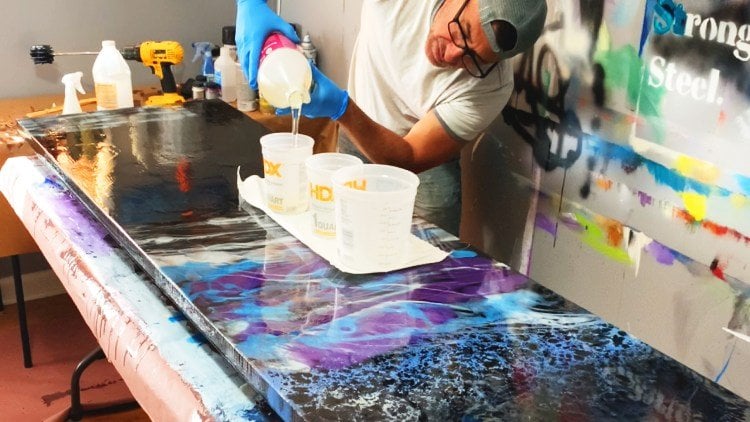
need mixed paints, a bin to pour into, a plastic page protector with cardboard inside for stability, a canvas, latex gloves, a butane torch,
and plastic cups. Decide if you'll pour
paints into a cup first, that's a dirty pour, or directly onto the surface, that's a clean pour. You can use a wire cooling rack or two plastic cups placed upside down on
the table or in a bin. First, put on your gloves
to protect your hands. I'm going to be using black, blue, light blue, and green. I'm choosing a dirty pour. Pour the paint in slowly, not like the sped
up version here. I've decided to add some white. Now, I'm taking the canvas and putting
it on top of the cup, holding it in place carefully, I'm flipping it over. This is called a flip cup. I'm going to wait
for 30 seconds. Slowly, lift the cup from the canvas to reveal
something beautiful. To get as much paint out
of the cup as I can, I tap it on the canvas. Look for the edge that
you like the most. It could be here or here, and here you'll see
some cell formation. I'm using a butane torch to pop any paint bubbles
that have formed. I'm going to tip this way first because that's
the side I liked, and now this way. See how the paint is
stretching and bending. I'm tipping the
paint so it runs off the canvas, like here. I'm tipping the paint to
cover the entire canvas. You can see the paint
coming off the corner here. There is a sneak peek of the
runoff paint in the bin. Here's the bonus, a
beautiful painting. Now to reveal inside the bin, some amazing paint drips. Leave the bin and the
painting in place undisturbed for 24-48 hours. Here's the painting
24 hours later. The paint skins in the
bin still aren't dry. They will likely need at
least another 12 hours. Now a demonstration showing
how to use a page protector. Again, you need gloves, put two cups upside down
in a band or on a table. Take your page protector
with the cardboard inside, and place it on the cups. This time, I'm going
to be using yellow, orange, pink, red, and white. We're going to do a clean pour. Pour puddles of paint
directly onto the surface, mixing them as you go or just putting them randomly
on the surface. Do not use a butane torch, we don't want to
melt the plastic. Now we can have some fun
by manipulating the paint. Tilt the page protector, this will move the paint
around the plastic. Here you will see some
paint in the bin, but this is actually going
to be your paint skin. Some tools you could try
are a popsicle stick. Just move it around the paint. Make interesting shapes, squiggles, and lines. A toothpick makes thinner lines. You could use a straw, blow through it to
move the paint around. This not only moves the paint, but it mixes the paint, and you can see the colors from underneath coming through. Leave the page
protector in place undisturbed for 24-48 hours. The painting is now dry.
6. Jewelry Selection: In this class, you
will select a bezel, glass or resin cabochon, chain and findings if
you're making a necklace. You could also use wire or cord, pliers, glue, scissors,
rubbing alcohol, and a pad. Ensure you have the
matching size cabochon to fit inside the bezel. If you're using a
chain for pendant, measure the appropriate length. When using a jump
ring, using pliers, open sideways to fit onto the chain and onto the clasp. When you do it up again, push it back sideways.
7. Cutting, Gluing and Covering: First, choose the jewelry bezel. For this demonstration, I will
choose a pendant necklace. Then you need to
decide which part of the skin would look
best with this pendant. I feel that this
part is perfect. Everyone has different tastes, so choose what you like. Take the matching
glass cover shown, and do a rough cut
around the glass. Being very careful,
this one is super thin. Once you've found exactly
where you want it to be, do a more precise cut using the rubbing
alcohol and the pad, clean the flat
side of the glass. This will ensure there's
no fingerprints on there. Taking the jewelry glue, put a small amount
onto the glass. Using the tip to spread. Put the glass on top of
the piece you just cut. Cut any pieces away that
don't match the glass. [BACKGROUND] Take the bezel dependent tray, squeeze on a small amount of glue and spread it
around using the tip. Place the class
with the paint skin on into the tray and
push down firmly. Use your alcohol soaked
pad and wipe again. This will remove the glue. Finally, add the
chain of your choice. I've chosen a waxed cord that comes with the clasp and
jump rings already attached. There you have a beautiful
unique piece of jewelry. I'm going to show
you an alternate way to put together the pendant. First; we'll clean off the cover shown using the rubbing alcohol. Clean off the flat side, ensuring there's no
fingerprints on there. Then taking your glue, put the glue on the glass. Using the tip again to
spread the glue around. Find the piece on your skin
that you like the most, and put it directly onto
the skin, pushing down, making sure there's
no air bubbles and you're going to let
that dry for a few minutes. Now, the glue is dry enough. This is what we have so far
and I'm going to cut around. This is an easier way
than the previous way. [BACKGROUND] Now we'll take the
bezel and again, put a small amount of
glue inside, [BACKGROUND] knowing this is the top, decide which way you
want your design to go. It can be this way, this way, this way, this way. For me, I feel like this is a landscape with a mountain
in the background. So I'm going to put it in
that way and push it down. Once again take your
alcohol soaked pad, clean off any glue that
may have seeped out, clean off any fingerprints
that may be on the top. You can cut your chain, which I've done already. My previous video, I
showed you how to attach the jump ring and the
clasp to the chain. I'm going to add the
second jump ring to the other end of the chain. I always put the clasp on the right side so this is the way I'm
going to thread it on, [NOISE] so that when it goes on, it will be that way [NOISE]. It's done and if you look here, you can see, in my opinion, it looks like a landscape.
8. Final Thoughts: I'm excited to share this. My first class on Skillshare. Thank you for choosing. My aim is to instill in you the same passion that I
have for jewelry making. The lessons you have learned
here should motivate you to make your
own unique jewelry. Please take picture of
your finished piece and upload it by clicking
the Create Project button. Don't forget to leave
any feedback you have. It will help students decide if this class
is right for them. Please ask any questions you have in the discussion section. I will always answer and other students might have
different insights too. Have fun creating and
enjoy the project.
 Mary Hicken, Considering Creativity