Transcripts
1. Transforming Insecurity, Doubt, and Fear into Self-Love Through Art: Isn't it just the best when
you get a hit of inspiration, where you can hardly wait to get going on a creative
idea, an artwork. Maybe even you've seen someone painting very
loosely and freely, and wouldn't it be wonderful
to paint like that? And you just had that
huge hit right of desire. And then more often than not, at least this has
happened for me, where I feel those
great feelings, and then it's like I'm
being chased by feelings of insecurity and
doubt and fear of, like, what other
people will think. You know, I'm three
steps ahead in my head. You know, how is it going
to look on social media? And what if nobody likes it? Hi. I'm Almacox and I've been a painter and teacher
for over 20 years. And what I've learned about
these strong energies is that they really
aren't meant to go away, you know, just because
we want them to. They're always going to be
there on our creative path, and they are asking for
our attention first, and then also our
appreciation so that they can be transformed
into something deeper. And let's just use insecurity
and doubt and fear as the three raw feelings
that were transforming, they would be transforming
into deep confidence, you know, the kind
that's sustaining. Doubt, it would be
decisiveness that comes from a place and
trusting yourself. The fear would be
turned into, like, real heartfelt courage to pursue the ideas that
means something to you. So they want to transform
to a deeper level within. The transformation
process that I'm sharing today isn't really
new because really, every time you create, you do connect with a deeper
part of yourself, that unique creative being
that you are inside. My invitation is to
take a journey in this class consciously
and with intention, where you bring your attention and appreciation to feelings that you find challenging by creating a special
space for them. We will create a
painting of a safe, cozy room where we will place things that represent
our emotions. The goal is to see our emotions not as scary or as blocks, but as part of what
makes you you. My hope is that it will
help you know yourself better and help you see that there is more
of you to love. My art process and
the one I will share with you isn't really
about perfection at all. It's about self expression. We're going to create
something that we can look at with love and
not with judgment. I judgment is present for you, then you can make
a special object to represent that in your room. More on this later. You don't
need special art skills, just an open heart, and a
willingness to go within, which is why a room portrait works as a metaphor
for this journey. I'm calling this an
intermediate class because I'm not teaching you how to use
a particular art supply. You can follow my process which is accessible to beginners or you can use your
favorite art supplies and what you feel
comfortable with. My process assumes that you have some experience
layering paint. But again, I will walk
you through that too. There are three process
videos that are best watched and implemented
in the order I'm sharing. The first is a background
which represents the confusion that feelings
can cause inside of us, like insecurity,
doubt, and fear. Watch and create this video
after the supplies video. The second process is the
drawing of your room, which can be a simple
sketch or more involved on an iPad and you're going
to see me do both of these. The third process video is painting your room and
adding the symbolic details. That video will also
guide you through an introspection exercise
that I recommend you do. By the end of this class,
you will have a painting of a room that will
be a reminder to you that you have what
you need within to navigate the sometimes
strong feelings that are part of
the creative path. If you struggle with
mental health issues, then please do seek
professional help. I am not a trained psychologist. I am not a professional
psychologist or professional therapist. So I just want to make sure that if you need
special attention, you get that for yourself. What I'm sharing is a
tool that has helped me gain confidence
not only creatively, but also with my art goals, and I'm hoping that that
can help you, as well. The other thing that's helped me is connecting more to my joy. So in the past, I've been extremely
self critical, not only of myself, but
also of my artwork, and I've been a perfectionist. Well, I still am. I mean, I don't think this
ever goes away. I think, again, we're
transforming the feelings, but I'm much more
self loving and much more supportive of
myself and my goals. And I know that a lot of
artists do struggle with that. And so I'm hoping
that this helps you. Also if you'd like to
go a little bit deeper, I've created a
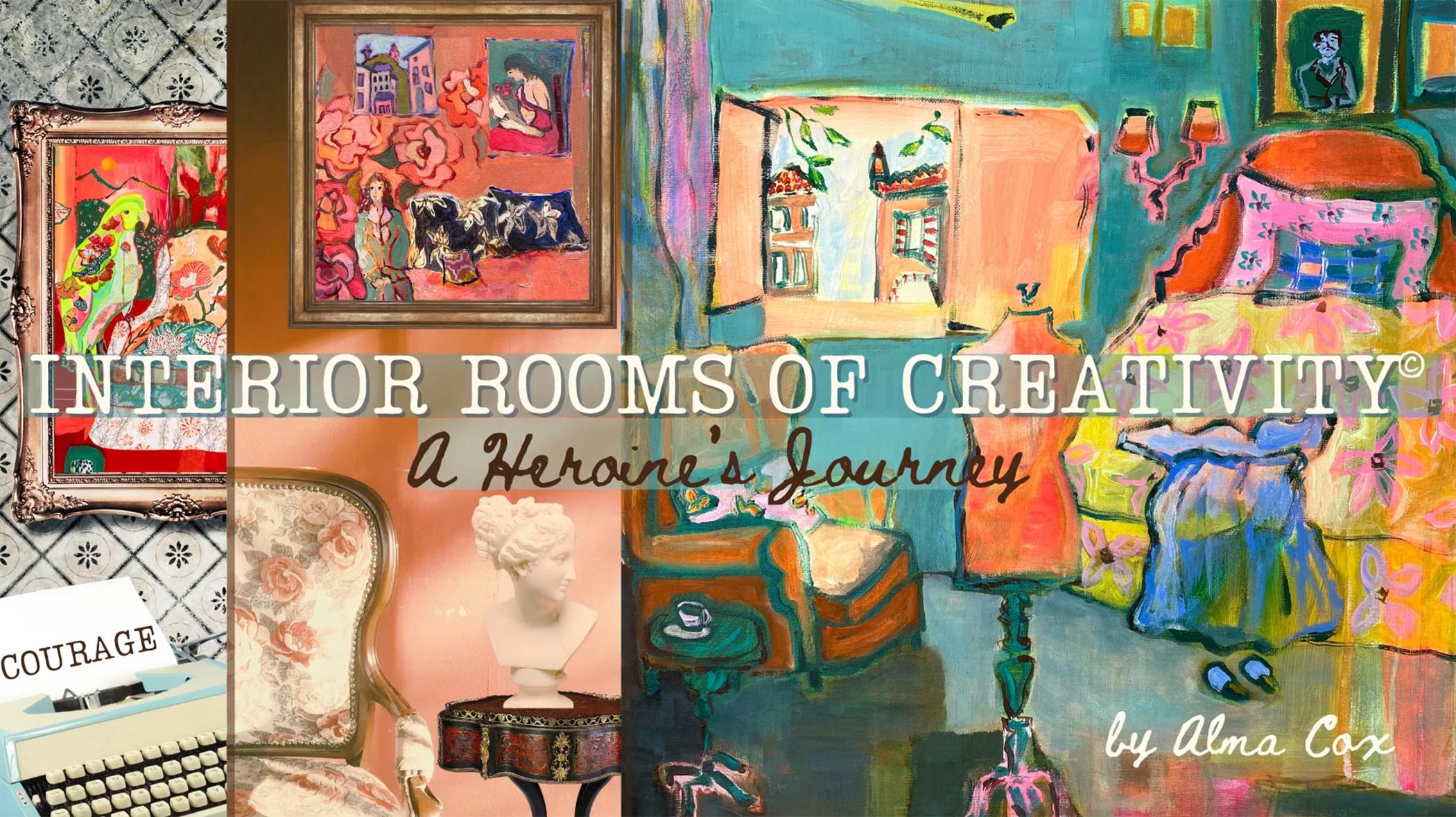
YouTube video that I call the heroines journey
on the Creative Path, and it was based
on a talk that I gave to a group of women
here where I live, and they found it
really helpful, and I think it makes
a good compliment to what we're
talking about today. I hope that you'll check it out. A on my YouTube channel, I have several videos that bring the feelings
together with the artwork. If that interests you
more, the link is below. Without further ado,
let's get going.
2. Class Supplies: Here's an overview of
the supplies I use. You are welcome to use the supplies of your
choice like a canvas, a sketchbook, or an
iPad, for example. You may collage
instead of paint. For the background,
you will need to cover the surface
of your choice with three colors and white and one very dark for outlining
if you're following me, like burnt umber or indigo. I use acrylic gouache
paints because I love the matte finish and I
layer them with acrylics. For example, the white and burnt umber I use is just
plain acrylic paint. I use a flat 1 " brush
for painting and then a round brush for the
room and the details later. I pick one that allows me to get the general
shape of something, but not precise details. Mine is a little beat up, but I prefer it because
the outlines it creates are unpredictable
and add character. I will use only a square shape of my paper for my
final painting. I have paper toels and water. I like to use
recycled plastic bags and cut them in pieces
for my palette. I also use colored pencils. These are by carnach
and a white Posca pen, which is an acrylic
paint pen for details. For the drawing process video, you can sketch your room idea on plain paper and
in the resources, you will find a Pintrsbard of
cozy rooms to inspire you. I will also do a quick hand
drawn sketch on paper using images from the Pintresbard to help you if
that's your process. I will walk you through
my process of drawing on my iPad and show you how I
use artificial intelligence, specifically chat GPT
to help inspire me. But you don't have
to go that route. I do recommend that
you watch though my process because it
might inform your process, even if you're hand
drawing your room sketch. For creating the room, I will paint it based on my drawing, outlining first
with a dark color, like I said, then
filling in with paint. You can use whatever
mediums you like again, as long as you can layer
them with collage. Honoring your process
and therefore, your choices is super important. I personally like the
iPad because it gives me a lot of opportunity to make
changes, which you will see. Painting will be different than my drawing and I
encourage you to move in the direction
your artwork guides you to make changes. Yes, I believe our
art directs us, which is part of growing and
trust of our creativity. You may decide to draw with pencil and finish
with colored pens. All of it is process. This is a creative and
emotional journey, support yourself by
allowing your choices to be intuitive and tell yourself they are the right ones
for you right now. If this whole thing brings up indecision or insecurity
or both for you right now, then it's time to make your
background. Pick a supply. You cannot get this wrong and let's go to the next video now.
3. Painting Your Background: For the background,
you are creating a visual space for your
feelings to be acknowledged. You paint them to look at them and acknowledge
here they are. More often than not, that is simply what they
want to be seen. As you paint, allow yourself to express
how you feel out loud. I feel frustrated or I
feel scared to mess up. If you prefer quiet
introspection, that is okay too. However you notice
your feelings, you claim them automatically as your own and really,
that's all they want. They want you to
see them, own them, and in this way, they
are transformed. This first layer
represents the chaos, confusion, and messy emotions
that we sometimes feel. It's a reflection of insecurity, doubt, and fear in
their raw form. It doesn't mean we have
to use dark colors. You can if you want to, but I believe it's more important to allow yourself the freedom to choose colors that
speak to your heart. A limited color palette helps to create a cohesive artwork and stretches us to mix new colors that we may
not have used before. Hopefully by now,
you've selected the first three colors
that jump out at you. Trust that these
are the right ones for your creative session. Remember to use white and your dark for contrast
and outlining. The same principles
apply to collage, make a limited color background as you keep my words in mind. As I paint, I'm giving myself the emotional
freedom to create whatever shapes I want and I mix paint hues with white as I wish. There's no wrong way to do this. Let your feelings
guide your brush. You can be as expressive, bold, or quiet as you need. I really like to push paint
into paper and canvas. That feels really good to me. I'd like you to notice that I am using just the one
flat brush for the whole background
and I'll even use the wood end of it to scribble into it a
little bit later. If you are brand new to painting and you've
never layered paint, it is just a natural thing for
paint to mix and muddy up. This brings me to my next point I just want you to
keep that in mind. If you don't want your
colors to be muddy, then wait for one layer
to dry completely before you add the next layer if you're going to go for multiple layers on your background. I personally do like my colors to be mixed
directly on the paper, and I also mix them a
little bit on the palette, but for the most part, I'm
mixing them on the paper. I'm allowing them to get muddy and I'm going
to share that I have two strong feelings
that come up when I do this because I've been
doing this for a long time, I'm very aware of them both. One is the perfectionist in me who causes me to
have insecurity. Generally, what she is thinking in my brain is that this
is very unprofessional. You should be mixing all
your colors on the palette. She's very worried about
what other people think. And so what I try to do when I'm painting is
I just speak out loud. I say, I know you're worried. I know that you're
worried that it's going to go out into the world and, you know, what are
people going to think, I'm validating all
those feelings for her. But I also recognize
that there's this inner child in me
who just doesn't care. She wants to push paint around. She doesn't care if the whole thing turns
into a brown muddy mess. She just wants to move paint. So because that feeling feels
good to me in the moment, I have to acknowledge both. I have to balance this, I know you're worried, I'm
talking to my perfectionist, and then I'm also feeling into the joy of the moment
of these colors blending. Something to keep in mind. Now, these may not be
your feelings at all. There might be feelings
that are overwhelming. In which case, I do
recommend that you pause your painting and you
experience your feelings. Sometimes, at least
for me in the past, I used to think I was going
to die from having some of my feelings and
it's not the case. Crying actually does clear out a lot of feelings and
we can transform them. What's happening is a lot
of times when we're very young in our life,
we suppress things. For example, my
perfectionism arose because I was a child
who was very sensitive. I thought I had to
get straight A's. I couldn't speak out of turn
because I would get spanked. I also grew up
very fearful and I had to walk a very
straight and narrow line, so that's where the
perfectionism arose. But I still experience
it today in my 50s. But it's lessened a lot. We have a better relationship, and that's what I'm hoping
will happen for you is as you progress with this
style and form of painting, acknowledging your feelings, you will develop a relationship
with yourself, a way to talk yourself
through your feelings, but you can't avoid them. You do have to feel them.
That's why they're there. They're there so that we can
learn something from them. I personally value
the child that I was. She had a real strong
sense of survival. I truly admire. She's a very resilient
person because she had to control her world and
the way she did it was by being really good,
being a really good girl. I hope that that serves you. If you have feelings of judgment where you're
judging your painting, I just want you to know
that it's just paint, it will dry and we
are going to be putting more layers later. But if you do have a
feeling of judgment, then pick a color right now that represents that
judgment in this way, you'll begin the
process at least of acknowledging that
particular feeling. This is the way that we go
through all of our feelings, and we will be more
specific with objects. But for now, maybe that's
something that you can do. I hope that you can get through this background
with some sense of ease and some transformation has taken place. I'm
very proud of you. Holding you in my heart and
if you have any questions, please do reach out
in the comments. See you in the next
video. Thank you.
4. Draw Your Room, Give It Meaning: I will show you how I create
sketches based on rooms in a Pintrapt that I created
for you called Cozy Rooms. You're welcome to
do your own search if nothing jumps out at you. The important thing is that
whatever room you choose, it does inspire you. I'd like you to
really pay attention to what your heart says yes to. In the same way you picked
colors that spoke to you, I'd like you to pay
attention to what it feels like to be
moved by a room. While this class is about transforming
uncomfortable feelings, it's important to validate the
good feelings we feel too. Please don't
overthink it and make three to five
thumbnail sketches of rooms that you like
on plain paper. Also, please feel
free to use any photo or memory as inspiration
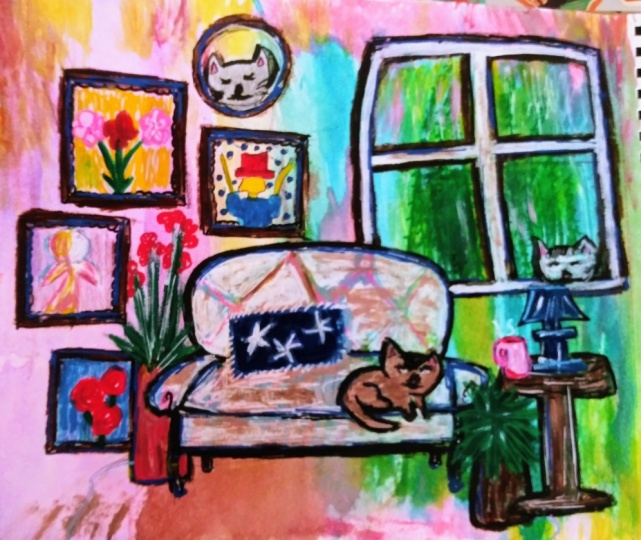
for your room. Keep your sketches very simple. Even though this
is a lumpy couch, my shapes are suggestions
of what I see only. I know that when I
paint my outline, the brushstroke will be rough. Putting in too many details
now really doesn't matter. The details you might
add at this point are things that come to
mind to you as you draw. That are perhaps
meaningful or symbolic so that you don't forget later if something if you
think of something. But it's okay to wait
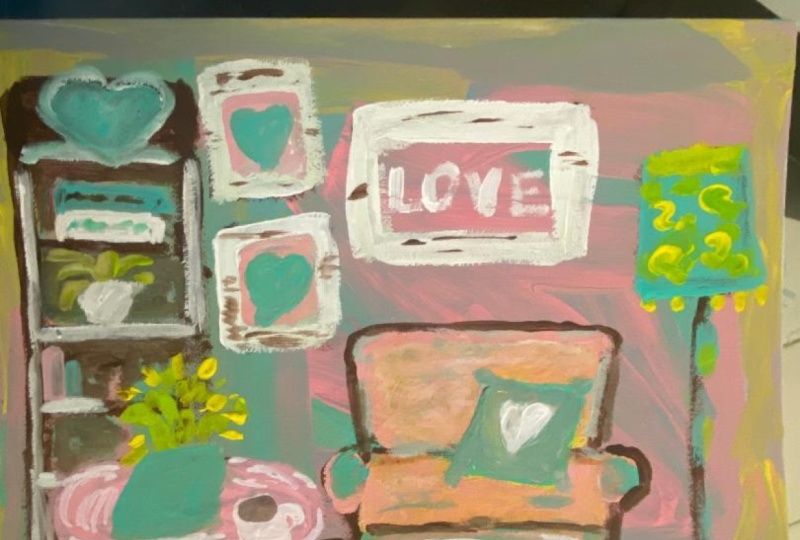
for these details too. I liked this room for its
color. That drew me in first. I like the shelf
because it offers an opportunity to add things to it that are
important to me later. Seeing several rooms
and doing sketches for them also informs
the final piece. For example, I really
like the idea of having a door to
an outdoor area, as I'm doing these sketches, I'm also keeping in mind, for my final piece, what is important to me. So it really does pay off, and it also is a great warm up to do some of these sketches. One of the ideas
that came to me as I did this one was the idea of a bird cage and maybe with the door open and
having it be free. Even just including artwork on your walls can bring a lot
of meaning to your artwork. You may decide to address a feeling that you had in a
childhood home, for example, and that artwork doesn't
necessarily have to be exactly as you
remember the past. It could just be these things that you
insert into that artwork that means something
like here I included a chair with an
eye pillow on it, and that means something to me. So you're the one this
is the artwork for you, just remember that it's
not for anybody else and if it doesn't mean
anything to others, it's fine. What matters is that it
means something to you. Now that the sketch of your
room is finished in general, I'd like you to think about some objects that
represent insecurity, doubt, and fear or any other feelings that you would like to
bring awareness to. These objects can be anything, a painting of a person, an abstract or landscape. Painting, a vase,
an animal object. The point is to
make your feelings tangible and assign
them to an object, and they don't have
to look exactly as they are or even
in your memory. A face can be blue or
not have features, a mountain can be pink. A vase can have a flower growing from it that
extends out the window. Objects can be
exaggerated in size. For me, for example, a lamp, this particular shape of lamp represent my grandmother's lamp and I actually had
a lot of fears about her in my childhood, and this is something that
I'm trying to illuminate. So this is a symbol for me. Objects can be
placed on the floor, on a table, on a shelf, on the wall outside. They can just be sitting
on the sofa or on a chair. You can put them throughout
the room wherever you like. Be your best friend
as you go through this process if some very
tender feelings come up. I will show you how I
use the free version of chat GPT to generate
inspiration for me. The key is to be detailed in your description
of what you want. Then once you receive an
answer you are inspired by, you can even ask to have GPT
generate an image for you. I'm pretty sure the
free version which I have only allows
one photo per day. It's best not to ask GPT
for a photo right away. What I like to do
is first wait for the artificial intelligence to answer and you'll see me go through that
in just a moment. Then when I'm satisfied that
I have enough symbols and there is enough details for
me to create something, then I ask it for some images. In preparation for this class, I asked ChahPT to generate three different images
over three different days, just so you can see
how I used a variety of images from ChahPT to create
a single room on my iPad. The other thing I
want to mention is ChachiBT gave me 15
different ideas, and then what I did was I made
sure to be very specific, and this is what I
mean by waiting until you're excited about the
feedback that you're getting. I waited for these answers so then I could tell
it specifically, I like these numbers generate a photo for me based
on my selections. The images are not perfect and you'll see that my room looks entirely
different from them, but these are other ways
to help you get inspired. I'm going to show you
how I use all the images I created on my iPad
to create my drawing. There are several elements
that Cha HiPT created, for example, the cracked
mirror, the Dandelion, that I did not use in my final artwork because I
was very careful to make sure that all the
elements that I did use in my final piece
were meaningful to me. Even though, for
example, I traced the girl on the sofa exactly. I did not do that
with my painting. I just did a general
idea of her. And this is the other part is
that you're free to again, add or not add as many
details as you desire. And here, for example, an embroidery hoop really
meant a lot to me. I would say that Cha
GBT freed me to create a giant embroidery hoop
because that really reminded me of my childhood and
feeling really sad and being in my room and just
stitching away, as I did to just help
myself feel better. Feel free to approach
your sketch and your memories and
the objects that you're going to be
putting in your room in your very own way. You might just create a list, you might just brainstorm some evocative objects in your memories and
just go from there. There are no hard
and fast rules here. The important thing
is to find things that symbolize maybe
transformation, your feelings, putting things in your room that makes you happy,
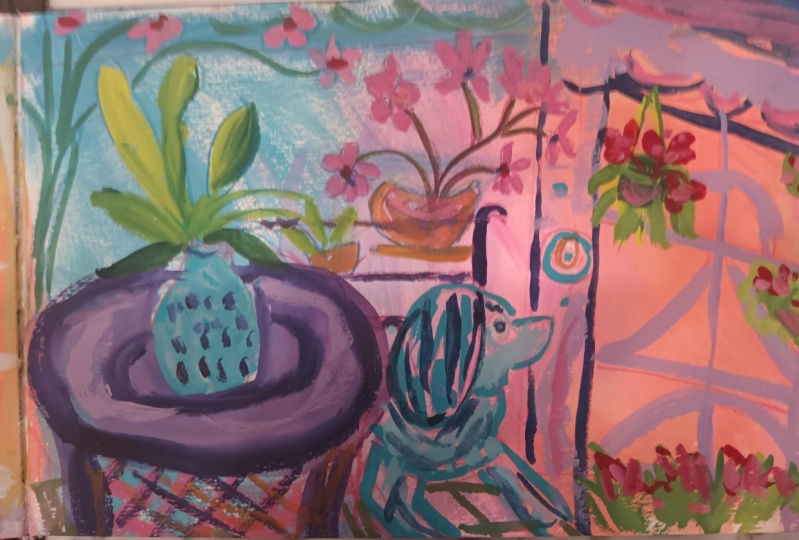
for example, for me, that was the Porcelain
Stafford Chi dogs because I like them because they always have a little
bit of they look a little bit put off and that is something that
means something to me. Just keep it really
personal and if any feelings do come up during
the process, allow them. You guys, thank you. Let's
move on to the next video.
5. Outline Your Room In Paint: Before you outline
your room and paint, ask yourself one more time, what makes a room
feel safe to you? Is there space for a special
pillow or a cute dog or cat? Even if these don't end
up in your painted room, adding last details to your
sketch can be healing. I will walk you through
my outline process now. I use my round brush to outline directly on the
background, which is dry. I use a combination of burnt
umber and the opera pink. If you have a dark background, you can lighten a paint color with white for your outline. I encourage you to just go for it without a
pencil sketch on your background unless you find a pencil sketch
feels better to you. I like to allow
myself imperfection, simple wonky lines that represent the thing
that I'm painting, not an exact rendition. Things don't have to line up, furniture legs don't
have to match. My aim is childlike freedom, and I hope that is your aim too. Childhood is when many of my insecurities and fears began, allowing a messy and loose
approach where I'm free to create as I want to
feels empowering to me. You may want to ask your
child's self what they need and you can invite
that possibility into. If you're making a collage, think about just
adhering as you go. Letting your
intuition guide you. My outline, you'll notice
that I'm using the pink in lighter places and
then the darker in the darker places
from the background. I'm using this as an opportunity
to create some contrast, but you can keep your outline solid if that feels
better for you. So I'm going to go ahead
and speed up this outline and just talk you through some of the decisions
that I'm making. The first being
that I don't have enough space for all the
details on my sketch, and that is just a natural
thing that happens. So what's nice is I can
pivot, and so can you. Right now I'm
creating a side table instead of the pot
with the flowers and I'm also going to change where I'm putting
my girl in the painting, the girl that looked sad
because in my painting, I don't have enough space really behind the
chair to create a large enough
artwork to represent her unless I take the
painting up high, which I don't really want to do. Hope that makes sense. I've
decided instead to add just a few more frames on
the other side of the chair, and this is part of the
improvisation process. Here is where I'm adding
the pot of flowers. Here I have one,
two, three books, and in my sketch, I have one, two, three,
four, five books. So you can change direction, and it's important to remind yourself that this
is process art, an artwork that is intended to help you become more
aware of your feelings. Ing more pressure to yourself isn't necessarily
going to help you. Try to keep the details simple. Maybe don't outline
all of them and leave some to maybe pencil
in or use a pen. Just go easy on yourself and just take note of
how you're feeling along the way and hopefully
you can get in touch with your joy and these details that hopefully there are some that
bring you joy as well. See you in the next video, we'll add more color.
6. Painting In Details: Make sure that the outline layer is completely dry before
you add more color. What I'd like you to
think about as you are adding more color and
some more details, Remember that a painting does not have to
represent things exactly. I know I keep saying that, but I just want you to take that pressure
off of yourself. If you'll notice
closely, my sketch, the flowers have a
very particular shape, but when I paint them, they are a little more blobby and
same with the butterfly. Everything is just a
little more it's as if there's a filter
on everything. It's just a little bit blurry and that is something that
can help you out, really. But I do want you to consider
contrast because if you use light colors on dark
backgrounds and vice versa and dark colors
on your lighter background, your elements are
going to pop more. I say this in every
video I make, I think the human eye sees
contrast before it sees color. Even if you're using
very vibrant colors, try to focus a little
bit on that contrast, the darks and the lights and
using white if you have to. White is just a great way
to create highlights. Also, I'd like to just gently emphasize how using the palette
that you chose initially, and trying to mix it as
much as possible with itself is really the best way to make your painting cohesive. What that means is, do your best to not add more
colors to your painting. If you must, then go for it. I don't want to limit you. But if your aim is
for the room to have colors that harmonize
with each other, then keeping your palette limited is really
the best way to go. Now, as I'm painting too, it's okay to paint
into your outline. It's also okay to leave shapes
without being painted in. Now, here I've decided to
use a much darker green for the ground and then paint in so that that rug just stands
out a little bit more. I don't want the rug to jump, so that's why I use are a little bit darker green around the border of it on
the edges of it. So also, you may want to
consider using the shapes of your background to create new elements or to try
something different. Moving forward, as I add more details with pencils
and the Poscapen, I want to make sure that
the paint is completely dry on the surface that I'm using those pencils
and those pens on. As you finish up your
painting and as it dries, I invite you to close
your eyes and hold the image of the
painting in your mind. And I want you to imagine yourself stepping
into your room. Maybe in your mind, your room is even a little bit different. But the objects that you've
selected that represent the feelings that
you are bringing awareness to, they are there. I'd like you to
notice how they feel in this safe space in your mind. As objects, they aren't
threatening anymore. But when you feel them,
they really can be. They are a part of you, feeling threatening to get
your attention in order to help you expand your
capacity to love yourself more. It's really not an ideal
way to get our attention, but it is what we
have as humans. I want you to think about how you get to love them
as a privilege. Sometimes, if we can look at
them the way we would maybe our child or our pet or very
good friend or our partner, what a gift they
are in our life. It's the same with
the feelings and you do have the
capacity to love them. It doesn't mean that
they define you. They are not all of you, but they are a part of you and a part that is
pretty significant. Next, I'd like you
to think of yourself as the room that
holds your feelings. Imagine yourself that
you are the room. In fact, you are even much
bigger than the room, which means that
the objects inside the room and representing your feelings are
not bigger than you, even though they might
feel that way sometimes. Open your eyes and begin with a simple thanks to your
feelings for being here. You can talk to them if
you feel like you want to, you can write to
them, and in fact, you can always write to
them or talk to them. They're just here to be
felt, seen and accepted. You don't have to change
them. That's not the goal. The transformation
happens on its own as you feel and accept them as
they arise in your life. I'm going to show
you how I practice having a relationship
with one of my feelings. Here's what I said
to insecurity. Insecurity when I feel you, I feel scared of what others will think
about what I make. I'm afraid to be
seen because I'll be judged when what I really
want is to be loved. I take a step by loving
me now and I accept you. Even if you don't feel good, I do see you and I
accept you as you are, and I'm grateful for you. I hope that that helps and I look forward to
seeing what you create if you feel so inclined to share your artwork in the portal, that
would be wonderful. And I just want to remind
everybody to be extra tender and respectful with one another
as you comment on things. I certainly will be. I will see you in the next
video. Thank you.
7. Skillshare Feelings Class Going Forward: We brought attention
and painted what represents the chaos
that some feelings can create and we also created a safe space to transform
those feelings. This is the power of creativity. And remember that you are the creator and the observer
of all of your emotions, and this is a powerful
thing to know. All of your feelings make up the beautiful
human that you are. Thank you so much for being brave enough to go
on this journey, and I'm so grateful
that you joined me. If you are interested in a
supplement to this class, I did create a video
on YouTube about the heroine's journey on the creative path and
I think it works well. Love for you to join my email
newsletter where I offer even more inspiring content
about creativity and artwork. I will leave that
information for you. I'm wishing you all the best
on your creative journey. Thank you again and
happy creating.
 Alma Cox, Painter ✶ Author ✶ Teacher