Transcripts
1. Introduction : Commonplace books had been used since the Middle Ages to collect, organize, and store information for later use. I'm Heidi Cocteau, an artist and writer living on the Oregon coast. I've been creating commonplace books well over 30 years. And over that course of time, my notebooks have taken on many forms. But the thing that remained the same with each is how each book inspires and helps me to focus. They let me write something that is relevant at the time, ponder on it and return to it at a later time. Commonplace books will give you a record of what you've done and how you've changed over time. They turn into personal anthologies of thoughts and reflections. It's a personal reference bible. In this class, I'll share the history of commonplace books, how to use them for self-care, the different types of commonplace books. Then I'll demonstrate the two ways that I use commonplace books. One being lines and lines of text, and the other, a collage style that combines visuals with a bit of inspirational text. So grab your notebook and pen, and let's get started.
2. Lesson 1 What is a Commonplace Book: So what is a commonplace book? Well, in its simplest form, it is a place to collect, organize, and store information for later use. These are non journals but rather private collections of information. They can be similar to bullet journals, but commonplace books are not a place to plan out one's life, but instead to memorialize phrases, quotes, passages, images, or useful concepts or facts. These books are shaped by the creator because of their individual personalities and interests. These books are typically handwritten and can include drawings and Plebeians from outside sources. They typically will have some form of organization that is personal to the creator. And they usually include a table of contents or glossary of some sort. A commonplace book is truly a special place to keep little pieces of information or inspiration that you can look back on later. Harvard University Libraries describes a commonplace book as a place that contains a collection of significant are well-known passages that have been copied and organized in some way, often under typical or thematic headings in order to serve as a memory aid or reference for the compiler.
3. Lesson 2 History of Commonplace Book: The history of the commonplace book spans from the Middle Ages to today. The concept originated from ancient Greece and Rome. Categories under which operators could place ideas, arguments, rhetorical Turner freezes for later use. They became most popular during the Renaissance, in early modern period when students and scholars were encouraged to keep commonplace books for study, they were used in the same way that a database might be used today. In 1796, john Locke wrote a new method of making commonplace books. In it, he gave specific advice on how to arrange material by subject and category. Even though they began as a way for scholars to keep track of information, they began to grow in popularity and private households, there was a way for them to collate ethical or informative texts, sometimes alongside recipes or medical formulas. For women who were excluded from higher education. The commonplace book could be used as an intellectual resource or a reference. Many famous thinkers and leaders use commonplace books. A lot of those people did back in the day because they were compilers of information. James Blake is one of those and also was Elizabeth Cady Stanton. And she was an American suffragettes. She kept commonplace books with private notes and correspondences. Patrick Bradwell, who was Emily and Charlotte Bronte's brother, kept clippings and artwork. So you can see just from these few examples how individually each one of these commonplace books was for the creator.
4. Lesson 3 Commonplace Book as Self-Care: Using commonplace books is typically thought of as a place to memorialize words, phrases, quotes, information, et cetera. But I'd like to take it a step further and argue that a commonplace book can offer a safe place during times of stress, loss, and grief. I'm a huge advocate for Germany and during times of loss, but for some journaling is too heavy. It can be scary at first. Also, it can be very emotionally exhausting. Whereas a commonplace book is a place that you can collect musings about life, your reflections on the time that you're in right now. It allows you to detach from some of the frustrations and the feelings. Instead allowing you to write more like a scientist or a researcher or a philosopher. Journaling will give you the opportunity to vent into barf out all your overwhelming emotions that kinda lie beneath the surface. But with a commonplace book, you're capturing your observations, collecting bits and pieces to compile what ultimately will become a personal reference book. A place to return to during times of stress and emotional overwhelm, to see all of the information and the wisdom that you personally collected because it resonated with you. It's your own personal reference Bible. In our pursuit to knowledge, to understanding of the loss that we're going through. We often desire a traceable path in our growth. And a commonplace book can give that to you.
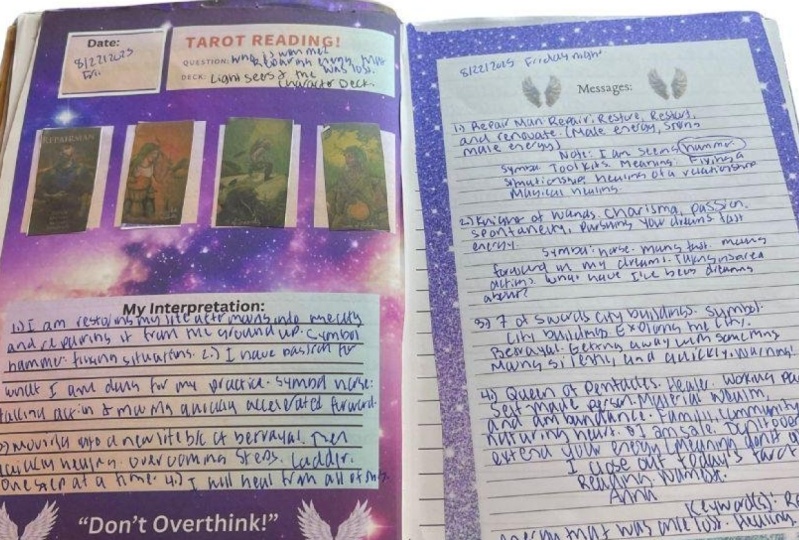
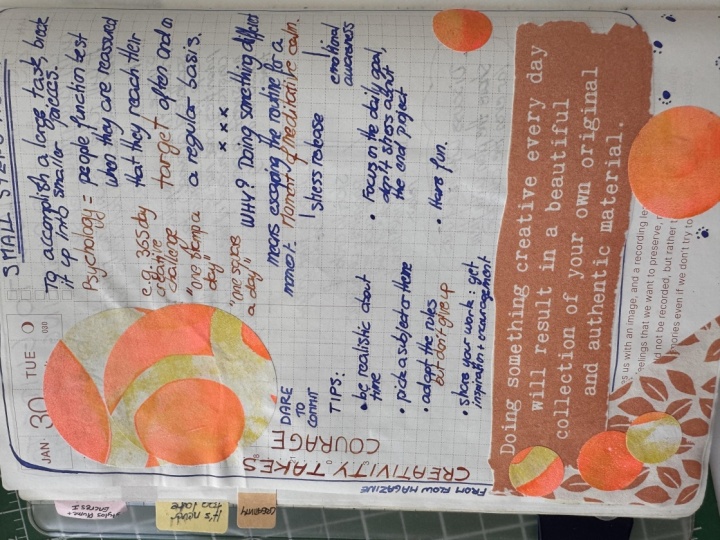
5. Lesson 4 Types of Commonplace Books: Let me start by saying that there is no right or wrong way to do a commonplace book. There are as many methods out there as there are creators. So take these methods as well as the methods that I'm going to be teaching this class and put together what works for you. Let's discuss the different types of commonplace books. I put them into really three different categories. One is the multi-use or the traditional use of a commonplace book. And that's more of the catch-all includes all the things that you find. They can be separated by categories and organized with the table of contents or an index. This is really just the one ether on your bag. You have at your desk. You haven't next to your bed, whatever in all the information, all the quotes, anything you find gets thrown right into this book. The second type is a theme or a course driven book. And these are more of a one book for each course with research that is specific to a book or a class. And the third type is the subject or project. Now these are specific topics or projects that you'll include all the research notes that you collect into one book. You can organize them with a table of contents or with an index. These require a little bit of planning if you want them to be more organized and have category headings, otherwise they're going to be very similar to your traditional or multi-use book with a ton of information about one specific subject or project, but just kind of haphazardly entered and categorize and organized by an index. Traditional commonplace books are really easy to begin. All you need is a notebook. If the book doesn't have page numbers already included, then you'll need to add those at the end of the book. Just save a few pages for your index or glossary. You'll create an alphabetical list, a to Z, keeping a few lines in between each letter. As you enter the information in your book, you'll record the topics and the page numbers in your index. The pros and cons of the traditional format is, it's really easy to use. All you really have to do is turn to the next page and just continue to add more information. This format allows for the creator to see the progression or the personal growth since it's completed in a chronological format. The only real con to this style is that it's difficult to find information later on. You can add colorful tabs, maybe some washi tape or something to add in the organization of the book. And then there's some time in the setup as far as adding page numbers in the index, but that's pretty typical of all the commonplace book styles. The theme commonplace books use a separate notebook for each course or subject or project. You'll want to add page numbers if they haven't been included. You add the table of contents. This can aid in finding specific material, but it's not necessarily needed in the style of book because most of the information is all going to be on one. But you could definitely add it if you felt like you needed to be able to easily find different sections. Or you could always add an index and added the information at the end of the book if that's your preference. The one thing that I would note is that with each entry, you want to make sure that you enter in the book, the class title, the chapter, and the page number with each of the quotations. A few pros and cons to the theme format. It separates each subject or book class into separate notebooks, which is great. You can add study notes, class lectures, and any other observations. It can be a really great study aid. The cons are that the style can be a little limiting. There's no room for expansion. There's no way to add any other miscellaneous information because it's specific to a specific class or book. There isn't a whole lot of expansion. The subject or project type commonplace book. These notebooks are to track information and reference material. Again, add the page numbers. If that doesn't come with the book that you purchased at a table of contents to this style or an index if you prefer. Because it's specific to a subject or a project, it'll depend on what that is and how you want to separate it out. Let's say you were going to have a gardening, maybe you're in a glossary in the back of the book so that you can have the page numbers for the flowers, the page numbers for composting. So you can divide it out that way. Pros and cons to the subjects style. These are used for specific topics. They can be used similarly to the traditional method by adding information about a specific subject or a project and cataloging the information into an indexer. Glossary. Project-based books are a great way to compile specific information. They tend to get a bit disorganized, but with some planning beforehand, this style can offer a great organized reference for future use. So those are the three types of commonplace books. Now in this class, I'm going to actually show you two different styles of commonplace books. And the first one is using mainly text. Now, a textile commonplace book is simply just pages of text, maybe with equational inserts or image that might be attached. The second is a collage style commonplace book, and those are collected. Images and clippings, stickers, ephemera, quotes and a lot of handwritten text with it. It's kind of a mix between a journal and maybe an art journal, right? Creating a collage style reference book. So just a note about the style and the types that we've discussed. Commonplace books are truly personal and over time, you'll develop your own way. And that's the beauty of these special bugs. As for organizing your books, the information that you collect will dictate the categories. This is something that forms organically as you add to the commonplace book, the most important advice that I can offer is to focus on finding good stuff. And the themes and the categories will reveal themselves.
6. Supplies Needed: To create the traditional or text-based style commonplace book, you simply need two things, a notebook and a pen. For the collage style, we're going to need a few more things. The basic collage supplies that you'll need is glue. I prefer to use yes. Paste. A lot of glues have a moisture factor to them. And when you apply that to paper, it can make the paper or wrinkle that. Yes, paste I found doesn't do that. It's very, very sticky and it can be messy. So I put it on with a palette knife. But I typically use yes paste and a glue stick. And you can also use other glues like mod podge or whatever. So whatever glue you have on hand is fine, but if you want to get something special, you can do that too. The other thing that you'll need for a clause is a femora washi tape. Always want to have pair of scissors. You can have lots of fun pens on hand. And of course you will need your notebook. So you can use any type of notebook. I actually really prefer using the zinc once the online version, which is the one that I'm showing here, you can use traveler notebooks and use them as inserts into a leather case. And kinda thing that I'm using right now that I'm really liking is these little mini three ring binders. And that way I can hole punch and insert really pretty paper and build out my clouds pages from there. Adding the collages to the commonplace books is being able to add in the visual alongside your text. And I like to create just a large ephemera established by pulling out words and text and pictures in old vintage papers. Anything that I can find, stickers, male postcards, pretty paper, collage paper, whatever it is that you can find and just build up a ephemeral stash that you can pull from. And when you're creating the collage style conflicts books, You're being able to connect a visual to the text that you're adding. Whether you are going to be adding a quote or a book passage or a song lyric or some research that you found by being able to attach that to these collage pages, you're adding the visual which is hitting on all kinds of sensory points.
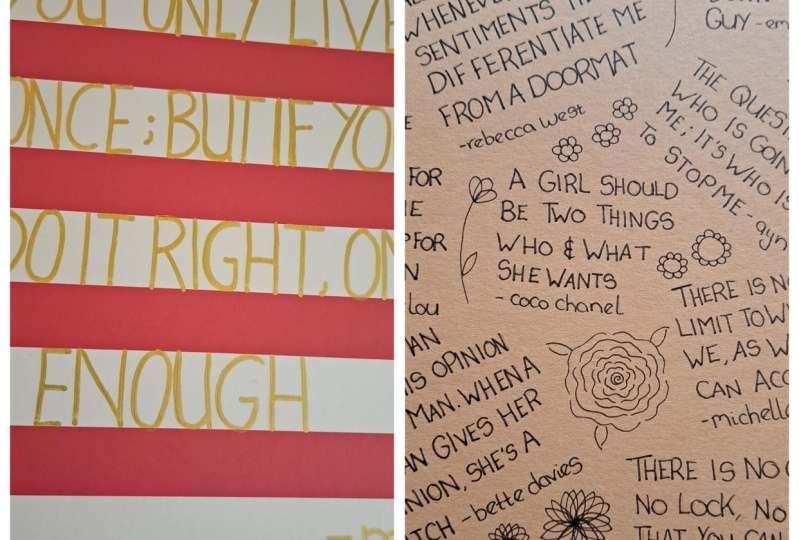
7. Project 1 - Text Commonplace Book: All you need to create a text commonplace book is a notebook independent, and of course your collected passages. The easiest type of commonplace book to start with is the traditional. So for this class I'll be demonstrating that because it's a catch-all type of style, it can be a bit messy. So at the end of the lesson, I'll show you all about how to create a table of contents, add page numbers, and also how to add an index. The most common question is, where do you get all the passages to include? The easiest answer is from anywhere. It might be from a line in an article or something and said in a movie, I'll pull up my notebook and write it down. When I'm reading a book that has more information. Here, I'll underline with a pencil or add a tab to the page so that I can go back to it later and write out all the passages in my book at once. Now I've been creating commonplace books for well over 30 years. And in that time they've taken on many different forms. From composition notebooks to binders, to hand bound books. Some full of quotes or research notes, while others were stuffed cover to cover with scrap paper and ephemera. No matter what form they took on. What remained the same for all of them was what they provided for me. They each serve as a place for me to gather things that I read, small drawings, bits and pieces that all came together to capture what I couldn't put into words myself. My traditional commonplace books are just pages filled with lines and lines of text. I don't get too fussy with color. I don't have a specific pen. I really just pick up the clone, the closest pen that I have, and that's what I use. When I have completed the book. It's always the varying EGS that give it such life. So select any notebook that you want. It can be a simple composition book or something fancier. And then begin to pay attention to the things that you hear. The phrases are quotes people use. Notice and make note of the passages that you read in the newspaper or in a book. The more you start to pay attention, the more you will find that you can put into your commonplace book. Now organizing the traditional method takes a bit of work, but it's something that you can do as you go. You just carve out a few minutes here and there to enter in the page numbers. So the first thing that I like to do and I started a new notebook is I add page numbers. If the notebook didn't come with them already, then I'll save anywhere from three to five pages in the front of the book, and then three to five pages in the back of the book. Now the beginning pages will make up the table of contents. I'm not finicky about it. As I enter text, I like to add a heading. And if a heading as already on a specific topic, I'll continue to add to that page until it's full. Then I'll enter the heading and the page number into the table of contents. The index is a bit more organized. You can alphabetically organized your subjects or just add the headings if you're working with a more specific theme. So for example, if I was working on a grief notebook, I might not use an alphabetical index, but rather write out the common headings like hope, loss, healing, or grief. And then I would write in the page numbers of every time that I used those headings. So for hope, if it was on page two and page eight and page 25, underneath that heading and my index, you would see all of those numbers. Whereas if I'm creating a Guardini notebook, I would use an alphabetical index and then add the subject headings under each. So if I was including information on insects, I would put that under eye and the page numbers. And if I had information on composting, I would put that under C and the page numbers that correlated to that subject. Creating a text-based commonplace book is your place to enter any information that is going to inspire you, helps you think deeper about something, especially as we're dealing with the concept of self-care. I want you to remember that this is a place for you to gather and collect bits and pieces of information that are going to help you through a difficult and stressful situation. So collect the quotes that help you that remind you to give you the strength to give you the inspiration. These little books are definitely going to be a treasure trove of reference material that you can use and to refer back to at other times in your life.
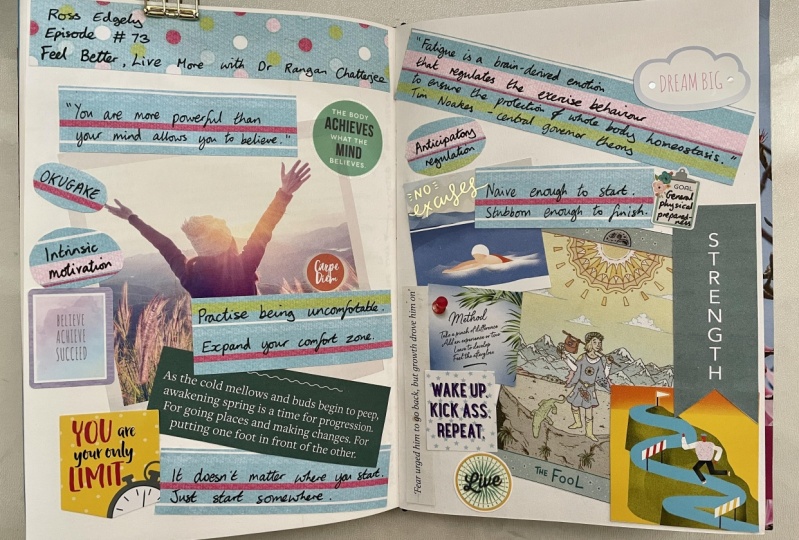
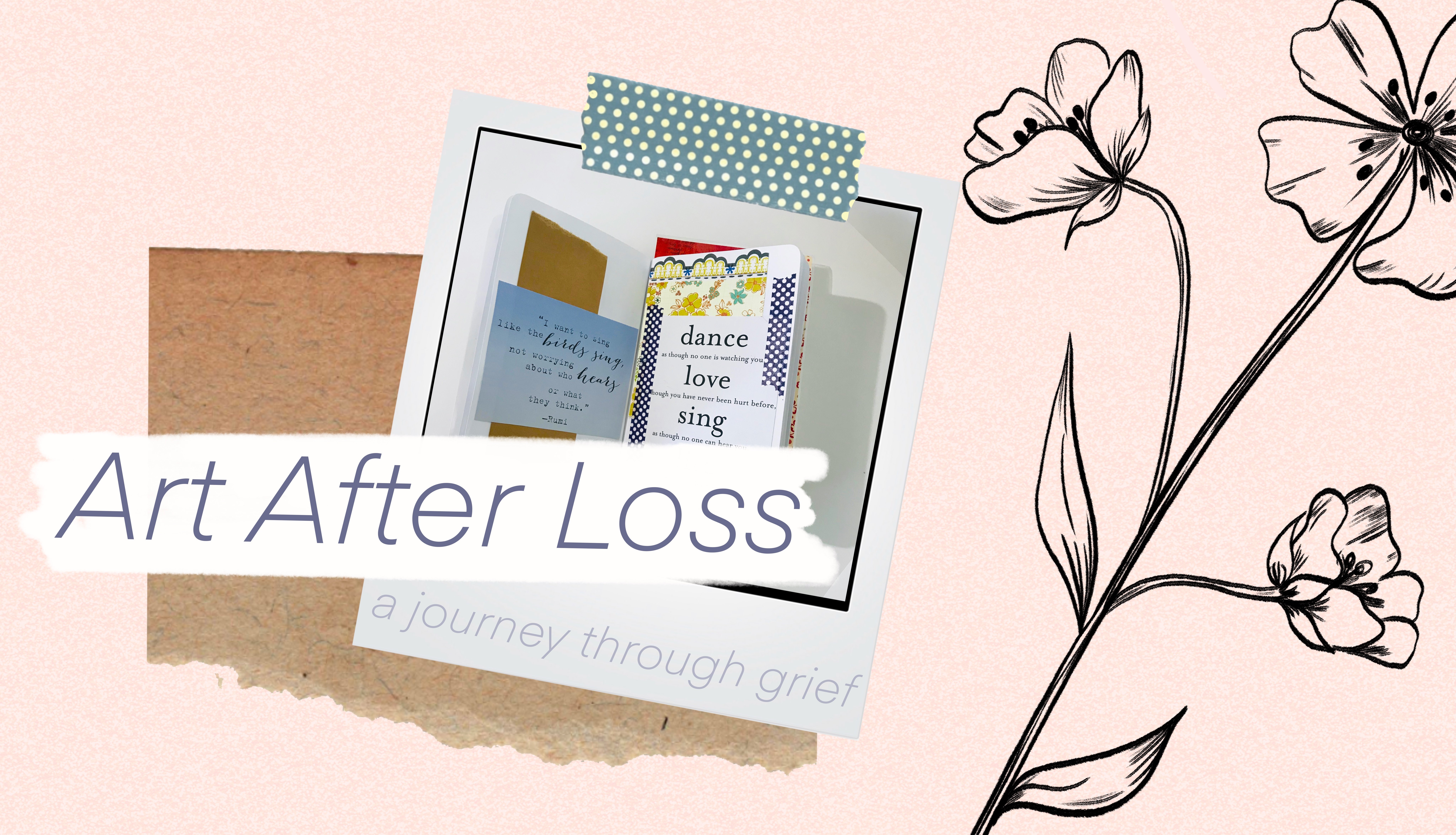
8. Project 2 - Collage Commonplace Book: When I started adding bits and pieces to my commonplace books, I realized how often I actually would come back to them and how much joy that I got by flipping through them again. I started with finding more and more pieces that I wanted to add and some I just started tossing into my femoris ash while others I might stick in a Manila folder sitting next to my desk. But I know when I sit down to work on my collage books that I've got a stash and I've also got this Manila folder that I can turn to. I think the special part of the collage, commonplace books, is letting the visuals and the texts come together in a way to capture what needs to be caught and to tell the story that needs to be told. It's a fairly intuitive process where I lead the bits and pieces before me tell their story and the words in the text follow. Just as with the texts commonplace book, any notebook we'll do. This one is actually the sequence unlined notebook, which I love. I love the way that it gets all fat and bursting with life. The other notebooks that I'm really enjoying right now are the mini three-ring binders. These let me add all kinds of paper. I like to include lots of pretty scrapbook paper as well as just plain white paper. That way as I build out my pages, I have lots of backgrounds to work with. I have a large FMR stash, but I tried to limit what I'm working with when I actually sit down to create the pages. Otherwise, it's a bit overwhelming. So I will grab a handful of papers, stickers rebelled to magazines, tape. And I just started to play with what's in front of me. It's like having a limited palettes of source because it, it makes it more fun to be able to create with what I have in front of me. Otherwise, it's just too many options. Now I like to use yes, paste and glues digs for most of my pages, but using mod podge or other glues is totally fine. You could also use tape runners or double-sided tape. As I mentioned in the supplies video, I like guests, pays because of the moisture factor. It's lower and so the paper doesn't warp as much. So for this session, I've pulled out a bunch of stuff in and brought it to my desk. And I just kinda start to look through it and figure out what starts to look good together. Remember, I'm trying to tell a story and I don't always know what that is until I get into the paper and actually start feeling things and seeing the way that the color combinations are. Or maybe it's a quote or even a color that I'll see that it just spark something. I trust my gut with this one. I like the intuitive process for this. You're going to create what feels authentic to you. But what I'm doing is just going through the different papers that I have pulled out. And I've pulled a collection of things, things that have a lot of vibrancy. I've pulled out a bunch of vintage papers and I start to figure out what is speaking to me and go from there. I love to include my own artwork in my commonplace books. So I would encourage you to do that, whether it's a swatch palette or paintings or line art. I like to save that stuff aside and include it wherever I can. So I'm going to be working in my three-ring binder and I've found a page that I want to work with. And I'm going to start pulling out different things that I have set aside and start to see if I can find a story that starts to form. So I'm going to turn on some music and just let you guys watch as I start to pull these pages together. It's that simple. This is something that is easy to eat, right? Okay. Hi. Okay. Okay. Okay, So I've finished the actual Collage portion of this page, and now I'm going to transcribe a passage from a book. It's actually a book called agrees observed by CS Lewis. And I've decided I'm going to use liquid ink and a depend for this. You can use any pens that you want. This one I just happened to feel like this is the one I wanted to use. So I'm going to transcribe this onto my collage page now. There were a few other pieces that I had pulled out that correlated with the theme of that page that I had just created. And I felt like I wanted to include them opposite of the page. So because I have a blank page there, I'm actually going to add in a few of those little FMR pieces that I had found for the original page, and they didn't end up working. So I'm going to paste these down and add a sticker. And then I've got another quote that I'm going to add this time it's from a book called this I know by Susanna Conway. Even though I've kept commonplace books for many, many years, it's those difficult years when I seem to keep the most books. We had a major loss 2.5 years ago. And it was during these past few years that I've actually created a ton of commonplace bugs. There are pages are just brimming with bits and pieces of research and information and ultimately a story of loss and grief. When I look back at them, they're like a personal reference bible of things that helped me to endure. I hope that you'll be able to find your own moments of self-care during times of trial to create all the bits of your story into one personal reference book. My favorite part is being able to look back through these books later on. They become such a treasure trove of information and the collection of moments that without you having to write pages in your diary, it's going to tell your story in its own way.
9. Journal Flip Through: Hi. Okay. Hi.
10. Class Project: Your project for this class is to create two commonplace books. One more text heavy. You can choose from any of the types of commonplace books that we discussed in the class. I suggest a traditional format to begin with. But if you want to create one centered around a class or a specific theme like gardening or parenting, or even shipbuilding. Go for it. Using any notebook you prefer. Create a table of contents, index and add page numbers. Then I want you to add all your collected passages. Take a photo of one of your pages and share it with the class. The second type is going to be a collage style book. Gather your supplies, a notebook, ephemera, glue, tape, scissors, et cetera. And create a collaged pages center around a quote or passage. Take a photo of one of your pages and share it with the class. I can't wait to see what you create.
 Heidi Cogdill, Writer and Artist