Transcripts
1. Introduction: You're stuck in a color rat, you're always picking the
same colors again and again. You're maybe using
them out of the tube, and that way you just don't
get a lot of variation, or you are mixing your colors, but you always use the same recipes that you
feel comfortable with. I want to show you an exercise
to break out of that t and open up to a lot more color
possibilities in your art. My name is Cornelia, and I'm a full time fine
artist and art mentor, and I focus on abstract acrylic
and mixed media painting. So in this class, I
will show you my go to exercise to break
out of a color rat, like find new colors and color combinations that really speak to you that
are really you, that you would not
have thought of, maybe just thinking about
what color could I mix? It's really vital to
see it in front of you. That's what we will do.
So let's just dive in.
2. Your Class Project: For the class project, I just want you to work along with me. You start out with two different
hues, white and black, and we'll make a variety of different tin stones and shades and hues that we can get from these two on this large sheet. Then you will take a
picture and upload that as your class project. If you want to take it further, I will also show
you how to create the swatches and
things like that, you can, of course,
also do that. But the basic requirement for
the class project is to do this one exercise
color mixing sheet. So let's get going. I
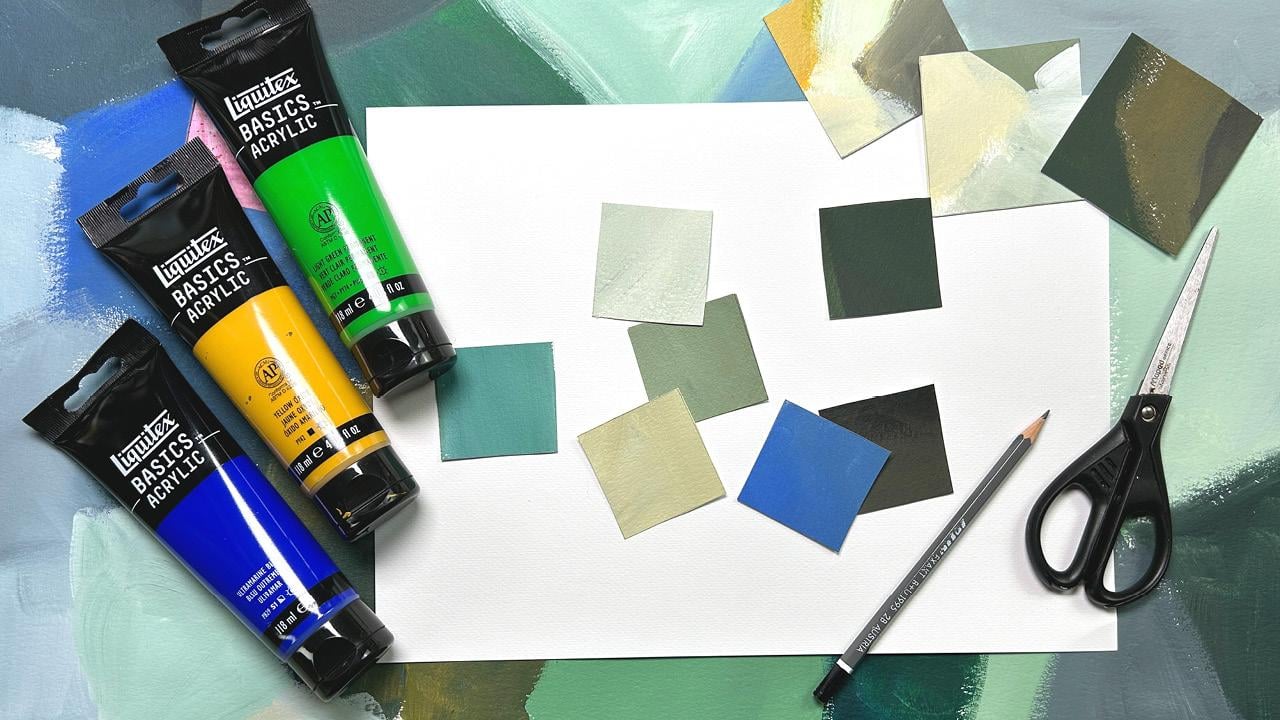
3. The Materials You’ll Need : So for this exercise, you need a maximum of
five different colors, and that includes
black and white. You will need some brushes. You will need a large
sheet of paper. I'm using mixed media paper. This has 300 GSM, but you can use any
paper you want, the thinner it is, obviously,
the more it will buckle. But for this exercise, it's not so relevant. Then you will also need a
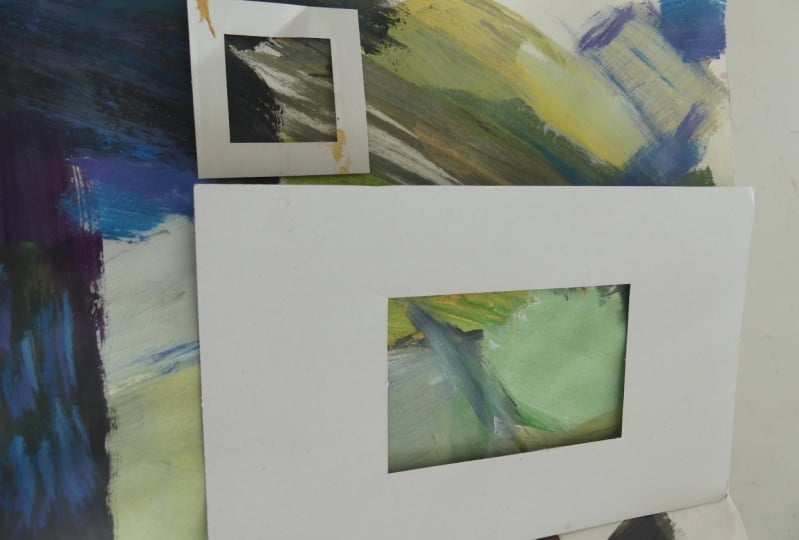
sheet of paper where you can cut out a window. This is called the viewfinder, and this helps you then isolate some color
watches that you want to cut out and collect in a sketchbook for
later reference.
4. Start to Play With Two Colors: So personally, I paint a
lot with the primaries, but I also have other tubes, I have this green and I
have this yellow oxide, and it's practically
unused because I I really like
to mix my paints. So sometimes when I
want to mix things up, get more variation,
I force myself to use paint tubes
that I hardly use. That way, I get colors, but I'm new to my work
that get me out of the comfort zone and open me
up to new ideas for my work. So let's just do that now with the yellow
oxide and the light green permanent and
I will then later on bring in a third color. Maybe this maybe I
will change my mind. So we'll see so to get started, put out some paints
on your paper. So I have this large
mixed media block. It is a pad that is
glued on the sides. But if you don't have that, you might want to tape your paper to your table so
that it doesn't slide around. So this hopefully won't slide around too
much because it's a little bit more heavy being
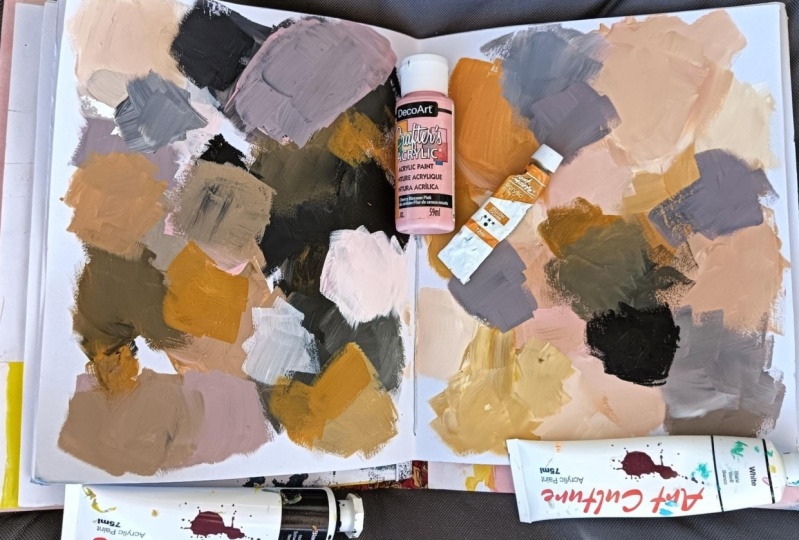
a whole pad of paper. So I've put out white
black and my two colors, and now I'm just going to play, and I call this the
kindergarten approach. Kids are so free when
they mix colors. Like, they just
go, bam, bam, bam, and then they mix it,
and then they get muddy colors and
they don't care. And they are excited
because, well, now I've mixed black, and now I've mixed
this and that, and it's really fun to
watch them do that. And we want to, like, try to get into that
energy as well. It's a play. It's
just an exploration. There's no outcome
attached to it. We are not forcing to have now, at the end ten colos watches that we are excited
to use in your work. We're open to what will happen and we're just
going to have fun. So let's get started.
Before I start, I'm just going to
wet my paintbrush. This is just so that the paint doesn't
dry near the ferro. It's just a little bit better when you paint
with acrylic paints. But actually, in this case, we don't really need water. I'll just start mixing
these and just go ahead. The larger the
paper that you use, the larger your brushes
maybe should be. That makes it a
little bit more easy. As you want to
think a little bit about making a little bit
larger areas of each color that you get so that you then have the possibility
to have these swatches. So now I will try to add white. I get this pretty green here. And now let's see what happens
when I add more of that. I was maybe a little bit much so you really
will see over time, how much you need to add
to create a subtle shift. We're not washing out our brush which is working along
with what we have. If you want to, you
can cover the paper in advance with chess so that way it won't soak
up the paint so much, make it a little bit easier to mix right on the page
because right now it's really soaking
up the paint very, very quickly, so it makes it
a little bit hard to mix. And if you want to, I'm going
to stand up now because it feels a little bit
strenuous on my arm, so let's just Now, when you want to go lighter, what you want to
do in between is, like, you want to either
wipe out your brush, like, at least wipe
out your brush. You might even want to
wash it because, like, when you have dark paints in it, it's really hard to
get lighter again. This is my result for now. This is
what I could get. They are probably I
could approach this a little bit more
scientifically, adding a little bit more of this and adding a little bit
more of that and make this super exact chart where I just incrementally add a little bit of the
other color that way. The way I did it is just
slowly bit more playful. But already I found
colors that I really enjoy what I don't really enjoy is when I
started out this really pure, I really don't resonate
with the screen at all, so I don't know why I bought it. But I do like this here. I like the screen, I like the grayish
green, I like the spage. I even like the darks. I like these dogs a
lot and here also have these lighter shades. But it's more in this
area in the muted colors that I see a lot of
potential for using these colors to give those
darks a little bit more of a bias towards a green or brown. Now I'm going to
do the same thing and I'm going to bring
in another color. Let me get that off my sheet and then we'll do a second one.
5. Add a Third Color: Now I will bring
in another color. I will still use the
green but I don't like the ochre, that's okay. I will also have a blue. Okay, so now I have three colors and white and black and will
just do the same. I will just start by trying
what these make together. Let's see what we've
got. When you add white, you can more easily
see the color. So what a beautiful
light gray blue that is. I don't like that petrol. Like, color, so I want
to go back there. I need to clean my
brush a little bit. I don't have so much
white in there. I guess we have all
the colors for that. I'm good. Okay, so that's my second sheet. Again, strangely enough, I went into a lot of greens
and not enough blues. Probably because my
original intention was to use the green
and the ochre. I stayed a lot in the greens. I just have very few blues. I could have done a little
bit more blue, I guess. So you can keep doing
and doing this. It really there's so
many possibilities. So now I will leave
this to dry and then I will show
you the next step. I
6. Find New Colors With a Viewfinder: Now that my first
exercise sheet is dry, I can show you how
I would go about finding colors that I enjoy. The next step is to have a few finder ready or to
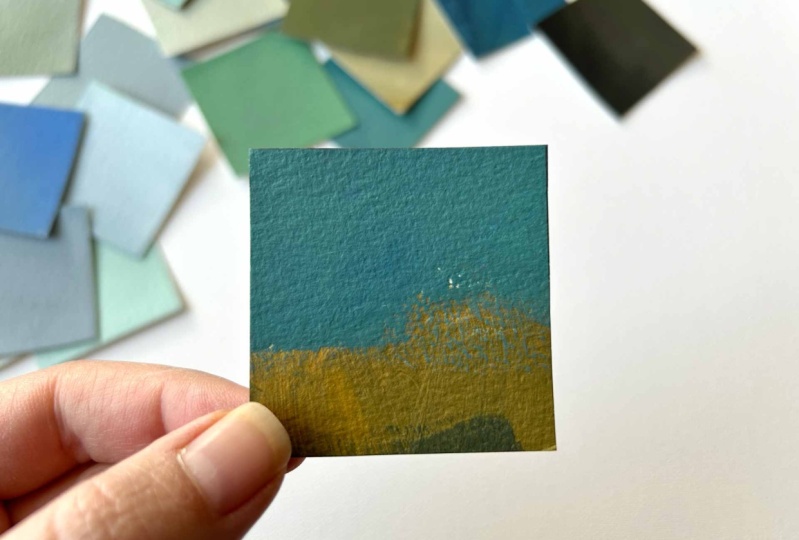
make yourself a few finders. You want to make a square
that is anywhere 2-3 ", which is three to 7 centimeters. Now there's two ways
you can do this. You can either use a
pretty small few finders, so you just cut out a square
out of a piece of paper. In a very small size. That way you will
be able to isolate pure color or you use a little bit a larger one
and depending on how large of color splotches
areas you have, you will still be able
to get pure colors, but you will also be able to catch some interesting
combinations. And for me, I really
like that combination, for example, I like the gray with the light
green and the ochre. Then I could already think a little bit
about composition. So I can't help myself. So doing it like that, I'm almost immediately thinking, this is the same
amount, the same space. So I would decide whether this would rather be about the
gray or about the beige. So I do like this
color combination. And you can now do both. I could have this
color combination, and then I could also just maybe have a swatch
of the color. And in this case,
I also quite enjoy the the slight variation
between the colors. They're all dark. I'm going to look for watches. I mean, of course, I could
now take swatches from all of these colors as I see them. But again, I'm seeing a
combination that I like. I like this gray
with this green. Wouldn't necessarily
think this color is thin. But of course, you can
now just cut out a few. You want the beige. I all this. And then what you want
to do is you want to cut out these things here. So now you can already
see that I have found a really nice, really um, almost monochromatic
color palette in the greens and the yellows. So obviously, when
I would use that, I would think of this, for example, that
I would want to use more of a vibrant color, so I might cut out that
pure ochre after all, and I already remember how
I liked this combination, which is more like this
next to each other. So you don't like when
you put them like that, it looks like that's value. But, um, you will then later
on combine them and you can now see how do
these look next to each other and what do I like? Is this exciting for me or do I like this
subtlety, you know? I have really a
lot of colors now that I don't usually
use this color. This is really
interesting to know.
7. Creating a Palette & Final Thoughts: So these are some watches
and color combinations, little compositions that I
picked out for my first sheet. And in the first one, remember, I used two colors
that I normally don't really use
in my paintings. So it felt like really
out of my comfort zone. I haven't picked so many watches because they didn't
resonate so much. But what I then did
in my second one is I added one of my
favorite blues, which is ultramarine blue. Now this becomes
more interesting. This is more resonating with me. There are lots of colors
that I really, really enjoy. And I will not be picking
out all of these now, but thinking of what
I'm having now, if that was my color palt, I would want to bring in
something more vibrant, more different because
this is all kind of very much the same. Well, let me check. That
was the viewfinder I used. So I would think about
bringing in more of this pure blue, more turquoise. Here I find an
interesting composition already that I would
probably use larger. This is an interesting
combination that I would enjoy and I can think I want to have more flat color or more
fat color or more fat? So I've now cut out a couple
of swatches and I could do a ton more and it's then really fun to go
ahead and look at these, look at the combinations, see what you enjoy, what you like, and then these become the palettes for
your next painting maybe. So whenever you feel
stuck, the next time, don't overthink it just like mentally go
back into the mind of you as you were in kindergarten and
with that approach, just play and experiment. Give yourself some limitations, don't use all of
the colors at once, just a little bit challenge
yourself to mix colors that you don't usually work with and find new combinations, new colors that really
resonate with you. Because when you have
this large sheet with all these colors there, you can really
decide, I like that, I like that and I
don't like the other. Then you can really
pick and find a a new color or many new colors
that you're excited to use the next time you paint. If you like the
class, let me review. This is so helpful, not only
for me to get feedback, but also for other
students so that they know if this is the
right class for them. Also, don't forget to
upload a class project. I really look forward to seeing your exercise sheets,
your swatches. And whatever you created. And if you want to learn
more about acrylic painting, take my more
comprehensive class, acrylic painting for beginners and follow me here
on skill share so you be notified about
future classes and giveaways and I'll see
you in my next class. Have fun creating by for now.