Transcripts
1. Becoming the Artist You Are: Watercolor Painting Basics Class Series: You an artist or not? Art students have
had this conundrum for decades, possibly longer. It's actually one
of the most talked about topics by my students. So I thought it'd be a great
idea to put this class together so we can settle
this debate once and for all. Hi, I'm Chris V, Artist,
designer, desert dweller, and creative skills teacher here on Skillshare since 2016. I have over 20 classes
here on Skillshare, and I also have a
YouTube channel plus more in depth courses
available on my website. I've produced
creative lessons for Juani Christine's flourish
membership, Emily Jeffords, the collective membership,
Peggy Dean's art blog, and I've also created tutorials for sustainable Pate
brand Viviva Colors. I'm back on Skillshare with a series of shorter
classes that will cover many of the Watercolor
basics like color theory, color mixing, sketching
versus drawing, Watercolor hand
lettering, and more. This class series is
designed to help you build your watercolor painting
skills from the ground up. Even if you've been
painting for a while, it's a great idea to go back to some basics every so often. In case you'd like to
refine your process, break creative block
with some new ideas, or up your painting
game by going deeper. In this class, we'll break down this question to discover whether or not you're an artist. Some of you think there isn't even a question because you
could never be an artist. Others accept it freely. But either way, I believe
you're an artist, and in this class, I'm
going to prove it to you. We're going to talk about
some shifts in thinking, some little known facts, and an exercise that really helped me make this
leap for myself. This class is for beginner to intermediate Watercolor
painters or artists of any kind who really want to
continue developing their skills and to take on
the identity of an artist. So are you ready to find out? Are you an artist or aren't
you? Let's get started.
2. Your Project: Your project in this
class will be to watch all the lessons and
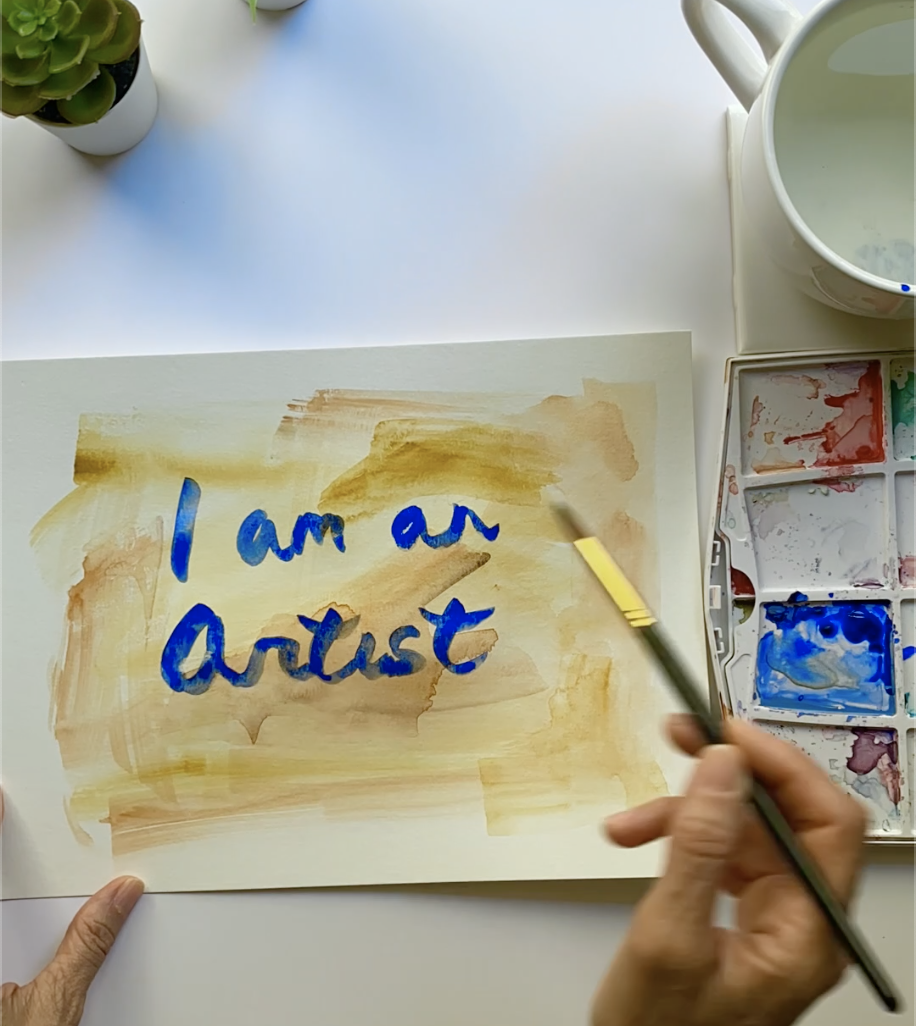
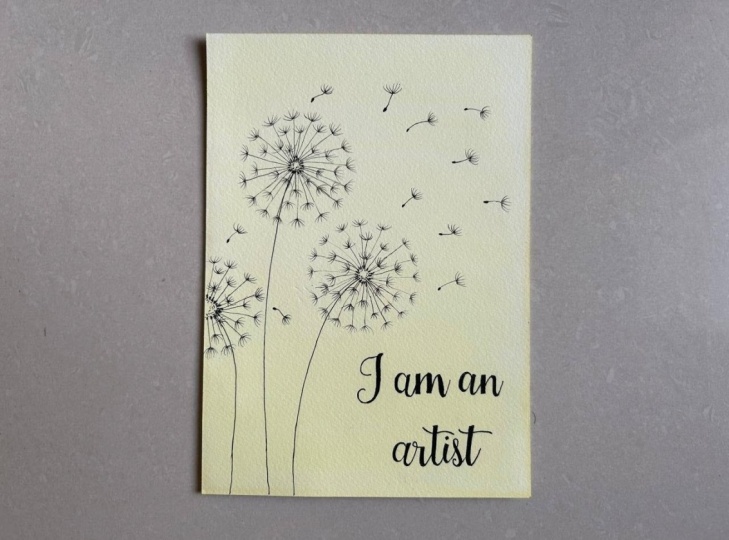
then paint your I am An Artist
lettering project. And if you don't feel
like you're good at hand lettering, you
are in good company. I don't either. But don't worry. This is not supposed
to be the most polished hand
lettering out there. Your printing or your
script will be good enough. In fact, you won't believe
how beautiful it can be, even if you don't
see it at first. So just paint it out and don't
worry about the outcome. Another reason I'm
asking you to paint this is partially a bit old school. Remember when some
of our teachers as kids made us write one sentence 100 times
when we got in trouble? What? Well, no, you're
not in trouble, first of all, and I'm not
one of those teachers. But when you write
something out, something magical happens
in your thinking. There's a transformation
that occurs. So this simple project is actually way more powerful
than you can imagine. Once you've painted it, I want you to replace
it where you can see it daily or where
you paint regularly. If you have an art
studio, that's perfect. You can hang it on
your wall and even frame it or tape it
on a bulletin board. But as we learned first
class of this series, you might work in a tiny space that doubles as
your dining room, your coffee table, or
your computer desk, so you may not have the space
to display your painting. If that's the case,
I encourage you to keep this project with
your art supplies. Then every time you create, bring it out and set it
on the table with you. Another idea is to use magnets to put it on
your refrigerator. Tape it to your bedroom
door or someplace else, you know you're going
to see it a lot. If you need some help with
how to upload your project, here's a step by step
on how to do it. First, you'll go to
the Projects and Resources tab under
the Class videos. Then click the Green
Create Project button. From there, you'll
want to upload your cover image
for your project. Choose a file,
Then click Submit. From here, if you want
to replace your image, just click the button below, find an image, and below, you can make it larger or
smaller with a slider, or you can drag it side
to side to position it. When you're happy,
just click Submit. Now your project needs a title. It can be funny, descriptive,
or whatever you like. Below is your personal
project field. Click Image to add image files. Then position your
cursor underneath the image to add descriptions. I'm adding a series of images to show my entire
process for this project. You can do it anyway you like. Below, you can also
add a video or links. When you're done, just click
the Green Publish button. Once it's published,
you can go below the videos and see your project
on the right hand side. When you click on it, you can see that all your
images have uploaded. On the right is where people can comment and
like your project. I comment on every project, so I can't wait to see
you in this space. If you need questions answered, please reach out to me in
the discussions page of the class under the class
videos, and I'll be happy out. But for now, we're getting
ahead of ourselves because we still have to prove
that you are an artist. I'll see you in the next
video to do just that.
3. The Case for Being An Artist: Let's start with some basics by looking at the dictionary
for the word artist. It was so funny the
day I first did this. I was shocked at what
the definition read. And I looked at several
online dictionaries and kept coming to
the same conclusion. In summary, most of them said one who paints or does artwork. That's it. There was
no mention of being a great master or having
to be a gallery artist. The definition didn't
even talk about the length of time
that you should pay in order to be
called an artist. It simply said,
one who does art. And who am I to argue
with the dictionary? I have looked to
the dictionary to define words from my whole life. And so, why wouldn't
I trust this? I was even teaching art before
I called myself an artist. Can you put that?
So when will you accept that you are an artist because you paint
on a regular basis? It doesn't matter if you took a six month or a
year long break, you are still an artist
because you paint. If you don't think
that you're very good, that still doesn't
change the definition. And as I learned from my own
art students since 2016, you're always better
than you think you are. We are our own worst critics, and I know there's
a lot more that you're doing right than
you're doing wrong.
4. Why We NEED Art: I once heard a story about an art student who
was in the Navy. She dabbled with painting before she joined
the Armed Forces, but never really took her
creativity seriously. Then, while stationed on a
submarine for several years, she was shocked by the fact that there was no art anywhere. All the walls were
submarine gray. There was nothing decorative
to look at at all. After that experience, she felt starved for something
beautiful to look at. And she took art much more
seriously going forward. In fact, once she left the
Navy and became a civilian, she promised herself
that she would immerse herself with all the
art that she could see, collect, and produce herself. Most of us have not been exposed to that kind of
an extreme environment. But it sort of
gives us an example of why art is so
important to the world. Can you imagine not having any? The thought is
really unsettling. On the other hand, I remember
being in an airport, waiting to fly home
a few years ago, and they had installed
an art exposition on the walls where
the seating was. The art was so calming to me. And then I remember looking
around and noticing how quiet and calm
everyone else was, too. Even the kids were quiet. It was surreal. So I think
without realizing it, the art was literally
smoothing out the bustle and the mild anxiety normally
present in an airport. I never even noticed the anxiety in the
airports before then, but the difference
was staggering. So please don't discount the
power of being an artist. You may not think it's
all that important, but for someone else, it might
make all the difference. The smile, the calm
or the look of delight when someone sees your artwork is
the best feeling, and we should spread that
as much as possible. Even if no one in
your immediate circle believes in your artwork, someone out in the world will because there's someone
for everyone, right? I really hope that you'll
take this to heart, and I know the world
will be better for it.
5. Why is it So Hard To Believe? : So why is it so hard to
believe that you're an artist? I break it down
into a few reasons. Number one, we are
taught early on as children that only a privileged few can be called artists. If you haven't
been sure you work in a gallery or you're not in a museum or people don't buy your work yet or they just
don't think you're very good, then they won't believe if you tell them
you're an artist. Number two, at one time, it was absolutely
shameful to be an artist, especially the starving artist, an adage that once was true, but today isn't true anymore. That myth still circulates
widely, but the truth is, I know quite a few artists
who are making a very good living from their
artwork in various ways. Number three, this one
ties to number one a bit, where if someone
saw your artwork and told you it
wasn't very good, it might have hurt
you really deeply because we are burying our
souls when we create anything. This is raw expression, and to be told it
isn't beautiful or good is like hearing that
you are not acceptable. Number four, someone
you respected, like a parent, a family member, or a friend might have
tried to turn you away from being a professional
artist because they wanted to protect you from
all of the above. It's really difficult to get past these deep seated beliefs, usually coming from people
that we care about the most. The thing is, the
world is changing, and we are a part that movement. What was true back then
just isn't true anymore, but not very many
people have mentally, emotionally or factually
caught up with this shift. There are opportunities
in the field of art today that have never
been there before, and there's plenty
of money to be had using your creativity. So let's keep the conversation
going in the next video.
6. Making the Shift: The first time I knew
I was an artist, there was no thunderbolt, lightning, or even a
deep feeling about it. I think it was more
like a realization, an acceptance, a
feeling in here. But I think it comes
differently for each person. The hardest part
about this is that becoming an artist relies on
taking on a new identity. Let me explain what
I mean by that. Per psychology, we can only
be what we believe we are. If you identify as a nurse or a teacher or a film care worker, then you have taken
on that identity. You've gone to school,
earned a degree, gotten a job in this field, and it's become your
title, AKA, your identity. I would hope that if you're a nurse and you're going
to give me some sort of treatment that you went
to school for that because some
professions are only earned through
education and practice, and it's really important. But that doesn't mean
that you have to go to school to be an artist. That's not what the dictionary
says about it, right? So the simple answer is, if you start to believe
you are an artist, you will therefore be one. Keep in mind, art is not a
technical sort of profession. It's an expression. And that's a little different. That's why I want you to
peek this sentence out. Plain, simple, nothing
fancy required. Although you're welcome to
get fancy if you want to. And I want you to
look at it often, preferably whenever you create, but even in between creating.
Say it to yourself. So you can look in
the mirror and do it. And I know it feels silly, but it really helps to get that thought rooted
in your mind. In the next video, I'll show
you how I paint my project, but you're welcome
to be as creative as you like on your project. In other words,
you're welcome to fall along with me as
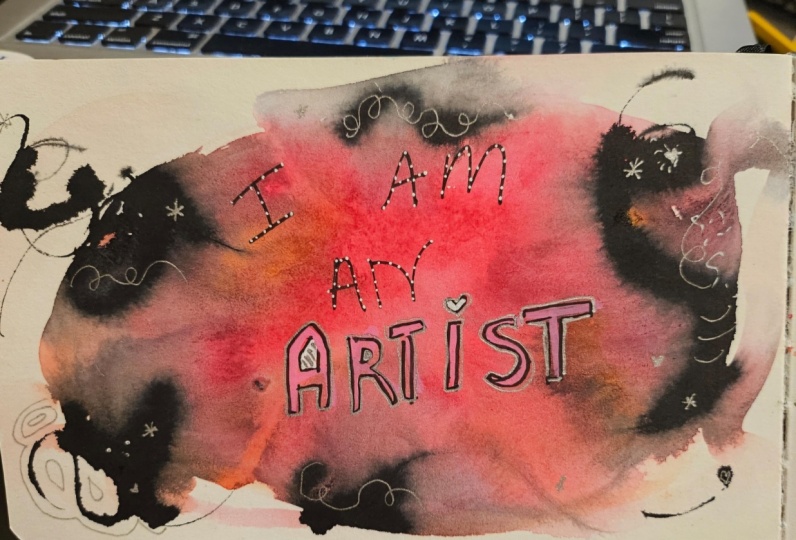
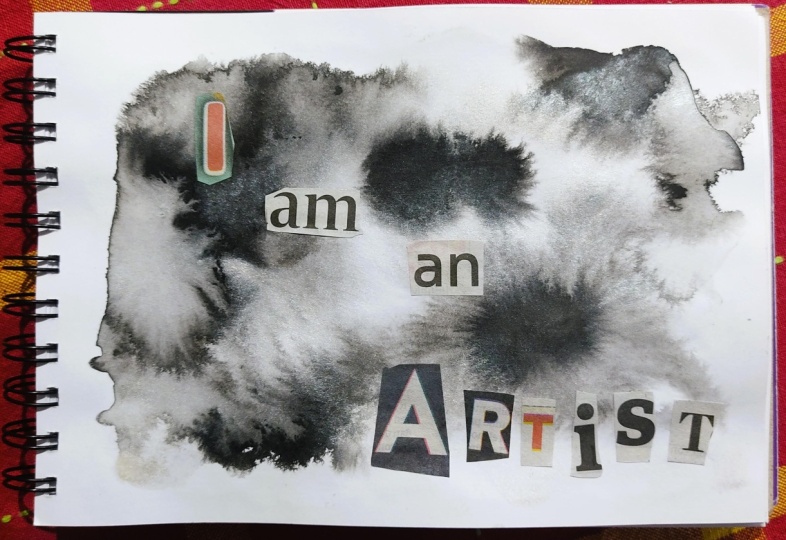
I've painted mine, but you can change your colors, add little illustrations,
or change it up completely.
7. Painting Your Project: Now it's time to
get your Watercolor paints out because
in this lesson, I want you to paint out
the words I am an artist. I'll show you some quick
examples of how I painted mine. But as I mentioned in
a previous lesson, don't hesitate to put
your own spin on this. Make it your own and most
of all, make it fun. And if you'd rather
just keep it simple, you can follow along with me
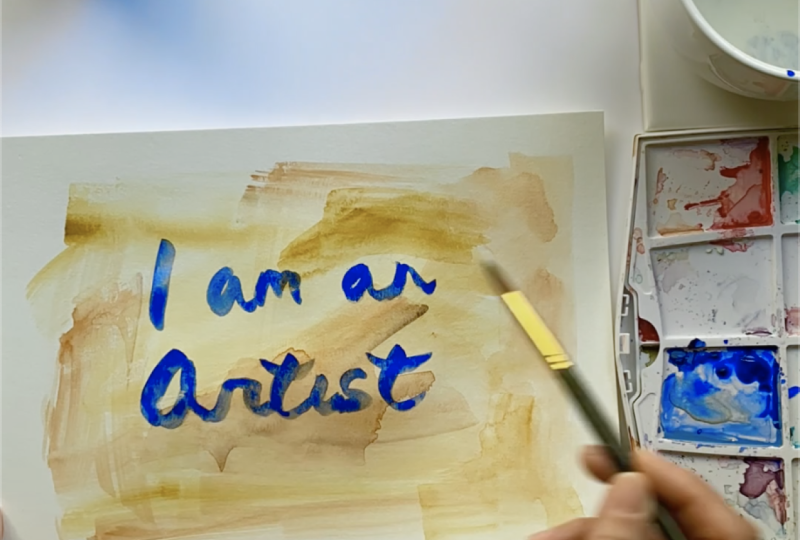
exactly as I've done mine. After I lightly sketched
out my words on the paper to kind of center them and see where they're
going to land, I painted my background
with a lighter color. I chose yellow ochre, and I made it really textured
to add some interest. Then once it dried, I used a much darker color
to paint my letters. They didn't come out perfect,
but that wasn't the point. The point was creating something I could
look at every day, and that would inspire me. I can't wait to see
how yours came out. The important thing is
that you do the work. It will change you in ways that you could
not have foreseen. I just want to add,
it doesn't matter if you feel like an artist
while you're painting this. Taking on the identity of the
artist can often take time. Give yourself some grace and
give yourself the time you need to see how this makes sense for you as an individual. You don't have to tell anyone
else if you don't want to, but as long as you
know you're an artist, everything will be
different for you going forward after you've
finished your painting, I'll see you in the next lesson to go over your next step.
8. Tips & Next Steps: I hope that you take this
information to heart, paint your project and share
it in the project gallery. Share how it made you feel or what thoughts you
had along the way. Tell us if you'll be putting it somewhere where you can
look at it often to start taking on the identity of the artist because you
work hard practicing. Even if it doesn't
feel like work, you might as well
enjoy the title that goes with it. Here's a pro tip. When people tell you that
your art isn't any good, make note of what kinds
of people those are. Are they a lawyer, accountant, scientist, AKA, a
non creative type? Or are they art
teachers that put their students down and
make them feel small? I know these people are smart, and they probably
care about you a lot, but I urge you not to listen
too closely or deeply. If you're feeling
like you either enjoy painting or you need to
paint, then you should. Besides, hearing that you're not a good artist is a
creativity killer. And although they
might know a lot, that doesn't mean
they're allowed to tell you whether or not
you should paint. This is solely your decision, and I hope that you take
your creative power back. The truth is the world needs
more art. Yours included. Please don't let
any of these things deter you and set you
back in your tree to Joy.
9. Final Thoughts: Hope at this stage
you're leaving with a belief that you are an artist. But even if you're
not 100% sure yet, that just means you need to do a little bit of mindset work. So I truly hope that you do the class exercise and
keep working on this. Why? Believing this about
yourself can increase the quality of your life and give you a whole
new set of options. So why not? Do you like you're
too weird to be an artist? Join the club. Most of us do. But I believe your uniqueness
is your superpower. Embrace it and own it. Be proud of it and don't let anyone take
it away from you, no matter how well
meaning they may be. If you'd like to work
directly with me to help you with your
artist's mindset, I've created a special
one on one session. You can enroll in by clicking the purple section at the top of my Skillshare
profile page. I truly hope you've
enjoyed this class. I can't wait to see
your paintings and read what thoughts came
to you along the way. Don't forget to watch Lesson
two if you need step by step instructions about how to upload your project to the
Skillshare Project Gallery. And I would love to see a
review so I can know what resonated with you and continue improving my
classes going forward. You can also find me
on my online home octobuscnection.com
or on Instagram or YouTube at Octobs Connection. Plus, I have a new free Watercolor student
community on school. Join me there for live painting
sessions, fun challenges, feedback on your work, and to meet other art students
just like you. It's completely free, so I
hope you'll join me there. I added all these links in the about section of this
class so you can find them. Well, that's it for now. Thanks again for being
here and until next time.
 Chris V, Artist, Designer, Maker