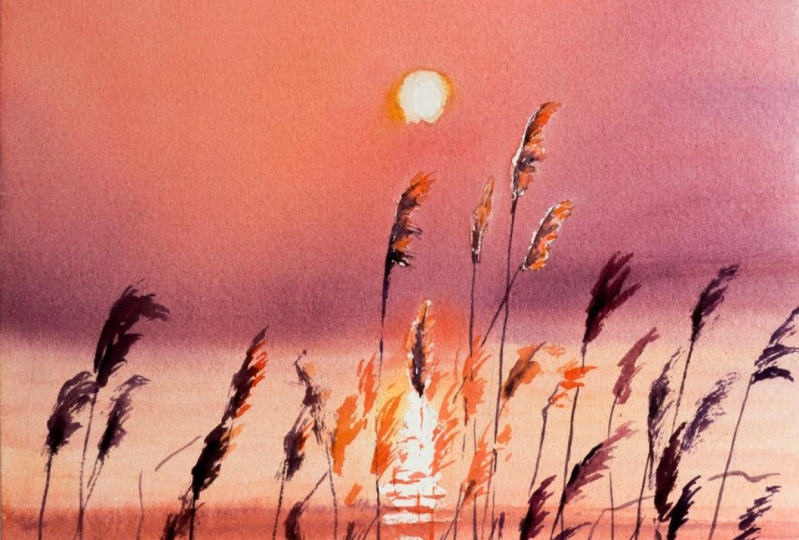
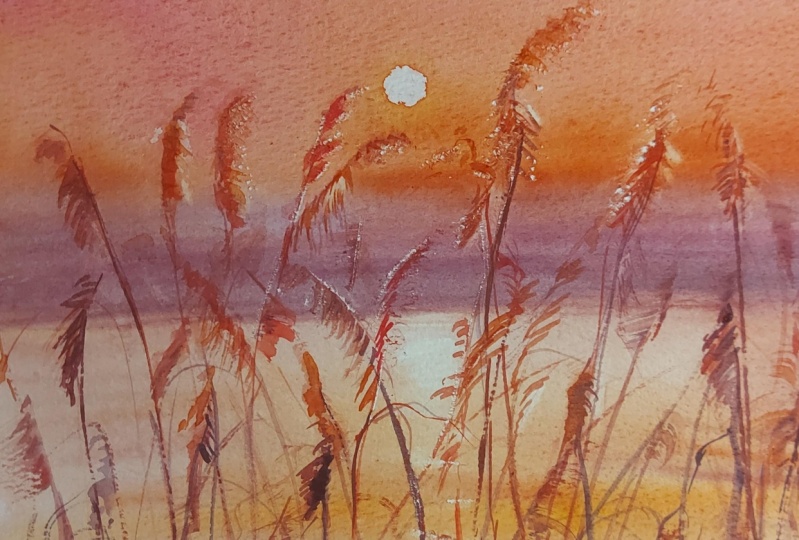
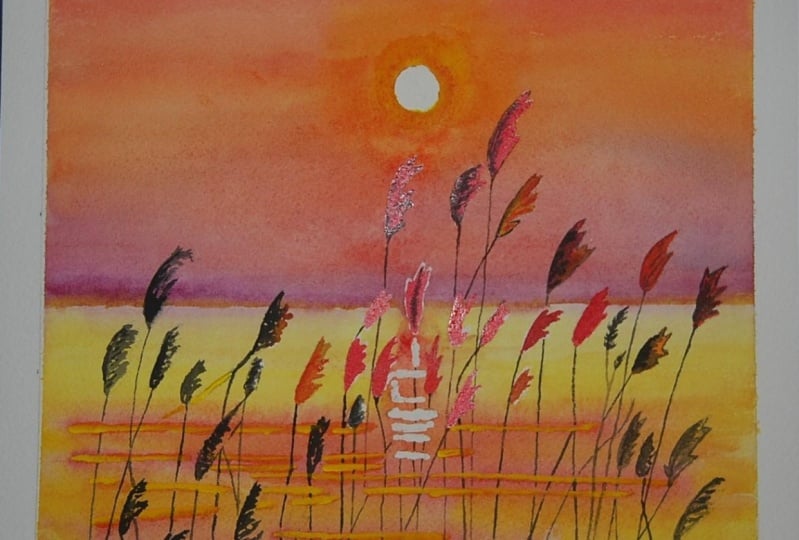
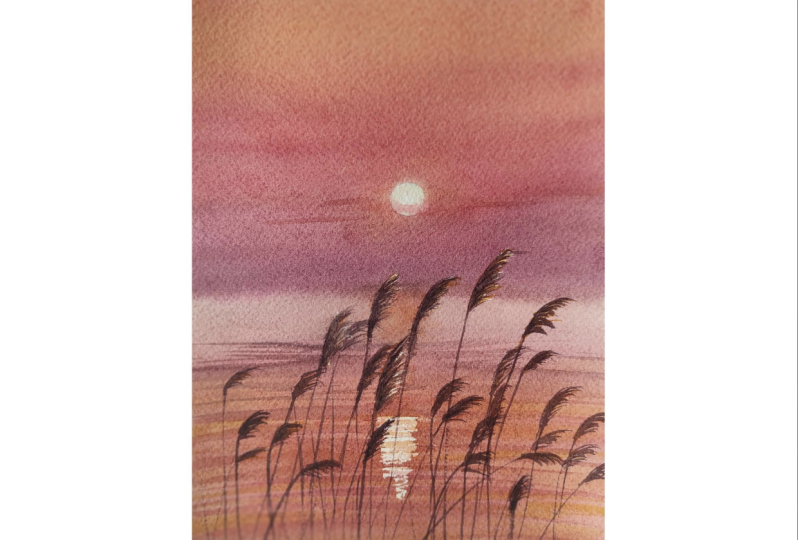
A Dreamy Sunset Landscape In Watercolor, Mastering Wet Technique For Beginners | Evgenia Cordie | Skillshare

Playback Speed


1.0x


  • 0.5x
  • 0.75x
  • 1x (Normal)
  • 1.25x
  • 1.5x
  • 1.75x
  • 2x

A Dreamy Sunset Landscape In Watercolor, Mastering Wet Technique For Beginners

teacher avatar Evgenia Cordie, Professional Watercolor Artist, Belgium

Watch this class and thousands more

Get unlimited access to every class
Taught by industry leaders & working professionals
Topics include illustration, design, photography, and more

Watch this class and thousands more

Get unlimited access to every class
Taught by industry leaders & working professionals
Topics include illustration, design, photography, and more

Lessons in This Class

    • 1.

      Introduction

      1:50

    • 2.

      Materials

      6:05

    • 3.

      Get started

      1:07

    • 4.

      Drawing

      2:21

    • 5.

      Painting background

      18:25

    • 6.

      Painting grasses

      6:11

    • 7.

      How to make a best photo of your artwork

      2:03

  • --
  • Beginner level
  • Intermediate level
  • Advanced level
  • All levels

Community Generated

The level is determined by a majority opinion of students who have reviewed this class. The teacher's recommendation is shown until at least 5 student responses are collected.

259

Students

27

Projects

About This Class

Hi, I am Evgenia Cordie, a professional watercolor artist from Belgium. I would like to share with you great watercolor techniques, tips and tricks.

Would you like to relax, to paint without spending a lot of time on drawing but just focusing on a magic in your hand?
Learning while painting, experimenting and have fun.
Watercolor is truly magical, with mastering wet-on-wet technique your landscapes and visuals will never be the same.
This class is perfect for beginners or for anybody who would like to learn more about wet-on-wet and other techniques.

What will you learn?

- How to paint smooth gradient
- Less known approach of wet-on-wet technique
- Warm color palette and beautiful sunset color mixes
- Painting light
- Strategies what technique apply and when
- Difference between mixing palettes
- 3 ways to make a great drawing in a couple of minutes
- Smoothing pencil lines before painting
- Using masking fluid
- Wet-on-dry technique
- Dry-on-dry technique
- Haw to draw with water
- How to erase and correct the watercolor
- How to smooth edges of sharp strokes

Finally I’ll give you tips to make a nice digital version of your painting. To edit it for free and in couple of minutes.

Materials for drawing
See the corresponding chapter

Watercolors
See the corresponding chapter

Brushes
- daVinci 10 kolinsky red sable hair (natural brush, resilient)
- daVinci cosmotop spin 8 (synthetic brush with a fine point, resilient)
- Accente 2012 Brights 20 (flat synthetic brush)
- Winsor&Newton Foundation round 6, 1; flat 2, 4 (synthetic brushes, resilient)
- Winsor&Newton Cotman 111 (fine synthetic brush)
- Winsor&Newton Special value 4 (round synthetic brush)
- Accente 2210 - Taklon 1 1/2 (flat broad synthetic brush)

Reference photo
https://www.pinterest.com/magicalwatercolor/enjoying-nature/

If you’d like to try to paint a similar visual as well, you can look for an inspiration on this list of photos on pinterest:
https://www.pinterest.com/magicalwatercolor/enjoying-nature/

If you like this class, please be free to leave a review to help other students to discover this class.
If you have any questions don’t hesitate to ask me!
Thank you very much to paint with me! And good luck with your new creations :)

Music used in the video: https://www.bensound.com

Meet Your Teacher
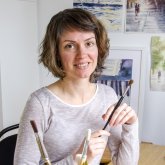
Teacher Profile Image

Evgenia Cordie

Professional Watercolor Artist, Belgium

Teacher

Are you looking to grow as a watercolor artist? I'd love to help guide you through any challenges you're facing or chat about your watercolor journey! I offer personalized instruction and feedback tailored to your needs. Let's connect and create beautiful art together!

See full profile

Level: Intermediate

Class Ratings

Expectations Met?
    Exceeded!
  • 0%
  • Yes
  • 0%
  • Somewhat
  • 0%
  • Not really
  • 0%

Why Join Skillshare?

Take award-winning Skillshare Original Classes

Each class has short lessons, hands-on projects

Your membership supports Skillshare teachers

Learn From Anywhere

Take classes on the go with the Skillshare app. Stream or download to watch on the plane, the subway, or wherever you learn best.

Transcripts

1. Introduction: Hello, I'm Evgenia, I'm a professional watercolor artist from Belgium. For years I've been painting inspiring visuals where Nature elements are connected with people and animals. In this class, I'd like to take you to a magical sunset evening. Relax and try the magic of watercolor wet-on-wet technique. Create a smooth sky gradient. Discover beautiful, warm palette color mixes. Learn to draw with water. Fade out sharp edges. Use a dry brush to create artistic effects and more. Also, I'll give you three ways how to spare time with drawing if you can't or don't want to draw, but just want to focus on painting. Finally, you'll learn how to take a nice photo of your painting at home, to edit it in a couple of minutes and for free, so that you can share it on social media or make gifts with your artwork. This class is fine for beginners and for anybody who would like to learn more about less known approach of wet-on-wet technique. I will guide you through all the process of painting with watercolors. You'll learn about right materials, color mixes, tips and tricks. I'm really thankful that you want to paint with me. So let's get started. 2. Materials: For this lesson, I've used several brushes. A broad flat brush is great for moistening the paper. Round and flat synthetic brushes are resilient and nice to paint the details. A round natural brush can absorb much water and is perfect to use for color washes. In the description, you'll find the detailed list, of used brushes. For this painting, we will use a warm color palette. This is a good practice to make for each painting a color card so that later you can paint it again, if you wish. Give your painting a clear name, make swatches and write the brand of watercolors and the color names. Mind that the color shades of different brands may differ. Along the lesson you will discover different color mixes as well. If you would like to enjoy painting watercolors, use a ceramic mixing palette. Or you can use a ceramic plate as well Please watch the next demonstration to see the differences between the palettes. 3. Get started: You've captured the perfect moment or you found a nice photo to paint, how to begin? First, let's define all white places, the sun and the reflection. This we will mask with the masking fluid so that they stay white. The background and water are smooth. This you can achieve by painting on wet paper. Don't be scared to paint on wet. I'll explain how you can get more control and enjoy the process. If you see a sharper edge, you can paint it with a wet brush on dry paper and then smooth the edge with a clean brush. The silhouettes are dark and it would be easy to paint them in the end on dry paper. But now, look at these grasses. They are shining and red, a very intense color on a darker background. This you can achieve by masking the place and afterwards to paint it red. So let's get started! 4. Drawing: So to make a nice painting or a sketch, you need a good drawing. If you like and can drawing, it is great! But what if you don't like I or I can’t drawing and sometimes you just want to save some time and sooner enjoy painting itself. In this chapter, you will learn three ways to make a nice drawing in a couple of minutes and how to reduce the pencil lines afterwards. For a small painting, you can use a tablet. Turn off the lights and go to a very dark room and make a drawing. Firstly, you need to print out a photo. Use a line marker to define the most important objects. The best way to make a drawing on watercolor paper is to use a light board. It gives enough light through the paper to make a nice clear drawing. As with a window way you need first to print out a photo. Make a drawing in a very dark room. Finally, use a kneading eraser to reduce the pencil lines. 5. Painting background : Use the masking fluid to all objects that must be white or has a lighter color than the background. Don't forget to clean your brush immediately. It's important to use 300 g/m2 and 100% cotton paper. When the masking fluid is absolutely dry, moist the paper under the tap. The paper must be thoroughly wet and flexible. Moist the kitchen towel in warm water. Now use a broad flat brush to reduce water on the surface and to flatten the paper. When you'd like to paint on wet paper with wet watercolors, other words wet-on-wet, you need to wait that the paper is almost dry. Otherwise the watercolors will flow all the sites around. Use your hand back to feel the paper. It must not be too wet. With a spray bottle moist the watercolors. Take a lot of color with your brush, not just on the point, but bath your brush thoroughly in color. Apply with broad strokes. Add a little bit of yellow around the sun. Apply an intensive color around it and on the background Mix some orange color and add it around the sun to create an effect of glowing. Add some red. Don't use too much water while mixing or taking some color. After cleaning your brush, dab it with a tissue and then take some color. Gently tilt the paper so that the wet color will flow to the other side and mix with other colors. That makes the background smooth. Take some Naples Yellow and with broad strokes push the horizon line above. To make more contrast, use a darker color for the sky. Some water drops will let the sun shine. Apply darker red with a finer brush to create horizontal strokes- an illusion of water. Use the same red around the sun reflection. With a tissue, erase the color under the horizon. It will make the horizon line sharper. Then use a darker color to create more contrast. Because the paper is still wet, and is lying on a wet towel you can experiment, add and erase color. With a wet, clean brush draw some lines on the water. With a flat brush you can correct the horizon and add some more Naples Yellow under it. Because we have used a tissue there, the paper is dry and the color will not flow easily so that the horizon stays sharper. Draw again with a clean, wet brush. Some yellow around the reflection creates an illusion of light. Correct the water as you like. When you are ready remove the towel and dry the table. If you'd like to have your paper sooner dry use a hair dryer. On the dry paper we will paint the water lines with a wet brush. This is called the dry-on-dry technique. Take a lot of color with your brush. Use a finer clean brush to smooth the sharp edges. Always look at the reference photo, how is the water there? When you are ready don't let your brush in a water jar. This can damage the bristles. 6. Painting grasses: It can be easy to fasten your painting on a painting board with a tape. The table stays clean and you don't have to hold the paper. Erase the masking fluid. An effect of light coming through the grasses you can achieve by painting some grasses near the reflection red and others dark. The stem will not be seen in the light. so paint the dashed lines. With a fine brush point make a stroke in one time in one line. Try to paint some grasses with an almost dry brush. Clean your brush, dab it with a tissue and take some dark color, paint the grasses. You'll see that a dry brush will create a rough texture. This is called the dry-on-dry technique. By holding the brush far from the point will help to create loose, artistic strokes. Take a little bit of yellow and rub on the sun edge to smooth the edge. Make horizontal lines in the reflection Finally add some details such as ducks between the grasses, you may draw them with a pencil on the absolutely dry painting. You can use previous drawing tips as well. 7. How to make a best photo of your artwork: How to make a nice photo of your painting to share on social media, or to use it for cards, gifts, posters? If you take a photo on your table, you'll always see the texture of the watercolor paper. You need to support your painting facing a big window. It can be an easel or a chair then take a photo. See the difference between these two photos. You can correct the color and contrast on your phone. If you'd like to have a bigger resolution, you have to use a camera. It's very easy to adjust color and contrast, you don't need to purchase an application. Just go to pixlr.com Click on pixlr X Now open a photo of your painting. Choose how big you want it. From the list of icons on your left, you have to use just two. Click on crop and rotate and make the adjustments. Then click on Apply or Enter on your keyboard. Click on adjust and filter to improve light, color and contrast. Then click on Save. I hope you have enjoyed this class! Now you know how to control the watercolor painting wet-on-wet. If you have any questions, don't hesitate to ask me. I'll be happy to help. Good luck and I look forward to seeing your new artworks.