Transcripts
1. Intro : Hi there. My name is Marcie. Today, I begin
teaching you how to sew without having
to read a pattern. It's a methodical step by step process that is
first things first. We will make samples of
portions of the garment along the way that you can keep
and refer back to later. I have also included the PDS sample pattern pieces for you to print out
along with the notes. I'm really excited to share this method with you.
Let's get started.
2. Naked Truth: Okay, let's throw away
those instructions. And let's get down
to the naked truth. Let's get to the raw edges and learn how to treat each
one of them individually. Welcome to the naked truth. I'm calling these pieces naked because there
are markings on them, but none of the work
has been done yet. It shows that you can look at a piece to see what needs
to be done to them. There are often markings. In one, a pouch pocket
needs to be put on and button holes are required after interfacing
the button stat. All pieces number
two need the darts to be done before
almost anything else. Three is a pant front with the two pieces that make
up the front hip pocket. Four, show the top stitching
lines on the pocket, but the pocket itself
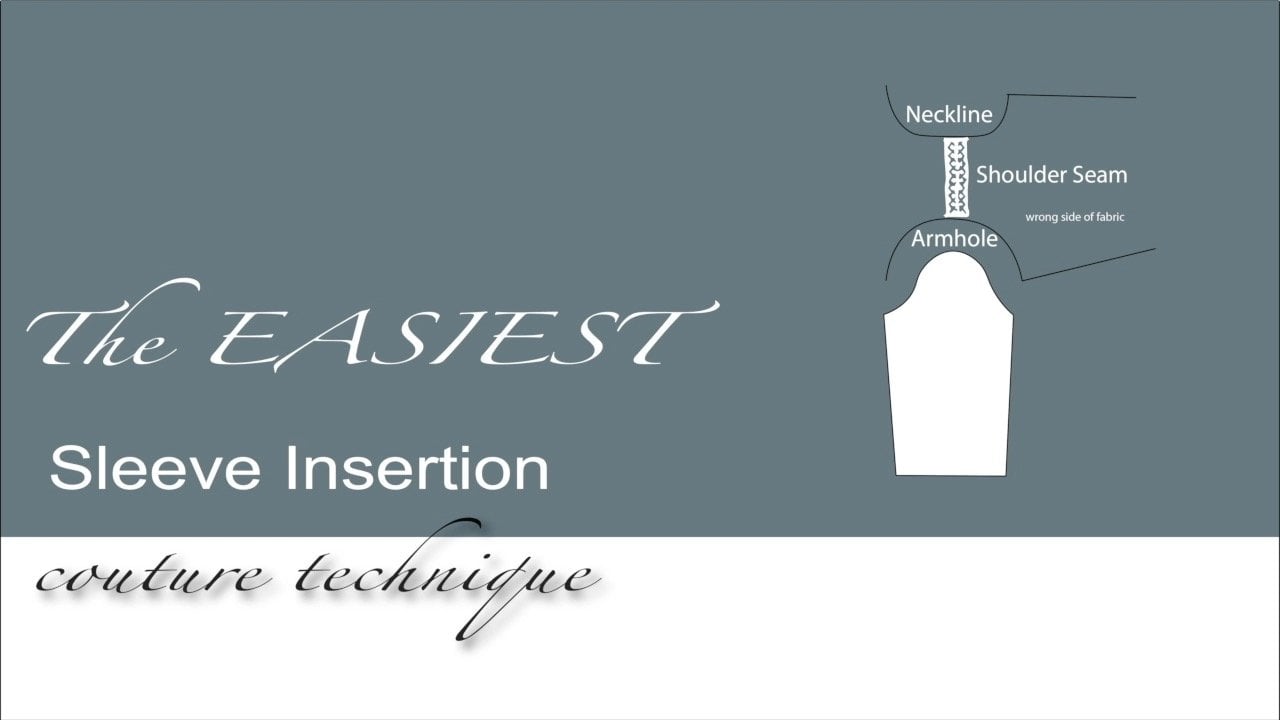
has to be made first. Five is showing you the sleeve, which will require work on
the head between the notches by gathering or using my couture technique
with bias tape. You won't see any markings on
the head to indicate this. Your instructions will just tell you to gather between
your notches. But now, you know,
there are also other sleek designs
that require other work and you might not see
markings on the pieces, but you just have to
read the instructions. Six shows a dress plant that has a plaque opening at the
neck line and sich dart. The inside work. Now here
I've drawn somewhat of a map, pointing out all edges that
need to have work done. I think seeing it this way breaks it down in
a way that should help you see each piece individually before they get
joined to become a garment. At that time, the
longest seams are joined together and clean finishing
is required on them. Even though the inside
work needs to be done before you join the pieces
together at the side scenes, they don't have to be done
in any particular order. I will teach you a
process that I go by, but you have some freedom as
to what you choose to do. Darts have to be done before a patch pocket goes
on a pant back, but a patch pocket on
the front of a dress that isn't covering a dart
can be done at any time. The front hip pocket
seen here require a couple of steps before they can be joined
together to make a piece. The pocket facing is
sewn to the front and the pocket piece is then added behind it to
complete the pocket. These steps have
to be done before the front and back pants are joined together
at the side seas. As well, the zipper
needs to be put on before any joining is done.
3. Staystitching: Hi there. I hope you'll print the PDF pattern
sample and follow along. My samples have one half inch or 1 centimeter seam allowance
on all curved edges, such as neck lines, arm
holes, and sleeve heads. Sew the stay stitching just
inside that seam line. Set your stitch lengths
to a short stitch, possibly 2 millimeters
depending on your machine. I've marked the arrows
on my sample to show the direction is from the shoulder point to
the middle on each side. I suggest you do the
same so that if you have to refer back to this sample at a later date,
you'll see that. Why specifically sew
in that direction? Reason is that
sometimes the fabric can get a bit stretched
just from sewing, especially on a curve. The purpose of stay
stitching is to keep the shape of the neck
line from getting stretched out from over handling before you put
a facing or a collar on. It's also used to
keep pieces together temporarily before they're
joined to other pieces, such as darts after
they're pressed, pleats, tucks, or the pocket
facing and pocket piece on the front hip
pocket of a pant. With the stay stitching I've
shown here on the bottice, it's important to
do it as soon as possible after cutting
out the piece, that's as easy as it is. Stay stitching is
pretty standard. Next, you think you
know how to do a dart. Meet me in the
next video where I show you the best
way to sew a dart. M.
4. Darts: This first slide just shows what the PDS sample looks like in case you haven't
printed it out to work from. Otherwise, I'm
going to stick with the video explaining
how to start from the beginning on
a scrap piece of fabric and drawing your
own lines to make a dart. Use a four inch by
four inch piece of fabric and let's
start from there. All you're going to do is
get a scrap piece of fabric. Like I say, any size
really is fine. We're going to draw a
line in the middle. You can draw it in pen
because then when you have your sample that you keep in your book, it'll
always be there. Just draw a straight
line from the top edge, 3.5 " to the top
and then measure over half an inch and
mark it such as this, half inch that way,
half inch that way, and then join it to the
bottom. On each side. Then a notch, half an
inch from the top, an inch from that, and
an inch from the other. Half an inch, make a dot here. These will give you the lines when you're
going to fold it together. It gives you the folding. You're going to make this
line match that one. Then an inch again, draw a circle or
notch, whatever. Then another inch
down, let's say. It's just a guide. I'll
show you how we bring the two outside
lines to the middle. Now we take this and we fold it. What you do is you notch it, you notch this arm, and then notch this arm. Then you Make sure at the top that their notches
are matching each other, and then you fold
along the center line. Don't have to press it with an iron or anything like that. Going to fold it and
then this press it. Then we're just going to
sew from here to here. Pattern tells you to
sew at the top and backstitch and then
sew all the way down and then backstitch
again at the bottom. But you can't actually
backstitch at the bottom because you're in
you're in nowhere and, to try to go back
when there's really no fabric to backstitch
on it just doesn't work. What we learned the
French wayur way to do it is you just
start at the beginning, and then you sew all the way off about ten stitches and
then those two stitches, they tie each other up. They get all twisted and
you leave that length of about an inch and a half
long and just trim it off. Then you'll see that they're all tied up. I'm
going to show you. Darts are used to remove
excess fabric from an area. It's a result of a difference in the width between the
hip and the waist. It's a shaping method and
it can be used anywhere. So we're going to use a regular stitch length of 2.5 and you start
at the beginning, go three or four stitches, back stitch to the beginning. Then just sew right on
that line all the way off. About ten stitches. I have an automatic cutter. On my wonderful machine,
there's a good shot. That's it. You would just
leave it like this and it's really tightly woven together because
that's what it does. If you go straight off, you don't get a little circle, a little bubble when
you press the dart. See, it looks pretty good. You can tell right now
that there's no bubble there and there's your
dart, easy as pie. Then we fold it
towards the outside, which is the side seam. I will press it now and show you how to
press it properly. Here I have two pressing items. I think this one is used. I inherited this from somebody, but I believe it's for getting
inside of a sleeve and being able to press the
seam inside a sleeve. You could use this or you could use the ham,
a regular ham. What you're going to
do is take your dart and if this is your side seam, you're going to pull this apart, take your iron, and
you're going to press. Remember, the steam
is what you want. You're just going to press
it, pull it apart, press it. And pull this over so you can get a nice press
at the bottom, pressing it up and down. Then when you turn it over, you'll see there's no
little circle there. There, you got a nice line. You'll know if you don't do it right because when
you go to try it on, you'll see that it sticks out. It just means you have
to straighten your line, go back straighten your line. It's often caused because
people try to backstitch, like your instructions say
at this place of no return. I mean, it's just impossible
to try to backstitch. It I think gets a little stressful in a way that
you're trying to backstitch, and you can't always
get your needle back into this place because
there's no room to do that, then you end up not getting the last part of
the dart straight. Was that's why this method is so great because
you just sew off, et all the stitches bind themselves together
and you're done. Here we are. It's
a beautiful dart. Then the final step is what your directions in your
pattern will tell you to do, and that is to stay
stitch the dart in place. Mm.
5. Fisheye Darts : Again, this first
slide just shows what the PDS sample of the
fish eye dart looks like in case you haven't
printed it out to work from. This is a fish eye dart. If you look close, it looks like the two darts put
together basically, and I'm going to show
you how to do it. It removes excess around
the waist garment, goes from under the bust to just between the
waist and the hip. Let's do one. For the
purpose of this video, I have drawn two darts that
meet in the middle and then just going to fold
the dart in the middle. I've done two of them
side by side so I can show you two different
methods of sewing them. The first way to do it is to do exactly the same way that
you did the irregular dart. You start somewhere in
the middle, backstitch, and you just sew all the way off till it ties itself up and then go back in and
wherever you started, backstitch again, same
at the other end. Back a bit and then just
sew all the way off. And leave your threads
and then cut them. So that's just the same way
as a dart is done, right? And the second way is coming up. Okay, I'm going to put
the needle in an inch and a half away from the
point and start here. Just backstitch, a
couple of stitches. Then follow the Darch lines and sew right off. And then don't cut it, lift up your needle. Pull it out. Leave a
little bit of slack there. Go in and then sew a few
stitches and backstitch. Then cut it off and
turn it around, and then go back to
where you started. Do the same thing
on the other side. So all the way off. Lift up your knee,
pull it out to give yourself a bit of
slack and just go in. This is about the
distance it should be. The first one was a
little bit too far away. Just make it like an inch
or so and then you're done. That's the actual couture
technique of fish eye dart, which you won't
see anywhere else. Yeah, this one, I find
that's a little bit long, should have gone in here. I just pulled it out too much, so I wouldn't do that. I do. This one's much better. Then
just cut off the thread. Don't cut the loop that you
just cut the beginning, the ends that we're tailing the beginning and then leave that piece in there and
then we'll press it. Then we're just going to press it the same way that
we did with the other one and we'll press
it towards the outside. If that was the side seam, we would just press it. You have to kind of
pull that excess. In order to get at that curve, you have to kind of make sure that without
getting your hands burnt, steam is very hot. You have to Css it like
that, press it down. Then the other I think
it's going to be fun top stitch them because top stitching them makes a
whole different thing. You could actually sew
these on the outside, not if it was done like this, but if it was the first
method like here, then you could tuck
this thread in here like this and then pin it, pin this the tip
of that dart down, and you could top stitch
it all the way down there. All right? So here with
this method, you can't. You know, you'd
have to disconnect it and it's not
gonna look right. So anyway, let's do that. I'm just going to pull this as I had said I would and
tuck it under here. Then going to. Top stitch it. Um, close as you can to the point pulling the pin out. As soon as you get in there,
so put your needle in. These things will come eventually with your confidence that getting close to the
edge like this, et cetera. I like to do both
of the ways to pin them so close to the edge. You have to kind of pull the fabric so that you're not
getting any tucks in there. Right? It looks pretty cool
on the outside, though. Makes such a nice detail. Like I said, you
can even do it on the outside of a garment. Makes a whole neat detail. When you, um, I mean, you dare to do it. You can see that, you know, se overpins
if you go very slowly. Then This is what it looks
like on the outside. And if you like, you know, you're like the artist, right? You're drawing something here. So you could just toptick
it again if you want, right beside The line that so you're outlining it like like you're drawing
it with with thread? You're If you were
doing a drawing, you would be outlining. I really like that. Then
you would just press it. Yes, it would be really
nice if you did this on possibly a dark
colored fabric like black and you wanted to outline it with
a different color. It'd be so classic
and beautiful. All right. See you
in the next video.
6. Pleats and Tucks: Hi there. Welcome to the
video on pleats and Tucks. I will show you the way that pattern tells
you how to do pleats, and then I will show you the couture technique that I learned about how to do pleats. Let's get started. Pleats are basically
folds in the fabric. First of all, take a piece
of fabric that's a scrap, about six to 7 " wide approximately and draw one
line in the middle and measure 1 centimeter on each side of it twice
so that you end up with a piece that looks like this and it's got
five lines on it. All you're going to do is
you're going to fold along the middle line and
meet the center line, and you're going to fold along the other middle line and
make it meet the center line. You're going to
press it, pin it, and stay stitch it. The inverted pleat
is what you'll end up with on the front and a box pleat is what you will
end up with on the back. Also pressed and stay
stitch at the top first. I use the edge of my
zipper foot as a guide. Pass the pleats and then there's your
pleat. It's all ready. Then when you put your waistband on or whatever it is
you're going to do, it's secure while you're working and it's not
going to come out. Well, you also could be
asked to do a pleat that is simple one that we did
in the beginning, right? You have a six line and
you fold it the other way. Pin it. Once you pin them, then you press them, see? Then this would be
another one, let's say. You get the idea that's so easy. I've decided to just put
in another plate there. That's a basic plate, folds in the top and you could
do as many as you like. Do yourself some samples, cress them, make a cute little
skirt, and stay stitching. This is the method
that I'm going to talk about that is going to
be different than a pattern. You may have a pattern
that asks you to sew down the line and then
backstitch at the bottom. We're going to do it the
way the pattern tells you, and then I'm going to
show you two methods, one is wrong and one is
right. This is also wrong. Two wrong methods, the
way they tell you. Well, the best way, a couture
way that you will see. The pattern just
may say backstitch at the beginning of the line. And go to the bottom. There may be a circle there or some indication
that that's it. And then you backstitch. That's what they're
going to tell you to do. It's one way, now the next way. No, with this way, I don't think that you'll ever
be told to do this, but for some reason we were taught it's another
wrong way to do it. People may think that
if you sew down, I've made a fold,
I'm sewing about a centimeter from the
edge. Backstitch again. When you get to the
bottom of this line, let's say you want
your plate that long, then you would turn and you would go over to the edge
and then backstitch. Okay. But that's not writing it. But the way that
I'm going to show you this is the way
you should do it. I would like you to make a
sample of these three ways, just so you could
write your notes to yourself that say
wrong, wrong, right. Now, you're going to
do the same thing. The backstitching
will be the same. The beginning will be the same. Then what you're going to do is when you get
to the bottom, where the bottom of
the pleat should be going to make a
nice little curve. And when I press these, you'll see why. Don't
box stitch there. Just do a nice little curve. G lift up your foot if you want. Then go straight off to the
edge and you can backstitch. Cut repress. You have two ways that
are not quite right. The reason is that you're
going to press these. Most likely, they're going
to be pleats on the inside. You're going to
press them down and you're going to stay
stitch them at the top. It's possible that there will
be pressure on this piece. You can see already that
it's at risk of coming out. And it's the same this
one because that's an end point and it's going
to be putting pressure on there in case you for
some reason, stretch it. But whereas this one, you can see that
because we did a curve, there's really no pressure
on that point there. I would say best practice
couture technique. That versus that. I'm using a scrap piece of
fabric to make some tucks and you can see that I've
already done two tucks here. Then these lines that are drawn, I'm going to show you how
to do for the rest of them. I would say that tucks
are simple, but finicky. I never liked them when I was well, I never
really did them. A lot of times when you
are required to do them, you're required to do them
really close to each other, which I'm not into that. I find that stressful because they're not easy to get super close
to each other. But if they were like this where they're
about an inch apart, all you're doing is
sewing right beside the edge of the fabric, and it's actually not that hard. Well, the other two
weren't. I'll see. I'm going to do this one, and then I think I'm gonna
change the thread for you so that it's a little easier to see how
close to the edge I am. In case you're
wondering why I have the green masking
tape on my machine, it's just because the
reflection of the camera on the silver creates
a bit of an issue. So that's the only
reason that's there. Let's do this with
black on one side, and, uh I'll show you pink on the
on the bobbin thread so. These would be pressed
one way or another. I would probably press them out. I think I did that
in the first two. Let's talk about tucks. Tucks are made to create
a texture on a fabric. You want to be careful and do it possibly on a solid
color fabric and not on a very busy floured fabric because already
flowers are texture, and this tucks are texture. You don't want bows. You don't want two textures fighting with each
other for attention. But I really wanted to see. I had a busy fabric close by, some print, and I tested it out and did some tucks on them and then pressed them down. I actually looks okay. They're far apart. But again, I'm not sure if your pattern would probably
not ask you to do that. It's probably you can see
these on white shirts. Tuck tucks are better on
little children's pinafores. You'd see them in the olden
days on a nice white shirt, a black shirt, maybe. I think they show up
best on white myself, but probably will
not be asked to get busy floured fabric. That's tucks easy,
simple, challenging.
7. Conclusion: Here I've gathered
the first samples that you can keep in a binder, so you can refer to them
anytime in the future. This concludes the
first phase of constructing garments
without having to read a pattern because you now know that if your pattern
includes any of these tasks, you can easily get
started sewing without trying to figure out what they might be trying to tell you. I added a sample on the far right bottom
of tucks I saw once where they were stitched
in different directions to create a pattern and texture. Beside it, I attempted
the pin tucks sewn right beside each other and it
wasn't easy at all for me. But I didn't really
use any lines. I just tried to show you
unsuccessfully, I might. In the meantime, happy sewing.
 Marcy Newman, SewwwMuchMore!