15 Minute Roses | Expressive Translucent Gouache & Watercolour | Holly Tomas Art | Skillshare

Playback Speed


1.0x


  • 0.5x
  • 0.75x
  • 1x (Normal)
  • 1.25x
  • 1.5x
  • 1.75x
  • 2x

15 Minute Roses | Expressive Translucent Gouache & Watercolour

teacher avatar Holly Tomas Art, Watercolour | Gouache | Mixed Media

Watch this class and thousands more

Get unlimited access to every class
Taught by industry leaders & working professionals
Topics include illustration, design, photography, and more

Watch this class and thousands more

Get unlimited access to every class
Taught by industry leaders & working professionals
Topics include illustration, design, photography, and more

Lessons in This Class

    • 1.

      Welcome!

      1:14

    • 2.

      Translucent Petals

      1:58

    • 3.

      Stamens & More Pigmented Petals

      3:10

    • 4.

      Expressive Leaves

      2:45

    • 5.

      Highlights

      1:41

    • 6.

      Finishing Touches

      3:48

  • --
  • Beginner level
  • Intermediate level
  • Advanced level
  • All levels

Community Generated

The level is determined by a majority opinion of students who have reviewed this class. The teacher's recommendation is shown until at least 5 student responses are collected.

75

Students

2

Projects

About This Class

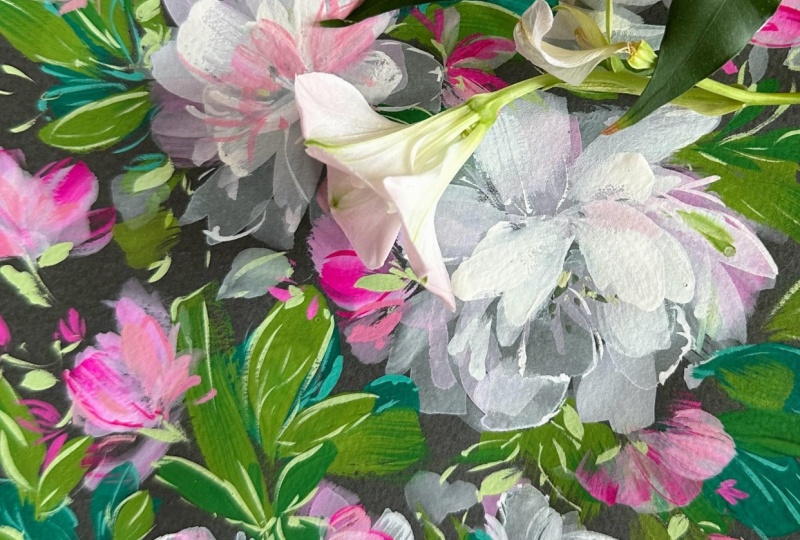
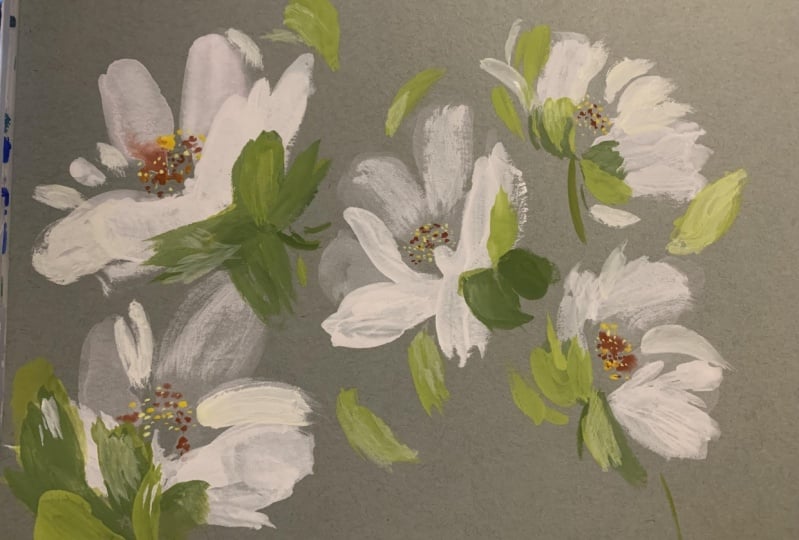
Welcome to this short form class! where we'll be concentrating on fluid expressive brush strokes and translucency.

I've had requests about this method from you, thank you! So, I felt it was time to get us started, and what better way to approach this but in a short form, gentle, non-stressy class!

This style does take a wee bit of practise, and I can prove to be frustrating at first.
So, let me take any frustration away, and create a little bubble where we can practise in a fun, less-threatening way.

We will be using predominantly white, as this will enhance our appreciation of dark and light.

These are great on tinted or black paper, but you could always follow along using white paper and use a darker hue to practise translucency with. It's easier on tinted paper, though, as we are going to be working with the paper to provide the background for our translucent brush strokes.

What we'll be covering in class:

How To Use Paint Value:

  • Lightness and Darkness: Value describes how light or dark a colour is,
  • Contrast:The difference in value between different areas of an artwork creates contrast, which can be used to emphasise certain elements or create a sense of drama. 
  • Depth and Form: By using background translucent petals and more pigmented foreground petals
  • Mood and Atmosphere: Value can also be used to evoke different moods and atmospheres. For example, a painting with mostly dark values might feel somber or mysterious, while a painting with mostly light values might feel bright and cheerful. 
  • How To Create Fluid, expressive brush strokes using a flat or filbert brush.
  • How to use highlights to create contrast and a bit of drama!
  • Learning when less is more (sometimes quite challenging to know when to stop lol)

This Class is For:

  1. Those who are looking for a zero-stress class
  2. Those looking for a beginner-level expressive Rose floral style
  3. Those wanting to explore translucency
  4. Those who need a short form class due to life-demands!
  5. Those experiencing creative block; this is a great way of finding your mojo and getting things moving again, in just 15 minutes.

Enjoy!!

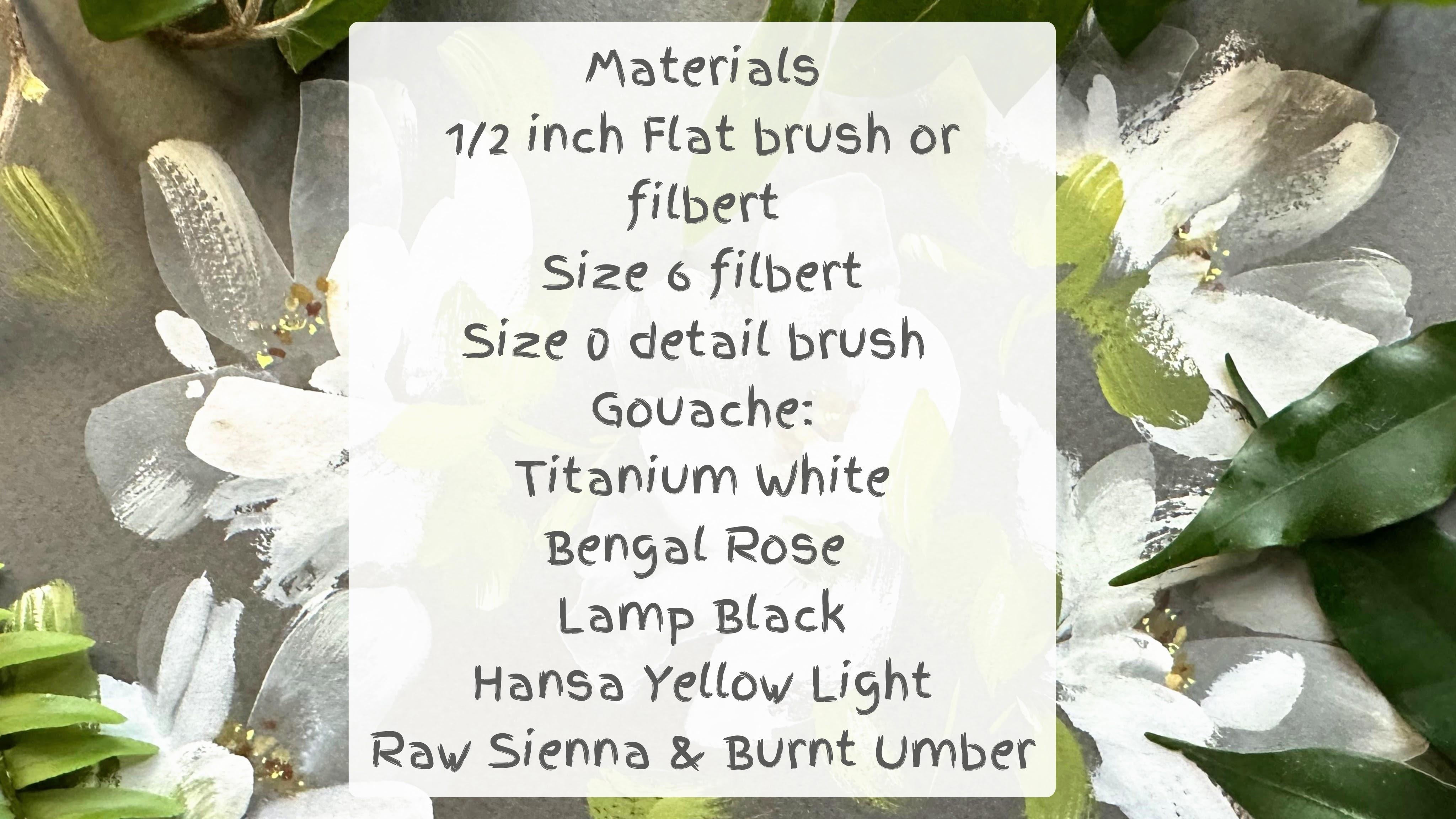
Materials:

Fabriano Tiziano pastel paper (or black watercolour paper like Stonehenge or black/grey sugar paper)
Meet Your Teacher
Teacher Profile Image

Holly Tomas Art

Watercolour | Gouache | Mixed Media

Teacher

Hello, I'm Holly :O) I am so happy to have you here!

I'm a Skillshare Teacher, recently selected for the Skillshare Rising Teacher's Programme. I paint flowers and leaves for the most part, particularly wildflowers, as I am surrounded by so much inspiration, living, as I do, in rural Scotland.

I love exploring new techniques, and I'm very keen on finding brush strokes and media which make painting just that little bit less challenging for us, whilst gently broadening our knowledge.... I always say 'easy but effective' is the way forward! My classes are mostly watercolour and gouache, but I also delve into mixed media & leaf printing.

I have a humble little mission statement :0) .... 3 facets which are really important to me, when I am considering cla... See full profile

Level: Beginner

Class Ratings

Expectations Met?
    Exceeded!
  • 0%
  • Yes
  • 0%
  • Somewhat
  • 0%
  • Not really
  • 0%

Why Join Skillshare?

Take award-winning Skillshare Original Classes

Each class has short lessons, hands-on projects

Your membership supports Skillshare teachers

Learn From Anywhere

Take classes on the go with the Skillshare app. Stream or download to watch on the plane, the subway, or wherever you learn best.

Transcripts

1. Welcome!: Welcome to 15 minute Roses, where we're going to be exploring translucency and expressive brushstrokes. So I started off there with an A three sized sheet of paper and cut it right down to a five. And just I mentioned here about paper, you can use black watercolor paper or construction or sugar paper. I'll be talking about paints in the class, but also I'll leave full details in our A section. I just wanted to run through for those who don't know how you can upload your project. So underneath the class, there is an about section, projects and resources, reviews, discussions, and you can also access the full transcript from the class. So to show your project, you can click on Projects and Resources and on the right, submit project. So when you're ready, let's get started. 2. Translucent Petals: So let's jump right in with our class. And I'm starting out with some white guash. This is Windsor and Newton. Or, of course, you could use watercolor. Some raw sienna, which is watercolur, some burnt umber, also watercolor. And a little bit of the Bengal rose in the top right there, which is guash. So I'm bringing over some of the white guash into maybe three drops of water. So it's very translucent. Don't be afraid to go really translucent because you can always add more paint. Very gentle pink here. And if you have a vibrant gouache like I have with the Bengal rose, you'll only need a tiny touch of that. So a mixture of slower and swifter movements for the petals. And we're just going to lay down five flowers. Adding an extra petal here and there and dropping in more pigmented areas. I'm not using a lot of water. So although it's transparent, I'm careful because I'm aware I'm using a pastel paper, which is the fabriano Tiziano. 3. Stamens & More Pigmented Petals: Okay, so let's start building up layers. Now, before that, it seems a little topsy turvy, but going to go in and just add some stamens. This is the burnt sienna. And just dotting in with my zero round brush. Very random, keeping it quite loose because the overall style is loose and expressive. And then adding tiny touch of white and adding highlights to those. So maybe only two or three dots. And you'll see why I'm doing this now because it just makes more sense than trying to dot them around petals that have already been laid down. Going into my burnt tumba. It's always lovely to get the few different hues in there. And again, just dotting around fairly randomly. We really don't want to be too defined. And that's that for these centers. And now let's add pigmented layer. So very thick white paint with that slight pink tinge, creating very loose strokes. And we're using the full brush and the side of the brush. Let me demonstrate that. So that's a full brush, twisting round up to one side. And that's using the side of the brush there. That's also the side. That's what I love about a flat brush. It does provide a variety of petal shapes. Now, I'm using my brush quite dry here to create some texture, and also the hairs on my brush have started to separate a little bit, naturally, and that's when we get this slightly grungy, earthy, textured look. So really err on the side of your brush being fairly dry, quite a lot of pigment, not a lot of water. And we can go around the stamens that we've just put down. And it looks so much more natural than if we did the flowers first and then tried to add the stamens. Just going round, adding little strokes where I fancy and really erring on the earthy textural style now. 4. Expressive Leaves: So trying to keep with this very fluid style, let's add some leaves. And I've done this mix in other classes, too. It's one of my favorite mixes for greens, and that's using lamp black or any black and a very cool yellow. And I'm using handsy yellow light for that. These are both gouache. I love this because you get such a variety and an array of gradients. So on the right hand side there, I'm adding more black, just to create a contrast, and we'll start with that darker black. I've chosen a darker green because it will create depth because it's the closest in value to the gray paper. It just allows us to build up layers. So continuing with those very swift organic strokes. Oh placing your brush down and then swiftly bringing it up. That was on the side of the brush. Also the side. And that is a mixture of both. Side of the brush? Another side stroke. And then let's go down to our size zero and just add a few stems, again, using very swift movements. So going to our lighter green now. And this is going to sit over the darker leaves really well. So, in effect, we have shadow leaves and then these lighter leaves which are closer to us. It's a very easy technique to use to create depth. And of course, we can go over some of the petals. That's full stroke there. Sidebush. 5. Highlights: I really love this bit. So on our transparent petals, we're going to add some highlights. So moving over to my filbert. I have made sure it's clean and it's damp but not wet. So just tiny touches of water. And we are wanting the paint to be almost neat. And then we're going to blot off the excess. And then quickly pull the brush through. And what it will do is leave behind these gorgeous textural marks. Very similar to what we've just done, but stopping the brush a little sooner, so we're kind of creating the highlights along the top of the petals. I'm using the full brush on most of these strokes. I'm just curbing my brush around a little bit to follow the direction of the petal. I don't want to go over some of these petals because we wanted to create those hard lines, which is a really lovely part of this whole painting. 6. Finishing Touches : So moving to finishing touches. And there's certain areas that I just wanted to change. I wanted to add a little leaf there because the two underneath were quite flat. And then I'm just going to go over some of the leaves, adding some white to lighten it even further than the previous layer, and then just tapping in paint really or doing a very similar movement to the petals in our last lesson. I love these little white highlights over that green. So it's a jabby movement, and we're hardly moving the brush, just lifting it off the page very soon after we've placed it down. So effective and so easy to do. It just takes a bit of practice to get the right recipe, if you like, between having too pigmented a paint, which becomes sticky and doesn't move and too thin a paint where we have no control and then not being able to create texture. And going with the movement of the leaves where possible. I just want to add some very light yellow to the stamens. They've sunk into the page just a little bit. And I want to add another highlighted area. Little dots, less more, and I'm using my very small Cotman watercolor brush, which is a pointed round. I'm keeping it very simple because if we made it too detailed, it wouldn't be in keeping with the expressive painting style that we've been using. There were just a couple of petals I wanted to add. This looked a bit odd, this flower, and I felt it needed a petal at the front here. And then this one looked just a bit lonely on its own. I'm just going to round that up a little bit. A few round here making them look a little bit more whole. And that looks a bit better. So I'm just going to leave you with a little gallery of what we did together. And don't forget you can always upload your project and share it with our little community here. Seeing your work and how you encourage each other is my favorite part of the whole process. So take care. Bye for now.