Impressionist Painting 101: What is Impressionism?
Forget perfect lines and polished portraits—Impressionism broke the mold. Let’s dive into this revolutionary approach.



Forget perfect lines and polished portraits—Impressionism broke the mold, unlike any other historic art movement. Ready to dive into this revolutionary approach?
This piece is an accessible and visually rich introduction to Impressionist painting, designed to engage the creative community. It will weave together historical context, key figures, defining techniques and practical takeaways for artists and creatives, such as yourself. The goal is to both inspire appreciation for Impressionism and offer insights you can apply in your own creative work.
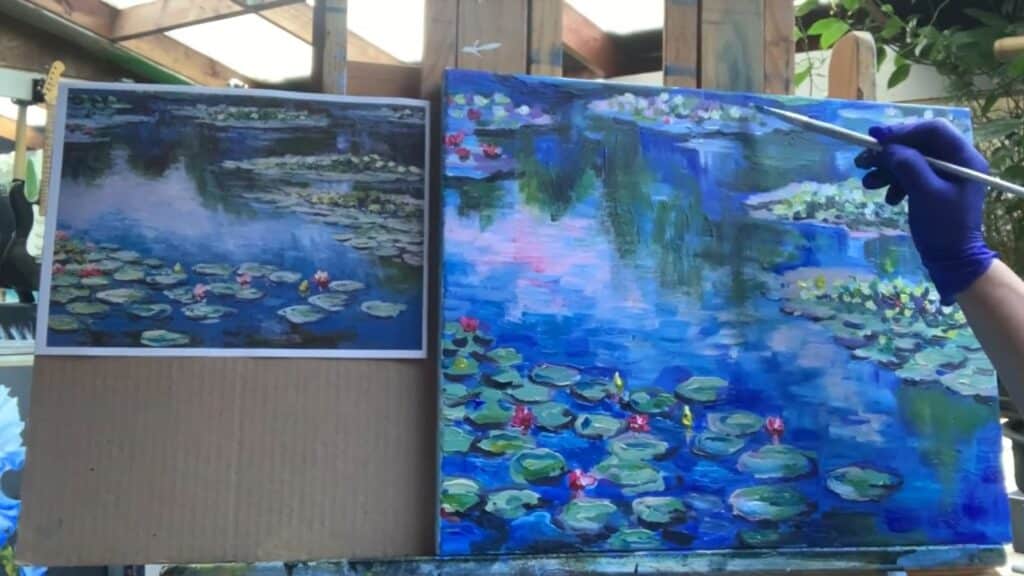
It’s important to note that this article focuses on French Impressionism. The art movement made its way to the United States and elsewhere late in the 19th century, but it had its authentic roots in Paris, France, and the surrounding regions.
For a bit of inspiration before you begin, check out these articles on major art movements, art mediums and how to advance your own creativity:
- Expressionism vs. Impressionism
- Everything to Know About Paint Mediums
- Expressive Painting 101
- Surrealist Painting 101
- How to Become a Professional Painter
Read on to immerse yourself in a world of color, light, texture and unconventional artists!
Impressionism and an Artistic Revolution
Ever since the Renaissance, when artists deepened their understanding of perspective and other techniques, detail and definition were prized among art establishments and critics. By the mid-19th century, Romanticism, Academic Art and Realism dominated with both classical imagery and the grittier elements of everyday life.
Then, in the 1860s, a few artists walked out of their studios, stopped making preliminary sketches and created pieces outdoors with quick, colorful strokes. By the 1870s, the Impressionist movement had established itself in Paris, France.
Impressionism, as the name for this art movement, was not initially used favorably and inspired by Claude Monet’s piece, Impression, Sunrise, a critic called the style more of an “impression” than a finished painting.
Characterized by loose, visible brushstrokes and depictions of intense but transient sunlight, Impressionism was about capturing moments in time, often outside. Its subjects tend to be landscapes or people engaging in mundane activities, such as sitting on a bench or walking around the garden.
To capture these scenes, Impressionist artists preferred to paint outside (known as “en plein air”) and focus on the light and overall atmosphere of the scene. This was a departure from creating sketches of modeled scenes, then meticulously recording every detail in early attempts at a sort of photorealism.
Impressionism as a Rebellion
During the first half of the 19th century, the Romantic art movement focused on imagination, individualism, and nature as a response to the logic, precision, and social conventions of the Enlightenment and Industrial Revolution.
Responding to Romanticism, Realism emerged in the 1840s. Where Romanticism championed beauty and idealism, Realism depicted real people in the real world, often in sordid and difficult situations. Where Romanticism turned away from the technological changes of the Industrial Revolution, Realism highlighted what those changes had wrought (which wasn’t always good).
Impressionism continued the focus on real-life, mundane subject matter and brought back some of the color of Romanticism. At the same time, it rebelled against the formality and inaccessibility of academic art, with its artists out in the world, more concerned with mood than technique.
Major Impressionist Artists and Their Work
A number of key players founded the Impressionist movement, calling themselves the Anonymous Society of Painters, Sculptors, Printmakers, and so on. They operated independently of the Royal Academies of Art and their annual Salons, which selected and awarded artists according to professional convention.
During the 1870s and 1880s, the Impressionists held eight independent exhibitions of their work in Paris. The lineup of participants changed slightly with each exhibition, but the names listed here are among the most well-known in the movement.
This is by no means an exhaustive list; numerous Impressionist artists were working in and around Paris, France and the rest of the world.
Claude Monet
Probably the most recognized name of the Impressionist movement, Monet was committed to the philosophy of expressing perceptions of nature.
Throughout his career, Monet displayed an impressive grasp of light and its effect on his subject. Whether in low light or intensely bright sunlight, the plants, people and water reflect it with not only accuracy but rich vibrancy.
Monet’s brush strokes are notably short and quick, resulting in broken up color and a great deal of texture. He did use dark tones, but seemingly to further highlight the lighter, brighter colors.
Edgar Degas
Often opting to use indoor, artificial light, Degas hesitated to even identify as an Impressionist. He did show scenes from everyday life in his work, but leaned toward active subjects of horseracing, dancers and singers rather than landscapes.
Degas is best known for his paintings of ballet dancers. These are not typical portraits, but rather studies of the human body and how it moves. In these and other paintings, Degas’ work is also characterized by unusual vantage points, cropping and asymmetry.
Berthe Morisot
As a woman, Morisot likely had access to scenes many other impressionists did not. This may be why she became known for painting fashionable Parisian women, known as Parisienne.
Like Monet and others, Morisot employed the rapid, small brushstrokes of the movement, often to portray working women. Some said her work looked unfinished, though this was likely an intentional way to challenge conventional perceptions.
Morisot seemed to appreciate so-called “in-between spaces,” such as windows and balconies. She tended to depict them from the inside, including both the sense of the interior and the glimpse of the outdoors. It’s a fascinating exploration of two genres (interior scenes and landscapes) as well as how people behave in these transitional places.
Camille Pissarro
Among the oldest of the Impressionists, Pissarro was a significant contributor to the development of the artistic style. In the quintessential Impressionist manner, he captured landscapes and studied how they transformed under varying lighting conditions.
Pissarro was the only artist to exhibit in all eight of the independent exhibitions, and it makes sense, as his work embodied the typical subjects and moods of the movement. He painted rural and urban scenes around France, demonstrating an interest in the lives of workers and peasants.
Auguste Renoir
Delicacy was always part of Renoir’s approach. He started out as a porcelain painter before moving to canvas in 1860, when he started working in academic art. That’s where he met Monet and others, with whom he’d later form the independent group of artists.
Renoir is largely known for painting portraits and people relaxing in cafes and dance gardens. While he used similar techniques of other Impressionists–short brushstroke and a focus on light–he concentrated on humans more than nature. In fact, he was especially known for his penchant for painting nudes.
Mary Cassatt
One of the few French Impressionists born outside of France, Cassatt was originally from the United States, and the only American to exhibit with the Impressionists in their independent shows. She is probably the most well-known woman of the movement.
Like Morisot, Cassat had access to traditionally feminine spaces that many other Impressionists did not. Also, like Morisot, she chose to highlight aspects of real life as a woman and mother, rather than focusing solely on delicacy, beauty, and propriety.
Cassat was known not only for her painting, but also for her printmaking. Like other artists of the time, she was influenced by the Japanese art styles that were popularized in the West, and this is evident in her copperplate prints.
Edouard Manet
Unlike many other Impressionists, Manet was interested in weaving older painting styles into his work and creating his own versions of established pieces and concepts. While he also depicted modern life and experimented with lighting techniques, his work may be considered less groundbreaking than that of other artists of the period.
Manet became known for the controversial nature of his work. He certainly wasn’t the only one to paint nudes, but the context of the scenes suggested just enough debauchery and unconventionality to be considered crude amongst the bourgeois.
Interestingly, Manet’s younger brother, a painter named Eugène, was married to another Impressionist artist, Berthe Morisot.
Impressionist Techniques and Materials
The primary differences between Impressionist work and the art of previous movements are color, light and texture. Artists had painted portraits and landscapes for centuries, but never with this kind of vibrancy and vibration.
Color
The Impressionists did not all use the exact same color palette. Indeed, many used the muted greys and browns seen in the grittiest of Realist paintings. But that’s probably not what springs to mind when thinking of Monet or the other artists of the era.
Although paint color certainly served its traditional purpose– to bring life to a still painting – within Impressionism, it revolved around the concept of light first and foremost. Both pale and bright spots suggest intense sunlight, while even the shadows contain pastel tones in pinks, blues and greens.
As its name implies, the Impressionist movement used color to give viewers an impression of a very specific moment, be it sunrise, sunset or high noon.
Light
Impressionists didn’t just pour light into their work in the form of shocking whites and citrus tones, they created in it. Artists had long created sketches outdoors, then headed into studios to finish the piece. Impressionists, however, stayed outside to paint.
This both allowed and forced them to work quickly, getting the moments of light onto the canvas while they could. The result is that one can almost feel the sun and tell the time of day when looking at an Impressionist painting.
Texture
Part of working quickly with color and light was a new type of brushwork. Rather than long, smooth strokes that disappeared into the painting, Impressionists used short, fast strokes that remained visible in the finished painting.
The effect is a distinct texture and broken color. Sometimes this suggests movement, while at other times it conveys a sense of dappled light.
New Methods and Technology
Much of what the Impressionists did was possible because of their habit of outdoor painting (“plein air” in French). They could concentrate on the light around them, capturing it in fast brushstrokes and worrying less about detail than about the overall mood.
Additionally, new art technologies have made outdoor painting more accessible. Some were directly involved in the art, while others are less obvious:
- Small, portable paint tubes were far easier to transport than pots or other awkward vessels.
- Folding easels let painters prop their canvases up quickly and at an accessible height.
- Brushes with flat bristles applied faster, thinner layers of paint.
- Trains made the countryside much easier to get to for those landscape paintings.
Connecting Impressionism to Today’s Art Education and Culture
Clearly, the energy and activity of Impressionism have impacted today’s understanding of art. How often have you seen artists in movies painting outdoors and defying convention? Tools like portable easels are still on the shelves, and Monet’s paintings still adorn walls in homes and businesses.
The Impressionists learned and taught a great deal about the use of color, light, and texture, all of which are still evident in today’s analog and digital techniques. Whether you’re trying the short, fast brushstrokes on a physical canvas with oil or watercolor Impressionism, or playing with filters in tools like Procreate, an understanding of what the Impressionists were doing can help you work with concepts of accuracy and movement.
Impressionism may also be relevant for photographers. As a literal capture of light, and now with the expansive technological options, photographers can delve into everything from filters to multimedia techniques to pay homage to their Impressionist forebearers.
Skillshare Classes for Exploring Impressionism
If you’ve enjoyed this introduction and are eager to expand your understanding and practice of Impressionism, check out these expert-led classes:
- Creating Abstract Art Inspired by the Masters’ Color Palettes
- Impressionist Landscapes–How to Create Depth in Landscapes
- How to Paint a Light-Filled Impressionist Landscape
- Gouache-Style Effects in Procreate: Paint a Winter Impressionism
Related Reading
Katie Mitchell
Katie lives in Michigan with her husband, kids and pets. She enjoys cooking, travel and live music.
Try Skillshare for free! Sign up for a 7 day free trial today!
Get Started- Unlimited access to every class
- Supportive online creative community
- Learn offline with Skillshare's app