Transcripts
1. Introduction: Hi everybody. My name is Irene and I'm an illustrator and art teacher from Holland and I live in London. Today. In this class, I will teach you how to make illustration from your imagination. And we'll venture outside into nature to get a lots of inspiration that we can use for our illustration. My artwork is inspired by fantasy and science fiction, but the books I read Am I my own imagination? I love creating new creatures. And going out into nature really helps finding new shapes and textures that maybe you didn't think of initially yourself. All you need for this class is a sketch pencil and eraser to make your initial sketch. Then you'll need a pen, a bio pen and ink pen or brush pen, or maybe a fine liner to start making this catch him black or white. And then we're going to add color to our illustration. And you can either use pencils, pens, markers, ink, water color, whatever you have available to you. And we will explore what Texas you can create the different materials later on in this course. So whatever your materials are, whatever you have to your availability, you should be able to join in. This class is meant for every level. So even if you quite new to drawing, this is really great way to get inspired. I hope to see you all shortly.
2. Warm up: Before we get started with our real official painting, I wanted to show you in a warm-up exercise that I like to do is to gather imagination going a little bit. So I'm using some inks. So I've got some some water-based inks, different colors. And I love to use o for painting. You can also use them for drawing or for calligraphy. But I love to use them for painting. And what I've done is I took a sheet of watercolor paper and made that completely wets under the sink. So I just made it wet on both sides and then stuck it to this blank. So it stays nice and flatten it stuck to the blank. And because it's really wet, the ingroup float everywhere. So I will show you just how that works. So I'm just creating random shapes out of ink on this water paper, different colors. And then I'm going to use my pen to create some fancy creatures of it. Means make sure I clean member should be well before I go into the next color. So I'll make sure I make some tutorials and some some different shapes. So I'm going to let this dry. And I, once it's dry, I'm going to see what sort of shapes I recognize in these branches. The painting that I made earlier has dried down. And all these blotches of, of watercolor and ink, they have tried to hold these really interesting shapes. You can see some of them, they sort of flowered out. Some colors have mixed a little bit. And there's been really interesting shapes that have been created by by the water and Buddy ink. Someone's looking at this and I can turn it around a little bit looking at it and see if I see any if there's anything in there that sort of grabs my attention. And if there's anything in there that I can see a shape in there I would like to highlight. So I'm using a marker and I'm just going to draw in here and see what I'm seeing. See what I can find here because he's sort of a monster. I'm not being Schubert adventurous. And this is a super fun exercise fluid children as well. And she gets the idea. So if you're following along in your imagination takes you see what sort of shapes you can find. If there's anything that comes out for you. So as you can see, I have just with pen outlined some of the shapes that I saw and I've added some little things here and there. We've got low flying elephant. We have a hitchhiking gnome or some planets. Will snake crawling up here. There's this monster trying to eat this flying bumblebee snail. This is a belly dancing water droplets. There's a cloud crying over the whole thing and sort of counsel in the sky. So just like that, your mind can come up with lots of different shapes and ideas that you can then implement in other drawings. Some, maybe I'll be making a fantasy landscape. And I want to have low kitchen corner. These sort of little sketches can really help me think of this little creature can sit somewhere underneath a tree or maybe it's flying in the air somewhere that can really make my other paintings more interesting. So these sort of do those two photons away, keep them somewhere where you can tap into it later and can use the shapes, their inspiration in other drawings. And another thing is that you're making.
3. Finding Inspiration in Nature: When I am back for my walk into the park and I didn't collect, as you can see, quite a few treasures. And it felt a little bit like I was nurturing my inner child, walking around in collecting sticks and stones. So I've collected a few treasures. But I also took lots of photos of things that really inspired me and interesting shapes of trees that I could see. I'll put some photos up here in the corner. There was a ponds with lots of snails that are swimming around, which I thought was really interesting. So take lots of photos as well. These two bolsters, our foes were really interesting. So they could either how something be the skin of an animal. Almost imagine him being like fishies are creatures. Which one has a bit of a hole in it, which makes it look a bit like a mouth. I absolutely loved this show on the inside. And if you can see, it almost looks really like a little nest of some kind. And on the outside you can see the flower sort of killed opened itself. You can imagine it being like a heads or top of creature. So whatever you find, make sure you spend some time just looking at the shapes, look at it from different angles and see what sort of shapes are creature who could potentially recognizing it. And also the, you want to make something friendly or something more scary or creepy. Lefties as well. I like the fact that they're still connected, but there's two of them normally you only find them broken loose. Maybe it looks like a mustache. Maybe its wings. Really tried to look at it from different angles. If you look at it from the sides, I can totally imagine that this could be a weapon or a tool of some kinds. And just looking at the shapes and see what's we'll sort of feelings as a give me. I'll sort of images well up in me. So I'm going to put some pictures that I took up now as well. We're going to get started with some sketching. So grab yourself a sketchbook or some paper, sketch pencil, and we'll get ready to, brings all this inspiration in onto paper.
4. Sketching finding shapes: So I've got my artwork. I have some paper and it's just really standard printer paper. And I'll take it to the board so I can draw on eighth without worrying about it moving. If you prefer using a sketchbook or maybe you have some other paper it is you want to use. Please feel free to do so, but I'm just going to make some beginning sketches. They're not going to be defined artwork, there's not going to be the final paper. So I'm just going to start doing some sketches and I'm here to get some ideas and gets a creative fruit juices flowing. And looking at these protests to connect the shapes that I've got here. And I'm just going to see if there's any shapes and alike. And basically drawing what I'm seeing. And then I'm going to see later if there's anything more to I can make that she can see a pretty determined with my lines are not going to make a very precise sketching was exploring the shapes and see she already current like this. And would you like these vessels? You see if I can make some little creatures out of that. And it's really tempted to make them into low faces. With all that flowery stuff at the top being their hair. Maybe I can make something else out of it. So I'm going to have a little bit and look at the shapes heave there. Anything sort of come's out off talking, drawing a little bit. So this is a constant. Now we have lots of shapes on our faces and extra limbs and bits and pieces with my brush pen. So you can use a marker or a pen or even a bio reopen were exceptionally fine. And we're just going over this and see if there's any natural places where you can put a face or arms or anything that comes up with new. Please make sure you share your creations on their projects in the Skill Share tab. And really see what you're making. And we can give each other lots of inspiration and ideas on different creatures and we can create. And then we're going to use these sketches and these rough ideas for the next steps overdrawing. So this doesn't have to be pretty, just feel free to experiment and create lots of interesting shapes and eyes. And you don't have to follow the rules of nature. You can make creature 15 eyes or with six arms or without any, just, it's all up to you. So I really look forward to see what you create and then we'll check in, in the next class. See you later.
5. Brainstorming our creature: So the next thing I've done is I made, I used this bit of paper and I wrote down everything that i runs my character tests. And I created a worksheet that you can now note it's middle-income beneath there's four basic elements that I'm going to use creates mine. My final art piece. To first of all, I want to choose, am I going to create a character building or an object? So I'm going to choose a Cares. And then the second thing is what sort of fixture Do I want? This character's hair isn't bark skin for maybe it's made of stones. Maybe is my brakes are it's fluffy. Maybe it's Harry or that skills. Maybe it's made of metal or roots, or perhaps made up fines or letter. So there's lots of different options of a type of texture that your character or your building or your objects can have. Even a building made out of lots of different things, depending on what sort of knew she wanted to have. A material world it sets and who lives in it. Or maybe it's a building for a practical purpose. So that's the third thing. What the book is, the purpose of our character or and our building our objects. So this is all from our own imagination, but it really helps to set a clear purpose for what you're creating. So maybe your character is a Hyder, or maybe it's, the purpose is flying or likes to dogs, or maybe it's negotiator. So it communicates. Maybe it rungs are, it seems maybe it cooks or a transport sphinx. So whatever you choose, think of how you are texture and the purpose that you're creating, how it fitted together. And it counts for objects and for buildings as well. If you pick a building and perhaps you are making some sort of imaginary postal phis where different packages are being delivered and where these imaginary worlds that you're creating, greater communication happens. So maybe debts, building is made out of fines and defines. You're used to transport packages Froude's building. And maybe your your building is very solid, but big bricks and stones. So maybe the letters are being transported in a different way. So try and think of how the texture and the purpose can fit together in a way that tells a story. And the last thing that I want you to consider is characteristic or the motion. Thank your character, or your building or your objects can have. So maybe it's a serious plays. A person may be happy or friendly. Maybe it's angry or set. Maybe it feels attached to things are detached. So trying to think of a different emotion are different. Yeah, different characteristic that you're building from. And maybe this feels a little bit strange to think of an emotion connected to a building or an objects. But even buildings they would have a certain atmosphere or him. Five to it is, it's, if it's an angry building, perhaps to be some characteristics in that building that we present, that if it's a B, it's some sort of prison with spikes are each quite dangerous or maybe the artwork on the walls makes it look quite scary or angry. Or if it's a friendly place, maybe rupee, open windows and lots of minds. And maybe there are stars in the sky or candles or something that represents that light and openness. To try and think of the should of atmosphere if you want to create. If it's a character is one emotion. If it's a building, an object, it's more atmosphere and how it's good speakers. So I wrote all of these down in a worksheets that you can download some many on and just pick the things that you want to choose and you can cross out with you don't want to use and pick the main characteristics that we're going to use for work volume. So I'm going to choose a new character. So it's going to be a person or an animal like a character with bark like texture. So it's a bit like a shell, so many beautiful park-like textures when I went through his walk outside. So I'm going to choose some textures that's fitting and with quite a serious character. So I'm going to make a serious character with Berkeley executing on who is a messenger. So this character would deliver messengers. Messengers or packages are being negotiator or some format it. So I'm going to use everything that I've connected to create an original character with Barclays section who delivers messages. So, yeah, let's see what we get it for inspiration and gets our sketch pencils, and let's get started.
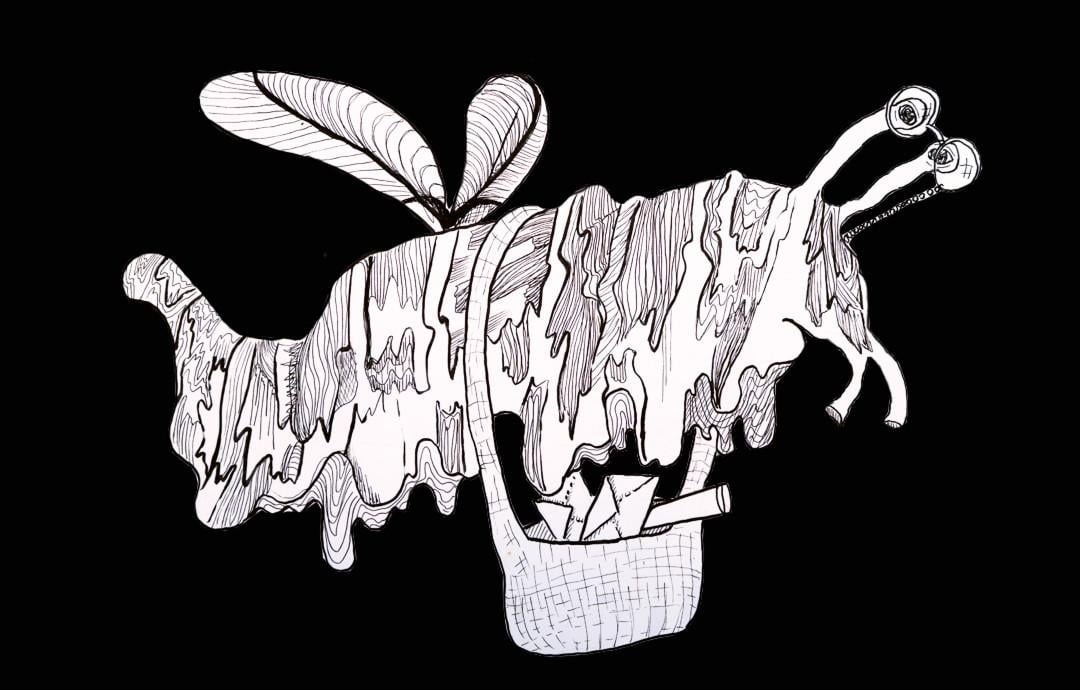
6. drawing our creature in Ink: I have made a super light sketch, the creature that I'm going to make. And I'm going to go over it now with my brush pen. So this is an it's a brush pen that's waterproof, which is really great because I can then paint over it or draw over it, or can do anything that I went over it without damaging that layer. So I'm going to go over my sketch with my brush pen. Make the lines a little bit thicker, start adding some details. And I'll come back to humans. So you can see I've already have a little bit of a character here and my papers quite big SHOFCO, lots of space to add in texture and details. And I really want to add some more texture and details. I need to have a think about how I'm going to do it. What materials am I going to use to give this character the look that I wanted to have? There's always certain props to you can use to give a certain look. So because he's a messenger, that messenger bag with the letters in it, make it be clear that that's what he's doing. And wearing glasses always gives a bit of a serious look. But you also have to be careful with it because it's really easy to overuse, probes into overuse. These yet so overused these sort of signals that tell the, tell the story, um, and also to make stereotypes, you have to be very careful not to stereotype things like not everyone with glasses is serious, but it does help to give a certain Luke course certain tone to the image. So I'm going to have now combined my, my drawing from this pleasure. Now conduct combined my Juang who's pleasures with some of the things that I've seen in a park. And one of the things that I saw in the park was this big ponds with all the snails. So I got a lot of inspiration from that. I wanted to create like a snail sort of society where everything is where everyone lives. There is a sort of snail type creature, but then also a little bit different from what you initially expect. So this one has wings and it can fly around and delivers messages. To now I'm going to add some more details with my pen. I wanted to create a bark like texture. So I am going to look at the photos of the trees that I took to see what sort of patterns and we'll sort of textures are there in the trees and see how I can apply that to the skin. And I'm going to create some of those textures just with my pen to draw them in. And then we'll talk about color after that. So I looked at the photos of park that I took, and I also looked at some photos of different barks and different trees and different textures on line. And I put all the photos that I used as references and that I use for inspiration at put them all in a folder. We can access them and a link you can find on the NIF. And I'm just going to go in straight with pen and start adding some bark like textures on two-party because at the moment it looks like a coloring in, and I want it to look more alive and more textured. So I'll speed the video up again and you can see what I'm drawing. And then follow along and think about what sort of texture would you like your creature to me? So now I've created some texture with my bigger brush pen. I'm going to use a finer pen to edit some finer lines. And as you can see in the reference photon, the texture that I'm inspired by has lots of little lines and lots of different colors as well. So I'm not worried about the colors. Hi, I'm now I'm worried. I'm just thinking about the little lines and adding more detail to the drawing. And already think it starts to look a little bit better before it was basically a coloring in she, just the outline of this creature. And it already starts to look a little bit more like a character. This is almost like hair coming out from the site is NADH ICA, like Highland cow or a sheep with really long hair. But I wanted to look more bark like. So I'm going in there and start adding some more details. So now I've created guts of texture unto the body. Might all these bark like texture, which I'm going to color in later. I'm also going to add some texture to the wings and to the back. But I wanted to make sure it looks different from Detection I've created from the party to distinguish from a sort of fabric like material here, and maybe a leafy wing-like material at the weightings. So I'm going to look at my photos again and see if there's anything there that I can use to inspiration. And then I'm going to add some texture and q is my pen there as well.
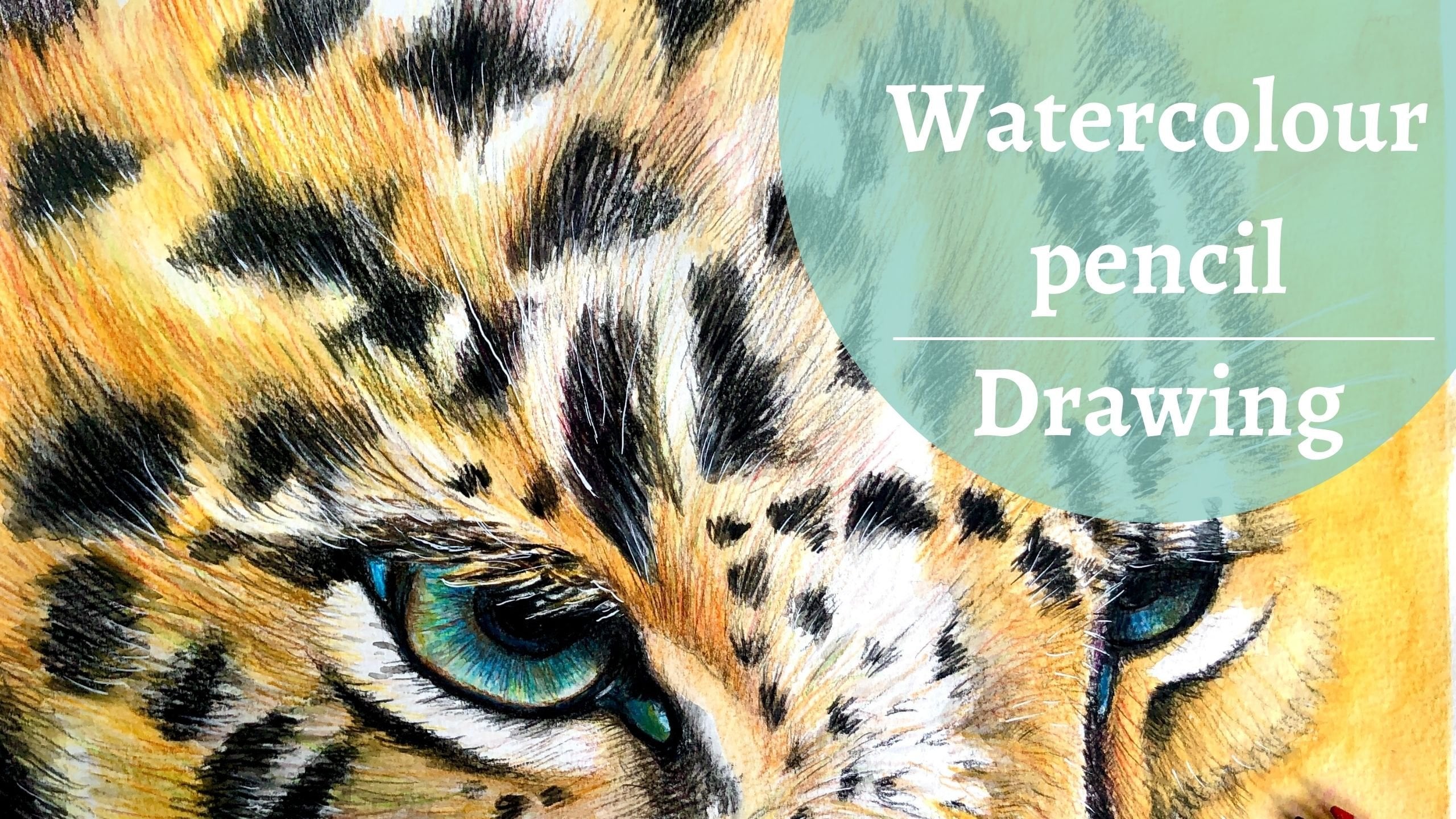
7. Colour techniques: When you're coloring in your painting, when you're coloring in your artwork, it's important to know that different materials create different textures. So the materials that I will show you is watercolour paint of cup, my messy pellets here. I will show you colored pencils, and I'll show you some markers and just show you how different the looks can be. So say, we are painting real flower with watercolor paints. One of the things you can do is make the paper really wet. Then it's a wet pains to the wet area of the paper. And you'll find that all the colours will blur into each other and become really soft and very fluid. And this works really well for log of fantasy type fluids creature. So if that's something that you're going for, maybe you'd want to experiment with watercolor pains. He can also use your pains in a much more dry way. We use dry paint or slightly wet paint on dry paper. Ny effect you'll get there is completely different. It's much more controlled rate where the pains will go. And Ethernet or colors are still quite fluid and light. If you compare that with using colored pencils. Colored pencils are often used in children's books because of the soft qualities and a nice light sort of texture that they create. It's a bit more precise. And the colors tend to be a little bit lighter. You can still blend the colors. You can go over different ways, different colors to creative and textures. And again, if you're thinking of terrain with colored pencils, there are lots of classes you should feel share where you can really go into details and learn lots about how to use color pencils. I just wanted to show you quickly what sort of the effect would be if we would draw a flower in color pencils. Something else I love using markers. And markers are very, very opaque and redefine payments. So they work really well when you want to cover big areas of the paper. Mvb, vibrant colors may come in lots of different sizes as well. So you can buy, we think, pens.
8. Adding colour to our illustrations: So we've now finished our illustration in pen. This is what it looks like final. It's terribly difficult to hold it straight in front of the camera, but I'll make sure I'll put a Photoshop, it's in the corner. And what I'm going to do now is traced this picture onto a new piece of paper. And you can either do it against your window or use a light box. So I'm going to trace this picture and I'm going to use that sketch to Lake separate things of it. I want to create an illustration without all the black lines. So ends up having two. I'll have one in recombines among NCAR. So I'm going to do that now. And yet when somebody funds, I've traced it and I'm ready to start painting. We roll suffering since getting, remember in the last class where we looked at different textures that he can create with different materials. I really want you to consider what sort of texture you want to create for your creature or you're building or object. So for example, if you wanted to create a really soft and friendly creature, software environment, perhaps working with watercolors or with colored pencils would work really well. If you are creating something a bit more futuristic where you want to create darker colors, more intense colors. Perhaps markers would work really well. But also, just look at the materials that you have. I really want you to be able to join this class with any art materials that you have to your availability to maybe you have inks or pencils or pens. Acrylic paints are really fun to paint with as well. To really just have a look at materials that you have to your availability and see how you can create certain textures with those. And this is not a specific watercolor painting clause, but it's my preferred material of choice. I use a lot of watercolor in my artwork. And that's the material that I will use for coloring in this illustration as well. I really want you to know that you can join in using any materials that you have available. And remember from the black and white sketch that we made, I chose this texture. This is wood texture, this bark as a texture for my creature. And I'm going to do the same for the colored illustration. But instead of focusing on the shapes and focusing on the colors here and on the, and the different tones between the colors and the vibrancy. And so I'm not trying to recreate this texture perfectly, but I'm using it for inspiration of how I'm going to color my creature. But he loved the combination between blue and brown. So that's what I'm focusing on. And I like the shapes of how the different colors sort of go around each other and flow around each others, whom I really used that to inspiration in this picture. And for the wings, I've used those seats, those helicopters seats, three inspiration. So I'm trying to create this sort of see-through texture that the seats had. Also using watercolor. It is important to remember that although we are making an artwork from our imagination is perfectly fine to look at references for textures, for shapes, for different colors to get inspiration from. You don't have to make everything up on the spot. So if you find it hard to imagine how to paint a certain skin type or bark like time. Look at photos, look the furthest. Why having this folder, it's linked underneath. Or just look up Pinterest or at different places, see what different textures exist and just keep all of those photos really Fields uses integration. You don't have to make it all up on the spot. For the back that the peaches carrying, I wanted to have it look as a bit of an amino backup Post Bank. So I looked at different photos of those and I picked this color vets. Because one, it compliments really nicely with the blues in the grounds of the skin. And two, it is a typical post offers reds that you see in a lot of places. I think a lot of countries in the world who use red for post. So alpha, it fits in with the theme of the story really well. So other, I'm not drawing an actual postal sign or anything on it. The fact that it's read in the shape that it has makes it instantly look. If this creature is a meal delivery person. There are few extra details that I want to add to this illustration. So I think I'll go in with pen and add a few extra details around meets. I've decided not to make the background is time is just going to be the standalone creature by itself. I'm almost done with my drawing with high illustration. I just want to add a few details and pen to really bring out some highlights and show some movement in a drawing. So I'm going to make some movement loud lines, event back. I edit those in pencil first to make sure they're in the right direction, the direction where the shape is actually going in. And I will add a few more details here about the envelopes as well. And then I'm almost done. I decided not to put any backgrounds in here. As I may add some extra things digitally later on. So for this illustration is just going to be a character, no background. And I'm quite happy with it. I think he's got a bit of a twinkle in his eye. It looks a little bit goofy. Bringing around his mail. I think. Technically whose wings are probably a bit too small to hold him. But for fancy character, that is absolutely fine. At a few more movement lines run here, which shows the direction he's flying it. Now we'll take a photon and I'll scan these hidden or my computer to make sure that I can tidy it up little bit in Photoshop. And then I can make it into stickers or make a pattern out of it or edit any background details. I would really love to see what you have made so far as well. Make sure that you share your work with me. In the project area of the skill share clause. A very Loftus here, whatever ones making a lot of your imagination is creating for you. And then, yeah, thank you so much. I really hope to see you in my next class.
9. Conclusion : Thank you so much for joining this class today. I really hope that you find it fun and Hulu and glow new things. We've been through a lot of different steps. We've learned how to look at nature with different eyes, fine shapes and textures in the things that we see around us. Make sketches from those inspirations and transform those sketches into final art piece. I think that you will find, no, you've done this ones, that you will start seeing more and more interesting shapes around to you and, uh, you will be inspired more by the world around him. I really believed that if you look at the world with different eyes, that everything can become magical and everything can become an interesting creature. I would love it if you follow me on social media, and it ain't Ruby arts, I'll link it omni. And my website is making some using stuff. Come. Please have a look there if you're interested in seeing more of my illustration work. So please let me know what you thought. I'd really love to hear from you. And thank you so much for joining this clause, and I hope to see you again soon.
 Irene Ruby, Illustrator and Mindful Art Teacher