The 2-Hour Productivity Engine: Building a High-Performance System for Maximum Output
In a world overloaded with distractions, productivity is no longer about doing more—it’s about building systems that consistently produce results with minimal friction.
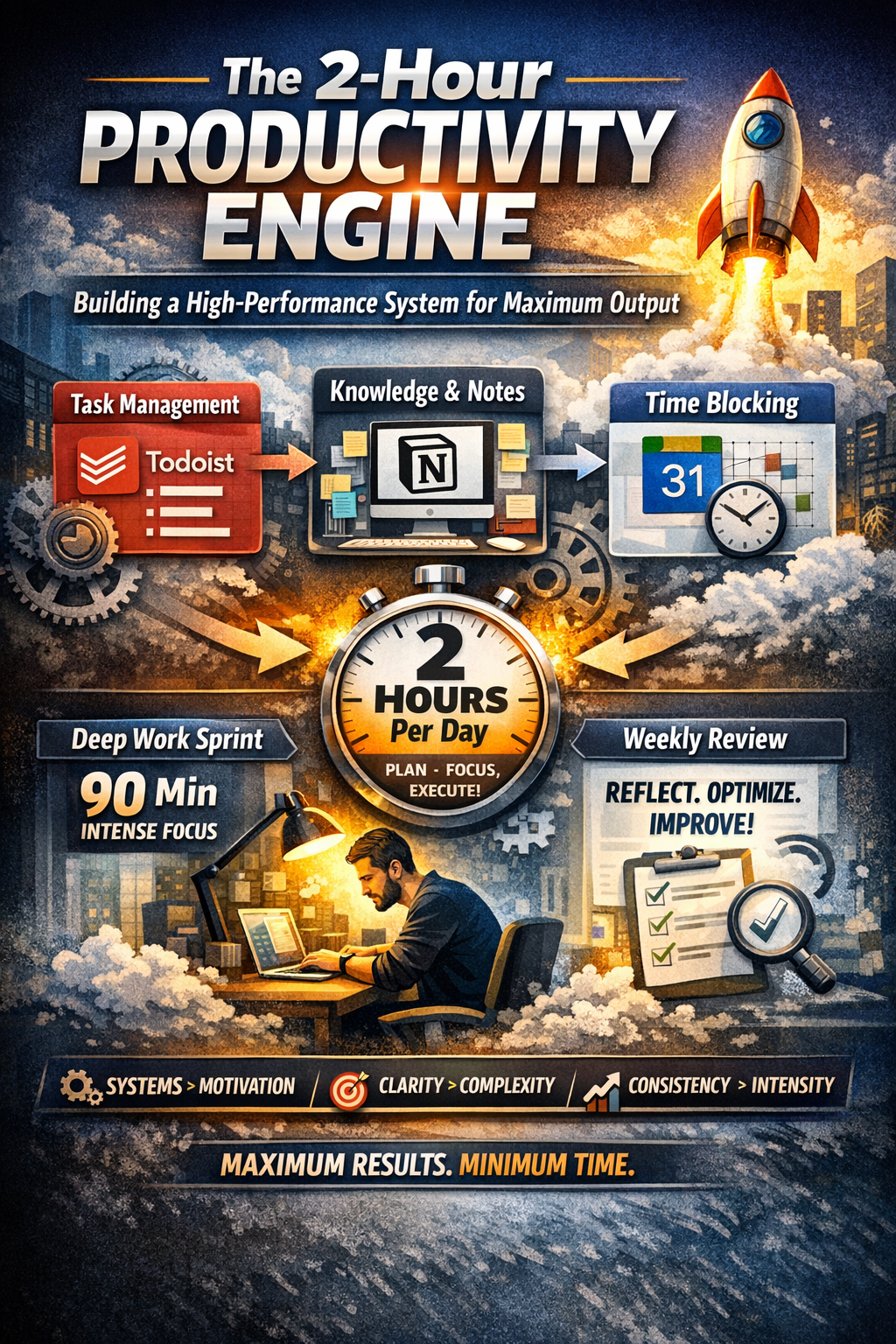
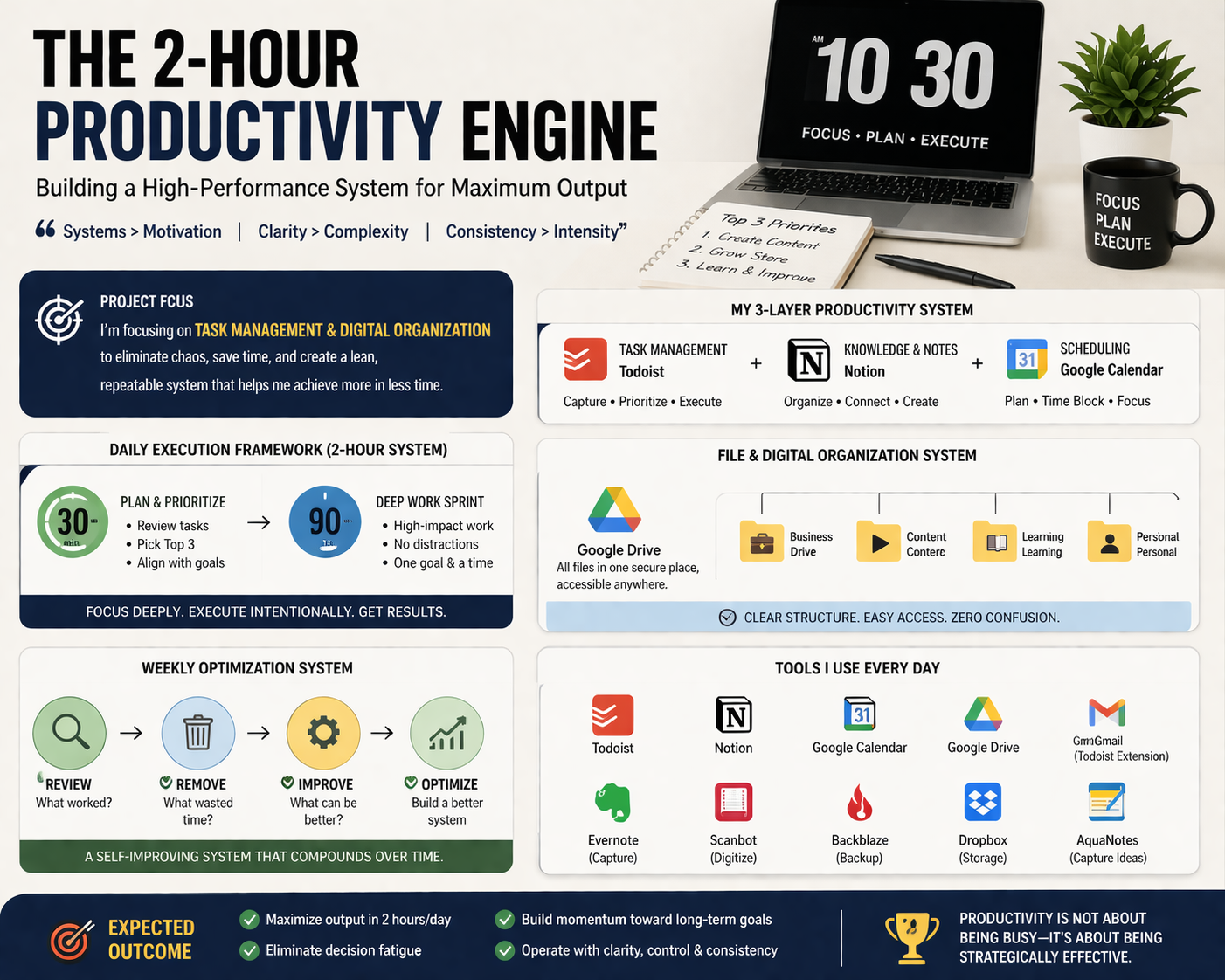
For this project, I chose to focus on task management and digital organization, because without a structured system, time, energy, and opportunities are easily wasted.
My goal is simple but powerful:
👉 Create a lean, repeatable productivity system that allows me to operate at peak efficiency within just 2 hours per day.
My Productivity Game Plan
1. Core System: Task + Knowledge + Time Integration
I designed a 3-layer productivity architecture:
- Task Management: Using Todoist to capture, prioritize, and execute daily actions
- Knowledge & Notes: Using Notion to organize ideas, content plans, and learning
- Scheduling: Using Google Calendar to time-block deep work sessions
This ensures that everything I think, plan, and execute is connected in one system.
2. Daily Execution Framework (2-Hour System)
Instead of working randomly, I follow a structured execution model:
- 30 min – Planning & Prioritization
- Identify top 3 high-impact tasks
- Align with long-term goals
- 90 min – Deep Work Sprint
- Focus on revenue-generating or growth tasks
- No distractions, no multitasking
This creates a high-output workflow without burnout.
3. File & Digital Organization System
To eliminate chaos and wasted time:
- All files stored in Google Drive
- Folder structure:
- Business
- Content
- Learning
- Personal
This ensures instant access and zero confusion.
4. Weekly Optimization System
Every week, I run a performance review loop:
- What worked?
- What wasted time?
- What should be eliminated or automated?
This transforms my system into a self-improving productivity engine.
Key Philosophy Behind My System
- Systems > Motivation
- Clarity > Complexity
- Consistency > Intensity
Instead of relying on discipline alone, I’m building an environment where productivity becomes automatic.
Expected Outcome
By implementing this system, I aim to:
- Maximize output in limited time (2 hours/day)
- Eliminate decision fatigue
- Build momentum toward long-term goals (business, content, income)
- Operate with clarity, control, and consistency
Final Insight
Productivity is not about being busy—it’s about being strategically effective.
This system is my foundation for building a high-performance lifestyle and scalable success.