All You Need To Know About Green Finance
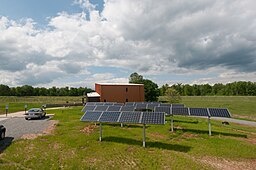
You would have heard the terms ‘Climate Finance’, ‘Sustainable Finance’, ‘Net-Zero Transition’, and ‘Green Financing’ a lot in the past few years.
All of these sound similar and related.
But they are different sisters from the same mother: creating a strong, secure, environmentally-friendly green Earth!
So what is green finance all about? Is it something to do with extending green loans or a lot more?
How are all these terms related to one another?
Follow this guide to get all your questions answered.
What is Green Finance?
Green Finance is a broad term. But in simple words, it refers to financial investments towards Earth-friendly sustainable developmental projects, which can be towards:
- Meeting environmental objectives, e.g. industrial waste management or clean water sources,
- Minimization or controlling the impact of environmentally damaging practices through norms like GHG emission, low-carbon economy, decarbonization, etc.
Green Finance also includes financial investments in public bodies supporting or developing environmentally friendly practices, e.g. rainwater harvesting systems in housing societies. These include financial institutions like the Green Climate Fund and financial instruments like Green Bonds.
In Green Finance, not just the operational costs of green investments get covered, but other related expenditures such as land acquisition, project planning and preparation, etc.
Climate Finance often substitutes or includes Green Finance, but is just a part of it. While Climate Finance is financing focused on policies and actions toward climate change, Green Finance is more diverse and includes other ecologically and environmentally affirmative policies.
Types of Green Finance
Green Financing products are financial instruments that support or reward eco-friendly practices.
Some of the well-known types of Green Finance products include:
- Green Bonds- One of the most common types, accounting for a major chunk of green funding. They are bonds, the proceeds of which are used in financing green initiatives like clean fuels, renewable energy sources like solar and wind energy, wildlife conservation, etc.
- Green Banks- Green Banks are just like traditional banks, but their lending is focused on environmentally friendly initiatives
- Green Loans- As the name suggests these are loans for green initiatives like solar roof-top panels, electric vehicles, green buildings, etc.
- Green Mortgages and Credit Cards- Green Mortgages allow banks and other lenders to reward home buyers with high environmental sustainability ratings or if the buyer invests in green structural enhancements through better terms. Green Credit Cards incentivize green initiatives whenever customers use the card
- Green Investment Funds- These are like mutual funds that invest only in ecologically conscious companies or those promoting environmental responsibility
- Smart Green Venture Capital Funds- VCs backing startups investing in clean energy, climate tech, green mobility, advanced construction materials, etc.
Types of Green Financing in India
Many new-age NBFCs and lenders in India provide green financing products, such as:
- Rooftop Solar Loans, for installing solar panels
- Electric Vehicle Loans,
- SME Loans for startups creating sustainable green solutions and products
Green Financing Initiatives in India: Pradhan Mantri Surya Ghar Muft Bijli Yojana
Although the primary goal of this scheme is to provide free electricity to households, this is as much a green financing scheme as well:
- The Indian government announced this scheme in January 2024
- It aims to support 1 Crore lower and medium income group households installing rooftop solar panels, to help reduce the consumption of grid-connecting electricity and saving on electricity bills.
- Beneficiaries of the scheme will get 300 free electricity units per month
- The government will give a 60% subsidy to install solar rooftops, the remaining 40% as a loan
- Consumers will receive monetary benefits from the surplus power of the rooftop panels sent to the grids
- There will be an estimated savings of ₹ 75,000 Crore per year in electricity costs for the Government
UNEP and SDGs (Sustainable Development Goals)
The United Nations Environment Programme or UNEP developed a sustainable development agenda for various countries, financial regulators, and important financial institutions to fund achieving the Sustainable Development Goals (SDGs) by 2030.
There are 17 SDGs:
- No Poverty,
- Zero Hunger,
- Good Health and Well-Being,
- Quality Education,
- Gender Equality,
- Clean Water and Sanitation,
- Affordable and Clean Energy,
- Decent Work and Economic Growth,
- Industry, Innovation, and Infrastructure,
- Reduced Inequalities,
- Sustainable Cities and Communities,
- Responsible Production and Consumption,
- Climate Action,
- Life Below Water,
- Peace, Justice, and Strong Institutions,
- Partnerships for the Goals
The key focus areas for Green Financing are on:
- Supporting the public sector institutions to create an enabling ecosystem,
- Encouraging PPPs (Public-Private-Partnerships) in a financing environment,
- Enabling community stakeholders such as Micro-Credit
Green Technology Financing Scheme (GTFS)
The Government of Malaysia introduced a special financing scheme for green technology projects, called the Green Technology Financing Scheme (GTFS) in 2018.
It is a soft loan supported by the Government, and can be used to finance projects in the following sectors:
- Energy,
- Water,
- Building and Township,
- Transport,
- Waste,
- Manufacturing
In March 2019, the Ministry of Finance extended the GTFS scheme to GTFS 2.0 with an allocation of RM 2 Billion from January 2019 to 2020.
Currently, GTFS 4.0 is operational.
Benefits of Green Financing
Green Finance is beneficial not just for our environment, but also for various stakeholders such as the government, financial systems, companies and startups, individuals, and society.
These benefits can be seen as:
- Social and Environmental Impact- Green Finance helps underprivileged sections of society access natural resources just as much as the richer sections can, promoting social equity and environmental justice. Key examples of these include investments in renewable energy projects or clean energy
- Mitigating Environmental Risks- Investing in green initiatives can help pre-empt environmental vulnerabilities, an example being portfolio diversification with green assets to control climate change risks
- Stronger Infrastructure- Financing green initiatives can help build resilient structures, like strong buildings withstanding earthquake effects, and sustainable mobility systems like air taxis
- Research and Innovation- Green Finance helps organizations develop innovative research-based solutions requiring huge capital in clean technologies, like rooftop solar panels
Other benefits of green financing include creating new job opportunities in upcoming areas like green construction and renewable energy.
Summary
Green Finance is a lot more than extending finance for green projects.
It is about developing an entire ecosystem with various parties and stakeholders involved, creating a sustainable, strong, secure, and safe future for us, and enabling support systems and regulatory mechanisms to create a greener Earth.
End of the day, it is all about making ourselves more environmentally conscious and socially responsible.
It is about creating a greener tomorrow