Expanding on Seneca - Postponing life for Money
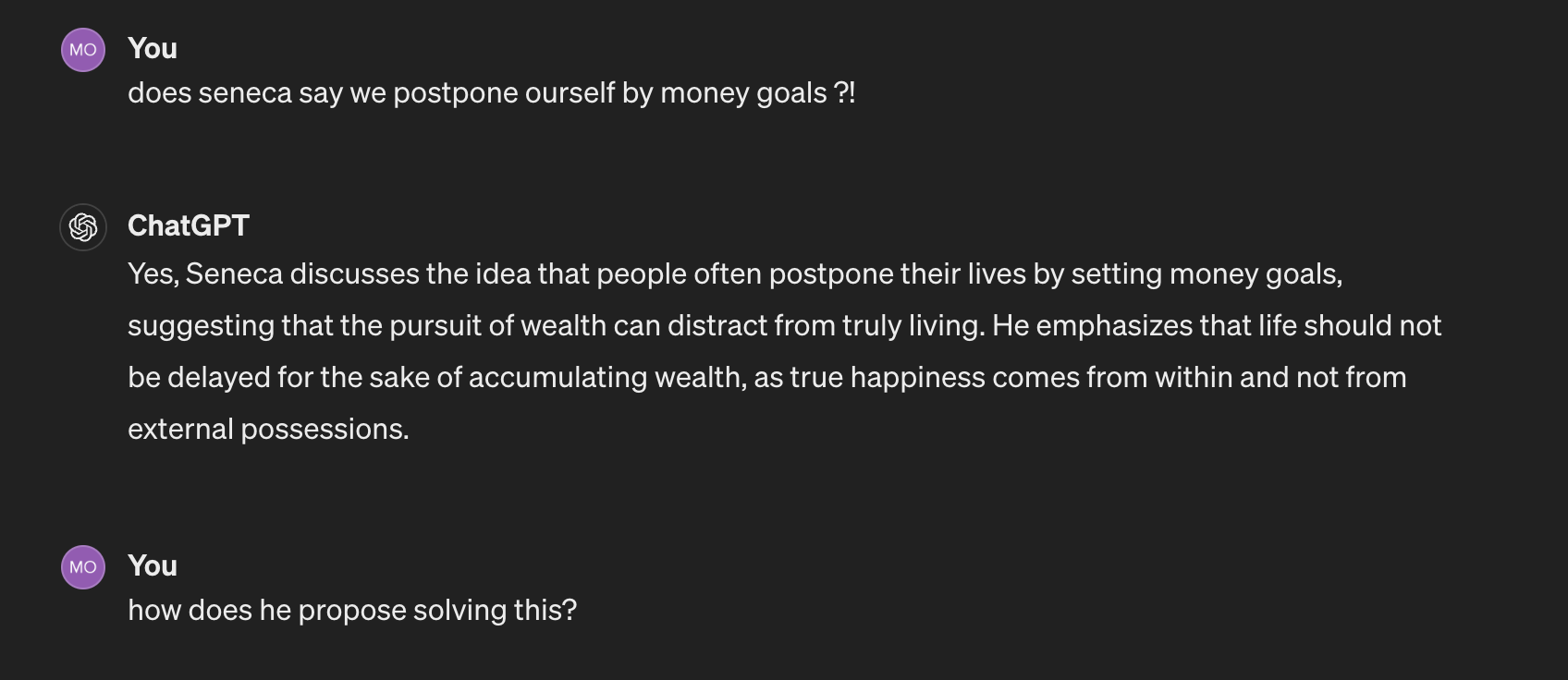
I was introduced to a paraphrase of Seneca's writing about how we postpone ourselves by setting certain career / financial goals (i'll do _____ once I ______)
I asked to verify the quote and got:
Yes, Seneca discusses the idea that people often postpone their lives by setting money goals, suggesting that the pursuit of wealth can distract from truly living. He emphasizes that life should not be delayed for the sake of accumulating wealth, as true happiness comes from within and not from external possessions.
I asked how he proposed to solve this:
Seneca suggests focusing on self-improvement and living according to nature, which means prioritizing virtues like wisdom, justice, courage, and moderation. He advises to live in the present and appreciate life as it happens, rather than being consumed by the pursuit of wealth and material success. This approach is intended to lead to a more fulfilling and meaningful life.
here are some steps based on his teachings:
-
Evaluate Your Values: What do you currently value most in your life? How much of your time is spent pursuing material wealth versus personal growth or relationships?
-
Prioritize Time Over Money: Do you often find yourself sacrificing time for potential financial gain? Seneca believed time was the most valuable resource.
-
Practice Contentment: What aspects of your life can you be more content with? Seneca advocated for finding satisfaction in what you already have, rather than always wanting more.
-
Reflect Daily: How often do you reflect on your actions and decisions? Seneca was a strong proponent of daily self-reflection to understand oneself better and make more aligned choices.
-
Live According to Nature: Are your actions in harmony with your nature, or are they driven by societal expectations? Seneca argued that living truthfully in accordance with one's nature is essential for a good life.
From here, we learned about 1) verifying the saying, 2) identifying the key lessons to takeaway, and 3) how to make this relevant to anyone.