Dissecting three types of news stories
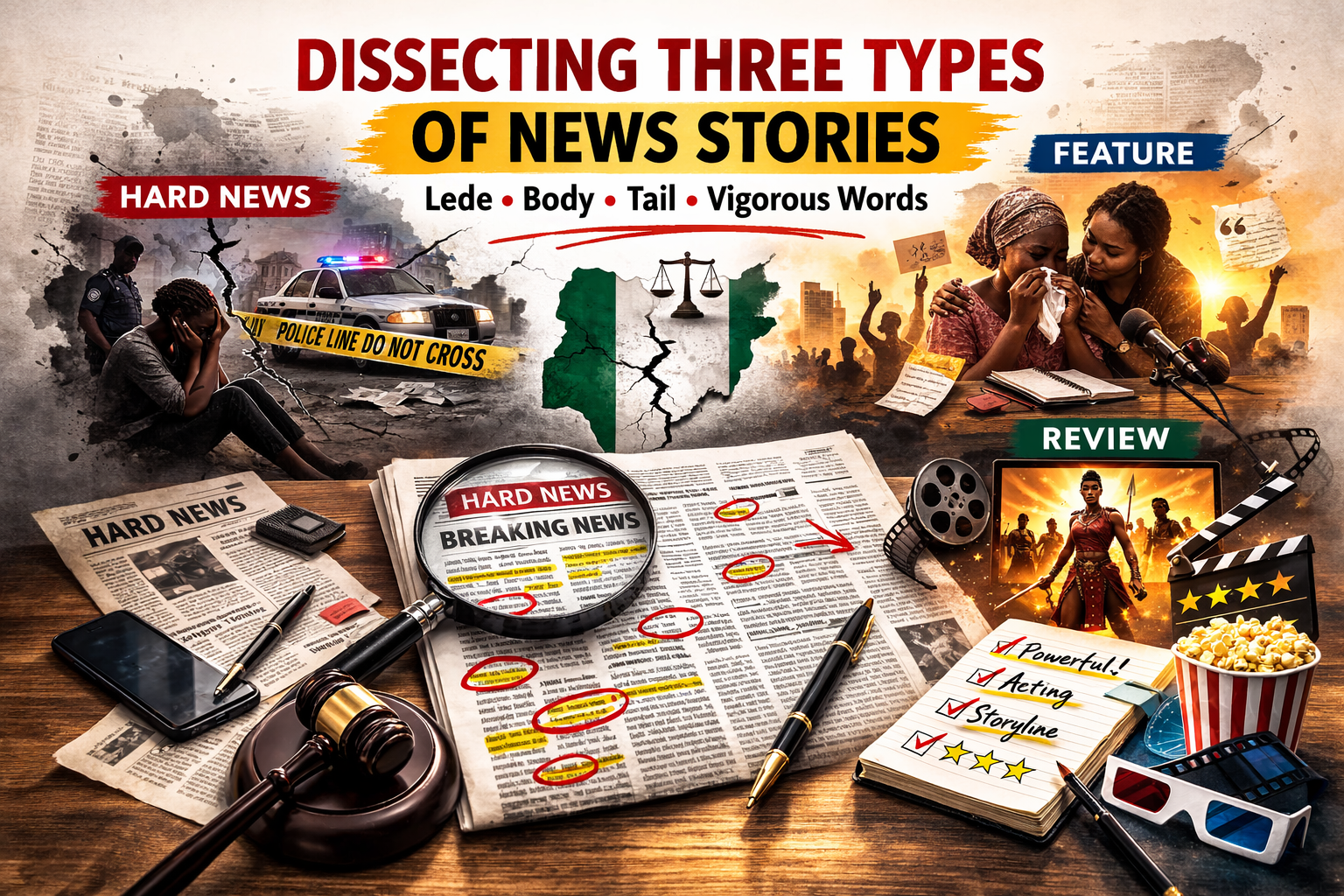
For this assignment, I selected three different types of stories from major news sources: a hard news story, a feature article, and a review. I analyzed each one to identify the lede, body, and tail, and I also pointed out the vigorous words used in each story.
1️⃣ Hard News Story
Source: Punch Newspapers
Topic: Arrest of a rape suspect in Lagos
Lede
The lede of the story immediately gives the important facts:
“The Lagos State Police Command on Monday arrested a 32-year-old man for allegedly raping a 14-year-old girl in Ikorodu.”
From the first sentence, we already know who, what, and where. It is very direct and factual. There is no emotional storytelling. The purpose is to inform quickly.
Body
The body of the story gives more details about:
- How the incident happened
- What the police said
- The medical report
- What charges the suspect may fac
The body includes quotes from the police spokesperson and explains what actions are being taken. The paragraphs are short and straight to the point.
Tail
The tail includes less important information such as:
- A reminder for the public to report sexual violence
- Background about increasing rape cases
The ending is not dramatic. It simply closes the report with additional context.
Vigorous Words
Some strong words used in the story are:
- arrested
- raping
- charged
- investigating
- assaulted
- These words are strong but still professional because hard news must remain objective.
Feature Article
Source: BBC News
Topic: Survivors of sexual violence speaking out in Nigeria
Lede
Unlike the hard news story, this feature starts with a personal story:
“For years, Amina kept silent about the night that changed her life.”
This lede does not immediately give statistics. Instead, it creates emotion and curiosity. It makes the reader want to continue reading.
Body
The body focuses on:
- The survivor’s personal experience
- Emotional trauma
- Social stigma
- Expert opinions
- Statistics about rape in Nigeria
The paragraphs are longer and more descriptive. The writer uses storytelling to connect with readers emotionally.
Tail
The tail ends with hope and reflection:
“Activists say more women are finding the courage to speak up.”
Instead of just ending with facts, it leaves the reader thinking about change and awareness.
Vigorous Words
- changed
- silenced
- courage
- trauma
- demanding justice
- breaking the silence
These words are more emotional and powerful compared to the hard news story.
Review
Source: The Guardian
Movie Reviewed: The Woman King
Lede
“The Woman King is a fiercely powerful historical epic that commands attention.”
This lede clearly shows opinion. It already tells us how the writer feels about the movie.
Body
The body discusses:
- The storyline
- Acting performance
- Visual effects
- Strengths and weaknesses
Unlike hard news, the writer is allowed to give personal judgment. The tone is expressive and persuasive.
Tail
The tail gives a final opinion:
“Despite minor flaws, the film stands as a triumphant celebration of resilience.”
It ends with a strong recommendation.
Vigorous Words
- fiercely
- powerful
- commands
- triumphant
- celebration
- resilient
These words are very expressive because reviews are meant to persuade readers.
📊 What I Noticed
After analyzing the three stories, I noticed clear differences
- Hard news is direct, factual, and serious.
- Feature articles are emotional and descriptive.
- Reviews are opinion-based and persuasive.
Also, vigorous words are used differently:
- In hard news, they are strong but controlled.
- In features and reviews, they are more emotional and expressive.
Overall, the way the lede, body, and tail are written depends on the type of story and its purpose.