Ticket to Ride
PART 1/3 - PLAY-NALYSING
Let's play and analyse the game mechanics, dynamics and aesthetics of this game!
MECHANICS
Players collect colored train cards, draw destination tickets, and on each turn either draw cards, claim a route by discarding matching cards, or draw more destination tickets. Points come from route lengths, completed tickets, and bonuses for the longest continuous path. The game ends when a player runs low on trains, triggering the final round.
DYNAMICS
Players wrestle between building long, high-point routes and diversifying to fulfill multiple destination tickets. Tension arises from blocking critical routes, forcing rerouting. Bluffing and risk management entwine with strategic timing.
AESTHETICS
The oversized map, chunky trains, and colorful cards create tactile delight. Players feel both excitement and frustration when routes are blocked or completed. The overall aesthetic blends nostalgia with competitive thrill.
PART 2/3 - PROTO-HACKING
Ideas for hacks and variants to Ticket to Ride:
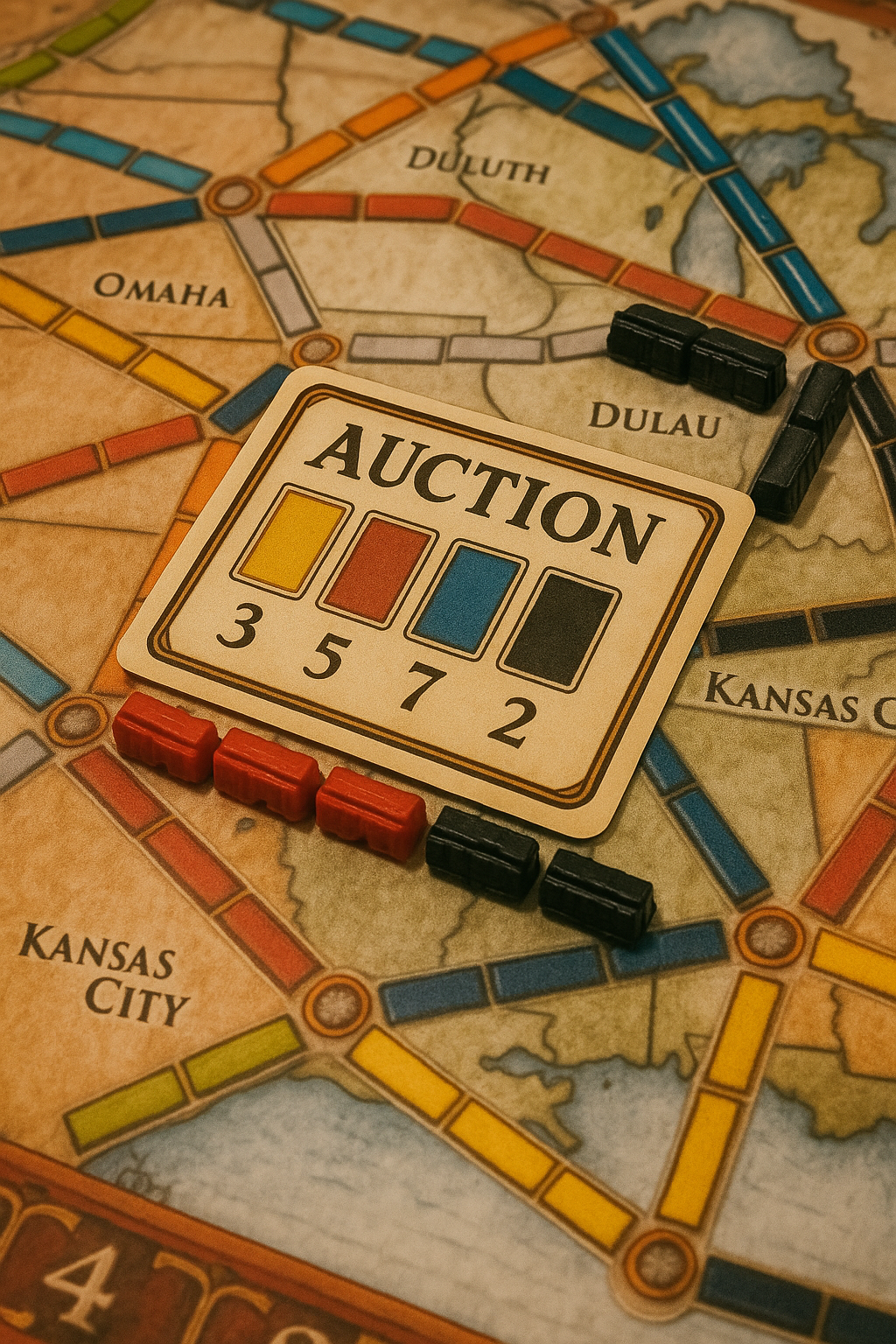
- Shared Infrastructure Auction – introduce bidding for premium routes.
- Collaborative Legacy Mode – unlock new map areas or rules over a campaign.
- Modular Map with Fog of War – only reveal parts of the map as players expand.
- Subway Expansion Mini Map – add an inner city grid with bonus scoring opportunities.
PART 3/3 - PLAY-TESTING
Playtesting observations of the hacks:
- Auction mechanic: exciting but chaotic—requires floor pricing for smoother pacing.
- Legacy mode: emotional engagement high but risks complexity creep—simplify pacing.
- Fog of War map: added tactical caution but slowed pace—tie reveals to route completion.
NEXT STEPS
Flesh out one or two hacks fully, run dedicated playtests, observe player reactions, and refine rules for elegance. Consider offering hacks as optional modes for different skill levels.