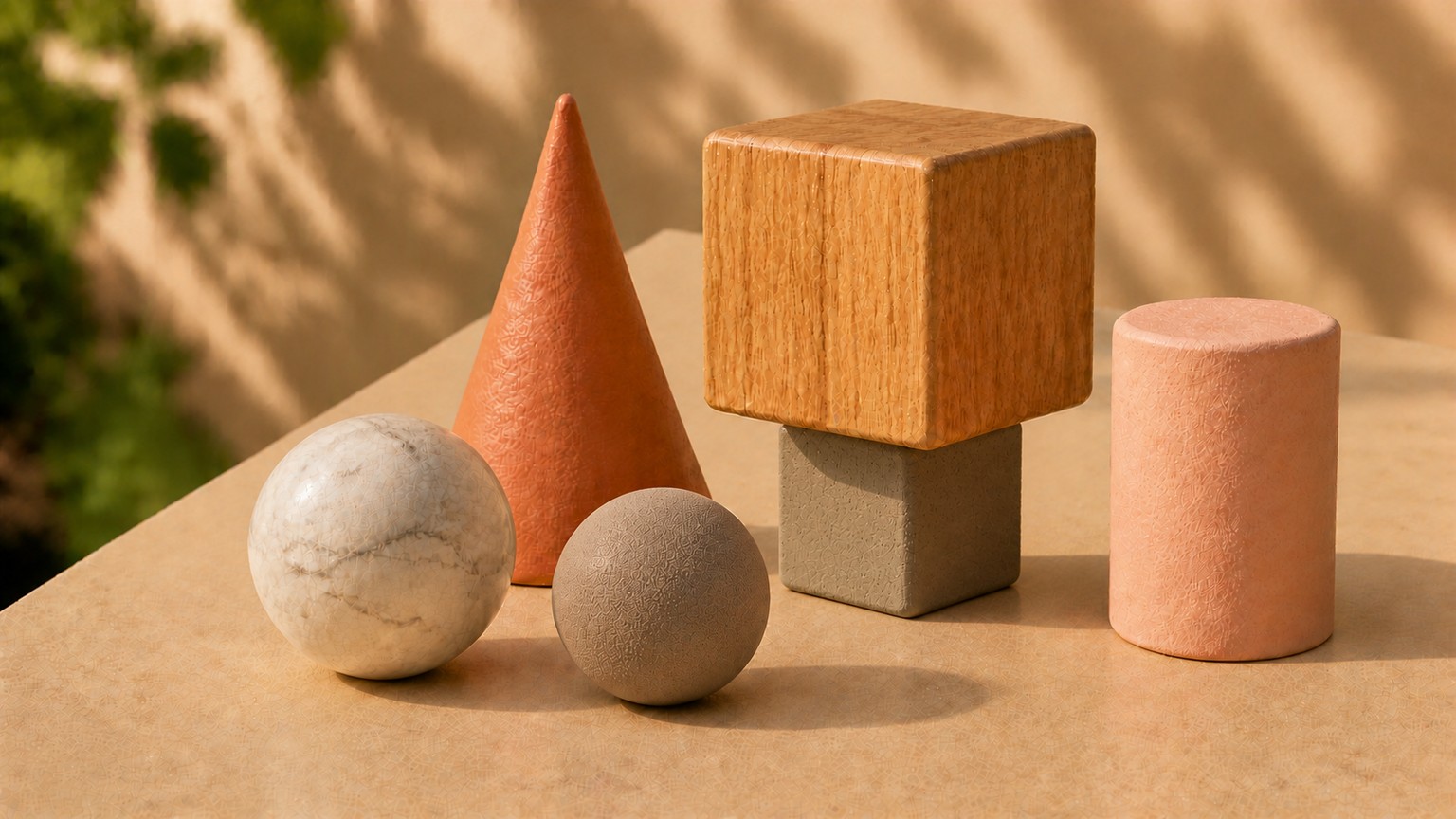
3D objects
Iteration Summary
The image took 24 generated versions: one initial image followed by 23 refinement and correction passes. Several iterations were needed to correct visual drift rather than introduce new ideas.
The process had seven major stages:
-
Initial composition
Created the six-object isometric still life with two spheres, a cone, stacked cubes and a cylinder on a sand-colored garden table. -
Framing and arrangement
Lowered and zoomed the camera, increased background blur, repositioned the spheres and tightened the spacing between the rear objects. -
Table geometry
Defined the diagonal table edge, placed it three-quarters down the left border and removed the visible corner so the table continued beyond the frame. -
Lighting and materials
Changed the scene to soft golden-hour light and refined the marble, sandpaper, terracotta, wood and plaster surfaces. -
Object proportions and alignment
Enlarged the cone base, wooden cube and spheres; adjusted the cylinder height; and refined the spheres’ spacing relative to the cone. -
Marble and image-quality refinements
Moved the marble sphere backward, increased its gray veining and maintained a smooth, slightly glossy surface. Repeated editing introduced synthetic textures, so an earlier clean image was later used as a quality reference. -
Final details
Added fine sandpaper texture to the smaller sphere and changed the lower cube into taupe-grey-yellow concrete, recessed beneath the wooden cube so its shadow covers about half of the concrete cube’s front face.
The main lesson was that precise prompts improved composition and materials, but repeated generative edits caused quality drift. Separating the references into a composition target and a quality reference helped recover a cleaner final result.