The Algerian Collection in Color
Colourising and restoring old black and white photographs can be a deeply personal journey and a process which you can lose yourself in. Recently, I got my hands on several family albums of photographs taken by my grandfather and my great grandmother during the 1930s, 40s and early 50s. The photographs, many of which are small contact prints made with scraps of photographic paper, were gathering dust and could not be earlier shared with the family. So I decided to scan, restore and then colourise these photographs; and along the way I have learnt a little more about my grandfather’s life, and his travels during the Second World War as he worked his way eastwards through French Algeria in the Torch Landing (c. 1942).
Old man in Algiers
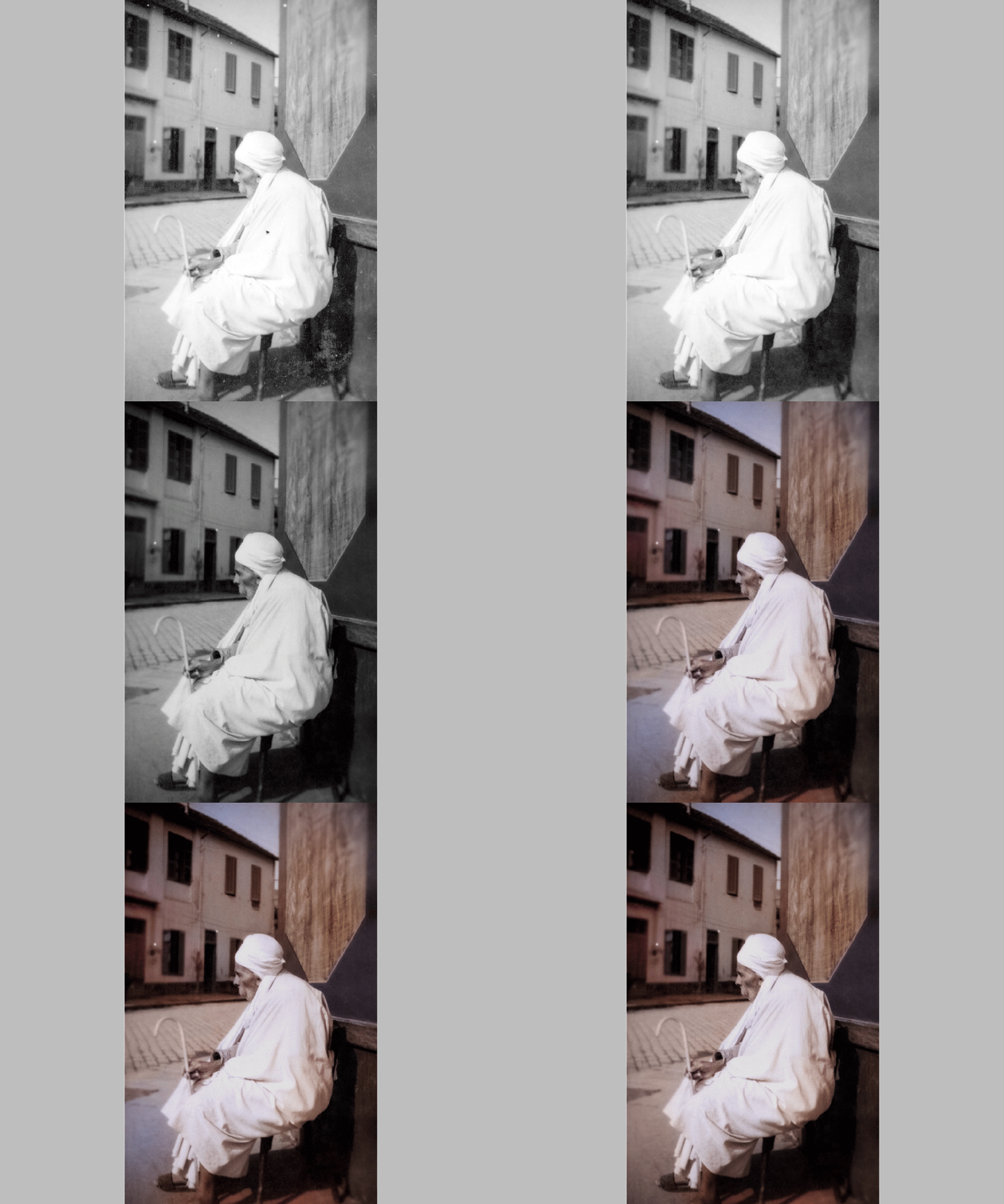
This photo, of and old man sitting on a street corner in Algeria, was the first of the photographs my grandfather took in Algeria during World War Two. Before colourising, this photograph took a lot of work to restore because the print (we don’t have any of the negatives) was relatively small and had a lot of dust and scratches. The photo is also quite softly focused, but there are several areas of detail around the subject’s hand, face, and the door in the background which give this image its focus. I did, however, have to employ a High Pass filter and several Curve adjustments, which were masked onto specific areas to help bring out this image’s shapes and form.
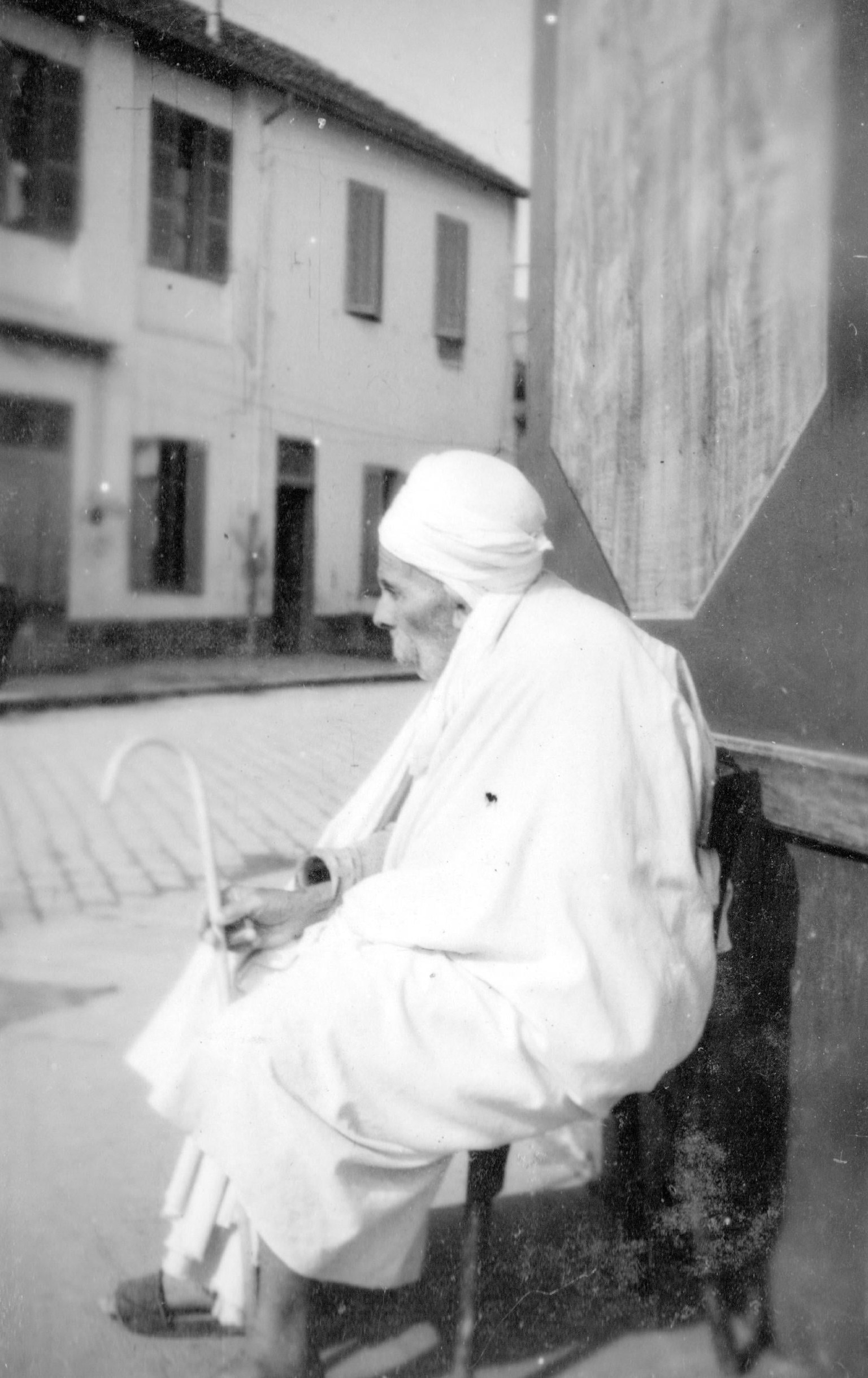
Original scanned photograph
As for the colourisation process, this image was always going to be very difficult to colour naturally or like a modern photograph. So I decided to take a different approach and got on with a heavily stylised colouring, creating an impression of an old film, or memory. Having applied Adobe Photoshop’s Colorize Neural Filter, I shifted the hue in several colour bands to create the look, and then manually coloured several problem areas afterwards. I really like the soft colours in this image and how this image has come out!
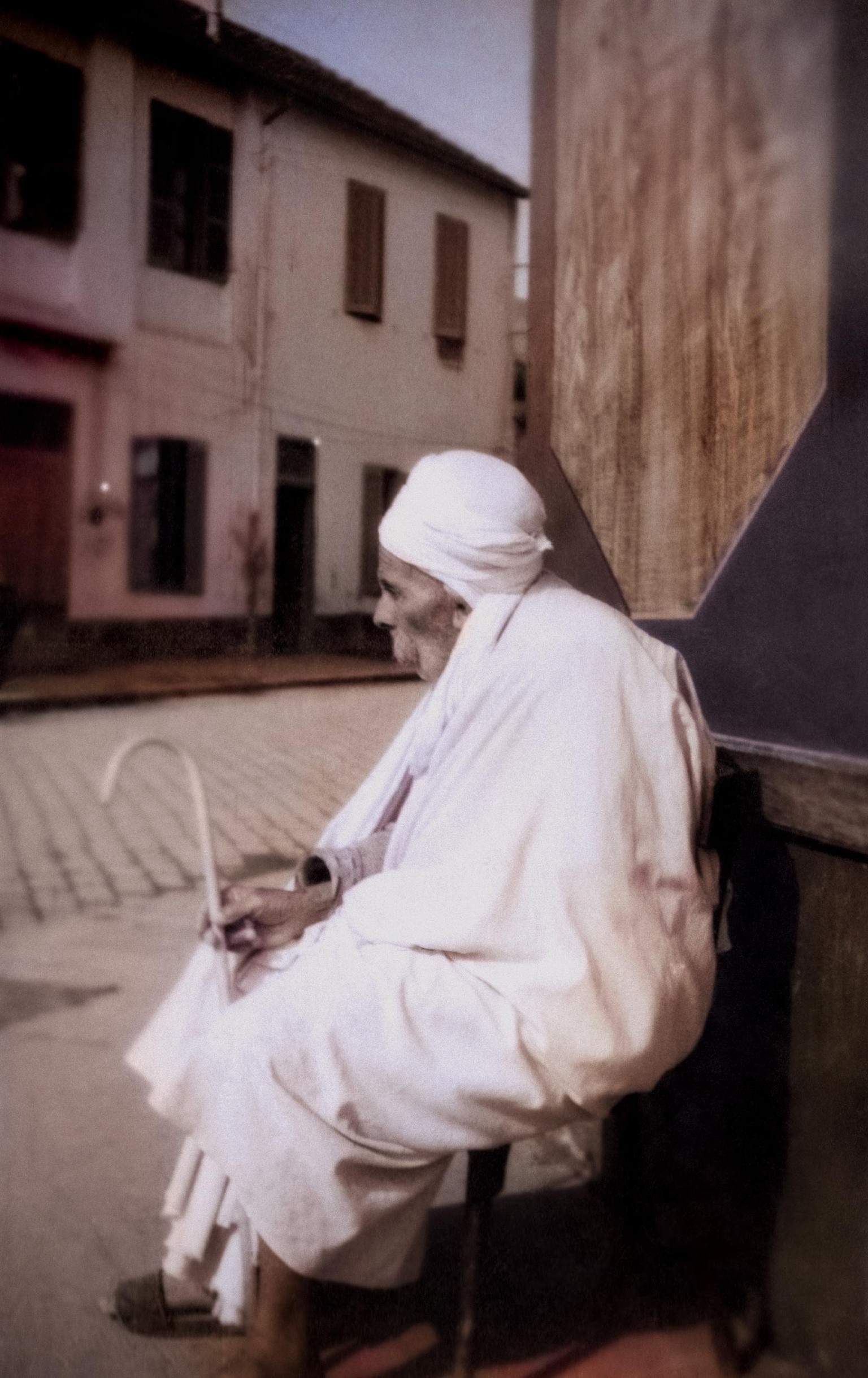
Final colourised photograph
Aokas
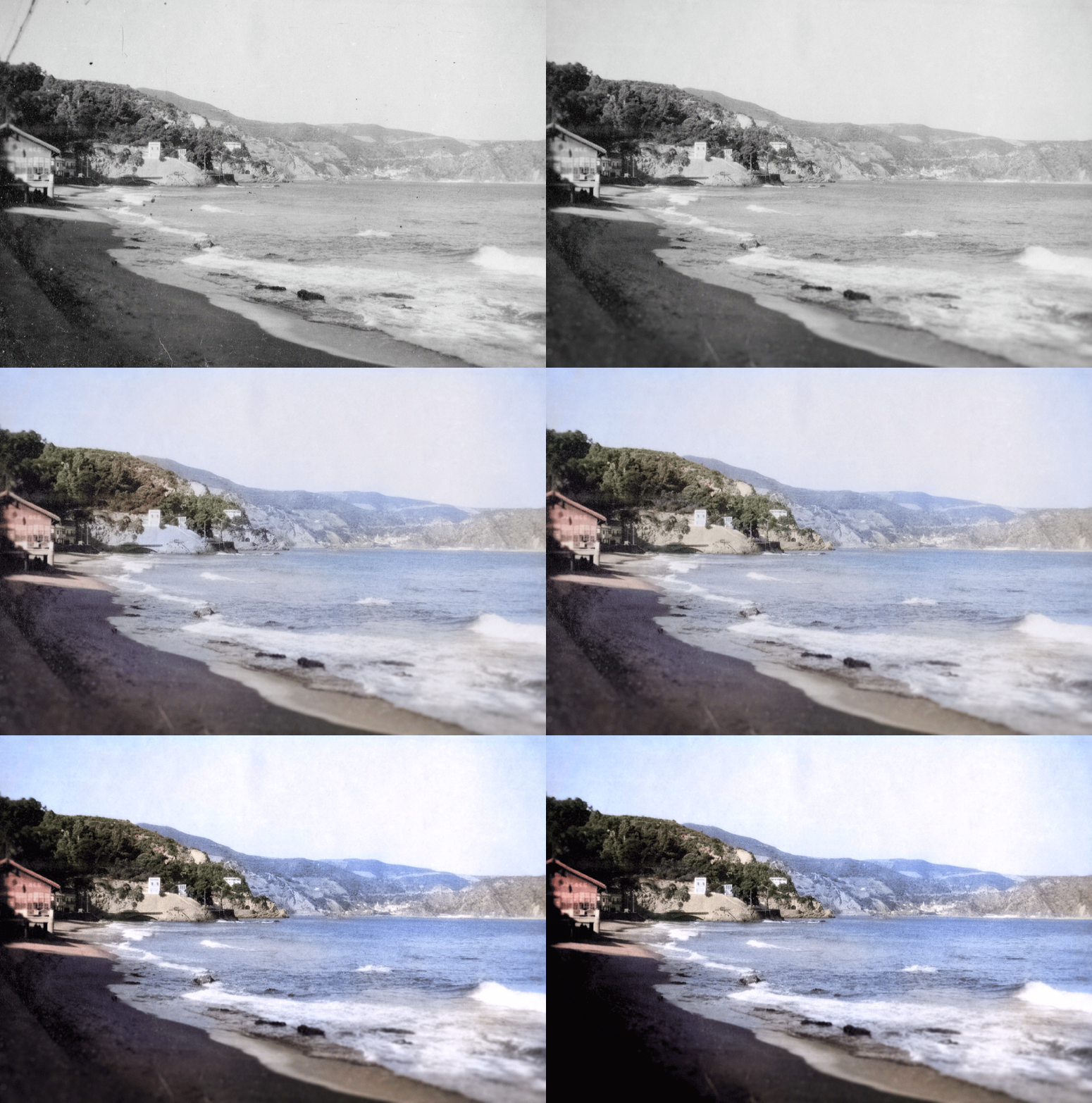
This was the second photo from ‘The Algerian Collection’ which I restored and colourised. Whilst working on this image I spent quite a bit of time researching where the photograph was taken. It has got quite strong and distinctive features along its coastline including what appears to be a port city in the background and an outcrop of rock with a road tunnel underneath. After carefully searching on Google maps I eventually located the photograph as being Cap Aokas on the Algerian coast and the city in the background being Béjaïa.
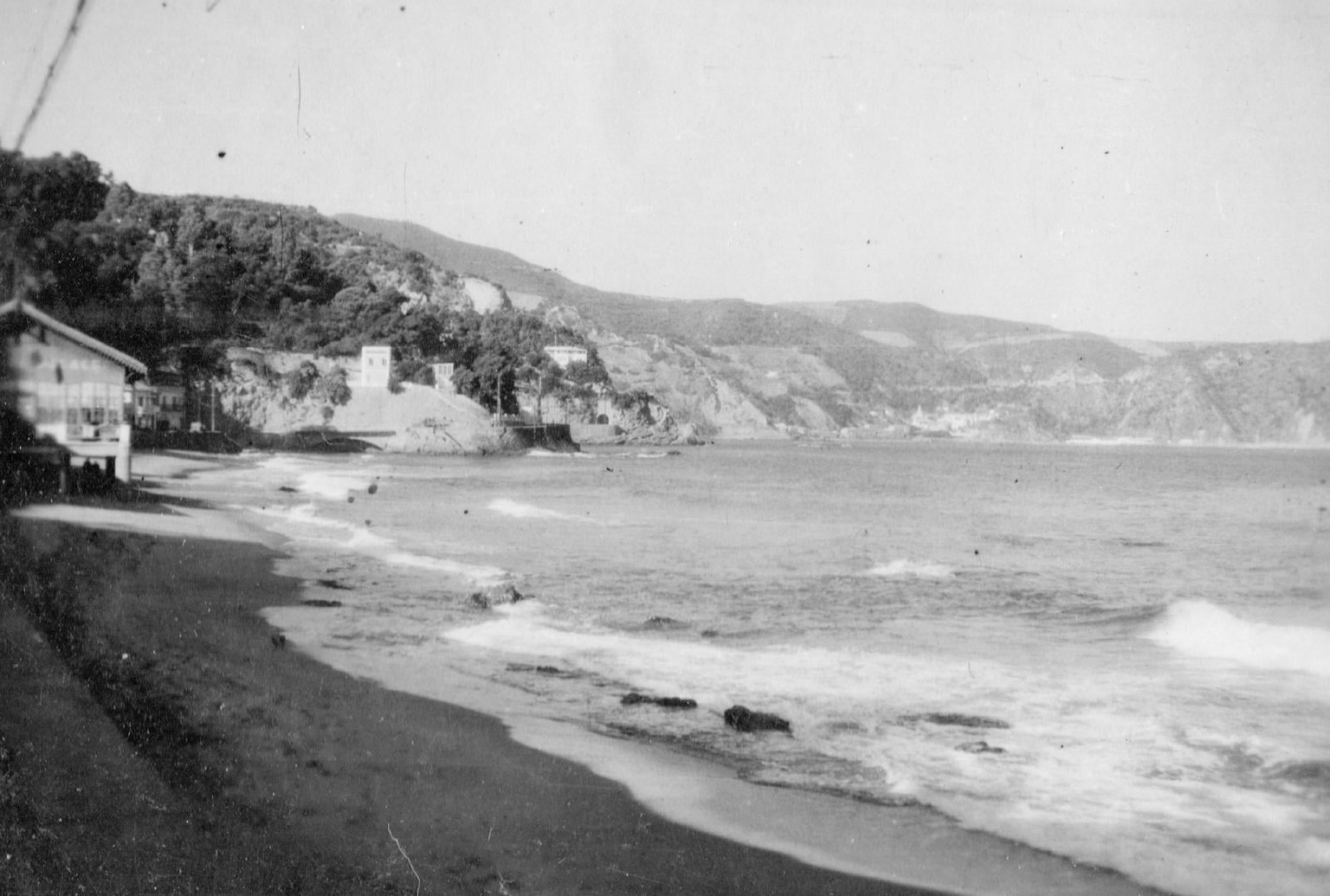
Original scanned photograph
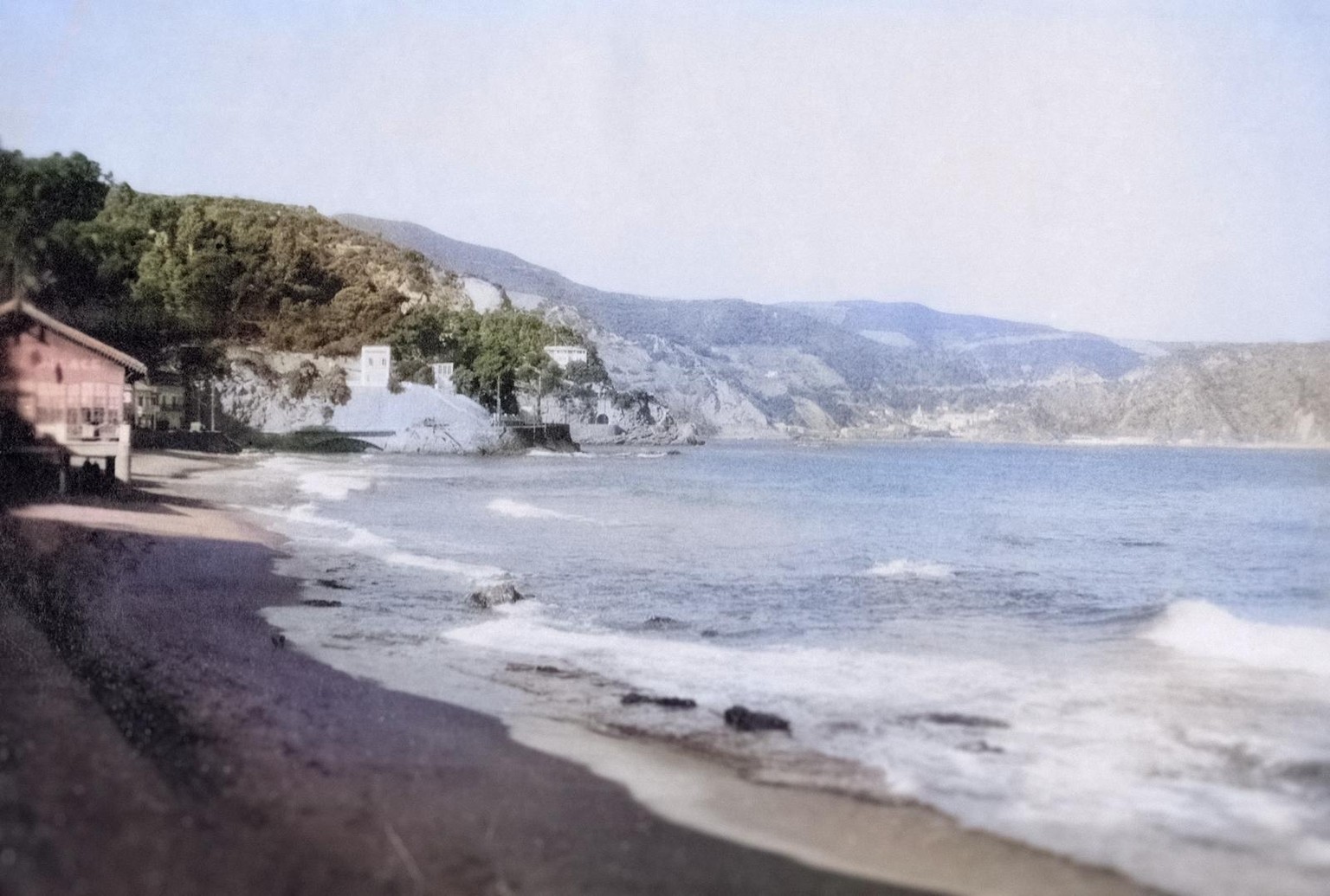
Result of the Colorize Neural Filter
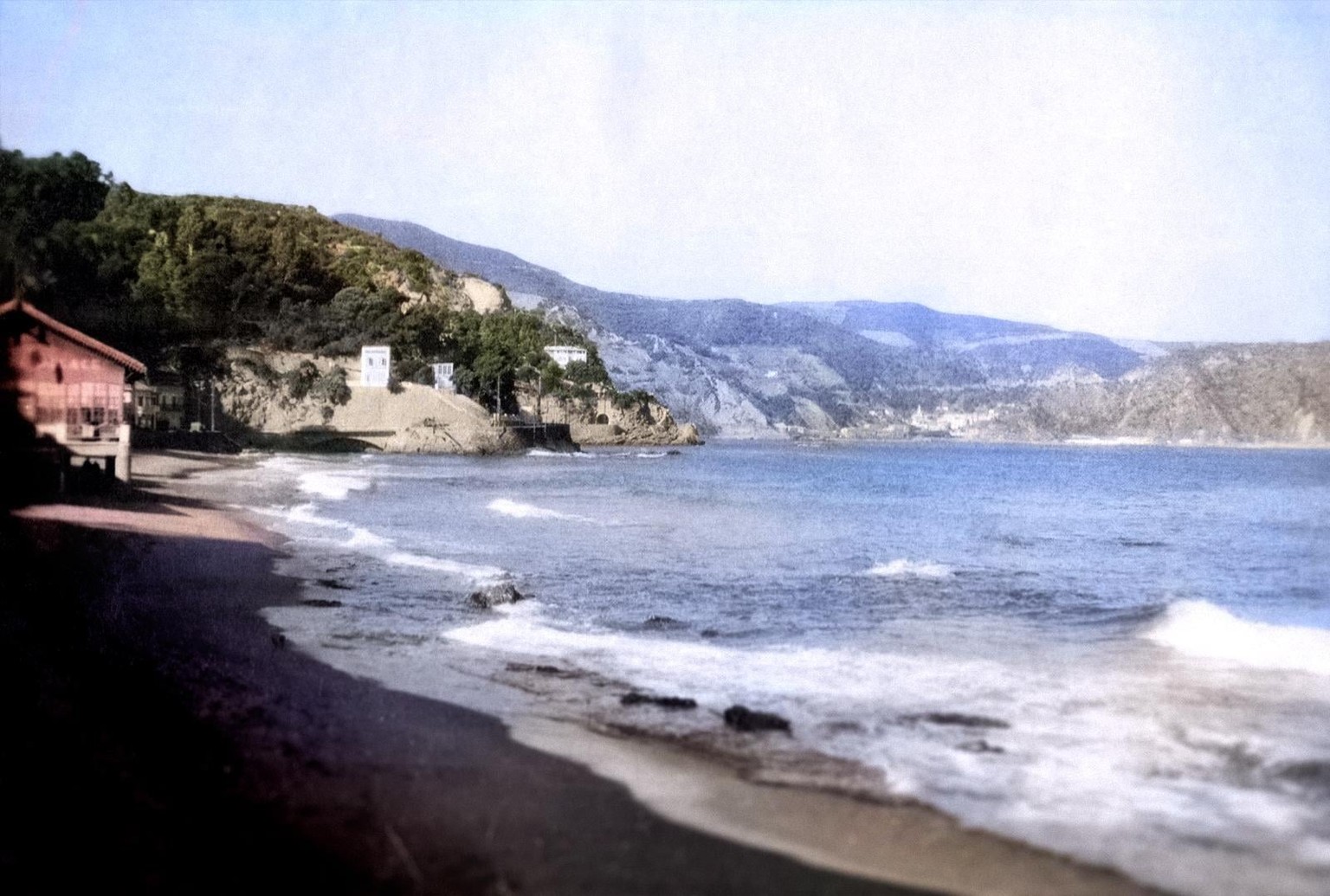
Final colourised photograph
As with the previous image, this photograph took several hours of heavy-duty restoration before it was ready for colourisation. The Colorize filter did a good job with the sea and the mountains in the background, which have the correct colours and look hazy, as you would expect. The trees on Cap Aokas were another matter and needed colouring manually. To bring some shape to the photograph I have masked and applied a Curve adjustment to the shadowy areas on the left.
Algerian Coast
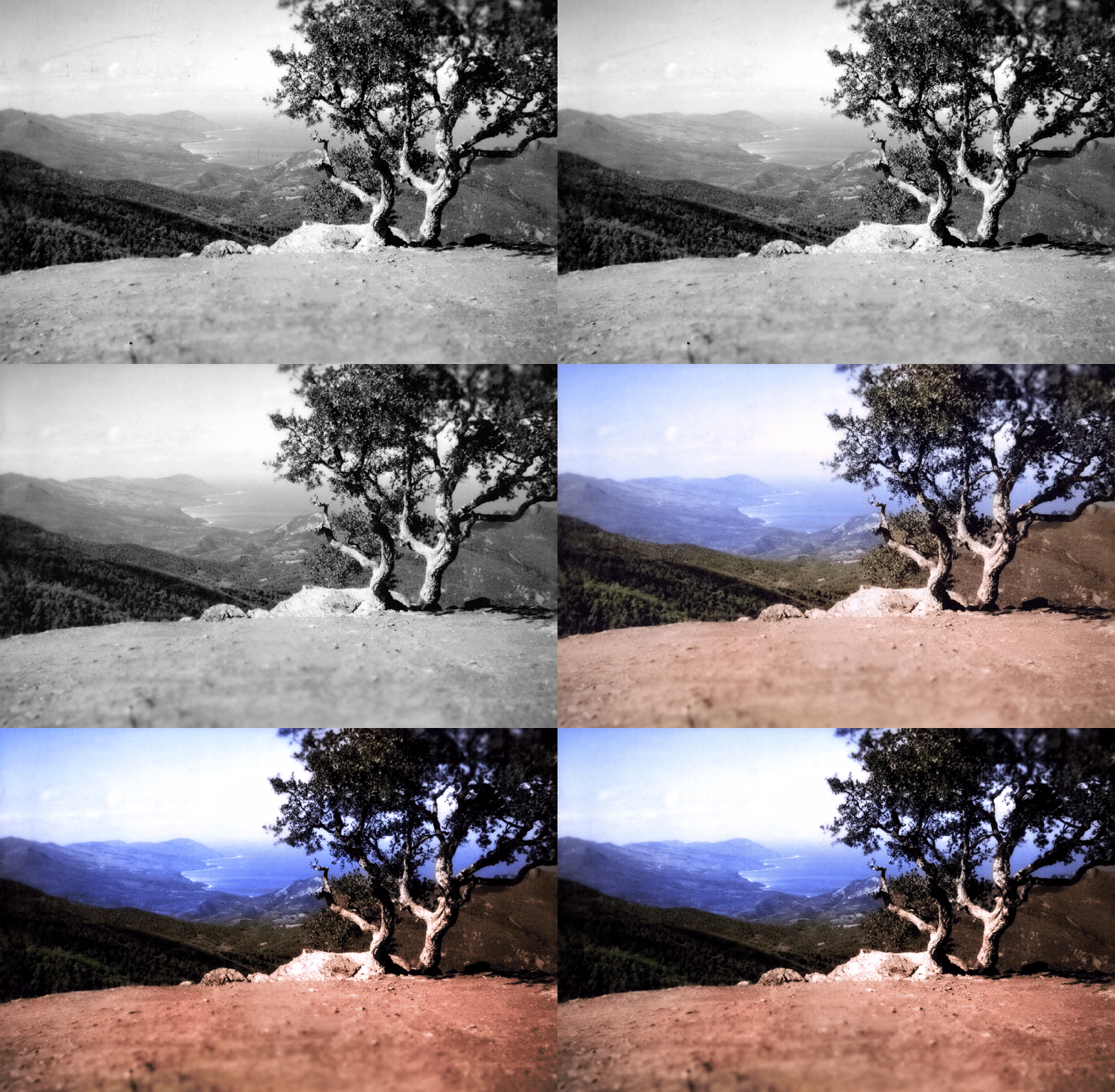
Unlike the previous photograph, I was not able to pinpoint this photographs exact location: safe to say, it is up in the mountains along the Algerian coast and looking west. Despite the size of the original print, which measures only 5 by 8 centimetres, this image has come our surprisingly well and has a nice crisp focus, which many of the other images lack. The cameras used by soldiers like my grandfather were not great, and often had only rudimentary lenses and slow shutter speeds. As with the other images, I fully restored this image before colourisation and also included a depth mapping created using Adobe Photoshop’s Depth Blur Neural Filter to blur the foreground a little. The area in the top right of the image is unrecoverable and most likely from the darkroom printing.
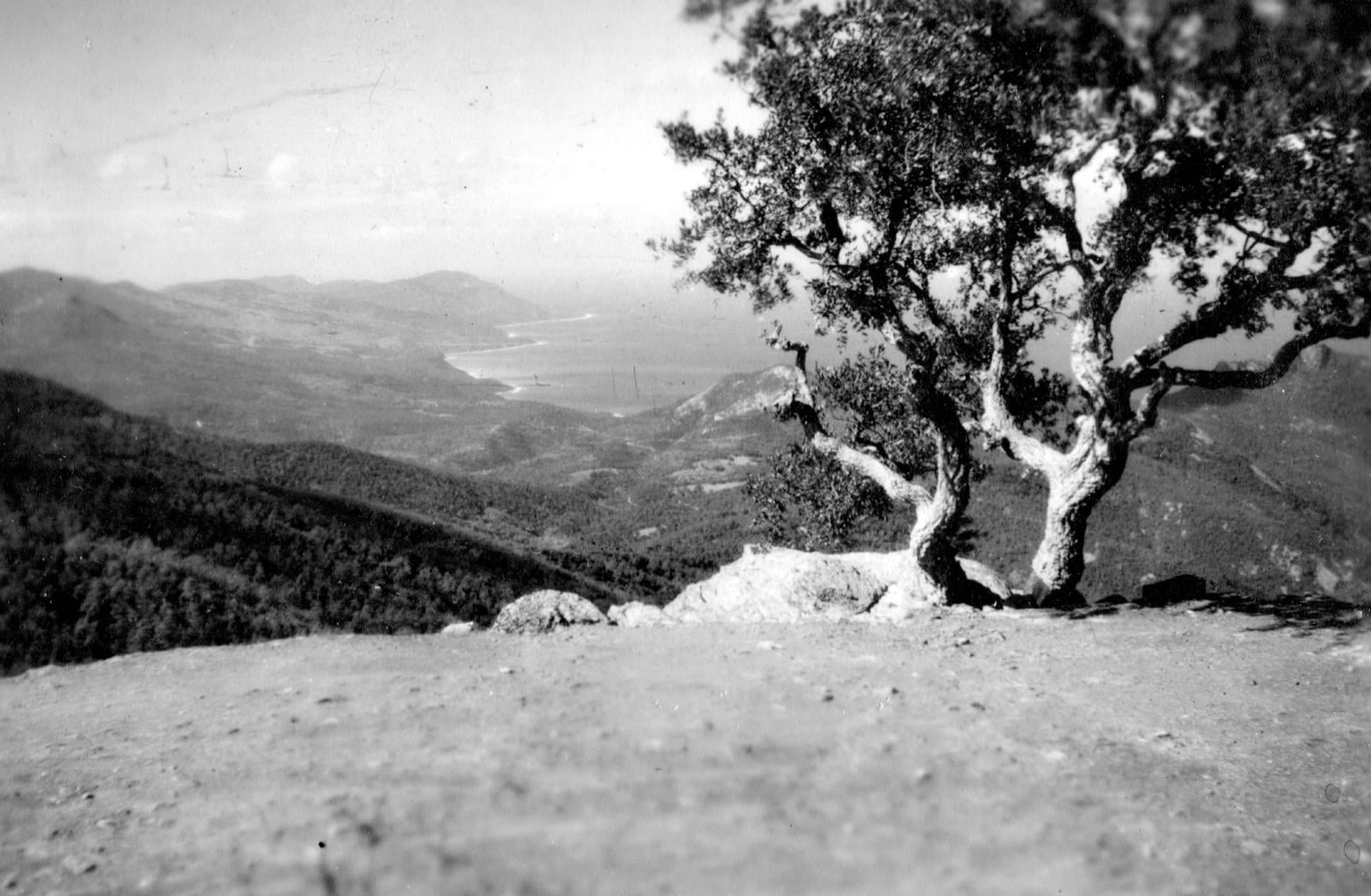
Original scanned photograph
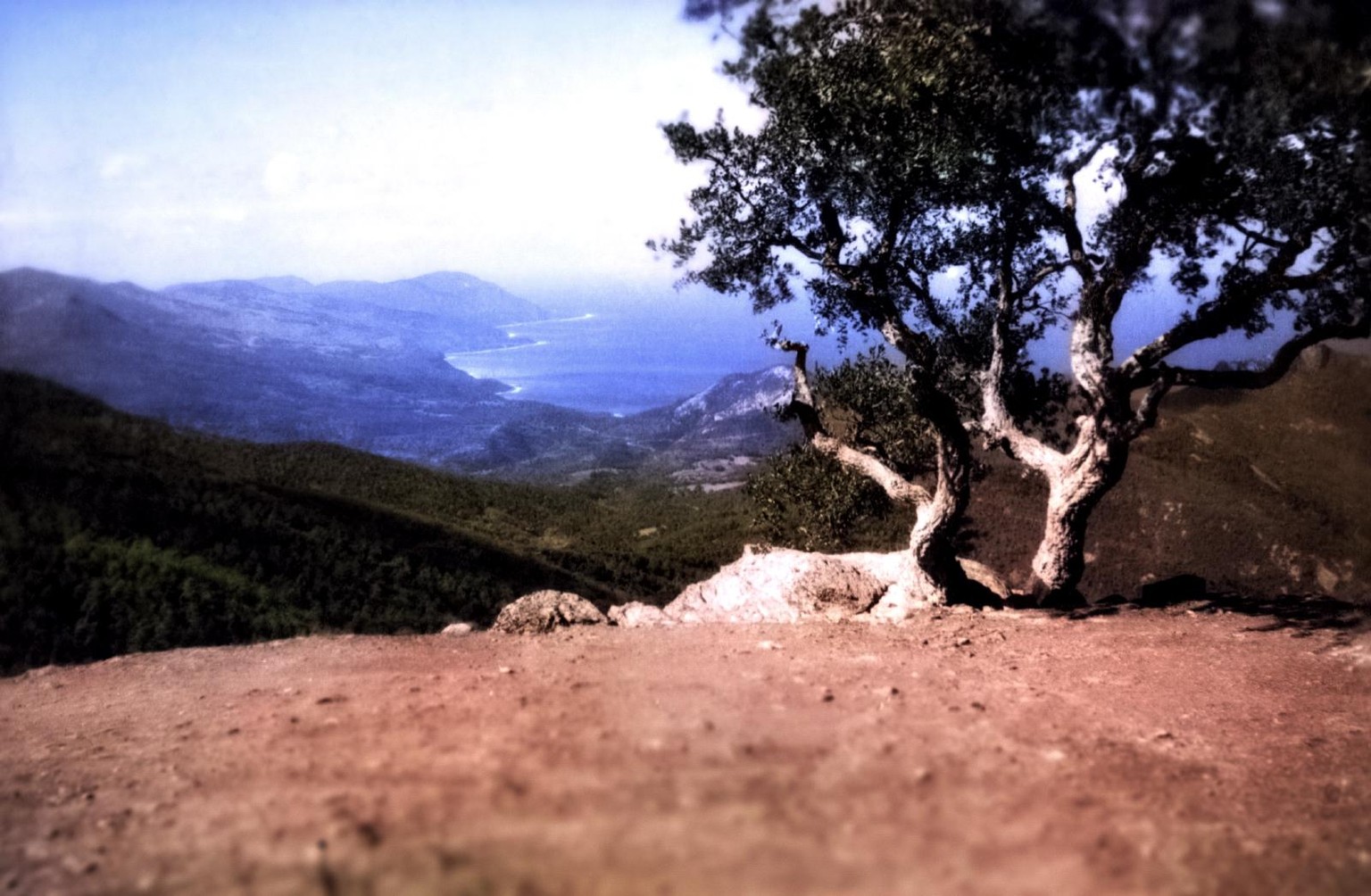
Final colourised photograph
Out of the three images, this one probably came out the best, and only required reworking in several small, but troublesome areas afterwards. As with he previous two images, I have shifted the hue to create a particular look, but in this case also had to desaturate the image because the colours were overly strong (particularly the foreground, which was distracting).
For me, this project goes far beyond just technical processes, and has become a journey as I restore my grandfathers old photos, share them with family members, and as my mother said ‘bring them into the twenty-first century’!
—Dominic