EasyBuild Customer Journey
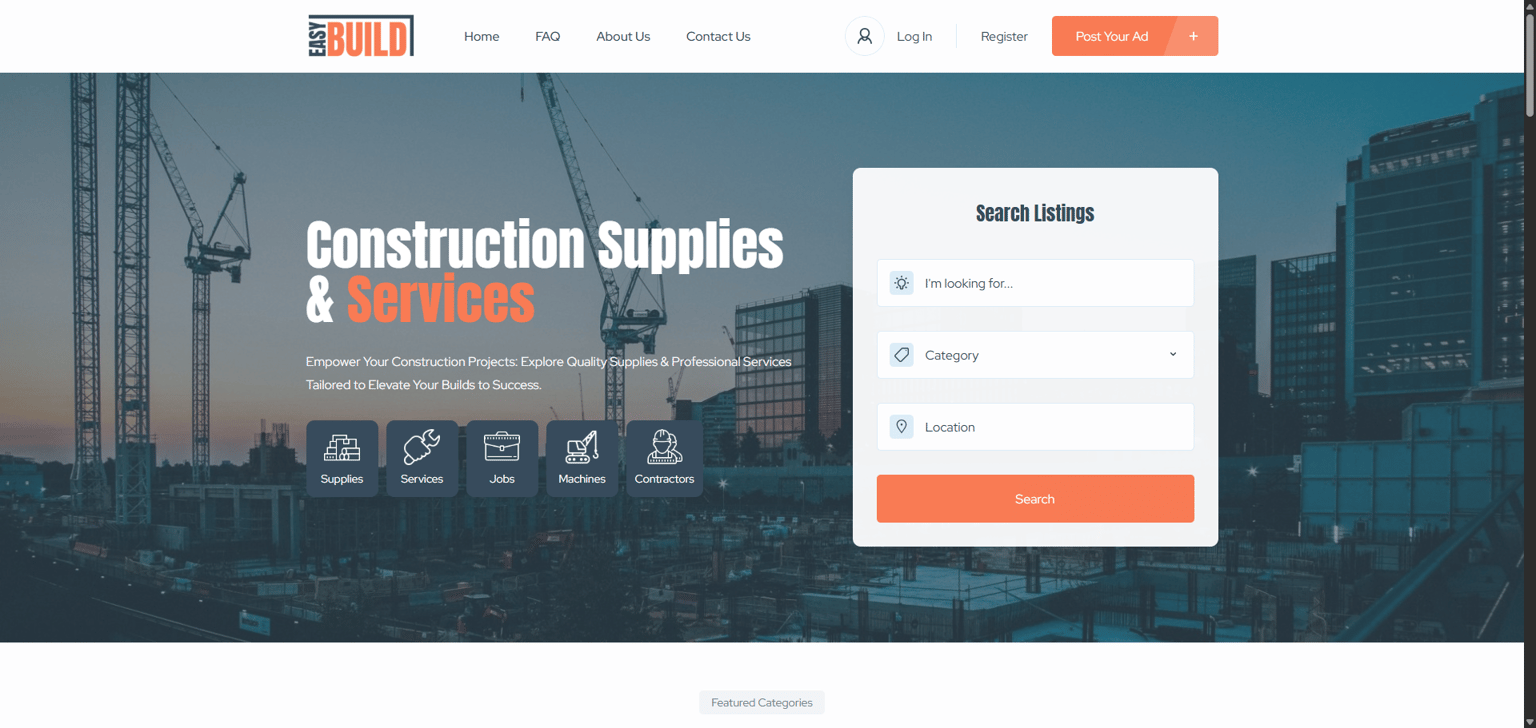
EasyBuild.lk is a website that I built to provide users with easy options to find and purchase construction supplies online. In this project, I will be analyzing the customer journey of users visiting my website.
Personas
1. Arjuna
-
Age: 45 · Role: Small-scale contractor
-
Background: Runs a one-man civil works business; sources materials and subcontractors locally.
-
Goals: Quickly find and secure quality construction materials & services at fair prices.
-
Current Usage: Browses listings weekly via desktop, reaches out via calls or chat to confirm stock.
2. Nadeesha
-
Age: 33 · Role: DIY homeowner
-
Background: As she builds her first family home, she needs guidance on materials and services.
-
Goals: Educate herself, compare options, minimize risk with reliable suppliers and services.
-
Current Usage: Scans listings via mobile, reads blog posts, and contacts sellers to request quotes.
Touchpoints & Phases
-
Research (Landing > Search > Listings)
-
Evaluation (Details > Blog content > Seller profile/reputation)
-
Purchase Inquiry (Chat/Call > Price negotiation > Booking)
-
Support & Follow up (Post inquiry support, technical advice, logistics)
User Paths
-
Arjuna begins with project scope, searches by category or location, compares bulk prices, contacts sellers to confirm stock and logistics, negotiates, and books supplies or services.
-
Nadeesha begins with a checklist and photos, filters by service quality/reviews, contacts the seller for advice, asks for recommendations, and books a contractor or source via chat/email.
Phase-by-Phase Analysis
Phase 1: Research
-
Needs & Wants: Fast access to relevant filters (location, material type, services); trust in current listings.
-
Actions: Use the search bar, filter listings, scan featured categories, and blog content.
-
Perception: Mixed functional interface, but high info density.
-
Interruptions: Confusion over multiple “Contact for Price” labels, absence of price estimates upfront.
-
Responsibility: UX team & listing moderation.
Sample Research Questions:
-
“Was it easy to filter by category & location?”
-
“How long did it take to locate relevant ads?”
-
“Did blog posts like ‘Supply Chain Challenges’ aid your research?”
Phase 2: Evaluation
-
Needs & Wants: Clarity on stock levels, supplier reputation, specs & certifications.
-
Actions: View listing details, quality specs (e.g, “SLS / ASTM standard”), seller location, contacts.
-
Perception: Specs are transparent, seller profiles lack reviews or ratings.
-
Interruptions: No ratings/comments, fragmented info across pages.
-
Responsibility: Content & seller verification.
Sample Evaluation Questions:
-
“Could you verify quality standards easily?”
-
“Did you feel confident choosing a supplier?”
-
“Did lack of ratings deter you?”
Phase 3: Purchase Inquiry
-
Needs & Wants: Smooth contact (chat/phone/email), clear lead time, and delivery info.
-
Actions: Use chat or email links, request quotes, negotiate.
-
Perception: Channel exists, but communication is one-way, with no delivery scheduling.
-
Interruptions: Delayed replies, unclear who handles calls, uncertainties over delivery logistics.
-
Responsibility: Seller support & technical assistance.
Sample Purchase Questions:
-
“Was contacting the seller easy?”
-
“Did you feel supported through pricing/logistics?”
-
“Any communication breakdown?”
Phase 4: Support & Follow-up
-
Needs & Wants: Post-inquiry clarifications, help with handling/unloading, technical advice.
-
Actions: Contact phone/email, occasional blog reading.
-
Perception: Basic support, no centralized FAQ or follow-up system.
-
Interruptions: No guidance on delivery/unloading, no status tracking.
-
Responsibility: Operations & support team.
Sample Support Questions:
-
“What support did you receive after booking?”
-
“Did you have questions about unloading or scheduling?”
-
“Were any issues left unresolved?”
Next Steps
-
Collect Data: Conduct interviews/surveys with Arjuna-type contractors and Nadeesha-style DIY builders, guided by the above questions.
-
Identify Friction Points: Map where users get stuck, e.g., no price transparency, rating absence, delayed contact.
-
Brainstorm Solutions:
-
Show price estimates/bid ranges in listings
-
Add seller ratings/reviews
-
Improve chat response workflows and the delivery scheduling system
-
Create an FAQ and blog guidance on logistics & safety
-
-
Prioritize & Roadmap: Rank improvements by impact/complexity, propose MVP features for easybuild.lk.
-
Stakeholder Presentation: Show persona journeys, friction points, proposed features, and phased rollout plan linked to business goals: increase leads, faster bookings, repeat customers.