Transcripts
1. Zesty Oranges Intro: Welcome to zestiOnges.
In the warmer months, the sight of a basket of fruit, especially citrus fruits, can
be such a glorious sight. Pack full of vitamin C
and that zesty scent. I always now associate
oranges, too, with the dacamons
as my daughter and I make pomads out of oranges, cloves and satin ribbons. So today, we're going to break out our favorite
orange gouache or watercolor or mix a vibrant one as I'm doing out
of yellow and red. I've left a full list of
materials in our about section. As I've mentioned
in other classes, it's perfectly possible
for you to use wood color. This is a slightly
kooky take on oranges, as I didn't want the
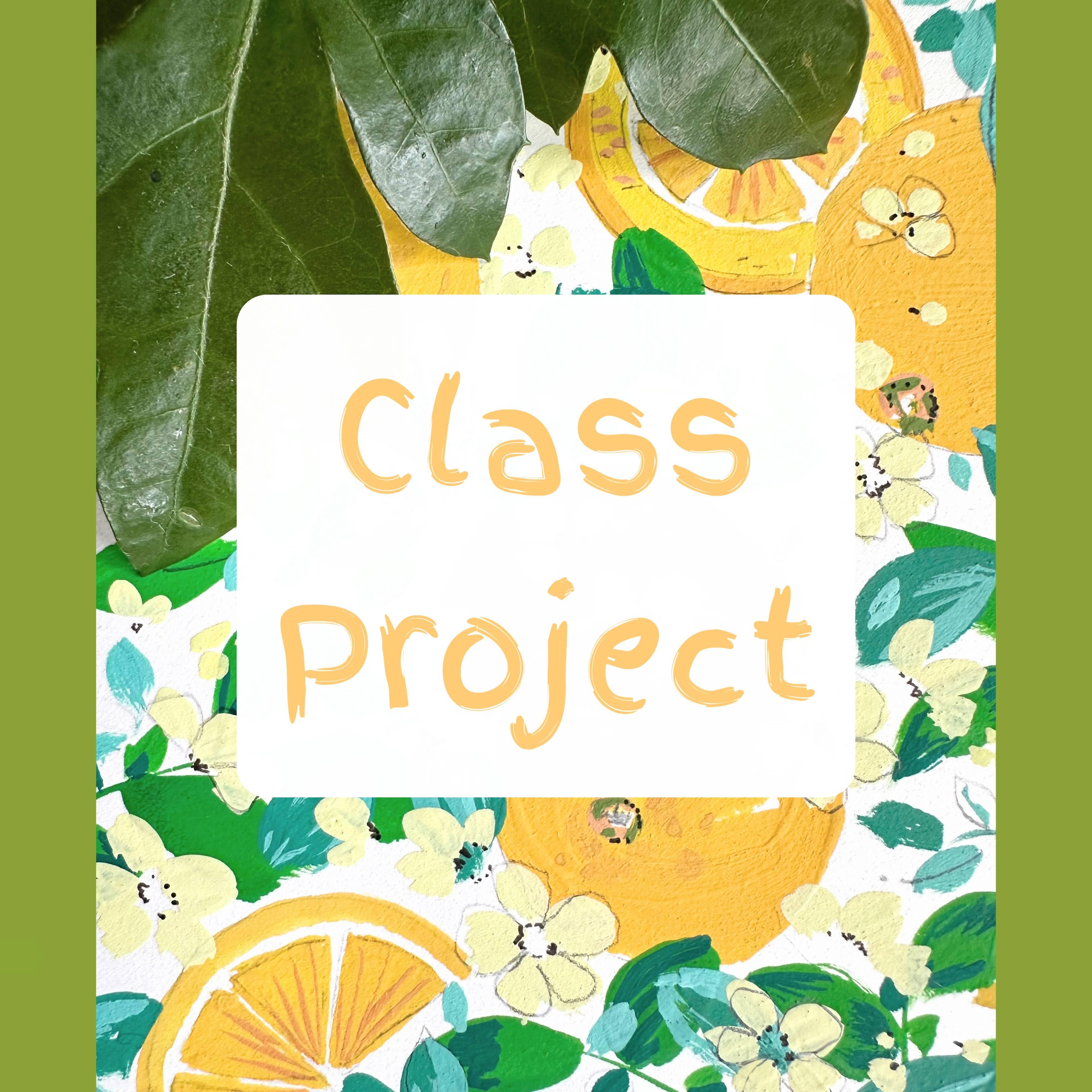
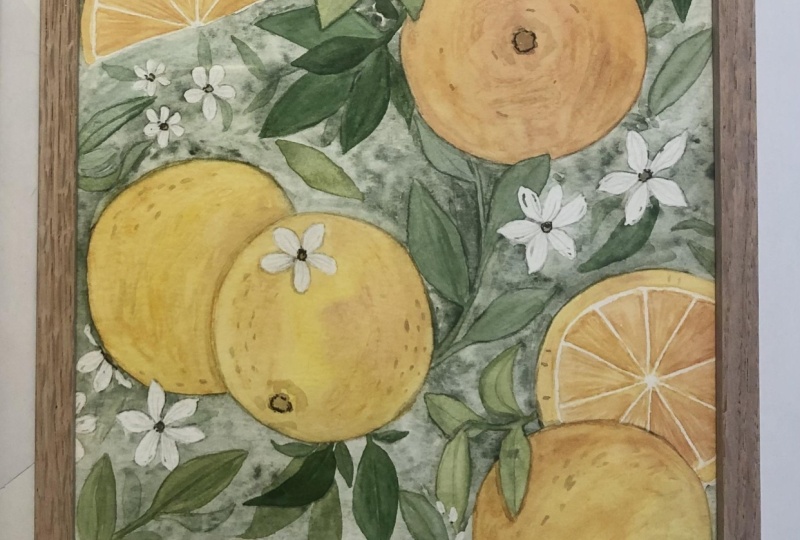
oranges to be perfect. So let's have some fun creating whole half and segments of oranges cradled among
spright green leaves. There are two modules
to this class. Module one will take you up to lesson nine and
might suit those of you who are new to painting or just want a simple
design for a gift card. Beyond, we'll start to
bring in finer details. And I think we might all agree that blossoms are a
priority in life. So we'll be using
a shape of flower, which we've used in quite
a few of my classes now, namely a very simple
five stroke flower with tiny little pen details. I also thought ahead
with this class and taped off an area
of four by 4 ", which will make it much
easier for us to find a frame and forever having
to buy custom made frames, which is so expensive. Subtitles are available for my deaf and hard of
hearing followers. Start your lesson rolling, and you'll see the subtitle icon in the bottom right next
to the volume icon. Subtitles are also
available in Spanish, Portuguese, French and German. I just wanted to run
through for those who don't know how you can
upload your project. So underneath the class, there is an about section
Projects and Resources, reviews, discussions,
and you can also access the full
transcript from the class. So to share your project, you can click on
Projects and Resources and on the right,
submit project. So when you're ready, let's
move on with our class. O
2. Taping Off & Mixing Oranges: I'm not one for
measuring, as you know, but I've actually ordered
a frame for this, so I'm going to tape off a
four by four inch square. The washer tape I'm using
is very affordable. I just get it off, Amazon, so I'll leave you
a link for that. Run out of my favorite
green washy tape. And then let's mix our orange. So I'm using pyrol red and primary yellow and a
little bit of white. All of the paints today
are going to be gouache. But as I said, in naive doodles, you could use watercolor
as an alternative. I often mix gouache
with watercolor, and a good way to transition
from watercolur to gouache is to buy a tube of white gouache and mix that
with your watercolors. So back to our colo mixing, I'm taking up just a tiny
bit of that Pyrone red. It's very overpowering. So I would say 90%
yellow and ten red. So we want a nice
coverage, and on the left, there is the consistency
that we're looking for. If I add water to that, we can see that it's more like
a watercolor consistency. So we definitely want to go with the thicker
coverage on the left.
3. Pencilling Our Circles: So let's lay down some circles, and I found the easiest thing to do was to trace around
one of my washy tapes. Now, I often use triangular
shapes in my composition. But rather than having
them equidistant, I usually pull one further down. So it's just slightly irregular. So we have our
three main oranges. And now I want to put one which is just slightly
off the page. And one here, which is poking out from behind
one of our main oranges. So down here, again, going off the page, but I'm going to turn
that into a segment. Another one here
just off the page, and I'm marking the tops of the oranges
just very lightly. And this one, again, I'm going to turn
into a segment. So I now realize, really, I've got all of the tops of the oranges in the same place. So I just want to have them going in
different directions. That looks a bit better. Now, this one, I want to make into a slightly quirky orange. So I'm going to give
it a thicker rind. And then I'm just tracing around a rough circle in pencil. So we have our
three main oranges, one coming out from behind, one quirky orange
and two segments. So now what I'm doing is just lifting a little
bit of the pencil. We will probably be going
over most of our pencil, and Guash will cover
that beautifully. But just in case I'm just
gonna lift a little bit.
4. Our 3 Main Whole Oranges: So let's now add the gouache to our three main oranges
that we first placed down. And we want a nice,
rich consistency. And I tend to use my
gouache slightly thicker maybe than most because I like to add a little
bit of texture. So you can see here that what
we're going for is a paint that's thick enough to not
drip off the end of the brush. So I tend to do a
little drip test. So what we want is a pool forming around the end of
the brush, but not dripping. And I also would recommend before you go in to
wash your whole brush, take the excess water off, and then go back
into your paint. Otherwise, our brush
can get quite cloggy. This is one of the
things to bear in mind when painting with gouache. It is an extremely hot
day here in Scotland. And I'm realizing that as
I place the paint down, it is drying almost immediately. So it's a lot more textured, I think, than I'd planned. But I'm just going to go ahead. I quite like the texture, but it's incredibly warm, and I perhaps should have tried this in the evening once it
had cooled off a little bit. So that's one and omniven just
tiny areas of white space. I'm just going to add a
little bit more white. So this one is just
a little lighter. It's actually really satisfying having everything penciled out. I normally go brush to page
without any pencil marks. So this is quite
a new experience. I'm really enjoying
it. And, you know, I'm not seeking out perfection. I like the little quirky errors, if you can look
on them that way. I love that. So I'm going to embrace that with
this design as well. Let's do our final
whole orange here. And you can see,
I've just marked out where the top or the bottom, however you look on
it, of the oranges and leaving a tiny white area. I have never painted gouache
in weather like this. It's incredible. And yet, a little touch of
white there as well.
5. Rind and 'Supporting Oranges': So let's do the rinds
now to our segments. And I'm using the breadth of the brush and just going
around the pencil mark. The same here, and I'm
just taking my time. I'm not putting pressure on myself to do this
maneuver in a one. I'm just doing tiny
little movements. And then I'm just making
sure that the ends there are straight
and not to a point. Now, let's do the
one that's behind this main orange in the center. And I'm going to make it
a little bit lighter. So I'm adding a little
bit more primary yellow. And then bringing over some of the mix and a tiny
little bit of white. That looks really nice. Yeah, I like that. I'm going to create a tiny
little bit of white space. And then filling in where
we've made our pencil marks. And I love that color.
It's just enough to suggest that it's
slightly in the background. And I'm just tidying up. And then the final one is our little character
for one over here. So I'm just lifting
a little bit more of the pencil marks
and then, again, using that slightly
lighter orange because this is going behind
one of our main oranges. And it's by no means perfect. I want this to be
slightly quirky. I'm not really a neat freak
when it comes to painting. I quite like things
slightly off kilter. Yep, happy with that.
6. Pencilling In Our Segments: Now this is as fiddly
as this class gets. We're going to create
a little center there so we know where the
center is to our segments. And then just slowly building up little
segments with our pencil. So we're leaving a white area just underneath the rind there, and we're also leaving white
areas between segments. So another little line. And let's do the same here. So we've got our halfway point and bringing that segment
up to the center. And again, remembering
the white space between each segment and the white
space just shy of the round. So cute.
7. Painting In Our Segments: So I'm lifting
some of the pencil and leaving just enough so
I can see what I'm doing. And I've gone down
to my smaller brush. And this gives me a
little more control. Actually quite calming,
and I'm enjoying the fact that I've penciled
everything and I know exactly where
the paint needs to go. I'm trying to maintain
that white space. But, you know, I wouldn't
be devastated if I didn't just really like
the character of it. Could just eat one now. That looks so nice. So juicy. Okay, so let's move on. And let's do our quirky one. So this is slightly harder
because we're having to do a whole kind of
array of segments. So I put a little mark in the center so I know to leave
some white space there. And I'm going to need a
little bit more paint. I've run out of touch there, so putting a little bit
more red and yellow down. I want to vary the
color just slightly. So first of all, I'm
going to outline the edges of this sliced orange. Yes, watch out for drips. And again, I'm not
putting myself under pressure to do
this in one swoop. I'm just doing tiny
little movements of my brush and moving around
not a perfect circle, but it looks friendly. Does that make sense? So,
yeah, I quite like that. We've got an odd one here,
doing its own thing. So whilst that dries, I'm going to move over
to our other segment, and again, just lift
some of the pencil mark. I'm going back to the
orange mix rather than that darker reddy orange
on our quirky one. So our first segment. This is very much like
painting like a child. I'm really enjoying
the fact that it's all laid out and I can
just color in the areas. It reminds me a little
bit of paint by numbers. So gently filling
in that and making sure that all the
edges are quite sharp. I got such a craving
for oranges now. And that looks different from the other one, and
I quite like that.
8. Bright Green Leaves: So let's move over to leaves
and mix a bright green. And I'm using permanent green, which is a really
nice mixing color. It's a really reliable green. And then back to
our primary yellow. So let's mix that up
and see what we have. And adding the yellow just
makes it lean towards a lime. It's a lovely bright green. And I chose this
green because it matches the vibrancy
of the orange. I don't feel I
have enough paint, so I'm just going back in
just to make sure that I have enough for this
first layer of leaves. Just checking that
it is thick enough. Again, just checking
the thickness. So let's use our size
five or size six, if you have it, and just a few straight areas of pencil
that I just want to remove. So let's start by placing one
directly over the orange. So what we're going to do here
is layer up a little bit. So some of these leaves will go over the orange and some
we can place behind. So I'm kind of trying
to think of direction. Got one coming in
there from above, and I want to echo that here. And I love this brush move because we can alternate between bringing the leaf into the stem and also
painting outwards. So here, we're bringing
the paint brush in. And then because this
orange is slightly wonky, I thought it might be nice
just to add a leaf over there. So again, interchanging between drawing the leaf into the stem and pulling
the brush outwards. So I'm looking again at the directions because
I want to keep a flow. And a mixture of two stroke
leaves and one stroke. So just touching on
two of the oranges there so that those leaves
come forward a little bit. And I quite like adding just extra we leaves to these fronds. So this time, I'm going behind because I don't
want them all overlapping. So just taking my time to
outline around the orange. And then this one again, I don't want it
to be going over. I just want it to feel like it's slightly
in the distance. And then maybe just
one more frond. And I'll do it this way because we have the one next
to it coming towards me, so I'm going to go out with
this one and over the orange. And just adding a wee leaf I also want to think
about the edges, so I think it's nice to bring some of the leaves
over the washy tape. And then adding our wee
little leaves to the stems. It makes such a huge difference. They're so tiny,
but I love them. And that looks good for
the bright green leaves. So let's move on to
cool green leaves now.
9. Cool Green Leaves: If you're wanting to do
just the module one, this will be the last
lesson for that module. So we're going to add
our cool green leaves, and I've chosen Windsor green. So this is a deep
turquoise green, a teary green, and I'm
adding some white. Adding white to it just
makes it so luminous. I really love this mixture. And I want a little bit more white and a tiny
touch of yellow. And the reason why I like to add a little bit of the
yellow, in this case, is because we have yellow
in the bright green, and I really like to kind of combine a little of each
color when I'm color mixing. So although this is predominantly the winds
are green and white, just that hint of yellow
adds a different vibe to and I find that paints harmonize a
lot more when I do that. So what we're doing here
is we're going to go in between and over the
bright green leaves. And not forgetting our corners. So we don't want to be following the bright green
leaves too much, and I'm kind of going
against the grain, really, creating
different directions. And I've chosen for those
leaves to go over the oranges. And painting one in
there just behind. I also am just varying
the size a little bit. I and behind again there. So I'm taking the
leaves right up to the edges and over
the washer tape. And be bold and unafraid. Just a little solitary
one on its own there. And
10. Detailing on Our Segments: I so this is the
start of module two. We're going to be adding
details from now on. Add a little bit of green
there with my primary yellow because we're now
actually going to do some detailing on the segments. So we want to mix a color
that's slightly darker than the orange and closer again
to our quirky orange rind. And I took the excess paint off my brush there just so that I have a lot of
control because we're going to be painting
some very fine lines. And this is my size two again. So you can either use size two round brush
or a liner brush. So shaping my brush, making sure it's nice and sharp. I'm just going to add
a little bit more red because that's not showing
up as much as I would like. And then just pulling
down spokes of a wheel. That's what it looks like.
And I'm doing it both ways, pulling in from the top or
going out from the center. And that's it for that one. So let's do the same
on our segments. And if you didn't want to
do this with the brush, you could always
use your dip pen or a fine liner for this. Don't they look so sweet once they have these details on them. And then our final segment here, I find it's a kind of state of mind as well when I'm doing
these little details. I hold my brush
as I would a pen. It's fairly low down, and that gives me more control. And that's it for our segments. Oh
11. Dotty Details: A very quick little lesson
here doing our dotty details. So I'm going back to the
mix that we've just used, but I'm adding a little
bit more white to it. And I'm just going to try that out and see if that's
showing up and it isn't. So I think I'm going
to go the other way, actually, and make
these a deeper orange. And that's a really
nice color, actually, because it's more
of a pinky color because we have
the red and white, which makes the pink and
the orange in there. So it's like a peachy rosy
color. Really like that. And then just mark
making, really, with our brushes,
we little lines. And I feel it's
always best not to do too many curving
round the top of the orange where we started
out with our pencil. Just to add a little bit of
shading and the same here. And here. And then back
to our mark making. A few touches here. Quite like it there because
it looks more like a shadow. A few little dots here.
12. Detailing On Our Bright Green Leaves: So now to our bright
leaves again, and we're going to
create some details. So what I'd like
to do is actually use a cool green on top of the bright green leaves and a bright green
on the cool leaves. So let's start by mixing a bit
more of our Windsor green. Lovely deep rich color. And just a touch of
the bright green mix. So again, that's just
something I like to do that I feel brings a
little bit more harmony. All the colors speak
to each other. And then a touch of white. I don't want this too light. So let's just try it out. And it feels to me I've gone a little bit
too far the other way, so I'm adding a little
bit more winds are green because I want
it to be noticeable. So I'm doing again
what I did earlier, which is to rinse my brush off, dry it off nicely, and then it's ready
for the details. When we're doing details, we don't want a lot of gouache paint or
water on our brush. We're wanting very little water, just a damp brush, and then picking up
just enough paint to add our little details. And that looks much better. It's going to show up nicely. So I'm just scribbling, really, the base and
the top of the leaf. But each leaf can be individual. They don't need to
all look the same. Similar move that we
used when we were painting the details
on the segments. This is so restful to do because we have all the
leaves placed down, and now it's just a case of calmly just adding little
details where we like. I thought I'd go around
the shape of that one, and then just adding
a little extra leaf next to that bright one. This is a technique that a lot of surface pattern
designers use, where they build up layers
using various hues. And I'm really enjoying adding these extra tiny
leaves to the stems. And here I'm just
creating shadow. And what that does is bring the cool green leaf above over that bright green underneath because it was looking
a little bit clumpy, so I just wanted
to add some detail there to separate
out the leaves. I
13. Detailing On Our Cool Green Leaves: And now we're going to do
the opposite way around and use the bright green
on our cool leaves. So let's put down some white. And I'm going to take over
some of the mix that we just used and create this Kana
minty green, really. So again, I'm rinsing
off my brush, wiping it, and then going back in new to the paint just so that we have full control
over our brush. So I'm just going to start with a vein down the
middle of that one. And each one can be
slightly different, and we don't need
to do every one. And I think because we're using quite a light
color on these, it is helping to distinguish which leaves are in the background and which
are coming to the fore. And I'm doing slightly
larger strokes on these leaves as well. And why not add a few leaves? And you can see how that's just moved even further forward, which is really nice. And here again, we can start
to just bring those out and separate them from the bright green
leaves underneath. So there's a little
bit of a jumble here. Let me see if we can just
carve out what's what here. So I'm going to bring over the cool green leaf just to make sure we know which leaf
is in the foreground. I felt that little leaf was a bit lonely, so I've
added one there. And just a few
extra small leaves. I am not wanting
to fill the page because I want to leave
room for the blossoms. So just a few more
little touches. And then I feel it would
be wise to stop. I
14. Pen Details On Our Oranges: So let's mix a little bit of the green orange and a
little extra yellow. And that's created a
lovely limey green. Adding the red tones it down, so it's more of a
foresty green now. And I'm just going to use that to go around the
tops of the oranges. Just little marks. I tried out my white gel pen, but I couldn't get it
working the way I wanted. So I switched over to a pencil, and it is 0.5. It's a little mechanical pencil. And I'm just going
in and placing tiny shadows beside the
marks that we made earlier. Hardly anything at all, but it will allow those marks just to
pop a little bit more. And a few on our characterful
orange over there. And then I'm going to outline
some of the segments. I don't want to overdo it, so I'm just doing it on some. You can also correct things
a little bit at this stage. Although quite like
my wonky orange. I do like detailing
and pencil because it's just a gentler way to go
in rather than using a pen.
15. Orange Blossom: And now to our orange blossoms. So let's play some white down enough for all
of the flowers. And I'm going to create
a slightly yellowy, creamy color just so that it shows up with using
a white background. I want it to just
sit gently on top. So I got a little bit
of primary yellow there and a tiny
touch of Pyl red. And I've got my size
five round brush. So I'm adding a little bit
of the yellow to the white. And some water. And let's see what that looks
like. It's quite pretty. I want to make sure that this is a slightly thicker consistency because it has to lie on
top of our other elements. And then we're just going to do our very simple
five petal flowers. I'm thinking about where
I want them over the top. We could also do some that are poking out from
behind as well. And although that's
a busy area there, placing a flower over it does actually calm those
leaves behind. That's not so clumpy. I love this over
those green leaves. I love getting to this
stage where we can bring all the little elements together with these
finer details. I just making some
of them smaller, little two stroke petals. And doesn't this color bring together the green and orange? The tiny two stroke petals
and some tiny dots, as well. So this one I'm
starting off behind. I'm trying to keep hold of
the feel of all the layers. I think I could quite
happily paint these all day. My favorite little flower
to paint and so simple. So I'm just deciding
now where to place one, and I've decided to go right
over both of those oranges. And I tend to like a little
grouping of five petals, then three, then two, then one. Just in certain areas. And I've got a lovely center for these as well,
very, very simple. So again, I'm going to do one just over the
edge of the orange, just to tie everything together, and I keep looking
around my page, just so I know that I'm
scattering them fairly evenly. I mean, it's random,
but it's also balanced. Keep looking around. It's very easy to do too many of these because they're
so joyful to paint. Just removing any pencil marks. And now getting
quite throwaway with little tiny, dotty petals. You know, I like my little dots. Very sweet. Love it over
these darker leaves. Right, I need to cast my eye around now, not go overboard. Another little one
poking out from behind a leaf and one in
the corner there.
16. Blossom Centres: I and now for the very simple blossom centers that I mentioned in
the last lesson, and I've got my pigma
micron 01 in sepia. You'll know that I
prefer the sepia to black pens for a lot of my work and doesn't
take over too much. So let's do our little
scribbly and dotty movements. So little scribbles and a few dots or you could just go in and
do little dotty features. And you don't have
to do all of them, but I'm certainly going to
because I just love this bit. They just seem to come alive with these tiny
little pen details. I'm not sure what kind
of sorcery it is, but I just love them. Very sweet. And I also want to mention here that that's a vehicle that
I use quite a lot. Larger elements like the oranges and middle sized elements
like the leaves. Then we go down even smaller, usually some sort of flour, and then minute details. And I think all of
these shapes and sizes of motifs is really
an exciting blend. It works perfectly for these smaller little
studies who knew that a few little dots could just bring everything
together so well. And why not add a few little dots to the tops
of the oranges, as well?
17. Pencil Detailing Around Our Flowers: So moving back to our pencil, I thought it might
be nice just to outline some of the leaves. It helps define them, and also we can decide which leaf we want
going over which leaf. So it defines the
layers as well. I also want to go around some
of our blossom with pencil, especially over the white
page and the oranges. I really love doing
s and pencil. It's just enough to define
them without them becoming overpowering because
we're trying to maintain that balance
of the layers, as well. So although the flowers are
on the uppermost layer, we don't want them to poke out too much from the background. A little bit of
shading may be there. So I don't want to go too far, so I'm just having a
look at the whole, and I want to add just a few
little quirky pencil leaves. I like throwing in very, very fine details, which
at first you don't notice. I think it's very sweet. I just want to define that
leaf a little bit more. And again, just
casting my eye over the painting and seeing if there's anything
else I want to add. One last little flower.
18. Finishing Touches: Let's just take one last look and assess if we want to
add any finishing touches. And just as with the
little pencil leaves, I want to add some of
this very light blue. You know, I always like a calming color to place
as a finishing touch. And I think for this one, this lovely minty
green blue is perfect. I just want to add a little detail there to
separate those two leaves. I do like to turn around my painting because it gives
us a different perspective. Sometimes things can poke out
that we have not noticed. I just want to define this
rind a little bit more. And I'm just adding
a little darker orange there in the center
of our quirky orange. I thought it would look
quite nice just to add some details around the
tops of the oranges. But I didn't want it
to stand out too much. So there's not much difference really between the
two orange mixes. Just enough for it
to be noticeable. Just adds a little texture. And I'm really glad that I did this now because I
really like that. Pulling it out with a
little bit of water, so it's nice and soft. And maybe bringing it out even more to be like
a shadow underneath. A little bit of shadowing there. I think we'd be tempting fate a little bit if we
carried on any longer. I feel this is a
good place to stop.
19. Oranges Thank You!: Thanks so much for
painting alongside me. I hope above all that you've had fun and that it's kindled
a love of painting, fruits, and other foods. If I can offer any further help, don't hesitate to get in touch. You can do this in discussions or when you upload your project. Or you can catch me over
on Instagram or Tik Tok. I'm very active over there
and post almost daily. So thanks again. I look forward so much
to seeing your projects. Bye for now. See you soon.
 Holly Tomas Art, Watercolour | Gouache | Mixed Media | Scotland