Transcripts
1. Introduction: Hello and welcome to the tutorial where I will
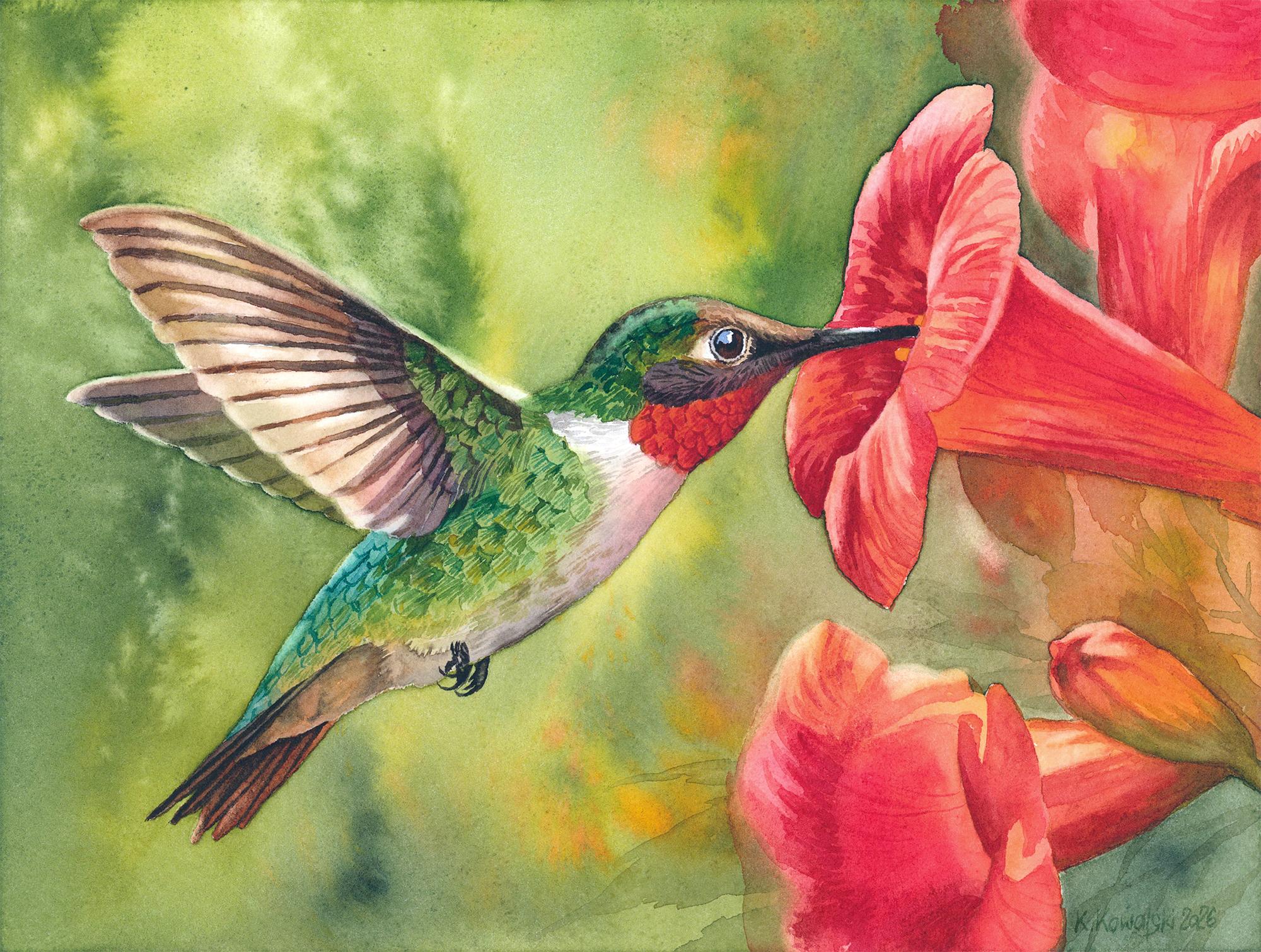
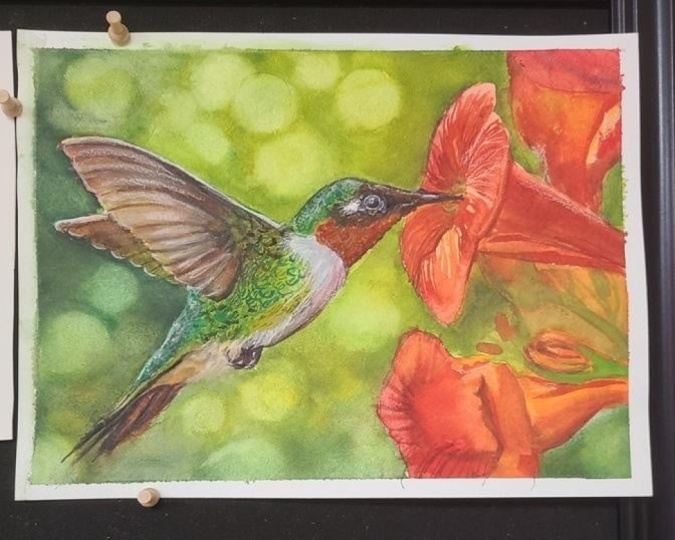
show you how to paint the stunning rubby throated hummingbird approaching
a trumpet vine flower. This is a very enjoyable
project with beautiful colors and a nice balance between loose areas and more
detailed parts. In this project,
I decided to use a slightly looser
style of painting, but the end result still
looks quite detailed. You'll see that I painted it in a much more relaxed manner because I wanted to
achieve that nice, transparent, airy
look of watercolors. Thanks to working with
transparent layers, we will achieve an
intensity of colors and details that will beautifully
capture this vibrant scene. Join me in painting
this amazing bird, and let's have some
fun with colors. If you're ready to start and already feel inspired,
let's begin.
2. Project and Resources: I've prepared a selection
of helpful resources for your project available in the project and
resources section. You'll find a PDF file with the supply list I used
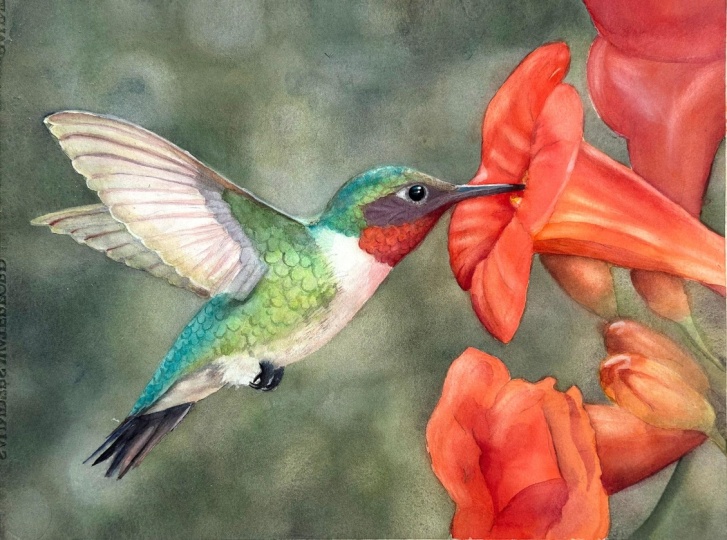
for this painting, along with a reference photo and an image of my finished
artwork for guidance. Line drawings in various sizes are also provided so
you can print and transfer them onto
your watercolor paper in the size that best
fits your needs. Additionally, there working
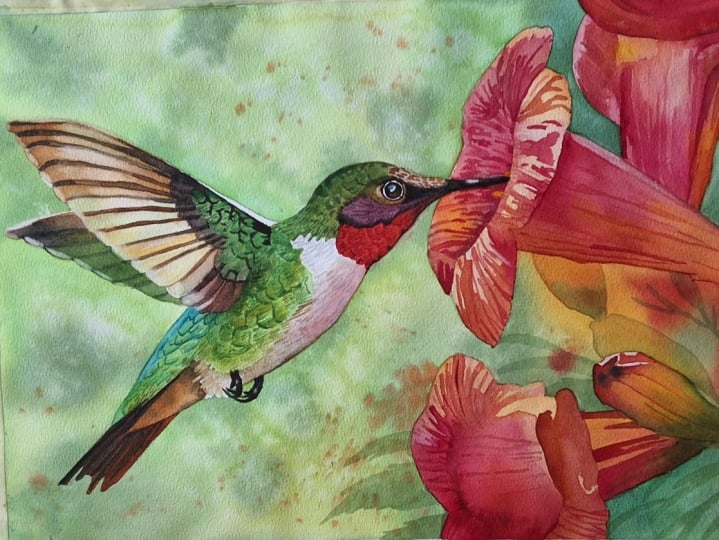
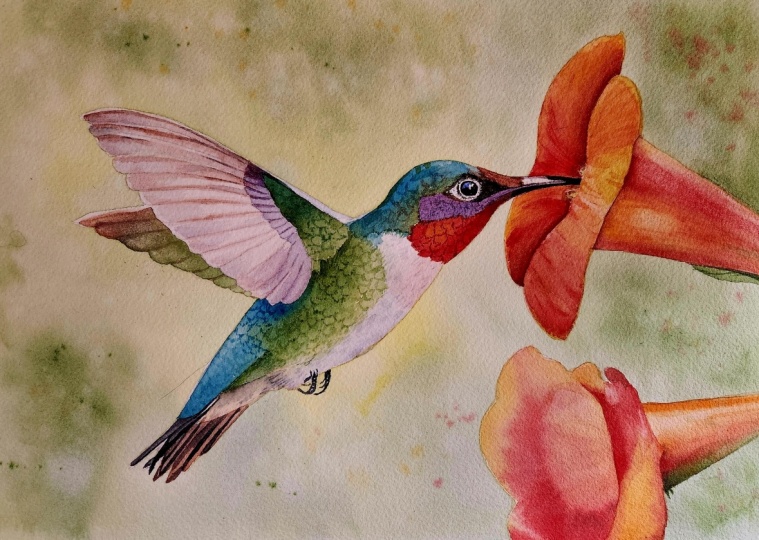
progress photos to help you follow the process and
focus on specific areas. Feel free to explore
these materials and use them to create your own unique and
beautiful painting. Please share your
final painting in the projects and
resources section. I also encourage you to
take the time to view each other's work in the
student project gallery. It's always inspiring to
see what others create, and the support of
your fellow students can be incredibly comforting. Don't forget to like and
comment on each other's work. Lastly, I highly
recommend watching each lesson before
you begin painting. This will give you a clear
understanding of what to expect at each
stage of the tutorial. If you find this class helpful, I would greatly appreciate it if you could leave
an honest review. Your feedback will help me
improve my content and assist other students in
deciding whether to join this class.
Thank you in advance.
3. Painting Plan: As always, I will divide the painting process into
more manageable steps. We'll focus on one
area or one task at a time so that we can smoothly
move through this project. We'll begin by masking out the main shapes and painting
the background first. Once the background dries, we will add some very delicate, transparent flowers and leaf
shapes in the background to fill the bottom right area and create a fuller composition. Next, we will remove the masking fluid and
soften some of the edges, especially the edges of
the background flowers. Then we will focus
on the flowers. We'll paint them in
three main steps, starting with an initial layer, and then gradually building the depth of color and texture. Once the flowers are finished, we'll move on to
painting the bird. We'll begin by mapping out
the main colors first, then we will deepen them. In the third step, we'll focus on specific
parts of the bird, finishing them step by step. First, we'll complete the wings, then we'll focus on the main green and bluish
feathers on the body. After that, we'll paint the tail and the darker
areas on the head. Next, we'll add more details to the feathers on the throat. We will finish the painting
by adding the tiny legs, painting the eye, and adding final touches
with a scrubber brush. That will be our process. If you have your supplies ready, let's move on to
applying masking fluid.
4. Applying Masking Fluid: For masking, I'll be using
Windsor Newton masking fluid, which has a yellow tint. Instead of working
directly from the battle, I pour a small amount into a
cup from an old container. Just enough for what I need. I also keep a small
piece of soap nearby, which is very important when applying masking
fluid with a brush. For this step, I always
use an inexpensive brush. Masking fluid can be
quite harsh on bristles, so I usually keep a few cheap synthetic brushes
just for this purpose. Also use a separate
small container of water for rinsing the brush. I never use my main
painting water. I start by pouring a small
amount of masking fluid into the cup and then
immediately close the bottle. This helps prevent
it from drying out and keeps it
usable for longer. I also avoid dipping my brush directly into the bottle as it's less convenient and also it exposes the fluid to
air for too long. Before picking up
the skin fluid, I dip my brush in clean water
and rub it on the soap. This creates a
protective layer on the bristles and helps prevent them from
sticking together. Don't worry the
soap won't affect your paper or paint later on. Now I can dip the brush into the masking fluid and
begin applying it. Take your time here and try to stay within
the pencil lines. Apply the masking fluid along the edges of the wings
and the flowers. This will allow us to
paint the background freely without worrying about going over the main subject. I don't apply masking to the
legs because they are black, so we will simply paint over this area later
with darker color. I'm also not applying masking to the two buds in the background. My plan is to paint
them as part of the background in a
very loose style, so there is no
need to mask them. In the class materials, you will find an illustration showing exactly where
I applied masking. This should help guide
you through the process. Once you're finished,
rinse your brush thoroughly in water and
clean it again with soap. This will keep the bristles
in good condition. Without soap, the masking fluid would dry and stick
them together. Now leave the masking
fluid to dry completely. Once it's dry, we'll move on
to painting the background.
5. Background: Before we start, let me apologize for beginning
at this point. As you can see, my
colors are already prepared and I already have a layer of
water on the paper. I didn't notice that my
camera wasn't recording, so I missed this initial stage, but I will explain
exactly what I did. Be painting the background using the wet on wet technique. For that, we need to apply a
layer of clean water first. It often happens that this
layer dries quite quickly. So in this case, I decided
to use the priming method. It's very simple. It's just one additional
layer of water. I applied water over the entire background
and let it sink in. While it was soaking into
the fibers of the paper, I prepared my colors. I mixed transparent
yellow with quinacridone red on the left side of my
palette and on the right side, I have transparent yellow with
Windsor blue green shade. I created gradients on my
palette so that I can easily pick any shade between the two colors forming
each gradient. These are the main mixes I'm going to use
for the background. Now, the first layer of water has already soaked
into the paper, you can see that the
surface has a mat sin, and this means that the surface is damp but not overly wet. At this stage, I apply a
second layer of water. You can think of
the first layer as sitting inside the
fibers of the paper. Since it hasn't evaporated yet, the second layer won't
soak in as quickly. Is simply less room for it. This is how we extend the working time and keep
the paper wet longer. This method is
especially helpful in warm conditions
or on hot days. The key is to let the
first layer soak in and apply the second layer when
the surface is just damp. I'm using a 1 " flat
brush to apply the water, and for painting, I'll be
using a size 12 round brush. I'm starting with a more
yellowish green switching between the slider tone and
a darker green from my mix. I applied the paint
in larger areas, leaving some gaps between
patches for variation, either to drop in darker tones or to keep certain
areas lighter. In the reference photo, there is a bouque effect
with soft circular shapes. I considered creating that, but decided to keep the
background simpler. I'll focus on the
main colors and later at the texture by
splattering water and paint. To darken the green, I add paints gray to my mix. Because of the
double water layer, the surface stays wet longer, giving me plenty of time to
apply and adjust the colors. One very important step during this stage is tilting the painting in
different directions. This helps distribute
the pigment evenly and creates smoother
transitions between colors. I keep tilting the painting as long as the paint
is still moving. I also considered making the
background lighter in tone. Mine isn't very dark and I
think it has a good balance, but a lighter background
could also work beautifully since the bird
itself is quite dark. That contrast could make the
subject stand out even more. You might want to experiment
adjust the colors, add more blue, red or orange to suggest
additional flowers. Since it's just a background, there is a lot of
creative freedom here. On the right side, I'm
adding an orange mix of transparent yellow
and quinacudon red. I'm not painting
flowers directly, but this color suggests their
presence in the distance. Repeating the color from the
main subject also creates a nice harmony between the
foreground and the background. Once I've applied
all the colors, I tilt the painting again to
help them blend smoothly. The worst thing at this stage would be to leave
the painting flat. The paint and water would settle into the
natural valleys of the paper and could create
unwanted streaks as it dries. Tilting ensures a more
even natural result. Now, I continue
tilting and watching the surface as it
gradually loses its shen. I'm waiting for the right moment to splatter water droplets. This is quite tricky. Timing is everything. If I do it too late, when the surface is too dry, the spots will be harsh
and well defined. If I do it too early, the droplets will
spread too much and create larger
blooms than intended. It's always a bit of a gamble. I switch to a smaller
size six brush loaded with clean water and splatter
droplets onto the surface. A smaller brush helps create smaller droplets which will still expand once
they hit the paper. I feel this is the right moment, so I splatter the water, although as often happens, the blooms spread more
than I would ideally like. That's a sign I could have
waited just a little longer. You can notice the difference between these marks
at this stage when the surface is still slightly damp and how they look in
the finished painting. On the right side,
I also splatter some green paint and a bit of yellow and orange
near the bottom. My idea was to add
subtle movement around the wings using these textures complementing the
motion of the bird. I didn't want a completely
smooth background, but if you prefer that look, you can skip the splattering entirely and let the
wash dry undisturbed. A smooth background would also make the bird stand
out beautifully. Personally, when working with larger background
areas like this, I like to introduce
some texture to make the painting more
dynamic and interesting. Now we can leave the
background to dry completely. Once it's dry, we will add some transparent shapes
in the bottom right area.
6. Background Shapes: Once the background
is completely dry, we can optionally add
some additional shapes. I will use the same oranges
and greens to paint very simple silhouettes of
flowers and a few leaves. These are light transparent
shapes that help fill the space and create a slightly
fuller look in that area. Shapes like these are
called positive shapes. At least that's how I call them as opposed to
negative shapes. In negative painting, we create a shape by
painting around it. With positive shapes, we create them directly by
painting their form. So how do these differ from the main flowers
in the foreground, which we also paint directly? The difference lies in
how they are painted. These are very
simple silhouettes created with just one
transparent layer. They don't have any details, and we won't build them up
with additional layers. They are simply soft
minimal suggestions of the objects we
want to include. Once these shapes dry, we can move on to the next step.
7. Removing Masking & Softening Edges: The background is finished, so now we can move on to painting the main
flowers and the bird. First, let's remove
the masking fluid. I use a rubber
masking pickup tool. If the masking fluid is
fresh and applied correctly, it should come up in
larger pieces like this. Make sure to double check that
you've removed all of it. I like to gently run the
back of my pinky finger over the paper to feel if there
are any masked spots left. I did that here, but I still missed one tiny dot on the wing. You'll notice it later. Before we start painting, this is the best moment to smooth out any edges if needed. For this, I use my galeria size four flat
brush from Windsor Newton, originally meant for
acrylic painting. I dip it in clean water and gently wrap along the
edge of the flower. Normally, I do this very lightly just enough to activate a
bit of paint along the edge. But in this case,
I want to create very soft blurred edges to push these flowers further
into the background. So I'm applying a bit
more pressure than usual to create a wider,
softer transition. I'm not worried about dragging
the green into the flower. These colors will blend naturally and enhance
that soft effect. I repeat the same process
on the bottom flour, softening the edges
as much as possible. I remove the lifted paint using a paper towel that I
hold in my other hand. I also noticed that along
the edge of the wing, some darker green
pigment settled and created a slightly
harsh outline. I want to soften that as well, but this time, I'm more gentle. I'm just lifting
the excess pigment without disturbing
this area too much. We will also soften the edges of the wings later
at a later stage, which will help suggest movement and enhance
the back leat effect. Now we are ready to start
painting the flowers.
8. Flowers - Initial Layer: The first layer on
the flowers will be an initial wash.
We want to create a general roadmap of colors and place them more or less
where we want them to be. This will give us a
strong foundation for building deeper tones
and textures later. There's also an
additional benefit to this approach, a
psychological one. Looking at a white shape
can feel intimidating. But once we apply
this initial layer, the painting starts to feel more achievable and we gain
a sense of progress. I'll still be using
the same colors, a mix of transparent yellow
with quinacridon red, and a green mix of transparent yellow and
Windsor blue green shade. I'm applying a layer of clean water over the
flowers in the upper right. I want to use the wet on wet technique so the
colors can blend smoothly. I'm using a larger
size 12 brush. A bigger brush is
helpful here because we're simply filling
in shapes with color. If you use a smaller brush, you may be tempted to
focus on details too much, but this is not the
stage for that. I let the colours spread and mingle naturally
on the paper. I also paint over
the pencil lines on the background flowers where I previously softened the edges. The orange red colour
flows into the green and sometimes creates a slightly harder edge, but that's okay. I accept it. Watercolor has its own unpredictability and
we can't control everything. I repeat the same process for the flour and buds
in the bottom right. First, I apply a water layer
over the entire shape, and then I drop in colors. I use more yellow in the lighter yellow orange areas and more quinacridone red in
the deeper reddish parts. On the bats, I also
add touches of green. In the final painting,
you'll notice that some areas of the
flowers remain lighter. As we build up layers
and deepen the colors, this first layer will
become our lightest tone. Later, we will paint around certain areas to preserve
those highlights. At the very end, we will also lift some color using
a scrubber brush, which will add a
beautiful finishing touch and enhance both the
flowers and the bird. Now leave this initial
layer to dry completely, and once it's dry, we'll move on to
deepening the colors.
9. Flowers - Middle Values: In this part, we won't
be adding details yet, but we will start forming shapes and deepening the colors. The initial layer is
now completely dry, and as you can see,
it looks quite pale. So now we need to
develop those values. I like to think of the painting
process in three layers. The first layer creates
the light tones, the second builds the mid tones, and the third adds the
darkest values and details. Of course, this
isn't a strict rule. Sometimes fewer or more
layers are needed. But three often feels
like a good balance. First, I'll prepare more paint. Again, I will use a mix of transparent yellow
and quinacradon red. But this time, I also
need a darker red. At the bottom of my mixing area, I will use the same
yellow red mix and add ultramarine
blue to darken it. Might wonder why I'm using ultramarine blue
instead of pains gray. Well, ultramarine blue is a warm blue that leans
slightly toward red, while Pain's gray is
cooler and more neutral. I want to keep this mixture
on the warmer side. It won't be as dark as if
I would use pains gray, but it's enough to
deepen the color. Also, since orange and blue
are complimentary color, they work very well together and create rich natural shadows. Now I'll be painting using
the wet on dry technique. This is important
because I want to create some sharper edges
to define the shapes. If I painted wet on wet, everything would blur too much. At this stage, I'm
looking for areas that are darker than
the first layer. The first layer now represents
the lightest tones. So with the second layer, I'm deepening selected areas while leaving some
parts untouched. Those unpainted
areas will preserve the lighter tones and
act as highlights. I'm also using stronger, more pigment rich mixtures. For many areas, this will already be close
to the final value, although I keep in mind that I still have one more layer to add details and possibly deepen
certain areas further. This layer not only
builds mid tones, but also increases
color saturation. For the flower in the
upper right corner, I'm also adding
some permanent rose to slightly shift the hue and
make the red more vibrant. Keep in mind that watercolor always looks more
intense when wet. Once it dries, the colors
will appear less vibrant. I will leave this flower for now and move on to the
one at the bottom. Here I first apply a layer of clean water inside
the trumpet shape. I try to leave a small gap between this area
and the petal on the right because I'll be
painting that petal in a minute and I don't want the colors to mix
unintentionally. The water layer
helps the paint flow more easily and blend smoothly. If some hard edges
appear, that's fine. I just want a bit more
control over the transitions. Next I start with
the darker mix, adding a touch of
permanent rose and apply it to the darkest
areas I can see. I keep the inner part
of the trumpet lighter while placing the darker
tones where the petal bends. Then I pick up the
darker mix again and paint the shadow on
the petal to the right. Here I want a sharp edge so
I don't apply water first. This is why I left that
small gap earlier. If there had been water there, the paint would have flowed
into the trumpet area. I continue painting
the shadowed area on the curled petal,
leaving lighter gaps. The previous layer now
acts as a highlight. Next, I move on to the bad. I start with orange
tones at the tip and gradually transition to green
as I move toward the stem. I also leave small gaps at the
tip to suggest highlights. Is At this point, I need to let everything
dry before continuing. If I move down immediately, the fresh paint would start
mixing with the next areas, and I would lose
control over the edges. So I dry this section
first and then continue. I return to the
lower trumpet shape using a yellow orange mix, I add simple shadows gradually transitioning to a darker
tone as I move downward. Again, I leave
lighter areas from the previous layer to
serve as highlights. Closer to the bat, I
introduce a bit of green. When green mixes with
the orange and reds, it creates more neutral,
slightly brownish tones. Now we can move on
to the main flower, and here I divide the
process into smaller steps. First, I apply a layer of water to the petals
on the left side. Using a strong mix
of quinaquadon red, I apply the colors starting from the center of the trumpet
and moving outward. I carefully paint around
the small stamens. I will add yellow to them later. Near the edge, I begin
to suggest the form of the petal using
directional brush strokes. You can see that my strokes
follow the shape of the petal pointing
outward toward the edges. Next, I focus on the
area under the beak. I apply a water layer and then introduce
yellow orange tones, along with a touch of
permanent lysarin crimson in the deepest shadow areas. Again, I paint
around the stamen. I can't paint all
the petals at once, so I skip some areas for now and move on to the
main body of the trumpet. Here I simply apply
color across the form, leaving a lighter gap along the upper edge to
create a highlight. And with that, we can
finish this stage. In the next part, we'll add details and complete
the flowers.
10. Flowers - Details: After the previous stage, the flowers already
look much better. The colors are richer
and more vibrant, but it's the details that will
truly bring them to life. In this part, we'll add
smaller shadows, veins, and creases to increase
realism and visual interest. I'm spraying my paints with water since
everything has dried, and I will begin by
preparing my colors. We'll definitely need a
darker red for the shadows, so I'm mixing quinacrodon red with permanent lizarin crimson. Below that, I'm keeping the more neutral brownish
mix I used earlier, a combination of
transparent yellow, quinacrodon red, and
ultramarine blue. In the upper part of my palette, I also keep transparent yellow and quinacrodon
red separately. I'll start with the flower in the upper right corner using
a smaller size eight brush. There are two main
goals at this stage. First, we want to deepen
the shadows where needed. The first layer established
the light tones, the second build the mid tones, and now we are adding
the darkest values. And second, we want
to introduce texture. And for this reason, I'm mostly working wet and dry, which allows me to
keep sharper edges. My brush strokes will create darker marks with defined
edges that suggest texture, as well as small indentations
and creases in the petals. If needed, I can always
soften the edges, but starting with wet on
dry gives me more control. If I used wet on wet here, everything would blur too much. These elongated
brush strokes create a visual texture that enhances
the realism of the flour. On the curled petals, it's important to follow
their natural form. I like to imagine that I'm painting directly
on a real flower, moving my brush in the direction that
follows its structure. On the petals to the left, I imagine the brush
strokes radiating from the center of the trumpet
outward toward the edges. They curve slightly following
the shape of the petals. Now I move on to the
petals on the right. I can paint them safely because their left edges
are later in tone, so there is no risk of the fresh paint blending into
the areas I just worked on. I apply oranges and reds closer to the outer edges
on the right side, again, leaving small gaps
that now act as highlights. Next, I apply
another strong layer of transparent yellow
and quinacrodon red, which intensifies
the saturation. The reds become very
vibrant at this stage. I also add some
permanent Azarin crimson under the petals and near the bottom edge of
the trumpet using slightly elongated
strokes to build texture. Now, I let this flower
dry completely. Once it's dry, I switch to
a liner brush size zero, similar to a rigor brush. So if you have a rigor brush, it will work perfectly fine. Its longer bristles are perfect for painting fine
lines and details. With this brush, I add
longer lines along the trumpet shapes and
subtle veins on the petals. I'm using the same colors
just slightly darker, making sure the lines are
visible but not too dominant. On the petals, I continue
following their form. The lines gently curve and branch outward toward the edges. If you compare my painting
to the reference photo, you'll notice I'm not
copying it exactly. I use it as a guide. I observe where the shadows fall and where lighter
areas should be, but I allow myself
some artistic freedom. The goal is to create a believable and visually
pleasing result, not a perfect replica. You may also notice that
with each additional layer, the surface of the petals
appears a bit smoother. The layers interact
and help create softer transitions between
light and dark areas. Switching back to the
size eight brush, I use permanent
Alizarin crimson to deepen some of the darker areas with additional brush strokes. I also add transparent
yellow to the stamens. Next, I move to
the button flower, again, deepening the shadows. I continue to follow the form of the petals with
my brush strokes, simplifying the
shapes where needed. I warm up the center of
the flower by adding more yellow and then introduce
more quinacrodon red. It's an extremely vibrant
color, especially when wet. And although the camera
might not fully capture it, it will look more
balanced once dry. I also work on the bad, deepening the red at the tip, adding more green
toward the stem, and filling the
middle with yellow. I use a darker red
mix with ultra in blue to intensify the
shadow at the tip. Once everything is dry, I add a few subtle
veins here and there with the liner brush and deepen the shadows
on the trumpet, even introducing a touch
of green near the base. As a final touch, when
everything is completely dry, I prepare a very diluted
mix of transparent yellow. Using as I send brush, I apply this glaze in a few areas to gently
warm up the colors. Transparent yellow works
beautifully for this. It's light, transparent and
adds soft glowing effect. This technique is called
glazing, applying a thin, transparent layer
of color to unify the painting and adjust
its overall tone. And with that, the
flowers are complete. Now we can move on to
painting the hummingbird.
11. Hummingbird - Initial Layer: In this part, we'll apply the
initial layer to the bird. Unfortunately, I can't
show you my palette at this stage because my second
camera stopped recording, and I didn't notice. But I'm not using
any new colors. I've prepared a
helpful illustration showing roughly
which colors I used. I'll be painting using
the wet on dry technique, but we still want to achieve
smooth colour transitions. To do that, we need to use a very watery paint consistency. Make sure to use a
larger brush so you can apply the paint quickly
without getting into details. A bigger brush also
holds more water, which is very helpful
at this stage. I'm starting with a very
light diluted version of burnt sienna, slightly muted with a small
addition of ultramarine blue. Notice how pale and
watery the paint is. I'm applying this color starting from the top part
of the main wing. On the back wing, I'm
also adding some green, a mix of transparent
yellow and windsor blue. I suggest a more grayish
area on the wing using a mix of burnt sienna
and ultramarine blue again, but this time with more
ultramarine blue in the mix. Then I switch back to
the green mixture and notice that I'm leaving the
edge of the wing unpainted. Using this green mix, I continue applying color
to the main feathers. On the back, I use more
Windsor blue green shade to create a soft transition
between green and blue. I also soften the edge where the green meets the more
neutral tone of the belly, where I'm using a burnt sienna
and ultramarine blue mix. I apply brown tones to the wing, then move on to the head, starting with greens
at the top and transitioning into
browns and dark gray. The throat will be painted
with quinacrodon red. I'd like to draw
your attention to two important light areas, one next to the eye and
another on the neck. Try to keep these
areas unpainted. You can see in the
final painting that they remain the
brightest highlights. Also, remember to leave a small white
highlight on the beak. If the colors blend into
each other, don't worry. This is just the
initial layer base. Later, we will define the
shapes and colors more clearly. So Now, leave this first layer
to dry completely. Once it's dry, we will
move on to the next step.
12. Hummingbird - Deepening colors: In this part, we will
focus more on the wings while also deepening the
colors we applied earlier. We'll continue building
transparent layers to gradually increase
color intensity, tunnel values, and definition. Now you can take a
look at my palette. On the left side, I
have a large pale of a neutral brown mix made from burnt sienna and
ultramarine blue. On the right side at the bottom, I also have ultramarine blue, which is mixed slightly
with burnt sienna, so it's not a pure blue, but that's perfectly fine since we want some neutral tones. I'm using a size ten brush
and working wet on dry. I pick up the brown
mix and begin working on the long
feathers of the wings. I apply the brown along the left and right
side of each feather, leaving the middle lighter. This creates a soft
transition dark on the edges and
lighter in the center. I repeat this on
the next feather, leaving a small gap between them so the colors don't blend. I have to admit that
these wings were quite tricky and
really confusing. So I simplify them rather than following
the reference exactly. But the result, I think, still looks very convincing. I continue this process on
the first five feathers. For the lower ones, I only suggest the separations between feathers
with simple lines. The left wing is more in the
back and it's in the shadow, so I want to make sure
that it's dark enough. I apply browns, grays, and greens across the wing, leaving just the edge lighter
to suggest reflected light. Next, I pick up a more
intense burned CNM and apply it to the tail. Then I use ultramarine blue, which when mixed with burnt sienna creates
a darker gray tone. I use this to paint the
longer darker feathers. At this stage, we're still
not adding fine details. We're focusing on strengthening the overall values and colors established
in the first layer. I use the same grayish brown mix to paint the area
of the wing with smaller feathers and I
also add another layer of green to the
triangular section of the wing that sits in shadow. Using that same gray mix, I paint the big as well. Now I pick up pure quinacridone red and apply it to the
feathers on the throat. I also add a touch of transparent yellow to
give it a subtle glow. This also creates a
nice color connection between the bird
and the flowers. Now, let's dry this
layer completely. After drying, let the paper cool back down to
room temperature. While we wait, we can prepare
fresh green and blue mixes. I mix transparent yellow with Windsor blue green shade
to create my main green, adjusting it between
a more yellowish and a deeper bluish tone. I also keep a small area of clean windsor blue green
shade on my palette. Now we can continue. I start with the green mix and apply it to the head
varying the hue, more yellow green toward the lower part and more
blue green near the top. Okay. I use these greens to intensify the feathers
on the wings and body. On the body, I begin with
a lighter yellow green, and then drop in a darker,
more saturated green. On the back, I use
more winds or blue. The first layer was essential to block the whiteness
of the paper. Because watercolor
is transparent, a single layer often
appears too light. Now with the second layer, the colors become richer because the white of the paper is no longer fully visible beneath. On the belly, I add
soft gray tones using a mix of burnt sienna
and ultramarine blue. Closer to the throat, I also introduce a touch
of quinacredon red. The lighter feathers
reflect surrounding colors, so this helps unify the
bird with the flower. Finally, I add a mix of
burnt sienna and transparent yellow near the tail to
create a worm glowing effect. The subtle warmth ties it nicely with the rest
of the color palette. Now we can leave this
layer to dry completely. In the next part, we'll
finish the wings.
13. Hummingbird - Finishing the Wings: But in this part, we'll focus entirely on the wings and we'll
almost finish them. I say almost because
we will return to them in the final step to
soften some edges. But for now, we want to finish
their structure and color. I start by spraying my
paints with clean water again and make them
easier to work with. Then I prepare a fresh brown mix using burnt sienna
and ultramarine blue. I also keep some ultramarine
blue on the side, and my green mix of transparent yellow
and Windsor blue will be useful as well. I switched to a smaller
size six brush. The wing structure can feel a bit confusing, so I simplify. First, I focus on painting the lines between
the long feathers. I make these lines darker
toward the right side. On the left, I use Morburn CNM, and on the right, I shift toward the color gray made
with ultramarine blue. Near the bottom, I notice some reddish and purplish tones, so I introduce quinacradon red, mixing it with ultramarine
blue to create a muted violet. Now I need a much darker value, so I bring in paints gray
mixed with burnt sienna. With this deeper tone, I extend the lines I
have already painted. I also use a neutral
gray to define the separations between
feathers on the back wing. Two at this point, I dry everything completely. After drying, I let the paper
cool down for a moment. Now we have the
structure in place, but the wing still lacks
richness and color variation. Next, we'll apply a unifying
glaze and enhance the color. Fur this, I switch to a
larger size ten brush, which helps to work more
quickly over broader areas. I begin with a warm
yellow brown mix, burnt sienna with
transparent yellow, and gradually transition
into a warm green. I moved downward, applying these colors across
the feathers. The centers of the feathers
should remain lighter, so I try to preserve that, but don't worry if
you cover too much. We'll be able to lift some highlights later
using a scrubber brush. On the smaller feathers
near the bottom, I see more reddish
and purplish tones, so I reflect that
in my painting. I can even enhance or
slightly shift the colors. I don't need to follow
the reference exactly. You might notice a small
white dot on the wing that's actually
leftover masking fluid I didn't catch earlier. It's not a problem. I will remove it later and
repaint that area. After drying again,
I slightly darken the back wing with a simple wash of brown
and green tones. Now I return to a darker mix of burnt sienna and
ultramarine blue, I begin marking the
most important shapes in the triangular
area of the wing. This area is quite complex, so I focus on the most
prominent darker shapes I can see in the reference. These usually correspond to the deepest shadows
between the feathers. At the same time, I avoid outlining every
feather completely. That would look too
harsh and unnatural. Instead, I suggest the
structure by placing shadows selectively
just in some places. Next, I switch to a darker green and begin defining
individual feathers. I think of this pattern
almost like fish scales, simplifying the structure
into repeating shapes. On each of these shapes, I add parallel lines to
suggest feather texture. The darker greens and blues
create depth and shadow while the lighter green from the previous layer
acts as highlight. An I also mix quinacrodon red with
ultramarine blue to paint a row of
smaller, darker feathers. M Finally, I refine a few longer lines on the back wing using
a darker green. At this point, the
wings are finished. They have more depth
color variation, and clearly defined shapes. Now we can move on to painting the green and blue
feathers on the body.
14. Hummingbird - Green and Blue Feathers: In this part, we'll continue
working on the feathers. We'll focus on the green and
blue feathers on the body, starting from the head and
moving down toward the tail. First, I'll prepare
a few colors. I begin with a mix of transparent yellow
and Windsor blue, which gives a fresh warm green. Then I add ultramarine blue on the right
side of this mix, creating a range of colors from yellow through mid green
to deeper bluish green. Below that, I mix another green using transparent yellow
and Windsor blue, but this time with more blue. This gives me a darker, richer green, almost
a deep turquoise. I start painting with this deep turquoise using
a smaller size four brush. At this stage, we're
focusing on details, so a smaller brush works best. Process of painting
these feathers can feel a bit random and chaotic. There isn't a strict
structure here, but I will explain my approach. I look at the reference
photo and first identify the darker spots
that stand out the most. These areas help me build a general structure
for the feathers. And I don't follow the
reference exactly. I imagine each feather
as a small shape, almost like a fish scale. I begin by suggesting
these shapes, but I avoid outlining
each feather completely, as that would look too
harsh or artificial, a bit too cartoonish. Instead, I indicate
the structure by placing shadows
here and there. Then I feel these
shapes with short, straight brush strokes that
create a feathery texture. Along the edge of the head, I introduce some
browns and reds. The feathers at the
top are more bluish, so I use more windsor blue, lower closer to the eye, the tones become warmer, so I shift toward a greener
mix with more yellow. I continue filling
larger areas with these short strokes to build up the texture
and variation. I repeat this process across the remaining
feathers on the body. First, I suggest the shapes
with a lighter green, and then I fill them with lines. I vary the colors moving
from deep turquoise to blue, green, and even
touches of yellow. I also add darker tones in
the most shadowed areas, usually in the corners
of these shapes. Once the shapes are filled, I pick up transparent
yellow and apply it in a few areas to introduce more variation and bring out
subtle yellow reflections. For the feathers on the back, I switch to Windsor blue. I first suggest the
main shapes and then add subtle shadows
within each one. Next, I use a darker green to paint the shadowed
area beneath the wing. This helps separate
the wing from the body and adds
a sense of depth. I'll deepen this shadow
further later on. I also add more transparent yellow in the lower
part of the feathers. Even though the reference photo doesn't show much yellow there, I feel that this combination
of yellow, green, and blue creates a more
vibrant and harmonious effect. I soften the edges
of this glaze so it blends smoothly without
any harsh lines. Just a few final touches and
these feathers are complete. In the next part, we'll focus on the darker elements and
the feathers on the chest.
15. Tail, Dark Accents, and Chest Feathers: This part brings us closer
to the final stage. We'll now introduce the
darkest values using black, which will add contrast and
give the bird more character. We'll leave the eye for later. First, we need two main colors, burnt sienna as
our primary brown and a darker mix for black. And for the black, I mix
burnt sienna with Pains gray. This is a combination
I use very often. I'm using a size four brush
and starting with the black. I paint all the darkest
elements on the tail. Some of these lines
are quite long and extend upward toward more or
less the level of the legs. As for the legs, we will
leave them for later. They are black, so it's
easiest to paint them at the very end once everything
else is finished and dry. I also use this dark mix under the wing to
deepen the shadow. Next, I pick up burnt
sienna and feel the areas between the
dark lines on the tail. The black paint is still wet, but that's perfectly fine. When the colors blend, they create softer more
natural transitions. Then I move on to the beak. I use the same dark mix to paint the beak and the triangular
area near the eye. I leave a small section on
the beak unpainted for now. I will add more
bluish color here. I also make sure to preserve
the white highlight. I mix quinacradon red with
ultramarine blue to create a muted purple and use this to paint the
area under the eye. Near the bottom of that area, I add a touch of black
to deepen the shadow. Using burnt sienna, I add a few small marks above the eye to suggest
feathery texture. At this point, I dry everything. Once dry, I return
with the dark mix to a subtle feather texture in
the cheek area under the eye. The last step in this part is to create a soft feather
texture on the belly. We already have a base layer, so now I use a very light gray tone to add many short delicate
brush strokes. I'm not outlining
individual feathers, just building texture
through repeated marks. As I move downward, I vary the color slightly introducing warmer browns
and subtle greenish tones, but I keep everything
fairly light. Near the tail, I apply
burnt sienna and then drop in a bit of the dark
mix to deepen the value. I also use a neutral
gray to slightly darken the edge of the
belly near the legs. Finally, with a larger brush, as I stand, I apply a very light
reddish glaze near the red feathers and softly
blend it into the belly area. Now we can dry everything, and in the next part, we'll paint the red throat.
16. Ruby Throat: In this very short part, we'll focus on painting the
red feathers on the throat. For this, we'll use
a few red shades, quinacrodon red and
permanent Alyzarin crimson. I begin by marking the general
shapes of the feathers. Notice that the feathers become smaller as they
approach the beak. If your red appears too light, you can deepen it by adding more permanent lazarin crimson. Once the structure is in place, we can begin filling
in the feathers using short straight lines
to create texture. Next, mix the red
with a touch of black and use this
dark tone along the edges and in the
lower section to deepen the shadows
and a dimension. And that completes this part. In the next one, we'll
paint the legs, the eye, and add the final touches to finish the painting. No
17. Legs, Eye and Finishing Touches: This part is especially
satisfying because we will finally bring the hummingbird to life by painting the eye. It's always a very
exciting moment. We'll also add more light to the painting by lifting
color from selected areas. I'll be using a size four brush. For the dark tones, I'm again using a mix of
burnt sienna and paints gray. We'll also need clean
ultramarine blue for the eye. Let's begin with the legs. Pick up the dark mix
and paint them in. At this stage, my pencil
lines are barely visible. If yours have disappeared and you don't feel confident
painting freehand, you can lightly
redraw them first. I can still see
some faint lines, so I will follow those. I use a single dark tone here without worrying
about variation. Later, we will lift a bit of paint from here to create
subtle highlights. Now it's time for the most
exciting part, the eye. Start by applying ultramarine
blue in the highlight area, but leave a small section
of pure white paper. In a moment, we'll
add darker tones, and it's important to keep a clean white space between
the blue and darker area. Now let the blue dry completely. Don't rush this step. We don't want the
colors to blend. The eye is a glossy surface, and to create that effect, we need crisp edges and
strong tunnel value contrast. Once the blue is dry, begin with burnt sienna mix
with a touch of the dark mix. Use this deep brown
to paint the iris, shaping the round
form of the eye. Remember to leave
that white highlight untouched between
the blue and brown. Then pick up a deep
black, your dark mix, and paint the pupil
strengthening the darkest areas. Starting with brown instead of pure black helps avoid
a flat, lifeless look. Even a subtle warmth
makes the eye feel more natural and enhances
the depth of the black. You paint the eye, add a
slightly uneven ring around it, and refine the surrounding
feathers if needed. If the blue highlight
feels too light, you can apply another thin layer once everything is
completely dry. The blue represents the
reflection of the sky. I considered adding
one more blue layer, but eventually I
decided it looked fine, so I left it like this. There is one final step
to complete the painting. We'll bring back more light. For this, I use my scrubber
brush, galeria size four. I dip it in water, dab off
the s on a paper towel, and then lift color
from selected areas. I start by softening
the edges of the wings. After lightly scrubbing, I blot the area with
a paper towel, lifting pigment and
revealing lighter tones. These soft edges not
only suggest light, but also help convey the
motion of the wings. They were steel, the edges
would appear sharper. I also lift some paint
from the blue feathers on the back and from the head
to suggest reflected light. Next, I soften the highlight
on the beak slightly. Then I move to the flowers, lifting color in a
few places to enhance the highlights and soften any
edges that feel too harsh. On the bottom flower, I soften a darker edge to
bring back more light. Finally, using a slightly
damp sized four brush, I gently lift small
highlights on the legs. W And with that, the painting is complete. Now you can sign your work, remove the masking tape, and take a moment to
enjoy the result. The colors are vibrant
and the effect is enhanced by the
complimentary color scheme. Red and green sit opposite
each other on the color wheel, creating a lively
energetic contrast. In the final part, we'll briefly summarize what we've learned
in this tutorial. No
18. Summary: Congratulations on completing
this hummingbird painting. This was a vibrant
and dynamic project, and I hope you not only
enjoyed the process, but also feel proud of
what you've created. Let's quickly recap the most important
things we explored. We began by dividing the painting into clear
manageable steps, starting with the background, then the flowers, and
finally the bird, the whole process felt
structured and easier to follow. Instead of trying to achieve
strong colors right away, we gradually build them up using multiple
transparent layers. This helped us create depth, richness, and luminous
watercolor effect. We practiced working with both wet on wet and wet
on dry techniques, paying close
attention to timing. Understanding how wet the paper is allowed us to
control soft blends, edges, and textures
more effectively. Using layered washes,
tilting the paper, and adding subtle textures
like water splatters, we created a soft
airy background that supports the main subject
without overwhelming it. Whether it was the
wings or the feather, we simplified complex forms into manageable
shapes and patterns, focusing on the most
important shadows and highlights rather than
every tiny detail. From delicate veins on the petals to the layered
feather textures, we used controlled brush strokes
to add detail gradually, bringing the painting to
life without overworking it. We worked with a vibrant, complimentary color
scheme, reds and greens, which help create energy and visual interest while still keeping the painting balanced. In the final stage, we enhance the
painting by deepening the darkest values and
lifting highlights. Small details like the
eye, subtle glazes, and softened edges made a big difference in
the final result. Thank you so much for
painting along with me. I hope this project
helped you feel more confident with
layering color control, and painting more dynamic
subjects like Bird. Take what you've
learned here into your future paintings and most importantly,
enjoy the process. Happy painting and hopefully
see you next time by
 Krzysztof Kowalski, Watercolor artist