Transcripts
1. Welcome To The Class!: Hello everyone, my name is Will Alston and welcome
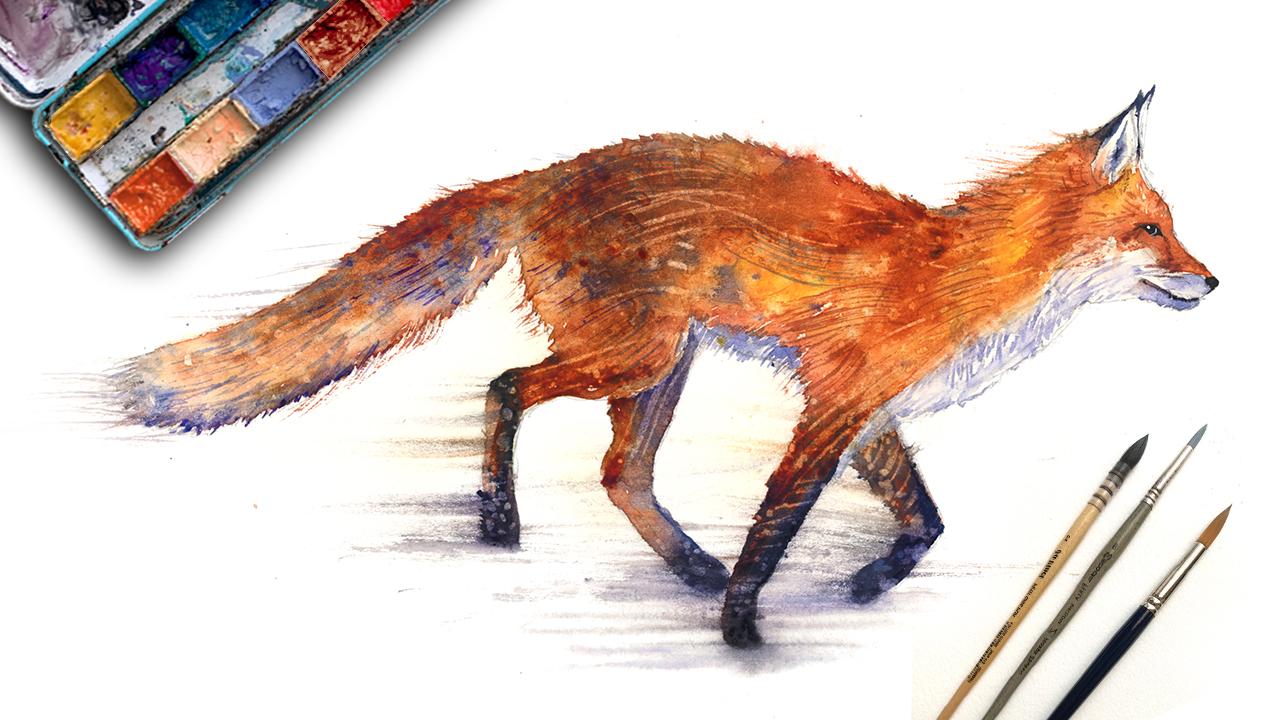
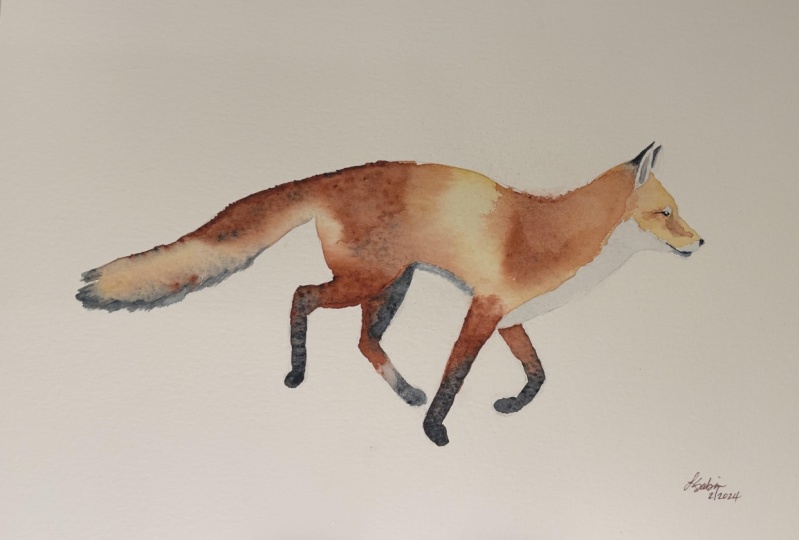
to my Skillshare class. For this class I'll be showing you how I
paint a running fox. Whether you are new to watercolor or already
have some experience, you'll be able to follow
along at your own pace and learn the most essential
watercolor techniques. Join me with this fun
painting as we explore exciting and expressive
ways to use watercolor. I've been a
professional watercolor artist for many years now, exploring many different
subjects from wildlife and portraits to cityscapes
and countryside scenes. I've taken part in many
worldwide exhibitions and been lucky enough to win awards from well-respected
organizations such as Winsor & Newton, the International
Watercolor Society, the Masters of
Watercolor Alliance, and the SAA Artist
of the Year award. I also have collectors that by my paintings around the world. Watercolor can be
intimidating for beginners so my aim is to allow you to relax and have fun learning this
medium step-by-step. Hopefully, by the end you'll surprise yourself
with a nice painting. If this class feels too
intimidating or too simple, please check my other
classes as I have them available
across all levels. My approach to
watercolor starts off loose and expressive
with no fear of making mistakes
because we're just creating exciting textures
for the underlayer. Then as the painting goes on, we'll add more details, bringing the painting to
life and making it pop. I try to simplify
complicated subjects into easier shapes that
encourages playfulness. I've chosen this
running fox because of all the movement and
character in it. All this potential allows for loose and expressive brush marks with no fear of mistakes. With what you'll
learn in this class, you can take forward into
painting many other things. The same principles apply
to any subject you want to paint so you're welcome to use this approach with any
reference you have. When you enroll in my class, I'll give you the
high resolution image of my painting to
use as a guide. Today's focus is about painting rather than drawing so I have included templates you
can use to help you sketch out the drawing
before you paint. I'll also include
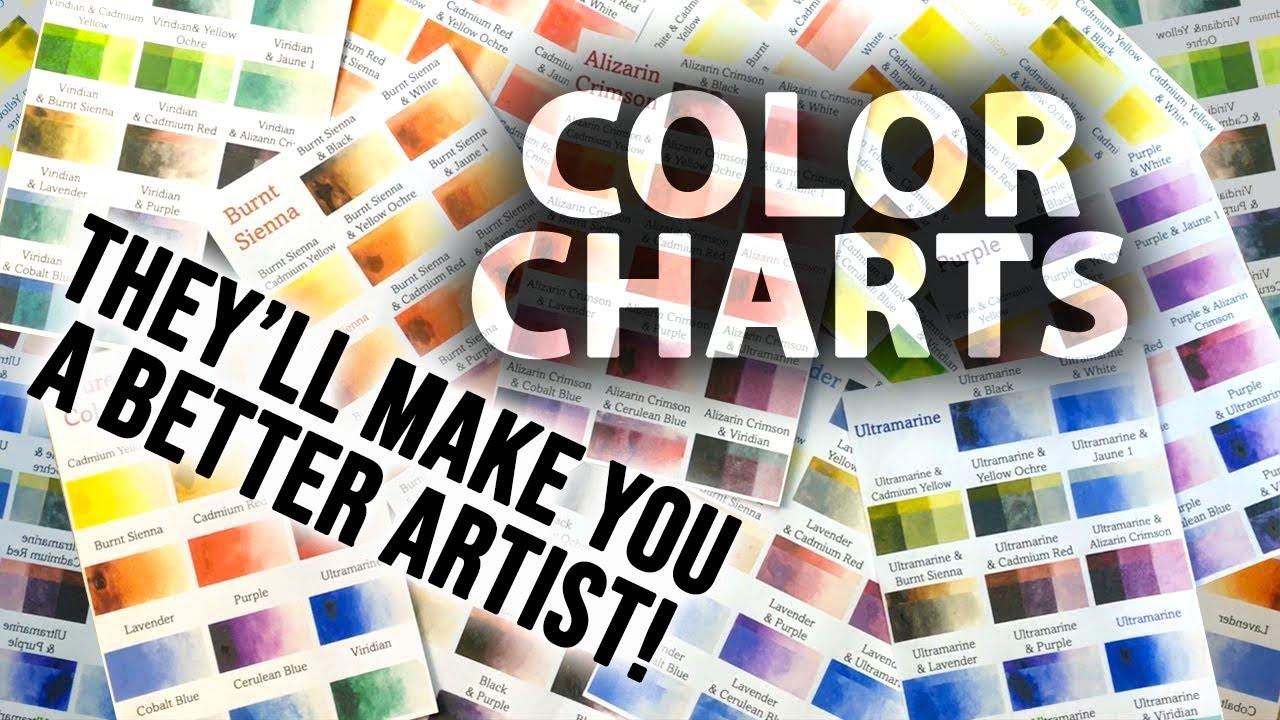
my color charts, which are an invaluable tool when it comes to choosing
and mixing colors. Throughout this class I'll be sharing plenty of
tips and tricks. I'll show you how to use
mistakes to your own advantage, taking the stress out of
painting and having fun. I'll explain which
supplies I'll be using so you can
follow along exactly. I'll also cover how to choose
and mix harmonious colors. I'll be splitting
everything up into short videos so it's
easier to take in. You can also pause at any moment if you want
to take more time. If you have any
questions you can post them in the discussion
thread down below. I'll be sure to read and respond to everything you guys post. Don't forget to follow
me on Skillshare by clicking the Follow
button at the top. This means you'll
be the first to know when I launch a new class, post giveaways, or just have an interesting announcement
to share with my students. You can also follow me on Instagram to see
my latest works. If you'd like to create
your own expressive work of art all whilst learning fun and exciting
watercolor techniques, please click "Enroll"
as I'd love to have you in my class.
Now let's begin.
2. Your Class Project: First of all, thank you so much for enrolling in my class. I really do appreciate it. We're going to learn a lot about watercolor using a fun,
easy-going approach. As seen in the
introduction video, today we're going
to paint a fox. I think it's a great subject for painting because
they're so majestic. We'll have opportunity to
use bright vivid colors, as well as experiment with different textures
and techniques. The style we're
painting in today, doesn't rely on a heavily
detailed drawing, which means there's less
stress and it gives us more freedom to express and
explore new techniques. This means you'll learn more and end up with a
better painting. You can choose to paint as loose or as realistic
as you want, depending on your level. You're welcome to copy
my drawing and follow it exact or experiment
with your own. I will put my painting in
the resource section so you can use it as a reference
throughout the process. There's also a
template you can use to trace and transfer
it onto your paper. Don't feel guilty
about tracing when using it as a guide for
learning how to paint. It's important to
have the underdrawing correct so that it doesn't inhibit your ability to practice and learn the watercolor
medium itself. Whichever way you
use this class, it would be great
to see the outcome and the paintings you
create in this class. I'd love to give you feedback, so please take a
photo afterwards and share it in the student
project gallery. You can find the gallery under the same Project
& Resources tab. On the right, you'll
see a green button that says Create Project. Tap that. And once you're there, you'll
have the option to upload a cover photo and a title and
write a little description. I would love to hear about your process and what you
learned along the way. Once your project is uploaded, it will appear in the
student's project gallery. You can view other projects
here and I'd highly encourage you to like and
comment on each other's work. We put so much time and effort into creating
our paintings. Why not share it with
the world and help support each other
along the way? Now that you have a good
idea of this class, let's get stuck into it, starting with the equipment
and materials I'll be using.
3. Materials & Supplies: Let's go over the materials and supplies you'll need
to follow along. We'll start with
the colors I use. Unlike most of the materials
we'll be using today, it's a lot to do
with preference. I have 12 stable colors in my palette that I
fill up from tubes. They are cadmium yellow, yellow ocher, burnt sienna, cadmium red, alizarin crimson, ultramarine blue, cobalt
blue, cerulean blue, lavender, purple, viridian,
black or neutral tint. At the end of the
painting, I often use white gouache for
tiny highlights. I don't use any
particular brand. These colors you can
get from any brand. Although I personally
use Daniel Smith, Winsor and Newton,
or Holbein paints. Let's move on to brushes. To keep things simple. In this painting, I'm only going to use a small
selection of brushes. First is this mop brush. Mop brushes are good for broad brushstrokes and filling in larger areas or washes, but they also have a tip
for some smaller details, so they're one of my
favorite types of brushes. Next is this Escoda Perla brush. I use various sizes, but for this painting, I'll use size 8. These brushes allow for
more precision because they have a finer tip and
last quite a long time. For even more precision when painting final touches
or highlights, for example, I use a
synthetic size 0 brush. All brands have them and
they're super cheap. This here is a solid
brush or a rigger brush. It's quite long, but thin. It's only used for
very small details, much like the size 0 brushes, but it holds more
water and pigment, saving time and
effort refilling. The only drawback is it's more difficult to control
as it's more flimsy. That's it for brushes.
You're, of course, welcome to use your
own favorites as well. Onto paper. The better
quality your paper is, the easier it will be to paint. Cheap paper crinkles easily
and is very unforgiving, not allowing you to
rework mistakes. Good-quality paper, however,
such as cotton base paper, not only allows you to rework mistakes over multiple times, but because the pigment
reacts much better on it, the chances of
mistakes are a lot lower and you'll more likely
create better paintings. I use arches because it's what's available
in my local art shop. Next, some various materials that will
come in very handy. A water spray is
absolutely essential. By using this, it
gives you more time to paint the areas you
want before it dries. Also, it allows you to
reactivate the paint if you want to add smooth
lines or remove some paint. Lastly, masking tape. This, of course, is just to
hold the paper still onto the surface to stop it from sliding around whilst we paint. That's everything you
need to paint along.
4. The Drawing Stage: The best thing to
do with a drawing I find is to start off light with a 4B pencil. Holding the pencil like this is how I usually do
it because it's more comfortable that way and
just very softly can, you barely see the
lines to begin with, just filling out this area, the rough area, the space
where the fox will be. Doesn't matter if it's
incorrect at this stage. I can already see errors
in mine. That's okay. We're just trying to be
loose at the moment. Just trying to feel the flow. Amazingly soft. I'm using this pencil on its side because it's
easier to rub out that way. Because these lines
will be rubbed out. We're just trying to
fill in the space. My eye is looking at
the different shapes, where the triangles are, where the angles are, seeing how everything
relates to each other. Then when you feel like
everything is roughly in place, then you can change your grip so that you got the
point of the pencil. Now you can go in and start adding a few
more of the details. When drawing for a painting, it's a different state
of mind to when you're drawing just for the sake
of a pencil drawing, for its own means to an end. When I'm drawing for a painting, I'm aware of where all the
pigment and colors will be and the light and dark
because my style of watercolor painting
involves a thick pigment and then allowing the water
to move the pigment around. I need to make
clean distinctions where the pigment goes and where to leave and preserve
the white of the paper. Now this isn't the easiest
pose, a running fox. But it's good exercise. If you're not happy with it, you're more than welcome to use the template I've included
in the Resource section. There's a white area here
that I'm just mapping out. This section will be white. That's why I've
created that line, implying the edge
of the fur here. Change back to this pencil, the mechanical pencil
with a fine tip. Again, I'm blocking out
sections which will divide the colors when it
comes to painting the pigment little areas
where there's white. Now, before I paint, I'm just going to take
a bit of time just to rub away some of the previous underlying
pencil marks just so that it's nice and tidy for when it comes to paint.
5. Starting The Painting: When I was drawing this out, I was keeping an eye on where the darkest areas
are, like the legs, and the tips of the ears, and where the lightest parts are like the white
area around here. I draw those sections out or outline them
at least just so that I'm aware of where
these sections are because the first step is
to add the darkest pigment. As you can see, before we start, I just wanted to show you my
palette which as you can see is very messy because I haven't cleaned
it since last time. But there will be some colors
that we use from here. I thought it was bit pointless cleaning it and that's
very often the case. A lot of the colors I
reuse because I mixed them to make my own grays and there's quite a few
grays in this painting. When you want to paint
a dark area such as the legs instead
of just using black, you can mix all the colors
together to create your own more organic gray so that way. That's what we're
going to do here, but I'll describe what
I'm mixing anyway. Even if we use some of these
colors like this orange, as it is a fox. That's really just
this red there, a bit of yellow ocher, and we'll mix it ourselves. I'll explain it even though I will reuse some of my colors. I'll explain how to
mix them yourself. Going to the drawing just
before we do the first step. I just wanted to
show you how I've marked out or outlined some of the darkest areas that we're
going to fill in first. The tips of the ears, the legs, and also on the other side, I've marked out the light areas where the white parts are. This little gap there that
I've closed off just as a guide for when I paint not
to cross over that line. Like I said, the first step
is just used pure pigment. I just recently squeezed out fresh pigment into my patterns here. It's straight
out of the tube. That's how the consistency that you want it for this stage. Don't get scared
if it's too thick. Just roughly fill in as the beauty about this
thick pigment stays, you didn't even have to be
that accurate as long as it's within the lines it'll work because we're allowing the
watercolor later on to merge and mix around and
create all those lovely, elusive textures that are always so inviting
about watercolor. This leg here is the
most prominent dark. I'm really going to paste
on the thick black here. When something's a complete
solid black like this, you may as well just use black. Often I try and steer
away from using black if I'm mixing it with another color because there's more exciting ways to
get a dark pigment. But if it's pure black and I
think it's perfectly fine. If you look at my color charts, you can see that a lot of the mixed colors
look like black. If you mix the screen with
this red, you'd get a black. If you mix this ultramarine
blue with this burnt sienna, you'd get virtually a black. That's one of the ways that
color theory can be useful.
6. Adding Thick Pigment: That's the black stage done. I think I'm going to move
to this pure burnt sienna, not mixing it with anything yet. I see there's a bit of a dark
streak there on the photo, I'm just going to
put that in there. Again being careful not to cross over into this area
because that's where it's going
to be quite white, then I can see this
area is fairly dark and can't see why I shouldn't
put something there. Because even though we're using thick pigment
at the moment, when we add the water
we can really rub at it and it'll loosen up and it
won't be so strong anymore. If we wanted to, we could completely get
rid of that pigment if we rubbed it away with
water and then use a tissue. As long as it doesn't dry when it is more diluted it
should be quite workable, and also depends on the
paper that you use as well. When I was learning in my early stages
having cheap paper, it can be very difficult to work with because
it doesn't give you much flexibility and even
as the watercolor dries, it can create quite ugly
results even if you're doing exactly the same thing
you'd do with good paper, it just doesn't work
out for some reason. That's not saying
that every time you paint on good paper will
be a masterpiece but it's all about giving yourself the best opportunity
for a good outcome. Setting everything up, good paper, good brushes. You can see how randomly I'm
just dabbing this down it really doesn't matter
at this stage, it's just about adding
the thick pigment. We can control it
a bit later and manipulate it to how we
want it in the next stage. This is the easiest
stage at the moment. Now I'm going to look at the complimentary color
of this burnt sienna. Burnt sienna is a
dark orange and the complimentary
color of orange is blue so I'm going to
take this cobalt blue. I'm just going to mix it in
here. There's a little bit of green there, it
doesn't matter. In fact, that might be
a nice little touch, but it's really not
that significant so that's why I didn't bother cleaning it because it doesn't
make much of a difference. I think I might expect
a purple in that, is purple the same here. Bluish, purple, add a few dabs of this here
as pure pigment as well. Now as these mix together because they are complimentary, they'll gray each
other out so to speak. In the reference image, the fox's feet are
covered with snow. I think I'm going to
paint it all out. It's meant to be pure pigment but there's a
little bit too much water, so that's why it's
filled out a bit more. That should be okay. Can I get more of this
purple, a bit bluer, even at this stage we're
going to mark some hairs , some fur here. I want the pigment
to be thicker. There we go. Now that is this stage, done.
7. Mixing The Colours: To this part of the painting, we're going to create
a nice big wash that covers the majority of the fox. We're going to have to
mix a big pool of water of colored pigment
preparing for that wash. I'm just going to
use my spray to wet, reactivate the color
of my palette. Like I said, even
though this paint has already been mixed from a previous painting I did
is virtually this color. I can mix it here. It is
virtually the same as this orange-red mixed with some yellow. I think I
like that color more. We've got these two reds here. They are
virtually the same. Doesn't matter, there's
a slight difference, I was just showing
you how to mix them. I think I'll keep these. This is a nice
purple here that we can use to mix inside of that, I think those two
colors would go well. Then, we can add
this blue as well. I think that's enough to start.
8. Painting The Tail: A wolf. Before adding anything, I will just have a clean
brush full of water, fill in some of the areas
that I want activated, not yet touched
again, any pigment. I think this area starts off
a bit more yellow ocher. So this is going to be the
first touch. There it is. [NOISE] Clean my brush. Go in with the orange. Take it to the edge. Then when it comes to the
spiky bit at the end, I'm just going to rotate
the angle of my brush. Then I'm going to rotate
the angle of the brush down to my spiky down here. Then I'm going to activate these little bits of
pigment we put in before. A bit more yellow. Yeah. I'm just mixing it in, reactivating it and
rubbing away that pigment so it can spread out into it. Then I can move on up here. But we're rotating the angle of the brush to make use of it. Whether I want a
wide brush stroke, or a sharp spiky one. You can see how it's
all evaporated, well not evaporated
but reactivating it. Has broken up all the
particles and the pigment. It's like painting with numbers. It reminds me of those
coloring in books when I was a child where
you just used to add water and the colors
would magically appear. Then now while it's wet, I'm just picking up
some of this blue and purple just to do little dots. They will fade out into
a gray as they dry. I can do a bit more here too.
9. Extending The Wash: Then we can move on, we can allow that
to do its thing. That's all we needed to do
there for the time being. We can keep an eye on it to see if there's any corrections, but we don't need
to overwork it. Has pure yellow ocher. If your brushstroke had too much pigment
or too much water, you can just clean your
brush and draw it out, you don't need to pick
it back up again, you can just spread it out. I'm brushing all the way over
here, reactivating it all. I'm always looking back where I've been because as it dries, depending on the period
of its drying stage, you can get different effects. I'll be applying more
pigment as it dries. Remembering at this
stage keeping that white area protected,
preserving those whites. Now it's drawing a bit up there, I'm going to add a
bit more orange. Stabbing, just letting
pigment fall from my brush onto there. A bit more up there. A strong brush right there, stuck up that area. With this dark section here, I'm not going to pick up. I'm not going to
agitate the pigment as much as the rest because black is a very strong color and I
don't want it to wash out, it doesn't need
much to reactivate. I find the less you
interfere with it, or at least the more you're able to allow
it to do its thing, the stronger the painting will be because you are allowing the watercolor to create
these lovely effects, and the more you interfere, the more of those
effects get lost. They lose their magic somehow. The more you paint, the more you become aware of the different timings
of how long it dries. It also depends on what
paper you're using. The drawing factors
change depending on which paper you use. Once you find the
paper that you like, just stick with that
for the time being until you get the gist of it. I'm going to go back there now, I'm going to go again
with a very thick pigment because now that
it's a lot more dry, I'm not too worried
about it spilling out. I can really drop some thick
pigment in there and it will just melt a bit
more as it dries.
10. Painting The Legs: I'm going to flick a
bit of water on there. Quite a few nice
magical effects. Then I can even call this
lavender here from Holbein. I'm going to drop some
of this in a splat, a tiny bit, few drops. Then the edge is
quite dry there. It's not completely dry, but it's enough to
blend it out a bit. Keep a smooth edge. It's nice to, everything in painting you should
have in contrast, so you should have
sharp edges like this, and then soft edges. Time to plan this area out, purple and blue here
for this under bit. It can disappear about that. He's a bit dark here. I'll go back and add a
bit more black there. Every time it gets close
to drying, every time. But when I want to
create more texture, when it gets close to drying, I add a few more dots. The more is that you do that more texture that there'll be. [NOISE] What we've done here, at least I've forgotten
about it and it's dried. I don't want that
hard edge there, so I'm going to re-wet it
and try and smooth it out. It shouldn't be a problem.
Do that here too, which means these
bits can connect. Try and leave those tiny little white marks
there because they had this level of sharpness that just even though you
don't notice it, it does something
appealing to the mind. Just add this level of detail that affects the way you see it. I'm going to fill this
area with a bit of blue. Its a bit too sharp of the blue. I'm going to go back in with this orange and that
will balance out a bit. Because like I said,
the blue and orange together will create a gray. If anything's too
blue and orange, and likewise with any
complimentary color, add its complement and
it won't be as vibrant. Of course, black is
quite difficult to judge because when they're wet
they look very dark indeed. They look darker than they
are when they actually dry. They'll dry much lighter. We're going to get my
cadmium yellow here, make it very watery. I haven't got much
space on my palette, but I want it to be pure yellow. I'm going to make sure
my brush is very wet. Let's flick pure
yellow on there. We'll pick up those spots.
11. Finishing The First Wash: I can move up here, add more of that yellow, it's more of a yellow,
orange up here. When it dries, it creates
some nice effects. See which areas are
drying and I can mix them into the areas
that are already wet, create some nice
dynamic textures. Softer here was the transition. I'm going to wet
this area first, dry off my brush completely and try and integrate it a bit. My yellow is starting to dry a bit too quickly. I'm going to spray it a bit. Its a bit too red, some yellow there, drop in some pigment there. I can see which
areas a bit darker. I'm going to add more pigment in there because
it's darker there. When it's still wet, it's
difficult to get the pigment to drop on to the paper. You just have to
rotate your brush a bit and just paste it on the pool of water here. You can see my papers crinkle, but if you're just doing it
for an exercise, it's okay. You don't need to
worry about it, will flatten out once it's dry. Pupil Bode plats there, pick up these static because
I don't want them drying. Now, I'm just going
to have faith in watercolor and let
it dry on its own. I will use a hairdryer
to speed up, but I'm not going to
touch it anymore. I'm not going to interfere
with it because it might lose some of its
magic If I do that. We can always edit
it afterwards, but to maintain a lot of
the spirit of watercolor, I'm just going to let it do
its own thing while it dries. I used the hairdryer for a bit. While it's drying, I am going to splatter
few bits of water, then back with a hairdryer.
12. Adding The Fur: Try again and we can go back
in and clean it all up. We can see what parts we don't like from the
randomness that we just did. Of course this will be different depending on your painting. I, for example, have
these blue dots that I'm not too keen on, so I'm just going to
interfere with those a bit. Turn them into some fur. I've got this nice brush here, this Chinese calligraphy
brush that I use. What I do is I fan it out. Get a bit of thick
pigment in there. It has this kind of fur effect. Here, do with some orange. Turn the other way. Bring
out some fur that way. [NOISE] That brushed
away for the time being. Now I'm going to try and do some details once under there. I think blue will be nice, I'll make some blue here. This is basically,
by the looks of it, it's a bit of cerulean blue mixed with a
tiny bit of black. I'm mixing some purple in there. Make sure there's enough water, but not too much, enough
to spread it out. I paint up to the orange. Again, changing
the angle whenever I want to get that
tip of the brush. Because this brush has
a bit more control, but it's only one single tip. When we use this brush, we can fan it out
and create a lot of fur with one
single brushstroke. But there's less
control with that one. I'm painting quite small today, as you can see, I usually
paint almost a three size. I mess up this fur a bit as it's drying so that it's not so sharp. [NOISE] I might use this brush again, fanning it out a bit. It's pure water. I'm just crisscrossing just to
blend it in a bit.
13. More Fur Textures: Go back to this brush again for the details inside the ears. That black again, just the tip on the other side. These parts I've seen
need a lot of finesse. There's not many
parts like that, but the tiny little
parts that need detail, just hold it together. Few little strokes of
detail here and there, allow the craziness to work. Because if you look
down at the details, this is very abstract. Now I'm going to use
the hairdryer just to, actually not yet. Find out this brush. I feel like I wanted to
finner out that brush. A few more strokes here. These strokes help
the flow as well. Now I'm going to use the
hairdryer to make sure it's all dry before doing a
few more details. Just realized I completely
missed this leg. That leg, more burnt
sienna actually. Now I'm mixing
some yellow ocher. It's darker than that, but we're going to use some
of this black to darken that. A bit more water actually. Dark blue here. This lavender here is very opaque, meaning its pigment can
go on top, without it. You can overlap. Pigment
can go on top and overlap. Let's dry that.
14. Motion Blur Effects: Now, on these legs and feet, I'm going to use plain water, just flick some droplets, then I'm going to wait about 20 seconds, and I'm going to do a very quick rub across like that. Maybe a few more here. I can actually add a bit more pigment
because I don't think there's enough
pigment there to allow for that effect. Let me do a bit there too. I think I'm going to do it a different way or a tail. I'm going to go back put some pigment on here. I'm going to use this brush. Use that brush to do it. I can do the same up here too. I need a bit more here. Reactivate that pigment. Rather than splatters this time, I'm just going to dab
some water on myself. Wait for a bit. There we go. [inaudible] even a bit more
pigment on that tissue, you can just, [NOISE] it gives it, obviously, a sense of movement. Now, get rid of that tissue so that
you don't accidentally use it to clean up
another spot with all that dirty pigment on it. Now, I'm going to go back
to this brush again. With pure water, I'm going to go over this time. Do some more rhythm, stroke, so to speak, and then rub it. Rub it. Now, I'm going back with my tiny brush just to fill in some small details. Paint out that eye pure black like a diamond shape, and then the nose, which is, again, pure black. Maybe we can now use a bit water. I'm just going to do with dry brush right there. It's a bit too strong. There we go. Do a few more , small hairs here.
15. Adding Highlights: Now we're going to get some pure white with my smallest brush. This is the most important part. Just on the left-hand
side, slightly off-center. It's going to do
a dot like that. Then on the other side, let's brush out like a chisel. Very thin line to the
outline of the eye. Even though I've just
overdone it there. What you can do to correct that to wait until
it's completely dry. Don't keep messing around
with it while it's wet. Then go back to it. Thin it out again. I think I'm happy with where the painting is at the moment. I think I'm going
to call that done. Let's sum up the painting.
16. Final Thoughts: Welcome back. Now the
painting is finished, let's have a close
up look at it. I hope you have a
painting of your own to look at as well. I hope you enjoyed
painting this fox. Don't be disheartened
if you found it challenging and unhappy
with the result. Some aspects were quite tricky. The good thing about
this method of painting is that it's
quite quick to do. You can try it again, carrying forward what
you've already learned. I try to encourage students to discover their own
interpretations, and everyone has a different
vision which should be explored as part of their
journey as an artist. Of course, when
trying new things there can be a bit
of uncertainty. But the magic of watercolor comes from it's
unpredictable nature. If you'd like feedback on your painting, I'd
love to give it. Or if you'd like any advice
related to watercolor, please share your painting in the student projects
gallery down below, and I'll be sure to respond. If you prefer, you can
share it on Instagram, tagging me @willelliston
as I would love to see it. Skillshare, also love
seeing my students' work. Tag them as well @Skillshare. After all the effort
we put into it, why not show it off? Remember, please click
the follow button up top so you can follow
me on Skillshare. This means you'll
get a notification. As soon as I publish
my next class, we'll have important announcements
like free giveaways. We're sharing some of
my best student artwork uploaded to the project gallery. Thank you so much for joining
me in this class today. Please leave a
comment down below in the class discussion
area if you have any questions or comments
about today's class. If you have any subject, wildlife or scene you'd
like me do a class on, by all means, let me know about it in the discussion
area as well. If you found this class useful, I'd really appreciate
getting your feedback on it. I hope you learned a lot and inspired to paint more
in it's glorious medium. Until next time, goodbye.
 Will Elliston, Award-Winning Watercolour Artist