Transcripts
1. Introduction: Presentations are powerful. They can persuade, educate, and inspire. But so often they don't do any of those things because they're boring. When Steve Jobs gave key nodes, they were events that help create cultural shifts. Ted Talks have become career defining moments for thought leaders like Simon Sinek and bring a brown. But even if you don't want to speak to large crowds, presenting is a powerful tool to have in your locker. Were all presenters now on video conferences, social media, perhaps you want to vlog or host a webinar, maybe pitch to investors, give a speech or just speak more confidently. Work presenting is influencing a tool to effect the change that you want to see. And in an age where people are constantly distracted, there's no greater sin than being boring. My name is Mark, and I'm on a mission to help people tell stories that matter. In this course, I will give you a practical framework for extracting the boring from your presentation is going to be less. Next slide, please, and more personality, clarity and creativity on boring your presentation.
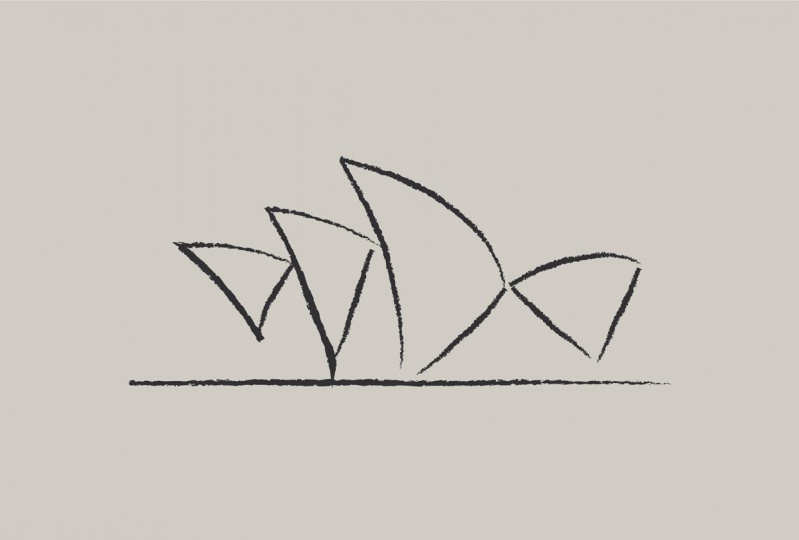
2. A Memorable Presentation: This is me outside Sydney Opera House, way back in 2005. And I know what you think in what is that hairstyle. Now, I have no excuse. Barbers were actually opened back then there was no lockdown. I look something between a Lego figure and the bass player in an indie band. Anyway, are going to focus on, now, are going to look at what's in the background. This incredible building. How did a 38 year-old unknown Danish architect named neon or soon when the competition to design this building against 232 or their entrance. Many of them famous architects of the time. It wasn't his plans which were very limited if the design was effectively on buildable and it continued to confound engineers for years. It wasn't his drawings, which are only preliminary sketches. Paul Arden says that it was his presentation. When presenting these plans, he referred to the building as a sale. Once the committee had the image of sales on the water, then no other entrant in the architectural competition stood a chance. He summed up his concept in one word, sale. It's genius. If you want your presentation to be memorable than have one visual point. We remember speeches that we can not just here, but that we can see. Think of Churchill's, we will fight them on the beaches or JFK's. We will go to the moon in this decade. They paint a picture in our mind. And if you can leave your audience with one striking visual image, that's something that they won't forget. This applies not only to political speeches or TED talks, but pitches, explainer videos, any kind of presentation. So don't give a talk on to you are clear what your one main pointers then work on planting that in the audience's mind with an image that they'll find hard to forget. And this image is the one that I want you to remember a loan nail to represent one visual point. That's what makes for a memorable presentation. So how do you get people to hear your point before they get bored? Well, that's what we're going to look at in the next few lessons.
3. Step 1: Dramatise: The best comedians are regaining goes with fantastical tales of epic adventures. Instead, they use storytelling skills to help us see what's funny about the everyday. If you don't want your talk to be bland, dramatize, use the tools of drama to bring life and color to your presentation. Humor is one of these tools and it's one of the best ways to connect. But it can be tricky to get right. If you're not hilarious, then use simple tools like playful exaggeration while still being careful to speak truthfully. And no, I'm not going to attempt to joke right now in this context, it's bound to fail. I can see you with your judging eyes. Let's move on to another technique and other community approach is to be self-deprecating in a charming, not pathetic way. If you go too far, you'll come off as a loser. But usually it's always safer to make fun of yourself rather than others. In this context, for example, I could talk about something 41 of my kids said or reference my thick northern accent. Yes. Not everybody from England sounds like the Queen. But talking about personal pain is too intimate for a class named on boring your presentation. It's not a political rally or a hard-hitting stage play. If you want your audience to be at ease, keep it light. Dramatize your content to remove the unnecessary so you can emphasize what's most important. Diagrams are a good example of this. I see so many complicated flowcharts and technical graphs that smell make it into presentations. I actually have a degree in mathematics and I still struggle to understand some of this stuff. The most boring presentations of all are the ones where people simply read their slides or take us through a series of complex data. One juicy stat is usually enough to make your point. Unless you are a scientific academic conference, you don't need it. If your data is really mission critical, then send it to be reviewed later. Maybe could print it out, or you could make it available on your website for the audience to go and look up. Don't get lost in the weeds. Tellers a compelling story. Stories have a beginning, middle, and end. Introduce some tension. Use your introduction to ask a question that you don't resolve until later. Identify a problem that's really important to your audience. Something that's going to get them to lean in and want to listen, want to hear the answer, wants to hear the resolution. That's what great stories do. That's what great film does. It keeps you intrigued. It keeps you watching until the end. So set that up and then resolve it later. One final tip in this section to help make your presentations more dramatic exit that will help you address the most common criticism of boring presenters. They were monotone, droning on in a boring voice. Monotone means one tone, so you can be duotone, you can be tritone. Okay, let's make this a little bit more practical. The cure for monotone is to plan and practice using range. What does that mean? Well, imagine your energy levels range from one to ten on the dial. At times, you'll crank that up and give loads of energy, and other times you'll bring it right down. So think about the tools you have at your disposal in your body language and your voice, the speed at which you speak, There's the volume, there's the pitch. You can use these things as well as your gestures to convey different energy levels that are appropriate to the moment that your are in your presentation. Now, be careful really the trick of doing this well is to make it natural, to make it your personnel age just a little bit bigger, a little bit more dramatic, because it's a presentation. What you don't want to do is allow it to become an affectation where it just feels fake and inauthentic. You don't want to do the sing-songy voice where your pitch goes up and then it goes down and you sound like Mary Poppins. That's a bit odd. And you don't wanna do that thing where people end every sentence up and the pitch goes higher. And it always sounds like a question and they sound like a complete idiot. Please don't be that guy. So bring some range into your voice and a good way to naturally do that. It's just think about your energy increasing and going faster and then think about things slowing down and they might naturally move lower as they go slower. So Bring it naturally and bring it appropriate to the medium. A great example of this is actor's actor in film on the big screen has a camera on them, perhaps on their face. And it's there in the movie theater, in the cinema. And we can see little changes in their facial expressions that convey how their mood is change in reacting in the scene. But if you're on the back row of a theater watching a stage play, you're not going to notice that. So a stage actor has to use more Bali position and bigger gestures and bigger range in their voice to convey emotion. So think about the media you are presented in. If you present in a stadium, can be big, your energy can go to 10 at points. But if you're presenting in a boardroom to the directors, they are going to be freaked out and wonder how many cups of coffee you've had if you're on 10. So dial it down a bit and maybe don't go down to one or think you fall asleep. So the range tends to be a bit lower than more intimate scenario you're in. If you're presenting to a camera, you're presenting to a smaller audience, you get into a bigger audience or biggest stage. You can get away with it a little bit more range. Range will help you fix your monotone. One little trick is perhaps in the margin of your notes, you could make some numbers, some notes on your range. And we're gonna start fairly big, but where I can go higher and then I'm going to bring my range down to an intimate level as I get a bit more personal. And then it's gonna come up as I try and be a bit more inspirational. So maybe in your notes it says, you know, 67482. I don't know, but use range, that is the cure for monotone. And think about your energy level change in during the presentation and not staying at the same level.
4. Step 2: Atomise: When you overwhelm your audience, should give them the opportunity to checkout, to keep them focused, atomize, break it up into small units, and deliver one idea at a time. So how do you know when you've successfully atomize? Well, take your transcript and change it into bullet points, and then look at it. Does your argument build sequentially or do you keep going back and forth? Are you taking the audience on a journey step by step? The same applies to you accompanying slide presentation. If you have one, Do you only have one idea per slide? If not, edit until you do with this few words on each slide as possible. Consider the Sydney Opera House example again. Let's use some artistic license and imagine that your not soon as presenting passionately in a thick Danish action with his accompanying PowerPoint slides. Now, imagine that this is the slide that he has behind him. What will the audience before focusing on? Who knows? What will they remember? Probably nothing. Now imagine that this is his backdrop. This is impossible to forget. If you absolutely have to include multiple elements on one slide because of how they interact with each other. Or perhaps there's some instructions for the audience to follow. Then first, give each one its own moment, explain each one clearly, and then bring them together. Explaining, only hear how they interact and why that is significant. Quibi rhetoric. Sure. Although we're focusing on one idea at a time, that doesn't mean we should labor each point. In fact, it can help you to be concise because you know exactly what you're supposed to be communicating at that moment. So do it and then move on. And if you know, if your audience getting bored, hit them with the next point, grab their attention. Once again.
5. Step 3: Personalise: The next point is irrational and the mathematician in me hates it, but it's true. Individual stories are more persuasive than anonymous facts. Carefully selected data can lend credibility to your argument bought. It's the human stories that people remember. So start with yourself. It can be scary to put yourself out there, but people connect with people, allow your personality to permeate the presentation. Now, obviously there are boundaries. Stand-up comedy allows more license than a shareholders meeting our audiences human, so speak to them like they're humans, not like a corporate robot. It's been said that the biggest barrier to communication is predictability. I once opened our morning keynote speech with a guitar solo because it was unexpected. Describing it to you now it sounds really cheesy, but I promise you it was tongue-in-cheek. But you can do a lot of things that I can't do and you will connect with people better than I ever could if you'll share a little bit of your personality. So use what you have and make it serve the message without distracting from the message and without being self-indulgent. Be honest about relative weaknesses, but don't keep apologizing. For example, I've only been knitting for 12 months, but here are some things that I wish I knew when I started is a great introduction. What you now don't need to do all the way through is say, Oh sorry. I've only been doing this for a year. I'm not sure if this is quiet rye or made a mistake or I'm sure you guys now to do this a lot better than me. The chromophores week at that point. So be humble. But that doesn't mean apologizing all the way through. You need confidence, but at the same time, modesty about positive traits and achievements. I remember I was once sitting in rainy Manchester, listening to a speaker from Cape Town, South Africa. And he went on and on about how it's always sunny where he lives and he goes surfing every day. And even about how beautiful his wife was. And you could feel the audience around me turning off. This was not a good fit for British culture. Although of course, because most of us were British, we'll just sat there politely until he'd finished. But we checked out. He would've been better off staying in South Africa. He didn't connect with us, he didn't get his point across. So that balance between humility and modesty is really important. So let's just be good people. Hey, let that come across naturally. We don't want to hear bragging, but we do want to hear something a little weird. Show you weird, not in a way that makes people uncomfortable, but just something of your uniqueness. This is another opportunity to dramatize the every day where you come from, for example, is unremarkable to you, but exotic to someone else. Where we live here in the north of England, about, about five minutes walk down the road is the ruins of a system monastery. This place is, I don't know, like 600 years old and my three sons go down there and run around and it's like their backyard. But want to walk through there with my wife who grew up in the stays in the Midwest, in the flatlands of strip malls and chain restaurants and interstates. It's incredibly exotic and her being there helps us to it opens us up to the wonder in that space. But similarly, wherever you're from is different to me. So not just where you're from, but the things that you're interested in, the things about your personality, the things that make you, you as something that you can bring to any kind of presentation, even those that are supposed to be a little bit corporate. So tell human stories and bringing your personality to the party with confidence and humility.
6. Next Steps: What I've learned through giving hundreds of talks, speeches, presentations, seminars, and coaching hundreds of people to do the same is that if you want to make your presentation more memorable, leave the audience with one visual point. And if you want to make your presentation more engaging than dramatize, atomize, and personalize. Keep editing your script, you know, Sania slide deck until it fits the bill. Now I've know it here on Skillshare that some of the classes like watercolors and illustration and have a lot of class projects and those about public speaking. Not so much. So I want your students to get involved. Let us change that together. So I'm going to give you something that's meaningful but definitely achievable to do. I simply want you to share your one visual point. And there's some notes here down on the class projects page section, a little document that will tell you what format to do that in completing the class project is a meaningful next step which will help what you've learned here to stick. I will jump in there and provide feedback and encourage you to jump in and give feedback to your fellow students. Let's be a support if tribe helping each other. It would be great if you could follow me here because I'm sure you're aware there is so much more that can be said about public speaking. So if you want to see future classes, follow me on here and family all over the place online. Just type in my name and I'd love to connect with you. And finally, let me say, thank you. You are committing to rid the world of boring presentations. And that makes you my hero. And presenting truly is a superpower. And let me ask you for one more thing. Could you take a moment right now to rate and review this class that is a key factor in helping people discover it. And by doing so, we're reading the world from even more boring presentations. Appreciate your partnership and how we can hang out soon.
 Matt Brunton, Helping you tell stories that matter.