Transcripts
1. Welcome!: You'd love to make more
time for creativity and use it as a way to feel more present and
connected to yourself, but you just really
struggle to fit it into everyday life,
then this is for you. In this beginner
friendly tutorial, I'm going to guide you through three mindful drawing activities that are small
enough to fit into those kind of tiny
pockets of time in your day using materials that are small enough to carry
with you in your pocket. These creative practices can be done anywhere. It could be on the bus or during your lunch break or
waiting in the car. Basically, wherever you
might find yourself, naturally just reaching
for your phone. Through these tiny
creative moments, you'll learn how drawing
can help you slow down, notice more, and reconnect with your creativity
without needing lots of time, space, or materials. All you need is a
small sketchbook, ideally something small enough that you can carry
in your pocket, a pen and a few spare minutes. If we haven't met, Hi, I'm Mel. I'm an artist and educator, and I help people connect with their creativity in
ways that feel joyful, personal, and importantly
realistic for normal life. Grab your supplies, get
comfortable, and let's begin.
2. Exercise 1: Build a Doodle Library: We're going to start
with an exercise I call a Doodle Library. So a Doodle Library is just very simply a collection
of simple marks, shapes, textures and
patterns that you can build up over time and return
to whenever you draw. The idea is really simple. Instead of starting from
a blank page every time, you are gradually building up this kind of bank of shapes and textures and ideas so that each time you have a
few moments to spare, you're not just having to think of something
from scratch, but you've already got shapes
that you can work with. So to begin, open your
sketchbook and just start exploring
small easy marks. There's no right or
wrong way to do this. You might try things like
simple geometric shapes, dots, lines or other tiny marks. As you do this, I want you
to just really slow down and notice what is around you and
draw inspiration from it. Now, for example,
I could just pick up something like I've
got some pens here. So rather than just
thinking about a simple circle shape,
which I've already got, if I look at the end of my pen, I can see that there's a circle with a kind of small
rectangle joined to it. And actually, if you
start looking at everyday objects in
a kind of new way, you're just looking
for shapes here, you can actually start to
notice there's actually quite a lot in just very simple mundane
objects around you. So for example,
there's this kind of window in the pen lid, which has kind of got this sort of flared rectangle to it. And then there's this
also sort of tiered shape here that I might include. I can see the pen nib inside, so I might include
something like that. And I'm also kind of enjoying
the kind of curved shape. Of the sort of I don't know
what you call that bit, the metal bit of the pen. So just from this one, like, super simple objects, I found a few more shapes that I maybe wouldn't have
thought of before. So I've got a few other things. So, for example, I have
a few pens that have got sort of different ends that I might take
as inspiration. And remember, this is like I kind of think of it
as a visual brainstorm, so it doesn't need
to be realistic. You can simplify,
you can exaggerate. We're just using
our surroundings, things around us
to kind of inspire and help us to come up
with more and more shapes. This isn't about drawing
anything perfectly. It's about observing,
simplifying and collecting. Think of it as building
your own visual language, and at the same time, we're practicing mindfully
observing our surroundings, looking at things we
often overlook in a new way and using that as inspiration for
future drawings. So spend just a few minutes
filling up a page or two with these kinds of doodles and just taking inspiration
from things around you. Don't overthink it. You can come back to this page
as often as you like. It's actually a
really lovely way of recording around you. Whenever you take
this little book out with you and you
have a few moments, just whip it out and think, well, what shapes
can I see around me, and that is a really
lovely way of mindfully observing
your surroundings.
3. Exercise 2: Connect: This next exercise,
I'm going to give you a simple prompt, Connect. So you could choose to connect one or more than one shape
from your Doodle Library, and you could connect them
together either in a kind of random fashion or in
a more uniform way, whatever feels right for you, your shapes, and the
way that you draw. Now, you could try a
few small variations out first just to see
kind of what feels good. And then once you
land on something, then you could begin to
repeat it and expand it. If you're not really
sure where to start, just follow along with me, and then you'll
gradually get the idea, and you can apply it to your own shapes in your
own Doodle Library. So I really love these kind
of double circle shapes here. So I'm going to
start with those. That's my prompt. And so I'm going to just
start by keeping them plain. I might add those little
decorative bits later, and how I'm going to
connect them there's all sorts of different ways that you could
connect your shapes, but I'm just going to sort of organically connect them like this as if they're almost like molecules
connected together. So when I draw a third one, it will connect to both of them. One of the reasons I
think this works so well is that from a
mindful perspective, it's giving my brain just a little bit of work to do and something to think about, which keeps it here in the present moment and stops
it from wandering off. So this small sense of structure gently keeps me engaged
with what I'm doing. It's a really simple way of just nudging
your attention back into the present without
effort or pressure. Now, the lovely thing
about drawing in this way, especially when it's a kind of random kind of
composition like this, is that you can decide how
long you want to do it for and it can feel
relatively finished. So you could do something quite small on the
page and leave it like this or you could continue and you could fill the
whole sketchbook page. So visually, both approaches
work really well. I love the sort of organic
shape in the middle of a page, and I also love
having that kind of pattern filling a whole
page of a sketchbooks. They both look great. And
the other great thing about it is that once
you've kind of started, it's super easy to just put this down if you've
just run out of time and then come back to it in
another small pocket of time and just carry
on where you left off. So you can sort of
continue adding to it as your pattern
naturally grows. So it's because I'm having to connect these
shapes together. That's the thing that is keeping my mind really present and
engaged with what I'm doing. If I was just drawing
random circles on the page and they
weren't connected together, I don't know if it would
keep me as present. I think I'd probably start. My brain's very busy, and it wanders off and
thinks about all sorts and to do lists and
what's for dinner. And I just feel like the fact that I'm having
to think about how each of these is connecting
with the shapes near it is just giving me
enough to do to keep my mind active on the drawing and not thinking
about other things.
4. Exercise 3: Breathe: For this final exercise, the prompt is Breathe. So start by just going back to your Doodle Library and choosing one simple
shape or mark. It could be something that you enjoyed making
or something that feels interesting to
repeat or develop further. I recommend choosing something really simple to begin with, so not a shape that's got lots
of different parts to it. So for example, I'm going to
have a look on my page here. I'm going to choose one
of these kind of simple, sort of arc shapes that they
kind of morph into an oval. So that might happen or
it keep a flat bottom. And then I'm going to bring
that shape onto a new page. So what I want you to do is just repeat that
shape a few times. Now, as you do that, just bring your attention
to your breast. You're not trying to change it. You're just trying to
bring your awareness to how it feels to be breathing in and out
as you draw the shape. So what we're going to
begin to experiment with is trying to make our drawing
and our breath connect. Now, there are a few
different ways that we can try this depending
on your shape. So the first thing I'm going
to try is just slowing down my drawing to try and sync
it in tune with my breath. So for example, I'm going to draw one shape on an inhale
and one shape on an exhale. I could see how it feels
if I slow down even further and just draw one shape for a full
inhale and exhale. So just try practicing
that a few times. It might feel a bit strange
at first because it does take a little bit of
wrangling to try and get your drawing and your
breathing syncing up. And sometimes you
kind of need to adjust either the size of the shape that you're
drawing or the speed at which you're drawing
it to make that happen. Now, the last thing that we want is for you to get out of breath. So try not to kind of adjust your breathing or breathe more quickly or
anything like that. Just try and make the speed of your drawing sync
with your breathing. I'm noticing in my example of my shape that if I
actually take that straight edge out
and just simplify my shape into a
curved oval shape, it's actually
working much better. It feels like I'm able
to sink them more. So have a think about whether there's anything
that you could change about your shape that would
make it feel more natural and more fluid to go with your breath if you're just
tweaking it a little bit. So another approach
to this prompt and syncing your breathing with
your drawing is to have a think about the size
of your shape and also the speed at which you
feel comfortable drawing because sometimes it may
be that you can draw several shapes with an inhale
and several with an exhale. So for example, I'm going
to aim to draw three shapes quicker with an
inhale and three with an exhale and see how
that kind of feels. So for me, that
approach feels a bit more natural than slowing
my drawing right down. What we're trying to
do here is, again, it's trying to keep your mind
present with the drawing. Now, you'll probably
be aware of, you know, lots of traditional
mindfulness techniques. They encourage us to
focus on the breath. Now, I find that incredibly hard because my brain likes to just wander off
when I'm doing that. So I can do it
for, I don't know, 30 seconds or a minute, and then my brain
is somewhere else. Whereas if I have this kind of physical focus of drawing that I'm sinking in
tune with my breathing, it's really helpful to just
anchor my attention in my breath without it being too complicated or overthinking. And it's a really lovely way to encourage mindfulness
alongside drawing. So I'm just going to try
that a few more times to see if I can get into a
bit of a rhythm with it. I so once you hit on something that feels
like it works for you, whether it's slowing down
your drawing to sync it with your breath or repeating several shapes with an
inhale and with an exhale, just try working with that and repeat it for a
couple of minutes and just see how you feel. Just notice how your body feels. Can you feel yourself
relaxing, for example? Do you notice that you're naturally starting to slow down your breathing,
for example, that can be a really
interesting side effect of synching your drawing
with your breath, which actually can
lead to helping you to feel a bit
more calm as well. You're not trying to create
something finished here. You're just exploring what it feels like to draw in rhythm with your breath using something you've already made as
your starting point. So as with the
previous exercise, this is a fantastic, small, mindful drawing activity
that you can dip in and out of in those tiny pockets of time that you might
find in your day. Even just having
literally 2 minutes to spend on this can be such a great way to calm your mind and just reconnect
with your creativity.
5. Thank You!: I hope that you enjoyed these three tiny acts of mindful drawing
and that you might revisit them throughout
your week to help create small moments of
creativity and presence, even on busy days. If you enjoyed this
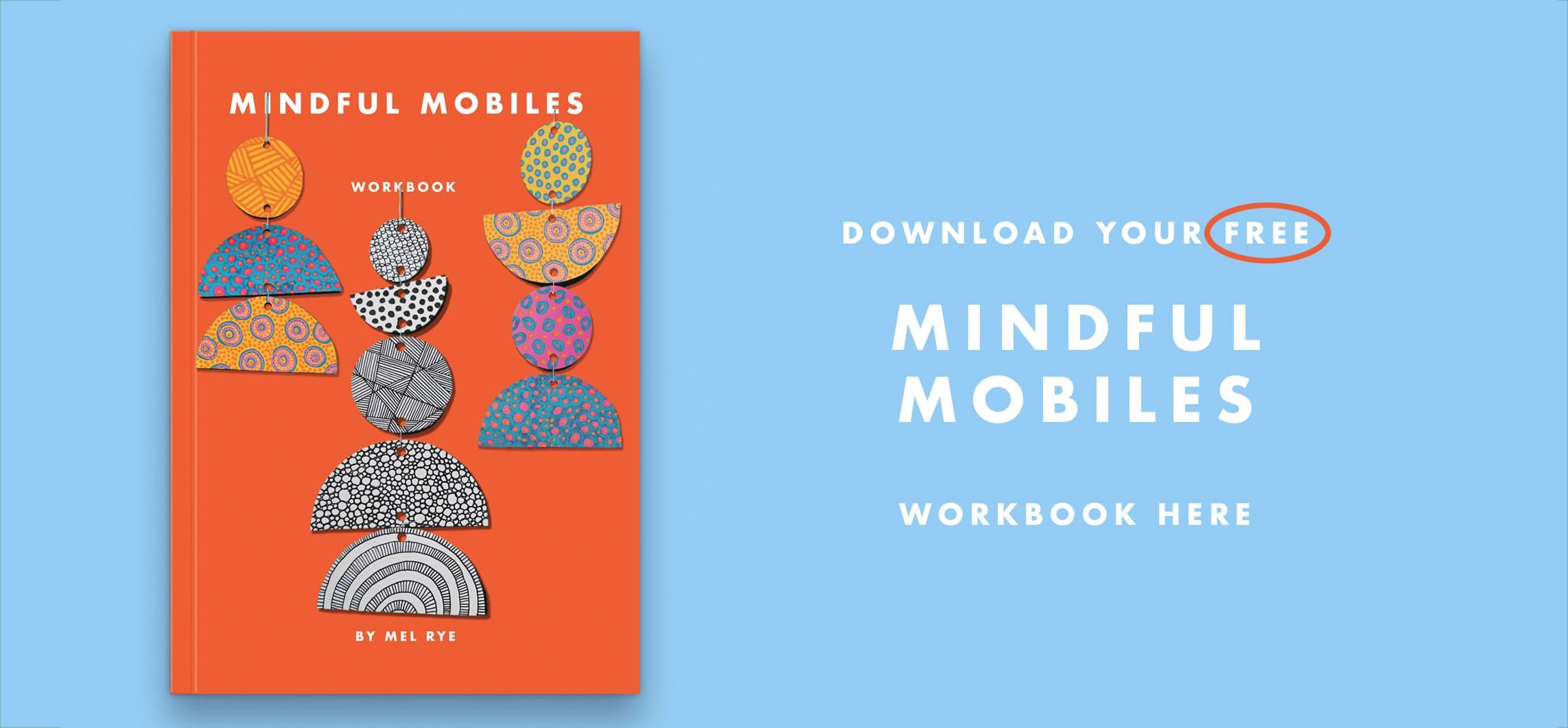
way of drawing, then I think you might love my free, mindful mobiles workbook. It's full of simple, arming pattern based drawing exercises that you
can use to unwind, practice mindfulness, and create your own beautiful
hanging work of art or just enjoy them as gentle sketchbook prompts
whenever you need one. If you would like a copy, you can grab it for
free at the Link below. Until next time, take care. Keep drawing, and I'll see
you soon. Bye for now.
 Mel Rye, ✎ Artist + Educator