The Art of Egg Tempera Part 1: Pigments, Egg Emulsion & Basic Painting Techniques | Alina Smolyansky | Skillshare

Playback Speed


1.0x


  • 0.5x
  • 0.75x
  • 1x (Normal)
  • 1.25x
  • 1.5x
  • 1.75x
  • 2x

The Art of Egg Tempera Part 1: Pigments, Egg Emulsion & Basic Painting Techniques

teacher avatar Alina Smolyansky, Artist & Instructor

Watch this class and thousands more

Get unlimited access to every class
Taught by industry leaders & working professionals
Topics include illustration, design, photography, and more

Watch this class and thousands more

Get unlimited access to every class
Taught by industry leaders & working professionals
Topics include illustration, design, photography, and more

Lessons in This Class

    • 1.

      Introduction

      1:20

    • 2.

      Pigments & Binders

      0:54

    • 3.

      Making Egg Yolk Emulsion

      1:12

    • 4.

      Painting Surfaces for Egg Tempera

      0:41

    • 5.

      Brushes for Egg Tempera

      1:22

    • 6.

      Mixing Egg Tempera Paint and Applying it Part 1 (Little Lake Technique)

      1:33

    • 7.

      Mixing Egg Tempera Paint and Applying it Part 2

      1:34

    • 8.

      Painting Lines (Paste Consistency)

      1:26

    • 9.

      In Conclusion

      0:33

  • --
  • Beginner level
  • Intermediate level
  • Advanced level
  • All levels

Community Generated

The level is determined by a majority opinion of students who have reviewed this class. The teacher's recommendation is shown until at least 5 student responses are collected.

576

Students

4

Projects

About This Class

Hello! 

Do you know what makes all the painting media similar? Be that watercolour, gouache, acrylic, oil, and even pastel and colouring pencils? – The pigment that gives its colour.

And do you know what makes them different? - The binding agent that holds pigments together.

The pigment is the universal ingredient of any paint. Pigments are substances that give paints their colour.  However, pigments are useless on their own. Ground powdered pigments have to be thoroughly mixed in some kind of binder or vehicle that will hold them together and make them stick to the painting surface.

It is the binder that imparts its qualities to the paint. Pigments mixed with diluted Gum Arabic become watercolours, and mixed with linseed oil – oils, and if we add pigments to melted beeswax – we will have encaustic paints.

But what if we mix pigments with egg yolk? We will get egg tempera paint, which is the topic of our class.

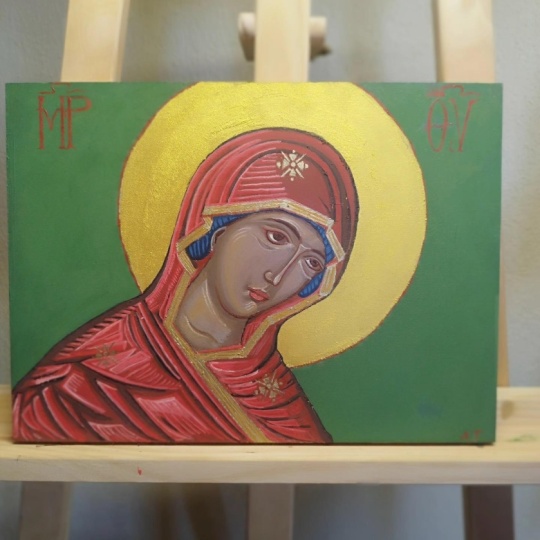
It is not documented when and who first discovered the adhesive property of the egg and started adding pigments into it. However, it is considered one of the oldest painting techniques. It is said to date back to Ancient Egypt, where artist tempered (temper, mix, modify from Italian) pigments with a variety of natural water-based binders, such as animal glue, casein and egg. However, egg tempera is known more than other kinds of tempera and was in constant use in most world cultures. Yet, it gradually gave way to oil painting during the Renaissance in Europe, but the beginning of the 20th century saw the revival of egg tempera.

If you want to travel with me into the fascinating land of tempera, the oldest known painting medium, that was used by Sandro Botticelli, Giovanni Bellini, and even Michelangelo and DaVinci, join me in the class.

In this first class, I will show how to make an egg-yolk emulsion and the basic brushstrokes, and you will be you will be able to start experimenting with egg emulsion and egg tempera painting right away. We will use these techniques in the subsequent classes for a variety of projects.

Enroll now!

My website: Let There Be Light Art

Meet Your Teacher

Teacher Profile Image

Alina Smolyansky

Artist & Instructor

Teacher

Hello! I am Alina, an egg tempera artist and art educator, based in Vancouver, Canada. Traditional egg tempera appeals to me for its simplicity, purity of colours and historic significance. My inspiration stems from various spiritual traditions, illuminated manuscripts and nature. I am also one of the few teachers of egg tempera painting and icon painting in North America.

I hold a BA in Professional Communication from Royal Roads University, as well as diplomas in Professional Writing and Architecture. My paintings are in private and public collections in Canada, United States, Germany, Great Britain, Australia, Thailand and Israel. 

I have been teaching private classes and workshops for five years and am excited about the idea of offering classes online. M... See full profile

Level: All Levels

Class Ratings

Expectations Met?
    Exceeded!
  • 0%
  • Yes
  • 0%
  • Somewhat
  • 0%
  • Not really
  • 0%

Why Join Skillshare?

Take award-winning Skillshare Original Classes

Each class has short lessons, hands-on projects

Your membership supports Skillshare teachers

Learn From Anywhere

Take classes on the go with the Skillshare app. Stream or download to watch on the plane, the subway, or wherever you learn best.

Transcripts

1. Introduction: Do you know what makes all this being similar? Figments. And what makes being deferred? Binding medium? In this class, you will learn about pains for the binding medium. As at York. Hello, I'm Alina, a full time artist and art instructor. I'm fascinated by engine, unless known painting methods I have been painting in the neck temper forward 10 years and teaching for six back temper is one of the oldest yet little known painting technique. It is fast drying, permanent, versatile and eco friendly. In this class, you will learn how to make egg emotions and mix it with pigments. What services and brushes are good and the basic brushstrokes. This class is for beginners. An experienced artist, I would like to try and your painting medium or use it in mixed media or blood as under painting for oils, the rate will masters leader. After taking this class, you will be able to experiment with AK temper right away I invite you to join me in the luminous land back temper and roll now and I will see in the classroom 2. Pigments & Binders : hello and welcome pigments and binders. The basic preventive paint. These pigments pigments are materials that get pains their color. But pigments are useless on the old. They have to be mixed in some kind of a binder that will hold them together and make them stick to the painting surface of his binding drives. Out pigments remain on the surface. Faymann themselves are not solar boiling water or other soldiers. Their tiny particles remain glued together in the binder. The more pigment particles are on the closer there are, the more intense the paint appear. To help her spread the paint thinners added water, the water based paint interpreting all based things. In this class, we will learn how to make acting para paint where the binding medium as a G O commotion. Thank you for watching. I will see you in the next video 3. Making Egg Yolk Emulsion: 4. Painting Surfaces for Egg Tempera : hello and welcome painted surfaces for temper. Traditionally so Edwin Panels. I used their gestures with it. Chuck and animal skin glue that's more an absorbent, more economical version. A plywood panels brown with a grieving gesture. I will see you these battles for my classes. Other options include cradled with panels are enforced, matinee panels, reclaimed wood and origen support will work back. Temporal could be also painted on heavy paper. Nicola cold or hot press, for example. In other words, in a museum quality and percents clay board panel. Smooth and absorbent Thank you for watching see in the next video. 5. Brushes for Egg Tempera: In addition to brothers, you need something to pick up the big men. Dry pigment from the jar, for example, coffee shop story, extinct ballot knife. I used watercolor brushes, for example. This one is, um, squirrel mop for glazing and salmon glazing sable brush number seven. That's a very good investment. I don't use squirrel brushes because they're too soft, even if the container that can hold a long amount of water. This one is Sable Blend, also in number six, and the next one is Nylen. Number six says Very good spring place. Of course, you can see my favorite one that can hardly read the neighbors. I believe it was priest in SCADA. The next three brushes are number three for detailed work. Stable blend artificial. They had very good spring for shading and a sable and, of course, a small brothers for details. The double zero and 20 0 That's my favorite one. Priests and monogram old used all retired brushes for mixing, or you can pick up one from a dollar store. That's all about brushes 6. Mixing Egg Tempera Paint and Applying it Part 1 (Little Lake Technique): mixing act, impair pain and applying its little lake technique. Video painting, service, pigment, anger motion, clean water, brush and palette. First, add a small amount of pigment to the pellet and then regulated with a bigger motion. Just a drop or two. Now stir it well. You make sure that there are no grains left. Let's check the consistency on the paint. Load the brush. They started applying it in the manner you would apply to the panel. We need to see the pencil marks. This will ensure that the pain is not to think started with loading the brush, the pain did not dripping and applying it to the surface. Slow motion and no pressure continue to apply. Paint in a slow circle. Emotion, No pressure. Just navigate the pain. Please known that they displayed double speed. I paid more slowly. Here's a side view. Just take your time and do not be tempted to go back and correct anything on the painted service. The pain start drying and your correction will appear. Thank you for watching, and I will soon. The next video 7. Mixing Egg Tempera Paint and Applying it Part 2: in this part, we will learn more complex metal. The flank pain I call him credit. Start with adding more and emotion, and after that, add a little more. Paint from the previous exercise will be less intense, more deluded in the commotion and start applying it to the surface. As you go, you will apply more intense pain, and consequently these becomes more intense, creating radiant from lighter to dark in tone. Let's make it more interesting and applied to colors. First Adelaide amid off yellow pigment and, like in the previous exercise head. If you drove Zbig emotion, Steward will and then create a collar in between those between the red and yellow orange. Start by applying the lighter tone and then ad the mentor. They weren't you one and continue blending it. It's okay not to wash the brush. The cause will be blended in the process of painting, started reading and leave it more intense. It's always a surprise, and you can play with this sexual sites. It's much as you want. A scholars will be drying. They will blend, continue blending and fused together. And it's always greed. Very interesting effect in there than 8. Painting Lines (Paste Consistency) : hello and welcome back. The next to think they would like to demonstrate is spending lines in based consistency. Add more pigment powder and mix it with a commotion that remained from the previous exercise. There's an old brush we're mixing and make sure that the paint is not too dry and not too liquid. Using a fine brush for painting, you can get a live with more emotion to help it flow. Holder burst vertically and start painting the lines. The land becomes an even if you change the angle of the brush. So be careful that hole drilled vertically. Well, let's see again. We could control the thickness of off the line by a blank. Let's all more pressure, for example, less pressure. You hardly touches in the beginning, more pressure in the middle and then lift it. We can also paint the lines on the thoroughly dried layer of paint. Let's makes a little bit white pigment, like in the previous exercise, used fine brush and start painting the lines the same way we did in the previous exercise on the plane board. Don't be disappointed. Perfecting the lines requires a lot of practice, adding different color different pigment adds variety of the line. And you're welcome to practice this exercise. Smart. Yes, you want. Thank you for watching and I will see in the next video. 9. In Conclusion: Congratulations. Well done then I already to put it all together to make your own first act impair painting . Let's remember that the best way to learn anything is to practice. I encourage you to try some exercises. I knew them in painting the practice different skills that they have learned. Please do share your projects with the community. Thank you so much for taking this class. I look forward to sharing more techniques in the following classes about dark art of act impair painting.