Transcripts
1. Introduction: Do you have a creative passion that you want to take
to the next level, or maybe you want to side income, but don't
know where to start. Whether you're a student
working on nine to five or a creative professional looking to start something new. This class is here to help you explore starting a
creative side hustle. Side hustles can look very different for
different people. And to me, they're a great way to start exploring a new area of creative work while
also maintaining other commitments,
jobs, and projects. My name is Gabby, also known
as Tofu Gob on the Internet, and I am an artist,
content creator. And small business owner. And I started all
of these things as side hustles while I
was working other jobs. I am super passionate
about helping other people live more fun and creative lives by sharing my experience. I am such a believer
in the power of a side hustle because
you're able to explore a new creative
industry without all of the pressure of a
total career jump. So in this class, we
are going to explore your personal
history to help you identify your unique passions, strengths, and experiences that can help you start your
dream side hustle. Explore potential pathways to help you make money,
doing what you love, Take inventory of your
current lifestyle and schedule to see how a side
hustle might fit into that. And lastly, we will
compile all of that information into your
own side hustle game plan, which will be the
class project that you can share in the
project gallery. I think it's easy to
not know where to begin with a project
like this or to just dive into the
work without really reflecting on what it is that
we're trying to accomplish. But today, I'm going
to try to help you avoid these common pitfalls. You're going to walk away
from this class with a clear vision on
what you're trying to accomplish and how you can use your life experience to start
your very own side hustle. Join me as we work through
these guided exercises together and hopefully learn a little bit more about
ourselves along the way.
2. Preparing for success: Class, you'll need a
digital or physical spot to complete these exercises. Pen and paper works great, but feel free to use
whatever you'd like. And I'll also include a PDF template that you
can follow along with, but that is totally up to you. You might have come
to this class with a specific idea in mind of what you want to do
for your side hustle, or you might not
know where to start. Either way, it's really, really important that you
bring an open mind and are very honest
with yourself when working through
these exercises. Creative projects are
not one size fits all, and there is no
singular definition of what makes a side
hustle successful. So keeping all of that in
mind, let's get into it. Next up, we are
going to dive into your personal history
with our first exercise. Mm.
3. Exercise 1: Diving into your history: I think it is really
important to know ourselves before diving
into any project, and that means knowing what our strengths and
our interests are. I think often we just don't take the time to really evaluate
ourselves in this way. You may not recognize it, but throughout your whole life, you have been developing
a unique set of strengths and experiencing things that
you either like or dislike. It can be very helpful to take a moment to reflect on what
those things are for you. To compile all of your
experiences into one place, we're going to create
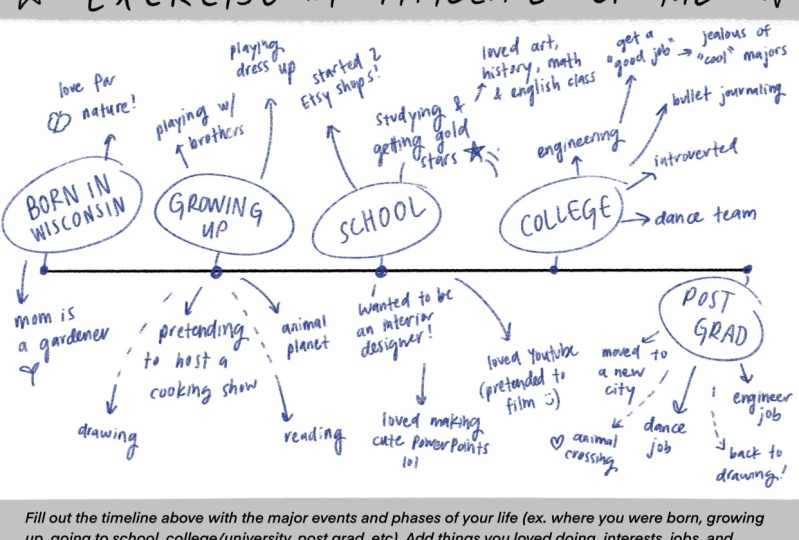
something I like to call the timeline of me. So we're going to start
with a blank sheet of paper and just
draw a line on it. Don't worry about
it looking pretty, and now we're going
to fill it in. To start, I am going to
write down that I was born. For you, the place
that you were born in might not be significant,
but for me, it is. I think I developed
a interest in nature very early on
because of where I grew up, so I'm going to write that down. My mom is also an avid gardener, and I think that
might be where I got my love for
flowers and plants, so I'm going to write
that down as well. Next, I am going
to write growing up for the years before
I went to school. What we did before
we went to school can really tell us a
lot about what we're naturally interested in
because we didn't have outside influences from
school friends or teachers. I'm going to write
some of the things that I enjoy doing growing up, which includes playing
with my brothers, playing dress up, pretending
to host a cooking show. I made pancakes every week, watching animal planet,
drawing, and reading. These early childhood
activities might not directly relate to what you're interested in today, and that's okay. We're just trying to get a sense of what we were like back then. From these activities, I
can see that I was pretty silly and had a
really great sense of imagination, as most kids do. But more specifically,
I can see that I was already interested in
things like drawing. Fashion and apparently
being in front of a camera. If you don't remember
what you were up to as a kid, that's
totally okay. This is a great
opportunity to ask a parent or family member
who knew you at that age, what you were up to, or maybe look through old
childhood crafts, photos, or home videos
if you have them. The next major phase of
life for me is school, and you can feel free to break
this up however you like, but I'm just going to
write one category for kindergarten through when
I graduated high school. So we're going to write
down what we remember about our attitudes
towards school, our social lives, and our
interests outside of school. I remember always
studying a lot and doing my homework because I loved
getting my gold stars, and I did not want
to get in trouble. I loved art class, history, class, and math class. If you remember what you
wanted to be growing up, this can be a great
thing to add here. For me, I wanted to be an interior designer or a
fashion designer growing up. Seemingly silly activities
you did might be clues for things you want to incorporate into
your side hustle. I used to pretend like I was filming YouTube
videos all the time, and it's pretty
funny to see that I now do that as part of my job. From here, I think
everyone's timelines are going to look a
little bit different. For me, I'm going to
add a category for college and one for post grad. In college, I was pretty introverted and
studied engineering. I remember feeling like
engineering wasn't a perfect fit, but that it would
give me a good job. And I remember being very
jealous of cool majors, which to me, were
design related. Post grad, I moved
to a new city. I started jobs as an engineer
and a part time dancer. I also got very obsessed with the game animal crossing during this time and loved
designing my island. But I also decided to
get back into drawings so that I wasn't only
playing video games. Now that I'm done with
my timeline of me, I'm going to go back and
notice any interests, experiences, or passions
that start to stand out. If you forgot to add something, feel free to go back
and add it now. Remember, it doesn't
need to be pretty or even make sense
to anyone but you. Now we're going to use all
of this information to gather some key insights
about ourselves. So for each question, write
down a couple of answers. The first question
to ask yourself is, what are some
strengths that have helped you get to
where you are today? What are some interests
or passions that you had when you were young
that you still love today? On the flip side, do you
have any old interests that you kind of forgot about that
you want to explore again, either now or in the future? And lastly, did you have any
creative side projects or side hustles that
you have started in the past or have
thought about starting? And what did you learn
from those experiences? That last question reminds me that when I was
in high school, I started some Etsy shops. So I'm going to add
that to my timeline and do some reflection on what that experience looked
like for me. Good job. We have created a beautiful, unique timeline of our lives, and now we can use this
as a starting point to see where our next creative
project might take us. In the next lesson,
we are going to select a direction
or maybe two or three and identify
potential pathways to make money doing
what we love.
4. Exercise 2: Money making mind map: That we've done some reflection, we have a lot of material to
pull from in terms of what your unique experiences
and strengths look like. Remember that a side hustle
can be totally personal, and the more that you lean
into the things that you are naturally good at and
interested in, the better. But don't worry if you feel
like you have a long way to go in terms of turning your
interests into a side gig. These exercises will be helpful, no matter
where you're at. Firstly, we're going to
identify one to three hobbies, skills, or interests that we might want to turn
into a side hustle. It's okay if you only have one thing that sounds
interesting to you, but it's also okay if
you have multiple ideas. So I'm going to write
down tattooing, video games, and
interior design. Keep in mind that you do
not need to be an expert in something in order to
turn it into a side hustle. As long as you're interested
in sharing your work, you can make money
even as a beginner. It just might take a little
bit more creativity. Next, we're going to
make a mind map of paths to monetization
for your side hustle. We're going to keep in mind
that money isn't everything, but we are talking about
side hustles here, and it is great to
make some money from the things that
you enjoy doing. If you listed a few skills that you're interested
in pursuing, you can repeat these steps for each potential side hustle idea. So I'm going to start a new page and write tattooing
in the center. Now I'm going to
add branches for different ways that I could
make money from tattooing, and you don't have to
commit to these now. We're just trying to get
the ideas out there. So in my case, I'll write tattooing clients,
selling tattoo designs, creating custom
tattoo commissions, creating content
about tattooing, and owning a tattoo studio. Now I'm going to go back to my key takeaways from the last
exercise to see if I have any existing experiences
or strengths that might help me with one of these ways I could make money. My experience with
illustration and creating content seem
very relevant to this. But also, I would say my
engineering experience might help me
because it taught me a lot about organization and how to follow a set
list of procedures, and that could apply
to tattooing as well. I'm also going to write down
learning opportunities, any areas where I feel
like I would need to spend some time
practicing and improving. For me, this includes
needing to practice on fake skin and finding a
tattoo artist to shadow. Again, feel free to
keep going and add as many notes and ideas onto this mind map
as you would like. Now we have a big
picture idea on potential ways that we could make money with
this side hustle. Again, if you have multiple
side hustle ideas, repeat this for each one, as you move forward, you
might find that one of your ideas is starting to really stand out, and that's great. We'll move forward
with that one. But if you're still
feeling indecisive, the next exercise
should help with that. Speaking of that, next up, we are taking a look at your current lifestyle
and schedule to see how we can design a side hustle to fit into your current life. M
5. Exercise 3: Making a side-hustle work: Key aspect of side hustles is
that they are on the side. We need to ensure that your
side hustle plan is practical so that you can still balance everything else you have
going on in your life. If you have multiple
ideas for side hustles, it's definitely possible to
work on them all at once, but depending on your schedule
and other commitments, it might be better for
you to just focus on one for now and keep
the others as hobbies. It really will be
different for everyone. So we're going to do a quick
exercise to help you find a balanced approach
on how to add a side hustle into
your existing life. The first question is what time commitments are non
negotiable in your life. This could be things
like work, school, spending time with your
friends and family, taking care of a pet, making time for self
care and other hobbies. Whatever you feel like is
important to keep in your life, make sure you write
it down here. The second question is, where else does your time go? In other words, what are some things that you
currently do that you're willing to do less of in order to make time
for your side hustle? Maybe you're willing to give
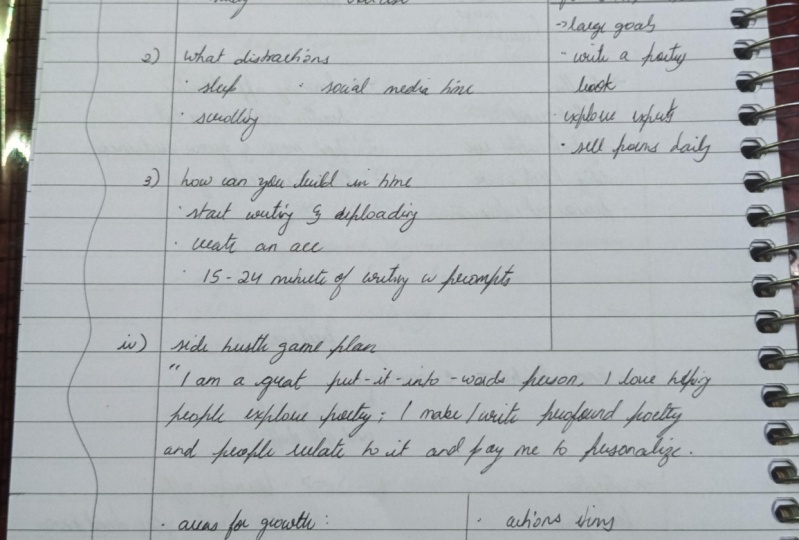
up an hour of video games or scrolling on your phone or TV in order to make some time. If you can't think of anything right now, that's totally okay, but as you go about your week, take notice of where
your time goes. Third question is, how can you realistically build in time
for your new side hustle? Maybe you already spend a
lot of time on this hobby, and now you can just
spend some time monetizing it and turning
it into a side hustle. But maybe you struggle to make time for your
hobbies as is. In which case, I would
recommend starting very small. Maybe it looks like 15 minutes
of practice every day or spending one afternoon on your new business
idea every weekend. You might need to
try a few approaches to fit this into your schedule, so feel free to write
down multiple ideas. So I'm going to write down
that I'm going to practice my tattooing for 30 minutes every weekday in the mornings, but for you, it could
look totally different. My personal philosophy
is to really prioritize the parts of a side hustle that
are fun to you. So whether it is 10
minutes of writing every morning or one sketch
before you go to bed, make sure you fit in
time for the fun parts. In my experience, the more you allow yourself to do the
fun and creative part, the more motivate you will be to actually take steps to
monetize your passion. So now that we have an idea of what our time
commitment looks like, let's make our side
hustle game plan.
6. Taking Action: Making a game plan: Now we are going to create
our side hustle game plan. This is our class project, so feel free to share yours
in the project gallery, I would love to check out
what you have planned. You can make this as
pretty as you'd like, but I'm just going to start out on a plain sheet of paper, and the first thing
that we are going to do is create our
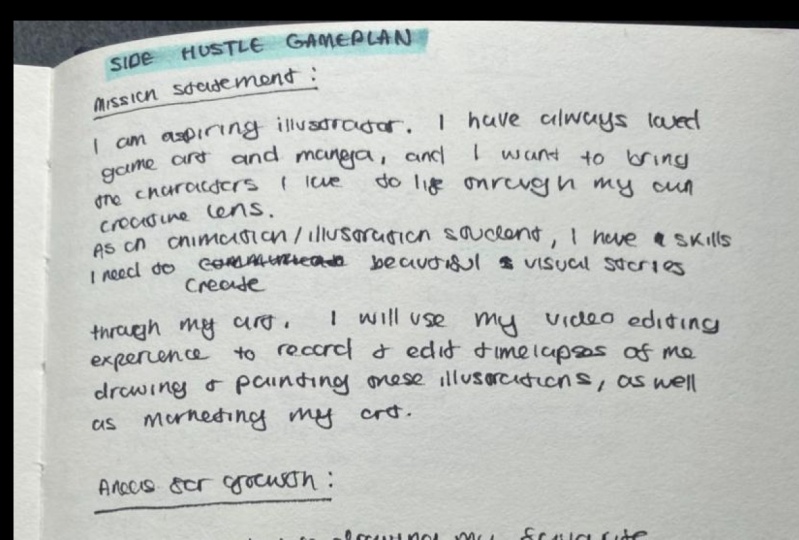
mission statement. In other words, what are you trying to accomplish and why? I like to use an IAM statement, and let's try to incorporate
some of the things that we learned from the previous
exercises into this. So this is what I wrote. I am an aspiring tattoo artist. I love how tattoos
allow people to express themselves and
keep memories close. I'm interested in using
my skills and experiences in illustration to create
custom tattoo designs. I'll also use my content
creation experience and love for videos to
share my experience, learning how to tattoo. So you can see that I clearly
identified what I am, an aspiring tattoo artist. I've also identified experiences and interests that can help
me with this side hustle, and I pointed out the paths to monetization that I'm
most interested in. Now, let's identify
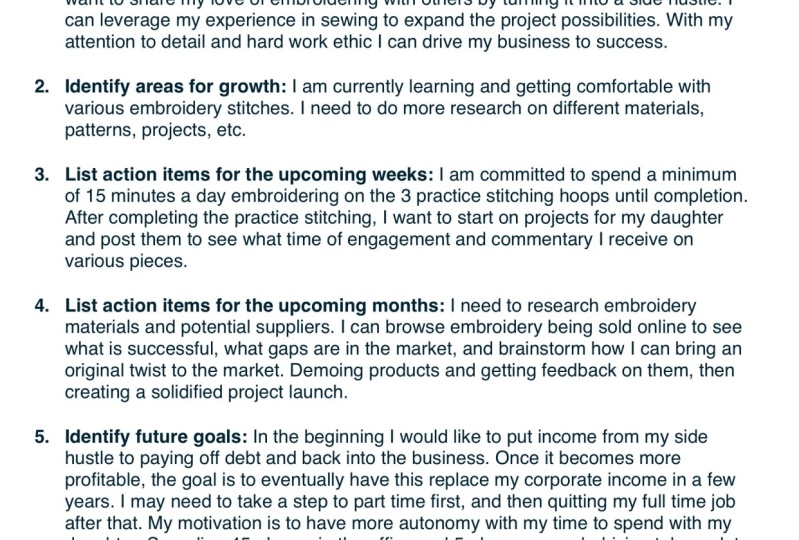
some areas for growth. Like we discussed
in the last lesson, there are likely
some areas that will require a little bit more
research and practice. So let's list them out. For me, this includes getting comfortable with
my tattoo machine, learning about needles
and techniques, and figuring out what makes
a good tattoo design. Next, let's list
some action items for the upcoming weeks. Like we mentioned before, this might look like
a daily practice or some small projects
you want to accomplish or maybe one larger project
you want to work on. So for me, I'll write 30 minutes of tattoo
practice every morning. Create a design for my first tattoo and research and
order new tattoo needles. You might want to look at
this list and ask yourself, is this really realistic? If not, you might want
to downsize some of your goals or push some of
them out to the future. For me, it might be more
realistic for me to practice three to
four times a week. Also ask yourself,
does this seem fun? I think it can be really easy to rush towards the goal
of making money, but the more fun
that you make it, the more sustainable it
will be in the long term. Also notice, I don't
have anything on my list that is an outcome or totally
outside of my control. These are all steps that I
can take and don't depend on outside factors such
as algorithms or luck. Next, let's list
some action items for the upcoming months. These might be bigger
projects or steps to monetizing your passion that might just take
a little longer. I'm going to write give my
first tattoo with my mentor, create a tattoo flash sheet, and create a video about
giving my first tattoo. This gives us a
bigger picture on what we're trying to
accomplish long term, but now we should look back on what we're planning to do in the upcoming weeks
to make sure that these two lists make
sense together. For me, I think I
should add create one tattoo flash design to my action items for
the upcoming weeks. That way, I'm working towards my larger goal of creating
a tattoo flash sheet. Lastly, let's list some future
goals for our site hustle. These are larger goals that we might want to
accomplish someday. Keep in mind, it's
totally normal and okay for these goals
to shift over time, but coming up with
this list can be very motivating at the
beginning of a project. So on my list, I'm going to put determine if I like
tattooing regularly, give my friend a tattoo. And find a tattoo shop that
I can work from long term. You can see that the first goal that I listed is to basically determine how often I want to
be doing this side hustle. I think this is a
very overlooked step. If you're just starting out
with monetizing a passion, I think it can be really hard to know how much you'll like it. There's no shame in saying, Hey, maybe this is not
for me right now, or maybe I want to do this, but a little less often than
I originally had planned. Again, these goals
can change over time, but hopefully they help get
you excited about where this side hustle could take
you in the future. We did it. We just completed our
side hustle game plan, and I am hoping that now you
are feeling more prepared, organized, and confident in your ability to start
your dream side hustle.
7. Final thoughts: That concludes our
time together for now. Thank you so much
for joining me and congratulations for
completing the class. You get 100 good stars. I am so glad that
you took time out of your busy schedule
to dig a little bit into your past and present to determine a game plan for
your new side hustle. Remember that a side hustle can look however you wanted to. It's your passion,
and you get to decide if when and how you monetize it. Again, if you want
to share your side hustle game plan with us,
I would love to see it. You can share it in
the project gallery. That is all for today. Best of luck with all of
your creative pursuits. Bye.
 Gabi Lee, tofugoob