Transcripts
1. Welcome to the Class: If you were to ask me what
my number one question I get as a successful
freelance graph designer, it is always How do
you find clients? Of course, there are many ways to go about finding clients. You could scroll
through Linked in, replying to job posts, you could scream
from the rooftops, or you can make a website
and just hope that Google search results
works in your favor. What if I told you, I haven't
done any of that in years, and my inbox is filled with
clients reaching out to me, all through the power of doing short form social media videos. Know, We don't just have to be graphic designers
anymore or creatives. We also have to be
content creators. You, of course, don't have to be a content creator to be
successful at your craft. But if you're
watching this video, it's probably the path
that you want to go down to market your creative
freelance business. So how do you do it?
How do you start your social media
channel to showcase your work and impress your audience and bring in
those all important clients? Quick intro. I'm Calm. I'm a freelance graph
designer based in Amsterdam. I've been working in the
industry now for about 12 years. Seven of those are freelancing. Now, I've built up
quite an audience over a couple of years
postpone social media. I think at the
time of recording, it's around half 1
million followers. And I'm hitting
some insane views. Most of my videos
get over 100 K, and some go viral hitting
millions of views. The proof is in the pudding
that I know a thing or two about growing your
social media presence, bringing in potential clients, and gaining their
trust. Most important. Spite size class, I'll
go over how to build a successful freelance
business using social media and utilizing the
power of short form video. I'll go over how to
define your audience, how to make people
actually care about you, how to show if your
amazing design work in an engaging way, engaging being the
important word that most people fail at. And most importantly, how
to say consistent with it. As of all good classes on here, there is a class project that I would love you to complete. I want you to think about your most important design project that maybe you're most proud of. Don't you use that for
your class project. Then I want you to
think about how you can showcase your work, whether that is a
complete short form video or just a sketch out
storyboard. Don't worry. I won't be judging
your sketching skills. For other classes, I want
you to think about how you're going to apply
this auto class project. Now, quick note, this
isn't really a class to learn about
editing and filming. If you need to learn
more about that, I'm sure there's many
amazing classes out there. But I'm presuming
that you already have a basic knowledge
of those things. And then you're pretty
much good to go. And by the end of this class, you'll be equipped
with the knowledge of how to show your
work in a fun, interesting style that will
hook in potential clients. Build you a genuine following
in a trustworthy way. So with that said, your
first action step is decide on what design project you
want to showcase this class, and let's get ready to jump in.
2. Define, Target & Grow your Audience: Okay, welcome back. Now, before we start thinking about what
video ideas we want to do, what amazing work
we want to show off or getting our hair
ready for our close up. We need to answer these
very simple questions, all about defining, targeting, and growing our audience. Let me go and grab something. Coming through, coming through. I feel like I'm going
to put my glasses on because it's going
to make me look like a teacher as a white board
is feeling very official. I'm going to start by
asking you three questions, all how to define target
and grow your audience. First, who is audience. Now, your audience can be as
big or as small as you want. It can be anything
from a big corporation that needs presentation designs or it can be a eco
friendly brand that needs sustainable
design solutions. As long as you have a
good general idea of who the audience is and why you're going to
be targeting them. Now, before you panic,
I will say the audience doesn't have to be set in
stone, it's not permanent. Can target one audience and
then just see how it feels. Is it the right
audience? Are you getting the kind of
results you want? Then if not, you
can always civ it. As long as you're not bouncing between audiences all the time, and then it will just look a
bit messy and that you don't really know what kind of
creative or designer you are. You can definitely
be fluid with it. As long as you have a rough idea of who your audience
is at this time, and then you can always
just change it a bit later. Second question is,
what are there? Needs. This is really straightforward. There's not too much
to say about this. It's basically just what
is your potential clients or audiences needs? What
are they looking for? Are they looking for a
creative or designer that works really fast or is really good
at communication, or do someone that's super creative and thinks
outside the box and delivers designs that are just completely different
from anyone else. Finally, probably the most important question when defining audience is what are there pain points I'm going to underline pain
because it's very important, and you have to make sure
you understand this. Pain points is basically, what is your audience or
potential clients struggles? What are they finding really
difficult in their process and that you as a designer
or creative can solve? Maybe it's they just can't
find a good skilled designer. Maybe they haven't found someone that matches their design style, or maybe they're just struggling with bad communication
from designers. If you can answer
those struggles and show that you are the
solution to that, it's a wm. Now, I want you to remember that we are selfish creatures. When we're watching content, don't really care about the
content creator themself. We care about our own
problems, our own struggles. We want to find
solutions to that. There is so much
data out there that any content that is providing a solution
or helping people, it always does well. That and CAT funny videos. They also do very well, but this is not the class for that. From this moment forward, any piece of content
you're creating, I want you to answer
these questions. Anything you create,
make sure you are following these
questions and answers. As an example for
all these questions, you could have a brand that has existing brand assets, but
they've outgrown them. They've got bigger and they just need more professional designs. Their pain points is they've worked with a
designer in the past, but they're just terrible
at communication. Your video content
creations could be you taking all designs or just designs you don't really giving the brand refresh,
changing them up, putting your spin on it, and then just showing how good
you are communication, you can show yourself
sending e mails or sending files in a really
smooth, great way. That's the kind of content you create, answering
those problems. And when your audience
or potential clients see that you are making
that kind of content, they're going to be thinking,
Wow, I need that treatment. I need that designer to come and help me of all my pain points. If he's doing all this
on that kind of content, then great, he can help
me of my business. Once your content is layers a focus on what
your audience is, you will see so many
results and you'll start seeing all those inquiries
coming into your inbox. And that is how to define, target, and grow your audience. Let's move on to the next class.
3. Should you Niche Down your Content?: The age question, T Niche
down or not to Nish down. Now, if you don't
know what that means, is basically if you
are going to be a specialist in your
craft or a generalist. Do you have a certain style
that is really specific, or are you someone that's a bit of a jack
of all trades and can do loads of different
things in your creative craft? For example, I could be a graphic designer that
does website designs, logo designs, packaging designs, and posters and typography, or I can be someone that
is very specialist, and I just do hand lettering for small
female owned businesses. Most of the time, if you're
a creative or a designer, you normally know if
you're niche down already. Normally, it's a natural
thing that just happens. If you're really really good at something and you
really enjoy something, you probably just lean
into that anyway, but you can also just
be a generalist, and that is totally okay. But today, we're going
to cover the pros and cons of both and just
see how you feel. What do you warm to most. We're going to head to
the whiteboard again. I have a generalist. And then to the
right specialist. I'm going to do the
pros and cons to both. So pro and con. First pro for geneross, you offer a lot of things. Super needed. That's what clients want.
They want someone that can do a lot of things for
them and help them have a lot of briefs
and projects. Another pro could be good value because a client really only needs to hire you because you can do
all the things. However, a con could be stretched your skills, too wide. Now what I mean by that is, you could offer so many
things like logo design, packaging design,
typography, but you might not be an
expert in any of those. You might just do little
bits of everything, but you're not an
expert in any of them, and maybe your client or your audience need someone
that's more of an expert. Now, looking at the
specialist side, a B, you are the go to
person for that skill. You are the name on
everyone's lips. When a client or your audience is looking
for a certain person, if you specialize in that thing, you're going to be
the go to person. And related to that, Another
pro is less competition. Obviously, if you're
really Niche down, your specialist in a very
small pool of designers. That just means there's
less competition. Someone that is more
generalist that does loads of different things
and isn't really specialize in one
style or craft, you're going to be fighting
off less competition. There's going to be
less people that are going to be doing
the same thing as you, and that can only help you. But then obviously, there's
the good and the bad, a con could be that
you're just not needed. All the time. Wow, I'm really
putting my terrible handwriting into the test here. Someone that is generalist. If they can do all the things, maybe not the best
at everything, but they're always needed. They can always help
out with tasks. But if you're someone
is super specialist, maybe they don't always need
that craft all the time. So as you can see, there's
positives to both. So what do I suggest? Let me just wipe my
board for a second. Did anyone used to get super irritated when their
teacher would wipe a board, but then they would
leave just a tiny bit, and it was all you could
focus on, or is that just me? Okay, so if I draw a line, so let's have
specialist up here. And then line with
generalist here. Now, people will argue
where is best to go. But in my opinion, I
think it's good to sit around here for success. Now, if you're someone that
is closer to generalist, Yes, I think you
could still succeed and you'll still get people
reaching out to you. But I don't think you
would stand out as much as someone that is closer
to the specialist point. Now, I would say there's a lot of people that have
a success when they're right at the top in
specialist because they might have just one or
two other people that do the same thing as them, and there's just not
that much competition, which is great for them. They just might not
be needed as much as someone that is just a little
bit closer to generalist. So this is my sweet spot. This is where it aimed to be. But again, this is so personal. If you're one or the other, then don't really
try and force it. But that is just where I think you should
aim to be sitting at with your content creation and how you show up
to potential clients. That's my thoughts
about Nising down. We could probably talk
about this for hours with the positives and negatives
and really dive deep, but that is quick
crash course into it, and it's up to you to see where you fit in that scale
and where you want to
4. How to Make People Care About your Content: Now, as we are diving
into the art of creating engaging
social media content, you might find yourself
asking, why me? Who cares about my work
or what I have to say? I'm just a regular guy. I'm not the best
designer. I don't have to call this clients.
Who will care? And sure, those things will really help if you're
an amazing designer. Of course, potential
clients will love that. But we're emotional creatures. We want to see more than
just really great work. No one wants to
see some blank AI generated zero motion designer that's just like everyone else. Potential clients
consume your content, want something real,
life experiences, how you nailed that
really tough brief or overcame some really
big creative challenge. As you know, the design
process is messy and chaotic, and don't be afraid to
show that in your videos. Human driven content will
always outweigh emotional, free, boring bland content. Now I'm going to share my
little grid of knowledge, all about getting
people to like you and care about the
work you're sharing. It's pretty
straightforward, but I think it's real key
to your success. Whenever I'm looking at
other content creators, when I see them being authentic and really sharing
their life experiences, they're normally following
these four key things. The first one is B authentic, and relate to Shocker, I know, but you don't have to be the squeaky clean professional
designer at all times, especially when you're creating content to potential clients. Of course, clients want to see this amazing work that you do, but they're also
investing in you. They want to see what
your point of view is, what your struggles are,
your journey as a designer. Looking like a real person gives you the edge because
there's no one like you. So share those mistakes, those learnings, those mess ups. That's all great content. The second one is engage with your community. Now, clearly, we don't want to be on our phone all the time. I'm not suggesting that at all. But if you look like this
approachable designer that communicates of your audience and just
shows that you're a nice person and that
you're easily approachable, that's only going
to help you when potential clients are
viewing your content. Once you've posted that really great video that you created, your hard work isn't done. Start applying to comments, show that you are
this really helpful, friendly designer that potential clients really
want to work with. The next step for getting
people to care about you and your work is offer value. Now, what do I mean
by that? There's been a lot of discussion recently about quality and quantity when it comes to social
media content creating. Some people said in the
past that you should be posting multiple videos
every single day. And I couldn't
disagree of that more. Let me tell you why. If you
are constantly sharing videos every single day
and they're just mediocre, they're
not that great. When your video comes up in
a potential clients feed, they're just going
to know that your videos are just not that great. They're not really
giving them anything, and they're just going
to scroll straight past. But if you start posting maybe
just once or twice a week, but you're offering so
much value in that video. Potential clients
are going to learn that every time they
consume their content, they're going to get
something out of it. So they're going
to stick around. If they know that it's always really high quality,
great stuff, they're more inclined to
watching it than just when you're posting all the time and it's just not
that great content. They don't get anything from it. Why should they bother
watching this video as well? And that is why this is such a key point because
if you're bringing value, people will automatically
start caring about you. Offering value doesn't have
to be this stressful thing. You don't have to be sharing this amazing epiphany that you've had in every
single video. As long as there's
just something that the potential clients can take away after they've
watched their video, it's going to be a
win win for them. Now, this wouldn't be
a social media course if I didn't mention
the word Analyze, which is our final point. Analyze, and the
key word, adapt. Now, our content is only as good as what our audience wants. If we're constantly posting
videos that we like, but our audience
doesn't care about, then what are we doing? A word of warning,
I wouldn't say get obsessed of all your
data and analytics. I am a victim of that.
I do look at it a lot, and I wouldn't recommend it. But it is really good
to just see what your audience is liking the
most and sharing the mo, reaching out to you the most on. Then once you see a pattern of what your audience
is responding to adapt and create
more of the content that's doing well that
people want to see more of. It's pretty simple that one, but I think a lot of
people can get very involved in what they
like themselves. But you really need to
start paying attention to what your audience
is asking from you, what do they want
to see more of. That's my little
grid of how to get people to like you and care
about what you're doing. When you're think about
your class project, think about this and how you
can be authentic, relatable, offer value in
everything you do, engage with your audience, and most importantly
adapt when you need to. I will see you in
the next lesson.
5. How to Create Engaging Content: Now, enough whiteboards
and talk for a moment. We can do all of what I've spoke about in the previous lessons. If your videos aren't engaging, then what was the
point of all of this? You want to show your work in the most engaging way to
impress fellow designers, but most importantly
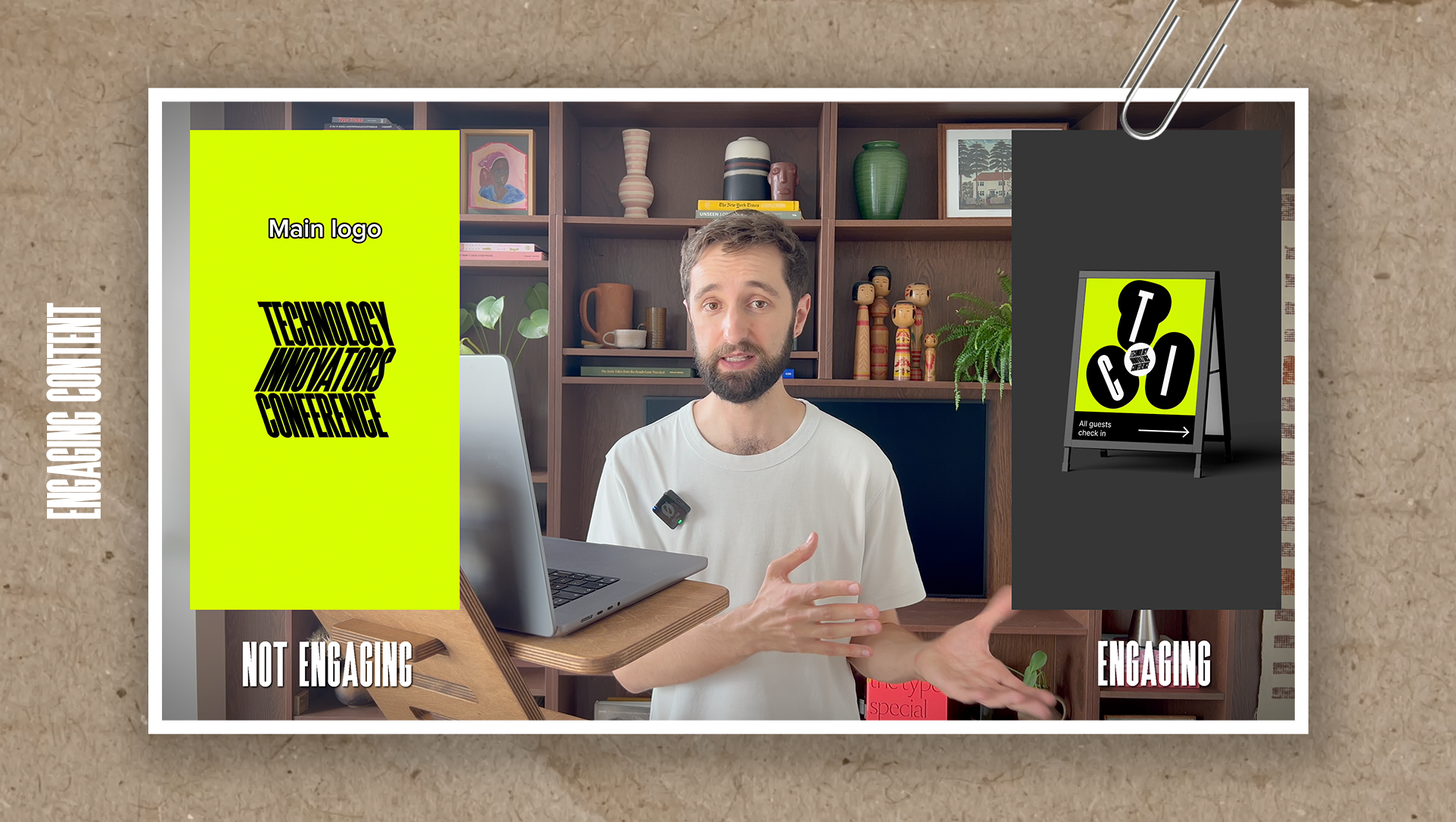
potential clients. Now, I quickly whipped up a branding project yesterday for the purpose of this class
of 100% real event. Now this branding isn't
going to win any awards, but it makes a great example of how I can show off my work in an engaging way and
a not so engaging way. We've learned in previous
lessons how to get people to care about you
and the work you're doing, how to define and
target your audience. But all of this is pointless if you don't make
engaging videos. Now, enough rambling for now, let's jump in and watch my
two video examples I've made. One being engaging, and the
other one not so engaging. Okay, so straight away, I'm not setting up a story here. I'm just jumping straight
into my design process. There's no set up for
the audience at all. And now we're just watching
some very long time lapse of my whole design
process, which, of course, can be interesting
for some designers, but for potential clients, it's really not
grabbing my attention. And have you noticed as well, there's no different angle,
there's no quick cuts. It's all just one long angle. I'm getting bored. Okay, so we're about three
quarter of the way through this video now. And I've already made my mind of what this design is
going to look like. I'm seeing everything that
I need to see already. Why do I need to ar on
watching the next 15 seconds? Because I've got an idea of what this is
going to look like, and it's time to scroll. Now if someone is not
completing your video, they're scrolling when
it's not finished yet, that is a big red flag to the algorithm. More
on that later. Okay, so I'm rewarding
the audience by showing my final designs
at the end of the video. But It's a little bit dull. It's just my designs on a white background with some
texts explaining what it is. Very boring, pretty forgettable. So that's an uninspiring
way of showing your work. The video performers badly, less potential clients
see your work, and your freelance business
is not doing great. So let's look at
the alternative. Straightaway, we're 3
seconds into the video, and I'm already
setting up the story. I'm showing the
brief, the event is called Technology
Innovators Conference, and I'm showing that
also the branding needs to be bold and
using a neon color. Straightaway, the audience
watching is thinking, Oh, wow, how's Calen
going to answer this? What color is it going to use for this bright neon request? Let's keep watching. Now, look, do you see the
difference here? I'm showing my sketch work. I'm building up a concept. In the previous video, I just jumped straight
onto the computer, and that's not the reality. Most designers are
sketching a way for hours before they even
jump on the computer. And clients want to see that. And if you've got
an eye for editing, you've probably also
noticed that those are really short cuts in
my sketching process. I wasn't showing
things for 30 seconds. I was moving along really fast, holding the audience's hand and bringing them
forward in the story. So I've jumped on the computer now and I'm showing
my design work. But do you spot
the one difference of where it's different
from the last video? I'm not showing all my
designs from a wide angle, giving everything away at once. I'm teasing the audience. I'm doing close up, I'm showing things
kind of expanding. I'm not just showing
everything at once. It's all about teasing and
tempting an audience to carry on watching to see what the final design looks
like at the end. Because if you show
everything at once, then what's the point of
carrying on and watching? Notice how I'm showing a load of different touchpoints
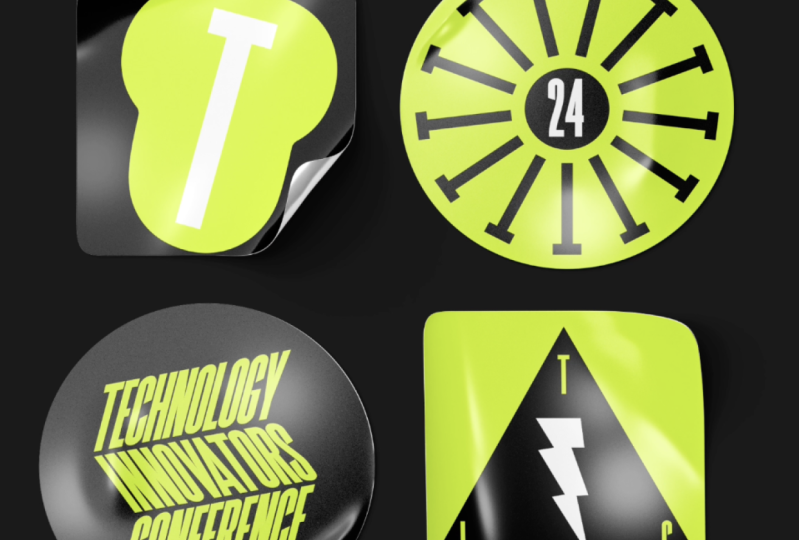
in the design process. I'm showing mobile design, posters, stickers, is always good to have
a range of stuff shown. Now here's the reward
for the audience. They've watched
my whole process, and now here is the results. This is the final designs. No, it's not just some
plain background. I'm using really beautiful
mock ups to show off the work. I'm showing my
potential clients how the designs work
in the real world. Now, a quick note
about mock ups. I can't stress enough
how important they are to gaining potential clients
and gaining new business. As you saw in the
previous video, I showed the same
designs in both videos, but in this last video, the designs look 1
million times better because they're mocked up
on real world examples. If you're going to invest
in anything as a designer, I would say invest in
some amazing mock ups. They don't have to
break the bank. You can find some really
good affordable ones, or you can invest in
the expensive ones too, because believe me, they
are in great investment, and you will see so
much return once you've got your designs place in
these beautiful mock ups. Trust me. With
this second video, our audience has watched the whole thing because I've teased them all the way through, I've shown the
process of sketching, I've shown close up
shots of me designing, and then Bam, I've finished with the final signs at the
very end of the video. That is giving the green
light to the algorithm. Now, a quick note on the
social media algorithms. This course is obviously not
about hacking the algorithm, but there's a few
things you want to keep in mind that are really helpful. If someone watches your
video and they get to the halfway point and then
skip, they've consumed a bit, but they move That is telling the algorithm that it's
just not that interesting, not that engaging,
there's no point pushing this out to
another audience. But if someone
finishes your video, they watched the whole
thing all the way through. That is giving the algorithm a green light, that
is saying, yes, that was engaging enough to make that person watch
the whole thing. Let's push out to more people
so then they can enjoy it. Goal obviously, it seems to get the most views on
all your content. But as designers, we
want our work to be seen because it opens up
so many opportunities. If you can get your audience to stay watching your whole video, that is always
going to help you. Once you master the art of
taking your audience on a journey from your process
to the final designs, you'll notice so much growth, whether that's new followers, more views, or just more
requests in your inbox. O bviously, this takes practice. You're not going to
make the most inspiring engaging video right away. But if you remember these key points that I've
just spoken about, you'll be on your
way to success. Now, that's how to make
an engaging video. You of course, don't have
to follow my exact style. Everything is going to
be very personal to you, and you can put your whole spin on it and see what
you come up with.
6. Staying Consistent: If you're tired of
hearing people telling you to post every day, make sacrifice in
your personal life, just to manage creating content, ignore them, do not
take their advice. But of course, we do have
to make some sacrifices. We all lead busy life, but content creation
doesn't have to take over. Now, I'll be honest,
I'm a pretty lazy guy. Just ask my partner
and they'll agree. So I've developed
a content creating strategy and it works
for me and my life, and it doesn't take
over, and I can still post consistently
every single week. Now, I couldn't think of a
really jazzy name for it, so I'm just going to
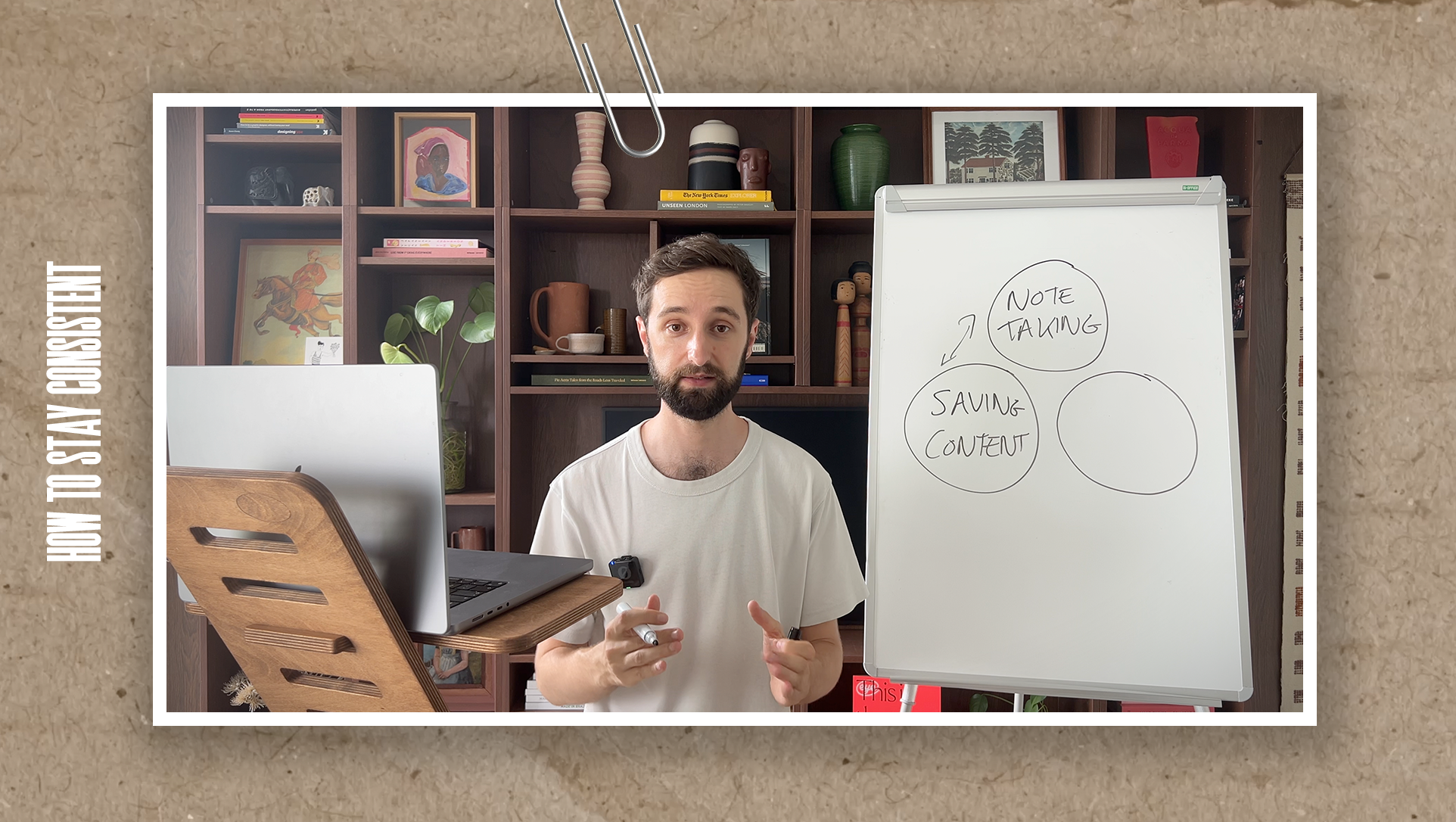
call it the Golden trio. First up on the Golden
trio is note taking. Now, note taking
doesn't really need to explain because we all
know what note taking is, but I just want to explain
how it used to work for me. There was nothing worse
when I would sit down in front of my camera
wanting to make a video, and I would think, what am I actually going
to make a video on? I have no ideas. I need to have a score for Instagram now
to find some inspiration. I would waste so
much time because I just didn't do the prep work, and as we learn, prep work is key if you
want to be consistent. With note taking, we
probably all have our preferred methods
of taking notes, but I would highly recommend
taking notes on your phone. Now, I have my phone
with me all the time. I presume most of you do too. I don't always have my
notebook with me signs, I leave it at home, my laptop, I don't always
have that with me. But my phone, whenever
an idea pops in my head, I take my phone out
and write it down. That could be when I'm
walking to the gym or when I've just left from seeing a friend or I'm on the bus. Anytime an idea comes in
my head, I write it down. Don't want any of
those excuses where you're going to say,
I'll remember it. I will just write it down when
I get home. Don't do that. As soon as the idea
comes in your head, write it down, get
in that habit. Once you've built up this huge document of all your ideas, you'll be so ready to sit
down in front of your camera, take a look at your
notes and know, Yeah, that is the one I want
to film today. Let's go. Next up, which is
very related to note taking is saving content. Now, I presume most of you know your way around
social media apps. So you know that any piece of content you see,
you can save it. You just hit the
little bookmark, icon, and it's saved. Get in the habit of doing that. Anytime you find a piece of content that
is inspirational, or you like the editing style, or the way it's filmed, or anything like that,
save it for later. So then when you're sat down, again, you've looked at your notes of what
you want to do. Or maybe the notes are just
not inspiring you that day. You can look at the
stuff you've saved and now also spark so many ideas. Because really, with these two, they work hand in hand
at just saving you time. You've done the
prep work, you know exactly what kind of
videos you want to make. You've got the
inspiration right in front of you, and
you can just start. Now, the final one in this
golden trio is probably the most important one for keeping
you consistently creating. It is bulk Creates. Now, I'm aware. We all
have different schedules. We all work in different ways. We have different priorities. But bulk creating is something that's really worked
for me and has taken off so much stress
from thinking about content crating
every single day. Now, if we've done the
Golden trio correctly, you should have done
your note taking, you should have saved
content that inspires you. Then you're going to set
aside one day, two days, depending how much
time you have, and then you're
just going to film everything in that one day. Fore you say, whoa, whoa,
whoa, that's too much. You don't have to
overwhelm yourself. Some of you might be
beginners at this, so you could start
with maybe creating two or three videos in that
bolt creating session. I sometimes managed
to do seven in a day, and it's pretty wild, but I never started like that, so don't add that pressure
to yourself just yet. So, for example, when
I'm bolt creating, I will first do all my intros, A my intros for all my videos, I will fill myself
sat down at my desk. If you're familiar
with my videos, you know a lot of time
I'm stood up working. I will change my outfits and
put on a different T shirt, fill another intro, change
my outfit to another thing, film it again, and
I will just do maybe ten different
versions of that that I can use in all the different videos that I've got planned. And once all my intros are done, I move on to the screen
recording section. And the scream recording is
where I'm just at my laptop, doing all my design
work, show my process. And I will do that for the
five videos I have planned. I will scream
record, one project that I've been working
on, I will scream record. The next project
that I have prepped, I'll scream record the next one. And then I'll fill all my tros If you've done that prep work of note taking in saving content, you know exactly
what videos you're making and what intros you need, what screen recordings, or
over the head shots you need, and then what outtros
you need for each video. What I love about
bat creating is, you only have to
set up your tripod, your camera, the lighting, all of that kind of
stuff just happens once because you're bat
creating everything. There's nothing
worse than setting up your tripod and the lighting, filming one video, and
then the next day, you're like, to do
that all over again. It really does feel like
a content making hack, because I'm not thinking about creating
videos all the time. If I set aside one day to
bulk create, that's it. I could make maybe seven
videos in one day. And then I'm not thinking
about making videos at all for the next two weeks because I've done all the work already. Now, obviously, it's all
about what you prefer to do. Maybe you want to make a video every single day and not do
the bolt creation method. But I'd really
recommend you try out. If you do all this prep work, bolt creating will
be very easy to do. And that is my golden trio
of how I stay consistent. So give it a try. Let
me know what you think, and I hope it works for you.
7. Class Wrap Up: Okay, that's it. We've
covered how to define and target your audience to Niche
down or not to Niche down, how to make fellow creatives and potential clients care about you and the work you're showing, how to create engaging
story driven videos, and most importantly, how
to stay consistent with it. Congratulations for taking
the first step in growing your freelance business using social media short form videos. Now, remember that everything I spoke about in these classes, this is my way of doing things. See what works for you, put your own spin on it and
see what success you have. Remember, your way is always
going to be the best way. Now, don't forget about
the class project. Once you've made your
first short form piece of content or your storyboard, based on all your loans for the lessons
you've spoke about, Drop them into the
class projects area because I'm so excited to see
what you've come up with. That's it for me. Good
luck on your journey. I'm going to be your biggest cheerleader from the sidelines, and I hope to speak
to you soon. By
 Callum McHugh, Graphic designer.