Transcripts
1. Sketchbook Magic: Hi, and welcome to
Sketchbook Magic. Creating an art
practice sanctuary. Ammani the artist
behind Life drafting, and I'm so glad
that you're here. If you took my previous class, flow state art for a
creative practice, you already experienced
how freeing it can be to tap into
your intuition, let go of perfectionism and
make art from the inside out. This class built
on that journey. Here we go deeper, not just into art making, but into how to create a safe, sacred space where your
creativity can truly bloom, a space where you
feel grounded, seen, and supported by
your environment, your virtuals, and
your materials. Together, we'll explore how rituals support your nervous
system and your flow state. Make art tools from nature to connect you to the
world around you, learn the neuroscience behind why this practice is healing, and build a personal
sketchbook sanctuary that becomes a refuge, a ritual, and a creative mirror. There's no fancy tools needed, just a willingness
to show up and explore your inner
world with compassion. So whether you're
picking up brush for the first time or returning
after a creative pause, this is your invitation to begin again gently and with magic. Let's get started.
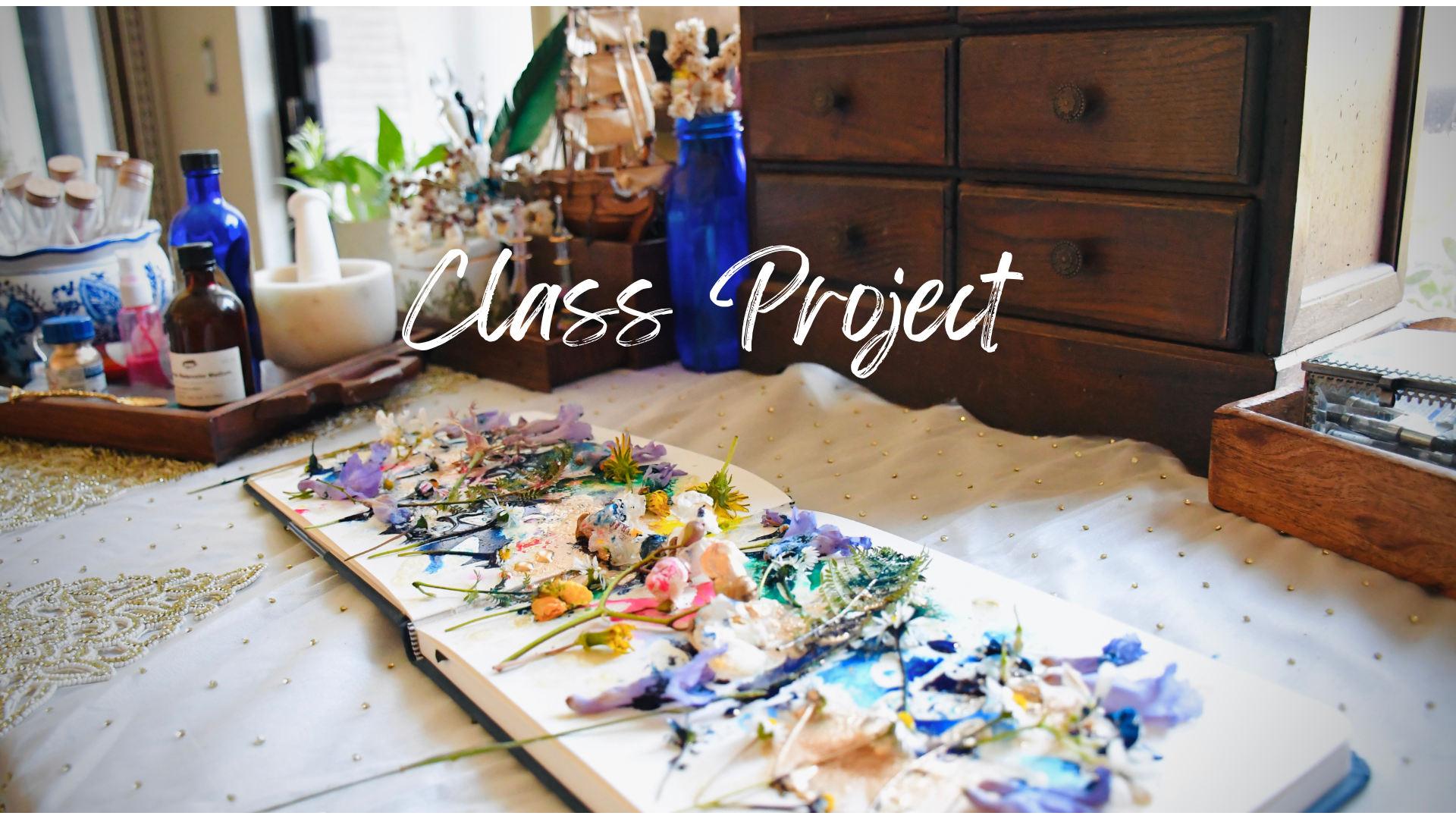
2. Class Project: Welcome to your class project. In this class, your project is to create your own art
practice sanctuary, a place on the page and
in your space where your creativity feels safe,
intuitive, and alive. This isn't about making
something perfect. It's about creating a container for your artistic
energy to flow. Here are the three parts of the project you'll
explore during class. One, create a physical
and energetic sanctuary. Choose or set up a small space where you'll return
to your sketchbook. It can be a corner, a desk, a cushion by the window, add objects that ground
and inspire you, a candle, a shell, a crystal, or even a warm drink. This is your creative altar, a place to arrive and begin. Next, you'll craft
your own art tools. We'll experiment with making art tools from natural
and everyday objects. Think twigs, feathers,
dried up flowers, even an old toothbrush, anything with texture
and movement. These tools add a personal and sacred quality to your marks. And finally, you'll
design your virtual page. In your sketchbook, create a page that reflects
your creative ritual. Maybe it's a list of steps, a symbolic drawing, a mantra, or even just a painting. Use color, collage, and texture. This page becomes a
visual touchstone, a grounding practice, a way to return to
yourself like a spell. And when you're done,
feel free to share one or more of your pages
on the project gallery. Seeing your process
and reflection may spark inspiration
for someone else. And above all, let
this be yours. Let it feel nourishing and
let it feel like magic. A
3. Neuroscience of Art & Rituals: Let's talk about something both magical and deeply
grounded in science. When we talk about rituals
or creative routines, we're not just talking
about aesthetics or habits. We're talking about how
your brain processes safety, emotion, and connection. So let's walk through
five ways your art and rituals impact your nervous
system and emotional health. And why your sketchbook
practice is actually a way to heal your brain and
it's backed by neuroscience. Art regulates the
nervous system. When you draw, doodle or
paint or even scribble, you're helping your body
shift out of stress mode, which is called the
sympathetic nervous system into a calm mode, which is the parasympathetic
nervous system. And this is huge. When you add virtuals like
lighting a candle, brewing some tea or playing soft music or
repeating a mantra, you're sending a clear
message to your body. You are safe now
and you can soften. These simple actions act
as a cue for safety, and over time, your body learns to associate your
sketchbook with Calm. So just opening it can
start to regulate you. I learned this first hand
after losing a loved one. Whenever things felt heavy, just having my sketchbook around gave me some immediate relief. Creativity also engages
the limbic system. So the limbic system is the emotional center
of your brain. It processes feelings,
especially the messy, unspoken, and subconscious ones. When you make expressive
or symbolic art, like when you're journaling
visually or drawing your feelings or using
colors and textures, you're actually
helping your brain externalize those emotions. That's why your sketchbook
can feel like therapy. You're not just
expressing emotions, you're helping your brain
make meaning of them. So here's where the magic
of practice comes in. Repetition builds
new neural pathways. Every time you return to
your creative ritual, like lighting that candle, flipping open your
sketchbook, making that mark, you're reinforcing a pattern of safety and joy in your brain. It's called neuroplasticity, your brain's ability
to rewire itself. So your sketchbook isn't
just a place to create. It becomes a reliable, healing neural loop, a
sanctuary your brain can trust. Art helps access flow state. Have you ever lost
track of time while sketching? That's a flow state. It's a mental zone where
you feel fully immersed, your acritic quiets down, and your intuition
takes the lead. When you enter flow,
your prefrontal cortex, where the judging
and overthinking part of your brain slows down, and this gives
space for presence, imagination, and
instinct to take over. Your rituals help you
enter that state, and your art helps
you stay in it. Rituals also anchor you
in the present moment. There's something powerful
about the rhythm of rituals like using
the same brush, burning the same incense, and even sitting in
the same cozy spot. These repetitive actions
activate a part of your brain called the
default mode network. This is linked to
self reflection, stillness, and meaning making. In other words, rituals
help you pause. It grounds you, and that grounded presence
reduces anxiety, enhances emotional clarity,
and builds resilience, especially for sensitive,
creative souls like us. This is essential.
So in summary, when you create a
sketchbook ritual, and when you tend to do it
with care and intention, you're not just making art. You're regulating
your nervous system, you're processing emotions, you're building new
brain pathways, you're accessing intuition, and you're anchoring
into the present. And this is why art feels like magic because on a
neural level, it is. So take your time, let
your ritual evolve, and know that each
mark you're making is healing and not
just beautiful.
4. Setting Up Your Art Sanctuary: Before we begin
painting or making, we're going to create
an art sanctuary, a space where your creativity can feel safe to
come out and play. The space can be as big as a studio or as small as a
corner of your kitchen table. It's not about how it looks, it's about how it feels. We're creating a space that
feels like a soft yes. A permission slip for
your nervous system to soften and for your
imagination to take the lead. The first step is to
choose your sketchbook. Your sketchbook is your
portable sanctuary. It's a container
for your thoughts, your rituals, the colors,
and the emotions. Just choose one that
feels inviting to you. Ask yourself what size
feels approachable? What kind of paper
feels right to touch. Do you want blank pages, grids or watercolor paper? Even if it's not perfect,
start where you are. You can decorate the cover or title page with your own magic. After you decorate your page, think of what your
sketchbook manifesto is. In this book, I Allow Think of what you
allow, so you could write. In this sketchbook, I allow myself to create
without judgment. I allow myself to be messy. I allow my emotions to
speak in color and line. I allow quiet moments
of reflection. I allow beauty to
exist alongside chaos. I allow my inner
child to play freely. I allow mistakes to
become part of the magic. I allow silence, softness, and stillness to guide me. I allow ideas that
make no sense yet. And I allow all parts of me
to be seen and accepted. Next, think about
what you want to use the space for. You could write. This is a space for growth,
healing, and curiosity. This is a space for scribbling through feelings I can't name. This is a space for ritual
rhythm and self trust. Making without
needing to impress. This is a space for
visual journaling. This is a space for documenting the beauty of ordinary days. It's a space for reclaiming
joy, color, and expression. This is a space for
creating from the heart. These are some examples I have, but feel free to add
your own words to this. Another thing you could add is the promises you
keep to yourself. I promise to return even
when I feel uninspired. I promise to be kind
to myself on the page. Write all the promises that
you want to keep to yourself. Next, you want to think
about some objects that you might need
to create your art. I'm using some glue,
some twine, scissors. But bring whatever you feel like you would need in
your art practice. I also use masking fluid
to cover up white spaces. You could also play around with what kind of mediums
you want to use. Here I have watercolor ink, squash, and some pigments. You also want to choose the
physical space you're in. You could pick a corner, a lap desk, a nook where your
body feels safe to soften. This could also be a patch
of sun on your floor, a desk by the window or a
small altar you keep portable. You're not building a workspace, you're building a sanctuary. One that holds your creativity
like a warm blanket. You could also gather
some sacred objects, bring a few meaningful
items to your space. Things that awaken your senses or ground your spirit
like a candle, a small plan, a cup of tea, or even a handwritten
affirmation. One of my favorite
slow crafts to do that's very meditative is
making flower garlands. Today I'm making a
dandelion garland. Here's how you make
a natural garland. You take a long
string of thread, put it through a needle, and gently tie a knot at the end. You want to cut off the flowers
closer to the edge. Mm. I'm using some decorative beads, but this is completely optional. After you thread your bead, you want to make sure that it's sitting right at the knot. Next, you want to pick
up your dandelion and try to put your needle
straight through the middle. You want to be careful not
to break open the bud. I'm going to keep
alternating a bead and the dandelion bud till
I get a long chain. I love how meditative this is, and I love the dandelions
blooming even more. Creativity flows when
the body feels safe. So try to layer your space with different textiles like
blankets or fuzzy socks, dim the lights,
put some music on, make some tea, anything that makes you feel
safe and health. Create a transition ritual. Mark the shift from
your daily life into your creative flow. Choose one simple action that becomes your
viritual doorway, like lighting a candle, brewing tea, ringing a bell, opening your sketchbook with both hands and taking
a deep breath. That tells your
body and your brain that it's time to return
home to yourself. Each time you create,
try to set an intention, beginning with a whispered
or written intention. I allow myself to be messy. I'm here to play. My
creativity is sacred. Let that intention become a thread running
through your practice. So you just created
something powerful, not just a space, but a ritual
container for your art, your spirit, and healing. Next, we'll craft art tools from nature to deepen the magic. See you in the next class.
5. Making Art Tools : In this lesson, we're going
to do something special. Make our own art tools using natural objects and
everyday items. Because when you
create with tools that come from your environment
or your ritual, your art holds that energy. It becomes more
personal, more sacred, and less about perfection and more presence. So let's begin. The first thing I do is
I gather my materials. You don't need anything fancy. You could head outside or
even in your kitchen and collect objects with interesting
shapes and textures. Here are a few of my
favorite natural options. Twigs or branches,
dried flowers or grass, leaves, pine needles,
feathers, stones, bark, and even string or
cotton swabs from your home, toothbrushes, wine corks, or even old chopsticks
and pencils. We're looking for texture,
flexibility, and absorbency. Things that leave
interesting marks. Now you can take the twigs
and sticks as your handle. You can bundle a small
group of material like the flower stem and secure
it at one end with twine. Once I wrap the twine around the handle a couple of times, I cut the thread and
tie a couple of knots. This is intuitive
and experimental. There's really no wrong
combination here. You're making a few
different brushes or mark makers and see
what each one does. And this is completely
optional as well. And As you create, think of this as a ritual, a small act of
reclaiming creativity. You're not just building tools, you're building trust
with your artistic voice. As you test and play,
dip your new tools into water or ink or watercolor paint and try it out on
your sketchbook. Try to notice what kind
of strokes does it leave. How much pressure do you need? Does it feel scratchy? Does it feel soft?
Is it unpredictable? Some brushes will feel wild while some
feel very graceful. Just let go of the control, let the tool show you its story. This kind of exploration is
where so much magic lives. You're building a visual
language that is uniquely yours. So now if you want to go deeper, you can also name your brushes. You could infuse your tools
with different meanings. Like, for example,
a feather brush might become your
intuition brush. A dried flower tool can be
for soft emotional days. Pine needle bundle might
be for your storm brush, great for expressing
chaos or clarity. Let each tool be a character
in your creative ritual. This isn't silly, it's sacred. It creates emotional memory
in the brain and gives your art practice even
more depth and intention. So now you have not just tools but companions for your
sketchbook sanctuary. You made them with
your own hands, and you gave them a voice. And you're about
to see the beauty they bring to your pages. In the next lesson,
we'll go even further into the
alchemy of creativity by making your own natural
watercolor paints. I'll see you there.
6. Making Watercolors: Come back. In this lesson, we're going to make our
own watercolo paint using natural pigments
and a simple binder. It's a quiet grounding process that connects you
with your materials, your senses, and
your creative voice. When you paint with color, you made yourself,
something shifts. Like, you trust your art more. It becomes yours,
rooted in your hands, your home, and your
magic. So let's begin. Here's what you'll need
to make a small batch of handmade watercolors. For pigment, natural
sources like tumeric, beet powder, cinnamon, clay, ground up rocks or
soil would work. You could also get store brought powdered
pigments like I did. For the binder, usually, you add gum arabic. It could come in powder
or solution form, a few drops of honey or glycerin for smoothness
and flexibility, distilled water, and for
preservation, some clove oil. You could also purchase
it from stores as well. For the tools, all you need is a glass of ceramic
mixing palette, a palette knife
or a small spoon, glass jars for storing. It's important to
remember that this is about play and
not perfection. Let your materials be imperfect. Tools can be makeshift. You don't have to
have a glass palette. You can use a rock to
crush the pigments. You could have your
hand stained in color. This is all about your virtual. I like to store my pigments
in see through glass, but feel free to use
whatever you have. To prepare your pigments, if you're using a raw
earth material or spices, try to grind them down into fine powder using
mortar and pestle. Strain out any large particles with a fine mesh or cheesecloth. This part can be meditative, so you could allow
it to be slow. You're alchemising
earth into art. For my practice, I
found that I like this rubber spatula which
kind of cleans up the glass. I also use a watercolor brush to swatch out the color
after I make it. Another thing to consider is how you want to
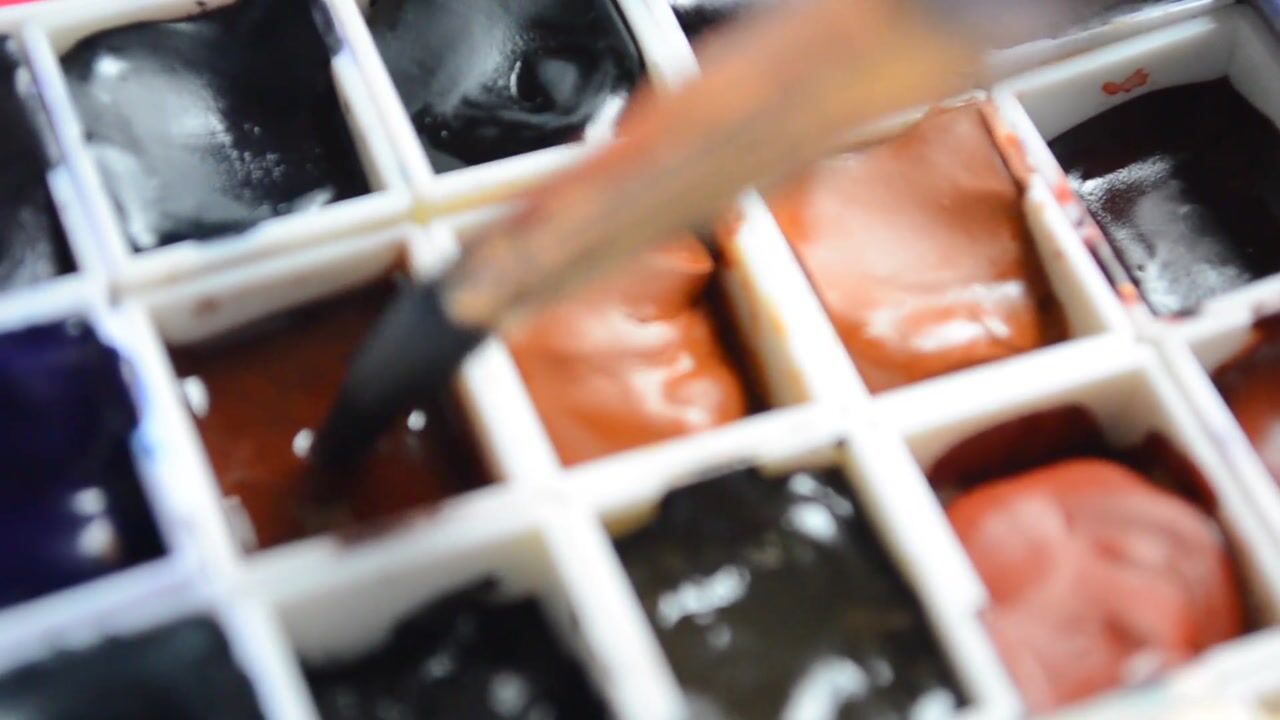
store your colors. You could use half pans or
full pans or even seashells. So on your mixing surface, place a small pile of pigment. You can make your own binder
by combining two parts gum Arabic to one part honey or glycerin and a few
drops of clove oil. You could add a splash of distilled water to make
it a little silky. The binder holds your
pigment like a vessel. Slowly add the
binder and mix with the palette knife or spoon
until it forms a creamy paste. It should look like soft butter. You want it smooth, not runny. And as you mix,
notice the texture, the scent, and the way
color begins to wake up. After mixing, you'd want
to store the paint in a half pan or your seashell
or some type of container. You could let it sit out
for 24 to 48 hours to cure before using or using
it in your travel palette. But if you want to
use it right away, you could do that as well to get the fresh and velvety look. You can label your color
and give it a name. It could be something poetic, something symbolic or personal. This color is part
of your ritual now. Another fun way I like
to use watercolor or guash is to use premade colors and mixing
them to make my own. Here I'm using
Schminkes aqua bronze, and then using two guash, one in red and one in pink. I'm also going to
store it in the shell. Mm and There's really no
wrong way to do this, and you can mix as many
colors as you want. Just learn the color theory so you don't get muddy colors. I love adding the
metallic powder from the Schminke
aqua Bronze line. When you make your own paint, you become an alchemist. You slow down, you
touch the earth, you turn soil and
spices into expression. Your art becomes a form of ritual and your materials
carry your energy. The next lesson, we'll use
these paints in our flow state spread to create a living page of presents. I'll see you there.
7. Creating A Flow State Spread: Welcome back. In this lesson, we're creating one of the most powerful pages in
your sketchbook, Your flow State Spread. This isn't about
making a masterpiece. It's about getting out of
your head and into your body, letting your hands move, your breath slow, and your
inner critic take a nap. This page is a portal to
your creative sanctuary. So let's begin.
What is flow state? Flow is that dreamy, timeless zone, we're deeply immersed in what you're doing. It's when time slows
down or disappears, your mind is quiet, your intuition is
just leading you. You're not judging or planning. You're just being
with the process. And sketchbooks are a
perfect tool for this. They hold space for you
to play, experiment, release and connect
with your inner world without needing a platform. How do we create flow? To enter flow, we need to
have a sense of safety, the calm grounded body. There has to be some structure, a simple framework that
kind of allows exploration, like in a sketchbook,
and then repetition. So actions that soothe and signal the brain that
is okay to let go. I set the mood by
lighting a candle. I took a few deep breaths, and then I opened
up my sketchbook, and I'm playing with the
brushes that I made earlier. Now, using whatever tools
that feel good to me, I respond and I create shapes. I let go and I let my hands
move without planning. Try to repeat the shapes or
try letting things evolve. Try adding textures,
washes or intuitive marks. You could also do doodling, scribbling, stamping
or splattering. Don't try to pause
or fix or improve. Just go with the flow, see what wants to happen
next and then do that. When you're done, take a moment
to sit with your spread. You could ask yourself
some questions. Like, how do I feel right
now compared to when I began? What surprised me? Did anything shift
in my body or mood? You might also
want to write down a few words or affirmations. Like, I can trust my instincts. I can learn to let go. There's magic in the mess. This is how we rewire
the brain towards creativity as a state
of safety and joy. If you'd like, you can come back to this
spread each week. You could add a new
layer, a new color. It becomes a living page, a record of your
evolving creative state. Flow isn't about making
something beautiful. It's about making space
for your presence. Your sketchbook becomes the sanctuary and your spread
becomes the doorway. Each time you return, the threshold gets softer. Each time you create, your
nervous system learns. This is a safe space.
I can bloom here. Next up, we'll close with a few final thoughts and intentions for your
sketchbook magic journey.
8. Conclusion: And just like that, you created your own
sketchbook sanctuary. You've explored the neuroscience behind why this practice heals. You set the mood with rituals. You've gathered natural tools, and even made your
own watercolors. You've let your intuition
take the lead on a page. This isn't just about art. It's about creating
a space where you feel safe, inspired, and whole, a place where your creativity can
bloom without judgment. So take what you've learned here and keep tending
to your ritual. Let it evolve with the
seasons of your life. You don't have to
make it perfect. You just have to be present. Thank you for being here and
for creating alongside me. I can't wait to see what
blooms in your sanctuary. Keep sketching, keep softening
and keep showing up.
 Imani S., Artist & Designer, Life Draft Ink