Transcripts
1. Class Intro: Hi there. My name is Sonu nova, and I'm an award winning
writer director. I've dedicated my life to storytelling and
mastering the craft, and I'm here to share
this passion with you. In this course, we're going
to dive deep into one of the most influential
screenwriting theories out there. Blake Snyder Save the Cat. We'll break down each
of Snyders Beds, using examples from some of
your favorite films and TV shows to show you how these techniques are
applied in the real world. By the end of this course, you'll not only understand
how to use Snyder Speech, but you'll also be able to
apply it to your own writing. Work together on breaking down a film of your choice and you'll fill out the beach sheet for your own spec script by the end. You'll see how easy
it is to craft a compelling story when
you have the right tools. Whether you're just starting out or looking to
refine your skills, trust me, your ideas are the
foundation of the industry. This course is designed to make screenwriting
accessible and fun. You'll leave with a solid understanding of
how to structure your stories and the confidence to make your ideas come to life. Join me on this journey. Let's explore Blake Snyder
save the cat together, and I can't wait to see the
stories that you create.
2. Project: Hi, everyone, and
welcome to this course. I'm so glad you're here. We're going to start off with just a quick little
summary of what the project for this
course is going to be. Essentially, you
will find a PDF file attached to this course
and you can fill it out. This is what we're
going to be doing for the duration of the lessons. Essentially, you've got
two separate sheets in it. You've got the
already existing one, already existing
film, and then you've got your own Spec
script planning tool. They are both essentially just Snyder's beat sheet that we will keep breaking down
one bet at a time, or sometimes two beats at
a time in our lessons. What I want you to
do right now is pick your own film that you really
love, you really cherish, ideally one that I haven't
discussed in this course, but it's totally fine if you
end up working on a film for a while and then I talk about it for one beat, that's
fine, obviously. What you'll do is
you'll break down each of these beats,
how they used, and why they work in the
film of your choice, using Blake Snyder's beat sheet. So you analyze a film because we're going to learn through the experience of those who came before us and through
their expertise, we're going to
learn so much more. When you have this understanding
of the beat sheet, how it works, and how that
manifests on the screen, you're going to then take the second sheet of that
file that I've given you, and you're going to fill it
out with your own ideas. That will then turn
essentially into a plan for your own spec script that you can write and you can finish, and you can have your own story fleshed out by the
end of this course. So you'll be working
on all of these beads. Throughout this course,
you'll understand what each one of them means
and how to use them. You'll get examples from me, you'll debunk examples yourself, and that will give you
the perfect foundation to then build your own story.
3. What Makes 'Save the Cat' Important?: Welcome to my course on breaking down and applying Blake
Snyder's Save the Cap. If you're here, you're
probably already interested in taking your screen writing to the next level, and you understand that a well structured narrative is a key aspect of that journey. Now, in this first lesson, we are going to take a deep dive in understanding what Save
the Cap is all about, how it became such a stable
in the screenwriting world, and how exactly we can use it. Blake Snyder was a
successful screenwriter who became famous not
just for his scripts, but for his book, Save the Cap. The book was published in 2005 and quickly became a stat
among screenwriters. But what exactly
is Save the Cap? At its core, this is
a structuring tool. It breaks down every story
into 15 basic beats. Each one of these 15 beats has a unique purpose
in the narrative. They each serve a purpose and help you write every moment of your story from the
opening image to the very final
frame of your film. What makes save the cap so
powerful is its flexibility because it can be applied to virtually any genre
and any story type. Anything you can think of, it still follows
this 15 basic beads. Now you might be wondering why
is it called save the cap? The name comes from
one of the principles that Lake Snyder
outlines in his book. It's called save a cat and what it entails is that early on, your protagonist should
do something endearing, or something nice, or
something interesting, that makes us care about them, that makes us empathetic. For example, your
protagonist can save a cat. This is a way to quickly establish a connection
and most importantly empathy because your audience needs to care about your
protagonist to then be able to invest in the story that follows that
exact protagonist. This concept is
simple but powerful. It's about creating
investment through empathy. When the audience cares
about your protagonist, they're more likely to stay engaged throughout
the whole story. But save the cat is more
than just one moment. It's a roadmap. Every single beat you need to have in your screenplay
is outlined in it. It helps you not lose direction. Stay on track, introduce every single key
information that you need. It helps you stay focused, but also stay interesting. What's fascinating is how
universal his beats are. Whether you're writing an
action packed, superhero movie, whether you're writing
a heartwarming drama or intense thriller. You will still find
the 15 beats that Blake Snider outlined in every single story
you come across. Lake Snyder's beats
are the opening image, the theme stated, the setup, the catalyst, the debate,
the break into two, the B story, the fun and games, the midpoint, bad guys close in, all is lost, dark
night of the soul, break into three,
finale, and final image. Blake Snides 15 beat
structure fits perfectly into the three story structure that many of you are probably
already familiar with. This is, again, a narrative
framework which is used to organize your story
into three distinct acts. In Act one, the characters setting and main
conflict are introduced and an inciting incident drives the protagonist out of their comfort zone
and into Act two. Act two is the meat
of your story. This is where the protagonist faces obstacles, challenges, and conflicts, which become
more and more intense. After a crisis or a lower point, where the protagonist
faces a major setback, the story reaches its climax. Act three is where
the story reaches its peak as the protagonist confronts the main
conflict or fill in. In the aftermath, comes the
resolution where loose ends, start to be tied up. This is where Snyder's beats
fit in this structure. As you can see,
Hibici is essentially just a more detailed version of the three act
story structure, which makes it much easier
to work with and follow. Throughout the course, we'll
be breaking down each of these individual
beats and we'll be taking a deep dive
into how to use them, how to apply them,
and what they mean. We will also be using examples
from contemporary films in TV to understand what
he meant better. By the end of this course,
you'll not only be able to understand everything
from save the cat, but you'll also be able to
use Snyder's principles in your own screenwriting
to be able to make more compelling and
well structured story. In the next lesson,
we'll be diving into Blake Snyder's
first two beads, the opening image and
the theme stated. These two set up the tone
for your entire screenplay, and they draw the audience in, so it's crucial to
get them right. Are you ready to start breaking
down stories like a pro? Let's dive into Blake Snyder, save the cap and unlock the secrets of
great storytelling. I will see you that.
4. Opening Image & Theme Stated: Previous lesson, we discussed the importance of Save
the cat by Blake Snyder, and we talked about how crucial it is to have a well
structured story. Today, we'll be
diving straight into the 15 beats, starting
with the first two. The opening image and
the themes stated. We'll talk about why
they're so important, how to use them to set
the theme for your story, and how to hook
your audience from the very beginning
with these 15 beats. The opening image is exactly
what it sounds like. The very first visual,
the audience says. This is your story's
introduction. It sets the mood, it
sets the atmosphere, it sets the tone. It draws your audience in. It sets up all the expectations
for what's to come, so it's very, very
important to get it right. Take the dark
night, for example, the opening image is a
sweeping shot of Gotham City, immediately setting the tone for the film's exploration
of chaos in order. The visual of the city's
fact literally breaking, introduces the films
central theme, the fragility of societal order when confronted by anarchy. The image just opposes the calm, orderly skyline with the
sudden eruption of chaos. This perfectly encapsulates
the film's themes of order and the unpredictable chaotic forces that threaten it, or consider Lara Land, where the opening
image of a traffic jam on a sunny Los Angeles
Highway sets up the city as a character in
its own right and hints at these themes of
dreams and aspiration. When crafting your
opening image, think of how you can represent your entire world and the themes in your screenplay that the characters are
going to battle with. Through just one visual. It's very important
to make it memorable to make it the essence
of your story, to make it matter
in the long run, because we are going
to come back to it at the very end of this course
with the very last beat. Did you notice how
I kept mentioning the theme of the films
in both of my examples? That is because next we
have the theme stated beat. This is where you introduced
the central theme of your story that we are
going to discover later on. In this beat is where
you sly introduce this theme and it's usually presented through dialogue or through some sort of
character interaction. And we're going to see this change in your characters from the beginning to the end. Let's look at an example. In Arn Swkins, the
social network, the theme is certainly
introduced when Mark Zuckerberg is talking
to his girlfriend. You are probably going to be a very successful
computer person. You're going to go through
life, thinking that girls don't like you
because you're in her. Now, why you know
from the bottom of my heart that
that won't be true. Be because we're bets. This line hits in the theme of ambition versus
personal relationships, a conflict that drives
the entire story. Your theme stated
doesn't have to be overly obvious
or on the nose. It is absolutely fine. If the audience only understands
what the theme was at the very end once
the character has already learned their lesson. Let's look at another example. In Pixar's up, the opening image is the house surrounded
by a bustling city, representing Carl's
resistance to change. The theme, coping with
loss and moving forward, is stated through
the early scenes of Carl's life with Ellie. It sets the emotional
tone for the entire f. As you start your screenplay, think of these two beats
as the foundation of everything you're going to
do of your entire story. Your opening image is your
very first impression, so it has to count. It has to draw the audience in. Then think of the theme stated as the heartbeat or
your entire story. This is the thing that keeps
the entire story together, the entire story moving. This is what makes
your story matter. Here's a quick exercise for you. Think of the story you
are currently writing. What is your opening image? If you don't have one,
that's even better, come up with an opening image. Think of a way to
represent your world, introduce everything
that's important about it in just one visual. Now think of your theme. What is the message that
you're trying to put forward? Think of ways of introducing
that through dialogue or symbolism or imagery in the
very first few minutes. And write down those ideas because we're going
to come back to them later on when we're
filling out your beach sheet. Alternatively, if you're not writing any original
work currently, select a favorite film
of yours, preferably, not one that I am breaking
down in this course, but it's totally fine
if you end up doing that and try to pinpoint what's the opening image and how and when the theme in
that film is stated. Think about how that's
done and why it works. In the next lesson,
we're going to explore the set up beat, which is where the
real world begins. This is where your
world is introduced, or your characters
are fleshed out. This is where you really
start digging deep. Get ready. I'll see you there.
5. Set-Up: Introducing Your World: Welcome back, everyone.
Now that we've covered the opening image and
the theme stated, it's time to dive into one of the most crucial
beads of Lake Snider, save the cat, and
that is the setup. This is where your story
really starts to take shape, laying the groundwork for everything that's
about to unfold. In this lesson,
we'll explore how to effectively introduce
your characters, establish a world, and
plant the seeds for the conflict that will
drive the story forward. The setup is typically the first ten pages
of your screenplay. You'll notice that
I have percentages, undermined definitions. Those are literally
the percent amount that this speech should take up in your entire screenplay. During this section, you're
introducing the audience to your main characters to the
world and to the status quo. This is the world before The main conflict
disrupts everything. This is the old
world, the normal. This is what your
protagonist starts with, and then by the end of it, they're going to
be in a new world, everything will have changed. Or they will be back
in the normal world, in the world that
they started in, but they will see
it differently. This is a critical critical
moment because this is where your audience decides whether they're going to
be invested in your story, whether they're going to
be watching until the end. Think of the setup as the
foundation of the narrative. In the incredible, for example,
the first few minutes, established the power
families day to day life, their powers and their struggles to fit into
a normal society. D just stay there. I need you to intervene.
You want me to intervene? By the time the main
conflict arrives, the audience has
already invested in these characters
and their world. Let's break down
the key components that make up the setup. We're going to start
with introducing the characters because any good story is
character driven. Please don't write plot driven
stories they're boring. We're going to focus
on the characters now. In this section is
where you need to show who your protagonist
is, what do they want? What are the flaws, and what does their
life look like before the inciting incident
changes everything before your actual story starts. Let me know who they are. I want to understand them, I want to know what
motivates them, I want to know what
makes them tick. Because if I know
all of these things, then I'll care about whether
they win by the end of it. In Iron Man, Tony
Stocks introduced as a genius billionaire
playboy with a penchant for Fast
Cars and Foster women. Is it true you went 12 or 12 with Last year's
Maxim Cover model? That is an excellent
question. Yes and no. March and I had a
scheduling conflict, but fortunately, the
Christmas cover was twins. This setup not only
establishes his character, but it also hints at the personal growth he'll need to undergo throughout the film. By the end of the
setup, the audience understands who Tony is, what drives him, and
what his flaws are. Next, you need to establish
the world of your story. I'm not just talking
about the setting. Yes, setting is important for
anybody who doesn't know, the setting is literally the locations where the
events are taking place. Yes, the setting is important, but that's not what
I'm talking about. We're talking about conveying
the tone of the story, the rules of the world, and conveying what's at stake. Is your story set in a
gritty realistic city? Is it maybe ahimsical,
fantastical realm. The setup for these two ideas will look very, very different. Now, the world you build during the setup will inform
everything that happens later on because the rules
that you establish in the setup are the rules that we need to
follow until the end. If you're building
a magic system and characters cannot use
their powers in the dark, then you cannot have characters
doing magic at night. These are the rules
that you set. Now, if you're going to need characters doing magic at night, you're going to need to
set different rules, but you're going to need to clarify what those
rules are in the setup. In Speaking of magic, in Harry Potter and
the philosopher stone, the setup introduces us to
the magical world of Hoggard, its rules and its dangers. The whimsical tone
is set early on, making the audience
eager to see how Harry will navigate
this strange new world. Finally, the setup is where you foreshadow the main
conflict of your story. Foreshadowing means hinting at something that is going to
happen later at the beginning. You don't want to
give everything away, but you should definitely
drop hints that something is about to distrupt
the protagonist's life. This could be through
a looming threat, a character's unresolved issue, or maybe a piece of information that hints
at future challenges. It can be anything. It can be their own personal struggles. It can be an
antagonist, a villain. It can be the forces of nature. There are a lot of things
that can foreshadow conflict, but you definitely
need to do that in your first ten or so pages. Now let's see how
that is done well. In Jurassic Park,
the setup includes discussions about the
potential dangers of cloning dinosaurs. Don't you see the danger, John, inherent in what
you're doing here, genetic power is
the most awesome force the planet's ever seen, but you wielded like a kid
that's found his dad's gun. This conversation
plants the seed of doubt and unease in
the Audience mind, setting the stage for the chaos that will
eventually unfold. To recap, the setup is your chance to
introduce your characters, establish the world, and
foreshadow your conflict. It's where your audience becomes invested in the
story you're telling. A strong set up, a good set up, makes the rest of
your screenplay more compelling because the
audience is already hooked. Also, a good setup will
make sense at the end. The rules that you've
established at the beginning of the
film will not be dropped midway through because it's more convenient now to change
the way the world works. By the end of it,
we're in a completely, completely different place with a completely new set of rules. That's not
something we want. In our next lesson, we'll
move on to two more beats, the catalyst, and the debate. These are the moments
that kick your story into high gear and force your
protagonist to take action, so I can't wait to dive
into these with you.
6. Catalyst & Debate: Everything Changes: Hi again. Now that we've laid the groundwork
with the setup, it's time to dive into the next crucial moments
of your screenplay. The catalyst and the debate. These beads are where your story truly starts to take off. Pushes your protagonist out of their comfort zone and
into the main world, and the story really
starts coming to life. Today, we'll break down
what these beads are, why they're so important, and how you can
use them to create compelling and
dynamic screenplays. The catalyst is
also referred to as the inciting incident
in many screenplays. This is the event that
distrupts the status quo, the normal world, and it
sets the story in motion. Think of it as the spark
that lights the views. The moment when your
protagonists world is turned upside down, forcing them to take action. Now they have a choice
in front of them, and they can no longer
just sit on the sidelines. Consider the matrix. The
catalyst is where Neo receives a mysterious message on his computer screen that
reads, wake up Neo. This message leads
him to meet Morpheus, who reveals to Neo the
truth about the matrix, a simulated reality created by machines to subdue humanity. This revelation disrupts
Neo's ordinary life and thrust him into the
central conflict of the film, as he must now confront the
reality of his existence and choose to fight against the machine
controlled system. The catalyst will
often be a decision or a revelation that makes the protagonist realize that nothing will ever be the same. Let's look at another example from the hobbit and
unexpected journey. Gandalf's visit, along with the unexpected arrival
of the dwarfs, disrupts Bilbo's quiet,
orderly life in the shire. The pivotal moment is when Bilbo is reluctantly drawn into their quest to reclaim
the lonely mountain and its treasure from
the dragons smock. When crafting your catalyst, think about the moment that will force your protagonists
into action. It will usually be
an external event, but it should definitely have a profound internal
impact on your character. It should be impossible for them to ignore it or avoid it. Be if your character doesn't
choose to take action, then you don't
really have a story. You need something that
is deeply important to them to then make
them take this choice. They need to go on this quest. They need to go on this journey. They need to make
this change to be able to create the
entire plot for you. Once the catalyst has occurred, your protagonist enters
the debate phase. This is where they wrestle
with what to do next. Should they take a leap of faith and embrace
the new reality, or should they just retreat to the safety
of their old life? The debate is essential
because it shows the internal struggle
your character faces before committing
to their journey. This is important because it
makes them look decisive. It makes your character look
like they're taking action. They're thinking about
it, but they're still ultimately choosing
to do something. That makes them interesting. That makes them somebody
you want to follow, somebody who's able
to make decisions. Let's stick with the
example from before. In the matrix, the
debate revolves around Neo's internal struggle
to accept the truth about the matrix versus
remaining in the comfort of his familiar
yet false reality. In this case, his
internal conflict and the choice he needs to make have a physical manifestation. The red pill symbolizes
his willingness to confront the harsh truth
and fight for freedom. The blue pill
represents staying in the deceptive comfort
of the matrix. T. Hobbit. This is done more solely, but it's still a
very obvious choice between two directions
for the character. After the dwarfs leave. Bilbo contemplates his decision
and debates whether to join their adventure or stay
his familiar safe life. The moment captures Bilbo's
internal struggle between the allure of adventure and the comfort of his peaceful
life in the shire. His eventual decision to join the dwarfs, despite
his reservations, marks the transition from his ordinary world into the
realm of the extraordinary, setting the stage for
the entire journey. I'm going mother adventure. The debate is where
the true colors of your character begin to show. It's not just about
whether they should act, but it's about why
they should act. What's at stake for them? What are they afraid of? This is where you deepen your audience's understanding of your protagonists
motivations. Let's take another example
from Star Wars a new hope. The catalyst occurs when
Luke discovers that his aunt and uncle have
been killed by the Empire, shattering his ordinary world. The debate follows
when LB one Cob offers Luke the chance to leave
Taten and join the Rebellion. Luke hesitates unsure if he's ready to take on
this new responsibility. This moment of hesitation
is the critical point. It humanizes Luke and makes his decision to join the
Rebellion more impactful. To summarize the catalyst is the event that propels
your story forward. While the debate is the internal conflict
of your protagonist, the conflict they face before
committing to the journey. Together, these two beats transition your entire script
from the ordinary world, the status quo, into the
extraordinary world, into the new world that
we're going to explore. They set the stage for the adventure or the
story that follows. Now, for your homework, identify the catalysts
and the debate in your favorite film and also
in your own screenplay. If you don't have them
yet, come up with them. What event disrupts
your protagonists world? How do they react? Write out these beads, paying close attention to
how the catalyst forces your character into a dilemma and explore that dilemma
during the debate. If you're still
planning your script, brainstorm potential
catalyst events, and consider how
your character might wrestle with the decision
to move forward. In the next lesson, we'll focus on the beat
break into two. This is the beat where
your character will enter the new world after they've made a decision to commit
to the journey. I can't wait to dive
into it with you.
7. Break into Two: The New World: Hello, and welcome back. It's time to explore
the pivotal moment of your screenplay known
as the break into two. This beat represents a
significant turning point where your protagonist commits to a new world and the central
conflict of your story. Let's dive into what
this beat entails, why it's so important, and how to craft a compelling transition
from Act one to Act two. The break into two is the moment in your screenplay
when your protagonist makes a definitive
choice to move forward into the
story's main conflict. This be marks the end of Act one in the
beginning of act two. We talked about this in our very first
lesson when we broke down where Snyder's speeds fit on the three act
story structure. This should be a clear
decisive action that propels your character into
the heart of the story. In the Lion King, the
break into two occurs when Simba after years of
self imposed exile, decides to return to the pride land and reclaim
his rightful place as king. I finally got some
sense knocked into me, and I've got the
bump to prove it. Besides, this is my kingdom if I don't fight for it, will. This decision is the turning
point that propels him into the central conflict of confronting SCA and
saving his kingdom. It's a moment of commitment
where Simba embraces his destiny and the story's
main conflict begins. The key elements of
the break into two are a clear decision and a commitment to the new
world of the conflict. It should be a moment
where the protagonist definitely chooses to engage with the story's
central challenge. This choice often comes after a period of hesitation
and debate, and it signals the start
of the active journey. Another classic example
comes in the Wizard of Oz. The break into two happens
when Dorothy decides to follow the yellow brick road to the Emerald City after meeting
Gilda, the good witch. This decision propels her into
the magical world of O z, marking the beginning
of her adventure. It's a clear and decisive
action that moves her from her ordinary life into
the story central conflict. When crafting your
break into two, ensure that it represents a significant shift in
your protagonist journey. It should be a moment of clarity where they embrace the new
reality and take action. This transition is crucial
because it sets the stage for the main conflict and challenges that they
will face in act. To. Think of finding Nemo. The break into two occurs
when Marlin decides to leave the safety of his reef and venture into the open
ocean to find his son. This decision marks the
start of his active quest in the beginning of his
journey throughout Act two. To sum it all up, the break into two is a crucial moment where your protagonist makes
a clear decision to engage with the story
central conflict and theme. It marks the transition
from Act one to act two, and it sets the stage for the adventure end or
challenge that is to come. Now, identify the
break into two in your own screenplay and
in your favorite film. What moment marks
the transition from the ordinary world into the
story central conflict? Ensure this moment is a clear decisive action that propels your
protagonist into Act two. If you're in the
planning stages, think about how you'll
craft this transition to create a compelling shift
in the main conflict. In terms of analyzing a film, write down not only what
the break into two is, but also write
down why it works. Next time, we're going to be talking about the B story and introducing the subplot
into your own spec script. I hope to see you there.
8. B Story: Introduce the Subplot: Hi again. In this lesson, we're going
to dive into the B story, which is an essential part of Blake Snyder's tape
the cat structure. The B story is a subplot that runs parallel to
the main narrative, adding depth and
richness to screenplay. Let's explore what
the B story is, why it's so important in how
to craft it effectively. The B story is a
secondary plot that compliments and enhances
the main story line. It often revolves around a secondary character or a different aspect of
the protagonist's life, but it still should tie into
the main theme and conflict. The B story provides emotional death and helps
to balance the narrative. It often takes the
form of a love story, but it can be also a
relationship with a mentor, a work plot, anything to help us understand the theme
and the conflict better. In the Princess Bride, the a story or the
main story follows the romance and adventure
between Buttercup and Wesley. Meanwhile, the B
story, the subplot, involves the comedic and
heartfelt interactions between Inigo Montoya and Pez who
joined forces to help Wesley. This subplot adds humor, depth, and a different
flavor to the story, which enriches the
overall narrative. Psi, Joke his memory. This is what the story
is actually about. Well, this is there to provide more depth to the characters, the world, and the theme. When crafting your be story, consider it as a
secondary plot that supports and enhances
the main one. It's not a separate story. It should still help get the point of the
main story across. It can offer emotional depth, a different perspective,
but it should always relate back to the
main plot in some way. Think about how this subplot can mirror or contrast
the main story, adding layers, or
meaning and interest. In finding Nemo, Marlon's primary story is about the quest to find
his son, obviously. But the B story involves Dory. She provides a
comedic relief and emotional support
throughout Marin's journey. Her su plot enriches the main story because
it adds humor, It contrasts S
Marlin's character, and it adds a unique
perspective on the adventure. When life gets you down,
you know what you've got to do. I don't want to
know what you've got to do. Just keep swimming,
keep swimming. Just keep swimming,
swimming, swimming. Integrating the B
story effectively involves weaving it throughout
your entire screenplay, because that way it not
only intersects with, it also supports your main plot. It should appear at key moments, providing contrast or support to the A story, the main plot. The B story often compliments
the protagonists journey, offering a different angle on
the main conflict or theme. Consider the Godfather. The A story focuses on Michael Colons rise to power
in the family business. I'm Godfather to your son, Carl. While the B story explores the family's dynamics
and power struggles within the Colony family. This subplot not only
deepens the main narrative, but it also enhances the
themes of power and loyalty. Don't you ever tell her to
shut up. Don't interfere. To summarize, the B story is a crucial moment that enriches your screenplay
by adding depth, contrast, and
emotional resonance. It should tie into the main story
thematically and provide additional layers to your
narrative. Now it's your turn. Try and identify the B story in a screenplay of your choice. Analyze why it works. Figure out how it connects
to the main plot. Then try to identify
the B story in your own screenplay or
outline a potential subplot. How does this
secondary plot support or enhance the main narrative? That is a question
you need an answer to before you stick
with one B story. Consider how the B story
intersects with the A story and what additional elements it brings to the overall arc? If you're just starting,
draft your ideas for a B story that compliment
the main plot. In the next lesson, we'll explore the Fun and
Games Beek where the story's main
promise is fulfilled and your protagonist gets
to explore the new world. This is a very big
chunk of your story, so it's going to take a lot
of time for us to unpack. So let's start working now.
9. Fun and Games: The Heart of the Film: Welcome back, everyone. Now that we've discussed the B story, it's time to finally dive into the most engaging and dynamic
part of your screenplay, the Fun and Games Seat. This section is where
your protagonist fully explores the new
world they entered and engages with the
central conflict in a way that promises the
genre score experience. Let's break down what the
Fun and Games beat is, why it's so important, and how to make it
shine in your script. The Fun and Games
Be is the part of your screenplay where the
premise of your story is fully explored and
the protagonist gets to experience the
world they entered. This is where the audience sees the payoff that the
stories promised. This is where you get
the fun or the adventure or the excitement that
the premise has set up. This is where your
protagonist engages with the core elements of your genre and the story's main conflict. In back to the
future, for example, the fun and games beat ccurs at Martin McCli begins
to explore 1955, discovers the unique
aspects of the past, and interacts with his
parents as teenagers. This section showcases the fun and intriguing
elements of time travel, fulfilling the
audience's expectations for an engaging and
entertaining premise. Specifically traveling
through time. History is going to change. When we talk about the
fun in game speed, when you are creating this
part of your screenplay, think about how your
protagonist will explore and interact with
the world of your story. This is the section where you
deliver the genres promise, whether it's adventure, romance, or comedy, it doesn't matter. This is where the audience gets what you've promised them. This is where you
need to deliver. It's also a chance to showcase
the unique aspects of your premise and allow your protagonist to
fully engage with them. The fin and games
beat typically takes up a significant
portion of Act two. It's a chance for the
protagonists to engage with the world in conflict
in a meaningful way, showing the audience why this
premise is so compelling. However, if you noticed, this beat can represent roughly
25% of your screenplay, and it's just one beat. This can be a lot to manage, especially for less
season writers, to make it more
manageable for you, we'll be breaking
it down into subbat that help structure this
section effectively. We will separate
it into new world, new characters, old contrast, build up, and pinch point. These sub Beats provide a more structured approach
to this part of the script, making it easier for
you to navigate and ensuring a well rounded
exploration of your premise. The new world sub is where
your protagonist begins to explore the new world or the new situation
they've entered. This is a chance for you to showcase the unique aspects of the setting or to highlight the changes from the
previous situation. In the first Harry Potter film, Harry experiences the wizarding
world for the first time. He enjoys the
wonders of Hogwarts, including attending
clothes, playing quitae, and discovering the
magical world quirks. This section embodies
the promise of the premise of a
magical adventure. Now, this is a crucial
term from Save the CP, and it refers to the idea
that the central concept or premise of a story
should deliver on its initial promise by providing the audience with
what they expect from the genre or the setup. In other words, This
is about fulfilling the expectations set up
by the story's premise. For example, If a movie is marketed as a high
stakes magical adventure, the promise of the premise would be the segment
where the audience experiences the thrilling
magical elements that were promised to
them in the beginning. The entire beat, the whole
fun and game section is centered around the
promise of the premise. Next come the new characters. This is where the
protagonist will experience the new
world through people. Since they've entered
the new world, they will be building
relationships or rivalries in the new
found situation. You can introduce
romantic relationships, co workers that your
protagonist doesn't like, but is stuck with,
friends, mentors. Anyone who fits the story and serves a purpose that
last bit is crucial. We do not need any characters that do nothing for our story. I Alice Wonderland,
the new characters subbed is Alice's initial
exploration of Wonderland. We see her encountering the peculiar and whimsical
creatures of this new world, creating friends and
foes in the process. Next comes the old
contrast subbad. This is where you
are contrasting the new world with the
protagonist's previous situation. As you can see most of these subbads are relatively
self explanatory. This one highlights the
differences between the two And can be used to deepen the character's journey by
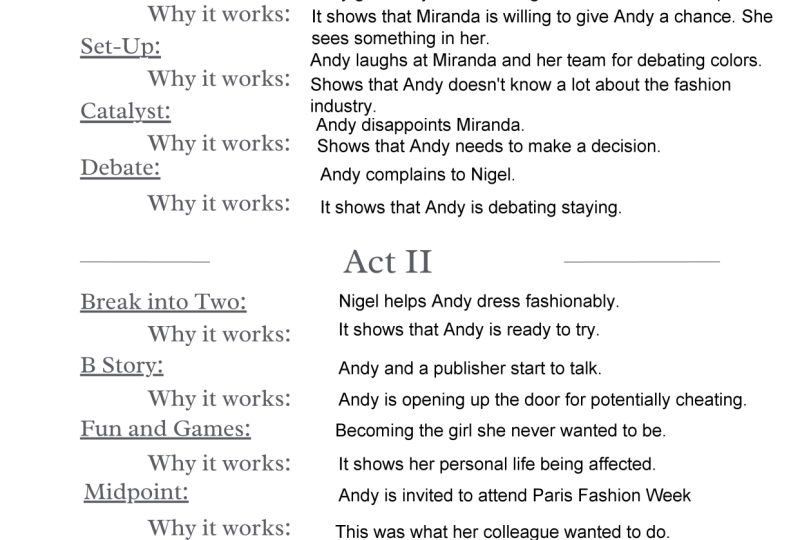
showing what has changed. Let's look at an example. In the Devil Was product. The old contrast subbat
is when Andy navigates the high fashion
world compared to her previous more modest life. This contrast emphasizes
her transformation and the impact of the new
world on her character. The pivotal scene
for this change is her falling out
with her boyfriend. You used to say this
was just a job. You used to make fun
of the runway girls. What happened? Now you've
become one of them. This scene shows us
a change in Andy, which is why it's such
an important moment. It shows not only the
difference in the two worlds, but also the difference this
makes in the character. It shows us how Andy is changing because of her exposure
to her new situation. Next, we have the build up, and this is so important. So many stories forget the
build up because they are so focused on the fun and games on exploring
the new world, on meeting new people,
on the B story, that they completely
forget that they have a main plot that they
need to be focusing on. The build up subbat
involves escalating the story central conflict
or complications. This is where you build the
tension and prepare for the turning point
that will literally follow in the next set
of your beach sheet. In Jurassic Park, the
build up occurs as the excitement of the
park turns into danger. The stakes are raised as
the dinosaurs become more of a threat leading up to
the film's major conflict. Point hit being
right all the time. Now the last very important element that you need to have in your fun and game section
is the pinch point. This is where you reinforce the central conflict
and raise the stakes. This is the moment that
reminds the audience of the protagonist's main challenge and increases the tension. If you have a defined bad guy or a main antagonist
in your story, This is when they should do something to remind us
of their existence. They need to come back big. They need to show us that
they are real threat. Don't solely focus on the fan and the beautiful
elements of your story. The main drive of any
story of any script, is tension and conflict. It is a good reminder to include those in
this beat as well. You need this pinch point, you need this point of tension. To build it up because
you needed to keep building and building and
building up until the climax. You can't just have a plateau and then the climax
comes in all of a sudden. That's not how good
stories are structured. You need this pinch point before you get to the
middle of your script. For example, let's look
at the hunger games. The pinch point is when Capns faces a severe
challenge in the arena, intensifying the mistakes and reinforcing the central
conflict of the games. We spend some time
getting no Peter, but we are reminded of the looming threat in the face of the games
and the capital. Now, to summarize, the Fan
and Games is where you deliver the promise of the
premise of your story, and you allow your protagonist to fully engage
with the new world, the characters, and most
importantly the conflict. This is a crucial part
of Act two that provides entertainment and deepens the audience's
connection to the story. This is a good time to really
explore the new world, get to know the new characters, make a comparison
with your world. Most crucially, say it with me. Build up the tension. Now let's do some exercises. Identify the fun
and games bit in the film of your choice
and tell me why it works. Then identify this be
in your own screenplay. How does your
protagonist explore and interact with the new world? What moments highlight
the core appeal of your story's premise? How will you build tension? If you're still
developing your script, outline how you will
create these sections to fully engage your audience and deliver the genre
of the premise. I've outlined every
single sub beat in your beach sheet for you to be able to fill
it out perfectly. Next time, we'll be talking about the turning
point of your script, the 50% mark, the midpoint. I can't wait to see that because stuff is going
to get interesting.
10. Midpoint: The Turning Point: Come back. The last lesson about the fun and games beet was quite long packed with information,
but don't worry. It's not going to be like
that in this lesson today. We're focusing on the midpoint. The crucial turning point
of your screenplay that brings a major shift or
revelation to the story. No major. The midpoint is one of the most crucial
elements in Lake Snyder, save the cat, and it changes the direction of your story
and deepens the conflict. Let's break it down together, talk about why it's
so important and how to craft it effectively
in your screenplay. The midpoint is a
pivotal moment in your screenplay that typically occurs around the
middle of act two. It often involves a
significant revelation, a major turning point, a dramatic shift in the
story of some kind. This speed is crucial
because it redefines the protagonists journey and it intensifies the
central conflict. The sixth sense is a
great example of this. The midpoint is the moment when doctor Malcolm
realizes he is dead. This revelation changes
the entire direction of the story and deepens
the emotional stakes. It's a dramatic
shift that redefines the protagonists journey and
intensifies the conflict. When crafting a midpoint, focus on these
three key aspects. Introduce a significant
piece of information or realization that changes
the protagonists understanding of the story. Then ensure this moment, the moment when your protagonist receives the information shifts the direction of the
story and leads to new complications or challenges. And use this be to encapsulate the central conflict and deepened dstkes for
your protagonist. In the Godfather, the midpoint occurs during the scene when Marco Collieri now more deeply involved with
the family business, returns to New York after
a significant period away. This moment is marked by the assassination
attempt on Vetos life. The attempt and the
information about it that Michael receives
forces him to take a more active role
in the family affairs and marks a critical shift
in his character arc. This event redefines
Michael's journey from being an outsider
who initially wanted nothing to do
with the family business to becoming an
integral part of it. The Midpoint underscores
the transformation in Michael's character and sets up the second half of the film. This is where his involvement in the family's criminal
activities intensifies, and it ultimately
will lead him to his emergence as the new
head of the Corleone family. I'm godfather to your son, Carl. The midpoint usually
occurs around the 50% mark of your screenplay. It is a critical turning point that can change the
protagonists goals, alter the story direction and deepen the central conflict. Think of it as a major
pivot in the narrative that redefines the stakes and sets up the second half of
your story entirely. In Jurastic Park, the
midpoint is where the dinosaurs break free
from their enclosure, which escalates the danger and alters the
characters objectives. In the matrix, news realization
about the true nature of the matrix transforms
his journey and deepens the conflict, and this again, happens
at the midpoint. One of you is going to die. Which one will be up to you? Now to quickly summarize, the midpoint is a
critical moment in your screenplay that
involves a major revelation, a significant turning point, and an intensification
of the conflict. This is a crucial
chance to reframe your story's direction and deepen the stakes for
your protagonist. If you're crafting
a strong midpoint, this can greatly enhance the impact and flow
of your narrative. Now, identify the midpoint in the film of your choice
and say why it works. Then outline the midpoint
in your own screenplay. What major revelation or turning point will shift
the story's direction? How will this moment intensify the central conflict and deepen the stakes for
your protagonist? Next time, we're
going to talk about the bad guys closing
and the s lost. These are great ways to
escalate conflict and lead your character
to absolute despair. For anyone who likes to
torture their own characters, this will be a
great one for you. I will see you there.
11. Bad Guys Close In & All is Lost: Welcome back. Last time we talked about
the 50% mark of your story, the midpoint where you turn
the story on its head. Today, we'll cover
two crucial beats in Lex nine to save
the Cat structure. We will talk about bag ice
close in and all is lost. These moments are essential
in escalating the tension and deepening the conflict of the screenplay as it
approaches its climax. Let's break down what each
of these beats entails, how they function, and how to effectively incorporate
them into your own script. The bad guys close in
beat occurs in act two, typically following
the midpoint. This beat represents a period
where the protagonist faces increasing obstacles
and pressure from the antagonistic forces. It's the time when things
start to go wrong. And the protagonist situation
gets worse and worse and worse as the stakes get
higher and higher and higher. In the hunger
games, the bad guys close in beat is
characterized by the growing threats from the Iranian straps and the escalating competition
with the other tributes. These not only
increase the pressure, but also contribute to a heightened sense of
danger and urgency. I know it sounds like it's hard to understand
what to write in this beat if your script is not an action or
an adventure film, but let's break down the key components
of bad guys closing. You need to increase
the challenges and complications that the
protagonist is facing. You need rising pressure, AKA to show how the protagonist
situation becomes more dire as the antagonistic forces
intensify their efforts, and you need to emphasize how the antagonist or the opposing
forces are closing in, making the protagonists
journey more difficult. Now, all of these are easily
adaptable to any story. To show you, we're
going to look at the romantic comedy,
Bridget Jones's diary. This bed is exemplified
by the fallout from her disastrous appearance at
the New Year's Eve party, where her romantic
interests, Mark Darcy, and Daniel Cleaver, both
see her at a low point. Additionally, Bridget's
career faces challenges, particularly with
her struggles at her job and her complicated
relationship with her boss. These setbacks
compound her feelings of insecurity and inadequacy, intensifying her
internal conflict and the external
obstacles she faces. I hope this helped you
understand how this beat works, and also helped you see that it doesn't need to
be an action pack to venture for you to have that guys closing in
on your protagonist. This can all be
an internal thing happening inside their
head inside their heart. It doesn't need to have a physical manifestation
in the world. They don't need to be pressed up against the wall at gunpoint. Next, we'll talk about
the always lost beat. This monument typically
follows the bad guys close in and represents a low
point for the protagonist. It's a moment when
all hope is lost and the protagonist faces
their greatest despair. This beat is crucial
for setting up the final act and the
resolution of the story. Now, in the dark night, this happens when the Joker
kidnaps and murders Rachel. This moment is especially significant because
it hits Batman and Harvey Dent with profound
personal and emotional losses. Harvey Dent transformation
into two face end of the structure of his idealism coupled with Rachel's death. Signify a critical
low point for Batman. Now, to effectively craft the est lost beat,
consider these things. You need to create a scene where the protagonist is at
their lowest point, facing their greatest
challenge or failure. He also need to ensure
this beat represents the most significant setback or defeat for this protagonist. And use this moment
to transition into the final act where
the protagonist will find a way to overcome the challenges and
achieve a resolution. In finding Nemo, the
oldest lost beat occurs when Marlin and Dory
are captured by a whale. The situation appears dire, and Marlin's despair deepens as he fears he will
never find his son. But how does this set up
the final actu, I ask? Well, this crisis forces Marlin to confront his
fears and insecurities, which ultimately leads him to find renewed
determination and hope as he devises a plan
to escape and rescue NEMA. This way, it clearly leads
towards a resolution. I want to point out
the all is lost beat is not the
character's reaction. It's the thing that
causes their reaction. As you noticed in
the dark night, I didn't say that this was when Bruce Wayne was at his lowest. This is what caused his lowest. This is the situation
that made him go there. This is Rachel's death, and Harvey Dens
turn into two face. This is not his despair. Hi despair will follow
in the next beat. The bad guys close
in beat involves increasing obstacles
and rising pressure from the antagonistic
forces, whatever they are. And the O's lost beat represents the protagonist's lowest
point and greatest despair. This is the biggest
challenge yet. Both of these beats are
crucial for building tension and setting up the
final act of your screenplay. Now it's time for you to
identify the bad guys close in, and the O is lost beats and the screenplay of your choice
and tell me why they work. After that, outline
those two beats for your own screenplay. How will you escalate the protagonist challenges
and increase the pressure? What moment of
despair will serve as the lowest point for your protagonists will all test them, challenge them in a
way like never before. How will all of this
set up the final act? Next time, we're
going to talk about the dark night of the soul
and the break into three? We're going to turn your
despair into action? I can't wait to
see you there and see what you create by
the end of this course.
12. Dark Night of the Soul & Break into Three: Welcome back. Last time we
talked about the B guys closing in and the olds lost beads from Lake snide
the save the Cat. Today, we're going to be
tackling two more beads, the dark night of the sole
and the break into three. These moments represent
key turning points of your screenplay and are essential for
leading your story to its climax and
its resolution. Let's dive into what each
of these beats entail the significance and how to effectively incorporate
them into your own scripts. The dark night of the soul occurs just before the final act and represents a moment of deep introspection and
despair for your protagonist. Last time we talked
about all is lost, which is the moment
that challenges your protagonist more
than anything else. Dark night of the soul
is their reaction. In the dark night, Rachel died, and Harvey Den became two faced. This was all is lost. This was the challenge. This
was the biggest threat yet. The darknight of the soul is the reaction of
your protagonist. This is the lowest point. This is when they think,
they can't make it. It's the time when your protagonist reflects
on your journey, feels overwhelmed by
their challenge and experiences a profound
moment of self doubt. This be is crucial
for setting up the resolution of your story
because the lowest point for your protagonist
will help you show how high they can get
when we reach the climax. It will show us their change, the fact that they've not given up and what they've learned throughout their journey through the course of your story. In the Shashank redemption, the dark night of the soul
occurs when Andy is in solitary confinement and during a grueling and isolating period. During this time
Andy reflects on his situation and his past, he contemplates the seemingly insurmountable
challenges he faces. This moment of crisis is crucial because it
sets the stage for Andy's eventual escape plan and the ultimate
resolution of the story. This moment highlights his resilience, his
inner strength. He draws upon those to overcome his dire circumstances
eventually and get out. So I crafting the dark
night of the soul. Let's think about how to show the protagonist reflecting on the journey and the
obstacles they faced. You also need to create a
scene where the protagonist feels overwhelmed and absolutely doubts their ability to succeed. They feel like they'll
never make it. Also, use this moment to
transition into the final act, where your protagonist will find renewed resolve and
prepare for the climax. Let's look at Harry Potter
and the order of the Phoenix. The pivotal moment, the all is lost is when Cerus black
is killed by Btrix. The dark night of
the soul is Harry who is left mourning that loss. In the aftermath, he
is overwhelmed by grief and anger and
a sense of futility. He feels isolated and
burdened by the weight of the prophecy and the reality of the dark times ahead of him. Now let's discuss the
break into three. This is a pivotal moment that transitions from the second
act into the third act, and this beat is
when the protagonist decides to take action. It is often fueled by
a new understanding or a new revelation from the
dark night of the soul. It's a moment when the
protagonist commits to resolving the central conflict and moving towards the
story's climax. They've been at the
lowest, and now they say, You know what, I'm going to get myself back together
and I'm going to do it. This is when Andy comes up
with his eventual escape plan, and this is also
when Harry decides to rally his friends
against the dark forces. In the avengers, the break into three occurs when the team, after overcoming internal
conflicts and doubts, unites with a clear
plan to confront Loki. This decision propels
them into the final act and sets up the big
climactic battle. Now, here are three
elements that you can include at this stage. You can show the protagonists renewed determination
or understanding, which is and I highlight this a direct result from
the dark night of the soul. Have the protagonist and
their allies or friends develop a strategy or plan to address the
central conflict. This is quite obvious when
it comes to an action film, but how do you use it in a
drama or romantic comedy. This can be the moment when
your protagonist talks to their best friend
and decides that they're going to chase the
goal of the dreams after all. And then use this beat to set up the story's climax and lead to the resolution of
the main conflict. In the Lord of the Rings,
the return of the King, which is one of my
favorite films, the break into three happens after the harrowing
encounter with Shea and Sam's momentary
belief that Photo is dead. Sam makes the pivotal decision to carry on with the mission, so there is now a new
plan and the new resolve. This idea. C dead. Later it turns out
that photo isn't dead, and this moment is marked by Photo and Sam's renewed
determination to complete their quest despite
the overwhelming odds. This moment sets the stage for the final battle and the
resolution of the journey. Now we know that the dark night of the soul is a moment of deep introspection and despair that sets of the transition
into the final act, while the break into three
is the pivotal turning point where the protagonist decides to take action and prepare
for the climax, and this is also the
first bead of act three. Both of these beats are
essential for creating a compelling
narrative and leading to a satisfying resolution. Now, look at your favorite
film and point out, where is the dark
night of the soul, where is the break into three, and why both of those work. Then outline both beats
for your own screenplay. How will your
protagonist experience a moment of introspection
and despair? What will bring
them to the lowest? What will really hurt them, and how will they battle that? Then what decision or
revelation will lead them to their final plan and transition
them into the climax. We're almost done with Blake
night to save of the cat. Next time, we're
going to talk about the finale and the final image. We are almost finished
with the breakdown of his book and with
writing your own Bach. I can't wait to see you
in our next lesson.
13. Finale & Final Image: Climax and Resolution: Welcome back. Last time we talked about the dark night of the soul
and the break into three, and now we are
officially in Act three. In this lesson, we'll explore the final beats of Blake Snider, save the cat structure, the finale, and the final image. These moments,
bring your story to a satisfying
conclusion and leave a lasting impression
on your viewer. You need to get them right. Let's dive into each
one of these beats entails and how to effectively incorporate them into
your own screenplay. The finale is simply put the culmination of your
story central conflict. It's where all the
major story lines converge and the protagonist
faces their final challenge. This beat wraps up
the narrative arc, resolves key plot points, and provides a satisfying
resolution to you story. Let's examine Star
Wars Episode six, the return of the JI. The finale includes
the climactic battle and the resolution of the
conflict with the Empire. This beat ties together
the story's main threats. It provides closure, and it resolves the
protagonists journey. There are a lot of elements
to this beat because all the loose ends
need to be tied up. We have the battle between the Rebel Lions and
the storm troopers. We have the redemption
of Darth Vader, we have the destruction
of the death star. Any other smaller plot
line and be stories are also nicely wrapped
up during this beat. What you need to do in
the finale is ensure that the central conflict
of the story is resolved in a meaningful way. You need to tie together
the major plot points, and the character arts, and provide closure to old significant story lines
and last but not least create a dramatic and
impactful climax where the protagonist faces
their final challenge and achieves the resolution. In the Lord of the Rings,
the return of the King, the finale is marked
by the destruction of the O ring and the resolution of the story central conflict. This moment is what the entire trilogy has
been building up to. It wraps up the
narrative and provides a satisfying conclusion
to the epic journey. When I said, wrap up everything, I'm talking about the denuma. Danuma from French means to
wrap up all the loose ends. Any story, any plot
line you've had, any question you've asked. This is where you give
us all the answers, and this is where you
tell us why you've introduced each and every
one of those plot lines, because they all somehow
connect intermingle. This is where you need to explain why that love
story was important. Ba Han Solosar was impacted by Layer and
his love for her. He went from a smuggler to a hero who was
absolutely selfless. This was impacted by his love
for another human being. This is why the romantic sublot
was important because it impacted the characters in a meaningful way that
contributed to the story. Now, let's discuss
the final image. This is the last scene or even the very last shot
of your screenplay. It's a crucial
element that leaves a lasting impression
on your audience. The final image should reflect
the thematic resolution of the story and provide
a sense of closure. In the Godfather, for example, the final image is the door closing on Michael Cleon's wife, symbolizing his
complete immersion into the world of
organized crime. This final shot encapsulates the theme and emotional
arc of the story, and it leaves a
powerful impression. This is a crucial element that leaves a lasting impression
on your audience. The final image should reflect the thematic resolution of the story and provide
a sense of closure. On top of all of these, ideally, your final image should be a callback to your
opening image. Bonus points, if you
remember that I said, we'll be coming back to that
in our very first lesson. The opening image and
the closing image both signify the main
theme of your film. That's it if you've
done them well. But a significant
change has happened between the very first and the very last
frame of your film. Attempt to do a call
back to your image to show how the world
has now changed. A beautiful example of this
comes from Forest Gump. The final scene in Forest Gump is with his son representing the completion of
his journey and the theme of enduring
love and connection. But the very final shot is a direct call back to
the film's opening. Before we were even introduced to the character or the world, we followed a feather
all the way to his feet. The final shot is the exact
same feather flying away. This final shot offers a
sense of closure and leaves a positive lasting
impression on the audience. The finale is where all
the major story lines converge and the central
conflict is resolved. While the final image is the last monoal screenplay that reflects the
thematic resolution, and it should leave a
lasting impression. Both of these are essential for delivering a
satisfying conclusion to your story. Congratulations. Now you have a
solid understanding of Blake night to save the Cat. You know all of his
15 beats and you can apply them to
your own screenplay. Take your favorite
film and write why the finale and the
final image work in it. Then finish the beat sheet for your own script with ideas for the finale and
the final image, and I will see you
next time when we will go over
common misstates. I can't wait.
14. Common Pitfalls and Troubleshooting: Welcome to our final lesson. Last time we tackled the last two beats of Blake
Snyder's Bach at structure, the finale, and the final image. In this ssion, we'll be focusing on common mistakes and pitfalls that writers
encounter when using Blake Snyder save
the Cat structure. We'll also provide
troubleshooting tips to help you refine
your screenplay. I will also show you examples of poorly executed
beats to illustrate these common mistakes
and how to avoid them. Without further ado,
let's get started. Understanding
common mistakes can help you avoid them
in your own writing. Here are some common pitfalls. When key beats overlap or
are not clearly defined, it can really confuse
the story's progression. You can see beats
overlap definitely. But that is because they
are meant to do so. For example, in the beginning, Everyone will anticipate
that the themes stated will be happening while you are setting up the world
and the characters. However, don't put
the dark night of the soul during the midpoint. This will only
create confusion and it's important to
understand why. Stories and screenplays have a cause in effect
type of progression. Events in situations,
call for decisions, decisions, trigger new events. They need new decisions, and so on and so forth. If you skip beats, all mesh two beats together, when they don't belong together, you will disrupt the
cause in effect loop. This will only make your
script seem like everything is a lucky coincidence and actions have absolutely
no consequence. Another problem we can
see very, very often. Sadly, we can even see it
in big budget productions that have loves and loads of executives checking
those scripts, are characters who lack
depth, or clear motivations. Because this makes
it difficult for the audience to engage
with the story. Please, I beg you
invest the time in creating well rounded
characters with clear goals, clear motivations, and
clear arcs that you, as the writer, are
familiar with. This adds so much
depth to your story and helps you maintain
the audience engagement. I'll even show you an
example of how not to do it. Let's look at suicide at. The character of doctor
June Moon, AKA Enchantris, doesn't lack potential
in the start, but her motivations in backstory
are not fully explored. This leaves her actions
feeling like they're abrupt and like they have
no depth whatsoever. Her transformation
into the villain, and the subsequent plans are presented with little
context and little clarity, and this all makes her so much less of an
engaging antagonist. I so. The lack of development in her character arc makes it challenging for
the audience to understand her motivations or invest in her conflict
with the protagonists. And this of course, affects the overall
coherence and emotional impact of the film. Now, unsurprisingly,
an unresolved, or weak, central conflict can lead to a very
unsatisfying resolution. An example of this is the
Amazing Spider Man, too. In this film, the central
conflict between Spier man and the various villains feels so underdeveloped and lacks
any real resolution. What happens is that the
film attempts to juggle multiple antagonists
and many subpots. But as a result, the primary
conflict becomes so diluted. It's hard to point it out. I don't know I don't
know what to do, but I can't get him
out of my head. Yeah, but we've talked about. No. It's not his choice. I promised him that I
will keep away from you. Electros motivation and character
development are minimal and his ultimate feels so
abrupt and out of nowhere. Similarly, the Green
Goblins role in his impact on the story line
are not fully explored. This leaves the main conflicts
of the film feeling like they're unresolved or like they're satisfactorily
addressed. This scattered approach to the central conflict detracts so much from the overall
narrative coherence and emotional engagement. To avoid this, just make sure your central conflict is
strong and clearly defined. Address any unresolved threats and provide a
satisfying resolution. If when you get to your finale, you see that you've
got plot points in plot lines that don't really mesh with the
rest of your story, that provide nothing apart from entertainment
or shock value, or they're going
to just look cool. I've got one request
for you and I genuinely beg you delete
the subplot. Remove it. You don't need it if it's not providing anything
to your main story. If it provided anything to the story, you would
know what it was. If you find that problem, there is a very simple solution. Remove everything
that doesn't help. I promise you this will make
your entire story sound way more cohesive and looks so much better and
more thought through. Now the last very
common problem is a shift in tone that is
not well integrated. Because this can disrupt the flow of your
screenplay so badly. Here's an example of a script
with inconsistent tone. The cabin in the woods. While the film is known for its inventive take
on the horror genre, its tone can be
quite jarring due to its frequent shift between horror, comedy, and
metacommentary. Instead, ensure that your screenplay tone
remains consistent. If changes are necessary, make them gradual and well
integrated into the narrative. I'll show you two examples of how tonal changes are made well. Get out is another
take on horror comedy, and social commentary
meshed into one film. But you can't really see a tonal change unlike with
the cabin in the woods. Do you know why? Because
the very first scene of get out shows you that this is going to be a funny film
with comedic elements, definitely, but it also is going to be absolutely
terrifying. Creepy, confusion eyed suburba. Gosh, I'm serious, though. Feel like a sore thumb out
of here. Alright, there. Alright, I'll talk to you soon. See you. This is Rymer. The dialogue in that first
scene also points out exactly what the social issues that this film is going
to be discussing are. There is nothing surprising. There is no real shift
because we were prepared from the very first scene
for what we expect. In pulp fiction, you again
have a consistent tone. You can also see well integrated narrative
shifts that demonstrate how effective
storytelling can maintain audience engagement and
drive the narrative forward. To wrap this up, remember to
clarify beat transitions, develop your characters, strengthen your
central conflict, and maintain a consistent tone. By addressing these
common pitfalls, you'll be better equipped to craft a compelling and
well structured story. For your final review, revisit all the beats
we've covered and ensure they are well
executed in your screenplay. Apply the troubleshooting
tips to refine your scripts and address any
issues you've encountered. Thank you for joining me
throughout this course. I hope these lessons have provided you with some
valuable insight and tools for writing comparing screenplays using Blake N
to save the CAT structure. I wish you the best of
luck with your writing and keep creating great stories.
 Simona Iordanova, Writer-Director & Script Consultant