Transcripts
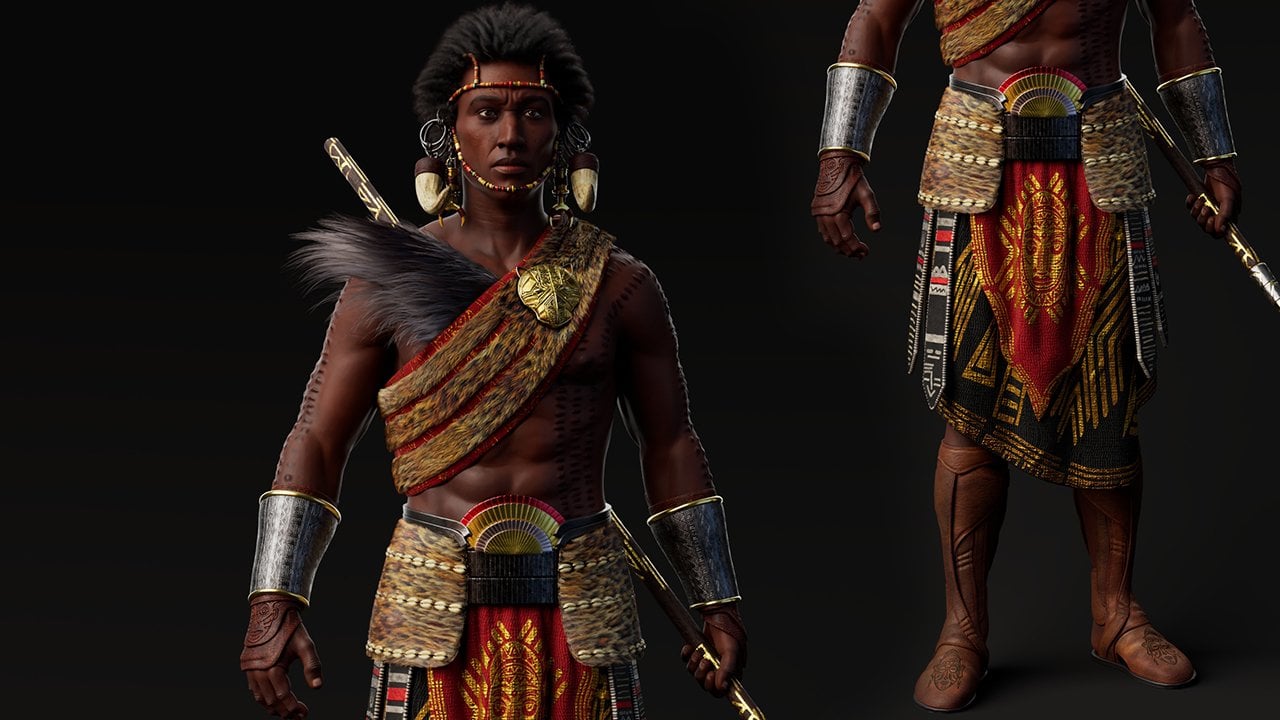
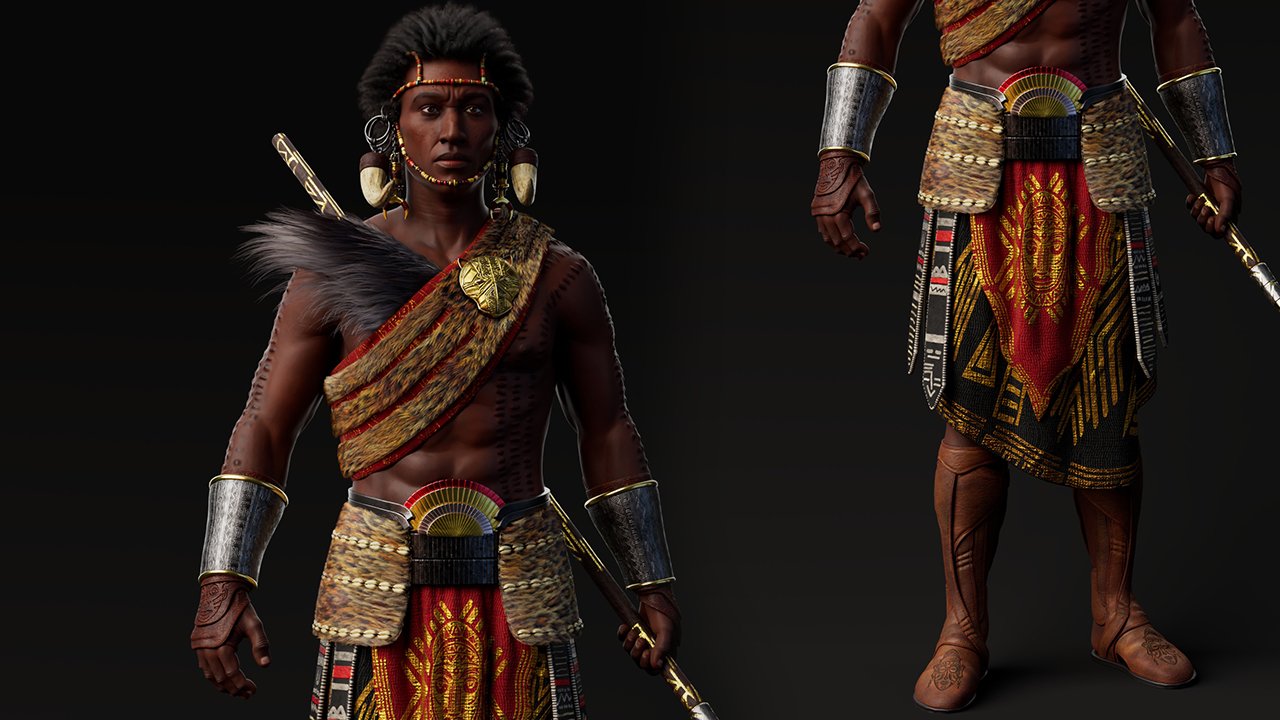
1. DR KHAN TRAILER: Hi, I'm Kelechi John, a TD character and
prop artist with over five years of experience in the VFX and game industry. In this class, I'll
guide you through the complete character
creation process as we build an hyper realistic
TD Asian male character. I of course will
be on clean forms, natural proportions,
realistic skin textures, and a final polish render. You're aiming to
upgrade your portfolio or develop a stud
ready workflow. This course will take
you from sculpt to final image clarity and
precision, what you will learn. You follow a
professional pipeline and learn how to sculpt a realistic two D HMM
character and Zbrush with attention to anatomy structure and natural surface detail. Rob creation in
Marvelous Designer. In this stage,
intricate patterns will be simplified into
digestible chunks, aiming or arming you with the right knowledge for garment creation in
Marvelous Designer. Texture realistic skin in Substance 3D Painter
using Subtotna vibration, a detailing and
color refinement. Groom believable soft air
using exigen in Maya, focusing on natural flow, volume, and airline shaping. Setup lights in rendering node, creating cinematic beauty
renders with highlights which highlights your character's
realism. Class four. This class is designed
for intermediate or advanced artists, students, or bis who are familiar
with the basics of Zbrush, Maya, Marvelo designer, Egg
Gen, and Arnold render. If you're looking to take your character work to
a professional level, this course is for you.
Why take this course. By the end of this course, you would have a fully sculpted, textured, groomed and
rendered th character. Ad ready to feature in your
portfolio or show real. You also gain insight to IN character workflow used in
game, film, and animation. Create your own version
of the character, including a fully
detailed sculpting in Zbrush, garment creation, in Marvelo designer, hyper realistic skin textures
and sbtanpinter, natural hair
grooming with Eggen, a polish venal
rendering in Arnaud. This class is packed with professional tips,
practical workflow, and creative
guidance to help you build a portfolio
piece that stands out. Let's get started.
2. 01 Base Mesh Prepping in Maya: Okay. Welcome back, guys. So in this lesson, we're going to be creating
something different. As usual, create something
different on my tutorials. So I welcome back or rather, welcome back to this new series of Tutorial I'm gonna
be working on in here. So for this series, so if you're already familiar
with my previous tutorials, you should know by now that I'm really big into creating faces. Like faces are kind of kind
of very fascinating to me. So creating different
types of face, dark, complexion face, young face, stylized face, young gay face. So miss Butler told you, I want to be working on
creating this Asian face. So I've already
given him a name, so I'm going to minim
him Doc Doc and Soy. Hope I'm pronouncing
that correctly. So that's going to be his name, so we can see the you can see the interesting and
unique painting to this. I don't really know the actor
that painted this, though. Probably this is his name. Fortunately, I can read Chinese. So but this is it's
an awesome concept, kind of work within here. So I'm going to try
my best kind of capture the essence of
this, the feeling of this. Maybe if you might
not be able to kind of capture the exact likeness bots general feel
in terms of lighting, texturing and rendering
and both air creation and all that goodness when it comes to creating
a two character, it's TD software, so I'm
going to try my best to capture the essence also of this as accurately
as I possibly can. Okay, so let's jump
right into it. So obviously, I'm going to sin
Bs march like I always do. So I have a series of
best mesh in here. So the bet mesh I'm going to be using would be this gotten from through discsore
just generic models. So let me just close this. I've already imported
that into a new file. I also have an eye in there. So I have my own
e models in here, so I'm going to visit
my own eye model. So it's the outer eye
and then the eye wrist. So I'm going to visit my eye
model for this piece, okay? That's that, so
let me undo that. Bring everything back
out. You should be, you can kind of get
this to discount store. Okay? So by every that I'm going to be providing should be providing. So for the skill Show, too, I'm going to be providing this is going to be available
on ski Show on my order Tutorial stores. So make sure I kind of check
this out once it's out. So I'll be dropping
a trailer for it also to my YouTube channel. Okay, so basically, I'm going to be giving a modified version of this Base mesh to
those watching from Skishe actually
purchasing this tutorial. So yeah, so let's
get right into it. So now that we have
the Biz Mash in here. So one of the setup,
I like to do is to go to a camera setup, which is a perspective ina. I'm going to set this to an
85 millimeter lens in here. Okay. So 85, enter on. This here, that's basically just
what I like to start with first kind of for just
the camera focal length for more or less
like a portrait, a portrait camera lens. So yeah, that's that I'm going to save this one
let's spot this out. So let's explore
this out. I already have some references that
I'm going to use in here. So most likely this
particular guy this guy kind of
resonates more with the shape of the character. Most especially for the facial structure
of the character, more less like you can see a sharp angle in here,
just below the jaw. You can see for this also to another sharp line
which you can also use, okay? So all these
features work. I'm going to implement and
then look for other references also to kind of add those
features to our reference, make it look more interesting
India it's going to be a major realistic reference to actually kind of use India. So just to keep that in mind. So let's carry on,
put it to the side. Then I would select this Ed model. I will
export this out. So I need to export these two. Fold, I have a folder
in here for it, so I'm going to
create a new fold. I'm going to name
this to Z Imports. Let's use all caps in Z Imports. Okay. Let's copy the five parts. Then we'll paste the
five parts in here. All right. So I
want to export this as an OBJ, very important. Export as an OBJ. So lets you name this to Doc. Am I spelling that correctly? Oh I A O. Okay. Save that. Then this is my outer eye. So the outer eye. Me this to outer eye. All right, export as OBJ. Is to do the same for the iris. Yeah, but before we
do that for the iris, I would like to push
the iris quite closer. Quite closer. Let's get this as close as we possibly can. Okay. Seems like we need to work
on them individually, also, too, so I'm going to face more
double click on this face. Pull that in some more like so get this forward a bit more. Somewhere around there, it
should be fine, quite close. I think this should be
close enough, also. I think this should be fine. All right. Let me turn on this minuscule because we need that
This minuscule more or less like C drop under the eyes around the
corners of the eye, so I'm just going to
make modifications to the those export out the eyes. I Alright, select
this double click. Let me just push this
roughly where I feel it should be around. Push this also roughly
where I feel it should be. He also should be fine.
We're going to make modifications of that
instead of Zbrush, but for now, this
should be fine. All right, should I
should work just fine. Save. Unless spot out
the miniscus now. Let's spot this out. Okay.
Mincus, safely export it out. Save this file. Let's open up Zbrush in here, open up Zbrush. So we can import that into
ZBrush and set our camera, and then we can start the
sculpting process on that. Okay, so we Z brush now. So I'm going to open up
the default projects. I want to double click on
that, so open that up. Okay. So I'm not I typically
don't use fancy workspace. I don't use wide
fancy workspace. So what I was going to
say this to default, I'm going to load this
interface in here, something down here
should be fine. I don't do too much, so it should kind of
be on the same page. Alright, so yeah, now, next thing I'd like
to do would be to come over to documents. Okay, the range range
as we find already. So let's import a model in here. So go in here, select this. Let's make sure there no
subdivision levels in there. All right, so let's
import imports. No. Doctor, can we please that in? Yes, we can? Let's start
with the base head. Okay? I'll go over click on a pen fair though leg is fair. Imports, let's import
the iris. Turn on this. Okay. Yeah, this should
be fine where it is. Let's go append sphere, select this sphere by
holding o e sub two. In ports. Let's do the minusc append spare
select the spare sub two, IptsOy, now we're good. So everything minutes get
in here is in here now. But what we need to do
is to set up the camera. Let's set up the camera
match that of Maya. Let me save this out first. So name this No, no, not inputs outside the file. So let's just name this to Z Cs. Save this. Now, let's go over to I
believe should be on draw. Let's set the camera to five
millimeter length also. And I'd like to save this crop
factor to a value of four. Something like so let's
see how closely we kind of merge this with Mya file. So let's go over to a Mya file. Okay. Let's get this
in the center like so. Zoom let's create a bit more
space in your standard. Let's get a bit more space in
here, minimize close close. Okay. Let's go back to Zbrush. This in here. Now,
let's fed through. Let's fed through in here. Now, let's march this
as closely as we can to see if our camera
setup is kind of matching it as
accurately as we can scale this out some more. I'm going to use the ISR
reference points. Okay. So the eye is going to be
like a main ankle point in here kind of merge
this accurately. Oh, I need to go back to Maya and make sure
we're looking this from the front view because the front view is going to give us a more perfect example for this. Front view, let's check our camera set up
again. Let's see. I think we are good in here. Okay? Go back to Zbrush. Okay. Marge this as closely. Yeah, perfect. So
this is a perfect. So we have a perfect
marching here. So this now, let
me go into Zbrush, and then I just let's say
this crop factor to one. Said this to one. Let's see. I think I need to turn off
the minuscus on both side. Let me turn off this minuscule s here so we can see
this a bit properly. It's an important part
of the process because we want to make sure what we see inside of zebush is also
what we see inside of Maya. So we need to march this you can see
how in zebush now, it's kind of protruding outward. But in my what kind of up more more of a flat surface to it so. So I'm going to go
over to my dry again. That's I actually study
this crop factor. I use a crop factor of four. Kind of flat now
deface a bit more. So now we don't see any, I don't see any
strong transitional, slopy zooming in detail, Linda. So you notice now,
it's kind of marching marching it a bit closely. Okay, let me show
you what I mean. So initially, if
you get this back to say this growth
factor back to one. You can say budges out. Now, if I kind of go in here, I can see how we get this
kind of transitional flow. We don't want any
traditional flow. We just want it kind of cut short without any
transitional flow. So if you have any
transitional flow, that means you know matching the camera exactly as you should match it
with that of Maya. So that's what the crop
factor actually helps. So if you go back to
the draw and then we set this growth
factor to four, let's even do a value of five. Let's see. Let's do a value of five. Now, let's see. You can
see were much better. I can see we have
a sharp movements. Say we have a sharp
movement in here now, completely matching
this as accurately as we can. Yeah, perfect. Will work those fine. So yeah. So five is a good one. So let's take down this
see through, take it down. So now we've matched the
camera on both sides. So now we can start a
scopting process in here. But one last thing
I would like to, we can start our
scopting process. Yes. Yes. One last thing I would like to
actually do would be to test the resolution, the number of subdivision
ever I need on this model. So to do that, let's select the head Shift E to
go to poly frame. So the head selected now go over to geometry and we
subdivide this. You can see the poly coount
we have in here now. I like to subdivide
this 12 million. Let's subdivide this one more
and see how far we can take this so we have
this at 50 million. Now, I 50 million
actually quite nice. We can actually move this
with ease actually. We can. So now let's actually test based on this resolution now we
have this subduction level we have in her let's text if you are the skin polytf if it's going to actually hold
that quite sharply. So I'm going to apply to Alpha. I have a texture in
XYZ Alpha in XYZ, XYZ, 175 skin, open this up. Let's Let's do two. So typically conduct you
appear a drag wreck. So I'm just going to zoom in and drag something in
here. Let's see what we get. Let's see if you get really
clean details in there. Zoom in Yeah, we get really good clean surface detail in here that we can actually
work with work just fine. Let's say we increase
intensity a bit more than we do one around here. You can see how we see the details a bit more
accurately. That's fine. I do that, so I'm going
to be leaving this at subtion level seven at a
pul count of 50 million. No, no. Forward. Okay. So this is where we're
going to be starting with. So to finalize this and then we'll continue
the next lesson, we'll go over to layers. Then let's create
a new layer here. I'm going to name. We're
going to name this layer too. Primary forms. All right. So this
should be fine. I'm going to save
this. Let's save this. Okay, that's fine. So I'll see you guys in the
next lesson. Bye for now.
3. 02 Facial Siloutte in Zbrush: All right. Welcome back, guys. So now let's get to it. Let's start blocking
out the shape in here. I'm going to go back
in here, turn it off. Let's do dots. I believe this
should be in here. Okay? So I'm going to go to
lower subdivision level. Let me open up geometry in here, and I'll go to the lower
subdivision level for this going do this copting on the lower
subdivision level. Okay? So noticing in here, we know definitely that
a character in here is more like a boxy face but
even though it has a box, he has a boxy face, you
still want kind of give that feeling of the
face feeling elongated, more or less like a
long face to him. So just like we have
this character in here, that's more or less like
a long face in here. Though it has kind of boxy
on the jaw line boll. Still a long face in there,
so let's get that in. So how do we do that? So
just kind of flatten out. Let me get this
reference in here. So this reference in here yeah, reference in going to flatten
out the region just between this cheek bone and then
just below the jaw line. So more or less like this
pink shape you have in here so we call it the pink shap pink
shape you have in there. So it's going to
flatten that out, so. To do that, I want to
use the move brush. Making sure symmetry
is donned on Okay. All right. S with the move brush now, let's look for a
good angle for this. All right. You need to push this in, but you want to be
careful, though. You want to be
careful the parler region you're pushing in. So the first a bit better. Where we need to push in is around here that
comes down this way. Just the same way pushes this way and then it
comes down this way. So start by pushing
that in first. So with a move brush, increase the brush
size a bit small. Look for a good angle for this. I'll start pushing this in then downward like so a bit more. So we come from Look at
this from the front view, now we can make it to see that bulky shape begins to appear
on the lower side now. Which is like precisely
what we want. So here's a slimmer jaw to also, too let me increase
this some more. Let's get this in
a bit more Okay. More or less like so. Yeah, so we're already kind of blocking out the
ship in here now, so let's get this jaw line
down here, a bit more. Yeah, something something
slightly bulky, like, so, increase the brows size
a bit more, push this in. Push this in. Okay? All right, we're getting
something in here. So basically, I'm trying
to kind of tackle the general silhouettes
of the head fell before moving or pulling or pushing
any of that in here. That's the main target for now. Lets you do that. Let's shrink this in a bit more. Alright. Yeah, this is fine.
Like I said before, we're not going for
absolute likeness in here, but something quite close to what we have in here in terms of the reference
in there, okay? Let me get smaller lip tube. Okay? Like, so All right. I think we're getting something
in here that would work. Okay, now let's get a
dam standard brush. Dam standard brush in here. They need to start
blocking out smallest like a deep out separation in there. Like, so Okay. No,
that's way too sharp, we need to smooth this down. So let's go to smooth brush. Reduce this down. We're going to get some smooth
in there. Okay. Mm, I think I went too far
on the dam standard brush. I don't look like at sharp line. We don't want that, so
let me smooth this down. Okay? Yeah, yeah, we're definitely
getting something in here. Now, let's go back to
our original reference, more realistic
reference for this. Let's use this as a guide to
kind of get this in place. So I want to look I
need to look at this from pretty much the
same angle this year. So we are still on the lowest
sobtion level for this. Get this out or more Okay. No, I'm noticing in
here now that all of this needs to be
pushed in some more, so the lap around
there needs to be pushed back to move brush. Push this back in. Okay? Mot like. Also, we need
a smaller nose to him, needs to have a
smaller nose to him. Also, we need to push this
down down a bit more. Okay. Yeah, pretty much around
there seems fine. This just like a flat like a
basic blockout trying to do, kind of get the
general silhouette of the head a bit more. Okay? The should work. Who this now. Do that a bit more
accurately around the. Okay? All right. I feel like I should extend
the face slightly more so. To do that, I need to use
my let's see the max lasso. I'm going to max out
region, those halfway. Yeah, yeah, somewhere
I'm just be fine. Blow this out, invert the block. Okay, I'm just going
to extend this slightly a bit more,
so just slightly. More or less just to capture a more longer facial
structure to him. But we want to try as much as possible to avoid
going overboard. Let me do that repeat
that again slightly. Okay. So should be fine. Not to extreme, but still
very much in there. Smooth this down some more. Make sure we capture the silhouette of
this a bit properly. Forward bring this jaw
line forward. So more. Okay? All right. All right, so now I'm
going to extend can see this cheek bone kind
of put out a bit more. So let's use the clay brush. Gonna going to use the
clay brush and then just sentuate this some
more smooth that down. Let's see what we
get out of this. So once we kind of do this wear, it needs to be, so you want to be really careful
doing this though. You want to do this we,
it needs to be, if not, it's going to be blocking out something elsewhere that
isn't supposed to be there, so block this in. You can see a bit of kind of poking out, smooth this down. Gentle smooth should be fine. Gentusmo around there also. Okay. Fill the spot
up some more right. This we need to smooth
out a bit more. Okay? I will need to use
the move brush. Was the lowest of dion level. So this temple
around this region, I need to kind of block
something in there. So let's get a little bit more
depth in the smooth down. Yeah, something pretty much
like so should be fine. Okay. Let me work on the
nose a bit more. Let's work on the
nose, get the nose. A bit small. Undo that. Reduce the bre size. Get
the nose a bit slimmer. Okay. Let's get this nose
a bit slimmer, I think pretty much like so. I saw seems like a good one. Now let's look at
our main reference. First let me kind of save. Let's save this. Let's look at the main concepts
in here. Let's see. Okay. Let me kind of capture a
little more of the expression in there by just pushing, pulling this down a bit more. Yeah, like that should be fine. I think we're almost
done with capturing the capturing the
silhouettes in here. So let me just look
at this a bit. I can see how this place
pushes up a little bit more. So with the most want to move
brush, brushs a bit more. I will just come somewhere around there and lift
this up some more. Just to create a discontinuation around that part. Like
that should be fine. Okay. Let's see. Here, I think we're
getting something in here. Okay. Yeah. She's coming
out quite nicely. Just checking to see
there's something else you need to block
out in here. Oops. Clay brush. Let's fill this part
up some more smooth. No, no, no, no, that
doesn't look right. That doesn't look right. I think the move brush
would be a better one. Leave this up some more. Okay. Let's look at this from
same similar angle. Let's see if you are
getting this in. Okay. Now, one of the very
distinguishing features of this also is the fact that you kind of have it's a
bit of gap around this part, so we need to kind of
create that gap in between the brow ridge and
then the upper eyelid. So there's a gap
in between there, so we need to kind
of create that. Let's see if we can find
see if we can find a realistic or something
close enough to this. This is a closed one. A close enough reference for it. Let's see, um no
close love reference. Let's look for something
a bit more realistic. Oh, this one actually
has it around here. So we can use this. This we can definitely use. Let's look at this
from the side. I think we need to
kind of max out. We need to max out this region. Okay? Lo a bit more with the more
brush, we can lift this. I believe we can lift this up. Get this lifted up some more. Okay. Yeah, we're getting
something in here. Alright. This we can definitely
work with So for the fact, let me blow this smooth
this out a little bit more. Then for the fact that
smooth can create anal eye covering on that. But we'll do that later on
let's just get this in now. Now it's beginning to look a
little more like an Asian. So slowly, we're kind of getting the shape of an
Asian eye in there, which is precisely what we want. So yeah, so that we're
on the right track. Let me eye these minuscus
for now. Hi the minuscus. Okay. Let's add a little thickness on the lower part of the eyelid. No, before we do
that, let's capture the shape of this
Asian I in here first. Let's capture the
shape of the Asian I. Let's see if we should
have a reference in her We can do this from
this ongoing here, so let's use the move brush. Okay. Let me get in. I will push rather
raise this up. I need to max these parts. Like so, blow the max, increase the brush size, leave this up, get
these bends down. Okay. We're not there yet. No. Invert the max. We
need to shrink this. We need to close
this a bit slightly. Close this a bit more. Yeah, you're getting
something in now. Let's look for more
bet, more close up. Do have something
for eyes in here. Maybe not. Okay, we
should have, Asian. Yeah. Precisely
something like this. So let's bring back the max. So you can see how it kind of
tightens out in this part. So let's see let's get this push this back. Get this a bit
tighter, in the max. Get this a bit tighter. Okay. I V max. Let's see. I think this should
work I need to lift, get back that sickness
around the ice. I'm not going to lift.
I'm going to lift this out some more like so. Okay. Yeah, I think they
should they should walk, play the marks. Get them out. Trying to make sure I
don't have eyes that are not looking accurate enough, so yes. I think we're in a good place. Yeah, I think we're
in a good place. Les if there's any other
corrections to be made, we can always go back and
then make our correction. But for now, let's see, I think this should
be fine for now. Okay, so let's add some
sickness underneath the eye. So I'm going to use dem
standard brush and just create a dense around the think need a bit
more intensity for this. Okay. Yeah. So yeah, it's already looking more
or less like an Asian now, which is precisely
what we want, so. That's cool. S have something in here, it's still looking a bit off. Specifically slightly off. Before we can block anything in, let's make sure from
the Ed reference, we are doing this accurately. Check this in here.
Okay. Saving out. Okay. Okay. Hey, I think we're good in here. Okay. Yeah, we're good. Except for the fact
that I would like to create with them standout brush. Let's create this indention
around here. Okay. We can do around. So something needs to actually
be in there kind of create some shadow depth in
there, that's fine. So what's going to come
back and work on the eye. But for now, I think we
are in the right list. Let's go up and create this
temporal line in here. So basically to do that. Let's start by
creating a depth in de standard brush create an
indentation around here. Okay? Yeah, that should work. Yeah, that should work. Let's
see what we have in here. And I'm going to use
the clab do brush. Create No, that's way too thick. Create a lump around
the, smooth this down. Okay. I think this
should be fine. Okay. Then we can
create another one in here smooth the edge,
smooth the edge. So it should fade all
the way to the back. I think mine is actually
way too sharp now. So let's increase
the smooth intensity and blend smooth
out down some more. I still still feels
a lot of symmetric. Let's just smooth
some things down. Okay. All right. Yeah, I think this
part is way I think this part is way too low. Just sorting this out. Okay? All right. Getting
something in here. No, no, that doesn't
look right. That doesn't look right. Undo that. Don't be afraid to always clean, and then we do something in
there so it feels look right. Okay. You can see a
separation in between. Is what we have around. I'm sure you guys in here. Is this depth we have in here
this depth we have in here, so we would need to create
the same thing in our sculpt. So the best brush for us
is the standard brush. Let's look for a
good angle for it. And let's carve that
indention in the Okay. Now, it's not accurately
accurate in there, so it's supposed to come supposed to come
somewhere from around here. Like soap. Let's zoom out. Let's
see where we get. Okay, that should work. Smooth down. Alright. So I will need to use the
clay builder brush to fill up this part some
more smoother down. Just basically to add
some breakup in there. I don't know if I if this part. I pull push it up it too much. Let's just get this
down slightly. Shouldn't be too
aggressive in there. Alright. Let's go back to
our main reference. Let's see what we
can capture in here. I think I need to
smooth this part out. Nope. This is up Gleb up brush. Feel this part up some more. Here's a bit more flesh
around this part, so take down the
smooth intensity, brush size, smooth this
out some more. Mm hm. Okay. Add a bit more
fill up the parts. Smooth that down. Okay. Now, it doesn't feel
right, so I need to get a nice blend
around those parts. I need a very nice blend around those parts.
Like something like so. Okay. I think I need to go
back to my move brush. Okay. I like that,
should be fine. Use the clay brush. Let let me show you get what I'm trying to create in here. Um, do this more for an
old ery kind of, though, but should still work
with those things I'm gonna do fill up in here
and smooth that down. Let's see. If this works nice, I'm going to leave it, if
not, I'm going to undo that. Seems to be working nice. The south winds kind of
smooth this region out also. Okay. Smooth this down. Alright, we're
getting somewhere. Okay. Use them standard brush. Let's add indentition here. Let's add one that
comes across in here. But shouldn't be
too deep, though. Just something soft
around that part. Okay. Yeah, this is coming
along quite nicely. Right. Okay. Yeah, this is fine.
4. 03 Primary Forms In Zbrush: Okay. Okay, but guys, so let's continue on
from where we left off. All right, so we're still on
the primary forms for this, so we're thinking of working generally on
the primary forms. So of it going to
continue blocking things out in here as we should, okay? Right, so let's see what
we can work on in here. I'm thinking of going into
the eye now, but let's see. I kind of like this
forehead in here, I'm going to implement
that also in my scopes. Let's see. So this is actually giving a bit
of character to him. So let's declare Btu brush. Basically just going to
build something around. Smooth those down
coming a bit closer. Smooths down. I think I went overboard, so let's do stronger
smooth around that part. Okay. No do that. A bit of buildup in smooth down. So basically, I'm trying to
give him more stronger foam to give him a more
stronger foam. Okay. All right. As much as I want to know
follow the reference, I still want to kind of
play with this some more, play with this some more and introduce some stronger forms to him that make him look
more make it look more alive. Okay. Wemove brush, extend this
out a little bit more. I Okay. Yeah. Now, once is
in here is that, let me see if I can find a
good reference for this. Let's use the main reference. So on the main
reference, you can see the ball eyeball actually poking out around
this part a bit more. So I would like to introduce
that A to win raising that. Let's kind of close the
upper eyelid down some more. So it kind of begin to look more or less like a likeness in here. Let me blow this down. With the move brush. Let's get this eye
closing down some more. Yeah, like soap. And we're going to create something that looks molest like the eye ball poking
out around this part, let's try Let's try
it in the clay, build up brush, and build something on
here, smoothes down. So if his eyes actually
protruding out of it, kind of poking it out,
remove brush again. Something doesn't
look right here, so you need to fix them. Okay? No, that feels a bit odd. Zoom out some more. Look at this from the side. So the oldest part is
around here is up here, so can use the Dame
standard brush to create an indentation
around there. That indentation is looking is not looking accurate enough, so let's do this again. Not accurate enough either. Let's look at this
from this view. Making sure they actually wraps around this a
bit more accurately. Push this in this
is a good angle to kind of do rather fix this. It's a good angle to fix this. So this should actually wrap
around them standard brush. Zoom out. Let's compare this again. Let's see. Now, it needs to look as
accurate as it needs to be. Basically just moving around and trying as much
as possible to kind of capture the
essence of that some more, reduce the bros size. Okay. All right. Yeah, pretty much. Pretty much there, almost. Almost there. Almost there. Come in here, push
this down some more. Okay. I think we're pretty much pretty much halfway there. As much as want to kind of
use the concept in here, to kind of make sure kind of follow some realistic
approach to it, kind of make sure it's looking
right. Very important. Okay. Let's see, are we
catching this properly? Yes, we are. In seems to
block out in the wood. Let me just get the neck to
fit this new set of head. Okay? All right. Yeah, this would work.
Smooth that out. Nope. Maybe you should
leave that the way it is. Let's look at this from the angle of the
reference one more time. We're still going to do
that a few more times, obviously. But let's just see. Let's see if we're capturing
it as closely as we can. It's kind of teting his
head up a bit more bots. Let's see. Let's see if we're capturing something close
enough in here. Yeah. So obviously, I just
to sharpen this, so I'm going to increase
intensity a bit more. That's way too
intense, ticks down. On do that. This
depth should be fine. Okay? Come on, click on something
else, right? Undo that. Okay. Smooth that down. Need
to sharpen this edge some more do that. Smooth that down.
Shouldn't be too sharp. Okay. Now, we need to kind of kind of define
the lip some more. Let's define the lip
a bit more like soap. Now, doesn't look right. Yeah, somewhere around
there should be fine. Okay. Get an indentation in here. All right. Okay. That's fine. I think this is
coming out nicely. As for the primary form,
though, primary form, secondary form is where we need to do a little bit more work in there to kind of get some
good looking shape in there. No, wrong brush.
Smooth that down. Okay, Dam standard brush. Need a dent in here. I can see a clear dent in
there and smooth it down. It shouldn't be too nah
no, no, no, no, no. Kind of making him
look a bit too hold, so let's clean that. N something quite
gentle in there. N something quite
gentle in there. Smoot. Let's use this now. Dipping material, just kind of see how the eyelight
is working in here. So the ylight now
we can kind of get captes some more shadow depth in here to be sure if wereing
this accurately or not. Okay. Okay. I think we're in a
good place. Let me put flats in these parts. Smooth. Let's see, I think
I went overboard on there. Let's use the H polish instead. Smooth that down. I think I still think
that's a bit too much also. Let's take down the
intensity for that. Okay. All right. Dad, did I que
that way too much? Let's see. I'm trying
as much as possible. Not gonna que the shape. Come on. Okay. So I will increase this to a higher
subdivision level. So I increase this one
subdivision level higher. I can see some issues around
the around these parts. So let's go to the
lower subdivision level and smooth this down. Okay? I feel like I should extend
the jaw line out a bit more. Let's go back to this. Let's see this from
the front view. Okay. With a more brush, I'm going to extend this out
a little bit more. I'll push this in some more. Okay. I think we are there. Add
some sickness in here. Smooth. Okay. Let mesically brush instead. Smooth. Alright. Yeah, we're getting
something in here. Let me use them standard brush. At a separation here. One will also be in the
middle of the nose. Slightly in the
middle of the nose. I think I didn't do
that accurately enough. Let's go on subdivision level. I think we need to do this on
a higher subdivision level. Okay. Et's get the shape of
the leap in there. No. No. Why is it as weird? No. Okay. Smooth this down. All right. Yeah, that we definitely need. I was going to smooth this
down a little bit more. So that should
create some shadow around around the
lower part of the lip. Now, let's do no. Okay. Let's see. No. You need a bit do that a bit
more precision. No, no, no. Don't think I'm
doing that accurately enough. No. Yeah. Almost there. Almost there. Yeah, I think this should work. No, that doesn't look
that doesn't look right. I think the indentation I added
in here was way too much, so let's fill that up to
begin with, smooth this down. Let's create a new one, something a bit slimmer in there It's not looking right
because it needs a bit more subution level
to look a lot better. Okay. I think we have lost let's
go to lower subtion level. I think we've lost
that temporal line, so we need to
introduce that back. Let's do this with
the standard brush. Whoa, as a bit too intense, we use the brush size. We need this to be slightly
more obvious in the smooth. Okay. All right. I think we can align the
lower part of the lip onto W, mark this out, let's
get the lip closed. Let's get this lip closed. So with the move brush,
move this closed. Okay. Yeah, pretty mode
like so, invert this. Gets even closer,
bend this down. Okay? So basically kind of capturing
the expression a bit more. Alright. I'll need to add a bit more
fleshiness to these bits. Like so smoothes down. Okay. Add a dention around here. Smooth that down slightly. Alright, I think I
would like to also, I can see separations in here. Let's look for a reference layer that's properly blocked in. I think there's a goods
actually a good one. It's a good one in
here. Damn standard. I don't want to make this too
too distracting, actually. I want something in
there, no doubt, but I don't want it to
be too distracting. Just enough to make us know
there's something in there. I shouldn't be something
that is too distracting. Okay. I think they
are too far aparts. We use the bruss size
too far aparts loser. Okay? Right. Most likely, you need to
our Civ out face too. Most likely, we need to add some more flesh in
her smooth that down. Okay? Now, the eye is a very important
part of this process but we do that. We
do that definitely. But just trying to block out
the other side a bit more. Every other part that
we need to block out in a fast before
jumping to the eye. Okay. Let's do something
for the neck piece. Not too much, though, but at
least something in there, something in there to hold
the shape a bit more. Let's accentuate this. Okay? Okay. All right. All right. Let's do this No, this part is not going to
be visible, though, no. In herir first, smooth down. Let's add something
inna undo that. Let's ad the clavicarbn. Okay. Them standard. Pretty dense
in smooth down. All right. There's more soot that comes
across here, smoother down. Most of these things are not
going to be visible though, but anyway, let's
just get them in. I think I went too
deep went too deep. Okay? All right. No, it should be a bit
closer around here. Okay, let's increase this one
subdivision level higher. Get the shape do
that's the center. Right. No, no. Let's do this little
bit more precision to it. Roduce this Okay. All right, reduce the
broad side for the most reduce the intensity and
then just move this down. Okay. I think we can start introducing some structures in here based on realistic references now. Like, for example,
for the cheek bone, let me reduce this
down some more. Go to lower subdivision level. Okay, them standout brush. Create a dens in here, smoothes down, should
still be in there. Okay. Let's add some slight thickness for the lower part of the eye. Think can use the
standard brush rather. Okay. Now, I think, at this point, you kind of take a break and then come back to this
so you can actually see all the details you
might need to add in here. I think I add something here. Hondo dollars way too intense. Smooth, still too intense. Something gentle in
there should be fine. Like, so smooth down. Okay. Let's look for other
references that should help. So this bug needs
to be a bit ticker, so let's get it a bit ticker. Let's go on sublion level. Now we're already working on secondary shapes
already in here, so it says already details
for secondary shapes. Okay. Yeah, I'm making significant
progress in here. I basically just checking. Checking to see if there's something else I
need to do in here. All right. Take down the subdivision level. Let's try and match
this close to the angle of the reference. T something pretty
mode like soap. Okay. This is the move brush. I think I need to push
this in some more. Okay. I should probably even
save this camera setup. I think that will actually
really help to save this camera setup. Okay. To save this. Yeah, I think this
is a good spot. Let's save this
camera top in here. I'll go down is on
that row in here. So stock camera. Let's name these 23 quarter. Let's do three quarter. Put quarter view in this
uaview should be just fine. Quarter view. So we can always snap back
to that if we need to. So it's busy for, can
snap back to that. I'd like to extend the jaw out. You should definitely, you know, not this took this on
the right hand side. I dog this on the
right hand side, so I can see this move
into that camera angle. Yeah, so basically, I'm just checking this to see
what I'm getting in here, to see if I'm doing
this accurately or not. Feel like I should push this
in some more some more No, no, let me leave that out. Maybe push this out slightly. Like so. Okay. Okay. All right. Just checking, checking. Just checking to see if there's something else
I need to get in. I think at this point, I think I need to even rest my eyes, so come back and then
I see I'll definitely see definitely see all
features to add in here. Yeah, it's a good one.
Sound a good one. It's definitely box shaped phase that we can steal some of the features in here and then
add to our scope to make it look a lot more believable. Okay. Yeah, this is a good one. So this guy is a bit of
a longer job to him. Let's compare this with
our main reference to see if we can use that. This guy has more
lima fish to him. Compared to still has a bit more bulky fisher
structure to him. So I still want to kind of keep that bulky
fisher structure. So let's see what we can
add using this reference in here to make it a
lot more believable. But Okay. We're still on the move brush. I'm guessing pulling
this out some more. Pulling this out some more. Let's see how this works with our modeline not too
sure. Let me undo that. Maybe better still push with
a bit of pushing in instead. Yeah, there's a bit of
pushing in instead. Let's see, standard brush. Woo, dig this in. Okay. Yep. This will work. And this we can definitely
keep. All right. That's why I see where having different references
actually comes in handy. You can see a shape around here. No, reduce the brush size. We standard, reduce the
brow side a bit more. We them standard brush. No, that's way too deep now. I think the previous
one was actually fine. Somebody's going to
gently smooth that. Okay. Nicely, if you can find another
reference similar to that is also another good one. Also another good one we can use see if we have this working out correctly. But I think to do this now, it's kind of brick symmetry. But we're not yet it's not yet time for us to actually
brick symmetry yet, but definitely one cheekbones supposed to be a bit
higher than the other one, so keeping that in mind,
5. 04 Primary Forms Eyes In Zbrush: Alright, so cucumber guys. So still on this, I've gotten some mod references in here that would
actually help, okay? So I got this. Now I'm not too sure
if this is even AI or actualistic reference, but it looks somewhat really close to an AI,
most likely an AI. Anyways, we got this
and we got this also. So it more or less like a similar structure to
our main reference. The main reference in here, which is concept design in here. Alright, so now, I would like to get the
blend between these two. Now, character in here is
somewhat similar to this, but. He has a more wide
outfac structure, like, so so I'm going to kind of find a mid range in
between these two. So right now, our character is looking something
somewhat looking like this character in here. So we need to extend the sides a bit
more, just a bit more so. How do I go about doing that? I would do something like let's see if we can capture this the essence of
this a bit more. Let me do this from the side. Okay. So I would do something
like maxing around. Like, so I would exclude this I need to
exclude these parts. So down control and
then out blow this out, invert the max, blow a bit more. Then I'll use my Gizmo. Do symmetry center this and just extend this out a little bit just
a little bit more so. Like so should be fine. I want to use the move brush. Move brush, extend the size
a bit more, pull this out. Oh, no, undo that. Let me go back to my
let's go back to this. Scale it out a little bit more. Like so. Symmetry.
Don't symmetry, then really broad size. Then come and extend this
part out a little bit more. I think that's a
bit too extreme. Okay. I think, let me do this again. But instead, I'll do this from this region around the egg. Yeah, this should work. I should work just fine,
set this, set the eg. Get this up, move this this way. Let's go into this a bit more
and kind of introduce more more of the structure in the I'll staend out this
jaw a little bit more. Okay, get this here. All right. From
the side profile, you know, I'm getting
something more realistic. Okay. This we can
definitely work with. Check in. Alright. Feel like I should lift
this out a bit more. Leave this out a bit more. Okay. Yeah, I think I'm liking this. Late get this down
some more. Okay? Yeah, this is fine. Is not too extreme, just enough to give us that
look we're going for. Okay. Yeah, perfect. This
will work just fine. I see to introduce some of the features on the
four headboards. I think we can do
that when we're kind of blocking out
secondary detail. But we can use the clay
brush now and then just introduce something
gentle in here. Okay. Sorting that out. All right. Yeah,
that should be fine. Now, one of the major feature of this face now is the eye. I've not really kind of
dealt with properly. Maybe won the lip also I think you can actually
use this lip. This lip look interesting. You can use the structure
of this lip also in here. So let's get into it.
Let's get into it. So I can mold control,
go to the mode control, select this poly group, blow this out so more Okay. When you go to move brush, push this down invert the max. Let's bend this down
some more. Okay? I may be something
pretty much like soap. Let's leave this up
slightly. All right. Let's see. The lower lip, maybe lift this up some
more also. All right. Okay. Let's see the
expression we have in here. Okay, I think I need to lift
the sides up up a bit more. Okay. So just lift this
side up some more. No, I think I'm extending
the lip way too much. Let's get this lip forward. Then up some more. Okay? All right. Now the I, I'm still trying to
figure out what I want to use a few references in here. This one actually looks
interesting, though. It looks like an
interesting one. Maybe we can use this. Okay. Maybe let's let's try this one instead.
Let's try this one. Let's see. Let's see how
we can make this work. Okay. Who is to decide? Okay. I need to get this Asian
as accurately as I can. Let's look for how reference
in here D should help. Yes. Okay. Okay. I think we should use this as
a man reference, actually. Obviously, we're
going to have some shadows casting in here, but let's just kind of march
this as closely as possible. So I would like to
let's see, um, Okay. Now, the top part of the, I
need to add some thickness to that feels a little flat. Most likely, I can
do standard brush. Let's add some thickness
to the top parts. It needs to have thickness
in there, so Yeah. For now, I'll leave that. I'll leave this
as it is for now. Then I'll go to this. Let me get some space in here. Come on. And basically trying to scope this from
the angle we love in here. Move brush. Okay. Let's see. And no, you want to be extremely
careful with these particles. The eye will actually
make or break your model, so you want to be extremely
careful and then kind of nail this without having to go over it
multiple times so you don't ruin the structure
of the eye in there. That's why I'm
trying to look for a good angle and kind of
checking this around to show just to be sure I'm doing this on
the correct angle for it. Let me max out the
lower part of the eye. Okay. I will need to give
this a polygroup also, control doubly to give
that a polygroup. Okay. Blow this out, holding control and tap on
this to blow it out. Still on the move brush. Then move this closer
to the eye itself, closer to the eyeball it feels like it's kind of
poking out way too much so. Let's get this tightly
wrapped around the eyeball. You know, there's one. Then I'm going to
reduce my bro size, come in quite close, move this. Is the region I'm a bit more particular about,
so these parts. Feel like I should
tighten this some more. Feel like I should
tighten this a bit more. Okay. Zoom out. Yeah, something like so. I also like to turn on
double sided on this. Let's make sure display
double sided is tuned on. Okay. Let me see this. You always want to
see very important. Okay? So now to figure
out the upper eyelid if I need to push this up blow
this out upper eyelid, I need to raise this
up a little bit more. Just a little bit
more, get this down. I think so should be fine. Okay. Now it's time to
kind of finalize on that by adding this extra layer of
skin, kind of covering it. So this extra layer of
skin very important. So this is one distinguishing
factor for an HR eye, so we kind of get that in. I think we would get this first. Let me exclude this. Then grab this part, also give this a poly group. Let's focus on this alone now. We need to push this closer. Let's be ging back out
so don't mess things up. P more order controls like this. Zoom out in the mark, blow the mark, get in close. Find a good angle for this and make this
blow this out a bit more make this more relaxed on the eyeball here, so
it should be fine. Okay. Now, let's
go back in here. So for this, we need to go to the higher subdivision
level, actually, because we need a higher
subdivision level to be able to capture this a
bit more accurately. Okay? Before we add a flat
surface around here, you need to capture
this extra layer. Let's capture extra layer. Let's do this from
the other side. Since this is come
from the other side, let's use this as
our main reference. So yes, to do this, I'll start by using my
DM standard brush. SDM standard brush. So basically trying to
cut a line in there. Let's figure out where
it should be Okay. I think this is this in
a good place, probably. Let's increase the intensity
of Adam's standard brush. We increase the brush size also. Okay. Yeah, now we have
something, no doubt. All right. So you just
kind of flesh them in. Flesh that out a bit more. Let's the same them
standard brush, but with ding oats now, let's add some thickness
around that edge. Now, what I'm adding here
is not smooth enough. It's not smooth enough. I need something that
kind of maintains one smooth accurate
transition around there. No, I think I need to undo
this let me do this again. Okay. One stroke, if you can kind of capture
the essence of that in one stroke,
that will be awesome. That would definitely
help a lot. Undo that. Trying to
go over that again. Little bit more precision
to it, like so. Then still on the same. Let's see standard brush now. Let's see if we can
capture that thickness in the So now I'm basically trying to cap
that thickness in there. Let me make sure I
know the thickness. All right. Let's bring everything back out. Let's see where we get. We are close close
enough, close enough. But those need some
modifications to it. So for this, let's go to the
higher subdivision level again and try and
make this work. Okay. Isolate this again. So now we need to kind
of tighten that edge. That edge in to tighten as one. And then, secondly,
I would like to get a more smooth out
transition around her. Damn standard brush, let's get a more smooth out
transition in here. I should come down a bit more. Okay. This should also come down a
little bit of feed in here. So I'm going to
soften that edge. Think I went a bit
overboard. I think I did. I went a bit overboard
in the so let's undo. Let's go to lower
subdivision level, actually. The smaller browse size. The smooth go to a higher
subdivision level. And here, I'm going to
use the pinch brush. Let's go BPI. So with
the pinch brush, now I can kind of tighten Nope. W use the bros size. Let's get something tight in a more thinner line
around these parts. No, way too thin. Way too
thin. That's way too thin. As much as I need to kind of tin that out. I don't
want to be too thin. So still have some kind of smooth edge around those
parts. Yeah, like so. Okay? But it still needs
to kind of dig. It kind of dig
this in some more. Need to dig this in a bit more. Can we get this in one stroke? Now, let's look at
this from a distance. Yeah, from a distance,
this actually looks good. We can work with this now
from a distance. Okay. Let's use inflit brush,
BIN inflet brush. Inflate this edge
a bit more smooth. Okay, let's bring
everything back out. Close enough, except
we need to kind of soften the edge somewre make
it a bit more accurate. My smooth intensities
are smooth, which is a good number. The only thing is that we
just go over this a few more times just to get something
smooth around there. Perfect. Perfect. I
think this is fine. Let's go to the lower
subdivision level and do add some more
smooth around these parts. Smooth this part out. Yeah, we do this multiple times,
but that's fine. Get better. I'll smooth out
transition around there. Yeah. This is good. So now we just kind of
ticking out the edge. Less ticking out the edge. Okay? Ticking out this edge. So come underneath this. I think a good brush
for this would be place that comes down
the inflates fine. Nope, nope, nope. Flay this part a
little bit more. I think I went overboard. Yes. So I'm going to use edge
polish now. So love this. Go back to the edge polish. Let's get an edge in here. Basically trying to capture a sick edge around these parts. All right. Do we have some Let's go
on subdivision level. Let's see what we get in there. I think on the higher
subdivision level, we can actually see this
working a bit more accurately. Okay. Yeah. This is fine. Yeah, convenience get
some sickness in there. Alright. Let's bring Gavitin back out. Let's do the same for
the lower eyelid. Okay? No, increase the
brow size a bit small. Yes, I think we did
this pretty much well. We had in the first stroke. Let's just refine this
a bit more smooth. Okay. Zoom out. Yeah, this will work just fine. But so lo more, let's
see this, awesome. So now we can start or not
start, maybe continue. Continue adding some
more detail into this. I think now I can use this
reference reference of discount data in there
kind of introduce some more produce some
more shape to it. No, this certainly. C some more shape, especially on the leap. You can produce some more shape already kind of working
on secondary shapes now. I think we can kind
of create a new layer and then name that
secondary forms or we can actually block that secondary forms
in here if we need to. For the sake of organizing things a bit small,
let's just block that. Let's block in the
secondary forms on a new layer on a new layer. Let me see my file,
very important. Okay. Yep. Getting something
good in her right. I think I pull that
out way too much. Let me increase my smooth
intensity, smooth this out. Okay. Yeah. So now let's go in and increase
the solution level to the highest and then create
a secondary form layer. And then we should
be good in here. Layers, create a new layer. So in secondary form now, we're going to start working on a more higher solution level. So we might hardly be using the solution level one anymore, so Let me name this secondary. Let's use all caps in here. Secondary Secondary forms. Okay. Yeah, that's fine. So the next lesson, we're
going to start working on some secondary forms in here. It's kind of get this
looking looking, right? So I'll see you guys in the
next lesson bye for now.
6. 05 Secondary Forms In Zbrush: Okay, O comber, guys, so carrying on from
where we left off. Right, so there's one issue, I won't call it
an issue, though, but something kind
of adding yet. So looking at this Asian
scan store or scanned head, we can see that you called
the bridge of the nose, spotler part in between the
brow and then the center of the eye, pulled in. But whereas in mine,
sticking now too. We would definitely need to fix that trying capture the skull
structure of an in here. Let's make sure we're getting everything as
accurately as we can. For this, I'll go to the
lower subdivision level, lower subdivision level
for this move brush. More brush, we can
get in closes. Okay, then we can use
this bend this back down. Okay. I think should be fine. All right. What now I would
like to do a bit soon. I need a bit more depth
around these parts. It needs a bit more depth, so we can use the
standard brush Oda. Fantastic. That is just great. I was not doing this
with cemery on, so I'll need to undo Okay. Let's go to lowest
subdivision level now. Turn on symmetry. So let's do this
symmetry turn on. I'm not yet ready
to break symmetry, so Move brush, lowest
subdivision level, hivD. Then we can move this down. I think some around
should be fine. Shouldn't be too much. Let's kind of get enclosed and let's see how
far down this needs to be. Okay. Me a bit more. I want to look a
bit weird, though. Let's see how this looks kind
of flattened out in there. Let's compare. I'm just
saying to have that in there. I don't want this
to be overboard. Okay. I believe we're
in a good place. Right now, let's kind of
go to standard brush. Bit more depth around
top part of the brow, just on the forehead, somewhere, do that put out. Create a depth in here, come to the side. Let's see. Let's do a bit more. Most likely, something pretty much like so should be fine. Okay. Yeah, that
we can work with. Yes. So moving on. Let's work on secondary shapes, you need to get in here. You can use this
nose for example, it's a good example for this. You can begin to add some
more structures to this. So yeah, we can still work with lowest
subdivision level anyway. So the shapes you
add in here now, secondary shapes in here, so the standard undo that. Take down the intensity
of the brush. Okay. Should be around 21 21. Get a depth in here. Okay. Smooth that down. No, do that. Take down
my smooth intensity, take it down to around ten. Want to smooth that
transition in there. Alright, that should be fine. You should need to have
another depth in here. Okay, here, there
should be fine. Gently smooth that down. Okay? So secondary details now, we're adding in
here just to bring this or make this
look more alive. So basically going to be
looking for references of steel and then use
that detail in here. So just below the lower eyelid. There's a detail in here
around those parts. Okay. Smooth that down, shouldn't be too intense. We'll still come
back in there and then do a bit more work on that. But for now, I go to the
higher subduction level now, you should be able to see that poking out a little bit
more. Yes, like so. That should be fine. Let's
get this in some more. Okay. Yeah, that should be fine. What else else can
we get in here? Yeah, center the nose. In here should be fine. Something around
there looks fine. Alright. Good. Yeah, this is an
interesting one we can add suns. Let's look around our
reference that we can use get some
more shape in there. Let's see if we can find
any of that in here also. Yeah, this is an interesting
shape to this on the eye, like an additional
wrinkle on the edge. Additional wrinkle on the edge. Yeah, I think we can
introduce this also. Let's see how we can make
this work in our scopes. Okay. Get in a bit close up, push these down a bit more. Think we can try them standard. Add a little bit more flesh
in here, smooth this down. Create an indentation in. Okay? Yeah, like so. Like so should be fine. Smooth the edge again. Okay? We can do another
indentation in here. All right. I'm increasing the abdivition
level one more step just to see let's leave this for now. All right, so hv D to go to
lower subdivision level. Now let's work on the
lower parts. Let's see. I think it's a good
reference in here. This one will actually show us something
interesting in here. We have some interesting
shape happening in here that we can introduce. Let's go to lower
subdivision level. Let's start with the
Dame standard brush or rather still on the
Dame standard brush. Can create an indentation
in here and do that. Let's go on subduction level higher and do that a
bit more accurately. So basically now trying to
break the form a bit more. So basically breaking
the form a bit more than some interesting secondary
shapes in here to make it look more make it look
more interesting. Get the shape of
the leap in there. Shape of the leap in here. Okay. The seek undo that. Wu the bro size. Okay. Yeah, that should be fine. Yeah, so let's do some
more breakup in here. I can see some more
flesh around this part, so we can use the clay brush. Let's go to a lower
subdivision level. Let's add this on the
lower subdivision level then we would come up to a higher
subdivision level and then refine that some more. Okay? So let's just add some
fleshiness in here smooth. Okay? This we can
work with smooth. And, no, a, I think
that's not so good. No, this I can keep
smooth that down. Okay. Let's see.
Smooth this down, reduce the brush size. Most likely get some more
flesh around these parts. Smooth that down. Okay. Basically
just breaking into some more secondary
fleshiness to it. That's basically
what I'm doing just adding some fleshiness
to it, dots. Dig in here some
more Smoother down, dig in a bit more. Smolder down. All right, add more structure to him. Alright? Okay. Right.
Let's see what can we do? What can we do? What can we add? Yes, we can create an
indentation in a holding out, smooth this down, go on subltion level higher,
let's see what we get, and then we'll find that we find that in higher
subdivision level, okay? Yeah, this is fine. I think I will need to
add some more flesh in smooth that down. Okay. Yes. So you can see some salt to break
up here and there, which is precisely what we want. Definitely need to
break symmetry later on and make this a bit more make this
look a bit more unique. Then standard brush. I would add a breakup
in here, smoother down. Okay? Just get some
separation around that part. All right, so yep, this is good. We almost at the
pathway brick symmetry. Let's see what we
can break in here. I can use let's go to
lower subdivision level. Let's use the same brush. The same clay brush, hold out and break
this a bit more, like so smooth that down. Just adding smaller
breakups here and there, make it look more interesting. Okay. Let's see. It's a good angle. Okay, and that breakup
in a smoother down. All right. So this breakup actually
helps to kind of elevate the structure of the
face a bit more. Make it a lot more interesting. I need to fill this part
up Smooth down the edge. Smooth down this edge.
Okay, now, yeah, good. So sort to break up here and gives it a lot more of an
interesting shape to it. Let's come in here. Let's see
what we can steal in here. What can we steal in here to make it look
more interesting. So that's why it's kind of extremely important to
kind of have scan data around just to help with some more secondary and even
primary forms also, too. So basically looking for
something else we can use and then block
out in the scopes. Okay. All right. Let's see anything
interesting in here, we can add Yep there's something in here
them standard brush. We can use them
standard brush and create an indentation
around here. Smooth that down. Okay. Yeah, very much close
to where we need to. These atoms up will need to
be a bit more exaggerated. So let's smooth this down. Clay brush. Get this a bit higher
than it is right now. Smooth, smooth. Smooth zoom out. Let's see, maybe way too
extreme. Smooth this down. Let's see what we get.
Okay? Yeah, this is fine. This we can work with
smooth this down. All right. Flesh this out. Smooth. A, no, no, no, no, I
feel not as looking a bit off and do that
looks a bit off. Okay? Supposed to get some
fleshiness in here, like so. Smooth the edge. Okay,
smooth this edge of so. Okay, get some
indentation around here. Smooth. Okay, let's send
you wate the moons. Okay. Smooth moons, right. Okay, think when a good
place Smoon is down. Yeah, I think
before breakymetry, I think we need to
scope the years. Let's cop some details
for the year year. Okay? Let's cop some detail. Let me do a quick
save All right. Maybe we should cope the years
in a different tutorial. A different lesson.
Yeah, let's do that. Let's cope the year
in a different lesson, keep it separate.
7. 06 Ears Secondary Forms In Zbrush: Okay, welcome, but guys. So in this lesson, we're
going to work on the, so let's get some structure
going on for the, looks a bit flat right now, so I'm going to be using the I'm going to be using
this reference instead. This reference I'm
going to be using. Okay, so I'm just going to get this in the same
direction, like, so so we can properly scop
the details of the year. I think I would like to I think I would like to do we need to separate
out the year? Or give it a separate
poly group? Maybe not. So let's just
continue on. So I'm going to go on subdivision. Before I go on
subdivision level higher, let's see what we can do
in this lower subdivision. I'm on the clay brush. Let's extend this
more dig in her. Okay? Yes let's get this out also. Get this out, dig in here. Dig in here. I don't want to lose the other
parts, dig in here, elevate this out,
elevate this out some more, get this elevated. Elevate this also. Use
the them standard brush with an indentation
around these parts. Okay? Do at a bit more. Right, do that. Let's get some
indentation around here. Just try and kind of sculpt
as much detail as possible before adding some more
subdivision level to it. Extend this out, dig in, dig in, dig in a bit more. Okay? Sculpting this with
symmetry toned, yes, we are. Now let's go on
subdivision level higher, then we can work a
bit more in there. So we've kind of done
a blockout already, so we can continue working
on this and do that. Let's use the standard brush. Creates an indentation
in elevates, no, elevates without
holding out. Dig in here, dig in. Okay? Dig in. Like so should be fine. Okay? We can dig in
here also. Undo that. Let's use them standard brushes we get a better result with
them standard brushre. Let's add cuts around here. Okay. Smooth the top edge. Add another indention around, like so smooth that out. All right. Use the move
brush, pull this out. Okay? Yeah, I think we're
getting something in here. Let's them down that brush, create some more
sharper indentation around create some
more depth in here. On do that. We use the bro size. Con do that. Keep
getting is using. Let me use the bro
size some more. Okay? Yeah, much better. Okay? That is fine. Yes, almost almost
done, almost done. But it's not so much
to do actually soon. Get depths in here
standard brush, elevate this out some more. Let's go on subdivision
level higher. So I keep cranking up
the subdivision level on C just to keep refining
the shape some more. Put some more depth in. Okay. Smooth. So more depth. Put, get some more depths in. I think we should be
pretty much undo that. Elevate. I think I need to turn on good lazy mouse,
drag this down. Okay, much better. Much better. I will have better shaping
in here, smooth this down. Smooth this edge down. All right. No. Smooth down. Smooth down. Yeah, I think this
T should work. Doesn't need to be
extremely beautiful but. I think something
around this part should be should be just fine. Something around
this part should be just fine for what
we need it for. Okay. Smooth. Yeah this we can work with
elevate this some more. Okay? Yeah, that's fine. That's
fine. That is fine. I think in the next lesson, we can all work on
breaking symmetry in here. Okay? I think we need to flesh this
out a bit more accurate. Let's declare bit or brush, gets better transition
around here and smooth Okay. Smooth. Yeah, that's fine. Let's see what else we can do in her I think we, this
is looking good. This is good. This we can
work within a Alright. Yeah, this is fine. So the next lesson, we're going to work on
breaking breaking symmetry. Gonna start breaking
symmetry in here, right? So I'll see you guys in
next lesson, bye for now.
8. 07 Secondary Surface Details In Zbrush: Alright, so welcome back, guys. So in the previous lesson, we started working on the secondary form and then we
worked on the year. So let's carry on on the face. Se some things we need to
kind of work on on the face. For example, on the eye, you can see on the I bridge. You can see online, we have way too much
gap around here. So any kind of
smooth that gap out. You can see in here. So let's go to the lowest of
the vision level. So it's completely fine. We can do this on the
secondary forms layer. That's completely fine. So with this senior now, I would max out I'll need to mark out
need to mark out the eye. Let's just max out
the slower parts. At a bit more also around here, so blow it out. Blow out. A. Let's see if we move, that is going to move alongside, it's moving alongside,
so we don't want that. I think we need to do a bit more maxing around here the blow. Okay. Blow again. So I'm missing
the clay brush now. Basically, I just need
to fill up these depths. I'll fill up the parts. I'll just smooth this out. Okay. Let's increase the
sub dition level. Let's see what we get. Subdivision level. Let's
clear the marks. Let's see. Okay. I think this should work. Let's go to more lower
subdivision level for this. Okay? Let's do one
more No, undo that. Let's around here instead. All right. Hope I'm not
messing anything up. Oh, I am undo that. I think I still need to max out. Still need to max
out these parts. Let's go one subdivision
level higher. Okay, blow the marks. All right. Okay, then smooth this down. Blow some more,
smooth this down. Okay. Let's see what we get. All right. I think this should be fine. Let's see. Let's see if there's somewhere
else you need to. If there's any that
depth, this kind of gets back in here. Zoom this out.
Let's look at this from the same similar
angle. Let's see. Okay. All right. I think we can work
with this. We need to go back to them
standard brush and then create let's see where
we need to add these depths. I think somewhere along
the lines of this. Okay. Produce the brush size, and I'll smooth that down. Okay. I think we need to smooth it even
more. All right. All right, smooth
this out some more. Yeah, I think we can
definitely work with this. Got lowesubdivision level.
With the move brush, I'll just gently move
this down a bit more. Then tap smooth around there. Alright, yes, that
should be fine. So I'm going to work on the
nose a little bit more. Let's go on subtibtion
level higher. Let's create some kind of
flat edge for the nose. So let's use the He polish. Is he polish. That's going to polish the edge of the nose like
so. That should be fine. Okay? Let's see. I like to move this part of the eye down some
more, get it slanted. Like that should be fine. Just trying to get something
quite neat in there. Okay. Yeah, I think
at this point, we can safely brick
symmetry now. So let's go to the highest
subdivision level. Yes. Okay, before we do
that them standard brush, create a line around or so. And smooth them down. Just get this light or soft out smooth in
there, so should be fine. Okay. Moving on. Let us. Let's see. Oh. Oh, before we move on, this depth in here
for the forehead, so you need to get
this around the brow. Let's get this rough patch
of the detail in there. Okay? So let's go down to a lower
subdivision level to kind of this in play Bo brush. Okay. Smooth them standard. All right. Yeah, that should
be fine for now. Smooth this down a bit more. Okay. Smooth no undo that
smooth this down. Okay. Them standard brush. Yeah, pretty something pretty much like that should be fine. Right. We can do clay Bo brush with something around
here, smooth this down. Okay. Small down. All right. So let's go to the
subdivision level then break symmetry and then start working on this asymmetrical. Stick cranking this up to
the higher subdivision level because I need to
create a new layer. Okay? So let's
create a new layer. And this layer is going
to be named asymmetry. We named this layer asymmetry. Okay, so now in here, we're going to break I'm going
to break symmetry in here. So basically, I'm
just going to turn off the symmetric brush. And then let's go to the
lower subdivision level. I should open this up. So you can actually see the
subdivision level I'm in. Okay, let me start with
the dt for the forehead. Get this down even more. Yeah, I think somewhere
around there should be fine. Okay. So the dam standard brush can cut carving
some shape in here. Play build up brush. Build up a shape in the middle. Smooth the edge.
Smooth the edge. Mm. Not there yet. Smooth the edge even more. Alright. Undo that, undo that. Undo that. I need to extend
this out a little bit more. Let me just smooth
this down here. Nope, nope. It needs to be
tight around the center parts. I'm going back completely. I need to undo this glipi dog
brush effect added there, so I'm doing that. As lower subdivision level. I will need to move this
with the move brush. I'll move this closer. Okay. Let's go on subdivision
level higher. Okay. Smooth center parts. All right. With the clay brush,
add the dancing, another dancing year
smooth.mooth tap smooth. Okay. Tap smooths. So you want to
be really gentuine here. Indentation, smooth Yeah. Let's see this. Okay. Tap smooth. Okay. Let's go on subdivision
level higher. Let's see what we get in here. Yeah, it seems like we
need to smooth by a lot, so increase the
smooth intensity. Smooth. Smooth this down. Okay. Use them standard brush again. Make this slightly
a bit more obvious. Alright. Okay. Smooth. Create an indentation
around here. Smooth. Yeah, it's just kind of surface detail break
up in here, so that's fine. You can see some detail in here that is breaking up around here. Smooth So basically just adding lines in here and then
smoothing these lines out. So that should
automatically create some breakup in there. Let's go to a lower
subdivision level. Okay. Smooth this down. All right, smooth
this down. Okay. Use the standard brush. No, no that. Intensity
is way too much. Take down the intensity. Try and exaggerate this
a little bit more. Like, maybe that's way too much. That's way too much. Let's just do something soft around that
part and smooth that out. So it's a bit different
from the other side. Okay? Use the clay brush. Do an indentation, then
you smooth this down. So this side should be
different from the other side. So now we're kind of breaking this and making
this look asymmetrical. Let's go to lower
subdivision level. Okay? Elevate this a
little smooth down. Okay, like that. I of adding asymmetrical
breakups in here, which is definitely
precisely what I want. Okay. I think I need to
use more brush and move this in here or more. Make this a bit tighter. Okay. Use the clay buildup brush. Create a lump around the
air, smooth that down. Okay. Add a depth around these
parts, smooth that down. Okay. Create a lump
around the air. Smooth that down. So maybe I should use the
move brush instead, sin The move brush
should do a better job. I'm just going to create
an Ahten here. Okay? So that should look
slightly different. Leave this up a little. I should look slightly
different from the other side. All right. Moving on, go to the
same clay brush. I would like to create
some more depth on this right hand side instead. So with the clay brush, I'm not going to hold out, and I'll just
create a dent here. Smooth that down, take
down the smooth intensity, Blend smooth that down, okay? Okay, that's fine. I'm going to add a coat, extend this coat on
the other side down. So more Ns label food, bring this down a little
bit more on the other side. Maybe that's way too much. That's way too much.
Produce the bros size. Let's do this again like so. So it should be quite
longer on the other side. Let's smooth this down. Okay. Let's see if there's
something else we can add. What else can we do in here? Okay. Let's do a bit more
depth around here. Extend it out some more, build something to
compensate for it, so tapsmot increase
subdivision level. Let's see what it gets. Mm. Getting something, but
not entirely what I want. I'm going to create a dent here. Okay. That should at least help. Okay, Taps moon that down. See I think I need to inflate
it a bit more and do that. Let's use the inflate BI N.
Inflate this inflate this, inflate this also inflating
this crease. Inflate this. Smooth. Smooth this down. Okay. I think this should work. Let's see what else
we can add in here. Let's use this instead. Let's look for another
reference in here. I think this is a good one. Okay. Let's go to the lower
subdivision level. It's quite a lot to
do in here though. Clay brush at a depth here. Okay. I would create a bit
more depth around here. Smooth. Okay, that
should be fine. We can depth in a smoother down. Okay. Create a depth in
her smoother down. What did I just
do? Play the max. Okay. What else? What else? What else? What else?
What else can we do? Yeah, we can create a depth here, smooth Okay. Let's go to higher
dilution level. Let's see what we get. Increase the sub dilution
level a bit more. Making this look
quite asymmetrical. Saving let me allow
this save out. Already breaking this a
lot, so that is fine. That's precisely what we
want want this broken up. Okay, create a dense in her
here also, smooth that down. Okay. Get enclosed
smooth down a bit more. All right. Let's see. Okay, we can do
this here instead, so we can fill this part
up, fill this part up. Smooth Smooth, that
should break up. That surface even more.
Smooth that down. Okay. Let's go to lower
subdivision level. I think on this
subdivision level, I think I would like to
raise this up a little bit more smooth that down
compared to the other side. So one side should be a
bit higher than the other. Yes, something like so. Feel this part up,
smooth this down. All right, so this is how we slowly break up the
silhouette for this. Let's go to lower
subdivision level. So on this side, I can do that. On this side, I can create
some more depth in here. I can just dig in here smooth, elevate this out
some more smooth. Okay? I think I went over but let me smooth
this down in lower parts. All right. Let's use the standard brush. Do it depth here. Let's
increase the subdivision level. Let's see how that blends
with the other parts of the body or of the face.
Yeah, this is fine. You just need to tap smooth
Tap smooth in here also. Okay. Yeah, slowly breaking this up, slowly
breaking this up. This part feels like they
are both on the same t. Let me go to lower
subdivision level. I use the move brush instead. I will just move this in
some more in some more Okay. All right. So that you feel un even now. So this part goes deeper
in this other side. So let me just move this
gently in slightly. It's not too obvious,
but in there. Yeah, this is fine. You can
see an issue for the year. Let's go to lower
subdivision level. Okay. All right. With the move brush,
I'll move this back in. I think I intend to do
this symmetrically. So let me do this lower
subdivision level. Then we turn on symmetry for
this move this year back in. Turn off symmetry.
Yeah. This is fine. What else? What else? What else? What else? Let's look for
another facial structure, we can add in here. Okay? I'd like to add some
thickness around. Let's use this.
Let's add let me add some thickness on
this side. Smooth. Okay. Sickness here also. Make
this side longer, like so. Okay. Let's go on
subdivision level higher. Let's see what we get. Okay, I would like to use Let me feel this part
up, smooth this down. All right. I like to use
the pinch brush, BPI. Symmetry turned off, good. I like to tighten
this a bit more. Tighten this off a bit more. Okay. Smooth. Alright, something
like that should work. Them standard brush. Turn on symmetry for this. Just carve something
in your Okay. Smooth the edge, so we don't have sharp edge around there. Alright, so we did a very
good job breaking this up. Just something else
we can do in here to make this more broken up. Let's see let's go to lower
subdivision level for this. I think I can use
the move brush. Increase the brush
more some more. I'll leave this up slightly a bit increase
the brush size, maybe a little bit more. I think I went overboard. Let me take this down a
little here, like so Okay. Yeah, this should be fine. Ton of symmetry. I'd like to get this out, smooth this down. Okay. Them standard. Smooon this down. Smooth those down,
down, smooth down. Okay. Let's go to the highest
subdivision level. So next tia, we can. A
wrinkles around there. Let's add that wrinkle
them standard brush. Though I always prefer to add the wrinkles after
adding skin poles, but let's just get
something in there at the very least
smaller brush size. Okay? Something like so. Around there also,
you should work. Okay? Then we'll do one
just underneath the eye. No, not there.
Something like so. Same on the other side. Okay. This is just us
breaking up the surface now. All right. You should just break
up the eye some more. Add a little bit of age into him. I think this should work. Okay. I would like to clay brush, add some flesh around the here, then smooth those down. All right. Awesome. Let's flesh this out. Smooth this down. Look
different from the other side. Okay? Ton on symmetry for this. I think we need some undo, undo that again,
undo that again. Undo that again.
Ton on symmetry, let's go to the lower
subdivision level. Okay? Smooth. Like so higher subdution level. Let's use the standard
brush and add this what do you even called? What's it called? I'm sure you guys know
what it's called. So let's just add that in. So it should be somewhere
around here. Like so. Okay? I would like to capture the
essence of this a bit more. Let's add the line around
it and smooth that out. Smooth that out. Okay. Yeah, this is fine. So the next thing I
want to do is too, credit glass is credit glasses. So let me save this and I'm
going to export this out, and then we can work
on the glass inside of the eyeglass inside of Ma. So once we add the glass, then we create like a
Base mesh for the hair, and then we just
kind of figure out what else needs to
be added in here to make it look a
lot more realistic. Okay. But for the most part, I think we're getting something good enough in
here to work with. Yeah, for the most part, we're getting something good enough. Okay. Yeah, this we can work with. Yeah, this is a good
one in a good place. We are in a good
place, except we need to let me go down to the
lower subdivision level. I think this Adam's apple
needs to be down a bit more, so we can we actually
drag this down? Let's get this down some more. No, no, no, I think that
should be just about right. Maybe just make it a bit
bolder on the lower parts. Like so. Slightly bolder on the lower part, like
so should be fine. Okay? But I think Yeah,
something like this. This is a pose.
Yeah, this is fine. So I want to create
the glasses and then bring that in and
then work on the hair. Let me see. I don't think I
want see some issues in here. Okay? Smooth this out. Okay. Okay. Yeah, something like so should be fine. Okay. Let's go to lower
subdivision level. Symmetry turned on symmetry turned on lower
subdivision level. We're still on the
move. Extend this out. Kind of create more or less
like where the eyeball is. Like that part to slightly
bulge out a little bit more. Okay. Okay. Yeah, fine. So I'll see you guys in next lesson.
Bye for now.
9. 08 Eye Glass In Maya: Okay, welcome, but guys. So carrying off from
where we left off. I would like to
kind of block out the eyeglasses before adding
skin pots to my character, so let's put this out on the
lowest subdivision level. So I'm going to drag this to the lowest subdivision level. I'll go over to export. If I do export, let's go to preferences. Export preferences, then
make sure this group is turned off this group is turned off then
everything should be fine. And I'm going to
export this exports. Okay? Put a new folder for Z exports. Let me
just replace this. Yes. Okay. Now let's
go over to Maya. Let's go over to Maya file. I'm going to select all of
these, put it in a group, name these two B B meshes. Come on. By meshes. All Control H two hide that. Maybe not. Let's hide
just this alone. Let's hide just the head. Now let's bring in
the exported mesh. Okay, drag and
drop this in here. All right, so this
is what we have. Let's go to our
perspective view. Okay. Yeah, this is fine.
This is fine. I think everything's
working just fine. This we can work
with. Now, let's start working on
creating the eyeglasses. So let's go to the
front view a frame. Okay, so let's create I think we have looking for
this parler shape that is a bit flat in here. Or maybe I should
check this in here. Yeah, I think this should be
the one. No, that's not it. Open this up. Come on. Where's that shape?
Is it in here? Okay. Is the seats? Nope,
definitely not. Okay. Is this actual shape
instead, select that. This is amazing this is
because it's not awkward, so I need something that
is awkward in here. Look, topology for
this is quite much. Maybe I should create my own, but it won't really
matter that much, though, since I'm not doing
so much in here, so let's not spend too much time on that. I'm just
going to use this. Let me get this up in front, drag this Okay, maybe
that's bit too much. Okay. Set this e, put
this to the side. Model to attribute to. I think, let's do rotate
this stick on the X axis. 90 degree on the X axis. Get this out. So now I just to figure
out the size for it, let's kind of center
this around the first. Get it centered I'm
going to scale this out. Let's see it just feels
like it's way too much. Let's take this down a little. I think somewhere
around there should be fine. Let me get this down. Trying to figure out the
sizing of this, I think. I think this size should let me just increase a
little bit more. Okay. Yeah, I think
it should be fine. All right, so I'm going
to do an extrude. Let's do an extrude for this
extrude, extrude, extrude. I'm just going to pull this out. I think somewhere around
here should be fine. This thickness should be fine. Okay. Then we can subdivide
this twice actually. Alright? Okay, I think this thickness thickness
should be fine. Let me just check
just to be sure. Maybe scale it out
a little bit more. All right. Yeah, this should be fine.
I'll select this phase mode. Yes. Yes. Yes, we can do that, so I'm going to
select this phase. Come on. Ladies
phase, ladies phase. Come on. Why do I
keep missing this? Friends cannot get a
loop around this here, like so, and I'm going
to do an extract phase. Okay. So I'm going to
extract that phase. Select it. I'm going
to do an extrude. Let's just extrude this. Get some thickness around it. A little more like
so should be fine. Maybe a little more. Okay. Yeah. This should work just fine. And I'm going to select
the inal glass shape. I'm going to center pivot, and I'm going to
squash that in from the center. A bit more like so. Now, we're getting
this weird dark dot, so we can fix that by going over to our perspective camera. Perspective shape, I
believe it should be this. Set this to one, yes. Okay. Yeah, that should be fine. Let me just check the size
for this glass again. Okay. Select the two. Move this way
closer to the nose, somewhere around
there should be fine. Okay. I'm going to select this. Let's isolate control one. You need to add some extra
edge loops to hold this. Let's see. Let me do nots. Let's see if we need
extra loops to this. I don't think we do, but just one should be fine. So heat rightly can hold Let's add a at egg and
a at also on this side. I think that should hold
the shape a bit better. All right. Here, this is holding the shape a bit better. This
is what we need. Okay, so now I'm going to
mirror this to the other side. Let's get this mirror
to the other side. Yes. Yes. So let's do a
mirror for this. There's a mirror. Put
geometry to that off. Yes, this is perfect
where it is. Click out, select this also, do a mirror Tn of cots
get to the other side. That is fine. Save this. Okay. So I'm going
to select this Oh, the ones a measure already, so that's fine so create this
enclosing for both of them, this bridge shape in there
for the both of them. So how do we go
about doing that? We would just need
to C in a few ways? Maybe I'm thinking of splitting. Let's see where it's supposed
to be fats supposed to be roughly around here. So I think we can. Let me add a at around let me do this in
font instead do street cots. C do street coots around here. Maybe that's way too. I need something I need
something a bit slimmer. Okay? Like, so let's try
doing an auto smooth first. Let's see if that
distorts the shape. It's not distorting the shape too much, so that
would actually work. Okay? So what we need to do is basically
just select this phase. Go to the other side,
select this phase. Ship rightly and old
Now there's the bridge. Bridge pass. Let's curve, increase the sub dibtion level. Why is it not better bend? I think bend is the better one. I was just wanting something
wrong with this, actually. Suppose I like the bend
to be a bit higher. I like the bend to
be a bit higher. Is there a way to offset this? Now, Let's do the same bend. I think one should be
fine. Let's add one. One should be just
fine. But let's see I feel this is actually a
bug. It's definitely a bug. Anytime we do a bridge, kind of create this greenish, whatever this is actually. So let me see if I can fix this. Let's see if we can
do reverse noomal. No, as normal is not fixing it. What you usually fix it is just to give it a new material. Just give this a new material material existing
material Lamberts. Okay. I'm just going
to darken this. So let me do this by type t. Slightly darken
this some more. It's olestra can capture
the shape we have in there, so I can just go to edge
mode click on this edge, leather edge loop and
extend this out some more. Okay so, then I'm
going to do a bevel. I'm going to bevel this edge. No. Okay, more like so
increase the fraction. So we get almost like an evenly spread out
topology around there. Okay. Yeah, this should more
or less work just fine. Okay. I think this we can work with. Yeah, I think we can
definitely work with this. Okay, let's not too smooth. Let's see what it gets.
Yeah, definitely. Yeah, this is
actually quite nice. It's actually quite nice. Probably we should do add another extra edge loop around
here and around here also. This should help object mode. Save this. The smoons nope nope. Go back to our selection two. Alright. Yeah, this should work.
This is actually working. For me dist, just camera just messing Let me add
more zeros to this. Let me put this
around four, I guess. Okay? That should be fine. Okay. Mm let's see what we can do. I think I would like to
hold this shape a bit more. So it doesn't shrink
down way too much, so I'm going to add
an edge loop around and add another edge loop and. Do the same for the other side. Let's go to the back side. Okay. Add one around here. I don't want to kind of
shrink down way too much, so I still want to kind of
hold the shape a bit more. Object mode. Okay.
Yeah, this is fine. Save this now. Let's
add this one motin. There's one motin I would
like to add in here. I would like to subtract
the ship out of this. So let me get I get these three add this also
put control and shift add this Yes, I'm going to do, we
can do this in here, actually, so we can just
do an extrude face. An extrude face. I'm
just going to do that. Let's use Loca Z instead. I'm just trying to get
another extra level of thickness around this. Okay? A divisions probably two
divisions should be fine. Okay? Let's move this out.
Let's see how it gets. Yeah, this is fine. This is fine. Just give it
another extra shape in there. Nothing too fancy, so
that should be fine. Okay? This we can
definitely work with. I feel like I should add
more thickness to this rim. I just feel like I should
add more thickness to the rim or maybe
this should work. Yeah, they should work. What now like to do is to extend
them out a little bit, so. I'd like to extend
this out some more. So let's use the vertex. Let's do this from
the front view. Yeah, definitely see an issue, so I'm going to extend
extend this out. The select this Okay. I'm going to select
this and this. Let's go to the other side. Pull down shift
selects all of this. Coming close, select
the select this. Okay. I'm going to oh, no, no, no, no, no, no, no. No. I think I also have
to do it manually. Though I'm doing this
manually already, but I think I also have
to push this out myself. I need to extend this out
this way a little bit more. All right. Select this
on the other side. Select the select these
points and this points. I'm going to push this
condo select this points, and I'm going to
push this out this way. Yeah, that should be fine. Then what I need to do now
select and select this and just get this up some more Okay, I would also let's
put on control, not this control shifts. Constraint. Let's do a slide. Go to scale two, slide this out this way. Alright. So this we can just
easily get in place, select this and just
move this undo that. Oh, yeah, into ton of
down control shifts. So these edge slides. Now we can just move
this undo that. Undo that. Something
doesn't look right in there. Something
doesn't feel right. Let me undo that undo that, undo this undo, undo undo Okay. Select this, go
back to transform. So mood took on this off. Face move, select
all this phase. Yeah, much better.
Move this in place. Select all of this, move this in place. Okay. Save this. Now, let's add this ankle
hood at the back so. How do we go about doing that? I'll basically just do this
from the side view instead. Oh, it feels like this, my glass is way this inner
glass is way too thin. I think we made it way too thin, so let's get in scale
this out some more. Scale this out a bit more. Yeah, I think this
should be fine. So back to the side view. Save this. Now, let's use the let's use cv two. Let's use this EPI Cove two. I'm just going to
do something from around here all the way here. Then I'm going to add a curve. Whoa. Why Cove is a bit weird. On do that. Do that. On do that. Let's go over. This
is the EPI Cove. Three points curve now. Able to create under COV two. EPI Cove two instead,
let's use this instead. Select Straight line select Huh? Weird. That's a bit weird. Why am I getting this
weird shape in there? Let's try something
else, Cove. Busier cove. Let's try this busier
cove instead. Okay? Yeah, much better. Much better. Won't do that last step. Um, I think this should be fine. So that. I need to select control caves. This is what I need to
select. Move this out. Okay. This should be fine. Okay, this we can work
with. I'm going to select. I like to cave cove
entire sin, sieve. Um cosmons Let's do a smooth. Let's go into it. Let's try Smooth cove. Let's see, apply. Apply. No anything, though. Can't see anything
happening in there. Let's get this
out. Center votes. Let's get this out on
this side instead. Okay. Curve smooth. C do that. Get this up a bit higher. I think let's put this
back in here some more. Okay? I don't know if I need to scale out my glasses out some more. I'm not entirely sure, though. Let's get this out here. Let's go back to smooth. Let's add or rather increase
this some more puff smoons. That's way too much.
It's way too much. Let's do a smaller value. Probably five smooth. I think we can work with
these controvertics. Okay. Select this, extend this down. Get this out this way, up a bit more. Come on. Select this. Get this up a bit
higher, select this. Okay, get some curve to it. Select this. Yeah,
this should be fine. Yeah, this should be fine. All right, so I'm going to select this. Bring this closer. Let me de duplicate for this. Okay? I think I would like
to rotate it this way, then bring this forward out this way down some more
rotate this this way. Up, somewhere around
there should be fine. Then I would need to use
the sweep, select sweep. So we need this to be rectangle, ready getting something in
here that we can work with. I think I will need to
extend out this curve. Let's see if we can
just select that curve, control vertices,
select all of this, extend this out some more. Okay, save. Go back in, let's continue making some
modifications to this. Yes, We don't want so much
ites in there, like soap. Shrink this this week. Yeah, it seems like a seemed like a good enough
size for this, actually. All right. I think we can I
think we can make this work. Should be able to make
this work. Let's see. I don't think I also
need something flat. Maybe I actually
need something flat. Well, we can flatten
this out later on. Let's just extend this out. Okay. Yeah, this should be fine, so I'm going to keep this. Just trying to see if
I need to extend this. Let's add a bit more to it. Okay? All right. So by type history, all I need is to select
this all the way down here. Then let's shift right. Let's do an extract phase. Here, this is what we need.
Shift P, send this out. We can hide this, select this. I need to bevel this edge. Edge, I need to bevel this edge. So let's do a bevel. Pretty much like so. Yeah, I think this should
be fine. It should be fine. Select this, move this forward. Okay. And I'm going to
select this edge instead. Let this edge run extrude. I will extrude
this out this way. I'm going to select this. Let's do a bevul Let
me select this edge. Let me move this in this way. In this way should be fine. I'm going to select this edge. I'll do a Bvu Let's see. Okay. Trying to see if I need to add any additional segments in.
Yeah, this should be fine. I should work just fine. But I need to
extend this forward some more forward a bit more. Let me select this. It on the keyboard, don't Automo Autosmo this also. Oh, Auto smoothing this nice. Now that I need to
scale this out. So of this goes in. I didn't
do that accurately enough. Center up votes, scale this out. Face mood. Get this in place. Get this in place. All right. So I'm back to this this
select select this. I feel like I need to rotate
this slightly this way. Okay. Now, let's add some thickness to this. Let me do duplicate first. I'm going to
duplicate this hide. Let's add some
thickness or extrude. Okay. Extrude this. Let's extrude inwards instead. Is this thickness fine for this? I maybe we should extrude
the opposite direction. I think opposite direction
seems like preferable option. I'm trying to figure out
the thickness for this. How much thickness we
need to have for this. I think this is in a good place. Let's add divisions
to this. Alright. So basically, I'm just
going to go to Vertex, select all these vats and then
just push them back down. Okay. Yeah, something pretty
motile so it should be fine. Okay. Vertex, think I'm start making some
modifications here also. Select this, get this down. Okay. Down some more. All right. Select the entire
shape, center pivots, bring this down this way. Okay. See if I can extend this
out a little bit more. I think we can definitely
work with this. Let's than Auto smooth,
let's see what we get. Yeah, this we can work with. Maybe do a little
bit of an extension on Let's go to
vertex that vertex, select these verts, move this
forward forward this way. Okay. Now we would need an extra
edge loop that goes across. Okay. Select mark your selection too. Let's this guy. Okay, Don Atos moons. Let's see. Yeah, I think, this is a
good one. It's a good one. It's a good one. Select this and mirror this to
the other side. It's one on the keyboard to
go out of all those smooths. There's a mirror
to the other side. None of this called geometry. And yeah, we're
done. Yeah, that's pretty much pretty much
all we needed to do. Okay? Save this. I need to select do we need? I don't think the
center one needs any autos moons in
there actually. We don't need any autos moons. I just flat and
smooth wait weights. So now, let me
select all of this. Save this. All right, then I
would. Let's put them in a group. Put
them in a group. And let's start naming this name spec glass glass frame. Then Let's name this two. Okay, maybe let's just
name glass Andre instead. Glass ul Save this. Let me name this to I glass. All right. Save this. I want to this to delete any
UVs we have in here. Let's delete every
UVs we have in there. So let's delete any UV
set of UV in there. Select this. Let's go over to UV
editing workspace. UV, select all of this and
delete don't UVs in here. All right. Let's go back to
modeling standard, and I will duplicate
this group control D, hide that new group, save Yeah, so now I need to
kind of make sure, no, no. Auto smooth. Auto this is radio
auto smooth, that's fine. So basically what I need
to do is to convert this auto smooth to
actual geometry. So let's go to modify, convert smooth mesh
preview to polygons. And this is way too dense
for us to work with. Let's go to channel and
layer under smooth phase, set this abbton level to one. One should be just fine
for this, doesn't it? Oh, I think I think we
need more than one. I think we need to actually to actually hold the
shape a bit more. Yeah, it should hold the shape a bit more. Should be fine. Auto smooth also to convert
this to smooth mesh preview. Yeah, I think I'm
just going to leave this as it is. This
should be fine. Okay. Save this. Yeah, well good. So basically
what we need to do next export this out into ZBrush. Let's put this out to Zbrush. I'm going to export
this as one single. As one single piece. So let's export this as an
OBGZimput. That's fine. I I last. Alright, so let's go back to ZBrush and let's get this in. So I'm just going to do an
append sub to append, hmm? Did I click on something else? Oh, I did reorder
by vertex counts. Okay. Anyways, moving
on, so append this. Let me just make sure I'm not
messing with anything here. My layers actually in
there that's fine. Oh, dots like this piece
Imports Imports imports. Z imports, I glass. Okay. Yeah, we have this here. All good. Okay. Yeah, this would
definitely work. Yeah, it definitely works. So let me save this. I'll see you guys in the
next lesson. Bye for now.
10. 09 Base Pores In Zbrush: Okay, pcumba guys. I'm curiously kind of brought in the glasses in
here, you can see. So the next thing I'd
like to do would be to adding skin pos to this. I'm going to solo out the head. Now, bef I continue on, I would like to turn off this
asymmetric asymmetry layer we have in here because it can work or a skin pot
or something that is not symmetry is not
actually broken up yet, so I'm going to turn
off recording for this. Turn off recording. Okay. That should be fine.
That will work just fine. Alright, so now I'm going
to turn this asymmetry off. There are a few things
I would like to do for my skin paw, that
would be too hard. At least maybe just one noise. Kind of break up
the surface first. Kind give the surface a more almost like leadery
the shot surface. It's not too obvious to
see them before applying my skin poles Alpha in
here. So let's do that. To begin with, I'm going to go over and then I'm going
to add a new layer. Okay. So on this layer, I'm just going to
name this to noise. Let me use all caps for this. Noise pause. Okay. That is fine. I'm going to go
over to my surface. There's surface noise
for this. All right. So I'm going to get close, get in close. Okay. So basically, I want to turn on UV for this
because I want this to be tied around the mode using
UV projection instead. Okay. Why? Because if I
use a projection, I'm going to be some stretching
on some parts, I believe. Usually usually
stretching at the back. Well, wonderful. Now, surprisingly enough, it's actually working
quite fine in here, I think that actually works when you have a ti lab alpha instead. So I think with this
generic noise in here, I think we can work with
this without any stretching, but I think it's kind
of check though. I need to actually check if I can see any stretching here. Because I do not want any level
of stretching on my mesh. Okay. So with this now, I'm going to I think
I'd like to take down the noise skill or rather increase the
noise skill instead. A bit more. Let's see. Okay. So this is just going to
help create some kind of noisy surface texture to him. I think somewhere around
there seems fine. Yeah, somewhere around
there seems fine. Should should work just fine. So the strength for
this Let's see. Okay, now, we need a bit
more more as way too much. Okay? Here, I think
this is a good one. So I'm going to
click Ok in here. So you should have this applied. Now, it's not directly
applied to our mesh yet. Is just models like a preview. This model is like a preview. I just seeing a preview
of this in here. All right, so yeah, this preview should
work just fine. So now to kind of
make this work, we need to specify where we want this to be applied
and also to kind of, in other words, exclude where we don't want
this to be applied. So to do that, we kind of start
creating some marks. Let's do the mark spin. Let's start creating some marks on regions where we don't want this to be applied and we actually apply
this to the geometry. I for one, I don't want this
to be applied on the lips. So I'm going to exclude the
lips out of this. Okay. Come to the side,
you can see how we're removing this
now from the lips, which is precisely what I want. Okay. I'm going to do the same also for the top
part of the eyelid, exclude also the inward
parts, gets closed. Okay? Here, so that should be fine. We're working with symmetry, which is precisely what I want. So let's increase the bros size. Okay. Do that. I think I mistakenly
smooth it out. So let's get this
back in control, then get some of this raised. I'm kind of a bit
light on this too. Going a bit light
and in her Okay. Let's do for the
back of the year. All right. So this
will kind of help us create some textual
detail in here, which actually helps by lots, kind of break up the
surface in itself. Yeah, I think that should be fine. I think that
should be fine. So now let's go over
to let's go over. Okay. Now, we have
smooth nom in here. I don't want any
smooth noomal in here, so I'm going to take that down. Now, let's click
on apply to mesh. So we already have
this on layer, so we're good actually. So let's apply this to mesh, and then just give the
same moment apply to mesh. That was fast. That was first. So now, where are you
getting this surface detail in here, which is cool. Well, one thing we need to
do is that we don't want this let me clear
the marks first. We don't want this to be aggressive as this
right now in here, so we need to dow this down. So let's go over to our layers. Then we can turn off
recording for this. Okay. Then now we can
control the number for this. So let's do a value of 0.7. Let's do a value of 0.7. So at the value of 0.7, this
is what we are getting. Still too noisy.
Still too noisy. So let's go in and
do a value of 0.5. That's 0.4 instead. 0.4 Okay? Yeah, awesome. So you can
see how we kind of broken up the surface
texture even more. Yeah, something like this. We can still dial this
down if you need to. But basically, I just
look at this from a distance because
from a distance, you can actually be able
to tell the surface if the surface the surface texture is actually good enough
from a distance. Okay, so I would like to still dow this down a little
bit smaller to 0.3. So we're kind of working
in a non destructive way, so we can always go
back and forth on this. Okay. I think this would work. Let's look at this
from a distance. You can see some level
of surfacing in here, which is kind of
precisely what I want. This level of surfacing around the texture around the surface. Yes, that's fine. Now I'm
going to turn this off. I'll turn this off for now, let's create a new layer. So on this layer now,
we're going to be adding actual skim pose in here. Let me. I'm going
to basically flip normal skin alpha for
this to let them this to flip Flip pause. Okay. That's fine. So now we
still need to go back to seem to go back to
our surface detail. So let's go to our
surface noise. All right. This is what we are getting. Now we're going
to go into edits. So we're going to go to UV. Okay? Go to UV in here. You can see how this
applying to this based on the UV in here. Okay. Now, this also
actually looks good. It's kind of create
some bump detail. Maybe we can actually
use this kind of create some level of
bump detail in here. But I'm not going to
be using this on UV. Let's use three d instead. Let's use three instead, let's increase the scale by lots. Well, that looks like a mess. Okay, let's see if we can
do some magnified by Max. Let's see. Trying to play around in here
just to figure out. Let's figure out what works. Maybe play with this
setup some more, maybe. Okay. Take down, no, no, take down the strengths. I want the strength
to be too obvious. In here. Let's see. Okay. Maybe we can
take this down also. I need to create some large
bombs across this actually. I'm just playing around here just to figure just to
figure out what works. There's there's no specific rule as to okay it has to be
this, so it has to be that. So just me playing along here. So click okay. Then I would like to go to the
lower subdivision level. Subdivision level.
Again, let's go lower. Let's apply this on this
lower subdivision level. Let's see what that gives us. Basically just experiments in here just to figure things out. So apply do that. Let's see if we can go even lower lower subdivision level. So going to lower
subdivision level. Let's see if I apply this in let's I'm trying
to figure out if if you're going to ignore
the subdivision level and then just apply this to
the higher subdivision level. That's what I'm trying
to figure out in here. So we figure that out. Now that I'm I'm on a lower
subdivision level. Once I apply this to the mesh, see what's going to blow
out some of these fine, sharp details in between them. So what's going
to blow that out. So if I apply this now, yeah, you can see how it's been bed
it's been blowed out. Yeah. This kind of precisely
what I want. Just get this blot out. I'm looking a bit soft
down on the surface. Yeah, something like
so. But now when I'm going to keep this because
it's just way too intense. So let's go to the highest
subdivision level. On the ISO Abtibton level, we're going to blend
this down also. So it's actually
working just nice. So we need to kind of take
down the intensity for it. Okay. You need to turn,
you need to turn off recording first. Let's
turn off recording. Change the name to big breakup. Okay, big breakup
should be fine. Then let's adjust the setting for this intensity for this. Let's take this down
to 0.4 down to 0.4. Okay. So this are 0.4 now you can
see how on the surface, you see some little little
surface breakup in there. Let's look at this
from a distance. This just helps kind of break
up the surface some more. Maybe see probably a bit
too intense, I guess. Let's turn on the
other surface detail. Noise pause in here. Let's
Let's see how all of this kind of works together
as a single piece. Okay. I'd like to increase
this break up a bit more. That's 0.8, let's see. Now, that's way
too intense, 0.5. That's 0.5. Okay. I think this we might be able to keep checking the
surface for it. All right. So let's
turn these two off now. Let's turn these two off. But I think this noise one. I think I will still
need to take it down. Probably let's leave it for
now. Let's leave it for now. Be kind of make sure
it's working correctly, when we added some model
scheme podile on top of this, let's create a new layer. Then we can use we can name these two Flip pause. Okay. We should be fine. Then we can go back to
surface, noise, edit, UV. And then I think I need to need to bring this
out because I have a set I can use tow
speed things up. Let's go and select that. I'll click on this
Alpha on and on. On and off, I'll go over
to local digs program Pis, Maxon, Alphas, flip
skin tie label, then yeah, pause 02. That's the one I always
like to use pause 02. Okay. Let me take
down the scale. Take down the scale to
one, roughly around one. Basically trying to use the
setup in her Alpha scale. Take down Alpha scale
to 0.2 is, right? Strength increases the
strength a bit more, so we can actually
see this in here. Now, we don't want this
to mix with noise. So let's talk up that mix. Can we just turn up this mix. Off. Okay, mix noise. Take this down to
zero, actually. Yes, that's fine.
It is down to zero. Now, this scale is a bit is a bit too I don't think this noise scale
actually does anything. This one is actually
for the default noise that comes with zebra. So what we actually
need to work on is this Alpha scale,
Alpha scale in. This Alpha scale
is what determines how tiny depos should be. I think we need a bit
of strength in here. Let's make this a
bit more obvious. Tighten this a bit
more So just now, just to figure out the
right value for this, I think I think this is the right value
for this, I believe. If not, you can always go in and then chain that up a bit. But let's see for the nose, it actually works just
fine for the nose. Yep, I think, I think this is the one we can
use. This is a good one. Still kind of checking
around just to be sure. I think this we can keep. Maya we'll play with this. No, I think this is a good.
This is actually a good one. Don't need to do
too much in here, but I need to kind of
crank up the strength, so needs to be a bit stronger. Something a bit
stronger in here, so I'll click Okay. Saving up allow you to save up. Okay, let me save my file also. Save this up. Awesome. Let me
put this the side. So let's get close. Let's see. Okay. Okay. This is fine. So now we can apply
this to the mesh. Oh, yeah, before
apply to the mesh, previously, we need to max out. We need to max out some parts we don't want this
to be visible so. A good example is on the lip, so we're going to
max out this lip. Don't want this to be
applied on the lip. Okay. Here, something pretty
much around here. Let's do a bit more. Okay. So here, we can actually control how soft we
want that to apply. So it just go a bit light
handed on the edge. So same also for the eye. Let's light in this up. It should be applied on the eye, but not so much. I don't want so much in there. Something faint
should be just fine. Something fins around those
parts should be fine. It's a bit strong
around this part, so let's clear out
the inward parts. Okay. Light something like so. Let's go to the lighting
this out some more. Symmetry turned on, which
is precisely what we want. Okay? All right, get closed. Okay. Same also around here. Around the also. I think
we should be good. I'm checking just to make sure if I'm doing this
accurately enough. The ski pole is quite tiny, but I think they should be fine. They should be fine. Let
me just check the neck. Okay, it should be fine. Now let's apply this to mesh and give this
a moment to apply, and then we can now
blend this down with the other the other
layers we have in here I think I always come
back when this is done. I shouldn't take too long. Okay, so now we
have this applied. We can clear the max. Okay. I think I'm looking at the eye, and I feel like maybe
I overdid that. No, that's fine. That's fine. So now we can actually
play with this now. Let's go to layers,
turn this off. Then let's turn on asymmetry
noise pause, and the others. Turn on asymmetry for now. I'm just trying to
figure out how this is affecting our mesh. Turn on noise, pause. Okay. Turn on big break up. Okay. Yeah, that big breakup actually doing something cooling
here, which is fine. Um, then let's now blend or take down
the intensity of this flip normal pause. Let's do 0.6. Let's get
this light ended in there. Look at this from a distance, let's see where it gets, can still take this down
a little bit more. Let's do a value of 0.4. The value of 0.4, let's
see what it gets. Therefore this noise breakup, I like to crank this up
a little bit lets 0.6. Now this is just
way too extreme. 0.4. That was a bit too extreme. I want it to be able to not as aggressive
as it is right now. Outs stick too sharp in stick too sharp in there. I think 0.3 was the perfect
number for it, actually. So let's take this down. Should be there but
not too aggressive, so, I think we're
in a good place. Yes. This we can
definitely work with. The final we need to
do in here would be to add would be to add texturing
XYZ chemicals in here. So that will actually help
sell this out even more. Might be a bit more realistic
than it is right now, so we'll do that in
next lesson, B for now. Y.
11. 10 XYZ Pores In Zbrush: Okay, Oh comba guys. So now let's say finalize
on the skin pause. Okay, let me see finalize
on the skin pause. Let's you find out
skin pose for this, so I'm going to solo this. So first, I'm going to start
by turning off all of this. So even the asymmetry, also Tangton dot of B's going to create a new
layer that we can now use the texturing in XYZ, 175 Alpha. For this, just out like a
final pass for the skin pause. Let's jump right into it. I'm going to create a new layer with a new
layer in here and I'm going to rename this
to X Y Z pose now, let's do this cups for this. XYZ pause. All right. So now let's carry on. So I'm going to go and
set this to standard. But this needs to
be on standard. Then I would go over to
my light box under Alpha. Okay, we have this
in here already. So basically, I'm
using this 175 XYZ, 175 skin for Alpha in here. I'm going to be using
the youngest in here. Let's do this ten or nine. So I'm going to open that up. So basically, this kind of
corresponds to actual number. So I think I can show
you guys in here. Let me increase this a bit
more for you guys to actually see so we should go in here you can see each number corresponds to a polar region of the face. So for example, now
this region number four corresponds to around
in between each brow. Okay? Then number
three, just above that. So basically, I'm going
to be using this number. Kind of nowhere to apply
the kin pause in here. So what I'm going to be doing. So I always like to kind
of start from the middle, which is using
this skin pa four. So let's double click on that. Set this to drag Rec, go over to Alpha, going to do some setup in here. So I'm going to go
over to modify. Then under the mid value, mid value should be
honestly, totally forgotten. So radio fat Ah. Okay. Radio, yes, yes,
yes. I understand. Radio food should be at ten. Mid value should be at 45 or even 50. That's
completely fine. All right, so I'm going
to apply this on now, so I'm just going to increase
the intensity of the brush, getting closes and drag
something in your Okay. Now, usually, when
you're applying this, you want to be sure to know rather to use something
that is not too noisy. This, for example,
noice quite noisy. I wouldn't do that. Do that. Turn off symmetry, then go
into take this intensity down. Then let's zoom out here. Let's figure out
where that should be. So it should be somewhere
around should be somewhere around these parts. But it always kind
of gets too noisy actually for me.
Usually gets too noisy. Usually, once announced
that this is noisy, I just look for another look
for another brooch instead, look for another alpha
to use Let's 2020 01, use the same number four. Go in here, modify this again, radio outfit should be ten. Mid value should be 45. 45. Then we'll try
this again. Let's see. Yeah, this is a better one.
This one is less noisy. You know, I think the scale
for this is way too much. So now on actually
becomes an issue is, you trying to figure out you're trying to figure out the
directionality for it. So this part is kind of flowing. It's kind of flowing
in this direction, so I also want to make this flow in this direction, like so. So I think I can turn
on symmetry for this. Let me turn on symmetry
for this then try to march that and try to march
the directionality for it. Like so. Yeah, I think, this
is a good one. Yeah, this is definitely
a good one. That is fine. So now let's go over to three. For this, I think I forgot
to add something actually. I forgot to add something
for the asymmetry in here, which is the four head wrinkles. The four head wrinkles are
actually actually important. They are actually important. So I'm going to turn this
off. I turn this off. I go back to asymmetry. Go back to Asymmetry here. Let's look for four
head skin poles that we can introduce in here. Guys these guys older.
I don't need something. I don't need someone
that is way too old. Something like this
should work. Let's see if we have another
reference that would help. Let's see this. Okay. We can use let's look
at our scan data. Let's see if there's
something else if you can use something from
our scan data, not so much in her They don't even have much
in here actually. Let's just go to lower sub Let's make sure we're
recording this vessel, Asymmetry, let's record that. Let's record that. Let's also go over to
our main reference. Let's see if he has some kind of wrinkle on his forehead He doesn't have any wrinkle
on his forehead. Okay? No wrinkle on his forehead. Let's see this. Okay, there
is, but it just faints. You actually quite faint
here's actually use this. Let's use this in here, so just going to go to
lower subdivision level. Time standard bro selected. Let's go even lower. Ton of symmetry for this. Let's just add some
wrinkle detail in here. Okay? I think something
faint or undo that. Undo that. This
smaller brush size. Okay? So I'm basically just trying to establish something first. Okay. Let's go on
subdivition level higher. Let's see how that looks on
a higher subdution level. Yeah, faint precisely
what I want. Something faint should
work just fine. Let's go on subution
level higher again. Okay? All right. I think this would work. Yeah. I think this
should work just fine. Do that. Let's see. Con do that. Yeah, this will work just
fine, so that work just fine. So let's go back to. Let's go to higher subdivision level. Let's go back to
applying skim pose in here go back to applying
the skin pause, going to the highest
subdivision level. Turn off this recording
and then turn off the asymmetry layer
in there, turn that off. Then turn back on the XYZ. Then turn on the recording
for it. All right. And then let's go back
to standard brush. Put it somewhere
around here for now. Then let's get up close. Okay. Let's see. Basically, right now I'm trying to check the scale
for the scale, I mean this is actually
okay or way too small, or even way too big. Okay. Um let's see. Yeah, I think I can
leave this as it is. So let's go back in here. Which 11 are Which
one are we using? Okay. Let's go back to, let's do this on nine. So now let's go over to two. Let's do two. So I'm going
to double click on this two. Make sure it's
applied on the Alpha. So go over to the Alpha
setup or setting in a radio radio outfit to
be ten, mid value 45. Okay. Now, this actually bugging me. I feel like the size
is way too big. I just feel the size of
This is way too big. It is way too big for this, so I think it's way too big, so. It's a lay what is
inside and still leave the layer in the I guess not. So It no I'm not going to
move this, create a new one. Because I feel like the size
for that is way too big. We've already done something
else, so we can't just undo. So XYZ pause. So we need not worry. We just
need to go back in here. We can use the common. I think this is the one. That's the one
symmetry turned on. Okay, yeah, these
sides should be fine. Sides should
work just fine. Yeah, that size will
work just fine. So now let's go back
in I think two. Yes, check the setup for this. Setting is actually
in there, it is fine. So this one goes in more of like a vertical or horizontal
fashion, actually. So something more
or less like so. Okay, I'm going to draw
another one around, like so. Make sure during the
directionality actually matches. Yeah, that's fine. I feels too intense for now,
that's completely fine. We a would eventually
do this down. Let's use the value of
three now. Let's go three. So we click conduct, go to Alpha, set this up. Ten, mid value 45, basically repeat
the same thing in here with directionality for these flows like so do
one center around here. Okay? A this one actually feels This
one actually feels noisy. This is actually noisy. Yeah, this is definitely noisy. So many wrinkles going on
around this. I don't want that. I think I'm just going to
repeat using the two instead. I think I'm going to repeat
this. Let's repeat this. This has a more even without directionality to it without so much with not so much
noise going on in there. Get the directionality
for this, okay? That's fine. Okay, I'll turn off symmetry. I'll do something that
goes in this direction. Let's get close. Let's see. Making sure it's not too noisy.
Yeah, it's not too noisy. That work just fine,
so I can just continue this on do that. Let's turn of symmetry for this. No symmetry. Okay. No, undo that. It needs
to be a bit closer. Let's try and get
this a bit closer. And try as much as possible to kind of march the scale
for the other side so. Let's do one year or. That so should be fine. Okay. Let's see,
Let me zoom out. Let's see what we get. Let's see if we can actually
work with this or not. Okay. Let's get this in the same direction
fill up up like so. Okay. Let's see this
direction should be fine. Let's see direction on the
eyes kind of going in. Yes, we are capturing
that already, so let's continue
on this direction. Similarly also to
direction like So Okay. Let's do one year. Okay? That should be fine. Alright, I think we can
definitely work with this. Let's just slightly fill
this part up, like so. All right, so let's zoom out. Go over to the top side. This part shouldn't
be looking empty. So on something that
kind of reaches towards the starting point of
the origin of the hair, which is close to
the forehead though. Okay. Around here should be
fine. Continue this on. So undo that. I need to get this
somewhat closer. Yeah, this should be fine. Let's go and then use one. Let's double click on this one. And let's get the
settings in there, so we can actually use
that 45 for the mid value. Let's get a side view
to this. Let's see. Whoa whoa, this is actually
actually quite a noisy one. Quite Let's take down the
intensity a little bit more. Nah. No. I'm not liking
this. It's kind of breaking up the
flow way too much. I think I'm just going to continue and then stick
with two for a while. Stick with two for a
while. Same here, also. Okay. Let's carry on here, or here. Okay. Get this Inquce blend this with the other skin
poles alpha we have, so we shouldn't have any issues. Once we blend this down, all of this should begin to
come together quite nicely. Okay. All right. I think I can use
the same to also too for the leather that leather
surface of the nose. So let's get in. Directionality should
be Let's get coming. Let's see if you got
that right. Yes, we did. Directionality should
be So directionality Ar continue on around these parts this part also down
here slightly. Okay. Get in close. Okay, that should work. Alright, so let's get in close. Let's see if there's
any other part. We kind of patch in. Yeah, to get something
here. Let's page this in. The direction needs to match
as accurately as possible. Let me allow the save out,
needs to get similar direct. Come on. Whoa, do that. That was a bit weird. Okay? Turn off symmetry get something with the
direction flowing this way. Okay. Now let's see
what we can use. Flops a bit cold. Put flaps in there.
Um Let's try nine. Let's try nine. Let's try nine. Let's see before we do nine, let's see what we
can do in here. Okay, let's use nine. Let's use 99999999. Nine. Okay, This is nine. How far do the
setup in year 1045? Okay. Let's drag this on. Yeah, this will work just nice. This will work nicely
for these parts. Yeah, for all these parts. There's no actual precise
directionality for the senior, so this will work just fine. Especially for the
bearded parts. Okay. Do we have this Oh, great. Oh, great. Great, great. Undo that. We need this to be on symmetry.
Very important. This should be on symmetry. I needs to be on symmetry. So we can work a
bit faster in here. Come on, come on, come on,
come on, come on, come on. Okay. I think one more Also, we can turn on symmetry
now and get in there. Okay? All right. So you just need to fill
the parts out. Okay. Well, I'm going to
do this all the way down around the neck. I think this will work
just fine around the neck. Let's see. Okay. Yeah, I think we can do
this around the neck. We also have 12 in here though. Um, let's try before we do 12, before we do 12, let's feel
do we have the number here? Okay, we have eight
around these parts. So let's do nine around
around here around here also. Okay. Okay. Yes, we can do nine year or, as well. As well. Okay. Here also. Now let's go over
and then use eight. Let's use eight for this. So 88, Alpha, let's say this to 1045. Okay, sign somewhat
close to the nose. So let's start around here. Let's see. Let's
see what we get. This is quite a noisy one. It's a noisy one, no doubt. Let me getting close. Let's see. Yeah, this is a noisy
one. I don't want this. I don't want this.
I don't want this. Let's use another eight
from another pack. Let's do this from nine. Let's use the eight in here. Okay, the waft come in and
they modify this again. 45. Try this on.
Still too noisy. Undo that. Um let's take
down the intensity. Let's see. Yeah, I think utter This feels
much better now. It feels much better now. Okay. Just going to use this
to fill these parts up. Alright. Get this in here. Can we use this also
around the air? Get close Let's see. Let's see. Yeah, I think that
should be fine. Let's use around here also. Okay. I believe we can still
use them around here, two, around here also,
around here also. Okay. Same here. Alright. You can try you just kind
of fill this part up. I Okay. All right. Let's use Let's try sisteen. No, no, before we use sisteen
before we use Siteen. We have 12 Let's try 12.
Let's see what we get. Let's use 12. Let's use 12. Okay. Let's go and adjust this. All right, 45 let's write on here. Let's
see what we get. I think I need to undo that. Let's increase intensity,
a little bit more. Let's get some more
intensity in here. Let's get some intensey here. Okay. Now I'll drag this out. A little bit more intense. We can repeat this
around these parts. No, no, the directionality
for that seems wrong. Okay? Getting close match
the direction for it a bit more accurately. Okay. Yeah, like so. Okay? Turn off symmetry. Let's do one the center,
Turn off symmetry. Then we can continue this on. Okay? Around here also. All right. No, no, no, I think I went overboard. Undo that Undo that. Okay. So I'll do this last
piece, and then the next two, I'll just going
finalize on it. Okay? So let me just cover
these parts up. Okay. Cover this part
up also. Alright. Cover this up, right. So I'll see you guys
in next lesson. Bye for now. I
12. 11 Skin Pores Blending In Zbrush: Okay, so still on
this, I'm still using the brush or rather
the alpha 12 for this. So let's just carry on
get this at this angle, continue to spray
or drag this sound. Okay. So I'm just going to
come down around here. Yeah, so, so. That's way to be
Around there should be fine. Fell this part up. Yeah, I think that
should be fine. There should be just fine. Let's get close. Okay. Let's do a little around here. Let's to cover that part up. Yeah, I think we should
we should be good. Let's cover this part up. Okay. No, that looks
feels a bit off. That feels a bit off. I think I can use
the two instead two should be a better one for this directionality needs to So day should be fine. Now let's create something for just before we create
something for the I, actually, let's
fill this part up. Okay. So now let's fix
something for the I. For the I, we have
the number seven. So let's use seven, 77777. Okay. So now this pal is a bit tricky, so we want to make
sure you capture the directionality as
accurately as you possibly can. So usually start drawing
from here. I'll rotate this. All I also think I
need to, no, no. Yeah, we got the directionality, but the intensity
is not just there, so we need a bit more
intensity for this. A bit more intensity for this. So I'm going to increase
the intensity a bit more, get in a bit close. Okay? Oh, undo, undo that. We didn't adjust the
setting for this. Completely forgot to adjust
the setting for this. So let's go to Alpha
radio ph, be ten, mid value 45 and drag
this out this way, Almost there. Almost there. Oh, no, got the bots. I need to do some
maxing in here, so I'm going to do
that. Won't do that. Let's get some maxing in here. So I'm going to
use the max lasso. I'm going to max out
these parts. Okay. I'll go to lower
subdivision level. I'd like to blow out the max. Let's blow the
edge of this mark. Then go back to the
IS subdivision level. Let's go back to the
IS subdivision level for this so she get back all our details and then
we can now draw this out with a bit more precision, so it doesn't bleed
out into these parts because I don't need to
build out into those parts. Even is not going to
be actually visible visible in I render because that parts actually covered
up by the eyeball. I still don't want it
in there, so Okay. Let's zoom out. Let's
see what we get. Whoa, I think that Tinker intensity is
way too sharp in here. Density is probably
way too sharp. Though, we can actually
make this work, though. We just tune this down
but I don't know. It's way too sharp. Mm. Let's see. I see. No, way too sharp.
Way too sharp. Way too sharp. Way too sharp. So do that. Let's take this
down et's take down our intensity to maybe
something somewa around 20 ish do this again. Okay. But this needs to act least
spread out a bit more. A bit more. Spread
this out a bit more. Since somewhere around here
seems fine. Let's zoom out. Let's see. Yeah, this
will work just fine. I'm going to clear
out the marks. Yeah, I think,
yeah, this is fine. So now let's kind of blend
this with the doll with the doll layers in here,
let's see what we get. Let me start by saving this. Let me start by saving this. Let me see if this
shouldn't take too much time to load up. Because if I should compare, do you have a close up in here? This is not really
good close up. Do you have a better close
up in here? Let's see this. Not at all. Most of the images
are kind of softened out. Most of the image, I think we have one in here. Well, yes, this is a good one. Though this guy is
already getting older, so most of the screen
is kind of sag and db. We can see a good example of the directionality
of the eye alpha we just applied in here now. So that directionality
is actually what we kind of eyeballing art
kind of get this accurately. So just get that out
of the way and then let's bring in the others
come out, come out. Okay. Let's see if
there's something else. Okay. Oh, yeah, this
is a good one in here. Is actually a good one.
It's actually a good one. Okay, so basically, you can see the directonality
of this thought it's gonna add some manually sculpted out, wrinkle
details, though. But I think for the most
part, should be fine. And this guy has a lot of pod skin for blemish
on his face. Maybe we can introduce
that also, too, maybe. But even if you don't,
this should be just fine. So let's turn on the others. Let's let's kind of blend all of these down into
one single p Alpha, so we actually see how this
is affecting the mesh. Then find a good balance for it. Okay. So turn that on. Turn on the Asymmetry for this. Now, it's actually quite noisy and it's
quite noisy because of the action XYZ alpha
we added in here. So now you just get a good
blend down for it now. Let me turn of this eyeglass for now and bring
everything back out. So now if you go
back to the layers, we just need to find
a good value for this XYZ maps. Let's do 0.5. 0.5. Okay. Yep, we are getting
a good blend. You can see how this
kind of helps blends, blend everything
back down so nicely. You can see good blends. Once to get up
close to get close. You can see skim po interesting impo detail
happening in here. Which kind of precisely
what we want. But once, I'd like to send
you we maybe a little bit more would be the flip
normal skim po in here. So let's first of
all turn it off. Let's see how this works
when we turn that off. Okay. Okay. Okay. That's nice. That actually driving most of the
skim po detail we have in here actually
for the general surface. I think this is fine. Yeah. This is fine. Okay. Let's see. Now for the noise poll, let's crank this up. Let's see what that
gives us. Let's do 0.6. Let's do 0.6. Let's see. Okay? It does kind of add some
surface detail to this, which is actually cool. But can we keep that? That's just the
main question now, Can we actually keep this we should dow this
down a little bit. Dow this down a little bit. Let's do 0.5. No, 0.45 instead. It's 0.45. Let's see. Yeah, I think this is a good
one. It's a good one. Let's do this big breakup. Let's see what this big breakup. If we crank this up now
its at 0.5. Let's do 0.7. Okay. So the idea is to look at
this from a distance and then see if this is what we need. I think it's slightly
way too much slightly. So let's do a varie of 0.6,
and let's see where we get. Okay? I think this we can work with. So let's turn on
the eye glass for this and let's try and march this close to our concept
in here, let's see. Okay. So we still have the leap details kind
of worry about, though. Let's see. Yeah, somewhere around somewhere
around here, like so. Okay, maybe somewhere around somewhere close to
something like so. Yeah, something like
this should be fine. Let me get this out of the way. Okay. Let me move this
Let move this in zoom in. Okay, Shifts get the screenshot
out of that. Alright. Let's do something around the nature of this zoom
this out some more. This almost straight on. Alright, this is looking good. Now if I should render
this out, let's see, a rendered version 41 we'll
just wait let's see what gets because this has some
shadowing also in there, so let us see quite a lot of
time to render out, though. Quite a lot of time
to render out. Okay, fair enough. Fair enough. So I'm going to take a
screenshot of this, okay? Let me just take a
screenshot of this. So in the next lesson, what
I was going to next lesson, we're working on the lips. Yes, yes. Yeah, let's work on
the lip, actually. Then I think when we're
done with the lap, we can now add some extra
wrinkle detail on the face. Okay? So I'll see you
guys in next lesson. Bye for now. A
13. 13 Miniscus In Zbrush: Hey, Acumba guys, so we
are all set in here. For the leap detail, let me tone up this sprinkle
detail for now. For the leap detail,
I think I can take down the intensity
down a bit more, so there's a value of 0.8. For the leap detail or
tip de to be too sharp. Okay, that should be fine. So let's take down the
subdivision level of the head. Let's take that down because I want to work a
bit faster in here, so let's turn on
the miniscus this. Okay, let's hide the
eyeglass for now. I need to work on the
miniscus and then kind of get it in place. Let's get it in place. Use the move brush. Turn on transparency. Making Let me mark
the top parts. Okay? Turn of transparency,
blow it a bit more. And then with the move brush, let's begin to set this
properly where it should be. Should be out a little
bit more than down. Okay. Get in a bit
close. All right. Name is out. I think I need to mirror
this to the other side. Once I'm done with one part, I will mirror it to
the other side. So invert the max. Do that. I think tonal symmetry
gets in close. Want to be a little bit
visible on the top parts. Okay. But not too visible let's
turn this on rotates. Get this out, get it out. Then back in upward, upward. This is just going to stimulate some wetness around the eye. I'm going to show you guys
an example of that back in. Okay. Well, it shouldn't be too obvious when you top her though. You don't want it to be too
obvious when you top her. She just sits there inverts. Push this in some
more. In some more. Yeah, pretty much
last should be fine. Clear the marks. I think I'm
going to duplicate this. I this duplicates. I'm not going to do
mirror and weld, so let's do modified
topology mirror weld right. Okay. That should be fine. Yeah, that works just fine. We are good in here,
so this we can keep. No doubt. I can
definitely keep this. So yeah, so next lesson, we're going to work on, yes, I want to move to Marvelous
Designer and then try to try and recreate
this gain here. So I'm gonna get
Did I import Okay, so I'm going to kind of
get some drafting pattern for how this should
be sewn together. Okay? So I will see you guys in the next
lesson by for now.
14. 12 Lip And Wrinkles In Zbrush: Okay, welcome baa, guys,
so let's carry on. Now, we need to kind of create
some leap detail for this. Let's create a new
layer in here. I'm going to name that
layer to lip rename these two lips.
Okay, that's fine. So in here, I'm going to se
an Alpha, actually, for this. I need to use an Alpha. So I'm going to use
an Alpha for this. Let's see. Okay. So yes, first of all, I would like to max out. I like to max out the lower part so let's go to lower
subdivision level. Let's go to lower
subdivision level. Let me make sure I see
the values in here, bring out the Gizmo, hold
down control tap on this. Blow this edge, go back to the
highest subdivision level. So I want to using
the flip normal using the flip normal
Alpha in here, so lip Alpha in here. Increase that all the way to the highest subdivision level. Then I'll go to my
light box Alpha flip skin. Then we have lip bottom in here. Then we have I believe
we have lip top also. So let's start with
this lip bottom. So I'm going to
double click on this. Okay, S this to
drag g let me see. Do I need to adjust the radio feed and mid value
for this? I believe yes. So let's go modify radio
feed ten, mid value 45. Let's symmet re turned on. Let's see if we can
just get this to work. Yeah, that's working
just fine and do we need a bit more
intensity for this. So let's make this
a bit more intense. So let's increase intensity. Okay. So should be
fine. All right. Don of symmetry
all down sp, nope. I think we can use a difference. I have another alpha
I can use in here, so those ones are
specific for lip Alphas. Let's find lip Alpha in here. This is a free texture I
free Alpha I got online, so let me use the
transition in here. I so leap bottom, leap bottom lower lip. Let me use this instead. Double click on that. Go to
Alpha, modify this 1045. Let's turn on symmetry for this. Let's see what that gives
us. Yeah, interesting. Okay? We need to increase
intensity, so undo that. We need to increase
intensity a bit more. Okay. Turn off symmetry. All right. Let's you down here. Let's go back to it's
beyond the keyboard. Let's go back to Alpha instead. And let's use the leap bottom. Slightly leap bottom, ton
on symmetry for this. No, that's way too intense.
That's way too intense. You need something soft
in let's take this down. Need something that
is not too intense. Undo that. It isn't
looking good enough. See let me get closed. Let's see if you need
to keep this or not. Yeah, that should be fine.
That should be fine. Zoom out. Yeah, that's fine. That looks fine.
I no, undo that. Anything invert the max instead. It the max instead. Symmetry turned on Undo that. Let's use something
a bit more intense. Let's use more of an
intense brush for it, so increase the
intensity a bit more. It feels too noisy. Feels too noisy in there. So let's take down the intensity to get
this in this direction. I think, this can actually work. So let's go back
into a light bulb, go back to the flip skin. Let's use the lip top. Double click on
that, get that in. Then we modify this also. 1045. Alright. Increase
intensity a little bit more. 40 seems a bit much. Let's dig this down to somewhere around 37 should be fine. Let's get a good angle for this. Okay. All right, a bit more. Let's zoom out. Let's see where we get. Let's see if we actually
can keep this too noisy. Wait way too noisy,
way too noisy, I need to take down take down the intensity
for this some more. Okay. Let's get in there. Let me start from
the slower parts. Here, this will work just fine. Let's go back to Alpha. Let's use this. There's
one transition we have in here. Yes,
let's use this. I'm going to drag
this down here, increase the intensity
a little bit more. Do this again. All right. Okay. Turn off symmetry gets in close. Kind of get this transition
in around these parts, as well as well. Okay. Just want to break
this up some more zoom out, invert the max. I'd like to break this
up also a little bit more by just going over this written some
breakup variation in there. Okay? All right, so that's fine. It's fine. I work just fine, so. Now, what we need to do in here now would be
clear this out, and I'll go to the Let's
use the inflet brush, BIN. So inflat brush now
lower brush size. Lower brow size, we
can now begin to inflate some of this a bit more. Just to create some
variation in heights. Let me reduce this brow
size a little bit more, increase intensity some more. Okay? Just break height
information in there, reduce the brow size some more. All right. So basically breaking uniformity of the heights's create some randomness on the
height in there. Okay? Let's do the same
for the top piece. I will still need to use
the dam standard brush and then still do some
more breakup in here. Especially on the top
especially on the top lip. Looks too symmetrical
on both sides. Okay. So I'm going to change this trim dynamic to my dam
standard brush. Alright. I'm going to add or introduce new
coats around these parts. Okay. So just to make it feel or look a lot
more unique in there. All right. I think
this should be fine. As far as the lip goes, I think this should
work just fine. So we can always still reduce the intensity for this from
the layer if we need to. I think you might
need to actually, so. Um, yes. You can also use
the smooth brush. Take down the smooth intensity, and then smooth out some
of the lip detail in here, so it feels a bit softer. Just make it feel a lot
softer around here, okay? Right, so, this should be fine. What I now like to
do is to add let me solo this is to add
wrinkle details now. So we need to actually add some wrinkle detail on
top of our character. I think I can I can use this as my reference go to add wrinkle
detail around this. So just figure out,
look for we need to add more wrinkle detail and
then just introduce that in for Nazi Bear food, wrinkle around the lower eye. Yeah, I think those parts, those parts would actually help. So yeah, let's do
that. Let's do that. Okay. So for that, I'm going
to create a new layer. I'm going to name
that to wrinkle. So do. Yeah, no problem. Click Okay. Okay. Scroll down. I'm going to rename this
name this to wrinkles. Wrinkles. Okay. So for this, I'm using
a dam standard brush with a low brush intensity. Let's start for the eye, reduce the brush size. Okay. Like so. Weduce the bros size again, grate some more
variation in here. Okay? All right. Yeah,
that should be fine. Let's go to the other eye. Because I'm not trying to
make this look way too hold. I shouldn't too hold. So wrinkles, we just add a few amount of wrinkles
in there should be fine. Okay. We're like, so can do
a film around here. Okay. Now, where we have
this grease on the forehead, we need some wrinkles
holding it together, right, something like so Okay. Zoom out. So where we are the previous wrinkle detail on the forehead, you can just go and then flow that guide and create
something in there. Not too much though, little wrinkle detail
in here should be fine. Okay. That's fine. Now let's
go for the NzbeFold. So we're just using this kind of break uniformity of the
surface in here now. All right. Okay. Let's see if this
is actually looking good. No, no, no, no. On do that. I think I strayed off
the line. Undo that. On do that again a few
times. On do that. Yeah, that's fine. Let's
get enclosed so we can use with a bit more precision
so it's Okay, that's fine. Okay. I do a few ones
around these paths. So maybe just a little
around the air. All right. Okay. This will just go across right. Now we need some larger
ones around the neck. Ton of symmetry for this. That's way too intense. So let's reduce the intensity
of our brush. Let's reduce the
brush intensity. Ton off symmetry for this. Nah, I don't think
this is looking, no, this is not looking
accurate enough. I will still need to reduce
intensity a little bit more. I need to reduce
intensity some more. I don't want this
to be too sharp. I shouldn't be too
aggressive in there, so it should be as soft as
it can get so get close, reduce intensity, a bit
more, to on symmetry. Yes, something like this faints something reduce your bros size. There's some slimmer ones across. Something like
that should be fine. So pretty much this
should be fine. We need to add
something in a let's see I don't think we need. Let's see if we can add some
wrinkle around these parts. Yeah, that should be fine.
Okay, that's basically it. So the next lesson,
I think next lesson, we can adjust the
minusculs and then take this or rather start
creating some garment for him. I'll do that in next
lesson. Bye for now.
15. 14 Robe Base In Marvelous Designer: Okay, welcome but guys. So now, when Marvelous Designer, one's gonna start creating the garment for a
character in here, right? So let's get to it, so this is the more
realistic approach to it, something that comes
across this way. I think that's very
more similar to our main reference to SIT. I go to see it's coming
across this way, okay? So that's pretty much what we
are going to recreate also, and then we can later create
this extra piece on here. So let's get to it. So let's go to the library. Let's open up this avatar. Let's use the male Avatar here. I think. Yeah, this
should be fine. We can use this.
I'm not going to double click to bring
this into our sin. Okay. Yeah, that's fine. So now, we would need to I think this proportion is actually quite fine for what
we need it for. This will work just fine, okay? So now basically
needs to kind of create this pattern
from scratch. So there are some references
in here we can actually use. This one we need actually
one that comes across. But this one comes
tightly across, so that's what we're
going to use, so. Let's see. Okay. I think we have a pattern in
here that we can use. Okay. Alright, so let's
do that real quick. Well, we can actually use some
of the defaults in here to kind of give us a good
base to start with. Let's see if we can find
something default in here. Let's go to garments. Okay?
I could this in myself. I think I made this myself also. Yeah, I think I
made this myself. Let's look for something
basic in here, too. That is a good one, but there are so many objects in here. Um, Okay. Let's see. Let's go to anger now nothing
inside anger here. Let's go to modular jackets. Okay. Now, this is
just for the pattern. This is just for pattern alone. Yeah, anyway, let's let's
script from scratch, though. Let's sprit us from scratch. Shouldn't be so much of
an issue any here for us. So let's start
with the back. So this is the back piece.
Let's start with the back. So to do that, I
would just let's create let's go to pattern,
polygon, that's fine. Okay. So I'm going to
do something around. Let's do something around here. Then down here all the
way down here, Okay. Then, then all the way up, it enter to apply that. Okay? So I would like to select this, and I'll do let's
do copy and let's do clone with symmetric pattern with sewing for this here. Okay. Yeah, this should be fine. So I'm going to select this two. Let's go to our rotates. I'll rotate it this way. This way on something that
is perfectly rotated. Okay? And I'll push this to the back do doding
that correctly enough, select this, send
this to the back. Okay. All the way to the back. Counsel this. I think I would like to extend this
out some more. Make them a bit wider,
maybe way too wide. Maybe that's way too wide. Okay. Select this move this way. Let's create something
for the piece. I think I also need to I see. I think I moved that way
too much. Hang this way. Okay. Let's add a point. So just to add let's go a points points add points in here. Okay. So I'm basically trying to create something for
the arm, so click in here. Let's go to Edit cove and let's bend this in to get a cove around these parts. Okay. That should be fine. I think we need to get
it down some more. First of all, let me
kind of save this. Let me save this
into a directory. Let's save this put a
new folder for this MD. So Marvelo designer
opened this up. Okay. Well, let me just
name this to Chinese Rube. Okay. So saving out. Okay, Saved. Let's go to it
pattern select this. I'll select this. I'll bring this
down a little bit more around here should be fine. Right. I think we can also
use this for the front. This also we can use
for our front piece. Let's see. Only with some modifications
in here obviously. But I can see how this is. This we can work with in here. I'm going to select this two. Control duplicates with sewing do that copy. Why is not working?
Yeah, Mirror piece, rather supposed to use
mirorPies instead. Okay? So I think this
should be for the back. So let me put this here. The back should
be here. Do that. Come on. Move this here. Select
this, move this closer. Select this. Okay. Move this in front, and I'm going to flip
horizontally. All right. So we need to kind of make some adjustments for
the front piece. Can we do this? Is it working
symmetrical? Let's see. Yeah, it is working
symmetrically, that's fine precisly
what we want. I'll move this way. So what I would do on
one side is going to affect the other side,
which is what I want. Okay? So I would need to
select this point. Yes, let me select
this points instead. And I'll drag this
down this way. Okay? I'll select this,
move this forward. Can we get these streets. Okay. But I think here, we
might need to maybe not. Trying to see if I need
to break symmetry in here for these two patterns. Okay? But I need
something quite title. Let's come up here. Need something quite title. Think I can leave
this up some more. Okay? Let's go and look at
the pattern for this. Okay. Yeah, this works. L
et's kind of see them. Let's sew them together, less. No basically trying to cross check if I have
everything in place. Let's see. Um,
looking at this now, see if I need to keep this or maybe even convert
this to an actual curve. Which looking at this now, I feel like I should But
just before we do that, let's trans so things
in, let's souts in. So we need something before we create something for the yam, so let's sew ditch
this together. Move this this way. Move this this way. Feel like I actually
shrink this little bits. No, maybe not. I think
should be actually white. They should be actually white. Extend this out also. So more Okay. So let's start
selling things up. So this piece is that
work for the other side. Okay? This should be s to this. Okay? That's fine. So let's
go to segment stitching. Stitch this to this. Okay. I think we can stitch this
to this right. That's fine. Okay? Still out of modification we still need to make
in here though. Select move this closer, select these two
also at the back. Move them closer.
Then the simulation, we can use first GPU for this. Save this Okay. So now let's sew this together. Fantastic. Undo that. Select these two,
lift it up some more. Okay? Select the two. Move it even closer, rotate some more.
Run the simulation. Come on. Undo that Okay. Select these two again. Give them up some more. Oh, yeah, no that. And to stitch the back.
Still these two at the back. So let's do sin segmenting.
Still this together. Okay? This we need to fix. All right. Almost there. Okay. Still a lot of corrections
mid here though. But I think we already
getting something in here, so let's continue on with this. Okay. Alright, but I think I need
to extend the side some more. I think I need to extend
the side some more. I think I need to kind of bring this open up this arm some more. So I'll select this. I'll select this also. Need to open this out some more. Let's see this reference in her Friends see how far
out this is opened out. I think that is quite far. Run this again. I think
we need a bit more. Run this again, okay?
Yeah, that should be fine. I need to extend the lower part of this part is not
going to be visible, but let's just get this
extended out way more. Okay. Run this again. All right. Save. No, I think this
part in the middle, I think I'll need to I'll just need to convert
that into a cove. I need to convert
that into a cove. Convert that into a cove. So I'm going to
select these points. Then we're going to
convert to cove points. Okay? As much as I'm liking this, but this is just
cove way too much. Way too much. But
it's almost like, more or less what
I need, though. Let me just leave this part up. Okay. But we need to compensate
for it down here, so let me select this point. Move this forward a bit more. Allow this run through.
Run this again. This key just keeps stitching or collapsing itself
on the other part. So you are already getting
something in here. Okay? Right, so I think this I can, but I'll need to kind of adjust the curve for this sum more. Cove is slightly too extreme. So let's go over Edit Curve. Okay. I think I can live
with this. This I can definitely live with. All right. Let's see. I think I will need to
bring this even closer. This point, I will
need to bring closer. I will need to bring this
much closer run this again. This up. She she'll
be quite on the neck, quite closer to the neck. Okay? Let's push. Just checking this. Okay. I think I need to
bring this closer. Let's see what happens
when I bring this closer. Run this simulation again. If it's too close, then
we'll change some things up. Okay. Yeah, I think, met
our food in here. So this is fine. This
we can work with. Okay. We seem to have some
issues on the back, so let's try to compensate
for that at the back. I think let me move
this out this way. I'll select this edge. Move it closer,
select these points, bring this forward some more around this
simulation again. Okay. It's going to get in
tight move this out. Move this out. Okay. Yes. I'm having this weird. I'm
having this weird shape in here this wedship
around that part. I think we can select this
move this forward a bit more. Okay. Yeah, I think this
should be fine. And bring this forward also. Okay. I think I need to select this. I need to bring this
piece out some more. Okay, so let me pause this now. Let's create something
for the arm. Let's create the
arm piece in here. I believe this is the m piece. Let's look for something
that will work just fine. Look for another reference
reference in here. Okay. So, I'm going to
this time around, I think I can do let's
create a rectangle instead. Let's create a
rectangle instead. Okay? Then I'm going to add a points. Let's add a point in the center parts and
lift that point up. Get this points up,
select these two, get these two down, select these points and
convert this to a cove. Then let's edit this cove. I Okay. Let's see. So we have
a total length of 668. So let's do the
calculation with this. So we have 113. We have 308 in here. One more thing I'd like to do in here would be to select this, bring this out some more. Okay? I'm just going to select this and
then we set to two D. So this is three oh six. This is three oh 13. So 616, whereas in here, we have how many 668. I think we need to undo that. We need to bring
this down some more. Okay, let's do hundred
20. So hundred and 18. Okay? That seems fine. Okay, now just to kind of get this sold to the edges for it. So I would select this. I'll go over to show
bounding volumes. No, not this arrangement
points actually. And so arrangement points. Yes. Let's don of show bounding. So I need to fix
this around here. Okay. Yeah, that should be fine. So now that basically
just kind of sew this in. You need to sow this in. Okay. So this is where I kind
of guess a bit tricky. So let me start
from no I'm sewing. Let's see, select this, extend this out some more. So I'm sewing these parts somewhere around
here. Let's see. So I'm just going to let's
go to the center point. So segments, no, free and swing
instead, free and sewing. So how do we Let's
see all the way here. Okay. I'm trying to figure
out where this point is. Let's see what we just
selected in here. Let's see. Let's see if we're doing this
correctly or not in here. So we just basically you want
to check in her no, no, no. Then that's wrong place. Undo that all the way. I think for that, it needs
to be on the opposite side. Yes, this okay? Then this should be from
here all the way here. But now I need to flip
this Edit sewing. Reverse. So let's run this simulation for
this. That's fine. Stop this. Save.
Okay. So let's teach. Let's see. Yes. I think the
length for this is fine. Now, let's teach. Go to segment sewing,
stitch this to this. Okay? All right, so I'm going
to select this copy, and I'll do a symmetry
pattern with sewing. Let me say this here, select
this put this to the end. Okay. And I'll run and
sew this in together. Alright, so we're getting
something in here, no doubt. But I think let me see. This part where this is
right now, let me see. I don't know if it's supposed
to be in there though. I feel like it's way too down. Let's compare this with some
references we have in here. Let's see compared to ours. I think it's way down.
It's down way too much. So to fix that,
we can just edit, select this, move this forward. So have this 229, select this, move this forward. Okay. 229. Okay. Select this, push this back in in some more run this again. Okay? Yes, I think we're
getting somewhere. Nowadays, I need
to lift this up. This I lift up a bit more. Okay. Run the simulation. Okay. I need to bring this forward. All right. I feel like I should get
this up even higher. Like I should get
this up even higher. Let's see. I think we need a curve.
We need to convert this Can we convert this
to an actual curve? No, no, more or less
bring it closer. Let's see. Yes.
Ben Bin discloser. Okay. Yes. More so. Closer. Okay. Yes, fine. This is fine. All right. Yes, I think we're getting
something in here. So I want to kind of see
how long this should be. This is actually is
actually quite long. You need to do a few things. We need to kind of
start by selecting this and this and we'll bring
them down a bit more. Okay. Run this simulation again. Alright. Okay. I strongly feel I need to. Let's see. Maybe shrink
this down some more. Okay. Uh, select this in some more Okay. No, let me
select this instead. Run this leave this forward forward some more. Okay? My kind of stretching his arm, so probably why he just
stretching his arm select this, bring this down some more, extend this out, do that out. Okay. Out. It is fine. So we're going to continue on the next lesson
and then begin to add Pre strap that comes comes all the way
across from the neck, all the way to the front
and then attach it here. So I think that will be the
next thing for us to do. So we'll continue on
in the next lesson. Bye for now. A
16. 15 Robe Collar In Marvelous Designer: Okay, welcome, bad guys. So we're going to continue
from where we left off. So basically, we're trying to recreate this piece in here. So let's try and make this work. So I'm just going to
check my references again and try and basically,
figure things out in here. So what we're trying to do. All right, so this is fine. I think it's high
time we kind of create the extra bit
of strap on this. Let's try and create an
extra bit of strap and make all of this work.
Work just fine. I think this is a
good reference work in the Noria actually
work on this netori. Moving on, moving on, moving
on moving on moving on, let's get this to our
main referencing here. This is our main
referencing here, so we still have some
gap around here. Let's fold this to
the opposite side. Basically, so basically
to do that you would need to create a new strap but
before we create a new strap, this back piece merge
them as one single piece. Let's go over to let's
go back to pattern, and select this pattern. Let's do a merge. Let's merge. Let's do merge. It's going to merge into one
single pattern. Let's give it a little
bit of time to do ten. It's been merged down as
one single pattern now. We're still still
simulating this as can I get simulating this with GPU I'm using the GPU
simulation in here, let me run this again. The GPU simulation
is a bit faster, that would help us move simulating is a bit
faster in here. I'm not entirely sure if
I need this piece again. Let me delete that round this simulation again,
let's see what we get. T should be fine. Okay. Well, I would like to get more let's convert this into a curve. Let's convert this point into a curve to convert
to curve points. Run this simulation again. That should be fine. Right now, we need the length of this. Let's select this. The length of this is around
centimeters a centimeter. This is a you can get
this 80 centimeter. Okay? We have this at
86 centimeter in here. Let's go over to sewing. Swing show sewing. Select this is $0.50
actually 50 centimeter. I laid out that seems
a bit much though. Let's see. Select go
back in a ton this off, select this pattern
in Ovi at 50? Let me check this again just to see there are a few things I like to do in here
before I actually merge, maybe I think we can actually
do that here instead. I think we can do this. Let's do a few times to go back to before we merge
this together. There's one more thing I
would like to do in here. I think should be
fine. Should be fine. I'm just going to select
this and push this out some more Stand that out a bit more. Let's see what we get
simulation again. Let's see. The reason I made it because I like to convert
this into a cove. I need to basically
convert this into a cove. Let's convert this to a cove. Then I select let's go into
edit pattern to in here? Why can't I just select Come on. That's the call. We
can edit this call by bringing this down some more. Now run this again. Now the reason why I
was avoiding doing this initially was because there
will be too much gap in here. It's going to be
too much gap in. Let's see. Maybe you don't
want to be maybe we can actually select
these two points, select these two points and then leave them up
more down shift, lift it up some more
round this again. Something like this
should be fine. Yeah, something pretty much like it should be fine just to get it up a bit closer. Maybe a bit more
select this again, leave this up some
more. Run this again. Dis closer, maybe select
this bring this around 1.7, do the same around 1.7
also run this again. Just to get this up a bit
higher. Let's do a pinch. That's fine. That's fine.
That's fine. I'll save this. I need to figure
out how new here. Now, this extra piece
more or less like a color that goes across this how thick I
want this to be. So I'm trying to figure out
how thick I want that to be. I'm going to start by drawing. Let's figure out the
length for this first. So just to make it a
lot more easier for us. So first set this is roughly
around 9 centimeters, and this is 9 centimeters. This is 86 centimeters. I'll definitely need
one 80 centimeters and then plus 4.5. That would be let's say roughly around I'm not
very good at math, but roughly around
let's just say 91. Let's do a strap that is
at 91, the length of 91. Let's create a new pattern. Let's create a new
pattern in here. Stand create a new pattern. This is a new pattern in here. Okay. I just realize
that I was working with a lower version
of Marvelous Designer, imported this into
a higher version, which is the version
12 because some of the setting
we're looking a bit off compared to what we
started with before. So just to get that out of the way, so
we're done with that. Let's now create layout here is a bit more simplified,
so this is what I want. Let's call me
polygon, around 91. Let's create something
around the length of nine. No, no, no, no, no. Go back in the rectangle. I need a rectangle instead
let's see the length for this. Let's di this pattern,
let's select this. We have this art Do
we select this again? Am I looking at this wrongly? This is 865. But basically, right now, I think we're
working in millimeter, the numbers are
quite much in here. I want to reduce the
numbers for the measuring, calculate this at easily. Let's go over to
certain preferences. Then use our interface and then set this for millimeter to inches starts to apply
change is okay, close. I'm going to save my
file, save this file. Then I'm going to restart this. Everything should be working
accurately also too. One more thing you
need to also do will be let's go back to preferences, I believe three D. Instead of triangles,
let's say to quad. Click anything working
on will be on Quad, not in triangle, close this, save this again, and
then I'm going to restart the software
We're back in here now. I think it is all set.
We have this now 53 ". Let's check if is on Quad, we go over to texture surface for this
surface, let's mesh. It's still not in quard, so this is still is
still on triangle. So to fix that, I'm
not going to select all of these rightly on this. We just do quadrangulate
in quadrangulates. Okay, that's fine. See that
I'll be quadrangulated. This is now quards. That's fine. This is what we
want to go back in the let's do monochrome surface. So that's fine. Let
me save this again. So moving on.
Calculations around 91. For this new strap,
we just created. You need something
around the values of 91. Right now we have this.
We have this at 53, let's extend this out even more. We're going to extend
this out even more. I'm just going to
select this edge. I'll extend this out some more. Drag this out until we
get something around old shift until we get something around 91 91. That's fine. This we can work with now. Let's get close, go
to transform pattern. Obviously work quite
long, but that's fine. This is roughly what we need. Is that probably way too much. You see? Let's see. Oh, I think that's way
too much, actually. I think that's
actually way too much, our sting here has
kind of changed. Should have checked this again. So this are 34 34
plus 34 plus 4.5. So that should be around
the value of 38.5. Round the value of 38.5. This is now obviously
way too long, 38.5. I'll just undo the
length we added before. Do the length you added before. Even shrink make this
seven smaller actually. I make this seven smaller. Select this. This is a 40. Let's do something
around 939 instead. This is a 38.9. Let me extend this out
a little bit small. This is at 39 now. This should be fine. Coming years select this.
Now this is at three. This is at three. I think a value instead of 3.5 now that we had
before for nine. The value we have
in here let me see. Simulation again,
just one more time. I'm going to set the lower
parts the strap later. Let's just get this
simulated first, get this roughly
where it should be. These are the value of 3.5 ". We're looking at
the value of 1.75. 1.75 plus 34 should be should
be roughly around 35.75, but let's do 36 instead,
it should be on 36. It should be on 36, should have checked these measurements
after turning these 2 ". We're going to keep reducing
it until we have a value of around 36 so now we have a
value of 36 in here now. So now we can rub
this around this. Let's start with one side and we're going to mirror
it to the other side. So I'm going to
let's do a reset. Let's reset this
to two the reset to to the part and resettle
to the arrangements. That should be fine.
That should be fine. Let's do let's
transl this in now. First of all, let's
get this in place. We can use the
share arrangements points, show
arrangements points. Share arrangement points, no. Is something that
is bit slanted. Let's start by getting this rotated this
way to begin with. Let's see it's still capturing not capturing it
based on the length we want, we just have push this in place, let's just push
this in place and less on all of the share
arrangement points. Move this where
we need it to be. Let's start with this on
the other side first. Let's start with
this on this side. Let's start with
this on this side, leave this up. That
should be fine. Now just a matter of getting saying this together where it needs to be sewn to. Let's see. Okay. So I'm guessing at this edge. So let's start with the sewing. So let's go over to this. Let's do free instead. So all the yeah. You should have something
from all the all the e. Let's see if we captured, no, we did not capture
that accurate. It's supposed to be at
the top. I won't do this. I won't do this, do this again. Should let's try this from here, all the, and let's
see what we get. That is a bit more accurate. This is a bit more accurate. Let's run the simulation for
this and get that in there. That is fine. Precisely what we want.
Now let's get the out on the other side to
stop the simulation. Back to the free and so this all the here's a 2.7, so It should be stopping somewhere
around halfway instead should be around here. But we still need to make
some adjustments to this. We would let's di zoning, I'll need to extend this. Can we extend this
forward so more? Let's occupy most
of the space. Okay. We can select this forward, we're
still on the edits. Select back all the here. That's 1.7, that's fine. Let's select this can we move this all the way
to this? Yes, that's fine. Basically just making
corrections to it. I can see I didn't extend
this all the way to the back, so extend this all
the way to the back. Just trying to get this it's a bit more precision
to it, that's fine. Let's sew this up
around simulation. Let's of simulation for this. That's fine. We still need the other one flip so this and still use
together at the end. But that's fine.
We can use this. Let's get this facing
this way instead. But I think mine is
actually way too long. I think I need to flip pause this, I think
I need to flip this. This I need to flip I
will need to flip this. Let's right click in the
reverse reverse sin. It's loading up. Let's
give the moments. Let's run this simulation again. Much better, there's
lot more better. Stop this. By few, let's go back to Edit pattern. I feel this is way too high. Maybe probably run
the simulation again. Let me fool this this way. Basically trying to see
if this is way too long. Stop this. Trying to figure
out the length for this if this is too much for it
or just the right amount. Maybe I'm just going
to select this. Now, this is not even
looking straight. This should be should be as
straight as it should be. Let the street in this up also. Select shrink this a little bit more from
the simulation again. That is fine. Now, let's
duplicate for this. But I think we can do
duplicate and then copy. Then let's do this. Can we do this symmetry zone? We have this on the
opposite side now. Run simulation for
this. Stop this. Then we going to so
this to the other side. Let's go to free and select this all the way
up here, then we zoom out. I think it should be
for this, all the way. Let's hope this is not flipped on the not fliped
on the other side. Let's run simulation
for this now. Whoa, whoa, whoa, whoa, whoa undo that something
is definitely wrong here. Let's go to edit sewing. Okay. Let's start by breaking. Let's see. Let's see what is
actually wrong with this. Okay. Deactivate pattern only deactivate pattern in From
the simulation again, this should most likely
fall off. Come on. One new simulation
for this, undo that, undo that that isn't
correct, undo that. One new simulation. Here's
the completement undo that. Let's delete any swing
we have in here this. Let's delete any swing
we have in here. Or maybe we will start by
deleting this completely. Copy, symmetry part
and that's all. Let's not add a new
sewing to that. If you simulate this, you should fall right
off and do that. It's supposed to be for
this piece in here, let's get this right free let
me start from here instead. Let's do free
sewing free sewing. Let me start from this all here. Then we do all the way here. Set all good. Then let's zoo this all the
way up here, let me zoom out. Then from this part all
the way to the end. I'm not entirely sure if
this is in your rise please. Let's just select this and
slightly move this out and see if this is in reverse. There's an issue here, it's
definitely an issue here. This butt lap is
actually in reverse. Is actually in reverse. This is not going
to work. We have this completely in reverse. Nondo that. That is why we need to
slow this just to see. Can get a bit tricky to figure out where things are
supposed to be in her. Okay. I should most definitely
start from these parts. Let me start from these parts and stitch this together first. That's holds things
together for. Let's do free han
stitching in here. Let's do segments stitching
in here instead segments. Stitch to this. We know this is to this part, so I'm going to now select this. So just a matter of figuring
out where it should be. Okay? It should be in here. I stitch run this
simulation for this now, should have that past
stitch in there, okay? Let's continue in here.
Let's see if we can stitch this segment that's
going way too much. That's way too much. Let's do free hand teaching in free
handcteaching in here from the three divi instead
soding this correctly, do that from here all
the way to this piece, all the way to this piece. Now, let's do it in instead. Let's do it in our
two deve instead. That should work a lot
better from two dv. I know definitely that
should be from all the way then from year all
the way around here. That should be fine. Trying to see if
it's fine we flip thistn simulation for this. Let's see. Awesome. Piecing this together now with a
bit more accuracy. I'm going to stop this
now. Previously, it was a bit funky. Let's continue on free stitch
from here all the way, then all the way down here. Then it's going to reverse
this also, just to reverse. Let's go over to Edit sewing. On the edit sewing,
we can come in right click on this
and do reverse sewing. Now we can at Enter on this. That should teach a little
bit more accuracy to it. Drag this down. This
should be fine. Awesome. We're getting this now. It's getting this the
way we want it to be. Extend this out, get
this out a bit more. Yeah, this is working just fine. Let's compare this with
our main reference and let me save this first. Let's see, comparing this
to our main reference, let's see if there's
something else need to how do in here. Okay. Yeah, I think it should
be fine except for just one single maybe the length for the length for
this is way too high, maybe we can take it down
a little bit more or not. It just depends on what we see in here
and how we can make this we still have that freedom to get this to look however we want this
to look actually. We still have that
freedom to do that. I think I think we can
actually work with this. Let's see. Yeah, I think this is actually let's see how
far out this should be. I can see in here, we can actually doing Zeb but also adding extra lines in here. You can do that we're adding
extra lines in there. So we a good place, this is actually a good place. Now just pretty much a matter of getting this pin
to the other side. Basically trying to pin
this to the other side. So we get something pretty much like this.
Let me pause this. Pretty much what we need
to do is just to pull this and stitch this up all the way around here,
pretty much like so. Pretty much like an
example of darts. Let me stop this set
this back to move, save this. That is awesome. This is working just fine. I think we still
put a Gdo around this bots were going to put around this would be
probably later on. But now to go to library Avatar. I think this is the male
avatar we're using. Let's go to pose. I like to use a different
post for this poses closing his arm a bit small. I think we let's see how this looks like on
our main reference. Let's try this on. Click
Okay. Click for this. Let's just gets a bit
more closer this way. Okay. This is more of a relaxed pose. From the simulation again, this is more relaxed poses
definitely what I'm going for. Except for the fact that
if I'm to add my I need a Gid herido for now, before I do this, let me
take this back to it. Let's use this instead. Let's use this
instead because I add a Gid in tighten this part up after sewing
this path together. Come on. Come on. Drag this in. Great. Now we need to
do some fixing in here. Undo this. Let's get this back where it spread out round
the simulation again. Since we move this together, it's already giving me
the ship going for. We need to bring this reference in here going to pull this all
the way to the end. Going to pull that all
the way to the end. I think we're going to
do that next lesson by sewing this piece to
something around there, I want to create a ship
and internal line in here and then sew
this part to it. I'll see you guys in the
next lesson for now. H
17. 16 Robe Band In Marvelous Designer: Okay, welcome back, guys. So carrying on from
where we left off. Put this around here. Okay, so we're going to
let me go out of this. We need to get this strap
on the right hand side, kind of wrapping around
the left hand side. So to create that, we would need to create an internal line that was
going to be sewn to that. So let's do that real quick. So let's come around. Going to figure out where
the internal line should be. I think I'll add
some curve to that. Let's create some
internal lines, it should be this internal line, polygon internal line in here. Let's figure out a good
place to nail this in. But we have a dot around here. Not sure why that dot is there. Let's see if we can select it. Back to internal line. Let's see something
that starts from here all the way down,
should be fine. I enter to apply that. But I definitely need to
add some curve to this. Maybe a straight line
will actually work, but let's see, it's actually
affecting both sides. I need to delete this
on the other side. Do that. I think I need
to break this up now. Break linking move link move that and I can delete this Okay. Now let's get this stitch
to the other side. We can do a segment sewing. This segments undo, undo that. Let's use the free and instead. Let's go from down here
all the way up here. Then we sew these two.
I believe this piece. Basically J to figure out
where this needs to be now. Okay. Let's see if we did that
correctly or it's on the opposite side. I
think that's the one. Let's sew this up space
bar and let's sew this up. Yeah, I think this
is a good one. I'm going to push this
in some more Now, for our final shot, it's
not going to be showing this lower parts a cameraun is going to be mostly
somewhere around here. For the lower parts,
we don't need to actually be extremely
precise in here. Let's say for the
sake of getting this as accurately as we can, maybe we can select let's
select this in here. Let's let the points
in here and then let's move this point out some more and run
this simulation again. Okay Let's stretch this out. Let's stretch this out. Okay. All right, this isn't
looking that great, so I'm going to stop this let's go do that the way
it was before. The previous one
was a lot better. The previous one was a
lot better for this. We can also try something here by shrinking this
little bit more. Run this simulation again. Just make it a bit tighter. Leave this part up more up
a bit more around here. Let's clean this up. We can work with I'll stop
the simulation for now. Let's go over and check
our main reference. Let's see if there's
something else. We need to capture in the Okay. Can said this is not entirely accurate based on actual
references in here, so it's not entirely accurate. We're going to be
making sure we get something a bit more
accurate in here. I think should be fine. I'm not trying to see if I
need to I'm just looking at this now the length for
this is actually in place. The length for this
is actually in place. But compared to this reference compared to the reference
we have in here, it does not have does not have
this strap in here at all. I have the strap in
her, but realistically, it's going to look
a bit we having this color strap in
one part and then we get this in here and then we don't have it on
the other parts, so it's going to look a bit wet. That's why keeping this to be a little bit
more realistic. Okay? Let's just let me
click out of this. I would like to get
this dark piece out of what's already having
here for the front part. Let's get that out. This extra dark piece in front. Let me just put
this to the side. I think we can create
internal line in here and then cut of dark internal line. That basically what
we're going to do. Let's create an internal line. Internal polygon now.
That is what we need. Let's see how far out. Quite close let's do
this part down here. Come on. All the way down
here all the way down here. It's enter to apply that. Zoom out, let's
see where we get. We're looking at this
nest quite far down, so it's far down
we don't wonder, so I'll need to undo this. Let's do it again. But this time around
somewhere quite close. Somewhere quite close a
it's enter to apply darts. Yes, roughly around this
part should be fine. Roughly on that part
should be fine. Let's see, let's repeat the
same for the other side. Let's repeat the same
for the other side. In its enter to apply darts. We also on the other
side, sets extended. C is to be roughly
on the same length. She roughly on the same len. Let's see how we can
get this to work. Is going to come back in here it pattern and I'll
select these two. I'll push them up some more. Let's see where it needs
to be up a bit small. Or maybe it should
even go down way more or maybe let's push
this down way more, maybe more off the screen. Let's do way more down here. That would do two. That will make better sense
getting this off screen. Run the simulation again. Keeps entering this part. Let's get this out.
Stop the simulation. Th should be fine. Undo
that run simulation again. Extend this out,
stop this, right? Yeah, I think you
should be fine. Now those things divide and so to be divided and then
we saw that back in. Okay. Something is
loaded in here, clear this out and do that.
I see some issue in your. I think I need to pull
the points these points, I need to get this
up a bit higher. Let's make sure we have this on the other side also
up a bit higher. Lower part is fine. Lower part is fine. Select this. Option, click. Let's
do Cat and sew. It's going to cut
and then create a similar and then itself back in. Is that done already? Yes, it's done already.
Select this something is missing down
here. On do that. On do that. Select
this all soap. Let's do the cat and sew now. Much better. Select this. Right click on it,
let's do coat and sow let's run this
simulation for this. Let's see what we get. Yeah, this is fine. This
will work just fine. I need to get this extended out. I think I need a more
subdivision level for this to hold this
a bit more tightly. I'll need some more subdivision
to hold this properly. Okay? Now, typically it's not supposed to be this
way at the lower part, but since we're not really
working in the lower parts, we just need something to kind of increase
all the way down, just be too much polygons
to work with that we don't actually that's not going to be visible on our camera setup. I won't mind too much
in the lower part, but one thing I like to
tighten these parts. Create some tightens a waistband we need a waist band for this, so I can let's create our own, let's
create something new. Let's go to internal
aligned rectangle. Let's create a new
rectangular shape. You can do something like
this should be fine. Something like this
should be fine. Let's see where this is. I'm going to select it.
We move, select this. Come on so Where is not a Gizmo. Better. Then let's use the show arrangement points said this way should be
Sharrangement points. I would like this to wrap
itself somewhere around here. Undo that. I think
we need to this. Let's make this slightly
longer for now. Make it slightly longer for now, maybe a little bit more. Let's go back to arrangements
point set this here, select it and set
this here. All right. Okay. Let's turn off the arrangements
points, turn this off. We just need to sew the end to the other end sewing segment. So this segment we reverse this. Let's go over to edit sewing
let the edge reverse sewing. Let's run this. As this song
together, yes, it does. But once you need to do it
starts scaling this down. Pret you must start
scaling this down. Scale down from the simulation. I need to push this great. I think I have a better
way to do this actually. I'm going to remove
the swing in there. Let's take this back to this and I'll shrink it
down more a bit more, more go back to show
arrangement points. I would set this on this side. I'm going to rotate it we
have to do just one of these. I'm going to rotate it this way and I'll push this this way. This way, some more. I'm going to do
duplicates, Control Copy. I think we can do symmetric
pattern with sewing. Let's symmetric pattern
we sewing for this. All right. Let's see if there's any
sewing going on in here. Is there any sewing
going on in here. Let's strong simulation. Let's see. Undo that. Now we need to stitch
this together. Let's figure out where we
need to stitch together. You can use the sewing
on a three D view, I think, should be much easier. I much easier segment sewing. You need to sew these segments
to these segments in here. Now, basically,
that means I will need to move this all the way to this side because I believe the stitching
should be around here. So this segment to come on. This making sure I'm not saying
something else elsewhere. Then let's run the
simulation for this. You should grab this now. Stop this. Grab me but not grabbing it as well as I would like it to. Let's run this simulation again, let's push this in in some more. Let's get this in,
push this out. Push out, some more, stop this. I think I can select these two. We can lift it up some more. Select, select this,
shing them in some more. Run this simulation again. Stop this. I think
I would like to do like Where is that? Yes. I think it should
be around here. It's one of these two
selected actually. The layer in here let's
say this layer two. This should be on top. Slide this again shift this to shrink it down
a little bit more, a little bit more this
simulation again. This should keep
tightening this even more. Keep tightening this even more. But I don't like how
we get some gap. There's much gap in between the I believe that gaping is
caused by this thickness. Let's set this down to zero. Let's simulate this again.
Is that even working? Select the two, run
the simulation again. That's it now. A stranger. Yeah.
18. 17 Robe Refinement In Marvelous Designer: Okay. Welcome back, guys.
Moving on with this. Now we have this thing here, I would like to close up
this gap in between years, but I don't know where that
butler gap is actually, let's go to edit sewing. Let's see if it's this or
maybe is one at the back. Not too sure
actually. Let's see. Maybe let's do this from
here instead. Edit sewing. Let's select this.
Let's select this. It's the one at
the back actually. I think to make this
a bit more accurate, I'm going to select
this and move this all the way in front. Then we can go to sing. You can select these two let's bridge the
gap in between them, make them one single piece. I'm going to option,
click in between them. Unless we merge. So do merging
between those two now, that should clean
the front parts out. One of that I like to
do, let me save this. One that I like to do is to get a different
pose in there. Because m is way too
spread abroad right now. So let's reduce that. Also,
before reducing that, I would like to let's see. I'd like to make
some corrections to this where the arm is
supposed to be around here. Let's go and do a di curvature. I'd like to push this
in slightly a bit more. I'll do the same
for the other side, push it slightly a bit more. Maybe some more go back in here, push this in some more. Pull this in some more. Then I'll say, not yet. Let's repeat the
same for the bar, pull this in some more, pull this in some more. Okay. I should be
fine. Let's see. This is the part that clips in. I would like to select
these two points, pull them slightly higher. Select this, go back in here
this part and select this, select this, select this to leave that up a
little bit more. I'll run my simulation again. Let's see what we get here. I think this is a
little bit better. Except this is better. Stop the simulation. Now one thing I would
like to do would be to add more particle distance to this so we get the
simulation a bit properly. Let's go back to move. I want this to simulate with a
bit more currency to it. I'm going to increase my
particle distance for it. Yes. I'm just looking at this
color and I feel like I should reduce them slightly. Run this again, let's see. If it looks good, I'll
keep it if it doesn't, I think that looks a
lot better actually. I just looks a lot
better actually. Awesome. I'm going to
stop the simulation. Let's check our main reference.
Let's see what we get. Get this up up a bit small. I think it should be fine. Just need one in between. I think I need to
get this increase back a little. Increase
back a little. Because I want this top
part to be slightly higher, color to be slightly higher. When I create another extra
line in between here. I'm going to create an
extra line in between here. I can see around can say an
extra line around that parts. I would like to have
those that in actually. Let me move this down some more. Okay? Get something a bit cleaner
around these parts. Stop the simulation.
I'm going to select all of this now.
Select all of this. Let's increase the
particle distance for it. But the particle distance is
what gives more subdivision, more or less like our
subdivision level multiplier. You need to have a bit
more subdivision level so it simulates a bit more. I simulates a bit
more accurately. This we need to bring in front and bring this
down out a bit more. Okay. All right. I think this we can work with. Once we add more
particle distance and simulate this with the CPU, we should have more
refinement across this getting a bit more
refined edge to it. Now, this part is begin to feel and look a
little bit funky. Let's fix out some more. Okay. All right. Select all of this.
I'm going to set this part with distance
let's do ten instead. It's a bit on the eye
side, but that's fine. That should give us a whole
lot more subdivisions, subdivisions to work with. You cannot give us a more
cleaner and neater result to it I'm going to change my simulation from GPU to normal and then run this. I'm going to use
the space about to run this simulation now. With this now, you should
be getting something way cleaner more with a lot
more accuracy to it. You can see how it
gets a lot cleaner and more time cantatically
simulate, but that's fine. So long you get something realistic in here,
that is what I need. Now, this feels a lot better. I can say g in this mesh bit sickness is now actually let me
stop the simulation. The sickness we're adding
previously is now working, sickness we added to this by setting this to zero is
now working accurately. Now we're using CPU. Because using the GPU, it was not working as accurately
as I would like it to but right now it is
working on do that. It's working way better
now. Lestronsimulation. Again, and fix this get
this up a bit higher. Stop this. Maybe
that's way too high. Select these two getting a bit close and let's cage
this down more. Let's take some
extra edge of it, then run with simulation again. Run simulation again, taking
a little bit of time too. To run through, let's
give this a little time. I should run through and give us something better in here. I'm going to stop this.
I'm guessing I should give this now giving this two piece a different type of materials. Let's create d. Let's do dd in here. This fabric two, I'm going to give it more or
less a leather materials. Let's open up the
pre setting here. Let's look for something that is a bit doesn't fold
with too much. For later in here.
Let's try this. Let's try this. I want
to ele this soup. Give us a separate color. Let's use more greyish colo tone and apply dragon drop this in, dragon drop this in here also. Okay. It's it's not really
changing in a three D view. I have no idea why. I supposed to be changing on
a three d view. But it's not do Let
me undo this color. Let's run this simulation again. Now it makes this fab stands a bit more without having so
much of a much rink in there, which is precisely what
I want a bit streets. I'll stop this. M right, I think now we can save this and we can add
our animation in there for the pose
precisely for the pose. Let's bring in
something for the pose. Let's get his arm
resting a bit more. Let's Which one should we
actually use for this? Let's write this. Click Okay. Let's get resting pose. It's more or less more
resting A pose right now. I'll stop this let's see what
we get. Yeah, this is fine. This we can
definitely work with. Awesome. A lot lot more
refinements in here, which is what I want. We have a lot more
refinements in here that we can
definitely keep. Just for the sake of getting
another extra level in here, we can also separate or divide cut this
apart if we need to currently cut this
apart if we need to or we can just add that in
z but I think it will make better sense
to add that in Zbrush. Let's close this get this aside. I believe we are good, I
think we are good in year. I think this should
be just fine. Basically depose is
going to be somewhere around let's get depos similar
to our reference in here. So the pose is let's see. Okay. Let me save this
first. Let's try the more not the resting pose. I don't want that
wresting pose might begin to his why I
don't want to put that completely on straight down pose because we're going
to be having a lot of interception from this sleeve
with the rest of Europe. I don't really
want that. I think this is more like
a good position. If I need to do anything else I can actually do that inside of I can actually do
that inside of Zbrush, so that should be fine
inside of Zbrush. All right. That's fine.
Let me stop this for now. In the next lesson,
we're going to work on creating topology for this. I'm going to be creating topology for this
in the next lesson. I will see you guys in the
next lesson, by for now.
19. 18 Robe Retopo In Marvelous Designer: Okay. Welcome back, guys. In this lesson, we're
going to be working on creating topology in here. So you don't need to do
this external software, we can do all that inside of Marvelous Designer.
Let's get right to it. For that, we need to go over
to the topology to set. Let's select the parch topology. Set this usually by
default should be at zero, just set this to ten, always like to use ten. So we can zoom in here. I click one, two, three, Okay, I go up
to the origin point. So she gets something like quads in here, so
oklcon creates. This precisely what we want. Let's do the same for
this piece also too. So it works better when you
go like four sides instead. Create. So we have
this symmetric car, so it should work on both sides. I should have separated
this out a bit more. Should have separated this out. Let's go back in here and I can just move all the
way move this all the way. Then go back in there. Let's continue on. So we just make this four sided, and then we should be good
in here, click on Create. I'll do the same also on this. So just basically help us
work a bit faster in her by creating quick
topology around this. Say regions where it looks a lot more lots more complicated
life for this, this is a lot more complicated, so we'll do something
for that later. Let's just tackle the
simplest parts first. Go all the way down. Yeah, click on Create. I might still need
to add a few more in here though, but
let's just carry on. It's working symmetrically
on both sides, that's fine. Let's do the same also
in here. I'll go. This one is a bit tricky. Let's do come all
the way down here. Back to my origin points, let's see if it's not fine. Yeah, click on Create. Now we need to make some
adjustments in here. Now to do that, we need to
go back to edit topology. Under the edit topology, we would select this
I leave this up. Let's get this down here. No. Stay right here. It can be a bit funny sometimes just to get this where it
needs to be in her. In here, Come on. Then set this up here. Let's put this back
down. That is fine. Let's do for this final piece. We can go back to patch. We can start here. We do so. I think we have done one, two, three, down here, do that. I didn't do that
correctly enough, so that's won't work. Let's do this again. Let's do one year. Overlapping part cannot be
created. Click on Create. I don't know why it was shown previously,
but that's fine. I need to go over to Editpology then I can
start moving this down. Let's get this
calculate as we need to This should go in here should be here. They need one across. You need one across. To
do that create topology. We're going to control and shift and add one topology here. Then go back to this topology. The point in here that's going to drag this all
the way down here. This will be in here. Not sure why this
is in here though. Let me get this back down. Okay. Something feels awfully wrong here and this is going
to be an issue actually. We're going to have
an issue here. Let's undo that. Let's
actually create this again. Let's undo this. Let's create a
completely new piece. I need to go do one step. Let's see if everything
is in there, that's fine. Go back to the patch
topology to come close Okay Let's do something all the way down here instead. Let's down here instead. Then here, then all the way up, cannot creates shin knows that though boti created
Editpology get this to the end. Going to add some subdivision label some additional codes across this box. For now,
this should be fine. Let's go create topology, add in here, undo that add
one year, add one year. Yeah, that should be fine.
Let's go edit topology. I get this all the way up here. Said this year. There's
something new to do in here. Pre topology, add one year. Editpology, let's
move this this way. Awesome. That should be fine. This should work just fine
for what we need it for. I'm skeptical on
this part though. Skeptical on these parts. Maybe we should create dA one in here and then
move this in here. That's a lot better.
That's actually a lot better in here. Okay. So now let's move
to the opposite side. Pat Pat two, we can
go all the way. Then yeah. Then all
the way up here. I don't know where
keptre that creates. Then we can create let's
do one around these parts. I did topology. No, undo that, undo that. I think it should
be a bit lower. I should be around here instead. Let's do topology and move
this down here. Undo that. Let's create one that
holds itself around. This can go in here. This can go in here also. Then we can put another one. Let's put another one across here the topology
move this in place, move this in place in place. Let's just get them in here. Just to get something
tights on those parts. I think this should
be pretty much Okay. Now one thing you can do is to all of this now
we can increase the subdivision level of co. You still have something you need to fix
in here actually. Let's create something here. Er topology move this in place. Let's get this as tight
as we possibly can. Should be sitting
completely on the edge. Let's look for the
other side. Ao. Now, this should be
fine. Now one thing that might be an issue is when you add more subdivision
to the entire ten. So to extra that out, we begin to have a bit
more issues in here. I want to try the first
time if it doesn't work, then we have to manually add more codes across just
to get what we want. Now, to do that, I think I can click
out here and we can do um can we select all of this? Let's select all of this. Let's see if we can not
current pattern actually. I want to do this for
the entire outin. Is there something in here? Disk No, let's go back in here. Yes, better. So now that
we just need to click out, then we can add all
divisions. So select that. So that would basically add extra codes across
the entire mesh. So it's not left to
kind of decide if we want a bit more in
here or want to actually keep what
is here already. But basically, the
idea is that we need a whole lot more
subdivision level in here to kind of hold
the ship a bit more, most especially when we kind of especially when we extract
this as an actual match, you can see they see a
lot of gap in between. A lot of gap in between that would actually become an issue
for us. Let me click out. A lot of gaps in there. What we should have done is to help this out a little bit more. Let me do this again. Do areas where I feel I need
more subdivision level. I'm going to manually add more subdivision
levels there first. Great topology.
This, for example, we need a subdivision
level, and here. Just web those work on
the other parts too. We need one year. We need one year and her. Maybe let me just add a few new ones across
some of these parts. So once we subdivide it, we're getting something more
that holds up the shape and then records in
the fabric details in there as accurately
as possible. Let's do one year here, this should hold up
the shape some more. Adding more in here or here as much as we
possibly can get them to be as even as we
possibly can get them to be. Let's do the same for
these other parts. Let's do one year, across this as well. Let's do. All right. Okay, I think we definitely
need a few ones. Let me just set one year first. Let's set one year also. I think we need to
tighten this even more. Let me do that. When we add more across the add
divisions to all of this is going to
hold that part or more. I think this part
should be fine. I can click out.
Etopology click Out. Then division quick save. Let's do quick save for this. The quick save still saving out. Done saving, so let's
out or division. This is not even
where the issue. Issue is when we want
to get this out. We're going to might up this I hope I pray we don't
have any issues, most especially on where we have tight edges
across this place. I hope we don't have any
major issues in there. Now next thing we
intro to get this out, extract this out as an
actual geometry now. To do that just right
click and let's do remesh all duplicate. Don't use it, please, though.
Let's duplicate instead. So we still have our
original mesh from this. So it's loading up now.
It's loading up down here. Let's give this moment. Fantastic. This is what I was
what I was trying to avoid. T now that two continuous
points are crossed, please remove a point
point pattern 1701. Now this where the issue
is actually because the tells you patterns
17, blah, blah, one. We can't really
see where that is. You can't really see following
patterns that already. Now the idea is to figure out where that
pattern 17 naturally is so one variety we need to do is to
look for tight edges. We need to look for tight edges. So issue should be occurring
on tight edges where we have multiple we have multiple
points in there, point vertics in there, so let's check this part. This is clean. That was why debating between working this myself or doing
it somewhere else. We have issues in here. Get this up. Get this up. That shouldn't be so
much of an issue. Let's go across and
then let's check. You want to check
points that are quite close to
themselves just to see. On these parts, I don't
see any major issue there or any points
crossing themselves. So it's just more or
less like a rabbit to trying to figure
out where this is. So maybe I'm going to go around and then
come back and show you guys where the
issue actually is, so we don't waste so much time. Okay, guys, I kind of
found where the issue is, so let me kind of
zoom out first to show you guys see some
crossing in here, so it's on this front piece. I can see some crossing
around this part. So let's get in
there and then run. So the idea is just to base
carritosr space things out. So once you space things out some more,
we should be good. Okay. You can see one issue
in here, space this out. You see an issue
here, space this out. Try and make sure we eliminate any crossing as much
as possible in here. Space this out. Okay. Why? Get enclosed, get this out. I think we actually have
a bunch of them in here. We have a bunch of them
in here all the way down here that we need to fix. Let's start by just
extending this out, extending this out,
extend this out also. Then move this out. You need to extend
this out also. I strongly believe this
is where the issue. As to check for the
other side also too to be extremely sure. Once we fix this,
we should be good. Get this out of the way. Move this out as well. All right. You just like
the trade off here, you need to actually
come in and then move a few things in place
and it should be good. Come on. Let's get
in a bit close. Just keep snapping to
the original position. Let's move this out. Come on. Now this is a tricky one. Is actually triq one. There's even more across this. Let's get this out first. Now, it's running a bit slowly because I guess they need
to optimize a bit more on this a bit faster because it's quite
a bad experience for me trying to fix this and then it just
keeps running slow. At the very least you
should run a bit faster. Now, this one is
tending to be an issue. Let me move this out some more. It doesn't work when
you're using vertex, you can always use the face
instead to move this out. I think we have moved
that out a bit better. We need to do some moving
across here to get this out. Let's go. Great. Quite a lot quite a lot of them in here
actually, I need to move. Extend that out. While you're extending this
out, you also want to make sure you're not messing
things up somewhere else. There's quite a lot of
movement going on in here. Fix this, but I'm sure you
guys get the idea already, so let's just try, quite a lot. Almost done. Almost done. Can I select this? Let's see if we can move a
set of them out. Yes, that helps. That actually helps. It's just that bad
experience things moving too slowly in here a little bit frustrating in here. I always come back
when I'm done. Let me just do this. I
believe I've corrected that. At least most of what needs
to be corrected in here. I'm going to click Out. Decide. Now let's try this
again. Option click. Let's see if we can make
this work, right click out. Unless rematch duplicates, hopefully we don't
have any issues. That's basically it once we
are fixed the issue in here, we should not be
having any other issue because issue usually
from the edges, once separate them out, we should be able to get
them duplicated out. I strongly believe at least fix those points
crossing themselves. Let's just wait for
this moment and then we should have
this separated out. I don't pause the
tutorial on this, I don't want to
pause on this level. Okay. I think it is in the
net. Let's go back in here and we can get it
out as a separate piece. Yes, we can. That's basically, so now we have this
as a separate piece. Let's set this back to move. Should be getting a
separate piece in. That means we actually fix this correctly. Let's save this. Your next lesson, we're going
to export this out and then work W with this inside of Maya and Zbrush I'll see you guys in
next lesson, B for now.
20. 19 Robe Prep In Maya: Okay. Welcome back, guys. So let's carry on from
where we left off. So we have kind of extracted the retopo version out of this. So this is the retopo
version up here. Then we have our
original version that has the pattern and
simulated in here too. So I'm going to
temporarily hide this. Let's hide this for now. Hyde, hi hid hide, hide three d pattern.
I've hit in this now. Now we can only see
the retopo version. This is the retopo version. If we should go into the surface and click
on this measure, we have the utopologize
version on top of this. You can see the quals are
quite spread out evenly. Let's go back in
there and set this to surface, monochrome surface. This is basically what
we need to export out. So we're going to be exporting
this mesh out instead, then we're going to make
some corrections inside of zero just to get a lot of
these to work just right. Let's export this out. For the most part, I
think for the most part, it's going to capture most of the fold and wrinkle
detail on top of this, which is precisely what we want. Then we can also add
a few more zebra. Let's export this out.
I'm going to select this. Retopo version, and
then we go over to file exports will be selected and then we can export
this year mnm be up group I'll save this still very much have the it's very much of
the topologize version, so you can always go
back and make edit and then get another piece out
of that if you need to. But I won't do that for
now. So let's export this out single
objects worded, SS. Let's make sure the
skill this is yes. Ski for this should be on
CMDR studio, that's fine. Then click in here. I'm just going to give you
a moment exporting out now. I think it's done exporting out. Let's open up Maya five for
this character in here. Let's open up Maya five. I'm going to open this up. And then we're going to
import a rube into that file. I come back. Let's bring in a rube in here. I'm going to go over to MDRobe. Let's drag and
drop this in here. So it's usually
offsetted, which is fine. We basically just bring
this in where we need it to be. I'm just check. Let's give you a
different material. Let's give it a material that
can easily properly see. I'm giving you a
blink material now. So this is what we have. I'll select this,
let's do an to smooth. Unautmn in here now, we can begin to see more of the foods in a
bit more accurately. There's still a lot of things
you need to fix in here, but with this on autos,
at the very least, we can see this
working a bit more, at least cutting the food
that we need in there. That's fine. I'm
going to select this. Say let's put center pivot
on this and lift this up. Let's try and match the
gluten for him, at least. Extend this out a
little bit more. He should be resting
properly on his neck. We need to make quite a lot
of corrections in here. Let's just get something
close enough in here. So probably scale this out a
little bit more m up more. Let's see. I think I
made this too big. Let me square this down a
little bit more. Live this up. We are slowly marching this. The main marching is going
to be inside of zebra. Let's just get at
least the proportions as accurate as we can, most especially for the scale, especially for the scale. Let's see. Okay. All right. Let me move this back
a little bit more. Yeah, I think this
que should be fine. This should be fine. That's the duplicate for this. There's a duplicate
for this piece, and then we need to do
some fixing in here. Let me just isolate
let's duplicate first. We need to rename this to
rob Let's add the original. Let's work with Jose this piece. I can solo this. Definitely, if I
run this through, you can see a
separation in here. So I would like to merge the
points in here together. Let's get them out.
Solo this piece out. I like to merge all
the vertices into one single vert let's go
over to modeling two kits. Okay, shift right on hold. Let's do merge vertices. Let's go to the
options in there. Usually, value of 0.1
seems to work just fine. Apply. Apply. Let's test this out to be sure
if this is merged in. So let's smooth this. Autosms merged in that's
precisely what we want. Go out of isolate. Let's do the same for
let's do the same for this DD piece in
here, isolate this. If I don't auto smooth, obj click out is, let's select all these arts
and then just click on Apply. If you click out now,
don't auto smooth, that should fix that right
to go to isolates. Okay. Those has been fixed. It's quite a lot of weirdness
happening down here though. Smoothing that out
fix a little bit. But we definitely need to move
this to Zbrush and then do a lot a lot of smoothing
in there close actually. Let's see what we can
actually do in here before. Before moving this
out, what can we do. Basically, we're going to extrude this but
I'm thinking before I extrude if I'm going to
have any major issues, especially around these parts. It's a bit weird. But we can really smooth that
out inside of Zbrush. That we can smooth
out in Zbrush. Let's do an extrude for this, I'll do an extrude. So extrude should start. We're having this issue in here, we can easily fix that by doing the extrude from locals instead. I'm trying to figure
out the right amount of thickness I need for this, maybe a little bit more. Then we add a little bit
more take this down. Let's add two
divisions in the Okay. Oh, yeah, do that.
Let's undo this first. Just before we add
thickness to this, before we add thickness. Let's do another
duplicate of this. Okay. Let's get
another duplicate. Then let's extrude this instead. So Local Z gets close. Let's look at actual
references and let's see if we are using the right scale for right
thickness for this. I think this thickness
should be fine. Let's look at it
from a distance. Usually, looking at
it from a distance helps a lot nervous
thickness to use. Let's add subdivision
level to this object mode, less than to smooth,
let's see where we get. I think this would actually work. This would actually work. Let's smooths out the edge is a bit small, but that's fine. Not at the same time
not necessarily need to basically just
checking this out first. Let's isolate. Let's isolate this back piece. I need to add coats here just
to hold the edge because this is the edge
is falling apart, let's hold this edge. I don't want the
edge can fall apart so I need an extra edge loop to hold the edge a bit properly. Do one ear also. We don't need a new one
for the lower part. The lower part holds
holds itself properly. Let's go out of isolates. Now if you smooth this or
let's go to Object mo, if you smooth this
out and let me save this we smooth this out now, this edge you can hold
itself a bit tighter. Shouldn't just
completely fall apart it did before, that's fine. You need to do the
same for this also, let's slow that out. Need an edge to hold this
do that control, do that. Trying to figure out how
close we need this to be let's do something
quite close. All right. I think what is there
should actually hold. I don't think we need
to add tra need to add raedge loop at the edge that might just be too much
polygons to work with. But let's just add
it just to keep it at a bit neat and
then sits in there. Lower part will work just fine. Go out of isolate. I think we need one ear. Hold down shift here,
let's isolate this. On the Multi coats cats. I don't think we need for it actually holds
its own properly. We'll leave that
that should be fine. I think we need one across here. Let's look for
where the same is. Add one. That should be fine. I think we are pretty much done. Go out of isolates. Objects mode, select,
don't ask again. Okay? I think he's holding his
own quite nicely now. Quite a lot of corrections we
need to do in here though. Especially in Zbrush but
that's fine in Zbrush, it's a lot more easier to do in zebra do what's necessary
to hold that bit. I think we definitely need to add definitely need
to add in here. You can do this without
having IolctdO year. Okay. That should hold. Let's go back to object mode. Let's moo this again. Let's see. Okay. All right. I see that should
be fine. Now we can export. Before I export this
out, let's make sure we delete any
UVs we have in here. Let's actually delete
them. Let's delete any UV we have in here. I actually comes with UVs. So if you should come
in, let's open this up. I don't think I
want to add UV yet. But that's the layout first. Let's see if we have to hold up quite nicely
without any issues. Okay, surprisingly, it's
holding up quite nicely even without us having to
create any new UVs for it. Let's see. So UV UVs. Let's see if we have
two sides on the UVs. It's creating It's creating
Simon a very accurate place. So we have one here,
let's see, for the bug. Okay, we have the other
parts for the bug. But surprisingly we have
very accurate UVs in here that we can
actually keep yeah, these UVs we can actually
keep quite accurate. Sometimes it's just going
to create some weird edging and some pinching
around some part, but for the most part, this
is actually quite nice. To actually do any other
UV changes in here. That's fine. Let me save this. Now, let's expot this out to
Zbrush and then start making some major changes to this especially on the
SIM because it seems flying away somewhere else. Seems just moving
around somewhere else. Okay? Let's see. I'm looking at let's
see where is that. It's our main reference in here we send to let out
create this piece though. This will still need to create. It shouldn't be so
much of an issue. We can always create that
in Marvelous Designer. But let's just work and
get this in place first. Looking at this, I think we can just add that in Zbo create. We can do that in Zbo that
shouldn't be an issue. Moving on, let's put this out for sculpting in
zebra, so sports. Let's make sure we
do this correctly. Checking this calf again, see. I want to figure out
how long this is. I'm not sure it's that
long. It's not that long. We also need to
create this piece. Let's see. Let's copy. Let's copy this. So it should be on input. Let's copy to five parts. Copy this five partece
these five parts in here and we can name this roof. Should be robe exports go into Zbrush. Now this is the wrong file. It's a file. Let's bring this in. I was going to do a pen
pen fare select this fare. Then we go over to imports. Let's import this in the imports robe it looks
a bit weird for now. So we still need to
make quite a lot of corrections in here though. But I think we are in already. So if we should subdivide
this a few times. So basically what we need to do now begin to make
some adjustments and to push and pull things
in where they need to be, but I won't do that
now. I won't do that. Let's see. I won't
do that now until we get this extra piece
in this red scarf in. That's what we need to
do next before we start, I'd like to get every
asset we need to get in FL before we start making
some adjustments to this. We're going to focus mainly
on Zbrush and then make a new correction we need
to make on the model. I'll see you guys in the
next lesson, bye for now.
21. 20 Scarf Rod In Maya: Alright. Welcome back, guys. So let's carry on. Let's see what we
can do in here. I'm trying to create this metal. This metal piece that
has this scarf in here. So that is what we are
trying to recreate. Okay, also, why we are
also at I think our grab I think we can grab
or crew this piece also. Yes. Yes. Okay. So let's start with this piece. Let's start with
this metal piece. To do that, I will go over. I think I would like to minimize this and we can close this. I'm going to open a separate five for Marvelous
Designer to work with. Let's temporarily
close this for now. I don't think we
need it anymore. Then back in here to do this, I need to go over
to the top view. I'll do this from the top view. Let's do this from the top view. I'll go over to create curve to I think the Bs
should be a good one. Bzi cove should be a good one. I'll create half of
this to begin with. Let's do something like so. You should cave around
this week, undo that. Let's do something far out. Far out of sothing like so. Around there. Let's go all the way around these parts or
maybe not, maybe do this. We can do half of this
should be just fine. Then I'm just going
to mirror it to the other side and
we should be good. Okay. So I think
this should be fine. Except maybe just for the
sake of getting this, maybe we just want to nail
this just once so we can we can just recreate
the two all at once. I enter to accept this. Then you need to go over to a perspective view
and lift this up. Let's go and control
vertex, select these verte, select these verte lift this up. Up some more, let's see
this from the front view. Leave this up from the
front view up a bit higher, select this up a bit
higher. Select this. You should be down
this way. Okay. I think I can select this, undo this let's do this on
both sides, select this also. Bend this over this way, select this up some more. Select these two, push
them back a little bit more to create gap I think
that's way too much. That is way too much. Se
let this get this way, extend this out a bit more. It this way. Let's
see what we get. I think we're supposed
to have a point here about maybe nought. Let's see, the way to
ask some points in here. Let's select this
and what is this? Let's go to Objects. Duplicates duplicate down.
Let's work with this. Let's redets go to
Curve, rebuild side. Let's rebuild this. Okay. Rebuild. I even working? Not even
sure if it's actually working, I don't
think it's working. No, it's not working, but it should be just fine
for what needed for though. I don't think I necessarily need to do anything else in here except maybe extend
this out this way. Object mode. I'm going to
select this and let's go over to I believe Sweep mesh. Now we need to make
some adjustments to this starting with let's select this in now Vertex, I would like to select these
Vart and I'll move this up. I don't want any
interceptions in here, so I don't want to intercept. Let me get this way. Instead, select this. This way, I'm trying to figure let's see I
think we can extend this out some more, create a bit more gap in here. Let these two leave
this up some more. Get some curve. All right. So let's go into the sweep and then make some
corrections to this. So yes, we need to increase the sides a bit small to get some more roundedness
of smoothness to it. Well, we need to proof scale for this to take
this down some more. I'll select these two. Let's go to Object mode
and select these two. Come on. Let's put
them in a group first. Let's put them in a group.
Because I would like to put it where it needs to be then make corrections based
on that, center a votes. Then we make corrections
based on that. Now we're using this now
we know we need to get this sweep, even smaller. Profile should be quite
smaller go back to the group. Let's move this in place. Let's do this from. Let's go to the side view. Get this closer. You need to actually
rotate this out some more. Should be down, scale this down. Let's see how big
that should be, scale this down some more. Okay. All right, so
let's go back to sweep. Let's crank this up.
Let's the value of 100. Soon doing sweep it kind
of messing things up. I think I'm going to
delete this select this again and let's add
the sweep in there. So now we can work a
bit better in here. Rectangle polygon. I don't know why not
smoothing this out. No cap wouldn't do anything. A bit of segments
in here actually, it's make this
work a bit better. Let's see where we
can distribute. No this polygon. Let's open this up. Let's see corner sides. Take this down. Let's get something even out. No. Okay. This is for the size. I'm looking for something
that has to do with poly. Let's take this down
some more, yes. So just a matter of playing with some of this
kind of figure out. Whoa, can't figure
out what works best. H's quite straight. I don't know why this
is like this, though. Tone that off. Tone of the cap. We need to play with
this and try to figure out what
works best for us. I think one part at
the end of the day need to mirror this to the
other side, maybe not so. Let's just get this
to the size it needs. I think we need to make
shrink this even more, shrink this down even more. This is a value of 0.1. Let's see what 0.1 gives us. That's way too thin. 0.15. Let's see. I think we need Nope there's just not so much. Let's see if we
can find not this. Trying to increase the subdivision level
for this actually. That's what I'm
basically trying to do here for the most part, we can't really see
something precise. Let's crank this soup to Nope. I think this value is fine. This only increases
this for the edge, and we don't want
that for the edge. We want something
naturally rounded. Miss on something
actually rounded but. If you use this now, that's a lot better actually. This is a lot better. This
is actually a lot better. But it's going to increase
the Polycount goes around the should we call it around the horizontal axis
around the vertical axis. Transceiver can
increase ply coount around the vertical axis. Let's see if there's
something we can actually do to increase that taper no. We don't want any taper in
here actually. Why is this at? Let's say this to zero, do that. Is not fix 19. Precision. Perfect. This is what
I was looking for, what I was looking
for, optimize. This is what I'm looking for, I need to get this.
This is what I need. I think this should be fine. Let's go and reduce
this actually. We don't need so much of this on the horizontal
ax is just a few. But the precision, we need
to increase a bit small. That is what we need.
Ton of optimize. Let's get this
evenly spread out. Yeah, we're getting
there. I think I need to increase this bit small. Let's do 1.0 0.18. All right. I think this we can leave it. Then we can now go
into this vertex. Select this vertex in I think I can move this forward and
leave this up some more. You also get this bend around
here for out a bit small. Yes, this is perfect. This is perfect. I'll save this. And I'll duplicate. Let's do duplicate of this
Control D to duplicate this. Let's hide this. Add this also. Those are going to be
our original version, so we can keep
that for later on. Yeah, this is fine.
This is fine. Except we need to delete
something in here. I'm going to delete This
is looking a bit weird. Let's see if there's something we can do shortly fix that. Let's k two mata mode because
we're going to be adding. We're going to be adding. Let's rotate this
don't do that do that, trying to get it
opened out a bit more. Yeah, pretty much like so. Probably that was just an error. I fix that now. Save this. Now we can just add
phase in there. Can add phase in the phase I'm going to be
adding would be a cube. Let's create a cube. Once sell out this cube. Then basically just undo that. Let's do an auto
smooth auto smooth for this then convert this
into actual geometry. Just convert this
into actual geometry so smooth merge to polygons. Then let's get this up and
set it where it needs to be. Scale for this is way too big. We need to scale this down
some more, scale this down. Scale down, have
to zoom into it, scale this down some
more and get this in place bring this closer this should be fine. It should be fine. Get this closer. Can we do a mirror for this? We can do by type
t, go to phase one, select this pace, select the entire phase
and then let's move this in place. Let's
frame into that. Get this roughly in place. All right. Let's
go to Object mode. This should work just fine. You can select this and this. Let's do a combine for them so it should
be one single piece. Let's bring this. Let's
just rest directly on the garments around
there should be fine. Probably down a little bit more. Okay. This should be fine. Now export this into
Marvelous Designer and then add clothing piece
that goes in clothe, clothing piece that
goes in there actually. That is what we're
going to be doing next. Think that should be fine. I'll see you guys in next
lesson, bye for now.
22. 21 Rode Seams In Zbrush: Work on bad guys. So
let's get to creating or kind of working
caring to work on this piece. So we're
still on this piece. So I kind of have
a change of heart. I'm not going to be using Marvelous Designer
for creating this caffeine yet because kind of testing things out and then
trying to simulate. It was kind of falling right through this piece
for some reason. Just falling right
through this piece. I'm not going to be
creating it inside of Zbrush instead, so
that's going to be fun. So now let's export this out. Let's export this
piece out to Zebra. I'm going to select
a spot selection and then go over to Z Imports. So now the imports, I'm
going to be exporting this out as rubrod. Yes. Okay. Yes. Let's give
it a different names. Let's give it neck pendants. It has a better naming for it. So I'm going to copy
this expose selection. That should be fine.
Then let's go back to Zbrush and then
import this in here. Let's import this in here.
Let's go to sub two, and I'm going to do appended
on appended sphere, select the spare, and
then let's do import. I'm going to import this in. So come in here, let's go over to where that is. So Zimput should
be neck pendants. Right, perfect. So we have that in place now. So not next we're going
to do is to go back to our main robe and then begin to make some
corrections in there. So let's do that real quick. Let's select this. I say quick. Can't do that quick enough. So we need to spend a little
bit more time in here. So let's do let's first get this to the highest possible resolution
level we need it to be. We have this at 2:48 k. Let's just increase
something around 3 million. Something around 3
million should be fine. It's three to 7
million, I guess. Let's control D,
control D, 3.4 0.3 0.9. I should be fine.
Let's go in and test this with the dam
standard, let's just see. I'm just going to draw
draw any line in here. That doesn't seem to
be affecting anything. Increase the bro size here. Okay? So I think we need a bit more because looking at this is not smooth
enough, do that. Let's subdivide this one more. So we have this at 15. 15 should be fine. So if we drag this out, yes, we get better definition in
here that we can work with, let's go and let's include the subdivision level to the higher subdivision
level first. I solo this out, solo this out, and then
let's go over to layers. I'll go over to layers in here and let's
create a new layer. This layer is going
to be let's just name these two edges forms. Can me what name you
wants to give it to. But basically, I'm naming this edges form
because I would like to use this layer and then to kind of fix some of these separations
we have on the same. That's basically
what I'm going to do to kind of fix separations
we have on the same. So I'm going to go to lower
sub dibtion level now. Let's go to lowest
subtion level 15 is fine. Shift F to go to Poly group. Let's go to poly group
menu and do Auto Group. Then on the auto group also, let's go down to display
properties, double sided. Should be fine shift F. So now we need to
start moving in place. One of the key places
I need to move since in would be
for this color. For this color,
actually, you need to move of things for this color. Yes. So let's go on subdivision level higher. Control shift. Let's just do bring bring
our giz more order control, select this polygroup polygroup Let's mark that polygroup alone, Shift F, Let's go
over to move brush. Is a move brush
now, we can begin to close all these
gaps we have in here. Basically just going
to push it down, so it touches that same. That's basically what we're
trying to do in here, just to make sure it touches
the same, get this up. Okay I feel like make this work a bit better
with more resolution in it, there's something
we can actually do. Something we can actually do most especially for this color. Let me just show you guys
if you go back to this, you will notice that
for the vertical axis, you don't have enough edges, you don't have enough cats
to hold this a bit properly. There isn't enough coats
hold this a bit properly. What we can do is
to duplicate this. I'm going to duplicate
this, hide this. I'm going to solo this out. Click on this, let's
solo this out instead. Then I'm going to add Let's
see for a segment in here, let's add two vertical
codes in there. To do that, we can
use the insert. Let's make sure we
are on edge mode. He rightly can hold. Insert Edge loop, open the option in there,
bring this out. Let's do multiple edge loops. Let's do two. It should be fine. Close this. So we across the entire out, we just do two across it. Let's see here. I'm going to do this across. We're going to subdivide
this instead of Zbrush. You should have good
topology around this color. This color is going to be more
visible in a camera view. We need to at least
have some resolution that should hold it a
bit tightly in there. Continue one, so. That should define more
of the edge a bit more. Almost done. Stay
a bit more to go. All right, so as well, also. I think that's pretty much it. Yes, that's pretty much it. Let's bring everything back out. I'm going to export
this out again. I'm going to spot this out. Again, for the ba, don't
need too much in there. The fine. Be fine. Let's export this out again. Spot selection, ZimputRub
object moles select it. Make sure you're exporting something that's
already selected. Rub Import. Nothing is selected,
that's strange. As a bit strange. Let's go back to our selection to select this export selection,
OBJ exports. Working now. I should have gone out of this min SAT edge loop before going back to selection and selecting that to export.
Let's go back in here. I think I can name
delete this instead. Ist complete deleting this, I can go over to this
and let's do Delete. Let's just detent outing. Let's just degentoin. Delete Let's done a pen these areas where you
just need to think ahead, figure out what work best before you start doing the
coopted details in there. Import input, let's
import the robe. That is fine. Housing here now, so now we can subdivide this subdivide this should be able to have
enough resolution in here now to work with. Let's go back in here,
let's see if we have. I think that should be fine
**** F, we have enough. Let's subdivide this. Well, most of
division, we have it at 19 million now, that's fine. 19 million should be fine. Let's go over two layers. We can create a new layer. Let's name this two.
Let's just put primary. Primary adjustments. I'll just put ADG instead. So let's go to lowest
of division level now. And then we're going to
put the same process I have to go to Poly group, Poly group Auto Group, then we go down to display
properties, double sided. All right. Sided for this, that
should be fine. And then what we're
going to do would be to go to Gizmo Oder Control, select this color piece and start making
adjustments to it, just like we did previously. Let's start pulling
this down where they need to let's make all of this touch as
tightly as we possibly can. Not too tight though because you don't want to completely hide that seam we have in the
class seam as needed. Moving on, let's come over this, move this down in place. You can see how this
is way too high. You need to get this down. Okay. I think this should be fine
around there should be fine. There's a need to make any other additional corrections
to this we can. Even extend this out a bit more. Let's extend this out
slightly a bit more, increase the bros size. Let's slightly extend this out more it more or less overlaps on these parts. I just slightly overlap
a bit of height to it. Let's do the same around here. If you slightly
overlap, that's fine. Okay? You can move this down. This is also slightly overlap. This needs to make your
corrons in here but for now, let's just make this overlap. Let's come to the other side. Moving things or fixing
things in here a lot more faster in zebra Let's just go with the
flow and continue to move and get things
to overlap a bit more. Stand this out some more out a bit more to get that to overlap all the way down
here should be fine. Then we need to definitely
push this back in. That's fine. Since
we're in here, I think, we bring out our gizmo control, select this and let's
bring this out. Should should actually come out. You should be more
visible outwardly. Let's get it out. I in way
too much. Let's get this out. Okay, though, this part is not going to be visible
on a camera, though, but let's get something
looking good in there by pulling it out. Okay? Down here right here also. We can do the same by
fixing it in here also. Okay? I think we should be good. We should be fine now.
That will work just fine. Then moving on, let's see. Yeah, so one piece at a time, let's go to the next piece. So the next piece should be this extra piece we have in
here that's kind of dark. Okay? We still kind of
fix this in here though. But I think we can do that
easily inside of Maya. We'll do that and
then bring that in. As separate piece. All right, so I'd like this to capture as much
resolution as possible. I'll most likely be
putting this cap in one single in one single UV set and also
in one single swap too. That is for that. So
moving on, select this. I think I would like to
smooth things out a bit more. Let me control shift
click. So I isolate this. Let me smooth this out a bit more smooth out
27 that's fine. Let me smooth this
out a little bit. Okay. Con do that. I need to smooth this. I think that smooth intensity
is way too much. Let's go on subdivision
level higher. Let's go on subdivision
level higher. Probably let's even Let's even use deformation
to smooth this. Let's do polish. Polish
is slightly too extreme. Polish is slightly too extreme. Let's do polish by group. Let's mark this part out. This part you need to polish. Blow this out some more. Let's do Polish crips edge. Let's do actual polish. The actual polish is a bit
too extreme. Turn this off. Yeah, much better, much better. This work just fine.
This work just fine. Clear that out. Whoa. Now,
that is a bit too extreme. That's slightly too extreme. Let's just go in and use
the mark pen actually marks out the exact place you
want to work on the max, blow this out, use
a small value. Then this value is actually to high increase
subdivision level, increase subdivision
level again. Let's do this now. So we should have soft that
transition in here now. Who see there's a lot of
issues around this part. Let's do more nor
smooth instead, increase the smoothen
density, smooth this edge. Smooth some more. There's a lot of issues.
I was saying here. Smooth this down. Let me clear this out
first. Let's see. Yeah, this should be fine. Except we need to
lift it up some more. Let's mark this out
invite the mark. Come on. Mark this. Okay. All right, this is fine.
Then let's go back to move. Shiv D, go to the lower
subdivision level, let's go to geometry. So you can see the subdivision level
that's actually in there. And then it shouldn't be down way too much the
way it is right now, we need to do a little
bit of lifting in here. Let's do some lifting.
It doesn't collapse too much at this up some more, reduce the brows size. So just a matter of fixing, going back and forth and then
getting it to look right. I think we can work with this. This we can work with
except of the otherwise. Okay. Now let's do for the edge, let's go to a lower
subdivision level. Let's go on subdivision
level higher, increase the bros size. Should overlap also. Let's get this to
overlap a bit more. Look for an angle for this. The should slightly overlap. Move this out as well. Get to overlap this way. This way, also. I want to make sure it's as neat
as it possibly can. I want to get this
to be quite neat. Here, I think this is a
better angle to do this. It's a better angle to do this. Leave this part up some more
All right. That is fine. Yeah, this is fine.
This we can work with. Okay. Let's do for
the other side. No, do that. We need to
fix something in here. Let's do some fixing in
here, get this closer. Okay? All right, that should be fine. Let's do your other parts. Let this gizmo, select this. All right, so extend
this out some more. Get this at a better
angle a better angle. No, I think this
angle should be fine. Extend this out. Yes, that is fine, precisely what I want. Get this out. Get up and out. Let's check what we have in the let's see if they are overlapping
it needs to overlap. There's a general idea for
this supposed to overlap, use this broad side some more, get this to overlap, get this
back in.This should go in. We're going to talk this
in on the left hand side, let's talk that in on the
left hand side, Tug this in. Let's get close up I think we didn't
do this accurately enough here let me zoom out. Just check. Is Okay. I think that should be
fine. Clear this out. The one to actually undo that. One is to actually be air tight. You can see there's
a lot of gap in here that we need to take down. All right. Clear this out. Let's look for another
piece to work within here. Okay, we see we can use this. We can move this in. This should taper in. Is there another piece in there? There is the other piece. Let's be mindful of that. We get this extended
out this way, this way. This should also overlap this get this in,
get this overlap. It's just two or
second piece in here, so clear that out. I think we should be
working with this instead. This is where we need to
actually talk in some more. Let's talk this in some more. Oh, your piece is at the back. We need to be careful of that. Get this down. Okay? In out. That's fine. That
should be fine. Clear this out. Yes.
Now we need to do, let's do the back piece. Look for the back piece. We need to push this. I think I did not
do for this piece. Let's do for this piece. This should be in and
talk this in some more, lift it a little bit higher. Roduce the bro size. Is it done on the other side. Yes. I think we can just
leave this part up some more. Get this close. Let's do
the same for this piece. Let's see. Push this in here. Get this down here. Yeah,
that should be fine. Let's go back to the back piece and then let's move this
closer where it should be. For the most part,
we already have the sculpting detail
we need in there, so we might not need to do too much extra additional
sculpted detail in there because what we already have in here is
already working quite nicely. What we have from Zebra
Marvelous Designer is already working
quite nicely in here. There's some issue around these parts that we need to fix. Let me just quickly swap this to this and then get this down. This is just was
up way too much. Get down, get this
up, down. Okay. Let's make sure we get this up a little bit
small around here. Let's go back to the back piece and fix on the opposite side. Get this quite a
tight or water tight. That should be water tight
should be rightward. Let's move this down. Make this settle around here, move this closer,
smooth some things in. Just so we get it
as close as we can. Yeah, that should be fine. Carrying on, smooth this down. Get this in. That should be roughly
around where it should be. All right. We can go and
then smooth some of these down also and then push them in. Yeah. That should be fine.
We can do this. We can do some
smoothing down here also, and move this way, it should be smooth this
down, pull this in, get this closer closer. That is fine. Here we can work
with, clear this out. Let's do for the other side. For the other piece. We can start by
smoothing things down. Smooth intensity,
smooth this out, then move this closer. Let's do for this piece,
smooth this down. Back in the gizmo elect this gets closer, smooth down closer. All right, so this is basically
how I get this in place. Now I need to this I will
need to smooth out some more let's get better
edge in there, so this down some more
smooth this down. Smooth. Trying to remove those sharp edges
we have in there. Basically just doing
the manual smoothing of things in here to get it how we need it to
be smoosy edge also. At least visible edge in a smooth down shouldn't
be this thick, let's just get a
slimmer edge to it. I think I actually made it
too thick. That's fine. Let's just smooth
all of these down. Bring everything back out. Saving let me give you some
moment to save. Moving on. I think for the most part, we already have this where
we need it to be. For the most part, I
think it should be fine. For the sleeve, let's see, let's fix this in here. Let's go to our Gizmo. Then I down control
drag a selection around these parts,
invite the selection. Then we'll just
use the move brush to just move this in here. Make this at close, bring this a bit closer. Smoo this in, bring this a
bit closer, clear this out. Let's do for the opposite side. Bring out a gizmo, and control drag selection
around this. Do that. Let's drag in that selection. Clear the marks, drag a
selection around here. Okay. Come on, control,
clear the canvas. Get in a bit close, so do that, smooth this down a bit more and then bring them in
close to themselves. Bring these two edges together, more around the bit more
around the up a bit higher. Let's fix here also smooth
smooth. Clear the marks. It maxm bring this closer. We're doing this
accurately enough, so we should just continue
on with this and then bring this closer and get in down here and bring
this closer play this, bring this out, and
yes, we should be fine. Yeah, this is going
now just fine. We want it to. Let's
bring everything back. Let's bring back the head. Now
this color we need to fix, let's go to lower
subdivision level. The color will need to get
sanding out a bit more. Let's see. I need to move to start
affecting the parts. Let's bring out Gizmo again. Bring out the Gizmo again. Let's isolate this first. Bring out the gizmo,
the gizmo visible? Yes. Control drug
selection around there. Yes, I think we can do this
now a bit more accurately. Reduce my bro size, get this out extended
out some more. All right. Okay,
this should be fine. It the max. Let's do
for the opposite side. Do this think our moving parts, I'm not supposed to move, reduce the broad size a bit more. Get this out. Okay? Use the process out some more, we can smooth this part down. Let's see what we
get out of this. Come to the front. I think we need to bring this out more, more, a little bit more on
the part out a bit more. Okay. Let's smooth
this down. All right. Invert the max, extend
this out some more. Let's bring everything back
out. Let's see what we have. Yes, we have mess things so, I figured we messed things
up there, that's fine. We can just undo that. Let's use the max last soap. Max this part out,
blow the mark, and move this back in place. Let's go at some
ablution level higher. Make sure we get this
overlapping also. We need this to overlap. Yes, get close down some more. I still overlapping, that is fine, precisely
what we want. Extend out, extend this out. Let's see inviting max. I think I would like to
smooth things down here. So more smooth out some of these edges so we get something softer in there
and not too edgy. I don't want something
too edging yet. I'm not going to smooth smooth this we have soft
edge around that part. Okay. Pull out some more, right, clear this and see, I think we can raise the
back slightly higher. Let's do a max in around here. Blow the marks,
divert the marks, blow the mark some more
with a move brush. Let's turn on symmetry for this. We can extend this out
a little bit small. Okay. Bring this clue. Okay, now, I can
extend this out. All right. Yeah,
that is awesome. Let's mark this out a bit more. Let's do Let me clear this. Let's max the lower
parts of the here. Let me clear this. Let
me solo this out first. Let me solo this. Let's
do something like so. Okay. Let's do a
bit more down here. Bring everything back
out, invite the mark, blow this out some more. Trying to lift go to lower subdivision
level actually for this. Can we do this with symmetry to? Let's do this from
the front view? No. Ton of symmetry. Let's do one side, and then
we do for the opposite side. Let's get this higher, get this a bit higher, compensate for it around. I think we can gently
smooth this down. Yeah, that should be fine. I should should work just fine. I feel like I should bring this should be closer to
the neck some muscle. Let's get these closes
out to the neck, invite the mouth,
blow this down. So asymmetry, bring these
clothes out to the neck. Around there should be
fine. Yeah, awesome. I think we can actually
work with this, this we can actually work with. Then the next lesson,
we can start adding some I see something in
here we need to fix. Invert the max. Get this down and
inward, inward. Okay, clear this out. All right, so I'll
see you guys in the next lesson where
we start adding some of these some cuts in between, like so and then making some corrections here and there, make this
look a lot better. I'll see you guys in next
lesson, buy for now.
23. 22 Rode Edge Seams In Zbrush: Okay, welcome back,
guys. So let's carry on from where we left off. We're still on this
garments or the ropece. I'm going to solo that. The few things we need to do a few things we need
to do in here. So let's go to the layers. Let's go to highest
subdivision level for this. Put the side. Okay. So let's go to the higher
subdivision level. I'm going to create a new
layer and for this layer, I'm going to name this to SIM. This is going to be a
same layer for this. Let's go over and
create a new layer. Name this new layer to SIMS
let's use all caps for this. SIMs okay? That is fine. Now let's check out some of the
references in here. Let's see let's
use references in here creates a more
better representation of something realistic in here. Let's use this for example. You can see a thin edge around
the edge of this fabric. Okay? So we're going to be introducing that into our model. Let's look for something
a bit close up. The detail they are not
extremely we used but. Please the idea enough
for us to actually see. I'm going to use those and then replicate that in
our sculpting here. Let's see if we can
find anyone in here. Not really not as intense. You can see seem around there, but more is a depth
around here also too. Let's start creating that,
but I'm going to start by creating let's go to
our main reference. Creating this
separation around here. I just when we just need
just, justment will be fine. We'll do that next to
set this around here. Let me put this here instead. I need to use there are a
few brushes we can use. Let's start by checking my brush sets and
look for a SIM brush. Let's see if we find
something in here that would do a better job for us. So brush SIM. Okay. So there are a few ones in here. Let's look for something
quite similar. No, I don't think this would
work. Let's go to the end. Okay, this one seems
like a good one. So I'm going to let's
double click on that. Okay? Let's go and do
a test from for this, increase the intensity,
and let's do a quick one. Now this is the space in India is way too broad.
It's way too broad. I'm not going to use
that. I think a better one to use the dam standard. I think this damn
standard will work just fine for this actually. I think the dam standard
seems like a good one, but we need to use lazy mouse for this so we can get
this a bit accurate. Let's increase lazy Come on. Increase lazy mouse radio, so we get something a bit more accurate. That's
a bit strange. Let's take this back down. Okay. But intensity for this is way too much so let's
reduce the bro size. Let's see if this would work. I think this would
would actually work, but we need to increase the
lazy mouse radios for this. Now let's go in and
then create that. I don't think we can
do symmetrically because this is not
perfectly symmetrical, I'm going to ignore that for now let's try and capture the
essence of this a bit more, increase the bro size or more. Okay. Let's see. All right, Let's
continue on first. Let's continue on and
then just undo that. Think my hands are not
straight enough anymore. No. Need to get something as no nos not giving
me the desired results. I think I need to do this again. The amounts are not
straight enough. Basically I just need
to do this until you get something straight
enough to work with. I think it should be fine.
Let's check this out again. I think the depth
information is way too high, is way too high
and that is coming from the intensity or
let's reduce intensity. Go back in here,
increase some more, get a good angle so
No, a bit intensity, we just need to find the
right value for this, It's just a matter of going back and forth until you
find something that works. I think this would
actually work. No need to get the continuation
as accurately as we can. No. The continuation
needs to be spot on. I think we can work with this. This we can work with. Still make some corrections
in your body should be fine. Then let's isolate this. Let's continue this
from the back side. All right. I'll go, no. Let's
do this again, come around these parts, go all the way down. Now, this part is now
quite debatable just to see B I would not want to get this all the
way down though. Let's see. I want to do this on one side. I want to make sure the other side I get something too but it's not
looking distorted. I have a better idea just to make this look a
bit more interesting. I'm going to collapse this year instead and
go all the way up. This will look a lot. This
will look a lot better. Undo that. That does
not connect well. Nope, that does not
connect well either. All right, that should be fine. This should make better sense. Now we need to do a lot of
cleanup in here actually. Let's start by smoothing
this out more, remove some of those weird
dimple detail in here. We're getting in there. Let's
just smooth this out a bit more do that smooth that out. I'm just going to pinch this
to tighten it up some more. Let's get a smooth in
between all of these. Yeah, this needs to
be smoothed out. Get some more
smooth around here. Then let's go to the
lower subdivision level. Then on the lower
subdivision level, I can easily pinch this let's go on subdivision
level higher. Let me make this visible
for you guys to at least see the subdivision
level I'm in. Then let's use the
pinch brush now so BPI. Let's start seeing this undo that increase the brows size. Pre the bro size a bit more. I would like to do
this in one stroke. C do that is not smooth enough. I'm not going to go around
and then tighten this out some more because when
we use the dam standard, the gap in between is way too much needed to tighten it up. Okay. We use the bro size. Let's get enclose in here. Now, let's go to a higher
subdivision level. Let's see what we get. I think I did not do this lower part, once sublution level lower, let's tight in these parts. Nope. It's bleeding out
to the other side. Reduce the bros
size. Get enclosed, reduce the bros size. Okay. All right, so we have
something like this now. Let's increase the
subdivision level. Let's go to higher
subdivision level. So on a higher subdivision
level now we get this, which is okay. We can actually work with
this, we can work with. I think I still need to
tighten this part some more, increase the brows size. Okay? Just a little bit of
tightening up some parts. This should be fine. Okay. Let's go out of this now. Let's bring everything back out. I think we can definitely keep. Yeah, this we can keep, go to the lower observion level. Isolate this, think I need to
reduce my smooth intensity, then smooth the edge. You need to smooth
the edge a bit more because the edge is
a bit slightly too thick. Okay? All right, bring
everything back out. Now, let's go in
and we can continue using the Dem standard brush, getting some SIM
around this edge. I think let's see if we
can actually use some of these SIM brushes in here. I think we can use it
seems like a good one. Let me double click on that. Let's go to die
subdivision level. Go to the subdivision level. We're still on this SIM. Let's isolate this piece. Produce the bros size. Though I would like to actually do this on a lower
subdivision level, let's see if we can
actually keep this or do that reduce intensity for this. Basically just testing
this out just to see if I need to keep
this or not do that. Let's go to lower
subdivision level for this on lower subdivision level. Now, it's messed up in
lower subdivision level. Let's go on subdivision
level higher. I'm basically trying to
create something quite fins not too obvious increase
subdivision level, let's see. Typically, I'll go for using the dam standard doh to do this, but I'm testing this
out just to see. No, I think the dam standard
broach the better one. Undo that, reduce the brows size basically just
creating this is fine, some deep edge
around these parts. I think it's supposed to
be slimmer than this. Supposed to be
quite on the edge. This needs to be
quite on the edge. Let me reduce the bros size
needs to be on the edge. The windows needs to be on the edge want to
be careful so you don't break this deeper
edge we have in here. Basically, just do
this a few times and see I get this as
accurately as I want. Yeah, this is fine. So I'm just doing doing this with
carefulness in here. Doing this all
carefulness, right. Okay. Get up in her do this
around here also undo that. They do it on the lower
subdivision level. So when you increase
your subdivision level, it's going to give us a more smooth tile or more blended edge to
it, something like that. Undo, go to the lower
subdivision level, and I'll continue
this on around here. This part seems a bit tricky. This part is a bit tricky, but we're going to get it right. Go in there so continue this on,
continue this on. I think we are
getting it well now. Let's carry on with this. Okay. Moving on. So we're
basically going to do this quite enough quite a lot of this extra color
piece we have in here. Do this continue on. So you want to come on, come on. So you want to be
extremely careful. So it kind of maintains that as accuracy on the edge, okay? Undo, undo this again. It needs to be
quite on the edge, quite close to the edge. Yeah, it should be fine. So moving on. Continue this on. For this, I'm going to
continue this on all the way to the end, all the
way to the end. Okay. Let me stop this before. Noticing that I was already
stralling off the edge, so make sure we do this on the edge stay
through to the edge. Moving close needs to be quite tightly on the edge almost
done for this edge. All right, that should be fine. I think we need to do
this on the lower side. Let's do this from
the bottom part all the way up since we already close to this part already. Let's going to do this up. So we'll be going
upwards instead now. I kind of feel old
like I'm going to go upwards from down to the bottom, su more stable for my end. Let's just do that instead. I get more stability doing this from top to bottom instead. Um, let's get this down. So it just takes the
amount of being careful, then you get the right
amount of precision on it. You just be careful and then you get the right
amount of precision. Basically, going slow and
steady in here just to get accurate precision
around this. Okay. Go down. I think I'm strolling off and do that. I think I strayed off. So it was getting too
close to the edge. Stop this, continue this again. All right, that's good. All the way staying through to the edge, connect this, okay? Connect this, then go from here, stay close to the edge. I think we missed this part. This part was not added to it, let's add that in
it looks a bit off. For me, it looks rather
off do undo that. That seems a lot better. Get this around here also. Do this again, connect get this around
here, connect this. Go all the way connect this. Let's do from here. Get close. All right. That should be fine. That should be fine. Let's
bring Gavitin back out. If we should increase the
subdivision level now, it should look a lot
better properly refined. This is just going
to help us add some extra additional
shadow depth to this, make it
look a lot better. That's fine that
we can work with. Then we need to do the
same for this piece. This piece needs
to have the same let's go to lower
subdivision level. Do this in here. This feels like it is
way too deep though. This feels like it is
way too deep, do that, go on subdivision level
higher and we do this again. Okay. Yeah, I think we
can work with this. This we can work with. This is going to help a lot
with some shadow depths. Also, it's going to
like a part to kind of add stitches in there in case we need to actually
add stitches in there, that would help that would help greatly define where we
need to add our stitches on. So we need to go
all the way down. It's not that long, so
we can just continue on. I think this angle in
here is a bit off. Let's get this at a better camera angle so we can reduce it
a bit more accuracy. Yeah, I think that's
fine. Get closed. So you want to get
this straight undo that thinks I missed it. Let's come down instead. Then we can undo that, get a better angle to this. Yes, we can do, no. Yes. Much better. I think we really need to do this
on one side though. Let's see. That actually
inside, that's fine. At least we have it around
here. We should be fine. Yeah, this would be fine.
I should work just fine. It should work just
fine. Now that elevates this seem
on the shoulder. We need to let's get close. Oh, the other side completely
forgot the other side. Let's do for the other side. Get this in. Okay. We're going to carry on go down. Let's see if we can do
this as quickly as we can. This is not so much
detailing though, basically just the one symbols. I definitely adds
a lot of lots of interesting shadow
depth information in here because it basically
trans like a bevel. A bevel close to the edge ditly catch light reflecting on
this on the soft edge. Almost there. Yeah, that's fine. Okay. Yeah, this is
fine. This is fine. This we can
definitely work with. See if I need to add one year. I think I need to add one year. We need to add one year also. I'm still going to
elevate this up also. Let's just add one
year. Awesome. Let's do for the other side. Add one year or so. Get this way there
should be fine. That seems fine. F I
think I will need to add. I will definitely need
to add across this let's do one across this piece, come down down, come to an edge. All right, so let's do
for the other side. Yes, let's do for
the other side. Now, this extra level of detail might not be that obvious when you actually
texture the bots. It's just good to
kind of have it in there kind have it in there. Connect all the way
down across this. That is fine. I'm going
to ignore this lower part because that part is
not going to be visible in our render, I'm not going to signal. I'm
going to ignore that part. Let's do for the
back piece also. I don't want to g back piece is not going to be visible
in our final render. I don't want to
neglet it regardless. I shouldn't take too long. But I'm doing this with
a little more patience because even though it's not going to be visible
in our final render, I still want this to be
accurate enough also. We can do the same
on the lower parts. Don't do that. That doesn't
seem accurate enough. Let's do from down here instead. Right now, I'm just
basically focusing on if you actually need to use this
and show the entire outing, you should add this across
the entire mesh on the seams. It's going to make it look
a lot more realistic. I'm only going to
do this where its going to be visible window for the back pins is not
going to be visible, but let me just
add that in there. Okay. All right. Since we're in here, it
doesn't take so much time. We can just add this around here so down do that getting close. Okay? Can do the same. That doesn't
look accurate enough. Let me do this from
this part instead. I'm just going to
work a little bit faster in connect dots. Connect dots. You
shouldn't take too long, find a good angle for this. Okay. A and go all the way
down, that should be fine. Yeah, we can do for this also. Since we are doing
this for everything, let's do for this also. Need to go around this
and we should be good. I do that. I don't think I
lost my accuracy in there, so let's get this in again. Okay. Almost to the starting
points, undo, undo that. Undo that, get close. That's fine. Let's do
for the lower parts. Maybe I increase the
brush size a little bit more undo that, get this curate. Okay. Move to the side. Move to the side,
undo that. All right. Let's get this in here I think I'm strolling, I'm strolling off.
Let's do this again. Strolling off. N this to
be close to the edge. Yeah, that's fine. That is fine. Let's do that
again. That's fine. I think we can actually
work with this. This we can work with. Okay? You can see some discrepancies
around this part. So let's go to lower
subdivision level for this. I think I would like
to mark this out, bring everything back
out for the mouse, go on subdivision level higher. We move brush. I think I like to buy this leave
under the shoulder pattern. I like to buy this
in here instead. I think it makes better sense
to increase the blow size, actually buy all
of this in here. Yeah, that makes better sense. I'm just going to go around
and then bury it inside. All right. I need to do for the
other side also too. Let's bury this in. You see it kind
24. 23 Facial Details Elevations In Zbrush: I Welcome back, guys,
going to continue on this. I'd like to make a few
corrections to this. So I'd like to adjust some
of this a little bit more. So let's make sure on the head. So let's click on the head. Let's go to the s
subdivision level. And I need to make
some corrections and adjustments on the eye and on the lip and roughly on the jaw and you
need a bit more. Okay? So let's go to our layers. Okay, I'm going to go over. Let's solo this out first. Okay. Let's see what
we can adjust in here. First of all, the lip
looks way too small. So I'm going to
hide the lip now. Okay. Add the details
for the lips. Yes, I think I'm going to let's hide all
the pores for now. Any pores we have
in there. I'm going to temporarily hide them. There's adjustments. I'll go over to I
think I can leave the noise pause for
now. Noise book. Let's hide the noise pose also. Then I'll just go over to
asymmetry. I'll turn that on. Okay. I'll go to the lower
subdivision level now. Let's go to lower
subdivision level. Alright, I'll put
this to the side. I think we t to go lower. I think the lowest subdivision level actually should be fine. Okay. So let's let the move brush. Zoom this out a little bit more. Making sure symmetry
is turned on, I'll increase the brush size. Okay. I'll come in, increase the brush size
a little bit more. Move that in. I just want to
get a slight angle in there, ph in some more. Okay? I think I would like to extend the jaw out a little bit more. Okay. Let me do
this from the side. On the back side instead, move this up out a
little bit more. Now I want to make
subtle changes to that and then you
check that out again. So obviously, I noticed now
that I did that way too much. So I'll do that a
little bit more. Okay? I'm going to compensate for it somewhere around here. I usually brush a little
bit more compensate for it somewhere around here. All right, this is fine. It's a bit more good now. Shift F. So now we need
to work on the lip. Let me start with let
me start by extending now this width of the lip. So I'll use the bros size. I'll extend the
lip out some more. Okay? In ordering one side, it's going to affect
the other side, so I just want to
adjust it a little bit. Till this up some more. Let's get a neutral a
neutral posed to him. Okay? Till this up. Yeah, something
like this should be fine. Now, I'm going to go to our gizmo, I would
say, like this. Blood is out some
more invert the max and I like to extend. I like to max out and do that. I like to max out the nose. I want the nose to
be affected in here. Blood is out some more. I'll lift the size of the
lip a little bit more. Okay. Yeah, that seems
fine. Invert the max. Okay. Get enclosed, use
the brush size, move this up some more. Okay. Invite the max. Let's
get this done as well. Zoom out, clear the
max. Let's see. So now we have more like
a fuller leap to him. Okay. Bring back the max. Move the max. Pull
this out some more. Okay. Extend this down a
little bit more. Go up, extend this
out some more. Okay? Don't do that. Invite the Mx. Let's close this up. Invite the max. Bring
this down some more. Okay. I think this
should be fine. And compensate for
it around there, bring this down, invite
the max, bend this up. Yeah, I think this
we can work with. And for the eye, I would like to leave the upper
eyelid up some more. So I'll go over. Let's use
the Max lasso instead. So use the Max Larso. Shifflet's see okay, yes, we have max in India already. So let's go to
Gizmo, select this. Okay? Blow the mark some more,
bring everything back out. You just need to open the
eye a little bit more. I'm just going to leave
this up some more. Okay. Think that should
be fine. Now, let's go over to the miniscus. Okay. I'll max out
the top parts. Symmetry turned on for
this not clear that out, let's turn on symmetry again. Okay. Invert the mark. Blow
the edge a bit more. Blow the max a bit more
then put this back in. Okay, clear this out. He, this should be
fine. Yeah, yeah, I think this is in
a good place now. Yeah, this we can
definitely work with. Okay. N label food, I feel like I should let me
go back to the Ns label food, I think I'll need to
bring this down a little bit more and
bring it down some more. Okay, I think somewhere
around there should be fine. All right. Just little
adjustment should go a long way. All right. I'm just trying to give him more boxy facial kind of look. I think the lower lip, I think
I might need to lower lip. I'll need to take it up a
little just a little bit more. Reduce the bros size. I'll just move
this up some more. Just a little should be fine. All right. Yeah, awesome. This is fine. This we can definitely
work within a year. I'll do a quick
save. Save this up. All right. Now on the foid, I'd like to give you a
bit more age in swim. I'd like to sentus some of the details on the
foid actually. So I'm increasing the
subdivision level now. Increasing the
subdivision level. Let's see what we
can add in there. I think I need to make
this a bit more tense. Let's get it a bit montense. So let's change this string
dynamic to standard brush, ton of symmetry for this. Let's use the map
cap gray instead. Okay, do that. I can you say increase the
subdivision level some more? Let's increase the sublution
level some more so we can get better
resolution in there. Increase a little
bit more. Okay. Let's go down sublution level. Okay. All right. So just to introduce a bit more
depth in there. Okay? I don't know if I think I went overboard in there actually,
so I'm going to undo that. I need to reduce the
bros size, actually. I need to reduce the bros size. Okay. Let's do that again, reduce the blouse
size. Come in close. Okay. Undo that. So I like to
flesh it out some more. Let me use a standard
brush instead. Want to add a bit
more t in there. Okay. Add a bit more t as well.
Zoom out. Let's see. I'll use the move brush and till this up a
little bit more. Just basically trying to add
a bit more character to him. Remove brush also as well. Turn off symmetry. I'll move
this years back in, okay? Redem standard brush, reduce
the intensity of the brush. We already have rinks
on there already, so I'm not going to use
the standard brush and then elevate that
tone off symmetry. Reduce the brush size, add some smaller
ones in between. Okay. Just to add a little
bit of aging to him. See on the standard brush. I'm adding some breakups
here and there now. That didn't turn out well, let me just smooth this
down a little bit small. Okay. Get in her, reduce the bro size. Weduce the subdivision
level actually. So on the lower
subdivision level, we can do some extra
work in there. Standard brush. Try to add a little bit
more food in here. Take down the smooth intensity, smooth this down some more. Also we have shadow
catching in there. The depth should
add should give it a bit more depth in
there so we have to catch better shadow in. Okay. All right, them stand out brush. Add the depth in the middle. Add the depth here as well. So this should kind of
break things up some more. Okay? I don't need to
look too regular. I shouldn't look too regular. Break up here and there
should would go a long way. Then smooth that down. Okay. You should just be
barely in there. All right. Smooth this down as well. Okay, I use the standard
brush. Undo that. Let me reduce the
intensity of the brush. Add a bit more lump in
here, here as well. Okay. Blend that down. That's basically adding some more interest to the
entire character, so it doesn't look too generic. Okay. I think I need to move this up as well,
using more brush. Find a good angle for this, move this up some more. I think musically brush, build something on here. I think that's a
bit weird. So undo that. Let's undo that. Okay. Instead, we blend smooth. All right, that's fine. So let's go back to the high
subdivision level. Go back to the sublution
level and turn on the let's turn on back the
other layers we have in there. Talking about the
subdivision level. I'd like to see how
all of this plays out. I might need to I might need to tighten
the detail a little bit. So let's use the paint brush. Let's use the paint brush. Tighten these details some more. Okay. All right. Come in there, go to
lower solution level. I like to. Let's move
some of the details out. Move more of the details
out. I not too intense. Could the blows size. Okay? Like so it should be fine. A, let's go back to
the subution level and the lesson on the other ley. I think this is fine for now. I think this we can
actually work with. This we can work with, no doubt. One more subution level, and then we can bring
back the other details. All right, so let's turn
on the noise pause. Don it. Turn on the flip pose as well. Okay, I give you
a moment to save. Okay, the others as well. I think this is come
out quite nicely. Then the lip Okay,
let's get inks. Yeah, this will work just fine. This except for one s though. I would like to accentuate
the edge of the lip. Edge of the lip doesn't look like we have actual
edge in there, so I'm going to, I need to go into asymmetry
and record this again. Let's add some little
bit more thickness for the outline of the lip. Some reduced bro size. Let's go. So I'm just going to add
some more edge to the lip. Just to make it a
little bit more edgy. Let's do this same for the
top of the lip as well. Okay. Let's now. Now we'll get to the
lip, which is fine. Alright, this will
work just fine. We can definitely
work with this. Okay. This is fine. Yeah, I work just fine.
Worked just fine. So let's say you want to renders for this. Let's put this aside. Shift S, bring a
copy out of this. So if you do render shiro render this have got out though. It's not going to render
out the screenshots. Let's let's just see
render for this. Let's see what All right. I think, as far as this
goes, this is fine. This will work just
fine. All right. So I'll see you guys in
next lesson. Bye for now.
25. 24 Neckkerchief Base In Zbrush: Okay, come by, guys.
So let's carry on, but there's still one tiny thing I would like
to do, though. But this time of check
it just feels like there's something else to
do, so let's get that in. So I'm going to go to the
lower subdivision level. More or less giving the
lower subdivision level, go to the move brush. And I'm just going
to average this out. Let's average out. Okay, go on sublution
level higher. I go on subiviti
level higher now, should begin to see this
play out quite well. The tiny smooth, increase
the sublution level again. Let's see if the
shape hoods up yet. Hoods up quite nice now. Now for the forehead, let's go to lower
sublution level as well. Go over to increase the
brush size, actually. So with the move brush, I would like to get an
expression in there, increase the br size a bit more. Okay. To till this down some more just to get an
expression in there. Okay. Something more
or less like so. Put this down some more. Okay. Yeah, something pretty
like this. Get close. Move this up some
more, till this down. Okay, let's increase to the
higher subdivision level. Okay, I think we still have
eyeglasses in there as well. Okay. Now we get good expression
in there. That's fine. So let's ignore that for now now for now
and then let's go to let's create an op
symmetry for this. So Citron can figure out where
I should create this from. I was actually thinking
of doing it inside of Marvelous Designer and
then bringing this in. I think that's actually
a very, very good idea. So we can experiment with that or we can
just fool on just create it inside inside
of Zbrush instead. So I think let's let's just create it
instead of Zbrush instead since we already here. So we need software
of choice actually, let me just in Zbrush instead. So to do that, I will just need to let me move this to a
different canvas. So let's copy this. I'll move
it to a different canvas, let's open up this
canvas in here, and I'll just pate that sub in. Okay, I'll select it. It's buried in a Let's
hide this for now. Okay. This is it. So basically, what I need to
do now will be to go in and then apenpen let me select this. Let me make this visible again. Then B. I'm in primitive. Let's use the Q cube, select the Qcube then go
down under geometry Oh, there's nothing
happening in here. Let's select this instead. Okay? Let's append instead. I think append better. No pass delete that Append. Yes. Less happen is fair. I'll hide this cube. Cylinder instead. Let
delete it all together. Okay? Cylide is fair. Okay. Then let's go
over to geometry. I believe under
modified topology, let's mess from brush, okay? So this is what we have.
Let's go to move brush. Let's do transparency. Okay. Were that
inspirat select this. Squatg this to begin with. Okay now see down here, squirtg this here as well. Okay, I'll do duplicate of that. I spoke with one at the top. Let me zum this out a
little bit more so I can actually get a
good view on it. Okay. Yeah, I think this
should be fine. So let me extend this
a little bit more. Set next I need to do Let's
do poly group for this. Let's do group by normal. Okay. Unless delete the part we don't need so
Control Shift click. Let's make sure that
beside is turned on. Okay. Yes, this is everything we need. I'm going to do delete ding. So let's do modified
topology delete ding. Do we have these es it is? Okay. So if I actually
subdivide this now. All right. Here, this will work just
fine, subdivide this again. I pull this down, down
here, swell down here. So now just think you
cannot get it in place. Let's let me start by
shrinking it down this way. Okay? So I'm going to go in. Let's do delete lower. So for this, I'm going
to use the bend curve. I would like to increase
the resolution, slate it to, shrink
it in some more. Okay. Let's use our gizmo and
then push it in place. Yeah, it should be
around there. Okay. Let's go back to the bend curve. Slet it. Okay. I would sit
a little bit this way. C a little bit this way. Add a little bit of twist to it. Okay? Select this as well. Add a little bit of
twist to it as well. His will just give it basically trying to simulate
something that looks like fabric in there. I think we can work with this. Then I'm going to accept it. Become the gear icon accept. Okay. So now, it's
just a matter of using your move brush now to
carefully move it in place. Okay, this is the front facing. Rotate it this way. All right. Get in there, I'm begin
to move it in place. So I'm going to do this just before adding sickness to it. I need to make sure I have this position
properly where it needs to be first before the smooth
before adding sickness to it. All right. Move this in, increase the brush size, move this in some
more in some more. All of this we still
need to move some more. So let me just grab still on the max last I'll
grab this via the max. Look at this. Look at this
the front. This is the front. This is the side. Move this this way. Move clad mats. Move this this way
out some more. Let's get in there. Okay, G or close, reduce the brow size. I will need to move this down. Alright. I think as far as this goes,
we can work with this. Here, I think it is about
time we had tick ness to it and move this
close and do that. We still have groups in there, so let me clear this out. Let me kind of separate them
into distinctive groups. Let me select this
to begin with. And I'm going to get
close, grab all of this. Give us a different poly group. Undo that, undo that. Select this portion
control, better now. It's a bit cleaner now. Okay? And I'm going
to select this and this same ply group, invite selection, same ply
group. This is fine now. So now we can just quite easily select them
as we need to. So if I go to A gizmo, I'll max this part out. Blow the mark. Now I can
just move this closer. Okay? All right. This is fine. I'm going to
do the duplicate of this. So let's duplicate this. Let's work with
what's at the top. I would like to before
I subdivide this, let me polish this. I'm going to max out the
top part a little bit. Blood is out. There's a polish. Just to clean things up
a little bit more, okay? Now, let's add
thickness for this. Let's add some thickness for it. You still have rotation,
which is fine. Less add thickness
for this, let's go to dynamic sub div ton it tone. Take down the smooth, add thickness to it. I think we need some
more thickness. Okay. I'm going to add one segment in. I think something pretty
much like so should be fine. We click Apply and subdivide, Okay Let me shift F. The As are now kind of
smoothed out, so undo that. Let's put this to one, apply. We subdivide now. Undo that. I think the thickness
is way too much. I think this should be
fine. Apply, subdivide. Okay, I think this
would actually work. And we can go in and
then do inflates. Let's inflate balloon. Okay, just to add this
that's bit too much. I think somewhere around
there should be fine. Okay. Soon this part down. Okay? I think we need to go back
to lower subdivision level. Let's grab the two and
this edge as well. Give the same polygroup inverts, same poly grouping
everything back out. So we can just quite easily
select them if we need to. Okay. Let's select
this blow the max. Not supposed to be able to
move one of the back bots. On to clear the marks. Okay? Yeah, perfect now. Bring it closer. Blow
the marks just once. Okay. Let's clear this out. I'm going
to max out the top parts. Let's make it a bit
tighter around there. We're going to add
a notes in there. So let's kind of bring them
in some more, do some smooth. Okay. So I'm going to select this let's add something pretty much like
this around here, extend it out some more. Invite the max, do something
similar here as well. Okay. Let's see who is up,
bring it closer. Bring it closer to themselves. Okay. We don't need to kind
of make it completely identical to the reference,
just make it look good. I think that's way
to bring this down. Clear. Okay, so I'm
going to use this, so I'm going to do
let's move Dt lower. Let me make a duplicate
of this first, so I'll duplicate this. So let's use this now I'm
going to dig it lower. Okay. So now we need to kind of
grab a note from this. Use more brush, move this, extend this out some more. Okay? Moon this down. All right? That is fine. Well, I'm not even sure of the lens
yet, but that's fine. That's fine. What's going
to do saco back to that. Now let's create
a note for this. So to create that note, I'm
just going to I'll just go and create see basically
going to use a cylinder, so B I L just use a cylinder. I'm just going to drag a
cylinder in here, like so, let's get the orientation
right down shift, snap this wrong place. Snap it this way, like so. And let's split this.
Let's get it splitted. So let's go to sub two and then split the marks
points, select it. Bring this down. Let's get
roughly the height for it. Just getting close. Sharing this down.
Okay, roughly there. I think roughly in
here should be fine. We'll take these little bits. Pull the back some more. Okay, so shift F. So we need to delete
what we don't need. So let's go over to
polyp group a normal. We don't need this and
we don't need this. Okay. Let me do duplicates. Slide one at the top,
unless the delete dent. So I'm going to do delete dent. So modified topology
deletes dent. So this is what we need. So now let's make sure side,
it's turned on already. So it's just a
matter of modifying moving things in place. But let me kind of
grab these mark, give it a poly group, so we know we kind of deduce
a bit more properly. So in case we want kind of
separate the poly group, we can at least have them separated and then
modify them properly. Okay? Okay. I think
this should be fine. Bring them closer. All right. Shift F. Yeah, I think this we can
definitely work within here. Go underneath it,
bring it closer. Okay, pull this out. Let me see if I can I should
be able to shrink this. Let's do some polish
to shrink it. So polish by group,
polish by group. Turn of the dots polish
by group, pol by group. So that one actually helps
you push it inside some more. Okay. So do need to pull it out
where it needs to come out. Though it's kind of
taking into account the ply group we have in there. We're going to smooth
that out in a bit, let's just get this in first. Then we'll use the
normal polish. This one I don't
like this polish because it kind of shrinks
the entire outin down. Shriks entire outin down. So let's do relax instead. Okay, I think we're close
enough. Just the brush size. Just a matter of just
being careful with seats, checking these from all angles, smaller brush and then just kind of get them a bit closer. Okay. Get in there. All right. Get in there as
well. Put this down. Okay, I think I think we
should be fine at this point, except I would like to
extend it out some more. Okay. So now let's add
some thickness to this so. Let's just do dynamic
sub div solo this out. This is way too thick. I think we can work with this. Okay, I would apply
this subdivide. Then I'll just do
a polish for this. I'll polish this out just
to smooth out the edge. So this will work just fine. Okay. So the we need to do now just to add some fool details in, and then we should be good. Extend this down some more. Feel like extend
it down some more. Should cover more parts. Okay. I think I would
like to duplicate this. Let me delete delete are, hold down Control,
duplicate this. Let's see what we can do in
here with these duplicates. Okay. By this in out. By the top part in. By this in in as well. Invert the max, pull
this out some more. So let's have two
of this in there. I mean, it's odd to have
two of this in there. I think this will
work just fine. Okay. Alright, so I'm going
to clear this out, so we need to kind of merge them together so we can start
sculpting detail in there. So I'm going to
select the top one. I'm not going to merge it down, so let's do a merge
down, so merge down. So I will love this merge
there's not single piece now. Okay? Yeah, this
will work just fine. So we still have our
poly groups in there, too, so this is fine. Okay. Grab invert this. Okay, better still, let
me just select these two. Then we'll do auto
grouping here instead. Auto grouping here. Okay? This is fine. All right, pull
it out some more. Pull out some more. Oh, I think it needs
to even go closer. I think somewhere around
there should be fine. Okay. So now we can bring
it where it needs to be. So let's just copy this up too, so I'll copy this up too. Let's go to the original
file, paste this in here. Okay, obviously, we need to make quite a lot of
corrections in here, actually, so Let's
your correction sold this out first
to begin with. So what I need to do
now will be to max out the top Let's mark
out the top parts, invading marks blow,
invading max hing this. Okay? Bring everything
back out. I think we should be getting roughly
around the size we need. Okay. I'm going to so this out
again and max out these bits. So I just need to get
the proportions right. Also I get the proportions
right and then we can move on from
there, load the marks. Okay. I think I think I went
a little overboard. Blood is so more. Let's
pull it out a bit more. Okay. All right. I think we still
need to do a bit of a little bit of pulling down here as well, get close. Okay. The front partner will just
manually push this down in. Now I can shring
this in as well. Play the marks. Put this back in. I'll select these two actually
marks them out, invert the marks,
shrink them some more, use the more brush and
then compensate for it. They're looking
actually way too big. Okay, invert the max put
this in, do some smooth. Smote as well. Smote as well. All right. Christa
obviously seems like he's tilting towards a
particular direction. So let's get that tilt in there. I'm just going to mark around here inverting max, blow
this out some more. I'll bend this this way. Okay. You can extend it out
a little bit more. Yeah, I think we can work with this This we can work with. Let's push it a bit closer
to the garments instead. Okay, since Can is here,
we need to actually fix. Not this actually. Let me just mark
this inding mark. Okay? We will just
push this inward. Okay? I'll just smooth
this down, down some more. Just trying to get some
nice finss in there, get something clean
enough before we start doing sculpting details
in Ivding mark. Get in some more, reduce the bros
size, pull this out. Let me kind of sold
this actually, so I can do this without
so more distractions. Okay. I think we
can work with this. All right. Smooth this down. Let's bring everything back out. I think this is fine. So next lesson now, I think
we need to extend. I'll need to extend extend
this out some more. Should be quite bigger
than it is right now. Okay, invert the max. Let's select the
one at the back. Okay, I will extend it out. Okay. I think we
can work with this. I think that's down way
too much. Undo that. I think it should be fine. Let's just make it slightly
visible on the opposite side. Okay. Make this visiblawyT is fine. So I think we have this
now in the right place. So the next thing I'm going
to do would be to, let's see. Next thing I want to
do just kind of scope the details in fold detail. I think I need to get this out of the I think I
put this way too much. Pull out. It should be fine.
So next lesson what I was going to go
in and then scopes, fold the details in there. I'll see you guys in the
next lesson. Bye for now.
26. 26 Neck Collar In Zbrush: Welcome back, guys.
So previously assume we kind of finalized
on the neckerchief. So let's work on creating
this extra color piece. Okay? So that's what we're
going to be working on. So let's get to it. So there are a few
ways to do this. I'm going to use,
like, a clinda just to create the shape, and
then we should be good. Okay, so I'm going
to temporarily hide the garment for now. Okay. And I'm going to append a
let's append a cylinder. Okay? Yeah, I think this
will work just fine. So I just need to go over to let's go to
polygroupGroup by normal. I don't need this.
I don't need this. Let's make sure do
sd is turned on. Okay. And I'm going to
do a delete agent. Let's do delete agent for this. No, we don't really necessarily have to do this across
the entire neck. We don't need to do it where
it needs to be since Oh, actually goes across, okay? That actually goes across. Looking for the best
possible way to do this. Let's do delete den first. Delete ding delete ding
Modified topology, delete Eden, right? Okay, so basically
what I'm going to do here is I'm going to
split this enough. I split this enough. So grab. Let me grab all of this.
To do this properly. Okay, gout a
separate poly group. Oh, better still better still, we can I won't do that. I can just select these midpoints. Select
this at the back. Give this a separate poly group. D deletes den. All right. Let me squash this down. Just roughly get it
where it needs to be. Okay. So you just need to properly
align this on the neck. Stand this out some more. So now we need to use
the move brush to begin to move things in place. A now I'd like to do would
be to select the one half, give it a separate poly group. Let me solute, this is fine. So I know where that is, then I can just begin to
kind of get it in place. Move this and do that.
Donnel symmetry. Move this down. Bring the closer to the skin. Okay. So that roughly trying to
get this way it needs to be. Okay. I think I'll need to
bring this closer this way. Alright oh You know, just a matter of pushing and pulling things in place
name ton of symmetry for now. Okay. Invert the max.
Let's start with this. This should go in. You should go inwards. W this down. Getting close. Bring this down. Okay. Let me bro invert the max. Move this in. I think I'm supposed to move
all of it back some more, but let's just let me just
roughly get it in place. Okay. Then I'm going to
use deformation. If I do polish, let's see. Polish was a bit strong. Let's do polish
by group instead. I think that makes polish
by group is a better one. Tal symmetry let's
get this out again. Okay. I think at this point, I need to bring out the fabric, but before I do that I would like to do some
more work in here. Turn off symmetry,
push this in some more in some more in some more. We have not a thickness yet, so we just need to get the
shape properly in there first. Okay? Let me just max these bits. I use the Gizmo. Bend this in. Okay. Clear this out. Polish
by a group, some more. I'll bring this neck closer. Bring it closer. A Okay. Let's bring back the garments. Let's bring back
the rope so you can properly get the shape in there. Okay. I see that I need to bring the entire
out down some more. So it's initially way too high. So you need to kind of
bury this down some more. But I think we have this
perfectly where it needs to be. Okay, maybe a little bit of
adjustment won't go out miss. Okay. Tono symmetry brings more
of this out some more. Okay, let's see what we gets. Okay. I think we can work with this. Yeah, I think we can
add sickness now to it. So let's hide the
Rube game for now. Okay, see some corrections
you need to make in here, bring these out. Okay. I'm not really worried too
much about inward parts because it's not
going to be visible. I just need something
that would be good enough to work with Okay. Let's check the back. Open issues at the back,
no issues at the back. All right, so we can
duplicate this now. Don duplicate of it. Let's so this. Need to do
some adjustments to this. Need to push this in. Okay. Okay. So let's see what we
can do. So let's polish this. Let's polish this some
more polish by group. Put this in some more. Okay? That is fine. Let's
add thickness to it. So let's do dynamic sub
D take down the smooth. For I need a good amount
of thickness for it. Let's add one segment in. Shift F. Let's see what we get. I think this is a good one.
We can work with this. I think we need to
pull some of these down some more Okay, Let me apply this first, subdivide, let's
see what we get. I think we need some
more thickness. Apply, we subdivide this. Yes, I think this should
work just fine. Okay? If we divide this some more, we get something smooth now. Awesome. So for this, I don't think I need to do
any extra working here. I think this will work just
fine for what we need it for. Let's just see where we can adjust in to make
it a little bit better. For the most part, I
think this is just fine. Okay, we extend this
down some more. All right. Let's see. Maybe we can even elevate it
up a little bit more. Let's get this elevated up some more just to make it a
little bit more visible. Okay. Get it back in some more. Alright. Yeah, I think I think
we can live with this. Okay, minor corrections now just to make it feel
a little bit better. Um. Okay, perfect too. I think we can work with this. Let's just subdivide this one
more and then we should be getting quite clean
edges in there. All right. That is fine. This we can work with. Okay. Yeah, this is fine.
This is fine. I don't think there's
anything else you need to do India as far as this goes. Yes. All right. Okay? So thinking next lesson, we can start arranging
this for UV unwrapping. Yeah, at least any bits in
here we need to UVon wrap, we can start
preparing those now. Turn of symmetry in here. Move this up some more. Okay. Just making additional
corrections to this. Just basically trying to
create an angle to this. Okay. All right. Not to make any
major difference, though. Let's just get something in. Okay. So, that's fine. So next lesson I'm just going to start arranging all
of these for exports. Okay, so oh, yeah, I think, there's something I like
to do here, though. Let's use the Dame
standard brooch and create some depth in. Let me just subdivide
this one more. Not that it to make any
major difference, though. To make any major difference in bots M. I'm not exactly sure if I need
to do this, though. Not sure I need. I
necessarily need to do this. There's no need. I think if I'm supposed
to add anything in there, I think we can just
safely do that inside of Substance
Painter instead. I think that would
be better way to go. Alright, so I'll see you guys in next lesson. Bye for now.
27. 27 Posing In Zbrush: Welcome back, guys,
we're still on this. So there are a few corrections
I would like to make, and then we can
start kind of pause this can see how I kind of tivity or is it
upward a little bit. So I'll need to pause this. Then spot it out
for UviN wrapping. So let's make some
corrections to this. Most of this is not going
to be visible, though, but let me just correct
that as much as I can. Okay. I think we can do this
symmetry toned on, I believe. Better mtonosymmetry. So I just basically
need to get this out. Okay. Though it's not
going to be visible on our final renders though, but let's just get
something in there. Let's make sure it's
working correctly also. Okay. Bring this down. It's going to make sure I wrap this around a bit properly. And I'll do some smooth all too. Move this up. Okay. I think we can work with this. All right. Yeah, I think that
should be fine. Okay, I think we have
all of this in place. Yeah, I think this
will actually work. Now let's just pause this. I'll pull this to the side. Now to pose this, we need
to go over to zip login. But we need to pose
everything that's visible. Let's turn on. Everything
that needs to be visible. Let's make it turn it on. Don't need this anymore.
I'm going to shoot this up, down shift send this
all the way up. Okay? I think this
should be fine. Yeah, this will work just fine. So now, let's go
over to Zip plugin. Then transpose Master. Okay. So now I'm going let's
make sure we turn on layers because anything
I pose in here, I want them to be applied
on a particular layer. So I don't want to be affected without
it being in a layer, so we can work in a non
destructive fashion. So I'll click on C pose. So it's going to
get all of this to our lowest subdivision level and then bring that to our
lowest subdivision level, and then we can now pose this. Let me just give this a moment, kind of go down to the lowest subdivision level for everything and
then to come back. Oh, so we have a low resolution mesh
to actually work with. Okay, so that's kind of
drop all of our mesh now in to kind of melge them together and put
them in a new canvas. I think the origin now
should be around somewhere. I'm not sure if this most likely guessing Probably this
though. Yeah, that's the one. So anyway, let's
carry on Shift F. So FT nice the lower subdivision
level, which is fine. So we just need to tilt this
head up a little bit more. So to do that, I'm just going to I think we can hide this. Okay? This is basically
everything we need. So let's make sure we in the Max lasso because
we're going to business. We need the last lasso for this. So Max lasso, so, come on. So let's just mark so the
region we need for this. Can go around there. Bring
everything back out, blow this out some
more invert the marks. Blow this out some more. Okay. So I have everything
in there selected, and I'm just going to let
me find the angle first. Let's find the angle. You don't want to do this
too much, though. Let's see. Let's do a little bit more. No, that's a bit too extreme. Is the original and then let's move it up
a little bit more. Okay. Let's find that angle again. Yes, I think this
is it. So the angle should be somewhere
roughly around here. Okay. Yeah, I think this
would actually work. Okay. So I'm going to scroll back
down to where it was before. This is why I'm doing this
is because I would like to I would like to
save out the defaults. If I select that pose again, I can use save tipos. So this is going to be
like our default pose. So this will be
the original pose. Let's go and then
create a new folder. Let me just name this to T pose. So let's open that up. And
I'm going to rename this to default C pos, it does fine. Then I'm going to scrub
back to the pose we have. Then I'm going to
save this again, so I got zip lug in C pose. Save this again.
I'm going to rename this to head C Pose. I'll save this. Does fine. So now we go back to zip login, then we can now send this over. So in here now, we
can send this over. So we'll just use transfer
T pose to swap too. So let's just select that. So once you select that now, it's going to go around
and then transfer pose over. So he's
still doing his things. Let's just give
you some moments. So you give you a moment,
it's going to run through and then transfer pose. Just click Okay in there. Still no don't see transferring. You can see over here is kind
of walking out out and then transferring our subdivision
level details back in. Okay? Now it's done, it's
going to pop up a message to tell you
it's actually done. But for now, it's
still transferring. Okay. I believe we should
be almost done now. The moment and it
should be done. I want you guys to actually see the process that's
why I don't want to skip the CSS done now, so it just took a minute. So we should go to the head now, select the head, then
we go over to layers. You can see this new layer now
in therefor turn that off. It's going to send that
pose back to the default. You can see there's
a default pose. This is a new pose we have now. Okay. So yeah, so that's
pretty much it. So I'm going to
save my file again. Then we can now start the
exportation process by sporting a lot of this
into a new document and then prepare them for texturing. So I'll see you guys in
next lesson. Bye for now.
28. 28 Half Close Eyes Pose in Zbrush: Welcome back guys. So I think
I do something in here, and this is from now reference. Amin character kind of has kind of almost like
a short hide to him. So let's kind of get that
also into our sculpt. So I'm going to select the head. I would go to the highest
subdivision level first. Then I think I will create
a new layer for that. I would like to put
that on a new layer. So this selected yet. So I'm selecting the head
now, head selected now. Okay, so let's go
over to layers. We just need to close the upper
eyelid a little bit more. So layers. I'll
create a new layer. Okay, and I'll scroll down. I'll name this layer, close I let me use all cups for this. This cups for this close. Not sure I spelled that
correctly. Okay, that's fine. I'll go to the lowest
subdivision level for it. I need to do this on the lowest subdivision level, so Shift F. Let's grab the up
parts of the eye. Then we move brush, I think we can do with
symmetry tone on. Let's blo this a little
bit small. Okay. Blow side some more. I would like to exclude I think
I wasting the marks last. So let me exclude these bits. Undo that. Let me do something a bit
more proper in there. Okay, like so blow the mark some more Scret some short to him. But I don't do it
too much, though. No, no, that looks rather odd. It looks rather odd. I think
we did it a bit too much. Okay. I think I'll
come in close. I'll just tighten this
a little bit more. Alright, I think I can turn
up symmetry for this as well. Let's push this in some more Tonal symmetry, bring this closer to the eye. Let's see where we
get. Clear this out. Let's increase the subdivision
level now. Let's see. Okay. Yeah, I think this
will work just fine. Yeah, this
will work just fine. So now we can start
exporting out the mesh and then doing
some bigs for it. Okay. So now I'm going to let's go to lower
subdivision level. I would like to be like
on subdivision level two. Okay? So I'm going
to be exporting milo from subdivision
level two instead. Let me also save this
file. Let's save. Okay. So also, there's one
other thing I did. For this metal
piece on the neck, putting the handkerchief on
the neck or neckerchief, whatever word you prefer to use, I kind of added more
subdivision level to it. So nothing too fancy let's add a little bit more
subdivision level to it just to make it smoother. Something going to show
you guys though so you get see it will
be on the same page. But at this point now, I think it's time
to begin to export. Also to let's open
up a new Maya file. Opening up a new my i fi
cause I'm not going to be using that previous
one we used just to bring in the garments and then block out
the eyeglasses. I'm not going to
use that anymore. I'm going to use
a fresh document. So let's use a fresh
document instead. Okay? So as I was saying,
let me turn this off. This piece, the metal piece, added some more neck pendants, added some more
sublution level to it. So all the way to
subltion level five, so we have a 231 k. I just to get something
smooth out of it. Something smooth
so we can actually make no more maps out of it. But as far as this goes, I think all of this
should working just fine. So I'll go to my preferences
under important exports, I will turn off group
turn on smooth. Okay? So I think let's follow
the Iraqi in here actually. Let's follow the harchi in here. So starting from the Iris, I'm going to start
exporting that out. So the Iris, there are no subition labels in
there, so that's fine. So let's export this out. I'll go over to doctor Khan
to Z Exports, open that up. Let's start with the
Iris, export the Iris. Let's go to the
main character now. So this area on
subduction level two, which is at 49 K. I'm going to exports. Go back to the same documents. Okay, Exports. We're going to replace the
one that's actually in the outer eye exports. Go to Export export that out. I exporting this out
because I kind of posed it I've posed it already, so we need to export the
posed version out instead. Alright. So I'm going
to do on Exports. I'm exporting out
the miniscus now. Let's put this out. Okay. Next one, eyeglasses, eyed subution levels in
there, so this is fine. What do I need to be?
Let me get inclusive. I need to increase the
sublution level for this. Glass increase subltion
level Let Definitely not. I'm not messing that up. I think at this sublution level,
it should be fine.
29. 29 Export Mesh For Uv Unwrapping In Maya: Come back guys. So in
the previous lesson, we kind of started spotting things out and the immediately two
pose on the eye. I kind of noticed
something a little issue with the eyeglasses,
so I would like to fix that. So let's make it duplicate
of the eyeglass first. Let's make it duplicate
of that. Okay? So let's work on duplicate. So if I should go in, make sure I turn on double
sided for this, display double sided turn on. If I go in and then
select this now, you can see, you can see two edges to it, which
I don't actually need. Let's work on it as
an individual piece. I'm going to do a split ding. Then in here, I'm going
to do auto group in here. They will need different piece. We don't need different
invert the max, invert the selection, then
let's do delete ding. Modified topology, delete ding. Can be executed because as
layer, the layers in there. Let's just do big. Then we can do that again. Okay. So go back to geometry modified
topology, delete Eden. Okay? So this is fine. So I'm going to now I can just add an edge loop to this because it's going
to be bi too weird. So I would like to zemage
this first to begin with. Let's merge this. So I'll go to ZimrserTto adaptive eve groups. It edge, take down the smooth. Then let's just do a Z
rematch for it, okay? Let's go, put out selects, put out select again. Let me make sure. Once actually see the polycun
we have in there. Let's go out one more. Here, I think this
should be fine. Should be Let's do
Alpha more again. Okay. I think this
should work. Okay. Here, this will actually
work. This is low enough. So I'm going to add
thickness to it. Let's add thickness to this, so I'll go over to
dynamic subdiv, there's dynamic sub div
dynamic take down the smooth. Let's add thickness to it. I think we need a
little bit more. That's way too much. Let's
see what we have. Okay. Let's go to our Gizmo Center, the Gizmo hold out center. Gizmo move this in. So more I think we need to even mirror this
to the opposite sides. Let's even mirror this
to the opposite sides, so M fact topology mirror weld. I this even mirroring at all? In symmetry. This is not. It does not look
like it's mirroring. Let me up it a little bit. Let me select this
part ControW with a separate poly group,
deleteden mirror weld. You can see this mirror now. It seems like they're not
perfectly in the same place. But that's fine. Let's scale it out more, a little bit more. It's only scaled out perfectly
in the right position. I believe it is check the side, scale it out some more. Okay. Now I'm going to
mark the other parts. Invite the max center the senior let's just move this in place, and
we should be good. Some more. Okay. I think we need to push
this in some more. It down some more. Let's do transparency so we can actually can actually
see this bit properly. So it's roughly in place now. All right. This
we can work with. Maybe we're going
solo it out again. Let's solo this out,
clear the marks. And then I applied this
I've not applied this yet, so let's add some segments
in the segments and apply this then divide Okay. Now let's see if this is
actually in place also. Let's do transparency. Let's see if it's still in
the way it needs to be. This one is kind of
a little bit out, so we need to push that back in. This one seems to be
sitting in perfectly. Okay. So I will need to
max this center, invite max center the Gizmo. Come in close, move
this in some more. Down a little bit more. Okay. I think this
is perfect now. All right. I think this
will work just fine. So now let's just delete slower. Then go over and then
merge this down. So I just need to merge that
down F select this now, I think. Let's merge this down. I go to merge down. Okay? So you are both
in the same place now. So this will work just fine. So this now we can actually
spot as our eyeglass Okay, so let's export this out
as the main eyeglass. Before that, let's subdivide
this a little bit more. So you can get
something quite smooth, then go to the lowest
subdivision level. Let's now export this out. Okay? Exports
eyeglass, save this. Oh, I think I need to go
back to my preferences and set this up
properly again exports. Now let's export this out. Okay. Then we'll just replace. Yeah, that is fine. Then
you saw down at the top. I'm not going to shoot
this up down shift, and I'll shoot that up, since
we don't need that anymore. Now let's come down
to the neck pendants. Go to the lower
subdivision level. Maybe not too low, actually. Let's go on subution level higher. Three k should be fine. Three k should be fine. So add a subdution level in there just to get something
smooth to big with. So over to yes, Export that out. Let's go to the next piece. Oh, it's supposed to name this. So let me name this
to neckerchief. So there's a better
naming convention for it. Okay. So let's get this to
deliver subdivision level. Stick, actually, let's go on subdivision level her
14 K should be fine. I'm trying to get as good as good enough quality
as possible for this. Export that out.
Now for the robe. I think we need to
name this also, too. Well, let's go lower
sublution level for the robe. Is 19 k good enough? Let's go on sublution level
higher. I mean, why not? You can actually
handle this cause not too much going on in here, so let's export this out. You have to expose set in
India now. I'll save this. So I just I need to rename this. Let me rename this
to inner color. Inner, let's just do neck
color instead. Neck color. Yeah, I think that's a good one. Let's go to lower
subdivision level. I think Fok should
work just fine. So let's export this
at Fok resolution. Neck, color, that is fine. Export that out. I think
it work just fine now. So let me save this file. Save this file, then
we'll go over to the new Maya file
we created and then just import them in. And then the next lesson, we can just get into, we can study v wrapping at least study von
wrapping in there. I'll see Let's go allow this save out and then we'll come back when this is done saving. Okay, it's done saving. So let's go over to
a new Maya fire. I'll start by saving this. Let me save this I think
let's copy the five parts. Place the five parts in there. I think we just put me
in here mean in front. I'll see if that's, that's fine. Now let's go in and import. Let me put this aside. We can import all of
this in here now. So let me just select all the OBGFles drag and drop
the OBGfle in here. Okay? I think it's
done inputs in. Fantastic. That is just great. Now, yes, in Zbrush, we have this issue
where sometimes when you export something
out correctly, it tends to it just tends to flip itself in a very weird and pretty
much annoying way. So we have the head now flips. Let's see if there's any
in that actually flips in. Let me hide this. I think the eyeball it also kind of flips
the eyeball too. The eyeball is flipped. So we need to re
export out the head, miniscus and eye
and the outer eye. So let's go back in. Let me delete this
actually, delete them. I don't want to go
through the trouble of beginning to rotate them. There's going to be a whole lot of fish in putting them back in. So let's go back to the head. Export this out again. If it doesn't work, then we make corrections to it from
the export settings. Okay. Then let's go up. Export the iris as well. Export the eyes as well. Export the outer eye. So there's something that
happens within zebras. Most like definitely a bug because we have this exported out correctly as it should be, and then we're getting these flips from some
unexplained reason. So let's go back to Maya and then let's import
them in again, let me start with the head. Okay. You can see how it
has imported you now correctly. So just the bug. So closing and opening your softight just
fix the issue for us. So let's eye risk, minusculs and outer eye. Hopefully, those
are in place also. Let me hide this for now. Those are actually in place. So once we've taken note of the camera
angle is a bit old. So let's fix that setting
this 285 millimeter lens. Okay. Let's make the
robe visible. All right. So we have this imported
incorrectly now. So we can begin the v
wrapping process now. Let me start by adjusting
the name because we have really weird naming
convention in here. Okay. Did any additional naming in
there that we don't need. Because Zbrush has this issue of bringing in some
weird naming in. Let me just clean
that up a little. Okay, last one. I'll save this. All right. Select this. Let's give
it a different material. Let's just give
this blind material and those darken into a little
bit more should be good. All right. I think we have
everything import heading correctly as
we should have them. So let's start the UV wrapping. Let me start with the Rube. So I'll go over to UV Editing. Okay, open crates,
cards and food. Open the arrange and layout. There's one thing
I'd like to show you guys do before move on. Is my set up in here. Was that layout layouts. Supposed to have something
like layouts in here. Where is our layout sets. Let's do UV editor. Okay? UV, it's not actually. It's not in here.
It's not in here, so I think we need to
come down here and then double click on this.
To bring out the sets. I want to bring
out the settings. It's even wrapping
on his own radio. Certain we need
to find in years. Let's go over to modify layout. So set I was looking for. So let's use the same
setting up here. So the same messes unfold, fk resolution, then Shell
pading should be on 20 pixel, type pading ten pixels. And then we should be
good. That's pretty much it. So I'll close this. Now, looking at this, I think if I remember correctly, I think this is the UV
that came with I came from New Marvelous
Designer, I believe, yes. So let's see if it's something
we can actually use. So let's do check a pattern. Let's look like something
we can actually use. So if I do, let's come in. Let's do shell padding. So if I come to UV,
let's do UV shell. This is the first
shell. Okay, we have the second shell in there. Okay. Yeah, this will
actually work just fine. We don't need to do any
extra working here. So if you have this, it will
work absolutely just fine. So that's a bonus for us. So now let's move to
the eyeglasses instead. Don't know UV is in there, so let's isolate it control on tow. Come on. Let's isolate Let's
isolate the eyeglasses. And let's create
some UVs for this. So let's start with camera Bs. Turn off the checker
pattern in there. So do it piece by piece. I'll select these two. I think we can always
do this all at once, yes, I believe we can. So let's go to the edge. Let's find a good edge. I think this edge
should be fine. I'll click on this edge. This edge cannot go around. That edge should
actually go around. Let's use this instead. Do the same for
the opposite side. Get close. Lo click on
this edge, do Cats. Okay. I shouldn't be too
much of an issue to actually unwrap this because we have loops going across this
that can actually help. Sley that edge loop
with coats as well. Okay. Yeah, that should be fine. Okay. We can do Let's see
let's see if we need to do. Now for this, double click. Double click, let's
isolate this. So that's going to add
the loop from the top. Yeah, as well, do a cuts. So let's go in, select
the entire outne. Let's done on fold.
Let's see what we have. Okay, so it's
unfolding down yet, so let me just
give you a moment. Unfold. Okay, so we have
this now separated out. Yeah, I mean, there's definitely a few things we need to
do in here, no doubt. But let's first
select all of this. Let's do layer. Let's
have them in one space. Then we can now go in and then do some additional
work in here. So this we need to
work on some more. Yeah, I figured we need to do
some more work in on this. Okay? So let's get that work in. Let's see where else we can add some additional
loop codes to this. Let's do it cuts around here. Okay, as well, the cuts
select these three. Let's done a food. Okay. Let me move this out. I'm not entirely sure
where this is coming from. Okay. That's where
that's coming from. Let's on food that as well. Alright. Yeah, I think I think this
is in a good place now. So, select that. Let's
select the entire out now. Before, select the entire outin let's do an Orien
first to begin with. Okay, Orians select
all of this now, and then let's go
over to layout. So they should should
arrange itself now properly, based on textile
density in there. Okay. It's completely
glass. Soda piece is completely just
glass material. Then we have the
glass sheet in there. Okay. Okay, this is fine. This we can work within. So if we do checker pattern, let's bring everything back out. I will check a pattern. I think this is working just fine. I work just fine for
what we need it for. Okay. So let's do a quick sieve. The other as vida already, so we won't need to do
anymore work in there. All we need to do just be the normal map out. That's fine. So next let's see, we're
going to carry on and then, I think we can do let's do the Let's do the neck and next won't be too much of
an issue to actually do. Okay? Let's start by
selecting the entire outing. Let's do camera base. Okay. Edge mode. We just need to select an edge. This egg should be just fine. I believe that egg goes
across the entire aten. Yes, it does raise the cuts. Select all of this unfold. Okay, orients. I think let's get them fits in this way
instead orient again. Okay. So it's laid out properly. Let's do a checker
pattern. Let's see. Yeah, this will work just fine. This will work just
fine. We don't need to do any extra
working there. Okay? So in next lesson, we're going to carry on and then continue to if you
wrapping for the mesh. I'll see you guys in next
lesson. Bye for now.
30. 30 Uv Unwrapping In Maya: Welcome, bad guys.
Previous lesson, we started working on
the UVs for this piece. So we've completed UVs for this. Let's go to the next one
using neck pendants. So let's isolate
that getting close, Let's just do camera
base to begin with. This one shouldn't be too
much of an issue though. Let's see front facing. Yes, let's go to the back. I'm going to add upgrade the
UV around the back parts. I don't want the UV
seems to be visible. Though this is going
to be a meta piece, and then we can also do
trpena mapping on it. So it shouldn't be
too much of an issue, but at the same time, we still need to hide UVs quite well. Okay, so I'll do codes. That is fine. Okay?
Do a click on this. Trying to add a UVs. I think it is properly
ding the codes. Okay? Select all of this. Let's do an unfold Oriens. Let's do a layout for this. So perfect all good. It will work just fine.
Probably we can just maybe orient this a little
bit more in this fashion. Maybe I might just add some kind of ornament
design in there. But let's just arrange
this this way. Okay. Arrange it this way as well. Select all of this
again, another layout. All right, that should be fine. Also probably I'll just
select all of this, scale them out just a little bit more a little bit more
shouldn't should be fine. Okay, so let's go
to the next piece. I totally also need to be hiding what I've actually
done what riven wrapped. So we can just work on what
we have not unwrapped yet. The rest of these are
already von wrapped, so we need to unwrap them again. Since the miniscus vs in
there's no UVs for miniscus. Anyways, I want to
add that later on. So let's just work on
the neckerchief first. So let's do camera based. Okay. Let's isolate it. All right. Let me start
with the inner parts. Isolate these inward parts. Let's look for where we can add our UVSM you can UV
extra units here. Let's see what that gives us. But I like to do it in a way where it does not
completely go across. It doesn't completely go across. So to do that, I will need
to kind of do this in a more more manual more like
a manual way instead. So basically, I will need to, let's see this set
should be fine. We can either sim then I'll just do I'll do something
pretty much like selecting I select this
control, go all the way. Okay? This comes
across this way. Okay, I'll deselect dn Control. Double click. Can
the select that way? I do cuts, okay? I'll select it, pull
it out out on fold. So, it's pretty
much what I want. It is pretty much what I want. There's something
pretty much like, so I on orients. Select and orients, okay? That should be fine.
Let's go out of isolates, select these two, isolate them. For this, we can
just quite easily add the same at the back because it's not
gonna be visible. So let me add it somewhere
around there. Here as well. Then add one here. Okay? For the one at the
top, I think we can, we can still hide this in
here or get in quite close. Add one here. Am
I right do that? I want to be sure if I'm aging this correctly where
it needs to be. Oh, we can easily Let me undo that lower
one. Undo this lower. I can just quite easily
add it inside instead. Yes. Inside should be just fine. Inside should be fine. The cuts selects unfold. Okay, select these two orients. Select this. Let's
go to transform. Let's do 90 degrees. Select all of those. Okay. Perfect. This
will work just fine. Let's UV checker
pattern. Let's see. Yeah, I think, this
will work just fine. This will work just fine
for what we need it for. Okay, moving on, I'll hide this. So lastly, this a has UVs. You mean head area has UVs, At no. Oh, no. Oh, no. The outer
eye UV is lost. The Iris has UVs. I need the outer eye to
have actual UVs in there. I want to see something
that I need to even fix for the miniscus. Oh, no. So we need to import a new out eye an outer eye that actually
has UVs on there. But it's important
to have I have premade premade
textures already. So we need something
that is on Okay. We need something that has
UVs on there. Let's see. I think we can let's check the original
let's check the file. Do you still have the Or file? I believe the other file
should have its Yeah, I believe this should This
one should actually have it. So let's do UV and wrapping. W we actually have all
those Bs machine there. I believe this one should
come with the UVs. We can just spot this
out and use Fantastic. Vs are not on either. I guess there's one
thing you can do. I need to import a new one. Have an actual one
we can actually use. Have something we can actually
use. Let's just use that. I, I, I. Okay. This is the BX, so
I'm just going to drag and drop the BX in here. Okay, we just need
the outer eye. So the outer eye
comes with the UVs on this off. This is
what we actually need. So I'm just going to
hide this old one. Delete this. I want to work with a new one
instead. No worries. I'm going to provide the file. The file is going
to be provided. So this is the one we need.
So we just basically need to actually place put
this in place now. We just need to
set this in place. So we need to do some extra work by actually arranging
this in place. Okay, so let's do phase,
select this phase. Move this in. Move this in. Okay, I think we can now pull both of
them back some more. Okay. Okay, Let's see what we have. There's anything we
need to actually adjust would be to
build the miniscus. We just need to
adjust the miniscus. Okay. Lye forward just a tiny bit. All right. Yeah, I think this is a good. I believe this is
in a good place. We can check this
out again just to be sure we select this. Okay. Just trying to make sure we
have them properly where they need to be If I
double click on this, use this side some more,
I think that should work. Let me isolate them. But let's just do let's
isolate them first. And let's see, I think this is fine where it
is. This is fine with its. This we can work with Yeah,
I think this is fine. We don't need this
anymore, so I think I can just delete it out.
Don't need that anymore. This is what we're going
to be working with. So we just need to kind of
creativi for the miniscus now. I think all of this, I can just select those and
push the back down. Cause there's nothing
specially going on for that spl one. Okay. But let me actually use the
sculpting brush in here. I think we have scoped brushing. Should be move or
rather pull brush. Was the brush size. Okay. Is what we need selected? No. I see what we need selected. Can we push this in now? I anyone giving us the
option to even push this in? No, no, I think we want to do the correction
inside of Zbrush instead. We do the correction
instead of Zbrush instead. So let's just create
some UVs for this. So cameras nothing too complicated to actually
doing here. That's it. So just do something random
in here should be fine. So I'm just selecting a loop. Let me isolect it instead. Let's do this from In instead. Okay. I'll just do this from the Let's do this
from here instead. So selecting an edge loop.
Select an edge loop. H's do cuts. Okay.
Select the two unfold. So I'm unfolding this. Then let's do Oen. Let's just cause it's going
to be glass material, so it's not supposed to look
extra special or anything. Okay. All right. I think I can just
select, select it. Let me see if I can
actually move it. Well, now, I think a better way to do this would be to do this instead
of Zbrush instead. Okay? So I'll save this. I think as far as this
goes, this should be fine. I don't think there's
anything we need to do here because of the areas
you vis in here now. So nice lesson. We're
going to import it in yes. So the next thing
I'm going to do is to import them back into Zbrush and then just start
the baking process for it, and then finally just make adjustment for it
for this, okay? Let's even do the
adjustment for this. Let's do the adjustment
for the minuscule and for the outer eye. So I'm going to export
and I'm going to replace let's replace
the outer eye. So it's supposed
to be an OBGEpot. O I replace that. Okay? So let's just go over to Zbrush and replace
the outer eye. Let's do it Import a new outer eye we can
just replace that. It has been replaced.
Let's hide. So we just need to actually
hide the eyeglasses now and then make adjustment
for the miniscus. So let's just hide
the eyeglasses. Go over to the miniscus,
get in closes. Tn up symmetry for this
with the move brush. We also have layers in
from the pools we did. So let's just do big cal. We have this way it needs to be. Move this down.
It's getting loose. Move this to the side. Okay. Let's move
this down some more. Rotate these out. Let's get some edge in there
at the very least. I'll do some smooth. Okay. Move this down. All right. I think
that should be fine. Oh, I'm supposed to even import supposed to
even import that, replace that as UVs anyways, what I going to spot this out
again and create the UVs. It's still not going to be a
major issue for us because there's not so much work to actually do for
the UVs for that. We can even use automatic UV
for it also too if we need to smooth this down,
getting close. Get proper and good sweets. Okay. Hers fine.
Bring this down. Let's do some smooth. Smooth here as well. He is fine. Her is fine. So let's export this out again. So we're exporting
out a new miniscus. Yeah, this is it's in here. Before I want to export
this let's just do quick. Since we're in
your let's just do UV master symmetry
poly group, on rap. A default even rap
should be fine. So then we can
export this out now. Export this out, so this is
going to come with new UVs. I think is a smarter
way of doing things. So that's going to replace that. Go back to Maya. We can hide this and bring
in the new miniscus. Let's I can drop this
in. Yes, perfect. Yes, it will work just fine. It also comes with UVs also. Not the best kind of UVs,
but it will work just fine. It's even overlapping in there, so let's just
select all of them. Orients. Let me
rotate it this way, select all of them, and
let's just do layouts. Let's just get them
laid out properly, and that's pretty much it. Okay. Okay. I think
I missed something. I say something in here.
So let's just Come on. Let's just select Let me do
this weird name in here. Okay. Let's do face mode. Select that face. Bring this in. Let's check on the
opposite side. It's funny like
that, that's fine. Okay. Yeah, I think, as far as this goes to work just
fine, save this. So in next lesson,
we're going to begin to start
putting them out and then big out normal mouth for
them on displacement map. I'll see you guys in next
lesson. Bye for now. Bring everything back out. Okay. I'll see you guys in
next lesson. Bye for now.
31. 31 Baking Maps In Zbrush: Locumb guys, so no less
starts putting this back in and then baking
the necessary maps for it. So I'll go over to sub two. Okay, so we already have UVs and no mouse for the Iris.
I'm going to ignore that. For the head, we already
exported out our base mesh, and it came with kind
of the forced UV, so we don't need to
import this back again. All we need to do just to big out the necessary maps we need. So we just going to make sure we're on the same
subdiion level. We exported out as our low. That's what we're going
to being out maps from. So I'll go over to UV. Let's set this to eight
K resolution instead. I'd like to be my normal
map at eight K resolution. Okay? So I think
turn on tangent, smooth UV, smooth
normals, that's fine. Then we can click
create normal map. Then let's give you a
moment to kind of go through and create
a normal for us. So it might take
just a little while. So you can see to the top
now kind of going through, trying to create create
a normal map for us. So it's now that it's
done, we're going to export that out into
a separate folder. So this is the same
step we're going to be using repeatedly for the mesh we have a
normal map in here now. So I'm going to clone the map. I'll go over to texture,
flip V Exports. I always prefer to export
this as a JPEG instead. P engine instead. So I'm going to create
a new folder in the Z export folder. I'm going to name
this to Z maps. So this is going to be let's just let's just do
normal at the end. I copy that's.
Okay? N to save ds. So you save now. So let's go in and
then actually check. ZA. Let's check. And let's see what
we have out of that. So on kind of check to be sure we have this exported
out correctly. As you can see,
for the most part, most like to as check
would be on only the eye, on the forehead and on the lips. This part tends to
be a bit tight, so tends to have some
minor issues there. So this might be some of the
minor issues you might have, but you see if it
gives us any issue, bringing it into sotanspental, condos going in
and then fix that. But for now, so far looks good. So the next thing
you need to be would be our displacement map. So let's select
displacement map. Philip smooth, UV on, Philip VN. Yeah, I think this
is pretty much it. So let's create an export map. So select that. Let's export that to
the same fold as well. A does DIS PL, that
should be fine. Okay, let's give you a moment. It's going through to kind of
create a displacement map. Should don't take
too long. Okay. So you want to export out
the image, I'll use no. Okay, so let's go in and
then check that as well. Export out at eight
resolution, okay? Seven at the back. So let's
just go and view this. Let's see, we're just going
to get close and then see, this baked out
absolutely perfectly. So this is fine. Okay. So let's go over to sub two
and continue with the big. We don't need for the
outer eye miniscus, but we need for the glass. So let's reimport the glass. But before we import the glass, there's something we need
to do. Go over to UV. Check if there's any UV mapping if there's any UVs in there. There isn't any. That's fine. So let's import this again. Okay. So let's go over to
eyeglass, select that. Import that again. Okay. I can't see any IV
map in here though. I can't find any
IV map in there. Something seems
wrong. Let's go back to I believe this is the one. Okay, let's export this
out and replace eyeglass. Okay, eyeglass replace that. I'm thinking maybe I did not
actually export them out. I don't think I exported
them out again, so let's export them out
and replace neck collar. Okay. Neck pendants. Neck pendants. All right, neckerchief. Okay. Then lastly, for the rose doe for the
robe, Export selection Rube. Okay, so we're going to import them directly on
top of themself. Okay. So let's import the glass
again, so it should work now. So let's import the glass again. Eyeglass. So now you can see
more vine now. So for this, we need to
export out the normal map. And while putting them back on the same
subdivision level, we exported them out
from, which is fine. So if you didn't go
in on the engine, you should still have them on
the same subdivision level, we exported them out from. Let's just create
normal map now. So Fok resolution normal map. It one shouldn't take too long because there's not
so much going on in there. So Clone texture
PV exports Z map. I'll just space the
normal we had before. Okay? But this but, I
don't need to export out displacement because I don't really need
displacement for this. So normal map will
work just fine. So screw down. Neck pendants, let's replace the neck pendants. So imports, neck pendants, neck pendants. That's the one. All right, UV map, ****. But just to be on the safe side, actually, I'm going
to delete UV. I'm going to import this again. Neck pendants. Okay. So I want to be sure
I'm importing it. It's replacing any LV
that was there before. So foc a resolution normal map. Normal map, clone map
Philip V Exports. Okay. As going to go in
and then check them, check all of them actually to be sure if we have all of this imported biked out correctly
without any issues. So neckerchief, the
neckerchief UV, there's no UV in
there. That's fine. There's imports. Import
neckerchief, select that. Okay, Fok resolution normal
map, create normal map. Okay. Clone flip v exports. Place the name at the end, save this. Let's go
to the next one. Rub Just to be sure, delete a new UV is
on there for now. Forky resolution. Okay?
In pots like the Rube. Normal map, great normal map. This might take
just a little while because we are quite a number of polygons in there actually. All right, loan,
Philip V exports, normal in the saved out. Then lastly, let's
do for the color. A Bicol is the last thing
in there, select the color. Let's do wrong place, UV map, delete Us imports. Nel that's the one. All right. Now let's go over
to normal map it. Let's make sure this
is a FokiRsolution. FokiRsolution, normal
map, put. Okay? Le. Not so much happening
in there actually, so I might not really
see so much of the normal map detail in there. So let's save this now, we
need to go in and then check. So let's go in and check
the maps we exported out. Let's start with the eyeglass. Okay. Fair enough. Next,
neck collar. Okay. Next, Neck pain down, not so much happening in
the white at all, actually. But as for neckerchief, let's check the neckerchief. I think this is fine. I don't see any weird issue
in here so far. This is robe. Okay?
Okay, this is fine. I don't see any weirdness
in here as well. So far, it came out well. Okay? Okay. Yeah, this is fine. All of this came out correctly
as it should. Okay, so I'm going
to save this now. So the next thing we're
going to do would be to let me close this for now. I to open up Subtan spinter and then bring all of those into Subtan spenter and then begin baking instead of subtan spenter and then start
texturing process. Okay, so I'll see you guys in the next lesson where we
do that. Bye for now.
32. 32 Baking Maps In Substance Painter: Ocambaguys. Okay. So
now let's set this up, then you can actually
have it sent into Substance Painter
for texturing. Okay? So let's get right to it. For the robe, I'm going to
give this Lambat material. Okay? So Lambat material, I'm going to rename
this to robe. Let's use a cups
for this robe mato. Let's go to the
next one eye glass. Lambat material as well. Let's name these two eye glass. Okay, eyeglass mats. Then we need to
start giving them different colors as well, so just to clearly
differentiate them. Okay. So anyone we have
done, we're just going to temporarily hide them. I copy the name for this. Okay. So let's give it a material
as well, and bat material. The name is not even paste. Is not even copy with
its neck polar mats. All right. Oh, so it's kind of tune down. Let me delete any history
we have in there. Let's tune down the
diffuse some more. Tune down the diffuse. The
diffuse is quite strong. Okay? Neck pendants. Okay. Give it a
Lambat material as well. Copy the name. Place the name in the
put matt at the end. Okay. Yeah, I think I need
to change the color as well. Take down the diffuse,
go to the next one. Lambert material. As dit in
history we have in there. Okay. Mats at the end. Let's give you a
different color as well. Take down the diffuse. Right. Next. Give you a lambert material. Okay. Copy the name and just use
doctor can instead instead of putting the entire
out in so token mats. All right, let's just use a
more darker sheet instead. I think the out eye already has particular color assigned
to it, so that's fine. The we just put mate
at the end. Okay. Then the iris, give it a new
material, Lambert material. Bit an HG we have in there. Let's just do iris mats. Okay. You can use the
color at the end. Take down the diffuse. Okay. Then finally, the miniscus. Let's just give this
irregular material, and then we should be good. Great. So times, something like
this actually happens. So I want to make sure you're copying it correctly,
let me delete this. I just needed to copy the name. Needed to copy. All right. That this even more. Save this let's make
everything visible. Let's make all of this visible and then select all of this and put them in your group
actually and just name this to doctor Khan. I think I guess that is fine. I'll save this. So
now let's open up. Let's open up
Substance Painter now. Let's open up subtanpnter. Let's just do a dub
Subtancepnter, open that up. Okay. Then we also need to
kind of make sure we have the eye material also
brought in because we need that we need the out
eye color out normal. You past should just
be where it is. Then we also need the this also the color map and
the normal map as well. I don't think we need
displacement map for now. Okay. So, we're supposed to
actually export this out. So let's export this out. Select all of this, export out. Let's export this out. I'm going to go back to the outside
documents instead. Export this out as an FBX. OBX instead. So doctor Khan. All right. I think this should be fine. So I'll save this. So let's put the selection and then back to Substance Painter. Let's get this in. So select, you need to
find out from the folder. So this is in the
FBX of select darts. Let's bring in out maps. Let's import our Biko
maps, select all of this. We need all of this
open, as well, we need to add the I also, the I textures we need. Okay, 16 years. So we need the column, normal map, roughness,
column ma, normal map. Let's see, we can
just roughness, let's just use roughness also
and the opacity as well. So open those up as well. Okay. Then click Okay. So let's just give
you some moment to actually get itself imported in so read everything correctly, so we shouldn't have any
issue importing this. Let us give you some moments. Okay, so we have this
successfully imported in, but our camera angles all off. So let's go to display setting, scroll down to camera, the focal length, let's say
this to 85 millimeter length. Okay? So 85 millimeter length should
work just fine for this. So let's zoom out. Okay. Yeah, this is fine. So I like to change
up my lighting. Let's change up my lighting.
I always like to use a default light setup so we can see the colors a
bit more properly. So the Tumarko
studio seems to work just fine for more neutral
light setup for it. Okay? So I'm going
to save this file. Let's save a file.
Okay. I will just do PK Khan, save Softnspnter file. Then you need to
go in individually and just do normal
maps for them. So you can actually bi
out a normal map in here. So let's start with doctor Khan. So go to the textual
set settings. So let's allow this load up. So this is a normal
map, select that. Okay, so I need to isolate it. Let's solo this out focus mode. Let's get close. Okay? For the most part, this imported incorrectly as it should. For this, I'll call it minor
issue we have in here. But let's uppres
the textures for the preview textures for this to focus so I can actually
see this properly. So right off the bat, I can
see the issue we have in. You can see this dark shed, we have in here some other
dark shed, here and here. Also have another
dark sheet in here. So that is coming from the map
itself. So let's fix that. So if you go to the
texture itself, let's go over to the text shows. It's something you
can easily just fix inside of Photoshop. So let's go in. Okay. This is it. I believe I have Photoshop
opened up in here. So I'm just going to just
drag and drop this in. Okay? So I'm just going to
drag and drop this in yes, I'm just going to drag
and drop this in. Okay. Turn off this background and
then go to our Zoom brush. You just going to zoom
basically into the lips. So you need to zoom
into the lips. Let me sum into
the lip some more. So the issue is where we
have discoloration in there. So that we can
easily fix by just using the healing brush. Helm brush would work just fine. So let's go over to Let's use
the sports brush instead. So, we use the brush size. Then we'll drag in there
and then we should be good. That's basically how
to actually fix that. Don't need to do too much in, can just dump in stump that in just to
completely remove it. Can reduce the broad
size a little bit more so we can do something
a bit more precise in. Okay. Here, well. Here, well. Here, Alright, that's fine. So it's actually
an easy easy fix. We don't need to do too much. Just use this spot
healing brush, and then we should
be golden in there. So we can actually
clean it up quite well. Almost done. Single
quite so much in here. Okay. I just tap in in as well. Move this along. Okay. Fix all of this. All right. So displacement map doesn't have any of these weird
issues in there. So eventually, when we kind of doing
the look developments, we're going to be
using displacement map instead as a main source for capturing most of
the surface details. But just to make sure
we have something good enough instead
of subtanpna. We just need to do this just to fix some
of the issues up. Okay. All right. I think we're almost done. All right. Yeah, I think
this should work just fine. Okay, I think we did a pretty good job
fixing all of that. Let's see if we have anyone somewhere else around the
eye. I think we are good. So basically, we just
need to receive this. We just need to receive this. I will just use we have
the original already, so let me just name this to two. Let me just put in
front, save this. This is going to
save us eight K file because we brought this
in as an eight K file, so it going to save
us an eight k file. Then we're just going to
import them back again into Subtan Spencer
and then update it, and then we should
have everything working correctly as it should. Okay, so it's done now, let's go over to
Substance Painter. Okay? The f is the second fy. Let's drag and drop this in. And we need to import
this as a texture file. Okay? So let's go back in there. We're going to use the new one, we just worked on. Okay, you can see it has updated now and then we have
this cleaned up properly, which is more or less
precisely what we want. So that's fine. So let's move on to the next. So eye glass. Let's bring the normal
mouth for the eyeglass. So eyeglass, select darts. You shouldn't see so much
happening in there anyways, but that's fine.
Iris gets close. Iris normal, select d so you should have this applied in
here now, but it's fine. Next, miniscus, do we even have any Oh, click
on something else. No ready to come in here
yet, so let's go back. Do you have any normal
math for the minuscule? I don't think we do. So I'm
just going to skip that. Neck color. We have no mama for neck collar, so let's import that
in neck collar. Okay? You shouldn't see so much happening in there
because then you actually scope details in there. Neck pendants, neck
pendant, select that. Neckerchief This one we
have some details in there, so we need to import
neckerchief detail. Okay. Yeah, we have this india now. Outer eye, yes, we definitely have no mouth for the outer eye. Outer eye. Okay? So we have some little
veins going on in there, which is fine. Next is Rube. Yes, we obviously
have details in here. So normal map, Rube normal. And I think that's basically it. Do you have this apply?
Okay, this is applied. Okay, that's fine. So now
we can actually big now. Let's go to big mesh maps. So you go to bring us into
the layout for the big. So now we need to
bake all of this, then it visible, make
everything visible. So everything now we have normal map for everything
apart from the miniscus. So let's turn off the
miniscus for now. We didn't turn off
the visibility. We really turned off
the mesh itself. So it's not going to be biked. So for the erst go to the s. Let's turn off normal
map for the others. Can we have this supplied? So the select select
all mesh maps. Nope. That is not what
we want. A Okay. Okay, apply to texture maps. Ali selection to texture
maps. Okay, select that. If it's coming now
it's coming now, so the normal map is off. Normal map is to off norms to off that's precisely
what we want, okay? So now we need to go let's
go back to the first one. Let's go over to Coverture for this butler, the coverture, I want coverture to
be generated out from the normal map itself. So once we do this snap, I believe it should be
affecting the orders, too. Yes, it's affecting the orders. Can see it's affecting the
s as well, also in here. Let's go back to doctor Khan. For the ambient clusion map. Save inclusion, I'll
do sim mesh name. So you should also apply
to the orders, too. Okay? That is fine.
So now we're going to do big selected selected
textures rather. Let me save this
out again first, since we are all of
this setup correctly. Then now we can make
selected textures. So it's going to go
through and then make all the necessary
maps needed. Let's just give this a moment. I'll come back
when this is done. Okay, so that's on the first
half you call it fatuf. Anyway, that's the first half of the baking of the
necessary maps. So the next map we need
to bake now would be checking this out just to
some weirdness in here. Okay. I think this is supposed
to be a major issue in here. Let's see. Well sale back to that.
But for now, let's back. Let's now back. Let's invert
the selection and Bk. Okay, invert texture sets. Okay? So the miniscus
now will be toned down. So for the minuscus you need to allow turns paint out to
big normal map for it. Then, yes, yeah then
for the coverture map, you need to big for mesh itself. Ambient collusion sets
and name is fine. Let's just do big minuscus map. That will be like lit baking. Let's see. I shouldn't
take too long to actually bake. Then bake that. In't take too long to bake. I'm seeing some, I think
I need to fix this. Definitely need to fix
something in here. Let's return to painting mode. You can see now for
this neckerchief, you can see some
weirdness in here. And that weirdness actually come directly from the mesh itself. Is going from the mesh itself. So let's go in. Let's go in. So let's go back to Maya. Let's compare texture resolution we have in there. Okay, I see. I think we need to
actually export a more higher mesh
for the neckerchief. We need to export something
a little bit higher for it. Let me go to the neckerchief and then let's
solo this for now. Let's see if dish is coming from the
embient seclusion map. Okay, it seems like this
is actually coming from the embient seclusion map itself because as far as this goes, this is actually not too bad. We can actually work with this. This we can actually work with. So this is actually from the
yes, from the seclusion. So it's not going to be a
major issue, I believe. We have something in here
actually messing things up. The embien seclusion actually messing some things up in there. But since we're going to put in the embent seclusion and
you find out texturing, so I think we're actually
good. We're actually good. Okay? So we should just go in and
then just turn on shadows in here you see how shadows
are affecting this. I think for the most
part, we should be good. I think eventually I might just export out a
displacement map for this neckerchief just to get some more resolution
out of it when we're kind of doing
loop development. But as far as this
goes, this is fine. We have something good in
here to actually work with. Okay? This we can
definitely work with. We can get some mbrant lighting. I think we can actually
work with this. I think we got everything all the necessary things in here to work with this properly. Okay, so that's fine. So the next lesson,
we're going to go into the actual texturing
phase for it. I'll see you guys in the
next lesson by for now.
33. 33 Hand Painting Skin Tone In Substance Painter: Okay, well, come back, guys. So in the previous lesson, we kind of worked on biking out of the
necessary maps we need. So in this lesson,
we're going to start the texturing process now. So I do have a reference
reference board of how to kind of
texture realistic skin. So I'm going to us in my
reference book to actually capture most of the details
in here as much as I want. So just to get you guys
mindset within for that. So let me put this to the side. I'm going to be explaining
my process also, too. So we're on the same page. So let me so load the head, but I need the outer eye just to hold up that space in there. So the doctor can selected
good layers in here. So any layer you have in
here just delete that. Also make sure on the
textual set settings, you said this to
force resolution. You can get the
possible resolutions prev resolution in there. So usually what I like to
do is to use as a base, I like to use my
own skin texture. So I have a smart material where I have a Bs skin texture
to actually work with. So if I should go in
the let's use that, I'm going to set this
to smart materials. I'm not going to type in
KC skin KC skin base. So I'm going to I'm going to
be providing that as well. So usually, I'm just
drag and drop this in so it automatically create something like
this for us, okay? Create something like this
for us. So let me go and do a little breakdown
inside of that. So you guys can actually
see everything going on in there. Alright, all of this. Okay. So I have Ibbs tone, then I have this dark red Bz. So basically, what I'm
trying to recreate is let me show you guys what I'm
trying to create in here. Like, yes, okay. So I'm just trying
to create this. Now this is like a reference
for I believe UV light, so we can see the broken doll
versus underneath the skin. So I'm basically trying
to create this parchment of redness in there this
obvious is supposed to be red. So I'm trying to create that
parts of skin in there. Okay? This is another one.
So on the skin now this UV I can see the skin broken up into patches of
redness in there. So the idea is to
kind of imitate that and we create that also to form an undertone for the skin. That's why I have this base. So then I have on top
of that another base. This one has more
red blended tone, kind of blowed out tone
around the entire sin, just to flush out some redness to flush in some
redness on the skin. And I have marble red veins. This one comes with, like, let me see if I can find
an exact example in here. You can see we have
veins in there, red veins, blue
veins, green veins. So I'm also trying to create something
similar to that, also, too on the base skin
tone. This is it. So I have another one also, too. And this one is a more largle
type of vein in there. Then we have green
veins also on it. Then we have purple veins
on it as well, okay? So now that is like
the entirety of this. So I can also select this also, and it won duplicates it. Then come to the BW spots, then just randomize this. Okay? I can randomize this. I can take down the balance.
It's not all over the place. So just to add a bit of
redness to it as well. So covering the entire m, which is precisely
what we want, okay? So with this nine here, so
the first thing you need to keep in mind is
that the to you're going to ad for this nine
is going to be like the because you're basically
trying to work from a dark ern to
more light out. So I can come in here and then pick referencing here, okay? So I can actually
come in here and pick a base a base almost light
stone to actually work with. Okay. But I also have another
reference in here too. That has a more realistic
skin tone for it, and this one is more or
less for like an Asian. So I'm going to pick
a more darker tone from this to
actually use and do, like, a paint over on it. So to do that, I'm just going to create a new feel layer on top of
this. Turn on roughness. So the roughness, I'll put the roughness
somewhere around here. A. Okay, we can do something more roughly
somewhere around here. Okay. Now, where is that tone?
I need to pull this up. It's supposed to be
on top. It's supposed to be on top the entire outsin. Okay? So I'm going to use the color
picker and then just pick. I need to pick a
dark sheade of tone. See you have a dark shed here. Because we're trying
to work from a more darker sheade to
a more brighter shede. Let's make sure we turn off shadows are turned
off there already. Okay. So nick of actually
floating the entire outsin. Alright. I think this should
be fine. I'll close this. So one thing I need to do
is to add a black mass. Let's name this to floyd. To white. Or. Let's
do light brown. Let's do light brown. Light brown. Done Okay. Yeah, something like this. That's a good base
to begin with. I'm going to add a
black max in there. Okay. Then I'm going
to use a brush. Let's go and select brushes. So let's type in that brush. Actually different types of
dirt brushing here to use. I think the one I've
always prefer to use is either this or this. Let's try this for now. Let's see what this gives us. Now, I don't want to paint
with cemetary tundon, so first, we need to
reduce the brush size. The floor already a 50 or
paste take a 50% or so. Okay? Then we come
in and begin to basically spray
paint on this skin. Okay. If we change the brush, says need a different brush,
douse the brush size. We're getting something
like this butler one is just all over the place. I don't want something
that's all over the place. I think this one
will work just fine. Okay? This will work just
fine for what we need it for. So you need to
reduce this again, take down the stroke opacity, take down the flow even more, and then just paint
over the skin. Just paint you can use the
symmetry turned on for now. This is just going
to be the first pass of light skin on top
of the entire outin. Okay? Because this is pretty
much the entire workflow, painting over the entire outin with different color tones, just to get something interesting in there
as much as we can. So let's use this as
a base to begin with. I see on the keyboard to go to the base color without any
light information in here. So you can see it's not
perfectly symmetrical, so we can adjust that.
We can adjust that. I believe we can just
adjust this to kind of get this a bit more perfectly
centered, like so. Okay? So what I was going to go over and paint across
the entire outne. But we still very much want to keep some of the
redness in there also. So let's just paint over. You don't need to be too
precise as to getting the entire outinlololo filling in across the entire
surface and completely covering this base skin
parts we have on it. We just need patches
of it around. That's basically what we need. We don't want to entirely
cover the entire outin yet. So we just need patches. So they just to create patches
over and over and over again until we get a more blended looking skin
across the entire out. This is basically
my own method of fatally painting realistic skin. So let's just continue on. For this, I'm using a small
bro size because I don't use the big bro size that would completely floathg
the entire outing. So I'm using a smaller bro size. You get smaller
patches in there. So you get smaller
patties in there. Okay. Like, so let's go all the way to the back as well and then float
fill all of this. All right. I think this would be fine. Okay. We can see go over it one
more time. Let's do the same. For the top of the head, I'm going to increase
the brow size because this part is going
to be covered by hair. So we need a bigger brow size to actually cover most of this. So for now, it might seem like one really
drinks too much, but once you add them
layer by layers, it all begins to all begins to come
together quite nicely. And that's the
general idea in here. So it's a more careful process. So it to be more careful process across the entire sin just
to get it to look right. Alright, I think we have our face pass I M
on the keyboard to go over to material mode. Okay? This is the first pass. I think our first
pass is just fine. Okay? So we need the
second passe now. So a second passe would be to look for a different coloton. I think I kind of like this
coloton in here as well. Is dark brown colo tone. Kind of liking this. You can see some redness on the cheek. Which is cool. Then we have some more yellowish
tone around the eye. So basically the
coloring for that, if you show you guys a
more broad explanation. I can just find, this is it. So you can actually
use this as a guide. So initially you have
like a pale be skin tone, which you are basically
trying to do now, a bear skin tone, and then would start
biding on top of that. So we have the
subdomal color zones where we have some more whiteness
around the forehead and yellowishness also in the then some dark
gray or dark tone around the eye around where
the hair follicles are supposed to grow out from around the mouth region and the jaw. Then some redness
and yellowishness on the cheeks as well. So that's the general
idea we're going to use. The one's going to blend
of those together, we get some good looking
realistic skin in there. So with that in mind, with that in mind,
we can continue on. Let me go back in here and pick a more darker
brown tone for him. I'm just going to
duplicate this layer. Just about black marks in
the black marks in there. And I'm going to adjust the reflexivity a
little bit more. At create a new layer, I want to new f layer. I want to adjust the
reflexivity a little bit more. Just to create a bit
more variation on this specular passe
on top of your mesh. So now want to keep in mind, let's get in some more let's pick a more darker brown tone. I think this is a
good one, okay? So I'm going to let's use
the dirt brush this time. This is the dirt brushing time. I think I might even need to,
let's start painting first. At some point, we
need to gone kind of switch the layers and figure
out which one works best. So take down the floor, take down the opacity, reduce the brush size some more. Let me turn off
symmetry for now. Okay, let's go over
and then paint. So I see on the keyboard. We're actually painting
something in there feels like it's not actually there, but it's
actually in there. Folks, if you turn this off now, we can see how we're actually
painting something in. Okay, so let's carry on. Let's go over and then paint. Maybe increase the
opacity a little bit more so you can see more
feet pecking through. Okay. Paints over some of this. Okay. Paints over. We see still need to keep
some of the redness in there, but just painting over this. So just to be quite patient
with the process and then paint over and over again with
different colour tones, just to get something wood
enough pecking through. Okay. Go over lower
parts of the head. Okay. Go over to the pictorial muscles
and then they'll just get something in there, even on the clavicarbon
as well, paints in there. Okay? The next to the next colour we're often going
to use is going to be a bit more more
yellowish tone now. Mish highlight some of those yellowishness
on the skin surface. Let's just get this in. Pin this coloton in just to
fill up some of these gaps. Some of the redness
in here as well. Okay, so you just
take your time, paint over just to
get a proper blend. Okay. B over. Okay. I think I will increase the
opacity just a tiny bit more. So it can go over
some more. Okay. I think at this
point, I can turn on symmetry because this is for the top of
the head itself, so we can just do this instead. Okay. Yeah, that is fine. I think maybe before we start adding that yellow ishnessO the skin, can we can add some more
some green and some gray around the eyebag and then for the regions where beards you can
actually poke out. Okay? I think we are moving. Oh, I think we need
let these parts. Let's make sure we
get something in. Let's go to the previous layer. Let's pint something in as well. Okay, let's not
neglect these parts. We need to show every
single piece of this. Put the layer on top, paint some dark brown
sheets in there as well. Hits on the keyboard. Okay. Yeah, that's fine.
We're actually getting something in here. I can see how we're kind
of properly blending the skin with each
layer of paint over this we're actually blending the skin a
bit quite nicely, which is precisely what I want. Okay. But I'm kind of liking
the way spotlerkin is. So I'm going to let's introduce some gray so
duplicate this layer, duplicate this layer or the black marks in
the first potler one, we can use can just use
around the bluish tone, more darker bluish tone. Go to the paint layer. For this, we're just going to paint around this
part of the eye. Okay. Just to get a more
darker shade in there because we need at least some darker
shade around those parts. Okay? I think we can turn, no need to turn
symmetry for this. Let's just do some
manual painting in here. So around these bits, use the process a
little bit more. Okay. So roughly where around the beard for acally
build off from. So we're just going to do
some paintovers in there. Okay. Increase your bra size. Paint somewhere around here. I'm still going
to blow this down a little bit more though, it shouldn't be
this aggressive in. Shouldn't be this
aggressive in there. Okay? Something like so. So carnon, let's just
add some dark sheds in here as well on
this opposite side. Make sure we continue
that on as well. Underneath the neck as well, a little bit more
should be fine. Okay. Yeah, I think we
can work with this. We definitely need some more
on the top of the head, where the heads are
supposed to grow out from. The first part lava
autonom symmetry needs to be actually
symmetrical. Okay. I'll increase the
brows size some more. So we can do some
first pints in here. Okay. Use the broize so we
can get good eyeline. Or are some lines in there. Okay? Rotate light some more. Get some more airline
around here as well. Okay, I think this should work. All right, so next
we need to do will be to blow this out
a little bit more. Let's add a little
where I'm there. It's going to blow
this out some more. So I need to actually rename this two dark blue. Okay. The more darker
blue tone should be fine. So I'm going to add
a filter to this. Let's add a blue filter. Okay, let's blow
this out some more. I don't want it to be
too aggressive in there. I think we need a bit
more on these bits. Okay? Shodu little bit
more turn on the blow. We don't need this to be
quite strong in here as well, so we need to reduce maybe we won't drag it just
below this layer instead. So dragging it below
this layer is kind of it's kind of flooding
it out with more, but I think we can do
to let's duplicate it, drag this on top and change
to more darker tone. Okay and then reduce
the visibility for it. I shouldn't be too obvious,
but still in there. Something pretty much
like so should be fine. Yeah, something
pretty much like, so should work just fine. Okay? All right. So now we
need to introduce more call it some
more yellowish tone. And I think we can see
more of that around. Let me duplicate this first, drag this on top at a black max. So for this tone, I think I
can pick that tone in here. But it's really not that
obvious there actually. So I'll need to use I need to use something
that is a bit more obvious. Let me pick this
yellow tone instead. I think somewhere around
there should be fine. Then let's kind of figure out where we actually need
to paint this in. Okay? So you can see
around the forehead, around the neck as well. So let's get that painted in, I ton of symmetry for now. So I'm using the death brush. That's fine. You see
on the keyboard. Take this down some more. Okay. All right, so I think this
yellowish enough. Let's see. Yeah, I think that
is yellowish enough. But we still gonna tune it down. Let's take down the opacity. Adjust this a little bit more. Okay. So now we can use this to
actually paint over the skin. Paint some more
white around the ir. Undo that. I think I
went way too much. Okay, introduce some. Introduce some as well. Alright. You should
use some around here. Let's see see on the keyboard. Corou some around
the cheek bone. Yeah, swell. Okay. We're going introduce sibrosz introduce a little bit
more around air and a. All right. Yeah, we definitely
need to introduce more around this bony clavica bone, some more around
there should be fine. Swell, something
light around there. Okay. Can do a little bit more here also. Alright. I think something like
this should work. It's M on the keyboard. Though it's kind of way
too strong, though. We need to actually take
this down some more. But I think as far as this goes, when a good place, a good place. So I'm going to reduce
this some more. I don't want it to be
too obvious in there. And I'm going to create a layer. Let me name this to
yellow light yellow. Done. Delete that
one at the end. So for this, I think I'll
just need this to have some, some measure of
reflection, actually. It's a little measure
of reflection, so it doesn't look a bit too much like kind
of paint all over. But yes, I think we're getting something
interesting, no doubt. Okay. So I'm going to introduce some more darker
shade around the eye. So let's introduce
some more darker shade is more towards the
brown, actually. A black marks. So this partler one
is going to be around here some more around some more. Okay. Just to darken
out a little bit more. Probably inside
the nose as well. All right. Yeah, that seems
like it to work just fine. I think I'll go back to the white or to the yellowish don. I'd like to introduce some more yeah wound around the
neck, maybe a bit more. Okay? So I'm basically
alternating between visualizing this us without color information and also with color information
to actually see how we need to kind of pin
this in a bit more accurately. Okay? Maybe add some
more roughness in. Okay. Now for this, I think I need to
add some blur filter to this as well,
the yellow tone. Okay. I think this is fine. This we can work with. Okay. Getting
something, no doubt. So now we need to break
up the skin a little bit more by introducing
some more redness in. I can see some more redness
for the eye, I think. Less dark I ring. Okay. So there's
some a few things we need to do in here, though. For one, we need to introduce some more broken particles
of redness in there, which we're going to be doing
with this that's three. We're the dot brush actually. So there's one. Then at
least for the most part, we're making
significant progress. You can see in between
the coverture, we have some ywishs between the Cvture which is also cool. We can also introduce
some more India as well. So we still have almost there, but we're getting we're actually getting
good enough detail to actually work with India. So I'll see you guys in next lesson will
carry on and then continue blocking
and adding some of those interesting
detail in India. So I'll see you guys in the
next lesson. Bye for now.
34. 34 Skin Tone Blending In Substance Painter: Welcome but guys, so we are still very much on this piece. So we're going to
carry on with it. So one very important thing
to keep in mind is that. You don't want to add too much
redness on your skin tone. Why? Because when we kind
of did look development, we're still going to add some subsurface
scattering to it, and naturally
subsurface scattering actually adds some
redness to it, so so's going to make sure we don't have too
much redness that would kind of ruin the
skin pale skin tone, we're actually painting in here, so just want you to
actually keep in mind. So let's carry on with it. Can see some redness in here, I need to kind of
fill up as well. So I'm going to let me
hide this blow for now. So I'm going to kind of
flood fill that as well. Let's fill that
redness up. Okay? Let me just wonder rednessing we don't want too much actually. We just want enough to sell it as being skin
but not too extreme. Flush the greenness
on the eye as well. Because I'm going to paint
some redness around the eye. But just before we do that, I would like to
create a new layer. Let me turn on the blow now. I duplicate this layer actually. I'm going to add a
black marks to it. And I'm going to increase the like yellowish nature
of it a little bit more, but I'm going to pick the
color instead from in here. So you can actually
use the X code. Any color I've been
using to paint on this, you can actually copy the X code and use that also as well. See it using the same
thing. So I'm going to name the two yellow color vulture. Let me use your caps for this. Or let's do yellow
cavity instead. So let's use a more
shortening for it. So I'm going to increase
the opacity for it. Add the black marks already, which I've already done before. Then I'm going to there are a few things
we can do in here, we can add a few layer, then add the co
votual map for it. So this is Abend. Let's
find the core virtual. Let's find the coverture, so I'm just going to
type in Cvrture. So let's find the
covature for the head. No, this is not the
covature for the head. Okay, this is the
covature for the head. So select that. So basically, it's going to create
something like this for us. Okay. This is not ply,
precisely what I want, but just help to kind of
create some details for us. So if I see on the key, but
let's go to the max itself. So I want to visualize the max. So this is the max we have. Okay. So with this in place now, we can we can do we can actually do a
few things with this. There are a few things we
can definitely do with this. We can even use let me
duplicate this layer actually. We can use a more
brownish tone for this. Creates a bit more
brown overtone across the entire outin so if actually tone this off and on, you can introduce a bit
more brownness to it. But instead, I would like
to use let's see if we can find you can use a brown
tone from this instead. It kind of almost like kind
of goldish brown, sort of. Almost like a kind of
goldish brown, so let's say, I pick color foam this's find
more goldish brown tone. W s way too brown. But I think this should work.
At least this should work. But I'm going to
drop this under. Let's drag this down instead. Let's get close. Let's see if I should turn it off or
not, let's see what we get. So it introduces a little bit more brownness to the
entire skin tone. Which is actually cool, but
we need to kind of make some modifications
to it as well. But we get that brown overtone on it, which is actually cool. Okay, but we need to clean
it up in some areas. Let's go back to
the yellow tone, and then let's add
some more blood out look to this on the ear. We don't want it to
be too strong on the air looking a bit
strong on the ear, let's just let's lighten it up. Okay, I'll come to
the lips as well, reduce the brush size. Then maybe even reduce your opacity as
well and the fluke. Let's just clean
this up some more. A bit more so it should be fine. As you going to
come back and paint better skin textures
for the lips, but for now, I think
they should be fine. So now we have
this brown cavity, yellow cavity tone underneath
this, which is fine. I'm going to rename
this brown cavity. Let's do brown. Yeah, I think that's
fine. That's fine. Then go back to one at the top. So this one at the top, I think. Let's use something
different in her. Let's use the generator instead. Let's add a generator
to this instead. Let's use the curvature. So this one will give us a
little bit more control. So we have more
control over this, act go down and then open
this curvature setting up, if you do cavity, do Okay. Cavity edges. Let's increase this some more. It's not giving me the desired result I'm going for, though. I'm not getting that
desired results in a processed, let's see. It actually want
the yellowishness to be in between, like so. So we might just need to use a different mark
instead for this because it is not giving me the desired result
I'm going for. I fee for now. Okay, Let's take this down. Let's see if you
give us something to work with. Not really. It's not really give me that desired result I'm going for. Let's do some adjustments here, let's see if we can fine
tune to get something. Let's don't take down the sharp. I think the sharp needs to
be all the way up. Okay. I'm getting something, boy, not precisely what I want to. Let's just continue making
modifications to this and see if we can capture the essence of what I
actually needed here. See can find still not
yet. Not yet today. Okay, maybe just maybe
something like it should work, but I'm going to add
a blow filter to this filter blow filter. I think we already have blow
filter in coverture already. I believe we do, yes, we
have global blow in there. But it does not give
me good results. It's just going to blow
out the entire acne, so I need to add a manual
blow filter to this actually. Okay. Well, not
too much, though. Something like this
should be fine. It's aimed on the keyboard. So I'm going to put
this in a group folder. So Control G, let's add
the black marks in there. So we need to specify where we want this
to be applied on. So with the white now, we can specify where we want
this to be applied on. Are you see on the keyboard
again to bring in the marks. Okay. Nope. This is not working. It's not what I'm going for. Oh, Is that group? Is there something
naturally in there? There's something
naturally in there? Okay. Add the black mark again. I'm supposed to be able to paint in where I need this to appear. Yes, stink is working now. Imagine the black
mask is working now. Because I turn this off and on, you can see the
difference in here. So we really need to
kind of paint this on specific crevices on this. So pins here as well. Opens here as well. Here should be fine. Okay. You have on the forehead, some crabss on the forehead. So let me introduce a little bit more on the
forehead, as well. Alright, that's fine. Probably around
the neck as well. Okay, I think we
can work with this. This we can work with. All right. So now we
need to introduce some brown spot across
around this as well. Let's introduce some
before we do that, I need to paint in some
redness around the eye. Let me name this
to yellow cavity. Okay, so let's duplicate this, bring this up. Okay. I'll add a black max in there. So this needs to be a little bit more of like a
reddish tone to it. Let's get this towards
a more reddish tone. Okay. So I need to actually
pin this around the eye. So let's go to the pins
to increase the opacity. Let's introduce some
redness around the eye. Introduce some redness
on the eye. Okay. Something like soup
should be fine. All right. But I don't
want to introduce too much because
I still going to house surface
subsurface scattering, so this just enough. Just something like,
so it should be fine. Let me use the death brush
now. That's three brush. Oops, that's way too aggressive. I want to introduce some
redness around the nose. I'm reintroducing some
redness around the nose. I was to kind of
darken this some more get this darken a little bit more
shouldn't be that red. Okay. So I'm introducing
some more redness now on the nose, as well. Course we need some measure
of redness on those parts. So I'm just going to
add something like so. Not too much, but just
enough to sell this out. So more. I'm just going to
blend this down, though. So we're blending this
down. Let's remote. Let's see some more regen we'll need to introduce
some more redness, as well. Okay, I think I think around
there should be fine. I also need to kind of blow this out just a tiny bit, actually. So let's add a little
bit of blow to this. It shouldn't be that aggressive. Let's turn it off and on. Let's see. I think my blow intensity was
a little bit too much. So let's take this
down some more. I think something like
so should be fine. No, I don't want to add
too much redness because soft scratching is going
to add some redness to it. I'll go back to that one. I need to go back to
this yellow tone. Just introduce a bit more yellowishness around
the shoulders as well. Okay. I don't want it to be too
ready because I'm going to be adding subsurface
scattering to this. Don't have the blow for now. Okay? Increase the
blow size some more. Let's let's increase the
opacity a little bit more. Okay, rotate our light
source a bit more. I'll bring some
more yellowishness. I've been the wrong
brush all do why, so let's be too aggressive. Take this down,
take down the flow. Okay. I don't want too much
redness salsa was carting is going to add some measure
of redness to this. Okay. I think we work with this. All right. Let's turn back the blow, and then we should be good. Okay. Now, I feel like around
this chin region, I like to add a bit more
of that golden brown. This brown tone, I like
to add a bit more, so I'm gonna duplicate
it at a black mark. Okay, let's introduce some
more goodish brown in there. Can I Let me pull this
up around here instead. So let's introduce
some more brown tone. Some more goldish
brown tone around. G some more Okay. I can see some around
there as well. So introduce that also. So I'm just kind of
blending between various different
reference images just to get more realistic
looking results out of this. You should help by a lot. Okay. I'm on the keyboard.
Let's see what we get. At a bit more around
here as well. Produce the bro size, introduce
some more here as well. Okay. I think with this now, we should be getting
a little bit more of an interesting result to it. Getting more of an
interesting result. All right. But the gray. I think this bluish tone, I need to increase that
a little bit more. Make this a little
bit more visible. Okay. Go back up to the brown. Use bit more brown
in here as well. Yeah, this is fine. I think we can actually live with this. Okay. We can introduce
some more also, too. So more brown around the neck. Okay. I think you should
be good at this point. You'll need quite a lot of
brown in here actually. So let's bring in some more of that golden brown we will increase the intensity
a little bit more. Make it slightly more
obvious around here. The reason I'm doing
that is because first so you guys a
reference for this. Here at the back of the neck, you can see a bit
more brown in there. A bit more brown in.
Okay. Yeah, that's fine. So now let's add
some speckles to it, or some spots to it if you prefer to use
that word instead, so I need to add that. So I'm gonna be using
this spot brush to actually introduce those in. So we're gonna be creating
different variations. We're gonna have some red ones and then some actually
dark brown ones also, too. Let's do a quick sieve. Let's do a quick sieve for this. As far as this goes, we are getting actually good
result out of this. So let's create some spots. So I can just duplicate this and name these two red spots. And I'm going to add a
black marks in there. Okay? Let's start with let's
start with let's start with the more brown spots instead let's start with
the brown spots instead. So I'm going to before we duplicate, let's
just add it first. Let's add it first,
so we can duplicate and convert it to a
brown spots instead. So let's go and type in spots. You are various types in here. So we just need to pick one that would look better on our mode that was
less to the ground spots. I will use this randomize. I is obviously way too much, but we're going
to make it work. So detail don't want
it broken up too much. So I'm going to add a
blow filter to this. Okay. Then I'm going to use a more dark something like so. Should be fine. Yeah,
something like so should be fine. Okay. Now let's go to the balance. We don't want it
all over the place. Let's take down the balance. Just if you should
be just fine. Okay. But of a bit too obvious, so I'm going to
let's take it down. We don't want it
to be too obvious. Just barely in there
should be fine. I think something like so. I think I will need
to even increase. Let's increase it balance
a little bit more. Get some more in randomize this and take the upper down
by quite a lot actually. So it should just be barely
in there, but stay in there. Stay in there. I think something of this nature should be fine. I'm going to duplicate
this spot brush now, this spots layer, actually, then I'm going to name
this to dark brown. This is going to be
dark brown spots. Go to the ground randomize this. But butler. I'm going
to use a more bigger. Let's get something
a little bit more big slightly bigger in shape. Then we change the
color completely. This is a more
brownish tone instead. More dark brown tone, like so. That doesn't do much, actually, so we need to actually change
that in the grunge instead. Increase the tiling for this, get a little bit more in there. Randomize, randomize,
kick down the balance. Okay, but we don't want this
to be all over the place, so we're going to
take it down as well. We also want something
faintly in there. It's still very much in there. Okay? I think this is good. This is actually
good. I'll save this. So at this point,
I think we can now tackle the details for the painting details
for the lip now. So I think we can use this. I'm just going to get in there. We can see how we are those
spots in there as well. So everything should be
working just fine now. Okay. So let's get some
detailing for the lips. So I'm just going to
duplicate this red spots. Well, I'm supposed to name
that deletes red spot. Let me duplicate that
actually, drag this up. Okay. I'm going to increase
the opacity for it, and I'm going to add
black marks in there. So you need to actually
paint on the lips now. Take down the bro size. Let's getting close. Okay? So initial let's start by
painting some redness in there. Okay? But as let's
in next lesson, so you can be a bit more
specific on it in there. So I'll see you guys in
next lesson. Bye for now.
35. 35 Lip Painting In Substance Painter: Combat, guys. So in
the previous lesson, we kind of blended the
general tone of the skin. So in this lesson,
we're going to paint the leap details in here, so let's get right into it. I'm going to zoom in
it's a bit closer. Okay. So now, the first parts we
need to have for let me change this to lip part. Let's do lip blush. So the first, we need
to paint in there will be more pinkish
tone, kind of, so. Let's start with let's start with the more
reddish tone, actually. So let's go and just
pick this skeleton. Let's find the most darkest one. I think this
should be fine. Okay. Probably push it towards a more dark out tone instead as well. And let's go in and then just paint that in, reduce
the brush size. Then we'll just start
by just filling it up. Reduce the bre size
a little bit more. Okay. So you want to kind
of respect the edge as well because we're
going to blow this out, so blowing it out
is going to kind of bleed towards the edge. This is precisely what we want. So let's just introduce that. On do that actually
now we can take down the stroke opacity and the flow for the top parts to just do slight blush for it. Okay. Slight should be
fine. All right. It's X on the keyboard.
You as a bit of this. X, we go back to the white. Okay it should be fine. Okay, so the next thing I
will need to do will be to introduce some more
darker tone to it. I'm just going to
duplicate this. Add the black marks, and let's use some
more darker tone. Let's find a more darker tone. Yeah, something like soap, which is tow the red a bit more. Okay. For this now, I'm going to just
do this sparingly. Let's increase it some more. I think I'm supposed to
use a different brush. Let's use this instead. That's three. This is
supposed to just look. Can't even see is actually
painting in there. Getting close. I can't really see that much, so I think I would like
to darken it even more. Let's darken it even more. Maybe not somewhere around
there should be fine. Okay? X on the keyboard, go back to the marks,
X on the keyboard. Let's see erase a few. Again, to paint
in some of these. Okay. Like so. E on the keyboard to
raise a few of them. Alright. Then let's add a
blow filter to it filter. Let's do blow filter. We don't want to blow
this out too much. We still want
something in there. Blow doble not too extreme. Okay. Let me name this two
leap dark spots. Okay, that should be fine. Then I'll calm down
in here as well. I add a filter to this. This will need to
blow quite well. Maybe not too much. That
was a bit too extreme. Okay, let's let's at least visualize this
let's see what we get. Okay, I think we need to introduce a little
bit more on the edge. So let's go back to
tone of the blow. Okay, E on the keyboard, to go back to white so we can
paint that in there Okay. Then turn on back the blow. All right. So yes, this is ******* just
fine, so we can continue on. So I'm going to create
duplicate this. I'm going to name this lip pink or light pink lights pink. So add a black max in the Okay. And I'm going to change
the collaton for this. So the coloten I'm going
to be using for this. Is going to be more or less like this lighter shade of
pink. Select darts. Okay. Then let's go back to the
brush and let's paint this in. So I'm just going to paint
this in on the inward parts. We use the brush stroke
and opacity as well. Brush stroke opacity
and then the floor. Then I'm going to reduce
the brush size as well, add a little bit of
blush on the edge. If you do some blush
on the edge as well. Okay? As well, use the same thing, reduce the bro size
again on the floor. Do a little bit at the top. Okay, now let's add
a blow filter to this filter blow filter. I need to increase this
a little bit more. Let me take it down that
was a bit too much. Okay? All right. I think this should
work just fine except for the fact
that this lip brush, we can take it down a little bit more so
it's not too aggressive. Okay. Lip pink brush, we can tune
this down a little bit more. This part ar one, I think I need to take down the opacity. Slightly too
aggressive in there. Okay. I think we need
this back some more. Okay. Alright. I think this should be just about right. I don't
need to be too much. It doesn't feel like kind of
female leap in there, but. Just enough to sell this out as it's been realistic enough for
us to work with. So the leap is, I think it's a little
bit too obvious. Ipsi feels slightly obvious. It's more like a female
kind of leap in there. We don't want that. So I think I might need to let's put
all of this in a group. Let's put all of this in a
group. Let's group them. Then we can take down the
general pasty of them. So it shouldn't be too
strong, but still in there. Okay. So we need to blend
this down some more. So let's see, Okay. Let's create let's put it
in normal regular layer, then I'll P on the
keyboard to pick a Cloton. Let's put this loton down here. Once you using this
brush instead, then we can blend this
bag down do that. Let's reduce this row
opacity and the flow. So we can blend this
bag down with the skin. You can just get a
blend back down. Tsp again, select. Let's get a blend back
down to the skin. Okay. I think something
like so should be fine. This we can work with. Now,
let's even go and visualize. So that reference in here, let's even kind of get
a good idea of how the toe is around the lip Okay. It looks a little bit pale. There's more pale look to it. So we can add a few
t to the group. Turn off everything
apart from the heights. Let's use I think
it's called HL. Let's do H let's see
if I can find this. Setting. This should be the one. Okay, we can kind
of do this down by taking this down some more. Can do this by kind of
darkening it a little bit more. So it's not too
obvious in there. Okay. Yeah, I think this
should work just fine. Yeah, we can work with
this and do a quick sieve. So now we can actually try
adding some shadow in there. Let's add some shadows in there. Let's see how this look to some shadows and
different lights at top in. Okay? I think we're in a
good place, let's change the light completely. Let's use this black
studio soft. Okay. I think this is
looking interesting. What the shadow,
light would be fine. Let's take down the
shadow a little bit more. Okay. I'm getting something
interesting, no doubt. All right. Now, let's change our
lighting completely. Let's try this what it
called outer layer. Now, this is a really
strong lighting. Let's use something different. So I'm basically trying different light setup
in here just to see how it looks no
different light setup. Then as a bit of
yellowish to it. Let's use this boards garage. But garage is actually
an interesting one, so we just allow this set to 42 wire should get
something cool like so. Okay? Let's see which other
interesting lighting. Let's try this on. Okay. Lightning not looking
that great for now, but it just to give us a good idea if you're on
the right track or not. Okay, that's an interesting one. Nah, definitely not. It's a lot of painting around
with different lighting in here actually,
nothing too fancy. Alright. I think the studio lighting is like the better ones in year. Studio lighting is still the most preferable
ones in here actually. Okay, Let's try this on. I see very much prefer it
to Marcos studio, honestly, so I see this on actually has a very nice softness to it
and ly ness to it, as well. Okay, let's try studio three. It's very strong arch lighting in O. It actually looks good. So your three
actually looks good. Especially from this angle. Let's get some
rambrant light to it. It looks good. Okay. So that was fun. So I think we have the lighting in here
is actually just fine. We can use any of this. So we're testing out the skin with different
lighting and then. For the most part, we are getting good result out of this. I think, as far as this goes, all of this is
working just fine. All of this is
working just fine. So I'm not going to turn
back the Tomco studio. Tomco studio has
neutral lighting to it. Okay. So I'll see you guys
in next lesson, we'll work on something else. So kind of work on kind
of getting the eye in the get good eye in there and probably get some kind of liking this
eye in here, though. Maybe we can actually try
something with this kind of texturing for the eye. We can experiment with
something like that, just to see what we get and then move on to other parts
of the texturing process. So classes. So I'll see you guys in the next
lesson, bye for now.
36. 36 Roughness Painting In Substance Painter: Okay come about, guys.
So previous lesson kind of finalized on the skin tone. Okay? But I still want tiny
things to actually do. Let me just name this to
Leap blend, Leap blend. Okay, I'm going to create
a new layer in here. And on this layer,
I'm just going to name changes to pass through. And I'm going to add
a filter to this. I'll just use the
sharpen filter. Let's use the sharpen
filter for this. So I'm just going
to use this kind of sharpen the entire texture. So you've noticed now, we kind of drag this all the way up, you can see how sharp,
all the details are. But I want that, too.
I'll also do that. I think we can take
this down some more. I don't want it to
be completely sharp. Just think somewhere around
there should be fine. Can smove the sharply
taken of picking out? If we use this brown cavity,
Okay, yellow cavity. Brown. Trying to figure out
where this brown spots actually coming from. Cutting, that's not the one. Okay, from this branavitin here, so we can take this
down a little bit more. Maybe we can add a little
bit of blow filter to it. Let's add a little bit
of blow filter to it. It's not that
aggressive in there. But the blow intensity
is way too strong. Let's take it down some more. All right. I think something
around there should be fine. Okay, initially, I was thinking we're going
to start painting the eye boots going to add some create some
roughness map for it. So we need some roughness map. So let's paint in
some roughness map, so select this bee Let me just
name this to B roughness. Okay. For this balon, I'm going to increase these two. I still want some roughness
in here actually, but I don't want it to
be too aggressive in. Let's do something light and in something like, so
it should be fine. Turn of the shadow for now. I think this is a good Bs Okay, and I'm going to duplicate this. I'm going to add a black mat. I'm going to add a fill, and I'm going to use the cavity. Let's use the
curvature of the head. Where is the head curvature? Okay, this is the head
curvature in here. I want to use this kind of
drive the roughness for this. Let's visualize the max. Okay, this is the max. I think this is in a good place. So I'm going to come
down to the roughness, make it a bit more shiny. Now, if you make it
a bit more shiny, we can see this kind of interesting roughness
we have going on in there. But for the as a bit
too much for the air. If I see on the kable, can say a little bit too
much on the air, that we need to reduce. So I think this is coming
out just fine and I'm going to but it's way
too rough actual. It's way too reflective. So I need to take
it down some more, take it down a notch.
Okay? Let's see. So that need to rotate our
lights across this just to see how shiny or reflective
this is, I think. Somewhere around
there should be fine. And I'm going to
add a little bit of blotter blow filter to it. Okay. Okay, let's see the marks. Okay. I think this might just work. This might just work. Let's take down
the blo some more. I don't want you to be
too aggressive in there. Let's see on the keyboard. Let's see. I think we
can work with this. I should be just fine. Okay.
Then I'm going to add, we can just paint directly
in here actually, so the brush, I'll turn
on symmetry for this. Okay? Cause I want
to erase some of the some of this on the air. So tech on the
keyboard. Come on. Can tie paints. Can't tie rise. Let's add the paint layer
instead. Let's add a pint. Yeah, much better. Use
use the bros size. So more. Okay. Onto that, actually. Let's take down the stroke opacity and
take down the flow. I don't want you to be too
aggressive on the air. Let's just get slice blend
around those parts. Okay? So it's working symmetric
calde which is fine. Everything else
should be just fine. Then the next we need
to do is to paint in some empton of
symmetry for this. Let's paint some oily skin. I'll duplicate this
at the black marks. This one should be a little
bit more reflective. Okay? Se on the keyboard.
Okay. Come on. Let's visualize
the marks instead. Oh, let's do some
roughness instead. Let's go to roughness
channel instead. So I'm just going to paint some more roughness
on your forehead, more or less like some
kind of teas on kind of reflectivity in there. Let me show you guys
a reference in here. I can just find it
more air from there. So more paintings on
reflectivity around the face. So oil teas on. So for around the nose, regions around the cheeks, most definitely on the
lip and around the chin. So in this region,
I'm going to paint in some more roughness in there. So put it to the side.
Okay, using bo size. Getting on the nose, put
some more roughness in here. Okay. Yeah, st more around here, quite more on the lip. Quite more on the lip. Okay. Pin some around the jaw line, get close on the cheeks. We're going to blow
this out though? Let's just get them in. Since something pretty much like this around the eye also, too. On this region, we need to add some more wetness
around the ear. Okay. Wetness around the should
go a long way also, too. Okay. I think it's a bit more around this bit also too.
I'm on the keyboard. You can see doing is a
bit more referencing, so I'm going to blow this out at the filter blow filter to it. Okay. I think this should
be just about right. Learning to do to
explode to extreme. This should be just
about right for what we need it for. Alright. The speckles we have on the lip, I would like to reduce that. But let me rename these two. So we actually know
what is actually in the roughness, caviting instead. Let's do caviting instead, okay? For this, let's do roughness. That's fine. For the lip, go down to the
lip I think I should name this lip paints. Okay. For this spots, I think
this spot is a bit too obvious in there we don't
want to be too strong. Bear in there should be
fine. So it should be fine. Okay, that's fine, so. I think we have officially
painted in the roughness map. So the next lesson,
what was going to paint or bring in the eye and then do some
more working there. Okay, so I'll see you guys in the next lesson bye for now.
37. 37 Eye Painting In Substance Painter: Welcome back, guys, just
listen we're going to be painting or
texturing the eye. So let's get right to it. So I'm going to go over
to I'll turn on the Iris. Okay? Turn on the Iris for this. So let's go to the Iris. I don't sold this out, so. Let's just turn of
the outer iPhone now. Let's just visualize
the Iris salon. Okay? So let's bring in the
textures in there. So we have texturing
in there, so a few ton on roughness, normal. So let's type in Iris. That the base colon, introduce the base colon. Roughness, this needs to be
needs to be extremely rough, like so introduce
normal as well. Okay. I think something pretty much like
it should be fine, but I would like to paint in a different skin tone in here. I like to get a different
skin tone painting in or etaile texturing
detail in there. I would like to paint
this set of eye in. Okay. So let's start. Let's go in there and
start painting this, so we can now isolate this. So I'm going to start with
a few layer this few layer, I'm going to pick pick this
colo tone as my base tone, I'm going to add a
black marks in there. Okay. I think for this I
would need I'm going to specifically use a different
size if brush, actually. I think the default
brush should be fine. Because I'm kind
of second guessing this dead brush actually. Anyways, let's use a dead brush. Let's use the dead
brush instead. Use the brush size. I still want to maintain
this outer edge. This dark shedded outer edge. I still want to maintain
that as much as possible. Okay. One of the more difficult
things to actually paint is high texture actually. It's quite difficult to paint
and to get perfectly right. Okay. Yeah, I think something
like so should be fine. Then I'm going to blow this out. Let me use the broad
size some more, paint some more on the edge. Okay, let's add the
blow filter to this. Increase this by a lot so it actually feeds
out on the edge. Okay. I think we can start with
this as a good base. I will need to tune
this down some more. All right. Now let's duplicate this layer, the black marks. Let's figure out the
next to pints in your let's go in and
change the colo tone. Let's change the colo tone. Let's see which moloton we
can find here to painting. Okay. Kind of trick
actually paints this in. It's a quite a tricky one. Let's see, let's use a
more lighter sheade. I think a more lighter shed
should be fine. Not too much. Difference is not clear
let's a more lighter shed. So for this, I'm going to
use the curvature for this. Let's uses a few A the
generator to that field. Let's use the cur Votuor Okay. I think this looks we just need to modify
this a little bit more. Balance, take down the balance. Okay. Here, I think something more or less likely
should be fine. Then we cannot specify where we want this to
actually be applied on, so we can do let's do put put this in a
group at the black mark. Then we can specify where we
want this to be applied on. So something like
so should be fine. Okay. Pause brows
a little bit more. Okay, like so. I think this would work? I'll add the blow
filter to this. Let's add the blow
filter. All right. I'll take down the
general pasty for it. Okay. Okay. This is fine. All right. So now
let's introduce some brown texture in there. So I'm going to let me
duplicate this instead. Let me rename this. Let me rename this
to blue gray base. Let's use our cups for this. Blue gray base. Let's do lights gray. Okay. Let's visualize it
from a distance. Let's see. So I very much strongly
like to maintain this dark brown on the edge. Or this dark on the center, actually, so I'll maintain
that as much as I can. Then on the outer edge, let's pins, let's
duplicate this. I'll need to name
this to dark brown. There's a dark brown. Okay. All right, so I'm going to
add a black mark to this. I'll pull this up, and I'm going to use a more dark brown tone. Let's pick this dark brown tone, get a bit brownish. Okay. Then we can go in and actually paint the
texture in there, reduce the bros size. Okay. Won't do that
reduce the brush size. Get some more of those brown. All right. Reduce
the brush size. In something pretty
much like so. I would like to even
darken it even more. This is a dark more darker shed. Okay. Oh, I see why it's not. Let's
increase this some more. Let's go back to the color, tune this up a little bit more. Okay. I think this we can work with
go in painting some more. All right. I'll do some
shape on the edge. Do some brick up on the edge. All right. I'm going
to blow this out. Add a filter, add a
blow filter to this. Okay. Now, don't worry, it's actually affecting
the opist of the eye, looking at this
from a distance now you can see how we're actually getting something in, actually
getting something in. So I'm going to
duplicate this now. I'll add a black max, and I'm going to add more use a more yellowish tone for this. We use towards a
more yellowish tone. Okay, then with this, I can just pint paint some
sort of yellowish ne. So maybe on use the curvature. Use the curvature
for this instead. Using co virtual
should work just fine. Let's copy effects. Best effect, best
effects. All right. This is interesting
enough to work with. Us to yellow. Yellow edge. I'll put this in a group, I add a black marks to it. So we can just introduce some of these back
in on some region. You don't need to be all
over the place, though. You just need to. You can just introduce some
of them back in. Pretty much like so. Just a bit broken
all over the place. Then I'm going to add a filter, add a blow filter to this. Like always would This blow I'm not sure I can see
much of this happening. This blow is a bit weird. This blow filter is a bit weird. Let's add the blow
filter on here instead. Okay. I think we need to go into
the cvture and then do some fine tuning in
there. All right. I don't want it to
be too obvious, so let's take down the opacity. Let's zoom out. Let's see. But I just to zoom out and then see what we have in there. I think we need some more blow. We go Let's add the
blow here as well. Okay, make it a little bit
more visible. All right. I think we have something
interesting in here. One more thing I would
like to do would be Can we introduce? I think we can
still introduce we can still introduce some of the yellowishness
on top of this. Can introduce some more
yellow around here. Yes, I think we can do that. Okay. Yes. I think that's final. And there's something
that's actually missing and I feel like,
let's go back to the. Let's go back in
here. Let's see. Okay. That's a bit more
brownish tone in there. A bit more brownish, dark most black kind of. So I'm going to duplicate this, pull this all the way
up, all the way up. But on that off. Let's just change the colour to more more dark more darker tone, more darker tone like
silk or the black marks. Then we can just manually pins. Sink I can just pin
notes under edge. I think somewhere close to
the edge would be fine. You can just pins
this around, like so. Alright. We can introduce a little some more that
kind of breaks out. Okay. I think let's
do some more. Then we can add a blow
filter to this filter, blow filter, load
this out some more. Maybe that's wore
something like soap. Okay. I'll go down to the base. Let's go down to the base. I think I can duplicate
this and then dark in this some more pushes
towards a more darker tone. I think this is
supposed to be let me put this on top instead. Make it completely visible. Okay? I don't really see much
happening in there, though. I can't really see much
happening in there. All right. Let me take this all
the way up instead. If we drop this here,
let's see what we have. Okay, on and off. D some more. Okay. Then I'll
start bringing it down and find a
good place for it. Okay. I think it doesn't
make sense, though, but we kind of losing
that blend we have in the Let's introduce just trying to find the
right balance for it. Now for the yellow,
this is the yellow. Let me name this yellow edge. Python that off. Yes, you need to kind
of take it down. It's a bit too strong. Let's take it down
a little bit more. Now let's see I think this we might be
able to just work with. You go to the coverture,
blow this out some more. I don't want it to be too sharp. I think this will actually work. Alright, so now let's go back to let's make this
outer ei visible bots. Now there are things
we need to do first introduce to change the shader. Let me see if this as well. Kind of change the shed
out to begin with. So we need to use a different
sheder this in here, so we need to change
this sheade out to Pubial metal ofafa blending because we get some
glass material in there. Okay. Then we go over to
textual set settings. Let's add opacity to this. Okay, so we go to layers to
delete this, add a few layer. Ton on opacity,
tour on roughness. I think these three tests
turn on normal as well. Now, let's go in and
type in out eye. After I use the base color, then the roughness,
add the roughness in. Then the normal map, use
the normal map again. Okay. Then the opacity map. This is not its opacity. Yes, this is the opacity map. Select that. So going to create that shade
that we need now. Okay? So I think this
would actually work. But I feel like I
need to increase. I feel like I need to increase the inner eye a little bit more. Inner eye needs to be
increased so more, let's just visualize everything. Let's see where we are when we visualize
the entire outing. Let's eye this eyeglass for now. This would actually work. This would actually
work except we need to make some more
modifications to it. Something intercepting
in here, which is weird. I believe it is the miniscus Minuscus actually
interfering in there. Yeah, I see was still need to make some corrections
in for the eye, but I think for the most
part, this is looking good. So for the minuscus Yeah. Let's just go in and then add up past the channel
to the miniscus as well. Okay. Let's turn on metallic, tour on opacity,
tour on roughness. Okay? Increase the metallic. Make this kind of
watery line sort of. I think this should
be fine. All right. Ont is certain. We need to
scale up the inner eye. Let's go to the outer eye. I think metallic needs
to be turned on, and then we increase Whoa You're not supposed to
kind of create undo that. Oh, yes, I think I know
what I'm supposed to do. I'm supposed to create this. Turn off everything
turn turn on metal, increase the metallic property,
increase the opacity. What pasity were you going to use that same texture in there. This is not working
well once. Nah. Let me add it again. Okay. It a little bit of metallic
property won't really matter, tal because we're going to use metallic property
for Arnold render. We just need to have
something in there, actually. Basically I was trying to
create something in there. I pretty much it. Okay. Now, I think we can keep
this we can work with. Or we can actually push
this step further by. This iris, you can actually have some more kind of
push the edge a little bit more just push
the edge a little bit more. We can quite easily
do that, I believe. Let's just go and try that on. Let's go back to the iris. Let's isolate the iris. Okay. I'm going to
create a new layer on top at a black max. For the color for it, I'm
just going to use no, let me close this for now. I need to use let's pick
this Cloton instead. Okay? And in there, I'm going to add a few layer and I'm going to
add like a ring. Maya it's even called
inner circle or something. Let's just type in circle first. Something that like an
inner circle to it. Let's try and find it. I believe it should be this one. It should be this. Then let's go over to three D and two D. We
pine to more space. Let's get this out. So we
don't want this to repeats. We want this to have repeats. I'll scale it down. Scale it down pretty
much this way. We don't but we don't want that. Go down control and shifts, move this out this
way, some more. Then something like so, then I'm going to add
a blow filter to it. Add a blow filter, increase the blow
filter by lots. Then I can start
darkening this even more. So it blends with the others. Just make it blend
with the others. Let's go back to three D. Let's visualize
everything again. Eye D eyeglass. Yeah, perfect. So sorry I pretty much
like this should be fine. Pretty much like
they should be fine. We have this outer ring. Not sure where this out ring
is coming from, though. This outer ring,
weird outer ring. We have this weird outtering. So I think I would like
to fill up that outaring. I think we can just
manually paint in. I'll duplicate this
again at a black max. Then paints on under
outaringPatinum paints on it. Everything is turned on,
but for some reason, I can't even paint on it. If we turn this blow off, still clearly visible and it's in the actual so I
can't even paint on it. Something that just stuck there. I can't be painted off. Most likely it's coming
from the normal map. It's most likely coming
from the normal map. If you hide the normal map, I don't think we need the
normal do we need a normal map? Well, I think as far as this goes, this is fine aaturally. We just need I think I can
just leave this as it is. From a distance, that
really looks good. It will work just
fine from a distance. So I'll save this. Let think this we
can work with Okay. Let's introduce some
shadowing sweets. Rod some shadows. Let's see. Yeah, this eyes actually nice. So we can actually
alternate between using nogular maregular brown eyes or I just it's kind of get something a bit more
interesting for the eye. So as far as this goes, I think should this should work perfectly just fine
for what you need it for. Okay. Yes, we can definitely work with
this. All right. Center dark shade is fine. Okay. If you go in and then turn off this
normal again for it, I think turning off the normal
doesn't really do much. Sin it's fine without the
normal mapping there. Okay, so I can work with this. So in the next lesson,
we'll just move on and then work on other
parts of the mesh. So I'll see you guys in the next lesson.
Okay. Bye for now.
38. 38 Eye Glass Texturing In Substance Painter: Okay, welcome about, guys.
So in the previous lesson, we kind of worked on the eye. Okay? So in this lesson, we're going to carry on and then move on to something else. Let's work on the eye glass and then work on
this neck color. Okay, so let's get
right into it. I'm going to select
the eyeglass. So if I go to textuce settings, I'm going to increase these
two fork a resolution. Also on the eye is, I would like to increase
that to FokiRsolution, also. You can see the
best fk resolution. Okay? That's fine. Yeah, no,
selecting the wrong one. Let's say this to FokiRsolution. So you should give us a little bit more
better looking eye. So get better looking textures for the eye now, which is fine. All right. So back
to the eyeglasses. So for the texture statins, we want to make sure we
have opacity also applied. Okay, let's go to the layers. So we're not doing
too much yet, though. We're just going to use in
based on the reference. We're just going
to use like a good material for it because it's more I would say more or
less like a good material. I think good material
should work just fine. So let's get right into it. I'm going to create
a new fill layer to on metallic and roughness
and opacity for this. This is going to be
for the glass itself. So let's take this down. Quite reflective,
increase the metallic. Not too much metallic though. I think something I
saw should be fine. Okay. I will also need to add
some sins in there also, but for now, let's just
get the glass material in. Make sure it's
working correctly. Okay. So I'm going to add
let's add dine group. I'm just going to name
this two glass, Okay. I'm going to create a new
fill layer on top of that. This butler one is going to
be just for roughness alone. For the traris I'm
going to bring in grunge and scratches. Should have grunge
scratches map somewhere around one of these. Okay. Let's look for really nice one. This one looks interesting.
Let's try this on. Okay, I'm not supposed to
even do this this way. I'm supposed to add a black
max and then add a few layer, and then we can now use
it in there. All right. So if you go back and then increase the roughness for this, so you can set sees
now from this side. You can see how
stand up it looks. You can see how quite stand up. I don't want to
be that too much, so let's go in and make
some adjustment to this. All right. Probably tau
this a little bit more. I think somewhere around
seems just about right. So you get some stings in there. We should work
just fine. And I'm going to add a black mass
to this entire group, and then mesh fill. Let's use mesh fill in
here, select these two. Okay. I think that should be just about right
for what we need it for. So you should catch
reflection quite well. Then the rest of the piece, let me just name
this to glass. Okay? So I'm going to use
the metal material for the rest of the body. So let's go over and then
go to smart materials. In this bronze, this bronze
one looks like a good one. Drag let's drag and drop
this bronze in here. Drag and drop this just below to give the moment
to apply on, okay. That is looking
quite interesting. The screen more used up look to it is
precisely what I want. We need to make some
modifications to it, though. So modifications
needs to be made. Let's see this edge damage. Edge made is slightly
way too much. So you need to take down
the heights of that. Let's take down the heights. Let's do this from the channel. Let's go to heights and
take this down two bits. So should just see
this from a distance, and then that should be fine. Okay. Yeah, I think this should work just about right for
what you need it for. All right. I think this should be fine. Yes, that looks fine. We don't need to do too much in there. This will work just fine. Okay. But I like to make this
go back to the glace. I still on the glass. I would like to
come back in here. Let's see if we
can the metallic, I'm going to increase the metallic all the
way to the highest. So we get something quite
reflective in there. Now this is not okay. This is fine. Okay. Yes, you should work just about right for what
you need it for. There's some stand up glass
looking shape in there. Okay? Yeah, this would be fine. I'm thinking of adding some kind of thin film also in there. So I'm going to duplicate
let's duplicate this layer. Let me just name
these two scratches. Okay. Then I'm going to
duplicate this layer, add the black marks to it. And I'd like to bring in I think some oil
texture mapping here. So I think I should have,
should I should have one here. I'm going to drag and drop this in Okay, it's interesting. Here right off the
bat, we already have something quite
interesting to work with. Can see how we have almost like imitating kind of
thin film in there. Almost imitating some
thin film in there. It's a bit too much, so I will need to take
it down a little bit. So let's go to the color. Let's go to this color in here. And then we're going
to introduce that in. I'm going to take
this down actually, let's just take it down
a little bit more. Okay. I think we
can work with this. Let's see, should
have some thin fin in maybe increase that we don't want to go all
the way up actually. Should just be barely in there. Okay. Look at this straight on. You don't see too
much of it in there. I think I need to tune it
down a little bit more. Not too much. I still want
to kind of see it in there. Yeah, something like
so should be fine. You put this nice
looking effect in Okay. The difference is that, how do we actually export this out, so I'm gonna figure out out actually later
on to figure out how to export this out and
get this to look like so. Okay. So yeah, so
that should be fine. So the next we need
to work on would be to let me put this
around here for now. Next we need to work on would be to add some fabric
material in here now. Okay, I think the
material we are for this is the same one
we have for this also. Okay? So, let's get that. Let's get that material in. I'm going to turn off
the robe for now. Okay? Yeah, I think
something like so. Let's go into the neck collar. Is the velvet main? They velvet. They velvet material. I don't think vevet
material in here. Let's just do fabric. Fabric superhero, no. Fabric first. Let's just see which kind of fabric we can use fabric plain. It's actually my own, I can provide this if I feel this is what
I'm supposed to use. Okay. Let me try this one actually. Let me see how this
actually looks in there. Let's get this applied. I don't see any major
difference in at all. Let's upscale this. Okay. From the stem tone of
these shadows for now. So you can actually
see the fabric better. I think this one
actually looks good. I need to make some corrections
and adjustment to it. Starting with the
normal temping. Let's see, we have normal
map in you already Okay. I think the default
will be fine. Let's say this back to the
five that was there before. Oh, let's see. Let's do check the
IT information. Yes. So that's a
bit too aggressive. Let's get good IT
information in. Okay, I think we might just
be able to use this Okay. Then I'm going to introduce
a floral pattern in here. I'm going to drag. I think I'm supposed to rename
Let me rename this. Let's name this to
floral texture. So let's do TXT instead. Pattern. T pattern
will be better one. Let's do floral pattern instead. A Zoo pattern instead. Okay, so I'm going to
drag and drop this in. I'm going to bring this
in as a texture file. Click Okay. All right, so I'm going to
create a new few layer. On this filler, I'm going
to add a black marks. I'm going to add a fill, I'm going to drag and
drop that in there. You can see how we have
something in here now. Let's tie this a little bit more and change the
color some more. Let's use a more
grayish tone for it. Also, I'm going to bring in
roughness and metallic also. Let's add some metallic
property to it. Okay. I think my tiling
is way too much. Set this back to one. All right. So this
something big. Let's do 1.3. Yes, it
is an interesting one. To the general color of
the fabric in itself, I think I think I will need
to adjust this a little. Maybe won't completely
change it change it to something default. Let me hide it for now. Let
me even use the default. Let's use some default
fabric in the Let's go to materials, type in fabric. This is some default
fabric in here. Let's see. You just need to figure out
which paler I want to actually use for saving this. Just look for something
that has a bit of reflectivity to it. So, this palon has
good reflection, so let's drag and do in between. But I'm not really liking
the pattern, though. I'm not really liking the
pattern I have in there. But I think this
might actually work. So let's just tyle this
W. The great tiling. I'm not a fan of this grit
tiling in there, though. What other option do we have? Everything still comes with
this tiling pattern in there. I don't really want that, so I think I'll need to take
down the heights position. Maybe completely just
turn off the ides. But I need that light.
I need the ides. Just figure out where
that particular option is and then stick it down. Creating some large pattern
which not really fun of. Not really fun of this
pattern we have in there. Let's figure out see
if you can remove it somewhere. That it? Not entirely sure,
fabric metallic leave that on. Color variation. You need that as
well. So you need something more let's do
a more whitish tone. I'm not really liking this
pattern we have in there. I don't need this
type of pattern in. Maybe we can do
something like this. We can turn off the
eight for this. Turn off the height, and
then we use the eights. We use the eights for this. It's kind of change.
This butler kind of changed default material
we had on there before. Let me do that a few steps. Let me do this a few steps. Okay, we still want to
keep this definitely. We still want to
definitely keep this. Maybe we can just introduce. Can we do drag and drop that it's affecting it
in a weird way? Let me do drag and
drop this again. Old with the top,
actually. Bring this down. Okay, now we can have it in here now it affecting
what is below. I think I also like this
pattern we have in here as we think this bigger pattern is actually not
too bad actually, not too bad, so we just
need to change this up to a more brighter colo ton. Maybe not too bright. Let's
take this down some more. I think somewhere around there should be just about right. Then let me name this to floral pattern so
I know what it is. Okay. I'm going in and adjust
this a little bit more. So it shouldn't be
too strong in there. Adjust the tie in. Okay, we can go
in there as well. I think we can introduce some information to this as well. Let's introduce some
It information. That's way too
strong, obviously, so we need to take
this down some more, but it should still be faintly
in there should be fine. Okay. I think we might be
able to live with this maybe with some
slight modification, let's bring in the
color variation in all the way up actually. So you get some strong
color variation in there. Then I want to take down some more, take this down some more. I don't need to be too
aggressive in there. Just faintly in there
should be fine. Let's use the value of two. Okay. Yeah, this can serve
as a good base for us. Serve as a good base for us. But I think the color
white, I feel like I should change the color
a little bit more. I don't want to be
completely white. Let's do more stand
up white for this. Okay, let's bring
everything back out. Alright, I think
this is a good one. I think this will work just
fine. So I'll save this. So the next lesson, we're
just going to carry on and then continue working on the other parts of model, okay? So I'll see you guys
in next lesson. Bye for now.
39. 39 Robe Texturing In Substance Painter: Welcome about guys. So
in the previous lesson, we kind of worked
on the neck color. So as much as I kind of like what is in there
at the same time. Not really digging what
is in there, though, but we're still going
to circle back to that. Circle back to that in a bit. But for now, let's
just carry on and then keep making some more adjustment
to it as much as we can. Okay. So yeah, so let's
move to the next piece. Let's let's see what
we have in here. Let's move to this
piece in here instead. So let's go to the
Rube, select the Rube. Go to layers, delete this, set the resolution up
to four k resolution. Okay, so you can see the
best possible quality in All right. Let me just set this somewhere
around there. All right. So now I'm going to let's see. I'm going to go
over to materials. Materials already
I type in fabric. Let's see some fabric
material in here. So I'm going to using some
nice shiny fabric as well. There's quite a lot of
fabric going on in here. Fabric Jersey. You just need to find a good
one, fabric space mesh. Fabriol Let's try this one,
Let's see what we get. Okay. I don't think this
is what we need. They looks quite
interesting, though. Looks interesting if
you till this by lots. Giving us a interesting
vibe to read, but no, I don't think
I'm going to use that. Let's see fibric lon, dragon drop that's in
there. Let's tile this. This looks like an
interesting one. I think I might just be
able to work with this. This looks like an
interesting one. I will need to tile this by lot. Let's use ten of ten. Let's go even higher. Let's see if we can make it quite small. Maybe that's way too
small, let's do 15. Okay, but we need to take down the height information for it. But before we do that, let's see if we have
another terrain here. Glossy metallic lon. Yes, perfect. Perfect. This is a
much better one. So we have to colours in here, so we're going to change of the colours just to fit
what we need in here. So I think I have
a good reference that would actually help. I think we have
here this is one. Okay. So let's start with let's start with getting something
different in there. Let's do. So we have this white, and so let's start with this. Going to pick a more
darker shade from it. Okay. For this, we can use
the lighter shade. Okay. I think we need to make some
more corrections to this. Im darken this a
little bit more. Okay. That can do some more as well. Somewhere around there
should be just fine. Okay, maybe a little
bit too much, let's add some brightness to it little bit of
brightness should be fine. Okay, somewhere around there. I kind of the same
color code I'm using. Okay. I think we can start
with this as a good base. So there are a few things
we need to do in there, so I will need to go over and then let's start by taking
down the t information. We don't want too
much t on there. Just enough to give that
illusion of it being fabric. But not something too extreme. The metallicness, I'm
going to take down the metallicness down some
more, not too module. Somewhere around
there should be fine. Let's roughen this up some more. I think somewhere around
there should be just fine. Let's bring some more
metallicness in there, okay? But I feel like it's pushed
towards a more darker shade. Let's try a more darker shade. So you can actually have
this gray Os vish pattern kind of picking up a little
bit more of your so. I think this should
be fine for now. Let's go back to color. Okay? And I'm going to I need to I
think I have a particular. Yes, we have something
in here, no doubt. We have this flora pattern. We are about this. I think
this is based on our work for. But I need to convert this to
a black and white material. So let's drag and drop
this into Photoshop. Let's put up Photoshop
and drag and drop that in and change it to a
black and white material. All right, so I'm just
going to drag and drop this in here. Okay. And I'm going to use the
black and white filter. So let's do Let's black
and white filter, black and white, okay?
That's it. Okay. I'm going to zoom in. Let's
use brightness and contrast. Let's get some more
brightness in there so we can actually separate the colours
out a little bit more. That seems just about
right for you need it for. And I'm going to
save this out again. Let's let's save this
as a P engine instead. Okay. So I'm just going
to put BW in front. Okay? That should be fine. And let's go back in here. Let's go back to subton Spencer and bring
the material in, so we should have it down
here, and drop the scene. Yeah, let's just see this
as a texture instead. Import as a texture. Okay. I'll create a new few layer. Add metallic. Let's let me turn
that cove actually. Let's just use color Iloone
for now. Add the black mark. Let me name this to flour. Okay. Then I'm going to
add a few layer to this. Add a few layer to this.
Fila, I'm not going to drag and draw the
pattern in there. Then let's tau Tau
is quite more. Okay. Tau is a little bit more. All right. And I'm going
to select these two, put them in a group, add a
black marks of the group. Let me name this to
dark blue fabric. All right. Then I'm going to specify
by doing the polygon field. Let's do mesh fill instead. I feel this mesh and
this mesh as well. Okay. But we need to bring
back that bluish tint to it. Let's bring back
the bluish tins. Lest have that bluish
tint in there. All right. I need to kind of take down
the paste for this. I shouldn't be too obvious barely in there
should be just fine. I was to add something a bit bit more
interesting in there. So I'll need to first of all, let's add some It
information to this. Let's introduce a bit
more eight to it. Okay, then we'll go over to It and then take down
the t for this more. Shouldn't be that
aggressive in there, in there enough to
kind of give us a good idea. Something's
actually in there. Okay? Let's let's come down in at we won't change your
projection. Let's try this one. No. Planar. I think the back is not going to
look good at the back. I figured it's not going to
look that good at the back. Let's use something a bit
more unique for this. Let's do triplanar. Now, trapna is not
going to work for this. Not what projection. Let's try cylindrical, no. The best is UV
projection, though. Best one is U projection, maybe just thus even more. Maybe this is slightly
too much. Let's do 20. 20 seems like a good one. But at the same time, I don't
want it to be too obvious in the Let's see if we
introduce some metal. Let's do some metallic
property to it. S to make it shine a
little bit small. Okay. Yeah, I think a more dollar
shed should be just fine. We don't want it to
be quite aggressive. I think a more dollar shed
should work just fine. Let's introduce
roughness as well. That's way too much.
Think somewhere around there should be fine. Okay? We can take down the
heights some more. Let's take down the height
channels down some more. We don't want it too
strong on the texture. Okay, I think something around the nature of
this should be fine. And one more thing I
also like to do is to bring some interest
to it as well. So I think we can open
up the shadow here. Let's do type in oil. Et's bring this in. I'd like to add some
oil texture into it. Maybe maybe not this
one. Maybe not this one. Let's use the Let's
try the second one on there. Come on, do that. Let's try the second one. Okay. I don't want to be
this aggressive in there, so we will tune
this down by lots. I should just be barely
in there just to give it int of color
variation in here. You can see we have this ins
of color variation in there, which is cool,
precisely what we want. So I'll go in. I
think I can tu this. I'm just going to
tu this some more. Myb that's way too much. Tu, I think, just maybe
something like it should work. Okay? So I'm going to
take it down some more. I don't need to be
too aggressive. Brey Inda should be fine. Beery Inda should be fine. Okay? She does give us a hint of variation in there
that work just fine. Okay, so I think we can
work with this Okay. Now for this blarafuler pattern, I'm going to add a filter. I'd like to add a
sharpen filter to it. Let's add a sharpen filter. Sharp sharpen filter. Okay. Just to kind of sharpen the
edge a little bit more, but at the same time, still
tune it down. Tune it down. I think the sharpness is
a little bit too intense. Something light and
should be fine. Oh, I think I did not
feel the second part. Let's feel this part as well. Okay, I think we
can work with this. Now I'm not supposed to have this effect in
these back parts. I'm not supposed to have this
effect in the back part. So let's exclude this X. Let's exclude this. But
as far as this goes, I think this would
be just about right. I'll go back to the neck color. I'd like to change it
to more good material. Let's change it to more
goldish material instead. Okay, so let's use something
to was an int of good. Okay. Let's find a good hint
of gold in there. Increase all the way up. Yeah, I think we
can work with this. Yeah, we can work with
this. Let's carry on. So I'm just going to go
back to the Europe itself. Let's go back to Europe itself. And let's work on
the other parts. I'm going to duplicate this. Yeah, I can duplicate
this and then I would let's duplicate I'm supposed to rename
this properly. So ro should be in front.
Okay, that's fine. I'll do duplicate of this. Okay. Then this is going to
be the gray fabric instead. Let's do gray Okay. I'll add the black marks. Right. Then let's specify
where w to be applied on. W is to be applied on
Act on the keyboard, select this as well. This as well, all
the way to the back. Daughter actually fixed this. Daughter actually fix
this. It's not going to be major issue major cause I'm not gonna be
rendering that part, so I don't necessarily
necessarily need to work on that. But once we need to work
on this, let's go and then change this to
more grayish material. Let's use the more
greyish material. So coming here, do we have okay, it's to glossy obviously. So let's push more whitish
or grayish material. Okay. Push this up some more it looks way too metallic
for us to work with. So we need to work on this
w metallic, take it down. Maybe we can take it down
almost completely. Okay. Yeah, that should be fine. Roughness, increase the
roughness a little bit more. Let's get some rough er
texture going on in there. Okay, then for the pattern, let's turn up the
pattern for now. I think I need to take down this metallic property
down some more. Okay. But I think we need
to use a bit more of an orangish tint to it. Let's push towards
orangish tint. So it doesn't look
completely white. So orangish tint. Okay. I think something around the nature of this
should be just fine. Alright, so now
the flora design, I think we can use
another one Let's use this for this butler one, I don't need any metallic
property in there actually. So roughness should
be just fine. Roughne should be just fine. I'm going to change
the flora pattern. Let's use this instead. Maybe let's stick with this. Let's just reduce the ski
Let me use the scale of five bigger scale
should work just fine. Let's try nine. Okay.
This is one example. I'm going to duplicate
this duplicate effects. Let's change the pattern. Let's use this pattern instead. Yes. Yes, this is way better. I think this is a way better
pattern, so actually using. Okay? Alright. But I think I need
to Let's Okay, this oil texture, let's
increase the oil texture. Let's see what we get in there. Maybe not. Let's try
one at the bottom. Okay. At the bottom, we're going to take it down. Just a little int
of that in there. Just the int of that should
be fine. And I'll see go. I'll go back to fabric on. I would like to maybe probably
increase the brightness some more brightens
a little bit more. I don't need to be
too dull. Okay? Let's go back to
the oil texture. I think we need to extra and
thou this a little bit more. Let's see what that gives us. Okay, I think this
should be fine. This is fine. This will work just fine for what
we need it for. Okay. The blow how much
blow do we need in there? Let's blow it out some more to have it quite soft It's
quite soft on the surface. I think, as far as this goes,
I think this should work. I should work just fine
for what you need it for. Okay. So now we kind of check. I think I need to take down the metallic property
of of this dark blue. Let's go into the
texture itself. Let's take down the
metallic wp metallic. Take down the wbp,
I think we actually need that war metallic a little. Then that can do some more Okay, maybe push the sauce
that int of blue, but not too much of
the int of blue. Let's get a good value for this. I think somewhere around
there should be just fine. Let's go in and bring
back let's save this. Then go in and bring back
the shadowing in there. Let's compare. Let's see how this looks with some nice
shadowing in there. Okay, let's turn
on the shadowing. Okay. Let's see. All right. I think this we can
work with India. This should be just fine. Okay. Yeah, I think we
can work with this. So yeah, so in the next
lesson model is going to move on to this. I think that should be
last, that's last Oh, we need to work on this. So I can I can just give
this the blue instead. The blue should work
just fine for this. The blue should work
just fine. All right. I think this should
be just about right. Okay, so next las, we're just
going to carry on and then work on this final neckerchief. Okay. I'll see you guys in
the next lesson. Bye for now.
40. 40 Neckerchief Texturing In Substance Painter: Coburger. So in your
previous lesson, we worked on the
fabric for the robe. So let's move on and work on this fabric for
the neck kerchief. And those wrap things up there. So I'm going to go to
the eyeglasses first. Let's start with the eyeglasses. So I'm molding control and
oats to select the eyeglasses. And I'm going to grab
this bronze, copy that. I'll just go into this neck pendants and then
just paste that in there. Yeah, no like besser, basically, I'm not doing anything extra
as much as far as that goes. I think what we have
is really fine. Also, to the lighting
setup I'm using is the studio Blacksft. It's just the one beside
the Tomaco studio. So it kind of gives a really
interesting light into it. You get some really
interesting lighting and shadowing to it. Which looks quite
nice, actually. So most especially this
kind of light setup. Okay. So I'm going to
leave that as it is. So let's go down to this fabric
down with the red fabric. So I think I can use. I believe I have mine. I can use mine. So let's
go to smart material. I think I have fabric. Let's type in fabric in here. I believe I have a
red fabric, yes. Bandana fabric in here. But we need to make
modifications to it as well. But let's just start by
dragging and dropping that. No, not yet. Okay, let's drag and drop
that in here actually, so we can use on our pods
and drop on the mesh, so it should automatically
get applied to it. Well, I got a lot
of things going on in there, so much dates in here. I don't want any dates
in there, actually, so I don't want any
dates in there, so I'm going to go in
and then modify this a little bit smallles remove
the tears to begin with. Then I think we are
debate as well. Let me delete this for
now don't need that. That the pattern in
there we can actually keep Okay, that's the pattern. You can keep that. But we need to remove some
of these darts. Okay? Turn that off. I will need to make this a
little bit more reddish. Okay. Okay, let's
sparkle lemonade for Let me just take this
down a little bit more. Don't want so much in
there. But the pattern, we take down the
pattern as well. We don't want so much
so much in there. The base fabric in itself,
let's duplicate it, and I'm going to make this a bit more of a
brighter red tone. Not too bright, though. I think somewhere around
there should be fine. Let's upscale this
some more as well. I think for miss island
this worked just fine. Okay. Yeah, this will work just about right
for what we need it for. This is actually a very
interesting light. I think we would definitely
use this potlJR for our look development
of Inside of Arnd. Okay? So I'm going to save this. Now, let's do a
few test renders. Let's kind visualize this with some test renders and
let's see what we get. So let give you some
moments to save up. So let's select this
camera icon and go to IR. Let's jump into IR. Let's see. Move this to the
side. Fantastic, see how it gets interesting
lighting right off the bat. We have some really interesting
lighting in here already. Okay. So if I should rotate
my lights some more, let's find a good angle
for these lights. Got some good sharing
in theres in there. Okay? Yeah, yeah, I
think something like this something like this
should work just fine. All right. So
41. 41 Exporting Textures In Substance Painter: We comber guys, we're to finish the texturing
for the entire piece. So the next we need to do
will be to export them out for E gen creation
inside of Maya. So let's get that in. I feel like I should reduce
this a little bit more. It's like a never ending
correction in here. So let's see the gray, dark blue, flora pattern. Yeah, I believe that should
be the flora pattern. Yeah, that's the one.
Okay. Turn it back on. Let's go to the eye channel. Take this down a
little bit more. Here's a little. I
don't want it to be that strong in there. Give you something
ft, not too strong. Probably thinking of doing the same thing also, too, for this. Okay, let's go up. Take it down. Okay, no, no, I think this
one should be roughly around Let's see. I
think should be fine. Yeah, that's fine. Okay,
so do a quick sieve. The next we just need to do will be to export
all of these out. So we need to get them
exported out so we can prep them up for Egg gen. So let's go to File
Export textures. So I'm going to
exporting this out at the highest possible
subbuton level. I would Fok fog should
work just fine. Okay? So yeah, so let's
specify a folder for this. I want to rename
this to XP textures. Okay, open that up. Select the folder. I'm going to use no padding pass through. Let's spot at Hk. We don't need fogy rather. We don't need HK.
Let's go to doctor Khan Mars we don't need metallic for the This is
the head actually, so we don't need
metallic for that. We need roughness. We
don't need this normal. We don't need this
height, but we need a normal open G, ton of AO. Okay, for the eye glass, we need metallic,
we need roughness. We don't need this.
We don't need this. The opacity, let's just leave it for now.
None of this AO. For the iris, we don't need
metallic for the iris. We need roughness,
don't need this normal. We don't need this
eye. Need normal looping G. That's fine. Minskles I ignore that. We're going to add the
glass material for that. Neck color, we need metallic, need roughness, don't
need this normal. We don't need these
eyes, you don't need AO. Neck pendant, you need
metallic roughness, don't need this.
You don't need is. You don't need AO. Neckerchief,
we don't need metallic. I don't think we have
metallic property in there. So we don't know
normales and AO for the outer eye. We
don't need metallic. We don't need this normal eyes. We don't need this opacity. We need opacity, actually. We need a pa opacity
for the center part. We need normal, open
GL, don't need AB. We don't need mix AO, but
the robe need metallic. I think we need neck collar. We need SA metallic for that. But the robe need
metallic roughness don't need this normal. We
don't need this heights. We don't need this mix AO. I
think that's pretty much it. So now we can now exports. Let's give this a moment
to actually exports. Okay? Almost done. But there's nothing else
we need to do actually. So once we spot this out, once done expo we
can just use this. Then we start arranging up Maya for working with E
gene. Almost done. Okay. Now it is fine. I'm going to close this. Okay. Close this as well. Yes. And let's open up our
Maya file. It's a Maya file. Now one very important
thing to do in here is to create
a project file. Let's create a project file to work with Egan, very important. Okay? So let's just
do this in here. I'll go down clkons
project window. So click on New. I'm going
to name this to doctor Khan. Okay. Doctor Khan.
Doctor Khan Hui. The less specify the folder,
we need to put this in. I'd like to put this in the
same doctor Khan folder, so let's copy this. Let's go in. Pass the
directory in here. Okay. I think I need to
create a folder here as well. Doctor Khan Projet. I'll just name to
Projects, okay? Open that project up, select. Alright, should be good. Then click on Accept.
As soon as you do that, as you do that and then you go over, let me save this again. Then you go over to the folder. Let's go to the
folder. We should see it in doctor Khan project. If you open that up, you can see doctor Khan
swim now and there, which is precisely what we want. Okay? So the next lesson, we is going to move on and then start creating some scalp for generating the air for this. I'll see you guys in the
next lesson, bye for now.
42. 42 Creating Xgen Scalp In Maya: Welcome, by guys.
So in this lesson, I'm going to kind of
create the necessary scalp we need for generating
our egg gen hair. Okay, so these are
our main reference, at least based on
the concept we have. So I already have some to know, so too that we can use as a realistic
reference just to get the directionality of
the hair also in place. So we're going to be working or using both
of them actually. But for now, we need
to kind of create a scalp for where the hair so actually grew out from that
what we need to do now. So now, previous lesson, we created the project files we need to actually work
with Eggen in here. So I'm going to temporarily just hide
this eyeglass for now. I don't really need it for now, so everything else,
everything else we can keep but we need
to duplicate the head. I think the head is
even the wrong folder. Not supposed to be like
so. What do I have? Okay, this is the
head down here. This is the head down
here, so I'm going to arrange this in a way
whereby if I'm texturing them, I can texture them in an hierarchical format where kind of kind of works better. So actually doing the look
development in here actually. So let me kind of
arrange this in a way whereby it
becomes easier for me to actually do look
development for so, so you confess Iris, next, and outer eyes. Yes, then the eyeglasses
should come next. Then we have the color. The group should
actually be the lasting, so should miniscus les being close up, blue the outer eye. So the neck collar should come next after the eyeglass, yes. Then the neckerchief should come just below the neck collar. Then the neck pendant should
just be above the rope. Yes. So in this format, it becomes a lot easier
just to work with sing. So yeah, that's
fine. So moving on. So I'm going to
duplicate the head. So I'm going to duplicate for the head Shift B
to send it out of the group I'm going to
eye this group for now. So now we need to generate scarp extracts cap
for the head hair. Also, we need to
also extract cap for the moustache, and
then the beard, and we also need to
extract is cap for the eyebrow and eyebrow and
then eyelashes too, okay? So those are the
things we need to extract extract cap four of
duplicate this a few times. So we have head hair one, beard and mustache two, then eyebrow and lashes three. So that's three
duplicates in total. So let's get three
duplicates out of this. Okay, let's start with this. So let's name these two head. Let's use a cup for this
let's do head head scalp. Let's just do Let's do
headha scalp instead. Scalp. Okay, I think
that should work. All right, so let's hide these
to the lower parts, right? So now, the idea for
creating getting out your scalp is to select more than what you
need, actually, so you need to grab more
than what you need, so I know my airline should
be somewhere around here. Airline should be
somewhere around here. Okay? So I'm going to grab. I'm going to go to face mode. And I'm going to grab
somewhere close. Maybe even grab. I think. Usually, I like to grab
somewhere around here. Getting close. Double
click on that. Let's get a loop around this, so something like
this should be fine. Okay, so we also have a
30 he actually grab from. So we have enough. I'm
going to delete that. Double click on
this delete, okay? I'm going to come in
here we don't need. Let's see what else
we can delete. Okay, let's do somewhere around the get close, delete those. Delete this as well. I'll keep the because I want to kind of
get a good idea as to where the is. So when I'm creating the heads, I can kind of use this
as a guide to kind of direct my heads not to
touch the DA too much. Okay, so let's grab this delete, grab this delete as well. Okay. Delete, delete as well. All right. I think we need, I need to delete a
little bit more. Let's grab. Let's see. I think we can grab
somewhere around there. Delete. Okay. Let's go to the side view
so we can actually find. Let's do wireframe. Let's see where that's
supposed to be. I think somewhere around here. The little data as well. All right. I think this.
I think this should work perfectly just fine
for the scalp. So we have more than what we actually need, which is
precisely what we want. We have more than what
you actually need. So I'm going to temporarily
hide that for now. Make NS one visible. So this butler one
is going to be the let's do I let's name
this to I scalp. All right. Yeah, yeah,
that should be fine. Okay, so now we need to kind of grab the
portions we need. So like I said before,
same metal steer applies, grab more more than
what you need. So let me go over. Let me
go over this way instead. Delete that. Delete this. Okay? We can come all the
way getting close, delete. No, we didn't do that correctly. Let's find another portion. Let's do somewhere around
something actually goes across this one goes
across in the wrong place, so let's come this week instead. Let's do delete. Still not getting what we need. But that's fine. You just to keep deleting until you get precisely
what you need. Getting a loop around that, let's find a good region. Okay? We can do let's do somewhere
around somewhere around. This I think this is
a good one Let me one do I need to undo most of that. Let's bring it back.
Okay? And let's come back in the Okay. This is a good portion.
You can delete those. Okay, we can delete this as
well, delete this as well. All right we're getting
something in select this. Delete. Come to the side view. Let's find this on the
opposite side. Delete as well. You can grab all of
this at the back, we can delete those. Okay. Yeah, I was thinking to
actually delete some more. Delete some more. Some of
these loopholes across, so let's find a good place. Okay, delete that. All right, we can
now at this point, might begin to get
a little bit messy. Now the loops are not properly
where we need them to be to actually grab good
portions of this. At this point might need to
be slightly messy with this. So I'll go all the way,
you know, wrong place. Let's go all the way
here. The select this. I'll go all the way to
the end. I'll delete. Okay. Let's see select
sitting all the way, nope. Wrong place, select
all the way here, then select, I believe
all the delete, delete. Yeah, I think, this is fine. This is fine. So as
far as this goes, we can use this as our calp. This will work just
fine for ice cap. So we have enough portions
of where we actually need. We should be just fine, so
I've saved this. All right. Then let's move on
to the next thing. I'm going to hide this for now. Make this visible. So
we need something for the mustache and
for the beer too. I think we can do Let's
find a good spot. Let's start by face mode. Pas grab. Somewhere around
here to begin with. Okay? Okay. I'll come down here.
Let's do something. I might decide to add some measure of hair
around here maybe. So what I'm going to do is too. Let's grab let's grab
something around here. Okay. We can do don't the for now. I'm just eyeballing
this eyeballing this. I think most likely to clean shift I think my just add
sto was in there actually. Mane I just add stubs in
there in there, maybe, maybe. But let's just grab
Let's grab. Let's see. We already have something
for the teddy soap. I think I will just use. Let's grab somewhere
around here. Let's see how far that goes. No. Not far enough. Let's do There is,
this is a good one. Actually a good one.
Delete those. Okay. We don't need for the eye. We don't need
anything for the eye, so that a good one delete. Okay. I think here should be fine. Let's do for the
opposite side as well. Okay. No basically trying
to get something for the around the beard. So let's do somewhere undo that. Introduce for the opposite side. Okay. Do we have darts Okay. Yeah, I think this should
be just about right. I think, let's go
into the mouth, so we don't need
this inner parts. We don't really need
this inner part, so let's get that deleted. Delete. Look, I'm not
grabbing something that actually need
notes. That's fine. Delete those. I think as far as this goes, I think this should
be just about right. Yeah, this should be
just about right. Is more than good enough
for what you need it for. Okay, this should
work. Do a quick save. Okay. So now, as far
as this goes, I think, let's rename this to beard, moretarch scalp Okay. I'll save this. I think
this should be fine now. So if we should let's
make this rest visible. So you should be getting
something pretty much like this. We should we should work. Just fine for what
we need it for. So this will work just fine
for what we need it for. We have pretty much everything
we need in here now. So I'm going to put
this Gena in a group. Let's just keep things
a bit more organized, and then put them in a group. I'm going to name these two
egg gen scalp, egg gen scalp. All right. I think this should
be just about right. Okay. So in next lesson,
model is going to start the argentinEgg gen
here for this song. Let me change this
to my Egg gen tub. Change this to Egg gen tub. So we have this set up
precisely the way we want so we can begin
Egg gen in here. Okay? So I'll see you guys
in next lesson. Bye for now.
43. 43 Head Hair Xgen Guides In Maya: Okay, we come back guys. So in the previous lesson,
we kind of created the scalp we need to
generate our egg gen head. So let's get right into it
by creating guides now. Let me just pull
this up for now. I'm going to change my layout to the menu up here to egg gen. Okay. So now the first
we introduce to select the head scalp, select it. Let me select the
s I does for now. This is the only thing I
want to work with for now. Okay? Maybe just make
the icecap visible. Okay, I just spoke
of this for now. So like this. Then go over and click and
create description. Okay. So this description
would be like like, let me just explain it this way. This great collection is
going to be like our folder. We are going to put
in our description. So basically, our folder
should be called Ed. Let me up for this head under scalp under COLA for collection. Okay, I believe
that makes sense. Then the description is going to be let me see how I want
to kind of space this out. Okay? There's head Head. I'm not spelling that correctly. Head underscoe, head. Okay. Let's see. So kind of observing if I want to kind of
break these apart. So I think should be
this should be fine. He underscore DESC
for description. They want to use splines. For the most part, I
always use slines. If it has splines, then
randomly across surface, we want our ways to be generated randomly across the
surface as fine. Okay? Oh, yeah, one more scene
we actually need to check. One motin actually need to check before creating
this actually. So let me copy this for now. We want to check
the UVs associated with them very, very
extremely important. So I'm going to
go to UV layouts. Okay. So, we have generated
for them, okay? Alright. But I might need to
stitch this together. I feel like I'm need to
stitch this together. Let's check for the others. Let's make the others visible. Okay. So we need a
little bit more. We need. We get this
occupy most of the space. Very important because
we're going to be painting density marks and density
mas is going to rely greatly on the UVs
you have in there to actually create that with a
bit more definition to it. So let me start by doing on
food. Then let's do layouts. So you should occupy more
space now. This as well. We might not necessarily
don't necessarily need to stitch this together
if we don't want to. You can just leave this
as it is spread out, done on fold. Okay. Well, I think we need
to stich them together, so let's go select this. Go all the way to the end. Okay, W those use
stitch together? Select fold. Okay. I feel like I should
kind orient this this way. Okay? Then let's do a layout. That is fine. So it's
occupying a bit more space, 90 to one space. So you can see get new
love resolution in there. Occupying most of the
most of our text are density in the zero to one space occupying most of
it, that's fine. Let's go to the next.
I've done this already. Let's do this now. This I'm
just going to select food. Okay. Then select and layout. Let me check for it is a big stretching in there
for the most part, is white. Select this white as well, select this white as
well. So perfect. But we love this
working properly. So there isn't so much of distortion in there,
so which is what we want. Okay. So this is a very important part
of the process, very, very important
because going to get good painting
resolution on your UVs. It's kind of paints
with its eggen. EenPainting density
marks or any other mark relies greatly on your UV shell. So if your UV shell
ocuy most of the space, it's going to give you a bit more refined definition
for the edge. Especially when you
want to actually blow out some edge line. So I want to get
to that in a bit, so let's just finalize on this. This is fine. Save this again. Okay. Then I'll go
back to Egg gen tab. This is one thing I do
like about Maya sometimes. When it does go back
to the gene tab. You kind of lose some of
the properties in here. Kind of lose it.
But that's fine. I think it's a good thing we actually lost it. It's
no longer showing here. Why? Because I'm going to
show you why in a bit, so I'm going to close this
and reopen this again. Let me close and then
reopen the file again. So this should be
main open this up. Okay. So we have this back on. So I've re opened the file, so now we have a
tab in here now, so one you need to do very important also too anytime
you close the file, you need to go back in here
file, click const projects. We have to make
sure we kind of set the project up at LaFolder. Remember, we created
the folder for it. We created this
doctor Khan project. Is the folder we created for it. So I'm going to select
that I click Con sets. So once the walking takes, then, you always want to
do this anytime you close and reopen the file
again, extremely important. All right, so now let's
select the cap again. Click Concrete description. Let's just place the name
we had there before. This is just going to be head, head underscoe scalp
under scoe CLL. Okay. So that's fine, splines
randomly across surface, then place in the shaping guide. I was going to
specify where I want my guidelines to actually be on, so it should be fine. I'll click concrete. Okay? It's not concrete. You should have this pop up
tab in here for more detail. For a more detailed gene setup. Alright, so next thing
I'd like to do would be to create guides for this. So before I do that, this guion move all
the way to the end. It's going to convert
our eyes into geometric. I don't want that, so I'm going to middle mouse
drag Middle mouse crowbt and drag this to the end, okay? Now, let's create guys. I'm going to select
this to begin with. So usually the way I like to kind of create
more guys will be to kind of create an outline for where I know the s
should be generated out. So I'll do it from one side and then duplicate to
the opposite side. So I know the airline should be somewhere
roughly around here. So select that create a guide. Okay. And I'll create another guide at a longer distance
all the way here. Basically trying to create
this point around here. Okay, I think we need I think
I'm still far out from Mt. Let's do one here as well. So these points here. Let's create one for
that point there. Okay. I think some roof around
there should be fine. Another thing I like to do
is to select all of them. I like to rebuild them. Let's give them eight actually. Should have like eight CVs
in there. I'll click okay. Here, that is fine. I'll
select all of them. Scale it out quite well. Scale it out roughly around
the heights of the generated had that's going to be in the roughly around the same roughly around
the same heights. They're still going to make
some modifications to them, actually, but This one
now should be fine. So let's carry on by creating a bit more guides around this. So the teddy should be
somewhere around there. So it's going to automatically interplate in between
what we had here before and then give you the
same CV counts or CV points, and then the same I also too. All right. So now
let's go around this. We need one year as well. Let me go up a bit. One year as well. Okay? Another one down here. This butler one is not
taking up the shape, so I'm going to
rebuild that to eight. Okay. Then scale
it out. All right. Since some around
there should be fine, it shouldn't be that long. Okay, then go back
to count again. I'm basically creating
points just to create an outline for where the air should be
generated out from. Okay, here as well. Right? This one, I'm
going to scale up. Then let's create it as well in there. Scale up some more. Not too much, though. Then let's create one
more around here. It's going to entapolt in
between those. So this is fine. Okay. So we still have, okay, here's this potl one. Let me go to a side view proper side view
in here so we can. Oh, this is going to be
on the opposite side. Let's see. I think we let me just do this from a perspective view instead. So I'm trying to kind of capture where this edge should be. So let's do somewhere roughly around tilted back a little bit more. Let's
say around here. Okay? Yeah, I think somewhere around there
should be just fine. Alright, so the next thing
we need to do now is to start shipping up our guides. Let's start shipping up okay? No year yet. Let's see, okay. Let's create some in between. Let's create one year. One year. So in this polar fashion, I always let's kind
of go three points kind of more or less
a three point system. So we have three
points here, one, two, three, written
that three points, somewhere around there one. That one is not kind of interplting in between,
but that's fine. Let's create one year, one
year, one year, as well. This potlar one at the top, we're going to rebuild
that to eight, then scale it out. Okay. Yeah, that seems fine. Then I'm going to create
one year, one year. Yeah, as well. Yeah, three
point system as well. Okay. Yeah, this should be fine. This would work just fine. Okay. So yeah, a few of this, I would like to
adjust the scale for. So this one at the back.
I'm going to select this. And then I'm going to adjust
this scale some more, select select this as well. Okay. Scale them out a little bit more. Like,
so should be fine. Alright, so now this is fine. Let's use the quick sieve. So the next thing you want
to do now is to start sculpting the shape
of the guide. So let's start with
the first one. This butler one, I'm going
to scale up some more. Now let's go to ASCOp two. So use ASCOpe two. So
scope guide, select it. Think about who beyond the
keyboard, scale it out. Just press down be
on your keyboard, and then I believe is the, this the left mouse click to
scale out the brows size. And I'm going to start
bending this in place. Okay? Go to the from top view, get this down, move this down. All right. I think something pretty much
like so should be fine. Make some adjustments
to it. Okay. Yeah, that seems
fine. That seems just about right. All right. Let's go to the next one, key on the keyboard,
select the next one. EG on the keyboard to go to
the previously used two, which is the Scoped guide to. Bend it this way,
going to the top you get this shape
down this way. So you pretty much want to
kind of add an S curve to it. It's pretty much what I'm
trying to do in here, trying to create some S
shaped curve in here. And that's why I kind of
added some more civunt just to capture the curve. A whole lots more. Skill it out. All right. Let's move to the
next one. Select it. So just to forge this and bend this down
where it needs to be. Let me move this along
each on the keyboard. So let's kind of make sure I'm feeling the same
directionality for it. Let's say I kind of
keep this reference on the side so I can make sure I'm following the
right direction for it. Okay? Yeah, I think that
should be just about right. Let's
bend this down. Okay. That should be fine.
Let's go to the next one. So basically repetive
process across this. All right. Just
make this follow, get this closer to the skin. Okay. Let's just get a
bit of tilt to this. Bend this this way. All right. Let's go to the
next, select this. G on the keyboard. Spark lama is not
supposed to be this long, so let's scale it
down some more. E John the keyboard, get this properly in place. I'm going to push
closer to the skin. Okay. Next, I like this. Scale down a little bit more. Each John the keyboard,
can of scope the shape in let me move this out. I think this we need to
scale down some more. Okay? Stretch this out first. Then let's get the
shape we need. Okay. I'm going to go
and select, select this, move it out some more. Okay. Carry on. Let's go. Let's continue down here since we're flaying the
same formats around here. I would select this piece. Okay? Wipler piece, I'm just going to start by scaling it
down a little bit more. Get a good shaping for it. Shaping that kind of goes down instead down this
way with a cf to it. Move this down. Shouldn't be
lifting the eye that much. Somewhere around there
should be just fine. Okay. Get some cove to it. Move to the next. Bend
this down, down some more. Let's get some twist to it. So basically, I'm trying to
create some shape into it. Thus squat and X shape should be fine for it,
something like so. Get this down a bit. Move to the next.
Okay. Move this down close out to the skin. This I can just make
this one go a bit rube. Let's do something
like so. All right. Next, I'll select this Okay. This part. I'm going to push it in the
opposite direction. Let's just get should be like our rogue hair in going in
the opposite direction. So always let's kind of create
some of those rogue hair. I kind of goes in the
opposite direction. You just to give it a little bit of an interesting shape into it. Okay. I think this should
be fine. Let's just move this in some more. Okay. Next, select this. Let's get these shapes, bring this closer to the skin. Get this shape this way. Move it generally up. Move this down. Tell this down. Okay. Here that seems fine. Let's go to the next one. So I'm going to get all the
shape in first before I start generating actual
hair fibers in there. This one's going to get
some good shaping in there at the very
least pull this way. Ms out to the skin,
that should be fine. Let me skill it out the tiny
bits. Select the next one. Okay. Move this down this
way, closer to the skin. I think this one should
be just about right here. Next, select bend this down. Get this shape this way. Okay? Down some more. That should be fine. Let's
move up. Select this. This one I would like
to scale out some more. I think I scaled
out way too much. Okay? I'd like to o, let's just do this face in
this direction instead. Get this tip this way, get some shape into it as well. Okay. Okay that seems
fine. Move to the next. Get this down. Use
this as my rogue hair. Do this as the rogue. Alright, skill it out some more. Okay. Yeah, I think
that should work. Moving on, select this. Scale out some more. The shipping for this
is quite interesting, so this is a part where
we need to be a bit more careful with the shaping
in here because we don't as way too high. We don't want to
kind of create this sharp, complete ton in there, which we don't really
want, so Let's just get this tib tail down this way. Shred this down undo
that push this way. So I'm going to create some
gonna go back in here and then get a bend
to this this way, so it fits properly. Then create some more
guides here as well. I kind of holds the
shape a bit more. Something like so
should be fine. Here like so should be fine. Okay. Go back in,
select the next one. Spot low is quite high. Let's do from here instead. Let's get this shape pull in a particular
directionality for it. Something pretty much like so. Okay, I think we can work with this til it is down, right? Select this. Okay. Move it down. All right. Here, we can buy it in between somewhere
there should be fine. But I'm just looking
at the eight now. Maybe the te is way too long. I feel it way too long. Let's just take it
down some more. Let's move to the next. Make sure you also save into
while you're working on this. Move this down. Okay. Yeah, it should be fine. Move this out some more. Let's get some shaping in. All right. So let's
just generate. Okay, we're almost done. Just three more to go, and then we can move on to
something else. Polar one, I'm going
to move this down. It was obvious that
it needs to go down. Okay, scale it out some more. Get an S shape to it. Okay? Yeah, that should
be pretty much fine. Select the next one. Spolar one, we need to move this way. Move this way. Okay? Here, I
think that should be fine. Let's select this I won't
call it last piece. Okay, last piece for now. Let's just get the
shaping in. Okay? This one our lift make
it higher, kind of. So I think somewhere
like so should be fine. Get an S curve to it, so you can see some
empty gaps in between. So let's fill up this gap. We can now do gap
filling in here as well. So that's going to
interplt in between the ships already
having the already, one, one year, here,
here, as well. Okay? So let generates S for this, let's
see where we get. I kind of created an
interesting shape in there so let's generate it. Before we do that, let's go
to primitive and output. So now fully primitive in view. Then let generates for this Okay. Something seems awfully wrong. Oh, finally. I guess you finally showed up. Okay, so as you
can see this now, already have good enough
shaping in here for the here. So they have this kind of
mirror to the opposite side, but for now, we're getting
really interesting results in here already, which is cool. So one of that I'd
like to do would be to increase the modify Civunt. This modified Civ count
is for each butler tran, so let's increase
a little bit more. Let's do like 20. So it's going to kind
of follow the shipping of our guys a whole lot more, which is precisely what we want. Let's e the guys for now. Ideas, review the guides. Okay. So let's mirror this
to the opposite sides. Let's select all of this, right? And let's mirror it
to the opposite side. So let's just select
this mirror selected. So have the privately mirrors
to the opposite side. So if we generate
has now, again, we should be getting something pretty much like so,
which is awesome. We have good shaping
for our guides. We have good flow also, too, which is precisely
what we want. Okay? So the next lesson is
going to move on and then make some modifications to this and then make this
a whole lot better. I'll see you guys in the
next lesson by for now.
44. 44 Head Hair Density Mask In Maya: Welcome back, guys.
The previous lesson, we kind of went through and generated the airs
needed for this. So in this lesson, we're
going to continue on and then make the
necessary corrections in here to kind of push
this even further. So let's get right to it. So I'm going to hide
the hairs for now. Get the hairs in for now. I'm going to select this
select, select this. Let's make sure you
just do so that selected and I'm going
to take down the size, take down the size
like so, right? Yeah, I think around
there should be fine. So now, generate
the hair again but this time around let's make some modifications
to the air guides. So for the width of the hair, I have a template I usually use. So we're going to input
the values in there. So for the width of the
it's going to be 0.01. Always use 0.010 0.01. Okay. Now, it makes the hair
quite thin, that's fine. This is going to give us some realistic looking
hairs in there, which is precisely what we want. All right. So the next
we need to adjust is the taper and then
tap aster too. For the taper, let's do
0.71 for the tapasar 0.76. So 0.71. Then to tapas 0.7. That is strange. 0.76. Oh, yeah, hit five on your keyboard
to bring everything back. I think I mistakenly
turned on texture anymde, so, this is fine. So the next we need to
do is just to increase the be just to increase the
yes, this is looking good. Increase the density of the air. Let's bring in some
more air density. Save this anaxnc that will
actually help for visualize the a little bit more turn on untill sin and then
ambient seclusion. Turn on ambient seclusion, and then let's turn on
multiple sample antisen. Turn that on as well. That's going to give
us a little bit more defined air in air. Okay? Awesome. I
think this is fine. This will work just fine. Don't need to do
too much in here. This would work absolutely just fine for what
you need it for. Except we need to kind of make additional
corrections in here, but for the most part,
this should be fine. Okay. Let me do Let
me select all of these s in here and then just rout it them out
just a little bit more. Okay? Let's put
them out some more, generate the s again. Okay. I think this should
be fine ideas. Select all of these around here. Move them out some more. Okay, select this. The select move this
up some more as well. Okay? We have visible
gaps in the center. That's fine. We
would fill that up. I just need to get the heights
as accurately as I can. Let's generate he
again. Let's see. Yeah, that should be fine. Hide the e. So now let's just
fill up the gap in here. All we need to do is
just to add guides. We just add guides in
here, the center parts. Okay. Something like so
the three point system. Let's just do three points. Okay. Getting close. All right. Let's do one year, one year, one year, as well. Okay? I think as
far as this goes, this should be just fine. Okay, let me mirror this to
the opposite side. All right. Okay, I think we can live
with this. Quick save. If you go back in there and
then increase the height, we can always do that, but
for now, it should be fine. So let's generate again. Let's see what we have. I
think this should work just fine. We can work with this. Let's see if there's anything
we need to do in here as well. I do that. Select select this pull this
out just a little bit more. Select all of these down here, pull this up a little bit more. Okay. All right. Generate
the heirs again. Okay, we can work with
this hide the s. So now we just kind of draw out or specify where we want the
hairs to grow out from. That's the next step
now, were kind of did a good job by specifying
where that is going to be. That's how we have, that's where we have these
points in there. So now let's just create
some density marks for it. So go into the max. Click on Create MAX. Set this to full black. Beautiful white. Let's full black.
Let's do full black. Instead. Let's say this black. Then I'll say this to 50. Let's say this to 50. For the mark, this is
going to be let's do center Let's do add four cups, add scoe DENS density,
under scoe Max. Okay, that is fine.
You click on Create. So automatically is going to
send us to painting mode. So let's hide the hairs for now. So now I'm just
going to draw out where we want the hairs
to generated out from so I'm going to go
to the pin setting. Let's do soft brush,
solid brush rather. I don't use soft brush. Let's do solid brush instead. We're pincing full whites, okay? Now let's go in. I go to paint
use the cemetery turn on. So let's come down.
Let's do reflection. Okay. Then I'm going to
reduce the bros size. Take down the bros
size. All right. Then let's turn on
wire frame shaded. This would actually help too. So I painting for white. So let's start our painting. So, you want to be as
precise as you can. Okay. There something pretty much
like so should be fine. Alright. Moving on. For this part, I'm going to reduce the bro
size a little bit more. Then I'll go up
white high this way. Then bring this down.
This way. Okay. Then let's bring this all
the way to the center. That is fine. So now we
cannot paint inside of that. We can paint inside of this now. So I'm going to
increase the bros size, slightly bigger and
then fill up this gap. You can actually creates some white gaps in
between if you feel like. Just to make it a little
bit more interesting, can create patties like so, increase the bros size. We can just do something
more or less like this. You don't need to be
extremely precise. But for the edges, you won't
capture the edges properly, though kind of make sure
you're capturing the edges. Okay? Want to create some
gaps in between, just to make it look like they're not
perfectly symmetrical. That's just a general idea. Then we will turn off symmetry for this
turn off reflection. Now let's select the
blow brush and begin to blow this out blow these out. Blow this out. Okay.
Blow blows out. Who needs to actually
even blow out the edge. Okay. So randomly blowing
out now. Blood out. Boss gonna create some dark
parties in between randomly. But for now, let's just blow reduce the blow
size blow the edge. Okay? Blow this out this way. Okay, pretty nice
feed on the edge. No, undo that doesn't seem well. Also, so I need to save this. Let's save this so only when you save this it's going
to apply in there, so Save blow the edge. Blow the edge.
This edge as well. Okay. Blow this edge. We can increase we can
increase the blow size now. Blow this edge. Okay. I think so should be fine. Okay, a little bit
more. Do some more. So we have a very nice feed. And I'll go and click on paints. So I want to paint
with full black now. So I'm just going to,
like, read some dots, random dots in between. Symmetry is turned on
for this symmetries of, let's go back to blow. Then blow them out, increase the blow size, blow them out. This is just going to
create some variation of air density in there as well. Okay? All right. And let's save this. Okay? So where our heads now generated where we
need them to be, which is more or less precisely
precisely what we want. Then I'll go down. I'll
click on Assign texture. Let's Let's do forki
assign texture, saf texture, Let's turn
off wire from unshaded. And let's see what we get. Yeah, I think this will
work just about right. Save this again.
Okay. Close this. Let's go to selection two. And let's see what
we have in here. Awesome. We're getting
good result out of this. But some of these cells we don't actually need like this in. We need to delete them.
So how do we delete them? Sink is called cooling in. So select primitives. Let's select these
primitives in here, all of this in here. I think we do the same
for the opposite side. Select and ship, select
all the heads in here. Then let's use selected. So that's just going to delete those heads in there
that we don't need. Okay, Everything else
is working just fine, precisely the way we
want. Is what we need. Okay? Now, let's hide
this cap for now. Let's hide this cup for now. Let's bring back let's
bring out the main head. Let's make a duplicate
of this shift p to send it out because I want to kind of compare just to be sure to be sure I have the
head in the right place. Okay? I think for the most
part, for the most part, in the right place. Let's see this again. Let's look at our reference. Let's see. Let's
see how far out. Let's see how much
we're getting this. If we need to repent, so can keep it the way it is. Okay. I think one
thing is certain, we need to bring the hair
out a little bit more around these parts out a little
bit more around that part. Let's do that, let's
hide the hairs. Let's go back to painting.
Okay, Ziding now. Let's make it visible. Let's hide this for now. Let's make this cup visible. Okay. Let's go back
to the painting. Double click White painting with solid brush, full whites. The need to paint
this symmetry to on. Let's go back to stroke,
turn on reflection. For this, let's go to do this
with a lot more precision. Going to do this with good
precision in the Okay. I think that is
fine. Use the blow. Take down the blow intensity, blow out this edge. Blow out this edge as well, just to get it blend back in. Okay? All right. Save this. So you should have some more
had generated in front now. Okay, I think this
is a good spot. Okay, I'll just paint
something sharp in front. Okay, let's go back to paints. Paint. I'll just paint
something sharp in front, like so, blow it out. Okay. All right, something like so. Save this again. All right, so you should have
some mesna in front. Okay? You can help
this even further. Let me save this texture. You can help this even
further by creating guides in front that should actually hold the shape
a little bit more. So you can do one guide there, one guide here, here as well. Okay? So this kind of hold the
shape a little bit more. All right. Fantastic. This will work just about right. Save this. Okay.
Yes, this is fine. So we need to generate a little bit more
hair out of this. So let's do 80. Let's get some more
densed hair in there. So now that we have more
dense hair here now. We can move this along. I need to delete this again. So let's let's select this we have on the
opposite side we do downshift select
this delete them. I think this as well. Delete. You don't want too
much interception on here, so I think as far as this
goes, it will work just fine. Yeah, it work fine. So
the next step would be to bring in MCT is to work with
modifiers inside in here. So let's do that in next lesson so see you guys
in next lesson by for now.
45. 45 Head Hair Xgen Modifiers In Maya: Welcome back, guys. So I just went in and kind
of tested this out again with the duplicate of the head. And I
think we are fine. I work just fine for
what we need it for. So moving on, let's move on
to adding modifiers to this. So I already have some
template modifiers that I can actually use. So let's get that in. So I'll go to modifiers. I'll come to a use Load user. So there's quite a few. So I'm going to
use the let's see, Abido Center EDC, Abno Okay. No side. What a lot going on in here. So let's do. Okay, let's start with Let's pump Paul one I'm actually looking for or maybe I didn't
name it correctly. Side, here. Let's try this. Let's start
with this Avenue side head, he clump. So I'm
going to select that. Let's start with the
first clumping for now. So setup map, generates, save. Let's see what that gives us. If this is fine, we'll
continue with it. If not, we're just going to discard this and
use something else. Okay, let's give some
interesting results already. We have some interesting
results going on in here, but let's use realistic
reference instead to get this as good enough
as we possibly can. I think this is a good
one. Okay? So now, one thing inserted in
here, there's way, way too many clump, and we go to tighten
the tip as well. To tighten the tip.
So let's do that. I'm going to tighten
getting close, tighten the tip some more. So for this tip, I'm going to
delete and then dris down. Let's get a modi ta tip to this. Okay? Yeah, seeing somewhere around there should work just fine. This is a good base.
But hide our guides. Let me hid the guides instead. Not to hide the guides instead.
Let's make this visible. Okay, but the clumping
value is way too much. So let's do 0.7 generates, save. Let's see what it gets. Okay. Trying to see if I need
to keep this or not. Now for this. I don't
think I need this. I'm gonna clear that
out. Okay, maybe I actually needed some. Okay. I'm going to look at
this from a distance. Trying to compare and
see this is what I want. For the most part, it
looks like what I want. Let's add the second
clumping in Load use outside here clump two generates. Maybe we don't need
that much. Let's do sus the value of ten generates. Save this get something
even more interesting. All right. Let's see. All right. I think this should work. Yeah, this should work. I should work just
fine, so moving on. Let's go in the load user. Let's try the next one in. Let's do Let's see side here. Let's turn on the first noise. Let's say the first noise. Okay. The first noise. Let's see difference. Let's see there's any major
difference here. Okay, there are some differences
in there, which is fine. Let's load in the second noise. This butler noise has
some stray airs in there. You guys don't need
to wear. I'm gonna provide the template for this. I'm gonna provide
all of this for you guys can actually
use the Samson as well. Okay? But also to the air
looks quite symmetrical, what's going to break
up the need to break up the guides a little bit more so as to make it not
too symmetrical. All right? Or maybe we can add some coil effects can kind
of break symmetry in here. But before we do
that, let's bring in let's add the
stree percentage. So click on description,
set three percentage. Let's just do 10% of the hairs. Close this should have 10% of the hair
being straight hair. Might not be too
obvious in there, but it's actually there, so you can see I don't know if you guys
can actually see this, can see some mess flying out. Okay, so that should be fine. So now I'm going to load
something completely different, like some kind of coil to it. Let's load some coil. What it particular a particular one I'm
actually looking for? Let's try this car shots. So that gives us.
Let's see let's close. Is this even breaking up? Let's see if it's actually
breaking anything up in here? No, not really. Let me
use something else. Let's try something else. Let's Okay. Then look for something
that makes better sense. So we have this in here. Okay. Okay. I think I have the
perfect ones to actually use. So let's go back in. Load user. Let's use this coin
coil. Here's one. So this is just going
to kind of break up the uniformity of the. It's not going to make it look completely
symmetrical anymore, but it's a bit too
intense, actually. So it's a bit too intense,
so I need to go in and then take down the intensity of it's even more
randomizing it actually. I think randomizing it
will work just fine. So let's grab some of this. So we go to randomize this. Concao type it in
there actually. So let's run open brackets. Let's from a value of
zero points one comma, S value of zero points. Let's do five close
brackets out to apply that. So we're going to see
some breakup in there. Let's do for more
aggressive values. Let's do from a value
of 0.4 instead. Let's do 0.3 instead. Okay? So this is going to
break up a little bit more. You can see some breakup
happening in there. We turn this on. You see some megnce and
some twist to that as well. Okay. Yeah, this
should work just fine. This work just fine
for what needed for. I feel like I pumping and
then reduce this some more. Let's do 0.5 generates. Save this. Okay. Let's
see what we get. Alright. I think we can I think this
we can actually work with. But he's gonna put in some
weirdness in here on his hair, which I don't necessarily want. So I don't want it to
affect the roots that much, so we don't want to affect
in the roots, so this. Let's see if it affects. We don't want to a in the root. Affects so much of the roots. But most definitely did sp. Okay. Then I'll go maybe
adjust this a little bit more. Let's say this a value
of four in Okay. Let's say this at the
value of 2.2 to four. Yeah, I think we knew the
perfect value for this now. I worked just fine. All
right, so moving on. So I'm going to do Locals again. Let's do COT now. So you can I think T
CT should be fine. So it's going to create some
variations for the air. So the won't be the same lens, but I think I'd like to
add something at the end. Let's do I think it should be steric
dollar sign or something, so, steric dollar sign, C lens. So let's do astericsteric, dollar sign, C lens. Am I spelling my lens correctly? I guess not. Enter
to apply that. You can see difference in the I believe I'm
doing this correctly, but I need to make
some adjustments with asteric dollar sign. Yes, that's correct. Or we can just copy
this also too. I think it's supposed to be
capital letter L instead. So let's do capital
letter A instead. E is working now.
It's working now. The value is way too strong.
Let's say this 0-02. Let's see what that gives us. That kind of makes
the quire scanty. Let's do 0.09. Let's see. Nope.'s 0.0 0.1. Okay. Okay. Let's turn it
off and on there. Not so much happening in there. Let me
increase the value. Let's put five at the end. Not so much happening
in there as well. Let's do two. Feel like I can't see the aggressiveness
of this anymore. Let's do nine. Oh,
this was zero to 0.2. Not so much happening in there. Let me rephrase. Let
me use something else. I can't see it affecting. Oh, it was actually taking too much of his time
to actually work. Typically, this is the
value always used. Let me just piece that in
there. Let's see what we get. Turn it off and off. Okay, maybe just increase
the value a little bit more. Instead of two, let's put three. Let's do four instead. Is it taking its time to actually load this Yes, this feels just about right. This feels just about
right for this. This we can definitely work
with. So I'll save this. So this finalize this
is for the hair. But we kind of create this
should we call it flyaways or you can see some strand
kind of moving out by itself. So I'm going to
create that and I'm also going to create
teddy hair also, too, for this around here. So we'll do that in the
next lesson. Bye for now.
46. 46 Guides To Curves Xgen In Maya: Okay, welcome about guys.
So in prepress lesson, we finalize on the modifiers
for the head hair. But I feel like I can stay at the teddy eight to this as well. I believe I can start
teddy eight to it. So let's hide this for now. Let's create some guides. So the guys would be
somewhere around here, okay? Okay, so let me think we
can bring this back out. Okay. But I need to kind
of adjust this a little bit money and
put this to the side. Middle mouse screw drag
this all the way to the end too selection. I need to scale this
down quite well. So let's use some
tidy hairs for this. I think let's look for
something that looks good. So we're basically looking at
the directionality for it. It's kind of fling
downwards instead. Okay? So I'm going
to rot it downwards, but it actually needs to be
quite close to the skin. I'm going to reduce the size
a little bit more, okay? Now, let's go to
our sculpting two. This needs to be quite
close to the skin. So I'm going to bring
it closer to the skin. Stretch it out some more. Okay, let's create a few more. I look at this reference. Let's see what we
get. This butler one we can rotate some more. Okay, scope the shape
a little bit small. All right. Let's create
another round here as well. Then we create one here, also, the one that
kind of flows down. They will need to reduce
the size of these two by a lot is quite well. Okay? I'll go in and then sculpts the shape should be facing
downward some more. All right. Then it needs to be closer
to the skin as well. Bring it closer to the skin. Okay. Let's get this at a
good angle getting close. All right. Let's move down and select this. Start by scaling
it down some more. Okay. Yeah, that should be
fine. And this final one, we need to scale
it down some more. Okay? Here, that seems fine. Then we need to kind of
go into a density marks and then paint a marks for it. So I'll need to hide. Let's make this cap visible. This cap is already visible, still in there, existing
here. All right. So I think I can just go in. Let's paint some marks in there. It's kind of covered.
So let's select this.This in there now. I think you can paint this nose. Let's just go in. We are painting with solid
brush, full whites. We want to paint this also to reflection on, turn
on reflection. Okay. Let's do wire
frame unshaded. Because I want to actually
see where the year is. I will reduce the brush size. Okay. Do something like so. Then paint inside. Then we need to blow
this out, is the blow. Okay? H. Something pretty
much so should be fine. Okay, so I'm going to
clean some of this off. Let's go back to the pins. Black. I want to reduce
this at the bottom. Okay. Then I'll use the blow again. Blow the edge, the quick sieve. So it's going to generate
the edge now for us. Okay, so we have something
chaotic in there. We have something quite
chaotic in there, so I'm going to turn
this off for now. Now, it's not going to work. It's not going to
work why because of the coal we added in there. So coil just going to
mess things up quite, we actually put this on a separate completely
separate description. So that's what
we're going to do. So I'm going to
close this for now. But at the same time, I don't lose I don't want
to lose the guide, so let me hide this one now. I'm going to grab these guides. And I'm going to convert
these guides to Cove, so I'll go over to
utilities guides to Cove. So select that guides to Cove, except Okay, sorry, wrong one. I'm set wrong one. So select this guides to Cove.
That's the one we need. Select guides to carve, create curves, that's fine. Okay, let's go back to
let's go back to Pins. Select. Let's go back to pins. And let's paint all of this off. Okay, I'm still on theblow. Let's go to paint. I can't do andre if I don't and I'm going to create some
metries instead of oxygen. So that's why I'm not doing onr I'm going to clean
this off instead. A let's increase the blow
size a little bit more. So paints, I'm
going to wire from unshaded, completely erase this. The complete ase go
back and then blow. Save this. Okay. You see some air generated
see some hairs in there, so I'm going to clean
this up even more. Clean this up quite well. Save. Okay, give you a moments.
Going to clean that out. Maybe we can actually leave
this head hair maybe. But it's not even
in the right place. Let's just clean that off. Save. I think we need a
bit more cleaning. So do a bit more
cleaning in there. Save. Okay. Yeah, this should be fine.
Go out of fire frame shaded. So we have all of this back
the way it was before. That's fine. So now, basically, I need to create a completely new
description for this. So since we still
have it in here, we're just going to let me
select select this dscalp. Let me hide it for now,
like the head scalp. Let's create a new
description for it, so description,
create description. We want the description to be in the same collection
as the head scalp. Sople randomly across surface, past in a shipping guide. Let's name these 24 cups for this tady Teddy
underscoeH underscore, DIC for description. Yeah, that should be pretty much fine then clear concrete. Okay. All right, that is fine. So we need to kind of adjust
the settings in here. But before we do that, let's
select all of these guides. Let's select. We don't need the
guide selected, which are converted to curves, select them and then
go over to utilities. Let's do curves to guide so curves to guide
curves to guide, select darts. So curves to guide, okay? Grade that's computed that
now to actual guides. So we can mirror those guides to the opposite side now, okay? And I think I'm going
to add a few more, so let's do a few more. Let's add one up here, one in here as well. Yeah, that should
be fine. All right. Now the next thing
we need to do. Let's add one in this center. This one's in the
center is going to we're just going to
straighten it this week. Kind of facing straight
forward this week. Okay, let's add
another one down here. Okay. I'm going to select
those two select these two. Mirror it to the opposite
side. That's fine. Then let's go back to
primitive previous outputs, turn this all the
primitive in view. So generated in there now, but we need to make
corrections to this. So let's do 0.01. Okay? 0.01 should be fine. Then we move down to the TAPAA. Let's do 71, I believe, 0.71. And for the TAPA
start 0.760 0.76. Okay, that seems fine. Increase the density
some more All right, now let's paint some
density marks for this, create some density marks. Set this to 50. Okay, set this to 30 underscore DNS D ENS, underscore MAX. Then set this to full black. Let's start with a
full black color. We concrete. Okay. I need to save
my file again, right? To save this file, and let's go in and then
go back to the pints. Let's paint actual
hairs in here. So if you save this to begin
with, please don't crash.
47. 47 Teddy Hair Xgen Modifiers In Maya: Pocumba guys. So I kind of encountered
unison previous lesson. That's why there was some
kind of blackout in between. So Maya actually crashed. Well, actually, Maya
actually crashed, and then the PC window
actually crashed as well. So I kind of lost the file, so I had to redo
most of this again. But with the same set mostly with the same set
that we had before. So we stopped as well. We wanted to kind of create
density marks for this. So for the third years, I'm
going to create that now. So Mu see a slight difference in the guides again because
I had to redo them. One of the major issues,
so let's carry on. So let's go and then create
the density map, max again. So this is at 50
studies to black. We name this to 30 underscore, he underscore, density,
dense underscore, MAX. Okay. So this will be perfect
for what you need it for. I think everything is
fine. Click concrete. And also, it's very important. I could not even
recover the file, so you want to make sure you're saving and then creating
backups for your file. Very important.
Extremely important. So moving on, let's add
wireframe and shaded on this. So you can actually know
where painting this on. So I'm going to leave
the ears for now. Let me save this first. So set all of that in there. Then we go and then
select paints. Le sure one solid brush. We're painting full white, and we're painting this
with symmetry ton down. So go to Stroke
Canton on reflection. Let me start with a
smaller brush size. Okay? Get a good idea
of this around here. Okay. I don't feel like mounds. Yeah, this. This
should work, actually. How long do you want this to be? Okay, something around
there should be fine. Alright. Then let's
blow the edge. Okay. So let's blow this edge. I don't want to blow it twice, so let's just do it in
one stroke around it. Okay? And I'll blow the
center point also, too. Okay. I'll save this now. So we have a generated
in here now, which is, I think this
should actually work, should actually work just fine. But we have is way too close to the way too close
to the year itself. So let's go back to
paint paint full black. I'm just going to, we
cannot leave that. We just clean them up with selecting the primitive
and then putting them over. I think that would
make better sense. Asian texture, okay
clusive textures. Close this sieve
again. All right. Let's go back to selection to Let's don't know fire
from shaded, clickout. Let's increase IV
count to around 25. Okay, that should be fine. So we need more
hair generated in there let's generates
more hair from that. Let's hide our guides for now. Okay. Let's see. Maybe maybe it's a bit too much. Feels a little bit much. I think I might need to
clean this off eventually. So let's go back to the pints. Okay. Painting, let's paint full blacks on full
black already. Clean this part out some more. Okay. I'll do sieve clean this
part out quite well. Sieve again. I think we need
to do a bit more Sieve. Okay. Blow. Ruse the blow size. Use the blow size for
this and blow again. Save. Okay? I think they
should be fine now. Save textures. Go out of
this. They should be fine. But I think I need to go
and review the guides again. Let's create some guys. Actually, maybe we
shouldn't bend this. Let's get these bends. Kind of facing this
way some more. Select this do the
same thing as well. Okay. L et's go create some more
guides with the guide around there. Move
this this way. Let's run this again. That makes better sense now. So I'm going to delete Let's
just instead of deleting it, let's just move this
in place as well. Select the next one. Move
this all the way here. Then create new
guide at the top. Then run this again. Okay? Now, it feels a bit more natural, it's
blended in properly. I is precisely what I want. Let's ID guides for now. Us some moi generated
in the Okay. Now, let's go in and
introduce some clumping in. So let's look for some realistic reference that will
actually help. Does he have, there's not so much clumping going on in there actually,
not so much. But we just need to not sell it. You can see a few little ones. So let's go to modifiers. I think I'm going to be
using one of these in here. We can use let's see, we can use the same bo. You can use eye lashes
for this actually. Eyebrow, yes, eyebrow
should be fine. Let's do clumping one eyebrow. Setup generates. It's quite much, but let's
see what we get out of it. Save. Not much happening in there, though. It's quite. Let's dig this down.
So around then. Sieve. Okay, now we're
getting something in. Let's do a little bit more. Let's reduce the
value some more. Let's do five generates. Save. Because I need some measure of clumping
in there actually. Even just one clumping should
be just fine actually. Let's go a little lower. Let's do a value of three
generates round this again. Okay? Yeah, that's fine. Then let's
add the secondary clump. So eyebrow a lashes, eyebrow clump in two
setup 40 is quite much. Let's do ten instead. Save this. Okay. Let's look at this
from a distance. Let's see if this actually work. I'm thinking maybe I should
reduce the poly counts. I mean, the density
of the little bit down a little bit more or maybe we can just
keep it as it is. Go back to the guides. Select a few of this rotate this way, some more. Run this again. X should be fine. Select
this, rotate this way. So more. Run this again. All right. That should be fine. I think this should
work. It should be fine. But the clumping, I
think I might need to make some adjustment to
the clumping as well. So the clumping one, I might need to scale this up
a little bit more. Just increase the
value to around five. Save this. Okay. Yeah, I think that
should be fine. Let's go and Local
user eyebrow noise. I don't think I might need a noise in there,
but we need codes. Let's do codes. Okay? Not
so much happening in there. So we need to add.
Let's use this instead. Copy this. I've talked about
it already instead, so not much happening in there as well as increasing value to the value of eight. Now I'll see something
happening in there, but I think it might
be too extreme. So round open bracket 0.0 comma 0.8 comma Sic
dollar sign, C length. That's basically the
naming in there. I'm going to adjust the values
using the value of five. Okay. Yeah, I think this should
work. I should work just fine. Okay. I'm going to review this head again.
Let's see what we have. Okay. Let's compare it to our
main reference. Let's see. Maybe we'll see if we need
more more or less, okay. Martin is satin, we kind of
pulled it out way too long. It's way too long, there's one. We need to actually fill up
the gap in here as well. So we need to do most of
this from the density max. This from the density max. Okay. You need to hide this for now. Go in. Okay. Let's don't know
why a frame on shaded. I need to erase some of this. I would need. Let's ideas for now. Okay, I need to go
into the setup. Make sure we paint
in full black, okay? So topping t's topping
somewhere around there let's clear this out. Let's ship this properly again. Okay. All right. Go to the blow to blow this out. Okay. I believe our needs to be symmetry on as
well, which is cool. I think we need to paint
some more C the blouse size. I need to paint some Oh, supposed to be on
paints instead. Let's make sure we
save this as well. Okay? H, Okay. S to do some cleanup in there, but sink in the right
place on the right spots. Okay. So maze, we need to
delete, obviously, but let's let's
paint white first. Let's paint some
more around here. Okay. Use the blow
to blow this out. Okay. Sie All right. Is painful black painful
black around the air. Sieve. So that should
raise that down there. Get in close, paints
black here as well. Sieve. Oh, wrong. That's wrong. Save this again. I was in the wrong on. Let's go back to Let's do black instead. Blow that out way too much. I need to even clean
this up some more. Okay. Like so. Send me ideas for now. Okay. Let's go to the blow. All right. I'll save this. Yeah, I think some around
there should be fine. Let's go out to a frame shaded. Save textures. Okay. Yeah, I think that
should be fine. I'll save save my file. Save the file. Save
the file again. Then I'll go to
the folder itself, create a duplicate out of that. So I don't lose anything.
Kind of traumatized. I don't lose any file right now. So I'm not going
to duplicate this. All right. Yeah, I think
this should be fine. So let's select this don't need, select this deletes come in here as well,
select delete Okay. Awesome. Yes, this is fine. So the next thing we need
to do next to create. There's some extra stree
clumping on top of his head, so I would like to actually
create that as well. So I just gonna put that
in a separate description, so we'll do that in the
next lesson. Bye for now.
48. 48 Head Stray Clump Hair Xgen In Maya: Okay, Okumba guys. Okay, Okumba guys. In
the previous lesson, we kind of finalize
on the teddy hair. So moving on from that,
I would like to work on the extra three clums we have
in here front of the hair, maybe a little on
the side as well. So let's get right to it, right? So I'll need to select
the scalp again. Select let me select
select the scalp. And I'm going to create a
new description for this. So read description. So this description
is going to be, let's call it st head Strictl should be imeter
Let's do center. Or let's just do head unde straight straight
stre underscore. Clumo. Sco description. All right. I think this should be fine. So we have at Clum description. So I want you to also be
in the cap collection. Splan randomly across sface, plting shipping guys
concretes Okay. So I'm going to living
this front there because I'm going
to use SARSA guides to create this on top of it. So let's add guides. Let's do one guide. Let's do one guide somewhere
in front around here. Okay. Let's do another
one around here. Okay. So I would like to
create them randomly. I don't want them
to be symmetrical, so I'm not going to
using symmetry for this. Let's come in getting
a bit close. Okay? Let's do one year, one
year, one year, as well. And I'm going to
select everything. I'm going to rebuild
all of them. So let's let's do it. Okay? Let's do it. Okay. I've done eight there now. I think it should be fine. Did I do that correctly. Let me make sure I
do that correctly. Let's do eight again. Okay. Then let's scale it out. Scale them out quite
well. All right. But the center ones are
going to be scaled out quite a bit more than the rest. Let me scale this down
a little bit for now. Then this in the center going to get them
scaled out even more they select this
scale out some more. Maybe a little bit more. So should be fine. Let's kind of compensate for it on the sides. Something
close enough. Okay? That should be
fine. Then let's start selecting them
piece by piece and then bending them the
way it needs to be bent. So I'll go to my scopes
and shaping guides, save this, go back and then grit the
backup for it as well. Okay. Then let's get this bent over. I think I might even need to
increase the size some more. I think, yes, I will need
to scale it out even more. Let's scale it out some more. Okay, es some strep lumps. Let's get some nice
shaping around it as well. Okay. I can increase the
broad size some more. So it needs to be a
little bit more obvious, so we need to pull it up
and out a little bit more. Okay. I'm thinking of even adding
some more civic counterit. But I think this should work just fine. We don't
need to do too much. All right. Yeah, that
should be fine. Okay. Let's see. Let's
do for the others. Select this. I want to
scare it out even more. Then let's get this bent. Yeah, I like the
shipping of this. Shipping of this should be fine. Okay, get the bends
down some more. Alright. Let's
like the next one. Scale it out some more. Maybe I went a little
bit overboard. IT I went overboard
with this down. Okay. Get this down,
move the scope. Okay. I think I would like to get this face in this
direction then up some more. Let's get some
shipping in there. Okay, I need to add a
bit more in between. So let's do that.
So this we kind of interpolate between what
you already have in there already. Like so. Let's kill it out some more. Let's get some
shipping to it. Okay. We can do something like
so move this closer. I think that should
be just fine. Let's move on to the
others, select this, scale it out some more, get these bends in place. I can use the rotate
to rotate this down. Okay. I think we
can make this work. I don't want to poking out way too more, so let's get it down. Like so. Okay. Yeah,
that should be fine. Yeah, we can definitely
work with this. Select the next
one. Skill it out. Get these bends down. Okay. I like to get this
down this way, get it tipped down some more. A the X shaped curve
should be just fine. Okay? Select this, scale
out a little bit more. Get this in place. But we need to
poke out some more because I wanted to be
a bit obvious to see. All right. Get some shipping in there.
Select the last one. Scale out some more. Maybe that was bit too much. Go to our sculpting guides, sculpting guides, brush
and then move this in. Okay. Move this deck. Yeah, I think that
should be fine. Let's move to the opposite side, select this, scale
this out some more. Get it in. Facing the opposite
direction, move this down. Move it up some more. So it's a bit more
obvious to see. Was this slightly buried in. Okay, go to the next one.
Scale out some more. Okay, do a quick sieve. Move this in place. All right. This way should be fine. Up some more so it's slightly
visible. Get the tip down. All right. Next, scale out, EG
on the keyboard, go to our sculpting
brush to, sculpting. All right. Outweigh too much.
Tip this down. Now, you always want
to look at this from various angles just to be
sure it's in the right place. All right. Make this
bullets out some more. Okay? Let's go to the next one. Scale out some more, a little
bit more. Scrub this down. Okay, I think actually, the size was way too much.
Let's take it down. Get this down. Okay. Get some ship into it. Pull this out some more. Next one. Scale out
a little bit more. Get this berry down
in, pull it up. Look at it from a
different angle. Okay. I think this should work.
This should be just fine. Move this up some more. Okay. Yeah, let's work
with this. Can work with this, save this. Generates for it. So let's
go primitive on output. Turn of fully primitive in view. Yeah, we see some strays. Okay. Maybe some of this we need
to get down naturally. Yes, we need to get
some of them down. Let's increase the
density first. Okay. Now, let's take down
the density first, hide the as for
now, let's go in. Select all of them actually, go to sculpting guides. Let's move them down. Move them down. Get them down. Especially the tip lay this
out. Select all of them. Go and reduce the bro
size they lead to. So we can actually get
them down some more Okay. Run the heads again. Let's see. This is why we're having some of these
because some of them are actually out of
place, but that's fine. We're going to make it work. So let's set the weight for
its 0.01 for the weeds. What kind of painting
we wanting to be is going to make
better sense later on so let's say this 71, 0.71 te pasta to be 0.76, 0.76. Okay. So now I'm just going to
specify where we want this to actually grow out
from as the next step. So I'm just going to
let's save this first. Let's create a backup
again, delete this, create another backup. Y. Okay. So now let's hide thes for now. Let's create a
density max for it. The density max full black. Okay. Name is to
underscore ClumUnderscore, the EINs, underscore MAX. Yeah, I think that
should be fine. Okay. So you're going to
send into painting. Let's hide the hairs for now. Let's specify what I want the
hairs to be green out from. So a paint brush, instald brush already,
painting with full whites. Painting with cement with ton do on also two which is cool. Use the brush as a bit small. Okay, so let's
paint around here. Okay. Then let's go to the blow. Blow the edge. Blow the edge. I think I might need to increase the blow size a little bit more. Okay. Blow the front parts. Let's blow in what parts. This is original you want
the g to grow out from. Okay. Since somewhere around
there should be fine. Let's save this sieve
textures. Close this. So we need to increase the
density now of the hair. All right. I think also to might
need to move them up out a little bit more. Let's increase this
as well we count. Let's do 26. Okay? Select all of them. Leave them up some
more. Run this again. Maybe there's a
little bit too much, get them down a little
run this again. So now we need to add
modifiers to this just to get a good idea of what
we're creating in here. So let's go to save this first. Then we'll go to modifiers. Let's start adding modifiers in. So let's go to modifiers. We can just use the
same albino side here. Compon let's start with
compound generates. I'm going to use a
smaller number for this. Let's do 0.3. Generate Sieve. Let's
see what that gives us. So I'm going to hide I'm going to hide the center head first. So you can actually see heads, so you can at least
see this a bit more. So you can actually see
this a bit more now. So we can make the right
modifications to it. So let's go back to
the head tree lump. So with this in here now,
we can modify this side we want and get the
right shaping for it. Okay. So let's go back in. So we need a little bit more. So let's go back in. Let's do one, generates, sieve. We need some more need
some more clumps. This is fine, so we need to
make some adjustment to this. We need to take this down. I want something
like so at the edge, Slim this down as well. Okay. Slim it down some more. Okay, let's get the roots slimmed out also as well to
get proper clumping in there. Something pretty much like so. So I'm going to
hide the guides for now.This is pretty much
what I'm going for. That's pretty much
what I'm going for. So let's add the
second clumping. Let's do second clumping
side clump two. Setup maps, generates. Save. Let's see what
we get out of this. Though I think it's a
little bit too much. Okay. Yeah, I think this
should be just fine. This should be pretty much just fine for
what we need it for. Okay. Let's Let's
have this coin coil. Let's see what that gives us an even more interesting
result, which is cool. Then let's add I think we
can always do the same side. Let's do noise noise one. Okay, noise two. Nos two a three heads in
there, which is also fine. Just 10% three, which is fine. Then let's add same coats, okay? Now, let's go back and make the head heavy let's
see what we get. Awesome. So you
can see how we're getting interesting shapes
on top of this now. Except for the fact that
might need to take some of the guides down some
more wrong one. So this is what we're
supposed to be on. I need to turn of the
A guides for the A I go to the description
for the AT clums, make the guides visible. Okay. I'll select this. Okay. We can just bend this down, bend this down, down some more, down some more, D some more. Then some more should be fine. Okay. Okay. Increase the brush
size some more, get some bend down. From this again, let's
see what we have. Okay. I think these trees actually
make a lot of sense. Run this again. Just trying to modify its ID
guides. Let's see. Awesome. I think this should work just about right for what
we need it for. Yeah. This should be just fine. I should be just fine. No
guides. Yeah, that's fine. All right. So that's how we
kind of concluded on that. So the next thing
we need to work on the on the eye scalp, the eyelashes, and eyebrow. Okay, and then we can
move on from there. Okay, this is in place. Let's make this head visible again. Let's
see where we get. Alright. Awesome. Awesome. They are getting good interesting
results in there, which is precisely what we want. Alright, so the next lesson, we're going to work on the
start from the eyebrow, then move to the eye lashes. So I'll see you guys in the
next lesson bye for now.
49. 49 Eyebrow Xgen Hair In Maya: Okay. Welcome back, guys. So we have done most
of the head path down, so now let's work
on the eyebrows. I'm going to hide all of this. Let's hide this so we can
work a little bit faster. All right, so let's
do this as well. The hide this. Save a file. I need to hide this as well. So what we need to bring
out would be the ice calve. Let's make the ice
carve visible. I think we can
hide this for now. This is the only thing we need. Okay. So I'm going to be using this our main reference
for the eyebrow, still need to make
some modifications to this as we move along, but I think this would work just fine for what
we need it for. Okay. So, bending
this way, all right. Now, let's select it. Let's create a
description for it, go to description,
creates description. So this is going to be high
brow. Let's do our caps. Eyebrow. Undersco
DESC for description, then let's create
new collection. This new collection
is going to be I Undersco scalp,
Underscoe collection. Okay. Then splines randomly
across surface, least shipping guys,
click on Create. All right. Yeah, I
think we're good. Let's go in, let's
start creating some a guides to begin with. So get this down. So this is going to be
a slightly tricky one, but I'm going to work you guys through
the entire process. So let's start by
creating something here. Let's block out the general
height of this, okay? Then this will be the S points. Then from the IS points, kind of falls down this way. Then we end it here. Select the pick points. This way, this way,
this should be fine. It's a good base. I
should be a good base. So I'm going to
select all of them. I don't want it to be this high. I want to kind of
shorten this, okay? So now we start
sculpting them in place. Reduce the brow size
a little bit more. Basically, how do you play out should be facing this direction? You facing pointing
towards the center point. There dpointing towards
the center point as well. I want to mention that
quite quite close to the skin, quite
close to the skin, very important because you
don't want it's going to pen out way too much, it should be quite
close to the skin. So carrying on. Got
it from an angle, bring this down,
facing, pointing down. Get this way. That
should be fine. Move to the next. So
dictonality should be pointing towards
the center this way. Close that to the skin
as well. Get this down. All right. This way, put the same
process in here as well. Close to the skin. Okay.
Close that to the skin. Move this down. Okay. This way. This way, right. Bend this down. So to be facing
downwards as well. This one will just get
down this way. All right. So something roughly around the nature of this
should be fine. But I feel like I might need to shrink it down a little
bit more, but we'll see. So need to get this down
down some more to the skin. Check this out. All right. I think this
should be fine for now. So let's generate as in.
Let's see what we get. Okay, I'm going to
take down the wits. I just did 0.01. Just start tap 71, 0.771. Then the t star
should be 0.76 0.76. Okay, let's go over to
primitive and output, turn off for the
primitive in view. Increase the by lots. Let's see if we have the
directionality for its rights. Okay, for the most part, we have the directionality
correct, okay? So I'm going to hide
the heads for now. I'm going to add some more
guides in the center points. So this is just going
to help drive the. So more. Let's do one. Well, as well, as well. Okay, select it. Make some modifications to it. Okay. Select this as well. Make some modifications to it. Alright that should be fine. Generate again in the we don't have any
generated in here. That's why this top part
is looking a bit weird. So let's add some guides. Let's add some guides here. I'll pull it out
some more. Okay? Because there's so many
quite a lot of gap in there, so just trying to
fill up those gaps so it blends well nicely. We'll need to make some
modifications to it as well. Okay. That should be fine. Select this. That should
select this. All right. That should be fine. Generate
some s in there now. Should have something
good enough to work with now. That's fine. So I'm going to
select all of this and the mirror to
the opposite side. Let's select all
of these guides. Get this mirror to
the opposite side. I'll select this. Pull
out some more. Okay. Generate on both
side. That's fine. Do a quick save,
save my file again, do a duplicate of the file. Okay, out, should be fine. Now just kind of creates
density marks for this. Need to create some
density marks for this. I'm going to go in,
create map, full black, eyebrow, underscore
DNS underscore max. That should be fine.
Click creates Okay. Awesome. So I want to
paint with full white. So make sure we paint
painting white. So for this, I will need to reduce the brush size even more. Actually quite more cause spart
is actually quite tricky, so you want to get a
smaller brush size, so you can actually
paint the outline first. You want to actually
paint the outline first. Okay? I want to try as much
as possible to do it in very accurate
formats, like so. At the same time, I don't want to I don't want to blow it out. I want to blow this also, too, because I still want going to maintain some
sharp edge to it. Okay. Do we have this
symmetry on Awesome. I think this should
be fine then we can just blow the inward parts, reduce the blow
size, the blow size. Blow the inward parts. Okay. And if we're blowing
out the edge for this, we want to use. I think this can work.
This should work. Blow the edge. So you want
to do this in one stroke. I don't want to go over
it multiple times, I would like to do
this in one stroke. Okay? One stroke should be fine. All right. Let's save this. I think we have something really good to work with in here. Let's see. Okay.
Save the textures. Let's go out to
reframe and shaded. And let's go in, let's hide the guides for now.
Play this out. Let's see what we have. We have the shape, but I
think we need to I think we might need to add make
this a little bit ticker. Many to make this Let's
look at it from a distance. My to kind of make this
a little bit ticker. So let's go back to the pints. Let's go back to pints. Okay. Let's paint in full white. I will just add some
more down here. Okay. I'll add a little
bit more at the top. Okay let's blow blow
the edge in one stroke. Okay. Let's blow the top part
also too. The top parts. Awesome. Save this.
Save textures, close this, go back out. So just going to
increase this some more, just to create a little bit more hair generated out of that. So we have the
directionality just fine. I think we can definitely
work with this. Yes, this is fine.
I'll do, quick save. So the next we need
to do now would be to help modifiers to this. So let's go to modifier. Okay. SV counts 25. Let's go to modifiers. So already have eyebrow
modifiers in here already, so let's just use
the Albino eyebrow. Let's start the clump one. Generates. Yes, you need
actually quite a lot. Actually quite a lot.
Something like so. Let's go to the next one,
Clumping two, eyebrow, Albino eyebrow, clump two, generates twice as much
should be fine as well. Okay, that's fine.
Let's go back in. Local user, let's do what
we have noise, add noise. Then let's add the cuts. Okay? And then we should be good. Yeah, this should be good. Should work just fine
for what's needed for. I don't need to go to extreme. I'll save this. Let's make the head
visible again. Let's make the head visible. Okay, let's visualize this
with the head here as well. Let's see all of that in there. Okay. All right. I think we're pretty
much good in here. This we can work with. Don't
need to go to extreme. Okay. Now, I'm just looking at
this side if I need to extend it longer than
it is right now, maybe what we have
there is fine. Let's see. What will create a look
somewhat similar to this. I think this will
work just fine. Don't need to go to extreme. This should be fine. Okay. So the next
thing you need to work on will be the eyelashes. I work on the eyelashes. I'll see you guys in next
lesson. Bye for now.
50. 50 EyeLashes Xgen Hair In Maya: Welcome back guys,
so if restless, we can finalise on the eyebrows. So this time around,
let's work on the eyelashes. Let's get it. I'm going to hide this for now. Okay. I think let's
say the head hair. There's one that is more dense, so let's say that for now.
The rest we can just skip. So still on the ice cup cap selected description,
cred description. So one is to be placed in
the ice cup description. Okay. So once name
this to I lashes. I lashes, underscore. Underscore description DI
EESC. That should be fine. So the collection adding
this to the ICA collection, randomly across the face plans, please shipping guys, create. Okay, Oh, come on. Popping up that again. So let's go in and
then before we go in, let's create the guides for it. Let's get some guys in there. Okay. Let's start from the
top. So the eye latch is supposed to be somewhere
around here, one year, one year, one year,
swell, swell. Undo, undo, undo. Please underneath this. Let's turn away
aframa shedd so you can actually see the
outline properly. You can follow it in
a particular Okay. Yeah. Then lastly, Okay. That seems pretty much fine. Alright. Let's work on the
top first, then move to the down lower parts. So let's look for
referencing here. No, this is not the one. This is the one So you noticed the top eyelash is kind of longer than
the lower eyelash. So let's kind of maintain
that same flow to it. I'm going to hide this for now. Okay. I think we can go back now and then hide the head hair. Let's jump back to the eye calp, jump to the eyelashes. Okay? Hide any hair generated
out there for now. Okay. Now let's selex this. Okay. Let's cope the guides. So let's get this rotated this way first,
rotated this way. Select this, rotate this way. Okay. The rest should be the
they're fine where they are. Let me just add one more here. Okay. Select this rotates
this way, select this. Let's cope the shape, increase the blow size a
little bit small. So something pretty
much like so Okay. Might need to kind
of take it down, use the size a little bit more, but let's just carry on. Okay. So. Select the next one. All right. Select, you should be facing this direction. All right. Et's
rotate it this way. All right. It Johnny keyboard, go back to the Scopes guides. Move to the next one. Up. Okay, select pull
it up up this way, selects well up. Next, we'll up. All right. Finally the last one
up this direction, select rotates this way. Okay? Select all of those Let's just scale it
down a little bit more, then mirror to the
opposite side. Okay? Yeah, I think you should work with this. And let's go great for the
lower parts of the eye lashes. Let's start from down here. Great one here, this way. Yeah, and finally here
undo that getting close. Okay. Then we need to get this face
in the opposite direction. Okay. Put this down some more gets in. You just need to bend this bend it deep down, and
then we should be good. Next. So kind of rotated
elsewhere, get it in place. Okay. Then bend down. Okay. That should be fine. Next. Bend down. Facing this direction. I bend this down. Select bend this down. All right. That should be fine. Select bend this down. Okay. I think that should
sit just about right there. Select everything
on the lower parts. Select all of this mirror
to the opposite side. Okay. Now, I need to paint
density marks for this. But let's start by
setting this up. You with 0.01 Tipa 71. Taper starts 76. Okay. Let's increase this. Let's
go to the previous note, turn off for the primitive
in view. Run this again. So now those internal
pin density marks for where we want this to
actually be applied on. So let's create some
density marks for this. Set this to full black. Black. Okay? Let's rename these two
I lashes, underscore, density, DNS, underscore Max
Okay that's fine creates. Let's give you a moments. All right. Save this. Let's go over and
turn on wire from unshaded, so you can actually
see what painting in. Bring pin settings.
Select pints, or painting in a full
white solid brush. Symmetry, symmetry. I think the top eyelid is actually symmetrical
from the opposite side, but the lower eyelid, I don't think it's
symmetrical also. Let's on symmetry, we can paint symmetry
for the top eyelid. I'm going to reduce the
brush size quite small. Okay. Then we'll start
painting whites. Move this along. Okay.
Move this along. Kind of strolling off. Should
be down the air. Okay. Yeah, that should be fine. Let's say this to full black. Say this to full
black. I'm going to erase the top part a
little bit more like so. Say this to four whites, scroll down, ton of symmetry. Let's pain for the lower eyelid. Okay. Move this along. Conclude that all. I think on the right track, all the way here,
should be fine. Move to the opposite side. But we can see a lot of discrepancies in
here on top eyelid. That's fine. We're going
to clean that up and then repaint that again,
and then we should be good. I don't think that is
looking good enough. Make sure we're
painting this on here. Just come from the
opposite side. Connects. Yeah, I think that
should be fine. Now, let's go paint full black. Increase the bros size
a little bit more. Let's clean the top
part out completely. We need to redraw that
because it's not looking symmetric as I I thought
it would be, but it's not. So I'm going to need to draw something new in there.
First, let's sieve. Let's just say for what
we have drawn so far. Set this back to full
white.Rduce the browse size. Okay? I think my brother's
size might be too big. But that's fine. That is fine. Okay. Move this along, connect this I don't think
that is looking good enough. On do. On do. Okay, let's draw that again. Want this to be as accurate
as we can get this to be. Okay. I think this to be
fine. Let's save this again. Let's go out of it. Turn off fire frame shaded, hide the guys for now, clear this out, increase the
density by a lot, actually. So some gaps in between here. Let's go back in. While
we having gaps in there. Let's increase it to 200. Let's see if that fills
it up. Let's fills it up. That's fine. Okay. Save this. Save again. Let's go back in. Let me make sure I save
textures here as well. Okay? Yeah, awesome. So you can see how we got something cool in there already. So which we can actually keep. But I think we need
a little bit more, so let's go 300. So we have some
more in here now. Let's add modifiers to this. So maybe let's make it slightly thicker, slightly thicker. Let's just add two to the end or maybe three to
the end to 0.013. Make it slightly thicker. Okay. Let's go to modifiers. A some eyelashes we can use. So Abinoelahe compon
setup, generates, save. Okay, interesting. Save this. All right. Let's go and
add the next clump, eyelashes clump two. Set up, generate again, save. I don't see much happening
in there detting. We need to crank this
up a little bit more. Let's do 40 generates. A little bit more, okay? Look, I use eyelashes noise. Yes. This doesn't seem to
be doing much though. Maya it's not even
doing anything. Delete that delete. Let's just create a normal
regular noise in here. Let's just do the fourth noise. Okay. The fourth noise. But intensity is quite strong, so I'm going to randomize this. I don't want the lens in there, so Let's run this. Instead of 0.2, let's
do a value of 0.5. Okay. So we have to randomize
Randomizer in there. Okay. Now, let's add local user. Let's add codes Eyelashes codes. Okay, I think for this one, we need to add that lens in there. Let's add lens in there. Okay? Yeah, this
will work just fine. If you get close
and look at this, you can see variation
in heights. Give a bit more variation.
Let's increase the value from 0.22 let's do 0.5. Let's see, 0.5. Look strong, but that's fine. It's
fine. It's fine. We can definitely work with this primitive,
increase the two. Let's do 20. Let's do 25 instead
for Civic counts. Okay. Okay. Think as far as this goes, I think we can keep
we cannot keep this. This we can keep. I'll save this. So then again, let's visualize
everything again. Let's see what we
have a tu Okay. Let's make this
head visible again. All right, I think we
can work with this. Okay, Rave the guides
again. Wrong one. Eye scalp, eye lashes, v the guides, nope, eyelashes, rev the guides. This pla one, all
these two, actually. Move them out this way. So more run this again. Okay? That should be fine. Select this on the opposite
side, repeat the same thing. Okay. Perfect. Eye that's. I dgidez two for the eyebrow. Hey, I think we're good. Let me hide this for now. Move the clothes out where it should be. Okay,
that's fine there. Let me hide this also. Make this visible. Hide the eyeglasses for now. Let's see what we
get. Okay. Yeah, I think we're good. I
think we're good. This should work just fine. Save this. Okay. I think maybe I should add
more for the teddy hair. Thinking of increasing
the density for the teddy hair if I need to not. Maybe not. Maybe not. Let's leave it as this for now. If we need to come
back to that, we can, but for nothing,
that should be fine. The next we need to
work on now will be for the moustache. That will be the next
thing to work on. Hi this for now. Okay? All right, so I'll
see you guys in next lesson. Bye for now.
51. 51 Mustache Hair Guides Xgen In Maya: Welcome back, guys. So
in the previous lesson, we kind of worked
on the eye lashes. So this lesson, I'm
going to move down to creating the moustache. So let's get right to
it. Put this aside. So I'm going to hide
the eyes cap for now. And then that do the
eye scalp collection. Let's just temporarily
hide those for now. Okay. Let's make
the beard visible. Okay. Save this. So this is scalp for the
moustache. And for the beard. So now let's select it
Gate a new description. Place random place
and shipping guides. Let's rename these two. Let's do moustache. Let's do a caps, Mustache. Mustache, underscore,
underscore C for description. So I want to create a
new collection for this. So this is going to be the
beard, underscore, must touch, underscore Collections
CLL, splines, randomly across surface, is in a shipping guide creates Okay. Awesome. So now let's start
adding points to this. So I have a few
references that I'm actually going to
use so let's start from around her. Let's
start the first one. Let's add another one. Yeah, let's add
one year, as well. Around one year, one year as well, then
won't last one year. Okay. And I'm going to
select all of this rebuild. I think I would do ten. Fantastic. That is just
great. So now we have a bug. We have an issue we Eggen begins to act weird.
Extremely weird. So now I kind of
try to rebuild this and then we are
getting this converted into guides for no
specific reason. If I do undo, it's gonna create something
like this for us. Fantastic. Okay, so what is
here is what I'm going to do? I'm going to redo
again, redo again. Redo. Okay, stop there. I'm gonna select all of this. If I try to rebuild this, we
still have the same issue. Basically, you have
the same issue. Now it's completely gone, converting it into
something else. Now, here's what
I'm going to do. I'm going to delete
this description. I'm going to delete
this description. Okay? Select all of this, completely delete
them. All right? Select deletes, select it again. Create description. It's going to be in
the same collection. Let's just name this again to oh there's one more
thing we need to do. We need to go into
the folder itself. Let's go to the folder. So that folder project
folder we created for it. I created a new folder because like I said before,
it kind of crashed, and I lost it and I kind of renamed it to a
different project, but just opened the same
project you created before. Open it up and go to
Egg Jen collection, I'll go to the Beard
Mustache collection. Still have the description in
there, so we need to delete this as well. Very important. So don't have any
mix up in there. Okay. So I'll select this again. Let's create a new description. It's the New moustache. I'm going to give it a different name because
I don't want it to be an issue where maybe in
the backfie or backlog, still kind of memorizing
the previous name we gave it and begins
to cause issues for us. I don't want that. So
creating new description, adding new moustache
description. Okay. Then I'm going to, I think we can work with that. So yes, I'm going to leave this under the beard collection, recross surface, placing a
shipping guide, create again. Okay. Let's just hope
this time it works. Select great the points,
create the points, re that points here, create one year, year on year. I'm just hoping this
works actually now, so it doesn't work, going to be really
annoying let's just do it. Same problem. Same problem. So it doesn't want me to rebuild this at
all, which is messed up. Anyways, select all of this, select this select all of these curves again,
go to utilities. Let's do curves to guide, select coves to guide, convert them to guides again. So at this point, I don't
want to mess things up. I'm just going to just use DVTs. I don't have any
other option again, so I have to mi do
with what we have. So I'm going to select
sic select all of this. I'm going to skill
it out by lots. Is like this for
now should be fine. Yeah, it seems all out of place, but that's
going to make it. Let's just get this
move this this way. Select all of them, select
this. Move them this way. Alright, so now I'm select
them one by one and begin to use the scoped brush and
then scope them in place. I have a few references here, so I'm going to use
that reference. I think this is the one We keep this just around there so we can at
least see what we're doing. Okay. So this needs
to be a bit flat, increase the brow
size some more. Okay. All right, getting close. You need to bring this
closer to the skin. Then we can move
this up some more. Okay? Kind of fly polar
directly connected to it. Select the next one. Okay. All right. Move this up this way. Get this closer to the skin. Select this. Move this closer to the skin. Okay. Up some more. Move to the next one. Okay. So there's a butler
directonality to it, so we want to make
sure we kind of capture that as
much as possible. Okay. Pull this out some more. I think that should be
fine. Let's select this. I need to extend
this out even more. Move this out this way, move this in some more. So I want them to actually converge almost in
the same place. So what I'm trying to do to make them converge
in the same place. Sort of. Okay, let's
go to the next one. H. Okay. I might not even be
doing this correctly, but we make it work. Just make it work later,
of make them work. We like the next
one? There's no harm in kind of making mistakes here. There's no making mistakes here, which we can't fix. We would fix it. Once we
get good preview in there, then I'm just going to modify and then get it where
it needs to be. Okay. All right. Then
let's go in there, add some more guides. For goodness sakes,
what is this? This is getting rather annoying to work with
rather annoying. One of the most annoying
part about working wet Gens, the amount of bugs amount
of bugs that comes with it. I literally cannot get this
to work. I want sculpting it. This sculpting won't sculpting. Let me see if I can
only skill it in place. It's quite annoying just to see this just going
completely elsewhere. Clear this out. I keep having this same issue, then I'll need to close the software and
then do this again, it's even completely different. This is not even where
I want it to even be. This is not even where
I want it to be. Delete Okay, I think we have no
other option but to just let me save this first. I need to completely
delete this. Reopen the fire and then
creates a new description. I a new description because
it's getting rather annoying. Let's just kind of
visualize fantastic. Can see the I'm not even
following it at all. We just have an
infinite, not infinite. It goes down. So we
can't work with this. We cannot work with
this in any way. One of the annoying
parts about working with tegian bugs to
select all of this, let's convert these to curves. So go over to utilities,
guides to Cove. Okay. Save this. I'm going to delete. I think I'm actually going
to delete the entire outset. Even the collection. I'm going to delete the
collection inclusive. Okay. So no, delete description collection, delete collection as well. Save this, and I'm going to close the file
and open it again. Okay. Let's go and save a duplicate. Here, also, we're going to
delete this beard moustache, delete data as well.
Close the file. Then we need to open
the file again. Hopefully, this timing.
Hopefully this t should work correctly
without any issues. Hopefully. So let's
open up our file again. Okay. So now let's connect this box where
it's supposed to be. So set projects. I believe
this is the project. This is the one let's
check its car set. Selected sets. So next you want
to do is actually check if the hairs are
kind of generating out. Okay? Check the
eyelashes. That's fine. Check the hair. Okay. So you want to actually check, very
important to check. Be sure to be sure everything
comes out correctly, everything comes out
correctly, you can go in. You can hide them. You can go
back and slate this scalp. I'll start by
deleting his string. If I have any try down this
cup, I'll delete darts. Okay, select it. Create
new description. Okay. This is going to
be for the moustache. Mustache. Underscore the ISC
Mustache description, that should be fine. Create. Let's name
this to moustache. Underscore beard. Underscore collection, okay? All right. Splines, Binner shipping guides. I think that should
be it. Create. Okay? Click out, select
all of these curves. Go to utilities. Let's do cove to guide. Okay, that's the first step. Second step we need to do
is to add a new guidance, see if it works correctly, perfectly, it works
correctly now. Awesome. So we're safe safe now, so we can actually
push through this. Before we do that,
let's go to the head. Let's hi let's hide that. Let's go back to the
mustache and beard. Okay, we're having a generated out in here, so save this first. Okay. Hide any generated has in there. So now we can carry on
and continue working on this. Continue
working on this now. So let me go to
the egg gene tab. Middle Musk drag this all
the way to the end, ok? Let's go to Scots. Let's go up to this
guiding place. Okay. So, get this same
directionality. Okay. I'm going to select all of them. Increase this some more. I'm just going to tell
this down some more, okay? Pretty mot like so
should be fine. Okay. Get some curve ship in there. Then now we need to kind of
create some shorter ones. Let's create some
shorter ones, but wet kind of create some
longer ones in between. So let's just do fill
up the gap in here. Okay. Move this in. Alright, so now we
can actually create some shorter ones now
to go along with it. Let's create some shorter ones. So it's gonna try to
take up something long, but we don't want
it to be too long. We want it to be quite short. Okay? This gets in there. All right. Creates another one down here. Scale this down.
Move it up. Okay. This one should kind
of bend this down. Now, at the same time, I don't want too much that will begin to make you feel
a bit too noisy. Scale this down, bring it out. Okay. It's need some
shorter ones to actually help shape a little bit more. Okay, I see a big gap in here, so I'd like to fill this gap up. Okay. Let's actually see what
we have in here now. Okay? I let me get this down. Alright. Okay. But All right. Let's adjust a
sentence for this. So let's do What can we
do? Well, let me see. I think I need to I feel
like I need to add. I feel like we need to
add something here. Okay? Something
down here as well. Okay. Okay. Oh All right. Try and figure out I work this kind of generates
amazing there to actually see if we have
this in the right place. Save this 01. Okay. Let's do TAPA 0.71. Tipa starts 76. Okay. I think we're on
the right track. Now, let's crank
this up some more. Let just see the general flow of this to be sure if you're
on the right track. I think I think this is looking quite good.
Except otherwise. So let's mirror this
to the opposite side. I go to the opposite side. Okay. So we need some
smaller ones in here. Turn over this
primitive in view. So let's IDs for now. Create some smaller
ones in the middle. Some guys in the
middle. Now where is that flowing in. Okay. Okay. That's fine. Lens
is just about rights. Okay. We disclose a Okay, down the hair should be fine. Let's create some more. Now, you want to avoid creating hairs
too close to the lip. You want to avoid
that because it comes in a lot harder
to actually clean up. Even though we're going
to use thens marks to actually clean that up. The length of the hair is
just going to begin to affect it in a way that
he might need to start making a lot more
adjustments in there. And I don't want that.
So let's just get this in place. Okay. All right. I think we can mirror these
two to the opposite side. Let's mirror these two. Okay. That looks
just about right. We just need to
select this. Okay? I need to create one
center directly in the center and get some
directionality to it as well. Okay. A. Just checking to make
sure everything's in place. Let's cope this in place. Okay. I'll mirror it to the
opposite side as well. And once on the opposite side, we need to adjust the i two. So it doesn't look too
symmetrical. Okay. Let's generate some mese. Okay. Now, what is
wrong? Save this. I can't see any has
been generated in here. What is going on? Save. Why are we not getting
a generated in here? Eg Geneva says it to kind
of get on your nerve. At this point, not
entirely sure why we're not getting hair
generated in her anymore. If you go over to
the head scalp, would we have our egg
generated in there? No, we're not having egg
generated in there as well. Isn't that great? Okay. I think I
might need to close. I need to close this
and open it up again. So don't need quick save.
Don't need quick save. Not sure I'm getting
all of this outside my documents everything is supposed to be inside
this project itself. Let's save this file again. If something is broken, I'm
not remotely sure what, so all option is just
to restudy documents, save and restart. So I'm
going to close this.
52. 52 Mustache Xgen Modifiers In Maya: Okay, welcome back guys. So in the previous lesson, we were trying to rather we created guides
for the moustache, and then we couldn't get
g generated out anymore. So I have close software
and then open it up again, and then we have as in here now. So I'm going to increase
this some more. So now, the next
thing is to specify where we want this edge
to be grown out from. So let's create some
density marks for it. I said this to 50 black, moustache. Let's do
a cups for this. Mustache. Mustache, Undersco
DENSOndersco, Max. Okay, so a painting for black creates save this face
so it gets completely black. Let's do wire frame and shade, so you can actually get see
this little bit more outline. Let's go in solid brush. Painting with full whites. We can turn on stroke reflection should be turned on for this. Then you need to take
down the brush size, so it'd be with the middle mouse screw with the
left mouse screw, left mouse cl crater.
And then let's paint. So'm going to paint all
the way around here. Since somewhere pretty much
like so, should be fine. All right. Close this. Then let's blow out the edge. Increase the blow size
a little bit small. I like to do this blow
let's just one stroke. Okay. All right. So safe
texture, save as well. So we should have a generated out where we need them to be. Okay? All right. So I'm going to
go out of fire frame shaded, go out of the maxing. Let's the guides for now. Let's see what we have
generated in her Okay. Usable, but you need to make a lot of
corrections in here, increase this even more. You need some more
generated in here. Let's see the guides
we have in here. I'm going to select
these guides. The select I think I need
to select that inclusive, and I'll need to seal them up
a bit more, run them again. Okay? All right. I'm going
to select all of this. Oh, I need to move this out of the way to move
mouse crew drag this out. W the cops, too, increase the bros size, increase the bros size. Okay, let's run this again. Here now we're
getting something. Put this up, out some more. Run this again. Okay, let's
descend to the opposite side. Move this out, some more. Yeah, I see where we
are. We might have some issues around here. I need to think I might
need to one out some more. But let's just increase the brow size to this
out run this again. So that should pull out
some of the ears in there. Okay. I'll select these two. Sin I'll rot it this way, select these two,
rotate this way. Then it creates
some more one year, one year, one year, one year, year as well, as well. I need to get them out, get this out, select
this, get it out. Okay, we want to take takeout, take down this scale, though. Select. Okay. Select this scale this down. Okay. I think we have
something buried in the air. Gets out. Should be
something like so. Okay. Let's see the corresponding
parts. Select this. Select this. I think I need to
scale this out some more, pull this out. That way it should be fine. Generate the has again,
let's see where we get. One thing certain though,
we need a lot, a bit more. We need a bit more around these parts on the
center part actually. We down here, we would need to, I think, select all of this. Let's see. Increase this. Let's just
do with the move brush. I rotate brush, let's
rotate this closer. Select all of this
also to rotate this closer or a little bit
more up a little bit more. Run this again, let's see
what we have our guides. Okay. Still a lot of corrections
to do in here. Select this way. Select this way. Run this again. Yeah, I think this is the way
it's supposed to be. All right. We need to bring them closer. We're getting something
interesting, no doubt, but we need to bring
something even closer. So let's review this again. I DDs for now. Some okay. We can create new guides
around here. One guide here. Move this in in some more Okay. You do one white close
around these parts. So this one should
actually follow it kind of get something
tight in there. I'll slate those two an a
mirror to the opposite side. There's one is the second one, I believe, mirror to the opposite side.
Let's run this again. Let's see what we have. So yes that would help tighten tighten things up a little bit more. Then we can go a
little bit extreme. No, don't need to go. Let
me hide this for now. Let's visual. Let's
see what we have. Let's visualizing here first. Okay. Okay. Select this. Move this up, select this, move this down. Run this again. That
should tighten things up. So more, hide our guides. Okay. I'm just kind of, let's see. Let's increase this some more. I don't like what we
have in here though. So let's visualize
the guides again. Do you have any guide buried? Okay, we have some
guides buried in there. I'm going to lift it up
some more, push it back in. Let's run the as in there again. Let's see if that should be
fine now. Looks fine now. So you just say back and forth, just until you get something
good enough to work with. Let's see the visuals for this. Okay. Okay. Basically, I
just checking this out just to be sure I have
this working correctly. Maybe just bring
everything back out. Select all of this,
select all of this. No, let's start with this first. Let's just get this down a
little two. Let's run this. Let's see what we get.
Let's side this for now. Okay, that would work. That would work. Select all
of this down a little two. Okay. Yeah. Let's the guides,
run the has again. I think we're in a good spots. I'm going to increase this. Let's do 30 30. Okay. Now the next thing is to figure out how long
we want this to be I think I might think this to be slightly longer
than it is right now. Let's review this again. I'll select all of this. Select all of this. Let's
scale out some more. D Okay. Awesome, guess get into adding
some modifiers to this, but I think I need to
crank this up even more. Let's do 200. So auto
vertical beard in there. Okay. Yeah, this is fine.
So now let's go in. Okay. Yeah, so let's go to modifiers. Save this. Okay. Let's go
and create a duplicate. Delete this, create
a duplicate. Okay. Now, let's add modifiers. I think you should have some
beard modifiers in here. I believe I have some
beard modifiers. Okay, so Wukong I think we
can use Wukong Wukong beard. Wukong. Okay. Yeah, let's
use this Wukong beard. We can work with this Wukong. Let's start with
the clumping one. Setup generates, save. Wow. I think we need
a whole lot more. We need a lot more.
Maybe not even this. I'm thinking I'm thinking we can't even use this for
the eye from the eyelashes. We can use the clumping
from the eyelashes. The same thing from
the eyelashes. So let's just do for
the eye the eyebrow, rather the eyebrow, so let's
do it from the eyebrow. Let's do it from the eyebrow. Let's do first clump. Setup generates, sieve. Okay. I think I think this
would actually just work. Okay? Just checking this. Feel like I should make
some little modifications on something in here. Just checking. Oh. Why is this one deep down? As deep down. Pull this up. Run this again. Okay. Let's
even look through this. We have another one
very deep down. This one is very deep
down. Let's get it out. Get it out. Okay? Let's
look into it again. This one is also buried deep. A little more than
we need select this. Move it out, add some
interesting shape into it. Okay. We have this also, too. Okay. Well, I think I see
the shaping now. I think the shape is in here. But I think we just
need to move this out a little bit more, move this in. I'll need to hide
the hairs for now. This is where we're having
some of the issues, so I think we can
select all of this, see if we can do this at the go. Just need to push this a
little bit closer to the skin. No, I can't do this
all at the go, so I need to do this one by one. Let's select this Okay. At the same time, I don't
do it for everything, for some necessary piece. Let's run this again.
Let's see what we have. We have something slightly
better now, slightly better. So let's get in there. Okay. Select This one to
still buried in. Come on, get up. A Okay. All right. Let me get in. Kind of visualize
this some more. Okay. We run this again. Leside this for now
the guides for now. Okay. A All right. Let's go in and create
the second one. Okay, let's do, before we
do the second clumping, let's even see if we can
modify this first clumping a little bit. Hide it for now. Let's see any major
difference in there. Okay? Some difference
is in there actually. So let me go back in.
Let's take it down to round ten. Let's randomize this. Let's do 0.8, generates, save Okay, it's creating a complete mess
in the center part, though. I won't say it's
the best, though, let's move this along. Maybe we wouldn't randomize C randomize it Let's try it on. I think this method
actually work just fine. Close. Let's add
the second clumping in eyebrow clump two. But we need to it's already
increased so generates, save. Okay? Let's go in. But let's
sell this can coil. Let's steal this
coil. Let's see. Yeah, the coil actually
giving us crumbs and really interesting
in the actual, maybe a little bit too much, but definitely getting
something interesting. I think we can actually
keep, we won't keep this. Maybe just reduce the reduce
how much of this we are, but I'm definitely keeping this. We are good interesting
result out of this. Well, let's take
down. Let's see. What can we take down? What
can we won't take down in? Can we take down in here
to make this even better? For most part, I like this
kind of swell swelling. We call it circular swell to, spiral shaping in here we
have at the end of the beard. Just giving a little bit of
an interesting result to it that I would
also like to keep. See, I'm gonna live that. So look I use again. Let's use the let's use the
beard noise, Beard noise one. Let's do beard noise two. Okay, this one comes
with some straight. So I think we've already set the percentage to ten already. I have no set for this.
Let's say this to ten. Let's even go let's go higher. Let's see what that gives
us. Let's go higher. So at 40, we have some noise here and there,
which is actually cool. Yeah, it's cool. I think
we can work with this. Then let's add definitely
add the codes in here. The the advantage
of having preset, you can just play with
preset to play with. So I'm going to add
past the length in the Let delete all of these. Okay, let's keep the
lens. Yeah, this is fine. So as in the randomized
round open brackets, 0.1, comma 0.6, closed brackets, steric dollar sign, C,
lens, capital letter. Okay. Yeah, yeah. I think this is interesting
enough to work with. So let's see what we
can adjust in there. Okay. Yeah, the CO is the one pushing
this actually very much. Okay, we can randomize the coy counts from one to
let's try three 1-3. One to three. Let's see
the difference in there. Okay? I think three might
actually work. Let's do four instead. Let's do four instead. Yeah, I think four
should be just fine. Four should work
just fine. Okay. M concerns is center
points actually center points let's see if we can move that from
the root a little bit more. Bring that down some more. I still want it to
affect the roots. Let me just push it up a little. What are we doing
here? Okay, that's just kind of blowing it out. Yeah, that's just blown it out. Don't want to blow
it out too much the roots towards the
root, not too much. I think somewhere around
there should be fine. Okay, I think we
can work with this. I'm going to leave this
as it is. Save this. So next thing need to
work on would be to work on the beard. So do that in the next
lesson. Bye for now. A.
53. 53 Beard Xgen Hair In Maya: Welcome back, guys, in
the previous lesson, we worked on creating
the moustache. So we're going to move on
and then create the beard. So let's get right to it. So I'm just trying to visualize
what we have in here. So that's why I have the
head visible also in here, so I'm going to temporarily
hide it for now. I side it for now, so it
come up a bit faster. And I'm going to hide the
head also too for the view. So we need the scarp beard
and for the moustache. So we select the scarf for
the bear and moustache. We need to create a new
description for it. So go over to description. Let me say this to
Beard collection. Description, create
new description. So on this description, I'm
going to label it as beard. Let's use all caps for this. Beard unders DESC. Okay? I think this
should be fine. Then I want to add this description to the
existing collection, which is the moustache
and bed collection. Then splines randomly
across surface, plist in a shipping guide
extremely important. Then clicon creates, right? So I have a reference in here that I can
actually use kind of get something good
enough in there, but still some modifications
to it as well. Okay? You can see how
we have some kind of shape going on in there. I guess our reference
on the side as well. And it's not that long, so
the bed is not too long. So with that in mind, put put this up here. So Okay. Let's create guides. Let's create guides
for where we want this to be generated beer
to be generated out from. So I'm going to start from somewhere around let's do
somewhere around here. Okay? Now, I think we can
make it also HCV counts. I think CV counts. W five should actually work because
we're not screting longs. So we can still work with
this scrit another one here. Yeah. Yeah, as well. So I'm trying to kind of create the guide where my eyes are going to be
generated out from. Some around here
and here, swell. Okay? I think something pretty much like
so, should be fine. I don't think I necessary. Okay, I just select everything
and then rebuild them. Hopefully, we don't have any
issue like we did before. So let's eat civic. Oh, great. Fantastic. Fantastic. We're having pretty much
the same issue again. Pretty much the same issue. And we can we cannot
work with this. I'm going to delete all of this. Let's give it a try
again. Let's see. Okay. All right. Okay. I think we can just
work with this like so. I want you to review this
because it's just going to give us issues to actually
begin to fix. I don't want to fix
any issue in here, so let me delete this, bring it a little bit closer. So guide. Something more okay, something more or less
like so should be fine. Okay, I think lasso
should be fine. So we need to just go
in and then select each one and begin to use the sculpt guides and sculpt
it to our desired shape. So I'm going to
reduce the bros size. And then let's still to
the way we need it to be. So I'm trying to create something that has more
like an L shape to it. So you can see how
this kind of flows in a kind of opposite
direction anyway. So we got to get that
in and then still implement some shape into it. Put some shape into it. Something pretty much
like so should be fine. Okay. I would I would like to bring it
closer to the skin. I get it somewhat closer
to the skin like so. Okay, let's move to
one, the next one. I let's cope this as well. But we also need to kind of get some differences
in height as well. But for now, just get
the general shape in there. Move to the next one. So on a lower part supposed
to be a bit longer, so we need to get them
longer than it is right now, but let's get this
closer to the skin. Get a hook in there. Hook
shape in there should be fine. Somewhat closer. Move to the next. Okay. And then we'll get
this tilted this way. Trying to make sure
we get something realistic enough using
both references, both the concept and then a realistic word
reference, as well. Let's get an shape in there. Okay. Let's move to the end. For this one, we need to let's get a hook in the
opposite direction. Okay, get something like so. Make it look
somewhat like a hoo. Like, so it should be fine.
Let's go to the last one. So this one is going
to maintain his lens, but I'm going to bend
it backwards some more. I think this way should be fine. Let's get some shaping in there. Yeah, more or less like
so it should be fine. And now we need to extend
a few of these lens. So I will extend the
lens out some more. Okay? This underneath
underneath I will extend some more, okay? All right. Probably this I'm going to
shrink down a little bit more. Okay? Yeah, something pretty much like so should be fine,
then we can continue on. Let's add one around here. It's going to interpolate
in between what was there before and give us an
interesting shape. Okay. Yeah, something like
so stat one year, well, one year, well. And I'm going to
select all of them and then mirror to the
opposite side. So let's mirror this to
the opposite side. Okay? Now, there are a few
things we need to create. This desy is quite
much, but that's fine. Let's just create something
for the center parts. When we're blocking this
or creating a density map, we want to paint it precisely where we want
the e to grow out from. But I think as far as this goes, it should work just fine, at least for guides to actually hold the
hedge a little bit. So I've selected these two kind of buried inside of the skin. I need to leave
them up and out a little bit more and create
some shaping sweets. Create a bit more of an
interesting shaping sweets. I think what we have here is already looking good
enough to work with. We still need to be
quite close to the skin, which is what I'm trying
to achieve in here. Let's go to the opposite side. For this, I'm going to move, it's already facing the
opposite direction, so let's leave it like so. Stick closer to the
skin should be fine. Set it up a little bit more. Okay. I also want to kind of create some variation in here as well. All right. Hope some more. Okay, I believe we're
in a good place. Yeah, I think we're
in a good place. With those few modifications, we should be good in here. I'm trying to introduce a
little bit more of the hook. I'll get this in the
opposite direction just to create some
more interest to it. Okay. I think most
of this down here, I will need to increase
the length some more. So let's go all the way here, extend the length out
a little bit more and even leave them off
the skin some more. Okay, let's generate Let me save this and let's
generate some hair. Let's generate some
hairs out of this. Okay? I'll go to preview and output, turn off all primitive in view, increase the density of
the hairs we have in. Also, too, I'm going to let's
adjust the civic count. Let's do 25 for the modified civic count
for each strand of A. Then for the weights, I'm
just going to set this to 0.012. All right. Something pretty much
like should be fine. For the TAPA we do 0.71. Then TPArle to do 0.76, pretty much the same
setting we've been using for the order a generation in I think
this is pretty good. So I'm going to increase
this a little bit more and then look at
this from a view just to get a good feel
of the hairs being generated in there
if it's coming out quite nicely as
we want it to or not. And I think for the
most part, this is coming out just quite well. Maybe I can just extend the
length a little bit more. Let's do this from
a different view. Ton of wire frame on sheet. A okay. I think that's ton of
the hairs for now. Okay, so all the hairs
somewhere around here. All the way here should be fine. Select this. You need to extend
the length out some more. The select this at the top, extend them out some more. Okay? I don't want to
do two more but just enough just to give it some long looking hairs in
there should be fine. All right, so we can now
paint our density marks. So let me save this and then create a backup
for the sieved version. Like I've been doing
for a while now. So create a backup also too. All right. So now we can safely paint some density
marks in here. So select Create Map. Yes, maps resolution
should be at $50 fine. Painting
not full black. Unless we name this to be underscore
DENSUnderscore, MAX Okay. Then I'm going to create. Yeah, I think we
are good in her. We can just create create. Awesome. So we have our density
mark working correctly. So let's start by saving
this pated full black. Then I'll go to wire
frame on shaded, go to our pint settings. We're supposed to select
paints in a solid brush, and met at full white. Then the stroke reflection. So we have this mirror on the opposite side. Yes,
I think we are good. Then I'm going to
reduce the bro size, so I want to kind of pin
the outline to begin with. Now, this part is a bit
tricky because we kind of got this a little bit extended more than necessary,
but that's fine. It's going to help
us also create some tight driven air
also around those parts. Okay. I think when doing
this just right, we can now close
this underneath. Yeah, I think pretty
much should be fine. Then we need to fill
up the center parts. So you might decide not to completely fill
the entire outing. I'm going to turn off symmetry for now, which is reflection, include the blows out
a little bit more and then just randomly
paint in between just to create variations in terms of a
generated in there. So it's not supposed
to be if you like, it's supposed to
look procedural way. Any way to put it, it's
supposed to look procedural, not mechanical in any way, it's like an organic
generated hair in here. So let's go to a blow. Let's start by blowing
the center parts. Let's blow the
center parts first. Okay? So if you notice I'm
blowing this with symmetry ton off blowing it with symmetry ton off so I can get something quite clean in there. So now I need to
blow out the air, so I'm going to
reduce the bro size so more This time around, you need to turn on reflection. We use the bro size even more let's add some
blow to the edge. So you don't want to go
too extreme on this two. You just want to try and
capture this in one stroke. If you're able to
capture this in one stroke, that'll be fine. So let's capture
this in one stroke. Okay. I think we are
pretty much there. So I think I can let me blow this out even more,
the top parts. Get some more edge, some slight
edge blow to it as well. Just get proper blend around it. And I'm going to save
this. So save now. I'm going to turn off
wire frame and shaded. I'm going to save the textures
as well. Go out of this. Let's go to selection two. Let's see what we
get. Click out. Let's hide our guides for now. Okay? I think this definitely work. We want to increase the
density of the hair. Let's get some more
density in there. But as far as this goes, this should be should work. T should work just fine. So let's get some more
let me increase this to 40 civic count to 40. Seems a little bit extreme, but I'm going to be adding some clumping
some coils in there, I need as much civiCunt
as possible to actually work a bit accurately based on the desired
results we're going for. So let's go over to modifiers. Let's start adding modifiers. I'm still going to use my own
generated modifiers for it. So also have abo beard, have some beard in here. But is just coil. Should
have bear somewhere. Is there there.
Icil was decided, so I think decide they might just let's look for something
that's a bit more precise. Let's look for
something more precise. Let's use Zukong
beard column one. Let's go to setup generates. Okay. Save this. So I'm going to be
using this in here, I think I need to make some
modifications to this. Yes, some modifications to
it should work just fine. I'm going to increase
density of the, so more or less do 80. Go back to modifier, setup maps. Let's adjust this density. Let's do density of five. So most like double
the amount generates. I'm going to randomize
this also, too. So for the max, let's do
the value of 0.8 generates. It's going to randomize the
guide clumps in the Okay. Yeah, I think we're
getting something now. Definitely getting something
in here, no doubt. Then let's go back in there. No, not this this. Okay, let's go over
to the next Clum two, set up, generates, save. Okay, we get something now. So in here, Okay. Well now, there's one
thing I'm going to do. I want to go over
to the clump one. I'm going to reduce the
amount of the clump one. What do you have
randomizer in there, too for the clump
one, which is cool. So let's do v the
values in there, let's do from a value of 0.3, then to a value of 0.5 I say value of 0.5. Let's
see what that gives us. It's going to decrease
the intensity of the clumping in there.
Let's go even lower. Let's from 0.1, 0.1 to 0.3. Put the randomizer. Okay? Yeah, yeah, I think this
would work. This would work. Th work just fine. If I turn up the clumping one or
clumping two rather. Okay? So in combination
with the clumping two, which is fine. F body cumpin soon I'm going to adjust the values
also in there. So let's do a value
of zero point. Let's 0.4 to a value
of 0.0 points. Let's do 0.6. Okay.
Interesting, so. Yeah, this is fine.
This work just fine. And let's go in and
add the next one. I think there's one more
in the clump pin three. Let's see generates. It's quite a lot, 30. Well, now we have
issues in there, so turn that off. Let's
go and modify it. Instead of 20, let's do a
value of 16, generate, save. Okay? Let's turn it on. Whoa. Now, this paler actually
has some issues in there. So issues with this that we cannot keep, so I'm
going to delete it. Let's delete it. Better still, I'm going to repeat
this clumping two. I'm going to repeat
*** clump two. Clumpt also creating
issues for us in there. She quite concerning. Generates sieve. Okay, that actually fixed it. Generating actually fixed it. But we need to go in and then
increase the value 10-15. Let's do 15 generates.
Let's do a little bit more. Let's go all the way
to 20 generates, save. Okay? Yeah, that seems fine. Turn it off. Okay? So we
haven't actually straining off. So I think we can fix
that with selecting the guides in that region and then moving the guides closer. Let this guy move
this glide closer. Let generate this again so
that can actually pushes it closer to itself a little
bit more, which is fine. Precisely what we want. Okay. Moving on. Let's
add another one. Let's add the coil modifier. All right? Coil modifier
is quite strong in here. And it's quite strong. He's
doing his best to kind of capture the ship we
don't really want. But based on the set up in here, taking up modify CV counts and then doing the most in but
we're going to reduce that. Going to reduce the
intensity of it. So let's start by
reducing the counts. The count we have in
there is quite much. So let's randomize
the count from one to around the value of two. Let's see what we have.
That actually looks good, but there's lot of
modifications to doing year. Then for the maxing
itself, maxing itself. Let's see, let me undo that actually do that unless we
use the maxing instead. So instead of doing from
0.1 to 40.1 to two. You don't want to it so
aggressive in there, let's turn it off
and let's see Okay. We're having some
weirdness in here, which I'm not really
digging right now. Let's see if we would use this. I actually reduce that for us. Let's do from a value of 0.3 to five to 50.5 Okay. Yeah, that will not work. I think the actual issue
would be, let's see. Let's take this down. Okay? Yeah, that actually
helps. That actually helps. And we have some actually buried in there
which we don't want. So let's go to our guides, select all of this
around here, just this. I want to lift this up some
more then round this again. Because I kind of like it is, but we also need to
make some modifications in there to make it
feel a lot more better. So let's leave this up
some more rounds again. So we have the air pulling
out now, which is fine. Okay. But we still want
to kind of maintain some measure of
neatness in there. So let's do it from a
value of 40 counts, randomization of one,
two, three, let's see. Okay. If we turn this off,
this is what we have. I still feel like I should
increase the density of this, add some more as in there. De quick sieve. Okay. Let's look at this. Let's see what we get. If we turn this coil off again, we have something that follows. Let's see what we can do. Okay. Thinking of leaving this or making some more
modifications to it. So the idea is just
to figure out where you want to make your
modification on either on the guides on the civic count or on
the modifiers itself. So once you kind of
figure that out, make things a whole
lot easier for you to kind of nowhere to just adjust, kind of get your
desired results. But I think as far as this goes, I think we are good in here. This we can definitely
work with, no doubt. Okay, now let's save this again. Let's bring out
the A. Let's make this head visible. Okay. I'm going to make
for the material, I'm going to apply the actual
scheme material for it. Get better visuals on it. So increase this.
Let's go in, file. Okay, I need to back this
up a little bit more. Let's be textures. Let's look for the skin texture. This is the best skin texture. Open this up. Yes, so I think we
have textures apply have textures ton in here,
we're going to see this in. So this is it. So we are getting something
interesting already. We should actually work. Okay. I'm going to turn this on, but I'm going to hide the head. All right. So just to get a
good visual on this. I think for the most part, well, we're actually in a good place. As far as this goes,
I think we can actually keep this
will work just fine. So let me do a quick save again. Awesome. Okay, I think we can
move on with this now. So next lesson, we can start our look
development process. So I'll see you guys in
next lesson. Bye for now.
54. 54 Studio Set Up In Maya: We come back, guys. So
in the previous lesson, we kind of added the
preview texture, just kind of see how this
kind of playing out. And for the most part,
this is working just fine. Okay? So I'm going to
leave this as it is. What I'm going to
do be to go over to pa shade and move this aside. I believe this is the epa shade. So for the doctor Khan material, doctor Khan doctor Khan, this is the one graph network. So I'm going to remove
the texture map. I'm just going to delete the
node for the texture map. So that should revert
that back to the default. Okay? That should be fine. So I'm going to select this
and hide this for now. Let's make this visible. Let's make all of this visible, all the car visible
facts that you'll see. Okay, I think it's not messing anything up,
so we should be fine. It should be just fine. Okay. Let's see what
else we can do in here. All right, I can go to Egg gen, for the beard, make
the guides visible. Then maybe scope some guide
variation somewhat in there. Let's get some rug in. Get some of the move in
a different direction. Okay? Just to create some
interesting shaping suites. Trying to create some
interesting shipping suites. Okay? Something like
that to brick symmetry. Basically trying to
brick symmetry in here. Okay? Can hook this this way, get some shaping in here. Okay. Get this as a hook. Then let's run this again. So that we cannot break the overall flow
and shaping for it. I cannot create some more
randomized airs in there. So it doesn't look perfectly
symmetrical on both side. So give it a bit more of
an interesting look to it, okay? So I'll keep this. I should be just fine. All
right. Select the scalp. Okay, so the scalp
collection of folder, group, whatever prefer to use. I'm going to hide all of them. I'll make this visibility duplicates, select
these duplicate. I'll give it a different Let's give the different material. Let's just give this, for the most part, we
don't even need it now. At this point, we're
supposed start working on the development for all of this. But just to be on the
saves, I'm going to give this a blink material, give you a blink material. You can just put
name this to Blend. Naming it seems wrong. C blend. Okay, I'm just going to darken the material
a little bit more. Something pretty much
lesser should be fine. Okay, so I'm going to save this again. Let's
save this again. So this two is supposed to be about working
on the lighting. Supposed to be working
on the lighting of this in the air. So deleted this for now. Create another duplicates. Okay. Awesome. So I'm going
to make the eyeglass visible. Then I'm going to I'm going to make the main
head visible as well. Okay. Well, xo should be fine. This has the blink
material in there, okay? All of these are
going to change, so I would like to go over to the egg genair and
temporarily hide all of them. Let's hide everything. We don't want them
visible for now. I don't want them
visible for now, so let's hide all of them. I want to work on the
general lighting for this. So later we'll circle back to bringing them back on and
then adding materials to it. For now, we don't
want them invisible, so I'm going to turn off
my ambient seclusion. Turn off screen embien
seclusion, okay? Save this again. Now, let's
bring a studio to this. Let's bring a light studio to this. So I'm going to go over. I have a light studio
I can actually use, so my desktop in a backdrop. Okay. No edge backdrop. Yeah, this should be
the one. I'm just going to drag and
drop this in here. Okay. Backdrop is out of place, and the only going
to move it in place. So weird naming at the end. Okay. But nothing
too fancy, though. Just a cube, and then Bevo edge, the sides and Bevo edge. Pretty much, it's
nothing complicated, but I'm still going
to provide you fits. So let's center
center the Pivots get this roughly where it needs
to be and scale this up. Okay, you can see how we lose this when we zoom
out with two more. So let's go over to the camera. Select the perspective camera. We just need to increase
this instead this one, increase this or more,
and then we you sit. Okay? So I'm going
to pull this up. I want to kind of sits
just at the bottom. Also, too, I would
like to adjust the Pivots of this studio. F studio, just the
setup servicb IDs. So I'm going to eat
D on the keyboard, and then I'm going to
center this at the bottom. I move this back some more
around there should be fine. Okay, at D again to
go out of ditPvots. Somewhere around
there should be fine. Okay, maybe we can move
this somewhat closer. Okay. Let's see where we get. Say something like,
it should be fine. I'll save this. So now let's get some camera
angle to this. But let's turn on
resolution gates. So you can get a good idea of where a camera is going to be looking at this from the
framing of a camera, so let's go over to
under setting naturally. Good surrender setting. So on the common setting, let's set this 22k resolution. Okay? So you can
see how I kind of reframed our entire
resolution gate to be roughly around two
k. Then I'm going to go over to import
settings, okay? I think we're in good place. Yes. But one thing
I'd like to do is to use my own rendering
preset for this. As Bs to have my rendering
preset in port user. I like to just use the
mid render settings. Mid render settings is
kind of different in here, so most set is to
two Q resolution. So and then for the AOVs, output noise, output
the noise in AO. Let me just select
this ID this ID Abdo. Most of the I'm not
going to actually need, but I just like to get them
at least in there okay? Scroll down, direct in
diffuse, direct diffuse. I think as far as this goes, SS SS are built in direct don
of these directs instead. I think for the most
part, it should be fine. Let's send this over. Okay? We should be good now. All right. That should be fine. So I think I can
close this for now, let's kind of somewhat frame in. Let's some frame in. I don't. I will circle
back to using this again. I'll circle back to I
circle back to using this. But for now, let me
just change this up to something
different for rendering. Some of render
settings in there. Then put this scream just ide hide this somewhere
around there. And I want to bring up the
one we need for rendering. So rendering settings. Okay. Make that visible. Reduce it in here, okay? Just set this somewhere
around there for now. Sounds kind of somewhat
the get the framing. So I'm trying to capture
the framing for this. Just kind of capture somewhat
of the framing for it. Okay, something pretty much less should be fine,
getting close. Maybe somewhere around
there should be fine. Okay? Then we already have a camera setup at 85 millimeter length,
so it should be good. 65, that's fine. Now let's save Let's bookmark this camera
setup. So this bookmark. Let's name this bookmark. Let's do main came. Okay, apply. Close this. Not sure you set these issues
we're having down here, though, but I think we are good. Alright. So if I
should zoom out and I just go back into bookmark, you snap back to our camera
correct camera angle. Okay, that's fine. So now I need to select the entire outing and select
the entire out naturally, and then later with the backdror with
the backdrop rather, so I'm going to give
this new material. So I want to use nude
standard surface, select nodes Did I
use the wrong one. I believe I use the
wrong one, so undo that. Assign you material node, no standard surface, not a
node no standard surface. Okay? So I'm going to try as much as possible to
kind of use the same, I would say, the same
color for the backdrop, can we actually pick the color? That's just the
tin now. So let's see if we can pick
the color for it. So color picker Okay. So the only issue now
is that piece colours I'm not sure pick colours, polo outside of seems
like a polo outside, does it pies colour outside. But the colour is not accurate.
It's not that accurate. No that accurate, so let's
just start with this. Let's go into the colour itself. But the colour soon
was around brown, more like a brownish tone. Get more of a brownish tone, kind of darken that brown some more somewhere around there. Then increase the roughness
for this is required rough, increase the
roughness quite well. Okay? But that's fine. Then the next thing you need
to do would be to select the doctor Khan going to select all of the
models inside that group, and then let's give this
one single material. Let's give it AI
standard surface. Select anno standard surface. Okay? I'm going to name
this to AI Bz, mats. Okay. Yeah, that should
be fine for now. We need something
basic just to test our lighting with.
That's all we need. That's all we need
to. He going to go in and then give them individual AI standard surface material. But for knowledge, just
leave it as it is, add some roughness to it. Okay? So we like around
four should be fine. If I love 0.4, should be fine. So now let's bring
in some lighting, so I'll go over to rnd and
bring in our dome light. So if remember we're using, why do we have this
issue down here? Not entirely sure
where this issue is coming from. No
object matches. Anyways, so longer visual results, giving us what we want. I don't think I need to
worry too much about the error we having in our log. So moving on, so this is the
A HGRI or no dome lights. So we need to apply need
to apply an HR to it. So I want to use the GRI we used inside of
Substance Painter. That really good lights
what I'm going to use. So to do that, I'll go over. Let's go to our fire manager
first, five manager. So let me show you guys
where to kind of grab the Subtan Spencer AJ
arrived from. So Adobe. Let's go over to Subtan
Spencer Resources, starter assets, Environment. It Studio. Is it? So, we have the studio BlacksftTomaco Studio and
Studio Blacksf is the one. So let's go in and then
grab the directory for it. Copy that directory, and
let's go over to textures. This is it am I doing it right. I think I'm choosing
the wrong one. Great screed dome light. Yes, this is the one
I'm supposed to, I selected the wrong
one, so delete this. Apart La is something
completely different. So this one I'm supposed to
use Great Skydome Light. So once I select it now, so it's giving me something
I need I want now. So let's go back to color. Go to file. Let's
open the directory, and I'm going to paste the directory we copy it initially. Okay? I'm going to
select the studio black. I think this is the one is
it yeah, that should be one. Let's see, that's the one. It has an orange tint to it, so this is definitely this
is definitely the one. We can also alternate in
between using both, though. We can kind of
create two and then figure out which one works best. But let's start with this. So click Open. Alright. I want a
swatch for now. Let's ignore that.
Let's go back in there. Let's scroll out. Let's see how where the lights
and lighting is. Okay? So let's try and merge the lighting we have for the
test render we did we did. Let's try and merge the
lighting with the test render. I'm just going to
drag and drop this in here unless march
similar lighting. So I'm just going to use this to somewhat try
and mask the lighting. So I'm going to look at the
eye just to figure out, okay, the ions here not the best, but we can still use this kind of know where the
main light is coming from. So the main light
is from this angle. This is where the main light
source is coming from. And then we have
shadows being cast on the left hand
side of his chin. So I know for certain that this particular light
year is supposed to be coming from this
direction instead. So let's just rotate
it in that direction. So I'm just going to let's
go to different views. Okay. Get an angle like so, and I'm just going to
rotate it this way. This way should be fine. I think something
somewhat like so. I can see the angle now. I can see it's coming from
this direction. Okay? So lights kind of fitting it on the
right hand side, which is precisely what I want. But might need to make
some adjustments we do, get it to look right. So let's get into a main como?
I need to render this out. Do a quick save. Let's do a quick text render and
let's see what we have. So let's go to And render view. Okay. By default, I believe
the settin let's see, Setan should be on ACS image, the noise and the noise. Let's add this. If there
actually does any single, let's add this for now. So now we need to
before we hit render, we need to go over to
view and test rendering. I know we're using
a two K resolution. So if you go back
to command setting two k resolution, but
that will be too high. So let's render this. Let's go lower. So let's do 50% to
be one k resolution. So about 25% should
be around 500 pixels. Let's just do five 50%
instead let's hit render. And they give you a moment
to kind of calculate. Oh, I need to turn
off something. May not be an issue, though. Okay. It's still
rain out the hair, so I'm going to
turn off the air. Let me stop this for now. But let me go over
to Miranda setting. There's something I
would like to check in the under textures, under texture, okay
it's turned off. But I'm going to
come in here and I'm going to zero this out. But it's just going to default it's just going to default to this number, so that's fine. So the 15 kind of correcting
can see the face is not some things are not
catching the material, and then I need to
hide this collection. Let me move this down here and hide all the eggs and hair collection
control, H to hide them. Okay. Then, visible let
me hide that as well. So let's hit our render again. Let's hit render again.
It render again. So we should have
things working a little bit faster
now, I believe. Okay? I think we might need to reintroduce
the roughness again.
55. 55 Lighting Set Up In Arnold Maya: Introduce some reflectivit. Then for the backdrop, we need to tone
down the backdrop. Let's make it even darker. Okay. This is the
brightest tone. The need some more. I don't need to be too visible. Barely visible in there should be that int of brown in
there should be fine. Something pretty much like
so let's look at this. Let's see. So you can
see how we're kind of getting the
lighting in there, kind of perfecting the lighting in here based on the
reference we have, which is precisely what I want. If you compare this to
let me put this aside, compare this to, so we're
actually in the right place. Actually in the right place, we're doing this correctly. We have that deep shadow on this left hand side,
which is what I want. Okay. But we're still to kind of do some additional
lighting in here, as well. But as far as this goes, I
think we can work with this, but you can see some you
can see some rim lights. This is going to be
like few lights. It's going to be a few lights. We need to kind of add. Might not need to add
some key lights, though, but we need to add
some rim light. I see one orange light coming
from the left hand side. It's a name on the side, and then also creating some kind
of backdrop, also, too. So I'm going to create
like a rim light and then another should I call it. There's a
plan name for it. I'm not sure I can remember
the name, anyways. More or less like adding
some supporting key lights kind of to this also. So I'm going to I completely
rendering our house. I'm going to stop
the render for now. Okay. Put this aside. Okay. So now, I'll need to put some
additional light in here, but let's go over
to node settings, and then under utilities, you'll see something
called Light Editor. So open that up, let me shing this down. Don't
need to be down wide. Okay. So here, we can just temporarily disable
the skylight. Let's disable the
Asia light for now. So if it's render, should see completely black in there. Okay? So let me stop that
for now. Save my file. Okay. And let's introduce some
additional light to this. So to introduce some
additional lights, we need to let me
zoom out for now. Well let's go over to arnold tab and then let's
create area lights. So the first light
I would like to create would be the rim light. So really similar
that's for the back. So it's kind of shrunk down. I would like to scale up some more quite a
lot to be fine. Move this to aside, increase
some more, move this up. Let's go to the other views. Move this aside. Let's try and manage our space
as much as we can. Rotate this facing his back. But stings a hat from the side also as well, so
let's move this out. So I'm trying as much as
possible to replicate what we have in here.'s move
this to the back, get a little tilt to it as well. Move this way, okay?
Let's see what we have. Okay. I think this
should work just fine. All right. I think I'll
need to rotate it this way. This game might be
too more, let's scale this down some more. Alright. So now we need
to work with this. We do have set
settings in here for this light lister or at ditto. So let's select the area lights. I'm going to name the
two Reck orange lights. So maybe better sense
so we can quite easily identify it. So slate. So I'm going to be using
temperature for this actually. So I temperature is not
even in this setting, so we might need to
move this aside. Mind move this this way. Move the this way so we
have more setting in here, so let's use the
temperature for it, so get a bit of an,
that's the wrong one. This is the temperature in here, so you need to get more or less or more of an orange tins to it. So reduce the temperature. Okay. I think you can
put this around there. Yes, this will work around
there. Let's bring this out. Let's bring this out. Let's go back to
our camera setting, bookmark Minka. Do
render for this. Let's give this moment
to kind of go through. You can't see
anything in there, so just turn off normalize. It turn off normalize. We begin to see
something in there. Okay, so it seems like this
will actually work bo. It seems like we need to push
the light back some more. So let's in there. I need to push this
light back some more. I need to push it back.
So let's push this back. We don't want to be too
strong affecting it. Okay. Slides. Move this
to the back some more. What you can see is
catching the silhouettes, which is precisely what we want, catching quite the
silhouette very, very much. But I'm going to reduce
the color a bit more. I don't want it to
be almost too brown. I think something somewhere
around there should be fine. Just catching kind
of good highlights, which is precisely what we want. Okay? Yeah, that's fine. So let's bring back the
skylights or let's enable it. So let's get boots. So we'll get the
blend of booth now. So the blend of boot
is what we have, which is quite interesting. I'm getting something
precisely what we want. Okay. So this will
work just fine. Now, I've no added skin tone to it because also
as skin to it, and then we also
need to kind of go back and then adjust
the brightness of the lights and I kind of get something good
enough to work with. But as far as this goes, I think we're in a good place. So right now I like to
do would be to lift the ambience of the leave the ambience of the lighting on the left hand side
a little two bit more so I'm going to
introduce a new light. Let me rename this also
in a let's do rec orange. I think I spelled
out rec orange. But this is coming
out quite nicely, at least as far
as lighting goes, because I'm trying as much
as possible to replicate the lighting we have we are based on the reference
we're seeing here, so I think this is
coming out quite nicely. It's come quite nicely. To kind of make it a little
bit more interesting, we can also introduce some bluish tint also too
on the opposite side. So that would need us to kind of duplicate this light
and then get this on the opposite side
and kind of create some bluish feel to it. So I'm going to
stop the render for now, move this to the side. So I'm going to
duplicate these lights. I'm going to name this to blue. Reck blue. Okay. Rotate
rotate this this way, move this this way. Move this out. So let's get this on this view,
move this this way. It's going to be coming
from the opposite side. This battle on the brightness
won't be that strong. I won't want the brightness
to be that strong. I want it I just want
it to just be in there, but not that aggressive
or too intense. Okay? So let's move this towards a more colder more
colder collaton. Okay? Then I'm going to
go to lightisar I'm going to hide the skylights. Okay? Unless render this again. Oh, it's gonna move
to a camera view. So let's make Okay, we can see something interesting
in here, quite cool. This is quite interesting. And then I'm going to take down the light blue, red blue lights. I'm going to take
down the exposure. Let's take down the
intensity instead. Intensity, so it's not intense. Okay. Let me stop this for now. The quick save hide the orange
lights, render this again. Let's just visualize the
blue lights in there. I just get good visuals
for the blue lights. Okay? I think. Yes, orange light. Okay. So I'd like to take
down the intensity of the blue lights.
Maybe the exposure. Let's do the exposure
is no valid exposure. Actually a zero, take down
the intensity to 0.7 instead. Okay? Now, let's make
skylight visible. I think I need to make some
more bluish tint to it. This skylight is actually filling the entire out
in white quite strongly. So I need to take this
blue light back to one the bluish tint is not in the We can't visibly
see it in the. We can see bluish tints
around the neck region, but on this sto because the brightness of the
skylight overshadowing it. So we can also go
to the color and then use a more less use. I'm not sure it's
going to work because already using colour
temperature already, so it's not going to work. Let's just say it back to white. So elite option,
we need to adjust in sky dome light and take down intensity
of the sky dome light. So that's the we need to do. So if you take down intensity of the sky dome light, let's
do the value of 0.5. They're going up the peaking
not a little bit more. Okay. Let's back to the blue lights and crank up the intensity
a little bit more. Let's do a value of it's going to shine a little
bit brighter in there now. Okay? We can also let's turn
up the color temperature. Let's use actual blue. This actual bluish tone. But this bluish tone
is quite bluish. I need to kind of light
it a little bit more. Let's lighten the
blue some more. Let's lighten the
blue some more. Okay? You can take
down the intensity. Let's leave intensity at two. So I'm trying as much
as possible to prop. Let's select the items, and I'll set this back to one. I'll set it back to
one back to one. Okay. Now I'll get the bluish in in the fins
but still in the school. Unless there's orange
light as well, let's see the blend
of both words in the I think this is
quite interesting. I get quite interesting
lighting in here, okay? Yes, this should be fine. Maybe for now, we can just
tune down the highlights. These highlights
we have in here, let's just do 0.7. Okay. For now, at least for now, let's use this for now. Okay. Then let's do a
save. Let me save this. So now, this is going to be
a basic light setup for it. It's going to be a
basic, I think we missed supposed to have
some kind of light. I wanted to miss up some more. So I'm going to stop
the raffle now. I need to introduce
one more light into our sin or we can
just duplicate this. Let's just duplicate this, get it out, bring it in
front, move it to the side. So we can properly
rotate this in place. Okay. Move this up some more. This butler one, I'm going
to shrink down some more. I want this to be
affecting mostly the face. Mostly deface. Maybe
that was way too small. So this butler going
to be let's just name this two side fill. This is going to be
like a side feel light. Okay. I can be closed, but let me just leave
without this for now. Let's leave without
this for now. So I'm going to readjust
all the values in here. Let's turn off. Okay, let's
leave the color temperature. Let's just put this to us. Something like this
should be fine. Then I'm going to turn off. Let's turn off disable
the other light. Let's just visualize.
Only this light alone. Created lights and let's see. I'm supposed to go
to a camera view. So let's now back to
our camera view Sink. We're having more I need some more I need a
whitish tone to this act. I don't I don't need
this cold tone. More whitish tone
should be fine. Let me to colts. Let's see. Okay. Let's increase Let's increase in
tens to bit small. Let's do 1.5. Okay. But I need to shrink this down. I will need to shrink
the light down so I don't want it to
affecting the entire outing, so I'll need to shrink
the light down. So the more we shrink the light, the more degion Digion
affect reduced. I really want to affect mostly the face around this
region should be fine. I'm going to move this
around some more. So let's the visible
piece by piece. Let's make it visible. Okay. Then I'll need to
increase the more. All right. So more. Let's see. So you can see how it's kind of introducing
a bit more light in here. If I should go and
disable the lights. Maybe something brighter like
so, increase the exposure. Yeah, I think X ray value was
one we needed. Now a light. Let's see how all
of this blends in. Okay. So that is lighting it up, so more, let's introduce
our orange light. Let's introduce our
bluish int light. I think this bluish tint light, I think when lighting
blue is a bit too strong. It's a bit too strong. Okay, I think we can darken it somewhere around
there should be fine. Now, if you want to kind of
reduce the side fill light, you can take down the exposo. You can take down the exposure. Back to zero, we have something like so let's turn it off. Let's see if there's
any major difference. Oh, yeah, there's a strong
difference in there. There's quite a strong
difference in there. Okay? There's a strong
difference in there, so we can just keep dialing this down some more just to get
a little lift in there. We don't want it
to be too strong. We still want to carve
that dark shadow in there, but not too strong. I think the values we have in here now
should work just fine. I think the value we
are having here should be just fine. Okay. So one other thing I can do will be to go to
the orange lights, move this and then
move it some more, B some more, okay, just to get a good
balance in there. Save this think I think we have the
perfect balance now for our lighting
as far as this goes, as far as this goes, I think, I think we should be just fine. We should be just fine for
what needed for. Okay. Yes, environmental lighting
for good reflections. Made inside of Photoshop, we can now darken the
lower parts if we need to. But as far as this goes, I think this should be just fine. This we can
definitely work with. So let's get a bigger
view to this so we can actually
see what we have. Okay. Yeah, this should be fine. Okay. Yeah, so we're working
with workflow in here. There's other color
space in here. C always seems like better one. NC is always the better one. This raw also gives us really interesting
lighting to two bots. Let's stick with ACs. We can also adjust
the exposure in her to two as well
as we need to. But it's always best kind of
do do it impulse processing. So let's just set
this back to zero. I pose processing
makes better sense. So let's go to various
passes in here. Let's see, ID. Okay. I make a lot of sense. We can also cut
out what we need. The noise, Abido,
the t in diffuse. Okay? There's no CSS in there, so let's go back to
RBIPas beauty pass. Okay. I'm going to all round out and come back and then
round and then begin to work on specific regions
or parts of our mode. I'll see you guys in
Lesson B for now.
56. 56 Displacement Shader In Arnold Maya: Comb, guys, kind
of done a render just to see how our lighting is kind of
working on our mesh. And for the most part,
looks good but there's one thing I would like to
make a little adjustments to. It's bit for the
garments itself. I don't want the
garment to be too bright or too obvious because I want to kind of direct the
eye to view mostly the head, with a little inks or highlight
on the garments itself, but the main
attraction should be making our audience look
directly on the head itself, because that's like our main
object of focus in here, so do we get that in? So there are a few
ways we can do that. So let's try those on. But before I do that,
I would like to go over to view and reduce. And yes, we also have
a snapshot in here. So to do this snapshot, just open up this drop
down arrow and click on this camera icon
to store a snapshot. It's going to stay a snapshot for us to kind of compare it. All right. That's
fine. Moving on. So I would go over to view on that test render
say this is 25%. So if I hit my render, it's going to rendering at
500 pixels, which is fine. Not too much, so let me
hide this for now, right? So now do we kind of
control our light set up so we don't have
too much light on the garments itself, so to do that, we can tell lights where we want the light
to be affected on. So to do that, go over to Windows, go to Windows and then
relationship editor, you go down to Light Linking. Then let's let's do light
centric instead. Okay? So I'm going to select
the sky dome light. So I don't want
the sky dome light to now we have a lot
of objects in here, so I don't want this scar
light to affect the Rube. I think those are material. Okay, need to select
the objects in here. So open the folder for
the audio group for the objects or for your model. Then I'm going to
select all of this. Then select the Rube. Okay, select the Rube. Let's see the preview we
had in there before. Okay? We'll do the same
for the neckerchief. Okay? Yeah, I think
this should be fine. Neckerchief, Nickl
thinking maybe we should do that for
the nick as well. Okay? So let's just
do a test render. Let's see what we
have sole that off. Render this out. So we're
getting something like this, which is rather
old. Is rather old. So there are a few things
we can actually do in here. This is the first
step to kind of see if this will work properly, but it's not giving us
that desired results. So I'm going to make it
let's back on then Okay. Yeah, that's fine. I'll close this. Let me stop this for now. Another way to kind of work around it is to select
the dome light itself. Then I'm going to let me
move this to this side so we can actually properly illustrate what I'm
trying to do in here. So move this out. Okay? So you notice our light source is coming from this direction, This is where letter
is coming from. So we can either go into
Photoshop and then add a black or like a gradient film on the edge just to eliminate the lower
part of this edge. That would also work. Or I can
just go to my rotation and then rotate this up some more
upwards this week, okay? Something like so.
Then I hit render, I need to go into let's
go to our camera view. Minka. By the same time, I want to avoid doing
this too much because I will go into Photoshop for the post process and kind of add some more contrast
to the lower part. So you don't want to overdo it. Just enough, should be fine just to create good
highlights in there. Okay? So ranging at 500 pixels, so you should render
slightly faster. Okay. Yeah, light this
then we can tone down. Look, I've already toned
down the light already. I've thrown down
the light already. So yeah, I think this
will be fine for now. For now, this should
be just fine. So I'm going to stop this
render now. Put this down. I think I'm going to
close this light editor. So now we need to go in and then start working on the
character itself. So let's work on this skin. So I'm going to add the orders. Let's eye this eyeglass all
the way to urbeye do for now. So let's focus on the
head alone for now. Okay. Save this. Then I'm going to
select the head. Okay? So I'm going to give
it a new material. So let's give it a new material. I sendne material no
standard surface. So no standard surface. So now we can
actually personalize this material for
the head itself. So I'm not going to
rename this to head I can I can, okay. That's for the head. All right. So I'll click out. But we need to kind of
use a preset for it. The preset we want to
use for it is skin. So that can replace. So automatically, it's going to give this a skin material. So let's go down to subsurface scattering and take down
the weight for now. We don't want it to be affecting
the model for now, okay? Then increase the base
weight for the base color. We also want to kind of compare and then
see what we have. So we're going to go back and make some
modifications to it. But for now, we need to see we need to see
how the subsurface, we want to see how
the displacement on normal map is
affecting our model. And to do that, we
need a somewhat of a darker material to work with. Let's get some darker
material, right? Let's do a test render.
Let's see what we get. We're not applying any
displacement map in there for now. We just want to do a test
rendering and just kind of figure out how the normal maps a normal map and displacement map is
affecting the mode itself. Let's see. We also need to get
some reflectivity as well. Let's get some reflectivity in there because
nutriens we have to see displacements,
who loads better. Then we need to
do some close up. Let's do some close up in here. Some close up. Okay.
Let's do render region. Let's do rendering
region for this. Let's renderer just around
this area should be fine. Okay. So I'm going to
stop the render for now, and I'll go over to I
believe it is docks shape. We'll go down to
rnd. Open up rnd. Scroll down, open
up subdivision, open up the displacement
attribute as well. Okay. Then we need to
go back to subdivision. So changes to cart clack. So iterations to one's going
to subdivide this twice, but you're going
to be subdividing the render on our viewports. It's going to be a plan a subdivision not
render view instead. So you just gonna give details, a bit more clarity or a bit more high resolution
definition to it. Okay? That is fine for now. Okay. So when you come down, and then we have not
applied the material yet, but let's just set
the values up. So I'm going to say
the vcular value should be 0.5 because we make a replacement
map from Zebra, color value should be 0.5. Why? Because it's baking
with a background of 0.5, in the sense that it's
kind of 50% gray, so I no, it isn't a value
of within one to zero, so 50% grey should
be around 0.5. So halfway through, so halfway
through should be 0.5. Since you can't
inputs 50% in here. I bet that makes
sense. So moving on. So now we need to open
up our epa shade. Let me see this again. We need to open up iPashade and then bring in the displacement
map, so open this up. So completing my sine,
but we make it work. To use the AI doctor Khan, so rightly connect
graph Network. Okay? So this is what we need. Now, I actually bring
out our render sets in Zina so I can show you guys
how to properly connect, how to properly connect
the displacement Okay. There is a need to connect your displacement sheder
with your displacement map. So let's get our
displacements in. So I'm just going to zoom
R. I'm going to extend this out a little bit more. Okay? Ss little bit more than tab on the keyboard
typing displacements. So displacement sheer,
select these two. Let's come close. So I'm going to delete
the sheding engine plug the shedding engine
into displacement. Okay? Extend this out to more. So now, there's no texture
applied in there for now. Let's go in and bring in
our displacement map. So let's go back. So we we exported our displacement
map to Z export. Then under Z maps, then we have a
displacement texture in here, use our displacement. Okay? So I'm just
going to drag and drop this into drag and drop in here drag and drop into
the hypershade Okay. Select this to drag this out, select all of these three nodes, extends out some more.
Extend this out this way. Now sel detectire itself. Let make sure is on
roll, utility roll. Make sure utility is rock, then you need to open
up the out colo, because this is a black
and white material, so the black and
white material won't need to plug the outclo
directly to the displacement. We need to plug any
of the LGB channel. So any of the GBs channel standing alone should be
black and white material, so we can just blog the
to the displacement. Okay? So that's the correct
way to kind of set it up. So we have this working
correctly as it should. So now let's do some test ran there let's
see where we get. I'm going to put
this to the side. Pop this up again,
bring this down, select the ED mesh,
pull this back up. So let me put this
down some more. This is where we need to open auto bump boto bump as well. This is where we need to be
the values we kind of control the intensity is
going to be from this heights channel linear. But now let's do render
linear to actually see how much this is actually
affecting our model, if it's affecting this with
the right proportional amount or it's kind of blowing
out our detail. So let's give this a
moment to kind of render out and then Okay. Now, we're seeing
something in there, right off the bet, we're
seeing something too intense. So the weight kind of adjust the intensity to
adjust the height. So I'm going to use the value of zero point. Let's
start with 0.2. Okay? So at 0.2, let's
see where we get. I think I might need a
bit more reflectivity. I'm getting something
in here now. We just need to give
this a little bit of render out and then we'll
see the results in here. For the most part, Basmth is
not completely rendered out. I can actually see something
happening in there already. So we just need
this to kind of get cleaned up a little
bit more to actually know the values we should input in there to get this looking good enough for us to work with. S whats a 14%. So let's just give this moment
to kind of render true. And then we'll come
back when this is done. But based on what I'm
seeing here, I think, some of the details might
be looking too intense, but at the same time,
at the same time, we might still keep
it the way it is Y because as soon as you are
subsurface scattering to, this is going to
soften out all of these hash lines or hash surface detail or skim
pose we have in there. So it just to kind of find the right balancing
between applying your subsurface scattering
and then tweaking the displacement
shed just to get the right amount
of surface detail in because you don't want to
overdo it at the same time. You don't want to do
it. So just a matter of finding the right
balance for it. So it's something you just
actually need to eyeball. You know, something I
would just tell you, use butler value or butler figure and then to work perfectly every single time,
doesn't work that way. So best your best best to actually know what is
going india and then the values based on that
is the visuals in here. So you actually kind
of pay attention to the overall visual quality
of it for you to actually go into the technical values
India and then begin to tweak them until you get the desired result
you're going for. So I'm going to allow this
render out a little bit more and then come back but. I think I will need to dow this value down just
a little bit more. Why? Because I was thinking
to add normal map to this. I don't want this
to these things to be crazy and all
over the place. So I think I might need to
just take this down a notch. At the same time, you
also want to kind of zoom out because
you're going to be looking at the model at our render from a
slight distance so. Even though you're
taking the values, another thing to keep
in mind is to zoom out a little bit and just to
see it from a distribution. The values the surface
details are not too intense or under
intense values that so it's more or less like something
you just kind of gets used to overtime. Because sometimes
you can really stay at the detail way too close up, and then you feel it's
actually okay and you kind of zoom out a little bit Mundy. Discover is actually
too intense, and you actually need to go back in and then flick it down. So to avoid going
back and forth, just take the value, look
at it from close up, zoom out a little bit
more to get the feel of what it looks like from
a little distance, and then you can be sure of the actual value
that work for it. So I think this is
coming out quite nicely, but I need to tweak this intensity down
a little bit more. So let me use the value
that's the value of 0.1. There's the value of 0.1. I'm gonna allow this render out. Okay. I think 0.1 might just
be the value we need we see. Okay? So we just need to give you some
time to render out now. Okay? So I've done a
few test test render kind of cleaned out
a little bit more. We can see better
qualities in here now. So I see like so
nice actually fine. So the only thing you
need to do now is just to be just to balance it off with
normal map detail in here. So that means we
need to bring in a normal map detail
and then add to this to get this looking exactly the
way we want it to be. And then once we have stop
the scattering to it, we need to do too
much it in India met just quickly too thin and then it will be
perfect for us to use. So I'm going to stop
this render for now, and I'm going to do a
snapshot Let's do snapshots. So we can actually compare.
Let's go back to hyper shade. Let's not maximize the
CS then pull this out. So go back to hyper shad. So the next thing you
need to plug in would be would be the normal map. So let's go in and bring
in our normal map. So we need the normal
map we spotted out of Subtan spinter instead. Because that one has
some additional details in there that we painted
instead of Septan spinter. So let's go back to SP textures, and then we would find that
doctor Khan directly on it. So this is this doctor
Khan normal OpenGL. So drag and drop this in. Okay. So as in now. Let's zoom in, select this, put it to the side, put
the side some more. So now we need a nude
we're actually going to connect this
in, so AI normal. So AI normal map. All right. So we plug the out
color to inputs, and then the out value
should go into normal CAM. So that's basically it. Then we need to go into
the texture itself and change from SRGB to utility. Raw. Then from there, we can actually test this now. So I don't want to disconnect
the normal map from, I mean, the
displacement map yet. So I want to render both of them in at the same time just
to get the feel of it, so I don't need to go
back and forth anymore. So we can just do another
render and then give this a moment to kind of clean
so once it cleans up, we can actually see the
combination of both properly, and then we can actually
do some tweaking in. If we need to increase intensity of the normal
map detail, we can. If not, we can just
leave it as it is. So if we go and select the
AI map node, select that. You can see the
strength in here, we can actually
adjust the strengths to give more intensity. So but first, we need to kind of see what we are right off the bat to see if
it's something we can work with or we
need to make some more modifications to it. Then just give you some
skin friend house. I'm going to come back when this is a little bit cleaner
than it is right now. Then we can make some more ticks and adjustments to
it as we move along. Okay. Okay. So we have
a test render now. I would like to tune this
down, but at the same time, keeping in mind my subsurface
scattering because subsurface scattering
is supposed to soft most of the detail down. So I'm going to leave
this like this for now. So I know that delete
now needs to be adjusting later on with
the normal map intensity. So let's do snapshot
let's stop this. Let's do snapshot of this. Okay? So in comparison, this is what we had before
for displacement map. Then this is what we have
now with the normal map. You can see the difference
now in comparison. This one I wasn't too intense. This one is more intense. Maybe I will let it as this. I don't get carried away because it can be quite deceptive just to know the right amount to use until you are supposed
to be scattering to it. But just before we're supposed
to be scattering to it, we need to figure out how our roughness
map lays out on this. Let's set up our roughness map. Before we do that, I would like to select the shade itself. And then I always like to work
this way. Set the default. Let me say the IOR value
should be on skin. Okay? Make sure the
IOR value is on skin. So index refraction
should be for skin because we appreciate this. So once you said that for skin, we need to go to the roughness. I always like to have
my Bs roughness to be somewhat roughly around
the value of 0.7 to 0.8, roughly around
that range, right? So for this now, I would need to let's see, we can still leave the
sites for the roughness. Then we'll go down to the coat. So for the coat roughness, let's increase this
all the way up. Set the IOR also to skin. Set this to skin. Okay. That is fine. Do save. I'll need to go back also and then save out the backup
file. Pull this out. Let's go and save up a
backup file also for this. Because I've done a lot
of modifications to it, so you need to have
a back of Savio. Okay. Now, that should be fine. Now let's go to our IPA sheet. I don't pull out the Pa shad. All right. Then let's
set up a roughness map. So go over to let's go over to SPTexshows and then drag and
drop in as roughness map. Okay. It's in there now. So this roughness map
is going to be applied on the quote
roughness. All right. So let's open up the Algeb challenger is like
a black and white material, so we just need to plug this to quote roughness, all right? Then make sure utility is on raw again because we always want to have
this utility on row. It's important to do this row. Alright, so we have
this set now to row. I think I'm missing
roll too much. Okay. Let me just skip
that. Then let's go over and then do
some test renders and then see how this plays out. So pull this down, turn this snapshot off, and then render this out. Let's see where we get. So we also need to kind of
give this a moment or to run through. We might need to go back in and then see it as much
as we need to. But I think as far as this goes, we should be having
the right amount of roughness in there because
we have reviewed this, and we did a pretty good
job inside of Softnspinter. So bringing it in shouldn't be too much of an
issue to kind of get the right amount of roughness in
57. 57 Skin Shading In Arnold Maya: Okay, welcome back,
guys. So I run into an issue where I piece
it kind of crashed. But fortunately, for me, we
still have everything saved. So, previously, we were trying
to do some test render, so I've done the test
render now just to see how the reflection
plays out on this. And I think the reflection
for this will be just fine. I don't want to go too extreme. I think for the most
part, this will work. I will work just fine. So yes. So now I think this is fine. Don't need to do
too much. You don't need to do too much
actually for this. Because if you do too
much, you might break the desired results for
this but for the most part, we have good ey
elight on your nose. Also have good eye light
on the lips, right? For it also also have good
eye light that should work. Okay. So I think as far as this goes,
this should be fine. But if there's any needs to actually adjust this a little
bit more if you need to. I think this should be fine.
This we can work with. I don't want the skin
to be too reflective. I think this is just
the right amount. Same goes for the I think the normal map should
be just fine also, too. So now we need to go in
and then bring in the SSS, let's work with SSS in here now. I need to bring out PRF again, Bing out PRF, render settings. I got render asting we need the renderer
settings for this to get some values
that we can use. Okay? So if you go and select, let me make sure stop
the snapshot for this. Stop the render as well. Okay? Then let's select the shader. So for this now, we need to completely turn off the weight. Don't need to weight anymore. Turn off the weight side,
the weight to zero, Cilic color down also
to zero to full black. You go to subsurface scattering, increase all the way up, okay? So there are a few things
now we need to do in here. One is to adjust the scale
for this for the scale value should be 0.01 for reward scale. Because our model
is on reward scale, so we need to kind of use
reward values for the SSS. So we don't have this SSS. Making the skin look more
like, more or less like wax. We don't want that. So
let's do 0.01, right? So random work we can use. Let's use random
work. Random work should be fine. All right. Then where we need to
ploug color would be to plog texture itself from base color to
the subsurface color. We just need to go in
and then plug that in. I believe Ep
tetrosinPut this aside. You just need to bring this in. So I'm going to select
the base color now. Now, those drag and
drop that in here. So select this, pull this out. I eat one, one, two, three, I think
one should be fine. We don't want to see
everything that's in there, so I think this should be fine. Let me just create some
more space in there. Let's create some more space
in there. Bring this down. So the base color should
go into subs offceclur. So we just need to
plug the out color to subsurface colour, and
then we should be good. Plug that in. Okay.
So at this point, I think I think I will need to render this at a much
higher resolution just to see this a
little bit properly. They will also need
to kind of tune our camera and then come closer. Then let's start. Let's do test round for
500, 501st. Let's see. The test wind there with 501st, so we can see what
we having in there. Keep in mind, it's also
going to soft in most of the subsurface
scattering details. So most of the
displacement details, we have a normal detail
we have in there. But we don't want this to
ruin ruin it too much. We also want it to
still be visible, at least from a good distance. I still be visible
from a distance. So we're rendering this out now. So we need to give the moments. But I think based on what
I'm seeing right now, I think we're getting
good skin subsurface scattering here already. I think we have good skin soft
scouting in here already. Once you do a more
generalized view, then we go in and then
do something close up, more close up view and you
can see how we can adjust our normal map or displacement
map if we need to. I think still like this, we're getting really good result
out of this already. Let us give you some
time to run through. But I still believe we need to maybe crank this up a little bit more, just a little bit more. But I think for the details are still maintaining some
measure of details in there. This 01 value actually good enough for us
to actually use. I see some soft skin texture for the can see light passing
through it a little bit small. Yeah. Generally, I think this would work fine.
This work just fine. I don't think I need
to go overboard and then tweak this way too
much than it needs to. So let me just give
you some kind of render out and then we'll
come back when this is done. Reason why I feel
like I just to adjust the normal map anymore is because even the sub
scattering in there, we can still see
move the lines of the normal map and
displacement map in there, sove some of the
lines here, which is cool kind of precisely
what I wanted to achieve. You can still clearly
see them here. Also, we can also see lap detail in the El is not extremely
mimic a bit bigger. Ebla is not extremely obvious now because surrounding
this all quality, but we can still clearly see
them in there very much. Okay, I think, as far as this
goes, this would be joking. It's not cleaned up
a little bit more, but it's going to be
like my final result. I don't need not
tweak the normal map or displacement map anymore. This would work just fine
for what's needed for. So the next lmod is
going to go in and then start working
on the eye shat. I'll see you guys in
next bye for now.
58. 58 Eye Shading In Arnold Maya: Cuba, guys, in the
previous lesson, we kind of finalized
on the roughness map. So moving on, I would
like to work on the eye. So I'm going to hide
the head for now. So let's work on the eye.
Let's open up the eye. I'm going to start with
the I risk for now. Let's start with
the iris. So I'm going to hide the outer eye. The miniscus is also down
there okay, that's fine. So let's work on the iris. Let's go over to attribute ito. Open up our render settings. Okay, open this up. I don't think we need to do much
on our render settings. T everything see
set up correctly. How to restart Maya
again because of Eptif my recording software
kind of acting up. So it's working up properly. So let's bring in our
iPad sheet, okay? So IPA sheet is visible now, so we need to start by
applying material to the Iris, so let's use let's assign you material node standard
surface, okay? Let's name this to AI. Let's use all caps for
this AI Iris Okay. All right. So I'm going to
basically in here, we just need to take the
roughness all the way up and then apply the material
to the base color. So let's do AI. Is it applied in here now? I can't see this AI Iris. It's not showing her yet. Okay found this AI
Iris graph network so the base color and then the normal map
should be just fine. SP text shows Iris Iris, Iris base color and
the normal map. Select the normal map. We don't need
roughness in there. Let's just drag
and drop this in. Okay? So pull this up. So out color should
go to base color. O coolor should go
to base color, okay? Then let's select the normal. So let's set the color space
utility utility to row. Then let's bring in AI term on the keyboard AI
normal map, okay? So input to out
value to normal cam. I think I'm going let's go in and adjust the values
a little bit small. Let's do a value
of four instead. Okay? I'm thinking of adding some subsurface
scattering to it, but I don't think it's completely necessary
at the same time. Maybe just for the sake
of adding something in there, we can just add it. We can still add it, so
I'm just going to go to subsurface scattering,
increase this. Okay. Radio color. Let's use a more reddish
orange dish tone, some water there should be fine. Something like two
should be fine. Then the scale, we can do zero. Same zero. Let's do zero points. Let's 0.3 instead. Okay, that should
be fine. All right. Yes, I think I've done
the roughness already. So students cannot
log the out color to sp the face color as well. Okay. So let's render this out. Let's see what we
get. Pull this down. Let quick sieve. Okay.
Let's get close. Let's do a render for this. Okay. You can see I soften out. Let me just do
render region so we can work a bit faster
than your render region. Okay. So is kind of softening out the map detail
we have in there. That means we need to crank up the num map detail
a little bit more. Crank up normal map detail. So let's go in to a number map. The strength of the number
map we crank it up some more. So let's crank it up. So more. Let's do a value of eight. Let's value of seven instead. Okay, so let's get
more aggressive. Let's go all the way to ten. Let's see. Let's say
this should be fine. We can go to SSS itself. Let's use the scale value
of SSS. Let's do one, 0.1. 0.1. Let's not go to extreme. So a more lower value, so our normal map will be a
bit more intense in there. Any roughness, all the
way up? That's fine. Yeah, I think we can work with distance we actually details
popping out, so that's fine. So I want to stop
this render now. Okay. But notice spot light does not have the
highlights in there, so let's render
the opposite side. The opposite side should have
good highlights in there because the main light is
coming from that region. Okay. Yeah, I think, as far as good, you should work just
fine. Let me stop this. So let's make the
outer eye visible. All right. Let's make
the outer eye visible. I'm going to temporarily
hide the iris for now, so you can work a
bit faster in here. Save this, select the outer I, select the outer In then I'm going to use or change
the material completely. Let's use AI assigning material arnod AI standard surface. I'm going to change
this to A out I Okay. So for this parton,
let's increase the color the color quite well. All right. So let's go
over to the pa sheet, outer eye graph network, pull this up some more. Let's bring go the
materials we need in there. So out eye. That's
for the glass, outer eye, outer eye. Outer eye mat, outer eye normal outer eye opacity
and roughness, okay? So let's select the base color, the roughness as well, drag and drop this in
Ol was brought in. Okay. So we have the base color and
roughness and normal map, pull this up, pull this up. There's quite a lot we're
going to do in here actually, let's get it in. I would like to
bring in your ref, bring in our render
settings again. A that brought out before. Put it to the side. Let's start logging them to the
appropriate channel. B call roughness, open that up, channel to specular roughness. Stand this out. A Inmalmp Okay. So input to out color, then out value to normal cm. All right. Then let's set
the normal color space, should be on raw roughness
also to utility row as well. All right. Let's do the
test render for this, let's see, test render for Okay. Reflective. Is precisely what we want. Good reflections in there. But then again, we don't want we have reflected reflection
also too as well. So some of the lights in your mind to ton
of reflection them. But let's see. Let's see. I think the only
reflection I want affecting this
would be just one. I'm going to select let's
select the side correct field. We don't want to be
affecting the camera. We don't want it to be
visible on the camera. We don't reflect specular to
be visible on the camera, so we're going to select it
and then spective visibility, we're going to take that down. Because here we
eating that now that become hidden. Which is fine. But then again, my roughness map is not working correctly. Let me look that for now. Blog, select the
roughness itself, select the material itself, and make sure the
pecularty for it is sets. If roughen this up,
it comes rough. What is completely reflexive, which is the for it is. Yeah, this is fine. So now, it gets but I'm going to work you guys through
the entire process. So we need to kind of create another AI standard
surface material. So kind of use for
glass material, and then create another
one for AI mix shade. Okay. This is fine. We have this blog in correctly. Is back in, it needs
to be logged in. Or is working correctly or not. I'm working correctly, fine. Let's create some
more space in here. So it up on the keyboard. I'm going to AI standard
surface material. So this one I'm going to rename. This is going to
be glass center. Okay. So I'm going to use
the preset for it. So the preset that
I use for this is going to be glass preset. Have I stop this render,
let's stop this render. So I'm going to use the
glass preset for this. So let's just go over
to glass, replace. Okay. It has not been
applied to anything yet. So if applied to anything
yet, that's fine. Then I'm going to create
an AI mix shader now. So let's go in AI
mix AI mix shader. Okay? It should be fine. I'm just going to
plug the materials in select this move to the side. But first, we need to select this AI mix Shader
and rename this to AI mixi shader or IMAT or IMAT instead. I think that should be fine. All right. So I'm going to select
the outer eye rightly cone and click Apply Where the apply to shade.
Where is the apply. Supposed to be seen applying
That's a bit strange. I supposed to be able
to apply this selects. Come on. I cannot see applying here. I supposed to apply to
select select to selection. I supposed to see
applied selection. Let me move this out. Let's try to again,
still nothing yet. Drag and drop this in. Yes, it's being applied now. So those middle mouse drag
and drop should work. Okay, so now do we
apply these two? So the glass shader
should be on SderO and the color map or color
Shader should be on Sadar two. So let's get that set up
in here. I'll select this. So the glasshader
should be on top. Those middle mouse drag
and drop something. Yeah, this is in one year. Okay? This is the one that drag and drop should be added Slder one. Then drag and drop
should be on Shlder two. Turn on transparency. Okay. Then we go to bring in
our opacity marks now. So the past Sder go in and select the opacity shed
paste text router, bring this in, select
this to drag this up. Open up the out color. It's like a black and white material, so log the out
channel to the mix. Okay, so you should be getting something pretty much like so. I is precisely what we want. Now, let's do test
render for this. Let's see. Awesome. So this is working right now. It's working correctly
or we need it too. The only thing we need now is to turn on the Iris behind
make the iris visible, so the eyes behind it. So we can see this now. So you can see the eye kind
of picking through it now. It is precisely what we want. Which is precisely what I want. The only difference is
that the reflectivity were having is blowed out. We have blowed out reflection. But as far as this goes,
this should be just fine. We have all the ingredients in here to make this look good, if it's already working
as we want it to Okay. So if you go to the glider, let's say glass shader, reflectivity in is
quite reflective, so no issues in here. Now, let's make the
minuscus visible. The miniscus is going to be a normal glass shader
apply new material to it. Apply new material and
no standard surface. So I'm just going
to name this to AI, miniscus AI, miniscus Okay. All right. So we just need to use glass, let's do replace
all glass material or maybe water materials should actually
make better sense. Clear water instead. Let's
do clear water instead. Okay? I think we're fine. Feel like I would still need
to make these read lights. Let's make the splat
visible because we need something a bit
shiny in the Okay. Transmission, not entirely
sure what this does. I would like to I'd like to see if you have anything
interesting in. I don't see pores
nothing in there. I don't see much in there. For the sky dome light,
let the skylights, it's affecting the transmission we need the other lights to
to also affect transmission, which is the glass to let them affecting
transmission as well. Cause most affect glass
material for the eye, so let's turn that up. Okay. So I'm going to make
the eye visible now. Let's see how this plays
out with the head visible. So you're supposed to opt now. So we want to visualize the eye. Let me put this to the side. Yeah, I think this
should be just fine. I just fine for what
you need it for. Okay, let's go and
look at this for my main setup. Get in close. Maybe we close around
the eye region. And let's allow
this renderer and so we can see what
we get out of this. Let me stop this for now. Let's allow render. Next lesson, I'm going to come back
and then I'm going to see if we're getting something
good enough to work with. All right. I'll see you guys in the next lesson, bye for now.
59. 59 Off Screen Light Adjustment In Arnold Maya: Welcome back, guys, right? So in the previous lesson, we kind of kind of wanted to do some better rendering just to figure out how
everything looks like. So after doing the render, this is what I ended up with. So it was quite dark,
like, really dark, so I didn't want those
go and start increasing the exposure for
the image itself. So I wanted to do most of
the setup or just p for the lighting in by
reworking our node light. So then I kind of ended up with something like so it's
round one k resolution. And I kind of render out
something slightly higher. So a higher resolution render. So I render out this at
two k. So basically, I just went over to view
and said this to 100%, it should be two K resolution
because that's what we said in our rendering settings. Alright so let me show you
guys the adjustment I made, so we'll be on the same page. So for the sky dome lights, I adjusted that so
intensity is at 1.2. The side direct light, I think I just adjusted
this a little bit more, 2.9 for the innsityEposure, 0.8. Then I went to the backdrop and then darken the
backdrop even more. So I just darken the
backdrop material so more. Let me even rename
this to AI drop. Okay. So one martin I did for the Asia lights was to adjust the rotation of
our light a little bit more so you can pretty much use the same
setting inears you can see, C to the same setting for
the X rotation minus 120, Y rotation, -72,
z rotation, 123. So that's basically
it's not much. So if I should just illustrate the movement
of dijira in here. So I just selected I just selected and then
it does move this way, pretty much all I
did, so I do that. Okay? So I just wanted to bring it closer
to the face a little bit. So yes that's basically
it. That's basically it. The rest are just the same. That's what the setup I did. And then I think we have
better lighting in here. That's why. So this is
better lighting now. All right, let me just
pull this to the side. I'll say this back to let's 25%. Put this, that's a bit weird.
I'm not ranging anything. I don't know why. I'm
not ranging anything. Okay, it's better now. We can just alternate
between them Moka. That's fine. Put this down here. Alright, so now next thing we need to do will be to work on the Shader for the eyeglasses. Let's make sure we're working on the sheder for
the eyeglasses, right? Okay, so I'd like
to show you guys the adjustment I made so you
can be on the same page. Then the next lesson, we'll
just going into working on Lu development for
the other parts of the mes buy for now.
60. 60 Accessories Look Development In Arnold Maya: All right. Welcome back, guys. Last lesson, I kind of show you guys the adjustment I made. So let's carry on
with machine here, so let's make this visible. I think put it this way. Since they're
moving a bit slower in it's moving a bit faster now. Okay. So I would like to separate
or kind of just separate out this center glass piece. I like to have it separated out, so I can give it the
glass material in there, and then the roughness
we need for it. So I think we can just do let's do a duplicate
of this first. That duplicates. Okay,
S rightly and hold. Let's do separate mesh. Okay. So I was going to
select these two. And I'm going to
merge them as one. So let's go to polygon. Let's combine them as one piece. Combine lead by type three, bring them back into the group. The rest of the mesh
will combine also. Led by type three, drag them in. Let me just name this
two glass glass metal. Okay. And just name this glass.
That should be fine. All right, so we
can now give them individual materials. So
let's start with this. See if these are documents, and then let's apply
assign new material to it. Are standard surface, is
going to be AI metal. Glass. Okay. Then for this, let's g you see a different material as well. Here, standard surface. Let's do AI glass. Okay. No, no, let's put let me
just name this glass parts. Alright that should make
better sense, right? So I'm going to start by
assigning a preset to it. Let's do glass presets,
replace. Okay. I think somewhere around
there should be fine. So we just need to kind of bring in our own glass
shed out for it. So everything by the
fortnight kind of using the glass shed that
we need to import in. Okay. So we don't have any
contribution of base color. We just have roughness, and then we have
the glass depth. I mean, we have the glass
and glass color in here, so I think that is that is
pretty much all we need. There's anything you
need to kind of add. We can just go in
and then do that. Does this have any
option that we can read? No, that's not okay. Moving on. So I need to go to my ipahet. Let's open up the ipa sheet. So we're looking
for eyeglass pads. Let's go to eyeglass
pads, graph network. Okay? Let's see. Kind of seeing if I
can see anything I can add to this thin film. Okay. I might just experiment with this just to figure
out what works best. But I would need
to hide the head. I need to hide the head for now. Let's keep the head hidden. We can turn on this doctor. Can this one down here just to 'cause you got something
that feels the eye, so those hair
doesn't look empty. Okay. So this butter one, you just have enabling material. We should be just fine. Bring material should
work just fine. All right. So let's go back to the
eyeglass. Eyeglass in here. Okay. And let's bring
in the roughness map, and I think we should
have normal map. I believe we should have
some normal map in there, so eyeglass eyeglass eyeglass
is in her roughness. Won't need this opacity anymore, so eyeglass roughness,
eyeglass normal. Let those two, and we can
just drag and drop in there. Okay. Yes, I think we
can do drag and drop. Okay. Normal, bring this
down down here, and you met bring this
down here as well. Okay. Should This should
be just about right. Then let's AI normal map, plug this in out cool plug out value plug to
normal Cam S this to row, utility should be on row. Okay. That should be fine. Okay. The arrow channel, we're going to plug
for the roughness, we're gonna plug to
specular roughness and set this to roll as well. Okay? That should be fine. This this we can work with. And I'll go over to
the Shad itself. Transmission. Trying to see
if there's something else we can there's something else
we can actually do in here. Okay? Yeah, I think this should
work for the most part. Okay. I think we're
in a good place. So I'm going to open up
this secondary or coat. This code. So
secondary reflection on top of the surface. I'm
going to increase this. I would like to run some
experiments in here actually. So I'm going to plug the same roughness
into coat roughness. Okay. Then for the coat
color, you said to already. For the coat color. I'm not trying to
experiment in here just to figure out if it work. Nook eyeglass it, drag and drop this eyeglass base color in
let this to extend this out. So the out coolor
I'm going to plug the out coolor to coat color. Okay? Just to see if I will get something interesting in there. Okay? That's for
that, put this aside. Let's go over to AI metal glass. Go to graph network. Okay. Let's bring the color, the color the normal. The color metallic, normal, and then the roughness,
drag and drop this in. Let's say the sub is metallic, put the metallic up here. This is the normal normal
should be down here. Roughness should be around the. Put this down some more. Then the base color pull this out up all the
way should be fine. Okay, out color to base
color, open this up. The arrow channel
should be plugged into it for the metallic to plug to the metallic
channel, open this up. For the roughness map, the arrow channel
should be plugged to specular roughness. Okay? The, bring this down. All right. Then a normal map, input to out color and then
out value to normal cam. Now let's begin to
set this to roll. Roll set this to roll as well. So it is to roll. Okay. I think this should
be pretty much fine. I think this should be fine
for what we need it for. I think everything set
up correctly. All right. Now, let's do renderer for this. Let's get this at an angle. Okay. Save this. Let's open bring up
our renderer window. So we're ranging this out
500 pixels. Let's run this. Okay. Okay. Now instinctively, I see
what is wrong with this. We can't really see
through the eyeglass. I'm unable to see
through the eyeglass, so I'm going to let me
get this region like so. Let's do run that region. So we need to go back
to the eyeglass pass. Let's do graph knock. Let's unplug, this is
just a complete mess. All over the place. I'm going to unplug this from the coat color. Let's unplug this from
the coat color. Okay. Let's turn of the roughness. Let's turn off the
spec where it good. Let's take this down
completely. Okay. So now we can actually
see through it now. We can clearly see
through it. All right. So I would like to
do something also so just to test things out. I'm going to select the mesh. Go over to, I believe
this is it under Arnold. We turn off opaque. Okay? All right, then
go back in there. Go back in there. Let's set some things up. I want to be sure if I'm
doing this correctly. So I'm making sure
testing things out just to make sure all of this is kind of coming
out properly based on the visual quality I need. Let me go down to
the coat increase. Icreasing the coat is
not doing really well, but increase the color,
increase the coat. Okay? Let's see. I think I need to do a
bit of render region. Again, let's do 50%, and the render region, I'm going to grab
just this alone. Let's just render this alone. Let's Let's see what we
get out of it. Okay. I think let's do 500. Let's do 500. Let's
do 500 pixel, so we can get something
rendering quite fast. All right, windows give the same moment to just render out. So I don't think I'm
gonna be needing this. Friends need these roots. Let me take it down completely. We don't want to
affecting it anymore. Move the roughness
in there as well. All right? We only need the roughness for the specular
roughness alone. Okay, I think this
is fine. Okay. I'll need to allow
this kind of render out a little bit more so we can so we can properly see this. Okay, I think this is fine. I think this should
work just fine. Not too much roughness going on in there, but that's
completely fine. Kind of driving this with the roughness of the
material itself. But now like to do let
me stop this for now. What now like to do it for the outer eye I would need to turn on I want to
turn off Opiu also. Let's turn off opeque for it, and let's do under render.
Let's see what we get. Because I want the
center, the center part where we have the
opportity to actually render out render out as glass for light to
actually pass through it. Okay? So I think I will need to extend this out some
more on both sides. Okay. I think this
should be fine. When you bring material, let's just give this default. Let's give it the
default and no material. Let's get the unload
standard surface material. So it doesn't feel
too distracting. So this should be
rendering out as glass, and then you should
have more light passing through properly. Okay. I think, as
far as this goes, I think this should be this should be pretty much fine
for what we need it for. Move this up. Okay. Yeah, I think we
need good sports. Think we need good spots. So let me stop this
render for now. And let's go and
render something else. Let's render something else. Alright. I think we
should be fine here. And the next thing
we need to render, let's see what's
next on our list. The neck, let's make
the nick visible. I'm just going to turn up this render region,
bring this down. Okay, extend this out. I think we can make the
rest of the body visible. Because we're not doing
too much in here. That's basically
repressing the same process over and over again. So let's start with
the neck collar. You can just come in
here and then change to actually change
this completely. Apply new material and
not standard surface. AI standard surface. A AI NcNecl. Okay. Yeah, that should be fine. Then we just need to adjust
this now to AI Nola. This is it let's go
in graph network. Okay. Get in there. Probably extends out
a little bit small. Let's bring in the net color
material, neck collar. To select the base color all
the way to the roughness, drag and drop this in here. Okay, that's fine. Then I'm going to select the
material itself. Okay? Do we have metal? Yes, we do have metallic in
there, put this up. This is the rough open
normal map, open GL. Let all of these bring
this out this way. Then I'm going to
stand this out. Let's put this color
up here. All right. So let's start logging this in. So let's do AI normal map. Input out value to normal CAM. Say this to row until
it's rock, open this up. Let's log this to
specular roughness. For the base color are
increase all the way up, I want the full colour
to be visible in there. I think I will do
the same also 24. Okay, we now have that
applied on the color so. Let's go back to neck color. So the metallic open this up, log this to metalness
out color to base color. Then set this to row
should be on raw. I should also be on
raw utility row. Okay? That should be fine. Extend this let's extend
this up some more, right. I think this should be fine. Here, this will This
will work just fine. I think we have this set
top correctly raw as well. Base call okay. So the next thing you
need to do is just to do some renders for it. But before we do
renders for it, let's just Let's come down here. Let's apply material
also for this. Apply material on regions where
we need to apply them on. Maybe entire out team because we're not doing
anything extra special. We're just repeating
the same process over and over again. Assign you material. I
know standard surface. Okay? Let's rename these
two AI neckerchief. Let me detail all of
what is in there. AI A and neckerchief. Okay. That's fine. You cannot spin the
chief very well. I think this should
be it. That's fine. Okay. Let's look for it now here and neckerchief This
is it in a graph network. Let's bring in specific
material into it. Neckerchief, neckerchief. This is it base color
all the drag and drop. Do you have any metallic
properties in the que? We do not have any
metallic properties. Let's drop this in. S this here, P should be fine. Then this should you should
go all the way up here. Okay? I think we're
pretty much fine. So tab AI normal
map. No this one. This normalizer. AI
normal map. A normal map. Okay, out color to input
out value to normal come. Let's say this to row. Should be on raw raw. Then let's open this up. Log this to specular roughness. All right, then log
this to base color. Set this also two to rock. Row that's fine. Okay? Set this also set to
rock. So you set to roll. That's fine. Moving on.
Move to the next piece. Assign you material not
standard surface. All right. Now, let's say you name the two Let me make sure
I'm saving as well. Name this two AI pendants, AI pendants, AI
pendant, pendants. Okay, that should
be fine. A pen. Let's go graph Network. Put this around here. Let's
go and then pendant material, pendant, pendants, neck pendant. That's the one. It also comes with metallic
property also too. Let's get them set up
properly metallic. Normal should be down here. Rough should be A. Then base color, we can just
move all the way up here. O color to base
color, open this up. Blog to metalness. That's fine. Let's open this up. A channel should go to
specular roughness. Then okay. A normal map. So it's pretty much
the same process. Kind of being the same process. The same thing I'm going
to do for the rowrob as well. Let's select this. Let's say this to roll roll, said this to roll as well. Scroll down, said
this to roll as well, okay? I think it should be fine. I want to pause this
video on them kind of just do the same thing
no too for the robe. Or we can do it in here. I think we can just
do it in here. You know you should
do it in here. So we have this y set
top. Let me save this. Then I'll just go
in and select this, apply new material to it. AI standard surface. Is is going to be for
the robe, AI robe. Okay? I'm sure you guys want to co up to the same let's
just do it. Rough network. All right. And then
I'm just going to select the rub rub root group, group, drag and drop this in. All right, to specify
where I need to be now. No, wrong wrong.
Select these two, put this around here. This color all the way up here. All right, bring this
all the way here, set this up, set
this here. Okay? Let's do A and normal map. Let's block this
where it needs to be input and then out
value in here. Open this up, open this up. R channel should go to
specular roughness. We have metallic property
in here as well. So let's drag the metallic in. Then out cool should go
to Base Color, select. Base color. Okay.
Yeah, that's fine. That's fine. Then let's
set this to roll. Set this to roll. Set
this also to roll. Okay. Set this to roll as well. That's pretty much it.
So now we just going to do a render for this
and then see where we get. So let me save this first. All right, bring this down. Okay. I'm going to put the surface
somewhere around here. I don't need to visualize just the fabric alone, save this. Let's go in and
let's do a render. I'm going to come back
when the render is done. So I'm going to rendering
this out one k resolution, let's do 50%, so let's see
this as one k resolution. Okay? So I'll see you
guys in next lesson. So let me just see the render.
So it's rendering now. I'm going to come
back when this is done in next lesson
and then we'll see if we need to make
any adjustments or just leave it as it is. I'll see you guys in
next lesson by for now.
61. 61 Xgen Hair Look Development In Arnold Maya: Oh, come back, guys,
kind of run into an issue while recording
and I got into this step. My recording selfware
kind of crashed. So I'm going to kind of like the issue
here now is that I can't undo several times, why? Because why working
with Egg Jen? You already know
Egan is quite buggy, so if I undo, I don't know if I'm going to Egg Jen begin to crash on me, and then I have to do
the entire he again. I'm trying to avoid
that, so I'm not going to run you guys through
the entire recording again. I show you guys what I didn't when I was unable to save on previous recording.
So let's get into it. So I've done test ran there
just to show you guys, but I'm going I'm going to run through
the settings again. Let me just put this
here for now, lose this. So before we continue, let me just show you
guys the render I did the previous last lesson, we wanted to render
out the clothing, so good thing I kind of sad
saved out the clothing. So, come on. What is this? Fantastic. We also have an issue in here
where I saved with the clothing rendering and then I'm getting this
weird issue in here. Why are there so much issues
just to get good render out of this Great. Anyways, let's just carry
on. What still going to do. But the major thing is that the render we did came out
well for the clothing, so the renders render came
out for the clothing, so I didn't need to
make any additional correction for the clothing. Honestly, Zbrush, I mean, Arnold Maya is just a mess,
complete mess, actually. The complete mess.
Let's say one of those didn't render log
for the fabric, just to show you guys that
everything came out well. Somebody's going to
render this out. So just a quick render setup. So why this is rendering out, I'm going to explain a few
things for the egg gen hair. So once we start
inputting the values, which we won't have
any issues, okay? So now to kind of
use Egg gen hair, so let's work through the documentation
for the Eg gen hair. Let me just put this
down for now. All right. So I'm going to
explain and I'm going to reapply the material again. So just to make it a lot easier for everyone to follow along. So ideally, once you apply your no standard
hair material to the descriptions of the
generated four hairs or rather egg in hair, whichever you prefer to use. Then you will begin to see some set of pin that comes
with the air standard hair. So mostly mostly the values you want going to
adjust is the melanin, melanin redness,
melanin randomize, roughness if you need to, and then the shift the rest you want to just
live at default. Let me explain why. Why?
Because it's a melanin that actually controls the
actual colors of the hair. Okay? So the melone perimeter
is used to generate natural hair colors by controlling the amount
of melonine in the hair. Colors will range from blond, 0.2 to red and brown around 0.5 to black 1.0 to control the hair color
with a texture map, set melanin to zero, and use base color instead. If you have an external
map that you want to use a completely
different color maybe pink or dyed hair in general, so you can now zero
out you can zero out the you can zero
out the melonin, okay? Yes, I came out quite well. You can see how this
came out quite well. I'm going to stop
this render for now. This came out quite well. So just kind of show you guys that everything came
out quite well. So I've stopped that for
now, so let's carry on. Okay? So I'm going
to save this again. So carrying on. Carrying on. So if we set the melonin now to,
like I said before, if you want to use
your dyed hair, just set this to completely zero and then you can actually
use color for mine. But the colour is going to
be appearing on each strand. So that'll be a topic for
another day actually inbo. Right now, I just
need to focus on the melanin Melanie
redness, redness, melanin randomize, roughness,
and then the shifts, okay? I believe that makes sense. Let me get this visiblo
up here, right? So now carrying on.
Now, that's for the. So these are examples
for full white A, you only need to
set this to zero. Okay? Then for blonde as 0.25, I believe
that makes sense. So brown air all the
way to black air. And the Mllarium
redness going to controls how red you
want the air to be, how you want more redness on
a few strands of air on it. So if you have this at zero, which is not going
to be that obvious, but if you have this at one, you can see more redness
in through the air now. Okay, moving on, then Melonie
randomize going to randoms between from blue to white to
brown to red to black hair. That are the values for the melanin randomize that does. I believe
that makes sense. The value of zero kind of
maintains what you applied on the melanine and the
melanine redness, but increasing that is going to add some variations in there. Then we have the roughness. You can make it's
more or less like your normal roughness for the
standard surface material. So at the value of 0.2, we have some
specularity in there. But for value of one, we have something completely
dry, completely dry hair. Then last we need
to be the shift. So the shift has a template
that comes with it. Template that comes with
it based on ethnicity. So depending on what
the ethnicity you want, kind of imitate on your hair. You can actually use
modest values in here, which is what we have down here. All right. So I'm going to
reapply the head again. I'm going to reapply
the he again. But before we do that, you have to make sure
you do something. So go over to the head calp
and on each description, you want to change the renderer to node renderer.
Very important. So I've done that already
for most of the hair, though not ready
for most of the. Okay? So they are all in oh, I think I have not set this
yet, so Arnold render. So you want to make sure
everything is set to Arnold, as well, okay? So do that for every
single collection, and all the description
in there, very important. So now to apply the
material in there, go to the collection,
open up the collection, select the description
in the Okay. The description
in there and then assign a new material.
And standard. Let's do not standard head. All right. So I'm
reapplying this again. I'm going to name
this to AI I just do head He Shader. I'm giving it a different name. Okay? I believe
that makes sense. So now that we have
that in there now, so we can actually adjust
the values in there. So I'm going to leave the
melanie redness at 0.5, okay? I'm going to set the
randomize to 0.25, okay? Maybe a little bit
more, that's 0.4. Then for the blackness
of the hair, for melonin I'm going
to use zero point. Let's do 0.7 instead. That's 0.7. Then for the shifts, I would like to use an
Asian shift in there. But before we do that
for the roughness, I like to make it a
little bit shiny. Need to be shiny. I think
0.2 was actually a good one. Let's stick with 0.2. Let's
just stick with the default. Then for the shifts,
let's do 3.6. Okay? Forms like an Asian
Japanese Chinese. That's fine. Alright? I'll save this. Now let's apply let's apply a different material
for the scalp. Okay. So I'm just going to
select the description for the eye brow and eyelashes and let's apply a
new material to it, okay? An standard hair. And I'm going to rename this to A hi shear. Yeah, something
pretty much like it should be fine. I'm
going to save this. Okay, so we need to
adjust the values in here now. Let's go to the air. So use the value of 0.7. We want to stick with the
values as closely as possible. Then for the randomize, we can do 0.2. Let's 0.3 instead. Okay, ethnicity, repeat that also 3.6. Okay. Yeah, that's fine. Moving on. Let's go to
the mustache and beard. Okay. Now for the moon Sha bear, I think I can just
repeat the same. Yes, I can just repeat
the same material. Or you can actually randomize
it a little bit more. Thinking of randomizing
this, but no, let's just use the same material for the head hair
instead for it. So the description rightly can existing material existing
material, head he shader. Okay, apply that in
there, save this. All right. I think
this should work. Okay, cause the same
satin we have for the head want we also need
to have that for the beard. So now let's get closed and then render this
lesy what we have. Okay? Also making sure make sure you have
this set to rnd. Make sure everything
set to arnods If we go, let's say we go to the Mustache, and then make sure I said to
rnd and s to Anode renderer. Mustache is also set to Anode
renderer, so we are good. So next we need to do
is to render this out, so I'm going to do some test renderer and then
I'm going to come back. If I need to make
any any adjustments, I'm not going to tweak that
and then come back and then show you guys what I tweaked,
but for the most part, I won't be doing too much fixing or tweaking in there before getting something
realistic enough to work with. So just to keep that
in mind, right? So I'll render this out and I'll come back
and show you guys. I'll see you guys in next
lesson. Bye for now.
62. 62 Conclusion: Come about, guys. So
I kind of gone in, like in the previous
lesson, like I said, I was going to do
some renders just to test how the hair is and then show you
guys the final result. And then if there's any other settings I
kind of tweet in there, I'm going to show
you guys as well. So here, it is. So the only setting
I kind of tweet for the hair is just mostly
for the head hair. Mostly for the head. Let me show you guys a satin I tweet. Very tiny settings, actually, not seeing too complicated. So if I go over to the
head hair description, because the same material I was using for the head hair and the same material we were
using for the beard as well. If you look closely
at the beard, you can see some white
tears peaking through it. The naris I took a resolution, you come up, so you can see some white tees
beginning on the side. G some more white tees. So that's because I increase the value of the
melone randomize, increase the value, and then I think I increase the value
for melonin redness. So this is basically the values
you want to actually use. Melon one has 0.7,
Melonie redness, 0.5. Melanin randomize, 0.8. And then you're pretty
good then all you need to do to rendering
a higher quality render. Okay. So I'm going to
provide most of the for now, my rendering set up, I'm going to provide the
settings for you. I'll provide the preset for you guys to actually
use so currently, I'm using the rendering
render setting, so the nder sentence looks
pretty much like so. Okay. Then also,
you have your IDs. Let's say you want to
actually save out this ID, just go over to Pi Save image. Then you can actually
save this to wherever fold or you want to
save it to let's say siving it into
this render folder. Let's say I'm saving
this is render actuals. I'm just going to put ID, okay? Alright, so if I should
go into that folder, if you see the ID,
so we can at least select and then use
the CIV where we want. Okay? So we can use
the CI where we want. Alright, so that's
just the idea. So you can render
as much as you can. S denise Abdo codes. You have the background. We don't have any
background in there because it's a backdrop. All right, directing
diffuse SSS, you can see the SSS
in here. This is SSS. SSS bi Do SSS in direct. So we have everything we
actually need in here, kind of get our desired result. And we did a pretty good job for the unpainted textures also to inside of soap and painter. We pretty much have
everything you need to actually get this to work. Let's go back to the
beauty. So this is like the conclusion and
then final chapter of this. It has been an amazing journey. So if you kind of went through the entire process from
scratch with the base match, I'm going to provide and moving to sculpting, sculpting details, kim pose, creating the
garment Marvelous Designer, bringing it over
to Subtan Spinter, creating the UVs, and prepping them for Substance
Painter texturing, and then spotting them out and then bringing
them back into Maya for egg and creation and then setting up our
shaders and look development, then you've done an awesome job. So I want to congratulate
you personally for working with me through this entire course and taking your time
to be patient with the entire process and then going through every single step, just to get your
desired results. That has been awesome
guiding you guys through my process of creating this
entire team from Scratch. I'll see you guys in
another exciting journey, work on a different project. Bye for now, please
make sure you also share whoever needs
this tutorial and want to upscale
their skills also, too. So it's been an amazing
journey, bye guys.
 Kelechi John, 3D CHARACTER ARTIST