Transcripts
1. Welcome to the Class: Do you know that sketching improvises your drawing skills? Unlock the power of a blue pen by creating different sketches. This class will
help you to develop your hand skills and
improvise your sketching. We are going to sketch
different elements and use different hatching
techniques to give depth and details to
all the sketches. No need to worry
about the output, enjoy the process of creating and practicing.
Hey, everybody. You're most welcome
to my new class, myself Patel I'm a self taught independent artist and an interior designer
by profession. I personally love to explore different art forms and styles and not stick to
one particular thing. So if you are joining
me, you'll find a variety of classes
that I create. You're going to
start by learning all the hatching
techniques followed by the class project that
we are going to create. You're going to talk about
all the art supplies that you will need
for the entire class. The important art supply is a simple blue pen that you will need to sketch all the elements. In case you want to use
a black pen or a pencil, it is absolutely fine. You're going to
practice different hatching techniques
on a practice sheet, followed by a simple
sunflower to practice. This will help you to understand where to use which
particular hatch. The practice sheet
will help you to develop confidence
while sketching. The first step is to create a basic sketch using a pencil, followed by hatching
using a blue pen. You can observe the details carefully and start
creating the sketch. The first element is a board. Then we are going to create a beautiful lighthouse
that you can observe. Followed by different elements. This entire class
will help you to develop a sketching
skill whenever you're traveling or observing any different element
that can be sketched. The class is absolutely
suited for beginners and also intermediate and advanced
level artists can try it. By the end of the
class, you'll have a beautiful art journal
using a blue pen. So without any delay, grab your art supplies and join
me on this creative journey.
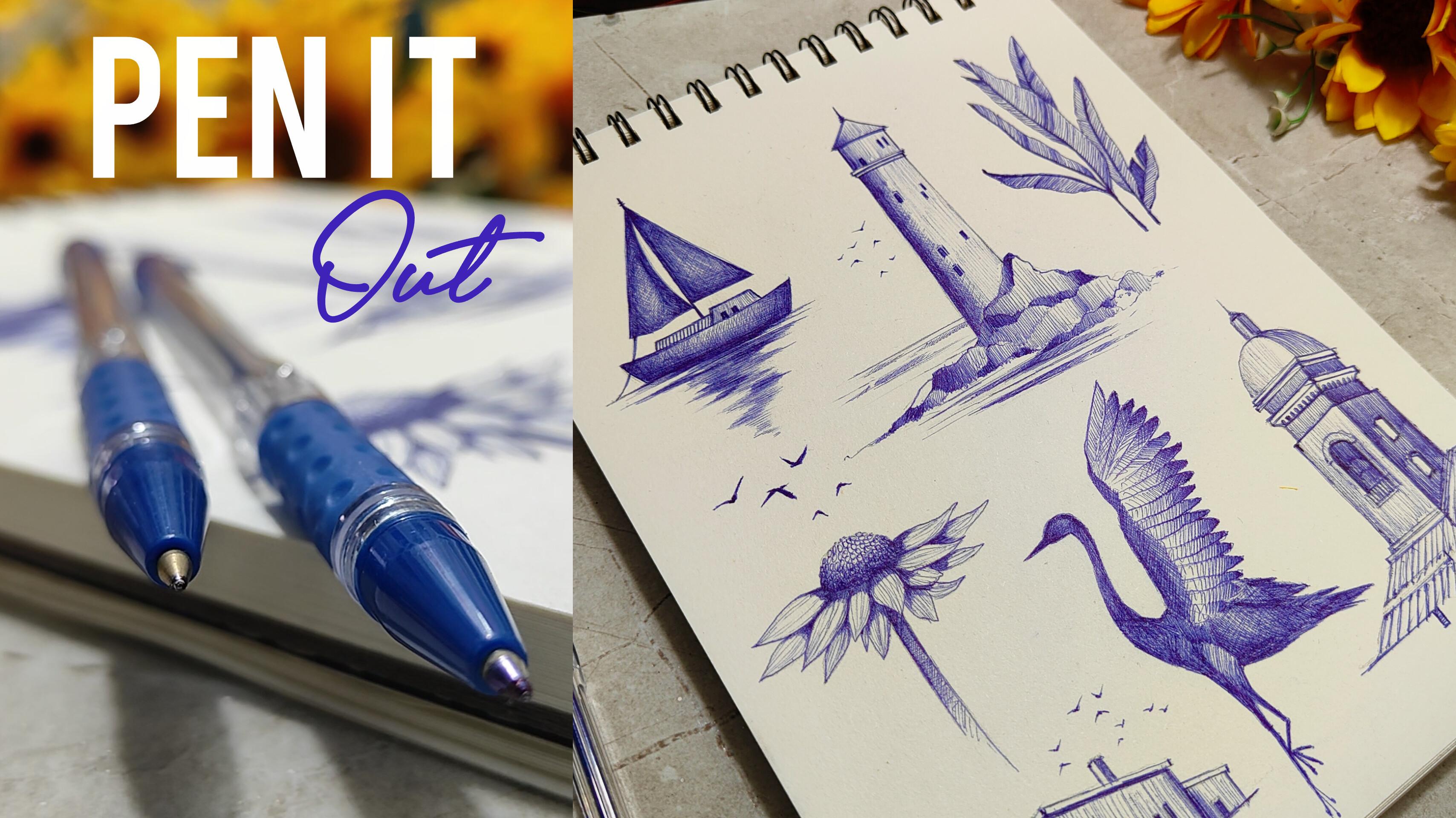
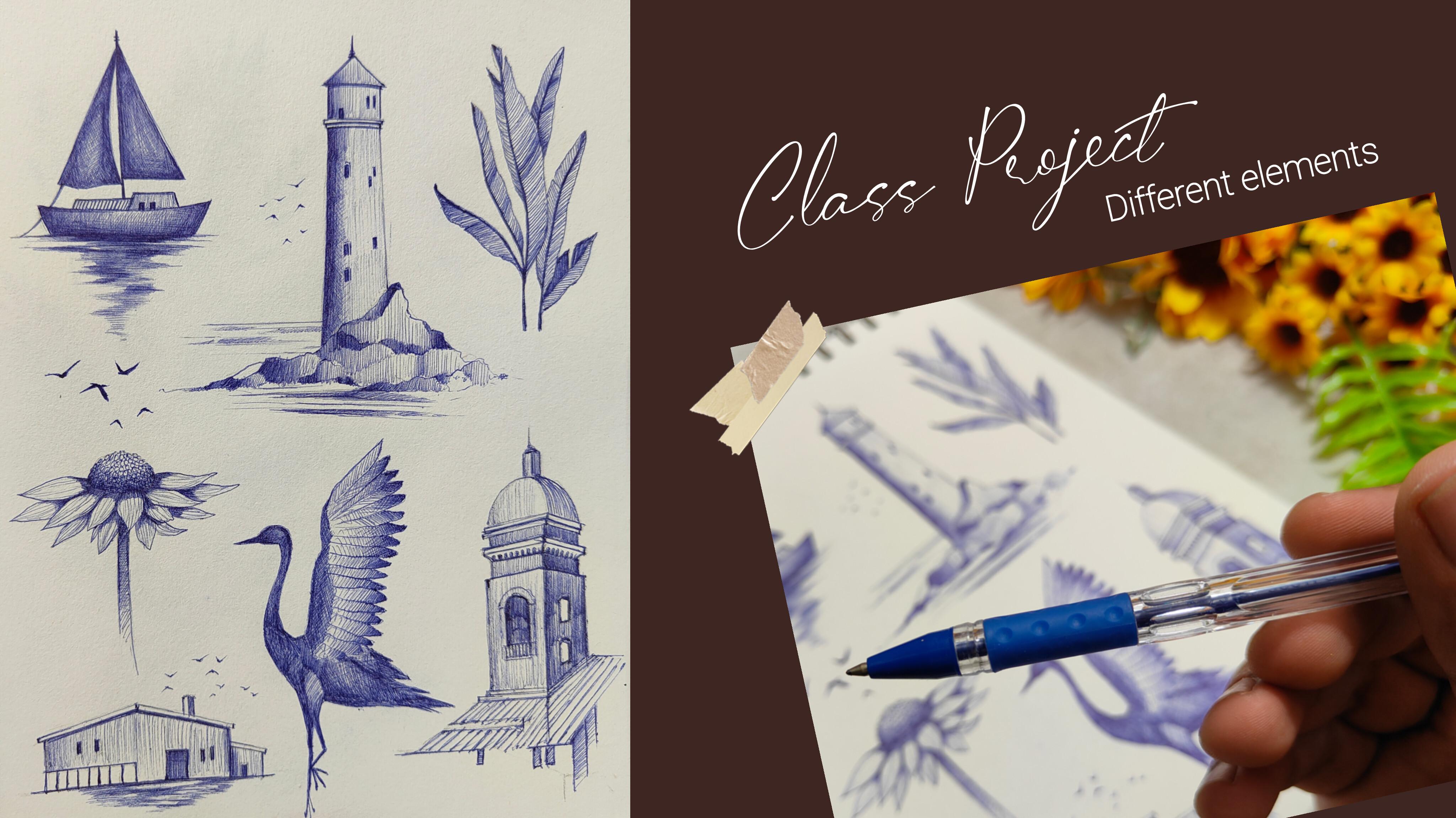
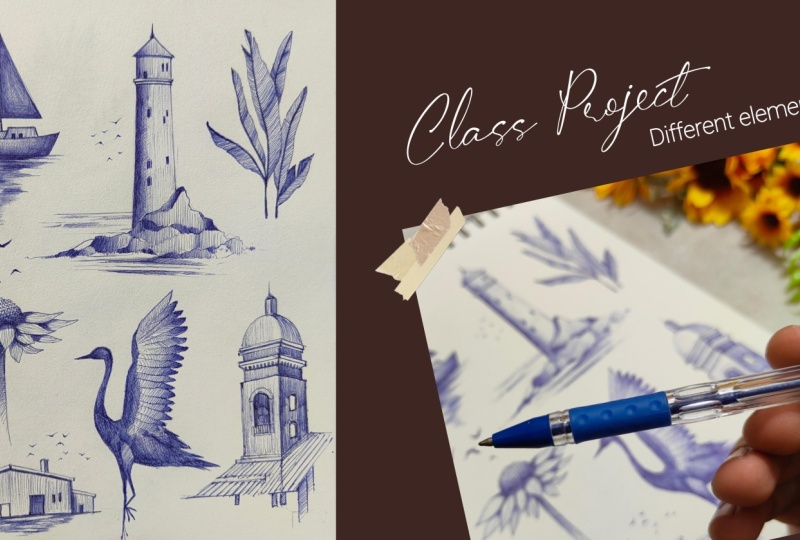
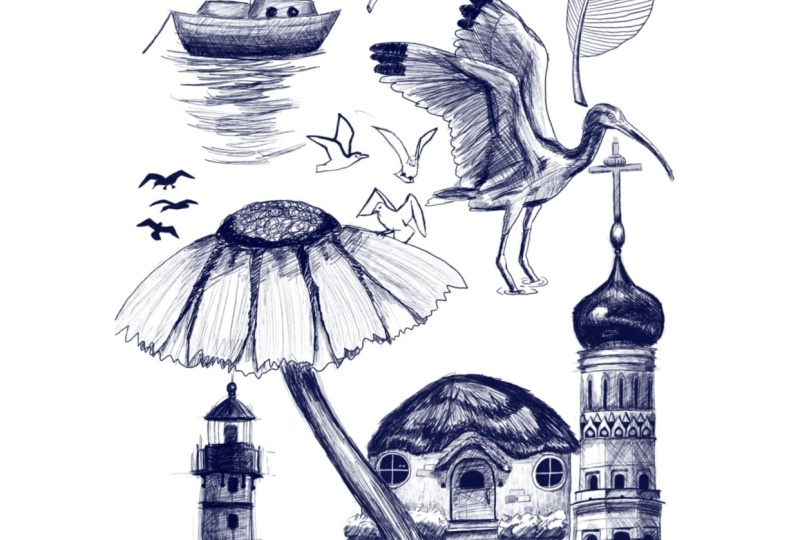
2. Class Project: Everybody. Now let us talk about the class project that
we are going to create. She can observe a simple
sketchbook with a white page and these different
elements that we are going to sketch
using a blue pen. No need to worry
about the output. You have to enjoy the process. It will help you to develop your sketching skills and
improve your hand movement. So the first element is a simple boat that
you can observe. It is having a nice depth and detail in the
entire portion, and it is also having a beautiful reflection
in the water area. So this is the first element
that we are going to create. Then we have a simple
lighthouse that you can observe is having these beautiful stones in
the bottom part. There is a little bit
of water element. And these little birds
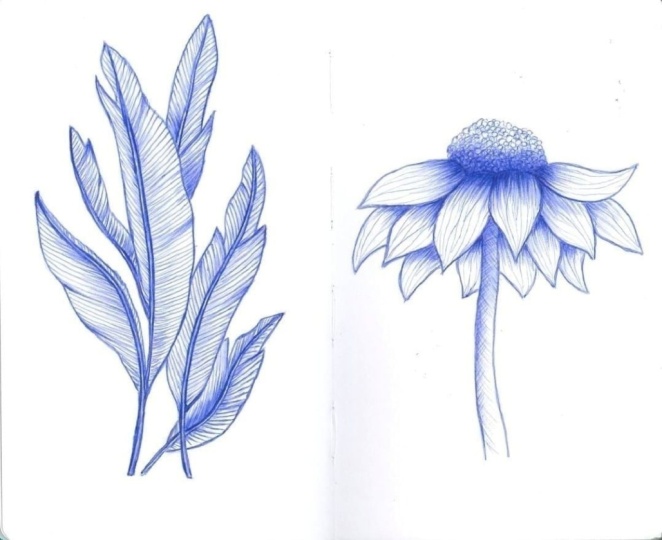
in the sky area. So this is the second element that we are going to create. It's a beautiful combination of all the elements together. Then comes another element, which is these little leaves that we are going to
create using a pen. You can consider them as banana leaves or any
other leaves as well, but it looks really beautiful. You'll enjoy the entire
process of adding these minute details
using a blue pen. Then comes another element, which is this
beautiful sunflower, and there are these little
birds on the topmost portion. So using different
hatching techniques, we are going to create
this entire sunflower, and you'll definitely enjoy the entire process of sketching this
particular part as well. Then comes a little house that you can observe
in the bottom portion. It is having these little
birds, a little chimney, some doors and windows
that we are going to combine together to form a
beautiful house element. Then comes the next element, one of my favorites. It is a simple bird having
these beautiful details in the wings and a nice body
part in the bottom area. You can observe the
details carefully. We are going to use different
hatching techniques to complete the
entire bird as well. Then comes the last element, which is a tower, and you can observe some
minute details in it as well. There are these
beautiful windows that we are going
to sketch using a blue pen and add these details in the
entire surface area. No need to hurry
at all. You have to observe these
steps carefully, understand the
hatching techniques, and use them in various
parts of all the elements. So this is the entire class project that we are
going to create. By the end of the
class, you'll have a beautiful journal having
different elements together, which will help you to develop
your sketching skills. So I hope that you
got an exact idea about the class project that
we are going to create. Now let us move
towards the next part.
3. Art Supplies: Hey, everybody. Now
let us talk about all the art supplies that you will need for
the entire class. The best part about
this class is that you will need very less
amount of art supplies. You can observe, I'm using a
simple sketchbook over here. No need to worry
about these sizes. You can use any
various sketchbook that you're using to
practice on a regular basis. So it is approximately
A four size. Now, in case you do not
have a sketchbook or you do not want to do this class
project on a sketchbook, you can use a watercolor
paper as well. So let me give you an
example for that as well. So these are watercolor
papers from Canson. It is an A five size
sheet and 300 GSM. For sketching, using
a pencil or a pen, it is fine if you do
not care about the GSM. GSM is basically the
thickness of the paper. So in case your paper
is a little bit thin, also, it is absolutely fine. So now let me show you the
sketchbook that I'm using. I have already done a little
bit of artwork in it. So this is basically
a sketchbook on which I practice
on a regular basis. And this is the class project that we are going to create. She can observe, it is
a simple white sheet having a lot of space in it, and we have created these beautiful elements
using a blue pen. Now apart from this
particular sketchbook, you'll need a simple pencil. You can use a mechanical pencil or a simple pencil as well. It is absolutely fine. So pencil is required to draw a basic sketch before we
start sketching using a pen. And in case you want to sketch directly
using your blue pen, it is absolutely fine. So I'm using a simple blue pen. It is basically a ballpoint pen. And I think it is also
known as a ball pen. So you can use any
good alternative. It is absolutely fine. And
in case you want to use a black pen or a simple pencil to take up the class project,
it is absolutely fine. Then next up, we have a simple eraser that
you can observe. So eraser is required
wherever you want to make some changes
to your pencil sketch. So these are all
the art supplies that you will need
for the entire class. Now let us move
towards the next part.
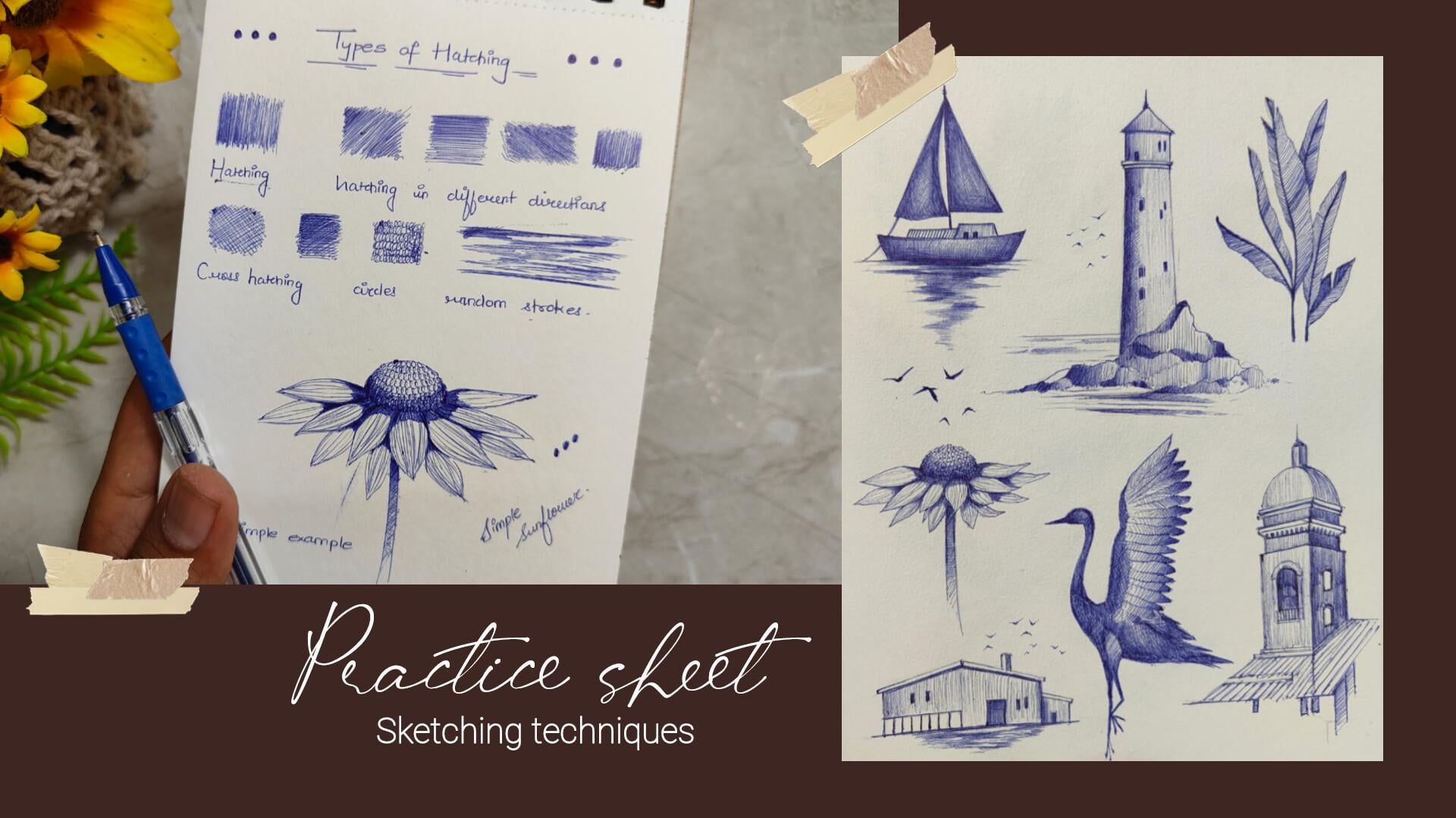
4. Practice Sheet: Hey, everybody. Now let us
start with the practice sheet. This will help us to understand the hatching techniques and different hatches that you can
use in different elements. So let me show you the
practice sheet first. It's a simple little
sketchbook in which I have labeled the types of
hatches that you can use, and there are these different
hatches that I'll show you. Now using these
different hatches, we are going to complete all the different elements
in the entire class project. I'll also show you a simple
sunflower element and how to use these hatches to create
this beautiful sunflower. Trust me, you're
going to definitely enjoy the entire process, and it is going to be
very satisfying as well. You can observe that we have the class project and the
practice sheet over here. Now let us start with the
different types of hatches. So the first one is
a simple hatching. You can observe the way
I'm holding my blue pen. I've started from
the left hand side, slowly moving towards
the right hand side, and you can observe
the density of the hatch is very much
on the left hand side. Let me show you the
different types of hatches you can create
using a simple hatch. So you just have to keep
your pen in an angle, and it is very similar
to the first one. It is just that it is
having different strokes. Now, similarly, we can start
from the topmost part, moving towards the bottom area. You can observe the
density of the blue color. So wherever you want a higher
density of the blue color, you just have to apply a
little bit more pressure in that particular area. And wherever you want a
less saturated blue color, try to apply very
less pressure on your pen and keep some
distance between the strokes. So this is how you can
create a simple hatch using vertical lines and just making a variation
in the directions. Now comes the cross hatching. It is a simple hatch
in which you have to put the strokes in
both the directions. So it basically is crossing
of both the strokes. You can observe the way I'm adding these strokes
in an angle. Now comes the hatch
in a circular format. So you just have to create
these little circular shapes, combining to form a
beautiful solid blue patch. So you can observe it is
very easy and simple. Try to keep your pen
very much loose and free and slowly create these
little circular shapes. There is this random hatch, which is one of my favorites, where you have to create these random strokes around
and create a nice blue patch. You can have a variation
in the entire shade. Wherever you want a
darker saturated color, try to apply a little
bit of pressure on your pen and keep
the strokes nearby. And wherever you want
a less saturated area, try to keep your hand
very much loose and free, apply less pressure on it. Now let us understand the hatches by practicing
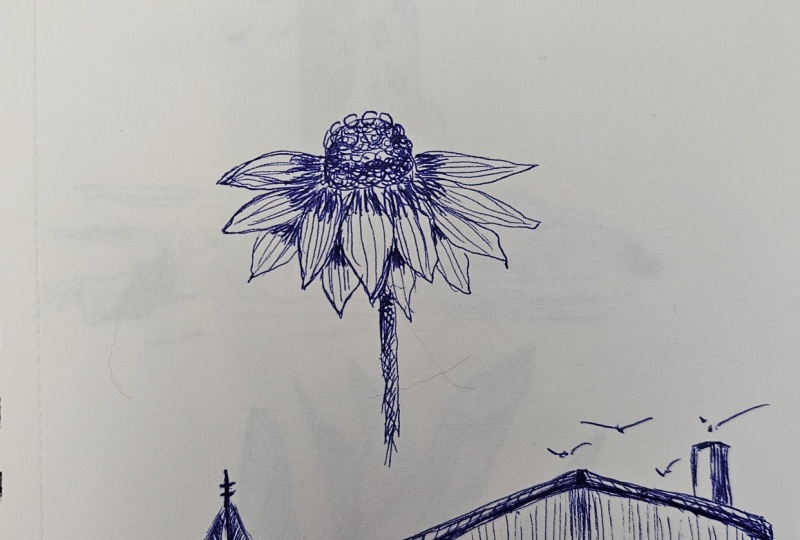
a simple element. So I'm drawing a basic sketch
directly using my pen. You can draw it using
a pencil as well. So I've created a little
sunflower in the bottom part. Now we are going to use the
circular hatch that you can observe on the topmost
part in this entire area. You can observe the way I'm creating these little
circular shapes and covering the entire area.
No need to hurry at all. Try to draw in a very
slow and steady manner. Now we want to create some
depth in the bottom part. So I'll just reapply the
strokes in the bottom area. You can observe that we get
a darker color of blue. You can observe the way I'm putting an angle to
the entire hatch. So this is how we get
this beautiful part of the entire sunflower. Now comes the random
hatch in the petal. I have created these
strokes around, and then I'll create
a little bit of depth near the stamen. You can observe similarly, we are going to hatch all the
petals in the same manner. You can observe that I'm
adding random strokes by applying very less pressure
on my pen and near the stamen I'm creating a darker blue tone by
adding a darker hatch. Now, similarly, you can add the stem in the
bottom part by just adding two vertical lines and filling it up using a
simple cross hatch. So this is how you can
create a simple sunflower. It's a simple example
to know where you can use different hatches
in the entire sketch. So there are these cross
hatches that we have used in the boat element a simple hatch in the bottom structure
of the entire boat. Again, a nice cross hatch in the entire body
of the entire boat, a random hatch in
the water area. Then there are these
different hatches that we have used
in the lighthouse, the leaves, the sunflower, the bird, the house,
and the tower. You can observe
them carefully and relate the hatches with the elements that we
are going to create. There can be simple vertical and horizontal
strokes that you can use to create the rocks and the water body below
the lighthouse. There are these random
hatches that you can use to create the leaves, some different hatches to create the sunflower, some
different hatches, to create the bird, having these beautiful
wings and the body area. There can be some
different hatches to create the house and
the tower as well. So using these
different hatches, you have to form these
beautiful sketches. It will help you to develop your sketching skills and use different hatches in
different manner.
5. Sketch 1 - Boat: Hey, everybody. Now let us
start with the first element, which I have named as the boat. So I'm ready with
my sketchbook and a simple pencil
that we are going to use to create a
basic sketch first. So I'm starting from a
simple vertical line, which will have the entire
structure of the boat. So now we are going to create a triangular shape on
the left hand side. So it is very near to
an Iosllar triangle. You can keep a little
bit of curved line in between so that it
represents a clothe. Similarly, we are
going to create a triangular shape on the
right hand side as well. Now create a little
curved shape on the bottom part and create a simple
horizontal line as well, keeping a little
bit of distance, then simply cover
the entire shape. You can observe the way I'm attaching the rope
to the water body. Similarly, we are going to add an ice structure on the
entire board surface. You can observe these strokes
carefully and follow them. And in case you want to
experiment with the basic sketch, it is absolutely fine. So this is how we have created a basic sketch using a pencil. Now I'm going to use a
simple blue pen to start hatching the entire sketch and make it look a little
bit more attractive. So let us start with the
vertical line itself. You just have to create a
simple pen line on that. Now, once you have darkened
the entire vertical line, you can reapply these
strokes in that to make the line look
a little bit thicker. Now I'll just create two little horizontal strokes to make the tower look a
little bit more attractive. Now, there comes this nice triangular shape on
the left hand side. Start with the outline first.
No need to hurry at all. Once you are done,
creating the outline, we will start with the
hatching in the inner portion. You can observe
that I'm reapplying these strokes to
make the outline look a little bit more thicker. Now, we are going to
apply cross hatch in the entire surface. You can observe the way
I'm moving my pen in an angle to cover the
surface with first layer. And on the corners
of the entire shape, you just have to
create some depth. So try to have these strokes
a little bit more dense, keep the distance
between the strokes very less and apply
some more pressure. You'll get a nice dark
blue shade on the corners. Now, we'll apply these
strokes in an angle again, and this is all about
cross hatching. You have to change the
direction of these strokes and you'll observe that you'll get a beautiful dark blue shade. The more strokes you'll apply, the better the entire
element will look. It will give a nice depth
to the entire structure. You can observe
the way I'm adding these little strokes and slowly, we will complete the
entire triangular shape. No need to hurry at
all, take your time, observe the steps carefully. You can observe the movement
of my hand as well. Whenever you're sketching, using a pen or pencil doesn't matter. You just have to keep your
hand very much loose and free. No need to make it very stiff. It's a sketch, so it is not
supposed to be perfect. It can be random and natural. It is absolutely fine. So now you can observe the
triangular shape carefully. It is having some
dense effect in the outer area and a little bit of lighter
element in the center part. This is how we are going to use the hatching technique in the triangular shape on the
right hand side as well. I've created the outline first. Now slowly start hatching. You can observe the way I'm adding the strokes in an angle. Slowly, I'll change
the direction of the strokes and I'll
keep another angle, and I'll keep the
entire triangular shape a little bit dense
on the corners. Now you can observe
that we are done with the triangular shape on the
right hand side as well. Now let us hatch the
structure of the boat. Again, we are going to
start with the outline. I'll add a simple slant stroke in this first structure
that you can observe, keeping a distance
between the strokes. Similarly, in the
second structure, just try to keep a little
bit of less distance. Now let us give an outline to the both structure
on the bottom part, and then you have to
add these little does. If you observe carefully, it's a mix and match
of different hatches that you can use to apply and
render the entire sketch. It is not at all
compulsory for you to use the similar type of hatch that I'm using in a certain area. You're free to explore
and experiment. You can create this sketch according to your
convenience as well. So I've added a
nice angle stroke in the entire boat structure
on the bottom part. You can observe that
I'm adding depth on the edges by creating a
darker hatch on either sides. You can change the angle of your pen and reapply the stroke. It will help you to
make the patch look a little bit more
dense and in detail. So again, it's a cross hatching that you can observe carefully. The entire process of
hatching is very interesting. Once you start doing it,
you'll definitely enjoy it. Now I'm going to
create some depth in the bottom part of the
entire boat structure. So it looks really
nice as you can observe near the horizon
line of the water. Now let us start creating the water element as well
by using a random hatch. Now it is very interesting. You just have to create
these horizontal strokes, having variation in the depth. So wherever you want a
darker shade of blue, try to apply a little bit
more pressure using your pen, and wherever you want a
lesser saturated blue color, try to apply less pressure on your pen and keep some
distance between the strokes. You can observe the way we have added a beautiful water element. It's kind of a reflection
in the water area. You can do this according
to your convenience. You're free to explore
and experiment. So we are done with
the entire sketch of this boat and adding a nice hatch to the
entire boat element. I hope that you enjoyed
this particular sketch. Now, let us move towards
the next element.
6. Sketch 2 - Lighthouse: Hey, everybody, you're
most welcome to the second sketch
that is Lighthouse. So we are going to start with a basic sketch using a pencil. So I'm starting from
the topmost part where we have this tower. You can create a simple
triangular shape, followed by a little tower
on the topmost portion. Then I have created a rectangular shape
in the bottom part, followed by two little
rectangular shapes. Now let us draw the main structure of
the entire lighthouse. You can observe these are two
vertical lines in an angle. So as you move towards
the bottom part, you can increase the distance between both the vertical lines. Now, there is going to be a nice rock body in
the bottom part, so you can randomly
create it using a pencil. No need
to hurry at all. Keep a very less pressure on your pencil so that we
get a nice light sketch. You can observe the variation in the lines that I'm
creating in the rock body. It will help us to give a
nice hatch using a pen. Now, similarly, I'll be adding a nice horizontal line in
the bottom part to create some water lines observe that we are almost done
creating a basic sketch. Using a pencil. Now, we are going to use
a blue pen to add hatch and create it in a nice
depth and detailed manner. So I'll be using a blue
pen and let us start from the topmost portion by adding a simple vertical line
to create a nice tower. I'll give an outline to the
entire triangular shape. You can observe it carefully. Now we are going to use a
simple vertical hatch to add a nice shade in the entire topmost portion
of the lighthouse. You can observe that
it is having depth in the corner now, similarly, we are going to add outline to the bottom structure, and you can simply add
these vertical hatch lines. You can observe
that I have started from the left hand portion, adding some more depth, slowly moving towards
the right hand side. No need to hurry at
all, take your time and try to draw in a slow
and steady manner. You can observe
that I have added two little windows on
the right hand side by adding a solid hatch and a little dog on the
left hand side as well. Now let us start adding some more details
to the bottom part. You can observe the way
I'm adding the outline. Now I'll be adding the outline to the main building
structure as well. So there are these vertical
lines having a nice angle in so what we are
going to do is that we are going to
create a nice depth on the left hand portion. You can observe
carefully the way I'm moving my pen in a
vertical manner, and we're going to create depth on the left hand side only. So we have added first layer
of the vertical lines. Now we are going to
merge them together. You can observe
that I am creating a darker tone of blue shade, and now I'll change the
angle of the strokes. So it's basically a cross hatching that you can
observe carefully. Again, you can add
vertical lines and make it look a
little bit more dense. No need to hurry at
all. Take your time. Try to keep your hand
very much loose and free whenever you're applying
these cross hatches. You can add these little
vertical line strokes in the remaining part by having a very less pressure and having some more distance
between the strokes. You can observe that
we have created a beautiful darker shade
on the left hand side, and it is plain on
the right hand side. Now, we are going to add
these little windows randomly by adding
a solid blue hatch. You can do it according
to your convenience. You are free to
explore and experiment with the entire
building structure. So we are done with
the entire lighthouse. You can observe it carefully. Now, let us add these little
birds in the sky area. It's a simple
technique. You just have to create a V shape. You can create a
cluster of the birds together in the entire
area wherever you want to. Now, there is going to
be a little water body, so you can create
these horizontal lines behind the lighthouse. And you can also add these random hatches
in an angle wherever you want to to make the water body look a
little bit more attractive. Now comes the most
interesting part, adding hatch to the
entire rock body, which is connected
with the lighthouse. You can add the
outline initially. It's a simple pen line. Then we are going to add these little vertical lines you can observe how
beautiful it looks. So there are going
to be certain areas where we are going
to create depth. So in that particular part, you have to add some
more pressure to your hand and keep
the strokes nearby. So you can observe how
beautiful it gets. So altogether, it's a very
simple and easy technique in certain areas where we
want shadow and depth, try to make these strokes look a little bit more dense and saturated by keeping
the distance less and adding more strokes. And wherever you want
a lighter saturation, try to keep the strokes in a distance and try to apply very less pressure
using your hand. So you can observe that
we are almost done adding a nice hatch to the
entire rock body as well. In case you find that there are certain areas where
you want to add some more depth by adding a cross hatch or any random
hatch, it is absolutely fine. In fact, you are free to explore and experiment with
the entire sketch. You can compose all the elements together according
to your convenience. So I hope that you got
an exact idea of how you can add a random hash to
the entire rock body. If you observe carefully, there is a nice combination between the elements
like the bird, the lighthouse, and the rock
body in the bottom part. We can slowly add
few more details by adding some depth to
the entire structure. The way I'm adding these vertical strokes
in the lighthouse, you can observe
the entire sketch carefully and do it according to your convenience as well. Now, there is this little
water body in the bottom part, so it is very easy and simple
apply a random hatch in the bottom part by adding
these horizontal strokes. Now you can add some random
hatches in a cross angle wherever you want to to make the water body look a
little bit more attractive. I hope that you enjoyed this particular sketch and
got to learn something new. No need to worry about the
output, enjoy the process. Now let us move towards
the next element.
7. Sketch 3 - Leaves: Hey, everybody. You're most
welcome to the third element, which I have named
as the leaves. So now let us start
with a basic sketch. So I'm using a simple
pencil to create these beautiful leaves which are going to combine together. You can consider these leaves as banana leaves or whichever leaves you want to It
is absolutely fine. So there are going to be these random shapes that we
are going to create. And you're free to
explore and experiment. It is absolutely fine, so no need to worry
about perfection. So I'm just creating a nice
cluster of leaves together. Also in case you want
to draw the leaves directly using your blue
pen, it is absolutely fine. It is good to create
a basic sketch using a pencil so that in case
you make any mistakes, you can just correct
it using an eraser. So I'm almost done creating a basic sketch using a pencil. Now let us use a simple
blue pen to create a nice hatch in the entire leaves. No
need to hurry at all. It is going to be a very
simple and easy process, and there are not going to be different hatches this time. So I'm just creating
a nice thick line in the entire outline of
the stem of the leaf. You can observe it carefully
by adding multiple strokes. Now, simply, you
just have to create these little lines combining together and move
your pen in an angle. No need to hurry at all. Try to keep your hand very
much loose and free. You can have variation in the distance
between the strokes, and it will help you to create a beautiful depth
in the entire leaf. So I started from
the topmost portion, slowly moved towards
the bottom area. Now let us start with
the second leaf. So again, I'll just make
a nice solid thick line. You can observe
the way I'm adding multiple strokes and
creating a nice thick line. Once we are done connecting
it with the base stem, we are going to add the
beautiful strokes around. You can observe you can
start with the outline. Now slowly start from
the topmost portion and create these little
strokes combining together. You can have variation in the distance between
the strokes, and it will help you to
give a nice depth to the entire leaf. No
need to hurry at all. Take your time, try to add the strokes in a slow
and steady manner. Wherever you want a darker tone, try to apply some more pressure and keep the distance
between the strokes less. You can observe the way I'm adding some more depth
to the entire leaf. Similarly, we'll be completing the remaining leaf
element as well. Oh So we are almost done completing
all the leaves. We are left with the last one, and it is going to be
a little bit darker. So try to keep the distance
between the strokes very less and create a
nice solid blue colour. And in the bottom part, you can keep some distance
between the strokes. I want to add a leaf
on the left hand side. I feel it is a little bit empty. So I created a simple
outline using the pen directly in case you want to do it using a pencil first
and then with a pen, it is absolutely fine. So I'll be adding
the same strokes in this particular leaf as well, and we are done with
the entire sketch. I hope that you enjoyed this
particular sketch as well. Let us move towards
the next one.
8. Sketch 4 - Sunflower: Hey, everybody. You are most welcome to the fourth sketch, which is a sunflower. As usual, we are
going to start with a basic sketch using a pencil. So I've simply created a semicircular shape on
the topmost portion, followed by these
little petals around. No need to hurry at all, draw it in a slow and steady manner. There are going to
be a few more petals that we are going to
draw on the outer area. You can draw the entire sketch according to your
convenience as well. It is absolutely fine. Then we are going
to add the stem. You just have to create
two vertical lines. You can give it
an angle as well. So we are done with
the basic sketch. Now let us use a blue pen
to give a nice hatch. Let us start with the
semicircular shape. You just have to create
this round hatch. So it is basically creating
these little round shapes. If you observed the
practice sheet, you'll get the exact idea. So slowly, I'll create these little circular
shape and move towards the bottom area to create the first layer
of the hatching. No need to hurry at
all, take your time and slowly fill the entire area. Now, once we are done
applying the first layer, we are going to
make a little bit of depth in the bottom part. So you can reapply
the circular shapes. Also, in case you want to give a cross hatch, it
is absolutely fine. So now you can observe
a nice shade in the bottom part and
the topmost portion. So the bottom part is
a little bit darker, having a nice dark blue shade, and the upper portion is
a little bit lighter. So this is how we are hatching this beautiful part of
the entire sunflower. Now, we are going to
add hatch to the petal. It is a very simple
and easy technique. You just have to add
the outline first. So I'm simply following
the pencil line. Now, we are going to add these random lines in
the entire petal, having some distance in between. And near the semicircular shape, you just have to create
some dense effect by adding multiple strokes and increase the density
of the strokes. Let me take you a
little bit closer so that you can observe
the details carefully. It's a very simple
and easy process to add a nice shade
to the entire petal. You can observe
the way I'm making the dark blue color a little bit dense near
the semicircular shape. So it basically
gives a nice depth to the entire sunflower. Now, once we are done, adding a nice hatch to
the upper petals, similarly, we'll be adding the hatch to the
lower petals as well. The technique is
absolutely same. No need to hurry at all, take your time and slowly
apply the shade. It is a very satisfying process, and you'll definitely enjoy
the hatching process. Now we are almost done
with all the petals. There are a few petals left
on the right hand side. Now, one thing that I can
suggest to you right now is that try to keep your hand
very much loose and free. No need to worry
about perfection. It's sketching, so sketches are not supposed to be perfect. You can learn a lot and it will improvise
your hand movement. Now, simply, I'll just add a cross hatch in
the entire stem, and we are done with
the entire sunflower. I hope that you enjoyed
this particular sketch. Now let us move towards
the next element.
9. Sketch 5 - Bird : Hey, everybody. You're most. Welcome to the fifth sketch, which I have named as a bird. So this time I'm not using a simple pencil to
create a basic sketch. I'm directly drawing
it using my pen. In case you want to draw a basic outline using a
pencil, it is absolutely fine. The steps are completely same. You can observe the
movement of my hand. So I have started with
the head of the bird, and I have created the neckline. Slowly, as we move
towards the bottom part, we will increase the body shape. No need to hurry at all. Try
to draw in a careful manner. And in case you
are not confident enough to draw it
directly with a pen, you can definitely draw it
with a pencil initially. It will help you to erase the
sketch in case you want to. Now comes the favorite part in this particular
element is the wings, so you can observe the way I'm adding these little feathers, slowly moving towards
the bottom area, connecting it with
the main body. Now I'll just create the
tail of the entire bird. And then we are
going to have these little thin legs on
the bottom part. So you can simply start by connecting it
with the main body, slowly move towards
the bottom part. These legs are very thin, so you have to draw it
a little bit carefully, and the second leg is
going to be in an angle. So we are done with
the basic sketch. Now let us give some hatch
to the entire sketch. So I'm starting with the
head of the entire bod. It is going to be
a random hatch. You can also consider
it as a cross hatch. So in an angle, I have started
with the head portion. You can observe it carefully. No need to hurry at all, take
your time and slowly apply this cross hatch in the
entire neck portion, slowly coming towards
the main body. There can be difference in the angle of the strokes
that you're applying. It is absolutely fine. Then you can change the angle to make it look a little
bit more dense. Now using some random strokes, we are going to complete
the entire main body. No need to hurry at all, take your time and observe
the steps carefully. Slowly, I'll be moving
towards the legs and you can observe the way I'm changing the angle of the strokes
that I'm making. So now I'm connecting it with the legs in the bottom portion. You can reapply multiple strokes to make it look a little
bit more dark blue. Now, let us start by adding a beautiful hatch
in the wings area. So it is going to be
a simple cross hatch. I have applied the strokes
in an angle first. Then I'll change the angle
of the pen and create a nice darker tone of dark blue on the left hand
surface of the entire wing. Now slowly, we'll move towards the feather area by decreasing
the amount of strokes. You can observe I have created a single stroke in one feather
by adding it in one angle. And it will be a
little bit denser on the tips of the feather. So we are going to use
a simple cross hatch to do this particular part, you can observe it carefully. So wherever you want
a nice darker tone, try to apply a little
bit more pressure and keep the strokes nearby. And as you move towards
the left hand side, slowly decrease the pressure in your hand and increase the amount of distance
between the strokes. Now slowly, I'll add a nice hatch to the main
body in the bottom part. So again, it is going
to be a cross hatch and some mixture
of random hatches. And you can observe
the way we have completed almost the
entire body of the bird. No need to hurry at all. Slowly apply these strokes
in the entire body. It's a basic sketch, so no need to worry
about perfection. You're free to explore and experiment with
the entire sketch. Sketches are not
supposed to be perfect. It will help you to enhance your hand movement and develop
your sketching skills. So I hope that you enjoyed
this particular sketch. Now let us move towards
the next element.
10. Sketch 6 - Tower : Hey, everybody. You're most
welcome to the sixth sketch, which I have named as tower. So we are going to start with a basic sketch using a pencil. I'm starting with
the topmost portion, which is a simple tower
in a rectangular shape, followed by a semicircular
dome on the topmost part. No need to hurry at all. Try to draw in a very slow
and steady manner. Keep your hand very
much loose and free whenever you are
drawing a basic sketch. It will help you to develop your hand skills and move your hand in a very
smooth manner. So just below the
semicircular dome, I have created some
rectangular shapes, and I'm connecting the entire tower towards the bottom part. You can slowly observe
these steps carefully. So now I'll move towards
the bottom area, creating a huge rectangular
shape in an angle. And slowly, there is going to be a roof of a house
in the bottom part. It is absolutely fine in case you want to explore
with the entire sketch, so you can create your own tower as well,
having some variation. So it is not at all
compulsory for you to draw it in the
exact same way. You are free to explore and experiment with
the entire sketch. Also, in case you want to create an entire
new composition, it is absolutely fine. So I'm right now just
experimenting and creating a random roof
in the bottom part, followed by a nice window
in one side of the tower. Similarly, we'll have
two little windows on the right hand side as well. So if you observe the
details of the window, it is semicircular on the topmost portion and
rectangular in the bottom part. Now, once we are done
with a basic sketch, let us use a blue pen to add a nice hatch and apply some
shading to the entire sketch, which will make it look a little bit more in depth and detail. So you can observe that I'm starting from the
topmost portion, applying the outline and some random strokes on
the right hand side. No need to hurry at
all, take your time and slowly make the outline look
a little bit more darker. You can observe
the way I'm adding vertical strokes on
one side of the tower. Wherever you want
a dense effect, try to apply some
pressure on the pen and keep the distance between the strokes
a little bit less. It will give you a nice
solid, dark blue patch. And whenever you want
a lighter shade, try to apply very
less pressure on your pen and keep the distance between the
strokes a little bit more. And you can observe
a clear difference on the right hand side
and left hand side. Now comes the main tower part, so you can add a thick
solid line on the windows to make them look a little bit more in detail and contrast. So you can observe
the way I have added a vertical hatch in
the entire window. Now slowly, I'll move towards the remaining parts as well. No need to hurry at
all. Take your time, observe these steps carefully. You can also observe
the movement of my hand carefully as well. So wherever you want a nice, darker, solid blue patch, try to apply a few
more strokes by using any cross hatch
or a vertical hatch. The more strokes you'll apply, the better color
patch you'll get. And whenever you want
a lighter color patch, try to apply very less
pressure on your pen. So the entire sketch is
not about perfection. It is about sketching and sketches are not
supposed to be perfect. So it is absolutely fine in
case you make any mistake. In fact, you are
free to explode and experiment with the
entire sketch as well. So now I have made this beautiful window a little bit more in
detail and contrast. I'll add few details by adding these little
strokes around. Now, in order to make the roof look a little bit
more attractive, I have just added these slant
strokes in the bottom part. And I'm just adding it
in a very random manner. There is no perfection. One thing that I love
about sketching is that there is no specific
procedure to follow. You're free to apply random
strokes wherever you want to. And in case there is any
stroke that goes wrong, it is absolutely fine. You can just reapply certain strokes and
make the sketch look even more beautiful. So we are done with
the tower, as well. I hope that you enjoyed this particular sketch and
got to learn something new. Now let us move towards
the next element.
11. Sketch 7 - House : Hey, everybody. You're most
welcome to the last sketch, which I have named as house. So again, we are
going to start with a basic sketch using a pencil, starting from the roof, adding these slant lines
on both the sides. So it's a simple little house. I have created a simple horizon
line on the bottom part, and we are going to add
a little house element on the right hand side as well. I'll be drawing a little
chimney on the topmost portion, followed by a little wall, which is having
these vertical lines inside and a door and
some windows around. You are free to compose
with the entire sketch. It is absolutely fine, so you can draw it according
to your convenience. Now, once we are done
with a basic sketch, let us use a simple pen to add some hatches and make the sketch look a little
bit more attractive. So we are starting by applying
the outline initially. No need to hurry at all, take your time, apply the outline, and then slowly add these beautiful vertical lines in the entire wall surface. You can observe it's
a simple light hatch, so I'm keeping some distance and applying very
less pressure on the pen. No need
to hurry at all. Try to keep your hand
very much loose and free. Similarly, I'll be adding the ground line and
the wall in front. You can apply solid
hatches to make the doors and windows look a little bit more in
detail and contrast. And we are going to add
some depth just below the roof to create a
nice shadow effect. You just have to reapply certain strokes to make it look a little bit more
dense and detail. So we are almost done
hatching the entire house. There is going to
be a little bit of random hatch that we are going to apply on
the ground area. So it is, again, a very
simple and easy step. You just have to
make the ground line look a little bit more dense. So you can reapply
the strokes there, and then we are going to
apply some random hatches on the ground area to make it look a little bit
more aesthetic. You can observe
the way I'm adding these horizontal
strokes combining together to form a
nice ground area. Now, I'll add these little
birds in the sky area. It is a very simple
and easy step. You just have to
create a V shape. Similarly, we'll be adding few birds just above
the sunflower. You can observe these
steps carefully. You just have to
create a nice V shape. Sorry, my hand is just
locking the vision, but I hope that you
got an exact idea about how to draw
these little birds. So we are done with
all the sketches. I hope that you enjoyed the entire class and got to learn something
new and creative. This entire class will
help you to develop your sketching skills and
enhance your hand movement. Now let us move towards
the class conclusion.
12. Class Conclusion: Hey, everybody. You're most welcome to the class conclusion. I hope that you enjoyed the entire class and got to learn something
new and creative. While I was creating
this particular class, I made a lot of mistakes, and that is something
that I always tell my students never to be
afraid of making mistakes. It's part of the
learning process. It would be really great if you add your projects into
the project gallery. I would be really excited to see all of your class projects. It would be really great if you leave a review
for the entire class, as it encourages me a lot and my class can reach many
more students like you. At the end, I would like to say, keep learning, keep practicing. Thank you so much for joining the class and no need to
worry about the output. Just enjoy the
process of creating.
 Rutvik Patel, Artist and Instructor