Transcripts
1. Welcome! Who is this course for?: Hello there and welcome. In this really short
online course, I'm going to walk you through five simple steps to get
organized in your life, even if you're not
unnaturally organized person. My name is Emmy and I would
call myself a minimalist. And even since I was a kid, I would be quite organized with my toys and my schedule
and things like that. But in my life, I've come across so many people who tell me that I just couldn't do it because I'm not a very
organized person. Some people not. And that's fine. We have people who prefer to stay
organized and day cluttered by their nature without really having
to make a big effort. And then there are
other people who just that's not who they
are, and that's fine. But what I really wanna
do with this short course is to walk you through
the five simple steps. If you are feeling that things
are a bit out of control, maybe you're getting ready, leaning into the new year, whatever that looks
like for you. If you feel like everything
is a bit out of control and you just want to get
back to some form of basics. Good news, this short course will help you with just that. So what we're going to cover
in the upcoming steps, you can obviously
have a look below. It really does not matter what order you
do these steps in. I would say definitely
start with a mindset and the self-talk piece because that's going to make
the most difference. But with the other four
steps you can mix and match however you like it or
whatever pulls you in. Real like yeah, that
is my problem area. Rest assured. It's not
gonna be that difficult. And each of these steps only has three super simple
action steps and a printable that you can download and have a look
at in your own time. I'm so excited that you're here. Let's get going. Let's roll our sleeves up
and dive into the first bit.
2. Your (messy) mindset & Quick Wins To Get Organised: One key thing when
it comes to what we do is how we think. And you probably know this if you've been following coaches or exercise people or
mindset people of any kind, that what we think
of here really does impact how we do
things in our life. The biggest hurdle that I saved for people who
are not naturally organized is that they've
accepted this as an identity. Are organized.
Chaos is my thing. Well, let's face
it, there's nothing very organized about chaos. And look, if your areas
get cluttered from time-to-time and you have a
busy life in a busy family. That's totally cool.
I'm assuming though, that you're here because it's
not really working for you. So the very first piece
is to allow yourself to park this identity
belief thing that you're a messy person or you are naturally unorganized
or you've never learned how to be a tidy person because your parents
either did it for you or the home you grew
up and was so messy that there wasn't room
to learn the skill. The thing I would say to you
is POC, the identity piece. Do not let yourself
get away with that. I am whatever
messy, unorganized. I just couldn't do it. All those things, especially
that I am, things, things that we take on
unconsciously without really knowing it and
accepting it as a truth. So rather than doing that, we're going to focus on
habits. That's right. A habit is a new way
of doing something. And usually a habit is
based on someone who knows how to do something that you would really like to learn. E.g. if you have never run
a kilometer in your life, you probably want to start really small and
you would probably find a step-by-step
program like this one. But for exercise and learning how to run
your first kilometer, a habit is just a habit. It's just a muscle that we
train regardless what it is. And anyone, Yes, you, anyone can learn a new habit. It is not impossible. It's not something to
make too big a deal of a habit is just taking a little tiny step
every single day. Now, most people say it takes 20 days or 30 days or
whatever to build a habit. I've done a little bit of
a look into the research. And it looks to me like
it will often take most people a couple of months to
build a really strong habit. The very first
thing I want you to do before you tackle any of the other steps is to have a
quick thing about this one. What beliefs, so what
things are you telling yourself about this whole
clutter organization thing? Are you telling yourself
it's impossible that you're just a messy person, that you don't
know how to do it. Be really clear about the
stuff that goes on up here. Because when you
are aware of it, you can call
yourself out and go. Actually, I know that
that is not true. It's just something
that I've accepted to be true until this point. And now I'm gonna do
things differently, which doesn't mean
that we won't lapse at times and things
won't be perfect. But that's not what
this course is about. This is about helping
you form the habit. Not about being perfect because let's face it,
perfect doesn't exist. Alright. Have a quick think about this. Have a look at the
printable for this section. And let's catch up
in the next video.
3. Declutter & Organise Your Space & Home: So let's tackle one of my
absolute favorite areas, which is your space. Now this can be a smallest
face like your room. If you perhaps you still live
at home with your family, or you live in a share house, or it can be your
house, your garage, your car, maybe even your
office if you have one. But the thing about clutter in our physical spaces
is that when clutter crepes and it's often a very gradual process
for most people. It's totally fine, right? Because we go shopping, we have birthday
presents and we bring things without thinking
about it into our space. And unless things are
going out of that space, we're going to get a
little bit overwhelmed. So this area is all about starting to declutter
your spaces. If you need some
inspiration for this hop on YouTube, there is sorrow, many de-cluttering clean along with me type videos on there. So if you really want like some accountability
and you don't have someone in your
life who can do that. Make sure that you hop on and clean along with somebody else. It actually really
helps build momentum. But what then are
the three really, really simple steps to follow to start decluttering your space. I always recommend that
you start by decluttering, then organizing and cleaning perhaps in that stage as well. Finally, managing the
inventory that comes in. So what does this actually mean? Well, let's start with
something really small and this is what I often
recommend to people. If you want to
start decluttering your home and everywhere, It's like a mess
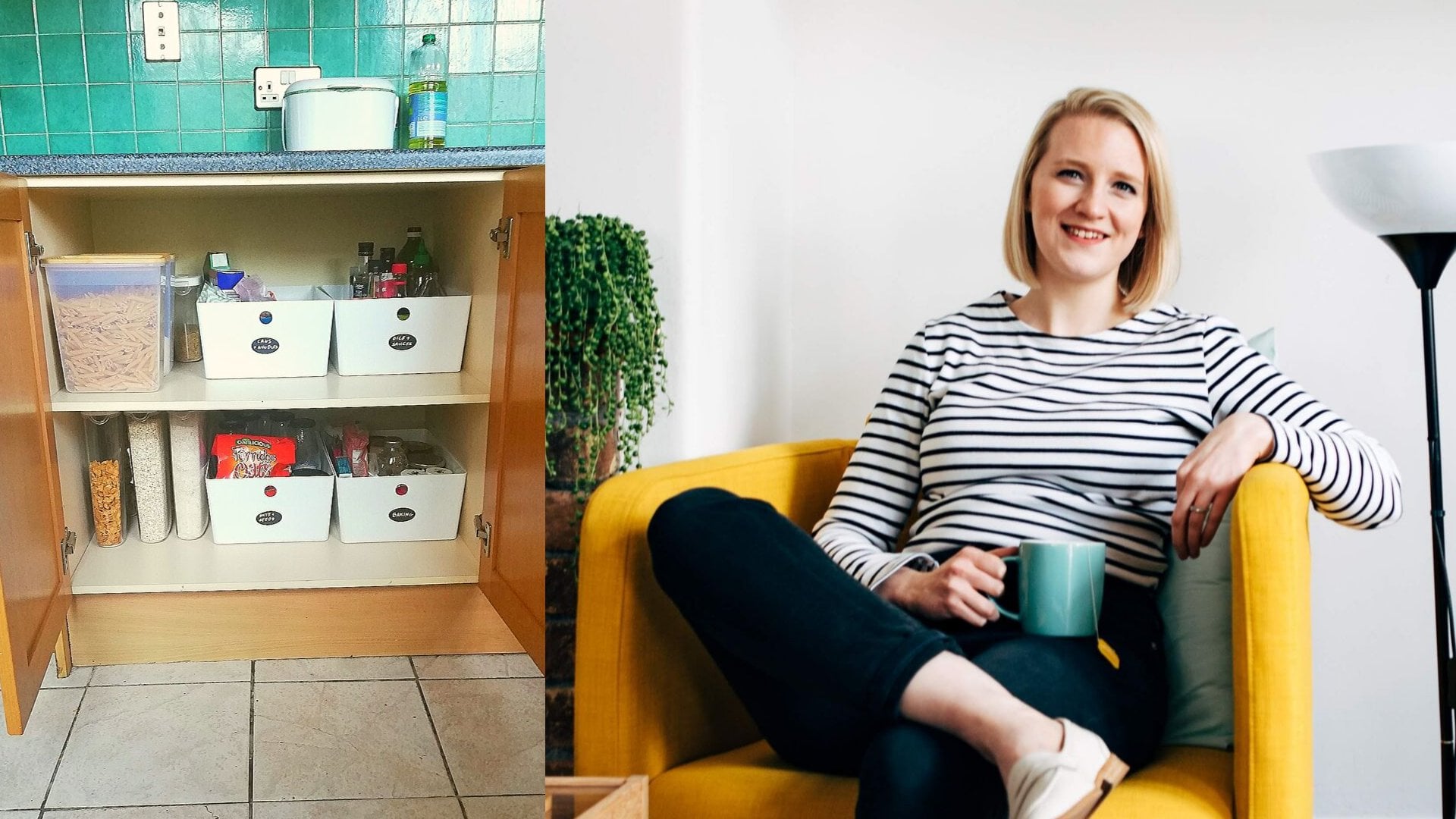
and you feel like it's just super overwhelming. Start with one space. Quite often I will recommend a space like your
bathroom cabinet, or maybe your pantry, or a little cabinet
in your kitchen or something like
that, maybe your car. What I want you
to do is firstly, start by de-cluttering
that space. Is there furniture that
shouldn't be there? Is there old and expired
products that need to be tossed away or boxes that
need to be recycled, removing the stuff first, we'll leave you with step two, which is organizing and
cleaning the space. So let's start with the bathroom cabinet,
pull everything out, go through the boxes, throw away things
that are expired, things that you don't like. Maybe you can give to a couple of makeup or beauty products to a family member that
might like them better than you or have a
different skin type two, you get rid of the stuff and try to get it out of that space as
quickly as you can. And if you are donating or giving things to
family, et cetera, have a dedicated box or bag near your door or in your car
or something like that. And take that thing to that person the next
time you see them or drop things that
the charity drop off, whatever you have
where you live. When you've got
this stuff out of the space is time
for the second step, which is a lot more fun, which is the organizing. Now, unless you have the budget and the
time and the energy, don't run to your
nearest shop and buy all the bins and boxes and
containers that they have. If it's important to you, that is beautiful,
absolutely do that. But I recommend to start by
using what you have and, or you can use things like simple little cardboard
boxes just to work out how much stuff you have and where you
want it to be, then you can start
measuring it and making it all pinterest
pretty if you want to. But quite often, e.g. in my bathroom cabinet, I've just got a couple
of really simple white clear plastic bins from, I think they were from Kmart or Target or something like that, cost about two or $3 each. I have been using these
for a really long time. Originally, they were in my
pantry and then I re-purpose them when we moved to this
house to have in my bathroom. So the thing I would say
to you is don't hold off because you don't have
the perfect boxes are the perfect organisation. De clutter, less stuff,
organized and clean. It, wiped down those shelves, and finally manage the
inventory coming in. What do I mean by that? Sounds really technical. I basically just mean don't buy new stuff until you've
used up what you have. Or if you are buying new stuff, makes sure that it has
a really clear purpose. Is it because your skin type
has changed or you need a better moisturizer in the wintertime different to
the summertime ofcourse, go and get what you need. Don't buy stuff. If you are bringing things in, you will get cluttered again. That's essentially
the key today. Cluttering, de clutter, then organized, then
manage inventory. A key thing I often do
is one in, one out. If I finish off a bottle of something or a box
or a container, I'm allowed to buy
another thing. Or if I get rid of a
shirt or two shirts, I'm allowed to buy another one. But the thing is, if you don't manage those little
micro things, It's come and get
cluttered again. So try and get in the habit. Be compassionate with yourself
when you get it wrong. Start with one small space. So you might be wondering ME, my whole house is a total mess. Where do I even start? The ratio I recommend is too small spaces for
every one big project. E.g. if you start with your bathroom cabinet
and a kitchen cabinet, you start to see the momentum is start to see how nice it looks, how good it feels to
get rid of stuff. Then you can tackle that garage or garden shed or wardrobe, whatever feels like a
big project to you. So to help with this, maybe make a list of the
spaces in your house that you have and start taking
them off that list. You can find some
inspiration in the printable for this section that you
can work yourself through. But essentially you
can make a list that's as detailed or as big
as you'd want it to. The most important thing, start doing it to start with one small area than
another small area. And let's see if you can
stretch to a bigger area. And the final thing I
want to say on this is asked for help. I have helped friends
and family members many times to clear
out a space and get organized and tackle a big project like a garage or a massive kitchen de clutter. The thing is, when
you have help, it becomes a lot more fun. You can go for lunch afterwards, so buy pizza or
whatever you wanna do, and make sure that it's actually an enjoyable
time together. Alright, I trust you're going
to have fun with this step. Bacon passionate. Don't go for perfectionism to stop
in a little tiny area. Right now.
4. Planning Your Time & Schedule: Next up is a very simple
but powerful principle, which is the whole
idea that I don't have time organizing your schedule. And your time is a
huge part of being organized in your
life and having things flow in a healthy way. Now there's a lot to be
said about this subject, but I want to keep it short, simple and actionable
for you here today. So my main tip is do not fall into this trap
of getting it all done. I see it all the time when YouTube and other
social media channels, and it is not attainable
and it is not possible. However, like we talked
about in an earlier module, with the right habits, we can help ourselves
plan our time better, but don't go for perfection. Perfection is not,
it's not realistic, it's not attainable, it's
not really that helpful. So getting it all done is not something that I recommend
that you strive for, but rather picking What's
the most important for you now and how can your week work around them?
Let's look at this. The first thing you
wanna do is to have a really honest look at
your life right now. And I want you to think about the three to five things that
are most important to you. It could be important
because it provides an income like you might
not love your job, but you do need the
income that it provides. So it is actually important because it means that
you can pay your rent, feed yourself and your family, or whatever else you
need to be doing. So, look at your life. Look at the three to five things that are most important to you during this part
is actually very, very important
because we can't form a habit if we're constantly
chasing our tail, are trying to be there
for other people. So e.g. for me, one really important
thing is my work. I really enjoy what
I do for work, and I want to make sure that I have the time and
the space for it. However, I've
consciously chosen to work from home because I
don't enjoy commuting. I would much rather spend my time doing the work
that's meaningful. And doing that from harm
is totally fine for me. Another couple of things
that are super-important to me is my health and fitness. I make time pretty much
every day for a walk, a workout, or run, a bike ride, or some
kind of movement. It's not always strenuous
and I'm certainly not a fitness person or doing
heavy bench press at the gym, but it's something
that I make room for every single
day in my schedule. Those are just some examples. Now, obviously, if you
have a family cooking healthy food for
your family might be something that you value. It really is no right or
wrong when it comes to this. But looking at the things that are most important to you will inevitably help you
with the next step. The second part of this is to
plan your week in advance. This can feel really
overwhelming for some people. So what I would
recommend to start with, it's really just
a blank paper or maybe a white board or
something like that. Then you can write
on and you can keep in a spot where
it works for you. Maybe it's on your fridge or somewhere where
you'll see it. All I want you to do is look
at the weight coming up. Are there any social engagement,
party's job, things? Is anyone in the
family traveling? So just make a bit
of it and you can even get those planners that have different
family members. So you can write
on different days what activities different
people have on. This is just really for you to feel more in charge
of your time. So that also, if you are one of the key organizers
in your family, you might constantly
be keeping things up here, write them down. My partner and I use a
shared Google Calendar, which is a really easy
way to put in when one of us has events either
separately or together. But don't go digital if it
feels too overwhelming, just get a sheet of paper or something like that and
write down for each of the key people
in your family what is coming up in the coming week. This also helps you
with other things like meal planning
and other stuff. But it really also
helps making sure that the clothes are clean and ready for what those things are. I'm just looking
at the week ahead. It can also help you
be super realistic. If it's a crazy workweek, you will possibly
have to sacrifice some other things because
you simply won't have enough time in the day to work a 12-hour day and go and
do all those other things. So plan your week in advance. This is often something
I look out on a Sunday. Sometimes I just do this myself or sometimes
my partner and I will sit down together and have a look at what's
coming up that way. The very final step, which might be an
unexpected one for you is to learn to say, no. This one can be
really difficult, and I'm not expecting
you to work this out overnight if this is
not natural for you. But if you think
about the first step, which was the three to five things that are
important to you. And the second step, which
was planning out your week, you will pretty quickly
start saying that there is a crap ton of things that
don't fit into that. E.g. if you are a person that often gets asked to
help other people out, there is nothing
wrong with wanting to be there for friends, family, or helping out in
the community or in your church or whatever
your life looks like. But be super mindful
that the time that you give away to other people or things that are less
important to you, means that you will
have less time, energy, and effort to put
into the thing said, do matter for you. E.g. really, if you think
about it long and hard, we'll driving that
friend to the airport be more or less valuable
than doing a workout. Sometimes you might want that time and the car
chatting to your friend, driving them to the airport
and helping them out. But make sure that
you've actually think before you say yes. If signer is something that
you find very challenging, have an excuse or an
alternative ready? E.g. if your mate goes, Hey, I'm running out of time. Can you drive me to the airport? Sorry, I can't make that today, but I'm happy to pick
you up on Sunday. So what you're doing is
training the person, especially this is important for people who tend to say
yes to everything. This can be really, really good to teach
that person or that situation that you're
not always available. Same thing can be for your kids. If your children expect to be driven everywhere
or whatever, stop by setting small
boundaries and going actually, sorry, you can't have
friends over tomorrow. But you could on Sunday. By starting to set these
boundaries around time, an organization, you can keep focusing in on the things
that matter the most to you. If you're really looking
to change a habit, the biggest habit is to say no more often than you say yes.
5. Meal Prep To Free Up Time & Eat Well: Next up we're going to
look at an area that is very vital but often
not prioritized. And I'm talking about food
and what you eat and drink. Now, organizing your food and
meal planning is something that I've been
doing actively for probably the last
eight years or so. And it has transformed
how my wake works. When we were talking about
organizing your schedule, we covered things
like making room for the things that are
most important to you. The thing is for some
people cooking and preparing food is
something they love. They like it because it's
creative or they can share a meal with someone
that they love or share it with
their family, etc. But for a lot of people, food is simply the
fuel that we put into our body so we can
function and be healthy and that
are wakes can flow, especially for the parents
out there who are putting on dinner every night for a
bigger group of people, it can be really, really
hard to stay creative. I'm excited when all
the kids want to eat. It's like tomatoes
or some pasta. Meal planning and
having some structure and organization around
your food will save you so much time
and it feeds into many of the other
categories that we'll cover in this little challenge. But meal planning works. There is so much stats that show that meal planning
really does work. And for people, we're talking about building habits, right? So for people who want to be
a little bit healthier, e.g. or manage their budget. Meal planning is a
step-by-step structure to help you with that. You don't even have to be a very organized person and you don't have to do
it all the time. So let's look at how to do it. So what you wanna do is plan out one type of meal
for one week only. This is really just to start training that muscle
and that habit. So e.g. if you work
away from the home, you may be one of those
people who go and buy lunch quite often and it does
cost a fair bit of money. And at times they won't be as healthy as some of the stuff
you could bring yourself. If you're anything like me, I'm actually happy to
have the same thing two, maybe even three times, just to make my wake a
flow a little bit easier. So what you wanna do is look
at the week ahead and go. Okay, I'm gonna be
harm on two days. I'm gonna be out on three of my working days and
on the weekend, I've got activities
and other things. So I really only need
six lunches worth. Then you can plan the food that you want to have depending where
you're going to be. So for those two
days, hypothetically, if you're working from
home, you might go, I'm going to have
soup for lunch, soup and a piece of toast
for lunch on those days. So you write that down
on a little paper or you can even write it in your digital calendar if you like. Then what else would
you like to eat? Well, on the days where
I'm going into the office, I might prepare a solid. So you could do
something really simple, like just a green salad with some tuna or whatever it is
you'd like to put in a solid. And then that takes care
of the three other days. And the final day that
you need lunch for, you might be at harm. You might just do
something really simple, like a piece of toast with your favorite topping
or something like that. And that's it. You just plan one type of meal for one week and see how you go, see how well it worked. Did you forget to bring it if
you're one of those people who run out the door and forget
the lunch in the fridge, put a little post-it
note near the door. So you don't forget the lunch
when you're dashing out of the house to run omics thing. So now that you've
got your meal plan, obviously you can meal plan for more of your meals
if you want to. But if you're not used to this, I would recommend start
with one type of meal. Now, obviously then you
have a grocery list. So the second step is to
make a shopping list so that you'd get all the items that you need and go to the
store for them? I normally meal plan
for seven days at a time and I normally meal-plan breakfast,
lunch, and dinner. I write down all
the things that I need for those meals that
I don't already have in my house because
I quite often shop from my pantry fridge
or freezer and go, Oh, I've got chicken, I've
got this, I've got that. Then I put together a meal
plan based on what I have, which also saves a bit of money. But I take my
shopping list and I go to the supermarket
and I stick to it. This is the thing that a lot
of people don't realize. And obviously the spill same to a little bit into
your budget category, which we'll talk about
in a separate section. But a lot of people don't realize how much stuff
we tend to pick up at the supermarket that
we either don't need or because it looked
like it was a good deal. My general view is I
do not buy things at the supermarket unless they
are a really good deal, like 50% off or something
that I use all the time. Otherwise, to be
perfectly honest, your house is going to clutter up by the things that you need. Stick to your
shopping list unless it's an amazing, amazing deal. And that's it. The final bit to getting more organized around
your food is to set aside time once or twice a week when you're going
to prep your items? Quite often for
me, it's either on a Sunday or Monday
because I do work from home on Mondays and I make sure that I have
time to meal prep. So e.g. if I was doing
a soup for lunches, I might do a big batch of soup. I might make a lasagna
or something like that. That's gonna be dinner
for a couple of nights. So I prep a lot of that stuff
in bulk at the onetime. You can also do things
like freezer meals like lasagna IS can
be really great to put together and have
them ready in your freezer. So on a really busy night, you can literally just
take it from the phrase, I've put it in the oven. And it will be preparing dinner, crockpot recipes, Instant Pot recipes
and stuff like that. There's endless
inspiration online. The most important thing, just to recap, meal-plan
for one week at a time. Start with just the one meal. If you need to go to the
grocery store only by the things you need to set
aside a little bit of time, even if it's just an hour, twice a week or something, to prep all the stuff and
have it ready in the fridge. It just I swear if you
get into meal planning, it's something that it
probably is the biggest, easiest thing that I've done in the last eight or ten years that have significantly
improved how much time I have to do
other more fun things.
6. Budgeting Basics & Being In Charge Of Your Money: Alright, let's talk about money. Money is a big thing
in our society. We all need money
to live by things, eat all that sort of stuff. But the thing is,
a lot of people who are unorganized or messy, or really ashamed of how
poorly in their own mind, how bad they are with money or how poorly they
manage their money. The great thing, like any of the other habits we've
talked about in this course, is something you can learn. And it's something you can do
something about right now. And it's actually not
as hot as it feels. Sorry for me. Everyone has a little
bit different. There's a lot of different
templates and tools out there. There are templates linked
for this particular course. So you can use my
template if you like, if you need to get started. But what I wanted
to stop sharing with you is the thing that really made the penny
dropped for me, which is called a zero some
budget, a zero-sum budget. It doesn't matter how much
or little earned by the way, this principle works for
anyone on any type of income, even if you're a student or whatever is going
on in your life. So a zero-sum budget
basically means that we have money coming in
and money going out. And a zero-sum budget
means that you allocate every dollar or every chunk
of money to a particular job. Let's talk about how this
would work in practice. So if the idea is to
give every dollar or every unit of money
in your country a job. What you wanna do is
allocate where it goes to. So hypothetically, if you have $1,000 coming in every month, you might be paid $1,000. We'll get $1,000
into your account. That's what we've
got to work with. Then your rent, my B3
hundred so you go 700 left. And then for your
grocery budget, hypothetically that might
be the $300 or something. So now you've got $400 left. And then you might have
some incidentals and petrol and Internet and bills
and things like that, and that might be another $200. So now we have $200 left of this budget that hasn't
been allocated to anything. Money is a funny thing
because if you haven't told them money where to
go or given it a job, it will disappear
out of your pocket and you'll be one of those
people who cycled way. I did my money guard.
What's happening? With the example
that I just used? If you had, say
hypothetically $200 left or $100 left at the end
of your calculation, but didn't have a
particular place to go. That's your savings and that's this whole idea of
paying yourself first. A lot of people don't really understand what that
means because it's like, well, ME I have to pay
rent to my landlord. I've got to pay the
Internet provider and the electricity provider and
they'll turn off my power. But if you use a zero-sum
budget and pay yourself first, you will quickly start to form the habit that you think about
money a bit differently. So if you know you have
$1,000 coming in and you have $900 worth of expenses and $100. So kind of spending
money or saving money. What I would
recommend that you do before you pay any of the
bills and the other stuff. Put $100 in your
future savings fund. This means that you're
paying yourself first whilst looking after
your other responsibilities. So you're putting 100 dollar
in the future Freedom Fund, whatever you wanna call it. Then you go about paying
your other stuff, buying groceries and
things like that. Thing about zero
some budgets is that they actually allow us to give. It's kinda like when
you work as a team, if everyone doesn't know
what they're doing, the team will be unorganized and some people will deliver great results and
some not so much. Your money is exactly the same. When you've given
every dollar or every unit of currency a job, it will do that job for you. You might still be
a little bit off the mark sometimes and
that's totally fine. But in reality, if
you've given it a job, it's probably going to work a lot better than not doing it. So that was a lot of
talk about budgets. So how specifically do you get
organized with your money? Well, the very first
thing to do is to download your bank statement for the last one to two months and look at where
your money has been going. How much goes to
rent or mortgage, how much goes to bills? How much goes to eating out or socializing or concert
tickets or other things. Now, I don't want you to have
any judgment around this. Just use the template
if you want to. Putting your numbers have the last month and
where the money went. Because when you
know where it goes, you can give it a new job. If you notice that you're
spending double what you thought you were on eating
out and socializing, could you take some of
that money even if it's just $50 worth and put it towards the savings
account or something else. Your next step, I've
said it a few times, but download the budget
template and start making your zero-sum budget
and be realistic here. It's not gonna be perfect
the first time you do it, but write down all the
information that you do have. And when you look at what
your actual budget is, you might actually also have a situation
where you're like, Actually my outgoings are
higher than what's coming in, meaning that you earn
less than you need to. And you might be putting
things on credit cards, etc. What I really do
recommend is aim for as close as you can to
a zero-sum budget. And make sure that if you actually need to cut
back on a few things, don't stop them altogether,
but swaps them. If you loved them to date now, but you can't really afford going out to date night for the next little while
due to something in your financial constraints, get on top of your
finances and do a nice 20 dollar date night
at home with your partner. Instead, you don't have to stop everything fun just to get
on top of your finances. But it is something that you will need to focus
a little bit on. And it will save you a lot of stress and a lot of
trouble down the track. A lot of you will say to me that they don't
really like sitting down and looking at
their money because there's guilt around it or this. They want to earn more
money than they do. The thing is, which is awesome, is that this is a
habit that you can build much like
going to the gym, meal planning or any of the other stuff we've talked about. So what I would recommend
that you do right now is pick 15 min awake. I bet you can spare
15 min and sit down and look at your
bank statement or your card statement and go, What did I spend
money on this week? We had a big bill come
out for this and etc. And just spend 15 min. Because the thing
about this sort of stuff is that if you
know that you're going to need to sit down
once a month or once every two months and it's
going to take you hours. It's not going to be a lot of
fun and you're probably not going to do it because
you don't like it. But if you start doing a bit of a weekly check-in and
whatnot even be 15 min. There might be 10 min or 5 min. But I really want you
to do that because it helps you interact
with your money. It helps you see
what's going on. And you can celebrate the wins, the money that you saved, or having more money left in
the bank than you thought. You can also look at the things
that didn't really work. Maybe you set two type of
budget for groceries and you doubled that
because it actually wasn't a realistic
budget to start with. So look at the things
that went really well. Look at the things
that didn't work, and give yourself a
pat on the back for doing the Sit down and
looking at your money.
7. Well done! Now what's next?: Thank you so much for sharing this time with me
and I'm really, really proud of you. The final thing that I
really want you to take away is progress
over perfection. Don't try to get it
all right in one go, it is not possible. It's not even something
to strive for. Perfectionism isn't helpful. So put that aside because perfectionism often causes us to procrastinate and that is
normal and human progress. One little step,
one little cabinet. One week of budgeting or one week of meals
stopped somewhere. Pick one of these
areas that is most important to you right
now and see how you go. Get a bit better, evaluate
what's working for you, use the tools that
makes sense for you, and go find inspiration online. There is so much information
about budgeting, decluttering, all that sort of stuff on Google or YouTube. There are blogs and podcasts
and all these things. But start small, don't
allow yourself to sit in analysis paralysis
or procrastinate about this to start somewhere. Because the thing is,
if you're serious about helping yourself move forward, got to start doing the thing. I've had a blast sharing
this time with you. I trust that this was helpful. Please refer to the
printables for each of the sections and just do
one little step at a time. It doesn't matter how organized you are or how
organized you feel. What matters is how
you show up for yourself and the
people that you love. And that's really where
your results come from. I hope you have an amazing week and I look forward to
see you next time.
 Emmy Petersson, Meal Planning, Minimalism & Organization