Transcripts
1. Introduction: I'm excited to teach
this class because I get endless questions
from people all the time about what is an NFT, how to mint an NFT. To settle this once and for all, we'll do it here at Skillshare. [MUSIC]. Hi, I'm Pplpleeasr NFT
artist and Digital Creator, and now a Skillshare teacher. I was working as a digital
visual effects artist for six years until
the summer of 2020 when I became unemployed. To make a living for
myself I started creating animations on the
side and through that, I also learned that NFTs
exist and it really blew my mind that people
were willing to pay money to own my digital art. I started minting NFTs as well. Then some 20 animations later, I made an animation and it sold for more than half
a million dollars, and then it just became
my full-time career. There's a lot of information circulating the web about NFTs, and the goal with
this class is to condense all that information
into one place that's digestible and provide an easy step-by-step so that you can know how to make
your first NFT. I'll help you understand
the minting process and the technical knowledge required to mint an NFT
from start to finish. I'll also help you understand the importance of community, connecting with them, and
authenticity within the space. This class is great for anybody who's never minted
an NFT before, or if you're just super curious about the space in general. If you're ready to do
your deep dive into NFTs, let's get started. [MUSIC]
2. Getting Started: Welcome to the class, and we're going to dive right
in about all things NFTs. The big why of why you should
care about NFTs or Web3, is that we're in a new era of monetization for
our creative work. Now independent creators
and creatives have more ownership and authority
over their work as well. Not to mention, each time
your work is resold, you will get resale royalties
as a result of that, which is it always
should have been. Because the work is digitized, you're opening up to
a larger audience and global market that you can
directly sell your work to. Before NFTs, I was working
as a visual effects artist, just doing lighting composing down the 3D animation pipeline. I worked on various movies in Hollywood such as
Batman versus Superman, Star Trek Beyond, Wonder Woman. But I was just a small cog
in a large machine and mostly just executing on
other people's visions. Anybody who has worked in the visual effects
industry knows that it's not the most stable. You're often having to look for work from contract to contract. That's pretty much what
I was doing all the way up until 2019. I had finished up my
contract at Blizzard, and I was looking
for my next gig. I finally found
one at Apple and I was supposed to go work
there as a digital artist. But then in 2020, the
pandemic happened. Right before I was
supposed to start, they rescinded my offer. Then I was unemployed for a little over
a year after that. That's how I transitioned
my career into making animations as a side
hustle for a lot of DeFi protocols and
also selling NFTs. Then, slowly it just became
my full-time career. DeFi is short for
decentralized finance and it is a subcategory
in cryptocurrency. What DeFi protocols are, are essentially software that mimic traditional
banking products, but are done on the
blockchain and automatically. That's why they
are decentralized. Because there is no
centralized entity such as a bank that is doing these things such as
loans or exchanging of funds. My first gig in making a DeFi
animation was back in 2020. This was when I was
still looking for jobs. I was casually browsing
crypto Twitter and I noticed that
there was a lack of creative talent within promotional materials
within the space. I joked show my friends
saying that they should just hire me to do their animations or
promotion material because I needed a job. [LAUGHTER] Then one day, one of the protocols
called Iron finance, put out a tweet
asking if anybody was good at video editing and
my friend referred me. Then I made my first
animation for DeFi. That's where it all started. That was not my first
dip into crypto though. My first dip into crypto was in 2017 when I had saved up a
little bit of money from working with jobs in visual
effects and I was looking for alternative ways to make passive income
such as investing. Obviously, I knew nothing about stocks or anything to do with traditional finance and
traditional financial products. Naturally, I migrated
over to read it and I found the
cryptocurrency sub read it. Then from there I went
down the rabbit hole of learning about cryptocurrency
and how to invest there. Then so I bought my first
cryptocurrency back in 2017. I think in 2017, I
probably put around $2,000 into various
different cryptocurrencies. Then, I think at one point it went up to maybe over $9,000, which was really cool, but then I never sold. Then the bear market hits. Then [LAUGHTER] I think
at the lowest point, it probably went down to $600. But I actually just
never sold any of them. Then so when the bowl mark
had picked up again in 2020, I exchanged all of the other cryptocurrencies
such as Vechain, Ripple, and different coins into Ethereum that I've been
holding Ethereum ever since. Ethereum is the second
largest cryptocurrency after Bitcoin. You can think of it as a
virtual computer that is run on a bunch of physical
computers or on the Cloud. People can build apps which are built with smart
contracts on Ethereum. It's basically a
virtual computer. NFTs are goods that you can exchange on the
specific blockchain. You can also exchange NFTs
on other blockchains too. But for this class we're
focusing on Ethereum. Cryptocurrency is just like the currency that you can
use to exchange these goods. For this class,
we're focusing on Ethereum because Ethereum is the most popular blockchain
that people are building apps on top of as well
as making NFTs on. After my first gig
with a DeFi protocol, I made a little
animation that they used as promotional material. Then because people
in the community, which was so small at the time, thought it was very cool, then very quickly
through word of mouth, my work or reputation
quickly spread in the space. Then all of the DeFi
protocols started hitting me up to make
animations for them. Around that time I think I
was probably whipping out maybe two animations per week for different
DeFi protocols. I think by the time
in March 2021, I had probably made at least over 20
something animations for various different
DeFi protocols. Around that same time, I had noticed a large surge on interests in specifically
the topic of NFTs. I also was minting NFTs
since the summer of 2020. Then in early 2021, there began an explosion
of interests in NFTs. I saw this opportunity
to make myself also known in the NFT space on top of the DeFi animations
that I've been making. When I started minting
NFTs back in 2020, nobody knew really
what they were. Everybody including
my friends and family thought I was crazy
when I was talking about them. Now fast forward just a
little bit over a year later, I think everybody has at
least heard of the term NFTs. Many headlines and news and has all stars on SNL
episode about NFTs. Basically a lot has happened, but we're still early. I'm creating this class
because there's obviously a huge curiosity around
the topic of NFTs, but not a lot of firm resources out there that teach people
knowledge about NFTs. The hope with this
class is to get that settled for people so that you can understand
it a lot better. So much has happened
in the space and there's so much
information out there. But really my hope with this
class is to take us back to the basics and just focus on why this technology
is revolutionary. What you should
care about and how you can mint an NFT properly. By the end of this class, you'll have all
the knowledge you need to mint your
first NFT properly, set a reasonable price for it. My goal here is really just for you to find your
first collector. For this class, you're
going to need a computer, a stable Internet connection, and some money to
buy Ethereum with if you want to mint
an NFT for real. If you don't want to spend
any money, that's fine too, because I'll teach you
how to go on the test net and requests some test
Ethereum, which is free. Last but not least, you'll need some
visual medium or art that you're going
to upload as your NFT. I know there's other types of NFTs out there such as music, but in this class we're going to focus on something visual. Join me in the next lesson
where we're going to deep dive into what is Web3 and
everything surrounding it. [MUSIC]
3. Get to Know Web 3.0: In this lesson I'll teach
you on a high level, what is Web 3? What the Blockchain is, and go into a little
bit more detail about what an NFT is. At the end, we'll explore some cool NFT projects together. What is Web 3? My personal favorite definition is from Chris Dixon
where he says, Web 3 is an Internet
owned by users and builders and orchestrated
with tokens. The main difference between
Web 2 and Web 3 is that Web 2 refers to anything that came from the social media era, for example, apps like
Twitter, Instagram, Facebook and the difference
between Web 2 and Web 3 is that all the apps on Web 2 are mainly centralized, meaning that one centralized
company will have full control and ownership over everything and all the
content that's on there. Web 3 is more decentralized, in which all the users and
builders are uploading their data on the Blockchain
and it is more permanent, transparent, and
also decentralized. The main cons of centralization
is that you don't truly control or own any of the content that's
being put out there. Let's say you're an
influencer on Instagram, your entire resume and body
of work exists as post on Instagram but because Instagram is a centralized
entity or company, they can decide to shut your
account down or take away your content at any
point and there's no really anything you
can do about that. Therefore, in Web 3, where content is decentralized, there is no centralized
entity or company that can take control or
ownership over your work. As a creator in Web 3, you have full ownership over your creations and
it also creates new opportunities
in which you can monetize and make money for
yourself with your work. Web 3 is all about
things like efficiency, transparency or smart contracts so that you don't have
to worry about things like bank transfers or signing a bunch of unnecessary
paperwork. Everything that happens in Web 3 mostly happens on
the Blockchain. Now we're going to talk about
what is the Blockchain? The Blockchain is the underlying
technology that enables trustless transactions
so that things like cryptocurrency and NFTs
can exist on top of it. There's a lot of benefits
to the Blockchain, such as the fact that it's not manipulatable and once
data is stored on chain, it can't be reversed. As well as the fact
that everything is transparent for
everyone to see. As a creator, you
don't have to go through other
distribution platforms. You can sell directly to your collectors and
earn royalties. Once a creator gets a
taste of money in Web 3, it's really hard to go
back to traditional ways. For example, because with NFTs you're getting paid right away when the sale goes through. You don't have to do things like the awkward freelance stance of reaching out to your
clients and being like, "Hey, when am I going to
get paid" and then waiting a few weeks or sometimes months
for that to even happen. My previous work, I was doing, mostly executing other
people's visions and it was less creatively
stimulating for me but now my day-to-day
looks a lot more different where I'm always working on projects
that interest me and inspire me and I'm not having to do work just for the sake of making
money to pay rent. This is just a really brief
overview of the Blockchain. If you're interested into diving into the nitty-gritty
of everything, in the Resources tab, there's a link to a bunch of blog posts that
really do a deep dive into what is the Blockchain and a bunch more resources
about the space. Now that leaves us
to ask the question, what is an NFT? NFT is also known as
non-fungible tokens, allows you to assign or claim ownership attached to
any digital asset, and it is tracked
on the Blockchain. Now there's a lot of different Blockchains out there but for this class we're going to
focus exclusively on Ethereum. Ethereum is like a
virtual computer that has run on a network of physical computers
on the Cloud and you can build apps on it
using smart contracts, which is code or create
tokens which are either fungible like cryptocurrency
or non-fungible like NFTs. The difference between fungible
and non-fungible is that something that is
fungible means that you don't care if it is
one or the other. For example, if you're going to a store and you're
using a dollar bill, you don't care if this
is a dollar bill that came from 1979 or 1992. Whereas non-fungible means that within each token
that is unique, you care whether or not
this one or the other one, NFTs are non-fungible because you care whether
or not your NFT is a people pleaser NFT or
if it's an NFT from 7/11. For this class, I'm focusing
on Ethereum because Ethereum is the most
popular Blockchain that people are
building apps on, as well as making NFTs on. How do you compare between
the different Blockchains? You can think of the different
Blockchains like cities. Ethereum would be most taken to some place like
New York City, where it's the most popular.
Everybody has heard of it. Everybody loves to
visit or live there, even though it's expensive, you're also more likely to get noticed if you set
up a shop there. NFT could represent digital
arts such as gifts, collectibles, 3D
objects, videos, music. They can also represent
real-world items such as tickets to an event or access to something
you've created. The benefits of creating NFTs are that you can easily
prove you're the creator. You determine the scarcity. You can earn royalties every
time the NFT is resold. You can sell the NFT on a
marketplace or directly. You're not locked into
any platform specifically and you don't need middlemen
to intermediate your sales. The world of NFTs is not
just about making sales, but it's also more importantly about the community
that you build. With building
communities in Web 3, there's a sense of ownership and belonging and also people seek out communities that have values that resonate with them. When people buy NFTs, each project has their
own specific cultures. In my opinion, one of the
best ways to understand the space and participate is just to become a collector's. Go out there and collect your first NFT and
then you'll know quickly what the experience of becoming part of a
community is like. Everybody thinks about
collecting NFTs differently, but the way that I
like to think about it is that you should
never spend money, especially more than
you're willing to lose. When I buy an NFT, I'm buying it because
I like it and simply because I
want to collect it, not because I'm trying
to make money off of it. Similar to when you're
going to a store and you're buying a hoodie or a computer, you're spending that money, not expecting anything in return. I've been collecting NFTs for a while and I want
to show you some of my favorite NFTs as well as other examples of utility NFTs. Here we're on
OpenSea and this is the site that most
people like to use to browse NFTs and these are some of the NFTs that
I've collected over time. Here you can see all
different kinds of NFTs. Some of them will take
the form of digital art, such as this one. This is a video of art that I collected from an
artist named Aberfresh, which is a looping video. Now, there's also other
NFTs for example, these are 3D object NFTs. These are a little bonsai
trees that you can use to decorate your
metaverse apartment with. What I mean by that
is there are other NFT such as RTFKT space pods, which look like this. Now what does it mean
to own this NFT? They're literally
3D virtual spaces that you can own and go into. If I show you a
live demo of this, you can enter
somebody's space pod and it's fully interactive and here you can see an
apartment looking like space and within this NFT, you can also hang and display your other NFTs as
art on the walls. Lastly, there are also
utility NFTs such as these membership cards and
here is an example of one. This typically give you
access to something that you might be interested in or a community that you
want to be a part of. That's just a tip of
the iceberg of what is possible and all the
different kinds of NFTs, but really anything is
possible within the space. Now I want you to go to the Resources tab where
you're going to find a link for all the people that I recommend following
within this space, just to get a sense of what it's like to be part
of the community. In the next lesson
we're going to explore if NFTs
are right for you, so join me there. [MUSIC]
4. Are NFTs for You?: In this lesson,
we're going to be looking into whether
or not NFTs are for you and what mindset you're supposed to be having
and just really getting a better feel for
what you should be mindful of before you get down this
path of creating NFTs. NFTs have essentially teleported me to places in my career that are not easy for
people to get to very quickly in a normal sense, and some examples of this are the financial benefits that
it has provided for me, or specific opportunities
such as collaborations with magazine covers as well
as other publications. My experience is pretty unique. Part of it has to do with me being in the right place
at the right time. This doesn't necessarily
mean that it's going to be the same
path for everybody. But I'm optimistic about the opportunities that it's
going to open up for you. The whole industry
is really new. They don't teach
crypto, or NFTs, or most things about these topics in school
yet, even at all. Every year that you don't jump into web free is another
year that someone else is gaining experience in the University of Web3 that's being taught and
real-time right now. We're literally in the infancy of this booming
industry right now. Everyone is paving a path in real-time and you
can be a part of the innovation and all
the changes that are happening in this industry
right now because it's so new. There's no handbook telling
you this is how you do Web3. Web3 is all about inspiring
people creatively, whether that's through
art code or how to integrate things with
blockchain technology. People are constantly
coming up with new ways to expand the industry. The next question is
who are NFTs for and what mindset do you need to
transition to this industry? One of the main paradigm
shifts that people face is just needing to accept that
digital assets are a thing. I think that this is less
difficult for people who have played video games
in the past, for example. If you've ever played Neopets, you're probably very aware of the concept of digital goods. The concept of value is
really a social one, and people attach
values to things. Just like I can go
out to a store and buy this vase that
has a plant in it, it really you could say, serves not much utility, but I'm trading money for it because I believe
it has value, and really it's the
same thing with NFTs. Right now, most NFTs are often referred to as JPEGs
and still images. But really the hope is that as we move
towards the future, people are getting more and
more of their heads wrapped around this concept of
NFTs having utility. Right now we understand
NFTs mostly as digital art. But the future could
really look like NFTs being integrated into so many
aspects of our daily lives. For example, your passport, your driver's license
could be NFTs, your birth certificate
could be an NFT, and concert tickets
could be NFTs, and there's so much more. We're at this really cool tipping point in time right now, where you're seeing all of these corporations
and industries pouring their interests over
to NFTs and the metaverse. Facebook literally changed
their name to Meta, and all of the other
really smart entrepreneurs and innovators are also
looking closely at the space. If these are not telltale signs
of now being a good time, I don't really know what it is. It's really just
to show you that this technology is
probably here to stay. If you're somebody who likes
to think about the future, challenge the status
quo or re-invent social structures to be
more efficient and better. Or if you're an independent
thinker or a creative person, which is why you're here, or just really tech savvy. This could be a really
interesting space for you to explore. But there is a
financial commitment to consider when you're
thinking about this space. The idea is that whether
you're buying or selling NFTs, real money, that is translated
into cryptocurrency is required to do any
of these actions. If you're selling NFTs there's these things called gas
fees that you have to pay, which are essentially
transaction fees. But we will talk more
about that later. If you're buying NFTs, you also need
cryptocurrency to buy them, and this is how I like
to think about it, is that when I buy something, I'm buying it because
I like it and not because I'm thinking
of it as an investment. Just like when I go to a record
store and I buy a vinyl, if it happens to go
up in price later, that's cool, but that's
not why I'm buying it now. I'm buying it because I like
the music or the artwork, and that's really how you
should be thinking about NFTs. Success can look
really different for all different people. But success in this space is really very similar
to success in Web2. Let's say you're trying to be a successful artists
on Instagram. First, you need to
find your niche. You also need to
market yourself in the right way and you need
to build the following, and those things are
very similar to Web3. The only difference
is that in Web3, at least in this point in time, you need to specifically
market yourself or find people who are crypto native and willing to spend cryptocurrency. What that means
is, even if you're somebody with millions of
followers on Instagram, that doesn't
necessarily translate one-to-one over to Web3, because most of your followers are probably not people who are crypto native or going to
want to spend cryptocurrency. There's a lot of conversations happening about NFTs right now. For example, their impact on the environment or whether
or not it's a scam. But I think what's most
important is for you to do your own research and find
what you're comfortable with. The reality is, a lot of
people are always just scared of things that
are new and emerging, and it is often referred to something that the
industry people call FUD, which stands for fear,
uncertainty and doubt. I personally think it's pretty important to not just
read the headlines, but do your own
research and explore. If you're interested in new technologies and you're
curious about everything we've talked about
so far and you have some disposable
cash or income to buy cryptocurrency with or you don't and you just want to
play around with the testnet, I would say you're ready. Before we go into
the next lesson where I help you
set up your wallet, I've shared some links
on blog posts under the Resources tab that dive deeper into the topics
that we've talked about. Come and join me in the
next lesson where I'm going to help you to
set up your wallet. [MUSIC]
5. Set Up Your Wallet: In this lesson, I'm going to help you set up
your crypto wallet. A crypto wallet is essentially
your online bank account, as well as your identity
about where you store your
cryptocurrency and NFTs. That's really what
the blockchain is, is just a place to store all the lists of transactions
that are happening. Let's take a look at what the blockchain looks
like right now. Here we have Etherscan, which is the main display layer for viewing transactions
on Ethereum, this is the Etherscan homepage. For example, I'm
going to go look at my own wallet and see
what's happening on there. When you come to this
page on Etherscan, you can see very many things. The first thing is an address which shows my wallet address. This is the exact address
that I would give to people when I'm telling them if they're trying
to send money to me, they would send it here. Here you can see the balance [LAUGHTER] of the amount
of Ethereum that I have. I have 4.659 Ethereum
in my wallet right now, and that is around $15,000
at current prices. If you go down here,
you can see all of the transactions that
have happened on my wallet for all
of time [LAUGHTER]. Here's something
called a Txn hash, which is just a
unique identifier for that specific transaction. Here's the exact time
of when it happened. For example, where
funds are coming from and where they're going to? How much value, how much
funds has been transferred? The Txn fee would be the amount of gas fee that was required
for this transaction. This page is quite similar
to what you would see as a bank account history
page where you can see all of the transactions and actions that have happened
on the blockchain. Here are the different types, you can see if I sold something
on Uniswap if I minted something if I sold something and the amount
that I sold it for, it's really just
a combination of your online identity as
well as bank account. To even have a page like this, you first need to have a wallet. Now there are two
types of wallets. First, there's the
hardware wallet and then there's a
software wallet. Software wallets are also
commonly known as hot wallets. A hot wallet is one that
mainly lives online just like a browser extension and is usually used for
fast transacting. Later I'm going to walk
you through how to set up a wallet on a
service like MetaMask. Then there is a hardware wallet, which looks like this [NOISE]. They look like USB drives, and where hardware wallets
there's two main brands, there's ledger and trezor, and they range anywhere
between $60-$250. The main difference is just that the hardware wallet
is more secure, but the hot wallet is faster. People typically store
their most valuable assets on their hardware wallet, but they also keep a hot
wallet with a little bit of cash in it for fast transacting. An example of this would be, let's say Drake is dropping some NFTs and there's
only 10,000 of them. Now, there's definitely a lot of Drake fans out there and
I really want to get one, but I don't have time to be competing with the
other 10,000 people while I'm trying to
press buttons on my hardware wallet just to
get the transactions through. Therefore, I would
use my hot wallet so that I can get
these NFTs quickly. Now we're going to move into creating your
wallet on MetaMask. We're using MetaMask
because it's the wallet that's most integrated
with all web free apps, as well as web browsers. The process of creating a wallet starts by downloading
MetaMask as a extension for whichever web
browser that you're using. In this case, we're
using Chrome. We're going to install
MetaMask for Chrome. Now that that's installed, I'm going to pin it
to my extensions here and we can get started. If I click on this, it's
going to take me to a new page and we
can get started. MetaMask is going to ask you, are you new to MetaMask? If you not, then you click "No", and if you are, then you say
"Yes, let's get set up". Let's create a wallet. You can agree to this, and here you have to
create a password for your wallet [NOISE]. You agree to terms
of use and create. Now, here's a short
video that you can watch on MetaMask
to teach you about your seed phrase or your secret recovery phrase on how to keep your wallet safe. Here MetaMask is going to give you a secret recovery phrase, also known as the seed phrase. This is extremely important because it is the
only way that you can recover your wallet
using the seed phrase. Now we're going to write down the seed phrase on
a piece of paper. [NOISE] Now then we have
that written down, we can go ahead and confirm
the seed phrase again. It is so important that you
remember your seed phrase or keep it somewhere
secure and safe because if you lose
the seed phrase, you will never ever be able
to recover your wallet. It's not like Google
where you can say, oh, I forgot my password, please email it to me. Nobody is going to email you your seed phrase,
so it's all on you. If you lose this,
it's game over. Congratulations, you have
now created a wallet. When you go into your wallet, you'll see something like this, which actually the more common
interface that people use is by clicking on this little
"Fox" icon on your browser, and then you will see
your account here. This would be the 0x89 something would be
your wallet address, which is what we
talked about before. Here is the your
account balance, so how much Ethereum you
have in your wallet? Under here would be all of
the tokens that you own. Obviously, we have
nothing right now because we just
created this wallet. Over here where you see those 0x89.. long stream of characters
is your wallet address, and obviously it's very long. Look, if I paste it here. It's an extremely
[LAUGHTER] long string of characters that I'll never
ever be able to remember. Therefore, I'd like to
introduce you guys to something called
Ethereum Name Services. This is something
that you probably want to consider having. If you head onto their
website called ENS domains, you can just Google ENS domains
or it's just ens.domains. You can click that button
that says "Go to app". Now, what does an
Ethereum Name Service? An Ethereum Name Service, also known as ENS for short, is essentially like a URL
for your wallet address. Instead of me having to remember 0x89da3b4 and a
long string of characters, I can actually create a domain name for
my wallet address. In my personal case, mine
is peoplepleaser.eth. All ENS domains end with.eth
and you can create yours. Simulating creating one, we could say
skillshareemily.eth. We can search for it
and it's available. You can click on it, and then these are not
very expensive, but I think what make your wallet to experience a little better and streamlined. I highly recommend if anybody has crypto that you
should get one. Now I want you to go and
create your own wallet. Even if you don't want
to spend any money, you'll need a wallet to request some test Ethereum to use on the test net to practice venting NFTs which we will
talk about later. In the next lesson, we're going to explore different
marketplaces, which is where you're
going to be buying and selling NFTs. See you over there. [MUSIC]
6. Explore the Marketplaces: NFTs are basically things
or stuff that you can sell. Let's say that I made this coaster and I want
to sell it online. Now I need to find a
marketplace to sell it. There's different
marketplaces such as Etsy, eBay, Craigslist, Amazon. Similar to those marketplaces, I need somewhere to
sell my NFTs as well. That's what an NFT
marketplace really is. Now I can also create my own website to sell
this coaster online, but doing that requires me to hire some developers and is more advanced and I also need some backend selling
such as Shopify. Therefore, it's probably easier
for me to go directly to a marketplace to list my
thing for sale, such as Etsy. With NFTs it's the same. You have to choose where you
want to sell your goods. For beginners, I would
recommend you to find an existing marketplace
to sell your goods and then later on with a
little bit more success, you can hire some
developers to make your own website or your
own smart contract. Right now there's two
types of NFT marketplaces. There's permissionless
and curated. With permissionless
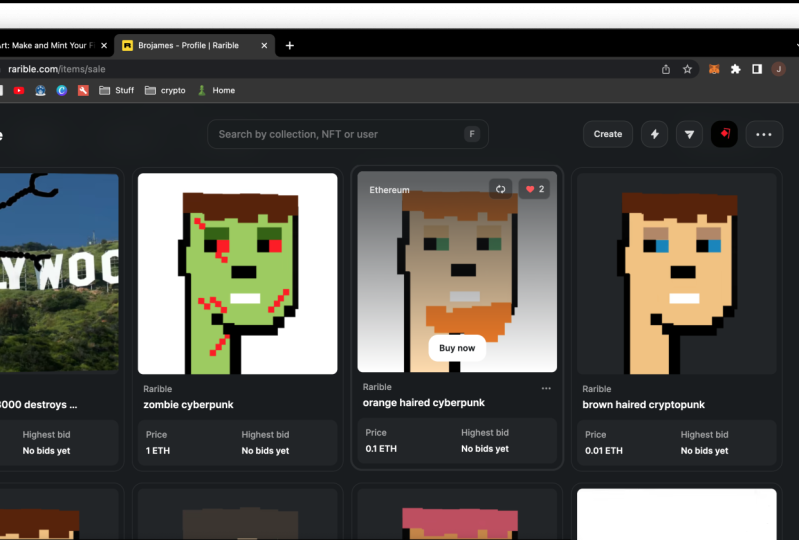
marketplaces, anybody can go and upload and mint NFTs, and with curated ones, it's usually gated and there's an application process involved. With permissionless
there's a lot of different
marketplaces out there, but currently OpenSea, Zora, and Rarible are probably
amongst the most popular ones. Let's head on over to
OpenSea and check it out. OpenSea is probably the
main site that everybody is using to browse NFTs
as well as upload. It is both a browser as
well as a marketplace. All NFTs that exist on chain are available to
view on OpenSea. The most common type of
transaction that people are doing on OpenSea are called
secondary transactions. What that means is, it's the Web 3 eBay, where the difference
between primary and secondary is that
primary is when something is being sold for the first time and secondary is also known as
secondhand or when it's being sold for the
second time and onwards. For most of these marketplaces, you can sell your
NFTs in two ways, either at a fixed
price or by auction. If you decide to mint and
sell something on OpenSea, they will take a 2.5
percent commission fee. Now let's take a
look at Rarible, which is another
permissionless marketplace. Rarible typically also takes 2.5 percent commission
on their sales. One of the reasons why
somebody might prefer to use Rarible over OpenSea is that they might like
the interface better. The next permissionless
marketplace is Zora. Zora currently takes no
commissions on sales, which is probably one of the reasons why somebody
would want to use it. Here we can see the homepage of Zora and get a feel
for how it works. Let's go ahead and explore
the curated marketplaces. The first curated marketplace that we're looking
at is Foundation. Here's the homepage on
Foundation where you can see the featured auction happening right now is literally the coffin dance meme.
That's pretty cool. Underneath you can find
their trending auctions. The way to go on Foundation is that you need to be
invited either by somebody who's already
on the platform as a crater or through
an invite code. If you can get one of those
to be on the platform, that's great and I would
highly recommend it. The next curated
marketplace is SuperRare. SuperRare is more of a
high-end art marketplace. If you see yourself as more of a high-end traditional artist or somebody who has maybe a
prominent social following, then this could be
the platform for you, but you do need to go through an application process and it's manually curated
by their team. The last curated marketplace that we're looking
at is Nifty Gateway. It's very popular with celebrities or
high-profile artists. There is also an
application process to get onto Nifty Gateway, which is also manual
by their team. Nifty Gateway operates a
little bit differently from the other marketplaces because
it's not fully on chain. One of the advantages of this
is that you can actually pay with your credit card rather than just having cryptocurrency. But the other disadvantage
is that generally there's another additional step that
needs to be taken in order to transfer your NFTs to
being fully on chain. Nifty Gateway currently takes 20 percent commission
from sales. Currently, permissionless
marketplaces are the Wild West where there's a lot of things happening and it might be
harder to get discovered. But if you're confident in your own marketing
skills or your fan base, then I would say, you don't
need to worry about that. The reason why some people are more comfortable with paying the 15-20 percent commissions that are taken by these
curated marketplaces, is because they
generally might have a connection with a
specific collectors or have better reputation in terms
of the quality of work and therefore people are willing to make that tradeoff in
order to be discovered. Now I want you to go and explore all these
different marketplaces, click around things and get a feel for what each
of them are like, and decide which one is
the best one for you. Join me in the next lesson
where I'll help you understand more about
the minting process. [MUSIC]
7. Understand The Minting Process: In this lesson, I'm
going to help you understand the minting process. NFTs are minted through
smart contracts that record ownership and
metadata on the NFTs. The metadata describes the type of NFT that's being created, and any other additional
attributes that the creator wishes to
associate with the said NFT. When someone mints an NFT, they're essentially
executing code that is stored on
a smart contract. The act of minting an NFT is
broken down into two parts. The first one is
specifying the metadata, and two is specifying the owner. The output of minting
is a token ID, which is what the smart
contract generates. This information is added to the blockchain where the
NFTs are being managed. There are two standards for
NFTs, ERC-721 and ERC-1155. ERC-721s are meant for unique
NFTs where you care about the difference between
one and another and the different rarity
or attribute traits. For example, profile picture
projects are usually 721s. Here on Chubbiverse Frens, you can see that there's
about 9,000 of them, but each of them have their own unique
number or token ID, and they also look
different from one another. One could be wearing
a baseball cap and another one is
wearing a bandanna. When you click into
each one of these, you can actually view the individual
attributes or metadata, which are the different
rarity traits. If you scroll down and
you look at properties, you can see that
the type of animal, this is a Chubbiwhal and
the background is pink, and you can see that 21
percent have this trait. The body is wearing a shirt, only six percent
have this trait. The face is mean, and only seven percent
have this trait. These essentially
are telling you the different varieties
of each trait. Additionally, you can click
into each one of them. For example, I only want to see mean Chubbifrens, therefore, I'm going to click into this
one and it's going to filter by all the ones that are mean. People might care
about this because of a personal preference or because the specific
trait is really rare, hence making your
NFT more valuable. Now we're going to
move on to ERC-1155, which is a standard for NFTs where uniqueness matters less. Here's an example of 1155 by
RTFKT which is called PodX. Now you can see that
there's 9,000 of them, just like Chubbifrens, except that when
you're browsing, it only shows up as one item. The reason is because all 9,000 of them are
essentially the same. Now when you click into
it, you can see why, because everybody's pod
starts out looking like this. None of them is
different to another. Let's say you're an artist
and you want to sell tickets to your
exhibition as an NFT, you'll probably go with
an ERC-1155 first, because it's actually
cheaper to mint these than an ERC-721, and if you don't care about
rarity or uniqueness, then you should probably mint
it through the standard, or if you're trying to sell
a t-shirt, for example, and all 1,000 of your
t-shirts look the same, and your NFT is just a token
representing ownership of one of these t-shirts, then you can also use 1155
because you don't care about whether or not rareness or unique traits are involved here. Now that you know
what an NFT is and what it actually
means to mint one, how do you actually go about
minting your first NFT. You can either use
a platform smart contract such as on
OpenSea or SuperRare, or you can deploy your
own smart contract, such as on Rarible or Manifold. Another way to deploy your
own smart contract is hiring a developer
to write it for you. Why should you care about
having a custom contract? When you mint on a
shared contract, your token will display
under the same collection as all the other tokens that minted under that same contract. When you use your own contract, then your token
will appear under a unique collection
that is just you. An example of this would be, let's take a look at one of the first NFTs that I've
ever minted back in 2020. Back in 2020, I had no idea what it meant to have
your own custom contract. Here you can see
that even though the creator says pplpleasr, the collection says rarible. When you click on this
rarible contract, you can see that there's 140,000 items in here,and they're certainly
not all my NFTs, they are all just NFTs that were minted under the shared
rarible contract. Later on when I realized what minting your own
contract actually means, here you can see a similar NFT where the
creator is still pplpleasr, but the collection
also says pplpleasr. Now when I click onto this
custom smart contract, I can see that there
are only 44 items and they are all the NFTs
that I have created. Platforms that use
a shared contract, typically also own
the contracts. That means that the
creators are restricted to the rules and judgments
of that platform. With your own contract, you own the keys to your
own minting factory. Tooling companies are no longer
the middlemen and you as a creator have the ability to publish and own your own work. In this world, value is typically tied to
scarcity of things, and so I am pretty
strategic about how often and when
I mint an NFT. As an NFT creator, you have this unspoken
contract with your collectors. For example, if I started
minting pplpleasr NFTs indefinitely and
everybody on earth had access to a pplpleasr NFT, then they wouldn't be
so valuable anymore. The idea is that there
should always be some caps supply to
whatever you're creating. But since you're just beginning, let's start with just
creating a OneOf One, which means a unique NFT. An example of a good OneOf One here is one that I collected from artists that I really
like called Dead Seagull. Here it says created
by Dead Seagull, and I bought it off Foundation. OneOf One means that
there is no other NFT out there that is exactly
the same as this one, and only one of these exist. While I want you to find
success minting your first NFT, I think you should
just think of this as a commemorative
event that you're getting started in
the Web3 space. Let's look at one of my very first NFTs
that I ever minted. If you click on the History tab, you can see all the
history of everything that happened [LAUGHTER] in this NFT and that is the beauty
of the blockchain. You can see here
on September 14th, 2020, I minted this NFT. I actually minted three
editions of this, so it is not a OneOf One. Here you can see that
I sold one addition to BitBuzz and two more of them
to somebody called Matrix. The first one sold the
same day that I listed it, and these two other
ones to Matrix sold two days later
on September 16th. Here, if you keep scrolling
through the history, you can see all of the different times that they have sold for different prices, when people bought
them for and what people sold them for
or listed them for, and all of the
different ways that it exchanged hands throughout the history of the blockchain or the lifespan of this NFT. The most recent
listing of this NFT is a March 3rd of this year and somebody listed it
for 15 Ethereum. How do royalties work? Well, here above pplpleasr it says creator 10
percent royalties. That means that every
time this NFT was resold, I would get 10 percent of that back as the
original creator. All of these histories
that you see, every time that it resold, I got 10 percent of each
one of these sales. This is a really big deal for creators because
it's essentially a way to earn passive income through something
that you created. One of the core concepts around NFT is the idea of provenance. Provenance means that something has history and
value tied to it. For example, I'm really glad that I minted
this NFT when I did. Even though if it
was worth not a lot at the time or might
have not sold right away, I'm really happy
that I did it back then because now I
can actually prove to people that I was
around minting NFTs in the year of 2020
instead of waiting to mint something when I
thought it was ready. Join me in the next
lesson and I'll help you brainstorm about what you can
actually turn into an NFT. [MUSIC]
8. Start Creating: In this lesson, I'm
going to help you brainstorm what to
actually turn into an NFT. If you're here, I'm going to assume that you're already
a creator of some sort, so it's possible that
you already have creations that you
can turn into NFTs. Maybe you're a
painter and you have an oil painting that
you want to digitize, or you're a photographer and you have photos that you can upload. Or if you're already
a digital creator, that's even better,
you already have these files that you can upload. Or maybe you're a crafter
and you want to sell merch. Let's say you sell t-shirts
and you want to create an NFT that is tied to
your t-shirt collection. There's very few limits on
what you can do in this space. I'm going to share some of
my work and how they could be classified as different NFTs. Here you could see
some of which are just digital still images that
I created as artwork. Or there could be a GIF or even a video with a
play button here. Or sometimes I also
have utility NFTs, such as this one, which has a token that
represents a movie poster, which also doubles as a
utility token so that if you hold one you'll
get a credit in the upcoming Ethereum
documentary. My latest project is
one called Shibuya, where we sold these utility NFTs also known as producer passes. The point of these NFTs
is so that we are making a Web three interactive web
series called White Rabbit. To watch it and pick
an alternate ending, you need to have one of
these producer passes to stake it in the
ending that you choose. When you're creating an NFT, there always needs
to be a reason why someone is buying your NFT. Otherwise, it would just be like them giving you
money for no reason. Why would somebody want
to buy a producer pass? First the producer
pass gives you access to seeing the content
beyond one of these stores. So if you have one
and you click on it, then you can connect
your MetaMask and stake your NFT to
continue watching. Otherwise, it would
be to be part of the White Rabbit
community, for example, there are some token gated
discord channels that you can only access if you
hold one of these NFTs. As a creator, I want to encourage you to think
more about what can actually be the
utility of your NFT and how you can use it to
innovate in this space, as opposed to having it
just be a piece of art or image that you're
trying to sell for money. But maybe you just
want to sell your NFT as a piece of art and
that's totally cool too. There's a lot of people
doing that right now and it's the most
common type of NFT. Something really popular
in the NFT space right right is creating
communities that are token gated. You can only access this
community, for example, on Discord or other places by buying this NFT
or maybe you're making something physical
and you want to sell an NFT as a token
that represents that. You can have people redeem their NFT for the physical
merch that you're selling. Taste is really subjective, but it might be
beneficial to go look at what's trending on the different
marketplaces right now, let's go ahead and check out
what's trending on OpenSea. Here you can see
some notable drops that they have going on here as well as the top collections or trending collections
over the past seven days. If you click into, for example, the number one
trending collection, which is Azuki right now, you can go and see that it's a profile picture
project and all of the different ones
that people are buying. Now let's go onto foundation where instead of it
being about collections, it's more about trending
auctions of one at once. If you go here you
can see these are all the different NFTs that
are trending right now. You can see their
current bid price in the auction and how much
time is left in the auction. Now if you go to Rarible, it's a little bit of a
combination of both. You're seeing some
trending individual NFTs as well as the top collections. You can use these trending
pages as references, but as a create are
you should really best understand
what works for you, since taste is subjective and
what's trending might not always be what to follow
for what will sell for you. Trends are good references
to have, but as a creator, you should understand
that there's many reasons why something goes viral
and something else doesn't. It's more important
that you find one one two people
who appreciate your work versus trying to chase an entire trend
that is happening. I'm here to help prepare you
with the technical knowledge required to mend your
first NFT properly. But your success is ultimately up to how
you market your work, as well as finding
your own community just like any other
creative project. Since I started creating NFTs, I've been really fascinated
with the concept of virality. I've started applying
some of these to my own work and I call it
the people pleaser playbook. First, there's something
that I call the cool factor, which is when you see
something and you think, well, this is really cool. Now, most people will
stop there, but for me, I like to dissect as
to why it was cool and extract those elements and try to re-inject them into my work. When you really think about
why was something cool, I think it's simpler than
most people realize. If you want to go
the meme route, you can create something
that's often humorous, relatable or exaggerated, and a little bit over the top, anything that really
makes people want to like and share your content. Another thing that I found
really works is people really love things that sync up on
an audio and visual sense. For example, if you're creating something and there's
a music beat to it, how you're editing it
should always be cut to the beat and people respond
really well to that. Things that are trippy
are quite subjective, but some tricks that
I like to use is applying chromatic
aberration to things, timing it well to audio, as well as adding specific warps or anything that can simulate a
dreamlike effect. The goal is to create something that people
want to share, so when I see something
cool or interesting, I try to really study what makes those
things interesting and try to extract
those elements and re-inject them into my own work. That's it for the people
pleaser playbook. Now it's time for you to decide what you want to mend
as your first NFT. Whether you have a
creation that already exists or you want to
create something new, get ready because we're
finally in the next lesson, I'm going to show you how
to mend your first NFT. What I'm preparing to mend is a sushi artwork that I
created back in 2020. This is actually an artwork that I was commissioned to make back in 2020 for a decentralized exchange
called sushi swap. We're using this in this
class because I think it's a cute little piece of
artwork that I made that I had never actually
meant it as an NFT. We'll see you in
the next lesson. [MUSIC]
9. Mint Your NFT: Testnet: Now, we're going to
go through the steps of actually minting an NFT and you should decide whether
you're going to mint one for real or just
use the testnet. If you're not ready to spend some real money, aka Ethereum, then you can just
sit back and use the test net and see what
your NFT will look like. If you deploy to mean that
anything that you put on the blockchain
will be permanent and you can't reverse that. When I mint an NFT, I like to do a little
practice and see how the metadata and
NFTs look first, does everything look good
to me and so that's why I use a test not before
deploying it to maintenance. To do that, we don't actually have to spend any real money, we can dive straight into
getting some test Ethereum. First you're going to go
onto this link which is faucets.chain.link/rinkeby,
what is Rinkeby? Rinkeby is the name for
the Ethereum test net, what is the Ethereum test net? This is essentially a
simulated Ethereum network where you don't have to spend real cryptocurrency
to do things. There are other places you can
get test Ethereum as well, but this is the one we're
going to use today. When you get to this page, it'll tell you please
connect your wallet on the Ethereum Rinkeby
network to use the faucet. What you need to
do first is go to the little fox icon
that is MetaMask, click on it and when you see this part on the top that
says Ethereum Mainnet, I want you to click on it, then hit "show or
hide test networks". Then it's going to bring
you to this toggle, turn it on, close it, and now when you hit this
Ethereum Mainnet again, you can see all the
different tests networks and the
one we're going to select is Rinkeby test
network, the yellow circle. Now, that we're on the
Rinkeby test network, we can go back to the faucets
dot chain link webpage. Here, on the top right corner there's a button that
says connect wallets, hit that button and
choose MetaMask, connect it and then now you'll
see your wallet address is here and you can choose
what you want to request. You can request 10 tests link, which is a different
type of token, but that's not useful right now, we're going to uncheck this. All we're interested in is the 0.1 test ETH, which
should be enough. Also hit this capture button
and then send your request. When that's completed,
you'll see that says tokens transferred and
your request is complete. If you close this and go back to the same little fox icon
and you click on it, you'll see now that you have
0.1 ETH in your wallet. The next step is to mint
an NFT on the test net, one of the easiest ways
without hiring a developer to create your own smart contract is through manifolds studio, here we're going to
do a quick demo. First head to
studio.manifold.xyz, when you're on the page, you hit "Connect wallet", once you're finished
connecting your wallet, hit the "Sign" button and it will lead you
to the sign-up page. Here, you can put your
name, your e-mail. After you're done verifying your email and setting
up your account, you'll get to this
page that says, welcome to manifolds studio. You can just X out
of that dialog box and if you're ready for
your first contract, you can hit the button
that says new contract. Here, first, you need
a contract name, for my previous
one, for example, I put people pleaser. This one I could say Skillshare, Emily and the type of
standard that I want, can choose between,
like we said, ERC 721 or ERC 1155. In this case, because
we're going to be minting a one-on-one
which is unique, we're going to use ERC 721. The symbol that you're
going to use is not a life or death decision
that you have to make, but just come up one
that makes sense to you. If this one says
Skillshare, Emily, I think SSE makes sense. The next step is to find an ASCII mark or a signature that you want
associated with your contract. An example of this would be, this is a contract
that I made for my collaboration
with Steve Aoki and so this is the ASCII art that we chose to generate along with it. The ASCII signature really
doesn't matter that much, it's just in case anybody wants to poke around
in your code, they'll find your signature. Here, if you click on this link that says plenty of tools, it will redirect you to a
page where you can generate ASCII art and so I'm just going to type
Skillshare in here. It's just a way that you can be more fun and creative with your smart contract and you
can pick your own style. Let's see the Star Wars style. Now, you can copy and paste and go back and paste
this into your ASCII art, and then you can hit
"Preview ASCII With Frame". That's what it's going to
look like on Etherscan, looks good to me. Now that you have your
ASCII art all set up and your contract
is ready to deploy, you'll see over here
there's a button that says deploy on Rinkeby. If you click on it,
it will give you, this progress and then you can just wait
until it finishes. When you get to the
awaiting signature, your MetaMask is
actually going to pop up and it's going to tell you that this action is
going to cost a gas fee. Gas fee, as we previously
talked about are transaction fees on the Ethereum network
that you need to pay. In this case, the gas
fee is going to cost me 0.000687 ETH, I'm going to confirm this. The last step is
to verify contract which makes the source
code public on Etherscan. This can take anywhere
between 5-10 minutes, so just sit tight
for a little bit. After you've deployed or
contract onto Rinkeby, here you can see the
next steps here, the next step is to mint
a token on Rinkeby. If you click on
this, then it says, these tokens aren't going
to mint themselves, hit the button that
says "Mint New Token" and here you can upload your file and
mine is the sushi.gif. Great. Now, you
can see my artwork and now my artwork
needs a title, I'm going to call it
Sushi with Skillshare, created by Skillshare Emily. The external URL could be
a link to your website, it's optional in this case, I'm just going to
leave it blank. The description, here's
an example would be, maybe what the title it's called or one you created this artwork. I'm going to call
it 3D animation, 2020 which is when I
created this artwork. Next is the properties which
are part of the metadata. Here, we already have one that says the category is artist or the property is artist and the attributes says
Skillshare Emily, which means that's me
and then we can say, create a new property and
here's a different types, it could be a text, number. The whole point of adding this, these properties
on metadata is to help your work be more
discoverable in the future. Right now, these metadata
or properties are quite useless because
the display layers don't quite know how
to use them yet. But the more you add, the
more helpful it will be in the future to help
you find your work. In this case, we're just
going to have one that's called artist and the
artist is Skillshare Emily. Now, we can actually get ready to mint this to Rinkeby,
which is the test net. When you mint this, you can
choose a recipient which as either to yourself or
something called Airdrop, which is minting to
somebody else directly, in this case, let's just
mint to ourselves first. Again, our MetaMask is
going to pop up and tell us how much gas this
is going to cost, we can just confirm this. While we're waiting
for that to happen, I think it's useful
to explain what exactly gas is and where you
can see where to track gas. Gas, like we previously said, are basically transaction
fees that you have to pay to do any actions on the Ethereum blockchain
and it's always based on how many people are using the
Ethereum network at once. If more people are using it, gas is going to be higher
and more expensive. I like to go to
Etherscan.io/gastracker to look at how much gas
is at any given time. By the way, gas is denominated
in this unit called gwei, G-W-E-I and here you can see low gwei means 69 and average
is 70 and high is also 70. I would say anything below a
100 is probably reasonable, and 40s is probably
on the low side. That means that our token
was successfully minted on the test net and now you can see the preview
links to view on, for example, OpenSea, you can view it on
the test net there. If you click on this,
they will take you straight to the OpenSea
test net version. Here, you can see that my NFT is viewable and it
says made by Skillshare, Emily and it's called
sushi with Skillshare. Here are the properties
that I added, which is artist and here is
the item activity history, and it says that we minted
this four minutes ago. Those are all the steps
to basically deploy your contract and mint
something on the testnet. But if you want to
do something for real and deploy to the main net, keep following along. [MUSIC]
10. Mint Your NFT: Mainnet: If we go back to
manifold right now, we can go to our little MetaMask
icon again, click on it. Switched from
Rinkeby test network back to Ethereum Mainnet. Then now we can click on the button that says
Mint to Mainnet. First, we need to deploy our
contract to the Mainnet. Let's go back to
manifold homepage again. We can see Your Contracts and this is the one
that I created. Here, only says Rinkeby because I've only deployed
it to Rinkeby. If I click on it, now I can select
"Deploy" on Mainnet. If you click this really
obnoxious Rainbow button, you're going to be
doing this for real. Here, MetaMask is popping
up and it's telling me the gas that's required
to deploy this contract. Here, the estimated gas fee is 0.022 ETH which is also $73. Now, that's a little bit pricey. Let's go back to the gas
tracker that we used and see that the average
right now is about 57. Just to double-check, because
sometimes MetaMask can give you the wrong
information and hit "Edit." Then under Advanced
Options as the max fee, which is denominated in
GWEI on the very bottom. Now, 85 seems a little
bit high right now, especially when
the gas tracker on ether scan just told me
that 59 is the average. I'm just going to put 59 and then I'm going
to hit "Confirm." You should always do these steps when you're trying to deploy any transaction on Ethereum. Since gas is fluctuating
all the time, obviously, the higher the gas I use, the faster my transaction
is going to go through. The lower gas you do, the slower that it is. Sometimes if you
really don't care about your transaction
going through right away, for example, when
people are sleeping, obviously the gas is lower because less people
are using it. You can just put
it at a low number and then you can
just leave it there and wait until it goes through. If you're in a hurry,
then you probably want to go to the
gas tracker and see whatever the fast GWEI is and use that number
as a reference. I typically just choose whatever the average gas is because I think it's a
pretty safe bet that your transaction is going to go through and it's
not too low that it's going to be really
slow and not too high that it's going
to be expensive. Now that your
contract is deployed, it's going to finish the
verifying process on ether scan. This, again can take
between 5-10 minutes. When that's all finished, it's going to show you this page and it says
Deployed on Mainnet. Now, we can actually
go to our ether scan. To do that, you can go back to etherscan.io and click on
the little MetaMask Fox. Go to where it says the 0x
where your wall address is, and click to copy to clipboard, paste it in the search
bar on ether scan. Now, you can actually see
everything that you're doing. Here, it says five-minutes ago, created this
contract called SSE, which is the ticker
that I created. If you go here, this is the page for the
custom customer contract. If you go to the contact page, here you can see the Ascii
art that we created. Great. Now let's go back and actually mint a token
for real this time. Here, we can hit "Mint
a token on Mainnet." We can click the same token that we minted on the test net. Then now we can hit this button that says
"Mint to Mainnet." Again, I'm going to
mint this to myself. You can click "Yourself" and you can specify the
number of additions here. But because we're
making it unique, so we're just going
to keep it as one and hit the Mint button. Look, according to ether scan, our transaction went through, which means our token
was successfully minted. Now, we can go view
it on OpenSea. If you go to OpenSea sea
you connect your wallet, then you hit "Go to profile." Here, we can see our token that was minted for
real on the Mainnet. It looks pretty much exactly the same as when we were viewing
on OpenSea test net, except this one is for real. [MUSIC]
11. Sell Your NFT: What we just did on manifold
is mint the actual NFT, which means register it on
the blockchain essentially. Now that it exists
on the blockchain, we haven't actually
listed it for sale yet. It's the same thing as
creating your coaster, so now that the coaster exists, but I haven't sold it yet. I haven't listed it for sale, so I need to go do that and so today we're going to list
it for sale on OpenSea. When you view your NFT on
OpenSea, you click into it. On the top right here there's
a button that says sell. Let's go ahead and
click that button. When you click "Sell" here, you can see that you can list your item for sale and
there's two types. The first one is a fixed price, and the second one
is a timed auction. A timed auction has a few
different ways to do it. First is you can sell it to the highest bidder and you
can set your own duration. If it's, let's say three days, then it means that
within that three days anybody can place a bid and at the end of
those three days, the NFT will go
towards whoever bid the highest amount
like a normal auction. There's also the second one that says cell with a
declining price, which is also known
as a Dutch auction. How this works is you're
going to set an amount of the price that it's
going to start at and with the duration
as it counts down, the price is going to
start decreasing until somebody purchases it
during that duration. You can also set an ending price just in case you don't want it to sell for something
very ridiculously low. For this exercise,
we're going to go with the fixed price option. I think this is better
for beginners just because it's more simple
and more straightforward. You can just decide on a price that you think
is fair that you're willing to trade your
NFT for and list it at that price and see if you
get your first collector. If you're having
trouble deciding what price you're
NFT should sell for, it's worth going poking
around OpenSea or the different market
places and seeing what other people are
selling their artwork for. But keep in mind this is all subjective and
subject to change. For example, when I first
started listing my NFTs, I didn't know what
anything was worth either. I think I at the
time just listed them to what I thought
was fair for my work, which I think was
about $100 per piece. It's really up to
you as the creator. Let's set a price here for this piece and I'm
just going to put 0.5 because one Ethereum feels quite high and anything less than
that feels a little bit low, so 0.5 seems fair to me. On this OpenSea page, when you're putting
it in Ethereum, they will actually show you what this Ethereum is
worth in $ value. Right now, 0.5 Ethereum
is worth $1,624 US. Here you can set
the duration that you want this to be
listed for sale, which means that if nobody
buys it during that time it will become delisted
and not for sale again. I'm going to set
it for one month. There's more options down here. You can sell it as a bundle, which we're not doing
because this is a unique piece or we're going to reserve for a specific buyer, but we're also not
going to do that. Here, the 2.5 percent means that OpenSea will take 2.5
percent if this piece sells. To deploy that contract and mint the NFT I will have
spent roughly, in today's gas
prices, around $130. Now we're going to
hit the complete listing button and you're going to pay a little bit more gas for that and follow the steps, and then you're done
minting your first NFT. [APPLAUSE] I encourage you to poke around on the test net, try out what your
NFT might look like, and if you're feeling ready, deploy it to the
main net for real. In the next lesson, we're going
to talk about how to find your community and potentially
find your first collector. [MUSIC]
12. Connect and Build Community: Community building
is important in this NFT and crypto space because Build Community
is going to be the people that are going
to be supporting your work, and also probably how you're
going to get collectors. The NFT and crypto
community right now are a very specific group that care about things such
as authenticity, quality of work, and how
innovative your ideas are. It would probably be to
your advantage to find a community that
is crypto wealthy though that doesn't always
have to be the case. In my specific example, when I started
creating a community, it was mostly people who are participating in
DeFi and also people that are very crypto
native and have been occurring crypto from
very early days, and so there are a lot more likely to spend
cryptocurrency compared to the
average person who's going to buy on
Coinbase tomorrow. Finding your own market fit
is quite similar to in Web 2. Let's say you're an influencer and you want a cell phone case, how are you going to
get the word out there and how are you going
to market yourself? It's quite similar
to that in Web 3, except that most of this is
happening on Crypto Twitter. Right now, social media is probably the main
place that people are connecting and also
promoting their NFTs. Most of it will happen
on Crypto Twitter, but a lot of people
are participating on Discord as well, and on Instagram
people like to include a link tree with links to
their various marketplaces. On my homepage, you'll
see something that is pretty similar to what other people's Crypto
Twitters look like, which involves a lot
of influencers with avatars that are not
pictures of real people, so they could be crypto
punks or a zucchinis, mainly profile picture projects. Here you'll find an example
of a tweet that somebody did, which is promoting
their NFT drop. This is all up to the
independent creator and everybody does it a
little bit differently. But this is just a random
example that I found, which is actually not on
the Ethereum blockchain, but it's on Tussaud's and
so you can see, usually, they will tell you the
quantity and the price, and then they will put a link
to where you can buy it. It's pretty normal
that people will have some sort on Twitter
and they post it for the followers but
you'll often see people use hashtags as well. The hashtags would be
similar to hashtags on NFTs, and it could just be
a way for people to discover new work from people
that they're not following. The next step for you
is probably to go on Crypto Twitter start
following a bunch of people and start
observing how people are promoting their work and
interacting on the space. Congratulations on
getting this far. I know that was a lot
of information to unpack and it can be really
overwhelming sometimes. But really I just
wanted to supply you with proper technical knowledge
about mentoring an NFT and also understand
the importance of community building and that the space isn't just
about making money, but it's also about
connecting with other people. [MUSIC]
13. Final Thoughts: [MUSIC] We've reached
the end of the class, it's been quite a journey. You got to know what Web3 is. Clearly decided that
NFTs are for you and you set up a wallet and also
played around on the Testnet. We explored the marketplaces, and you got to understand
and mint an NFT. I hope that this has
painted a little bit better of a picture
around the topic for you, and I hope that you learned
a lot in the class today. I tried to give you all of the experience and
learnings from my own path, and I wish you all the success and finding your
first collector. I want to see the NFTs that you guys are
thinking of creating, so please upload them to the project gallery
so I can take a look, and maybe even post
the links to them if you've mentored
them for real. Maybe I'll do a little shopping. I hope you understood NFTs a little bit more
after this class. Best of luck from
people pleaser.
 Pplpleasr, NFT Artist, Digital Creator